Oktober: Götterdämmerung
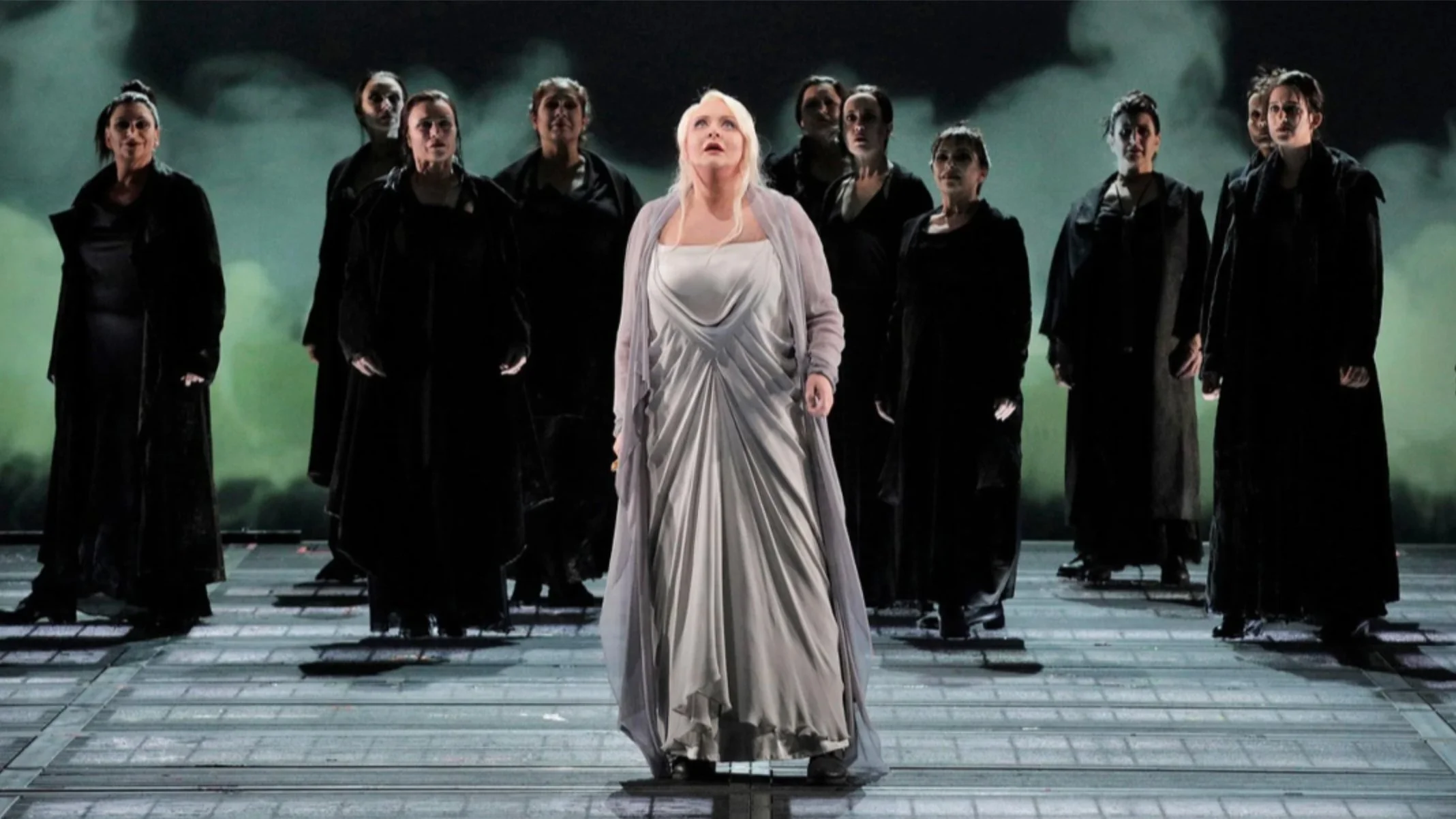
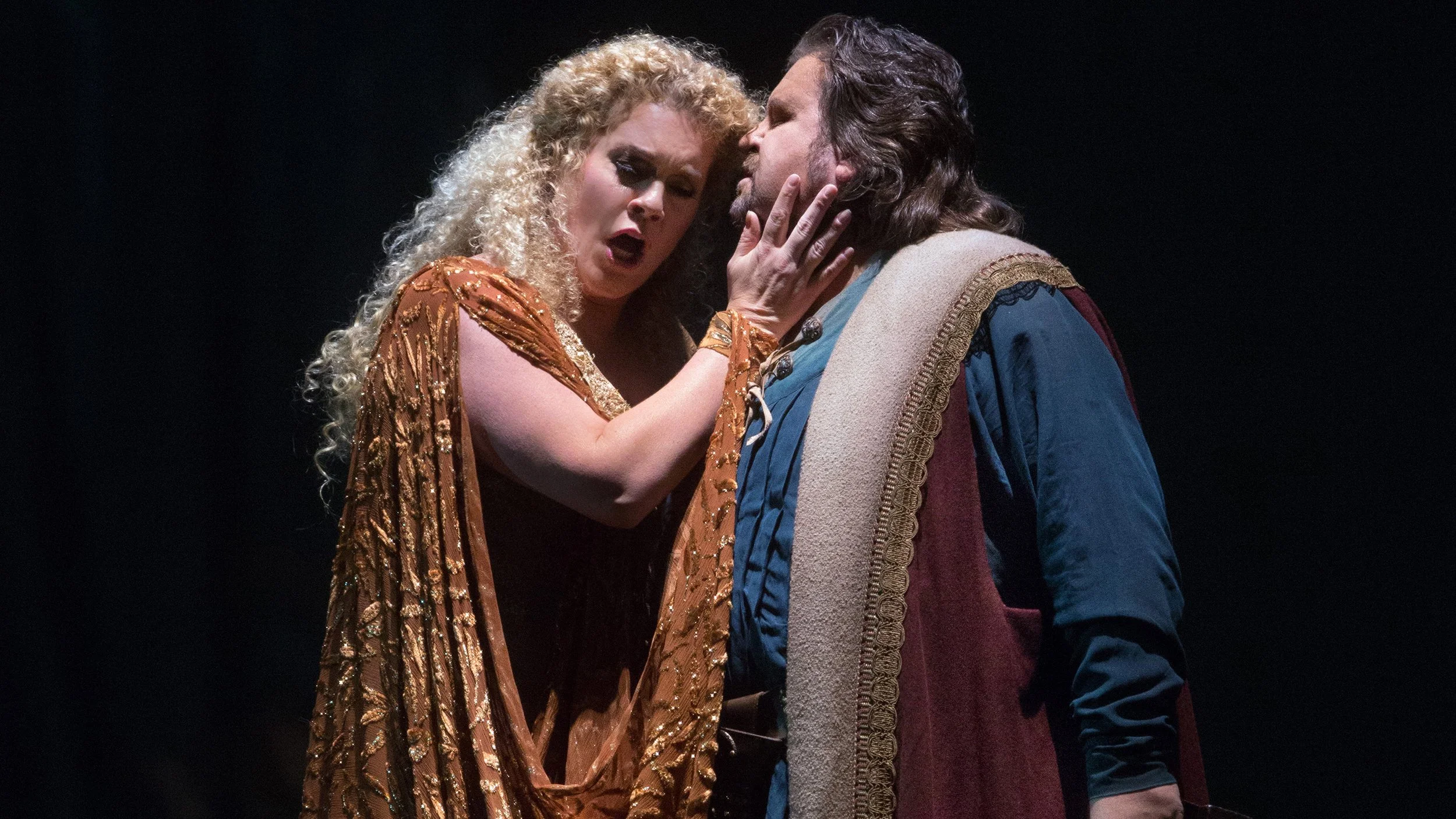
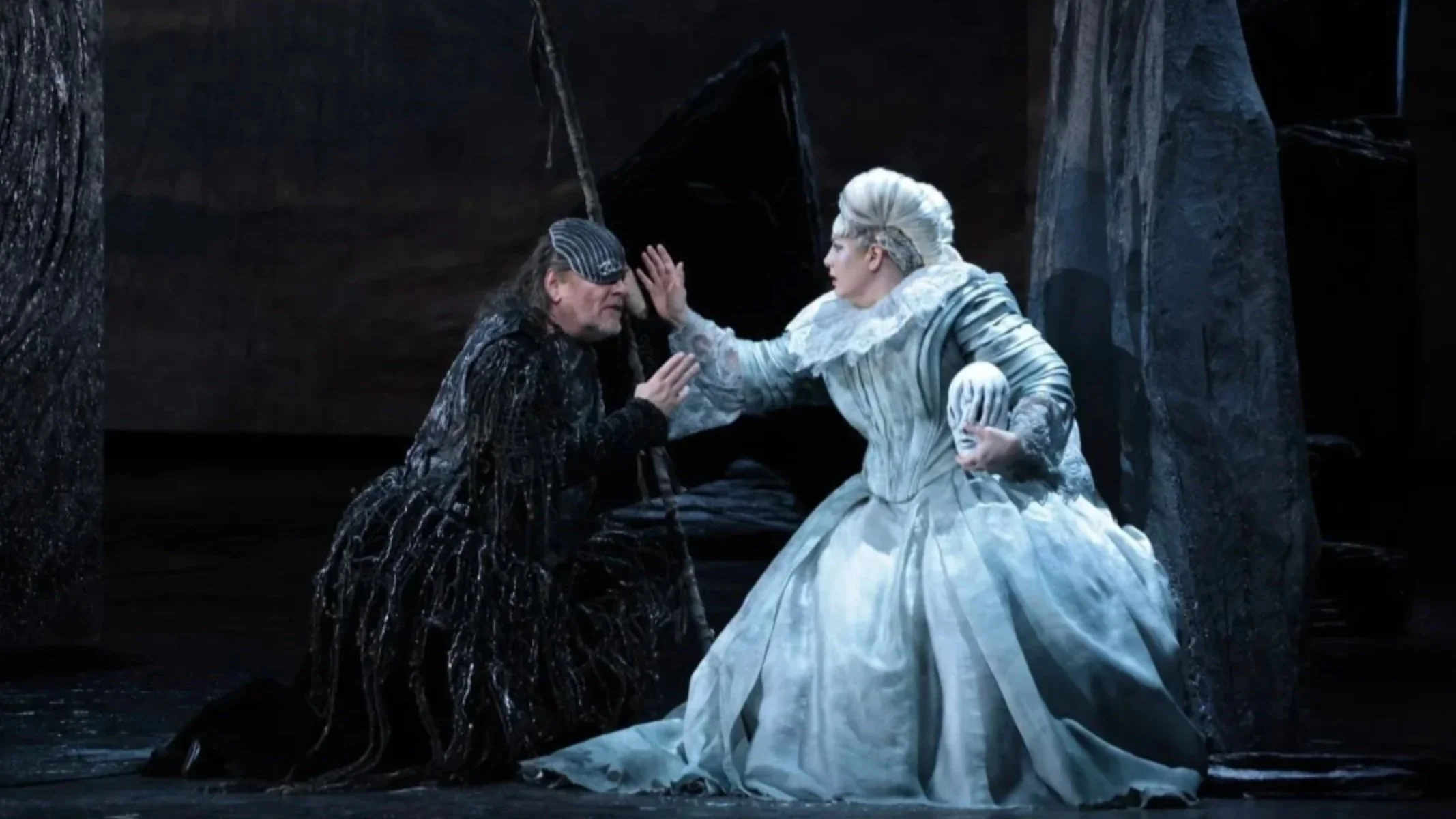
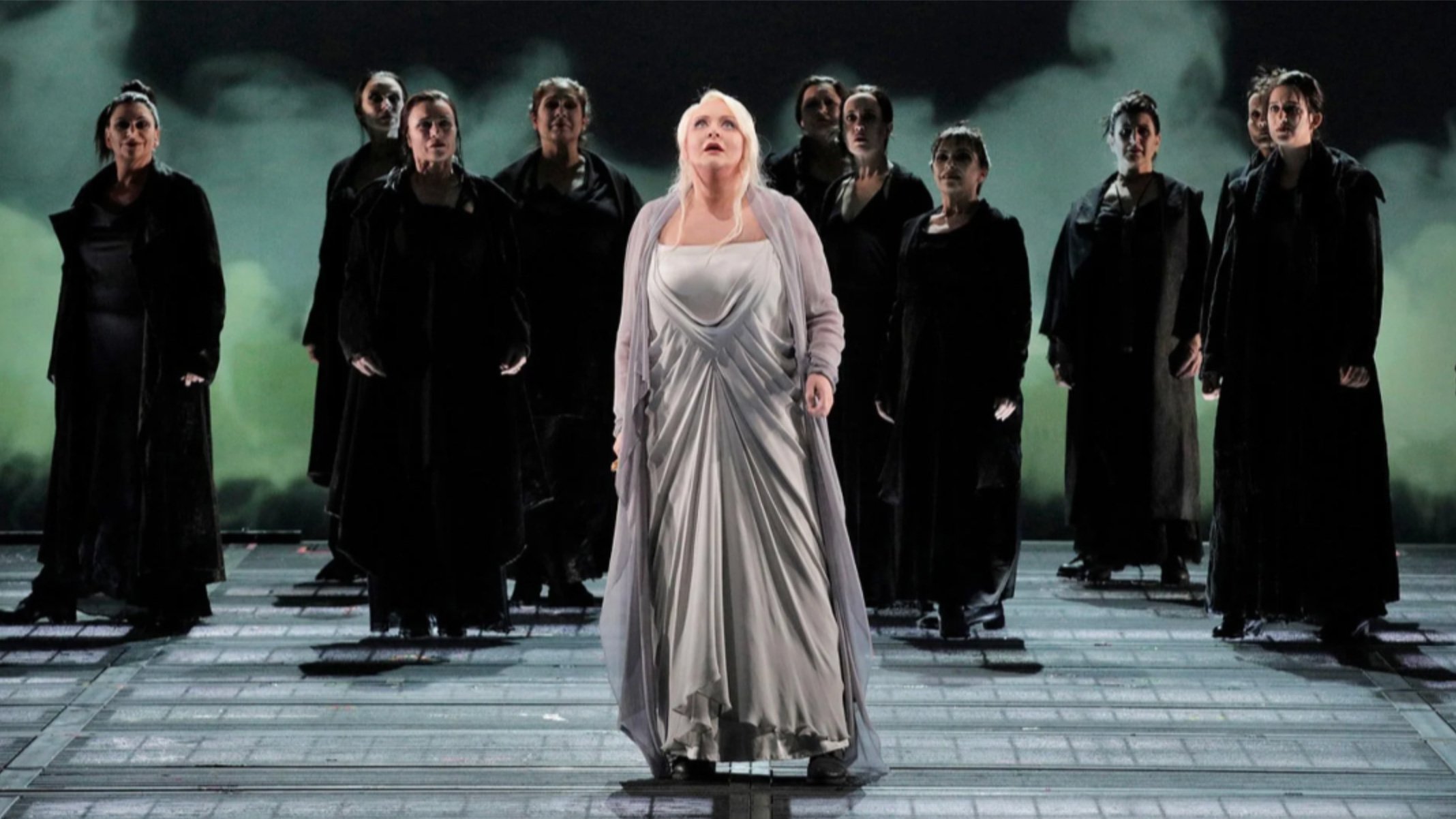
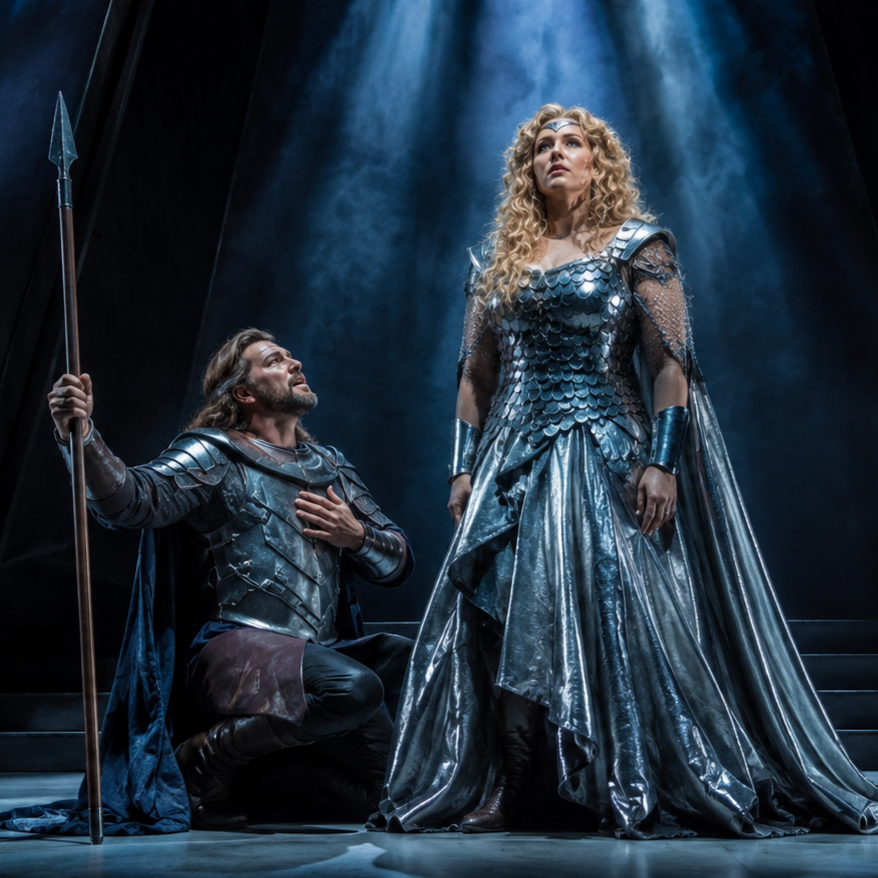
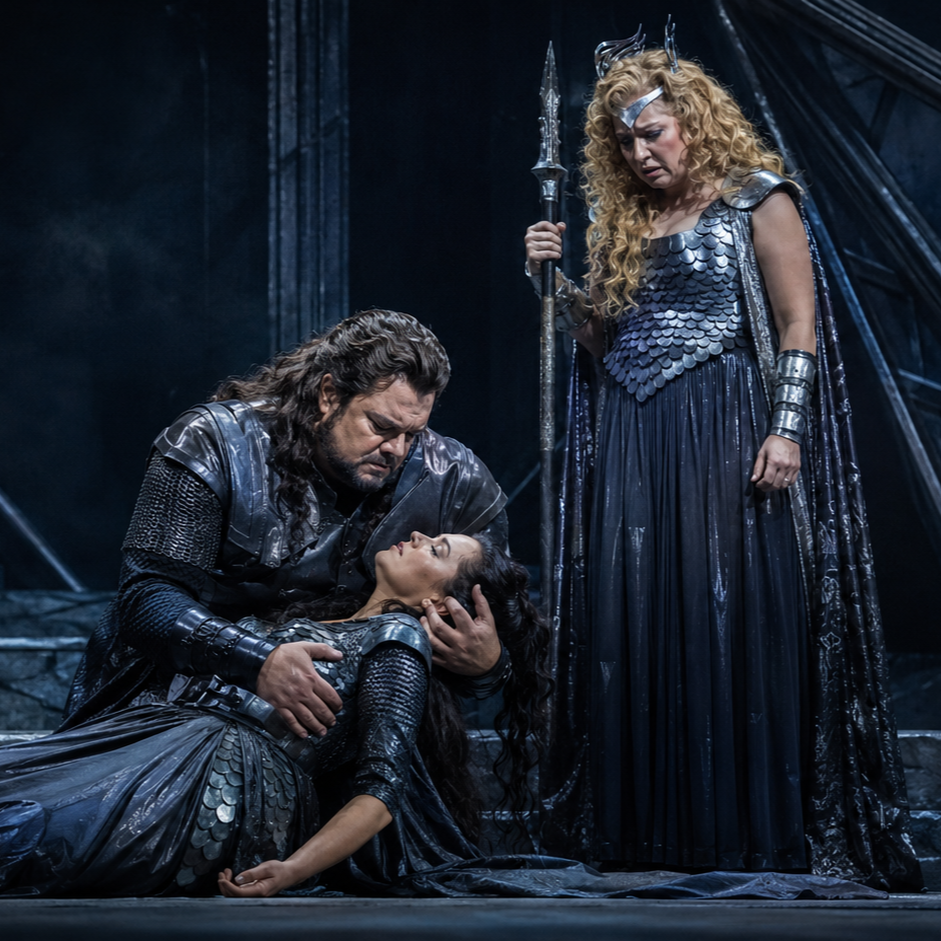
Iréne Theorin as Brünnhilde in San Francisco Opera’s 2018 Ring Cycle
Themen: Das Vergessen, Verrat, Schein, Untergang
Element: Kalte Flussluft und Bildschirmlicht
This walk treats Wagner not as repertoire, but as a composed method for moving through the city.
Das Ergebnis auf einen Blick
Dauer: Dusk to full night, four to five hours. This is the Ring's longest opera and the year's longest walk. It can be split across an evening if needed, but is best held together.
Distanz: 4–5 miles across two boroughs, with two bridge crossings and several subway legs. The walk deliberately does not stay in one register of the city. It moves from an elevated overlook to a working bridge to the most spectacle-saturated intersection in the world and back to the water.
Beste Zeit: A clear, cold October night, ideally a weeknight when Times Square's crowd is dense but not impossible. Cold sharpens this month the way heat sharpened July.
Wetter:
Cold air is correct, and rain deepens it further. This is the one month where discomfort is not a cost of the walk but part of its argument.
A clear night is required for the closing scene. The Immolation needs a dark sky over black water to register properly.
Zugänglichkeit:
The Brooklyn Heights Promenade and Manhattan Bridge walkway are flat and fully accessible.
Times Square is crowded at all hours; expect slow, dense pedestrian movement rather than a clear walking pace.
Brooklyn Navy Yard's public perimeter path is flat; the interior campus is not generally open for casual walking, and the walk stays on public streets and the waterfront path.
Essentieller Moment:
Fulton Ferry Landing, at full night, directly beneath the Brooklyn Bridge, for the Immolation Scene. The walk begins on the bluff above the water, watching the system from a safe distance. It ends at the waterline, level with the black river, with nowhere left to observe from.
Language Anchor (German Phrase of the Walk):
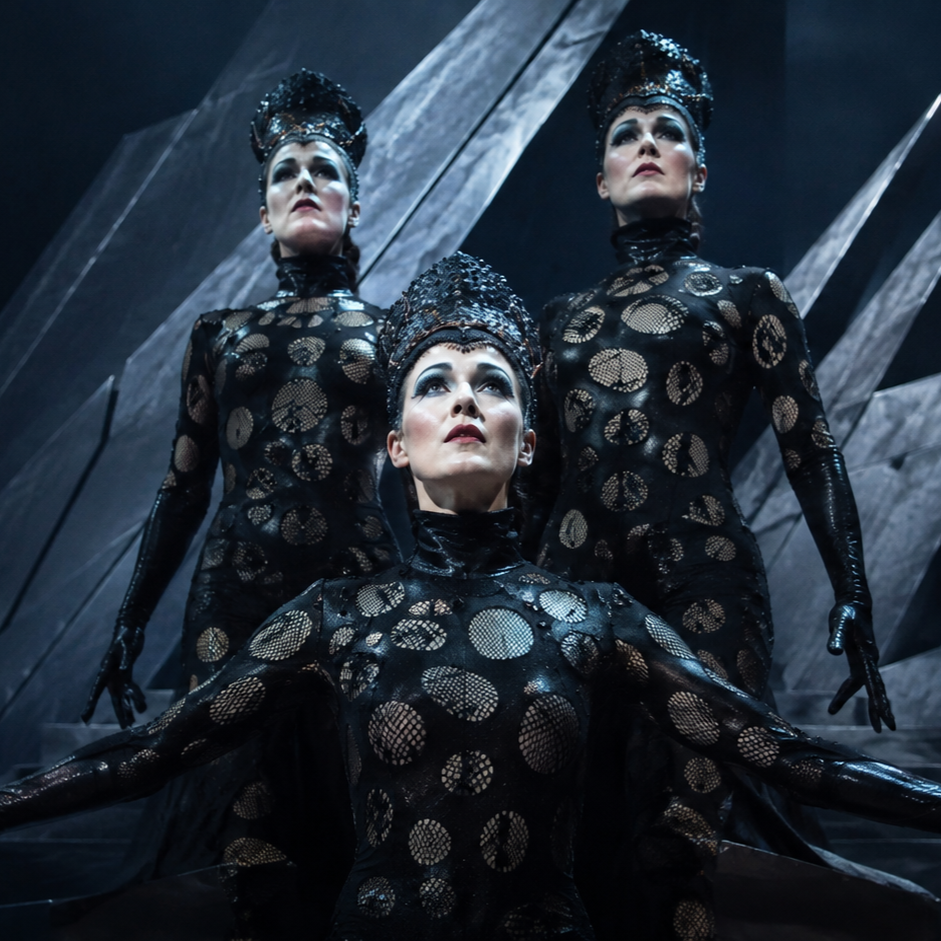
Es riss! / It broke! The First Norn's cry in the Prologue, the instant the rope of fate, which the three sisters have been weaving and passing between them since the beginning of the world, finally snaps and cannot be rejoined. Two words. The sound of prophecy running out of thread.
Wort des Weges
Das Vergessen (pronounced: dahs fer-GHES-en): Another nominalized infinitive, like September's das Fürchten, and the two words are meant to be heard as a pair across the year. Das Vergessen is not Vergesslichkeit, forgetfulness as a character trait, the harmless tendency to misplace keys. It is also not Verdrängung, repression in the psychoanalytic sense, which implies an active, motivated burial of something the mind cannot tolerate. Das Vergessen names forgetting as a process, a thing happening, without specifying whether it is accidental or engineered, whether it is happening to someone or being done to them.
This ambiguity is the exact mechanism Götterdämmerung depends on. Hagen drugs Siegfried with a potion that erases his memory of Brünnhilde entirely, not gradually, not through the ordinary erosion of time, but instantly and completely, so that he can be married to Gutrune and sent to win Brünnhilde for Gunther without any conflict registering in him at all. This is das Vergessen engineered as a weapon, indistinguishable from the inside, to Siegfried himself, from ordinary forgetting. He does not experience the potion as an assault. He experiences it as simply how things are, which is what makes it so much more effective than a lie he might have questioned.
The Ring as a whole has been building toward this moment since Rheingold's theft. Every character who mattered in the earlier operas, Wotan's authority, Siegmund and Sieglinde's love, Siegfried's own fearless childhood, is present in Götterdämmerung mainly as something the drugged present has stopped remembering. The opera's tragedy is not that terrible things happen. It is that they happen to a hero who has been made structurally incapable of recognizing what he is losing, in real time, while he is losing it.
October in New York carries a public, civic version of this. Anniversaries observed with less specificity each year. Institutions that quietly stop mentioning what they once existed to address. The particular late-autumn sensation of a season that used to mean something specific starting to mean something more generic. Das Vergessen is not always sinister. Sometimes it is simply what happens to anything not actively, continually re-told. The Norns' rope breaks because it has been stretched, unbroken, since the beginning of the world, and nothing lasts that long without eventually running out of length.
Thematischer Rahmen: Das Ende, das Kein Ende Ist
Götterdämmerung is the only opera in the Ring cycle with a title Wagner did not invent for this specific work. The phrase, twilight of the gods, translates the Old Norse ragnarök, the mythological end of the world that Wagner drew on throughout his sources, and using it as a title announces, before a note is played, that the opera intends to be an ending in the fullest sense. What makes the opera radical is how thoroughly it refuses the kind of ending its title promises. There is no clean apocalypse here, no single moment of righteous destruction. There is a wedding manipulated by a magic potion, a hunting party, a murder disguised as a hunting accident, and a funeral, all staged with the social texture of court intrigue rather than cosmic myth. The gods barely appear. Wotan, so dominant in the first three operas, is absent from the stage entirely, reduced to a report: Waltraute describes him sitting silently in Valhalla, surrounded by the shattered pieces of his spear, waiting.
Hagen is the opera's true engine, and he is Wagner's most purely Machiavellian creation, the son of Alberich conceived specifically, loveless and by design, to retrieve the ring for his father's line. He does not overpower anyone. He manipulates through hospitality, through the appearance of welcome, drugging Siegfried's cup at the very moment custom requires him to offer it. The Gibichung hall, Gunther and Gutrune's court, is a society organized entirely around appearances that no longer correspond to anything underneath them: a marriage nobody wants, a friendship built on a lie, a blood-brotherhood oath sworn by two men, Siegfried and Gunther, who do not actually know each other and are being maneuvered by a third man neither of them fully sees.
Composition stretched across Wagner's entire mature career. The text was drafted first, in 1848, as a standalone opera called Siegfrieds Tod, before Wagner realized how much backstory the ending required and wrote the other three operas to supply it. The music was not completed until 1874, making Götterdämmerung both the oldest conceived and the last finished work in the cycle, its Prologue looking back not only at the mythology but at Wagner's own twenty-six years of work on the project. The Immolation Scene's closing pages quote the Ring's earlier leitmotifs in rapid succession, the curse, the Rhine's gold, Valhalla, Siegfried's horn call, Brünnhilde's own theme, a compressed retrospective of everything the cycle has been about, arriving in the final minutes as memory rather than as new material. This is the opera's real answer to das Vergessen: the orchestra remembers everything even as the characters on stage have forgotten almost everything, and the final resolution belongs to the music's memory rather than to any character's.
Brünnhilde's Immolation does not restore the old order. It ends it. She rides into Siegfried's funeral pyre, the fire spreads to consume Valhalla itself, the Rhine overflows to reclaim the ring from the ashes, and the opera closes on an orchestral passage often called the Redemption theme, first heard in Die Walküre as Sieglinde's gratitude for the child she is carrying, now returned as the cycle's very last music. What it redeems is genuinely ambiguous. Not the gods, who are gone. Not the ring's curse, which required exactly this destruction to lift. Something closer to the possibility of a world without the specific structure the gods built, a world beginning again with no promise attached to how it will go.
New York in October does its own version of systems fraying rather than collapsing outright. The elevated Brooklyn overlooks that watched the skyline change for two centuries. A working iron bridge that still does exactly what it was built to do while everything around it has been rebuilt six times over. And, at the walk's structural center, Times Square: the most engineered environment for spectacle in the Western hemisphere, a place built entirely to hold attention without asking what the attention is for. This walk moves through several different kinds of ending: the end of a vantage point's innocence, the end of a hero's memory, the end of a god's authority, the end of a whole mythological order, arriving, finally, at a stretch of water that has been ending and beginning again every tidal cycle since long before any of this was built.
Listening Index (Die Musikalische Wirbelsäule)
Prologue, the Norns' Scene: The rope of prophecy stretched to its final length
Prologue, Siegfried's Rhine Journey: Departure staged as triumph; the audience knows what the hero does not
Act I, Hagen's Watch: Stillness that is actually strategy; hospitality as the opening move of an ambush
Act II, the Summons of the Vassals: Community mustered for a wedding built on a lie
Act III, Siegfried's Death and Funeral March: Comprehension arriving for the audience exactly as it becomes permanently unavailable to the dying man
Act III, the Immolation Scene: Every earlier motif returning as memory; destruction functioning as the only remaining form of mercy
Listening Note: Let long stretches run uninterrupted tonight rather than cutting between tracks. This opera does not reward editing. Its power is cumulative, and the walk should feel the accumulated weight by the final station.
Der Aussichtspunkt: Brooklyn Heights Promenade
Getting There
Take the A or C train to High Street–Brooklyn Bridge, or the 2/3 to Clark Street, and walk to the Brooklyn Heights Promenade, the elevated walkway above the BQE facing Manhattan across the East River.
Track: Götterdämmerung, Prologue, The Norns' Scene
Arrive before full dark and find a place at the railing. Begin the Norns' Scene, the three sisters passing the rope of world-knowledge between them in the dark, discovering as they work that the rope is fraying, then breaking, unable to be rejoined. Es riss! It broke. They descend to their mother Erda, their knowledge no longer sufficient to hold the future in view.
Watch the skyline light itself against the darkening sky, the bridges strung taut across the water below. You are, for this first station only, purely an observer, elevated and detached, watching a system from outside it exactly as the Norns watch the world's rope from a vantage no longer capable of repairing what they see failing. This will not last. Everywhere else on tonight's walk, you will be inside what you are watching.
Die Überfahrt: Manhattan Bridge Fußweg
Getting There
Walk from the Promenade down through DUMBO to the Manhattan Bridge pedestrian walkway, entered from Washington Street near the archway at Washington and Sands.
Track: Götterdämmerung, Prologue, Siegfried's Rhine Journey
Begin the Rhine Journey as you step onto the bridge. Siegfried leaves Brünnhilde's rock, her ring on his finger as a token of their bond, and travels down the Rhine toward the Gibichung court, the orchestra at its most triumphant and forward-driving, entirely unaware that the destination waiting for him has already been arranged to destroy what he is carrying.
Walk at a steady pace with the elevated trains roaring past on the tracks beside the walkway, the river darkening below. This is departure staged as pure confidence, the score's brightness a kind of dramatic irony the audience can hear and the character cannot. You are crossing the same water the Norns' rope was strung above. On the far side, the city stops being something you observe and starts being something you enter.
Der Glanz Ohne Grund: Times Square
Getting There
From the Manhattan side, take the B or D train from Grand Street to 42nd Street–Bryant Park, or the N/Q/R/W to Times Square–42nd Street.
Walk into Times Square itself, the pedestrian plazas between 42nd and 47th Streets.
What Times Square Is Doing Here
Times Square is the most concentrated field of engineered attention in the world, an entire commercial district organized around the single goal of being looked at. The screens run continuously, indifferent to whether anyone specific is watching, replacing each other's content faster than any single message could be absorbed. The crowd here is enormous and genuinely social in the sense that everyone is present together, and almost entirely disconnected in the sense that almost no one present is together with anyone specific. It is community reduced to co-location.
Track: Götterdämmerung, Act I, Hagen's Watch and the Gibichung Court
Stand in the plaza and play the scene in which Hagen, alone on watch, reveals to the audience exactly what he intends while his half-siblings Gunther and Gutrune remain oblivious to the plan being executed in their names. The Gibichung court that follows is a study in appearances organized around a hollow center: a wedding celebration for a bride and groom neither of whom actually wants what the ceremony proposes, hospitality extended as the delivery mechanism for a betrayal.
Let the screens do the work the Gibichung hall's ceremony does in the opera. Enormous, bright, competing for a attention that has nowhere stable to land. Notice how quickly your own attention moves from one screen to the next without deciding to. This is not a metaphor imposed on the plaza from outside. It is what the plaza is engineered to produce, matched almost exactly to what Hagen engineers in the hall: attention captured by surface, with no requirement that anything underneath the surface be true.
Der Verrat und der Marsch: Domino Park
Getting There
Take the F train from 47th–50th Streets–Rockefeller Center to Delancey Street–Essex Street, transfer to the J/M/Z, or take the M14A bus, to reach the Williamsburg Bridge; alternatively take a car service or the East River Ferry to Williamsburg.
Walk to Domino Park, the waterfront park built on the former Domino Sugar Refinery site along the Williamsburg waterfront.
What Domino Park Is
Domino Park occupies the site of a working sugar refinery that operated on this shoreline for over a century and a half before closing in 2004. The park's design deliberately preserves industrial fragments, rusted machinery repurposed as play structures and shade elements, salvaged ironwork left visible rather than removed, the enormous brick refinery building itself, empty for years, now standing at the park's edge in the process of adaptive reuse. It is a landscape built quite literally on top of an industry that has ended, its former purpose still legible in the material even as the material now serves an entirely different life.
Track: Götterdämmerung, Act III, Siegfried's Death and Funeral March
Walk the waterfront path as Hagen kills Siegfried on the pretext of a hunting accident, a spear in the back at the one moment Siegfried, telling Gunther's retainers the true story of his own life for the first time since the potion, has begun to remember Brünnhilde. Understanding and death arrive in the same instant. The Funeral March that follows is orchestral grief on the largest scale Wagner ever wrote, themes from across the whole cycle passing through the brass like a life reviewed in the seconds after it ends.
Look at the refinery building while the march plays, its brick shell still standing over machinery that no longer runs, repurposed rather than erased. The industry that built it is finished. The building continues, differently. This is close to what the Funeral March itself is doing at the level of form: carrying forward everything the cycle's earlier operas built, now in a register of memorial rather than of ongoing use.
Die Stille an der Werft: Brooklyn Navy Yard, Perimeterweg
Getting There
From Domino Park, walk or take the B62 bus south along Kent Avenue toward the Brooklyn Navy Yard's public perimeter path along the Wallabout Channel.
Track: None
Walk the perimeter in silence. The Navy Yard has built ships and, later, ordinary industrial goods, for over two centuries, through wars this walk has not otherwise mentioned and through decades of decline and, more recently, redevelopment into a working industrial and manufacturing campus again. None of that history needs music laid over it tonight. This is the walk's mandatory silence, the one stretch of the evening where nothing is scored, where the industrial hum of an active waterfront is allowed to be the only sound.
Let the absence do its own work. After Siegfried's death, the opera itself does not immediately resume at full volume. The system continues around the loss, indifferent, still running. The Navy Yard's ordinary nighttime operation, cranes, security lights, the occasional truck, does the same continuing without commentary. Stay until the silence has said what it has to say, then turn back toward the water.
Der Untergang: Fulton Ferry Landing
Getting There
Return north along the waterfront, or by subway via York Street (F) or High Street (A/C), to Fulton Ferry Landing in DUMBO, directly beneath the Brooklyn Bridge.
Arrive when night is complete.
Track: Götterdämmerung, Act III, The Immolation Scene
Stand at the water's edge, the Brooklyn Bridge looming directly overhead, and begin the Immolation. Brünnhilde, having learned the full truth of Hagen's plot, orders a funeral pyre built for Siegfried, mounts her horse, and rides into the flames herself. The fire spreads beyond the pyre to consume Valhalla in the far distance. The Rhine rises over its banks to reclaim the ring from the ashes, and the Rhinemaidens finally recover what was stolen from them in the cycle's opening minutes, in Rheingold, more than fifteen hours of music ago.
Watch the bridge's lights and the water's dark surface while the final pages run, the orchestra moving through the whole cycle's accumulated motifs one last time before settling into the closing theme first heard as Sieglinde's gratitude, an entire opera ago, for a child who grew up to die misunderstood tonight. This is not resolution in the sense of anything being fixed. It is resolution in the sense of the fire finally being permitted to finish what it was always going to do eventually. The bridge above you has stood for over a century, carrying traffic across water that has reclaimed and released things long before Wagner wrote a note of this. Stand until the last chord fully fades. Do not add anything after it.
Nachklang
The October walk ends under a bridge that has outlasted everything the opera destroys, at the edge of water that reclaims what was taken from it fifteen hours of music ago. The Norns' rope broke at the beginning of the night. By the end, the breaking has stopped being a crisis and started being simply what happened, the fact the rest of the story had to be lived inside.
Das Vergessen ran through the whole evening in different registers. A hero drugged into forgetting the one thing that mattered. A crowd in Times Square, attention captured and released a thousand times an hour, remembering none of it by design. A refinery building, repurposed, its original life legible only to those who go looking for it. What resists the forgetting is not any single character. It is the orchestra itself, carrying every theme forward to the final page, insisting on memory even as the story it accompanies insists on loss.
November does not offer a fire this large. It offers a smaller stage, a single voice, and a crowd that has not yet learned what this month's crowd already knows about how quickly belief can be manufactured and withdrawn.
Further Reading