About Aufbruch/Matt: Eine Methode der Aufmerksamkeit
What This Is
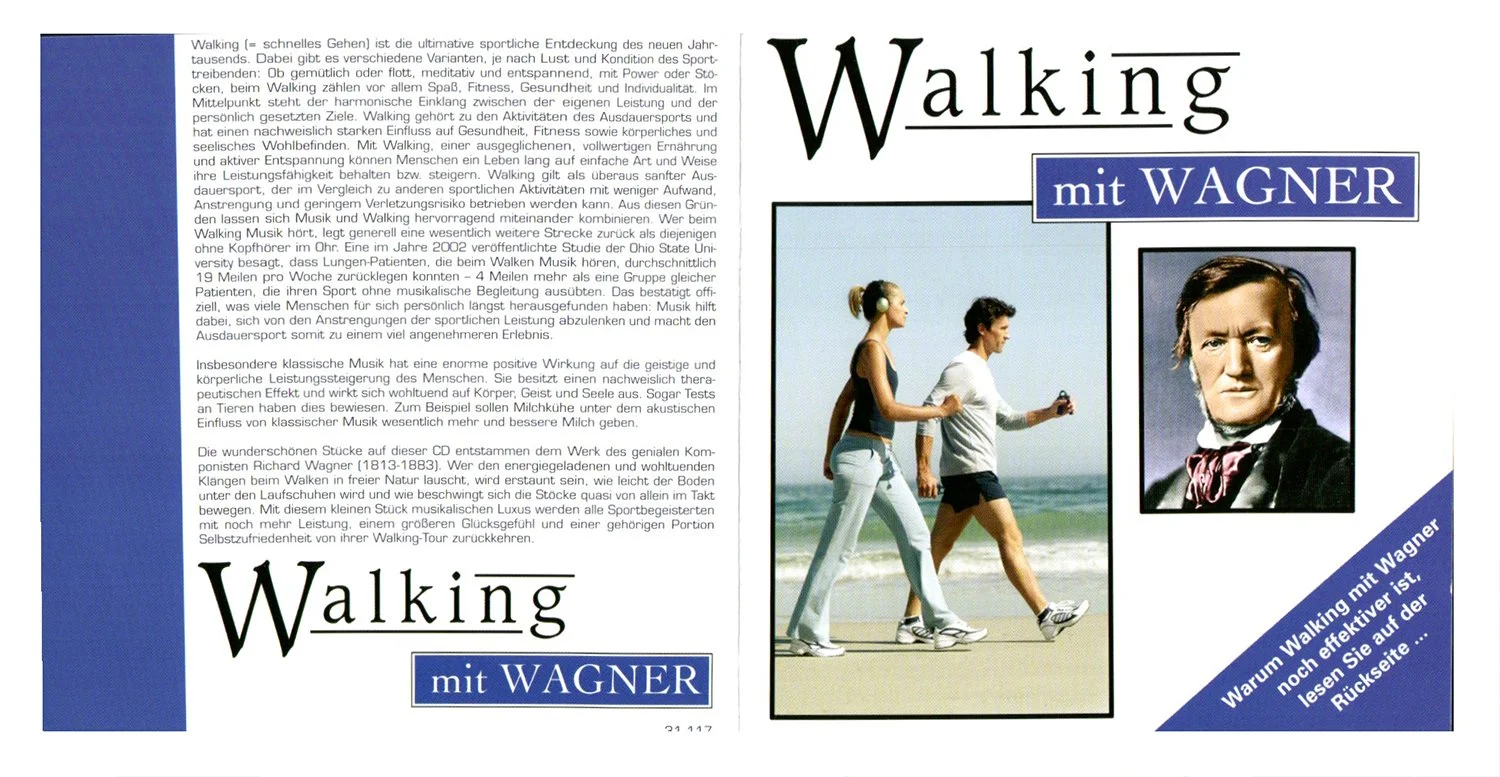
Aufbruch/Matt is a lived experiment. Twelve months. Twelve operas by Richard Wagner. Each one mapped onto New York City as a sequence of walks, listening sessions, and reflections. A year-long Wagnerian walking practice through a city that does not stop to listen.
It is not a guide to Wagner. It is not a travel blog. It is not a productivity system. It is a method for attention. Music, movement, language, and seasonality, used together to think about ambition, inheritance, collapse, renewal, and time.
This page was first written before the year began. Everything in it was a proposal. It has now been rewritten from the middle of the year. Five operas are behind the project. The sixth is underway. The method is no longer a plan. It has been walked.
Why Wagner
Wagner wrote works obsessed with beginnings and endings. Origins of power, the weight of legacy, the cost of desire, the exhaustion of systems, and the possibility of renewal. Those questions are not historical. They are contemporary.
Rather than treating Wagner as monument or taboo, this project treats him as material. Something to walk with, test against the present, and translate into lived experience.
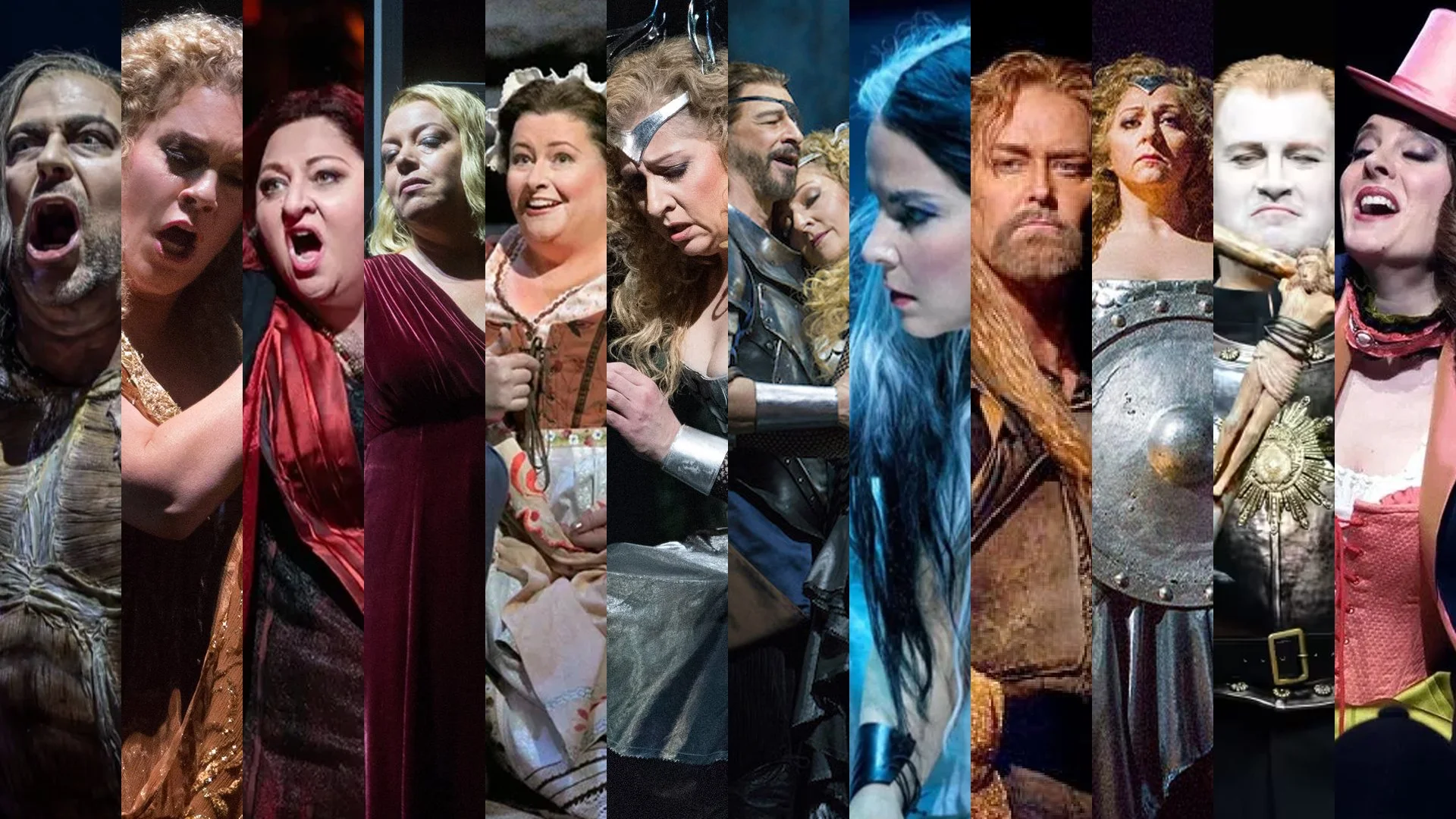
Five months in, that choice has held. The Dutchman gave January its exile. Tannhäuser gave February its contradiction. Lohengrin gave March its forbidden question. Tristan gave April its longing, on the street and at the Met. Die Meistersinger gave May its long argument about tradition, craft, and who gets to be called master. Das Rheingold is giving June its gold, walked through Lower Manhattan, where the question of what gold costs is not a metaphor.
Why New York
New York is not a backdrop here. It is an instrument. Ferries, subway lines, waterfronts, neighborhoods, weather, crowds, solitude. These are not illustrations of the operas but counterpoints to them. The city provides friction, scale, noise, and motion. Wagner provides duration, myth, and pressure. The meaning happens between the two.
The walks have proven this in ways the original plan could not predict. A score changes a street. A street changes a score. The same intersection returns in a different month under different music and becomes a different place. The city keeps offering material the operas did not know they contained.
The method also travels. The One Day Experiments take the same structure to other cities. Athens has already carried a Rheingold of its own. The pairing of opera and city turns out to be portable. The attention is what stays constant.
What Five Months Have Taught
The project began with a hypothesis. The middle of the year permits a few findings.
The walk changes the walker. This was the hope. It is now the record. You have to walk long enough to stop being the person who started walking. Five months is long enough to feel that begin.
Repetition compounds. The same routes, the same composer, the same practice, month after month. Novelty was never the point. Depth arrived where novelty was refused.
Language became a spine. What started as listening became reading, and reading became vocabulary. A single German word can hold an entire month. Der Fluch. Das Gold. Wahn. Handwerk. Gemeinschaft. The Wort des Weges essays now form their own path through the year.
The method generates its own forms. Nothing below was in the December plan. All of it grew from the walking.
The Forms It Has Taken
What began as twelve walks and some essays is now a body of interconnected work:
Monthly walk pages, each pairing one opera with mapped stops, listening cues, photography, and reflection
Wort des Weges, long-form essays on single German words, twenty and counting
Imagined interviews, conversations with the dead and the distant: Benjamin, Adorno, Baudelaire, Proust, Nietzsche, Butler, Borges, Baldwin, Cosima Wagner, Ludwig II, and others who walked, listened, or paid the price of the music
Speculative libretti, operas Wagner never wrote, written as if he had
Hören, the project podcast, with episodes woven into the months and articles they accompany
Maps, individual month routes, a combined map of the full year, and a heatmap of where the walking concentrates
Videos, walks recorded clean and walks scored to Wagner
Interactives, including a Ring Cycle text adventure, a Skat game, and a vocabulary quiz
One Day Experiments, the method applied to a single day in another city
None of this is decoration. Each form is another way of paying the same attention.
How The Year Works
Each month is paired with one opera and one emotional register of the year:
Winter opens questions of exile, law, and beginnings
Spring wrestles with desire, identity, and contradiction
Summer stretches toward power, rupture, and inheritance
Autumn confronts collapse, memory, and reckoning
The project is now entering summer, and entering the Ring. Four operas, four months, one system building itself toward its own collapse. The first half of the year asked what a tradition is. The second half asks what it costs.
You can begin in January. You can also drop in anywhere. The project is cyclical, not linear.
How to Practically Engage
There is no correct way to do this. But a simple approach works well:
Read the month's page slowly
Walk one or more of the routes, or your own version of them where you live
Listen to the recommended passages while moving or immediately after
Follow a thread outward: a vocabulary essay, an interview, an episode of Hören
Notice what surfaces emotionally, intellectually, physically
Nothing needs to be completed. Nothing is tracked. This is not about mastery. It is about resonance.
How It Is Made
One person directs this project. The walking, the photography, the listening, the judgment, and the voice are his. The technical execution, the maps, the players, the games, the constellation, is built in sustained conversation with AI. Director, not engineer.
That collaboration is not hidden. It is part of the experiment. A year-long practice of this scale, with this many forms, made by one attentive person and a patient machine, is itself a question about what creative work now is. The project keeps its own counsel on the answer. The work is the evidence.
The Wider Sky
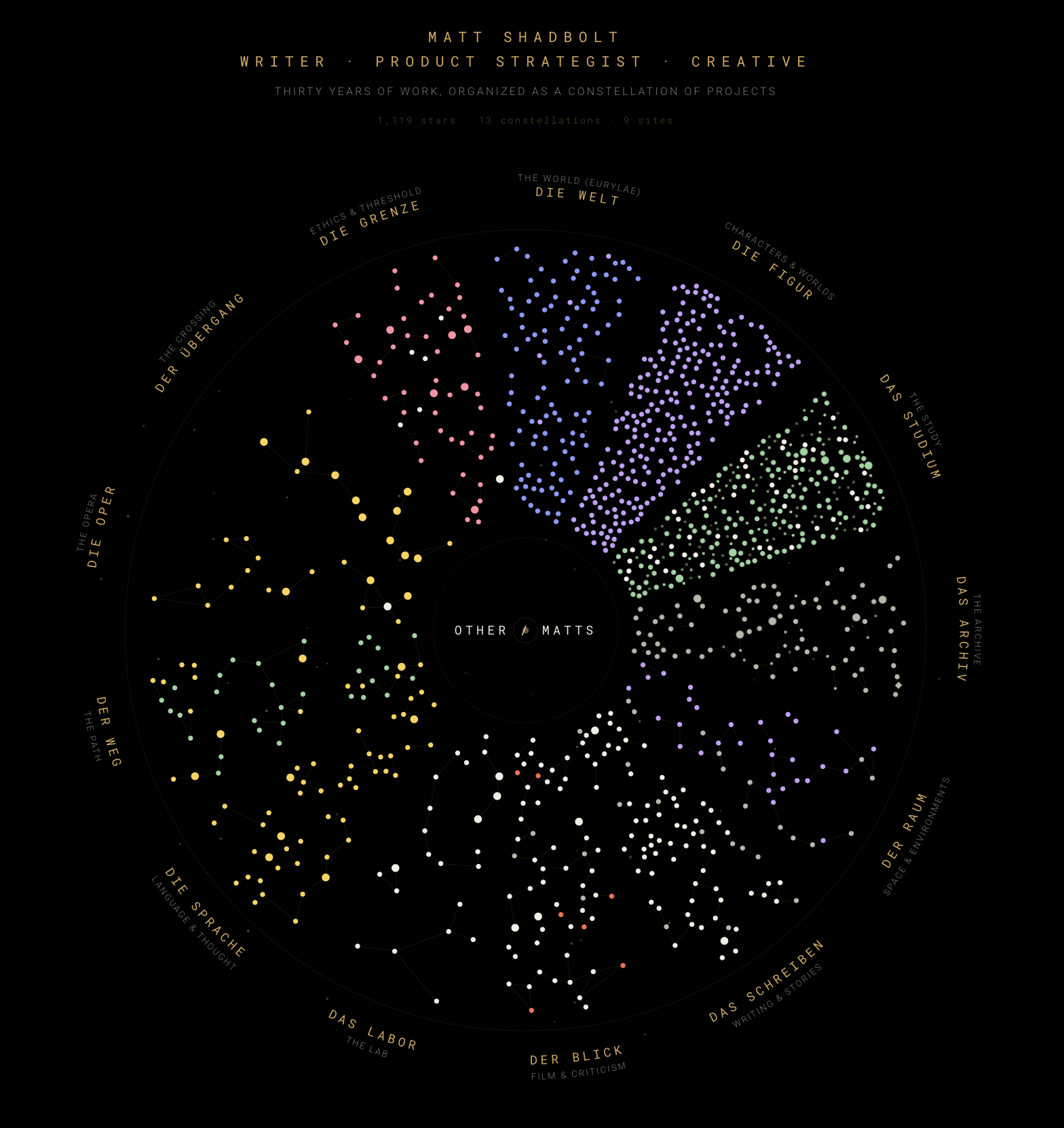
Aufbruch/Matt is one site in a constellation of practices, the Other/Matts, each holding a different register of one life. Above them sits Das Firmament, a navigable map of more than a thousand stars connecting essays, walks, games, and ideas across all of them. From any article here you can follow a pathway outward and arrive somewhere unexpected. The constellation is the argument that a person does not have to collapse into a single identity.
The Unresolved Question
This project does not attempt to answer everything it raises. One question runs through the year and remains intentionally open:
What does it mean to inherit a tradition without being owned by it?
Five months of walking have not answered it. They have sharpened it. Meistersinger asked it about craft. Rheingold is asking it about wealth. The Ring will ask it about everything. The question is doing what it was set to do.
About the Author
This project is created by Matt Shadbolt as a personal practice. Publicly shared, but not performative. The writing reflects lived experience, not theoretical distance. You do not need to agree with its conclusions. You only need to walk with it for a while.
An Invitation
You are not here to keep up. The year is half walked and none of it is behind you. Enter anywhere. Walk slowly. Listen fully.
Further Reading