What You Hold Without Proof: On Glaube
Das Wort / the word: der Glaube (m.), gen. des Glaubens, no standard plural in most usage
Aussprache / pronunciation: GLOW-beh
Wortart / part of speech: Noun, masculine
Register: Primarily religious and philosophical, but deeply embedded in everyday German through its verb glauben, one of the most common words in the language. The noun carries more weight than the verb, Glaube is a committed state, not a casual opinion.
Was das Wort wirklich bedeutet / What the word actually means
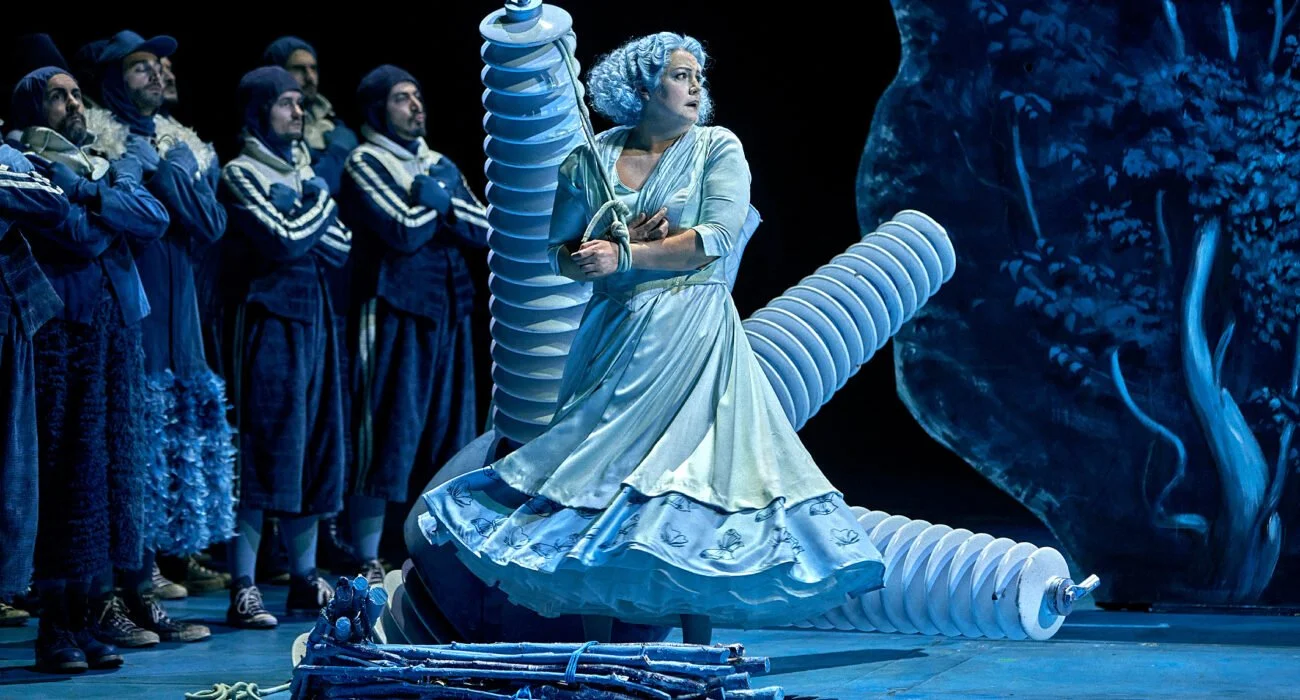
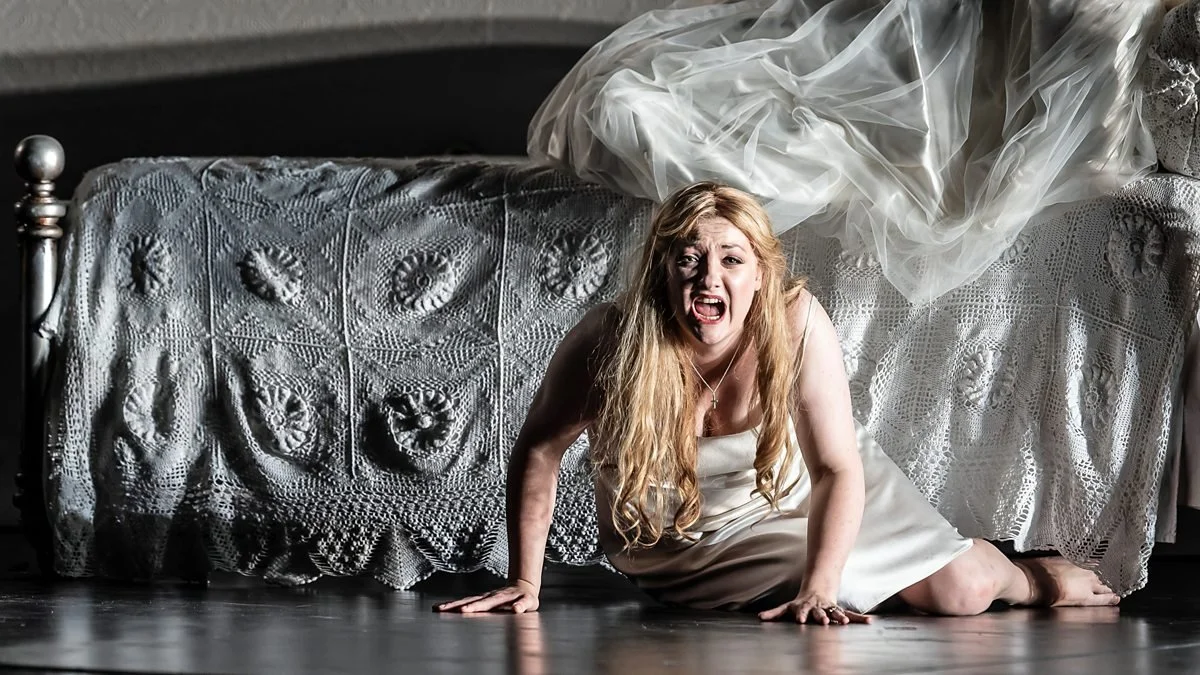
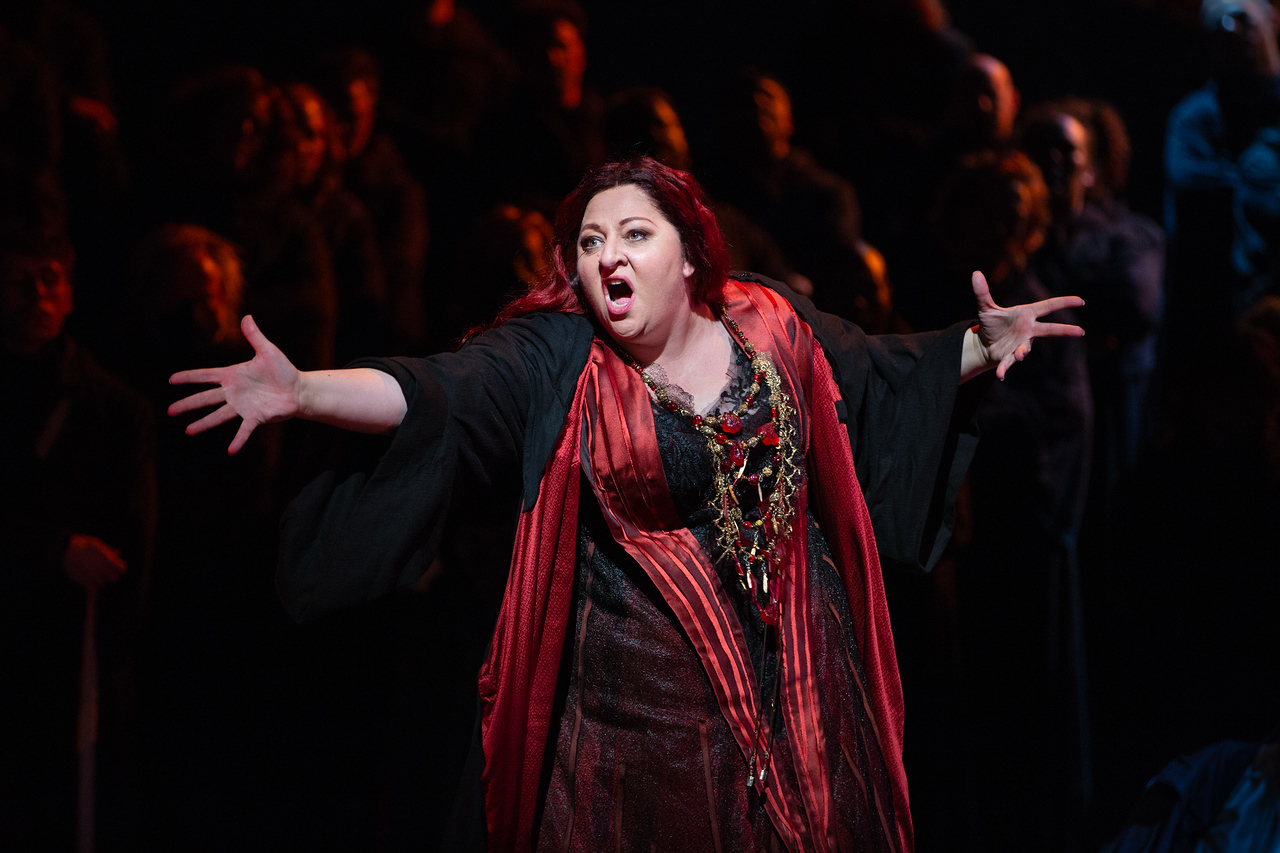
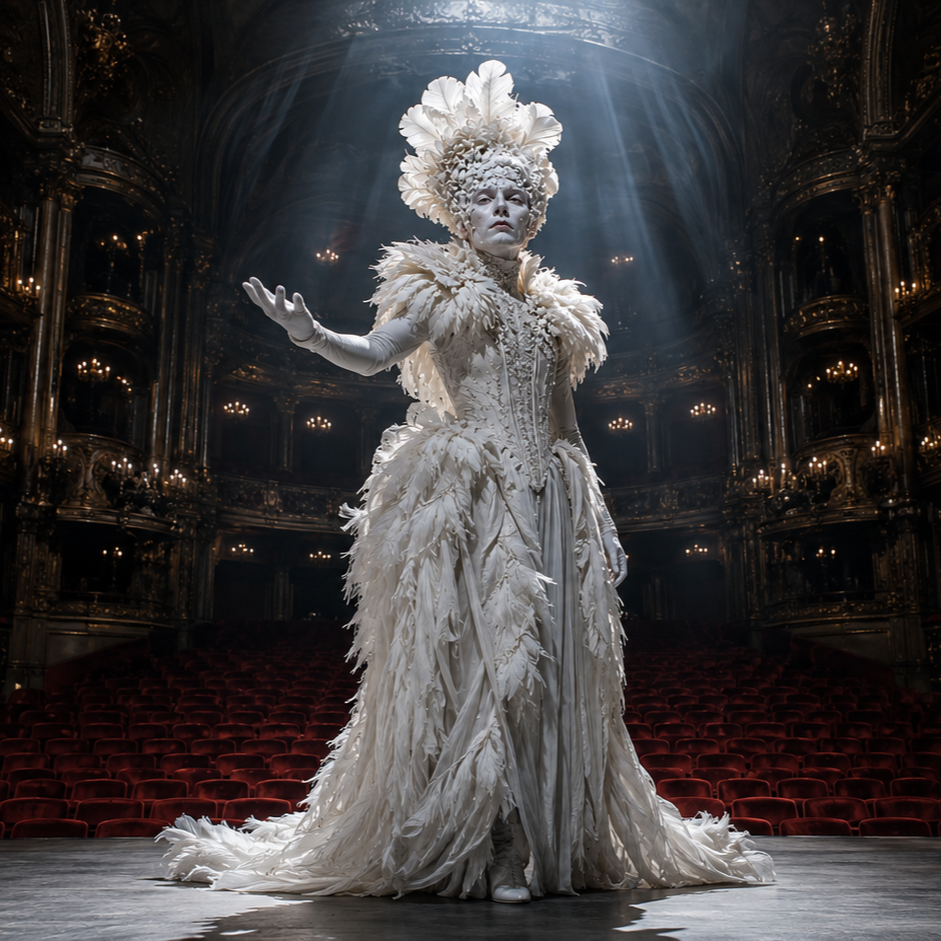
Lohengrin is the opera that turns on a single act of Glaube, and on the moment it fails. Elsa must believe in the knight without knowing who he is. The entire fragile world of the opera's third act, the marriage, the political order, Elsa's vindication, all of it rests on her capacity to maintain Glaube in the face of Ortrud's doubt and her own accumulating uncertainty. When she breaks, when she asks the forbidden question, it is not because she stops loving Lohengrin. It is because Glaube has given way to something else. The need to know, to have grounds for belief, to replace trust with evidence. And the opera tells us this is fatal.
To understand why Glaube carries this weight, you have to understand what the word actually encompasses. And how it differs from the English words that are usually offered as its translation.
Glaube is most commonly rendered as faith or belief, and both translations are partially correct. But English faith tends to tilt toward the religious register. You talk about faith when you mean commitment to a creed or trust in a deity, and you use belief for more ordinary epistemic states. German Glaube spans both without a seam. The same word covers the theologian's Glaube in God and the ordinary speaker's Ich glaube, es regnet heute, I think / I believe it's raining today. This creates a word that is simultaneously grand and humble, theological and conversational, absolute and provisional.
This double range is significant. It means that in German, every ordinary act of holding an opinion or making an everyday inference, ich glaube, der Bus kommt gleich (I think the bus is coming soon), is linguistically related to the most committed, life-defining act of religious faith. The everyday and the sacred share the same root. Glaube, at whatever register, is the human act of holding something to be true without absolute certainty.
Die Etymologie / Etymology
Glaube comes from Old High German giloubo, from the verb gilouben (modern glauben). The root is reconstructed as Proto-Germanic *galaubjan, from *lauban, a word related to lieben (to love) and Lob (praise). The etymological connection between believing and loving is not merely accidental. In the older Germanic languages, the word for to believe carried the sense of to hold dear, to find trustworthy, to value. To believe something was to love it into the status of truth. To commit to it with something more than cold epistemic assent.
This etymology is philosophically rich. In modern English, to believe has become almost entirely cognitive. A matter of what your mind holds to be true. But the German root reminds you that Glaube is also affective, also volitional: it is something you do as much as something that happens to you. Elsa's Glaube in Lohengrin is not just an epistemic state about his nature. It is a loving commitment to his presence in her life, a willingness to value him above the certainty she is being pressured to demand.
When that Glaube collapses, it collapses because the loving commitment gives way. She does not simply change her mind about a proposition. She withdraws the held-dear, the valued, the committed trust. The word's etymology makes this loss fully intelligible: she stops glauben in the same moment she stops holding him dear enough to sustain the silence.
Glaube, Wissen, Meinen: The Epistemic Triad

German philosophy, particularly in Kant's wake, drew sharp distinctions between three epistemic states that Glaube belongs to:
Wissen, knowing. The strongest epistemic state, justified, certain, grounded in evidence or demonstration. Ich weiß, I know, implies that you have adequate grounds for the claim. Kant defined Wissen as subjectively and objectively sufficient conviction.
Glauben, believing. An intermediate epistemic state, subjectively sufficient but objectively insufficient. You hold the belief, you are committed to it, but you cannot demonstrate it to others on grounds they must accept. Kant placed religious Glaube here: rationally defensible, personally compelling, but not demonstrable as Wissen is.
Meinen, opining, thinking. The weakest epistemic state, neither subjectively nor objectively sufficient. A tentative holding, a guess, a provisional position. Ich meine, I think / I opine, signals that you hold something loosely.
Elsa's Glaube in the opera occupies the Kantian middle position. She holds it sincerely and totally (subjectively sufficient) but she has no grounds to offer anyone else (objectively insufficient). She cannot prove the knight is good. She can only commit to believing it. What Ortrud does is to attack the objective insufficiency, to make Elsa feel that belief without grounds is simply foolishness, until Elsa agrees, and demands what she cannot have without destroying what she has.
The opera is, in this philosophical framing, a tragedy about the epistemological middle position. About what happens when Glaube is pressured to become Wissen and cannot, because its very nature excludes the kind of demonstration that Wissen requires. The knight cannot prove himself without dissolving the condition of his presence. The moment of proof is the moment of departure. This is not a personal failing but a structural impossibility built into the nature of Glaube itself.
Der Glaube und die Reformation / Faith and the Reformation

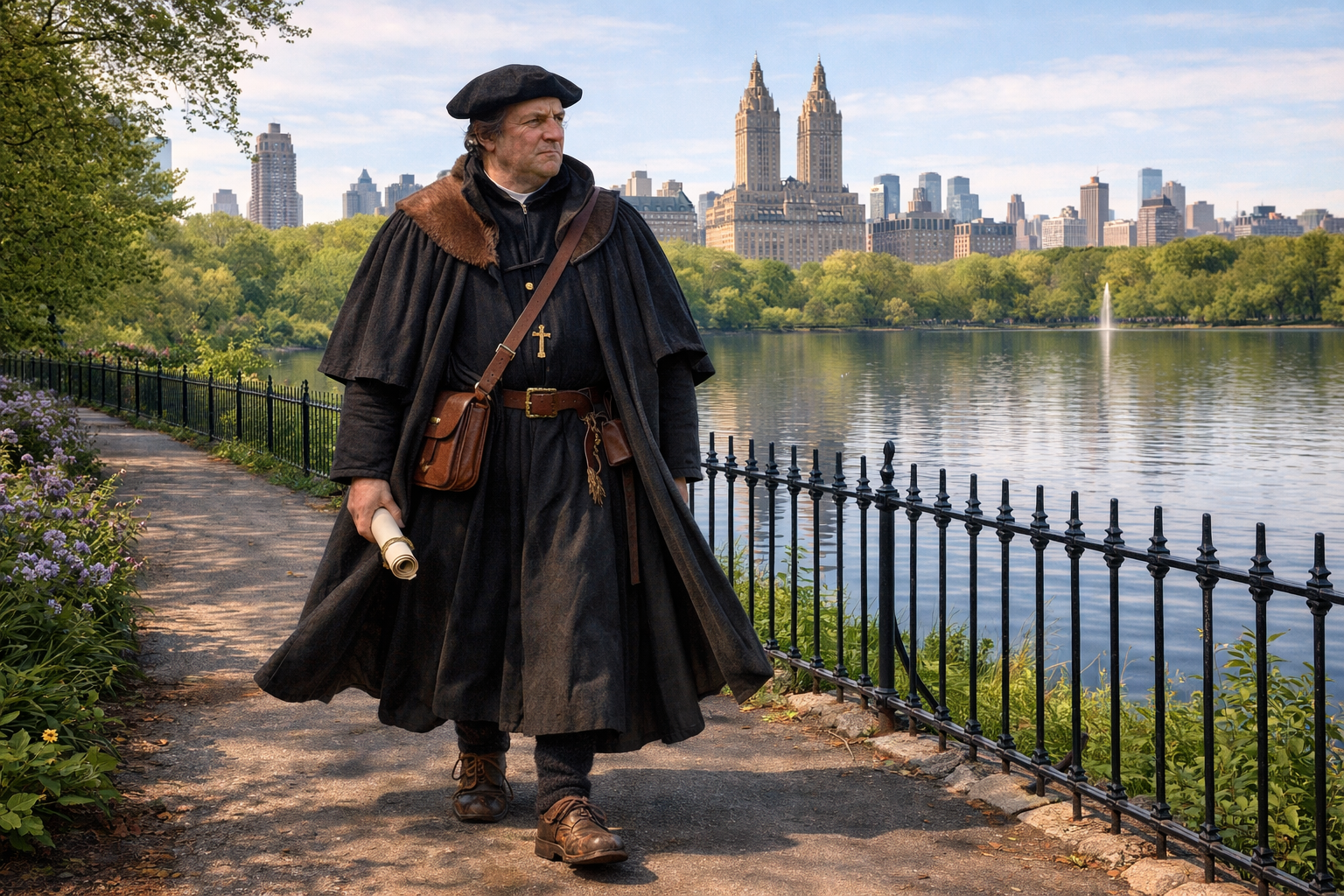
It is impossible to discuss Glaube in German without acknowledging that the word carries the full weight of the Reformation's central controversy. When Luther posted his theses in 1517 and declared that salvation came through Glaube allein, faith alone, he was making Glaube the hinge of the most consequential theological dispute in European history.
The Catholic position, in Luther's reading, was that salvation required a combination of Glaube and Werke, faith and works. You had to believe and you had to perform the required acts of piety, penance, and sacramental participation. The Church mediated between the individual and God, Glaube alone was insufficient without the institutional apparatus.
Luther's counterposition was radical, Glaube allein, Sola fide. The individual's direct, unmediated relationship of trust with God was the only thing that mattered. Glaube in this account became the most intimate, most personal, most irreducibly individual act. Something no institution could perform on your behalf or validate on your account.
The resonance with Lohengrin is not coincidental. Elsa's Glaube in the knight is exactly this. A personal, unmediated, institutionally unvalidatable commitment. No one else can verify it for her. No authority can grant her certainty. She must hold it herself, from the inside, without demonstration. When the community around her, Ortrud, Telramund, even the wedding guests, begins to demand that the belief be grounded and justified, they are making the same move the Catholic institutionalists made. Demanding that Glaube be supplemented by something external, verifiable, demonstrable.
Wagner was writing in 19th-century Germany, where the Lutheran inheritance was not historical background but living cultural air. The Glaube allein problematic, the question of whether personal, ungrounded commitment can sustain a life or a community, was a theological question that had become a philosophical and political one. Lohengrin dramatizes it without resolving it. Whether Elsa is right to believe, or right to finally demand grounds, or whether the whole structure is simply impossible, the opera holds all three possibilities in suspension.
Das Verb: Glauben im Alltag / The Verb in Everyday Use
While der Glaube carries philosophical and religious weight, the verb glauben is among the most ordinary words in daily German. Understanding both registers is essential.
Ich glaube schon. I think so. / I believe so. (Casual agreement, mild conviction)
Das glaube ich dir. I believe you. (I accept what you're telling me)
Ich glaube, es war anders. I think / believe it was different. (Epistemic hedge — I'm not certain)
Wer's glaubt, wird selig. Whoever believes that is blessed / naive. (Ironic proverb, used to express disbelief in what someone claims)
Ich kann es kaum glauben. I can hardly believe it. (Surprise, wonder)
The casual everyday uses of glauben are constantly present in German speech. They are the linguistic sediment of Glaube's full range. Every time a German speaker says ich glaube before an opinion, they are, at however faint a remove, invoking the same word that Luther placed at the centre of the Reformation.
Key grammatical note: glauben takes a dative for believing a person and an accusative for believing a thing or proposition:
Ich glaube dir. I believe you. (dative: the person is trusted)
Ich glaube das. I believe that. (accusative: the proposition is held)
Ich glaube an Gott. I believe in God. (an + accusative: commitment to a being or principle)
The glauben an construction, to believe in something, is the deepest form. Not merely accepting a proposition, but committing to the existence and value of something. An etwas glauben is what Elsa must do. Not merely believe that the knight is good, but believe in him as a presence, a reality, a person whose nature does not require her verification.
Grammatik auf einen Blick / Grammar at a Glance

Der Glaube is masculine and belongs to the mixed declension (n-declension in some older forms):
The genitive des Glaubens appears in the key compound Glaubenssatz (article of faith, dogma) and in phrases like des Glaubens wegen (for the sake of faith).
Key compound nouns: die Glaubensfrage (a matter of faith, a question of belief), der Glaubenssatz (article of faith, dogma), der Glaubenssprung (leap of faith, the Kierkegaardian Sprung applied to Glaube), der Unglaube (disbelief, incredulity, the un- prefix marking its absence).
Verwandte Wörter / Related Words
Glauben (v.), to believe, to think, to consider
Der Gläubige / die Gläubige, the believer (person of faith)
Ungläubig (adj.), unbelieving, incredulous
Der Unglaube, disbelief, incredulity
Das Vertrauen, trust, confidence (the March word that follows, more interpersonal and relational than Glaube)
Die Überzeugung, conviction, certainty (stronger than Glaube, closer to Wissen)
Der Aberglaube, superstition (literally super-belief, excessive or misplaced Glaube)
Glaubwürdig (adj.), credible, believable, trustworthy
Die Glaubwürdigkeit, credibility, trustworthiness
Der Zweifel, doubt (the force that destroys Glaube in the opera)
Zweifeln (v.), to doubt
Die Verbindung zum Weg / Connection to the Walk

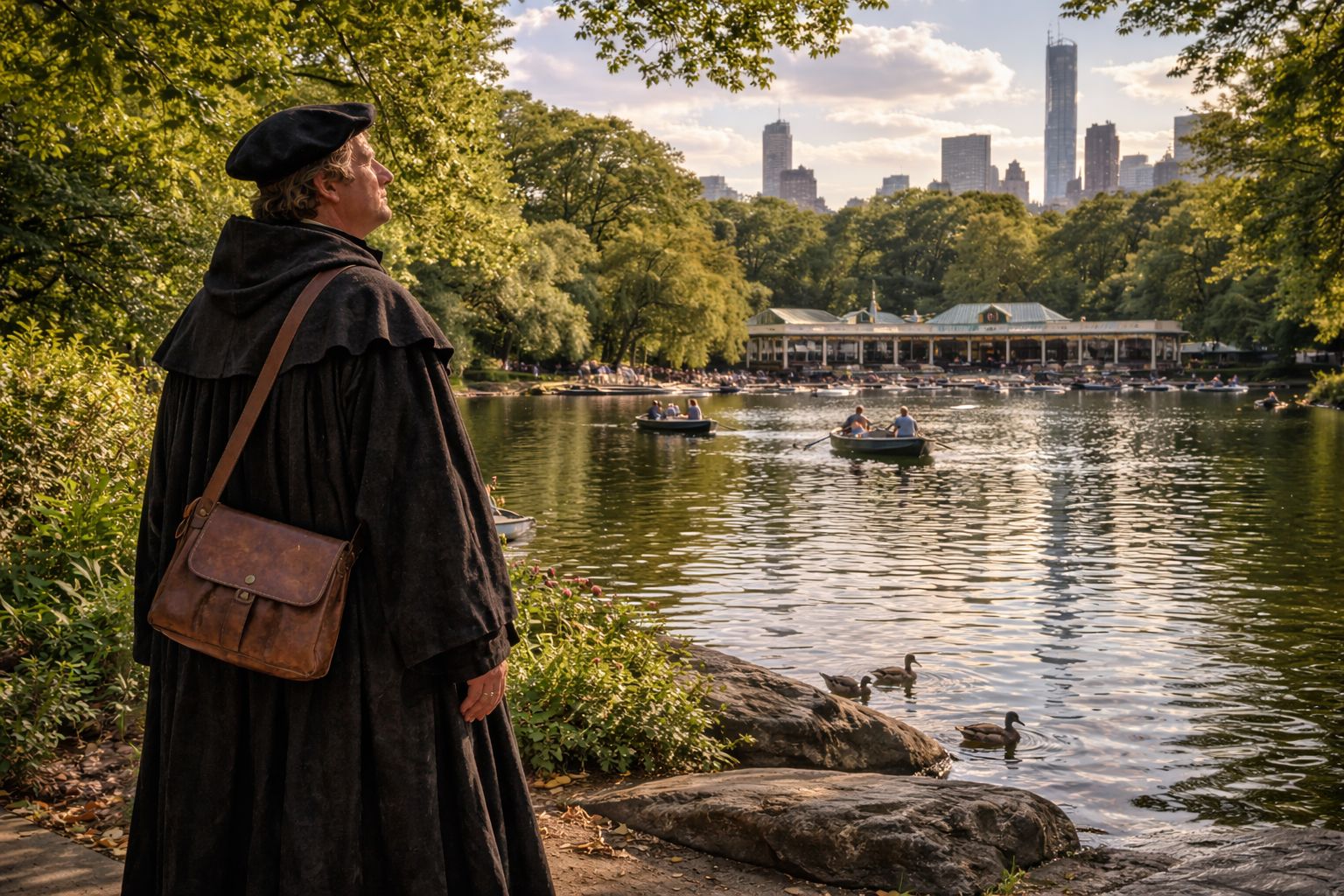
The reservoir in Central Park is the walk's opening site, and the instruction there is atmospheric and perceptual. To let your eyes follow a single bird or ripple across the water and pretend it is the swan boat, barely visible in mist. This is an instruction in Glaube as a perceptual practice. To hold something in imagination as real, to maintain the seeing even when what you see is only distantly and incompletely there.
The Prelude's famous opening, very high, quiet strings, Wagner wanting it to feel like light filtering down from the Grail realm, enacts Glaube musically. The sound presents itself not as a statement but as an intimation. Something is there, in the high registers, and you must commit your attention to it before it comes fully into focus. You have to believe it before you can hear it clearly. The music rewards Glaube; it withholds itself from inattention.
St. John the Divine carries this further. The walk's instruction inside the cathedral is to replay Elsa's Dream without the recording, to carry the music internally, without external support. This is Glaube in its most intimate form. Holding something real in your mind without the prop of the sound itself, trusting that your internal hearing is adequate to the task. You believe the music is there because you have heard it. You maintain it through Glaube alone.
The Roerich Museum is the walk's terminal point, and it is the most extreme test of Glaube. A nearly hidden townhouse, easily missed, housing the work of an artist almost unknown to most walkers, presenting canvases of Himalayan temples as stand-ins for a medieval German Grail castle. To be in that space and let In Fernem Land open it into something mythic requires the same act of committed imaginative trust that Elsa is asked to sustain. You have to believe the painting is Monsalvat. You have to hold the connection. The moment you step back and say it's just a painting, it's just a small museum on 107th Street, the Grail recedes. Not because it was never there, but because Glaube was withdrawn.
Glauben ist kein Wissen. Aber ohne Glauben gibt es kein Sehen. Believing is not knowing. But without believing, there is no seeing. This is the March walk's epistemological proposition, and it is the opera's, and it is the grammar of Glaube at every register the word inhabits.
Further Reading