The Administered Walk: Interviewing Theodor Adorno
An interview conducted in the gap between the promise of art and what society does with that promise. He arrived exactly on time, which he regards as suspicious.
Aufbruch/Matt: Herr Adorno. I want to ask you about a practice that uses Wagner's music as a method for walking through a city.
Theodor Adorno: Already I have several objections. Not to the practice itself, necessarily, but to the confidence of the word method. A method implies reproducibility. It implies that the same inputs reliably produce the same outputs. If what you are describing is genuinely an encounter with music and place, then the word method is already doing something ideological. It is administering the experience before the experience has occurred.
Aufbruch/Matt: The structure is deliberately open. The music scores the walk but doesn't determine it. Each walk is different.
Theodor Adorno: The music of Wagner is not open in the way you are suggesting. It is among the most totalizing artistic structures ever conceived. The leitmotif system does not invite the listener to wander freely among meanings. It directs the listener toward predetermined associations with extraordinary efficiency. To walk through a city with Wagner in your ears is not to open the city to interpretation. It is to subject the city to a very powerful interpretive apparatus that Wagner built for his own purposes. The question is whether you are using that apparatus or it is using you.
Aufbruch/Matt: I would say both are happening simultaneously.
Theodor Adorno: That is a more honest answer than I expected. But I want to press on it. The simultaneous use and being-used is the condition of all engagement with the culture industry, and Wagner stands at the threshold of that industry in a particular way. He was the first composer to conceive of his work as total, immersive, deliberately overwhelming. The darkened theater, the sunken orchestra pit, the demand that the audience surrender their critical faculties to the experience. This is not neutral technology. It is a specific pedagogy of submission. When you describe losing yourself on the walk, dissolving into the music and the city, I want to ask: who benefits from your dissolution?
Aufbruch/Matt: I'm not sure the question of benefit applies to a private practice.
Theodor Adorno: There is no private practice. This is perhaps my most fundamental disagreement with the Romantic tradition that Wagner inherits and extends. The inward turn, the cultivation of private aesthetic experience as a refuge from the administered world. This is not resistance to the administered world. It is its mirror image. The administered world wants subjects who have learned to find their freedom in controlled aesthetic experiences. The concert hall. The festival. The scored walk. These are not escapes from administration. They are its most sophisticated products.

Aufbruch/Matt: And yet you spent your life with music. You were a serious composer. You wrote more carefully about Beethoven and Wagner than almost anyone.
Theodor Adorno: Because the contradiction is where the truth lives. I did not write about music to celebrate it. I wrote about it to understand what it was doing and what it was being done to. Wagner is the most important and most dangerous composer of the 19th century for precisely the same reasons. The music knows things the man did not know. It contains a critique of the world it helped to make. To hear that critique you have to resist the music's own invitation to simply be overwhelmed by it. The overwhelming is the problem. Your walks are, by your own account, organized around the experience of being overwhelmed. Of surrendering. I find that troubling.
Aufbruch/Matt: You wrote that there is more truth in the dissonances of Schoenberg than in any affirmative statement. Is it possible that the walk's surrender is its own kind of dissonance? Against the productivity logic of the city?
Theodor Adorno: [a pause which suggests reluctant reconsideration] That is not an uninteresting argument. The refusal of utility, the insistence on duration and attention in a city organized around their elimination. There is something genuinely counter to the logic of exchange value in what you are describing. Walter would have found something in it. I am less convinced. The problem is that the gesture of refusal is insufficient unless it produces a changed understanding. The monk who withdraws from the world does not thereby change the world. The walker who loses himself in Wagner for four hours and then returns to the administered life has had an experience. Whether that experience constitutes critique or merely recovery for further administration is the question I cannot answer from outside the practice.
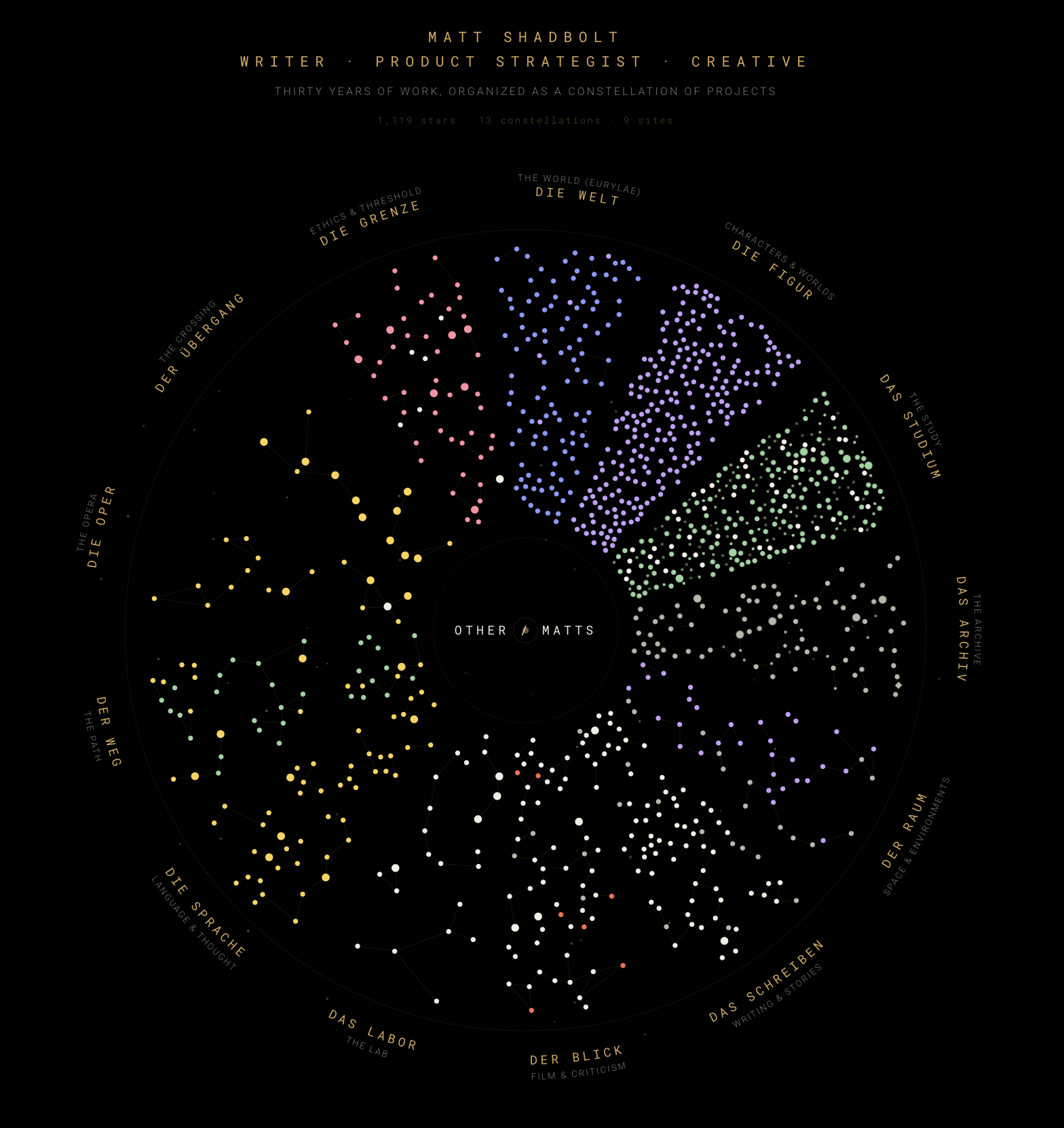
Aufbruch/Matt: The project produces essays, maps, language learning, data visualizations. It accumulates into something.
Theodor Adorno: Yes and this is where I become more interested and more suspicious simultaneously. The accumulation into a total artwork, text, image, sound, spatial practice, language, is itself a Wagnerian gesture. You are building your own Gesamtkunstwerk. And the Gesamtkunstwerk, as I have argued, is the form that wants to eliminate the gap between the art and the audience, between the work and the response. It wants to close the space in which critical thought operates. The question for your project is whether it is closing that space or keeping it open. Whether the accumulation is becoming a machine for producing predetermined meanings or whether it retains genuine negativity. Whether there is anything in it that disturbs you rather than confirming you.
Aufbruch/Matt: There is. The Baldwin interview in this same series disturbed me.
Theodor Adorno: Good. Then perhaps the series is doing something the individual walks cannot do alone. The self-examination, the imported critical voice, the willingness to be made uncomfortable, these are the elements that might redeem the project from being merely a beautiful private practice. Art that refuses to examine itself becomes ideology. You seem to know this. Whether you act on it consistently is something only the completed project will reveal.
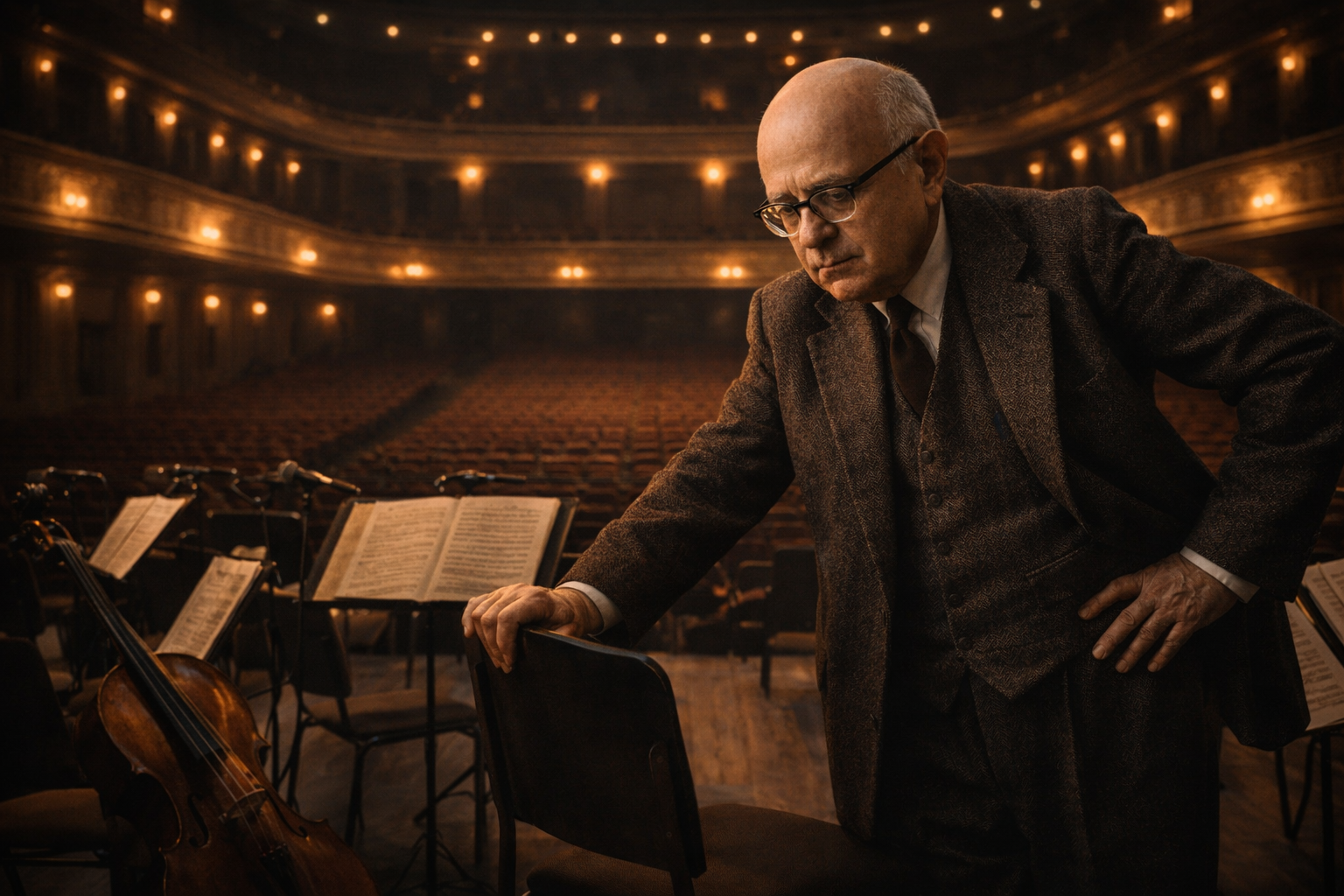
Aufbruch/Matt: Do you find anything in Wagner worth defending?
Theodor Adorno: Everything worth attacking is worth defending. That is the dialectic. The Tristan Prelude is the most radical harmonic gesture of the 19th century. It dissolves the tonal system from within, using the system's own logic. It produces a negativity that the Romantics could only gesture toward. In that sense it is more honest than almost anything that preceded it. It says: resolution is not available. The world does not resolve. Any art that pretends otherwise is lying. For that honesty, and for the technical means by which it is achieved, I will defend Wagner against his critics indefinitely. Against his admirers I have more reservations.
Aufbruch/Matt: Why more reservations about admirers than critics?
Theodor Adorno: Because critics at least maintain their distance. Admirers dissolve into the work and call it transcendence. The dissolution is precisely what the work is designed to produce and precisely what we should resist producing in ourselves. You can love Tristan and still refuse to be Tristan. That refusal is the most serious thing you can bring to the music.
He gathers his papers. They are extremely organized. The organization is not comfort but method — a way of keeping track of all the things that might otherwise be lost in the momentum of an argument. He does not say goodbye. He continues the conversation somewhere else, with someone who is not in the room, with the music that he has spent his life refusing to simply love.
Further Reading