The Labyrinth That Knows You Are Inside It: Interviewing Jorge Luis Borges
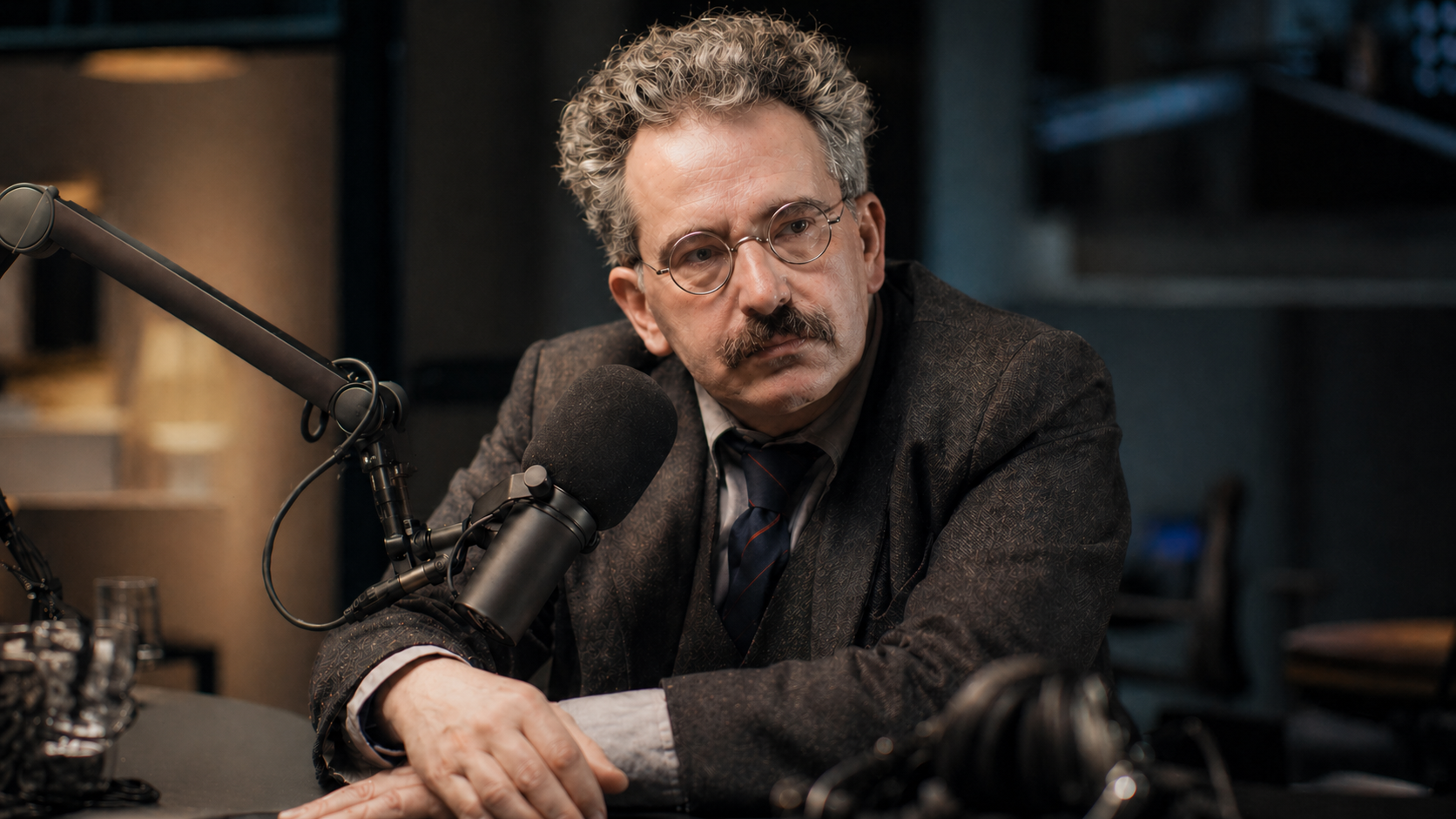
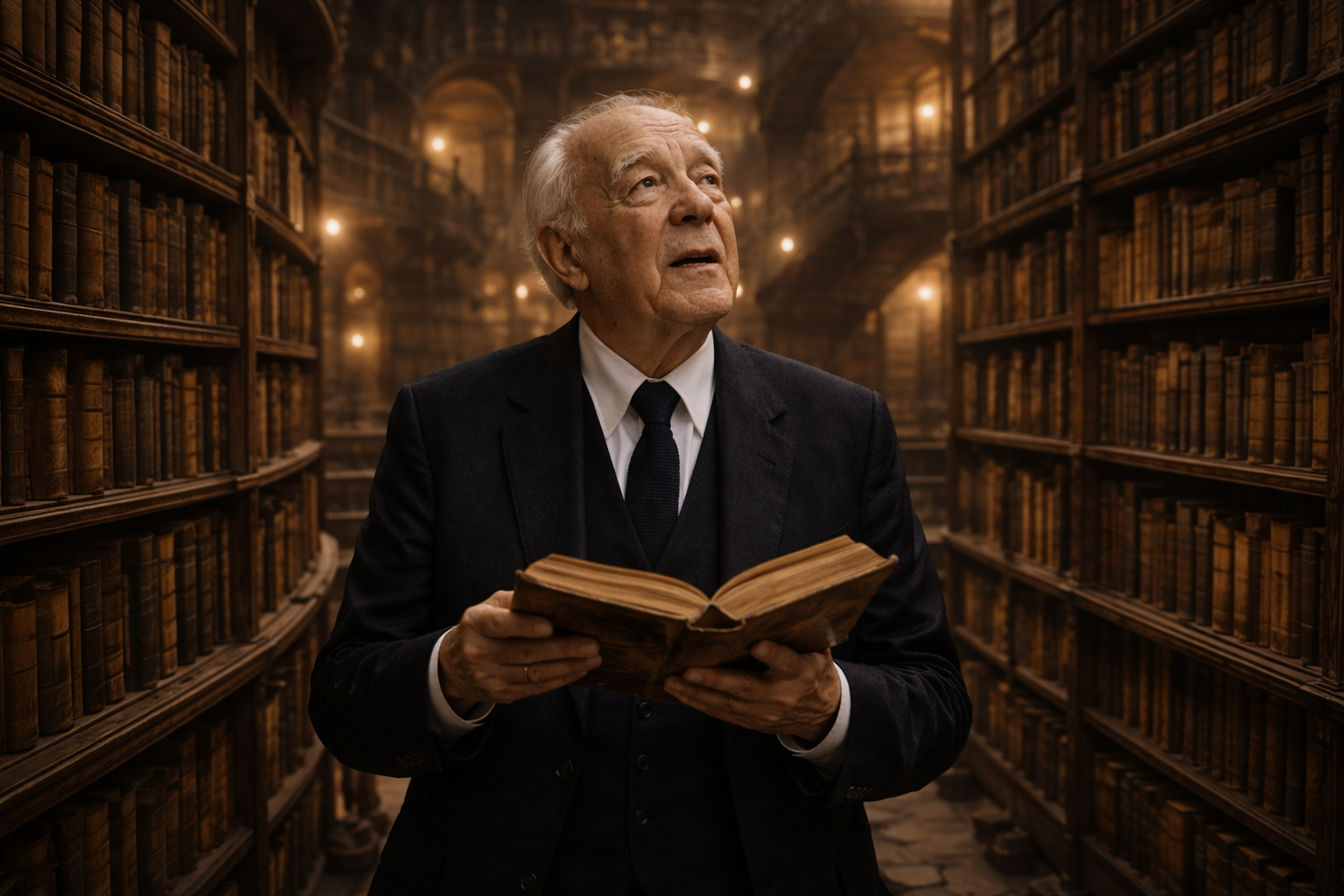
An interview conducted in a library that is also a city that is also a year. He arrived without difficulty. He has always known where everything is.
Aufbruch/Matt: Señor Borges. You spent your life writing about labyrinths. I want to ask you about a project that might be one.
Jorge Luis Borges: All serious projects are labyrinths. The ones that know it are simply more honest. Describe it to me.
Aufbruch/Matt: Twelve months. Twelve Wagner operas. One city walked repeatedly, each month scored to a different opera, accumulating a year of routes and recordings and essays and maps and language learning and photographs. The walker is also the writer is also the subject.
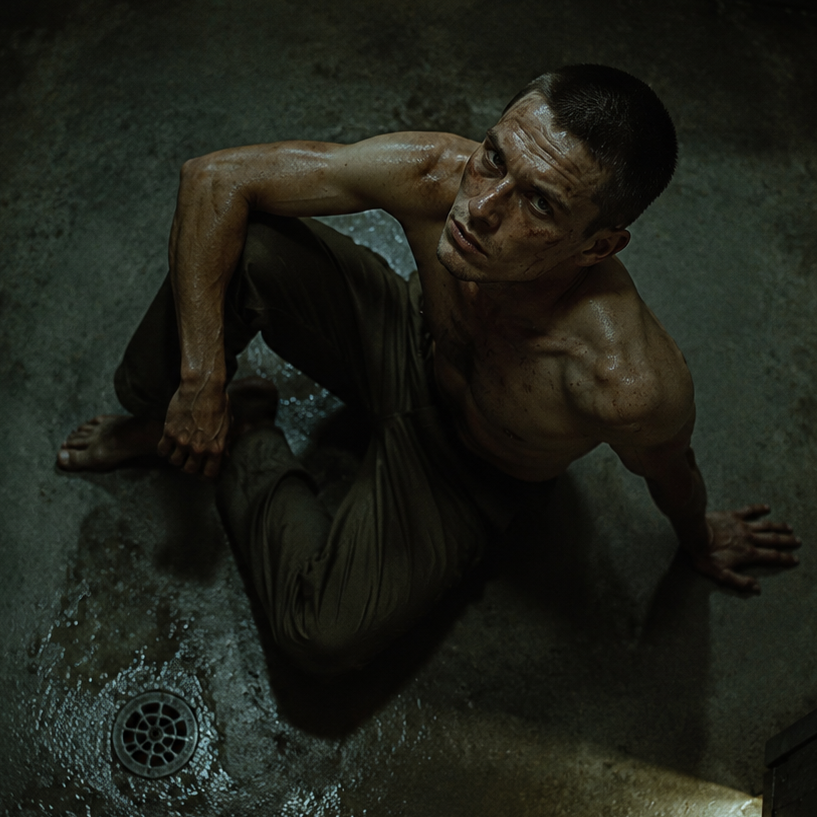
Jorge Luis Borges: The walker is also the subject. Yes. That is the problem with labyrinths that people tend to overlook. The labyrinth does not merely contain you. It produces you. The person who entered is not the person the structure is generating as it unfolds. By the time you reach the center, the center is no longer what you were looking for because you are no longer who was looking.
Aufbruch/Matt: That is something I have been trying to write about. That the longer the walk, the less I remain myself.
Jorge Luis Borges: You cannot remain yourself. The walk will not permit it. This is not mysticism. It is simple arithmetic. Each step is a decision and each decision is a small revision of the person who will make the next decision. Over sufficient distance, the revisions accumulate into someone else. This is also, I think, what happens in a very long piece of music.

Aufbruch/Matt: Wagner's operas are very long.
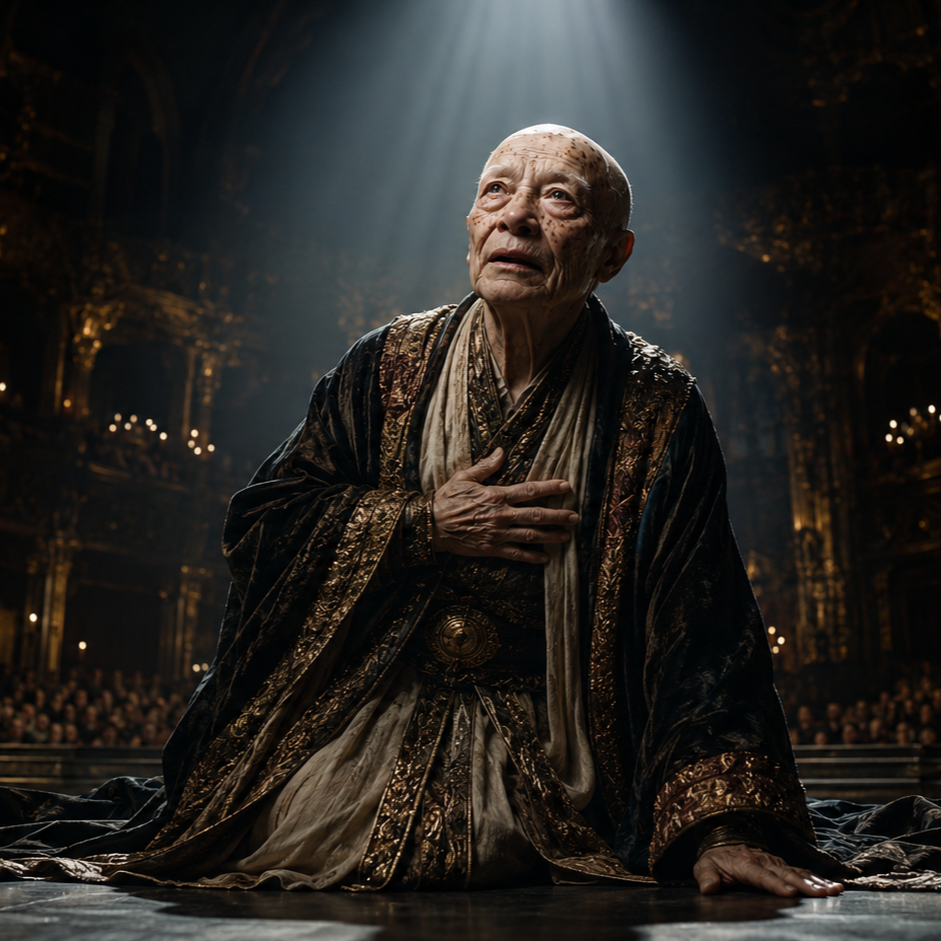
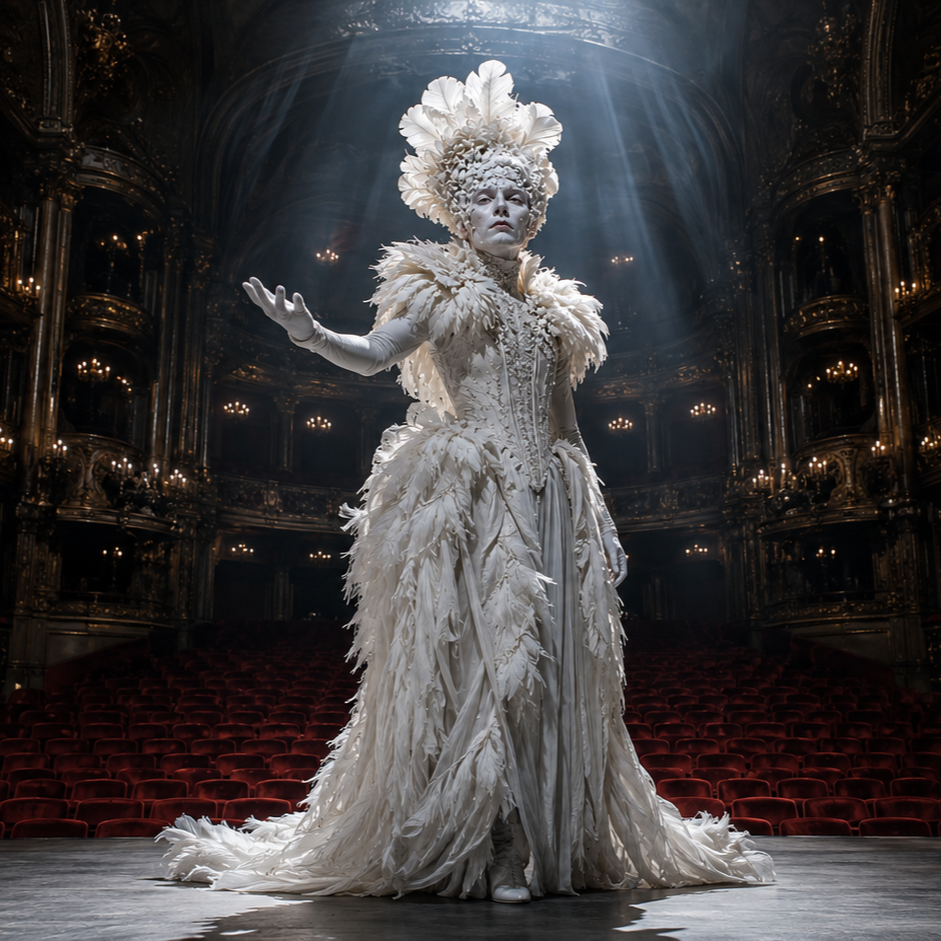
Jorge Luis Borges: Wagner understood that duration is a structural element, not a byproduct. The length of Tristan und Isolde is not the time it takes to tell the story. It is the time required to transform the listener into someone capable of receiving the ending. You cannot hear the Liebestod correctly at the beginning of the opera. The opera manufactures the ears that can hear it. This is also what your walk is doing. It is manufacturing the walker the walk requires.
Aufbruch/Matt: I have never heard it described that way.
Jorge Luis Borges: You have been living it. That is a different kind of knowing. Less precise and more complete.
Aufbruch/Matt: The project involves maps. Literal ones, of the routes through the city. I have been building them as interactive objects, layers of data laid over the physical streets.
Jorge Luis Borges: I wrote about a map once. An empire that commissioned a map of itself at a scale of one to one, so that the map covered the entire territory exactly. It was, of course, useless as a map. It was identical to the thing it described. Your maps interest me because they are doing something opposite and perhaps more dangerous. They are not trying to duplicate the territory. They are trying to add to it. The city exists. The walk exists. The map adds a third thing. A scored, intentional, interpreted version of both, and the walker who uses the map is now navigating three cities simultaneously. The physical one. The musical one. And the cartographic one.
Aufbruch/Matt: That is exactly the experience. The music changes what the streets mean.
Jorge Luis Borges: Of course it does. Music is a temporal labyrinth laid over a spatial one. When you walk with Wagner in your ears you are inhabiting two architectures at once. The city has its own structure of repetition and variation. The blocks, the avenues, the recurring geometry of a grid. Wagner has his own structure of repetition and variation, the leitmotifs, the harmonic returns, the themes that transform across acts. When these two structures are superimposed, neither one is fully itself. Each one is read through the other. The streets become musical phrases. The musical phrases become streets you can walk down.

Aufbruch/Matt: You were blind for the latter part of your life. You navigated Buenos Aires without sight.
Jorge Luis Borges: I navigated it by memory and by sound and by the particular quality of attention that blindness produces in those who were once sighted. You notice different things. The temperature of air around a building. The acoustic signature of a particular corner. The city becomes a text written in a language that sight does not read. I found, somewhat to my surprise, that I knew Buenos Aires more precisely after losing my sight than I had before. I had been looking at it. Now I was reading it.
Aufbruch/Matt: The project involves learning German. Twelve vocabulary words per month, each essay connecting a word to the walk and the opera.
Jorge Luis Borges: Now you are speaking my language. Literally and otherwise. Language learning at this level is not acquisition. It is archaeology. Every German word you encounter has been worn into its current shape by centuries of specific use, and the wearing is still visible if you know how to look. Sehnsucht is not translatable because no other language has needed precisely that shape of feeling badly enough to mint a word for it. The word is evidence of the feeling's existence in a particular culture at a particular historical pressure. To learn it properly is to inherit not just the word but the civilization that required it.
Aufbruch/Matt: I have been writing about words like Sehnsucht, Zerrissenheit, Hingabe. Each one connected to a specific opera and a specific walk.
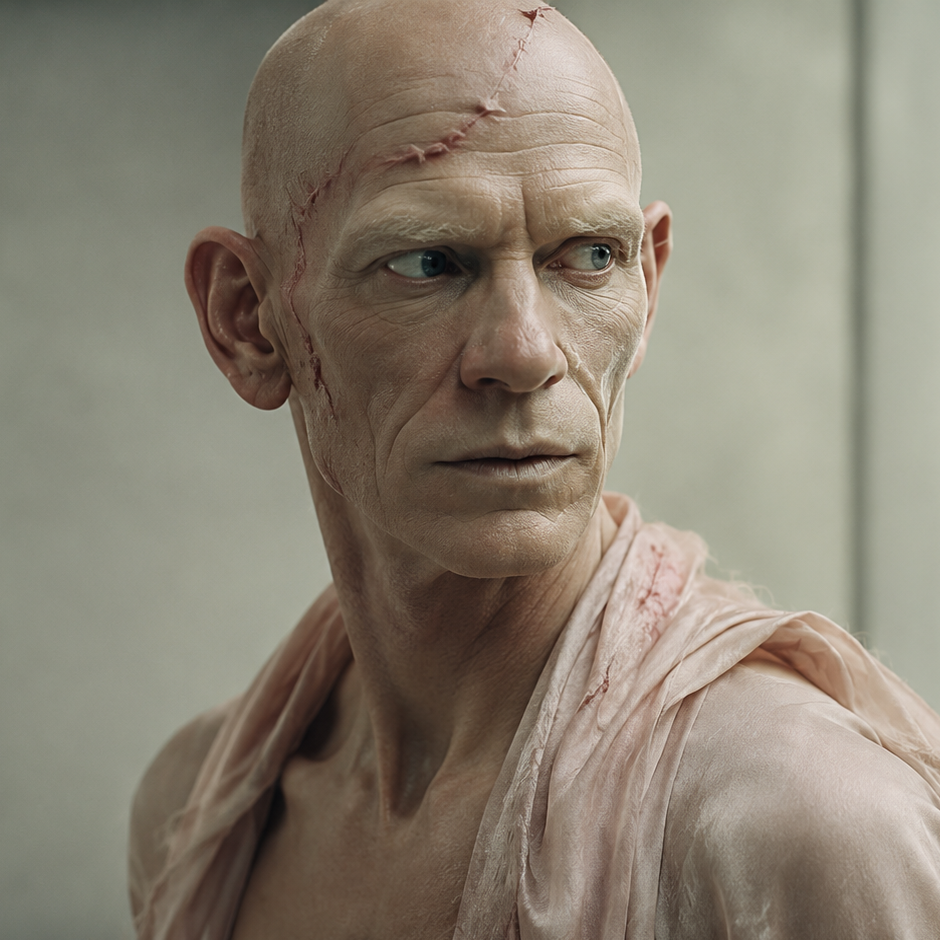
Jorge Luis Borges: You are building a personal lexicon. This is not merely a language exercise. A personal lexicon is a map of a sensibility. The words you choose to make yours, the associations you build around them, the routes through the city you attach to them. These collectively describe a mind. In a hundred years, if someone reads your essays and your maps together, they will know something about you that you yourself do not yet fully know. You are writing yourself into existence in a language that is not your native tongue, which means you are constructing a self that has no prior template. This is, I think, the most interesting kind of self-construction available.
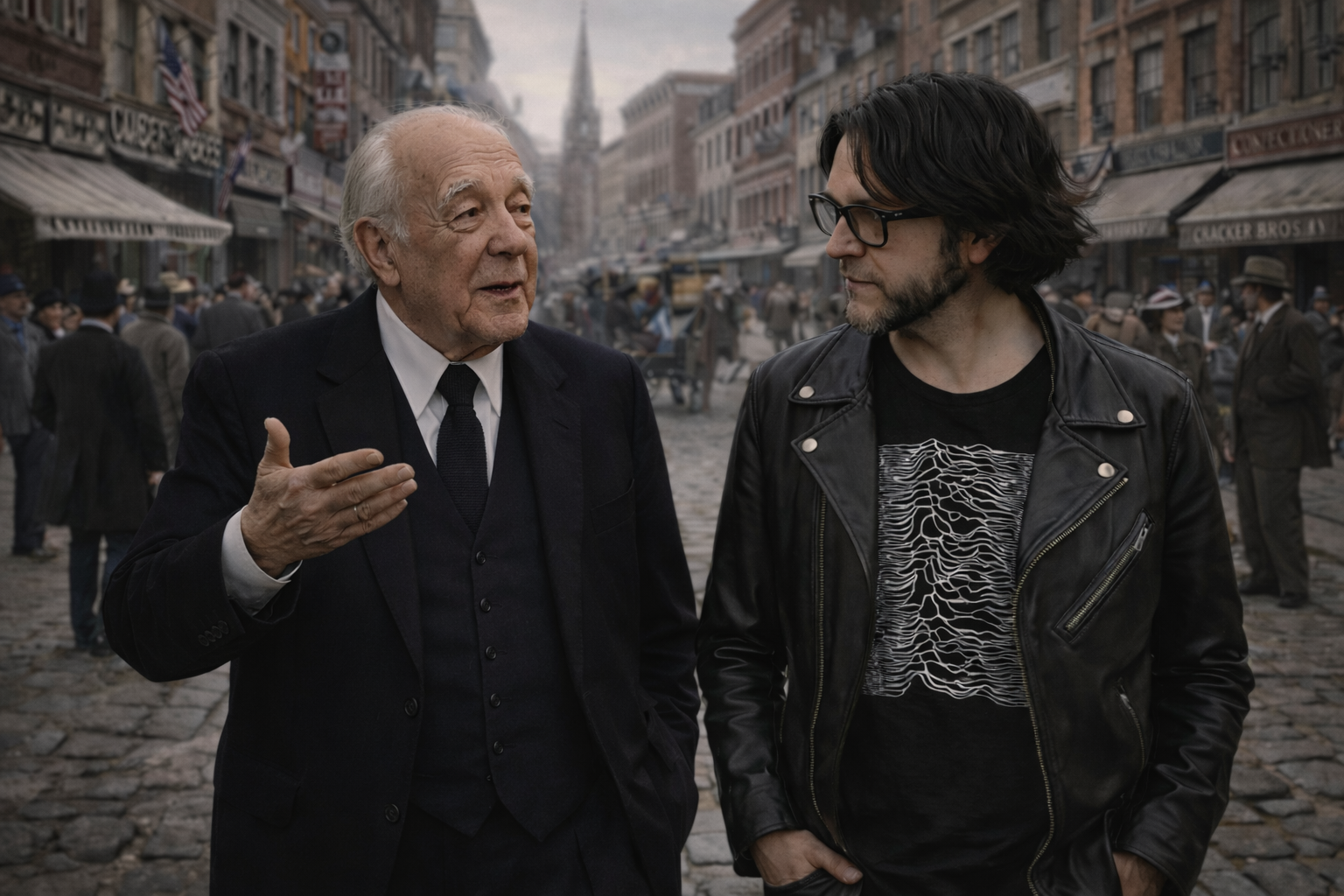
Aufbruch/Matt: The project is structured as twelve acts. Wagner's operas as the spine of a year.
Jorge Luis Borges: A year is itself a labyrinth with a known exit. You enter in January knowing you will emerge in December but not knowing who will emerge. Wagner chose to structure his major works as cycles precisely because a cycle implies both return and transformation. The Ring ends where it begins, at the Rhine, but what the Rhine means at the end is not what it meant at the beginning. The water is the same water. The meaning is not. Your year is structured the same way. January's Holländer and December's final opera occupy the same city and the same walker, but neither the city nor the walker will be identical to their January selves.
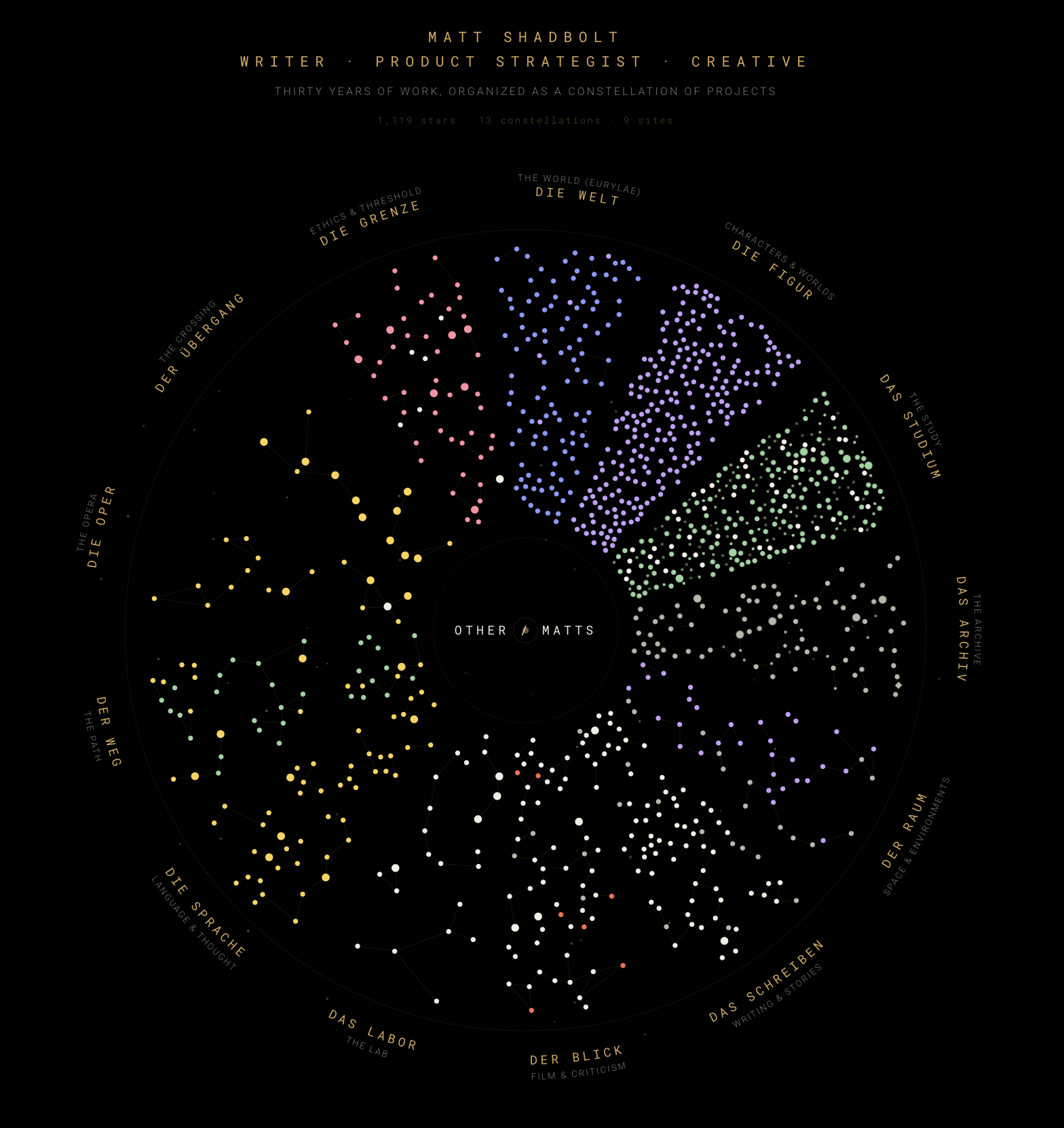
Aufbruch/Matt: You wrote about time repeating. About infinite libraries. About texts that contain all other texts. This project is accumulating something like that. Essays, maps, recordings, photographs, language, music, all layered over the same physical space.
Jorge Luis Borges: The Library of Babel contains every possible book. Most of them are meaningless. The meaningful ones are not more meaningful because they exist in the library. They are meaningful because a particular reader requires them at a particular moment. What you are building is a library of a life. One year, one city, one set of operas. Its meaning is not contained in any single element but in the intersections. The moment when a specific street corner and a specific passage of music and a specific German word and a specific October light all arrive simultaneously in a single walker's consciousness. That moment is the book. Everything else is the library that makes the book possible.
Aufbruch/Matt: I never know when those moments will come.
Jorge Luis Borges: You cannot know. If you could, they would not be what they are. The labyrinth must be genuinely uncertain or it is merely a corridor. The project you have built maintains its uncertainty precisely because the intersections are not scheduled. You walk and you listen and sometimes the three cities align and something occurs that could not have been planned. This is the only honest relationship between a maker and a work: you create the conditions and then you wait to be surprised by what you have made possible.
Aufbruch/Matt: There is an essay in the project about a dream. A dream that the project itself seemed to send, about a mentor who died.
Jorge Luis Borges: Dreams are the oldest form of the library. They have been running for as long as there have been sleepers and they contain more than the dreamer put in. Your mentor is in the project now. Not as a memory but as a presence the project generated from its own logic. This is not mysticism. It is simply what happens when you build something large enough and inhabit it long enough. The work develops its own intentions. It begins to dream.
Aufbruch/Matt: Does that frighten you?
Jorge Luis Borges: It is the only thing that interests me. The moment when the work exceeds the worker. When the library contains a book the librarian did not write. You set out to walk twelve months through New York with Wagner in your ears and the work has started generating its own contents. Dreams, languages, geometries, conversations with the dead. That is not a side effect. That is the project's actual subject. The rest is the conditions it required to become itself.
Aufbruch/Matt: One last question. The project ends in December. Then what?
Jorge Luis Borges: Then you will know what you built. You cannot know it before then. The labyrinth only reveals its shape to the person who has completed it, and even then only partially, only from one angle, only in the particular light of the moment of completion. There will be things the project meant that you will not understand for years. There will be a German word you learn in March that you will not know you needed until November. There will be a street you walked in January that will only make sense when you walk it again in a December that is no longer the same month in the same year.
This is not a problem. This is the architecture.
He is quiet for a moment. He is looking at something that is not in the room, or perhaps the room itself contains it. The shelves extending further than the walls should permit, the text of the city audible beneath the text of the conversation, the twelve months arranged not in sequence but simultaneously, each one present and illuminating the others. He has been here before. He will be here again. The labyrinth does not distinguish between the two.
Further Reading