Mai: Die Meistersinger von Nürnberg
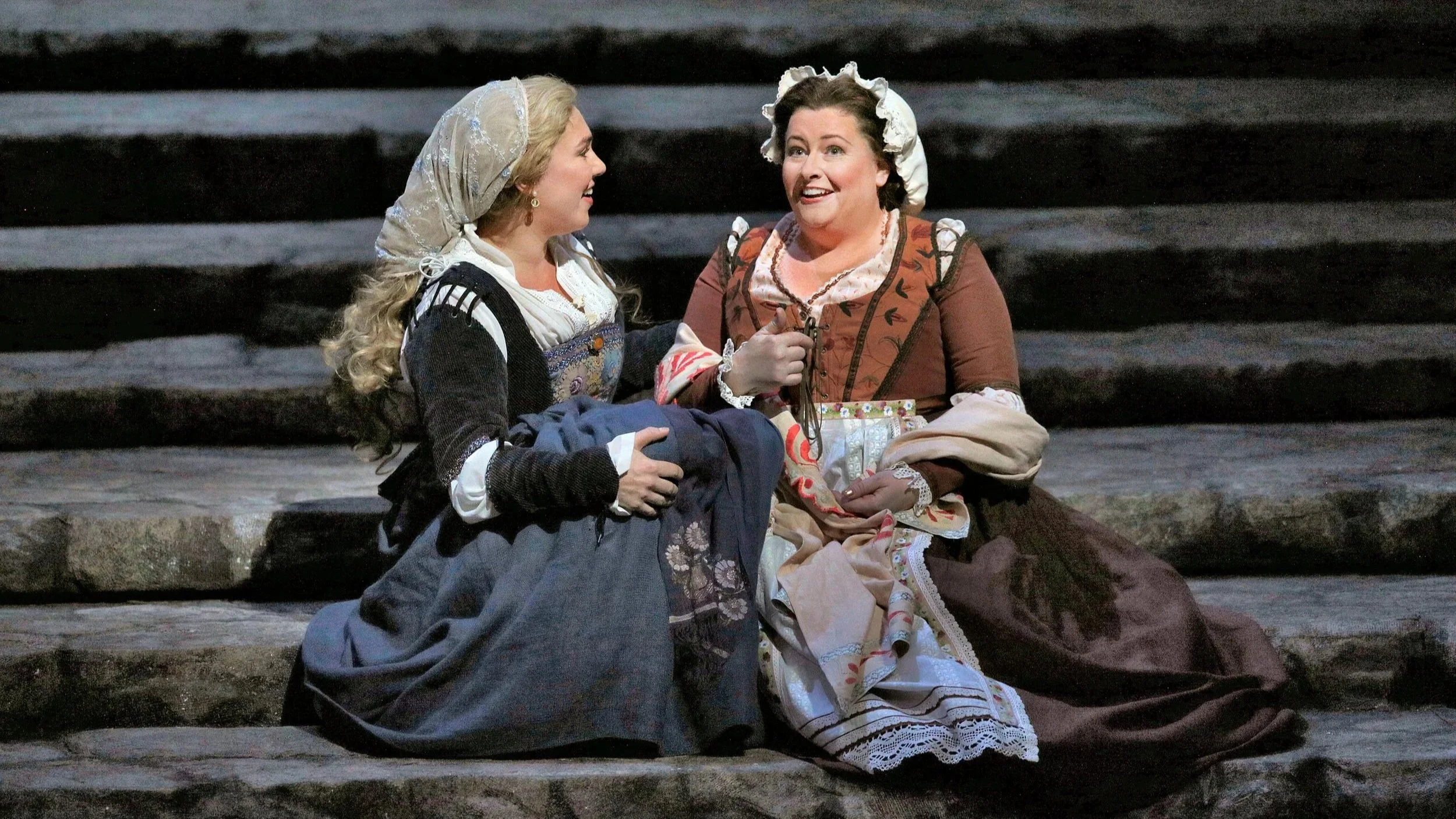
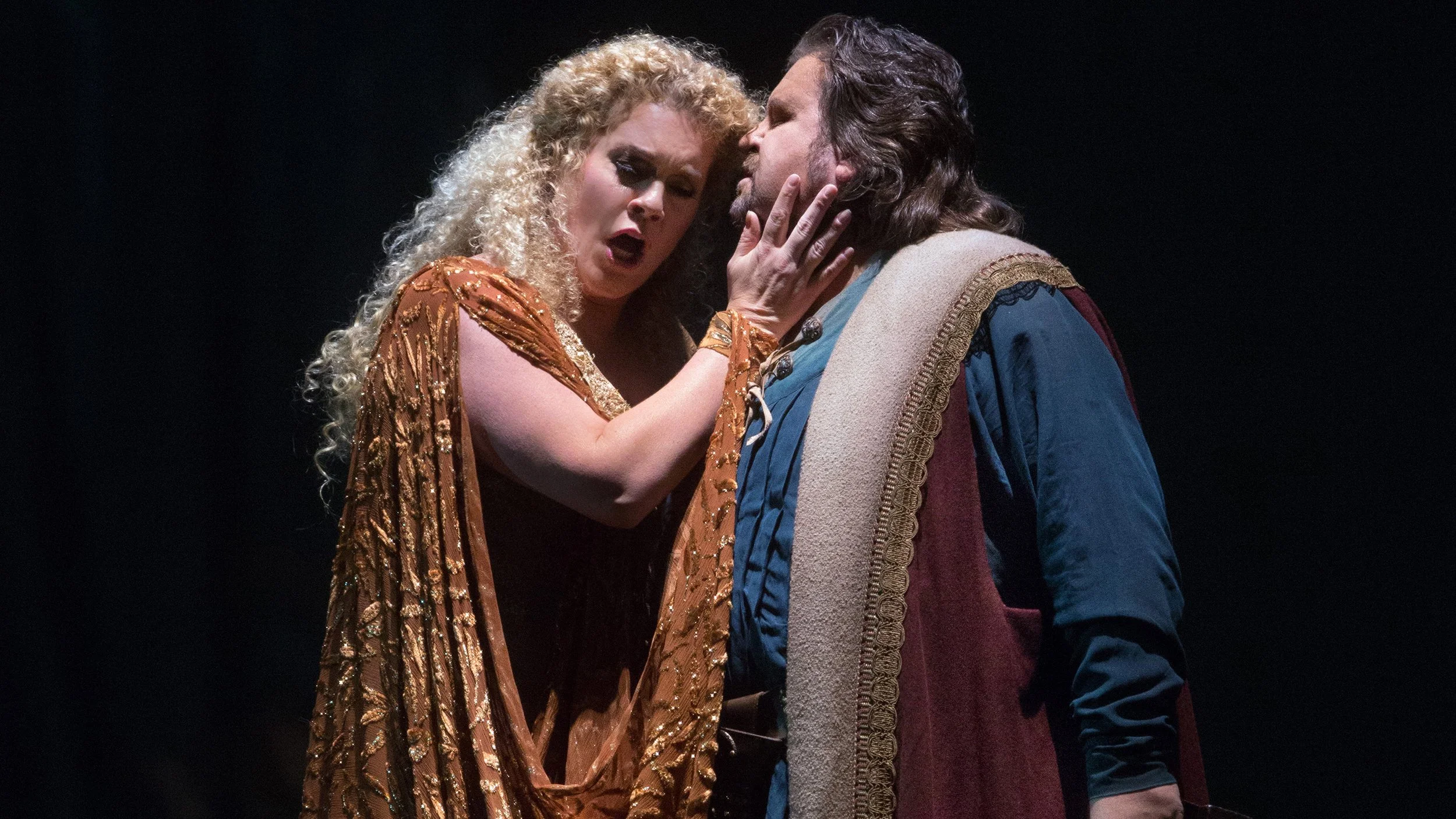
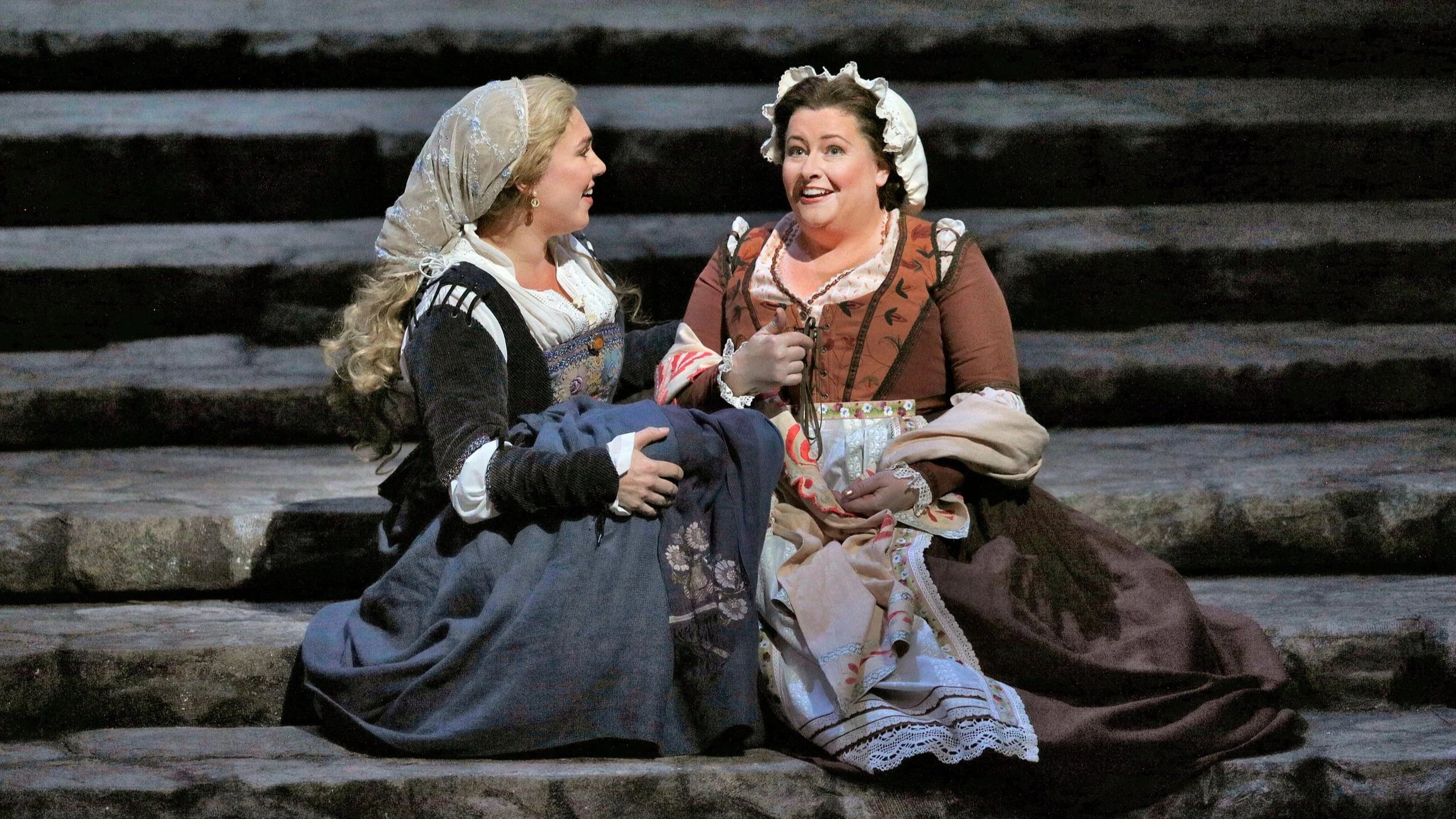
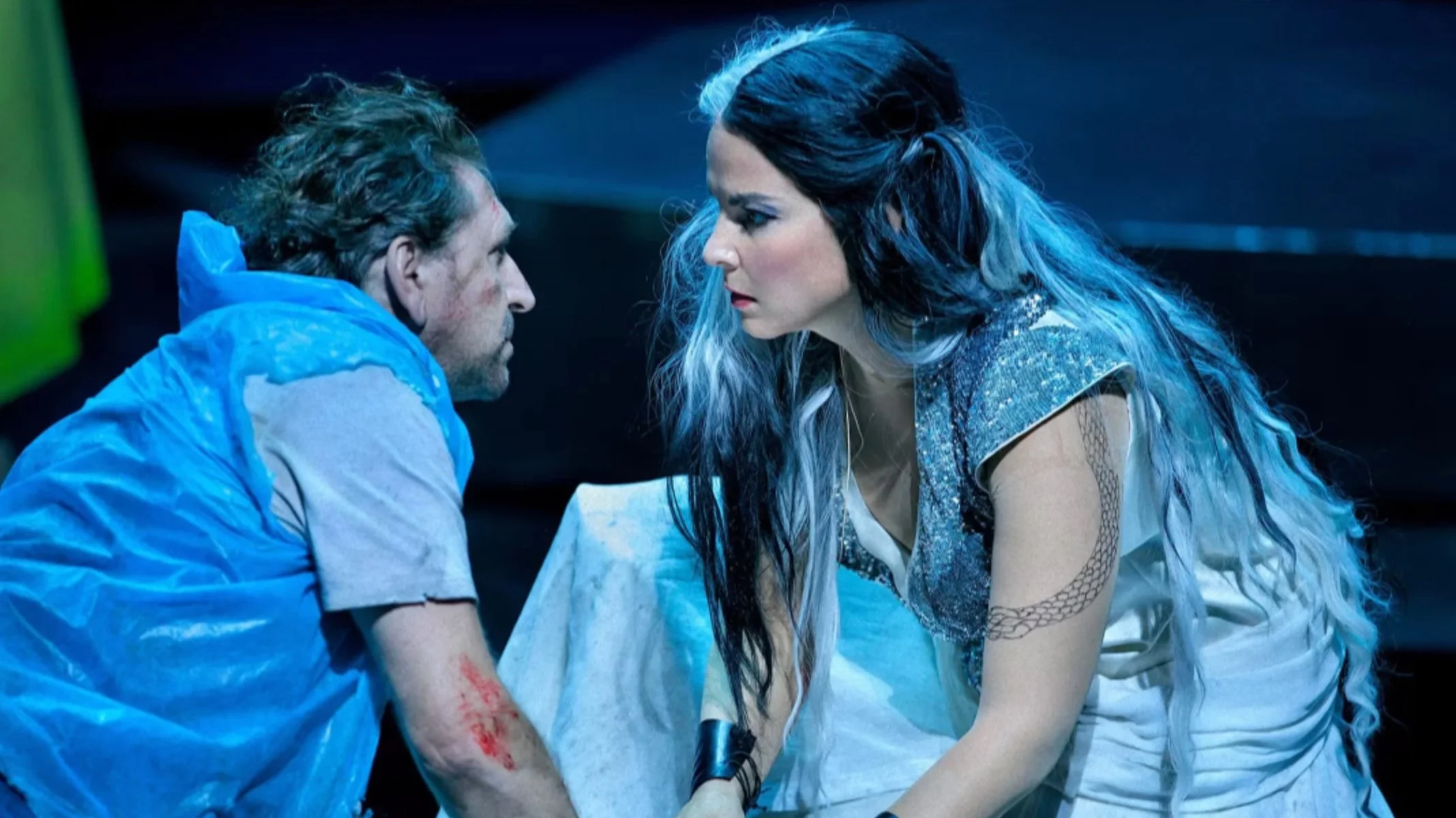
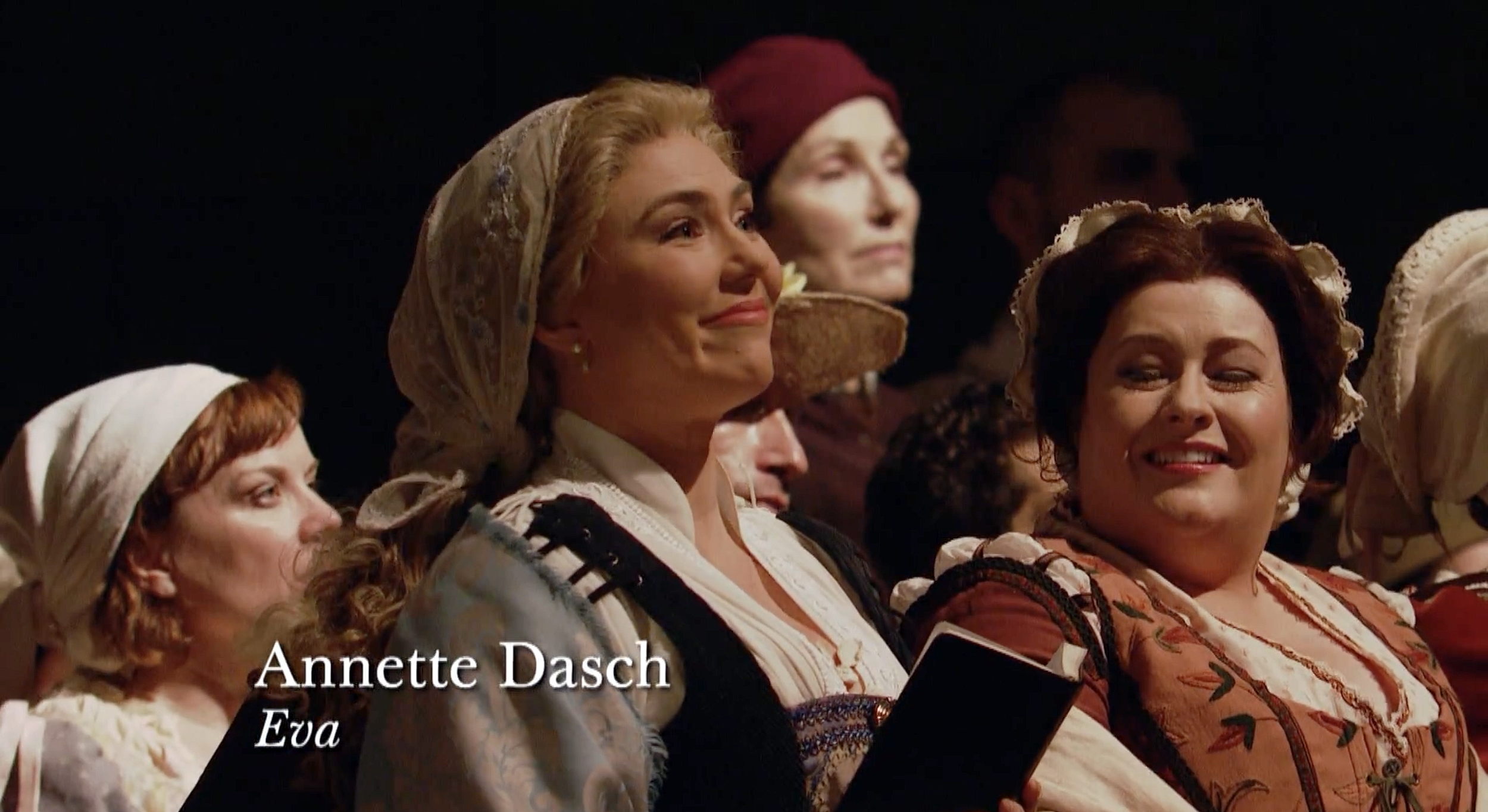
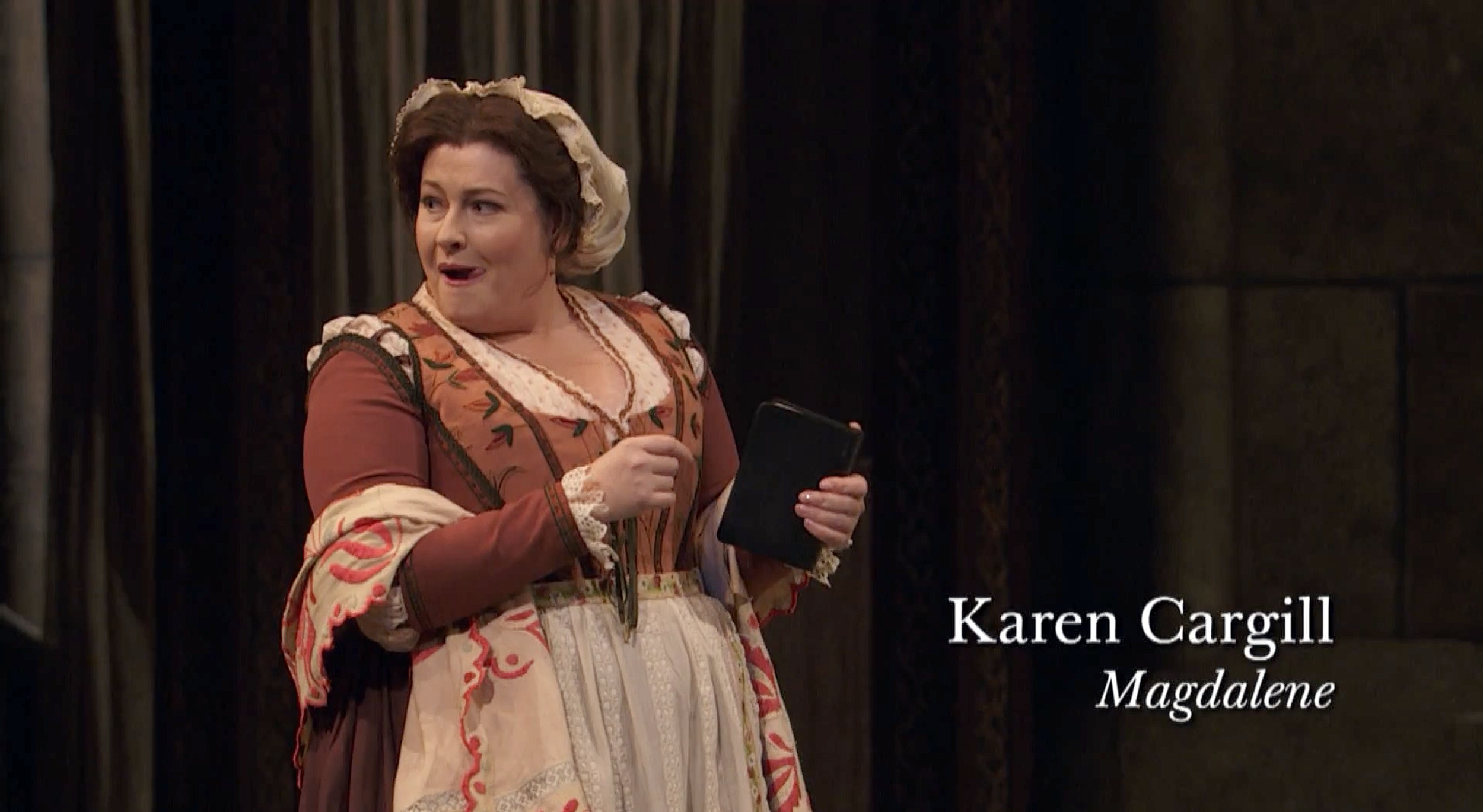
Annette Dasch as Eva and Karen Cargill as Magdalene in The Metropolitan Opera production of Die Meistersinger
Themen: Handwerk, Gemeinschaft, Wahn, Die Kunst unter anderen
Element: Goldenes Maillicht auf öffentlichen Plätzen, Ulmenalleen, Stadtleben
This walk treats Wagner not as repertoire, but as a composed method for moving through the city.
Das Ergebnis auf einen Blick
Dauer: Morning to late afternoon. Five to six hours. This is the only walk in the year's circuit that requires daylight. Begin at Union Square between 10am and noon. Finish at the Old Met block at dusk or after. Unlike April, which needed night, May needs the city's full light. The opera is a comedy in the strict sense, and it ends publicly, in open air, with a crowd gathered in a meadow to judge a song. The walk follows the same structure: from the civic square to the festival meadow to the house that kept the tradition alive.
Distanz: 4–5 miles of walking, with subway transit between stops. The circuit moves generally south to north and then back south: Union Square, then the Upper East Side, then Central Park, then Lincoln Center, then back down to 39th Street. The geography is not compact. Allow time for the transit and treat it as part of the score.
Beste Zeit: A Saturday in late May, when the park is at full spring density and the Naumburg Bandshell season has begun. The first warm Saturdays when people are genuinely outdoors for pleasure rather than transit. If you can time the Central Park stop with a Naumburg concert, do so. The walk is improved by the presence of an actual outdoor classical audience on the bandshell lawn.
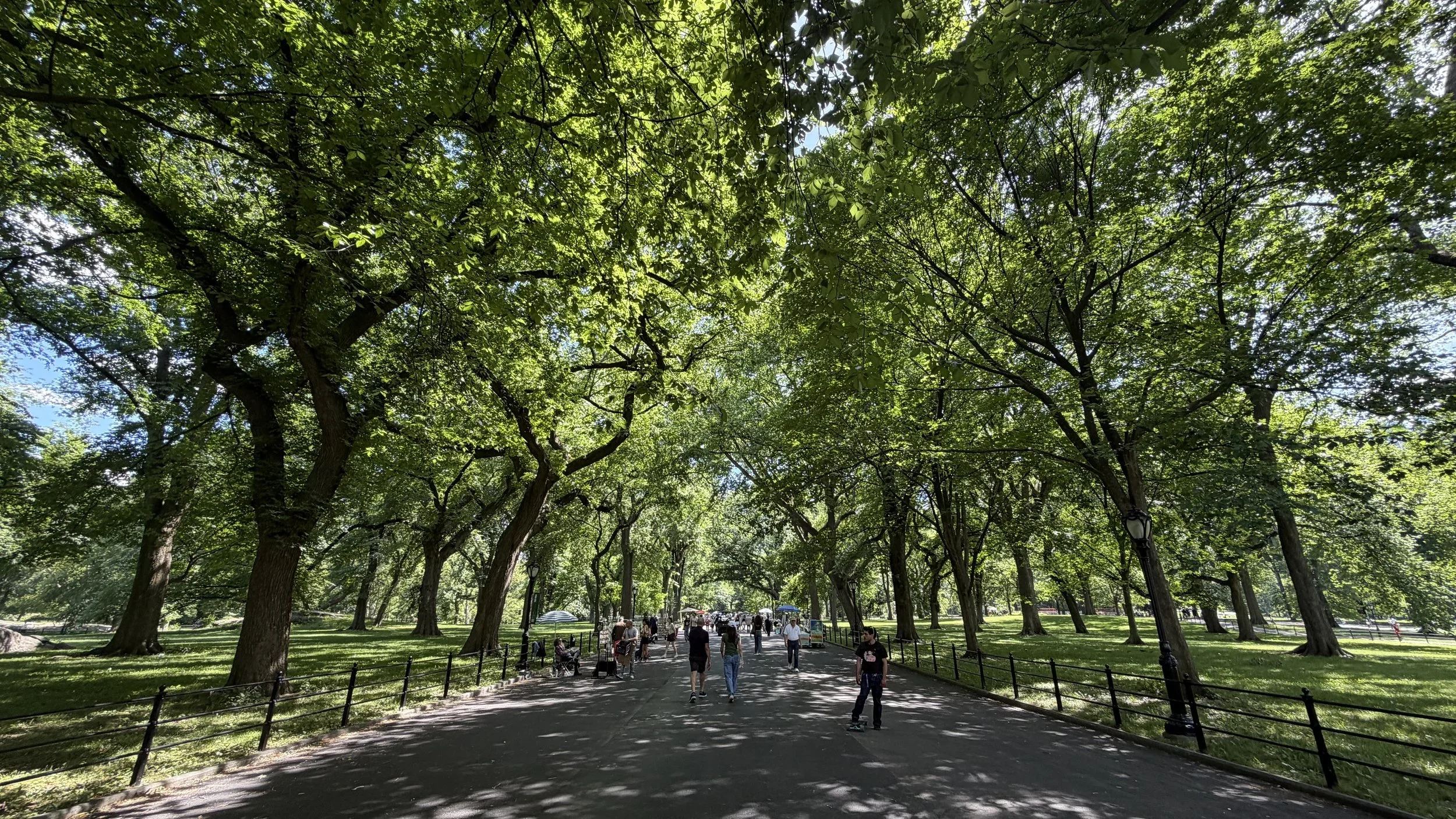
Wetter: May in New York means anything. Both conditions work. The Mall under the elms in light rain is the more private version of the walk. The Mall in full sun, crowded, is the public version. Meistersinger contains both. Rain makes the Old Met block more atmospheric. Sunshine makes Union Square and Lincoln Center Plaza feel genuinely festive.
Zugänglichkeit: Union Square, Central Park, and Yorkville are free and always open. The Naumburg Bandshell concerts are free when they occur; check naumburg.org for the May schedule. The Metropolitan Opera's Lincoln Center plaza is free without a performance ticket, as are the lobby and lower-level public spaces. The Old Met block is public street.
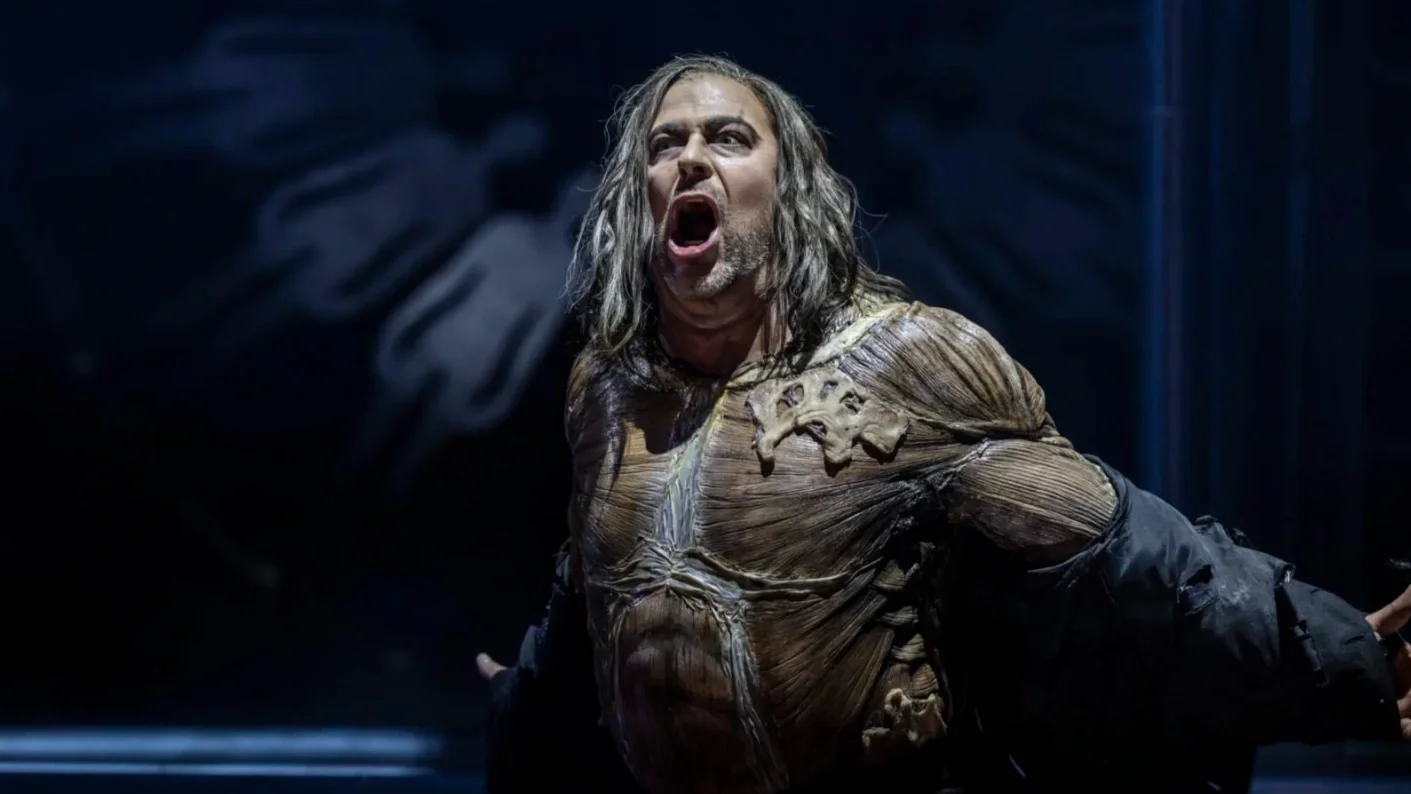
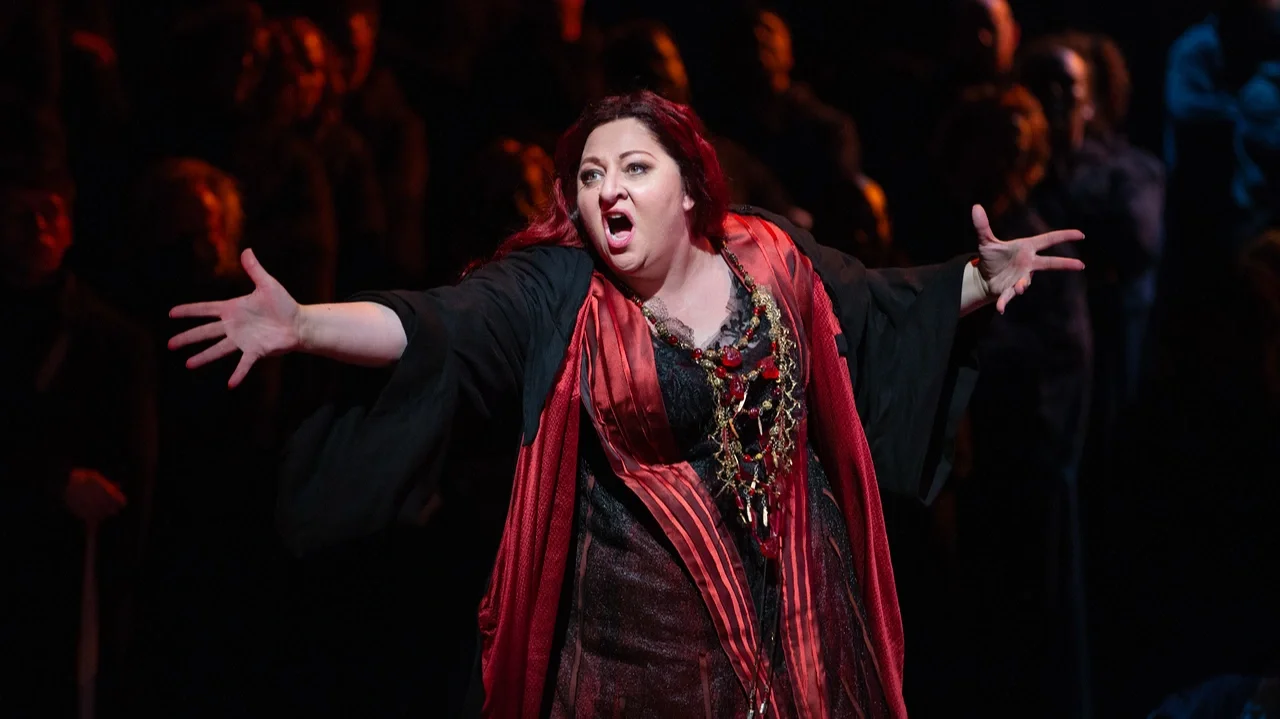
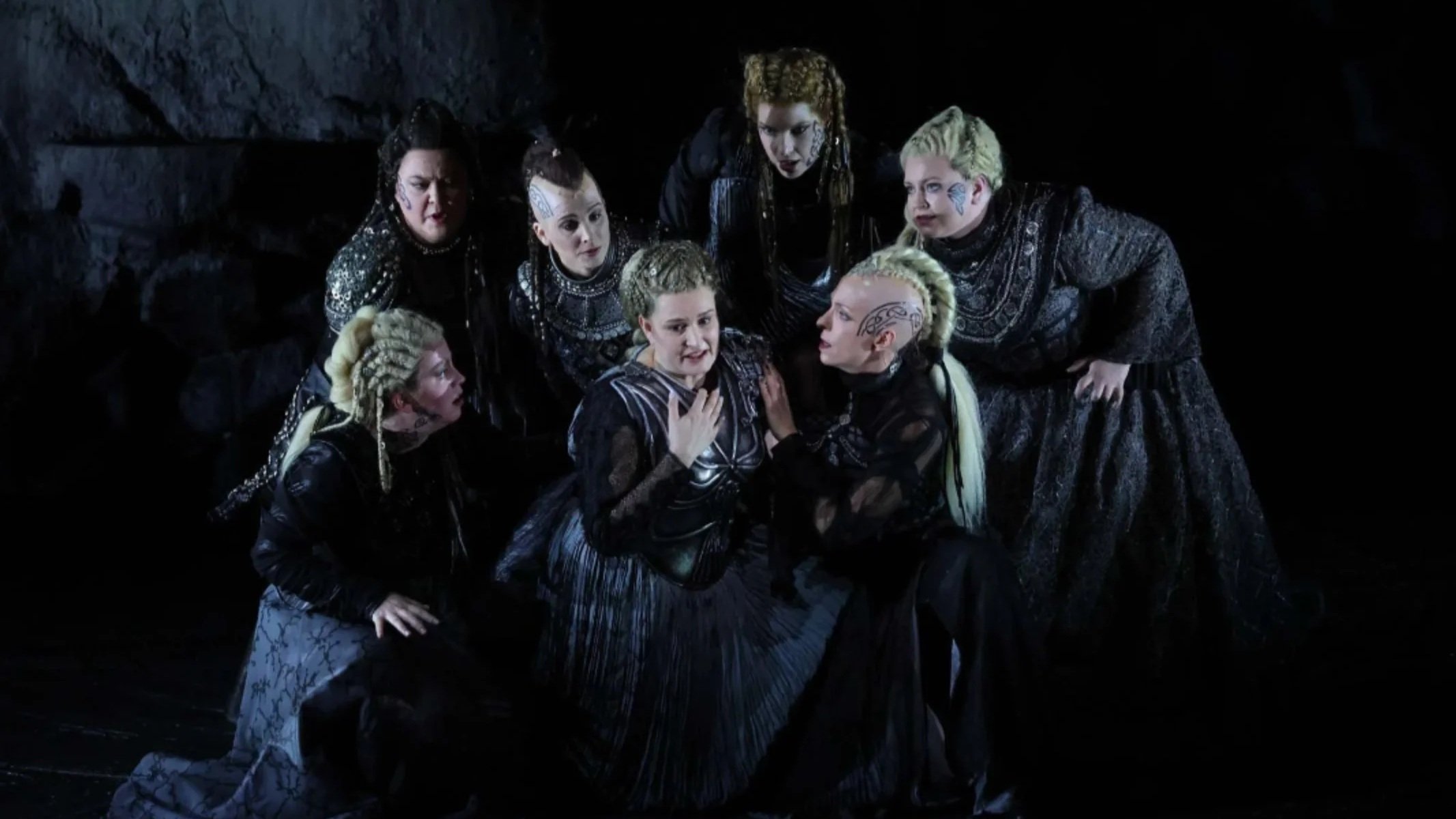
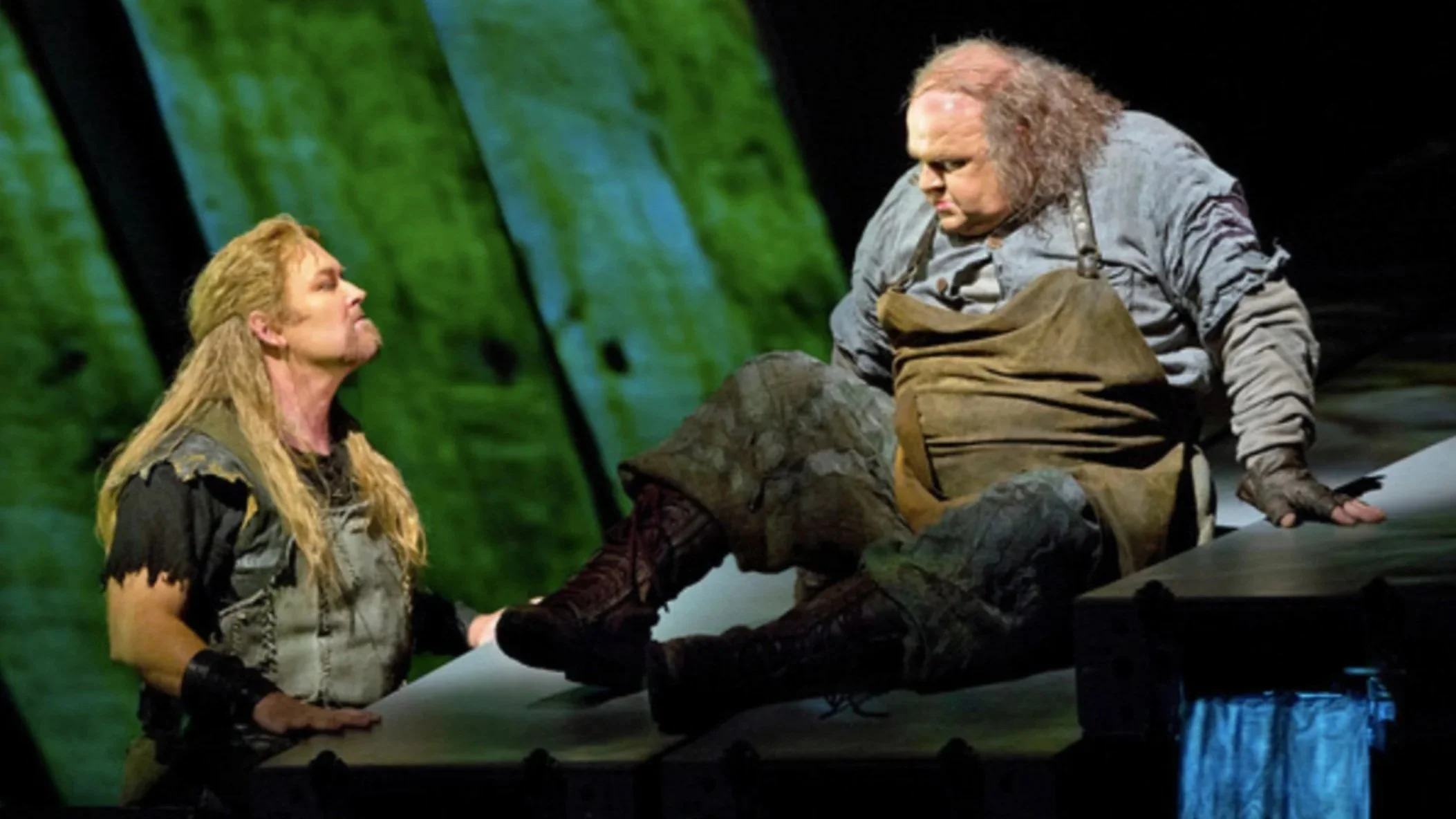
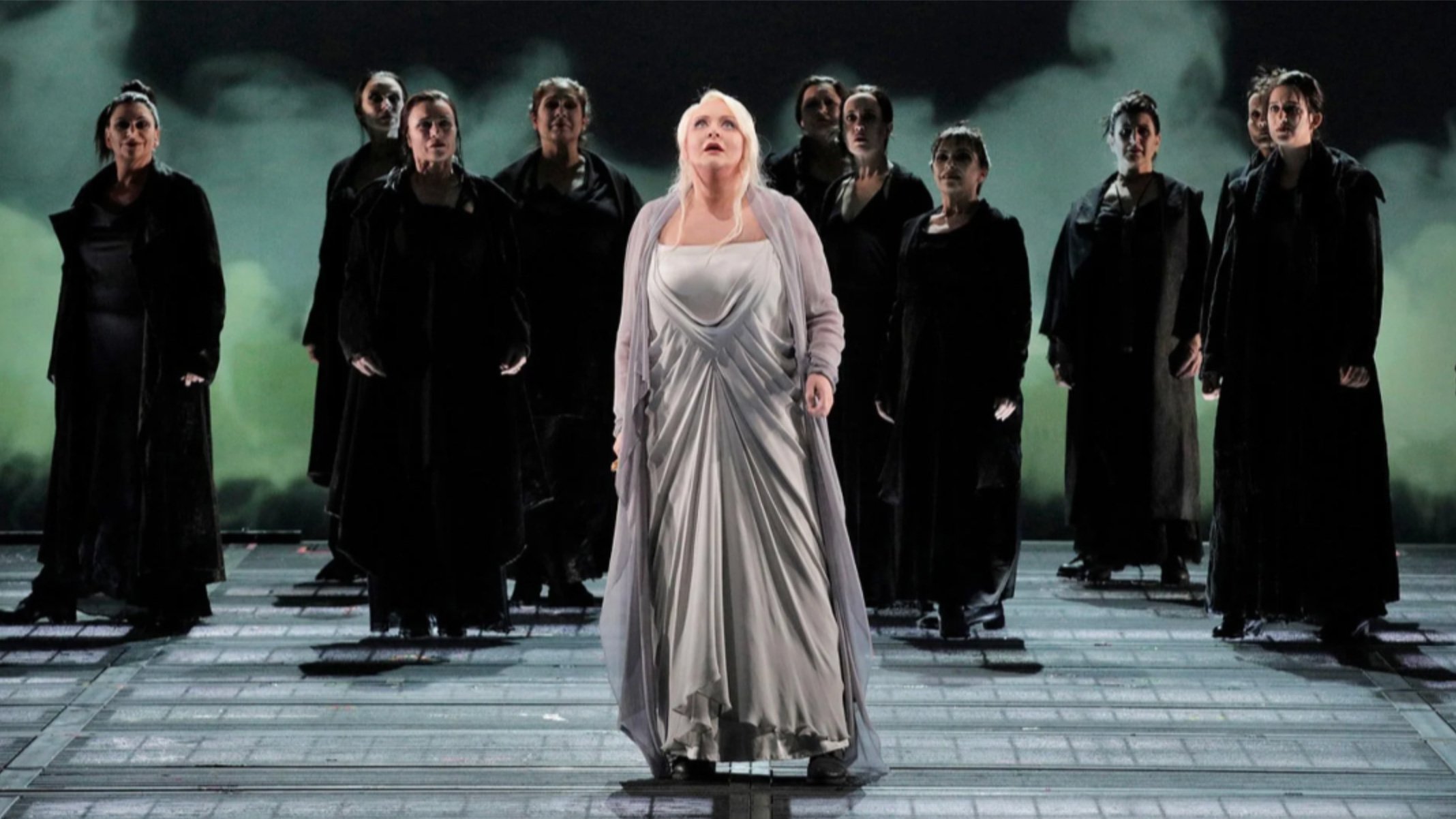
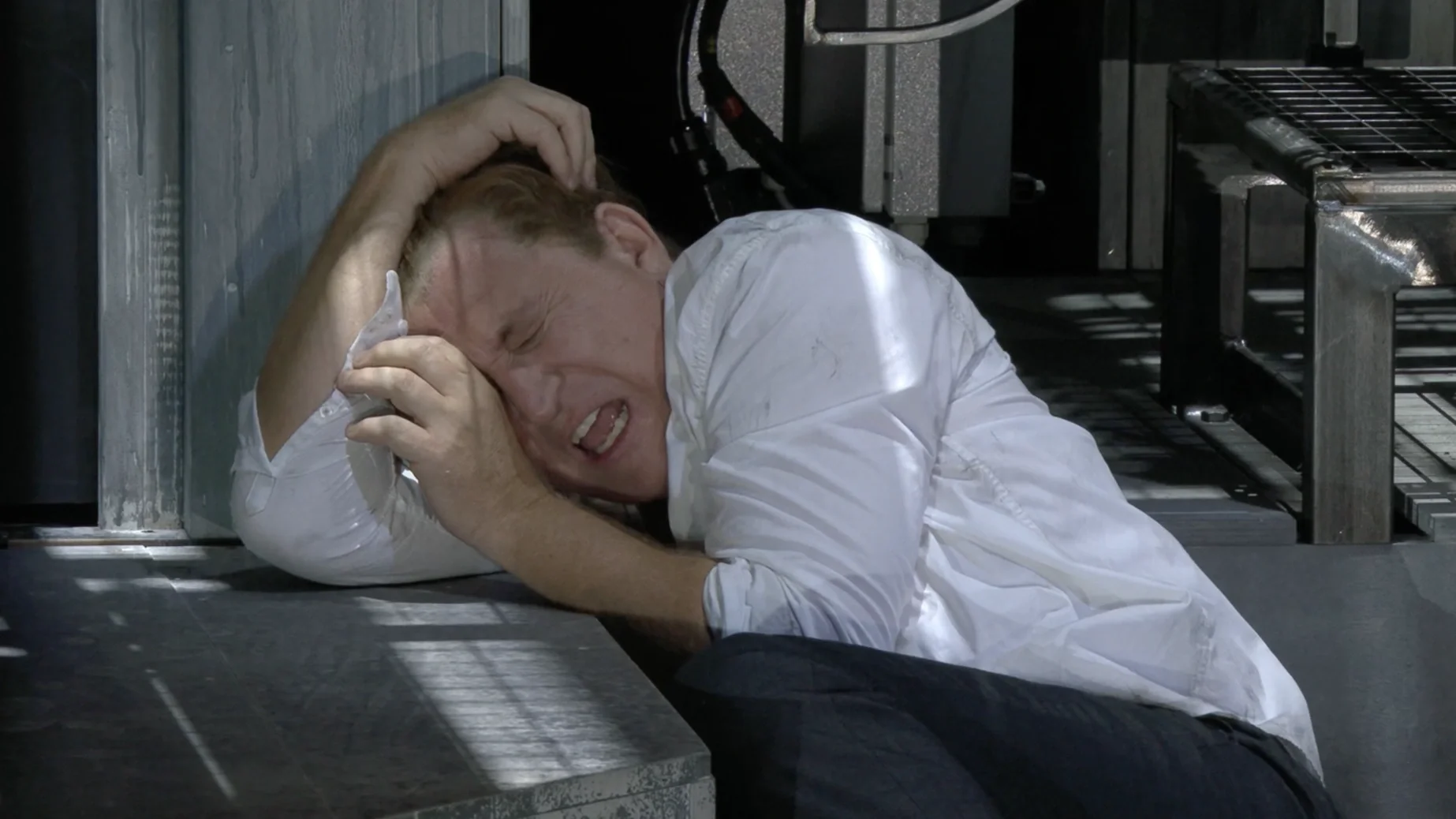
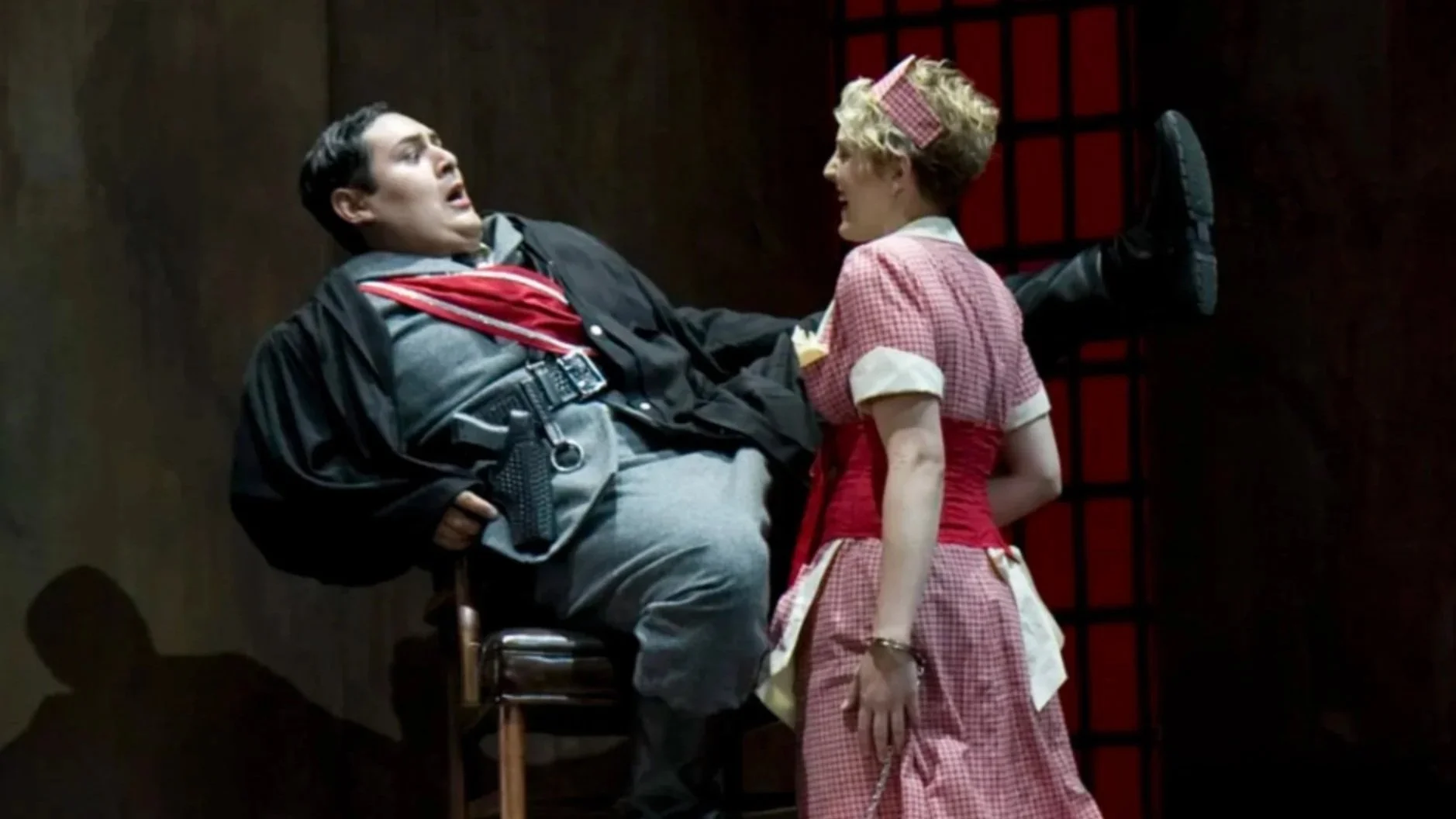
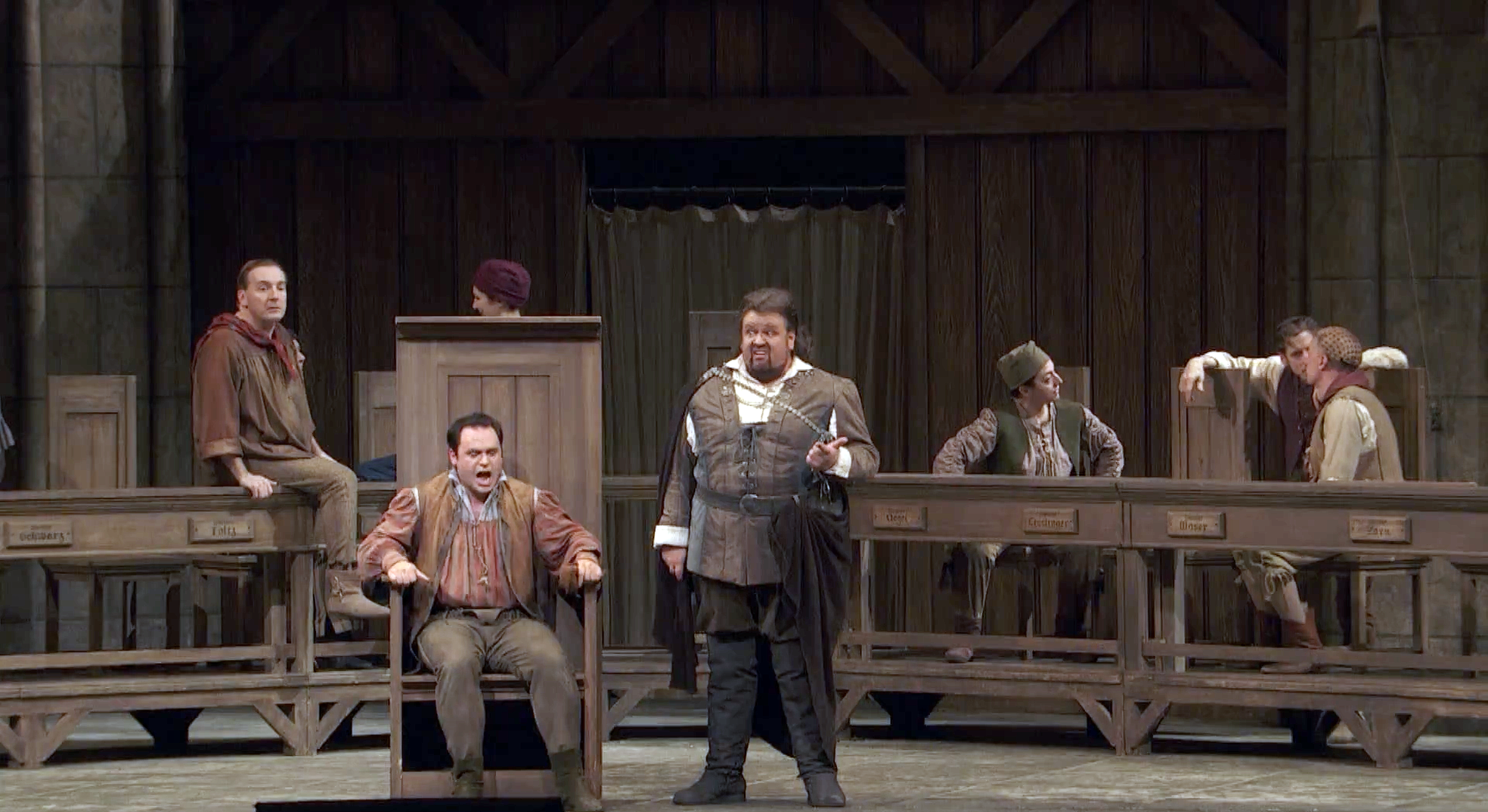
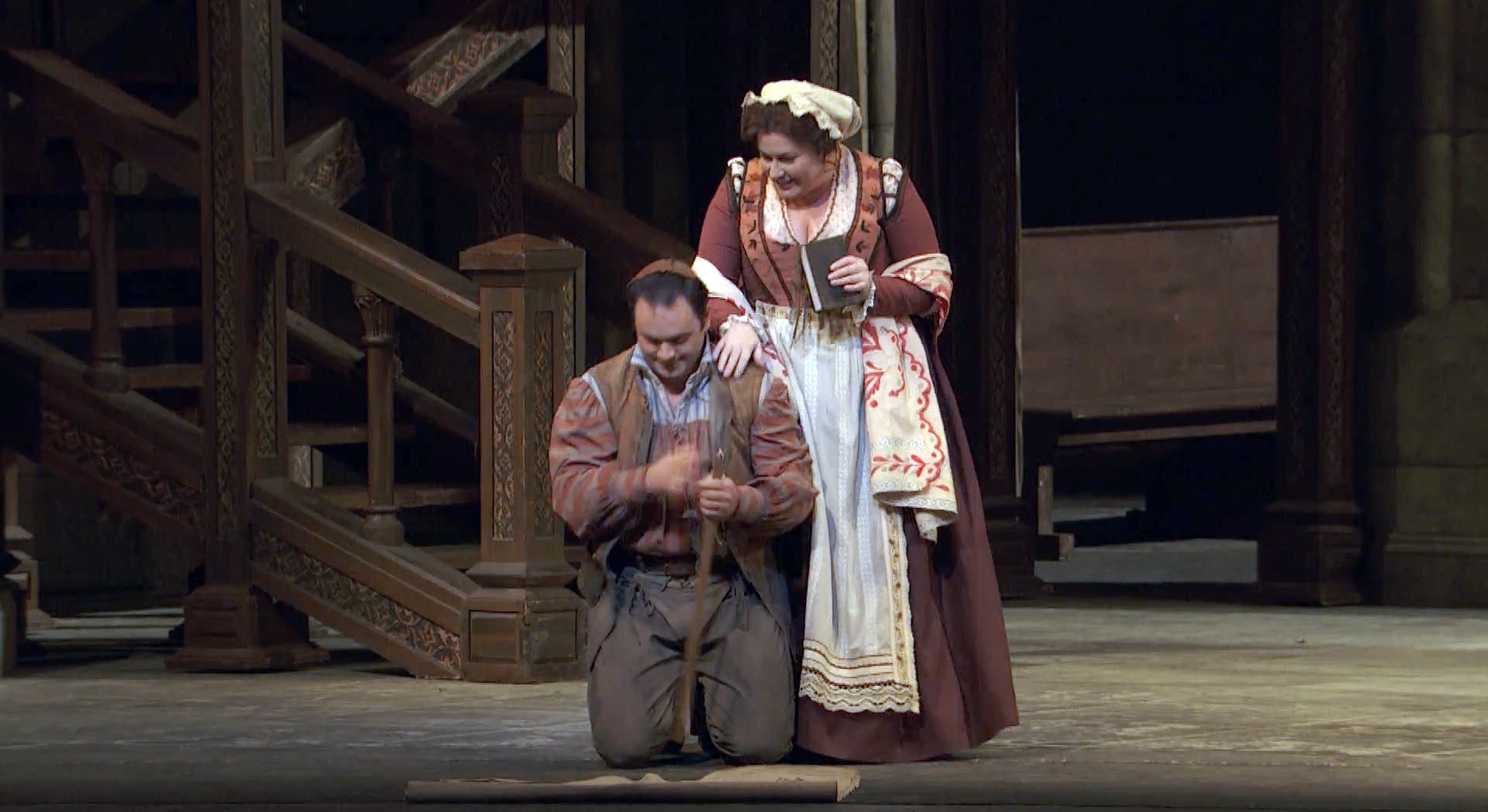
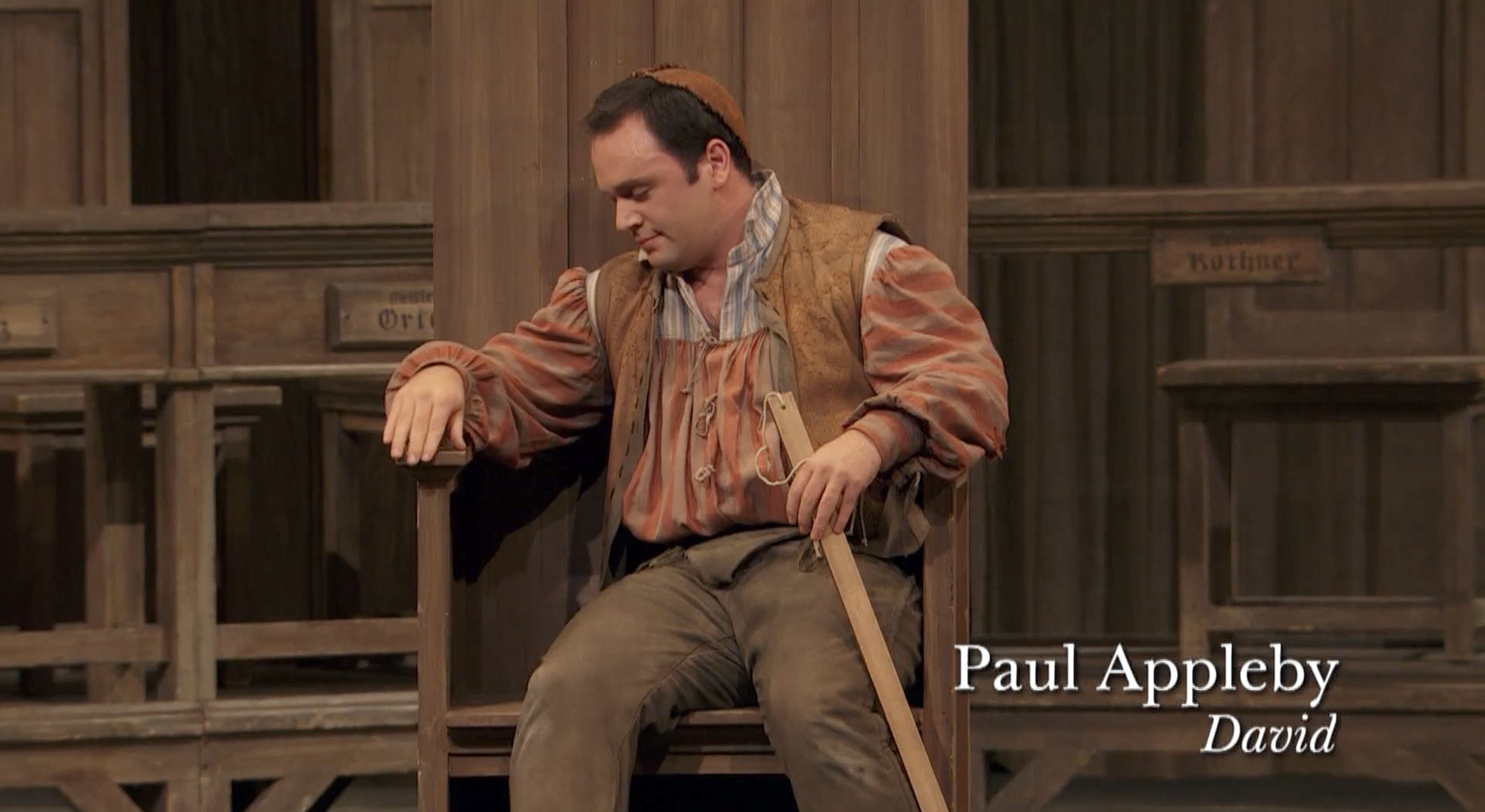
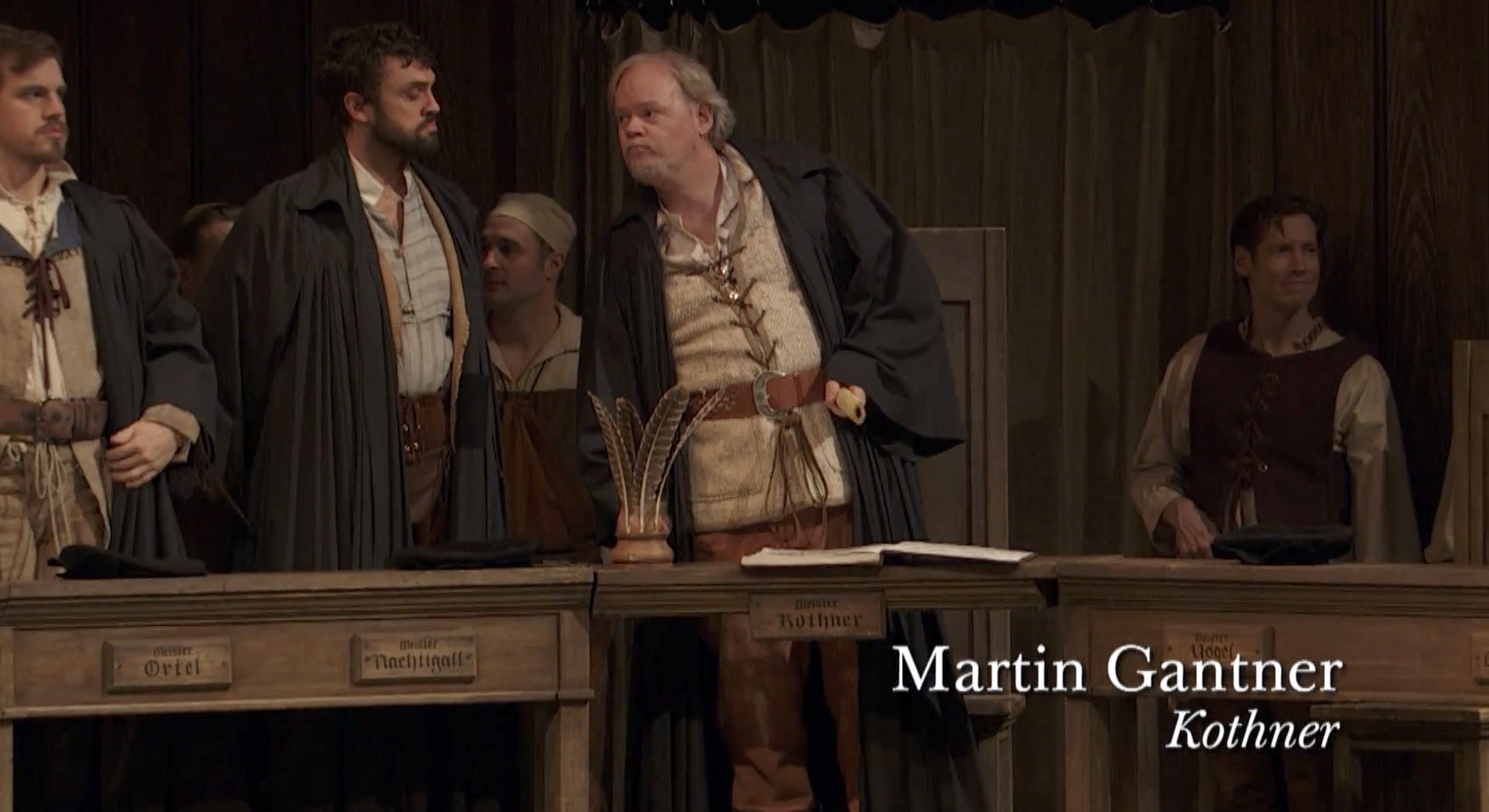
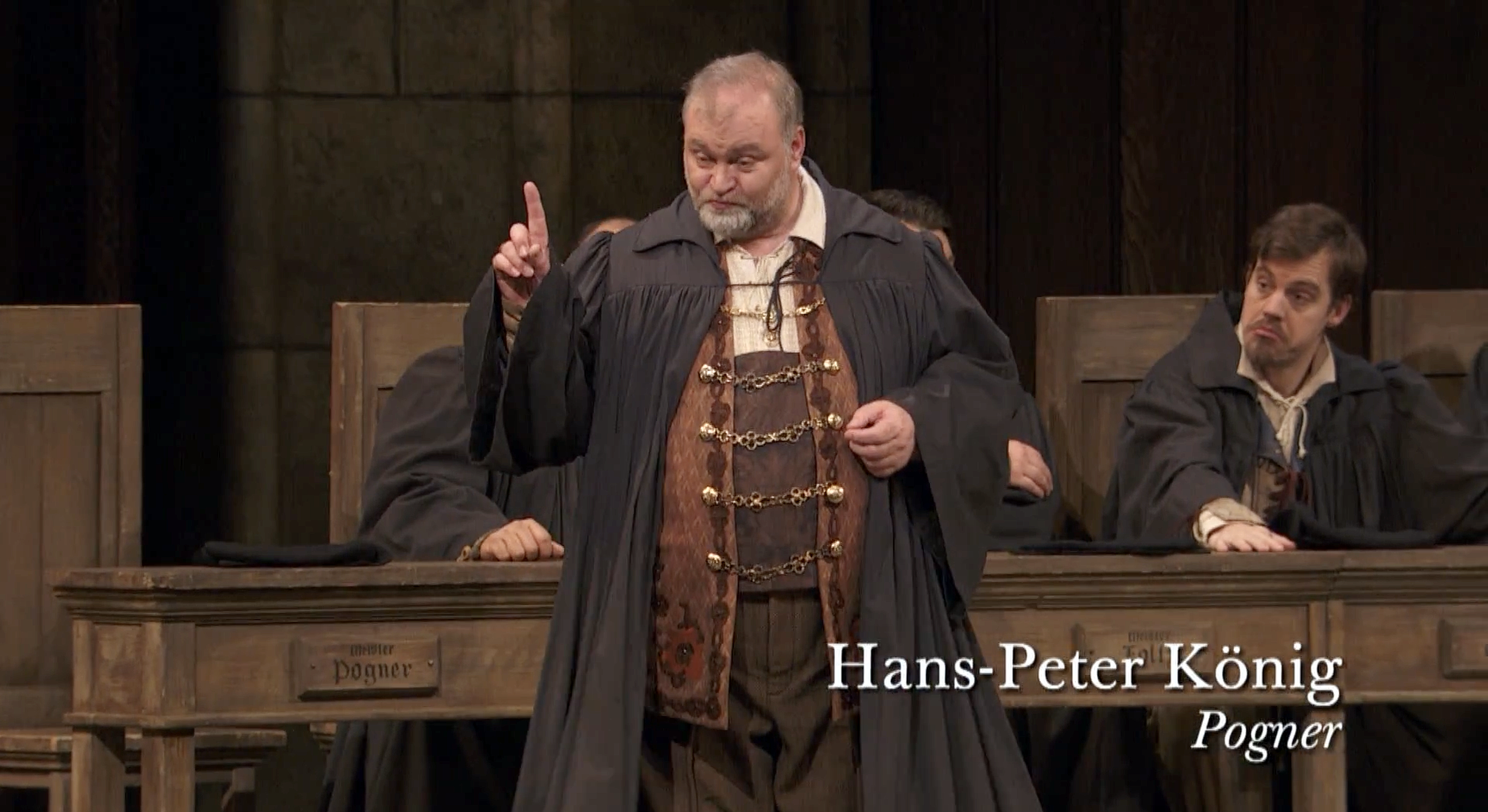
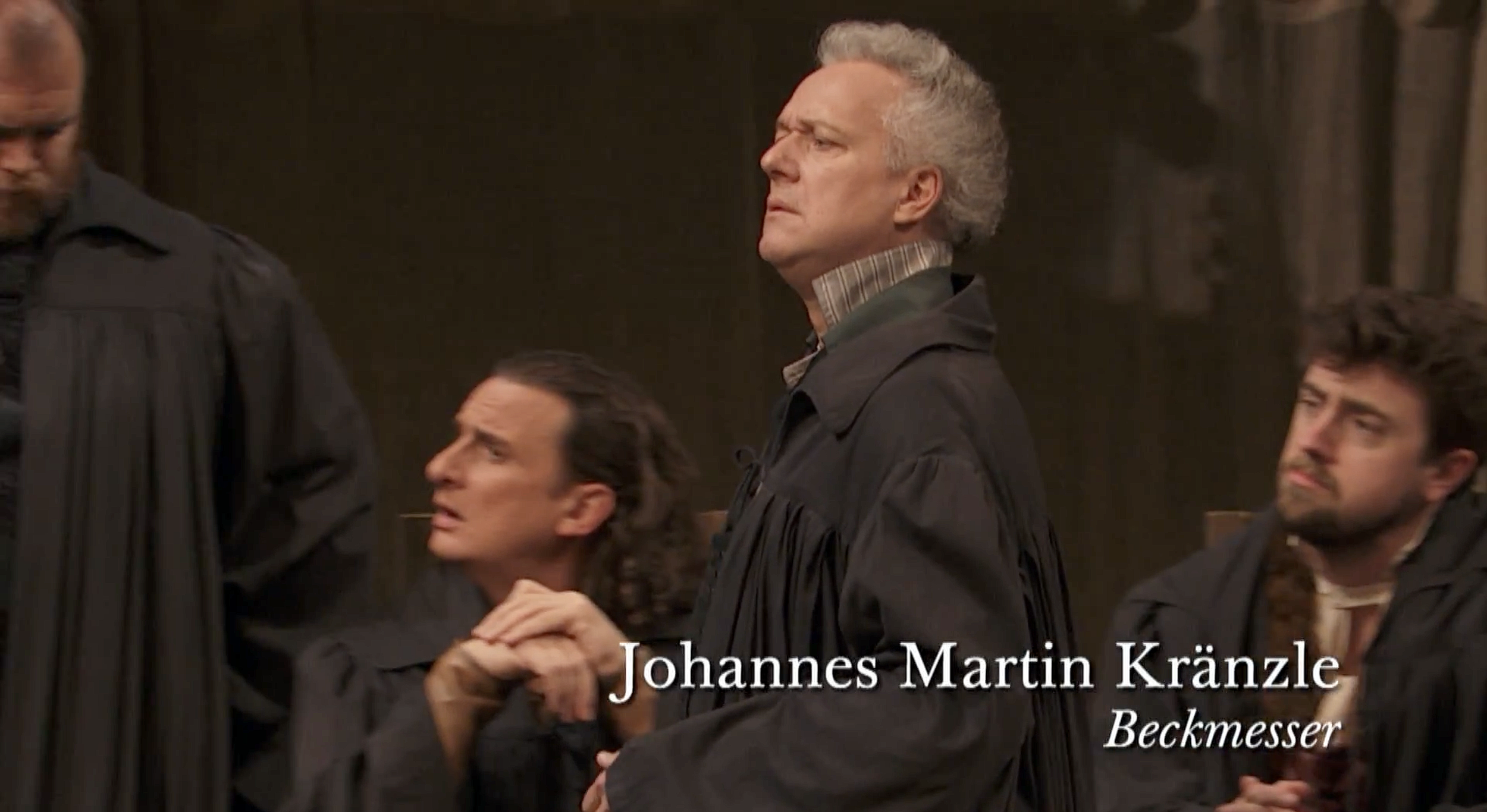
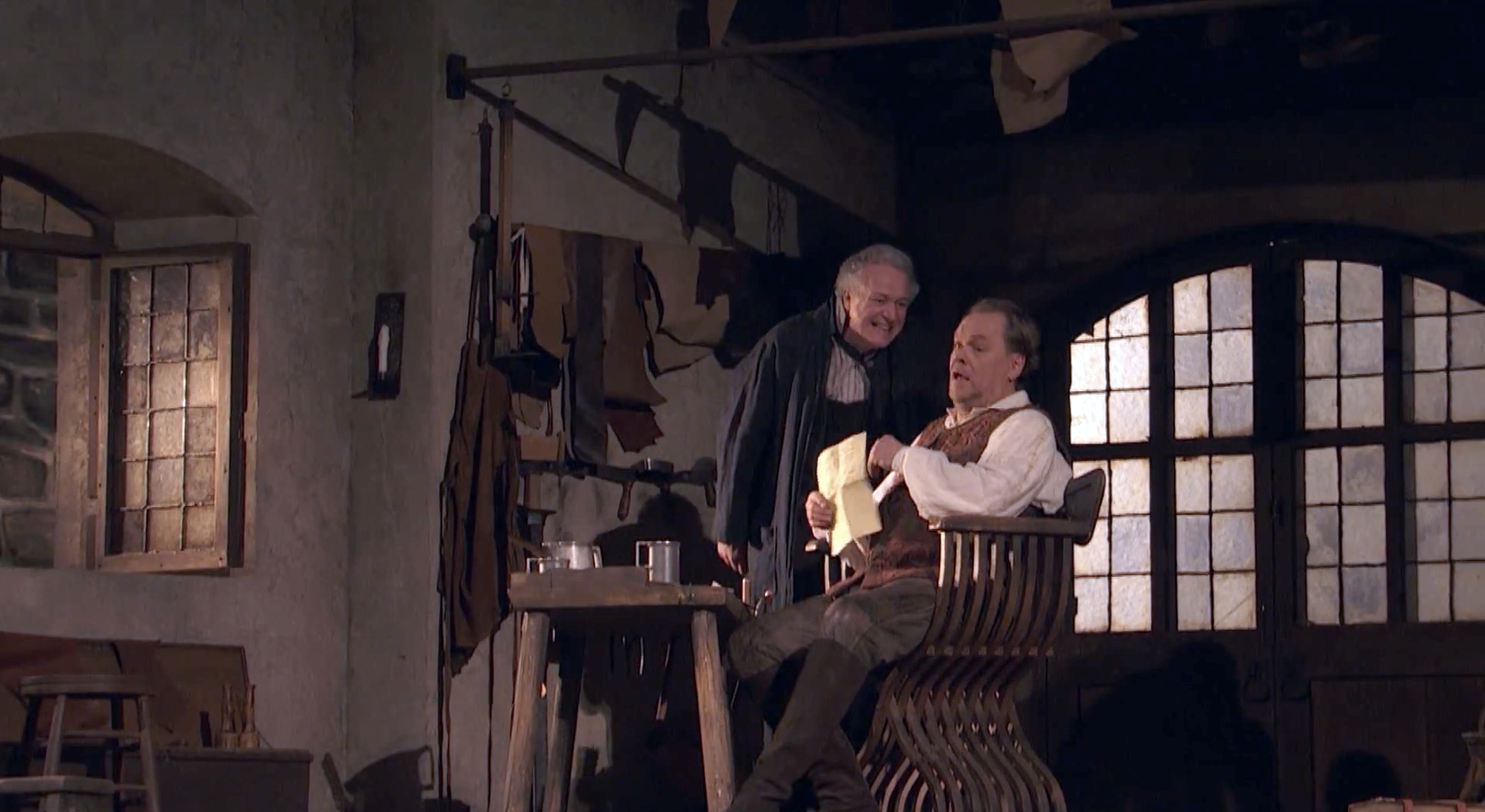
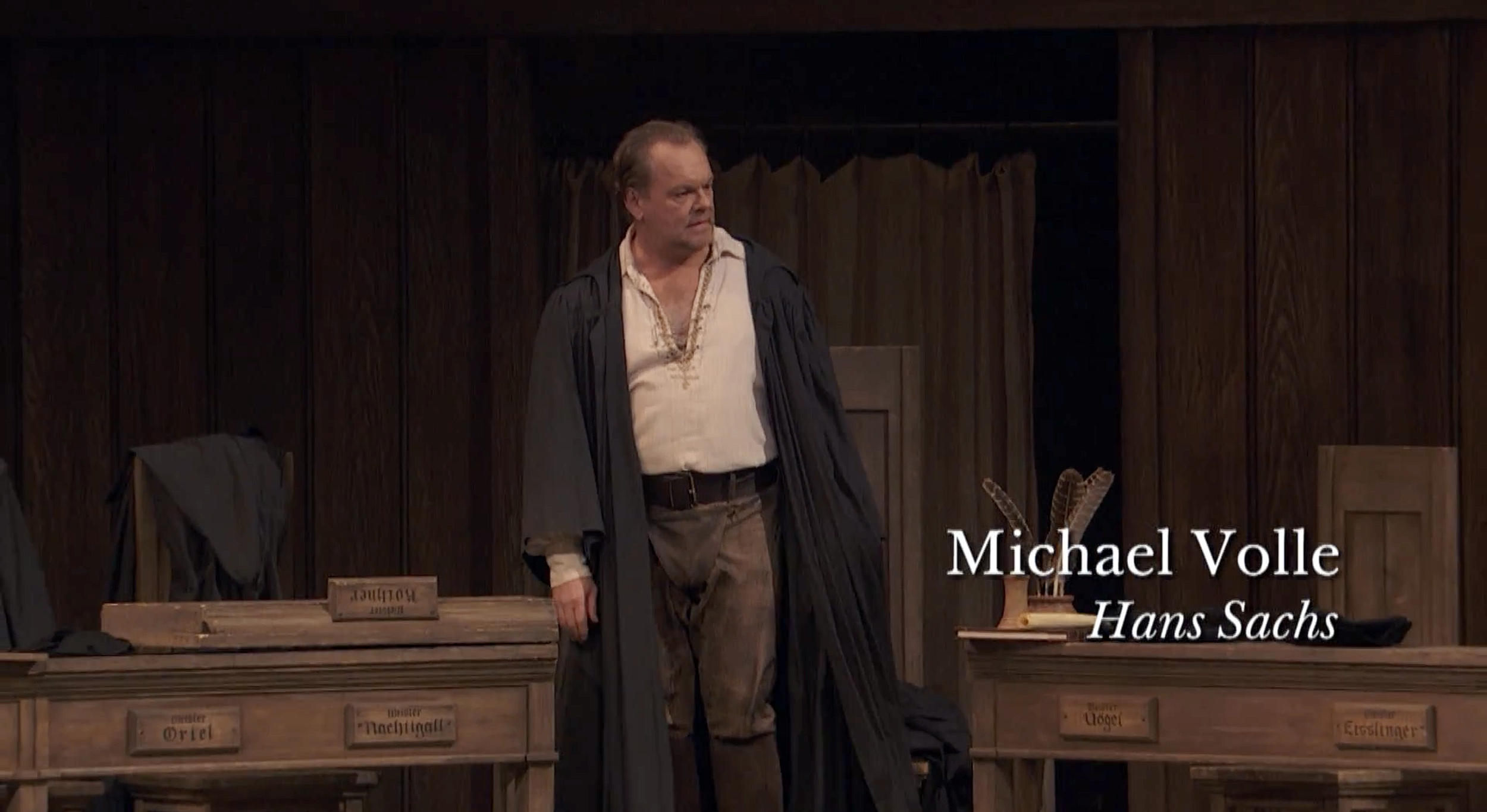
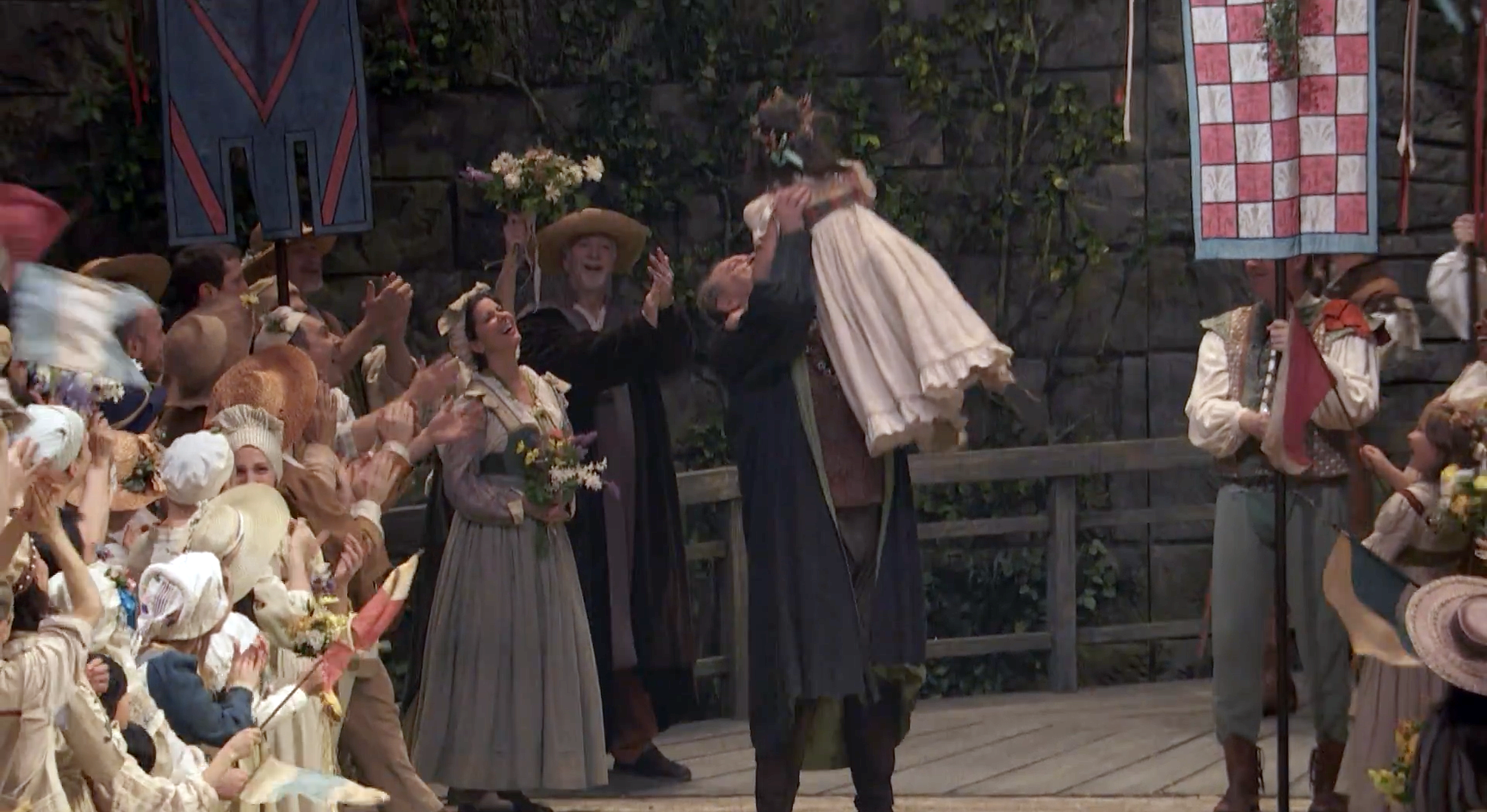
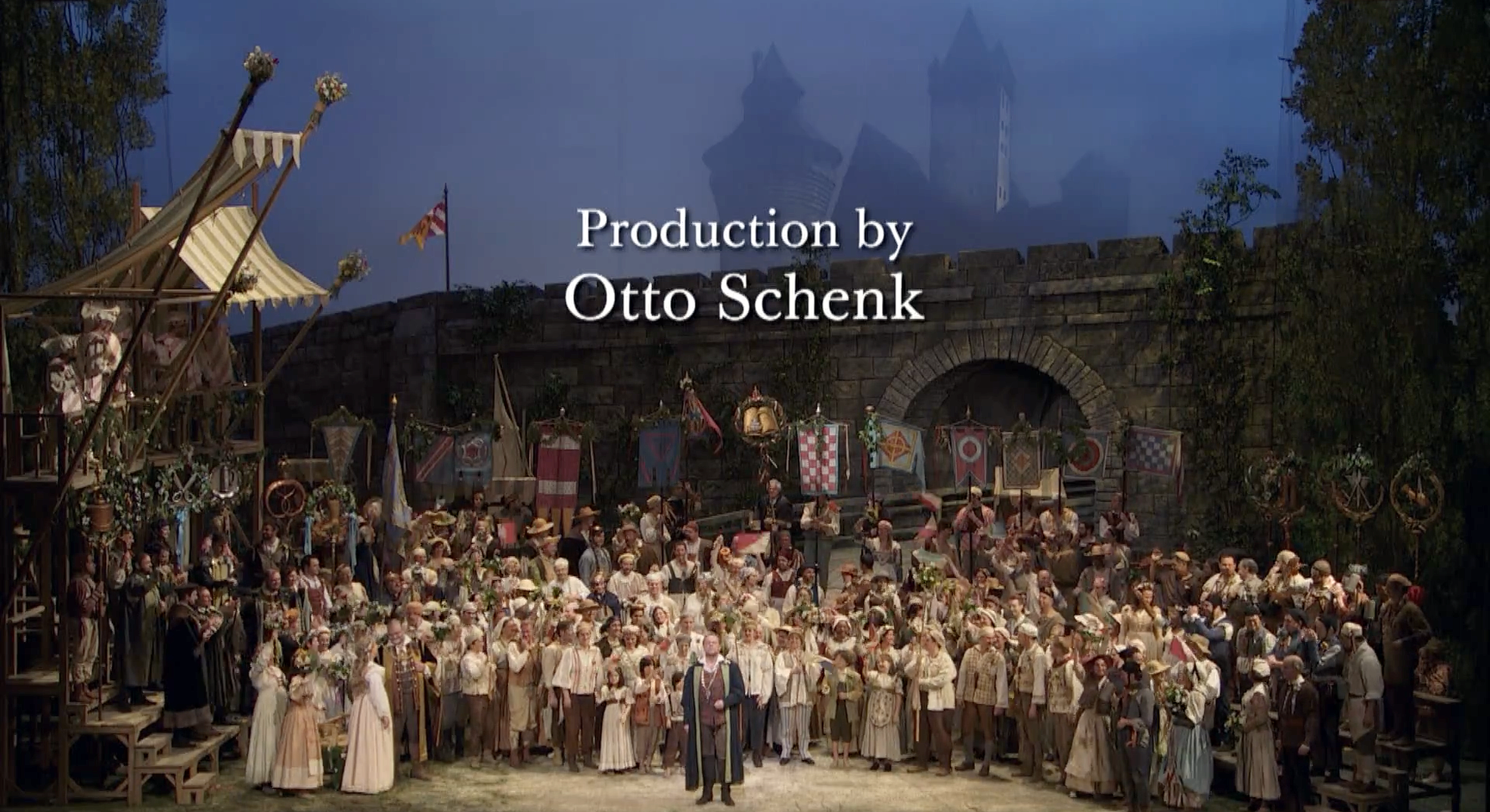
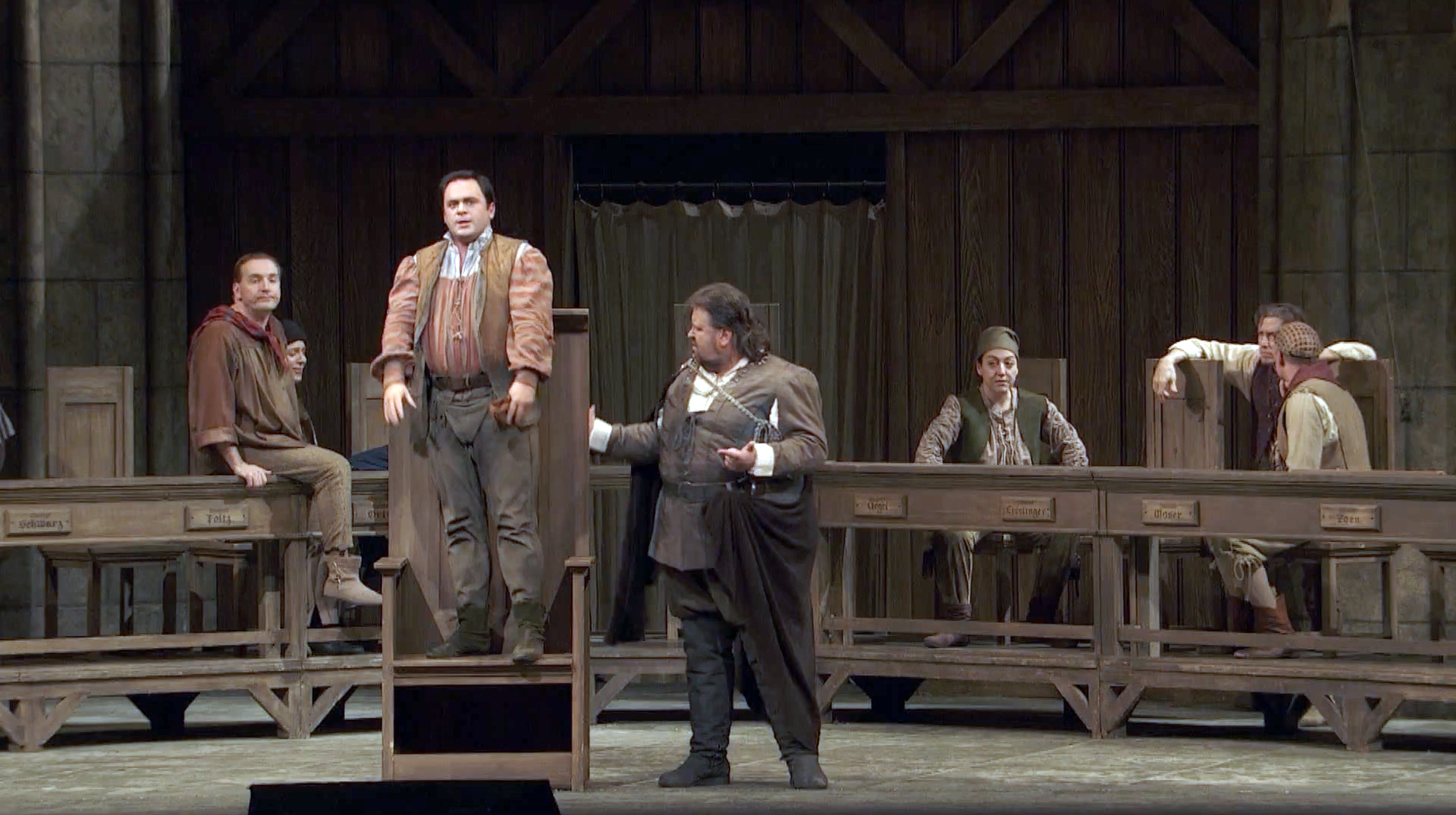
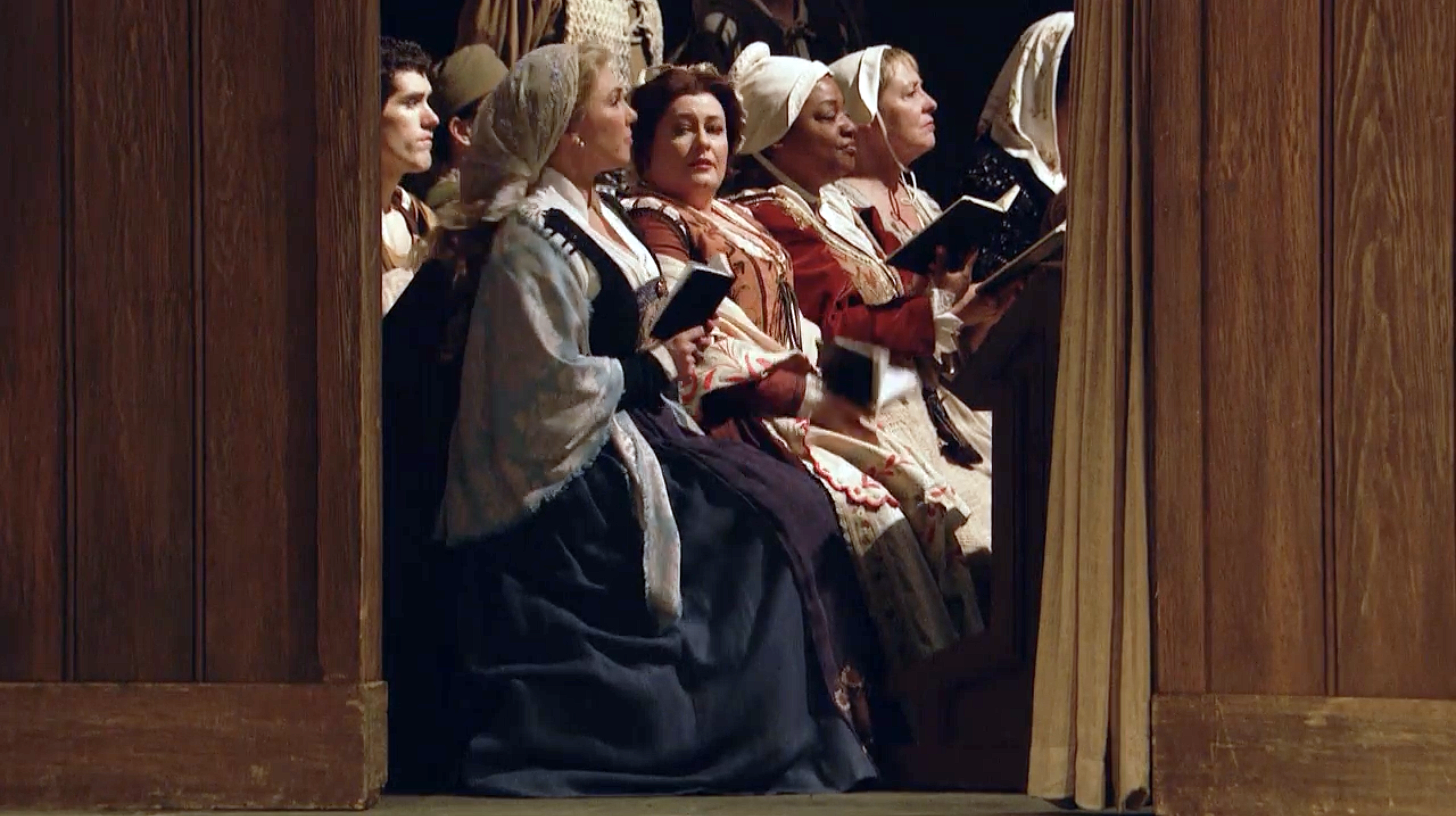
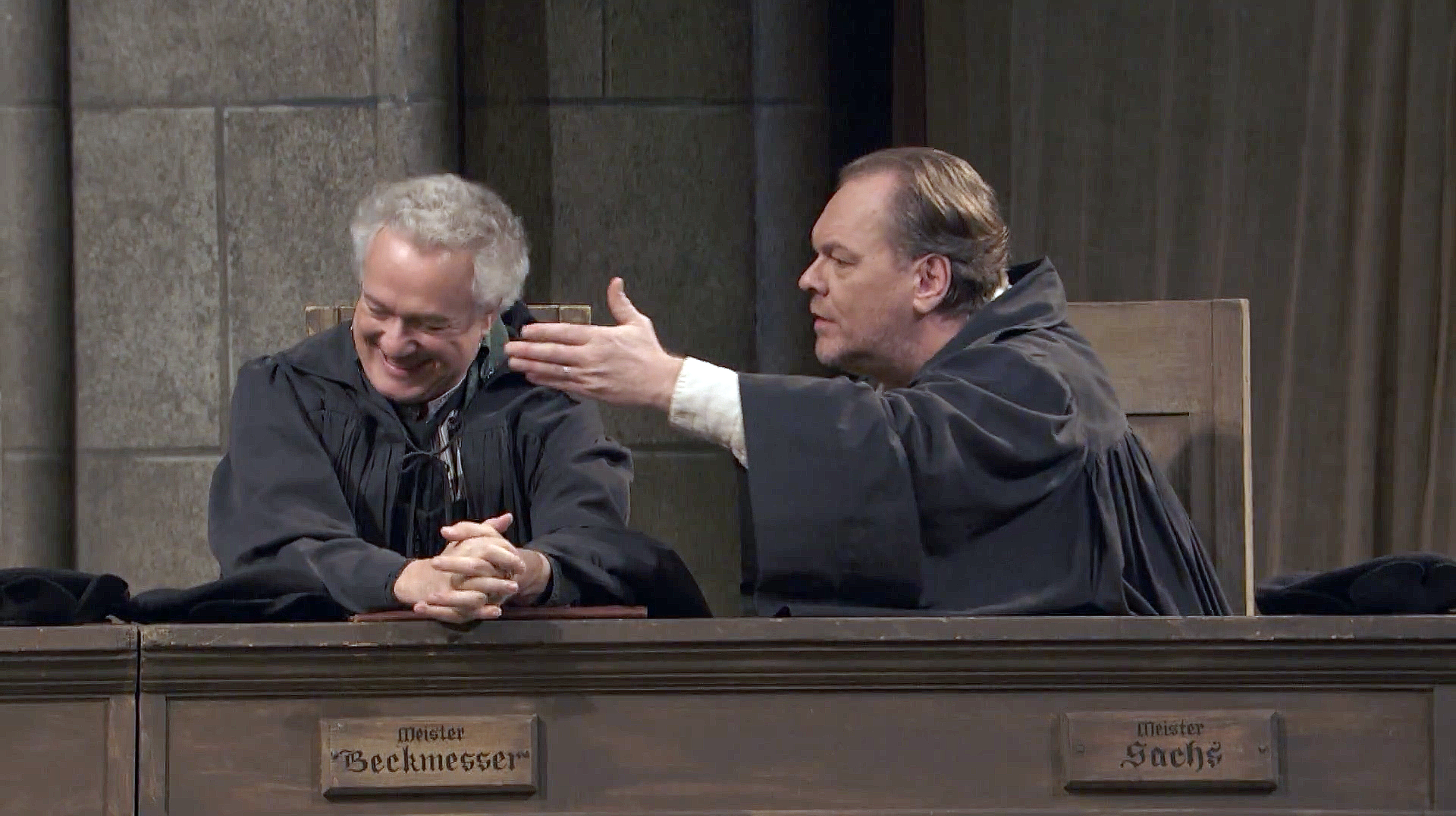
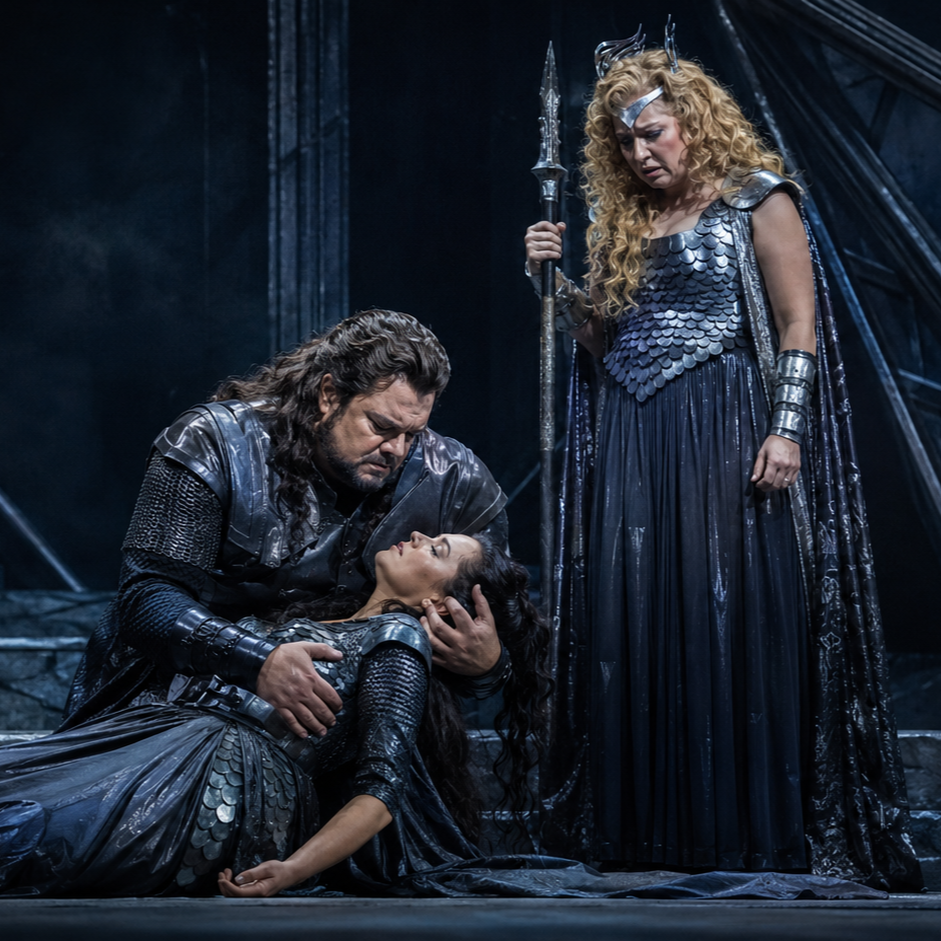
Die Meistersinger von Nürnberg, Metropolitan Opera, December 2024
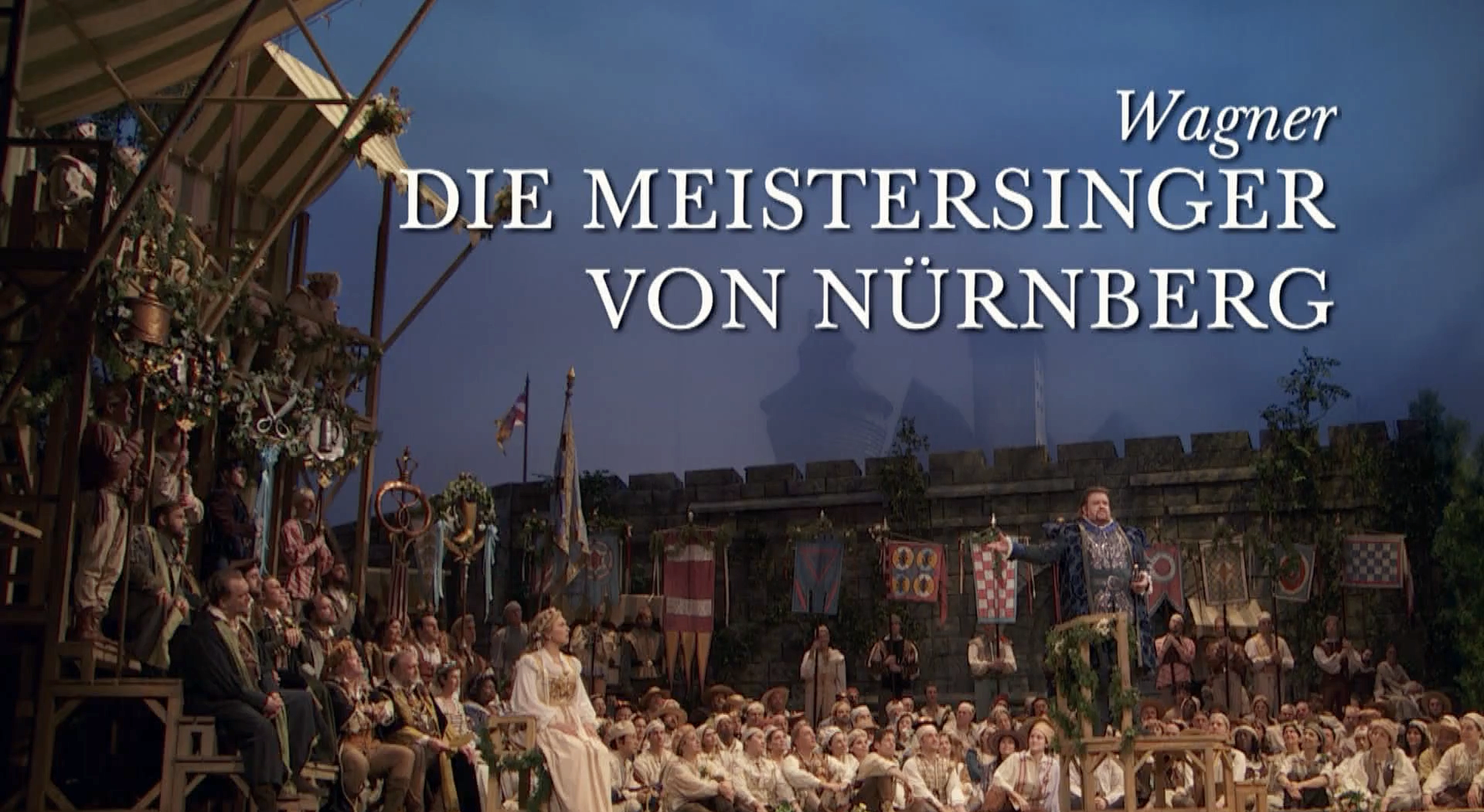
Essentieller Moment:
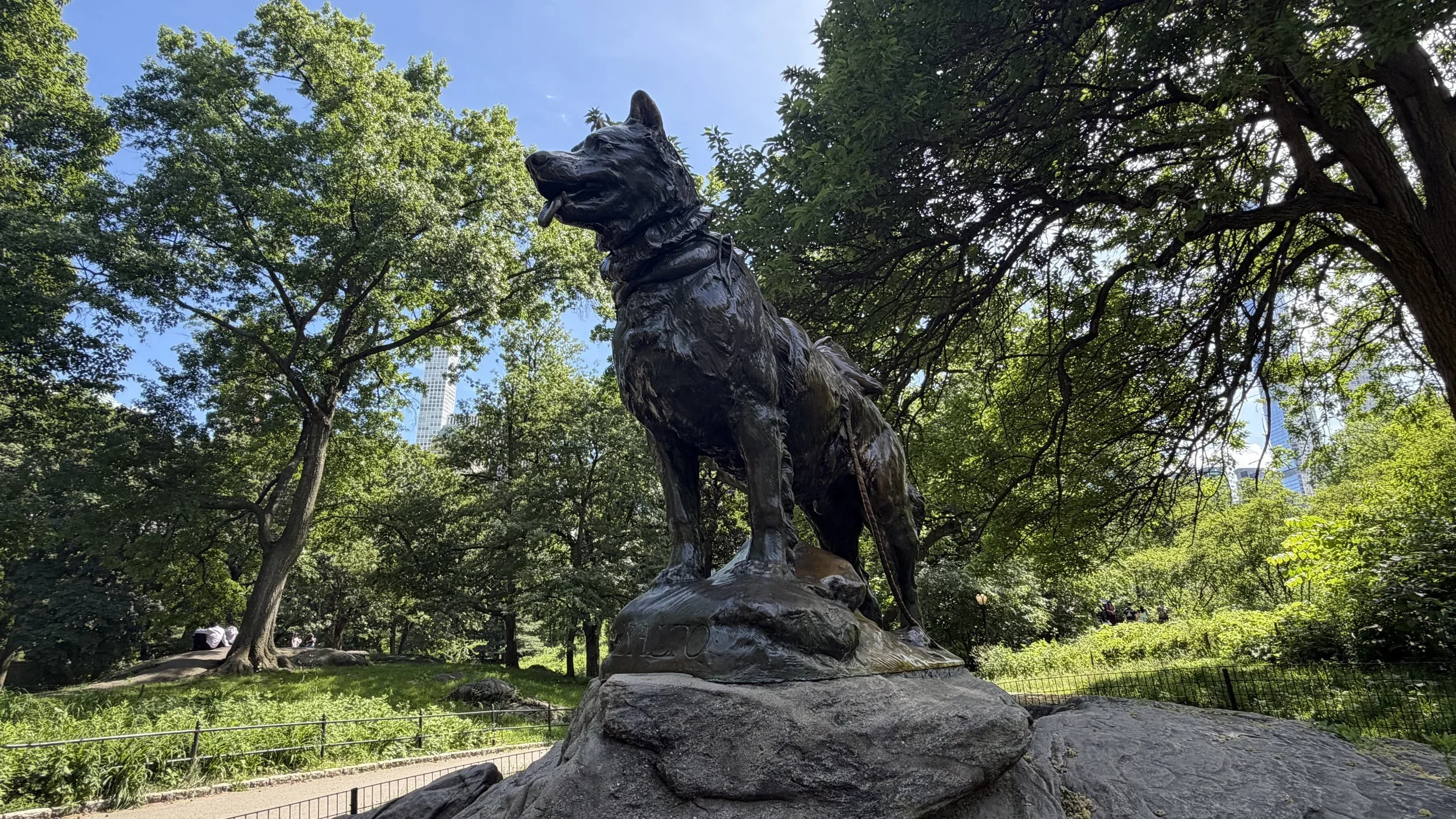
The Central Park Mall, walking south to north under the elm canopy, with Walther's Prize Song beginning as the Bandshell comes into view.
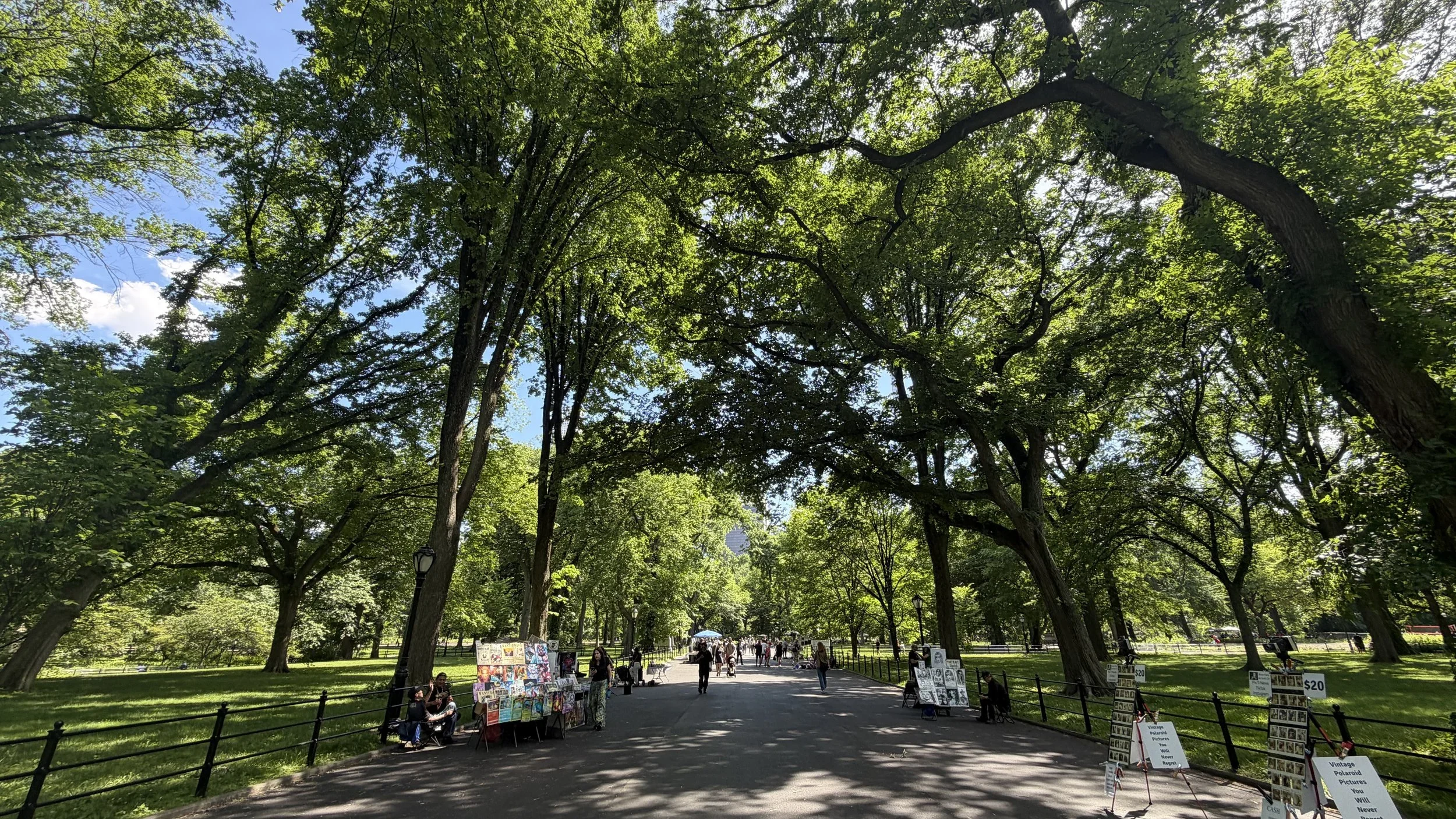
The Mall is 1,212 feet long, planted with American elms in 1863 that now form a cathedral vault over the path at approximately 60 feet. It is the only intact elm allée in North America. Nothing about its design has changed since Olmsted and Vaux's original plan. What has changed is the density of the world on the other side of the park walls, which means the Mall's interior quality, not silence, exactly, but sound filtered through two rows of 150-year-old elms, has become rarer and more precise as the city around it has become louder.
Walk the length of the Mall from south to north. Begin Morgenlich leuchtend im rosigen Schein as you enter from 66th Street. Pace the walk so that the Prize Song's final statement arrives as the Bandshell's limestone arc opens ahead of you. The song does not end when the track does. The elm canopy holds it.
Language Anchor (German Phrase of the Walk):
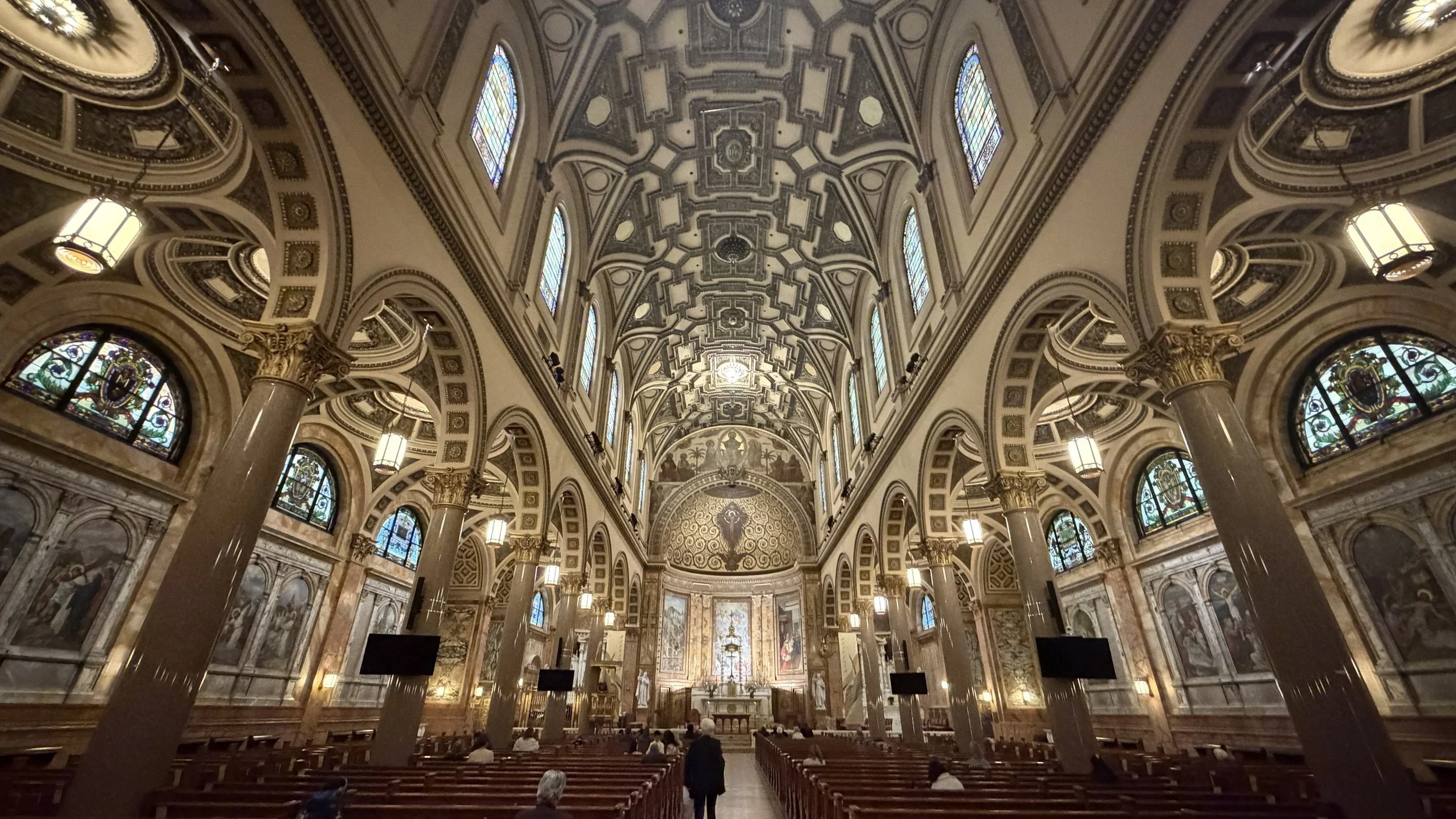
Morgenlich leuchtend im rosigen Schein / Morning-bright in rosy radiance. The opening line of Walther's Prize Song, the melody first heard as a half-conscious sketch in Act II and sung to full formal realization in Act III. The compound adjective morgenlich is one of those German formations that English cannot translate directly. It means something like of the morning or in the manner of morning, the suffix -lich denoting a quality rather than a simple description. The English morning-bright is a reasonable attempt. It does not land the same way.
Wagner gives Walther a melody that sounds improvised without being improvised. The Prize Song is the most carefully constructed music in the opera, built across three acts from a dream fragment to a completed form, and yet it sounds like spontaneous utterance. As if someone is singing what they dreamed before they had time to check whether it follows the rules. This is what the opera is arguing. That the most rule-governed form of expression and the most spontaneous expression are not opposites. They are the same thing at different stages of development.
Morgenlich leuchtend describes a condition of the world that Walther perceives and the song transmits. The morning light in the dream garden. The woman's face. The golden tree. These are the images of desire experienced as beauty rather than longing. Tristan's desire could not be satisfied by its object. Walther's can. This is the shift from April to May. The light has changed.
Wort des Weges
Wahn(pronounced: VAHN):
Madness. Delusion. The irrational force that drives human behavior. Hans Sachs, sitting alone in his cobbler's workshop at the beginning of Act III, sings Wahn! Wahn! Überall Wahn! Madness! Madness everywhere! in one of the opera's central monologues, working through his memory of the riot that ended Act II. Everyone in Nuremberg, himself included, had been seized by a collective irrationality the previous night. The apprentices fighting in the dark streets, the masters outraged, the crowd brawling over nothing they could name clearly. Wahn is what did it.
But Sachs's relationship to Wahn is not simple condemnation. He does not conclude that Wahn is bad and reason is good. He concludes that Wahn is unavoidable, and that the only question is what you do with it. The artist, in Sachs's argument, channels Wahn into form. The Prize Song is Walther's Wahn, the force of his desire and his dreaming, given structure by learning the rules well enough to bend them. Without the rules there would be no song. Without the Wahn there would be nothing to put into the rules.
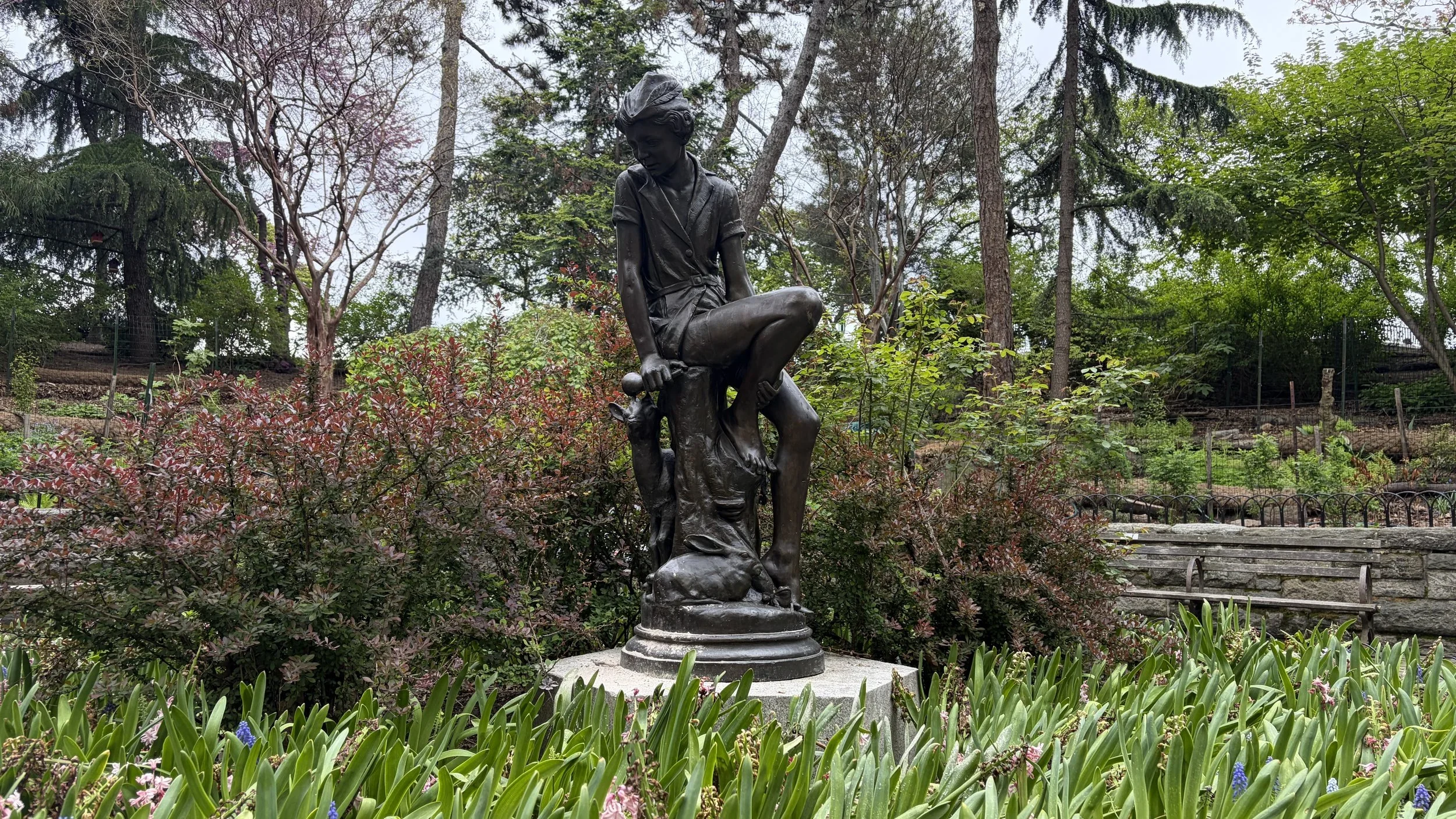
This is the word that connects Meistersinger to everything that came before it in the year. The Holländer was driven by Wahn. The curse that would not lift, the ghost ship circling. Tannhäuser was destroyed by it. The Venusberg as the madness that proved that respectability was also a form of madness. Lohengrin was its victim. The forbidden question was itself a form of Wahn. Tristan was Wahn in its purest form, the Will given harmonic shape, desire that acknowledged itself as madness and embraced that condition as the truer reality.
Meistersinger is the opera that metabolizes all of this and returns to daylight. Sachs recognizes Wahn. He does not pretend it can be eliminated. He proposes that it can be shaped. The guild's rules are the shaping structure. The Prize Song is the shaped result. Art is what happens when Wahn is given form by craft.
In New York in May, Wahn is everywhere and the city does not call it by that name. The fever pitch of the spring social season, the collective decision to be outdoors, the sudden intensity of street life after the long winter. The festivals and the protests and the outdoor concerts. The city channels its Wahn into public performance the way Nuremberg channels its Wahn into the Midsummer Festival. The riot is always one wrong note away. The prize song is what prevents it, or what follows it, or what makes it worthwhile.
Thematischer Rahmen: Handwerk und Gemeinschaft
Wagner composed Die Meistersinger von Nürnberg over a long and interrupted period. The prose sketch dates from 1845, written at the same time as Tannhäuser. The libretto was written in 1861, in Paris, during the months following the catastrophic failure of the Tannhäuser premiere at the Opéra. While Wagner was also in the aftermath of the Wesendonck affair and already carrying the completed Tristan libretto and sketches. The music was composed between 1862 and 1867. By the time the opera premiered in Munich on June 21, 1868, conducted by Hans von Bülow, Wagner was 55 years old. The opera had been gestating for 23 years.
This matters because Meistersinger is not the light work that its comedy label suggests. It is the opera in which Wagner thought longest and most carefully about the relationship between art, tradition, and community, and the thinking shows in its density and its internal contradictions. It is the only one of the mature operas without a supernatural element. There are no curses, no gods, no magic potions, no grails. There is a cobbler-poet, a young knight, a guild of craftsmen, a girl, a rival, and a midsummer festival. The resolution is social rather than metaphysical. People change their minds, or they don't. Art wins its argument in public, before a crowd, on a field outside the city walls.
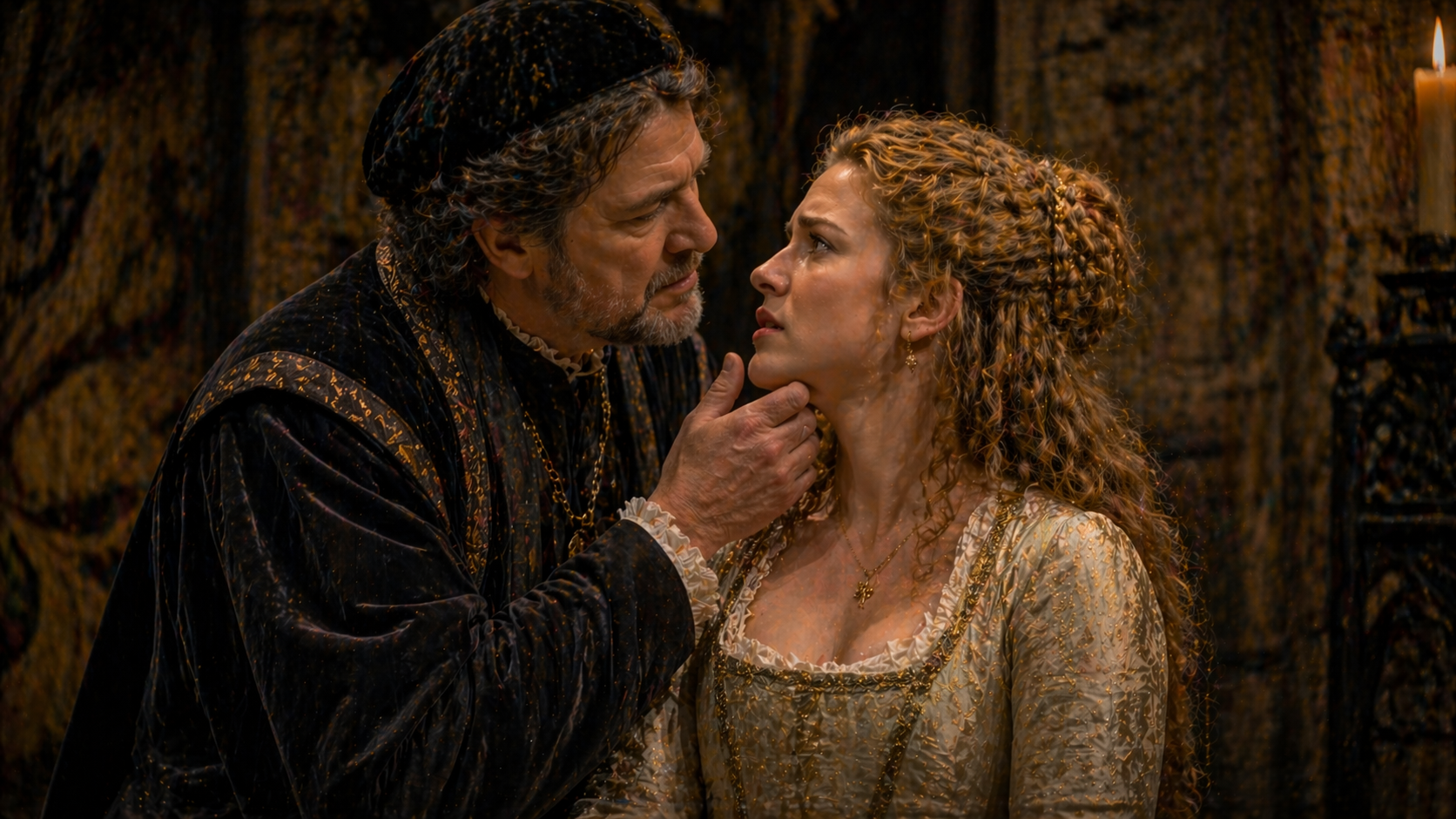
The historical setting is Nuremberg in the mid-16th century. Hans Sachs is a real historical figure. Cobbler, poet, and Meistersinger, 1494–1576, the most productive writer in the German language before Goethe, the author of thousands of Meisterlieder and hundreds of plays and carnival farces. The historical Mastersingers were guild craftsmen, cobblers, tailors, bakers, locksmiths, who organized competitive song societies governed by strict formal rules, the Tabulatur, specifying the permissible forms. Any deviation from which was noted by a Marker with chalk marks on a slate. Wagner's Beckmesser is the Marker, the guardian of the rules, whose obsessive rule-enforcement is the comic villain's position and whose eventual humiliation is the opera's central dramatic gesture.
The opera is Wagner's fullest engagement with a question he had been circling since Das Liebesverbot in 1836. How does art exist within a community that both needs it and cannot fully understand it? The Holländer, Tannhäuser, and Lohengrin all dramatize the outsider who cannot belong to the social world he enters. Tristan radicalizes this into a metaphysics of exclusion, the absolute lovers for whom the social world is simply the wrong dimension. Meistersinger reverses the polarity. Walther, the young knight who begins as an outsider to the guild, is not expelled. He is, through the mediation of Sachs, both taught the rules and shown how to transcend them from within. He wins the prize. He is offered membership. He initially refuses. This is the opera's most complex moment, and Sachs must argue him into accepting. The argument being that the art which seems to belong only to the individual actually belongs to the community that makes the forms possible.
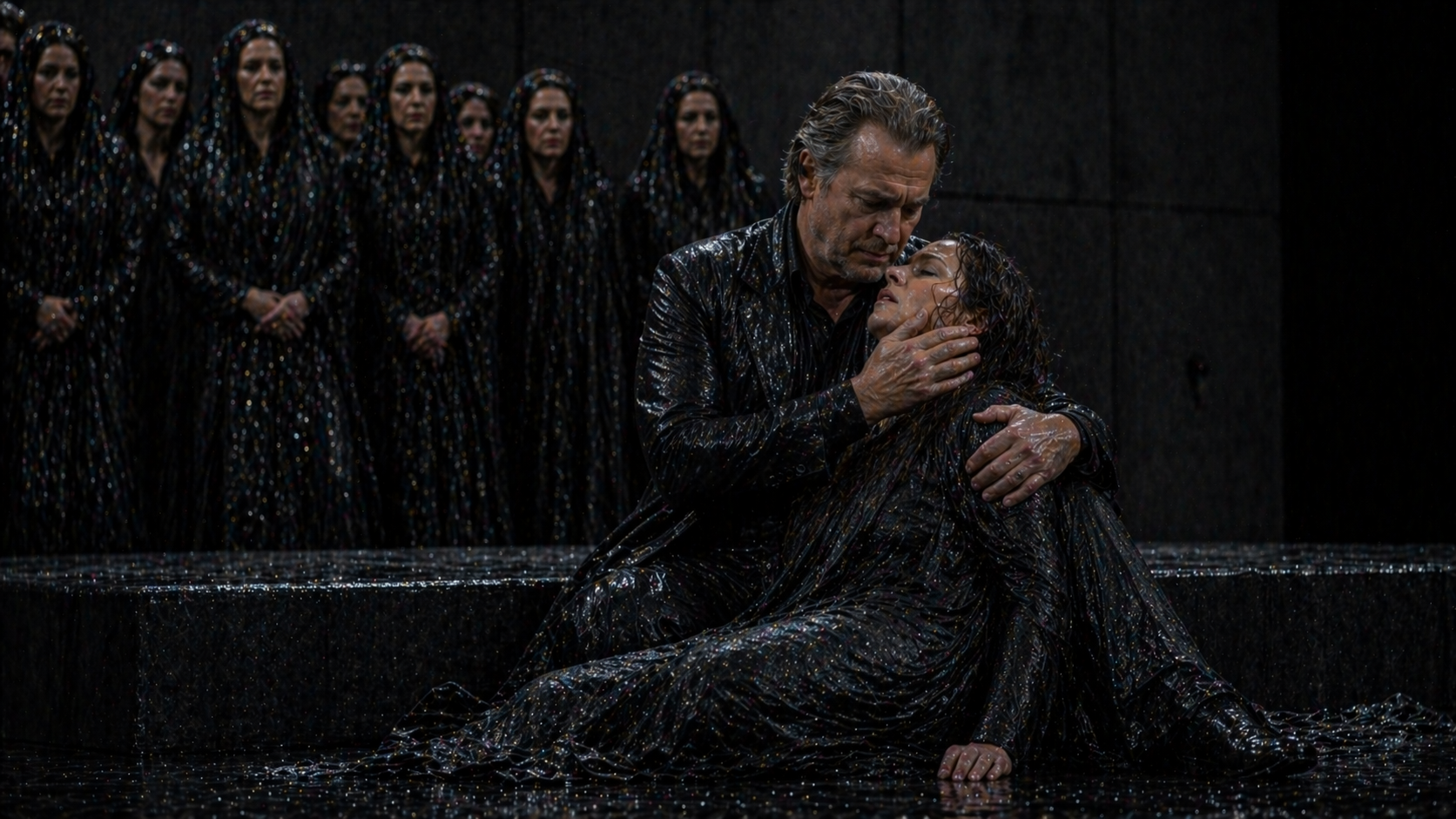
This is also Wagner's argument with himself. He was always the outsider to German musical life. Self-educated, financially catastrophic, politically exiled, personally impossible. Meistersinger is the opera in which he imagines what it would look like to be the young Walther and the older Sachs simultaneously. The rule-breaking innovator and the elder who recognizes innovation because he knows the rules better than anyone. The opera is dedicated to the proposition that these two are not in conflict. They are the same artist at different stages.
Beckmesser is the shadow of this argument. He is the pure rule-enforcer, the man who uses the Tabulatur as a weapon rather than a tool, whose relationship to the forms has become proprietary rather than loving. Wagner's treatment of Beckmesser has been argued over ever since the premiere, and the argument is not resolvable. The character functions as a caricature, and some of his characteristics were drawn, with demonstrable intent, from the Jewish critic Eduard Hanslick. The opera contains, within its most humane and generative argument about art and community, a poison. A scapegoat whose ejection from the field makes the community's reconciliation possible. Nuremberg coheres around Beckmesser's humiliation. This is what Sachs's Wahn speech does not quite manage to account for. The madness that shapes itself into a prize song also shapes itself into a mob that needs a target. Both are channelings of the same Wahn.
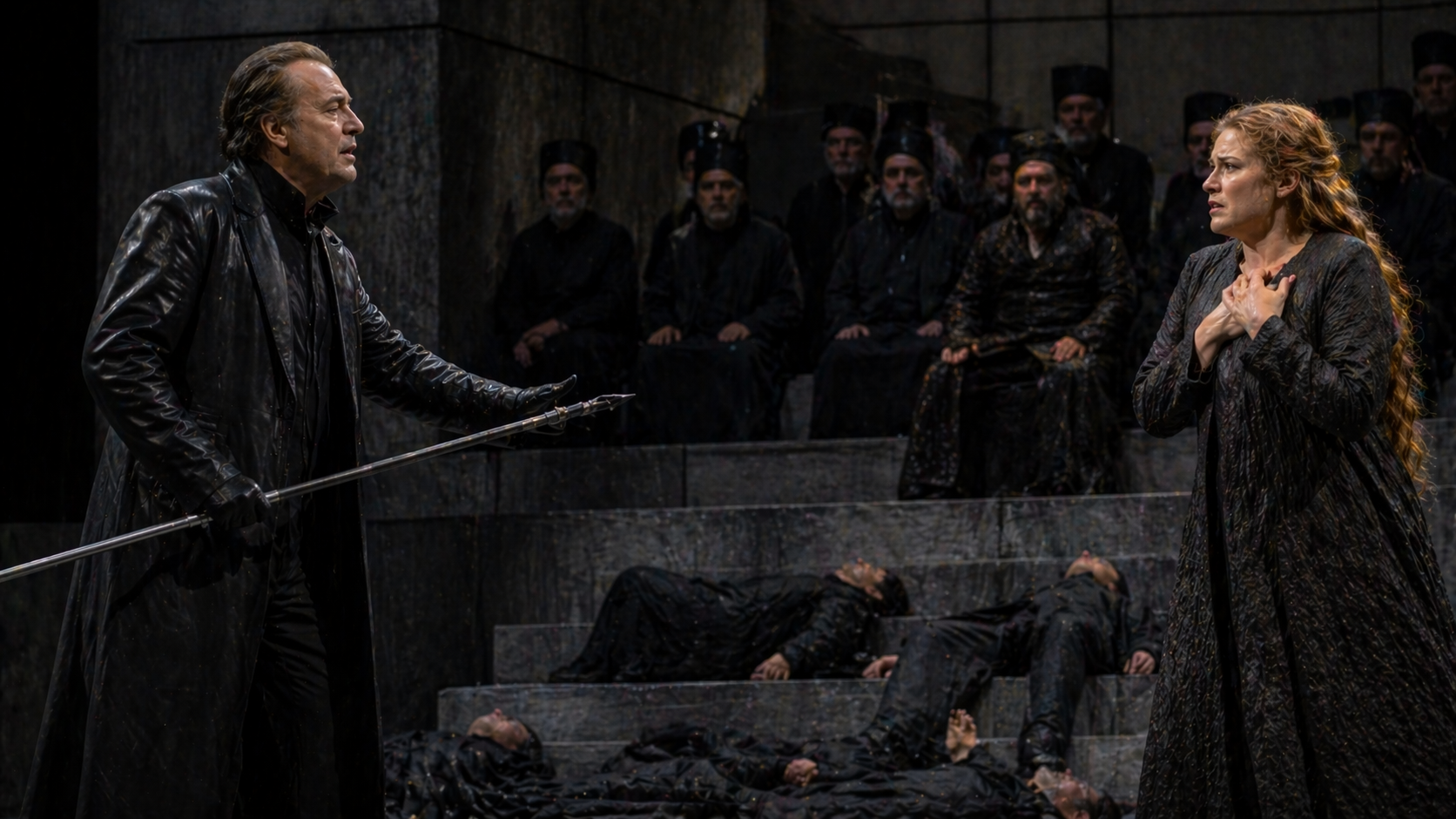
Ehret eure deutschen Meister! Honor your German masters! is Sachs's closing address to the crowd. It is the line that nationalists in the 20th century found most useful and that has made the opera most politically complicated since 1933. The New York walk holds this complexity because New York holds it. The city has its own Meistersinger history. The Met productions which continued through two world wars, the German-American community that heard the opera as cultural affirmation in a country at war with the country they came from, the eventual return of the opera to the repertory after wartime suspension. The walk does not resolve the politics. It walks through the places where they were lived.
Listening Index (Die Musikalische Wirbelsäule)
Overture: The three main themes announced. The guild's march with its brass chorale, the lovers' melody, the Prize Song barely sketched; the argument of the whole opera in nine minutes
Act I, Walther's trial song (So rief der Lenz in den Wald): The rules broken, the beauty unmistakable; the community's incomprehension and Sachs's lone dissent
Act II, scene 6: The Midsummer Night riot; collective Wahn given dramatic form; the crowd as a third protagonist
Act III, Sachs's monologue (Wahn! Wahn! Überall Wahn!): The morning-after reckoning; the cobbler's philosophy; the decision to shape rather than surrender
Act III, scene 2: Morgenlich leuchtend im rosigen Schein (Prize Song, first full statement); Walther's dream given form by Sachs's instruction
Act III, scene 5: Wach auf, es nahet gen den Tag (Festival Meadow chorus); the community recognizing what it has; the moment before the contest
Act III, finale: Ehret eure deutschen Meister!; the argument and its complications; the community's self-recognition and its shadow
Listening Note:
Every track in this month should be played at a volume that makes the surrounding city audible. Meistersinger is not music to move toward. It is music to be with. It is already in the city's key. The brass of the Overture in the open air of Union Square. The Prize Song under the elm canopy of the Mall. The Wach auf chorus at the foot of the Bandshell. This music was written for the outdoors, for crowds, for public judgment. Let the ambient sound of the city occupy the same register as the music, and notice where they reinforce each other rather than competing. This is the opposite of Tristan's listening posture. In April you moved toward the music. In May you move with it.
Die Zunft: Union Square
Getting There
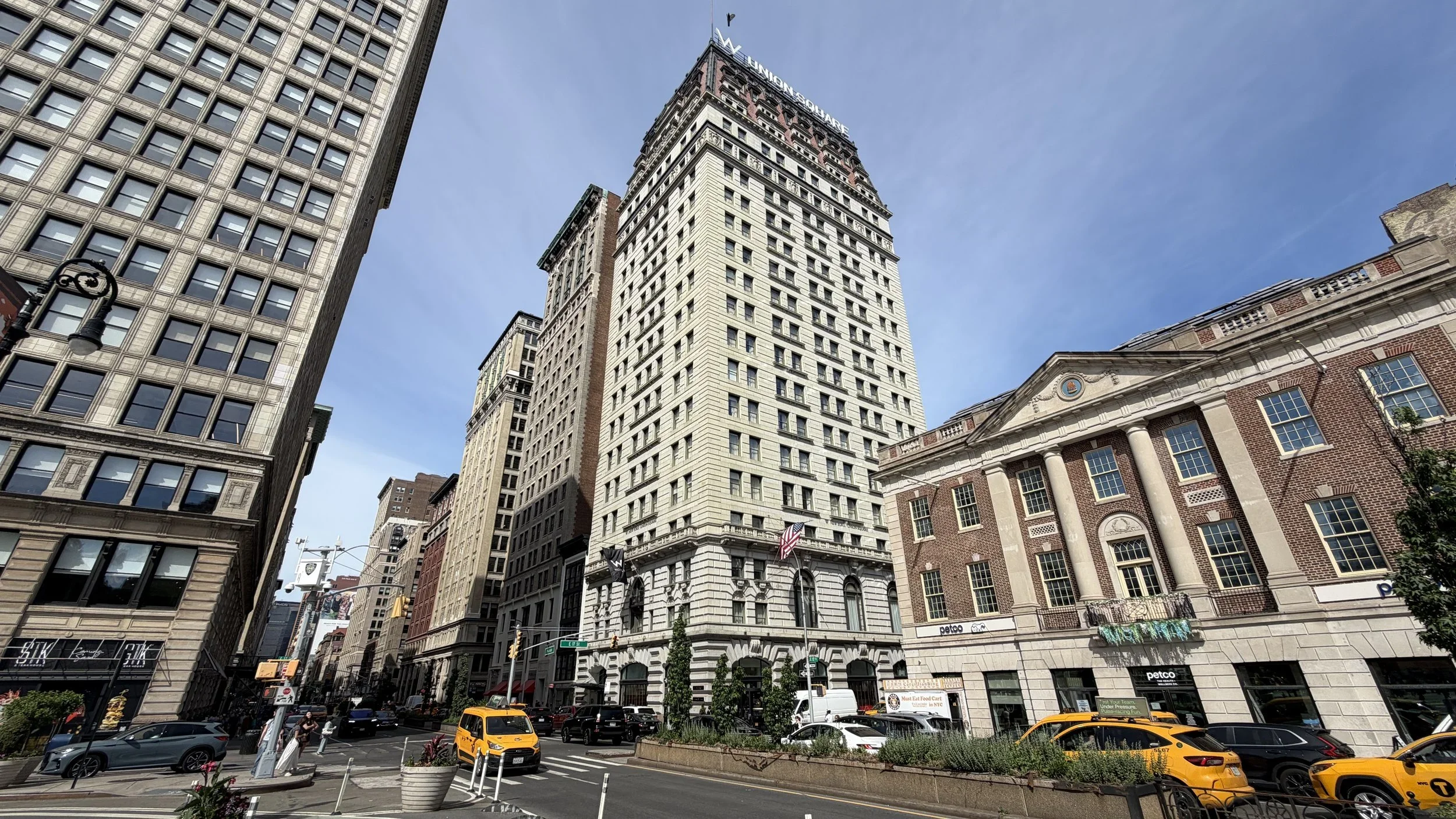
Take the 4/5/6, N/Q/R/W, or L to 14th Street–Union Square. Exit on the north side of the square, 17th Street and Union Square West. Cross to the center of the park and stand facing north, toward the Beaux-Arts tower on the northeast corner.
What Union Square Is in This Context
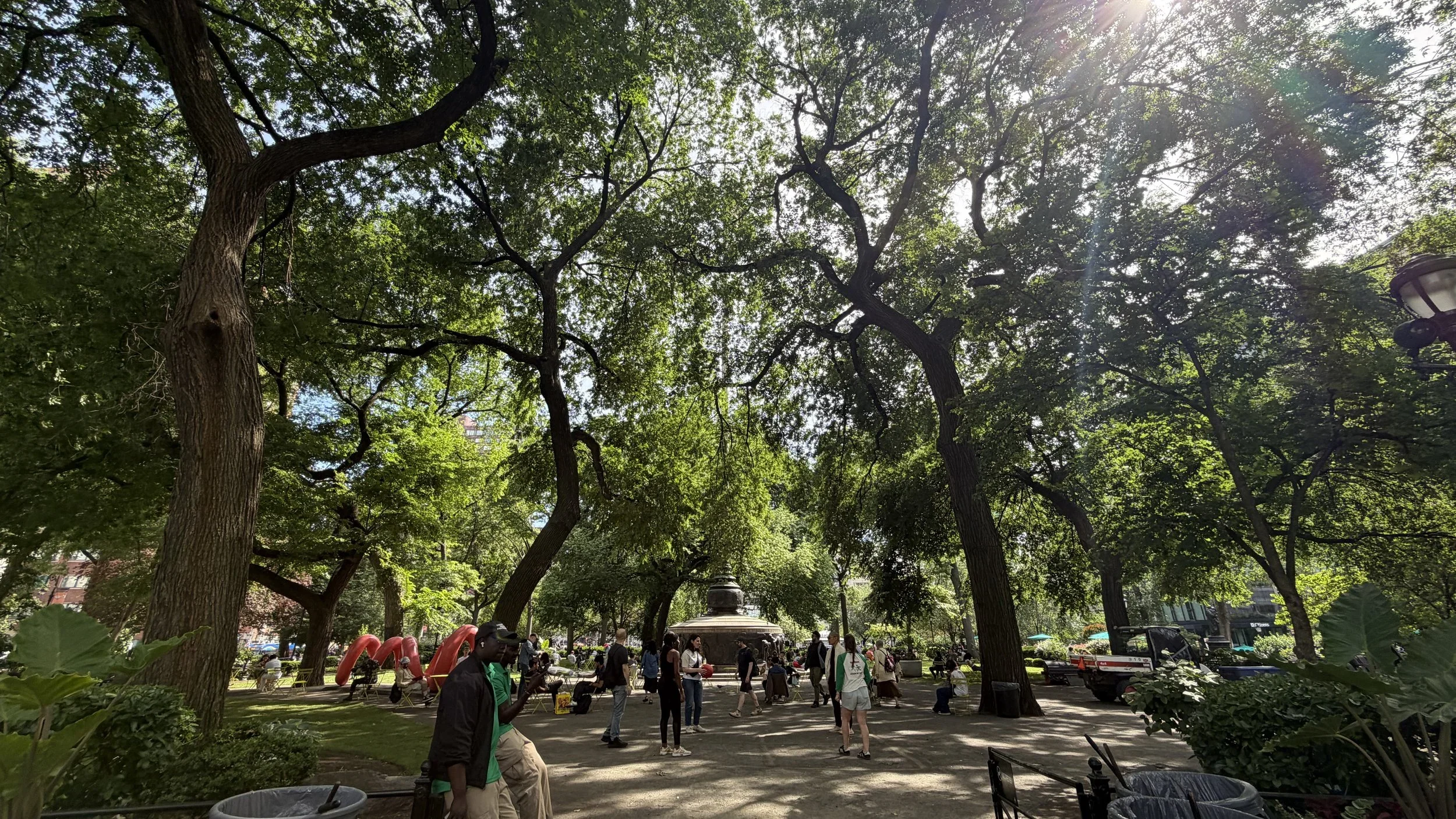
Union Square was established as a public space in 1831, at the junction of Broadway and Fourth Avenue, at the place where the city's grid bent to accommodate the older Bloomingdale Road. It was designed as a formal park on the English model. By the mid-19th century it had become the center of New York's commercial and cultural life. The department stores, the publishing houses, the theaters all within a few blocks. By the late 19th century it had become what it is most associated with. The site of labor organizing, political demonstration, mass meeting. The May Day rallies of the 1880s began here. The Triangle Shirtwaist memorial service was held here. Emma Goldman spoke here. The park designed to project civic order became, repeatedly, the stage for civic argument.
This is the Meistersinger geography. The opera is set around a public square and the meadow outside Nuremberg's walls, where artisans argue about the rules that govern what they make, and where the argument is resolved by a public song competition. The guild is both the site of craft pride and the site of conflict. The square is both the commons and the arena. Union Square has been both of those things since 1845.
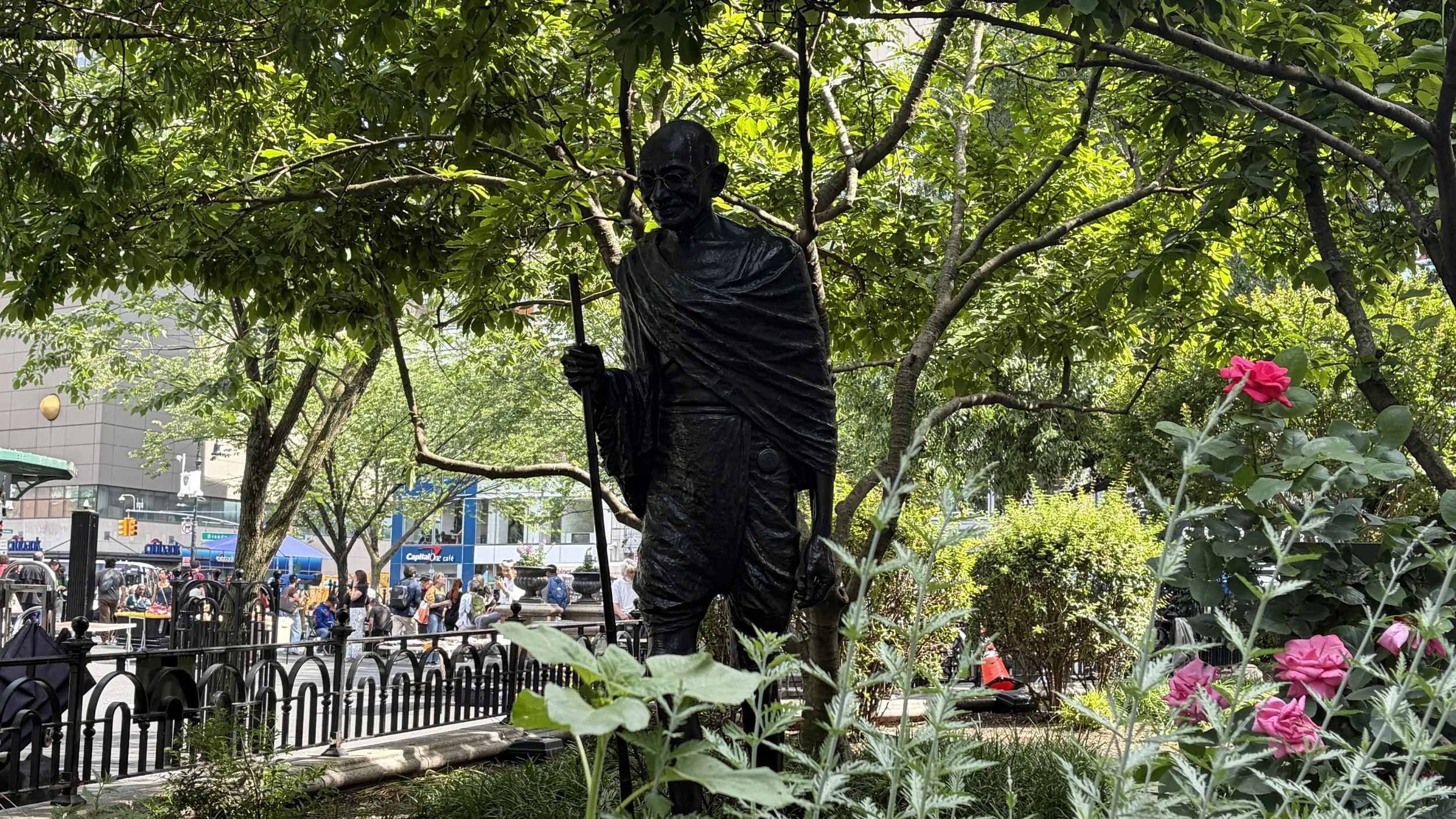
The northeast corner building is the former Germania Life Insurance Company, now the W New York, Union Square hotel. The company was founded in part by Hugo Wesendonck, brother of Otto Wesendonck, Mathilde's husband, the man whose house at the Green Hill in Zurich Wagner occupied while composing Tristan. The same family network that made Tristan possible put its name on a Beaux-Arts tower overlooking the park where New York's labor history was made. The opera that rejected the social world has its patron's brother's company building looking over the square where the social world argued with itself for a century. The city is full of these adjacencies.
Track: Die Meistersinger von Nürnberg, Overture
Begin the Overture as you enter the square from the south and walk its perimeter clockwise. The Overture runs approximately nine minutes and announces the opera's three main themes. The guild's march with its massive brass chorale. The lovers' melody, which enters as a lyrical countermelody. And the Prize Song, barely sketched at first, completed as the Overture's final pages. These three themes are not competing. The Overture's formal achievement is to show that they belong together. That the guild's civic order and the lovers' private desire and the individual artist's inspiration are aspects of a single community's possibility.
Walk at an even pace. The square's mixed population, the farmers' market and the protest signs and the dog walkers and the people on benches and the delivery cyclists, is the guild in modern form. Imperfect, contentious, capable of order when the occasion requires it. The Overture ends with everything unified in a final statement of the Prize Song over the full orchestra. At that moment, wherever you are in your circuit, stop and face north.
Die Verschwundene Halle: Das Liederkranz-Gebäude
Getting There
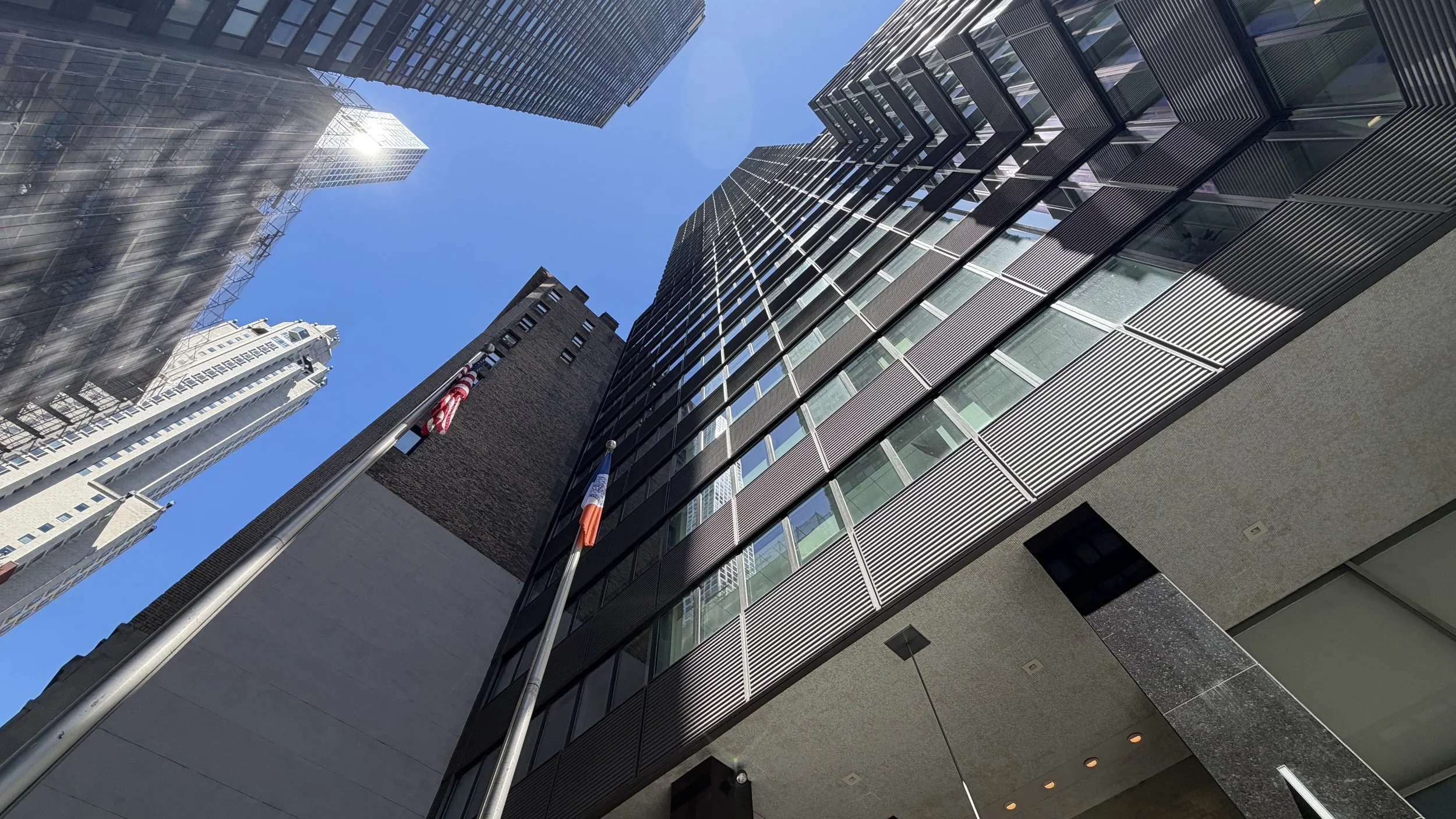
From Union Square, take the 4/5/6 uptown to 59th Street–Lexington Avenue. Walk south on Lexington to 58th Street, then east toward Park Avenue. The original Liederkranz Hall stood at 111–119 East 58th Street. Nothing of it remains.
What the Liederkranz Hall Was
The Liederkranz of the City of New York was founded in 1847 by German immigrants who wanted to sustain the practice of communal singing that had been central to German civic and cultural life, and that had no equivalent institution in their adopted city. The German choral movement, the Liedertafel tradition, was one of the primary vehicles of 19th-century German middle-class identity, the form through which craftsmen and professionals expressed cultural aspiration through collective voice. The Liederkranz was its New York chapter.
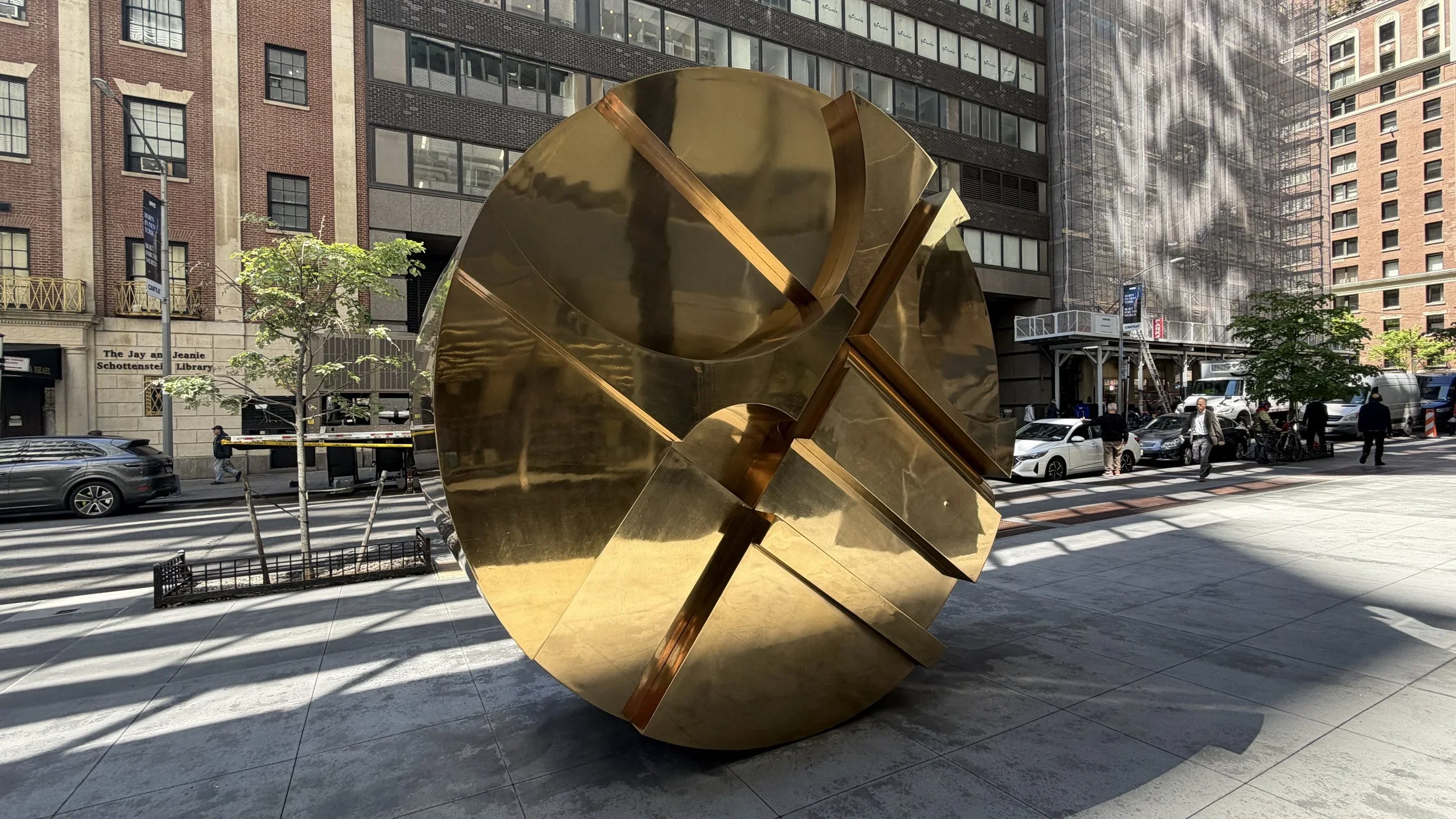
Under the presidency of William Steinway, the same William Steinway whose family had built the piano manufacturing complex in Astoria, Queens, and whose brother Theodore had founded what became the world's most celebrated piano firm, the Liederkranz raised funds to build its own hall at 111–119 East 58th Street in the 1880s. A four-story building with a concert hall, a restaurant, and rooms for rehearsal and social gathering. It was, in the purest sense, a Meistersinger guild. A society of craftsmen and cultural professionals organized around a shared art form, with its own building, its own rules, its own social hierarchy, its own calendar of events.
The hall was demolished. The Liederkranz continues as an organization, now at 6 East 87th Street, but the 58th Street building is gone and the block shows no trace of what stood there. You are visiting a ghost. This is the correct condition for this stop. The Meistersinger guild exists in the opera as an idealized community. Self-governing, art-centered, capable of internal dispute and reconciliation, constituted by shared craft rather than birth or wealth. The New York analogue built itself a hall, maintained it for decades, and then lost the building to Manhattan real estate. The guild survived. The hall did not. The singing continues. The room where it happened is gone.
Track: Die Meistersinger, Act III — Wach auf, es nahet gen den Tag (Festival Meadow chorus)
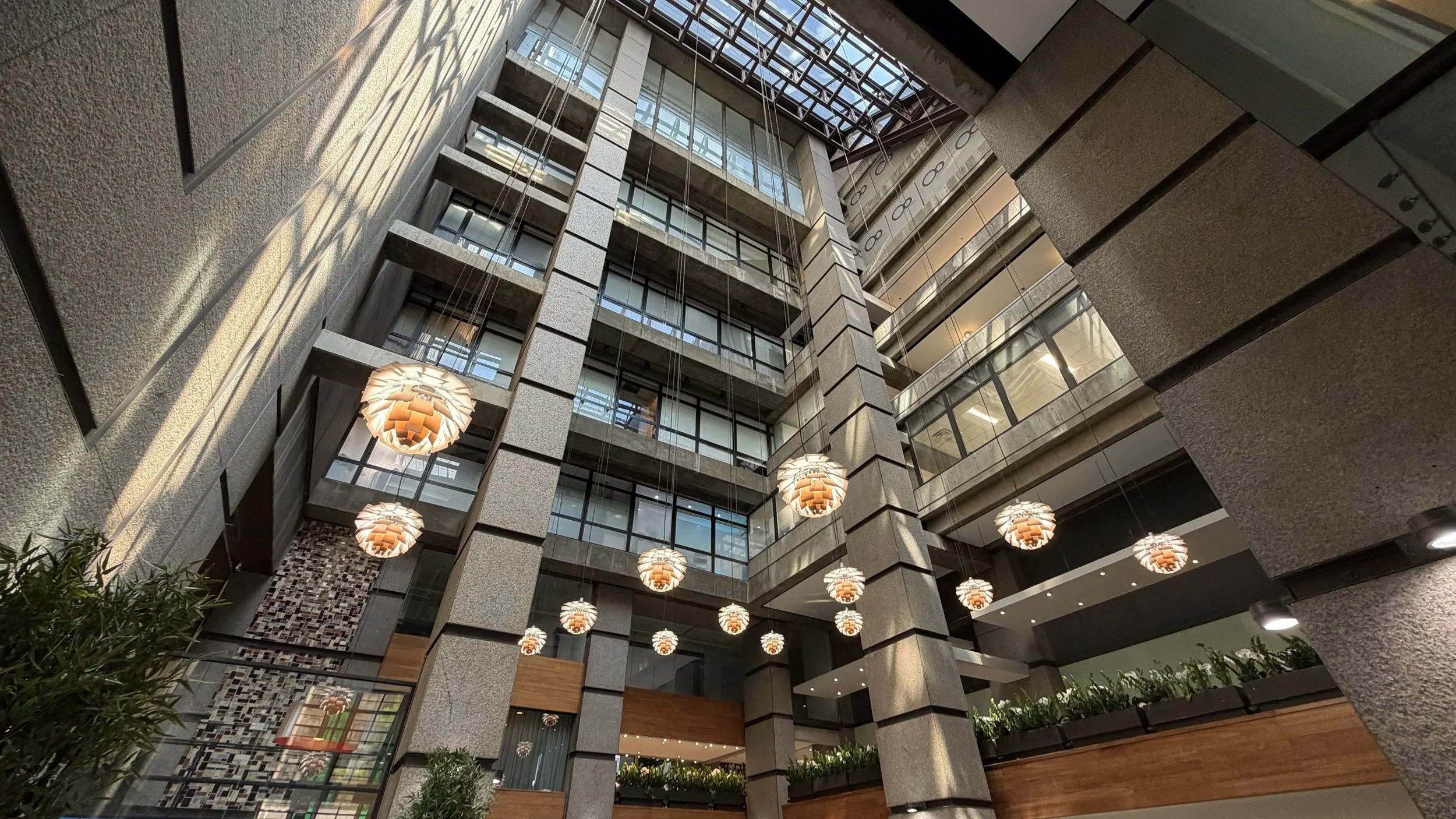
Stand on the block of East 58th Street where the hall stood and play the Festival Meadow chorus. The chorus is the moment when the whole city of Nuremberg turns to honor Hans Sachs. The moment when a community recognizes that the art produced in its midst, given form by one of its craftsmen, belongs to all of them. It is the opera's most communal music, a full chorus carrying the weight of the assembled guild.
Listen to it standing in front of whatever is currently on this block. A shop front. A glass lobby. The current urban surface that stands on the foundation where a community of singers assembled for decades, sustaining a practice of collective art-making in a city that did not have such things by default but could build them when enough people decided to.
Die Gemeinschaft: East 86th Street, Yorkville
Getting There
From Lexington and 58th, take the 4/5/6 uptown to 86th Street. Exit on Lexington and walk east along 86th Street toward the East River. The historic commercial center of Yorkville ran along East 86th Street from Third Avenue to First Avenue.
What Yorkville Is
East 86th Street between Third Avenue and the East River was, for most of the 19th and 20th centuries, the commercial and social center of New York's largest German-American neighborhood. Yorkville, settled by German immigrants from the 1840s onward, housed at its peak in the early 20th century over 100,000 German-born residents and their families. The neighborhood had German-language newspapers, German restaurants and beer halls, German churches and social clubs, German butchers and bakers and musicians. The New York Sängerfeste brought thousands of German-American singers to the city each year in summer. The mass amateur singing culture that Meistersinger mythologizes was being practiced, three miles north of the Liederkranz's hall, in every rented ballroom and church basement in this neighborhood.
Most of this is gone. The physical fabric of the neighborhood was rebuilt several times over, and the cultural community dispersed as successive generations assimilated and the neighborhood's demographics changed. What remains is carried by the street names and the addresses of buildings that have been replaced, and the occasional legacy institution, a German church here, a social club there, that survived into the present.
Yorkville is the city's version of the Meistersinger guild's diaspora. The historical Mastersingers were craftsmen who had organized, in the new commercial cities of 15th and 16th-century Germany, the cultural forms that made urban life coherent for them. The German-Americans of Yorkville were doing the same thing in a different city and a different century. Finding, in the Liederkranz and the Sängerfest and the local Turnverein, the communal forms that made belonging possible in a place that had not asked for their arrival.
This is also the walk's immigrant register. Meistersinger is an opera about a community that thinks of itself as continuous and rooted. Nuremberg's guilds, its traditions, its specific forms of civic life, but the opera's American history was made by communities in transit, by German immigrants to New York who heard in Sachs's cobbler shop and Nuremberg's meadow an idealized version of the world they had left and were trying to rebuild in the city they had arrived in. The Ehret eure deutschen Meister! that was politically freighted in Europe was, for the Yorkville German-American community of the 1890s, a homesick cry.
Track: None
Walk 86th Street from Third to the East River in silence. Notice what has survived and what has been replaced. Notice the distance between what this street was and what it is. When you reach the river, pause. Then turn back. The silence on this block is not the Heather Garden's contemplative silence. It is the silence of a community that sang loudly for a century and then gradually stopped, not because it stopped caring but because it became the city around it, which is the other name for belonging.
Das Wiesenplan: Die Allee und die Muschel
Getting There
From 86th Street, enter Central Park at the East Drive and walk west and south to the Mall, which runs from approximately 66th to 72nd Street through the center of the park. Enter the Mall from the south end at 66th Street and walk north toward the Bandshell.
What the Mall Is
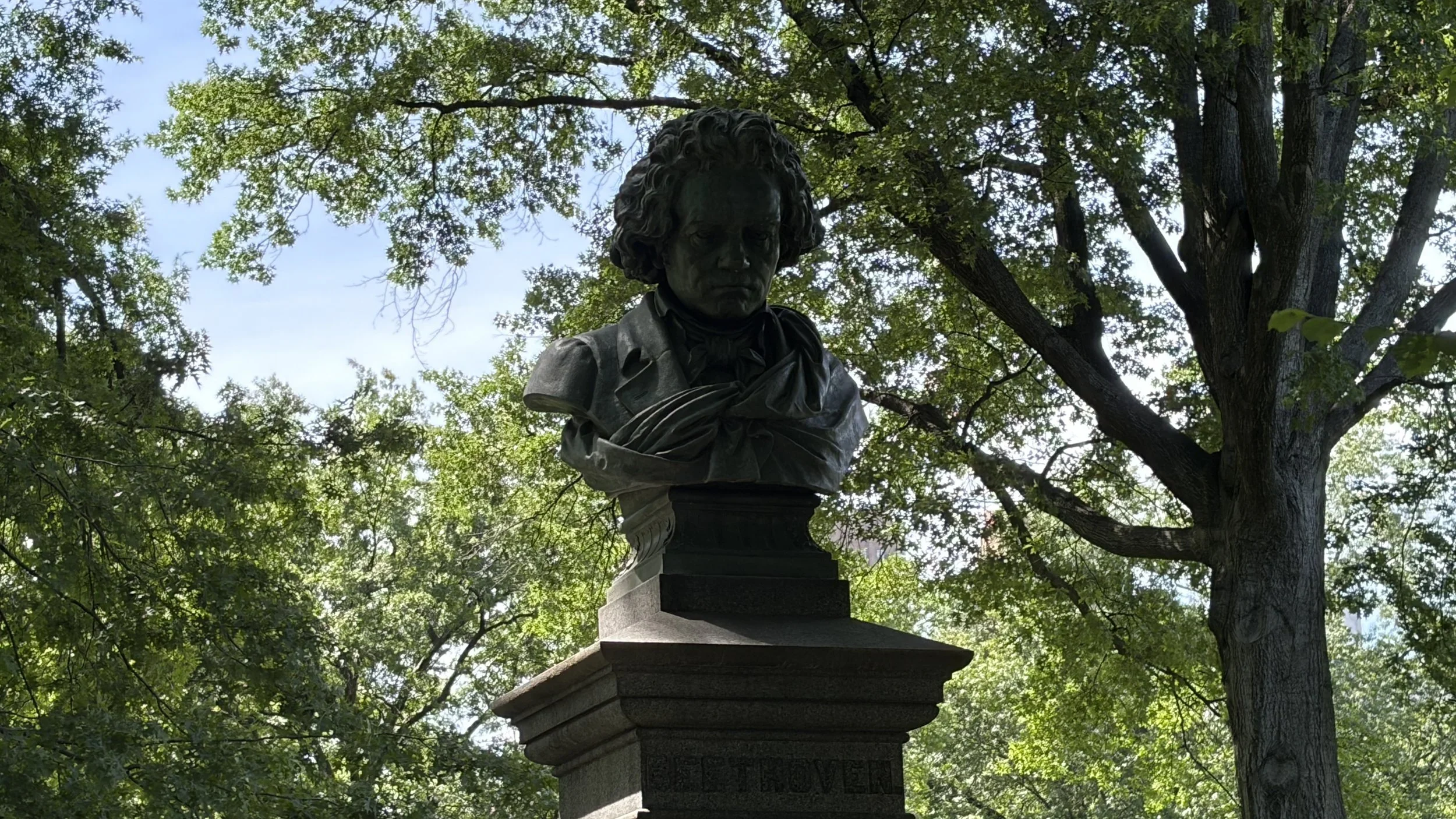
The Central Park Mall is the only formal tree-lined promenade in the park, a deliberate exception to Olmsted and Vaux's otherwise naturalistic design. They included it because they understood that New York needed a space where its citizens could display themselves and be seen by each other in public, the civic function that the great European promenades served, and that their naturalistic design otherwise withheld. The Mall's American elms are roughly 150 years old. Their canopy closes overhead at approximately 60 feet, creating a vault that functions architecturally, as a roofless hall, rather than simply horticulturally. It is the only intact elm allée in North America.
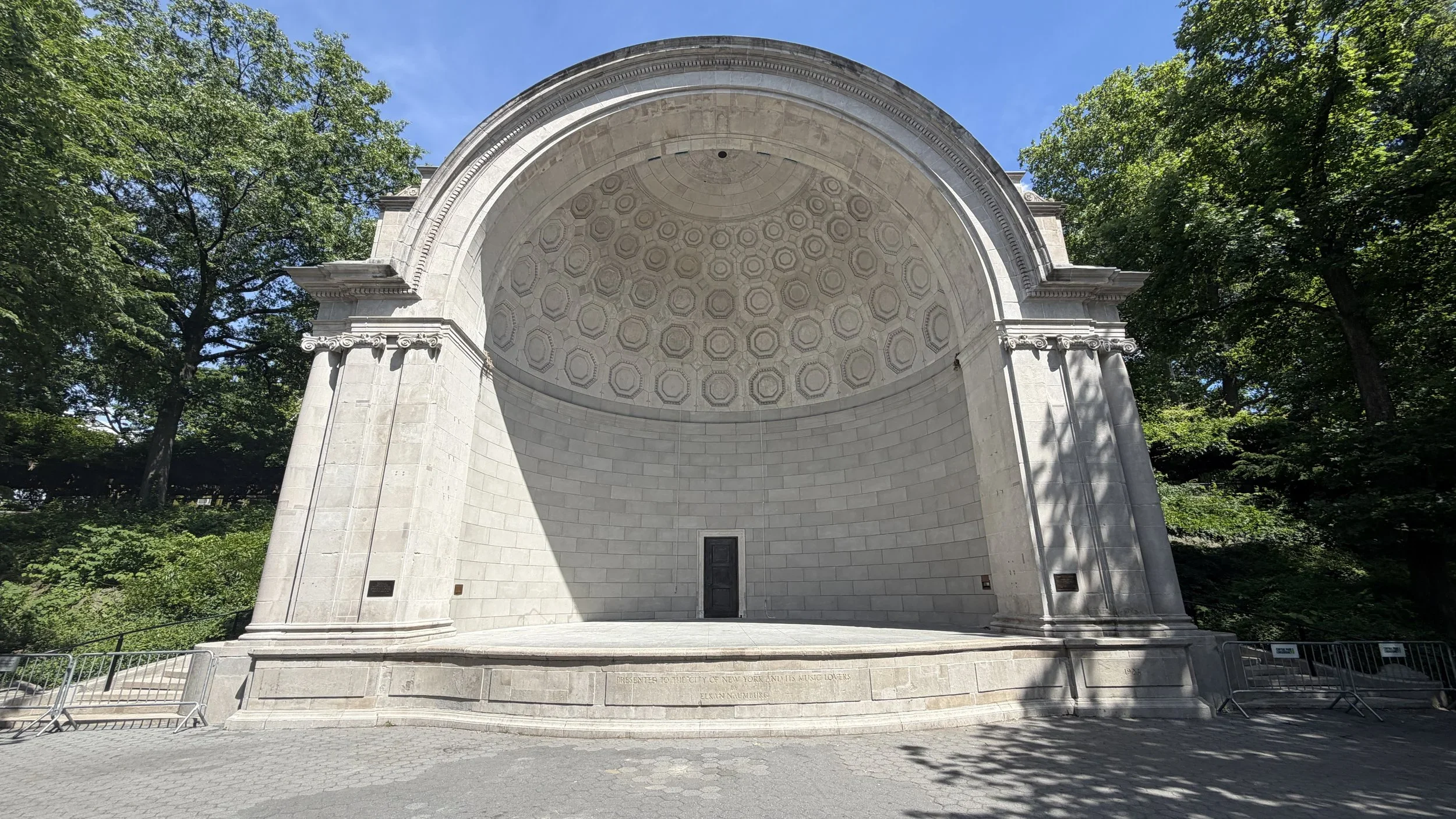
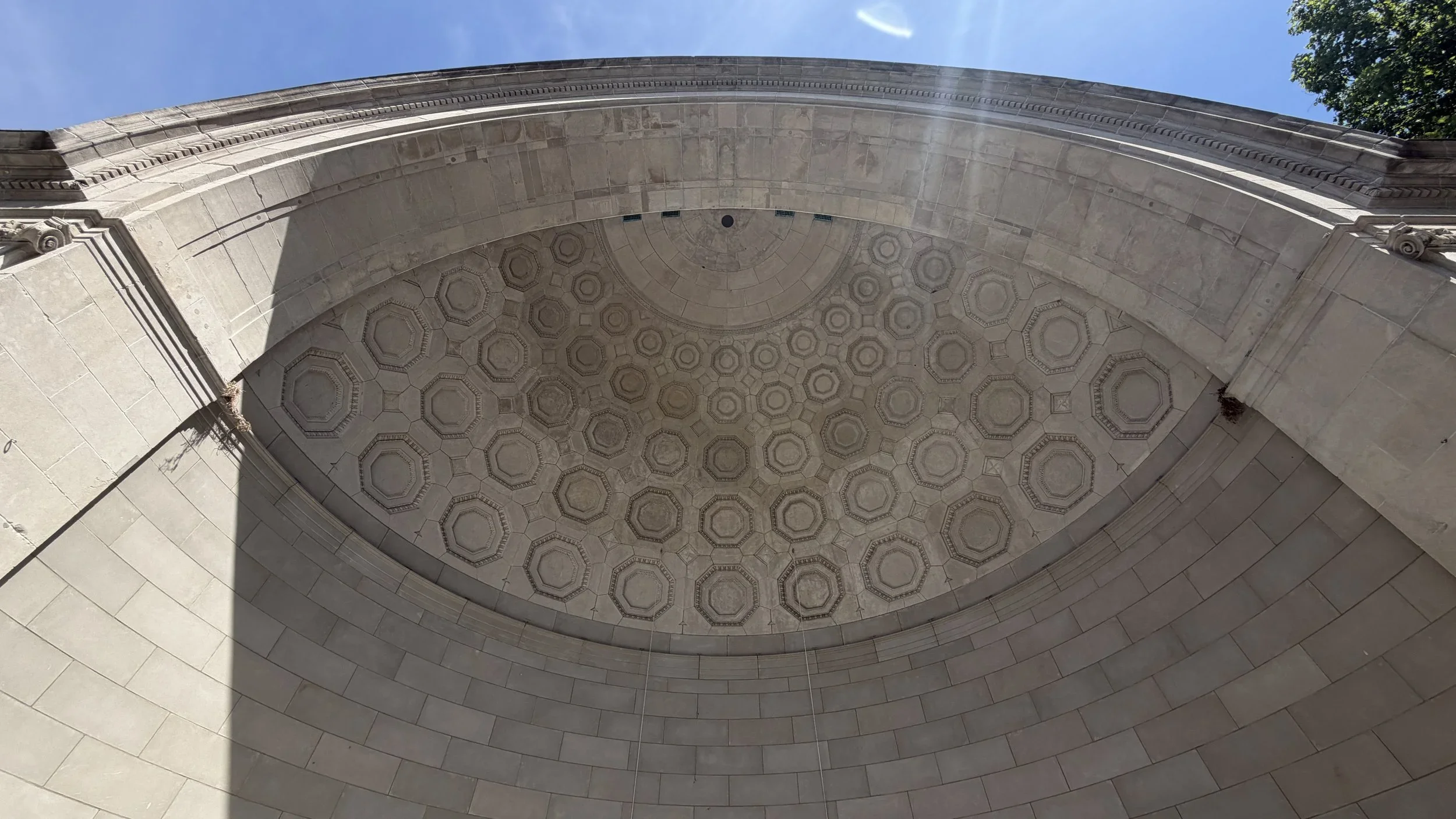
The Naumburg Bandshell at the north end of the Mall was built in 1923, funded by the investment banker Elkan Naumburg, and designed in Indiana limestone in a neoclassical style that makes the shell both permanent and outdoor-scaled. The Naumburg Orchestral Concerts have been held here continuously since 1905, making this one of the oldest free outdoor classical concert series in the world. In May and early summer the concerts return, and the crowd that gathers on the lawn in front of the shell, lawn chairs, picnics, children, dogs, and people who simply sat down while passing through, is the Festival Meadow that Meistersinger imagines. Imperfect, mixed, unorganized by any guild, and gathered around the music all the same.
Track: Morgenlich leuchtend im rosigen Schein (Walther's Prize Song, Act III full statement)
Begin the Prize Song as you enter the Mall from 66th Street. Walk at a pace that will bring you to the Bandshell as the song's final statement completes.
Morgenlich leuchtend, the morning-bright, the rosy radiance, is the song of a man singing what he dreamed before the dream could fade. The melody first appeared in Act II, barely sketched, already recognizable. In Act III, Sachs shows Walther how to write down what he heard in the dream, how to give the spontaneous utterance a form that can be transmitted to others. The Prize Song is the result. Individual inspiration given communal form. Walther's private vision, encoded in the Mastersinger's public tradition.
Walk through the elm vault with the song in your ear. The dappled light through the canopy. The other park users as Walther's audience. The Nürnbergers who do not yet know they are about to hear the song that will change their understanding of what a song can be. When the Bandshell opens ahead of you, the limestone arch framing the lawn and the city sound filtering through the trees, stop for a moment before reaching it. This is the moment before the contest. Everything is still possible.
Walk under the dome and stand at its center. The shell is designed to project sound outward and, at its focal point, to create a brief concentrated acoustic moment. The Prize Song played from your phone at the center of the dome will sound different there than it sounds in the open air of the Mall. This is the difference between the individual voice and the public performance. The room that gives the song its shape.
If a Naumburg concert is in progress, sit on the lawn and listen. This is not a detour. This is the walk's central movement, coinciding with its most precise analogue. A free outdoor classical concert in a public park in New York in May is what the Festival Meadow looks like when it survives translation.
Das Neue Haus: Die Metropolitan Oper, Lincoln Center
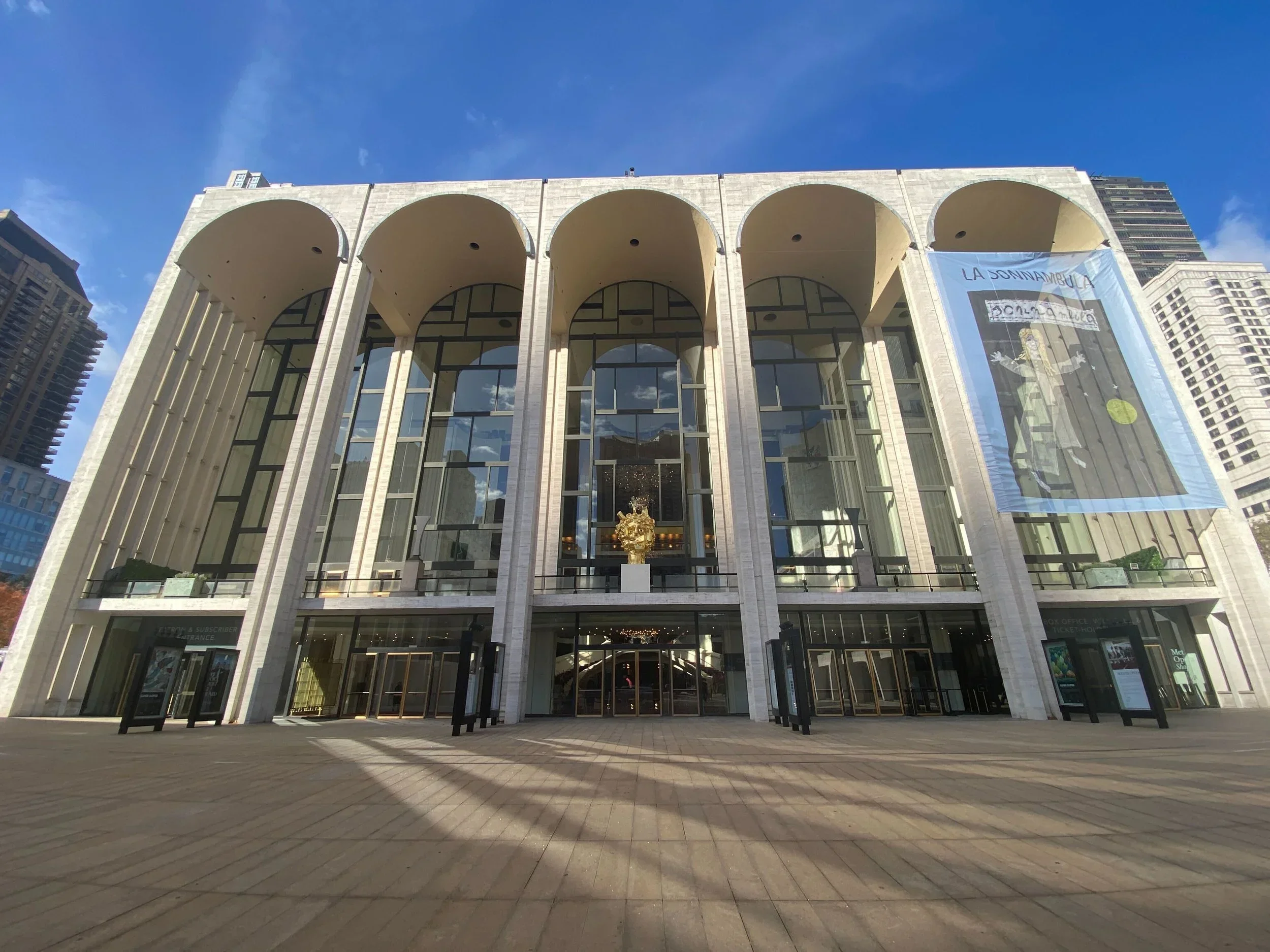
Getting There
From the Naumburg Bandshell, walk west through Central Park, exiting at 72nd Street and Central Park West. Walk south to 66th Street and Lincoln Center. The Metropolitan Opera House is at the center of Lincoln Center's main plaza, at 30 Lincoln Center Plaza.
What Lincoln Center Is
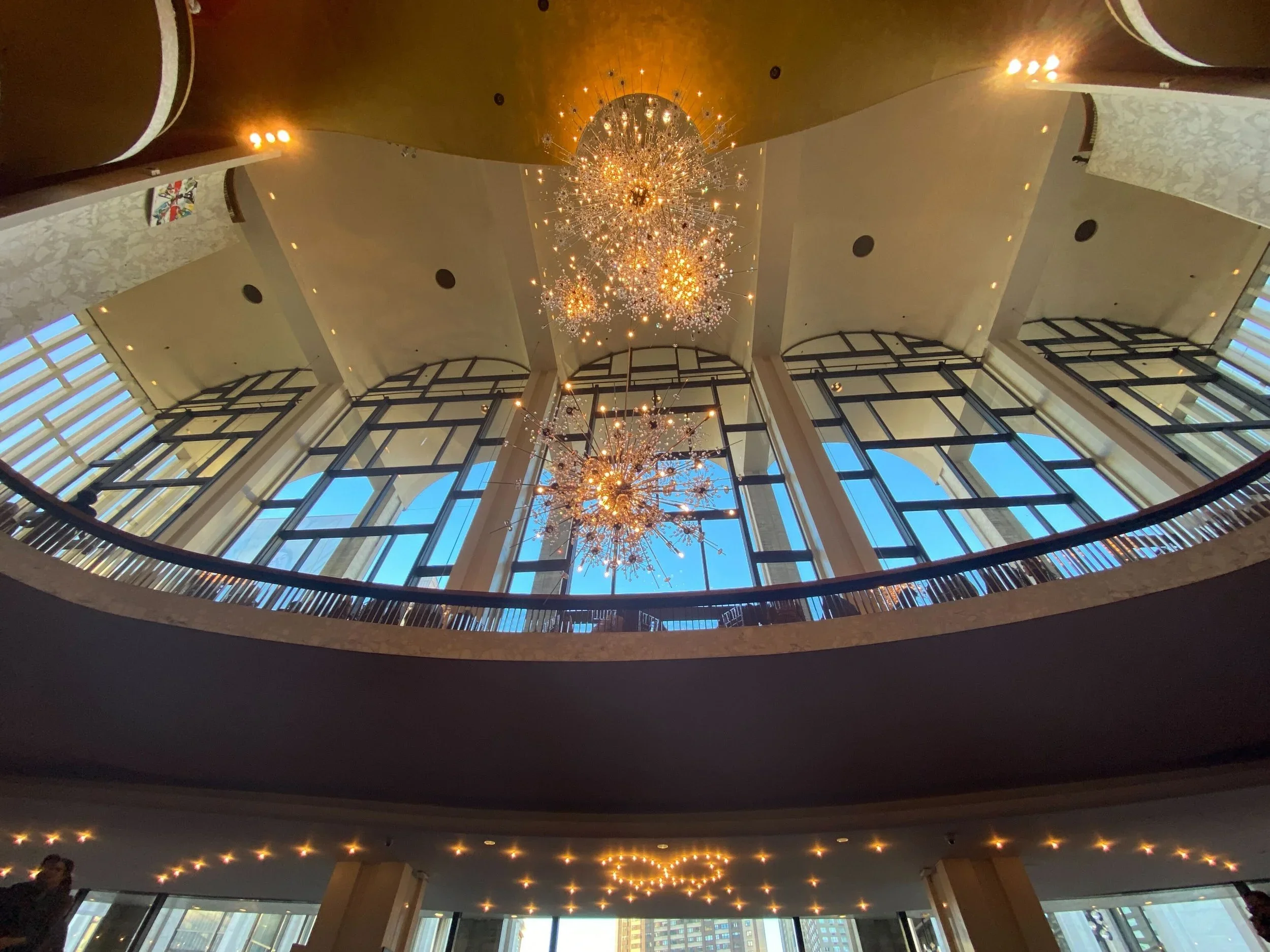
The Metropolitan Opera moved from its 39th Street building to Lincoln Center in 1966. The new house, designed by Wallace Harrison, does not disguise what it is. A grand cultural institution making a declaration about its own importance in a city that required such declarations to survive. The facade is all arched glass, the Chagall murals The Sources of Music and The Triumph of Music glowing from inside the arch windows like stained glass in a secular cathedral.
The Lincoln Center plaza is the walk's most precisely Meistersinger outdoor space. The central fountain, the arc of buildings, the Met, Geffen Hall, the Koch Theater, the open paving that fills on summer evenings with people sitting and watching other people, forms a Festival Meadow in concrete and water. The competition happens inside, in the house, on the stage. But the public life of the opera, the people who come for the performance and the people who come to be part of the occasion, takes place on these steps and around this fountain.
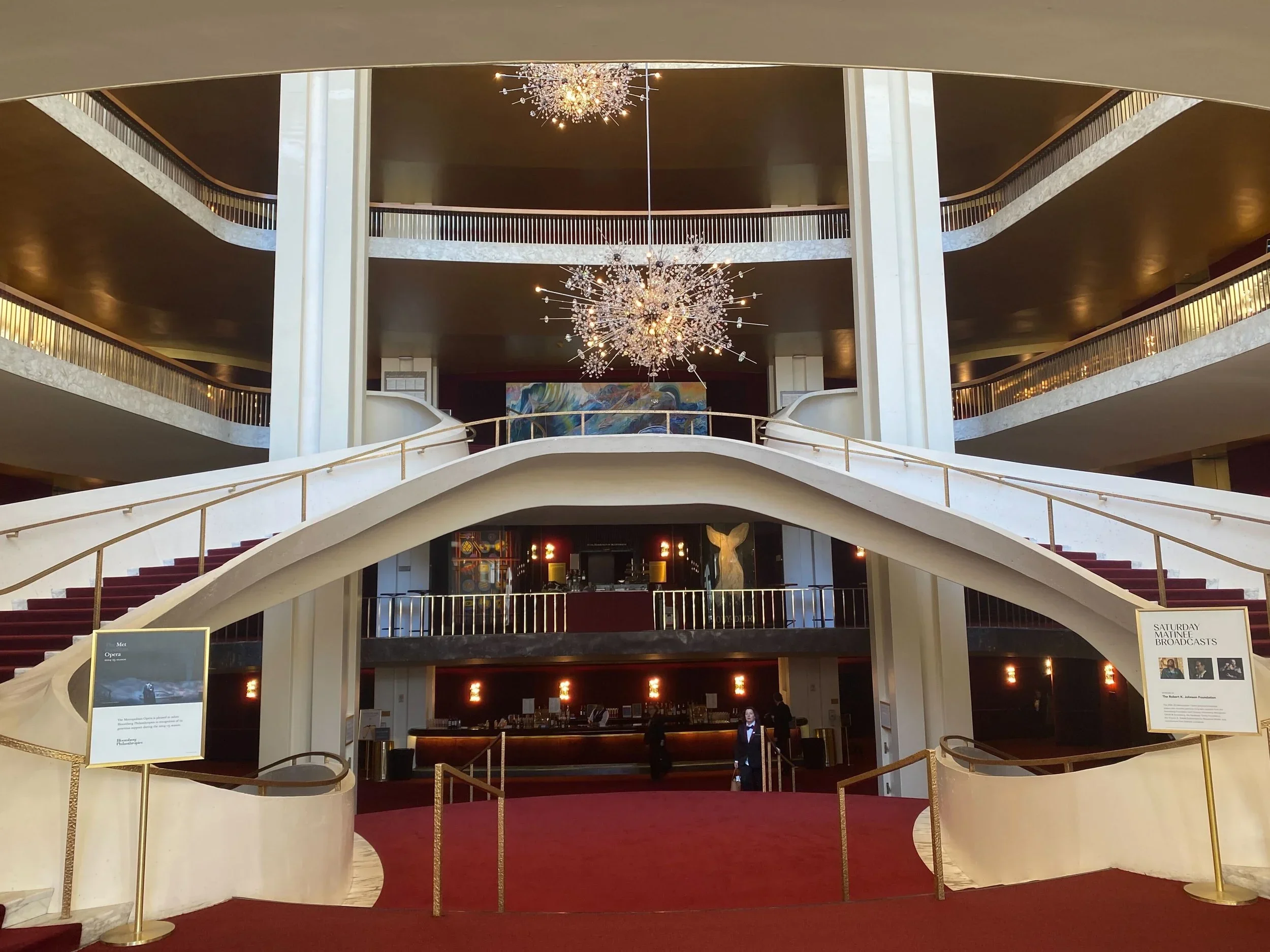
Meistersinger has been central to the Met's repertory since the house was founded in 1883. The move to Lincoln Center did not change that. The opera has been performed here in productions that have navigated, at various degrees of directness, the opera's political history. The romantic Nuremberg of the earlier stagings, the more explicitly interrogated productions of recent decades that have tried to hold the opera's humanism and its nationalism in view simultaneously.
There is another layer to this plaza. Lincoln Center was built on the site of San Juan Hill, a densely inhabited working-class neighborhood and one of New York's largest African-American and Puerto Rican communities, demolished in the 1950s under Robert Moses's urban renewal program. The plaza's current function as a civic gathering space for classical music audiences does not erase this history. It sits on the same ground. The Wach auf chorus played here is not only the community's celebration of its tradition. It is also the sound of what was lost to build the room where the tradition is now celebrated.
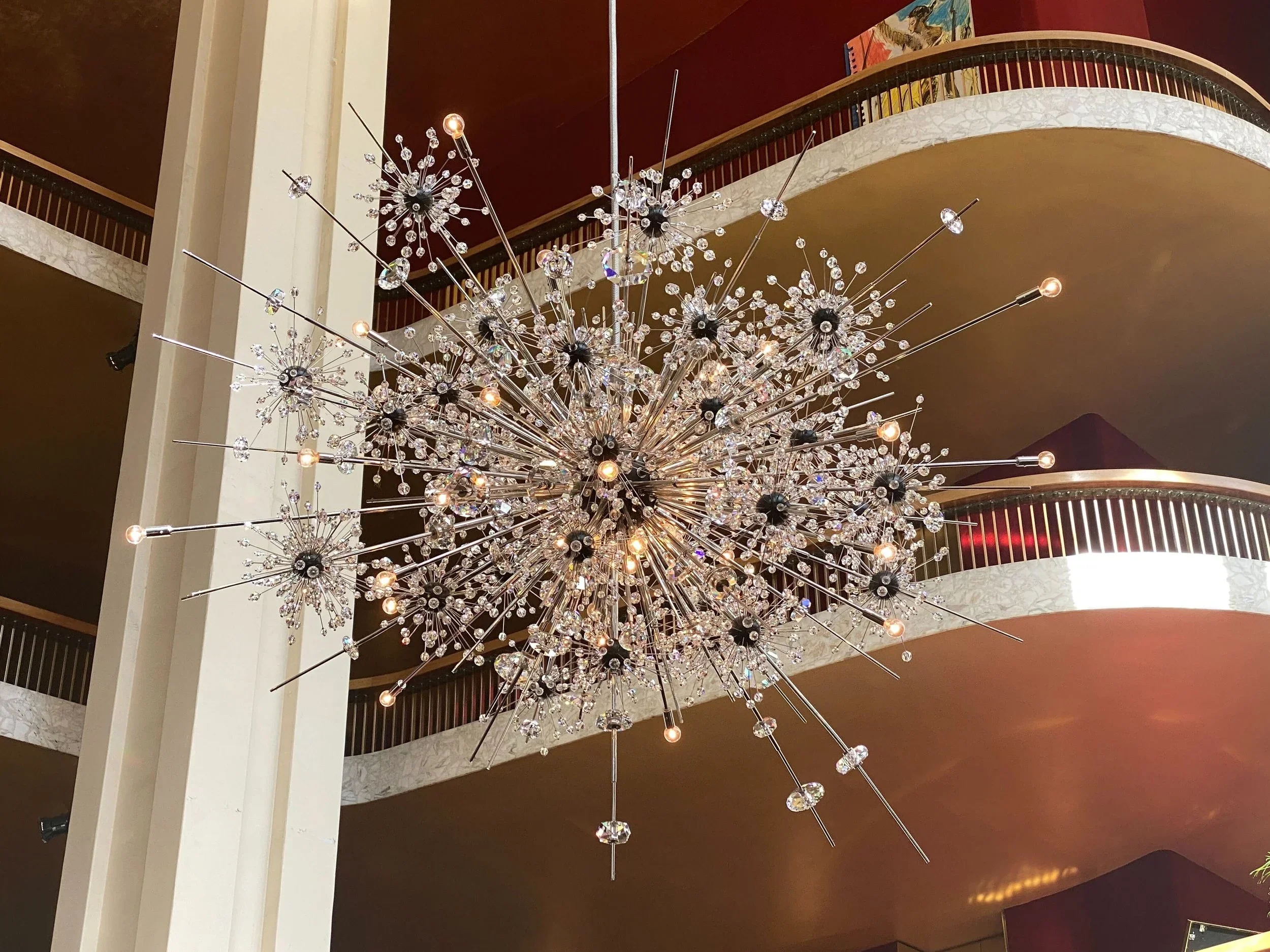
Track: Act III, Scene 5 — Wach auf, es nahet gen den Tag (Festival Meadow chorus)
Stand in the plaza, facing the fountain. Play the chorus. The Wach auf is the moment in the opera when the community recognizes what it has: not the rules, which everyone already knew, but the living person who sustained the tradition and made the new song possible. The crowd's recognition of Sachs is the opera's most generous gesture. The community honoring not the winner of the competition but the elder whose patience and intelligence made the competition possible.
Walk slowly around the fountain while the chorus plays. Notice the Chagall murals through the glass. Notice who is in the plaza. Notice the gap between the celebration the music proposes and the full history of the ground it stands on. The Meistersinger guild was never innocent of its political implications either. What the opera asks is not that you ignore the shadow. It asks what you do with both the beauty and the shadow, in the same plaza, at the same time.
Das Verlorene Haus: Das Alte Metropolitan Opera House, 39th Street
Getting There
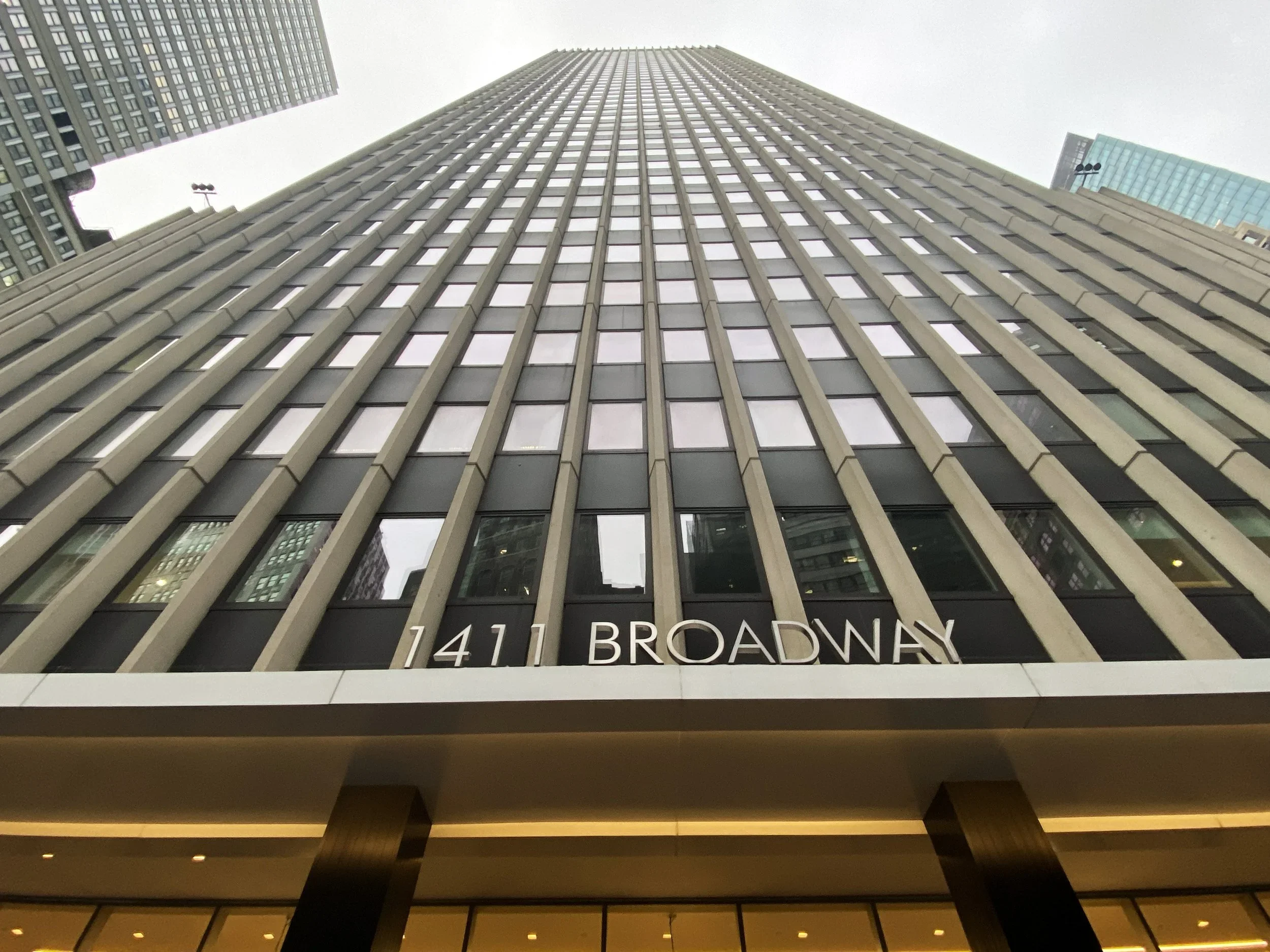
From Lincoln Center, take the 1 train from 66th Street–Lincoln Center south to Times Square–42nd Street, then walk south on Broadway to 39th Street. The Old Metropolitan Opera House stood at 1411 Broadway, filling the full block between 39th and 40th Streets. The building was demolished in 1967. Nothing of the original structure remains.
What the Old Met Was
The Metropolitan Opera House opened on October 22, 1883 at the corner of Broadway and 39th Street, built by a consortium of wealthy New Yorkers who had been unable to secure boxes at the older Academy of Music and who therefore built their own house. The design by J. Cleaveland Cady was Italian Renaissance on the exterior and red velvet inside, with a horseshoe of four tiers of boxes organized to make social hierarchy visually explicit. The Diamond Horseshoe was the social ranking made spatial. To have a box was to have a position in the city's upper echelons. The opera was secondary to the social performance. The music happened downstairs while the social competition happened in the boxes.
Meistersinger was performed at the Old Met from its earliest seasons. The opera that is about public judgment of art was performed in a house organized around private hierarchy and social competition. The guild of masters was reimagined, in the Met's context, as the guild of the wealthy. The prize song was judged, in effect, by the box holders.
The house survived two world wars, during which Meistersinger had its most complicated career. The opera was performed as cultural affirmation, then suspended as politically untenable when the United States was at war with Germany, then restored to the repertory as the war ended and the distinction between Wagner and what had been done in Wagner's name became, for the Met, negotiable again. The exact point at which Ehret eure deutschen Meister! could be sung in New York without its nationalist resonance being the primary meaning was never fixed. It is still not fixed. The opera outlasted the house.
The Metropolitan Opera Association announced in 1961 that it would move to Lincoln Center. The old building was offered to the city for landmark status. The offer was declined. It was demolished in 1967. The block it occupied is now a commercial office tower.
Track: Hans Sachs — Wahn! Wahn! Überall Wahn! (Act III monologue)
Stand on the east side of Broadway, facing the current building on the Old Met's block, and play the Wahn monologue from the beginning of Act III.
Sachs sings the monologue in the morning after the riot. He has spent the night working through what happened. Why reasonable people, himself included, were seized by collective irrationality and turned the midsummer evening into chaos. His answer is not comforting. It is not that specific people were bad or specific rules were wrong. It is that Wahn runs through everything, and that the task is not to eliminate it but to channel it into forms that produce beauty rather than violence.
The Old Met's history is a Wahn narrative. A magnificent house built to perform social hierarchy that also sustained one of the great operatic repertories in the world for eight decades. An institution that navigated nationalism, political pressure, internal power struggles, financial near-collapses, and periods of great artistic achievement. A building demolished for reasons that had nothing to do with the art made inside it and everything to do with the economics of Manhattan real estate. Wahn! Wahn! Überall Wahn!
Walk slowly the length of the block from 40th to 39th Street while the monologue runs. The commuters and tourists passing on Broadway are the Nuremberg citizens filing into the Festival Meadow, not yet aware that what they are about to witness will be worth remembering. The glass tower where the red-velvet horseshoe stood.
Sachs's monologue does not end in despair. It ends in a decision. Since Wahn cannot be eliminated, it should be used. The artist uses it. The cobbler-poet in his workshop in the morning, deciding to turn the riot's residual energy into the preparation for the prize song. This is the figure who makes the whole walk possible: the person who has looked at the Wahn in the world and decided that the correct response is to make something.
Nachklang
The May walk ends at the site of a demolished opera house, in the afternoon noise of Broadway, with Sachs's monologue still running in the inner ear. This is the right place to end it.
Tristan ended at a fountain at midnight with a chord resolving after four and a half hours. Meistersinger ends in daylight, in public, with the community gathered and the song judged and the prize awarded and the older man still at his workbench. The metaphysics have changed. April's absolute conditions. The dissolving self, the harmony that refuses resolution, the Schopenhauerian Will circling without its object, gave way in May to a set of conditions that Sachs would recognize. The rules that make the song possible, the community that makes the rules meaningful, the individual talent that the community both constrains and enables.
New York in May is doing this continuously. The outdoor concert series beginning again. The street fairs and the protest marches and the neighborhood celebrations. The city reconstituting its public life after the winter's dispersal, finding again the forms that make collective life coherent. Imperfectly. With recurring riot. With recurring beauty. Both the riot and the beauty coming from the same source, the same Wahn shaped differently on different days.
The walk has moved from the civic square where the argument is perennial to the ghost of the guild hall to the neighborhood that sang until it didn't to the festival meadow under the elms to the new house built on displaced ground to the block where the old house stood and was cleared. Union Square to Liederkranz to Yorkville to the Mall to Lincoln Center to 39th Street. The circle the guild makes around a city that has never been a guild but keeps producing, against all odds, the conditions for a prize song.
June begins with Das Rheingold and the question underneath all of this: what was given up to build the world that makes it possible? Before the guilds, before the festivals, before the prize songs and the communities that sustain them. The river starts to move.

Further Reading