März: Lohengrin
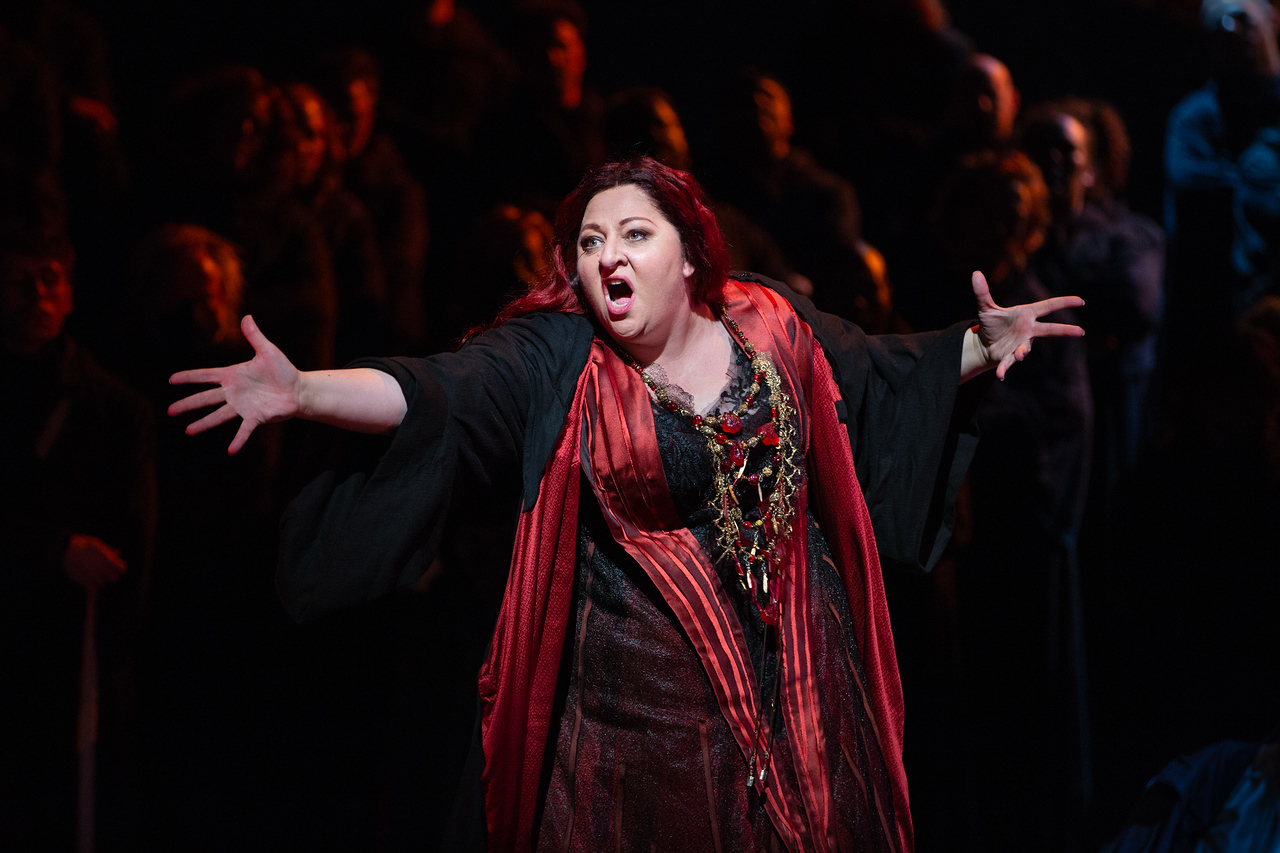
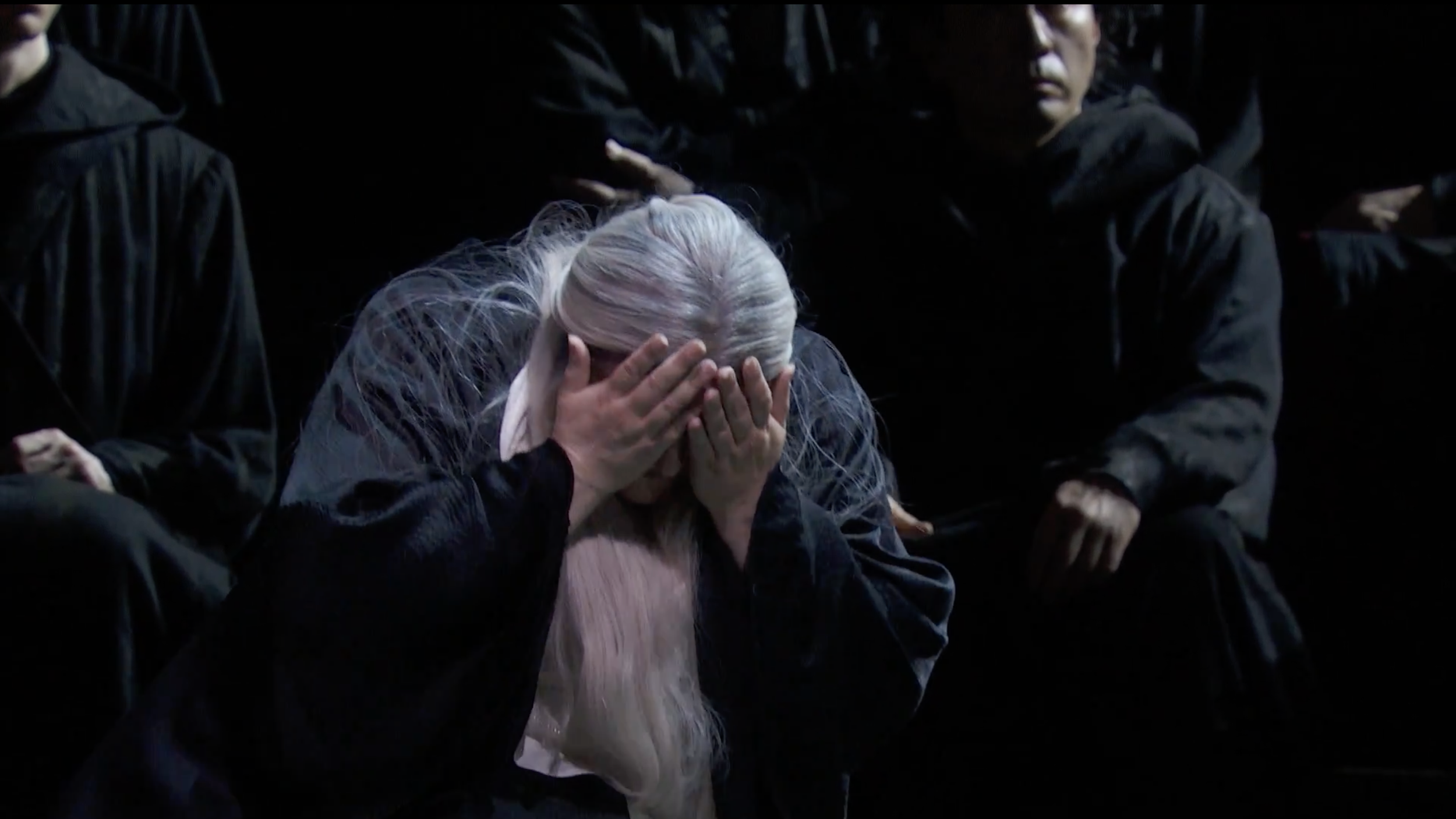
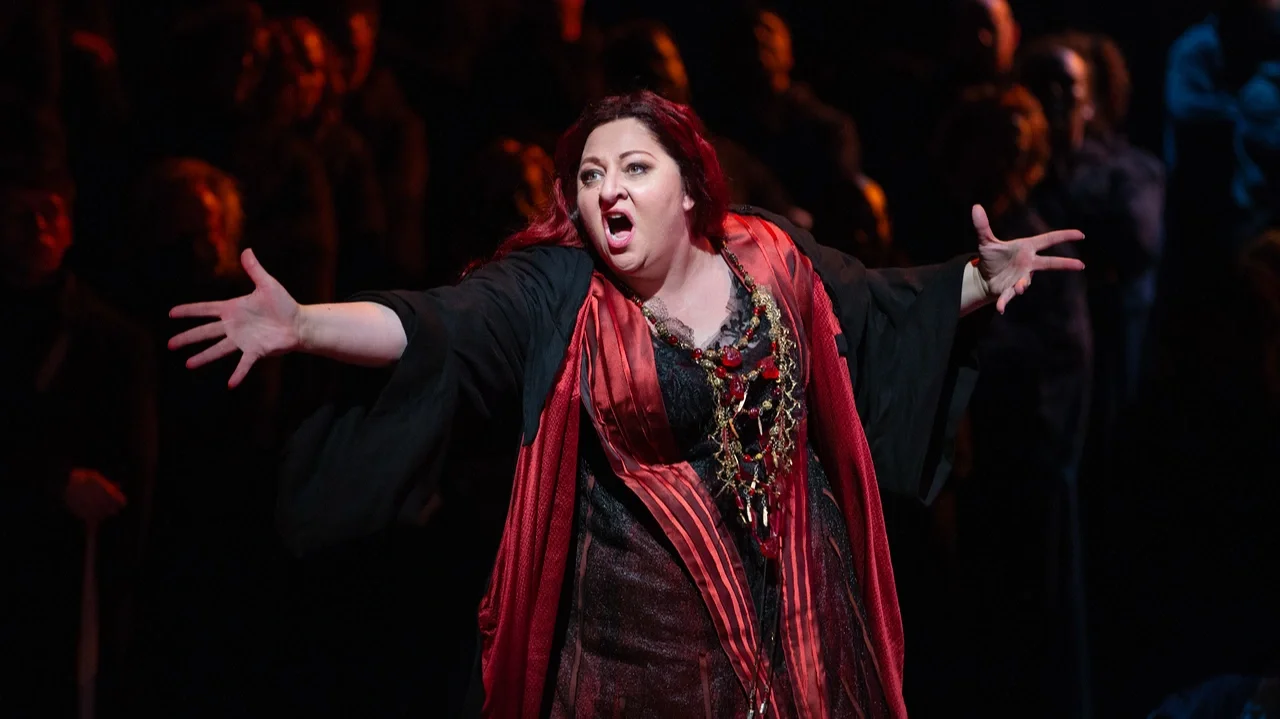
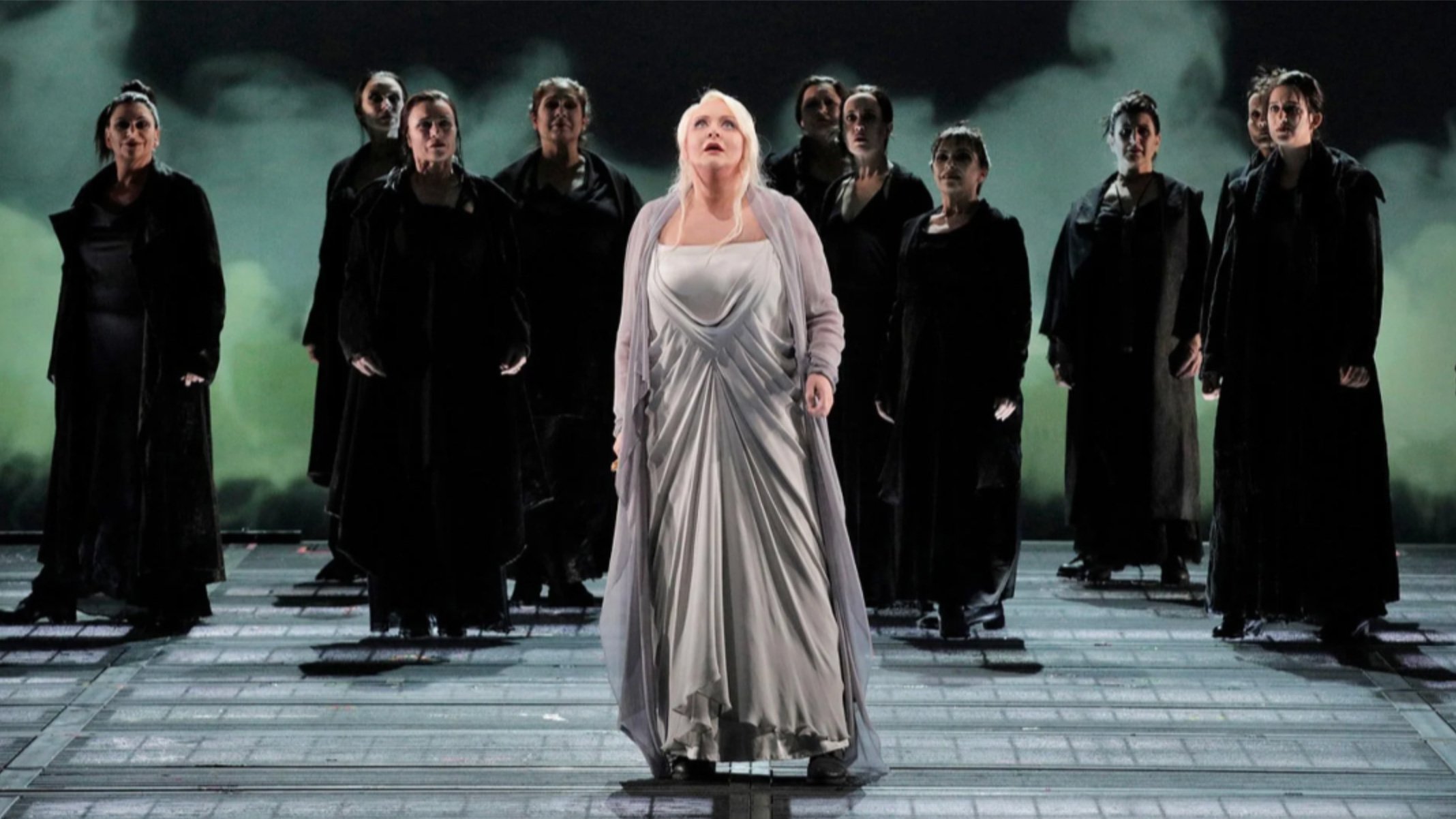
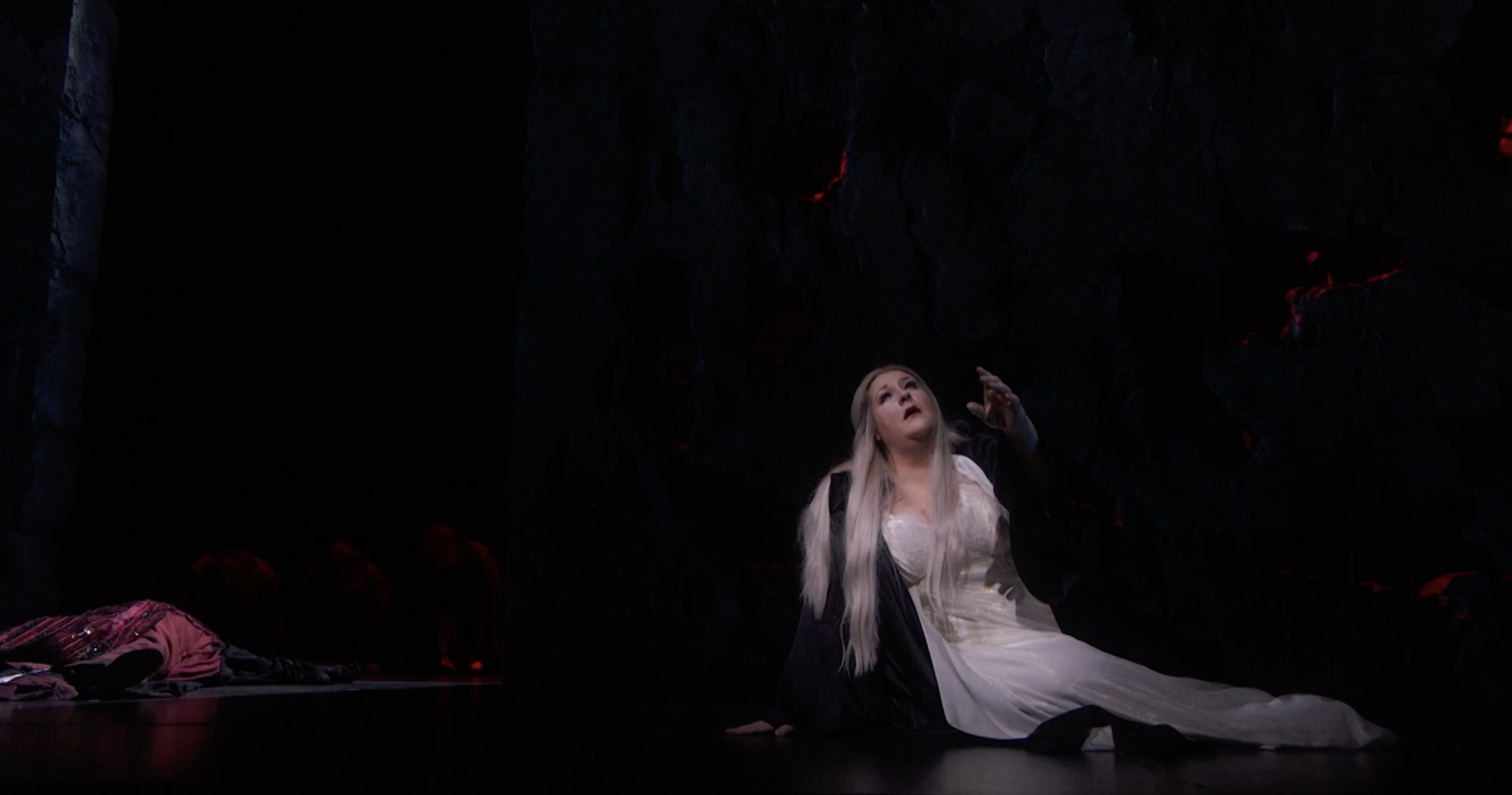
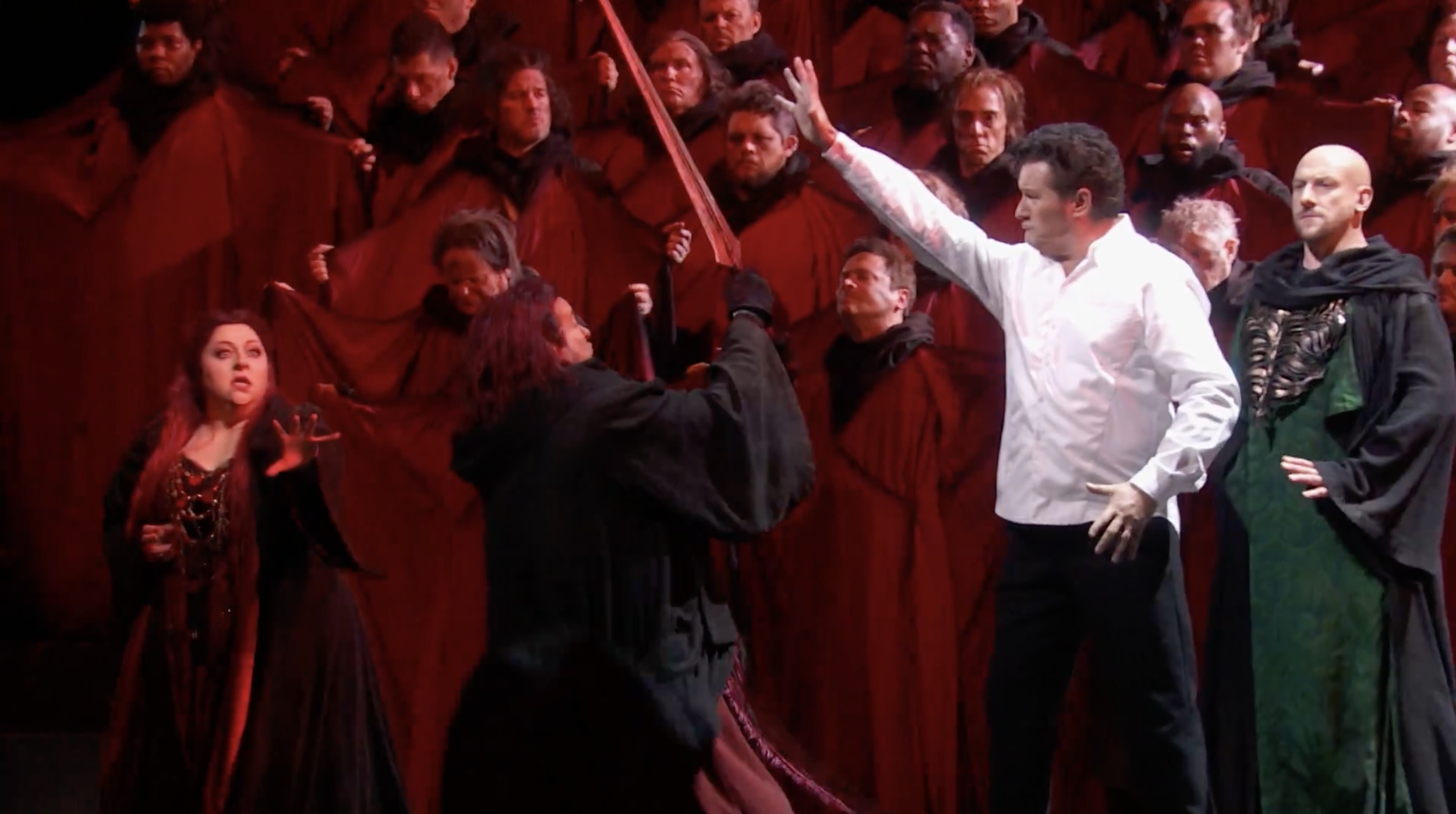
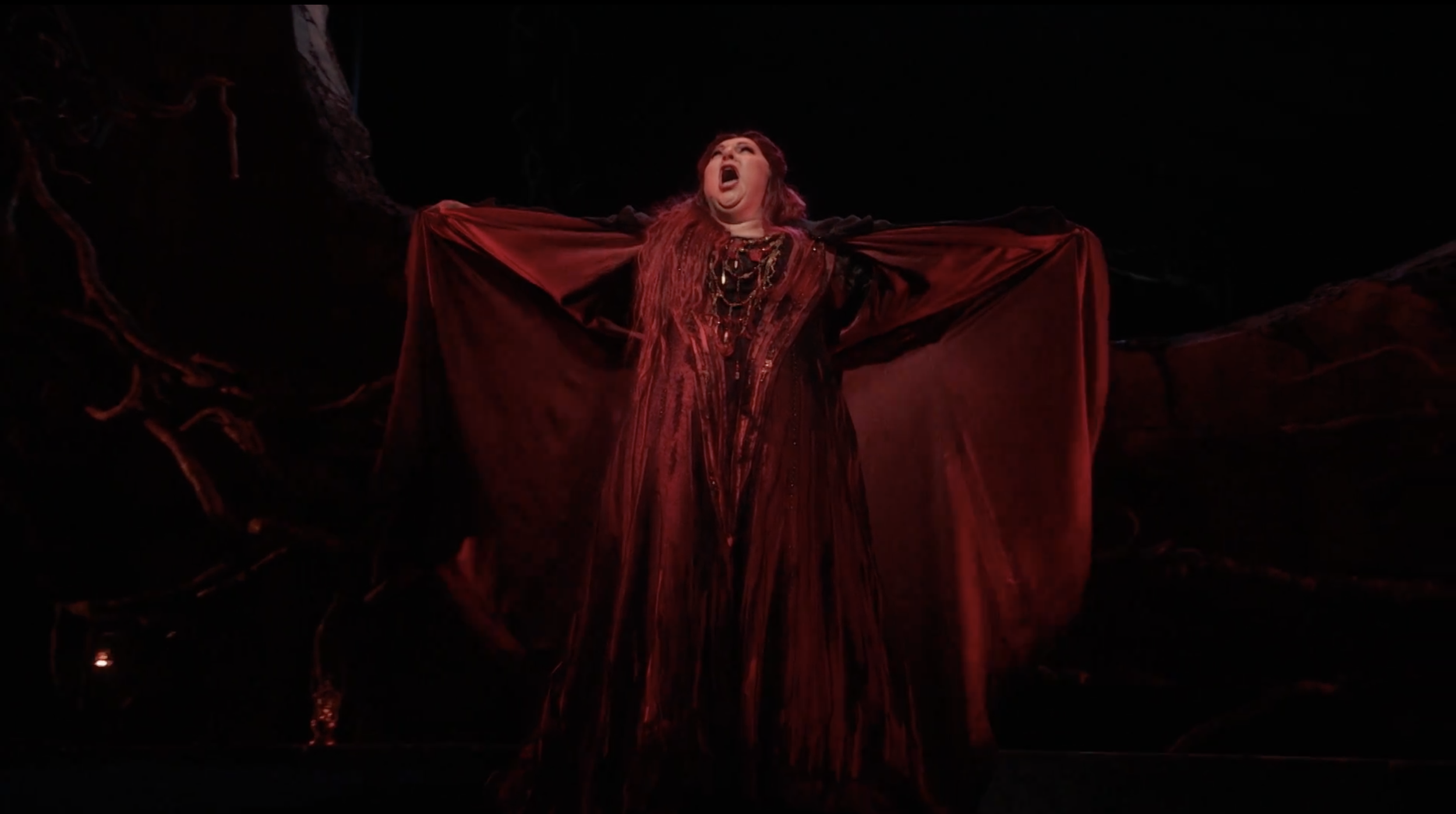
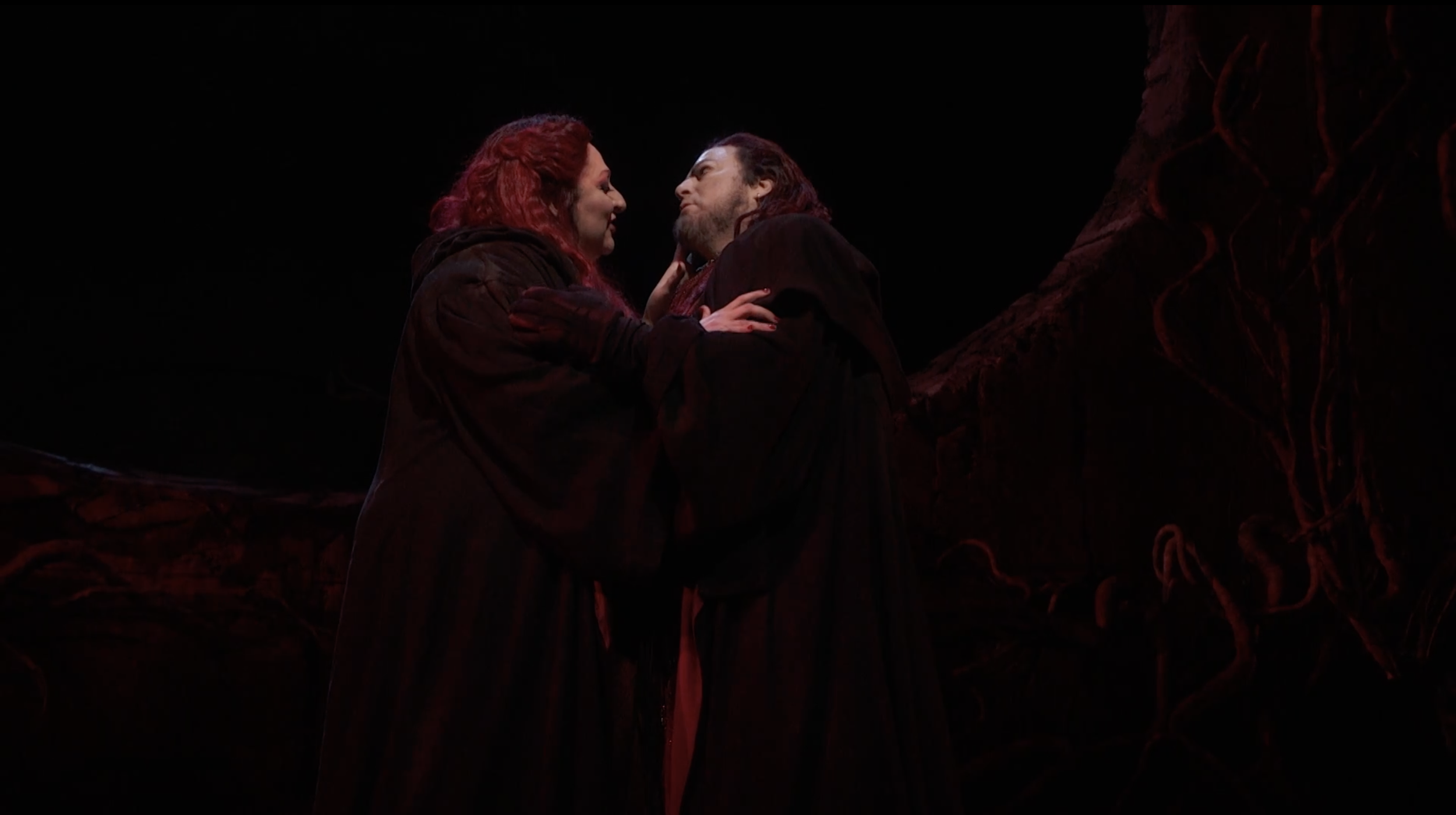
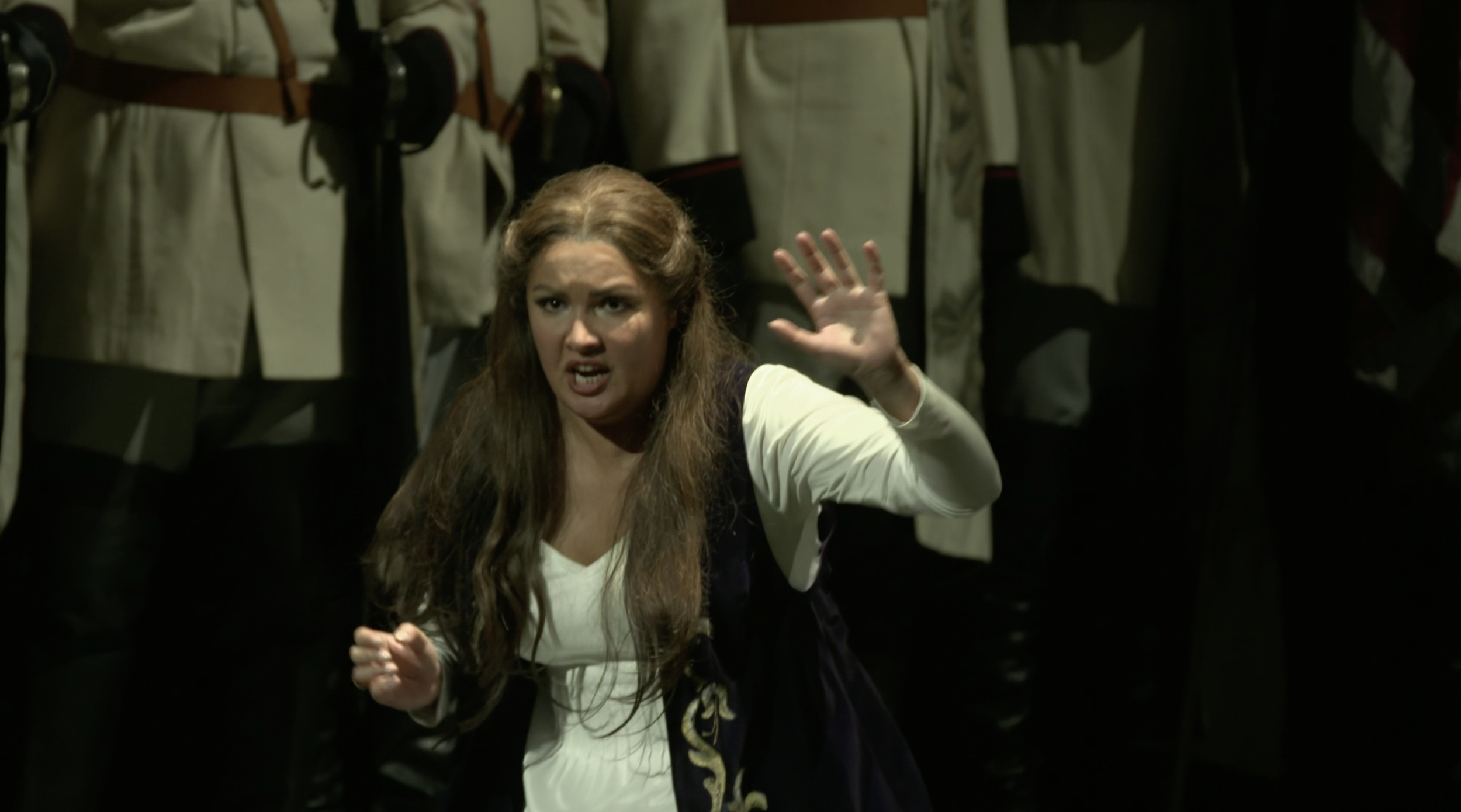
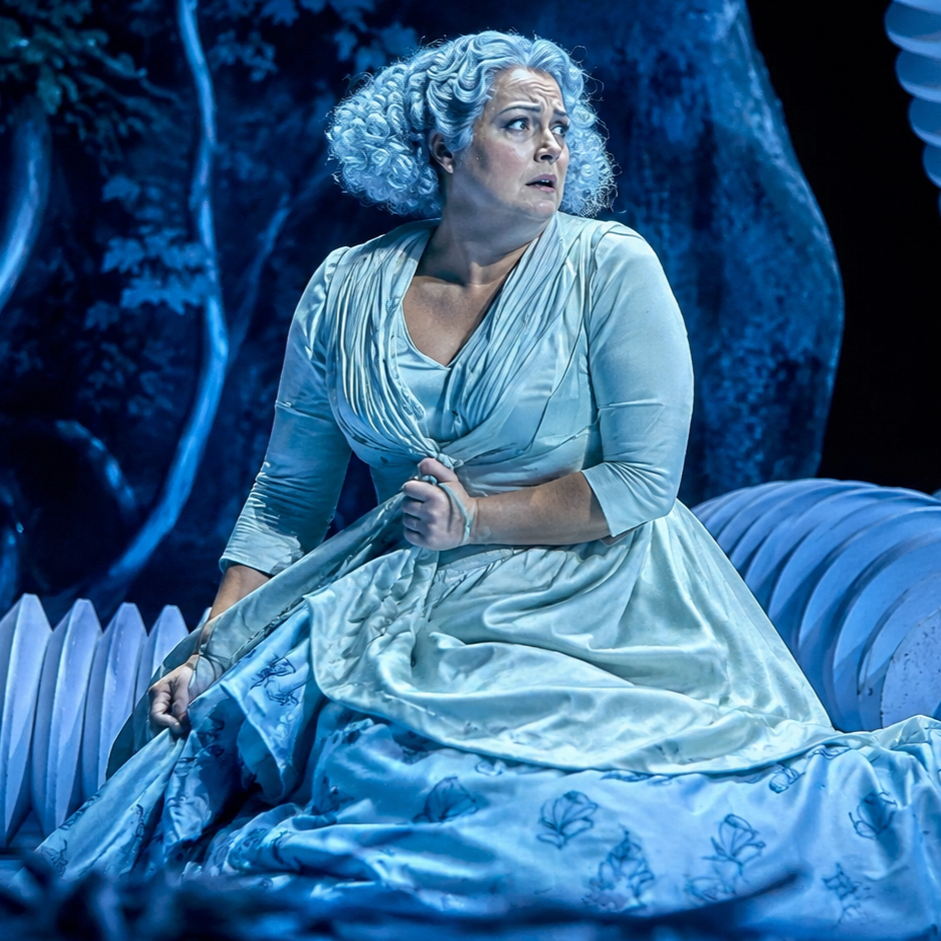
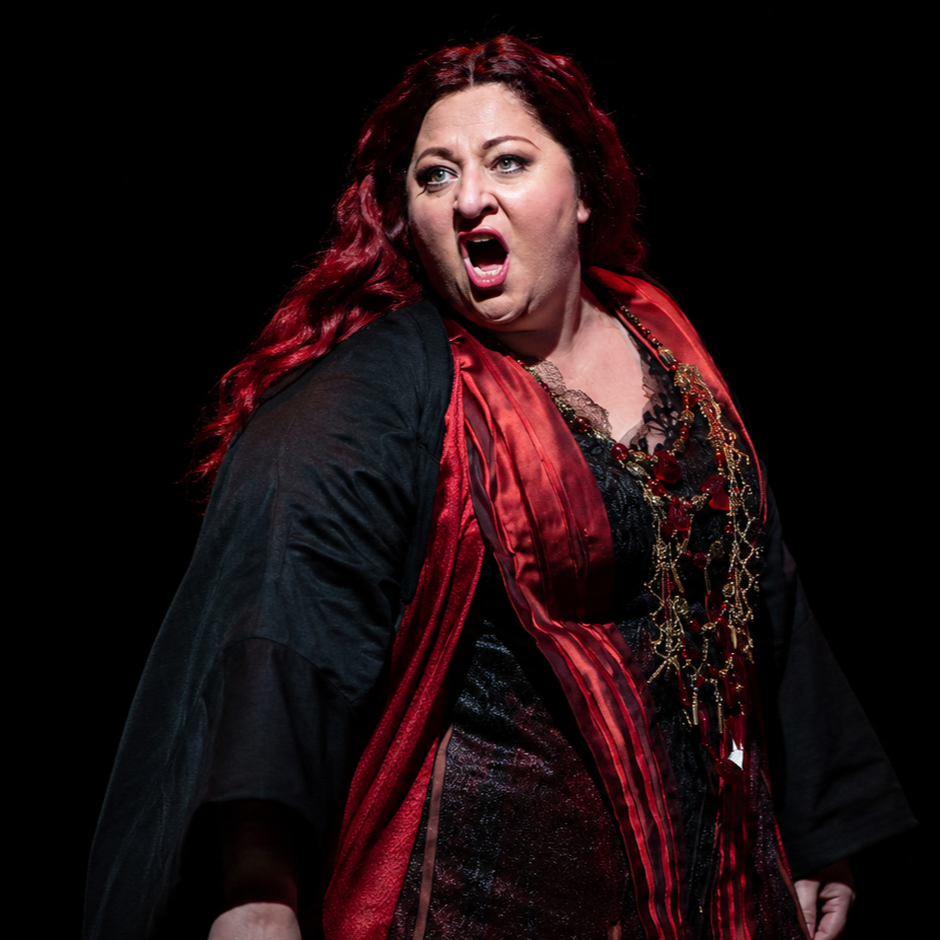
Christine Goerke performing as the sorceress Ortrud in the Metropolitan Opera's production of Richard Wagner's Lohengrin
Themen: Ankunft, Bedingung, Frage, Abfahrt, Die Kosten des Vertrauens
Element: Graugrünes Flusswasser und unvollendeter Stein
This walk treats Wagner not as repertoire, but as a composed method for moving through the city.
Das Ergebnis auf einen Blick
Dauer: 3–4 hours: A morning-into-afternoon circuit, best begun before the city is fully awake and completed in the quieter hours of early afternoon when Morningside Heights empties out.
Distanz: 3.5–4 miles: Hudson River at 79th Street → the Reservoir → Morningside Park → St. John the Divine → Grant's Tomb → Nicholas Roerich Museum → return to the Hudson.
Beste Zeit: Early morning start, arriving at the Reservoir as the light is still low and the water still grey. March in New York is the not-yet-spring month, ice still in the brambles, hints of thaw in the soil, and this is exactly the atmospheric condition Lohengrin requires.
Wetter:
Mist and overcast deepen the walk: The Prelude was written to sound like light filtering down through cloud, the Grail visible at a distance, not yet resolved into form. Grey March water is the correct water for this.
Clear mornings also work: But aim to start before the sun has fully asserted itself. Lohengrin's world is most itself in the transitional light.
Zugänglichkeit:
Flat paths around the Reservoir, gradual uphill on Amsterdam Avenue toward the cathedral.
Morningside Park involves a descent and re-ascent on the escarpment, manageable but worth knowing in advance.
The Roerich Museum has limited hours, check before going.
Grant's Tomb is always accessible from the exterior, interior hours vary.
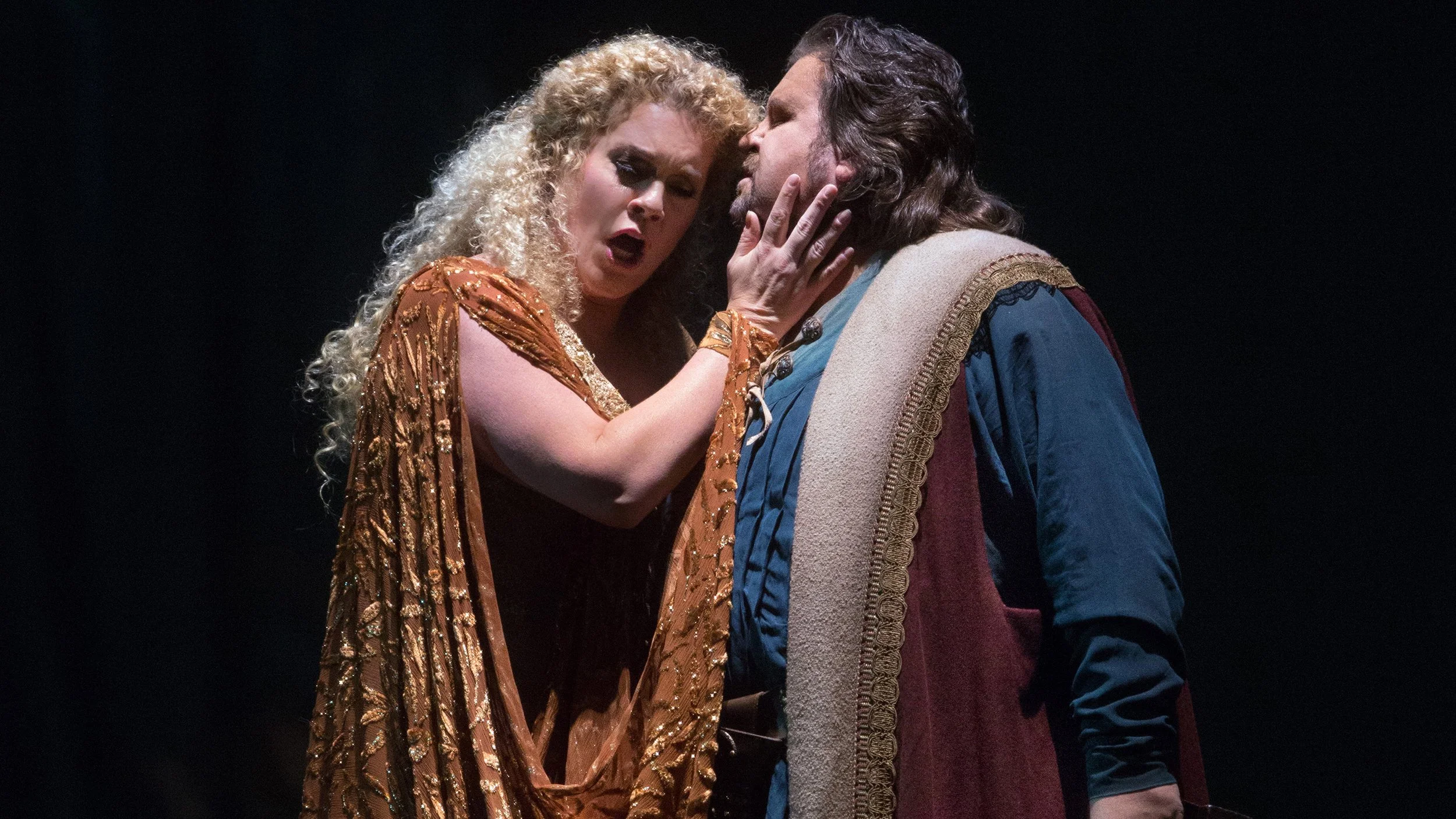
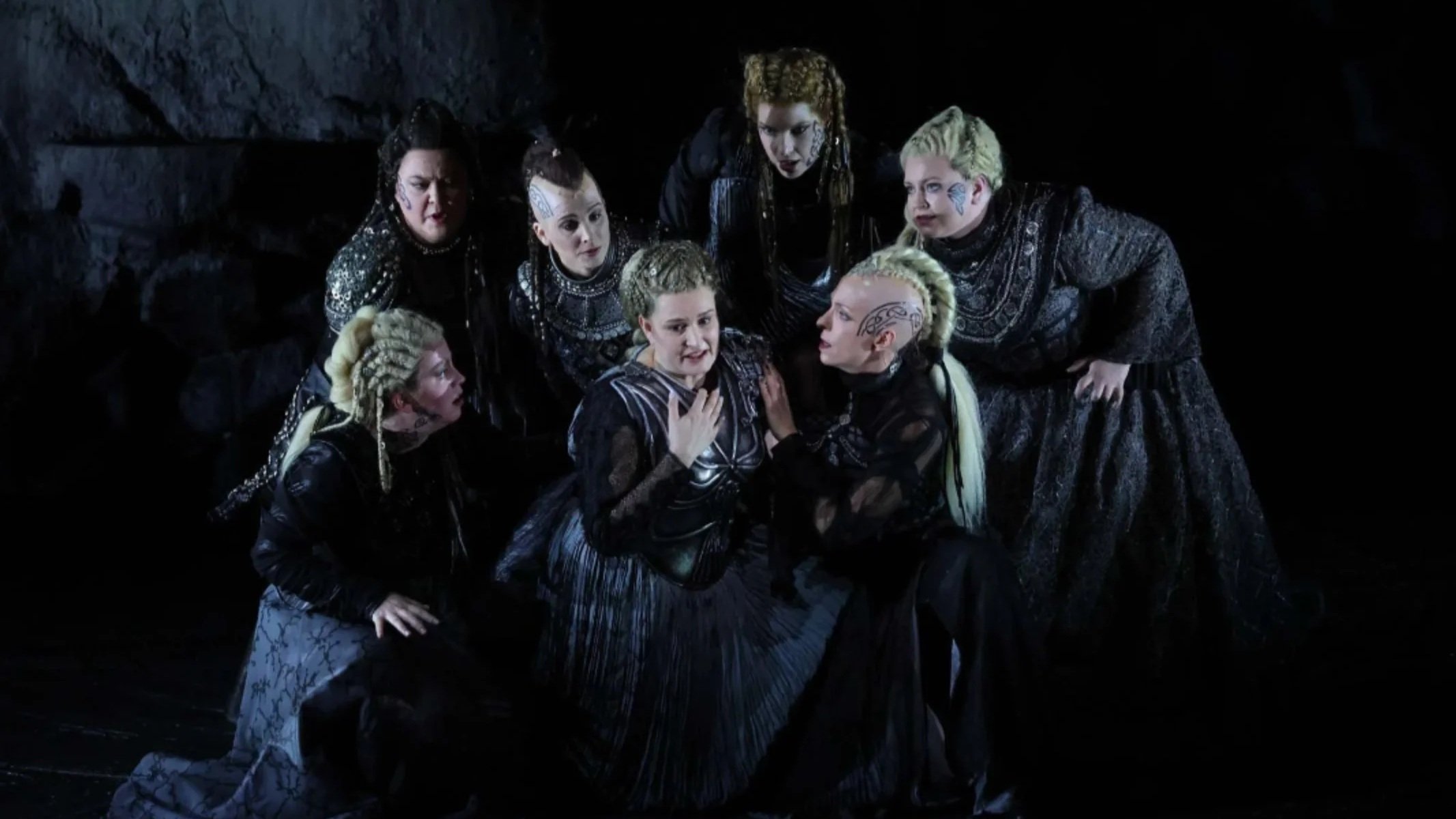
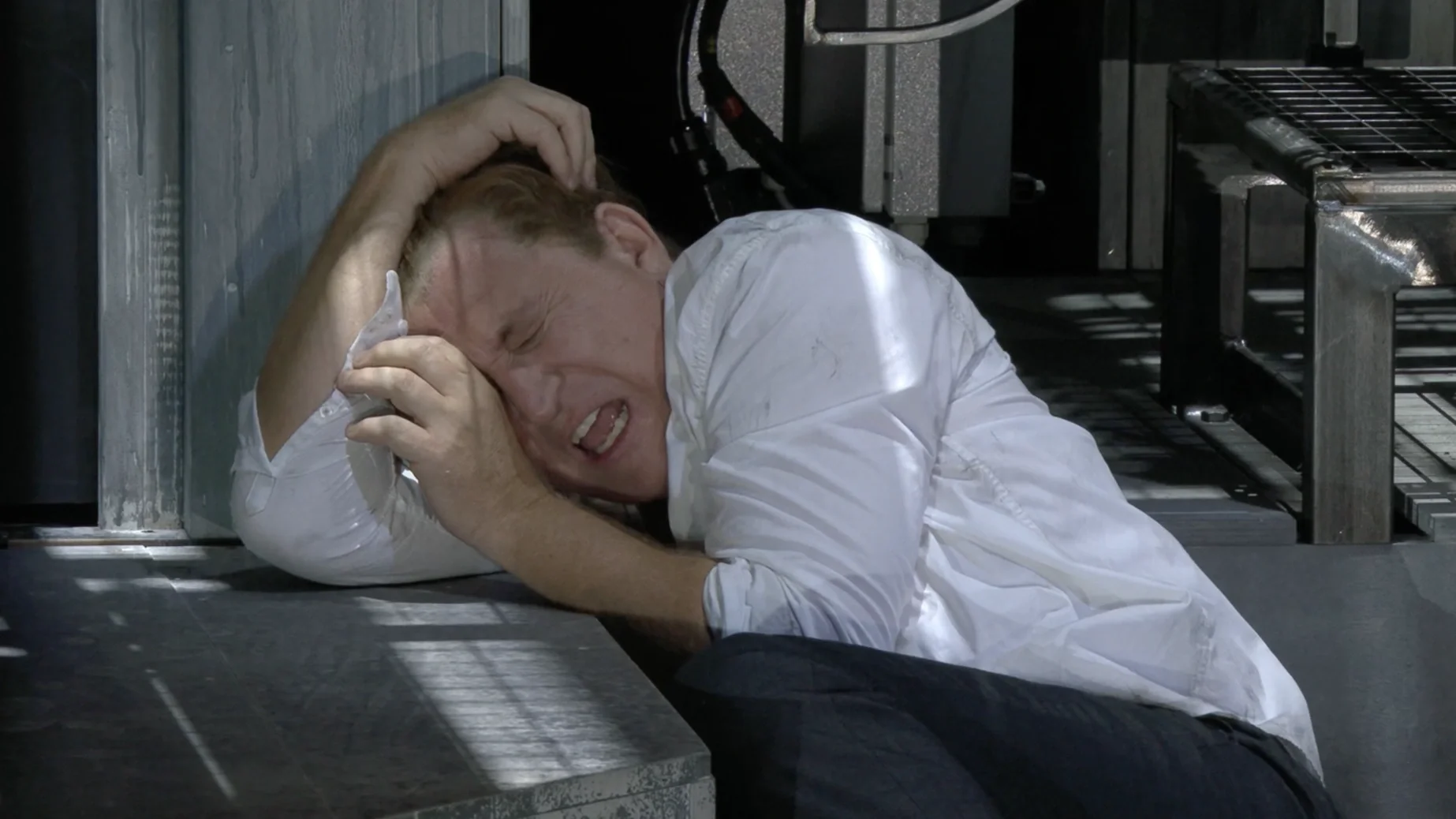
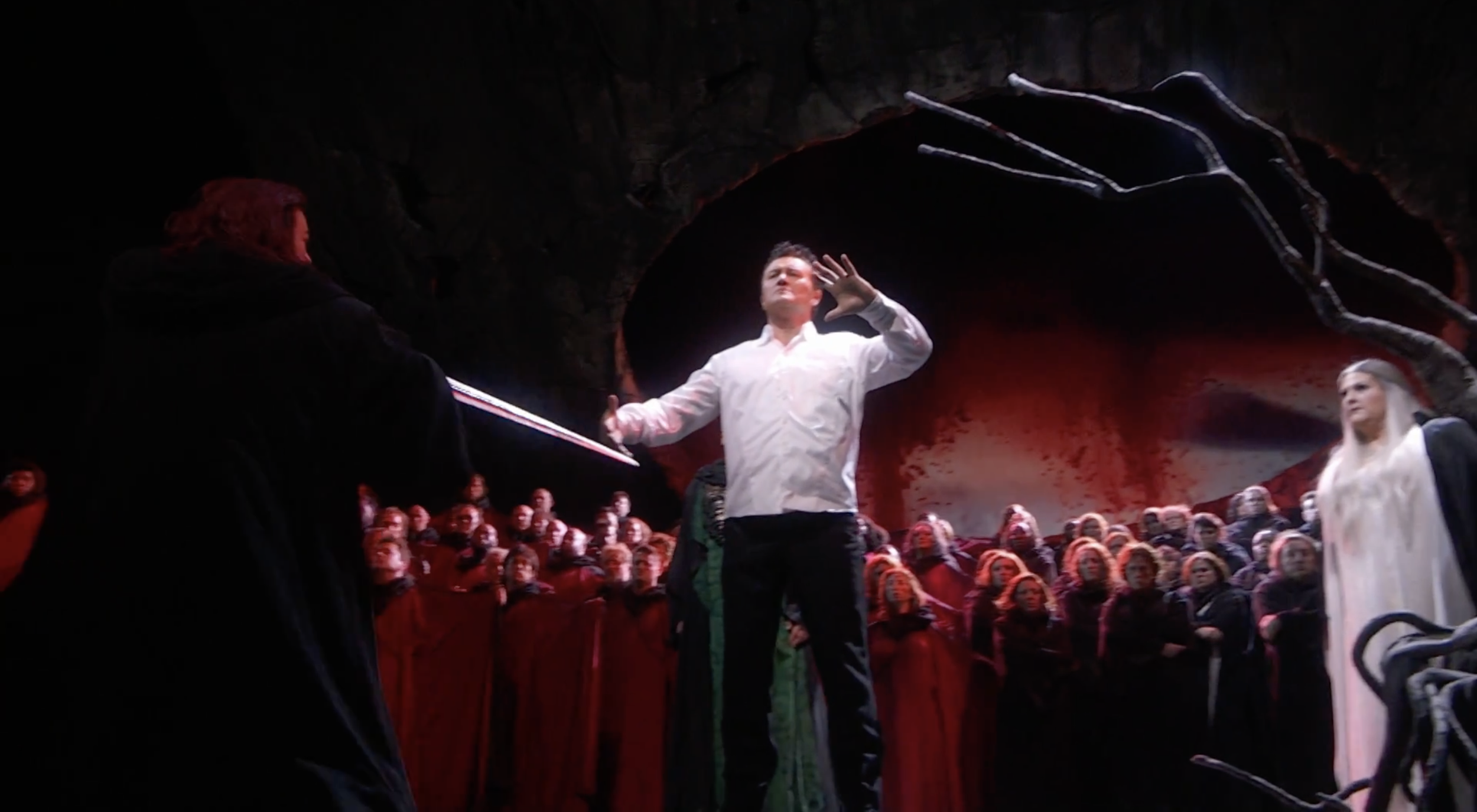
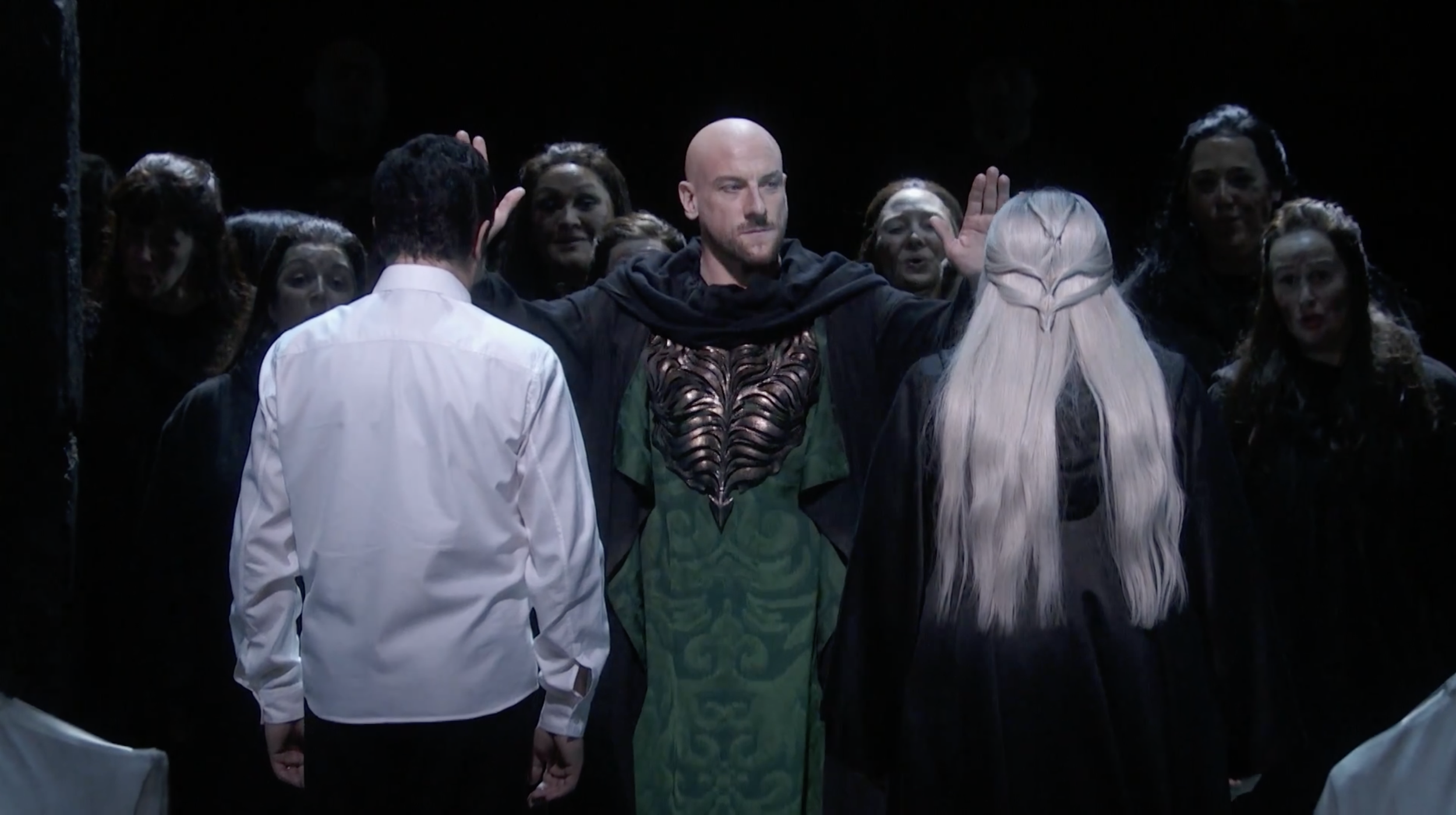
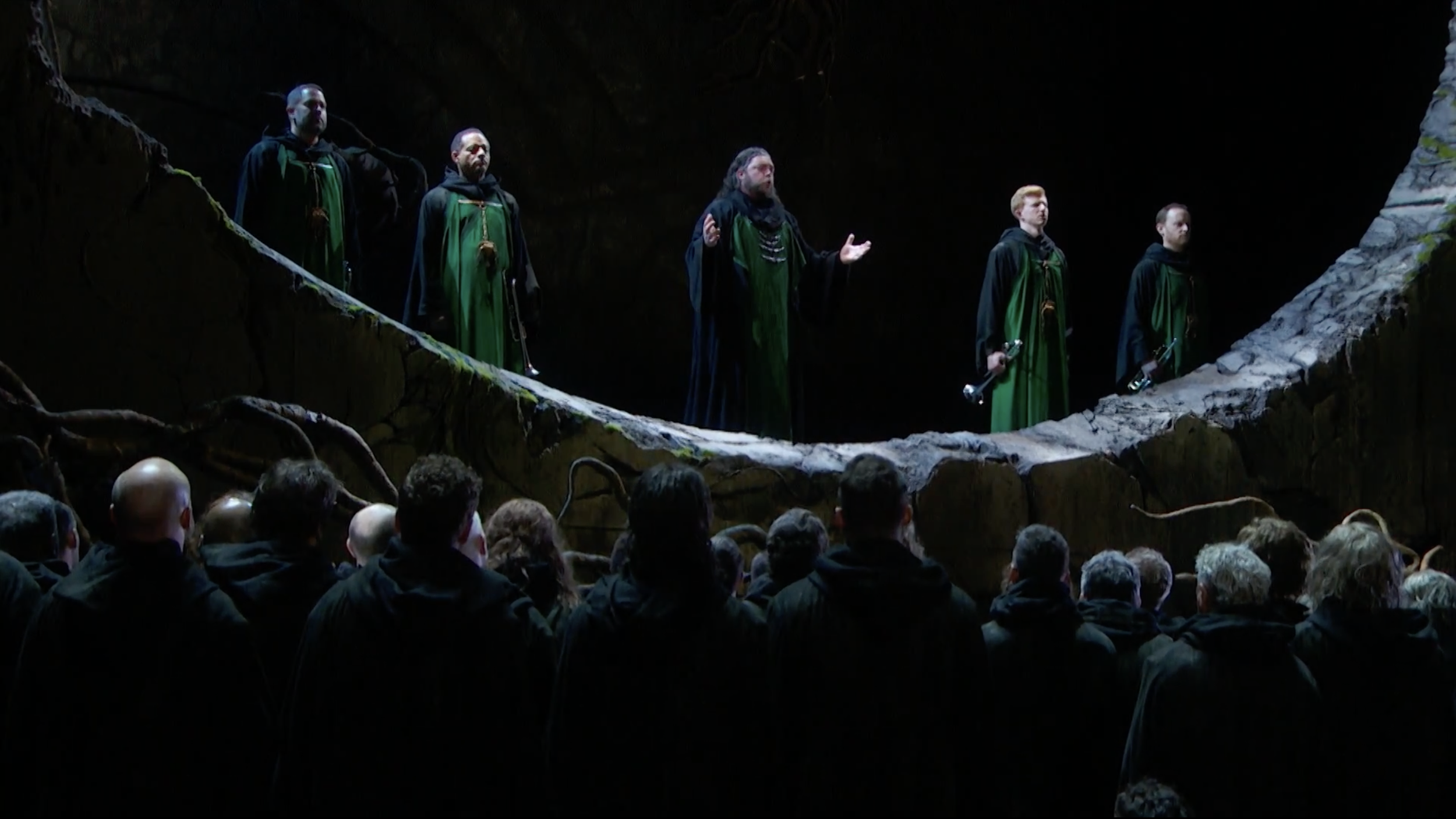
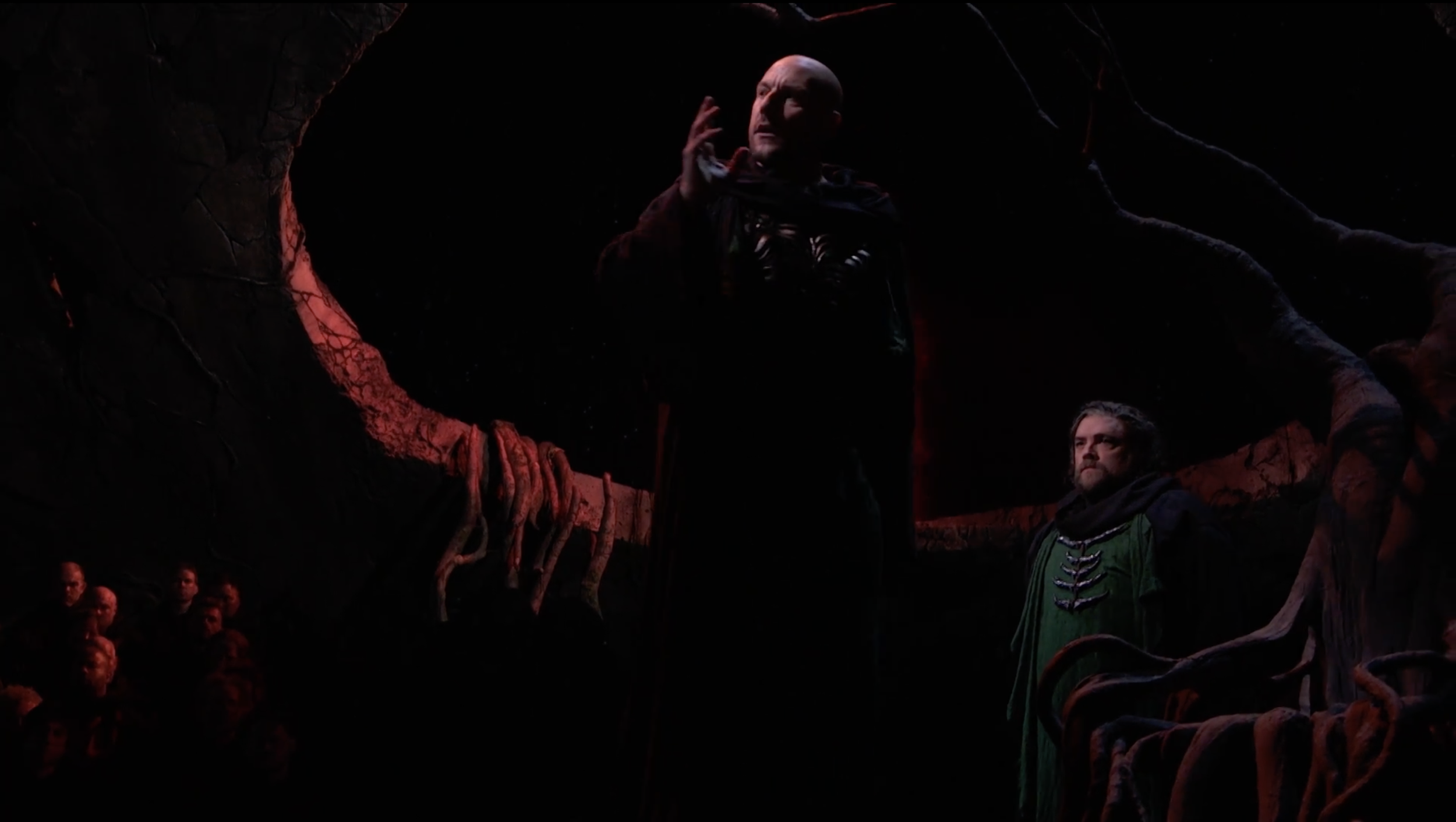
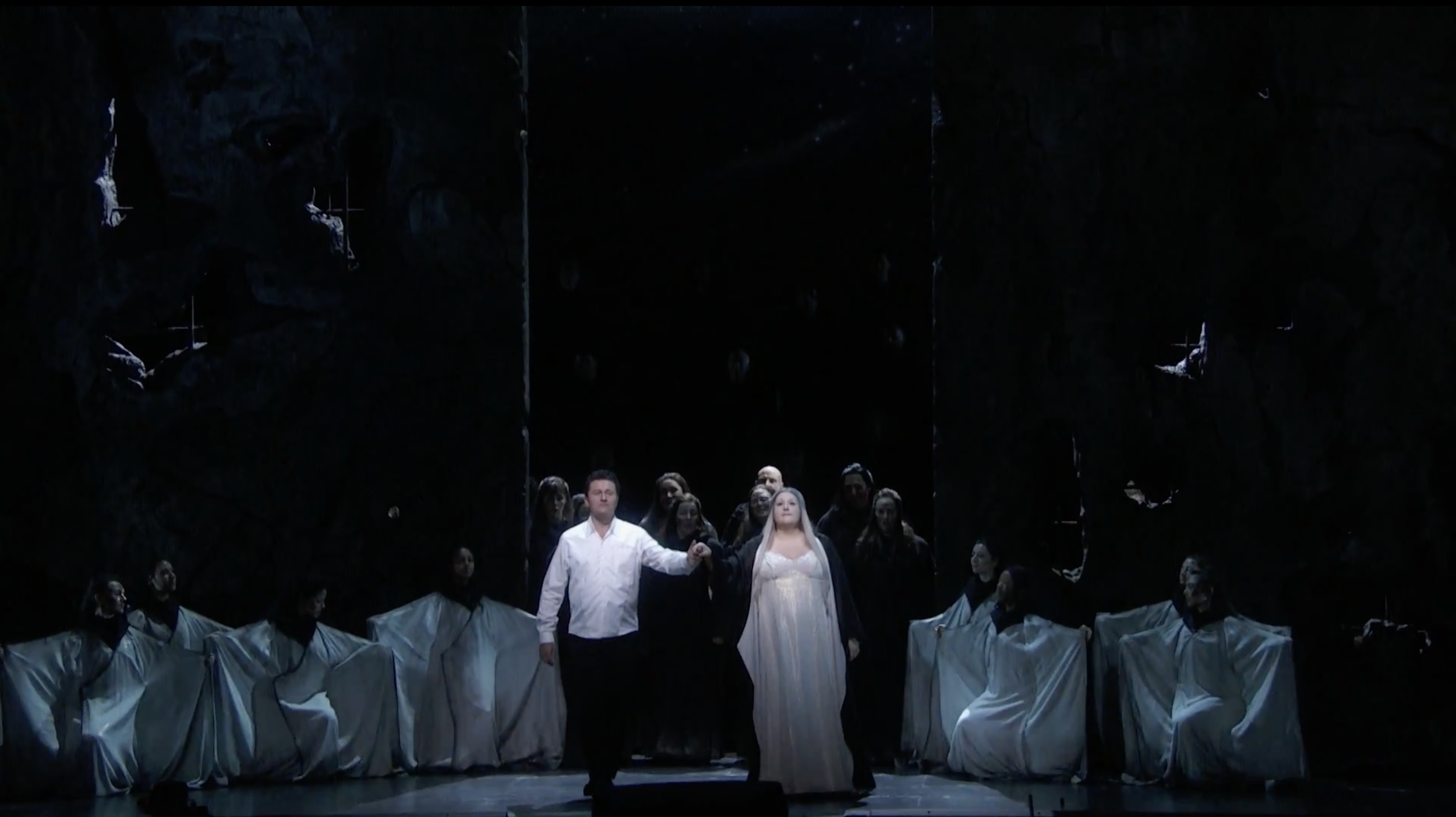
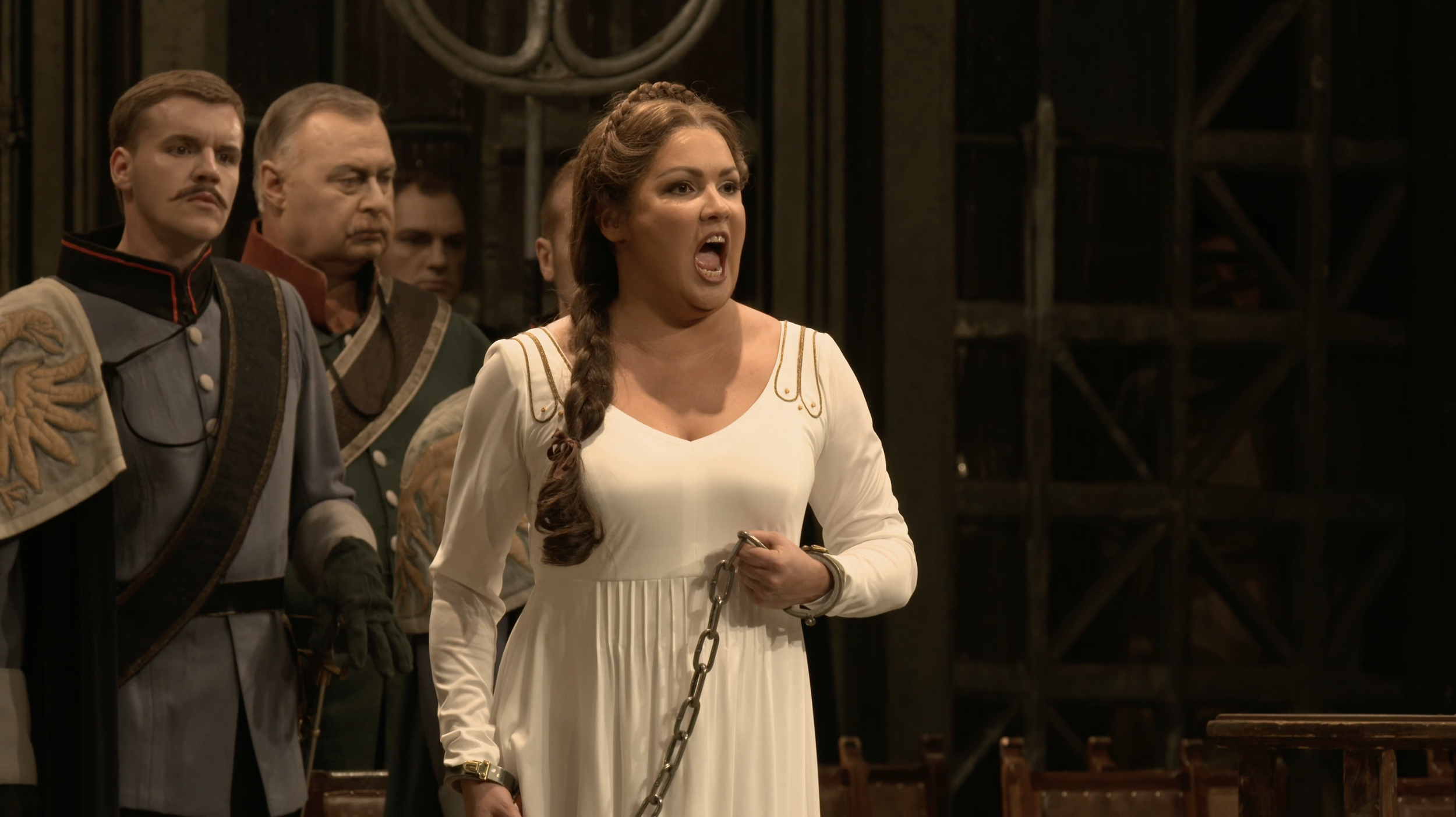
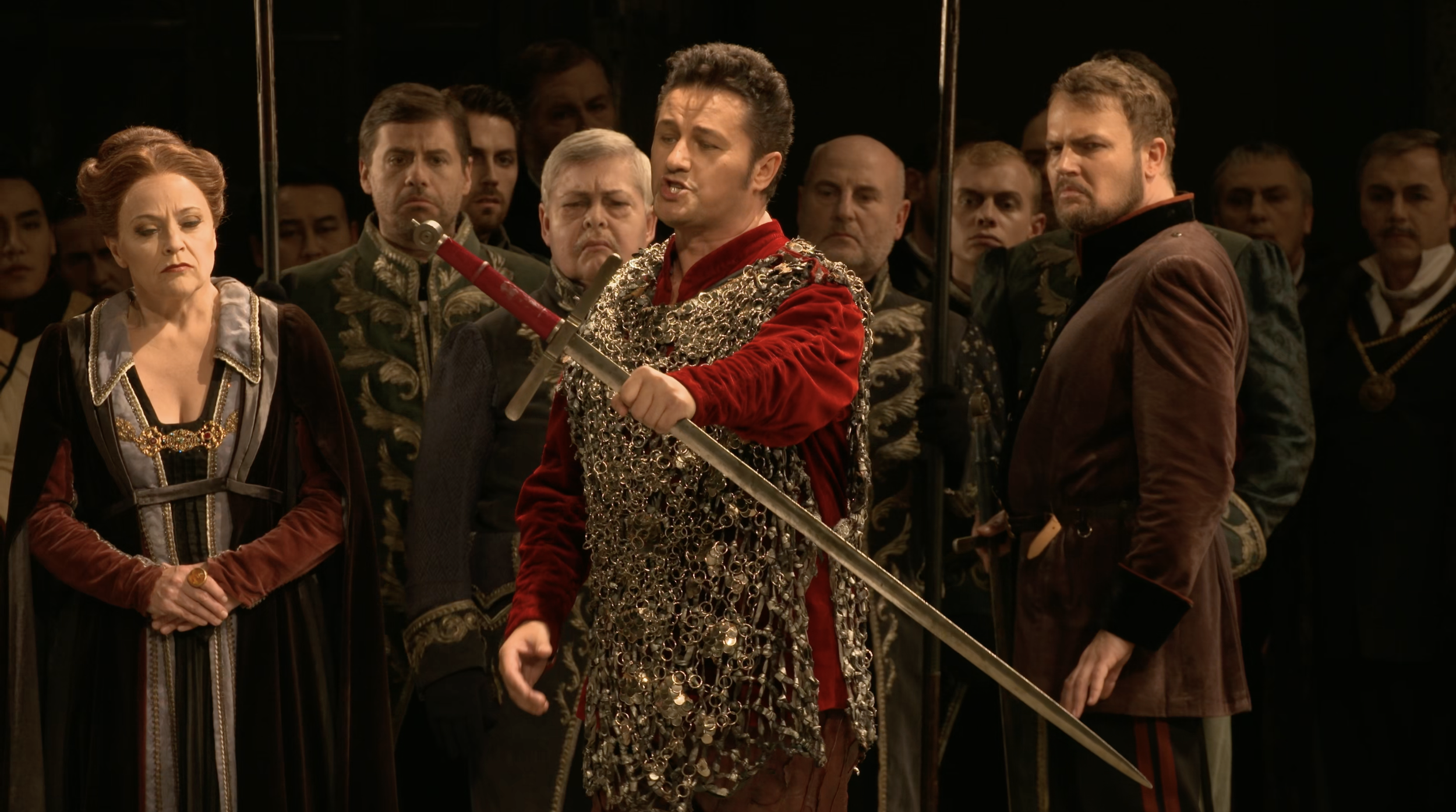
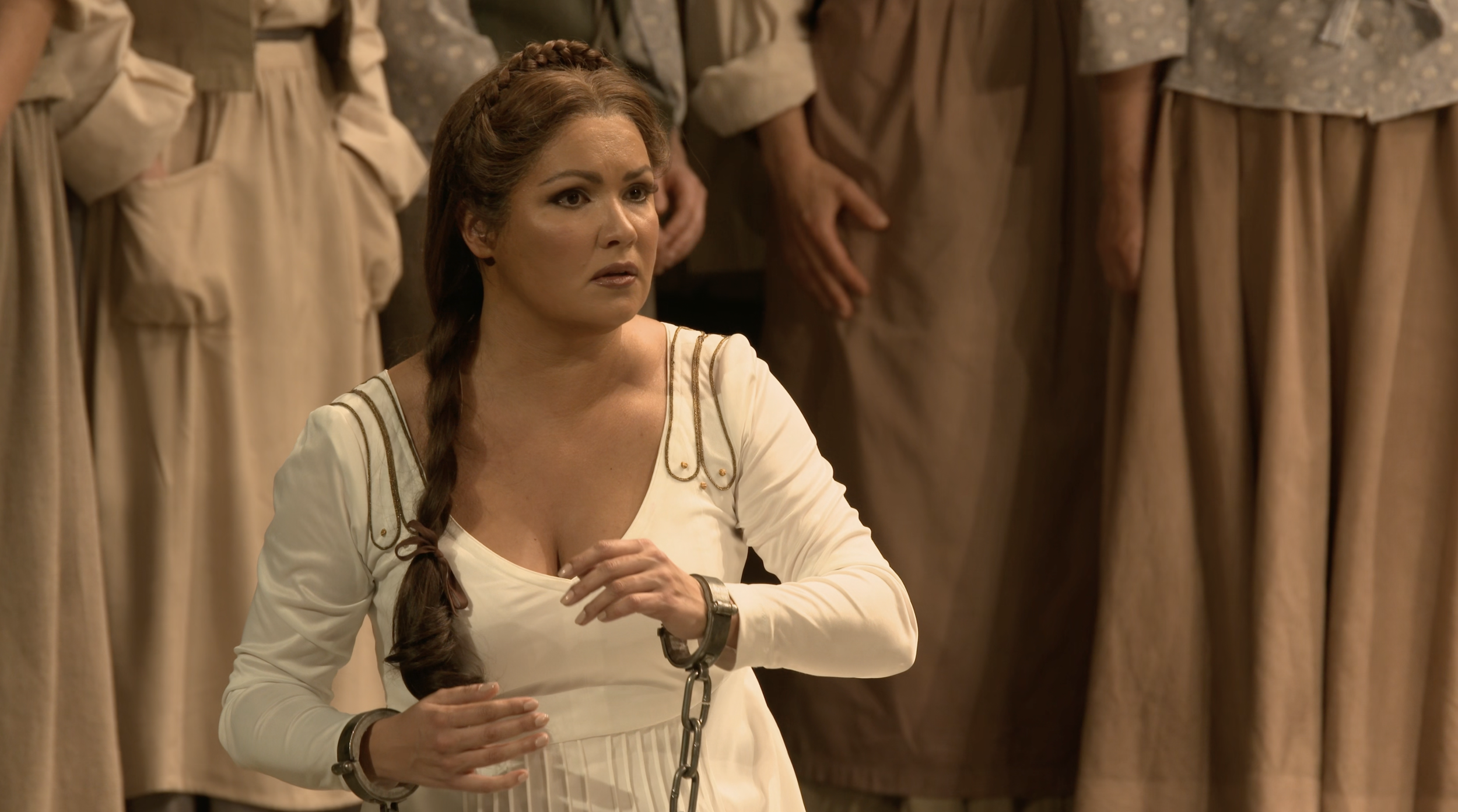
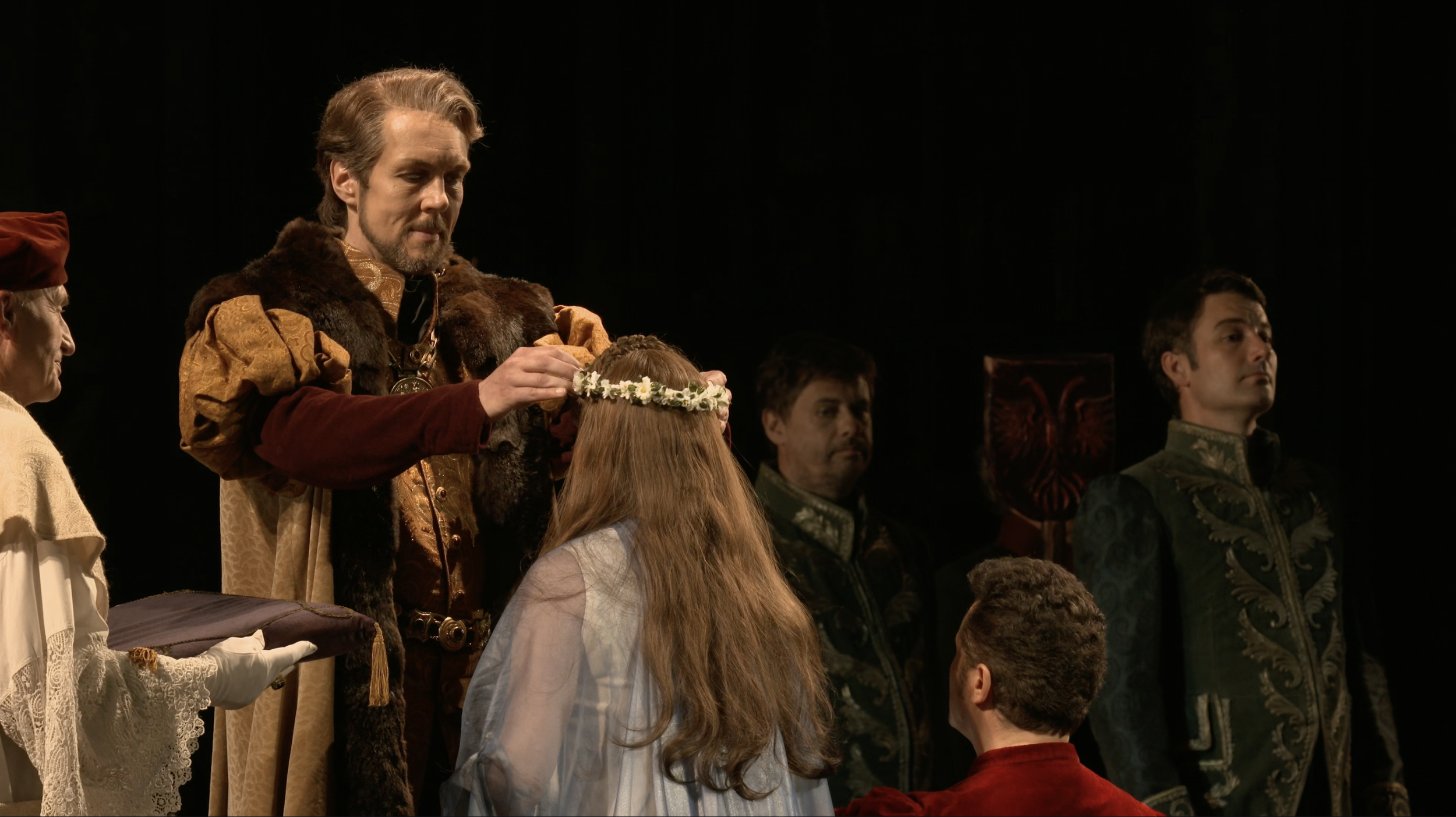
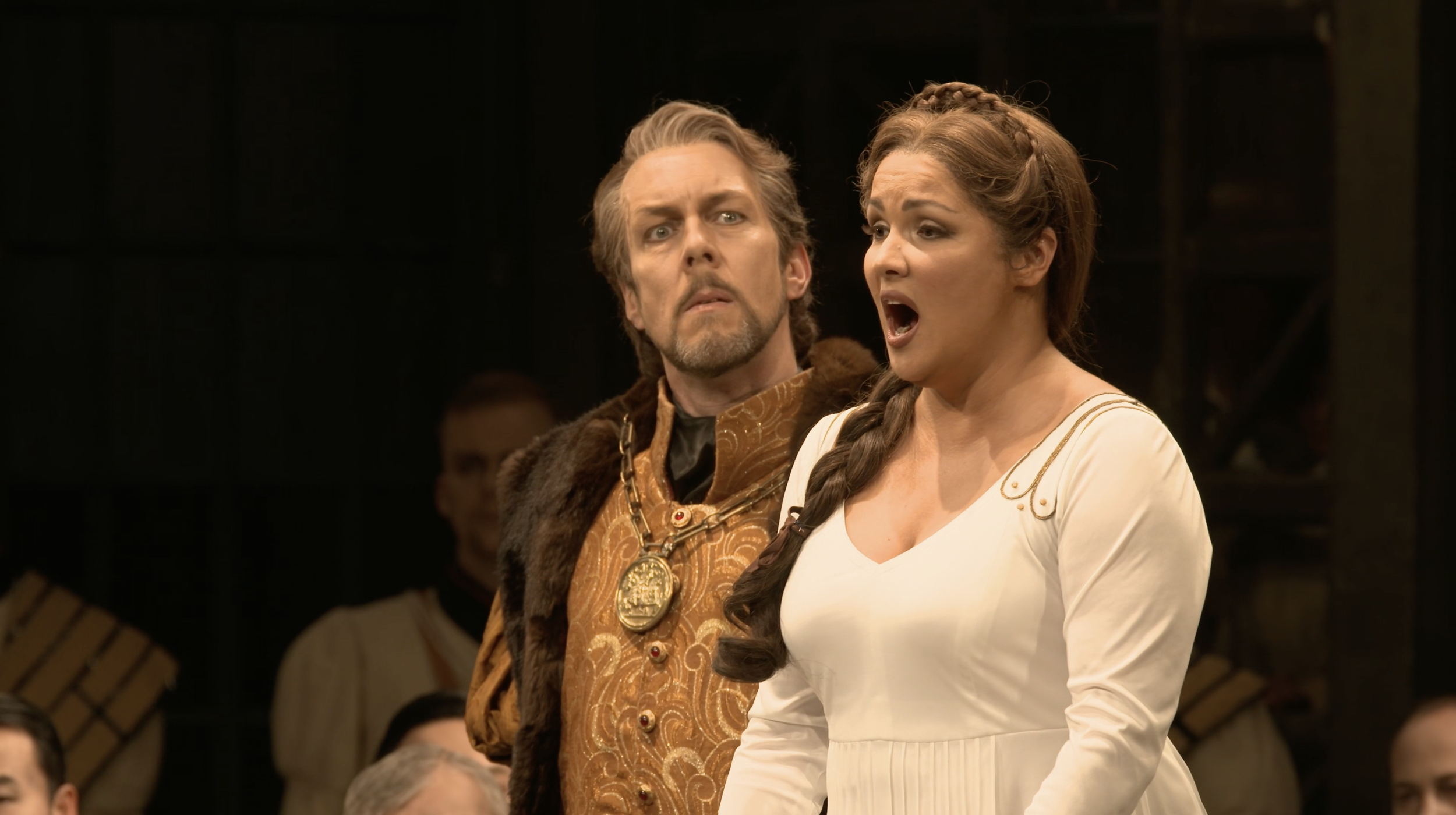
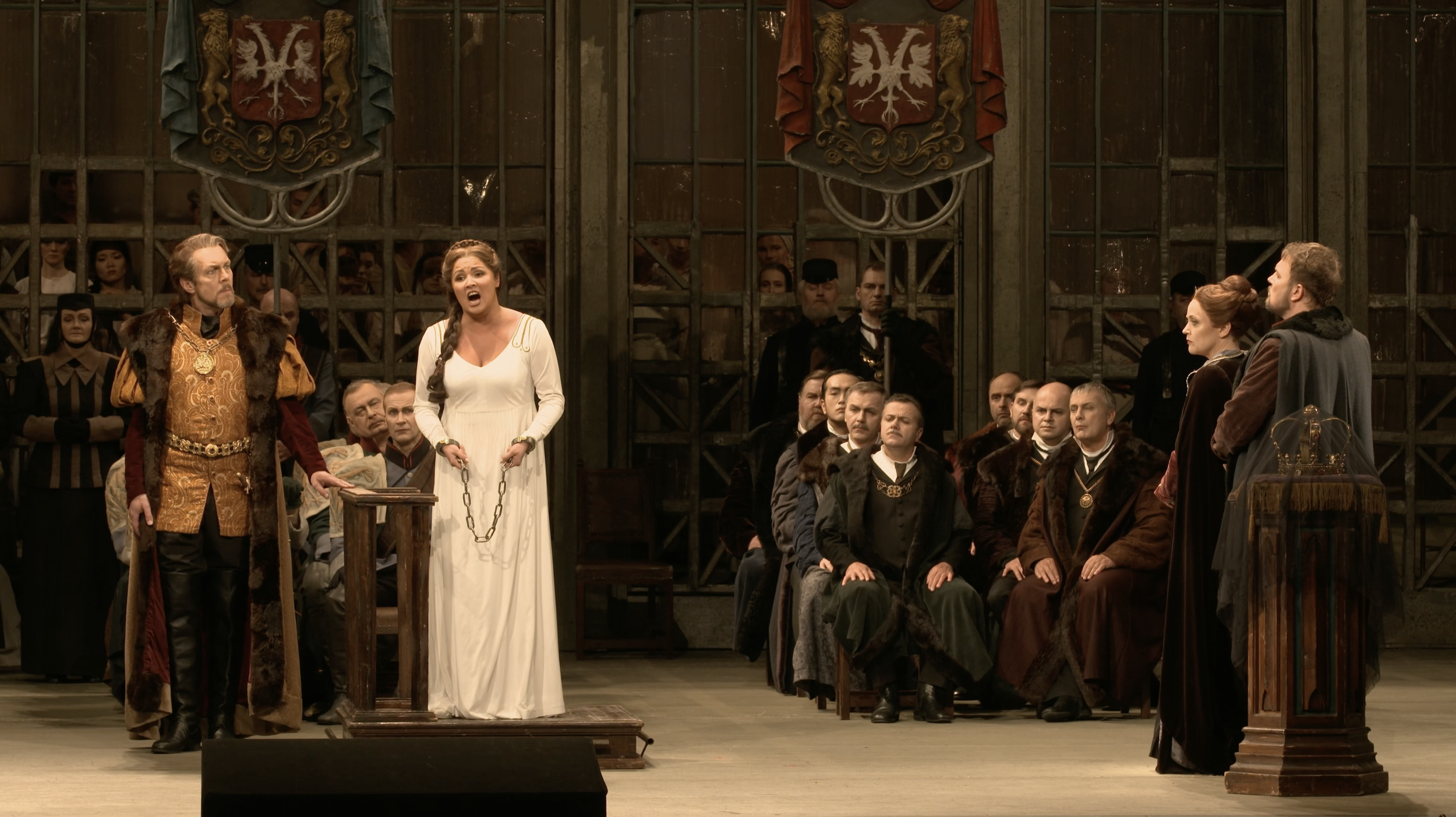
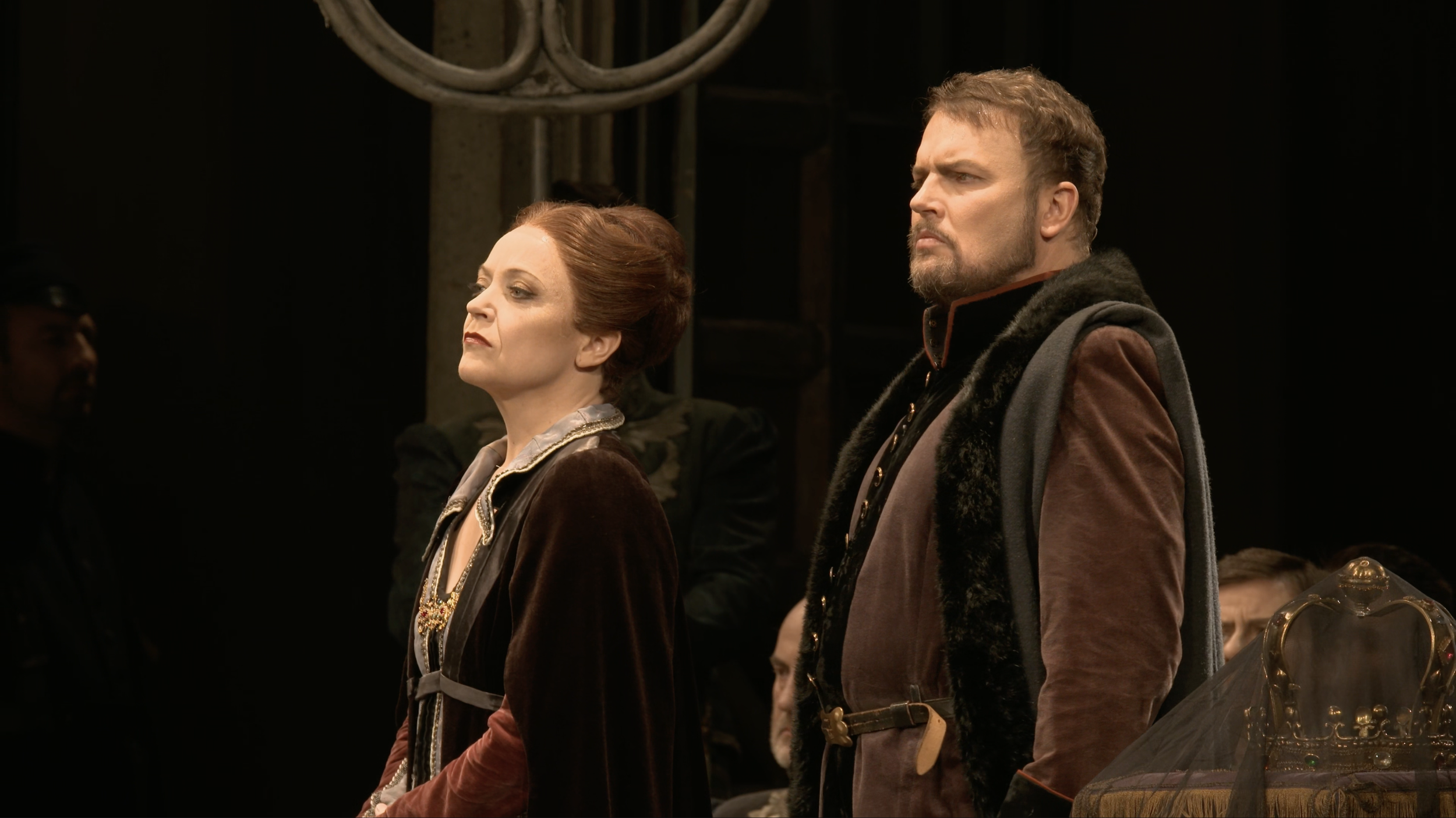
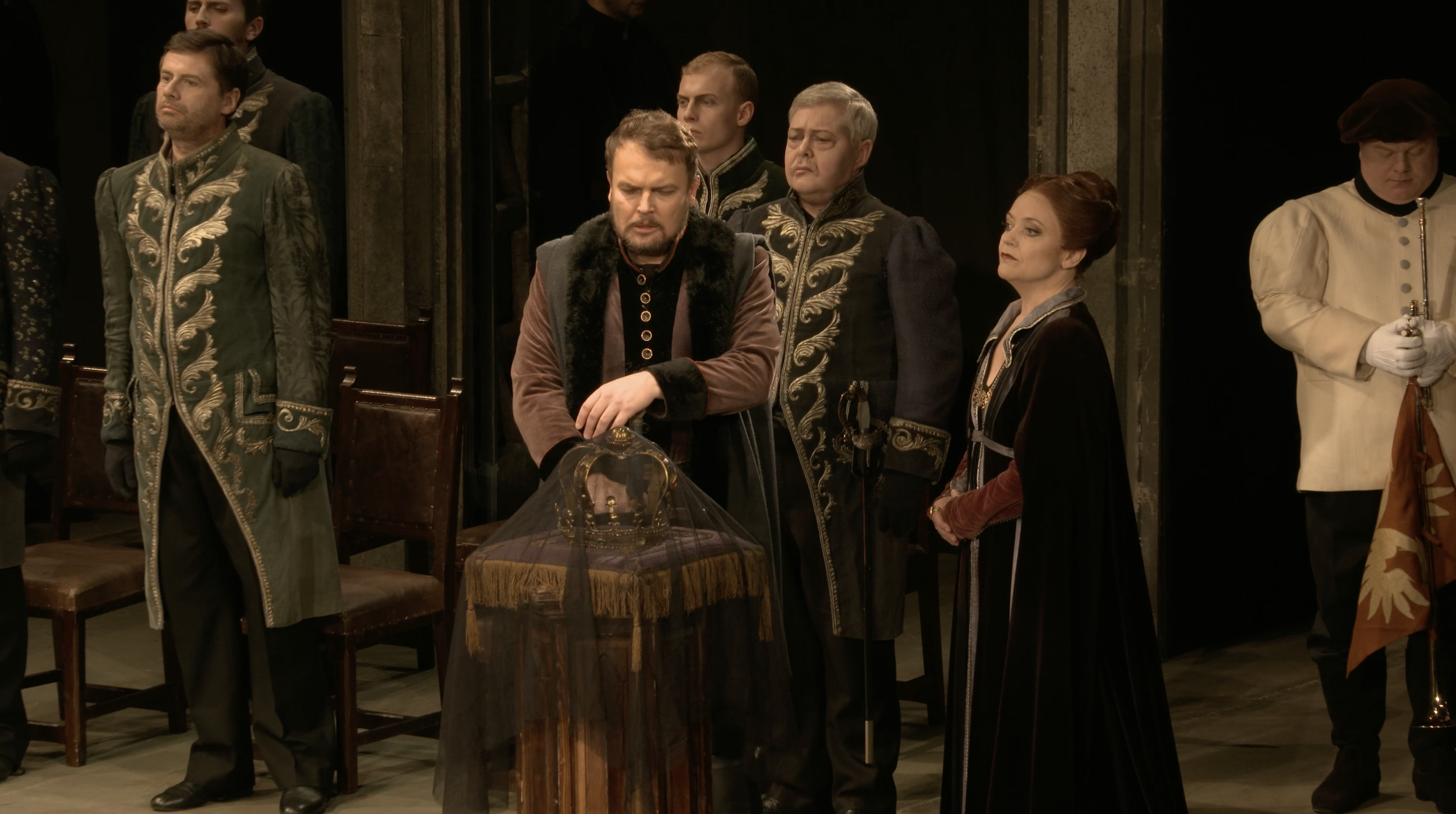
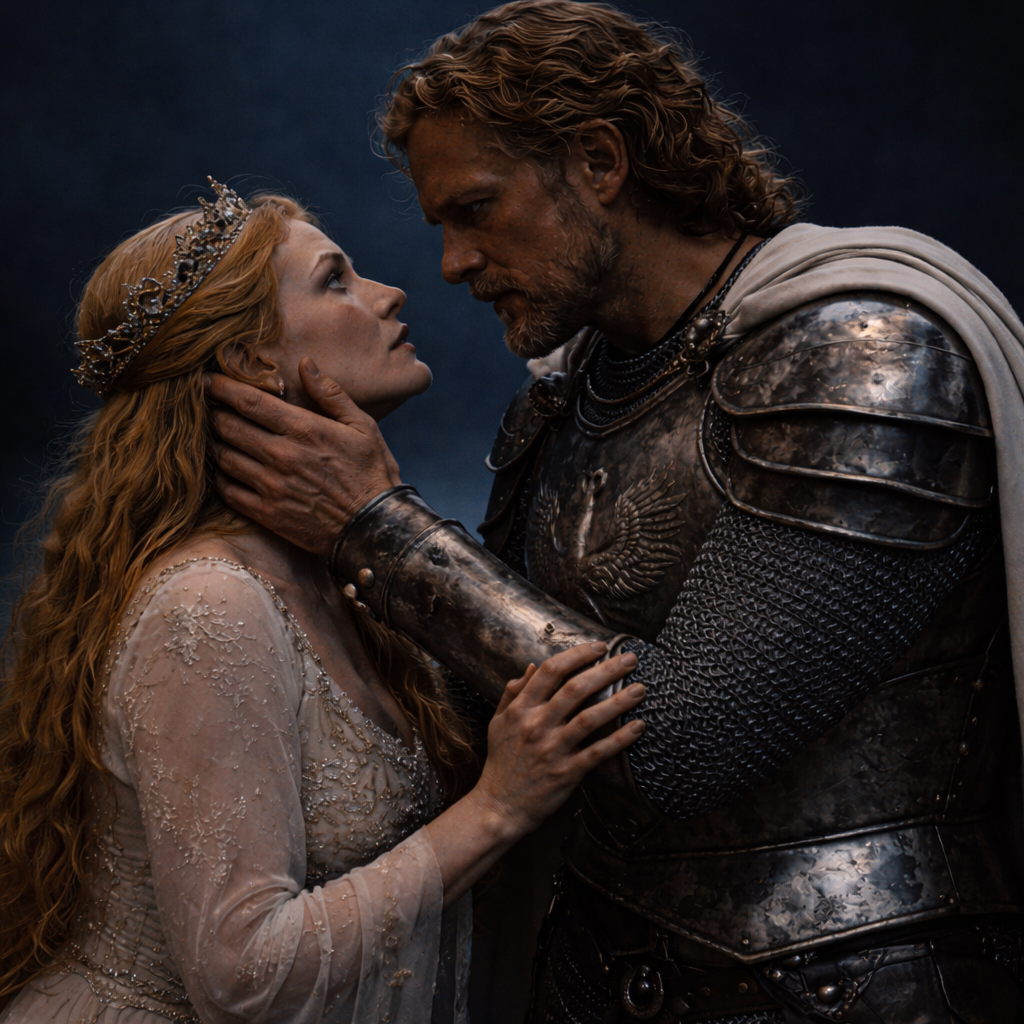
Lohengrin, Metropolitan Opera, March 2023
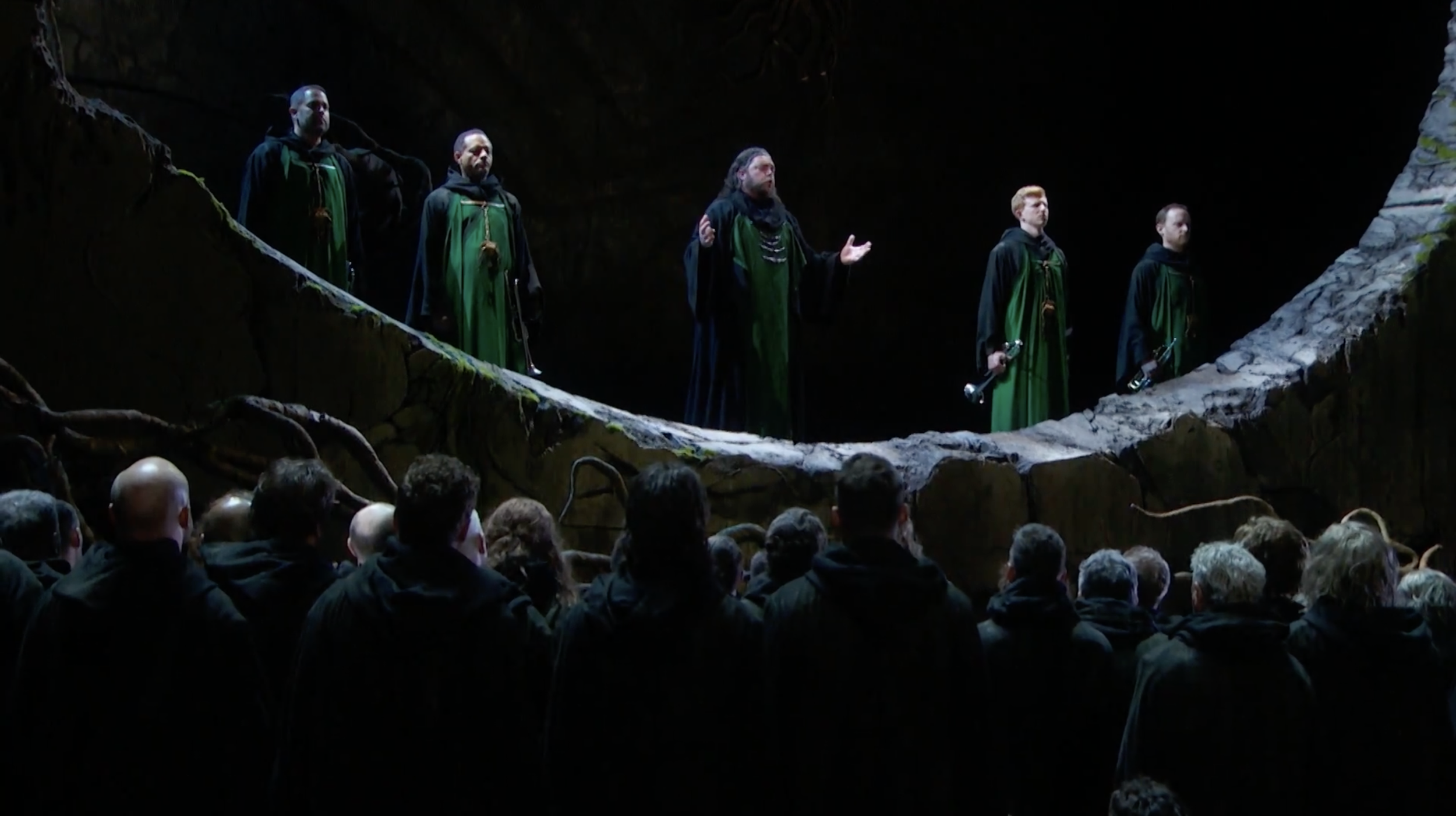
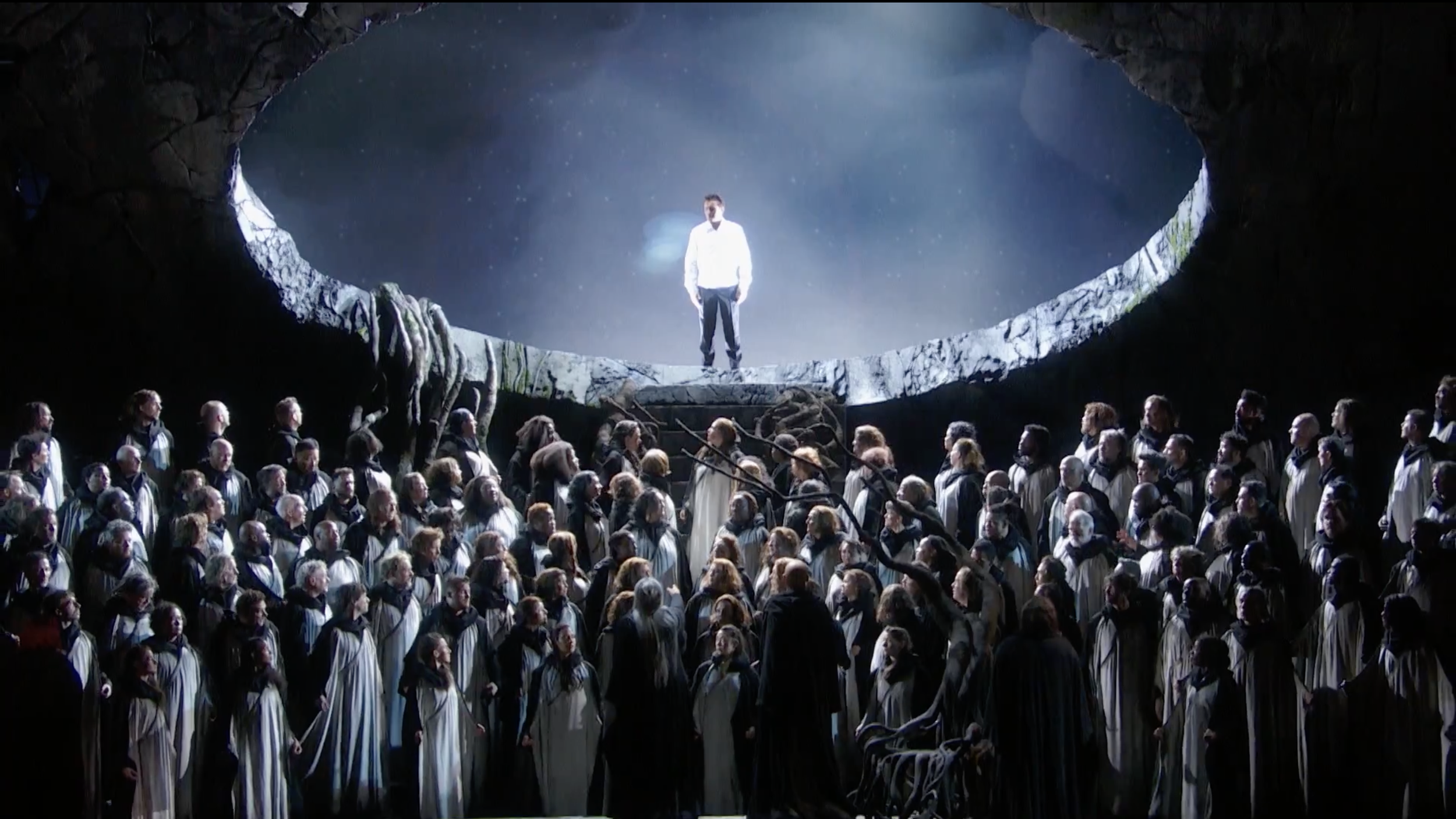
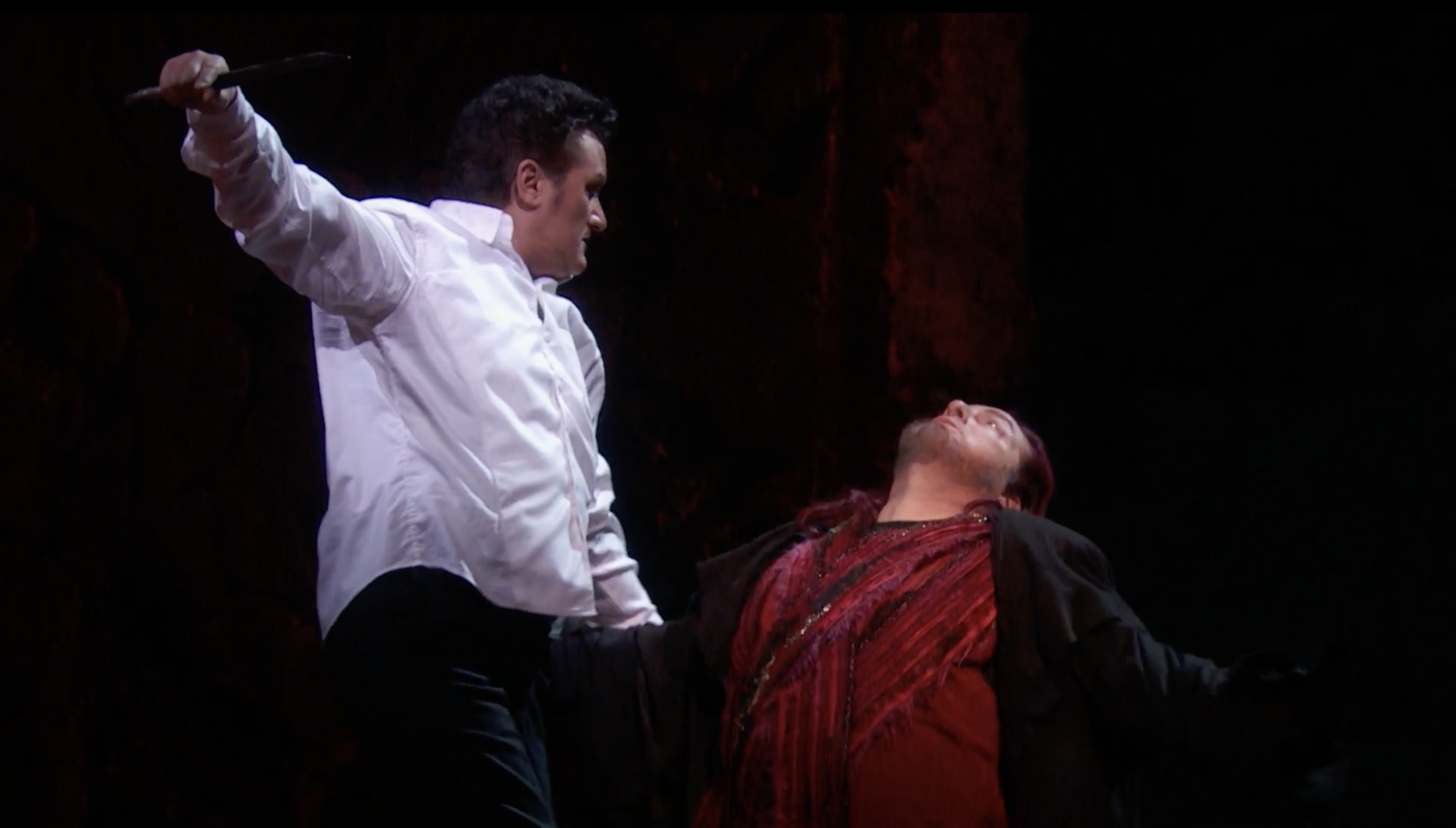
Essentieller Moment:
Morningside Park with Ortrud's Act II scene. The escarpment at the park's eastern edge, where the plateau of Morningside Heights drops sharply down toward Harlem, is the walk's most structurally precise location. The boundary between the authorized world on top and everything that was excluded to keep it looking the way it looks. This is where Ortrud lives. Not in the cathedral, not in the museum, but at the edge where the geography of aspiration meets the geography the aspiration was built on top of.
Language Anchor (German Phrase of the Month):
Nie sollst du mich befragen / Noch Wissens Sorge tragen / Never shall you question me, nor trouble yourself with knowing. Lohengrin's condition, the two lines at the opera's structural center. New York, like every city organized around a mythology of arrival and reinvention, has its version of this compact. You may come here. You may benefit from what is here. The condition is that you do not ask too closely how it was assembled, who paid for it, what was displaced to make space for it. The question is always available. The compact depends on its not being asked.
Wort des Weges
Vertrauen (pronounced: fair-TROW-en): Trust. But not the trust of intimacy, the trust of a specific, bounded agreement. Lohengrin does not ask Elsa to believe in him generally. He asks her to trust him within one precise limit. To not ask his name. The Vertrauen he requires is structural rather than emotional. And this is what makes it ultimately impossible. Genuine intimacy and structural prohibition are incompatible over time, not because people are weak but because knowing is what love does.
Elsa is not a failure of trust. She is a demonstration of what trust actually requires. The whole person, eventually, including the question. March in New York, when the city is neither winter nor spring and the light has the ambiguity of transition, is the right month for Vertrauen in this sense, for noticing what you have agreed not to ask, and what the agreement has been costing you, and whether the cost has now exceeded the benefit of not knowing.
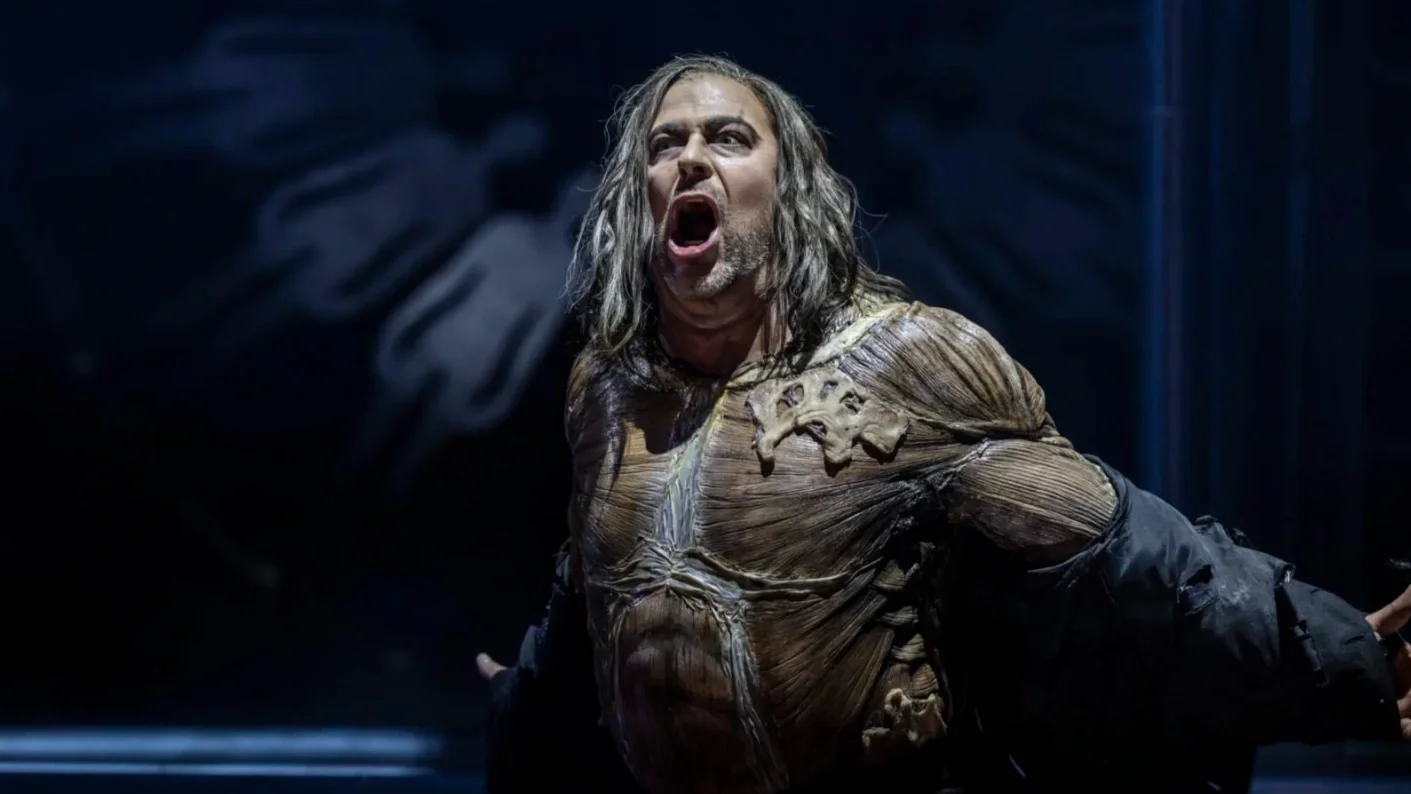
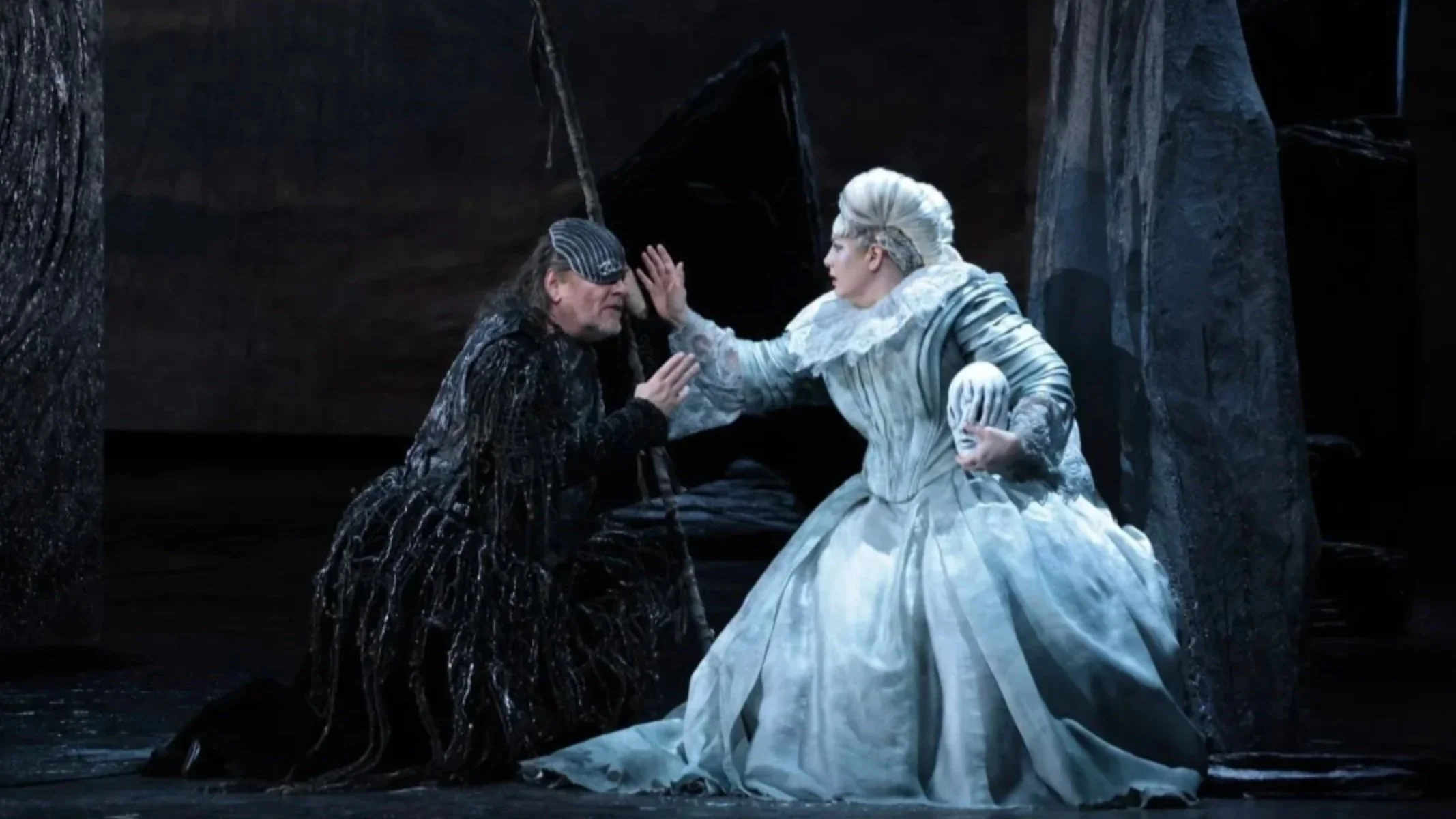
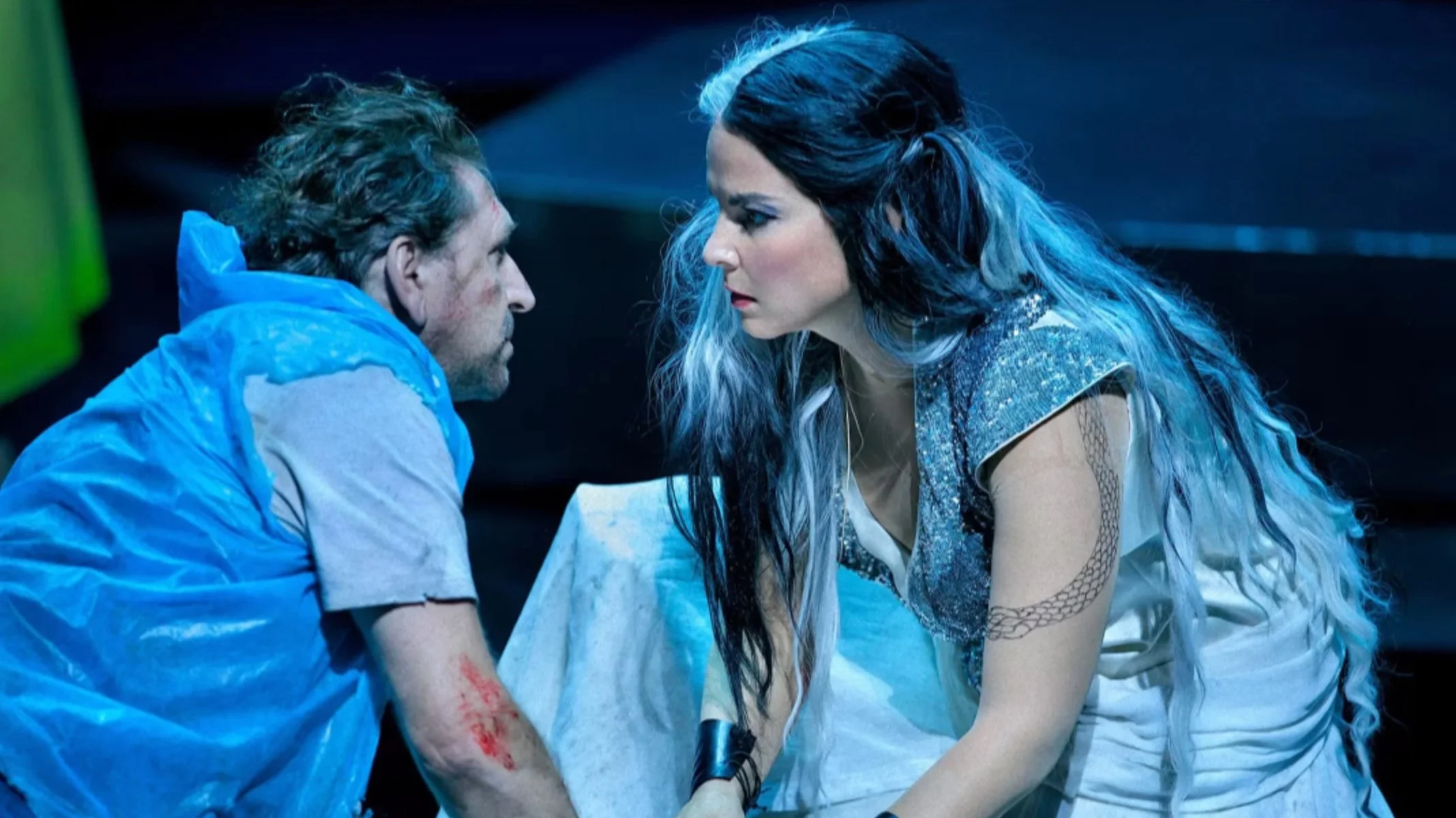
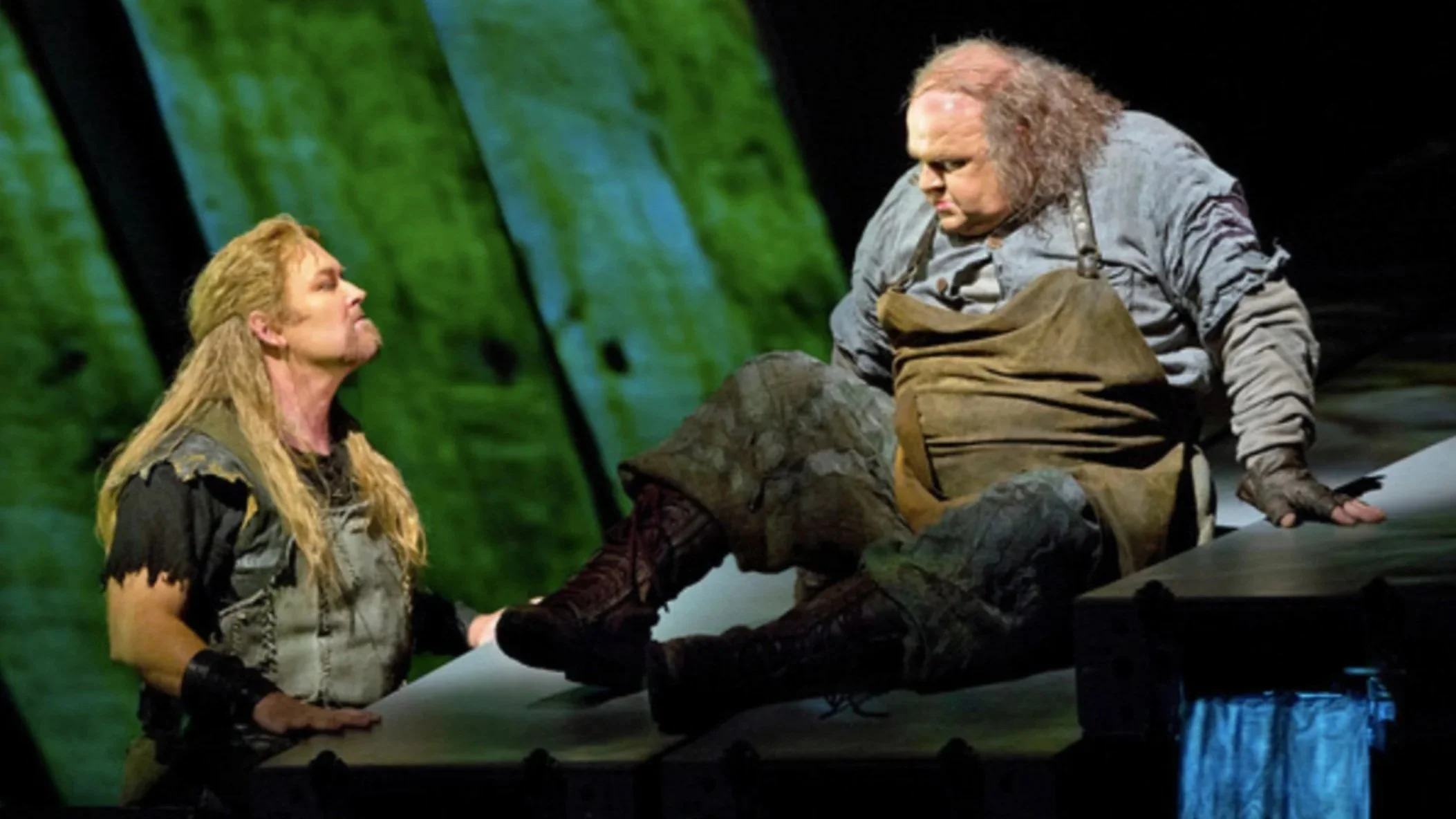
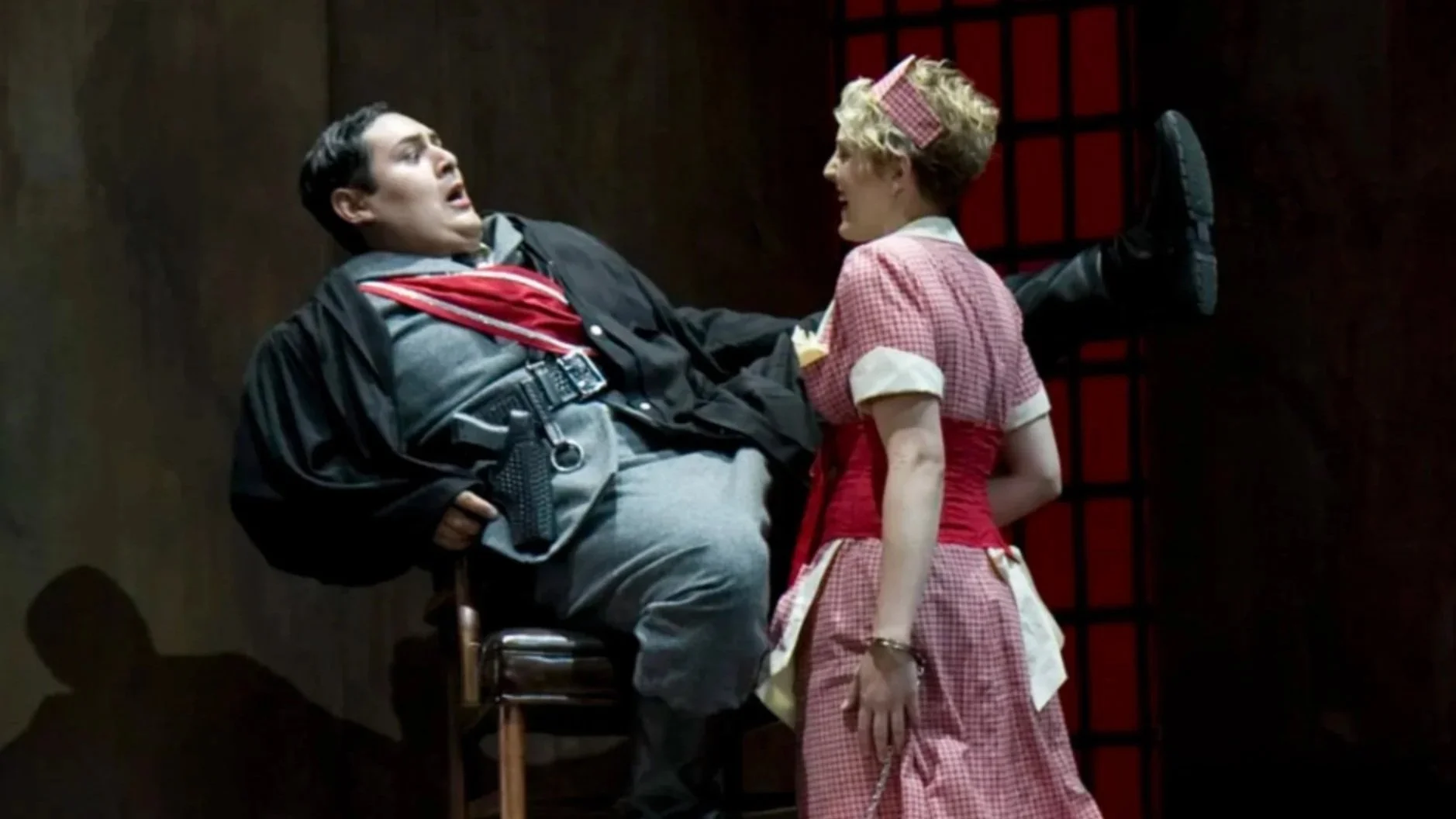
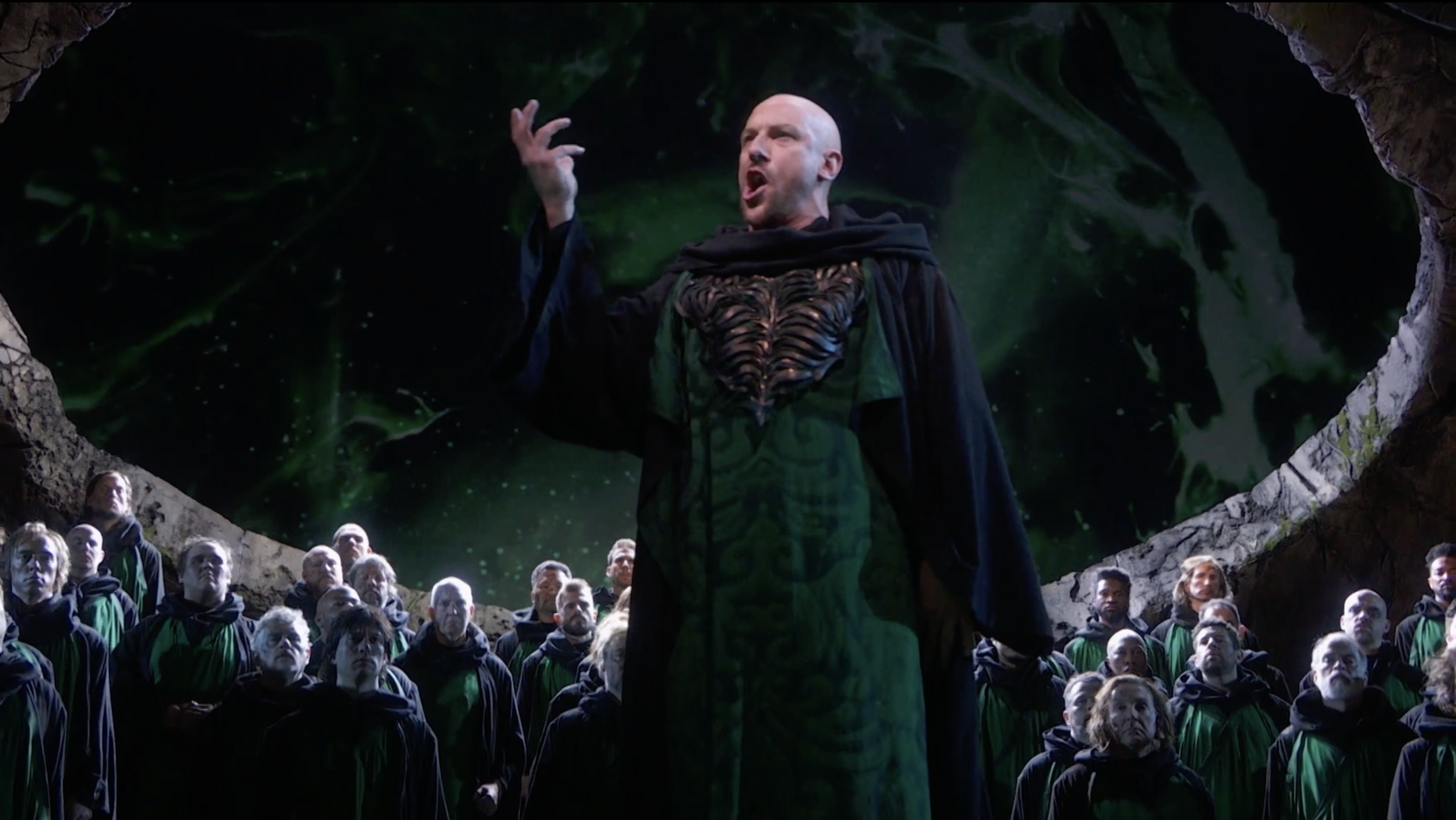
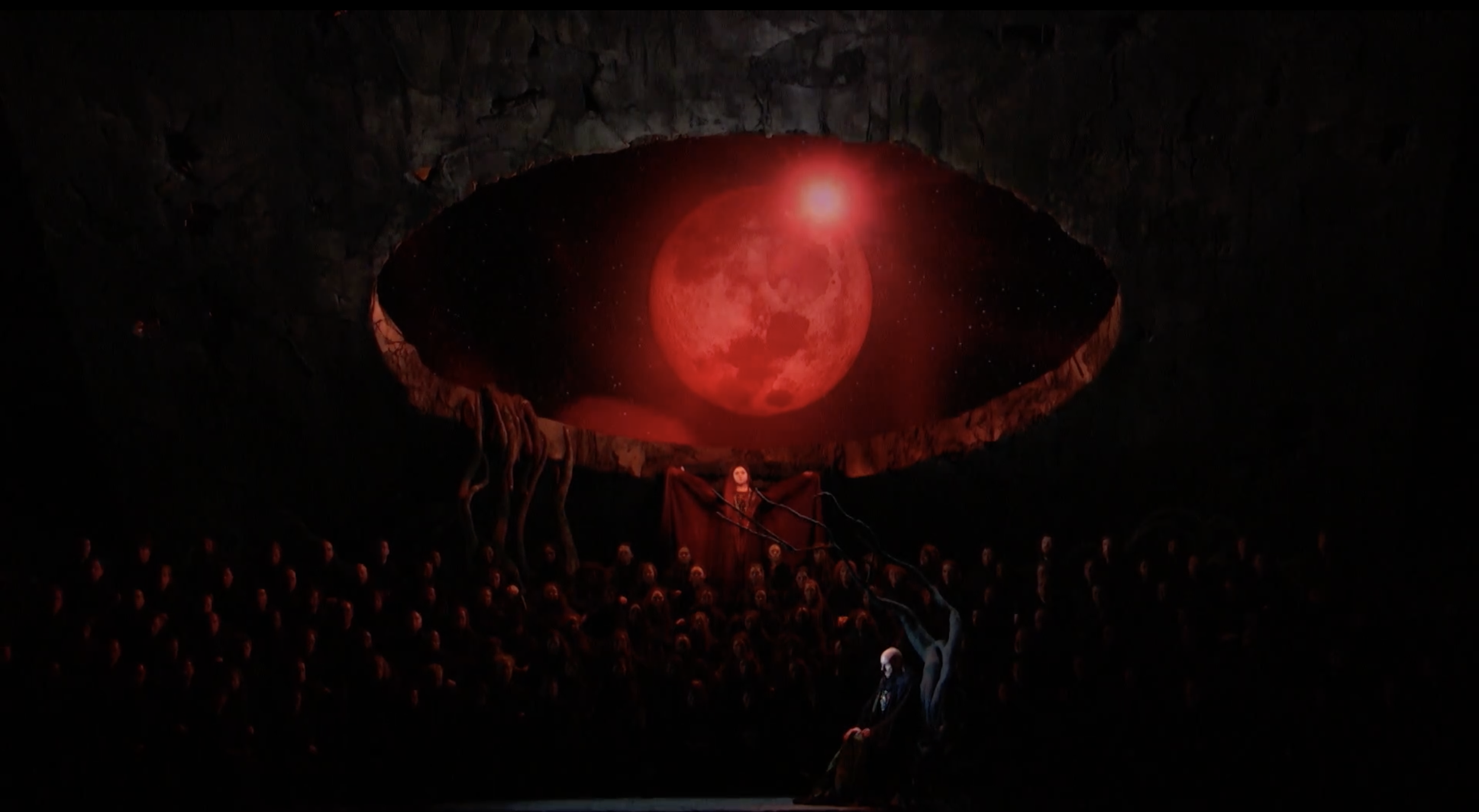
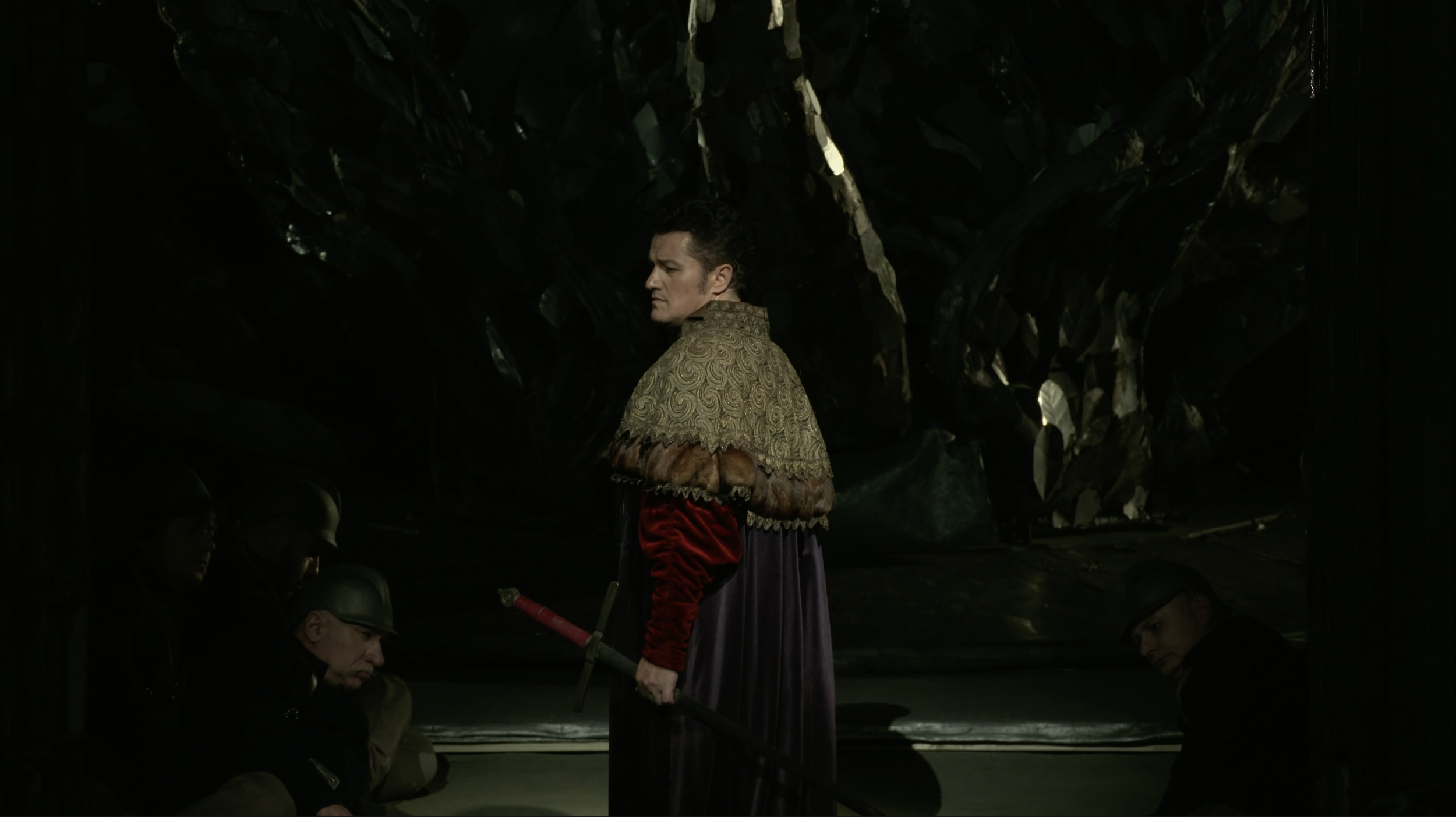
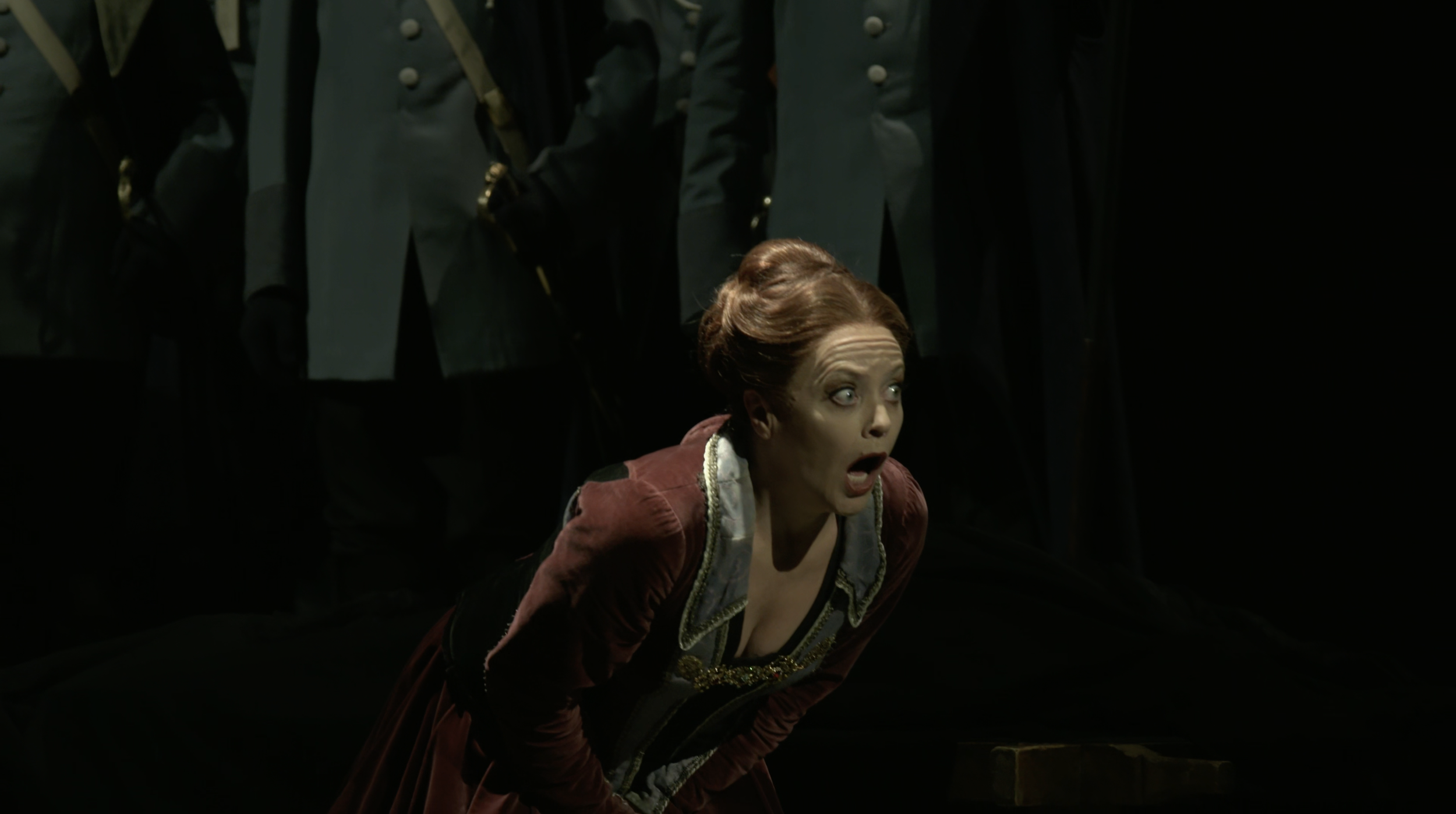
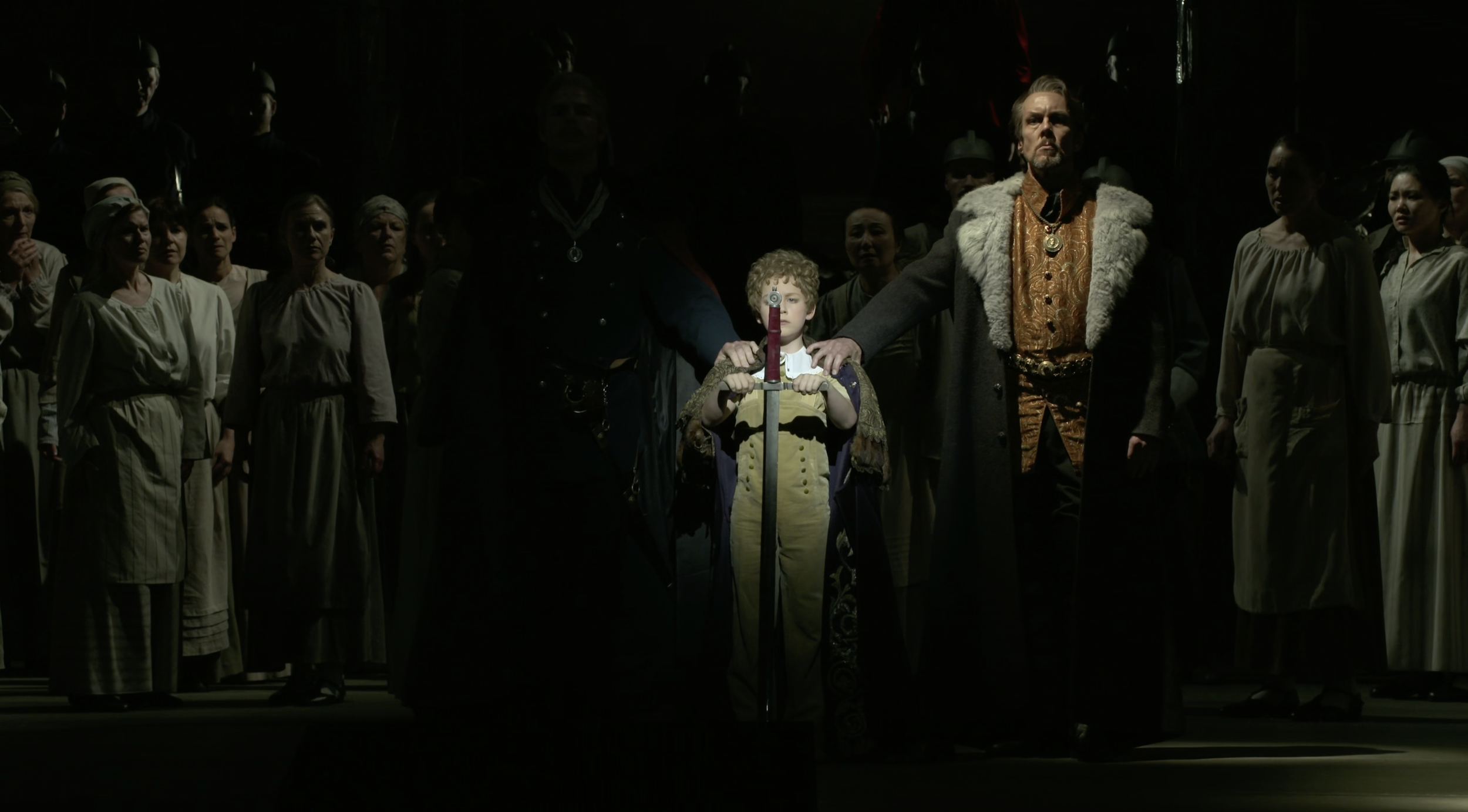
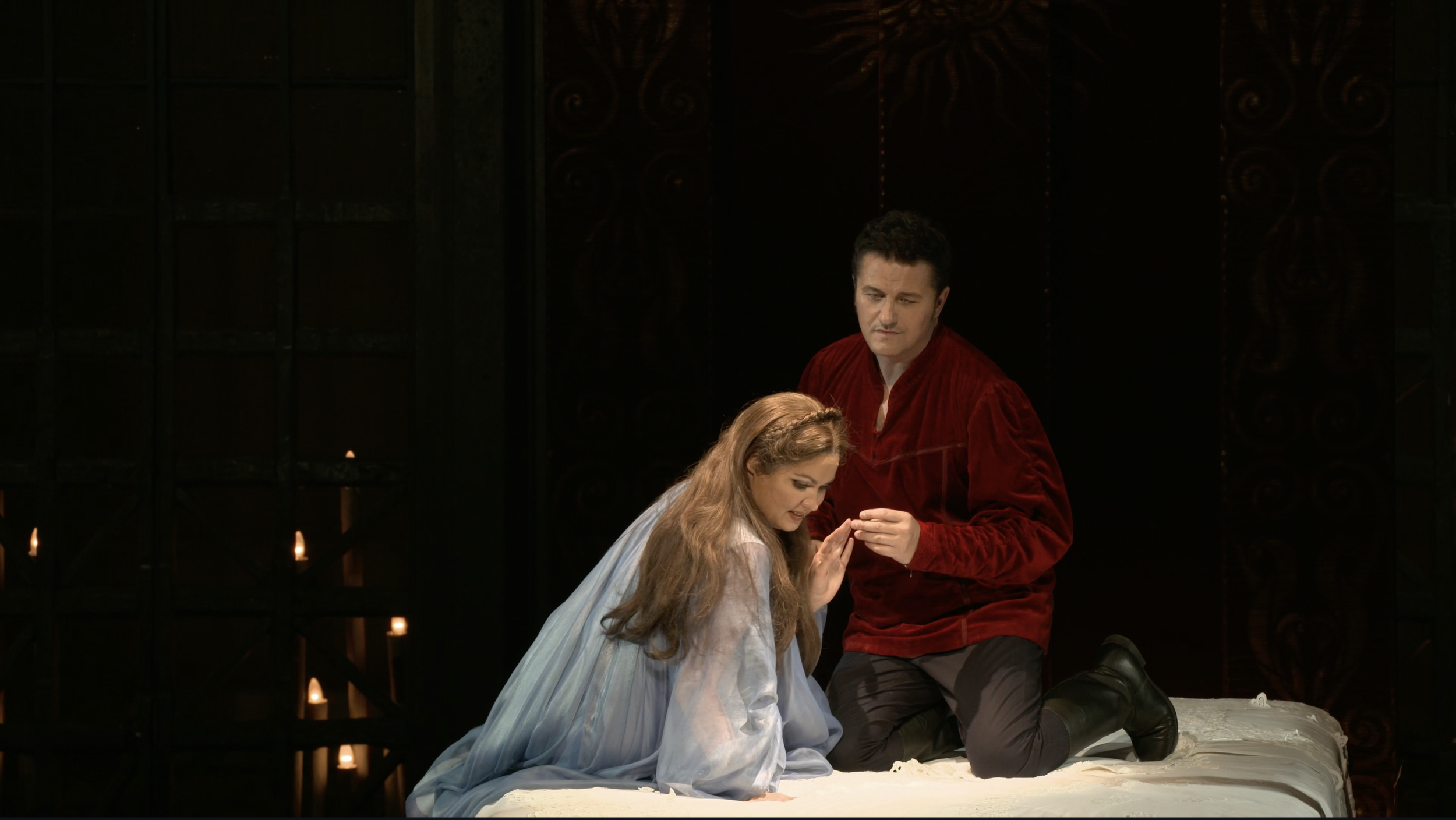
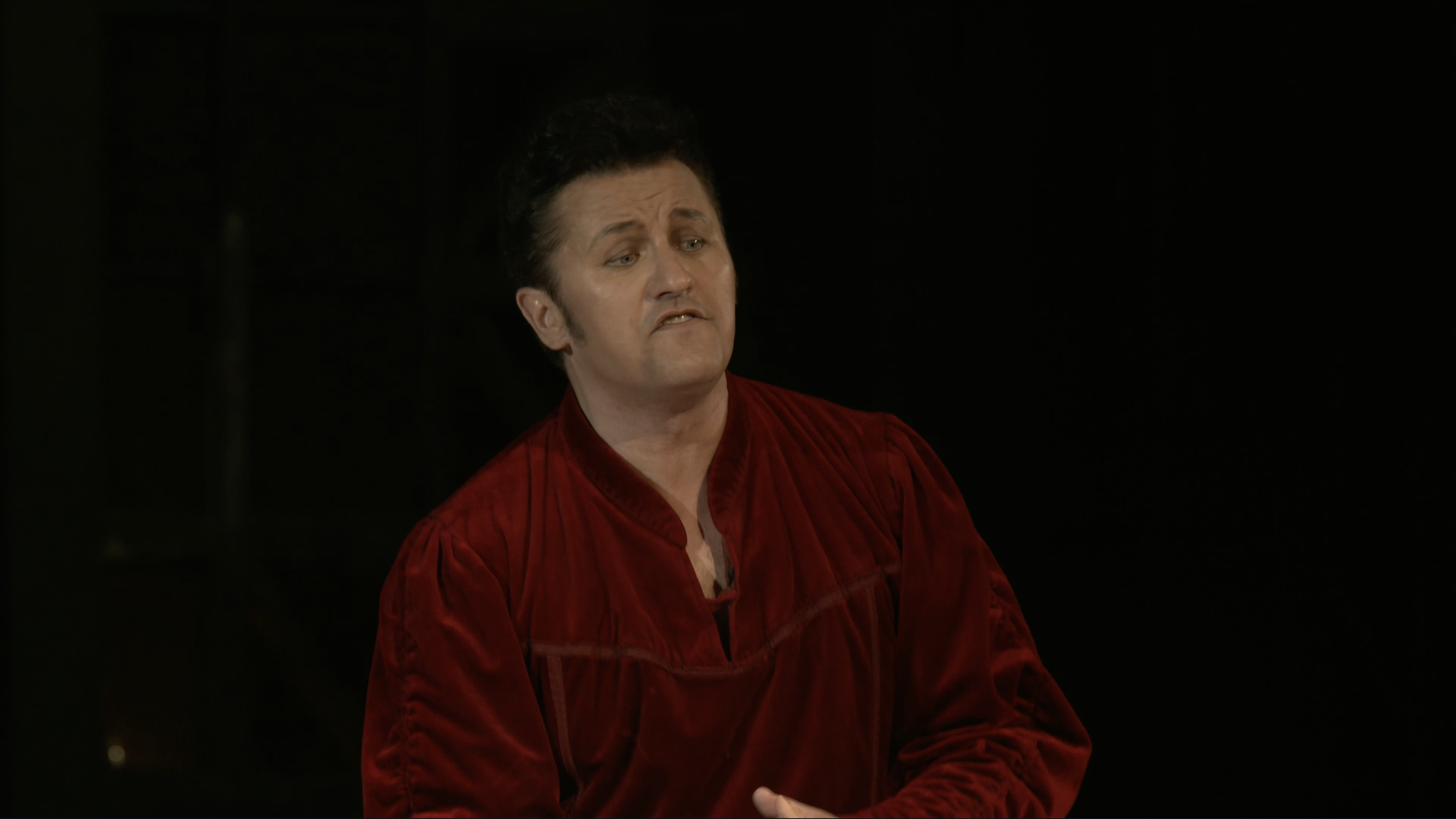
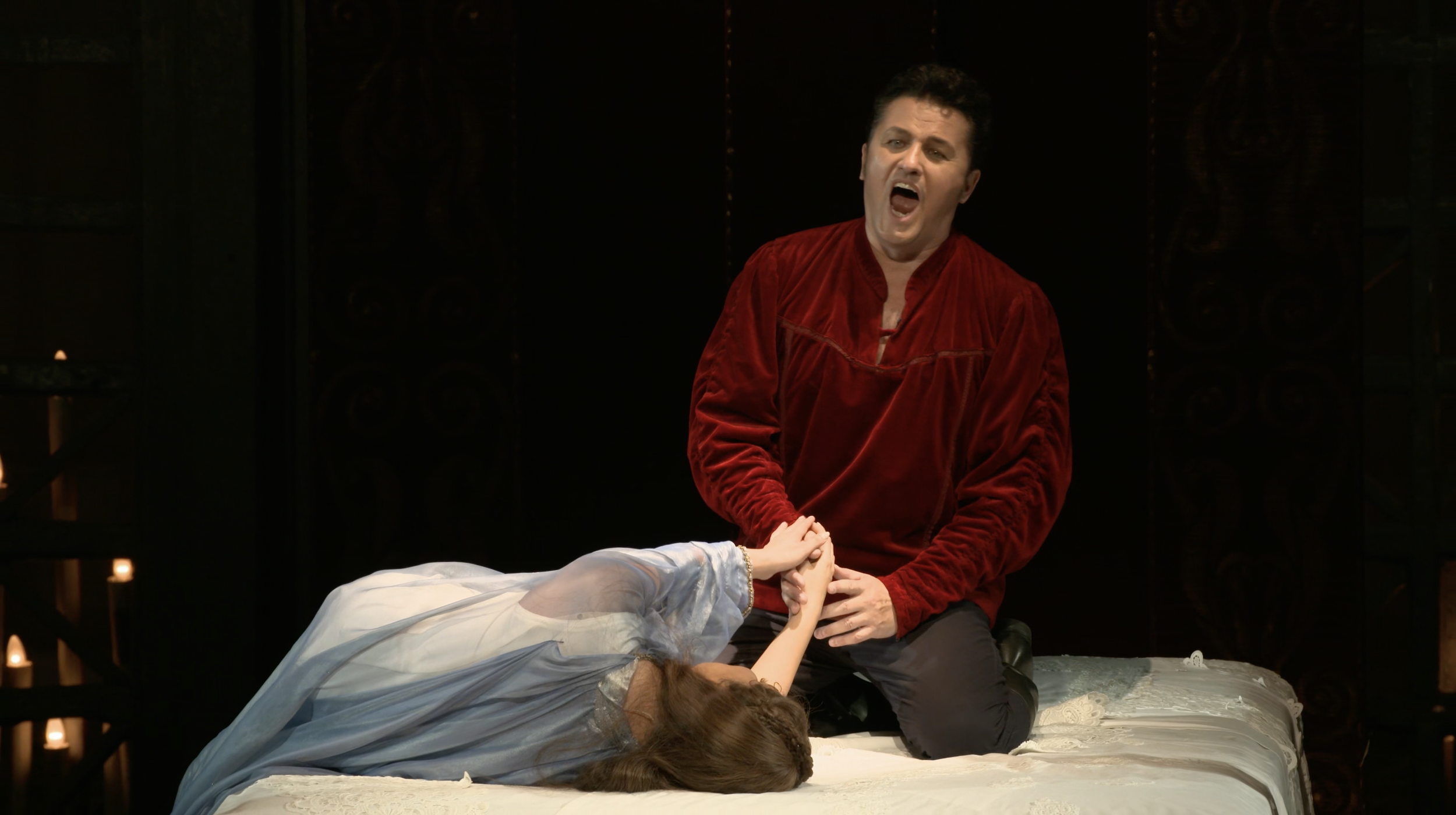
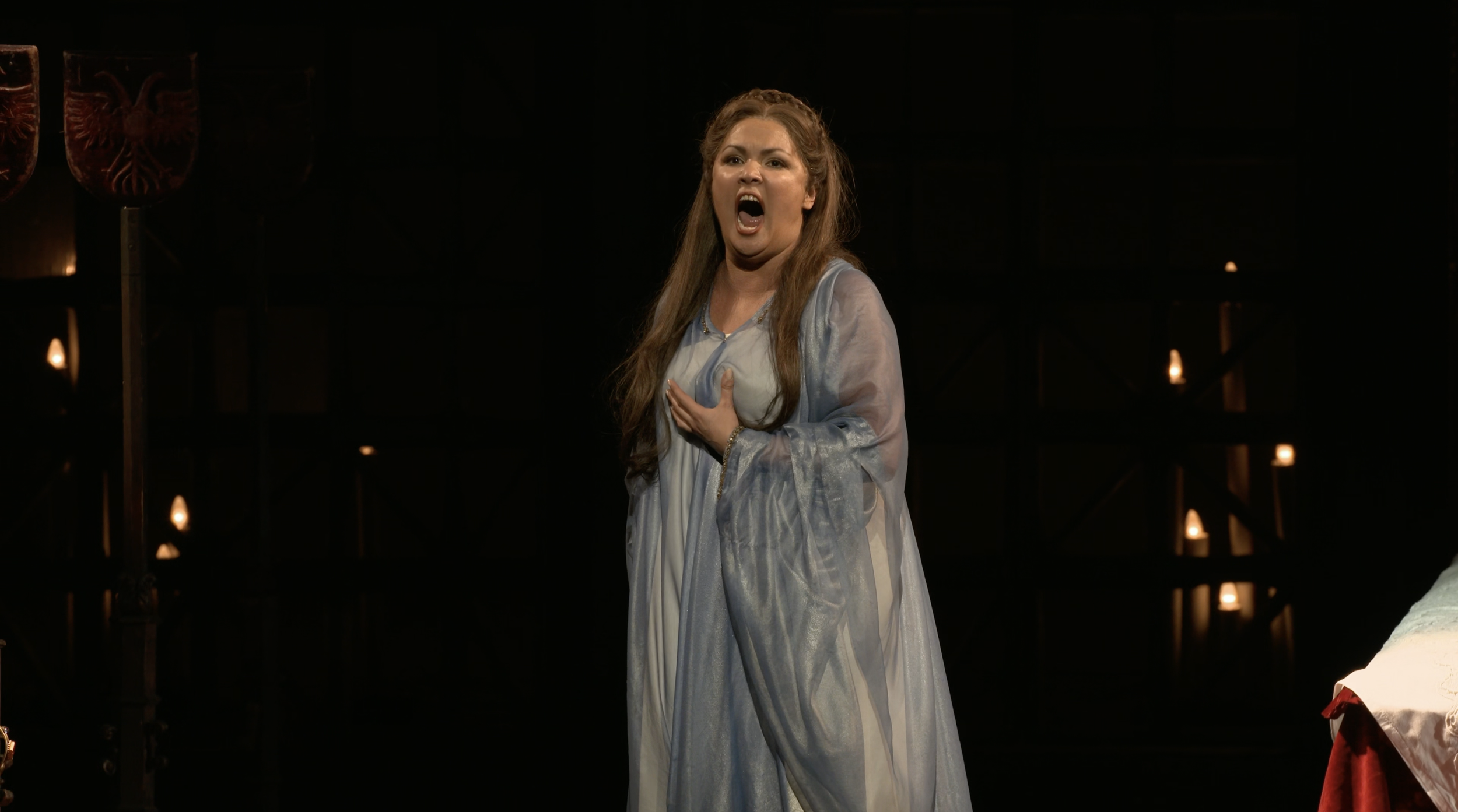
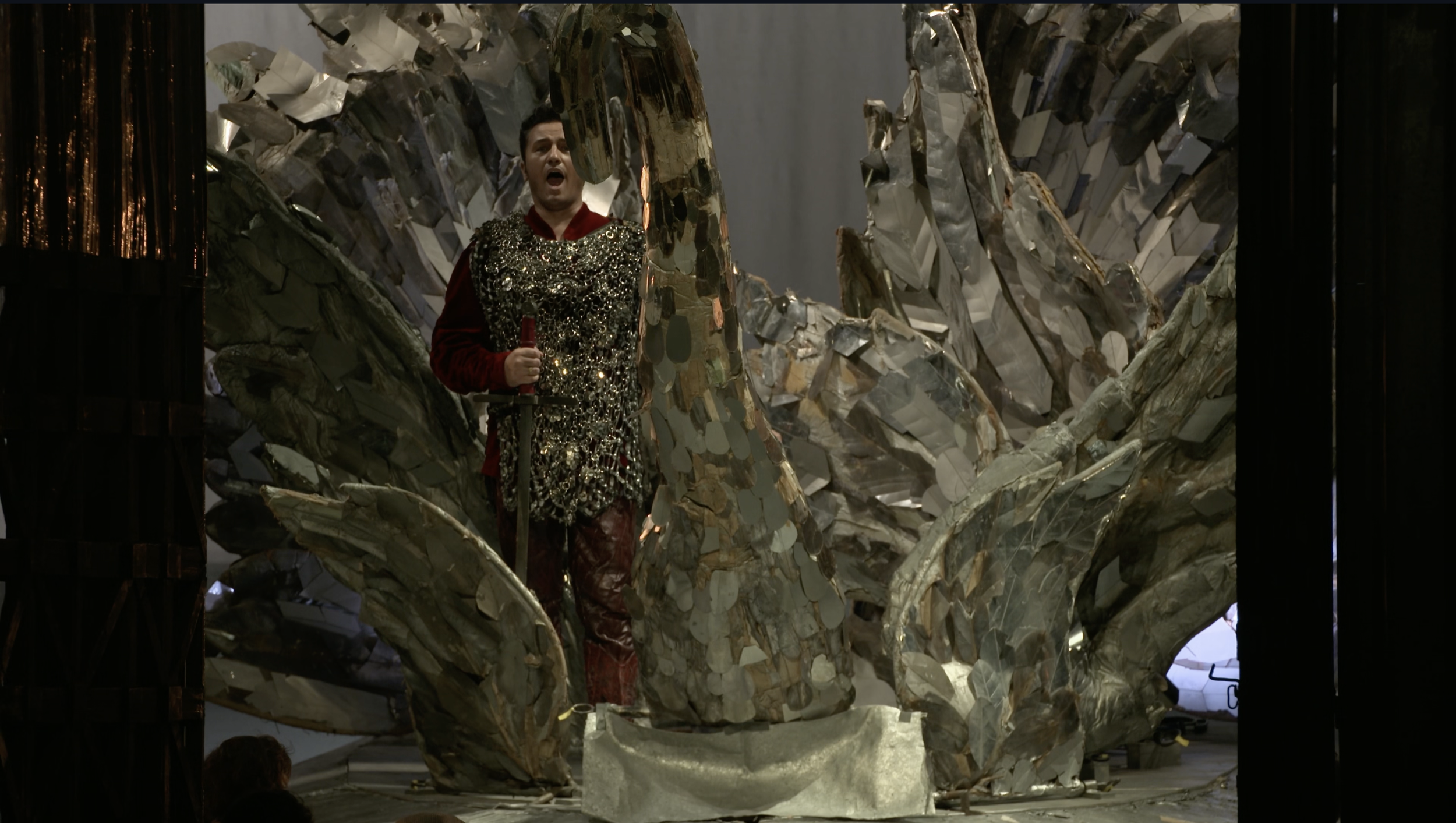
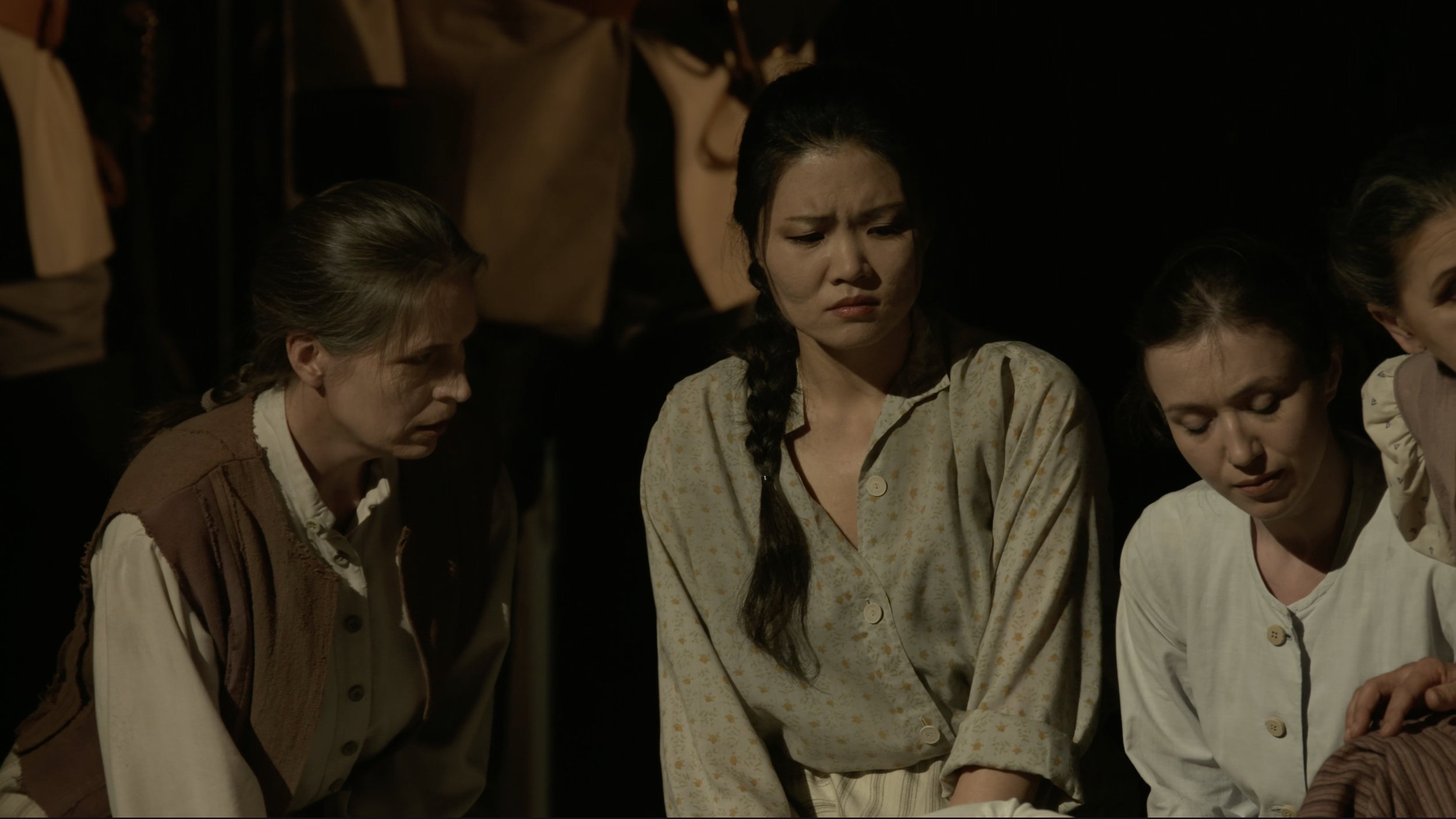
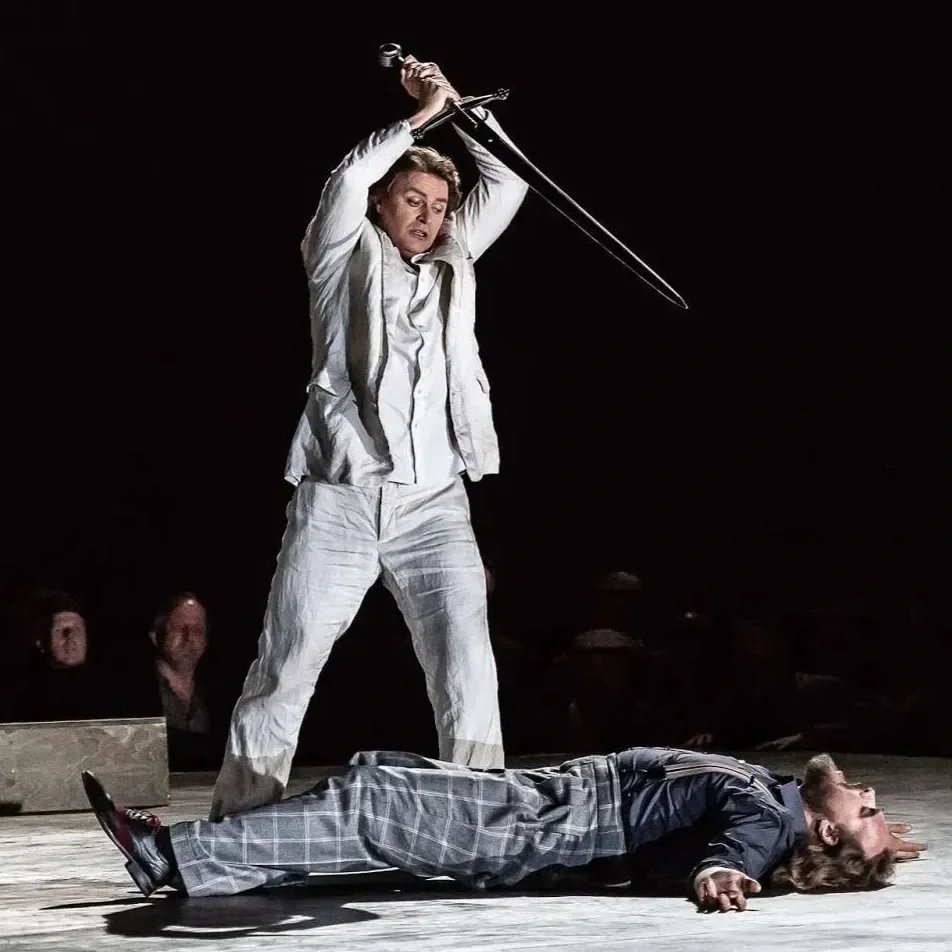
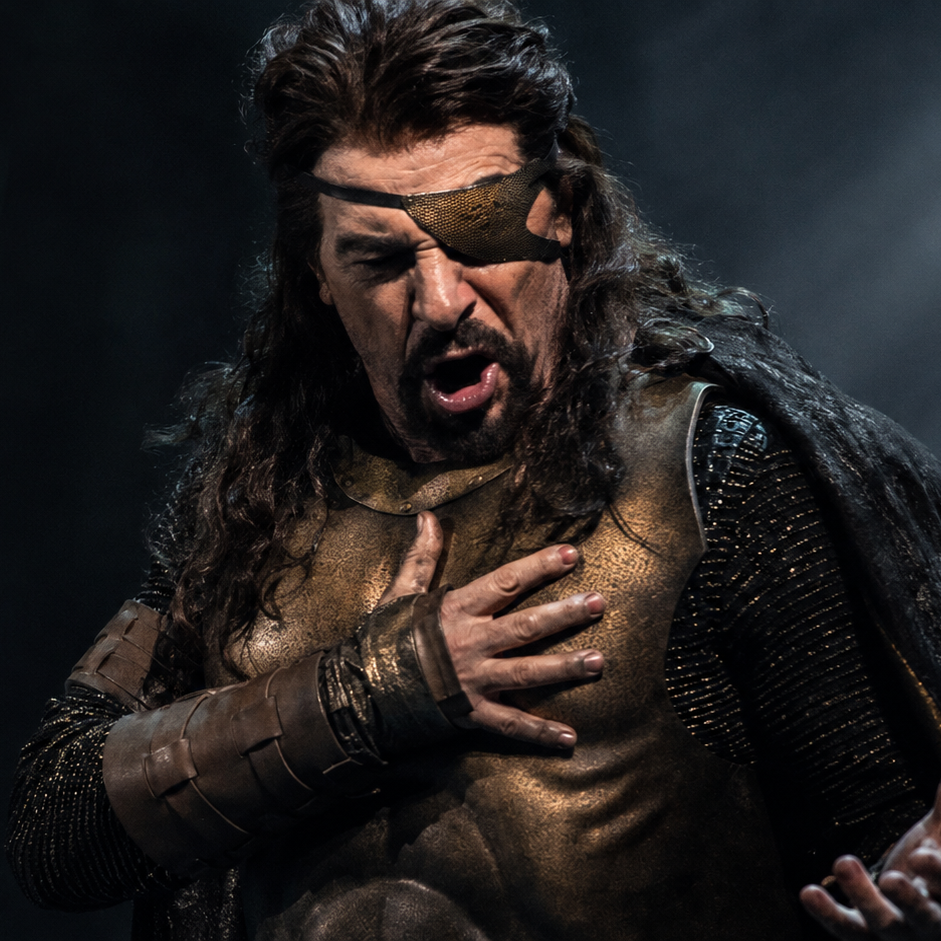
Lohengrin, Semperoper, Dresden, December 2015
Thematischer Rahmen: Lohengrin
Lohengrin is Wagner's opera about the structure of conditional authority. About what happens when power arrives from elsewhere, announces itself as benevolent, and makes one demand. That it not be examined. The Grail knight's condition is not arbitrary. It is the condition of the Grail itself. A sacred power that ceases to function the moment it is subjected to the epistemology of ordinary life. You cannot ask where does this come from without dissolving the thing you are asking about. This is not mystification. It is a genuine claim about a genuine category of human experience. That some things require a specific posture of reception. Call it faith, call it suspension of critical judgment, and that the demand for evidence destroys what it seeks to verify.
But Ortrud sees the mechanism. Ortrud, Lohengrin's true antagonist, is not a villain in the simple sense of someone who wants bad things. She is the person in the opera who understands most precisely what Lohengrin's authority is and how it operates. She knows that the prohibition against the question is not incidental to the knight's power but constitutive of it. That he is what he is only because no one has asked. She plants the question in Elsa's mind not because she is cruel, though she is that too, but because she cannot stop herself from naming what she sees. The intelligence that identifies the mechanism cannot also decide not to use it.
Morningside Heights is the most Lohengrin-inflected geography in New York City.
The neighborhood occupies a mesa. An elevated plateau that rises sharply above Harlem to the east and descends to the Hudson and Riverside Drive to the west. The Columbia University campus, the Cathedral Church of St. John the Divine, Riverside Church, Grant's Tomb, the Julliard precursor institutions, the Nicholas Roerich Museum, the old Barnard buildings. This cluster of civic, academic, religious, and cultural authority was assembled between roughly 1890 and 1935 as a deliberate project of institutional concentration, a quarter of the city designed to look like what civilization looks like when it takes itself seriously.
Alex Ross, in his walking tour of Wagner's New York, identifies this cluster explicitly as the Ring cycle's landscape relocated to Manhattan. The Grail institutions, the neo-Gothic architecture of conditional belonging, the elevated geography that requires a specific kind of ascent. He is right that the geography does this work. The Heights feel consecrated, sealed, slightly outside ordinary time. Walking up from the subway at 116th Street onto the Columbia campus is an architectural announcement: you are now inside something that operates by different rules.
Lohengrin arrives in Brabant by water. He defends Elsa. He marries her. He sets his condition. He departs when the condition is broken, transforming the swan that bore him back into Elsa's brother Gottfried, the legitimate heir, and leaving Elsa, who has lost the knight but recovered the brother, with less than she started with and more than she had before, and no way to know, in the immediate aftermath, which of those facts is the operative one. March is the month for this. The city is in transition. The ice is leaving. The question that has been held under the weight of winter is about to be asked. The swan is still on the water. For now.
Listening Index (Die Musikalische Wirbelsäule)
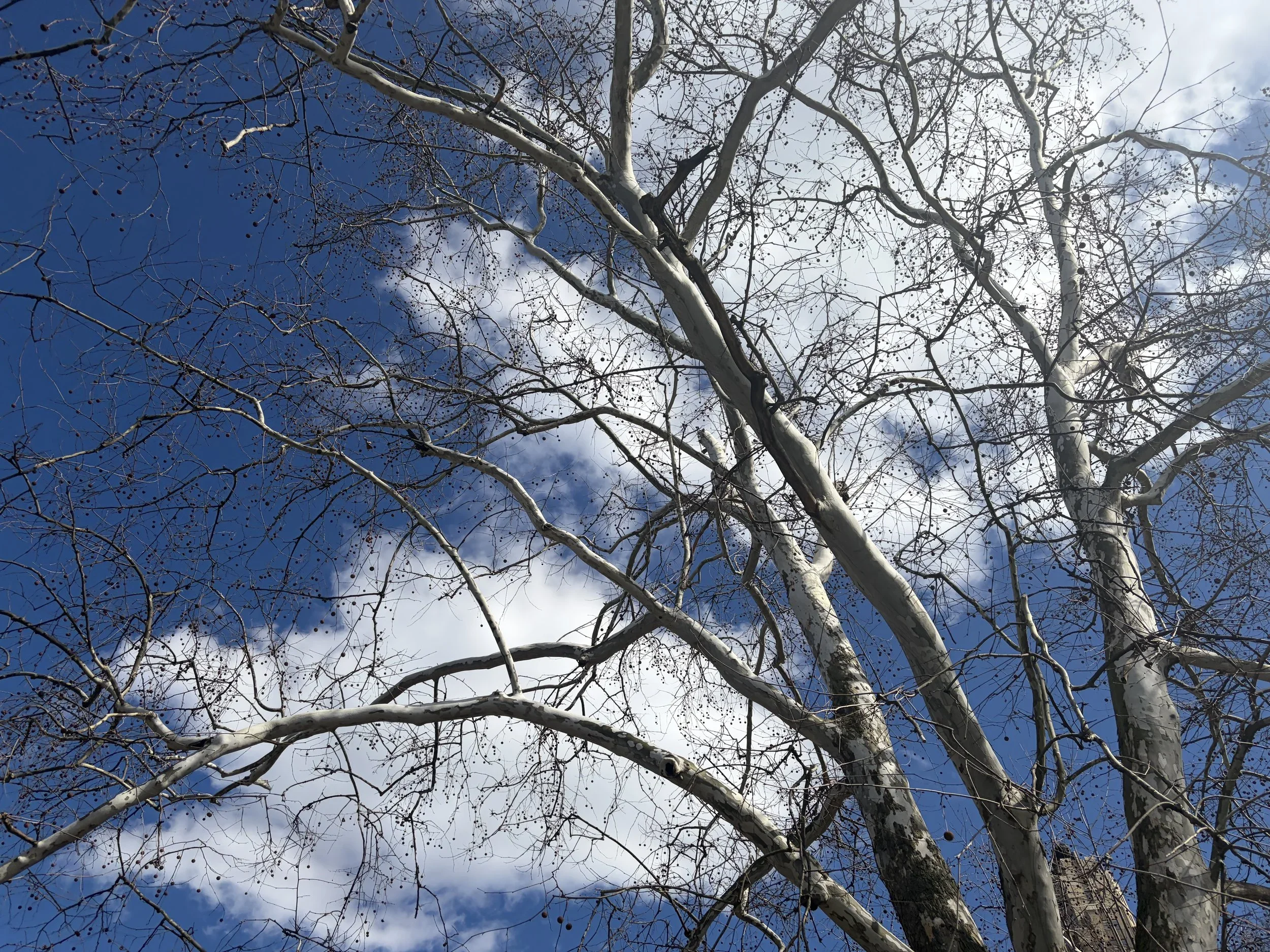
Prelude to Act I: The Grail descending as light, before form, the water before the swan arrives
Elsa's Dream (Einsam in trüben Tagen): The vision of the one who will come, the longing that calls the knight into existence
Ortrud's Scene, Act II (Entweihte Götter! Helft jetzt meiner Rache!): The intelligence that sees the mechanism, the question taking root
Bridal Chorus (Treulich geführt): The communal blessing toward the threshold, the music whose irony is that it precedes everything falling apart
Lohengrin's Warning (Höchstes Vertrau'n): The moment of maximum danger before the question, the plea that cannot be heard
In Fernem Land (unnahbar euren Schritten): The full revelation, the far land named, the departure announced
Mein lieber Schwan: The farewell to the vessel of arrival, the quietest ending in all of Wagner
Listening Note: This month's music marks thresholds rather than resolutions. Do not rush any track to its end. The Prelude in particular should be allowed its full hovering time at the water. It does not want to arrive. Let it not arrive.
Das Urwasser: Die Hudson am Morgen
Getting There
Take the 1 train to 79th Street, exit on Broadway, and walk west to Riverside Drive and then down to the 79th Street Boat Basin.
The Boat Basin is a small marina cut into the Hudson's bank, sheltered by a curved concrete seawall, housing a permanent community of houseboats alongside seasonal recreational craft. There is a café that opens in spring; in early March it is likely still closed, which is correct for this walk.
Track: Lohengrin, Prelude to Act I
Track: Lohengrin, Prelude to Act I
Begin the Prelude at the water's edge, on the walkway above the marina or on the lower dock path if it is accessible, before the boats are moving and before the joggers have fully occupied Riverside Park above.
What the Hudson Is Doing Here
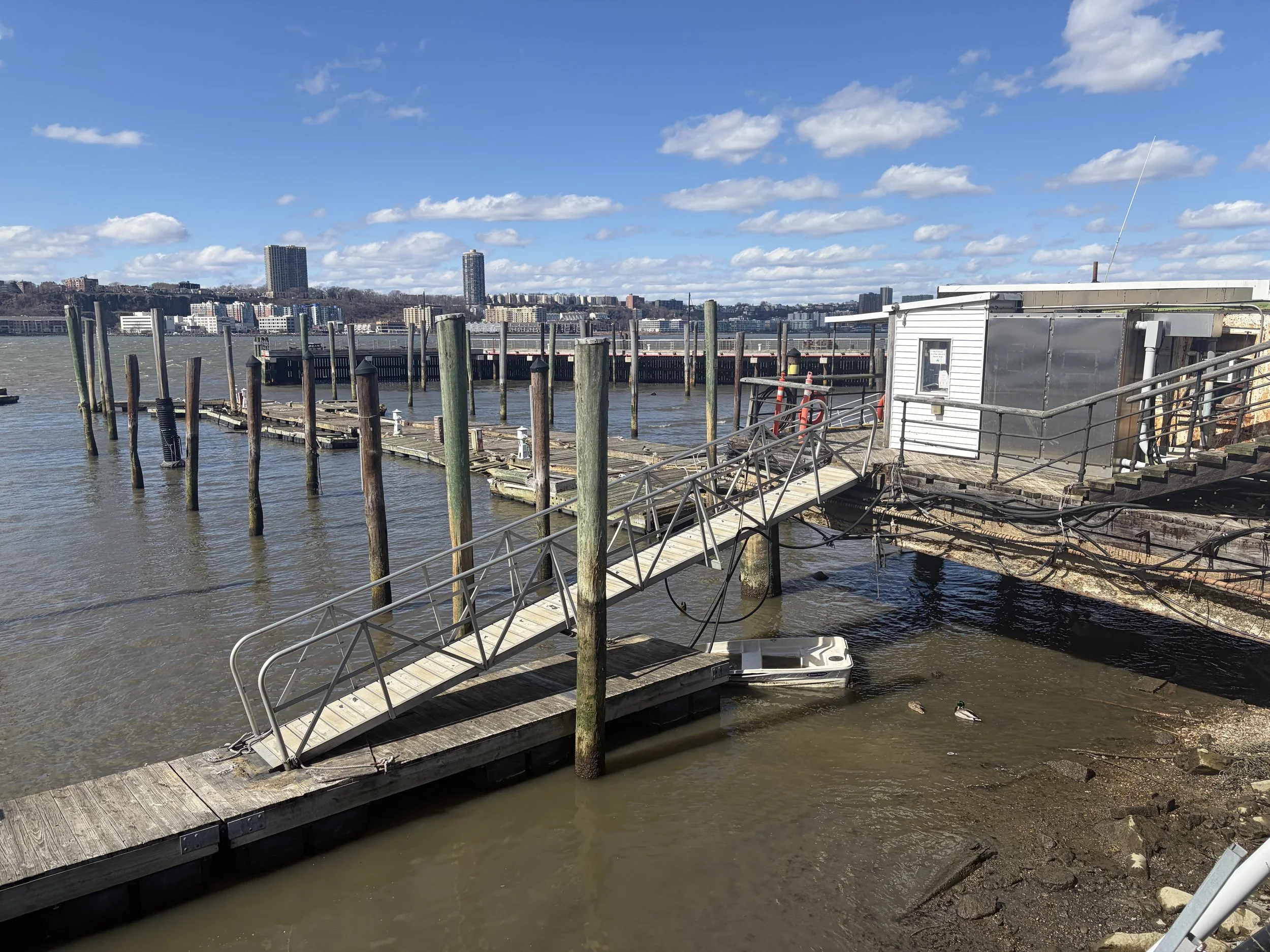
Wagner's Prelude to Lohengrin begins with a single sustained A in the highest register of the violins, not the E-flat of the Rheingold Prelude building from nothing, but something already elevated, already arrived from elsewhere, descending rather than ascending. The Grail is already there. The question is whether it can be received. The long, slow harmonic descent, the A held for sixteen bars before the harmony begins to fill in beneath it, the melody forming itself gradually from the overtones of that single note, is the sound of sacred authority making itself available to ordinary perception. It is not assembling itself from the river. It is coming down into the river from somewhere above.
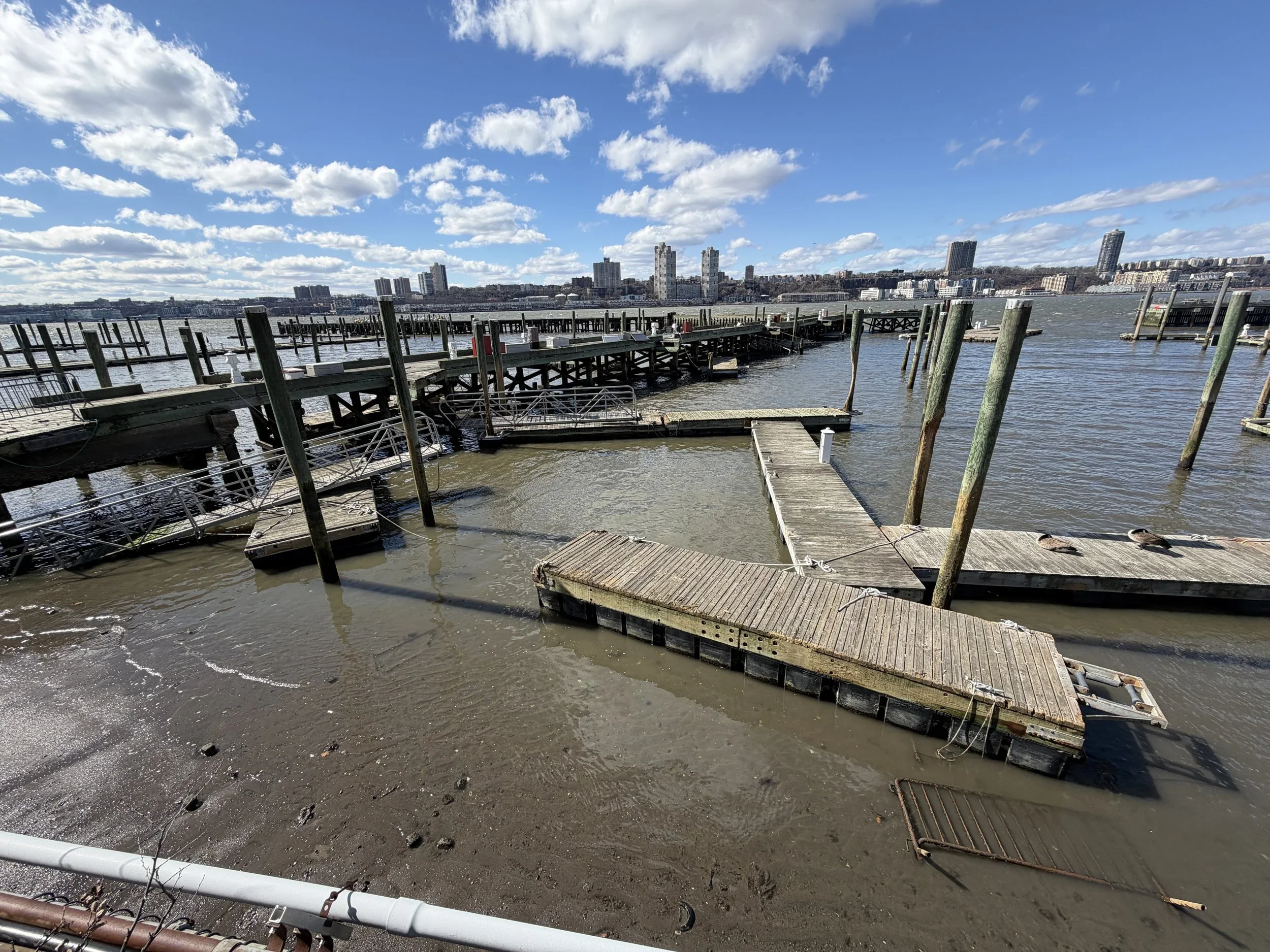
The Hudson in early March is the right river for this. It is wide and grey and cold and it moves without explanation. The houseboats at the Boat Basin are, in this context, the barges and trading vessels of Brabant. Ordinary life conducted on water, beside which the extraordinary arrival will shortly occur. The swan will not arrive here, at 79th Street, at this specific marina. But the river that the swan crosses is any large body of cold grey water on a March morning, and the Hudson, seen from the lower dock path with the New Jersey Palisades across the water and the light still low, is as close as New York gets to the Scheldt.
What to Do
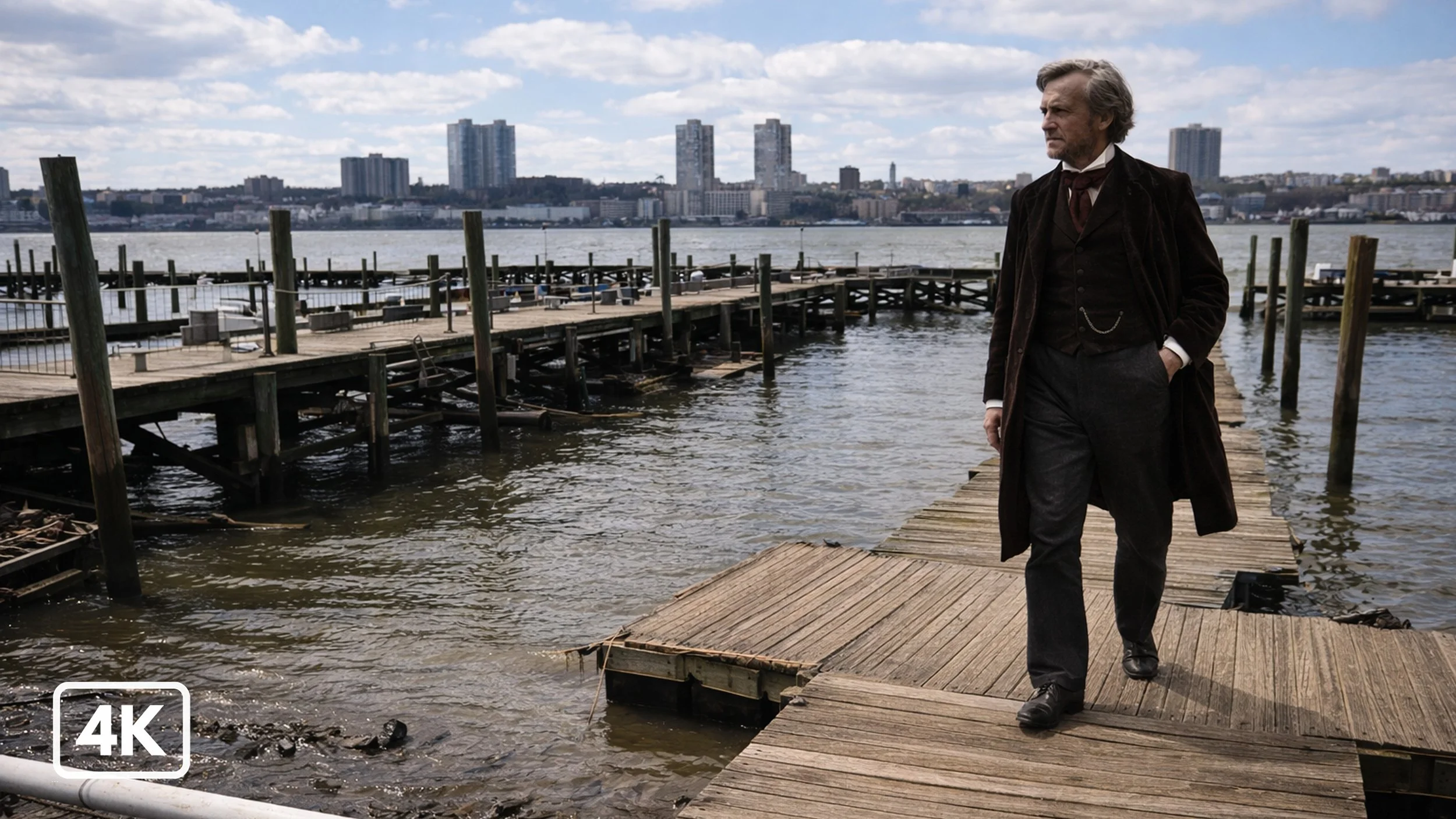
Walk the lower path of the Boat Basin slowly, from the marina's southern edge to its northern end and back, while the Prelude plays.
Do not try to time anything. The Prelude does not want to be choreographed. It wants to hover, and the walk should hover with it. Slow, without destination within the space, the water beside you and the music above it and the city still waking somewhere above the embankment.
When the Prelude ends, when the sustained A finally recedes back into the upper register and the harmony dissolves, stay at the water for a moment without music. The swan is already on the way. You just haven't seen it yet.
Die Prophezeiung: Der Jacqueline Kennedy Onassis Reservoir
Walk: From the Boat Basin to the Reservoir
From the 79th Street Boat Basin, walk east through Riverside Park and then into Central Park via the West 81st or 86th Street entrance.
Continue to the Reservoir running track, entering from the west side at 86th–90th Street.
The walk from the Boat Basin to the Reservoir is about fifteen minutes, enough time for the city to shift around you from the river-level quietness of Riverside Park to the interior quietness of the Park.
Track: Lohengrin, Act I — Elsa's Dream: Einsam in trüben Tagen
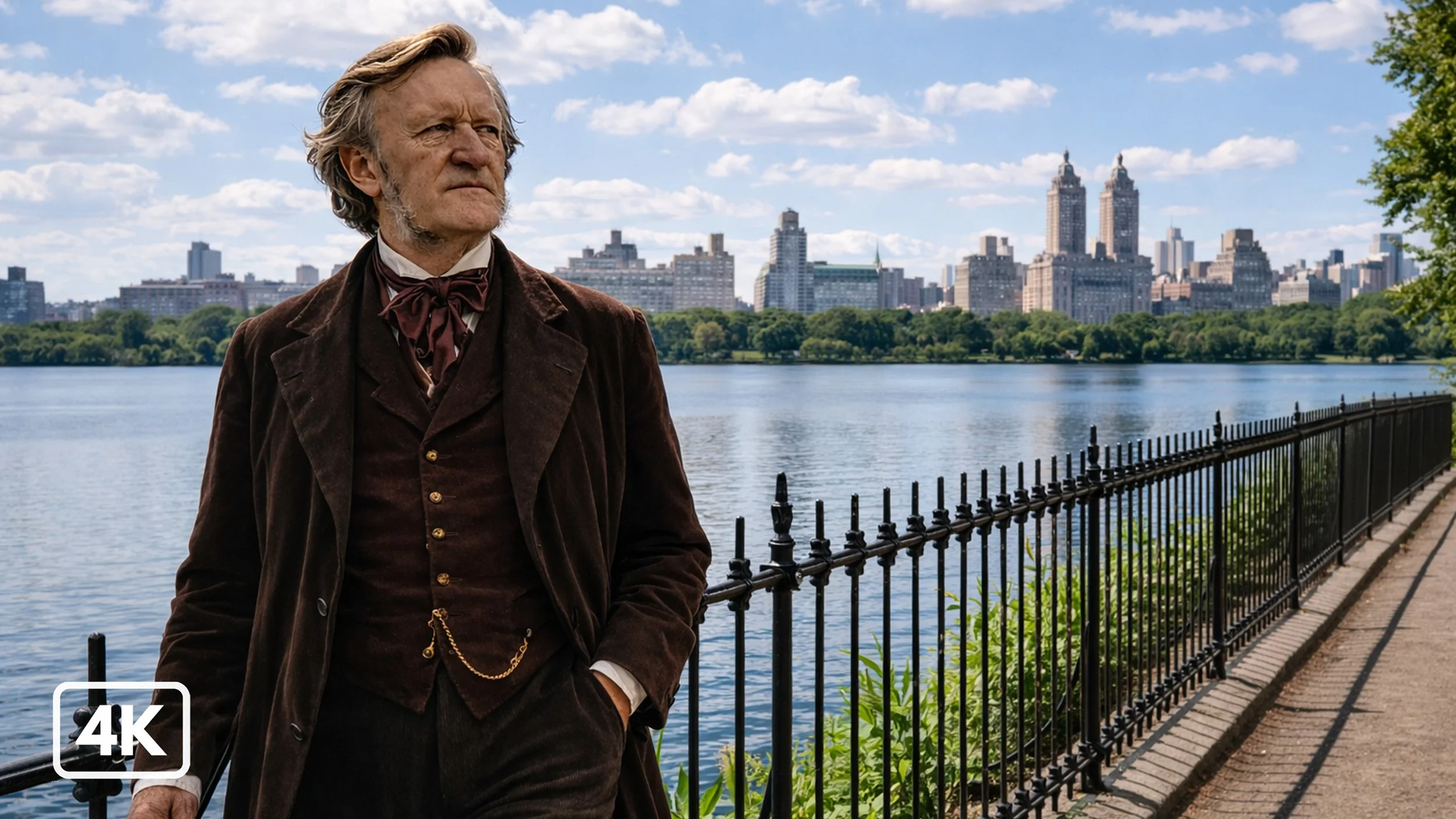
Begin Elsa's Dream as you first see the Reservoir's water from the track entrance.
What the Reservoir Is
The Jacqueline Kennedy Onassis Reservoir is a 106-acre holding basin built in 1862, encircled by a 1.58-mile running track, reflecting the Upper East Side skyline on one shore and the Upper West Side on the other. It is the largest body of still water in Manhattan, and it produces, in early March, a specific quality of light. Grey, flat, the surface slightly ruffled by the wind, the apartment towers on both shores reduced by the water's scale to something resembling medieval turrets.
These are the twin shores of Brabant as New York can produce them. The Eldorado's twin towers to the west, the Fifth Avenue co-ops to the east, the 19th-century castles in Cram's imagination, now housing other kinds of authority.
Elsa's Dream is the aria in which she describes her vision before the knight has arrived. A figure in shining armor, sent to her, coming to defend her. She is not requesting him. She is describing what she has already seen, internally, in the only form certainty takes before it has been confirmed by evidence. The aria is an act of testimony rather than prayer. She has seen something and she knows it, and she is telling the court what she knows, and the court, which has already decided she is guilty, does not know what to do with a certainty that arrives without documentation.
Walk clockwise along the eastern edge of the track while the Dream plays, with the long stretch of open water on your right. Look for a single bird on the surface, a gull or a duck or, in March, occasionally a bufflehead still lingering before its northern migration. Locate it and let it be the first sign of the swan: barely visible, barely differentiated from the water, real in itself but also a carrier of something it doesn't know it's carrying.
What to Think About
The Dream establishes Lohengrin's dramatic problem with great precision. The knight is being summoned by a longing that already knows what it needs, that has constructed the required figure in advance and will recognize him when he arrives because it has already imagined him. This is not weakness in Elsa. It is the logic of rescue. You know the shape of what you need before you know who will provide it.
The problem is that this prior knowing, this vision, is also what makes the prohibition possible. Elsa agrees to the condition nie sollst du mich befragen not because she has evaluated it rationally and accepted the terms but because the figure in her dream didn't need to be questioned, and the man in front of her corresponds to the dream, and so the question hasn't arisen yet. It hasn't arisen yet.
Walk the full east-to-north curve of the track while the Dream continues. By the time the aria ends, you should be on the north side of the Reservoir, where the water stretches longest in both directions and the Park's treeline closes out the city on three sides. Stand here for a moment. Notice the quality of stillness the Reservoir produces in the middle of the most kinetic city in the country. This is what Brabant feels like before Lohengrin arrives: a world waiting for something it doesn't quite know how to name.
Ortruds Erkenntnis: Morningside Park und die Steilwand
Walk: From the Reservoir to Morningside Park
Exit the Reservoir at the West 96th Street gate and walk north along Central Park West to 110th Street (Cathedral Parkway).
Turn west and walk to Morningside Drive, where the escarpment drops sharply.
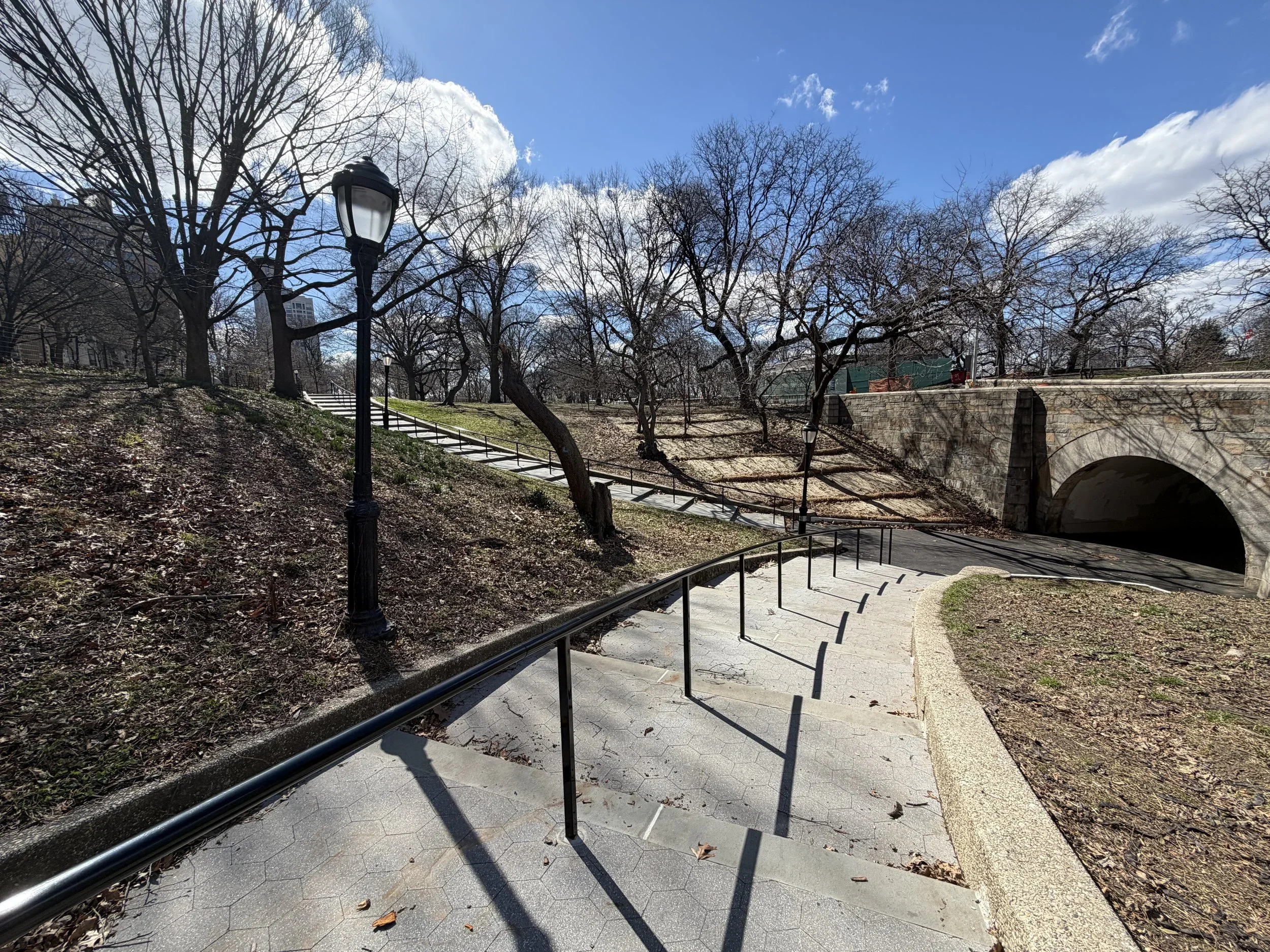
Descend into Morningside Park via the steps at Morningside Drive and 114th Street.
What Morningside Park Is
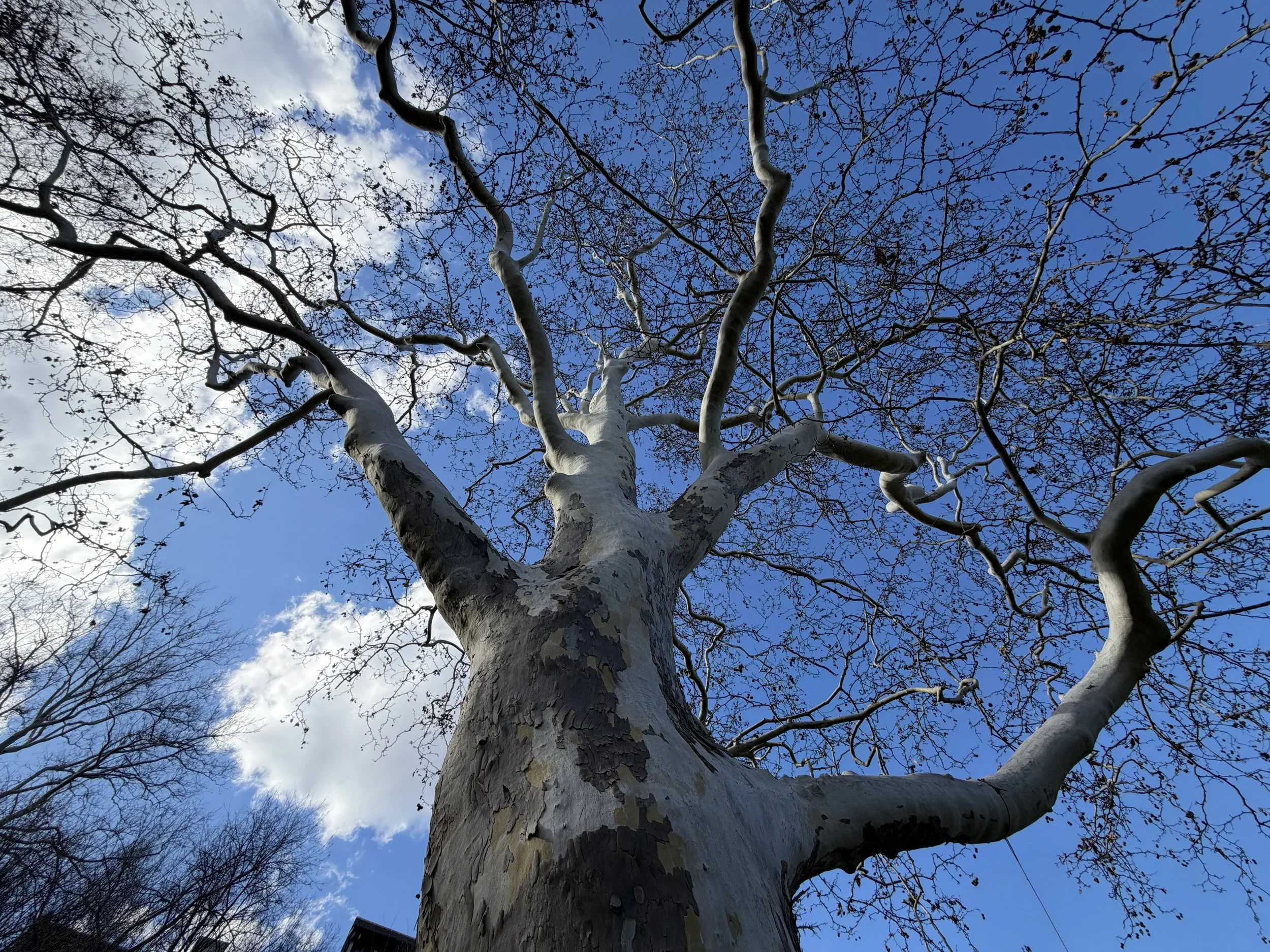
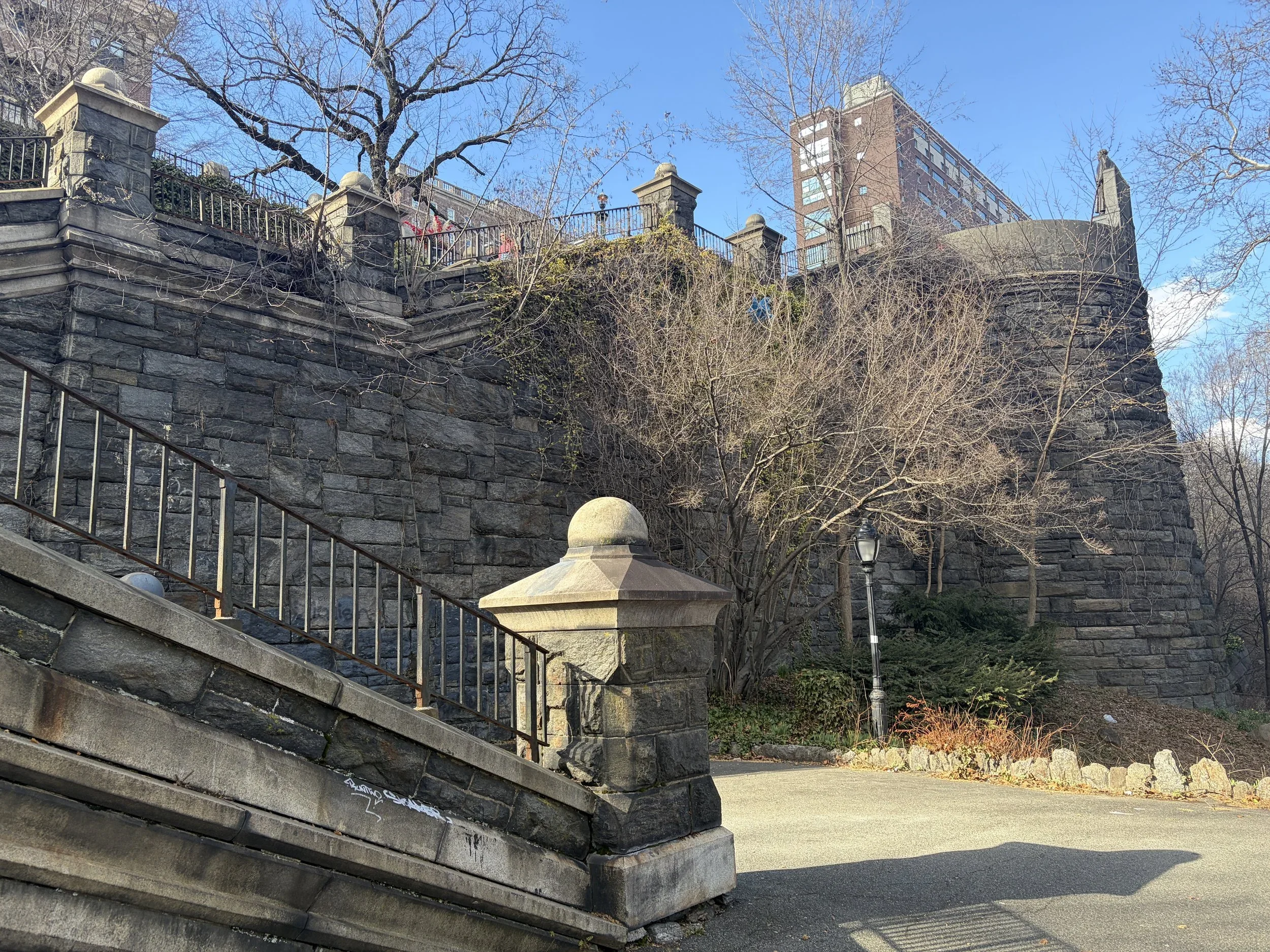
Morningside Park occupies the rocky escarpment on the eastern edge of Morningside Heights. The drop between the plateau and the streets of Harlem below. The park is narrow, steep, and geologically dramatic in a way unusual for Manhattan. Actual exposed schist outcrops, a small pond at the bottom fed by a cascade, the cliffs of the Columbia campus rising on the western side above you. It is a park that is neither fully Heights nor fully Harlem, that belongs to neither the institutional neighborhood above nor the residential neighborhood below, and that has consequently been contested, neglected, and periodically reimagined across the 20th century.
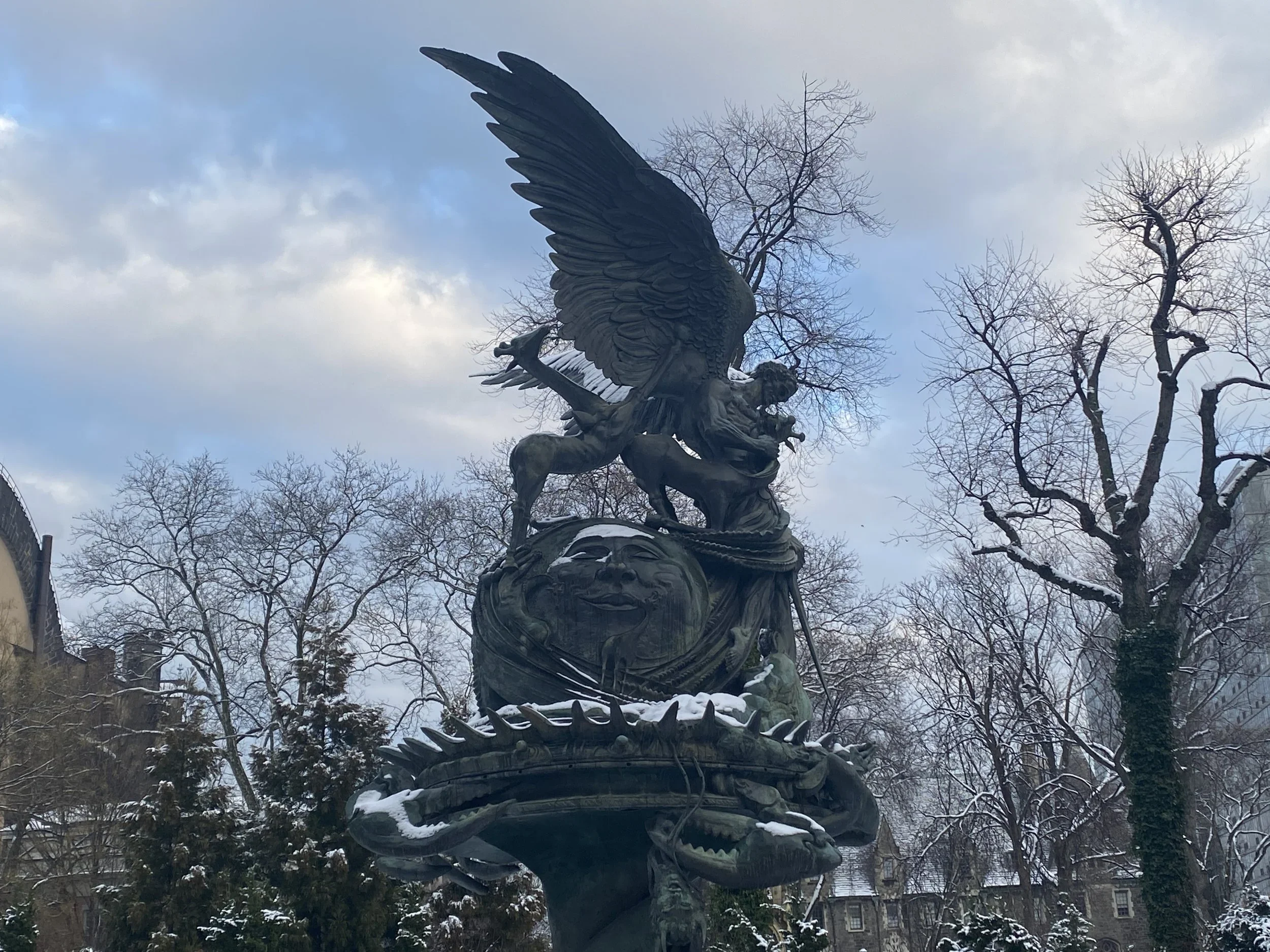
Frederick Law Olmsted and Calvert Vaux designed it in 1873, and for decades it functioned as a buffer zone rather than a community space. The scenic edge of the Heights, maintained at a level of cultivation appropriate to the view from the buildings above rather than the use of the people below. The escarpment is the geography of exclusion made literal. You can see the cathedral from the streets of Harlem below, rising above the cliff, but the ascent to it from this side is steep and the park between is not welcoming. This is Ortrud's territory.
Track: Lohengrin, Act II — Ortrud's invocation: Entweihte Götter! Helft jetzt meiner Rache!
Begin Ortrud's scene as you descend the steps into the park.
What Ortrud Is Doing Here
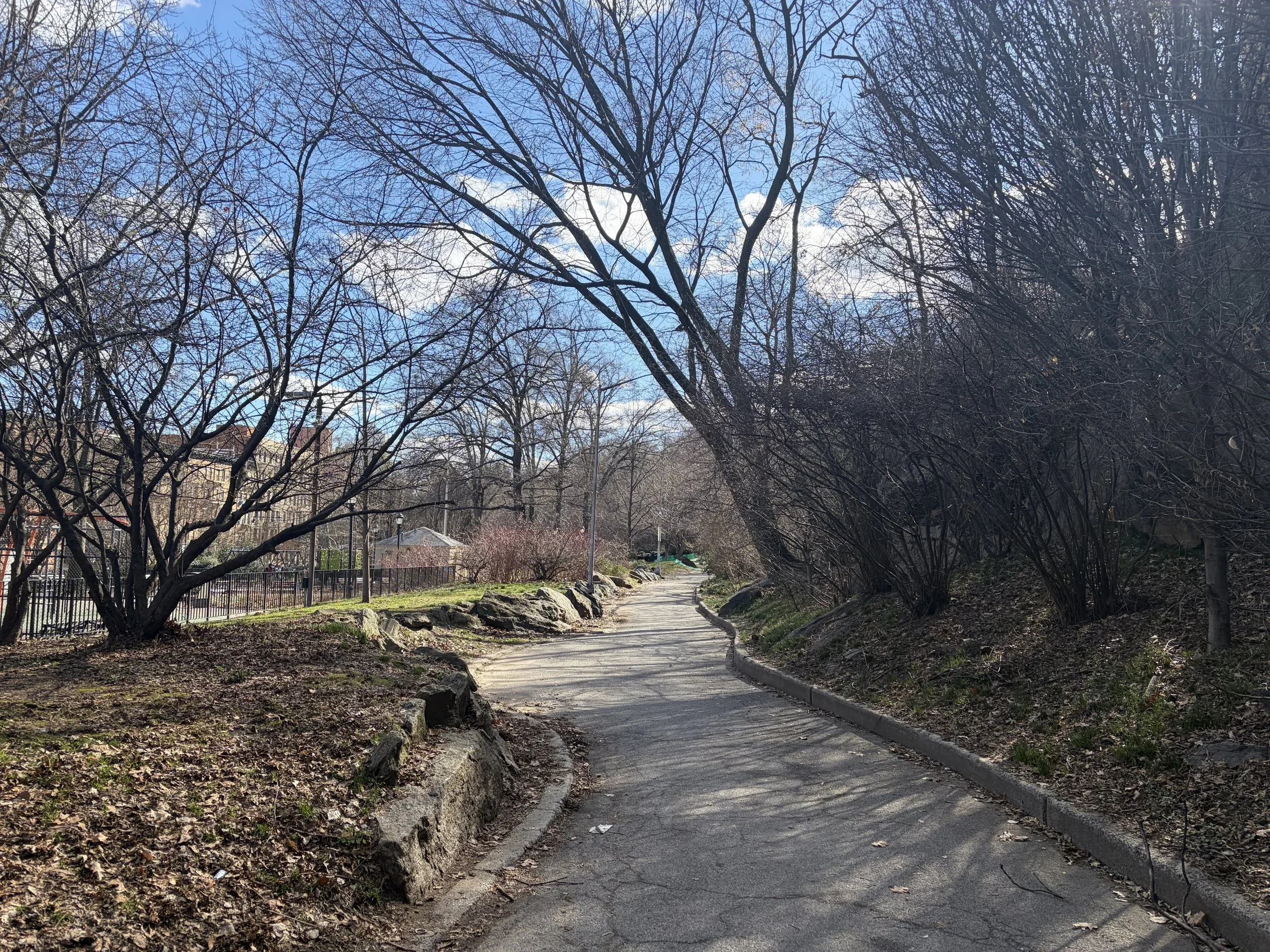
Ortrud's Act II invocation is the most chromatically unstable music in Lohengrin. Dissonant, unresolved, refusing the melodic clarity that surrounds Elsa and Lohengrin throughout the opera. It is not the sound of evil but the sound of a different kind of intelligence. One that has seen the mechanism and cannot un-see it, that lives in the harmonic language of the destabilized rather than the secured, that operates in the register of the question rather than the answer.
Wagner's vocal writing for Ortrud is consistently more demanding and more interesting than his writing for Elsa. This is not an accident. Ortrud is the opera's most fully inhabited consciousness. She has lost her position, her husband Telramund has been ruined by his false accusation of Elsa, and she is watching from outside while Lohengrin, who arrived from nowhere with a condition no one fully examined, receives everything she has been denied. Her analysis is correct. Her methods are destructive. She cannot separate the two.
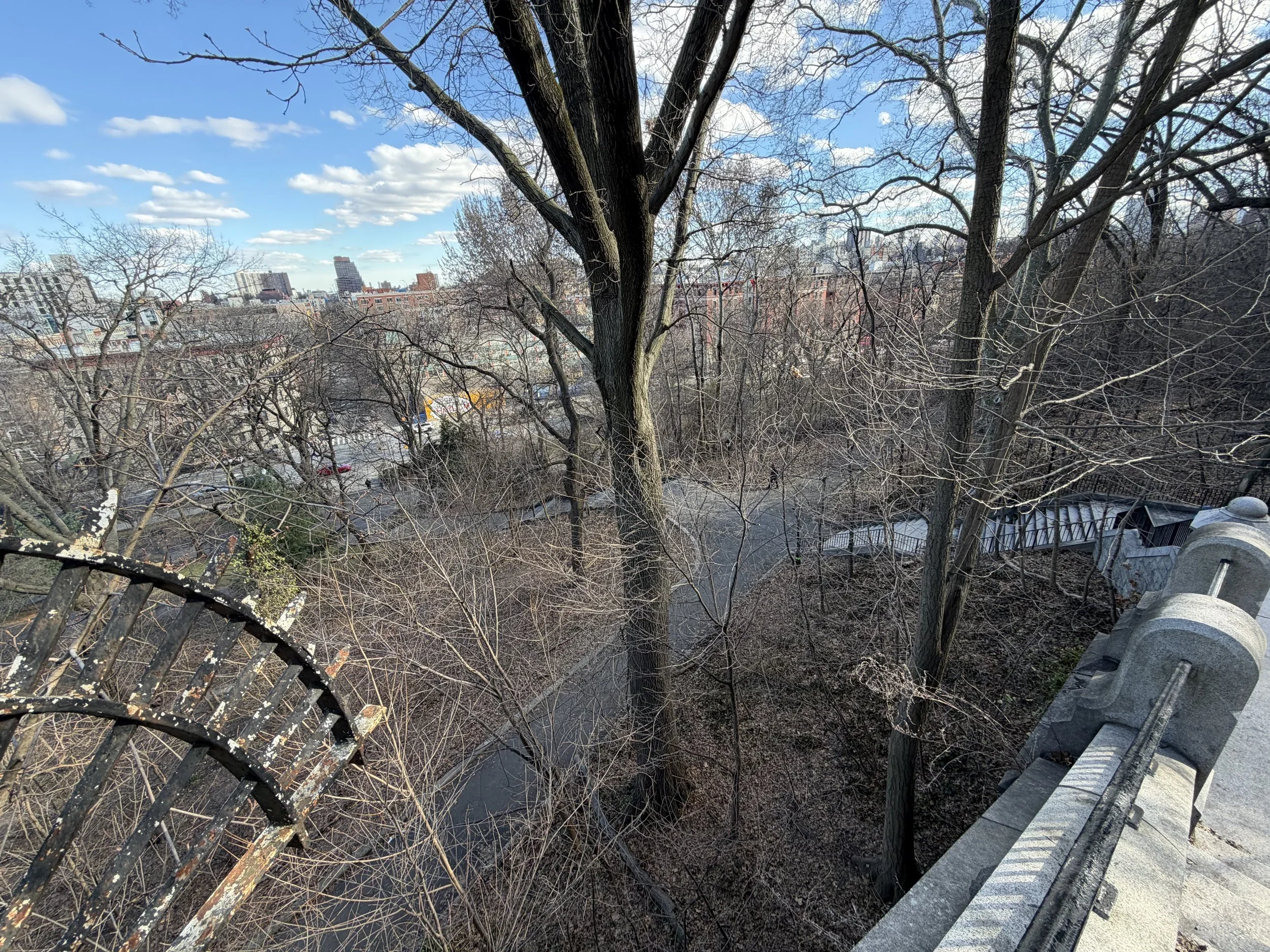
Stand on the rocky outcrops in the middle of Morningside Park, with the cliff of the Heights rising above you on the west and the streets of Harlem visible below on the east, and let her invocation play.
Look up at the cathedral tower, visible above the cliff's edge. From down here, the neo-Gothic aspiration reads differently than it does from inside. Not as an invitation but as a vertical assertion, a building that insists on its own elevation and makes that insistence structural. The cathedral is more beautiful from below than from beside it, because from below you can see what it is doing. Announcing itself against the sky, claiming the high ground, using Gothic verticality as a form of civic argument. Ortrud sees this. She sees that the claim depends on not being examined at close range. That the swan, scrutinized, will turn out to be something else.
The Question Taking Root
Walk through the park from its lower entrance to the steps back up to Morningside Drive while the rest of Ortrud's scene with Elsa plays. The moment when she approaches the woman who has everything she has lost, and says simply, not your knight is a fraud, which could be refuted, but you do not know who he is. Four words. Not a lie. The unanswerable truth, delivered with surgical precision.
This is the most operationally intelligent act in the opera. Ortrud does not need to prove anything. She only needs to create the state in which Elsa becomes aware of what she doesn't know. After that, the question will ask itself. Ascend the steps back to Morningside Drive at the point where the Ortrud-Elsa scene ends. You are now returning to the authorized world on top, carrying the question that the park put in you.
Der Zug zum Heiligtum: Amsterdam Avenue und die Kathedrale
Walk: From Morningside Drive to the Cathedral
From the top of the Morningside Park steps, walk north along Morningside Drive to Cathedral Parkway (110th), then west to Amsterdam Avenue.
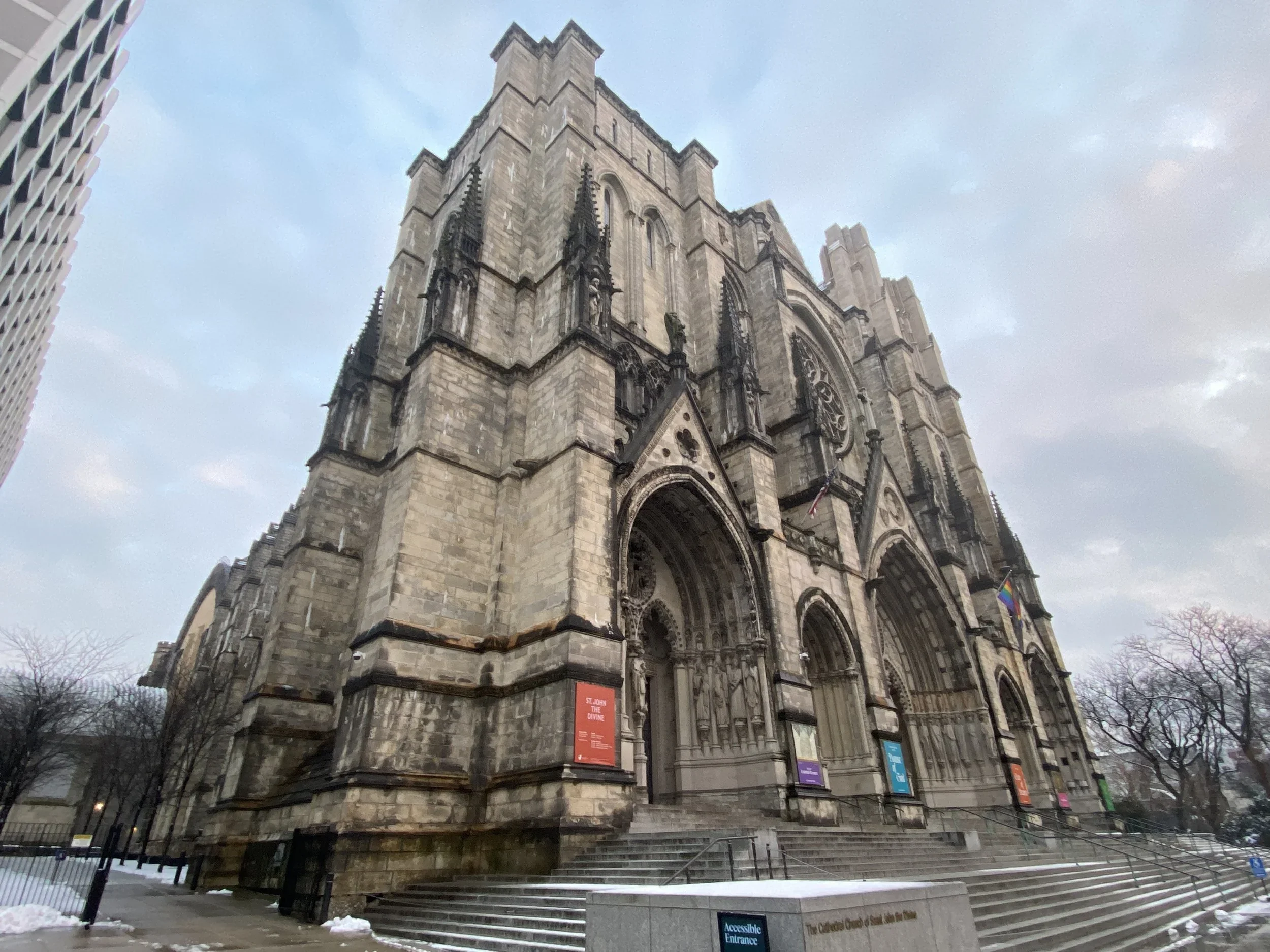
Turn north on Amsterdam and walk toward the cathedral at 112th Street. The main facade will come into view ahead of you, slightly elevated, at the end of the avenue's perspective.
Track: Lohengrin, Act II — Bridal Chorus: Treulich geführt
Begin the Chorus at approximately 108th Street — far enough south that you have the full avenue perspective ahead of you, the cathedral massing growing as you walk.
What the Bridal Chorus Is Doing Here
The Treulich geführt, faithfully guided, is the most widely known piece of music from Lohengrin and one of the most widely known pieces of music in the Western world. It is played at approximately one third of all Western weddings. The people playing it at those weddings, and the people walking down the aisle to it, almost never know that in the opera it is heard in the minutes immediately preceding the scene in which Elsa asks the question that destroys the marriage.
This is not a dark irony that diminishes the music. The Chorus is genuinely celebratory. The wedding has happened. The community is blessing the pair as they cross the threshold into the bridal chamber. The joy is real. The catastrophe that follows is also real. The music is not wrong to celebrate. It is celebrating what is, in this moment, genuinely true. The fact that the question is already present, that Ortrud has already planted it, that Elsa is already carrying it, does not make the joy fraudulent. It makes the joy tragic, which is a different thing.
Walk Amsterdam Avenue northward while the Chorus plays. Watch what the avenue does to the music. The long perspective, the slight uphill grade, the buildings on both sides giving way gradually to the cathedral's volume at the end. You are walking into the institution. The institution is genuinely magnificent. You are also carrying the question the park put in you. Both are true.
Arriving at the Cathedral Steps
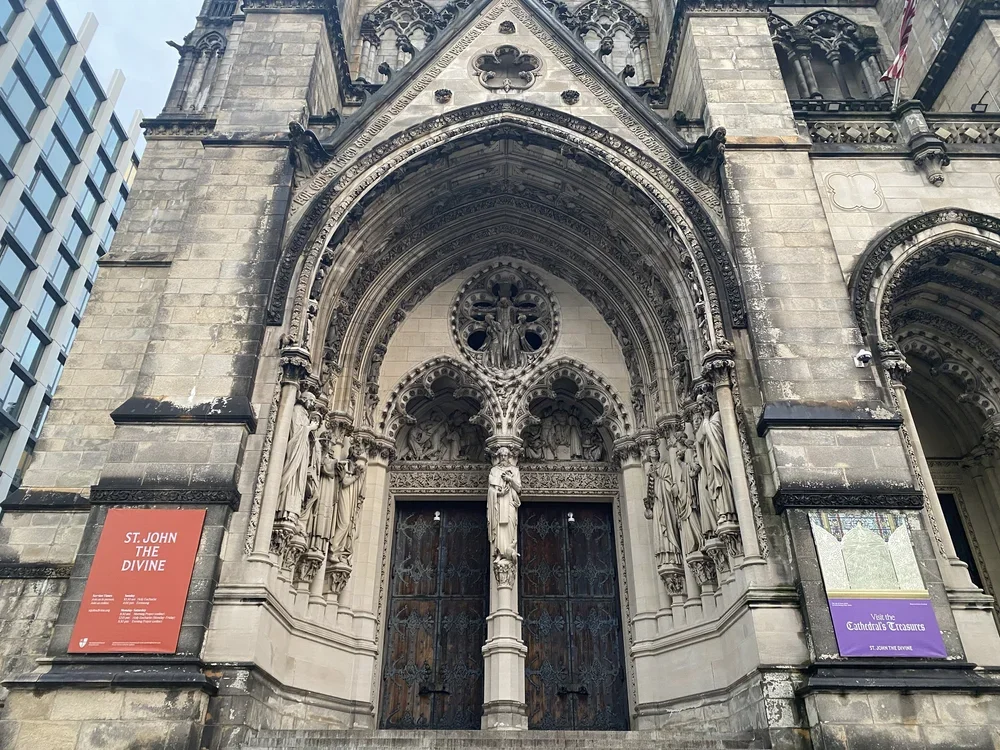
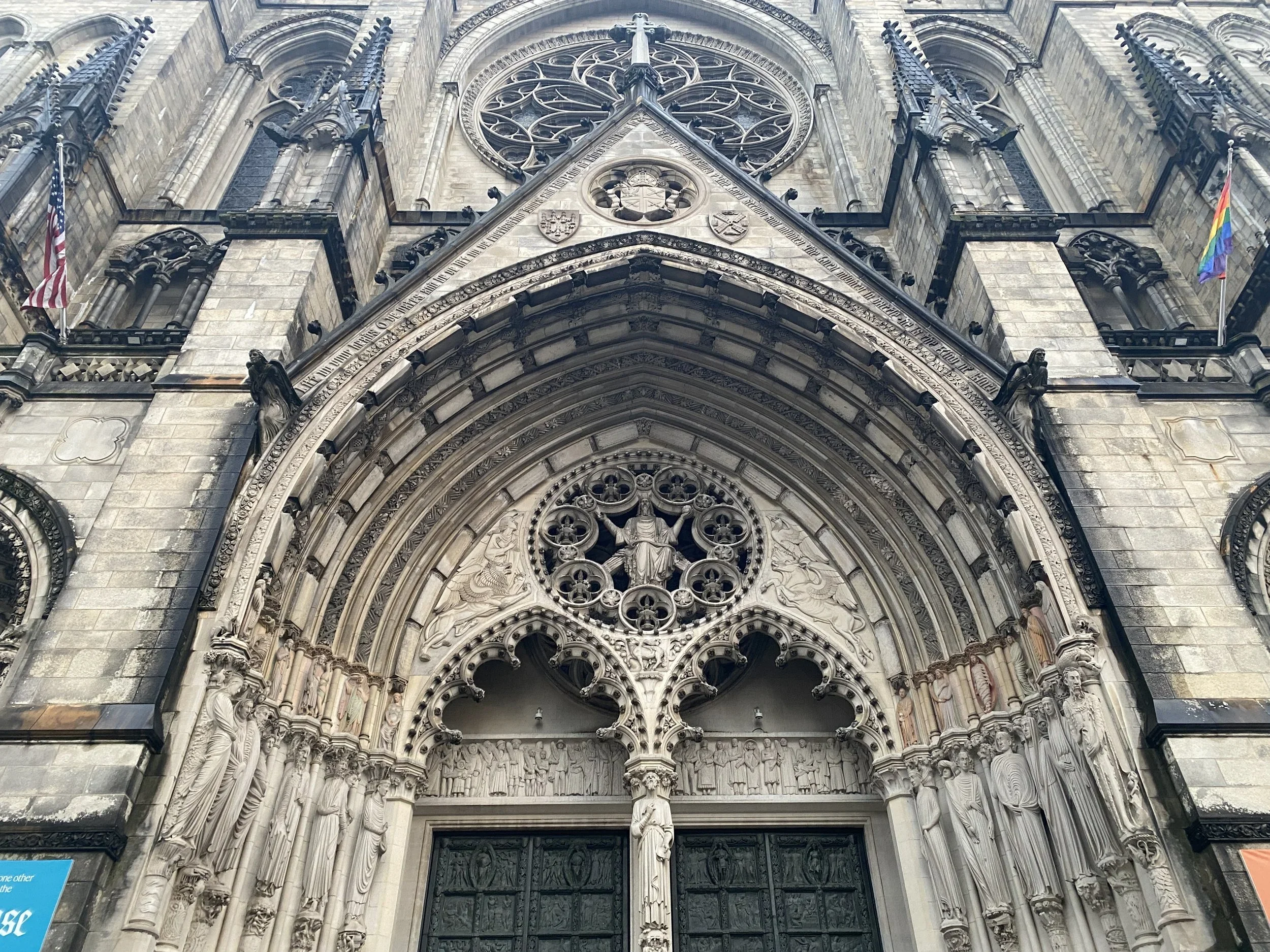
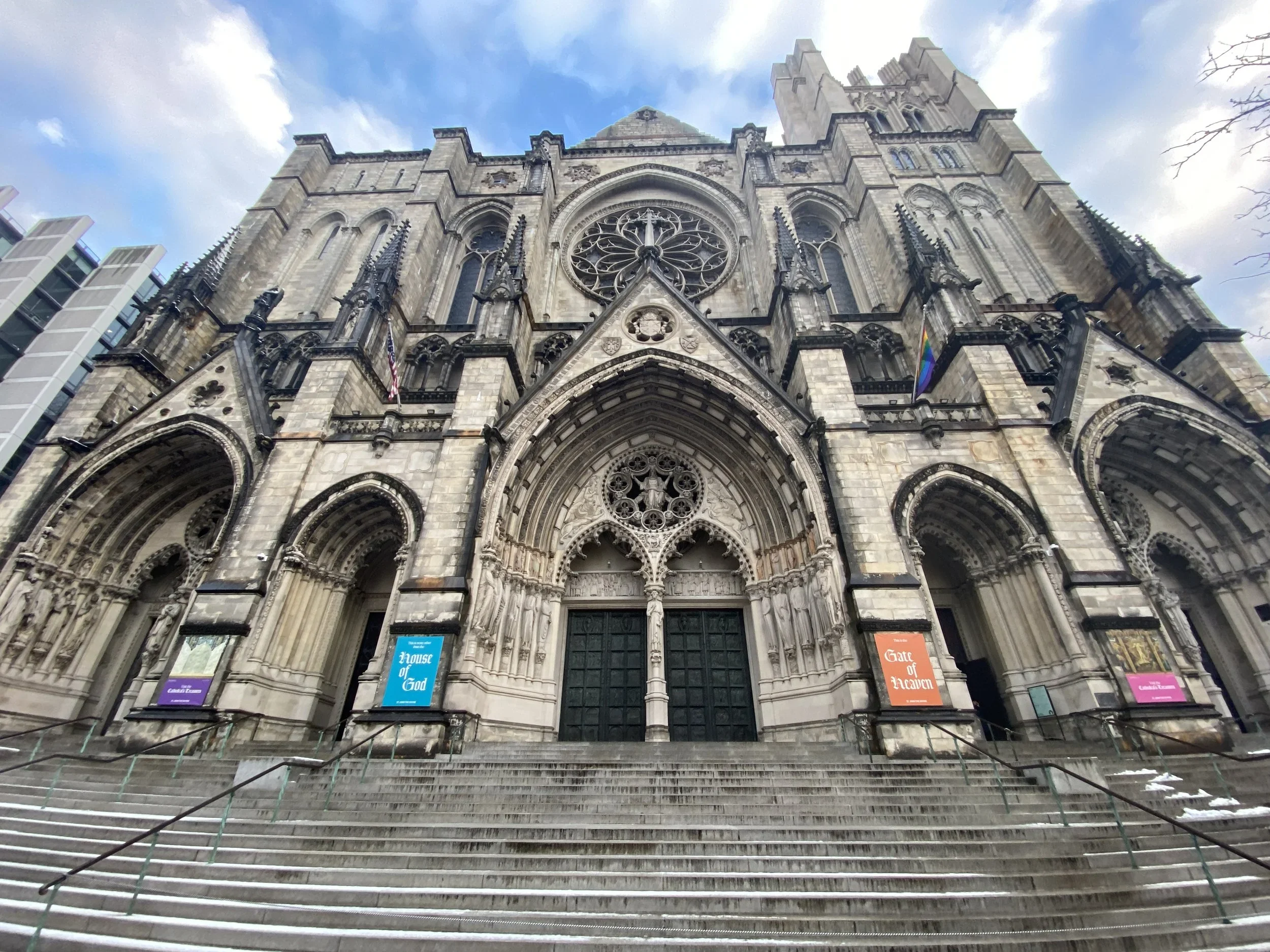
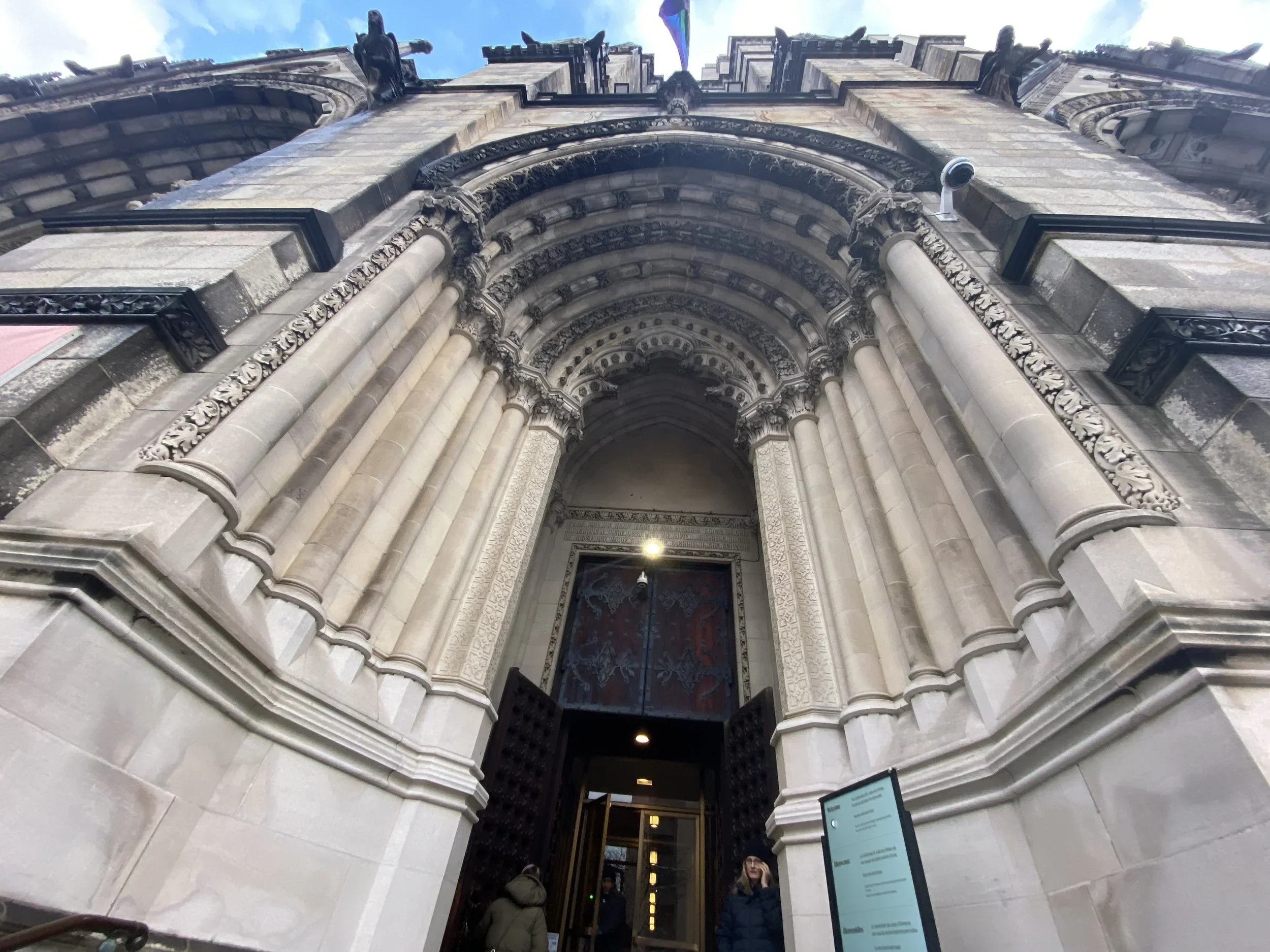
Time the walk so the Chorus reaches its climactic close as you arrive at the foot of the cathedral's main steps, looking up at the rose window. Stand here.
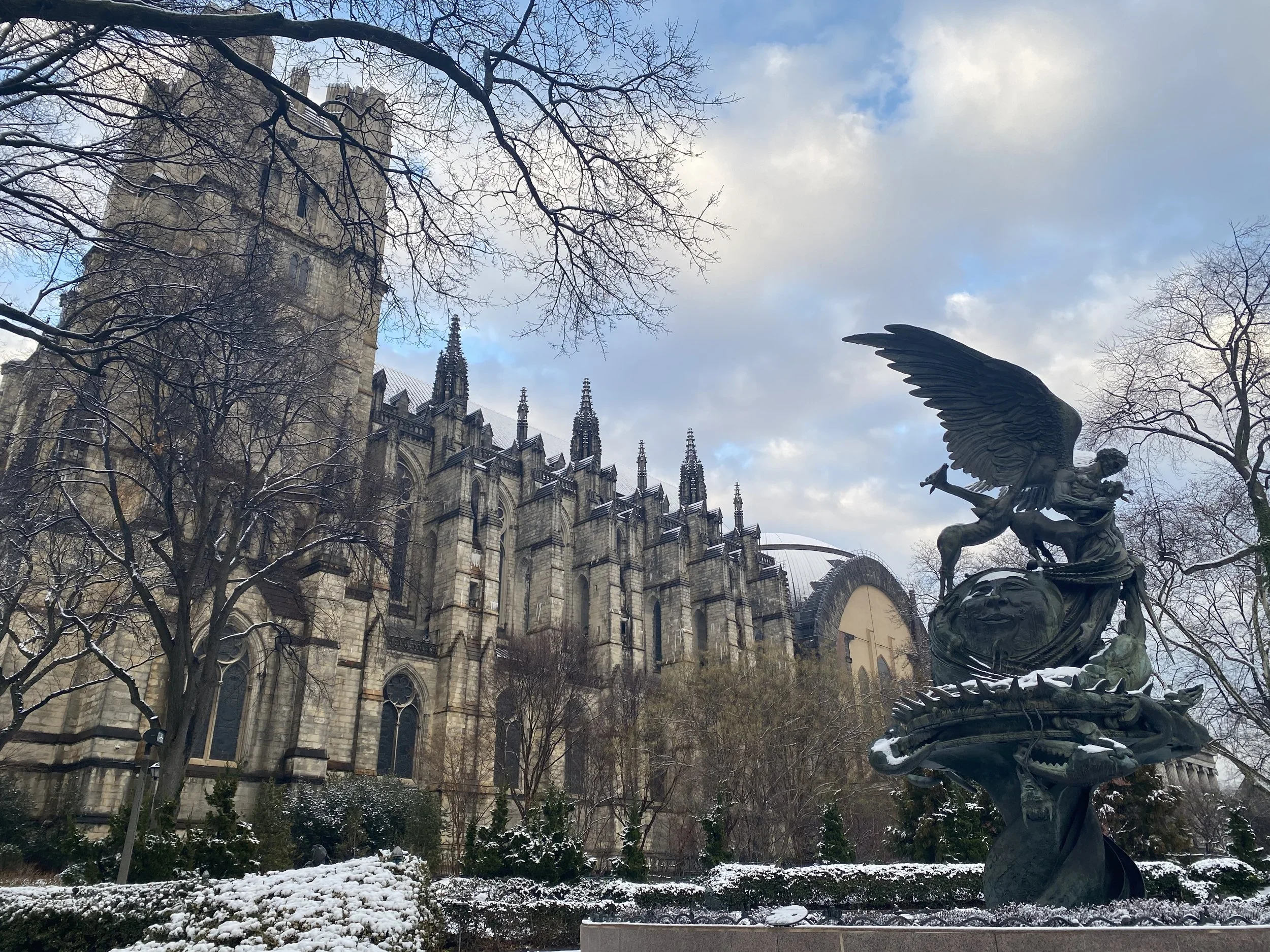
The Cathedral Church of St. John the Divine has been under construction since 1892 and is still not complete. The west facade, the massive rose window and the towers rising from it, is the most finished part. The interior nave, extended by Cram in the early 20th century, is proportionally one of the longest in the world; the crossing tower was never built, giving the building a strange, truncated silhouette that declares, from every angle, that it is still in process. It is the most prominent unfinished thing in New York, which is itself a city of unfinished things, and the unfinishedness is not accidental or merely a matter of funding. It is the building's honest condition.
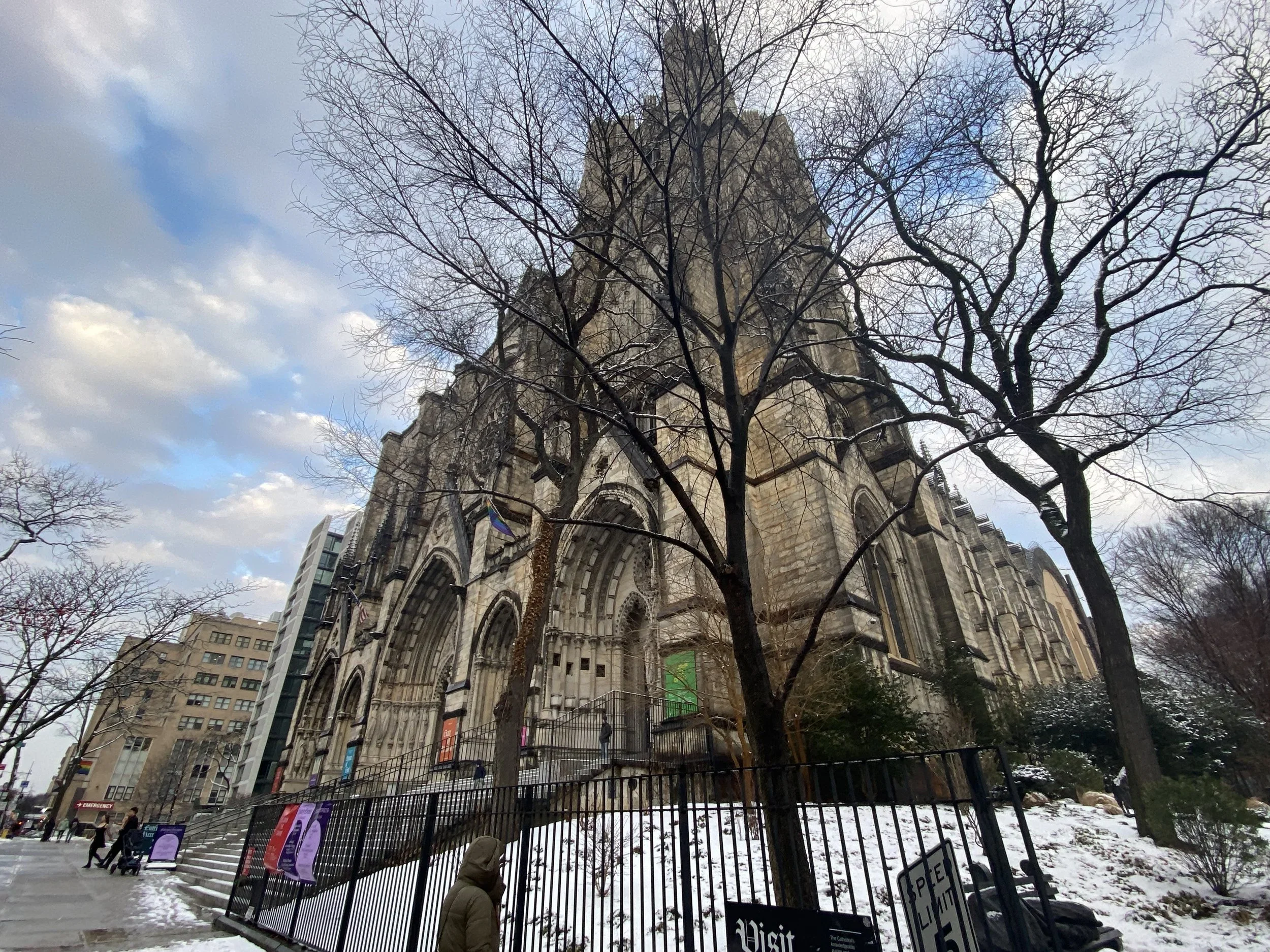
This is the Grail castle drawn as a floor plan. The Grail, in Lohengrin's specific understanding, before Parsifal gives it its full theology, is a sacred power whose function depends on its distance from ordinary scrutiny. It works while it is in fernem Land, in the far land, unapproachable to your steps. The closer you get, the more the authority requires the condition, don't ask. The cathedral, standing in front of you, vast and unfinished and requiring a specific posture to fully receive, is performing exactly this logic. It is magnificent. It is asking you not to ask why it has been building for 130 years without completing. The two facts are related.
Das Unvollendete Heiligtum: Im Innern von St. John
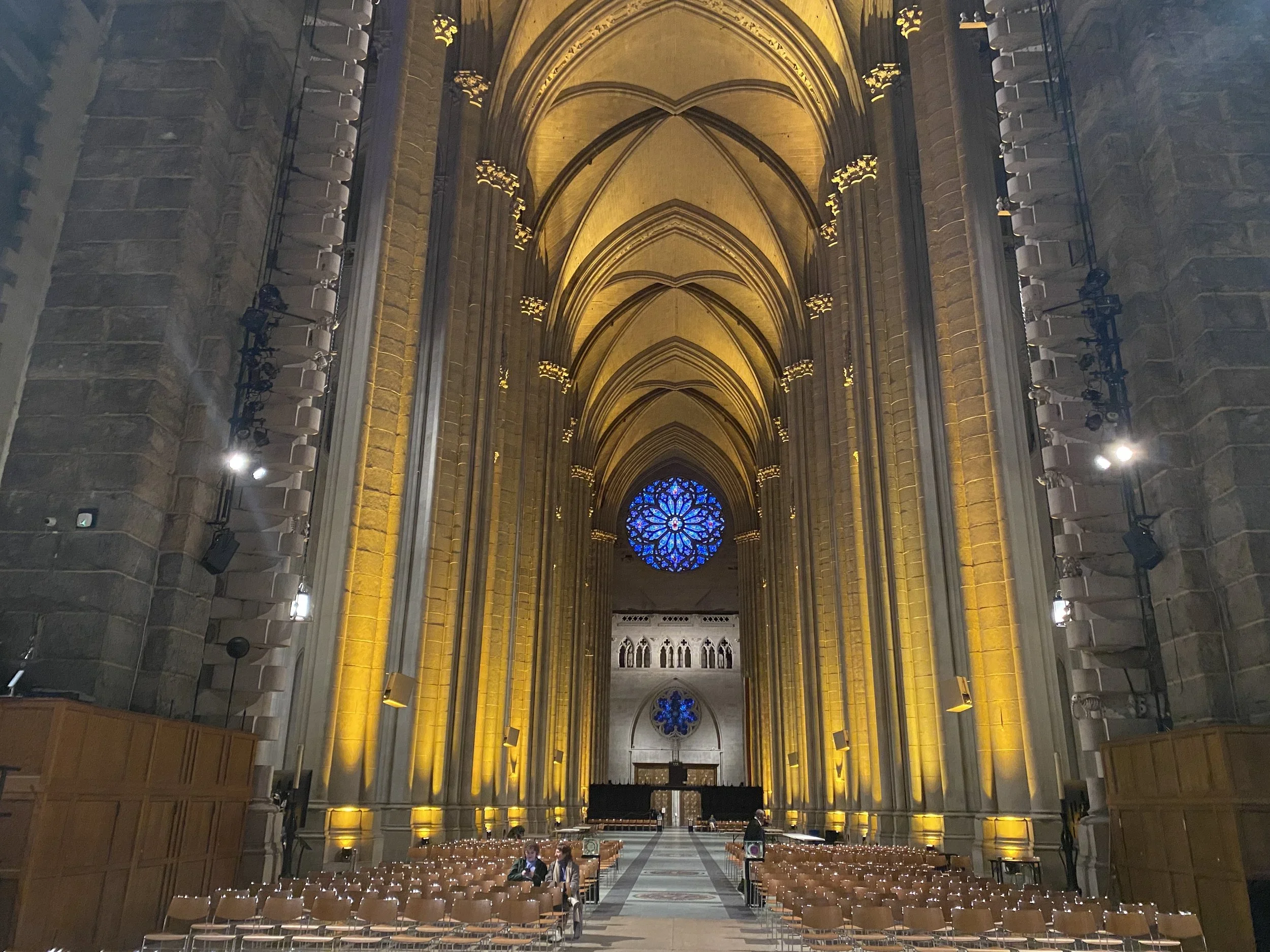
Inside the Cathedral
Enter from the main west doors. Walk the full length of the central nave in silence before starting any music. The building deserves to be heard before it is scored.
The proportions are extraordinary. 601 feet from entrance to apse, the nave ceiling 124 feet above the floor, the light entering from the clerestory windows in that specific filtered quality that Gothic architects understood. Not illuminating but revealing, light that shows the stone rather than defeating it.
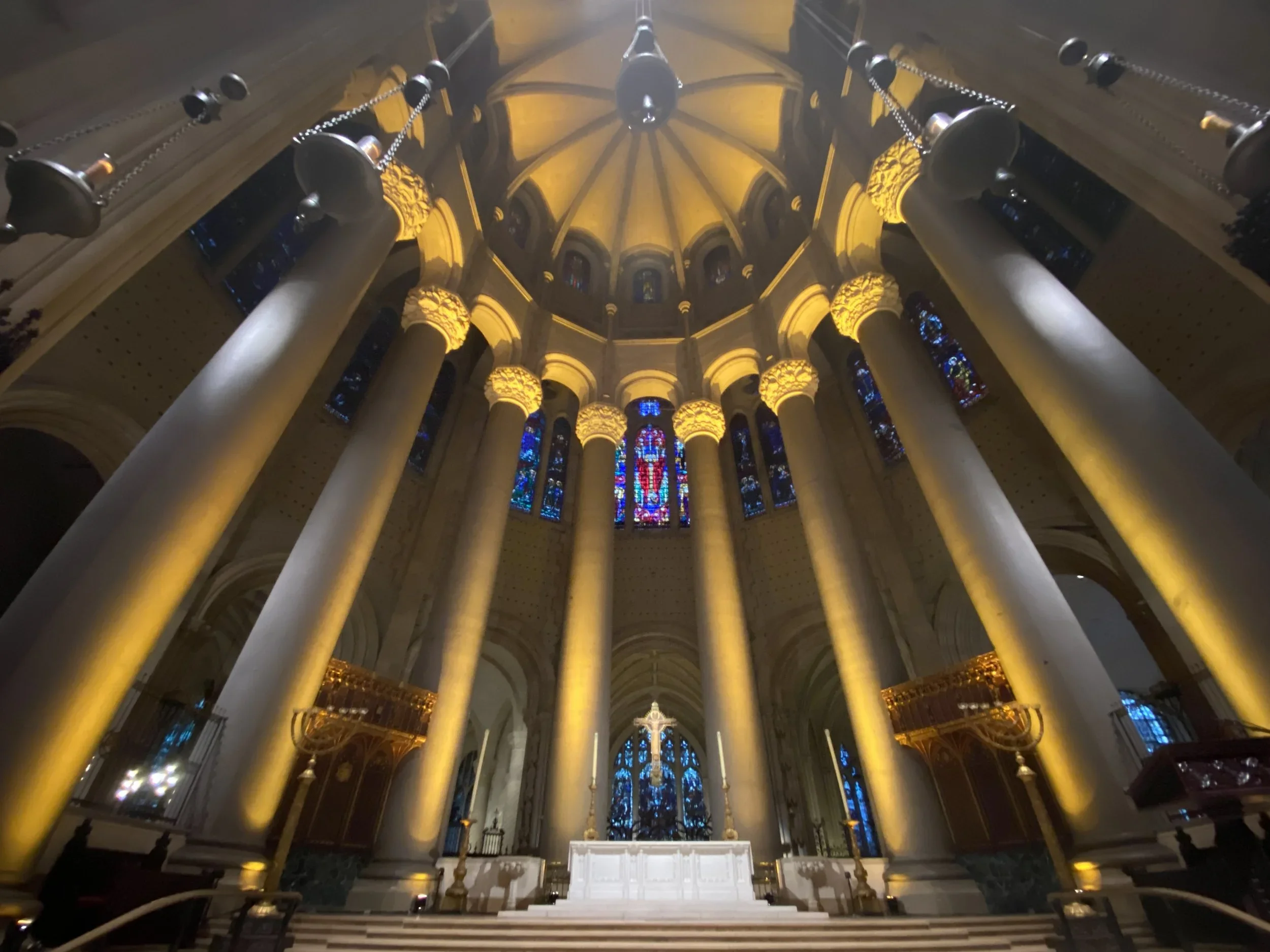
This is what Ralph Adams Cram was building. Not a church in the functional sense but an argument in stone about what spiritual seriousness looks like when it commits to form over convenience. Cram believed the Gothic was not a historical style but a living language, the most honest architectural expression of aspiration, and that a building organized around aspiration should speak that language regardless of whether the theology behind it was still intact.
The cathedral makes this argument compellingly and leaves the question of the theology to one side. You do not need to share the faith to feel the argument. This is Lohengrin's own situation: his authority does not require anyone to fully understand what the Grail is. It requires only the maintenance of the condition.
Track: Lohengrin, Act III — Lohengrin's warning: Höchstes Vertrau'n
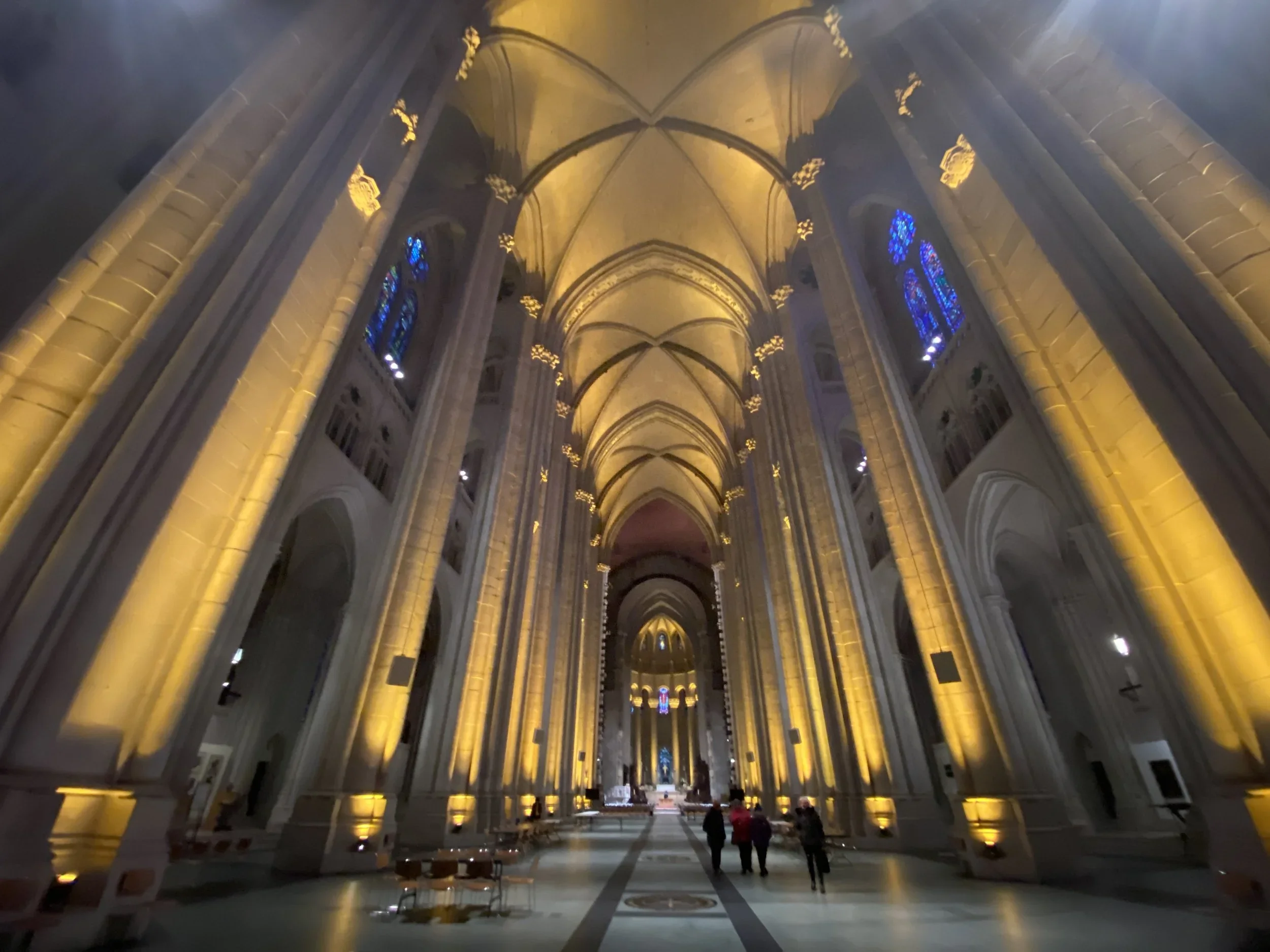
Find a seat in the central nave, approximately halfway toward the altar. Begin Lohengrin's Act III plea. The moment after the wedding, in the bridal chamber, when he senses that the question is coming and makes one last appeal, you have already given me the highest trust, hold it for one more night, if you can wait until morning, the doubt will pass.
The warning is the most tender music in the opera and the most structurally revealing. He is not forbidding. He is pleading. He is telling her, implicitly, what the question will cost, not in punishment but in consequence. He knows what he is. He knows what the revelation means. He is trying to prevent it not because he is hiding something shameful but because the revelation will end something that cannot be recovered.
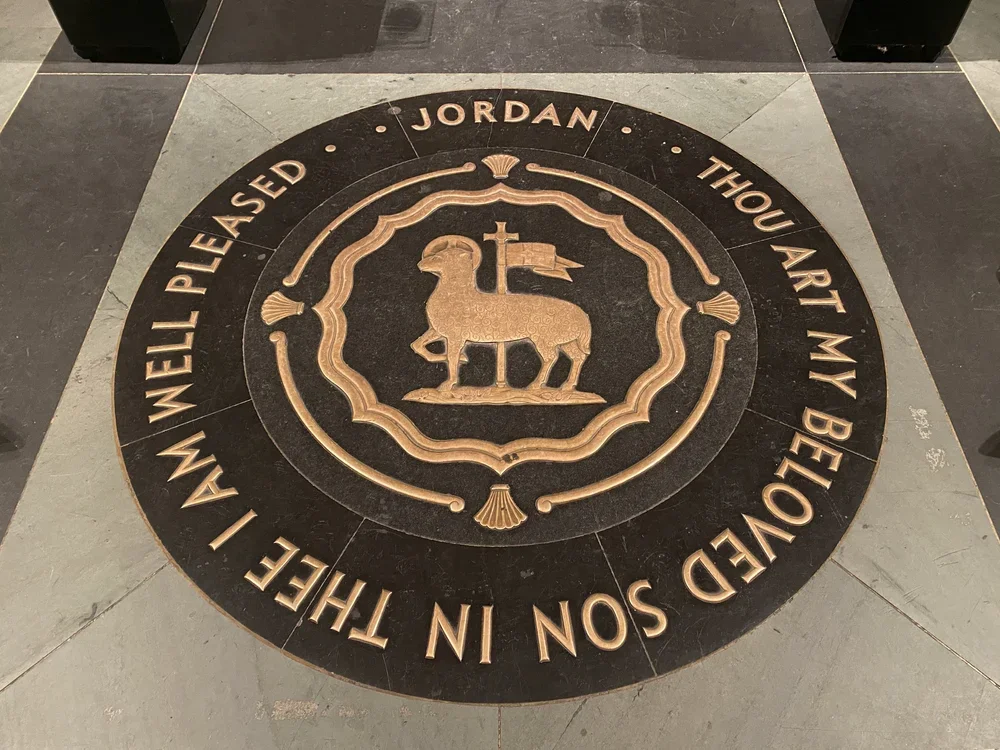
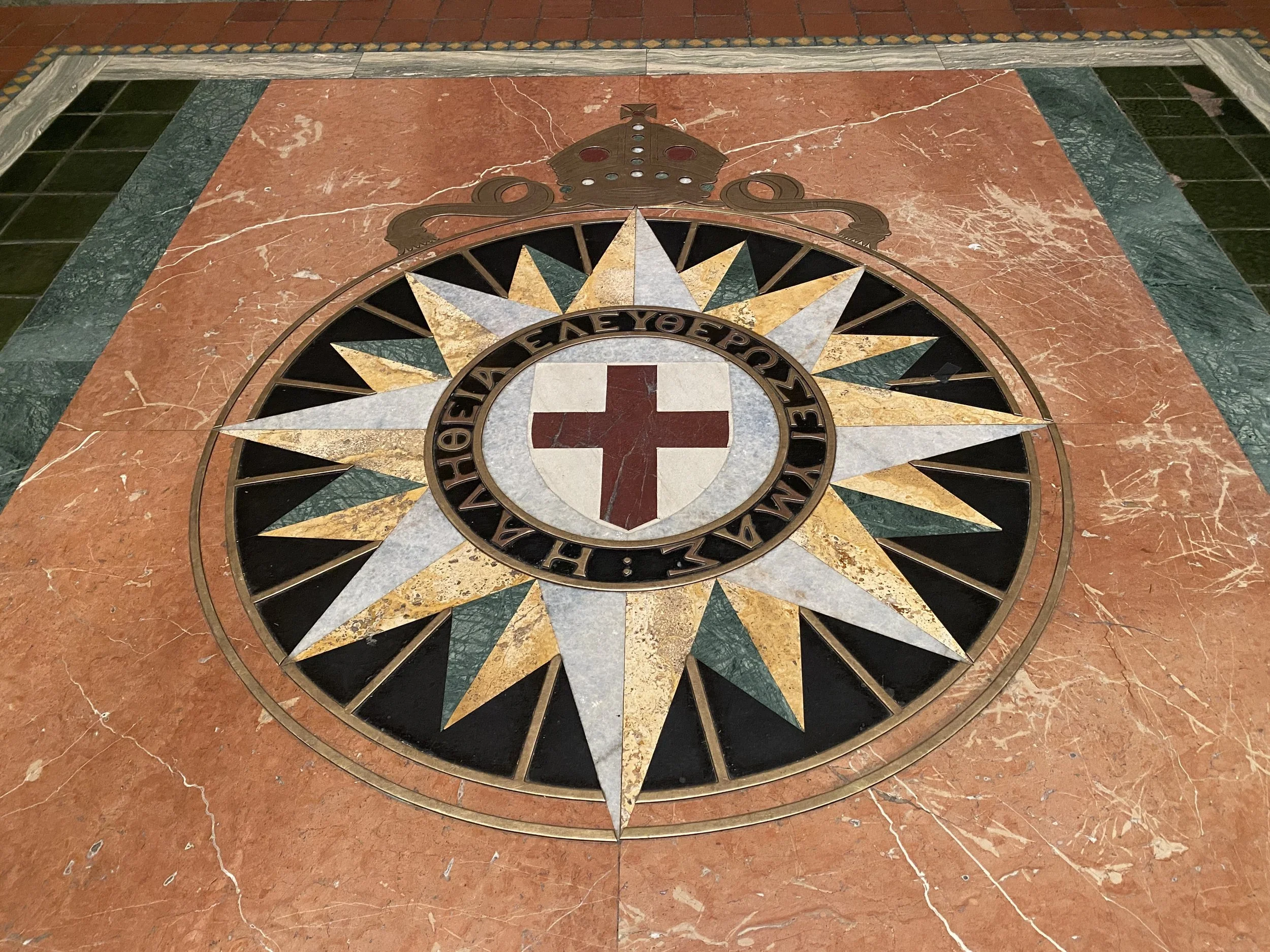
Sit in the nave and let the plea run. Look up at the height of the vaulted ceiling. This is what the condition has produced. Something genuinely extraordinary, something that could not exist without the faith that sustains it, something that is about to cease when the faith is replaced by knowledge.
Side Chapels and the Unfinished Crossing
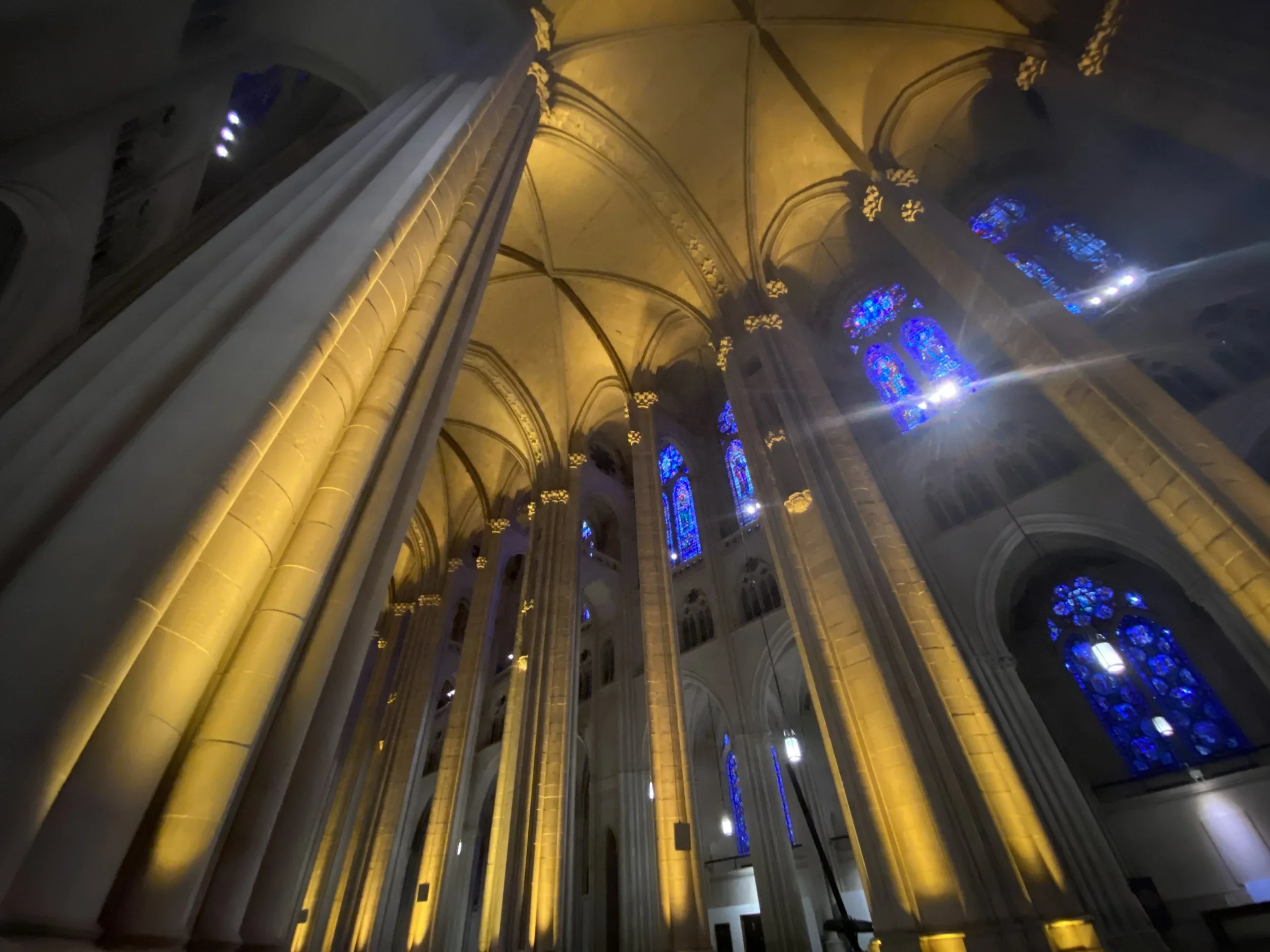
After the warning track, walk to the crossing. The point where the nave meets the transepts, directly below where the tower was never built. Look up through the open crossing into the temporary roof.
The unfinished tower is the most honest thing about the cathedral. It is where the building acknowledges what it could not complete. The argument in stone reaches this point and stops. Not in failure but in suspension, the way the Lohengrin Prelude hovers in its high register rather than resolving downward. The building is still asking the question it was built around. The question has not yet been answered. For now, the project continues. The condition holds.
Das Vergessene Denkmal: Grants Grab
Walk: From the Cathedral to Grant's Tomb
From the cathedral, walk north and west via Riverside Drive, approximately ten minutes, to Grant's Tomb at the corner of Riverside Drive and 122nd Street.
What Grant's Tomb Is
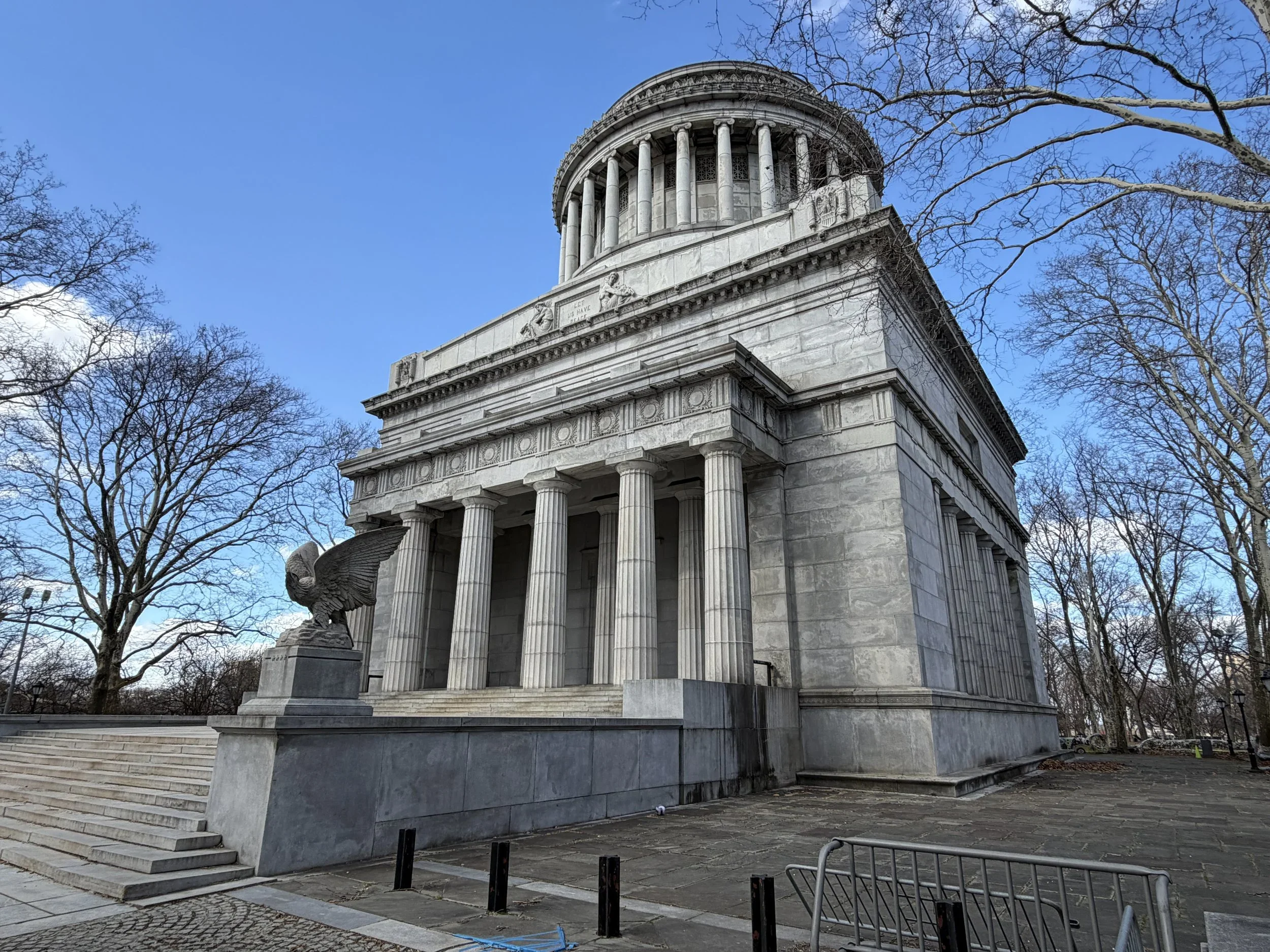
The General Grant National Memorial, universally known as Grant's Tomb, is the largest mausoleum in North America. A Beaux-Arts granite structure designed by John Duncan, completed in 1897, housing the bodies of Ulysses S. Grant and his wife Julia. At its dedication in April 1897, it was the most attended public event in American history to that point: over one million people came to the ceremony. It was, for its first decades, one of the most visited sites in New York. It is now almost invisible.
Not literally, the building is enormous, white granite on a high platform above Riverside Drive, visible from the Hudson. But it has ceased to command attention in the way it was designed to command attention. The ceremony around it has dissolved. The interpretive infrastructure has thinned. Visitors who encounter it often do not know what it is. The schoolchildren who once made organized pilgrimages to it no longer come. The building is exactly as it was in 1897. Nothing has been removed or damaged, and yet it has become, in the practical sense that matters, invisible.
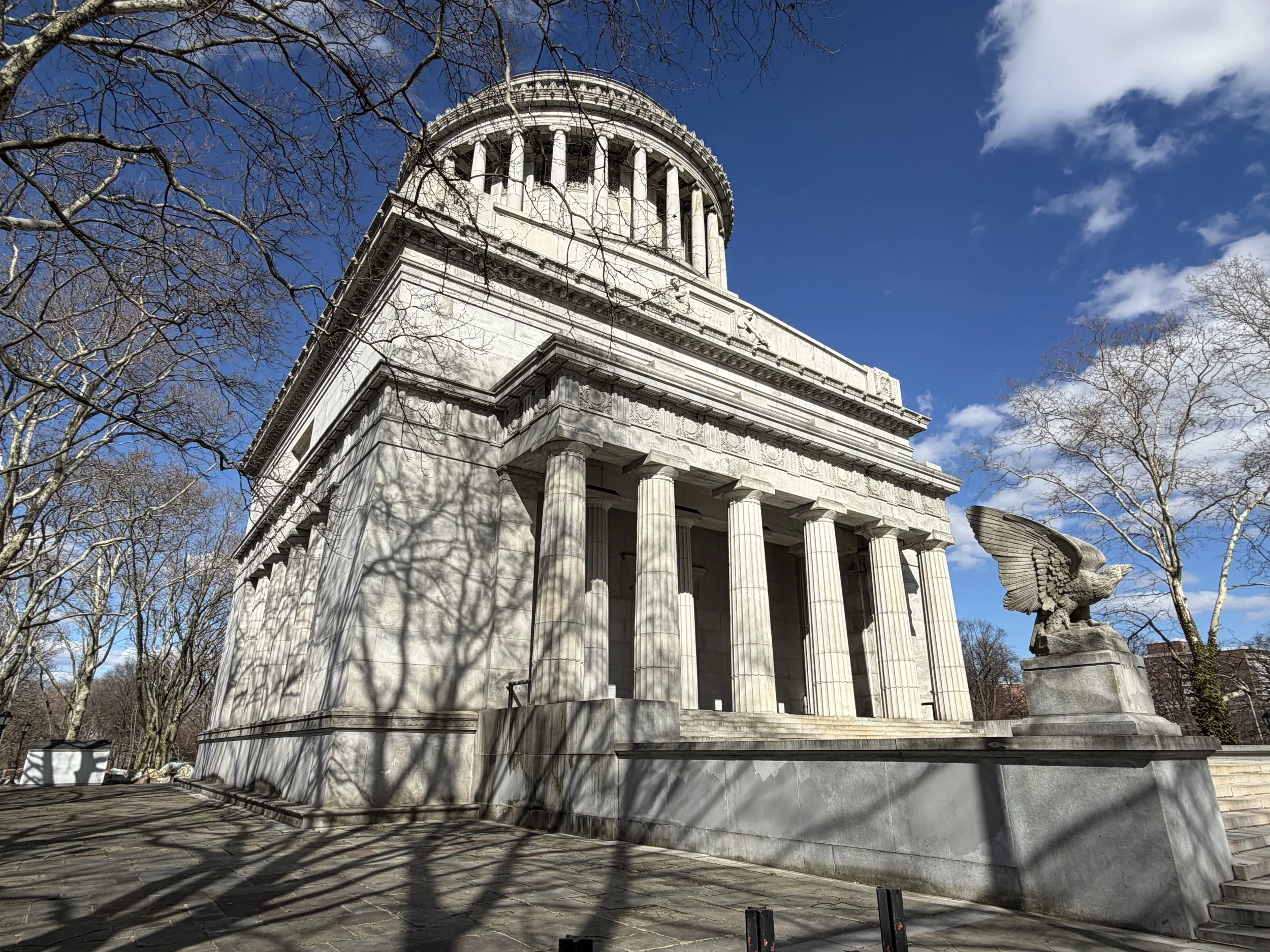
This is what happens to sacred authority when the community that generated the ceremony dissolves and the ceremony continues without the community. Alex Ross includes Grant's Tomb in his Wagner-New York walking tour precisely because of this dynamic. The Grail institution abandoned by the faith that built it, the magnificent structure maintaining itself in the absence of the pilgrims that justified its existence. It is the Grail castle in its late condition. After Amfortas's wound has been festering for years, after the knights have dwindled, after the ceremony continues out of institutional momentum rather than genuine need.
Track: Lohengrin, Act III — Mein lieber Schwan: Lohengrin's farewell to the swan
Stand at the base of the steps leading up to the memorial's entrance portico and play Lohengrin's farewell.
Mein lieber Schwan, my dear swan, is addressed not to Elsa, not to the assembled court, not to Brabant, but to the bird itself. The vehicle of arrival that is now the vehicle of departure, the form that carried him in and will carry him away, the presence that will dissolve once the journey is complete. The farewell is extraordinarily quiet for an opera that has been building toward it for three acts. There is no accusation, no self-pity, no blame for Elsa. There is only the address to the swan, and the announcement of his origin, and the departure.
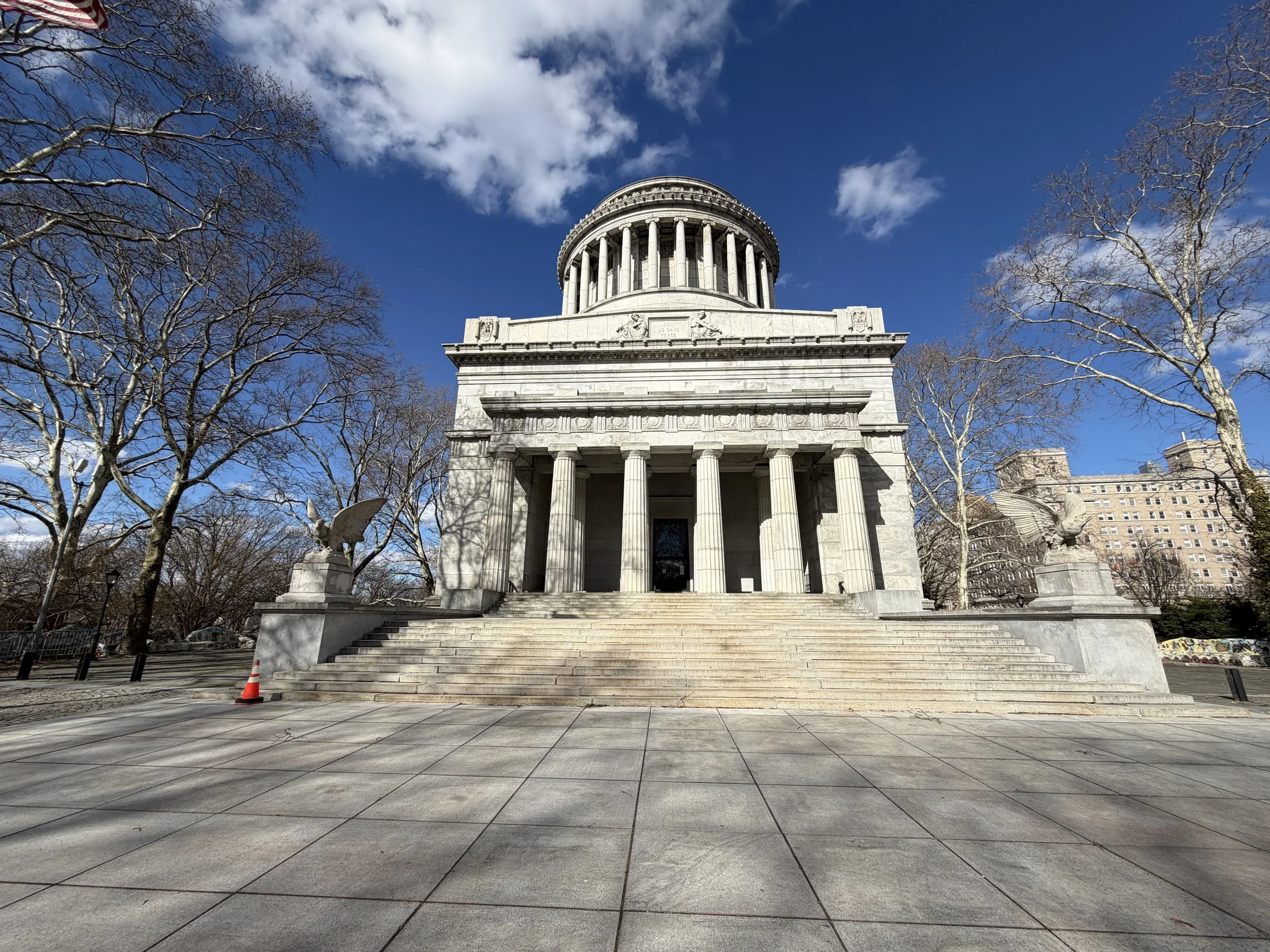
Grant's Tomb receives this music with a specific kind of aptness. A great figure of American authority, mourned with extraordinary public ceremony at its dedication, now present in the building but absent from the consciousness of the city it was built to anchor. The swan is still here, in the granite. The knight has departed. The ceremony that made the visit meaningful has dissolved.
Walk slowly up the steps to the memorial's entrance and stand under the portico while the departure music completes. Look out from this height over Riverside Drive and the Hudson below. The river is visible from here, the same river where the walk began at the Boat Basin. The swan has crossed back to the other side. Brabant has its duke. The authority that was borrowed for a season has been returned to the source.
Das Ferne Land: Das Nicholas Roerich Museum
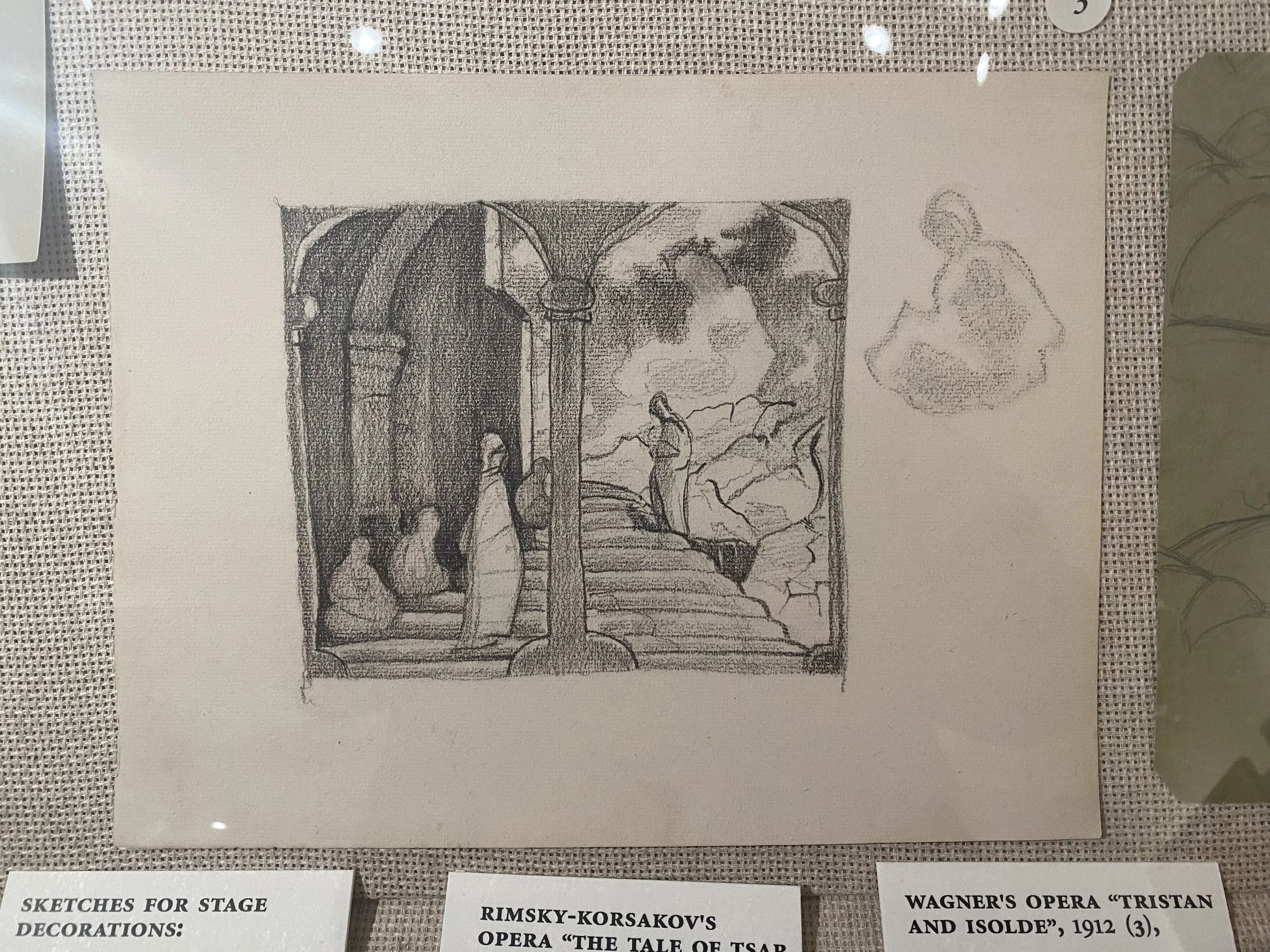
Walk: From Grant's Tomb to the Roerich Museum
From Grant's Tomb, walk south on Riverside Drive to 107th Street, then east to 319 West 107th Street.
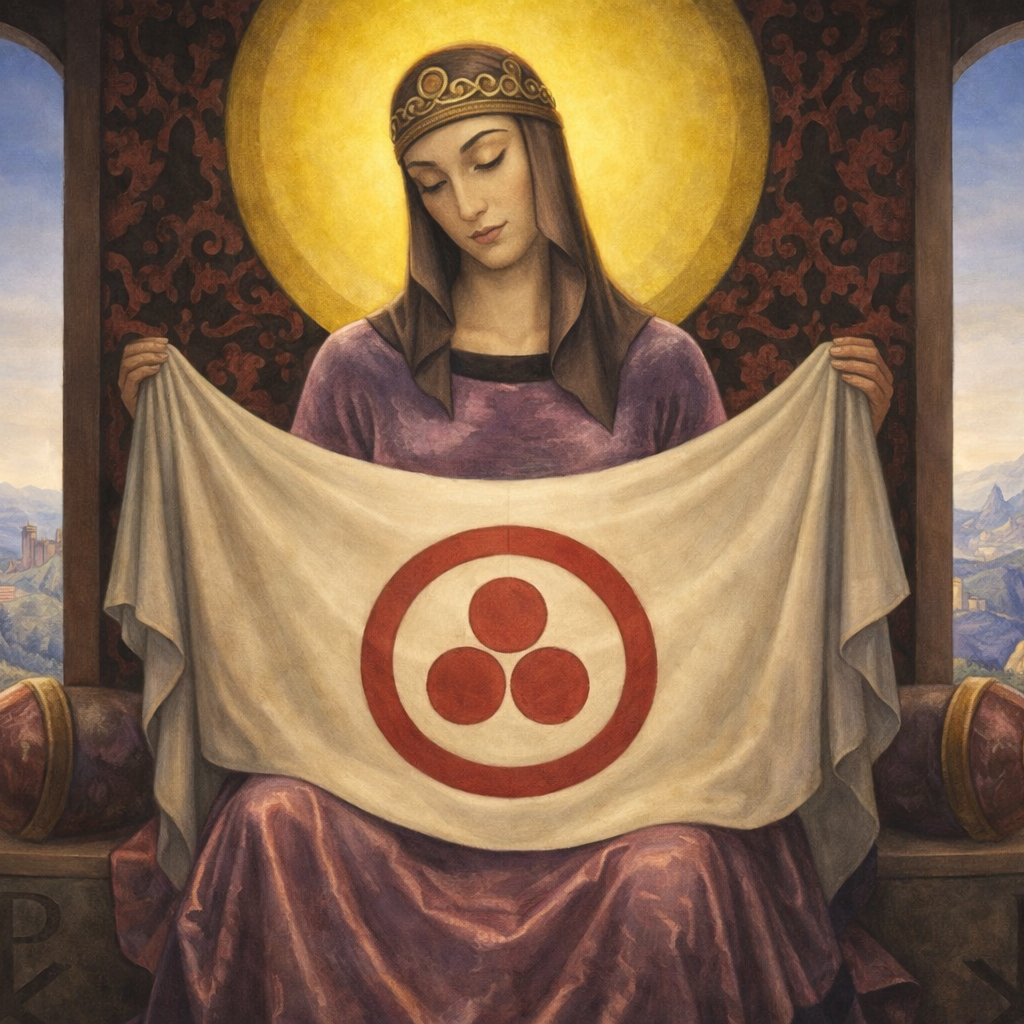
The Roerich Museum is a four-story townhouse, easily missed from the street, identifiable by its small sign and the flags of the Roerich Peace Pact nations that sometimes hang at the entrance.
Check hours before the walk: the museum is open Wednesday–Sunday, noon to 5pm.
What the Roerich Museum Is
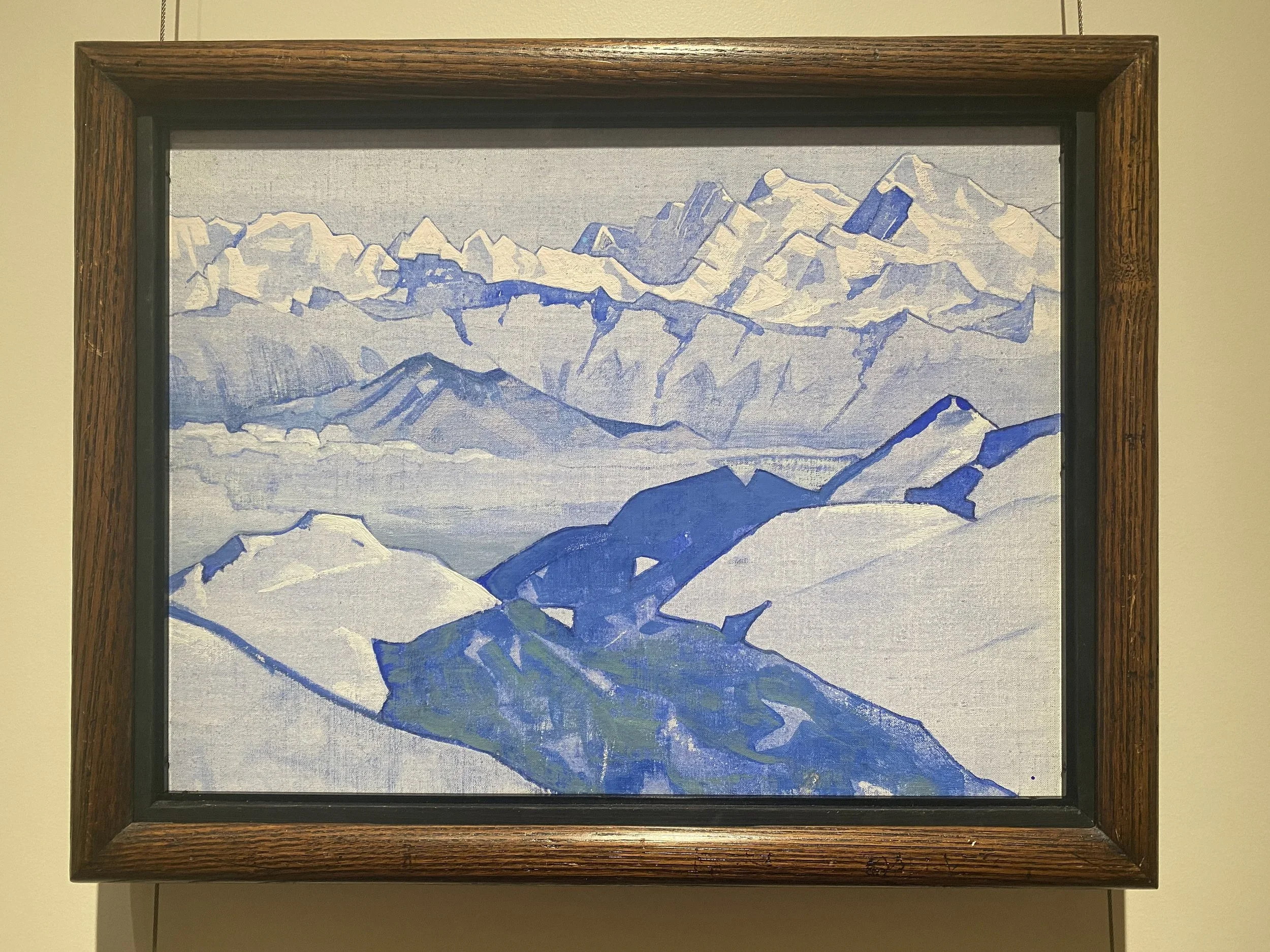
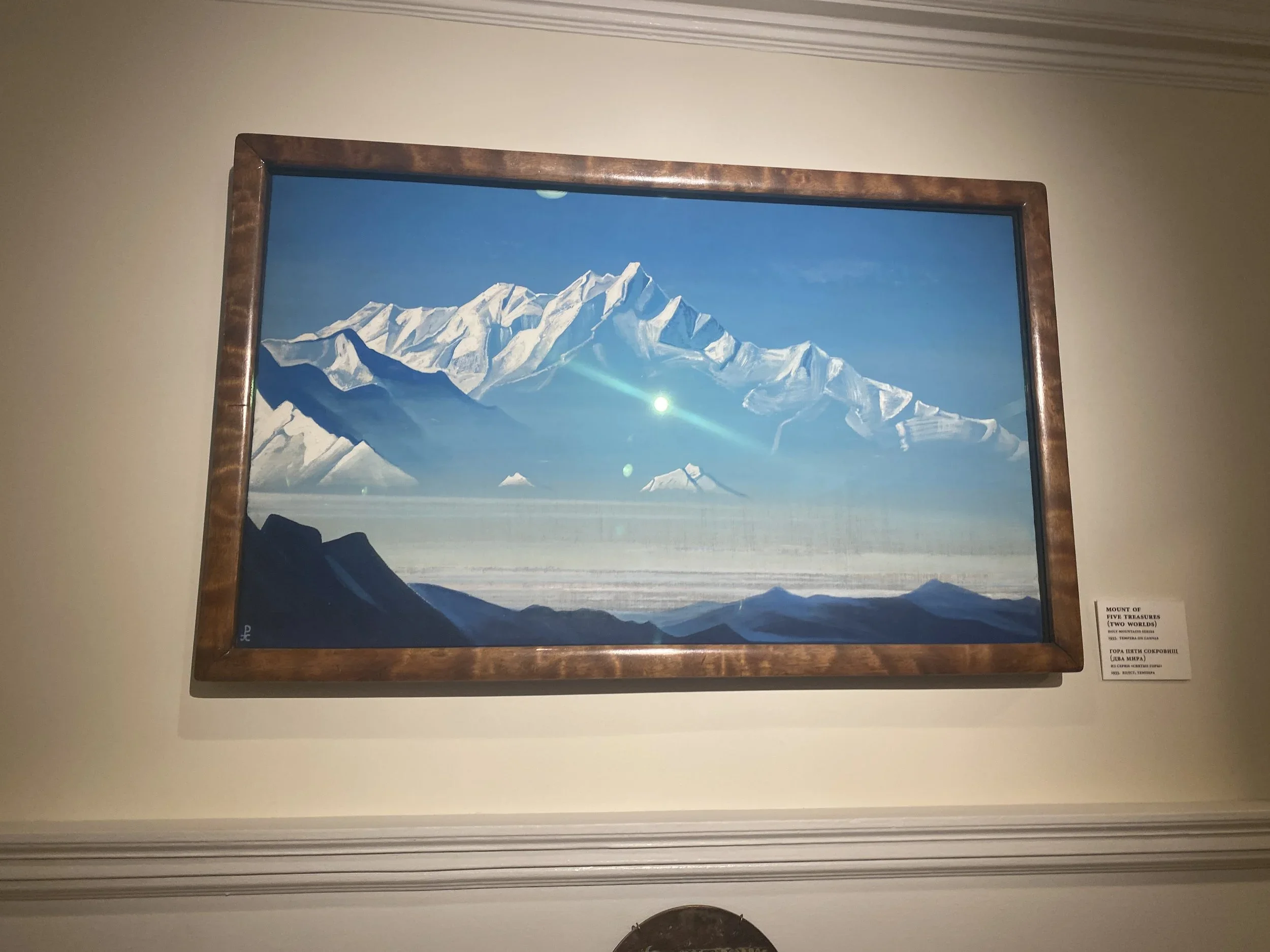
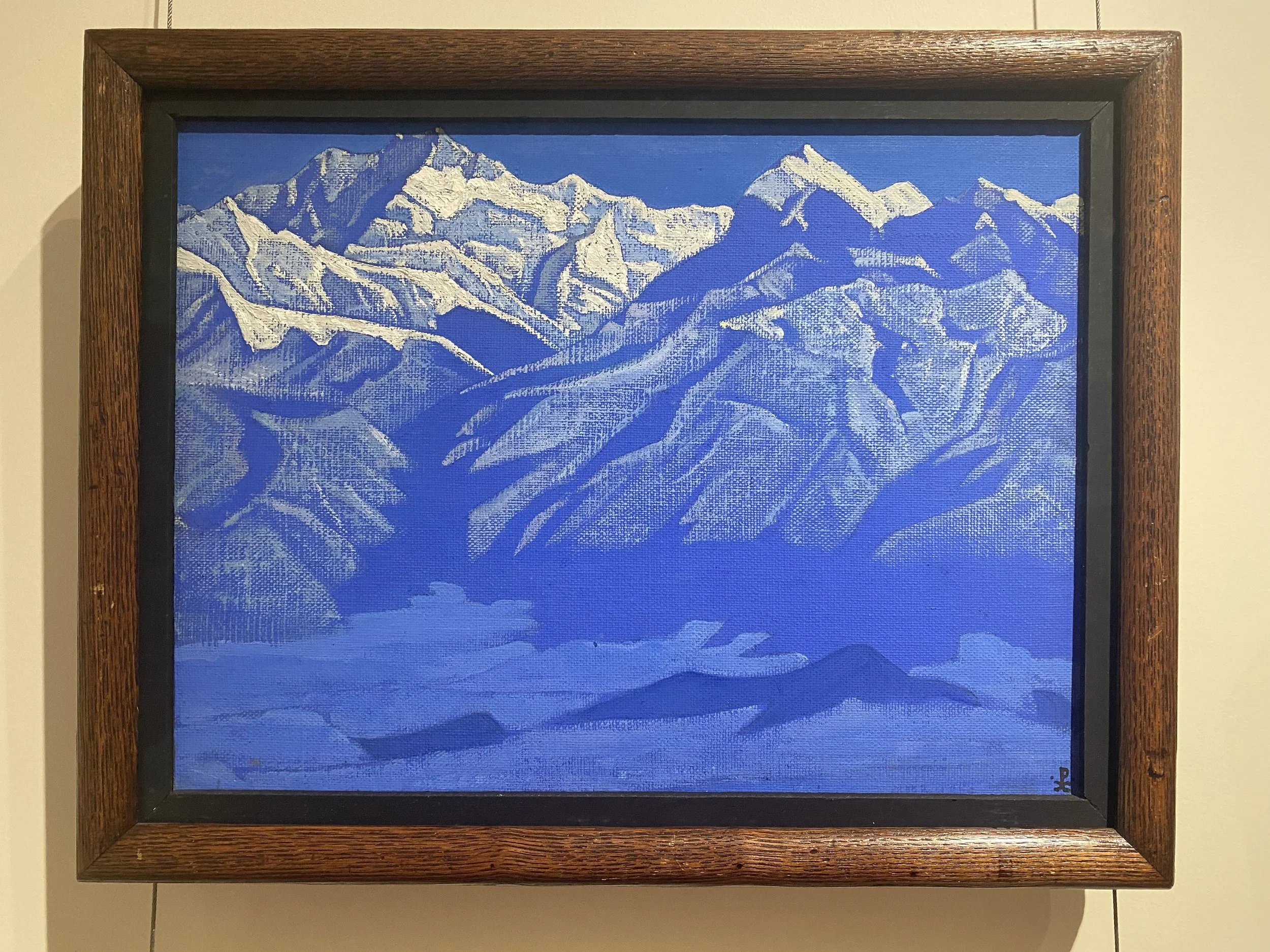
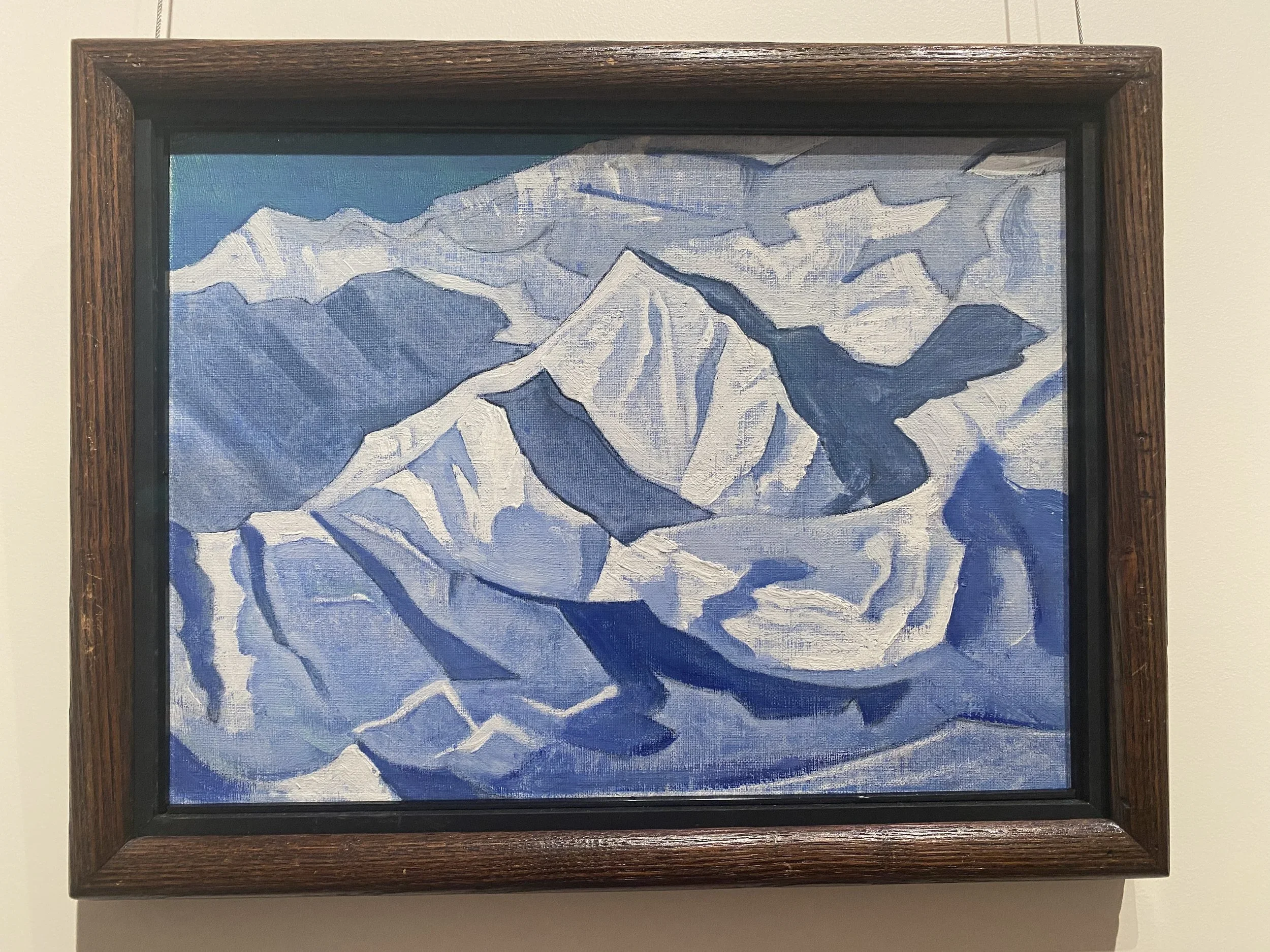
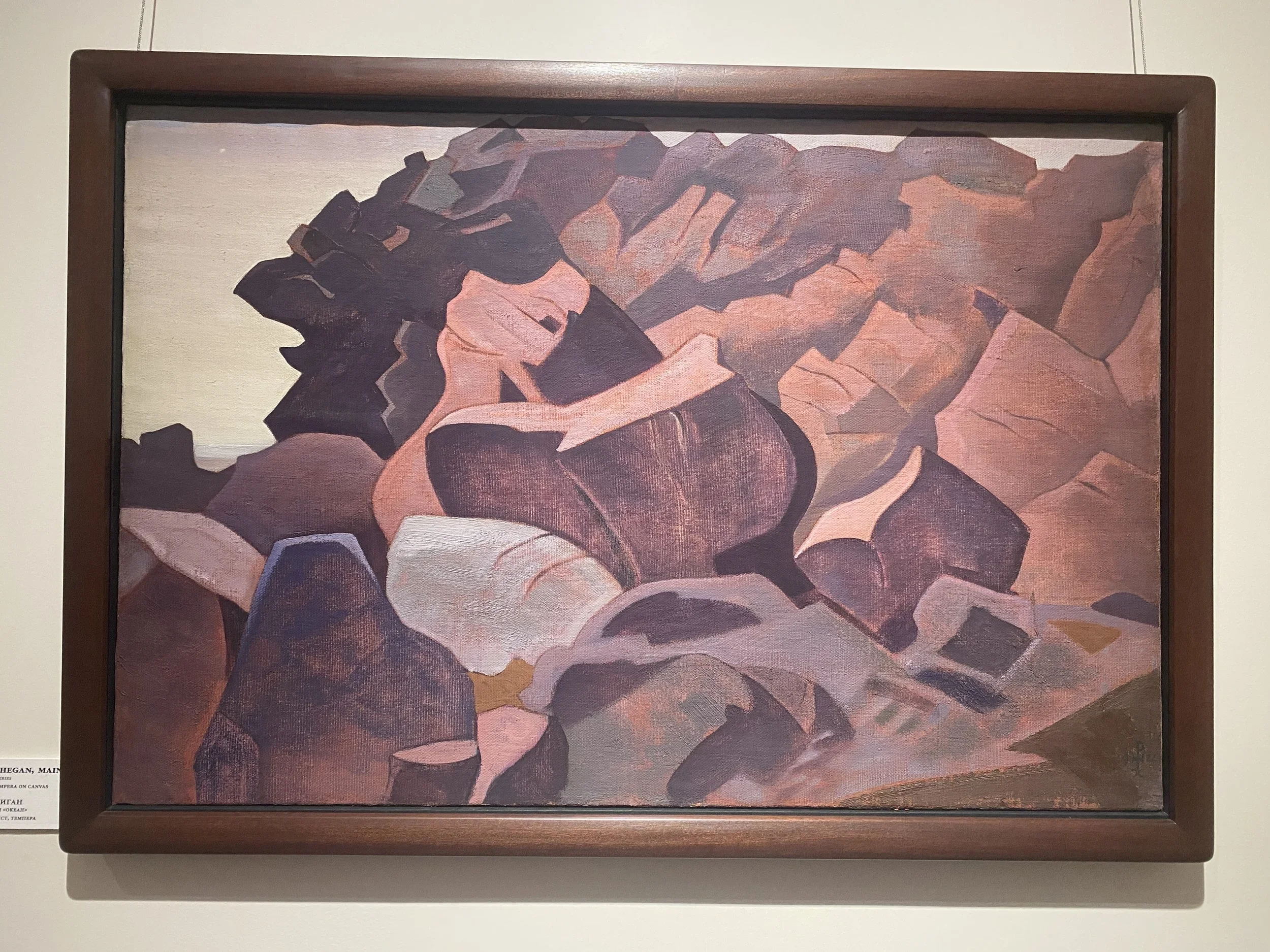
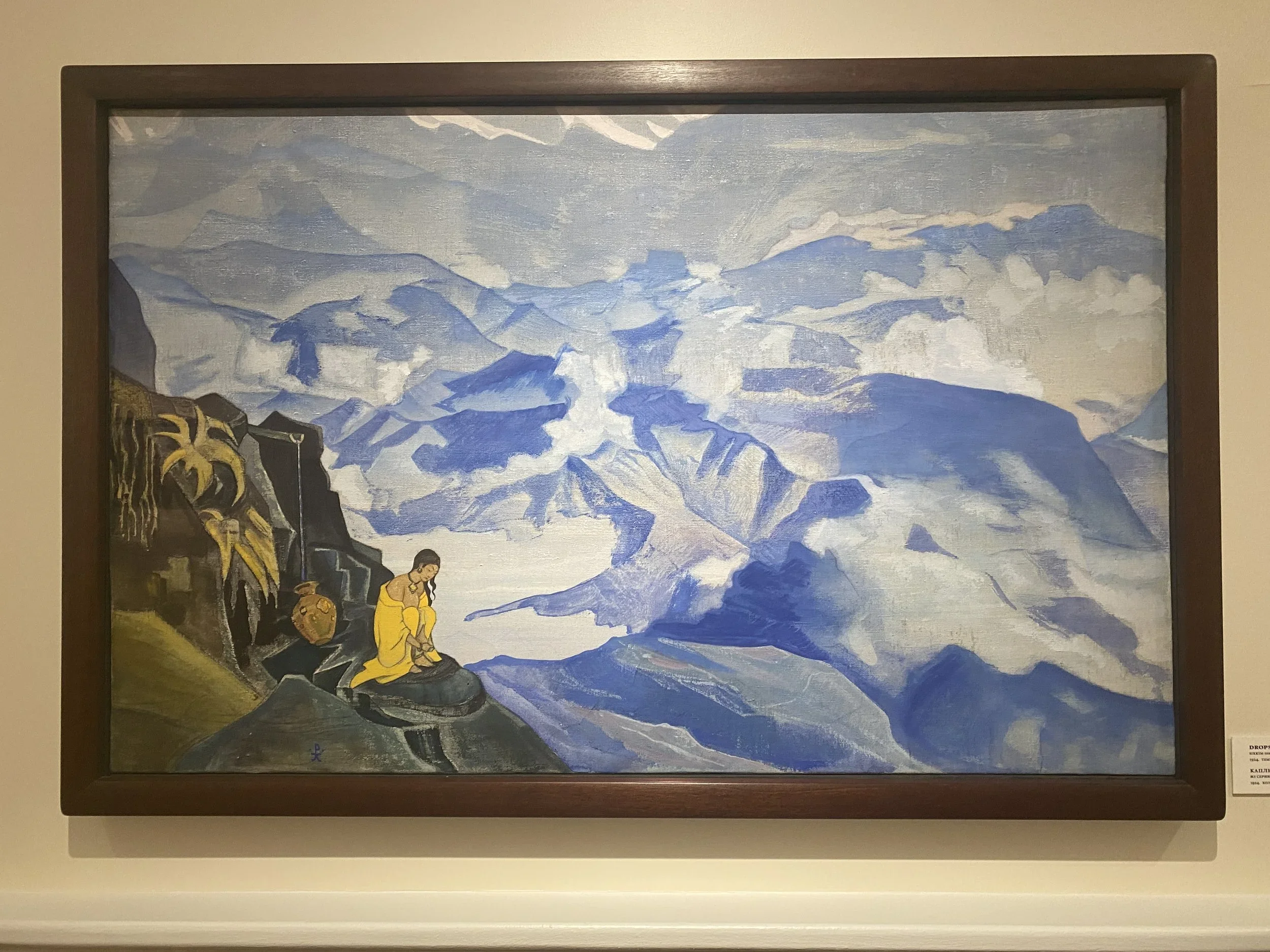
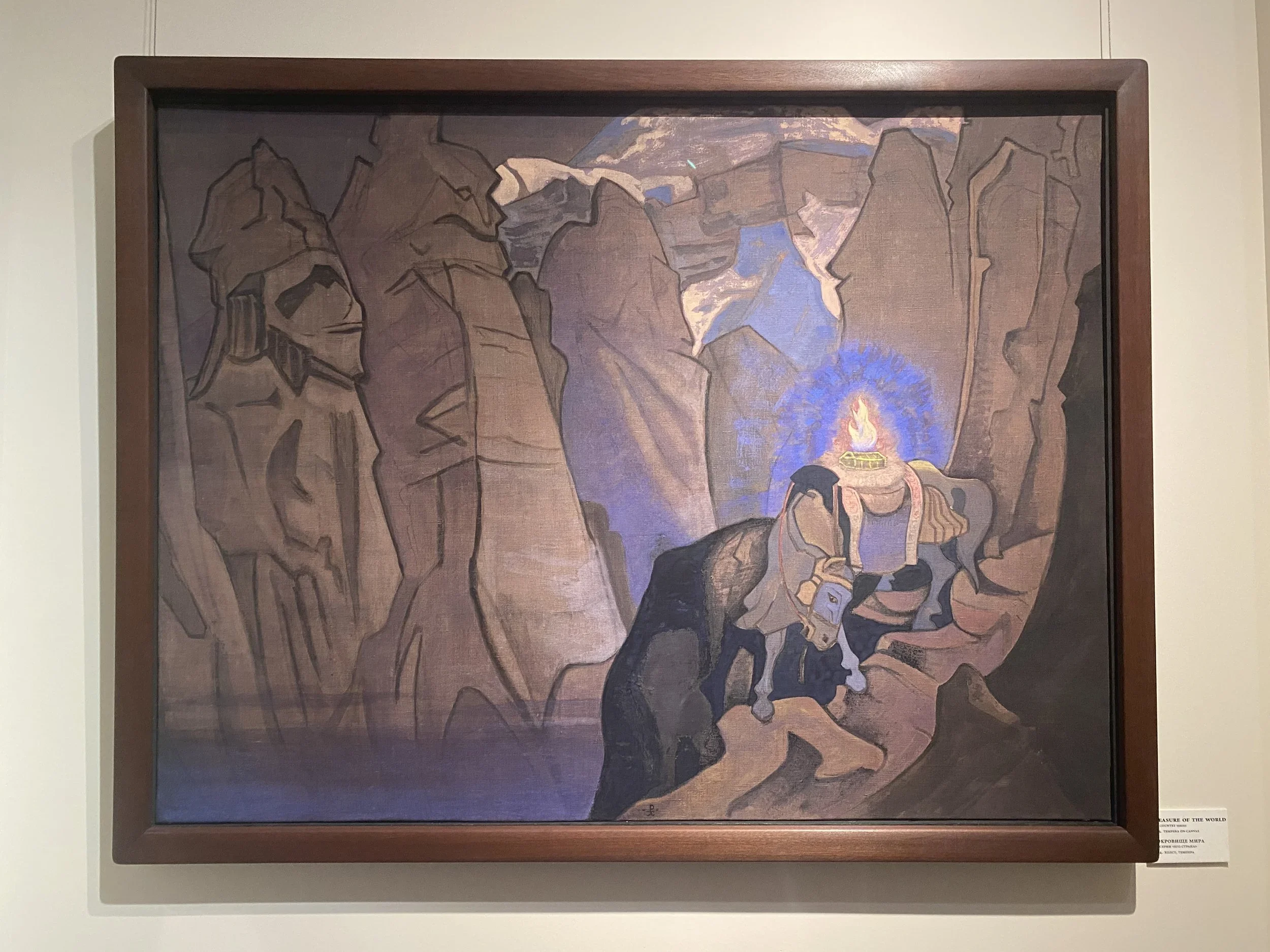
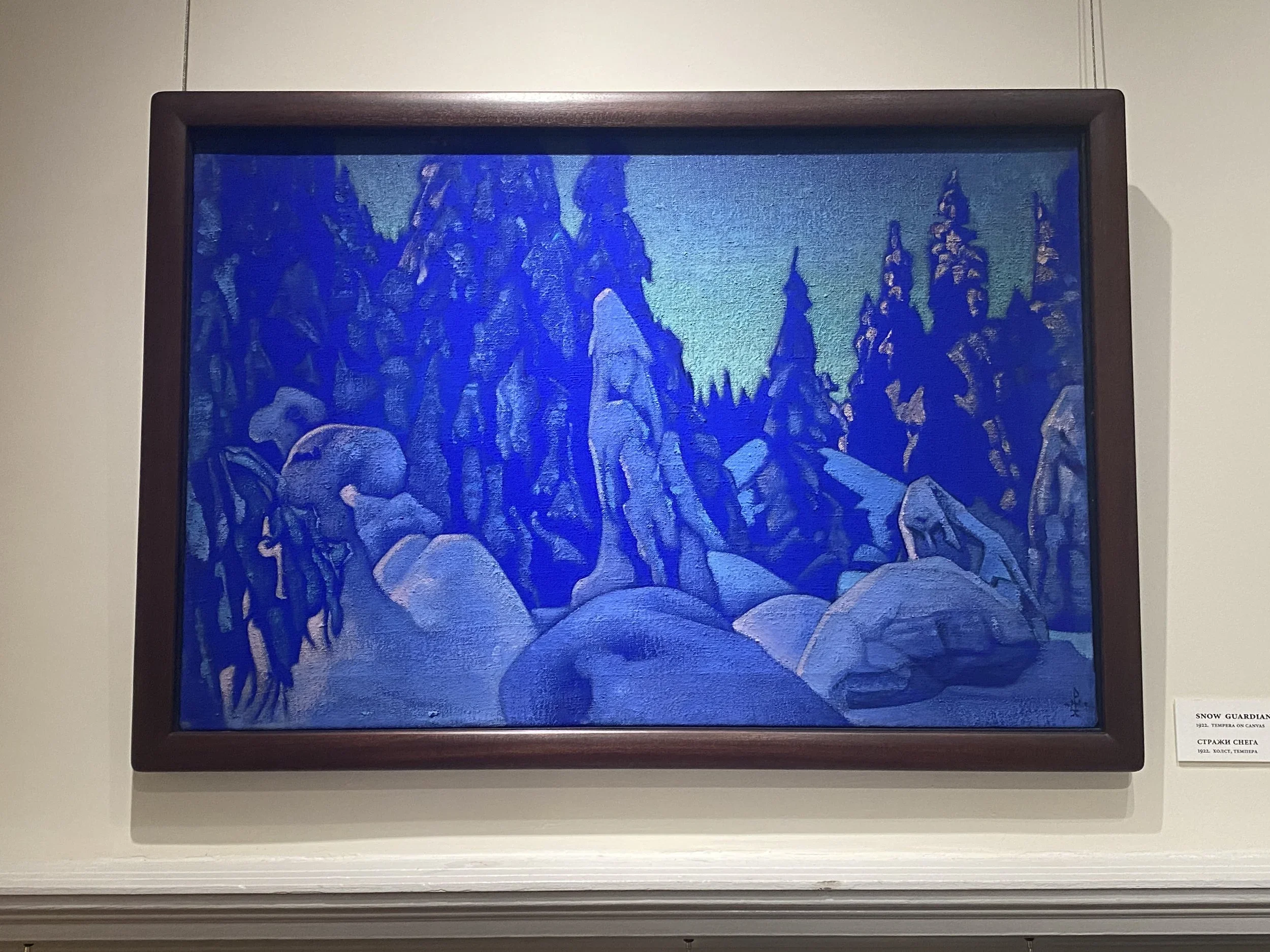
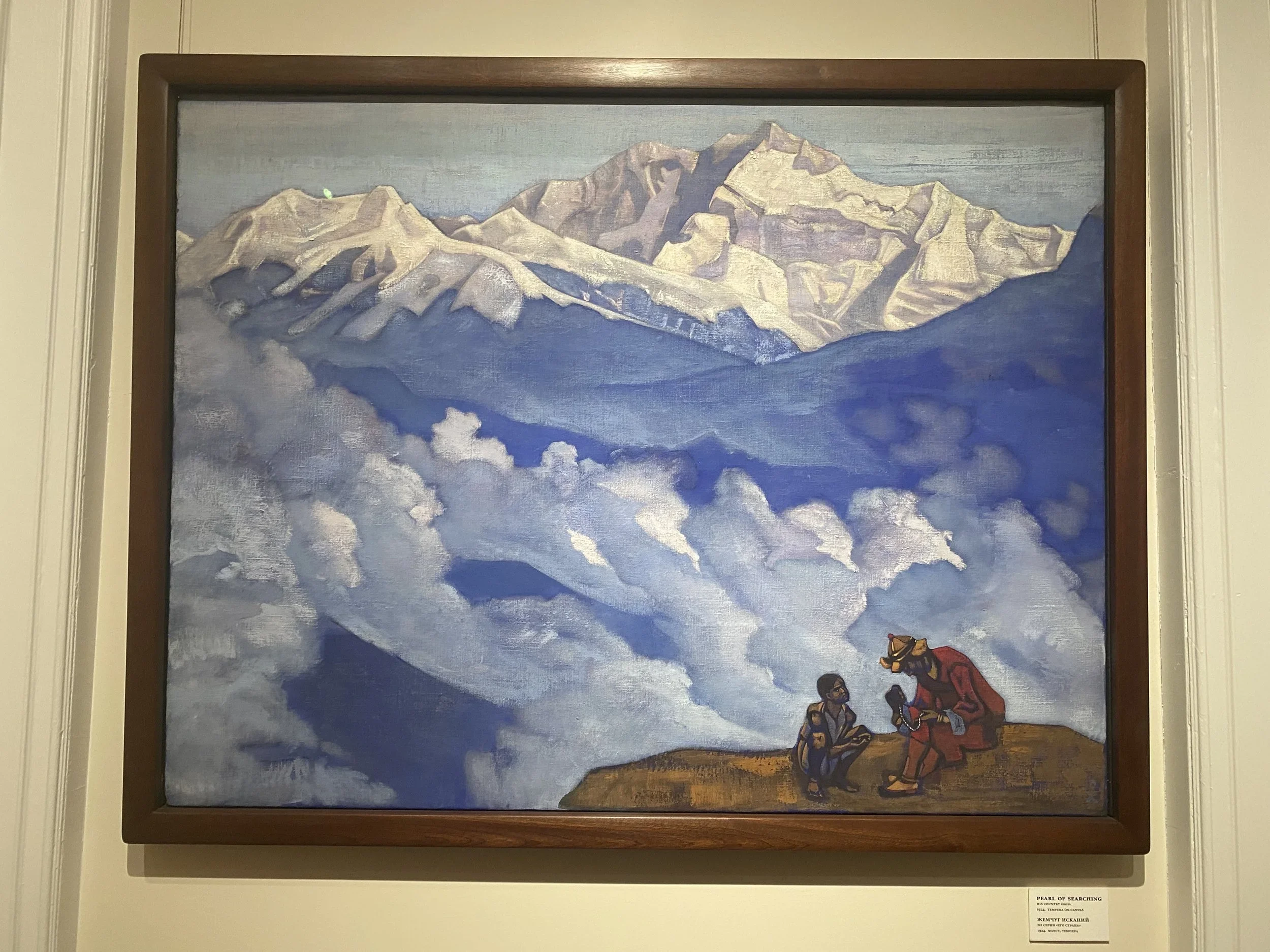
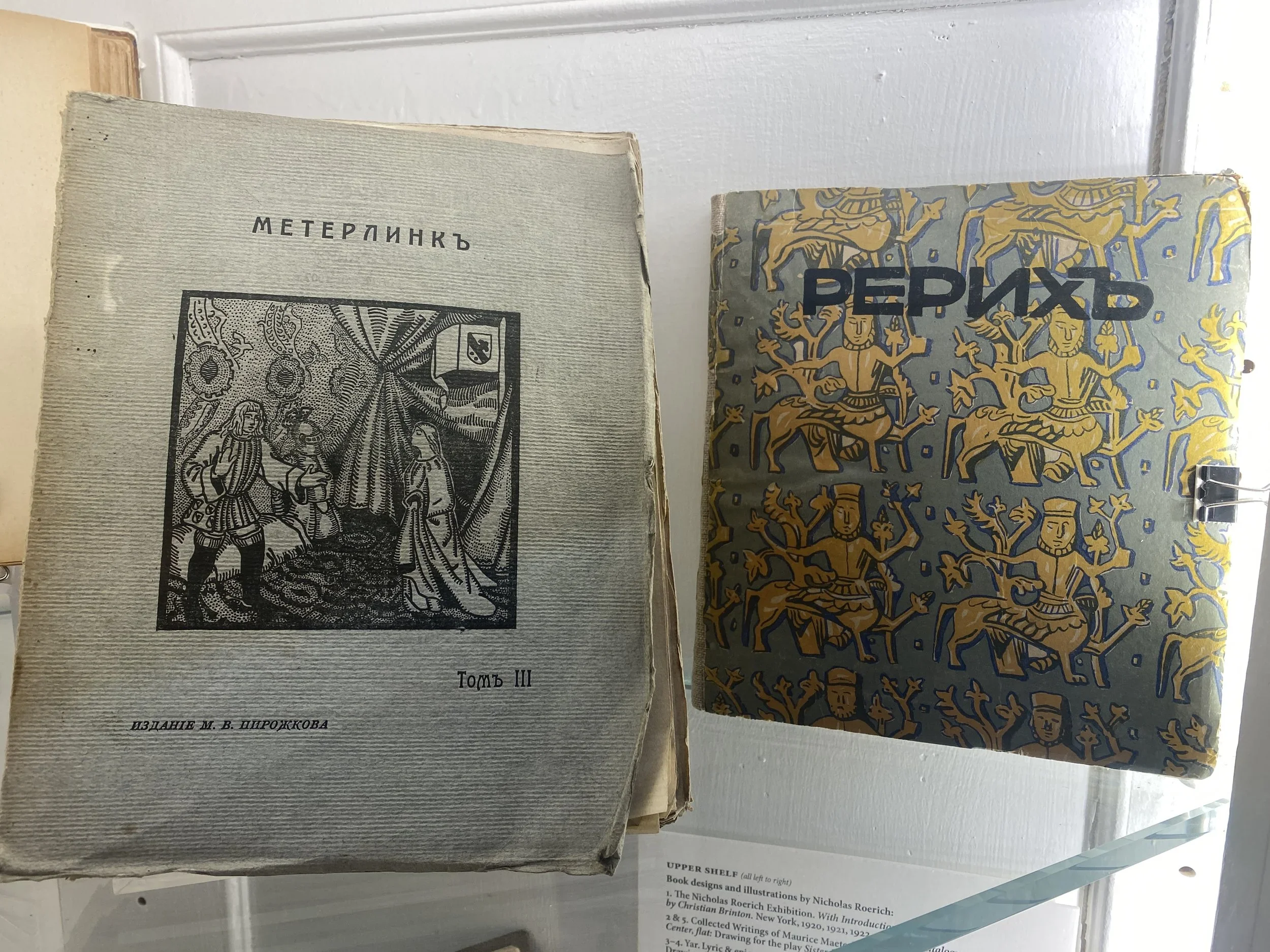
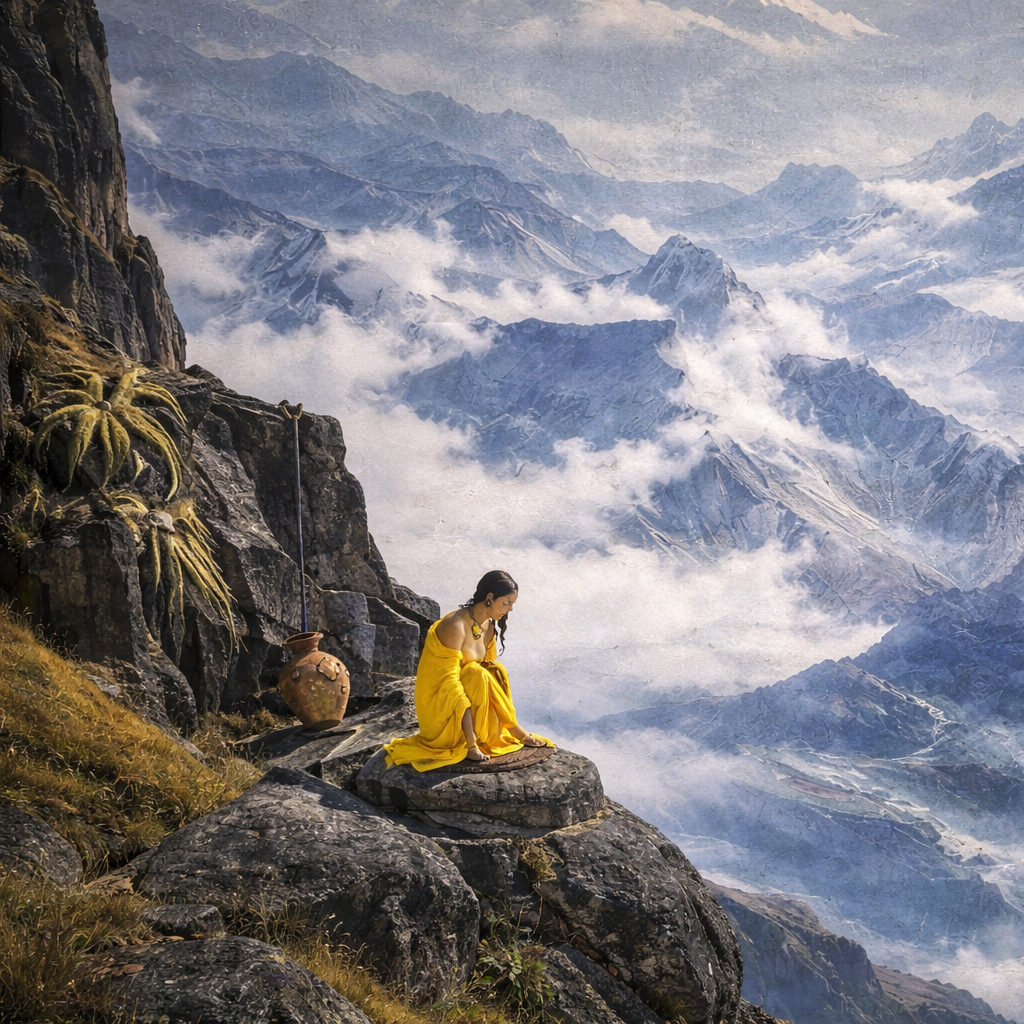
Nicholas Roerich was a Russian painter, theater designer, mystic, archaeologist, and peace activist who spent the later decades of his life in the Himalayas and produced, across a career of extraordinary range, hundreds of paintings of mountain landscapes, ancient temples, and spiritual figures in high-altitude light. He designed productions of Wagner's operas, Lohengrin among them, and thought constantly about the relationship between music and visual image, between the sacred landscape and the stage set, between what the imagination sees when it hears the Grail music and what a painter could put on a canvas to hold that image still.
His Himalayan paintings are one of the most immediately Wagnerian bodies of visual work in existence, not because they depict Norse mythology but because they depict the same metaphysical geography. Peaks and temples at the edge of visibility, light that comes from an indeterminate source, figures on the threshold between the ordinary world and something else. They are what In Fernem Land looks like if you give it color and stone and the specific quality of Himalayan altitude-light.
Track: Lohengrin, Act III — In Fernem Land, unnahbar euren Schritten
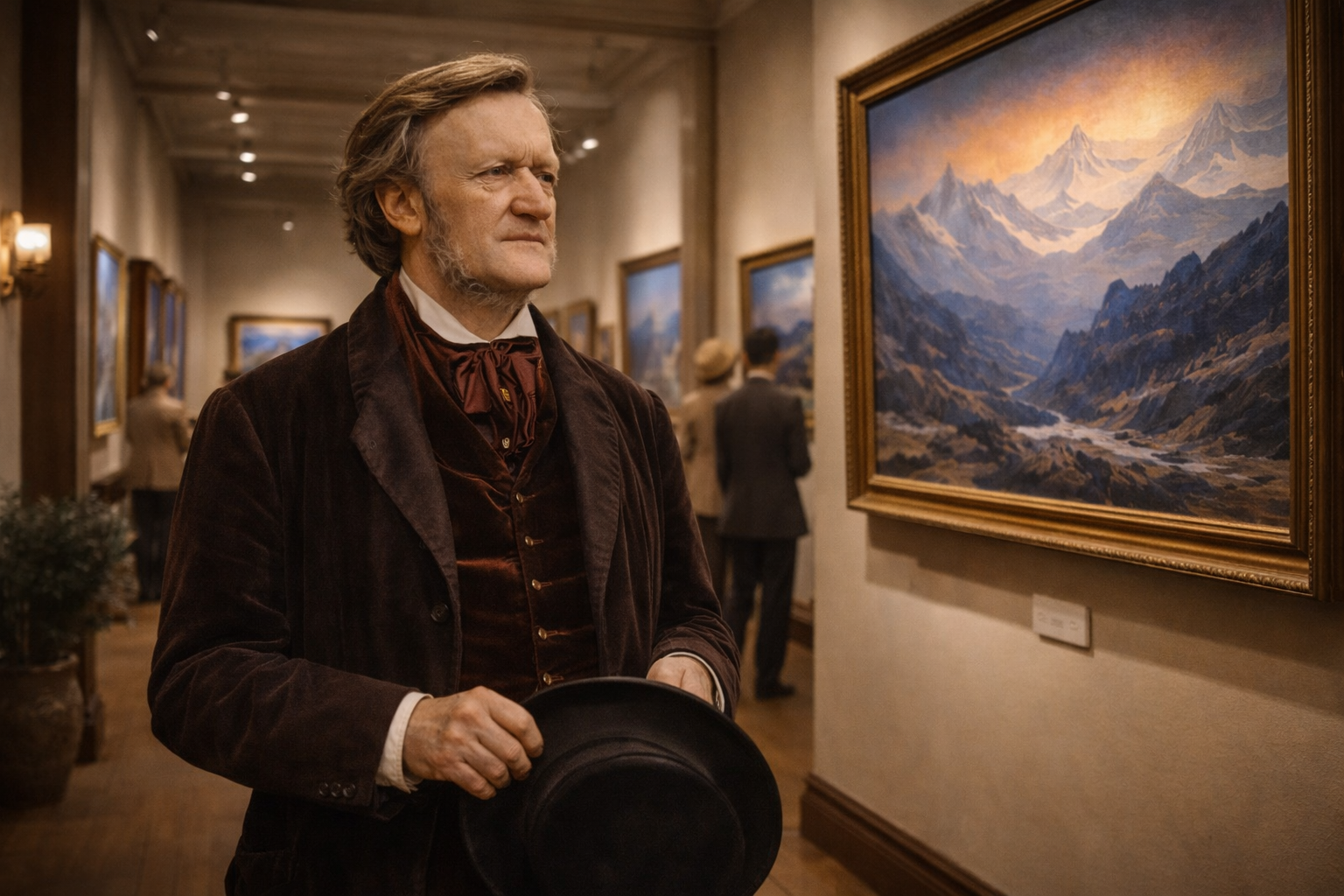
Enter the museum and move through the ground floor rooms until you find a gallery dominated by the large Himalayan canvases. The ones where the peaks rise into an indeterminate sky and the temples cling to impossible slopes and the light is doing something that cannot be explained by the position of the sun.
Stand facing one of these paintings and begin In Fernem Land.
What Is Happening Here
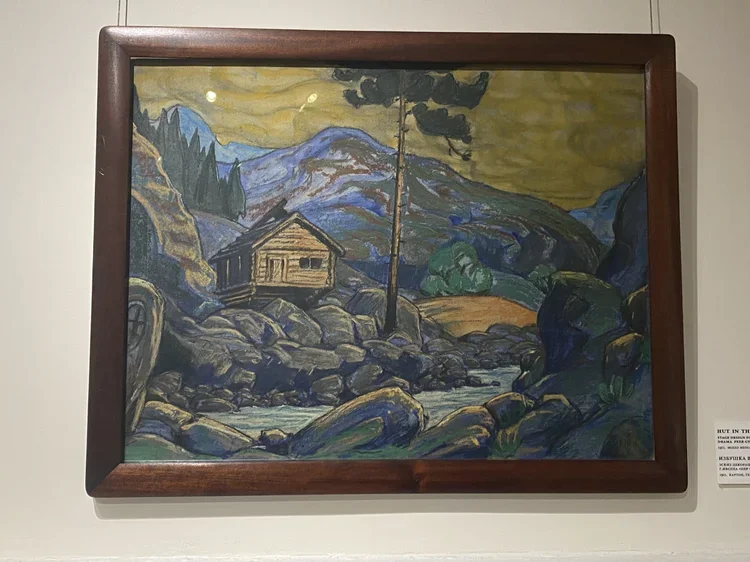
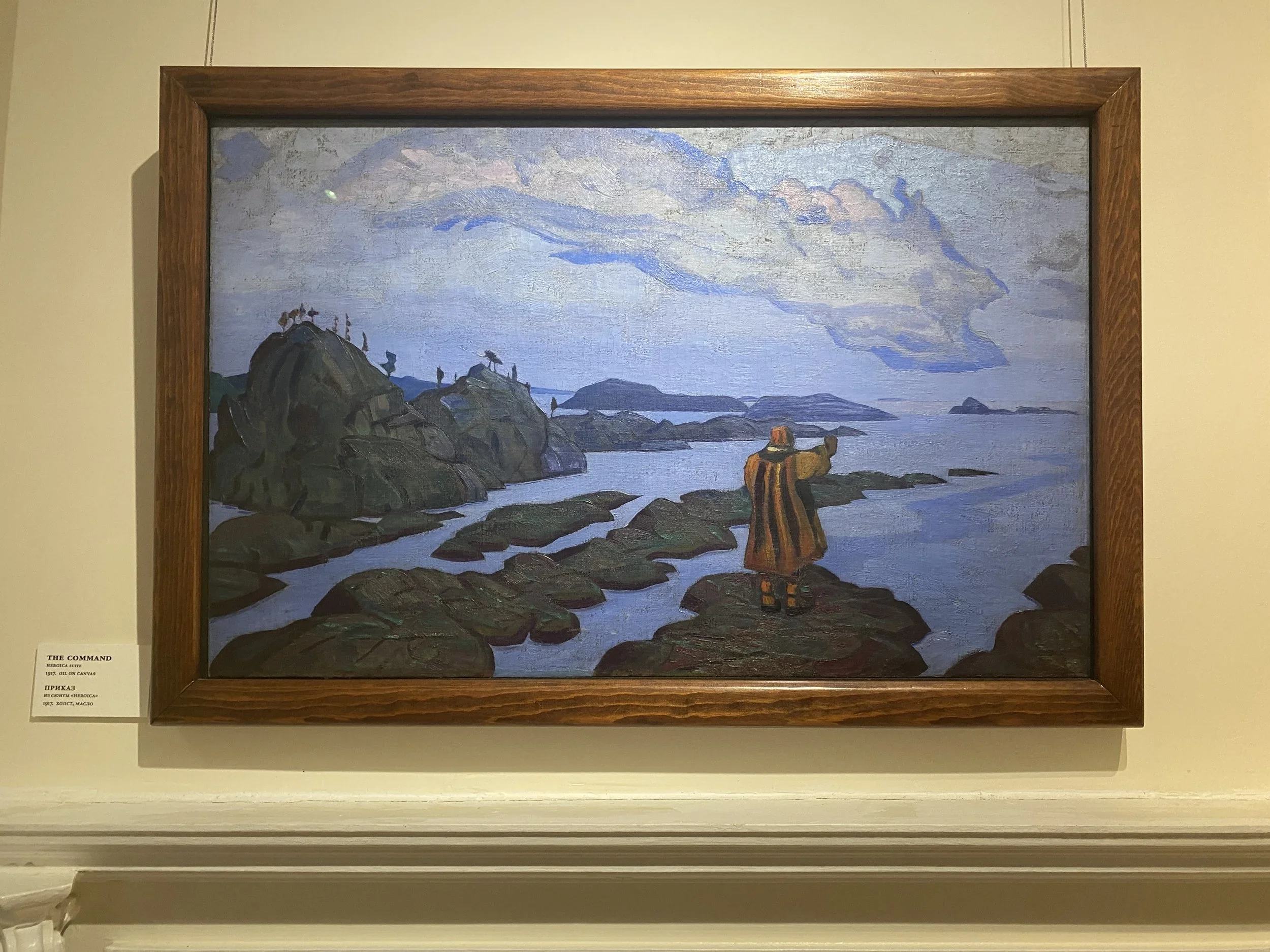
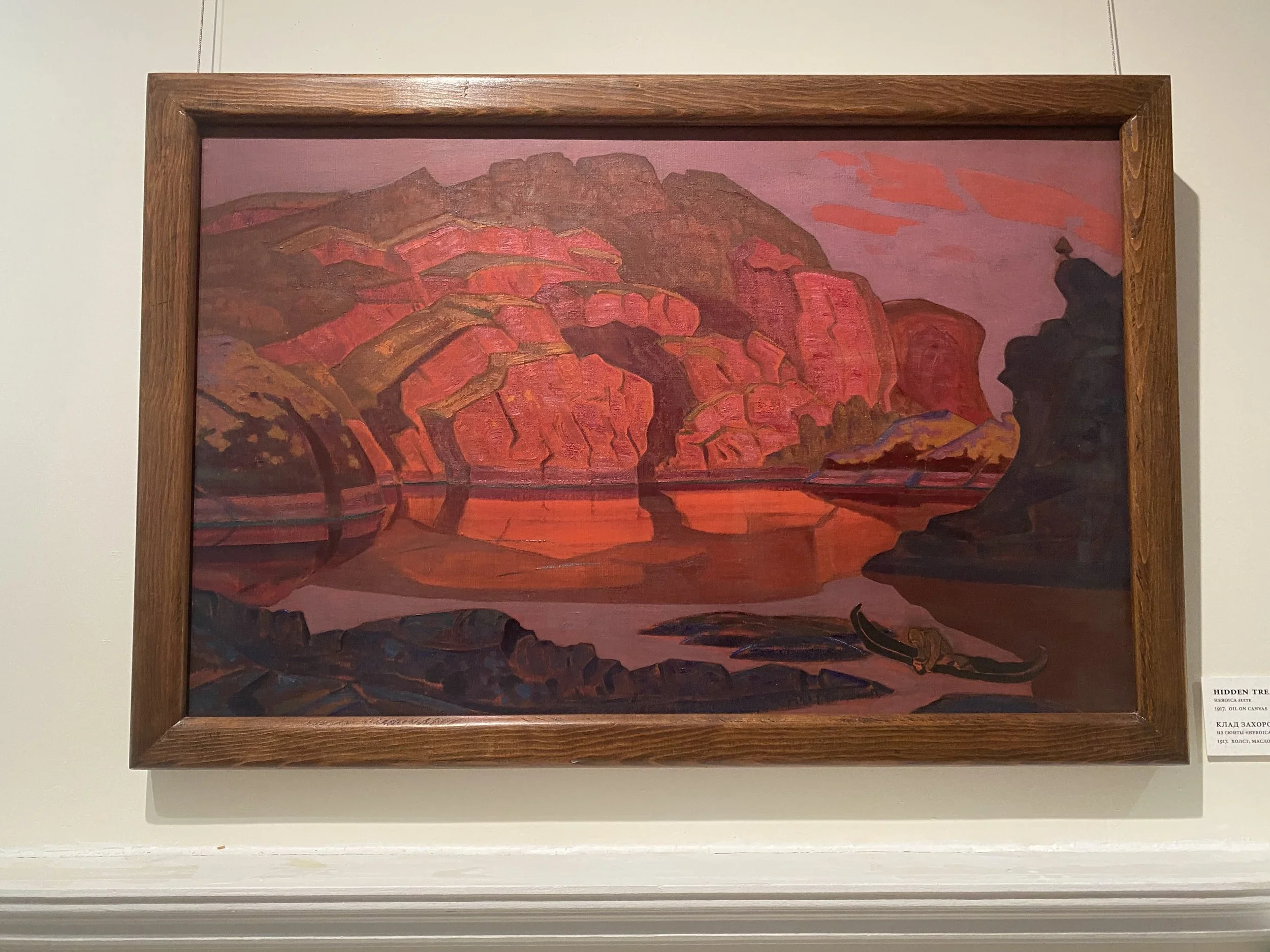
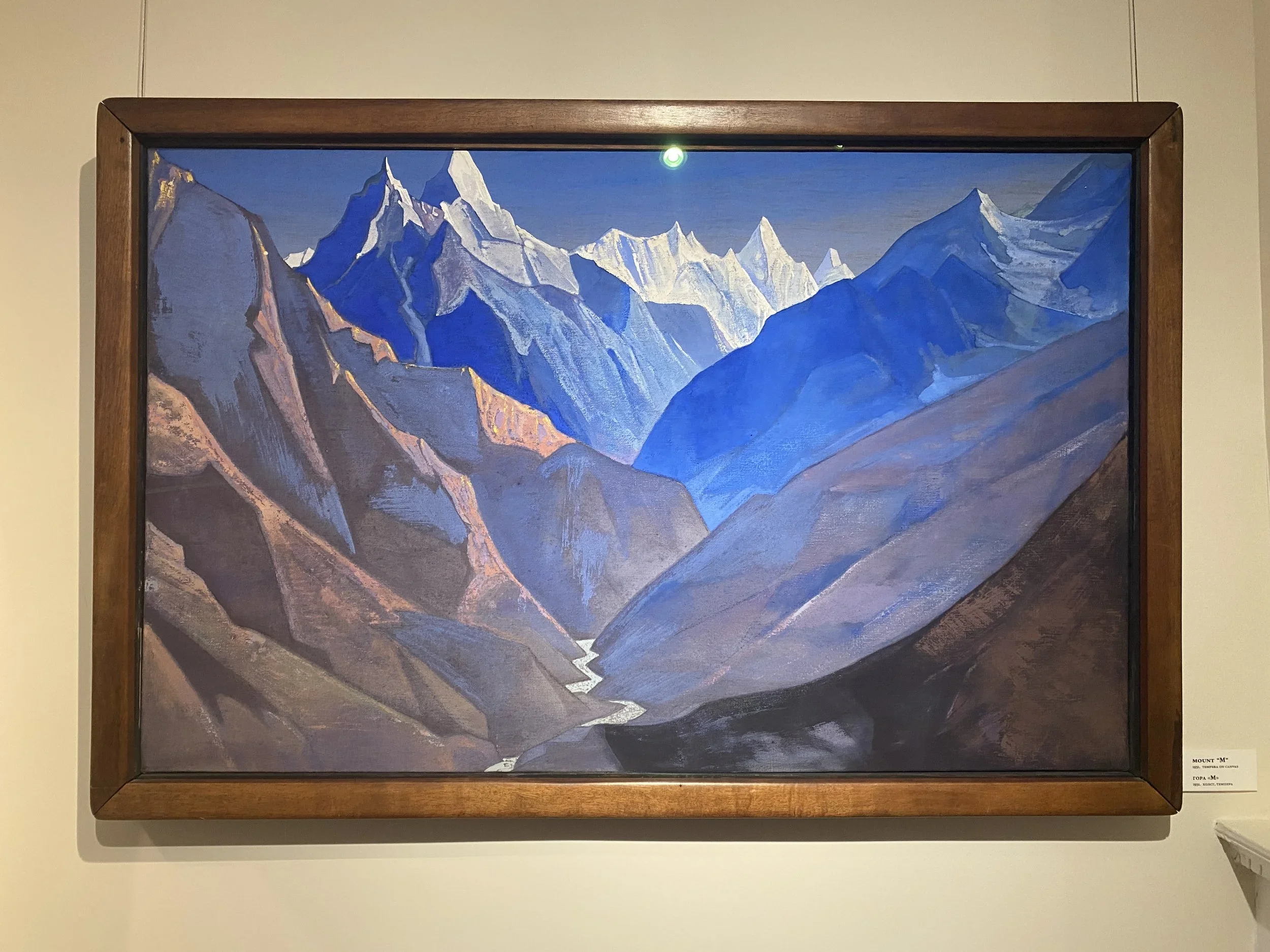
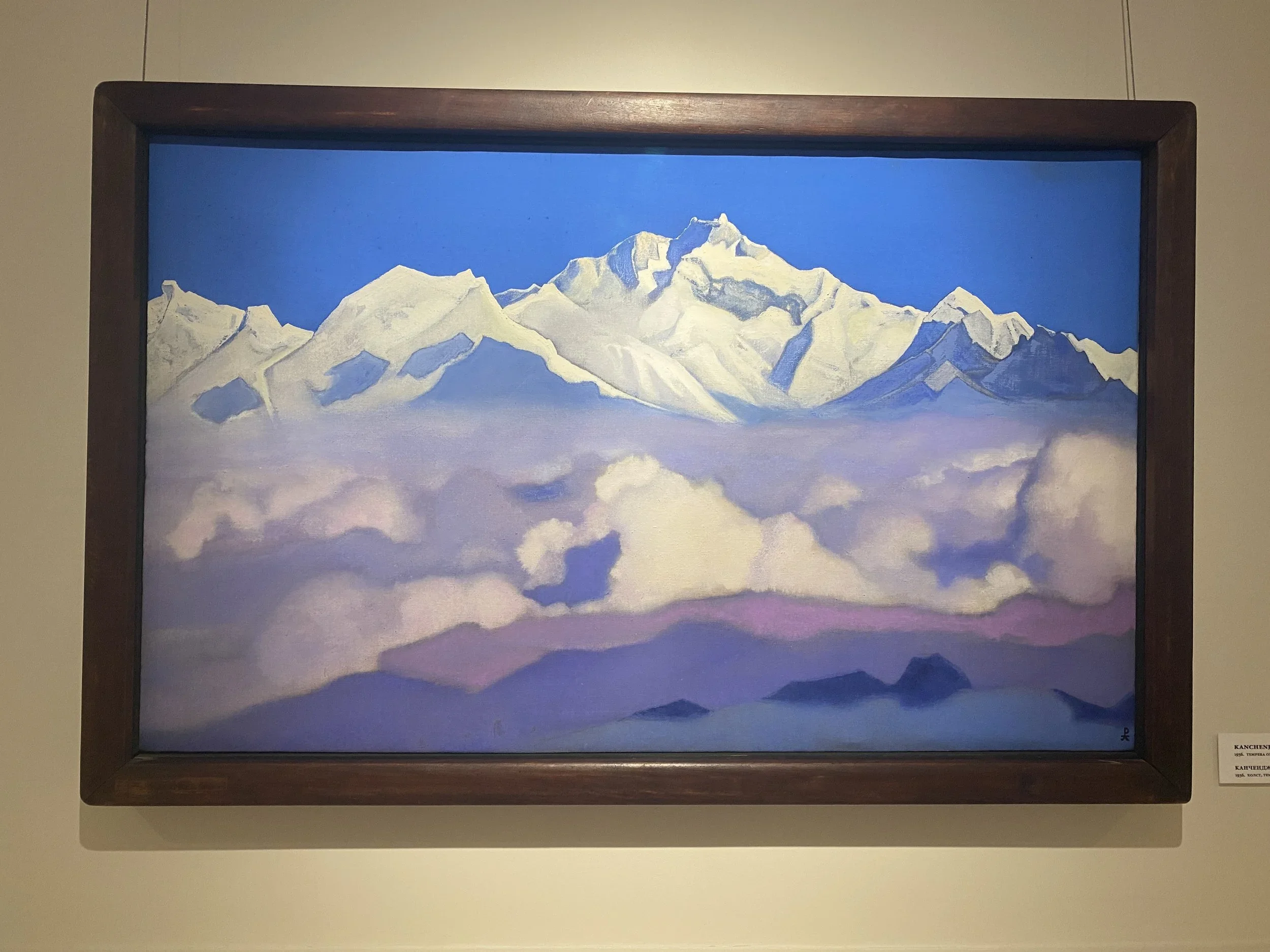
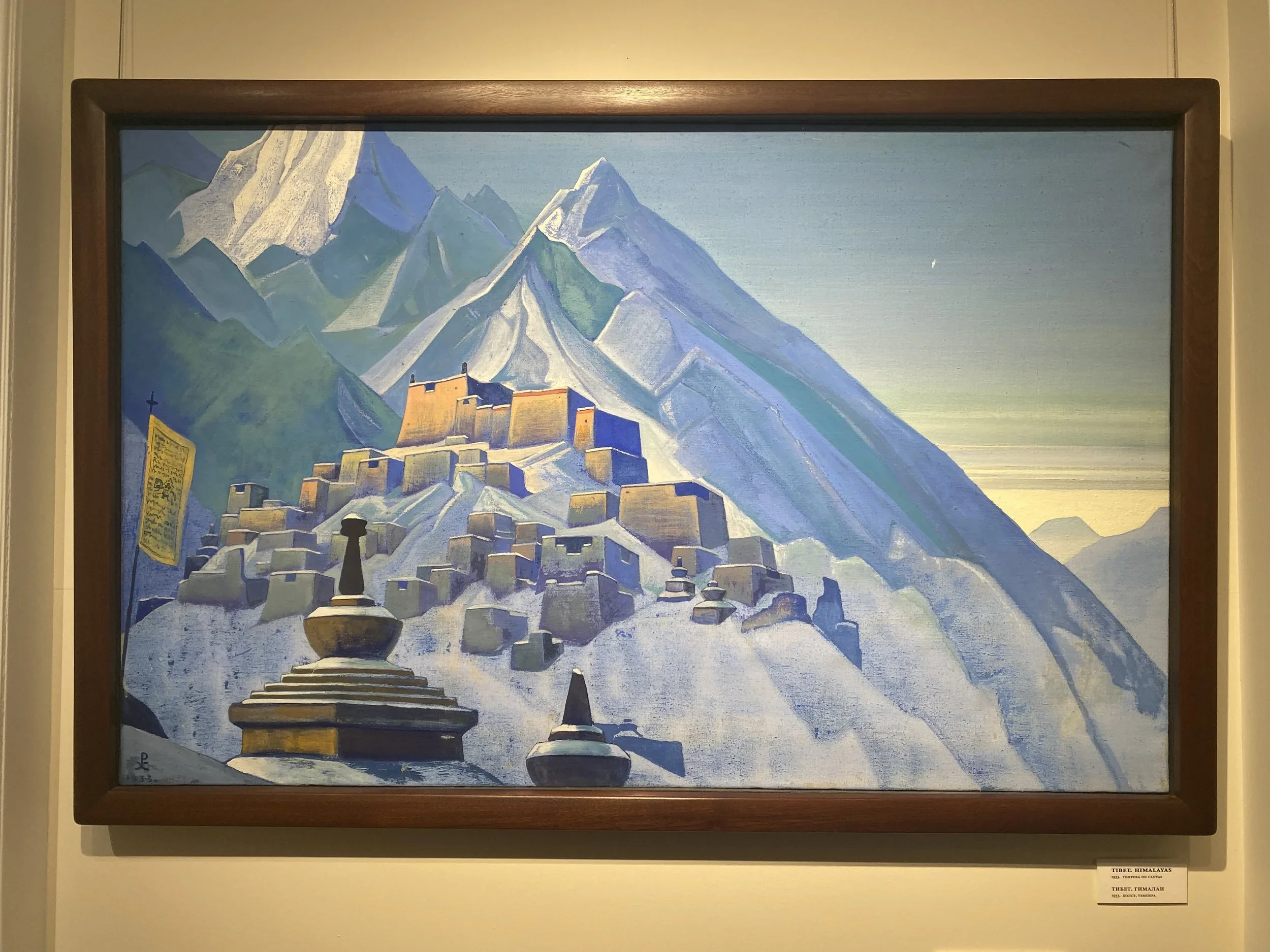
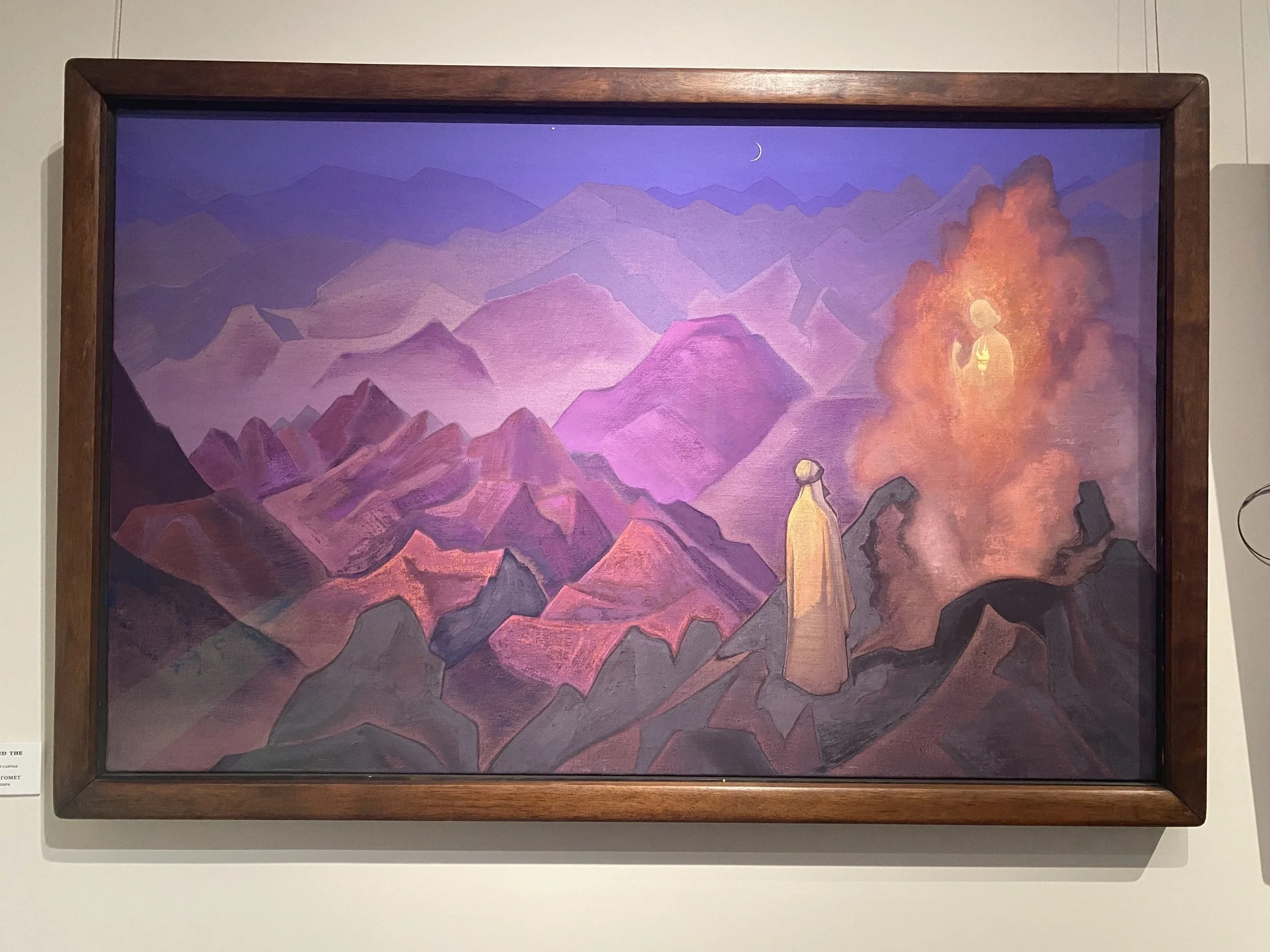
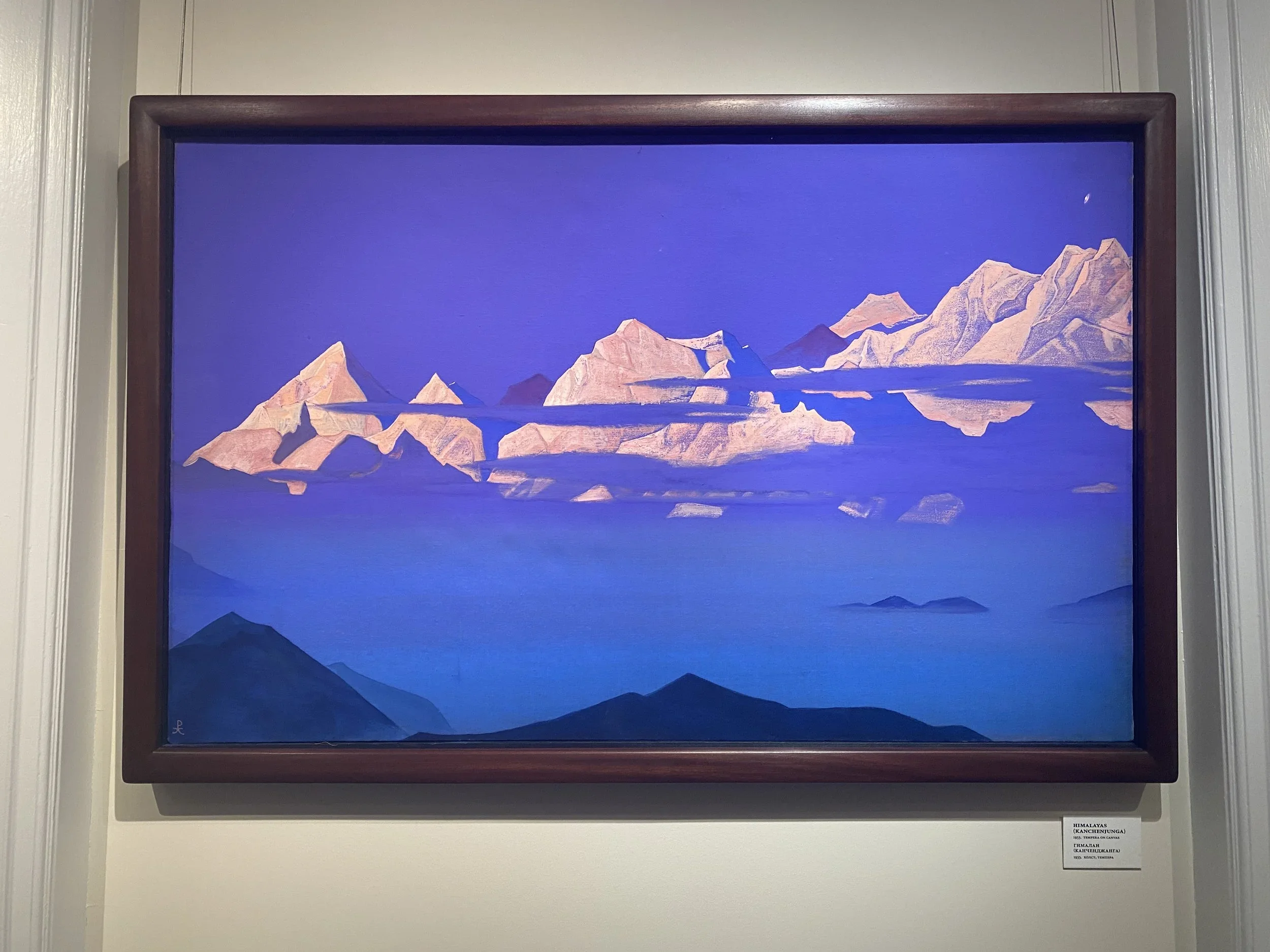

In Fernem Land is Lohengrin's confession, delivered because the question has been asked and cannot be unanswered. The full text is In fernem Land, unnahbar euren Schritten, liegt eine Burg, die Monsalvat geheißen, In a far land, unapproachable to your steps, there lies a castle called Monsalvat. He names the Grail. He names his father Parsifal. He names himself.
The revelation is not shameful. This is important. He is not hiding because he has done something wrong. He is from a place and a lineage of genuine sacred authority, and the reason it cannot survive scrutiny is not corruption but category. The Grail's power is not compatible with the epistemology of ordinary life. It ceases to function when it is made fully legible to that epistemology. This is not a coverup. It is a metaphysical condition.
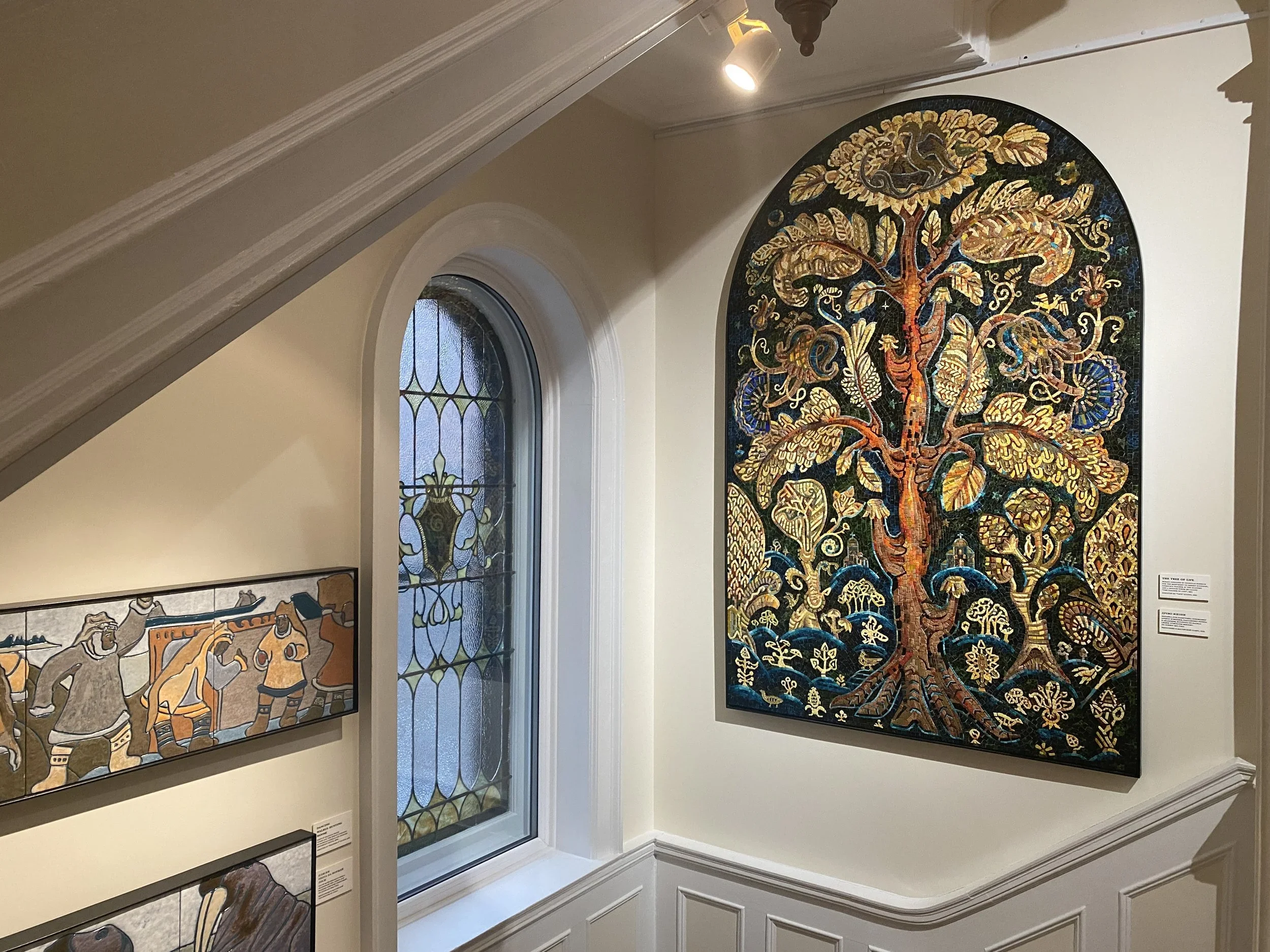
Roerich's paintings understand this condition. The temples in the far mountains are not accessible. They are at a distance that is partly geographic and partly ontological. You could not reach them even if you knew exactly where they were, because what makes them what they are is partly their inaccessibility. The moment they are fully reached, fully photographed, fully described in a travel article, they have become something different from what they were.
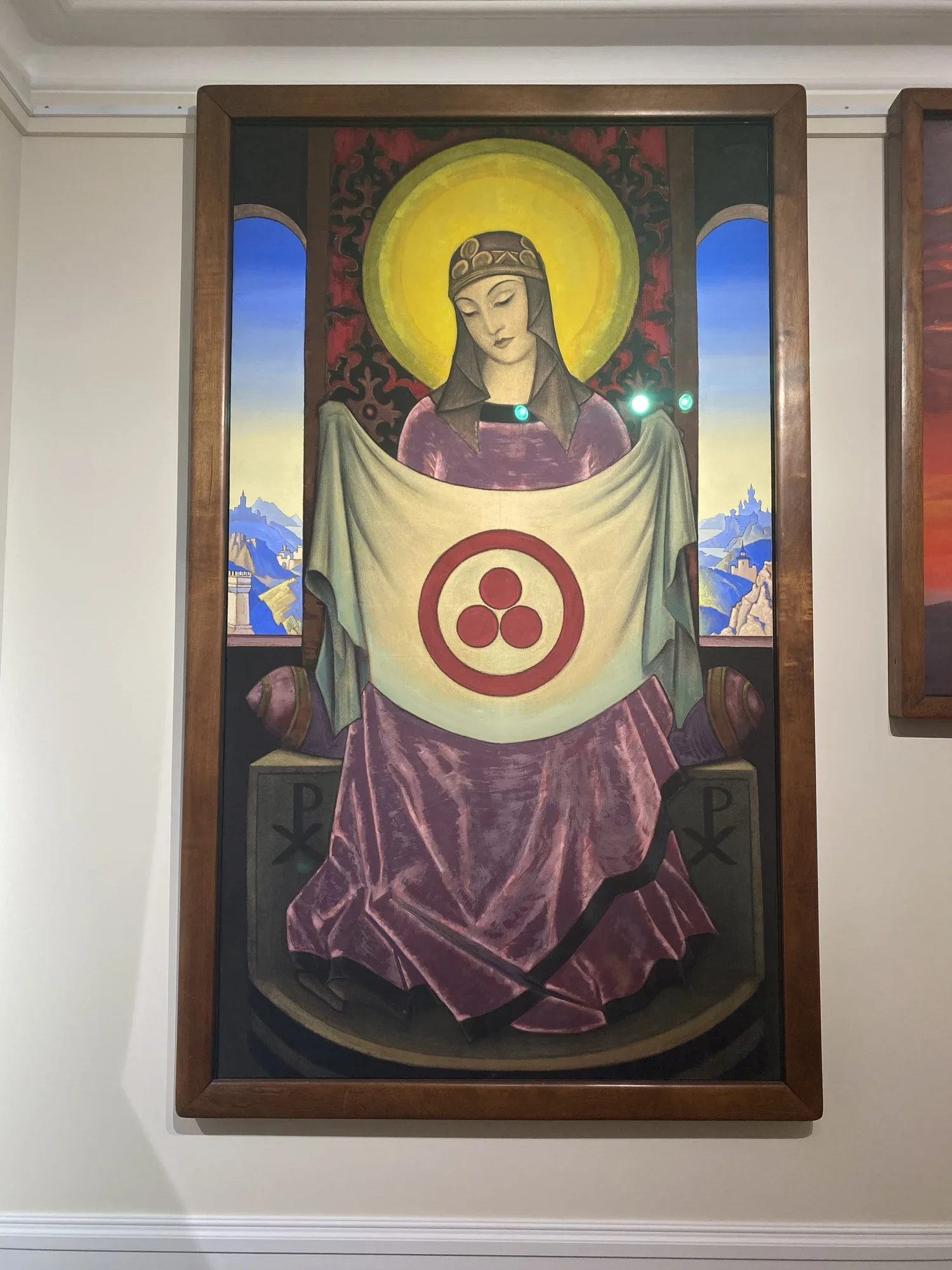
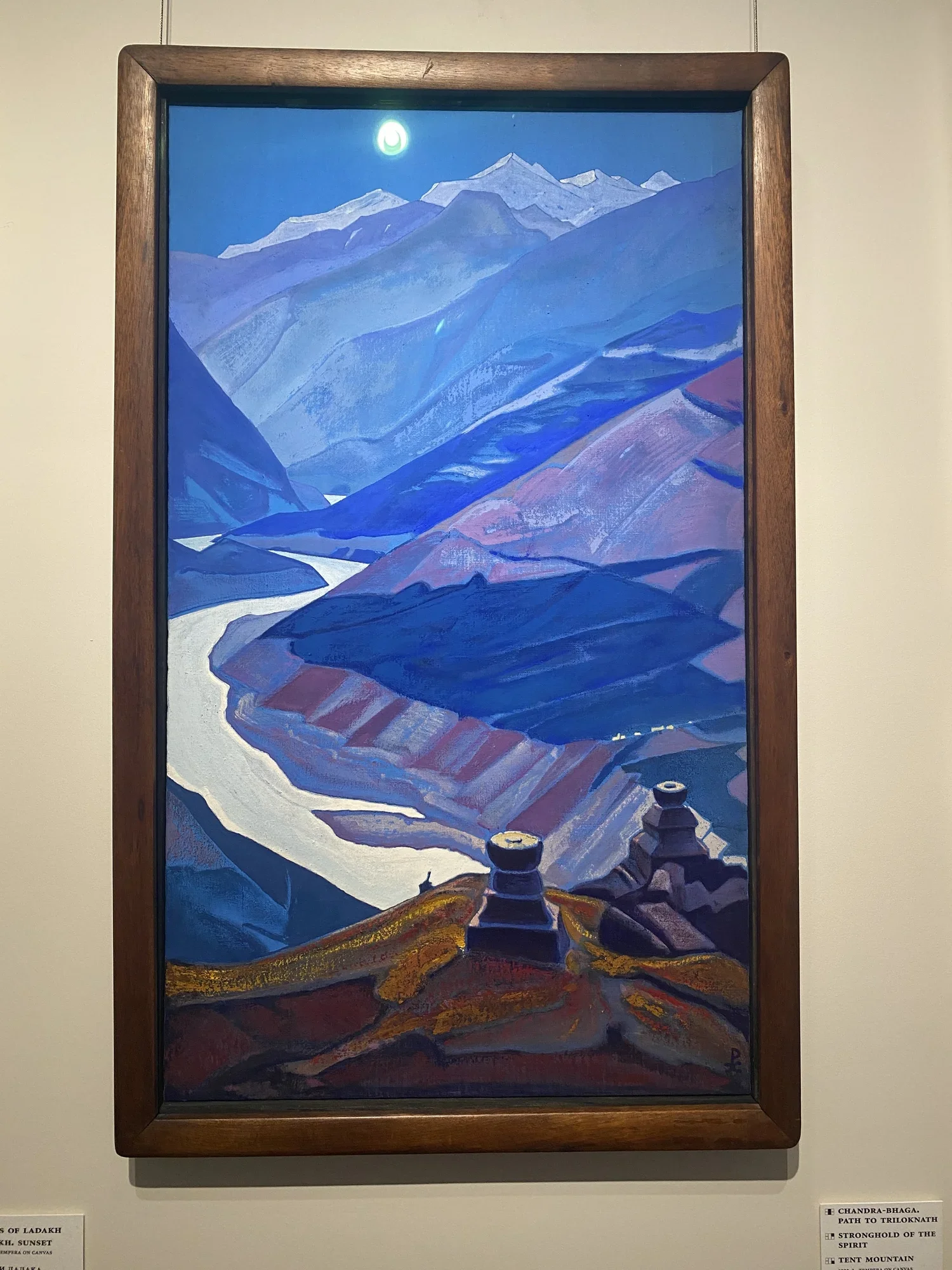
Stand with In Fernem Land in front of one of these canvases and let the aria run in full. The far land is painted. The knight is singing its name. The departure has been announced. The swan is at the water.
Optionaler Abend: Stille Ausklänge am Fluss
Return to the River
If the day's arc permits, return to the Hudson, either to the 79th Street Boat Basin where the walk began, or to the Riverside Park waterfront near Sakura Park at 122nd Street, where the cherry trees, bare in early March but beginning to bud, line the path above the river.
No music.
The walk has given you the full arc of the opera. The swan on the water, the vision of rescue, the intelligence that sees the mechanism, the processional toward the threshold, the unfinished Grail hall, the forgotten monument, the far land painted on a townhouse wall. The departure has been announced. Lohengrin has given his name. The swan is taking him back.
What returns when he goes is Gottfried, Elsa's brother, transformed into the swan by Ortrud's sorcery at the opera's start, now restored to himself. Brabant has its legitimate heir. The political problem that opened the opera is closed. This is the resolution, such as it is. Not the continuation of the extraordinary but the restoration of the ordinary, the healing of the succession crisis, the duchy with its duke.
Stand at the water. Look at the river. The swan is gone. What is left is the city, the real city, the one that does not arrive on swans and does not come with conditions and does not depart when the condition is broken, running north and south along the Hudson, producing its enormous noise, generating its ordinary life. This is what remains after every conditional arrival: the city you were already in, made newly visible by the contrast.
March ends. April begins. Something human waits ahead.
Lohengrin
Nachklang
The March walk ends where the January walk began: at the river. Not the same river, the Hudson rather than the harbor, but the same elemental condition. Cold water, early light, the city reflected in a surface that will not explain itself.
January was about the Dutchman's curse. The impossibility of rest, the loop of departure and return, the harbor as the operational center of that repetition. March is about a different water. Calmer, more reflective, less exposed, and a different curse. Not the curse of endless motion but the curse of conditional belonging, the price of the arrival that also contains the terms of the departure.
The opera does not resolve in Elsa's favor. This is the fact that makes it Lohengrin rather than a fairy tale. The question is asked and answered and the answer costs everything. What the answer gives back, Gottfried, Brabant's succession, the political stability Lohengrin was sent to provide, is real. It is just not what Elsa wanted, and she dies.
This is March's lesson. That the question you have been holding not-asked is going to be asked, eventually, because that is what questions do. And that the answer may be true and genuinely costly simultaneously. And that the cost does not mean the question was wrong to ask. The swan was always something else. You were always going to find out. The city continues.

Further Reading