How Cold is Cool: The Body the Concert Hall Removes
The wind at Battery Park comes off the water with nothing behind it. No buildings, no trees, nothing which slows it between the harbor and your face. It arrives as a fact. Not uncomfortable yet, just present, the way a sustained note is present before you have decided whether it is beautiful or not. You turn up your collar and the Rheingold prelude is still building in the headphones, the arpeggios still climbing their slow way up from the original E-flat, and for a moment the two things, the cold and the music, are simply simultaneous. Then a container ship moves across the mouth of the harbor, enormous and grey and indifferent, and the simultaneity becomes something else entirely.
This is what the essays do not tell you. That it is cold. That your face is the part of you which is still outside the music. That the body is doing several things at once which have nothing to do with ideas.
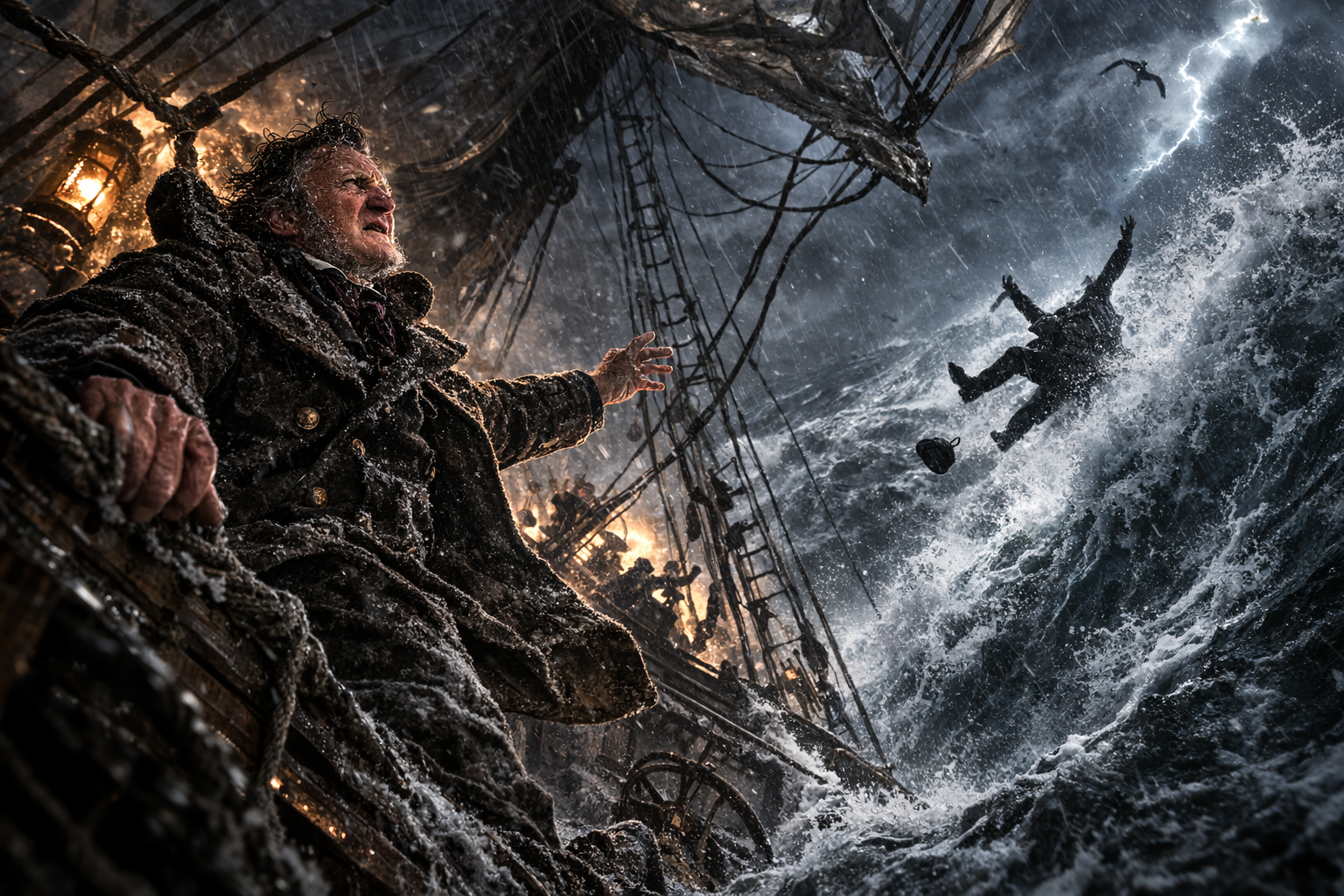
January. The first scored walk. The Dutchman's territory. The instructions say to begin at the water. So you begin at the water, which in January means standing at the railing at the southern tip of Manhattan with the harbor in front of you and the wind finding every gap in your coat and the Overture already moving through its first storm sequence. Wagner wrote the Overture after a sea voyage he took in 1839 from Riga to London, a voyage which hit severe weather and nearly killed him. He claimed the sailors' cries in the storm became the sailors' chorus in the opera. Whether or not this is exactly true, the music knows what weather feels like from the inside. It knows the particular quality of exposure which belongs to being on the water with no shelter available.
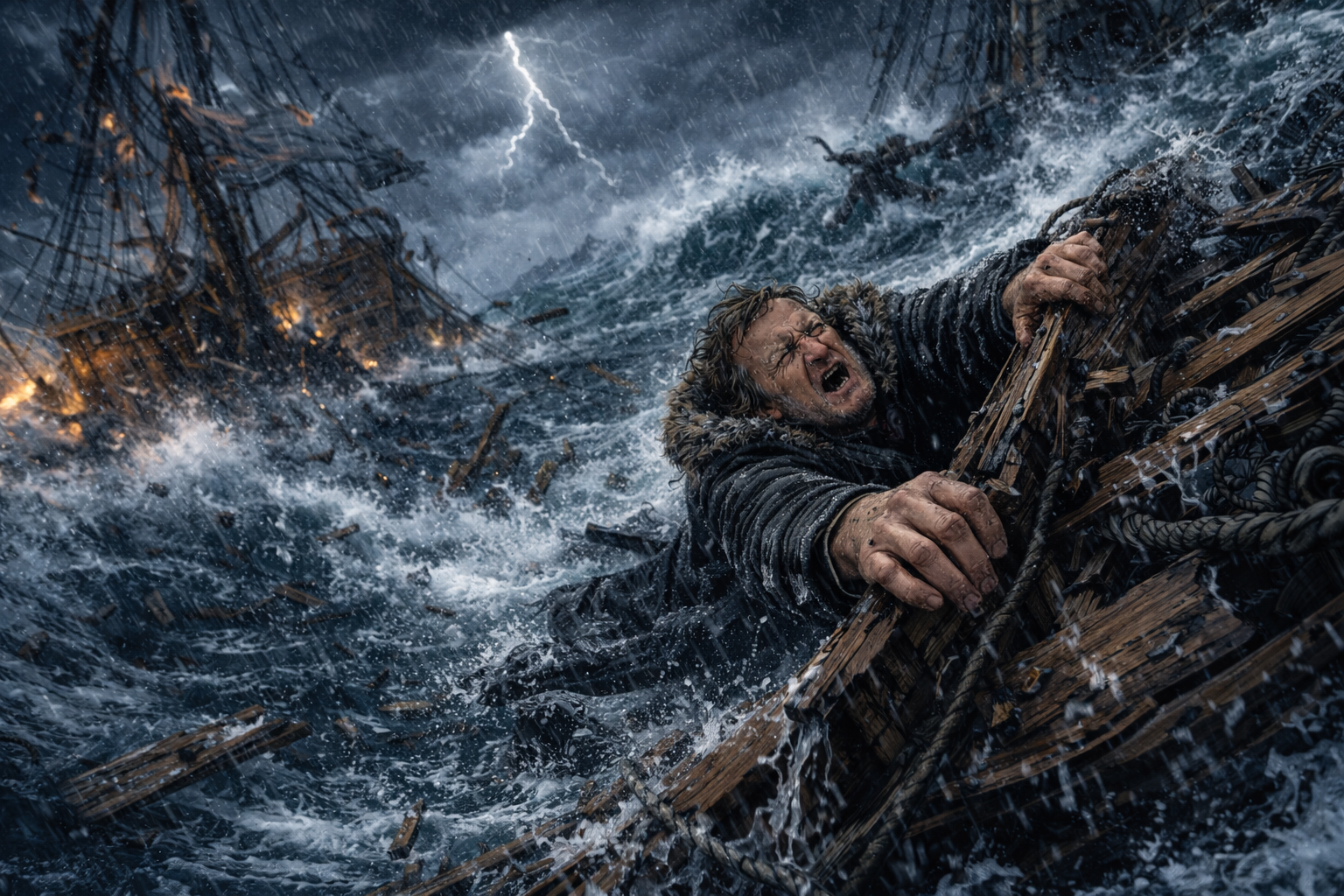
Standing at the railing in January with the Overture in the headphones, your body knows this too. Not as a thought. As a temperature. The Dutchman's curse is the curse of the man who cannot come in from the cold. Who circles and circles and cannot land. The harbor in January is not a metaphor for this. It is the condition itself, reduced to its physical minimum. Wind. Water. The absence of warmth. The container ship which does not stop.
February is different. Tannhäuser. The Venusberg music is the warmest thing Wagner ever wrote. Chromatic, enveloping, designed to produce the sensation of being inside something which wants to keep you there. You are walking up the Bowery with this in your ears and the February light is doing something specific which it only does in February, which is arriving at a low angle from the south and making everything it touches look briefly important. A fire escape. A puddle. The side of a building which has been the side of a building for a hundred years without anyone noticing.
The Venusberg music in your ears and the February light on the Bowery produces a mild and specific disorientation. You are warm in the headphones and cold on the face and the light is making the street look like something and you are not sure what. The body is receiving several frequencies at once and has not yet decided how to organize them. This is the closest I have come to understanding what Tannhäuser cannot resolve. Not the theological argument between sacred and profane love, which is how the opera gets taught. The physical argument. The body which is simultaneously inside the warmth and outside in the cold and cannot choose between them because it is, irreducibly, both.
There is a specific moment which happens on the walks and which I have not found a way to anticipate or produce deliberately. It happens when it happens and cannot be arranged. The music and the street synchronize. Not metaphorically. Physically. A phrase arrives at the exact moment a figure crosses the frame at the exact pace the phrase requires. A chord change lands as the light changes. The Pilgrims' Chorus swells as someone old and slow crosses the street against the light and the conjunction is so precise that you stop walking and stand there with it for the three or four seconds it lasts.
It does not last longer than that. It cannot. The figure reaches the other side of the street and becomes a person again rather than a pilgrim. The chord resolves. The light stays changed but stops meaning anything in particular. You start walking again. What happened in those three or four seconds is not an idea. It is not a thought about Wagner or about New York or about what walking with music does to perception. It is something the body registered before the mind arrived, and by the time the mind arrives it is already over and what remains is a residue, a slight change in the quality of attention for the next few minutes, a heightened receptivity which fades gradually as the walk continues.
I have been trying to write about this for three months and this is the closest I have come. The headphones do something to the face. This is a small observation and I am not sure what to do with it except report it. When the headphones are on and the music is playing, the face becomes the part of you which is still in the world. Everything from the ears inward is inside the music. The face is outside, receiving the temperature and the light and the wind and the expressions of people passing, registering all of this without the usual narrative commentary which the mind provides in silence. The face just receives.
There are moments on the walk when I become aware of my own face as a surface. Not self-consciously. Simply as the part of me which is still exposed. It is an odd sensation. The music is very close, almost interior, almost as if it is happening inside the skull rather than in the ears. And the face is out in the weather, reading the street the way it always reads streets, the small continuous adjustments of attention which the body makes automatically.
Wagner wanted a listener who would give the work everything. He darkened the hall and removed the distractions. But the body on the walk is never entirely inside the music. The face is always out in the weather. I think this is not a failure of the method. I think it is the method. The point where the music and the world remain in productive tension rather than one consuming the other.
March. Lohengrin. The reservoir at dusk. The Prelude to Act One is scored for violins alone, divided into multiple sections, playing very quietly and very high. It is the sound of something approaching from a great distance. It is the sound of light, if light made sound. Listening to it while walking the reservoir path in the last of the afternoon light, the water going dark and the buildings beginning to show their windows and the path quiet in the way which paths at reservoirs are quiet, is one of the stranger physical experiences this project has produced.
Your legs are moving at the pace the prelude requires, which is slower than you would normally walk. Your breath is visible. The cold is specific, different from January cold, softer somehow, less declarative. The violins are doing something very high up which the ears receive as pressure more than pitch, a shimmer at the edge of what hearing can hold.
The swan does not arrive. Of course it doesn't. But the water is there, and the dusk is there, and the music is asking you to hold the idea of arrival without the arrival itself, and the body, which has been walking this path for twenty minutes and is beginning to be tired, holds it anyway.
This is what the scored walk does which the concert hall cannot. It puts the music in a body which is doing something. Which is cold and a little tired and breathing visibly and registering the last light on the water. The music enters a body which is already occupied with being a body. And the two things negotiate, and what comes out of the negotiation is something which is neither purely the music nor purely the physical experience of the walk but a third thing which only exists when both are present simultaneously. I do not have a better name for it than attention. But it feels, from the inside, like more than that. It feels, on the good days, like being briefly and completely here.
Further Reading