The Night: A Speculative Wagnerian Nocturne in Three Acts
Die Nacht: Ein Nachtstück in drei Aufzügen A Nocturne in Three Acts
Dichtung: Richard Wagner (1813–1883) Speculative completion
Vorbemerkung
Die Nacht is the opera Wagner did not sketch. No prose draft survives, because none was ever made. Its existence is speculative in a way Die Sieger's is not. What argues for it is the direction of the late style. Continuous arc. Ensemble thinning toward solo declamation. The feminine as metaphysical function rather than as named character. The essay he was writing when he died, Über das Weibliche im Menschlichen, breaks off mid-sentence. What follows is what that sentence might have become audible as, had he turned from essay to stage.
This is monodrama. One voice carries all three acts. The form is unprecedented in Wagner and was becoming inevitable in him. Schoenberg's Erwartung lies thirty years downstream of this hypothetical work. The orchestra carries what a second singer would carry in an earlier Wagner. By the third act the orchestra is doing what the voice cannot. The three acts are not a progression through night. They are three densities of the same sitting. Nothing happens. Everything happens. The piece ends before dawn.
Personen
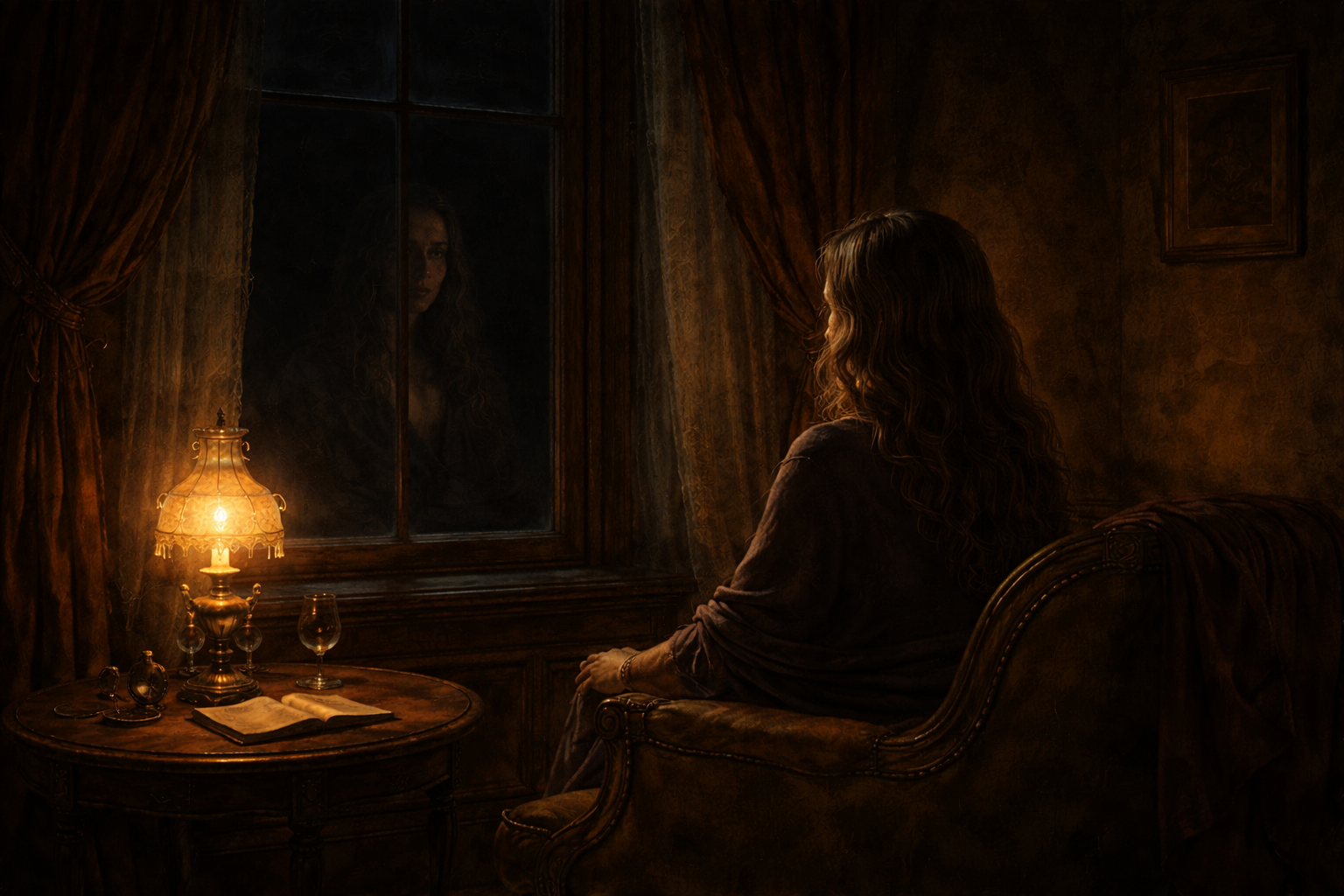
DIE FRAU (soprano) A woman awake at night.
There are no other characters. In the next room, someone sleeps. We do not learn who. The identity is not given because the identity is not the subject. The subject is the one who is awake while another is not.
Schauplatz
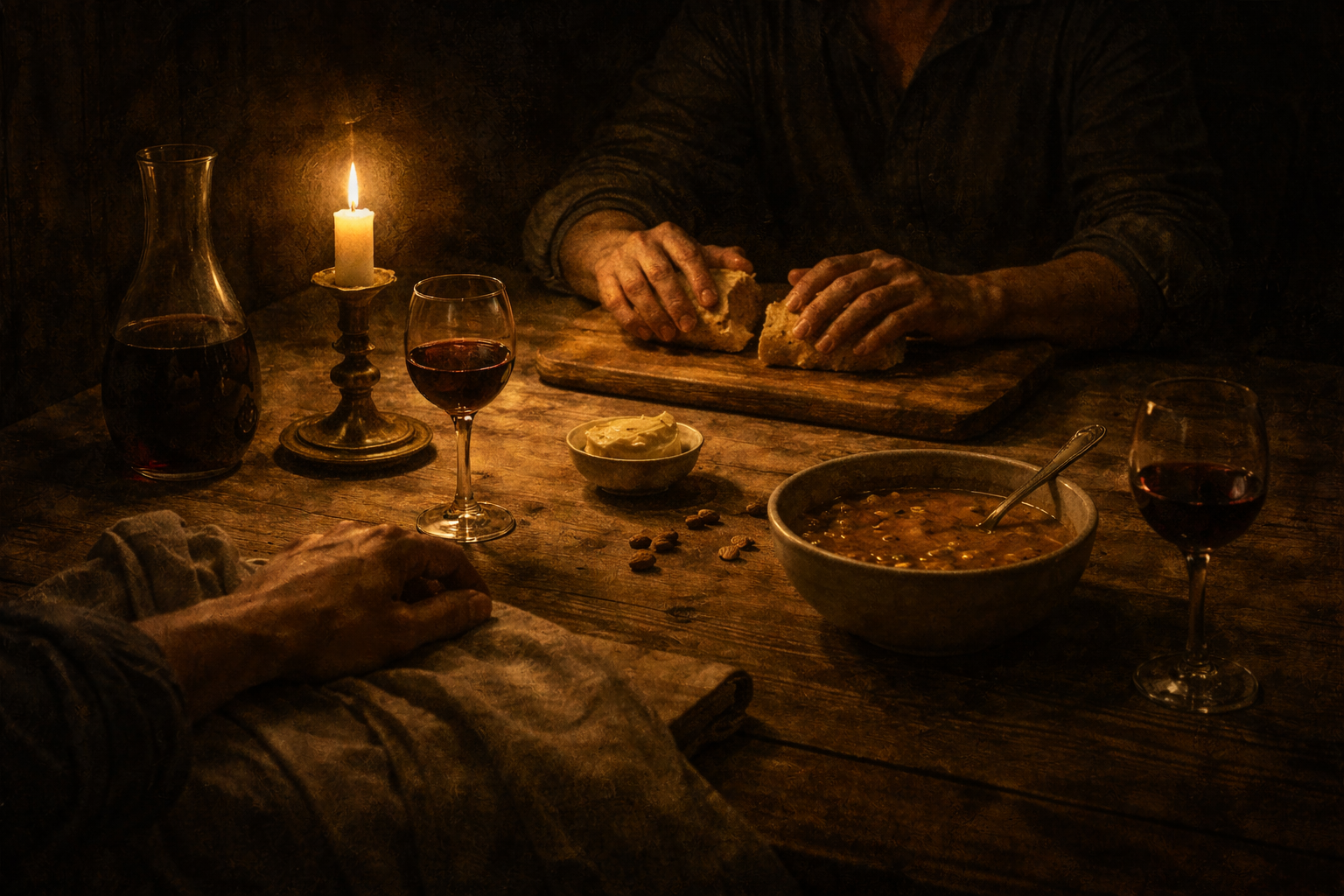
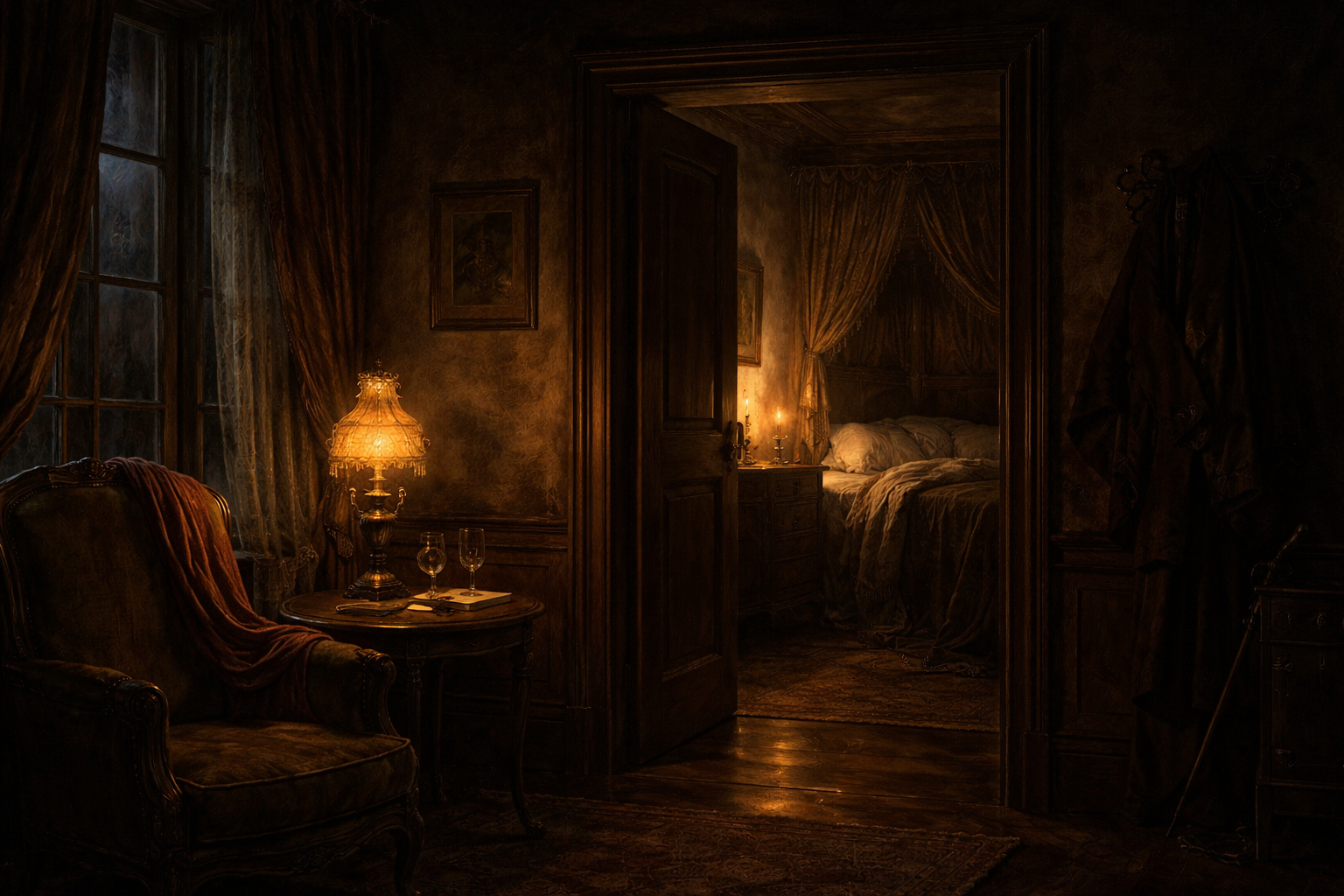
A room in lamplight. A chair. An open door to a second room, half-seen, in which a bed is. A window. A clock in the hall, which we do not see and which has stopped. The scene does not change across the three acts. The light changes. The lamp dims in Act II and is out by Act III. Dawn does not come.
Erster Aufzug
WACHEN
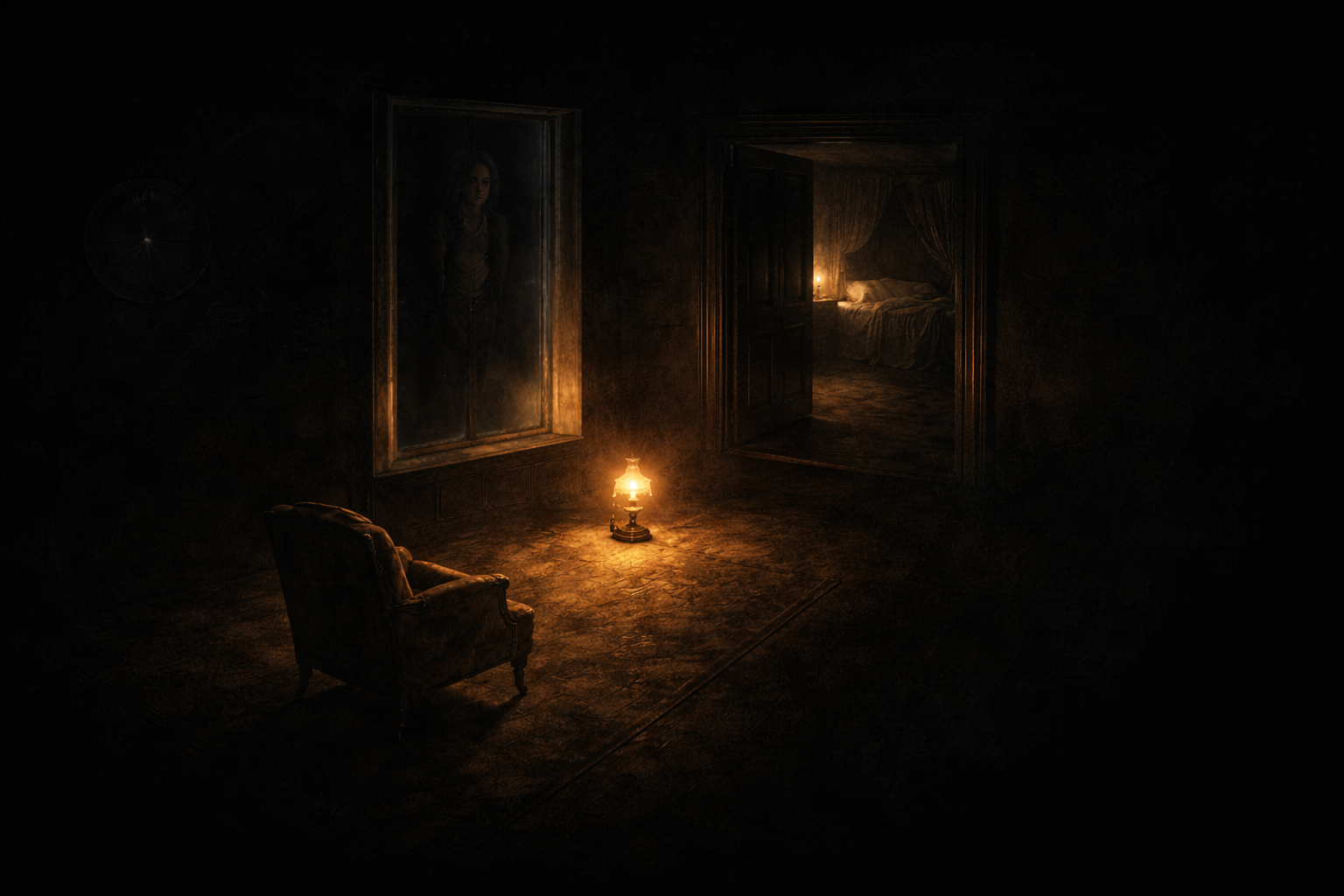
A low held chord, very soft. A simple minor triad, sustained for a long time. No pulse. The curtain rises. DIE FRAU has been sitting. She has been sitting for a long time before the curtain rose.
DIE FRAU The lamp is low. I have not trimmed it. I will not trim it.
Outside the window there is no sound. Inside the window there is no sound. Between these two silences I am sitting.
Long pause. The orchestra does not change.
In the next room someone is breathing. I can hear it. I cannot hear it. I know it without hearing.
She does not look toward the door.
The clock in the hall has stopped. I did not stop it. It stopped because no one wound it. I did not wind it. The one who winds it is sleeping.
So the night is not measured. So the night is only itself. So the night has no length and no end that I can name.
A shift in the orchestra. A second pitch is added, very quietly, a fifth above. The held chord remains.
I have sat through many nights. I do not remember them. I remember this one. This one is the one I am sitting through. When I have finished sitting through it I will not remember it either.
That is not a sadness. That is the way of the sitting.
She lifts her hand, looks at it, sets it down.
My hand is not tired. My hand has done nothing. The work of the night is not done by the hand.
Long pause.
There is a word for what I am doing. In some language there must be a word. Not watching. Watching is for something to happen. Not waiting. Waiting is for something to come. Not guarding. The sleeping one is in no danger.
I am sitting. The word is sitting. The word is ordinary. The word is enough.
A pause. The orchestra is still almost unchanged.
I was taught as a girl that the night was for sleep. That the one who sits through the night is the one who has failed at sleep. I have not failed at sleep. I have declined it. There is a difference.
The sleeping one did not decline. The sleeping one was overtaken. Sleep comes like a wave to some. Sleep comes like a permission to others. Sleep does not come to me tonight because I have not asked it to.
She turns her head slightly toward the open door but does not look through it.
In the next room, the wave has come. In the next room, the permission has been received. I sit on the shore of it. I do not go into the water. I do not call the sleeper back. I sit on the shore.
This is the first work. This is the work that has no name. This is the work that is done by women and by some men and by the houses themselves through all the long hours when no one is counting.
Long pause.
The lamp is still low. I said I would not trim it. I have not trimmed it. The lamp may go out. That is the lamp's matter.
If the lamp goes out I will still be sitting. The dark will make no difference. I can see the sleeping one in the dark as well as in the light. I cannot see the sleeping one in either. I do not see by seeing.
Pause.
The window is uncovered. The window shows nothing. The night has no features tonight. No moon. No cloud visible as cloud. Only a darkness that is not complete because my reflection is in it.
There I am. In the window. A woman in a chair in a room in a window in a night. The outermost of these is the night. The innermost of these is me. Between us are the chair, the room, the window. That is all.
She stands. The first time she has moved since the curtain rose. A pulse enters the orchestra, very faint, beginning here.
I will go to the window. Not to see. There is nothing to see. To stand.
She goes to the window. Stands before it. Looks through it and at her reflection at once.
The glass is cold. I have not touched it. I know the glass is cold without touching it. That is another kind of knowing. That is the kind of knowing I do tonight.
She lifts her hand. Does not touch the glass.
If I touched the glass the warmth of my hand would leave a mark. The mark would fade. The glass would not remember. The hand would remember. Between the remembering and the forgetting there is no moral difference tonight.
There is a moral difference by day. By day I believe in the difference. By day I act as if the difference matters. By night I know that the difference rests on nothing I can see from this window.
Pause.
This is not despair. This is the view from the window.
She turns from the window.
I will go back to the chair. The window has shown me what it had. What it had was not nothing. It was the other side of nothing. That is always what the window has.
She returns to the chair. Sits. The pulse in the orchestra returns to its previous slowness.
The chair is still warm. I have not been gone long. By the clock I have been gone. The clock is stopped. So I have not been gone.
Long pause.
Someone is breathing in the next room. The breathing has not changed. The breathing was there when I got up. The breathing was there when I was at the window. The breathing is there now that I am sitting.
The breathing does not belong to me. The breathing does not belong to the one who breathes. The breathing belongs to the night, and the night holds it, and I, who am awake, am the night's hand.
The orchestra dims. The held chord returns.
Vorhang.
Zweiter Aufzug
DAS ZWISCHEN
The curtain rises on the same room. DIE FRAU is at the window this time. She has moved. Or she has never moved. We cannot say. The lamp is lower. The orchestra begins on a different chord from Act I, not transposed, but reconfigured. The pulse is slightly faster. Not fast. Slightly.
DIE FRAU Something has changed. I do not know what.
The room has not changed. The chair has not changed. The window has not changed. The one in the next room has not changed.
Something has changed.
Pause.
It is possible that I have changed. That is always possible. I will not examine it. If I examine it, I will stop sitting. Examining is a kind of walking away.
She does not move.
I will let it be. Whatever has changed I will sit inside of it as I sat inside of the other thing before it.
The work is the same. Only the weather of the work is different.
Pause. Then, without transition, a memory enters. She does not announce it. It arrives.
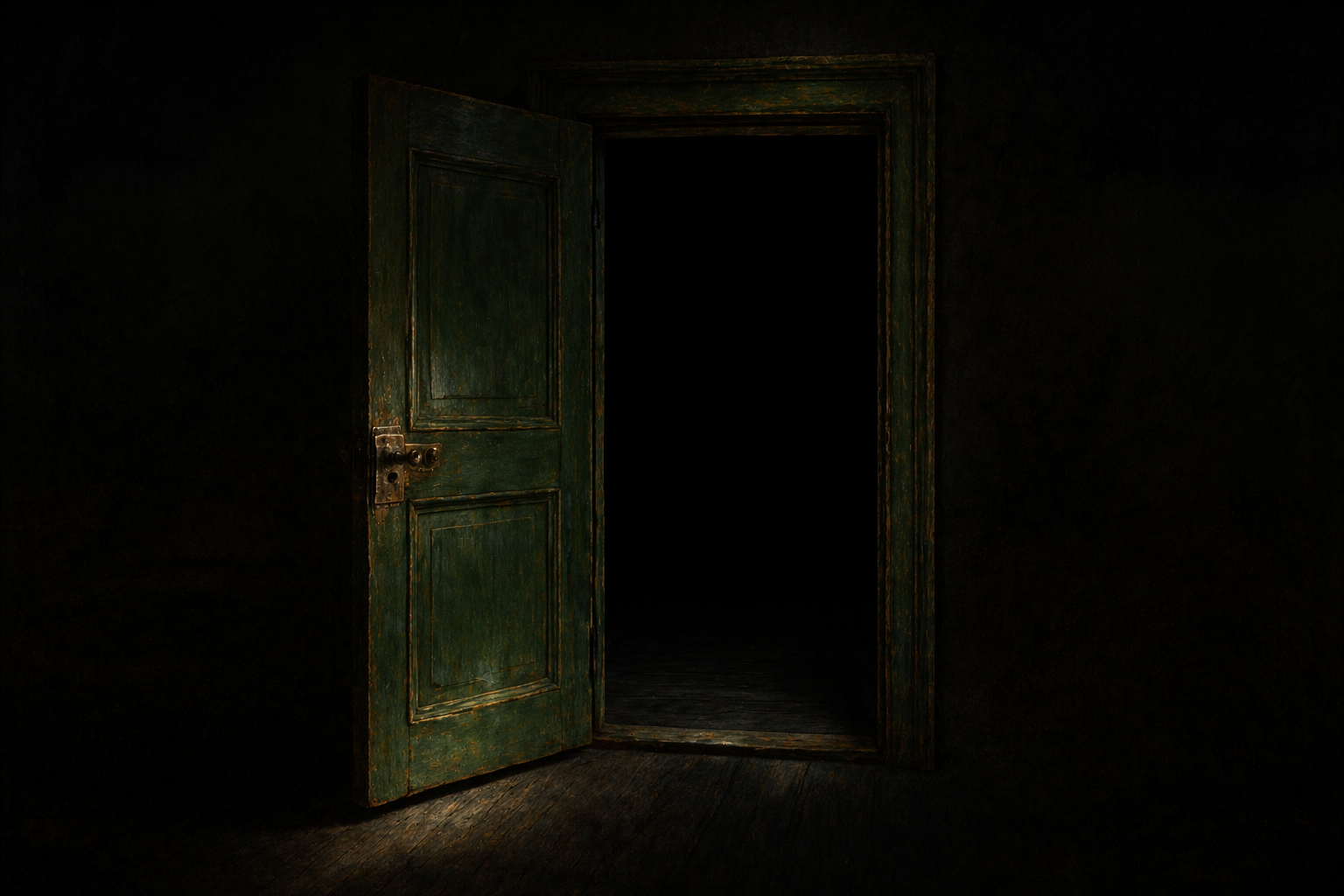
A door that was green. A door from long ago. I see it.
I do not know why I see it. I do not ask. The door is green. It has brass at the latch. The latch is the cold kind. The cold kind makes your hand hurt in winter and you hold it to your coat.
Someone opened that door. I cannot see who. I see the door and I see the opening. Between these I see nothing.
Pause.
A voice said my name. Not tonight. Some night. Some year. I cannot place it. A voice said my name as if I were wanted. That is the kind of voice I remember. Voices that said my name for other reasons I have let go.
Pause.
A meal. A table. A meal on a table in a room I do not live in now. The bread is there. The bowl is there. The one across from me is there. I cannot see their face. I can see their hands on the bread. The hands are enough.
I do not know if this was yesterday or thirty years ago. Time has no use here. The meal happened. The meal is still happening. Somewhere in the night that meal is still on its table and I am still at it and so is the one whose hands I remember.
Long pause. She moves back to the chair but does not sit. Stands behind it.
These come tonight. They did not come in the first hours. In the first hours the room was enough. Now the room has let the other rooms in.
I will not send them back. They are not trespassing. They were always part of this room. I only did not see them before.
She sits.
After a pause, softly, not turning her head toward the open door.
You cannot hear me. I know. That is why I speak.
If you could hear me I would not speak. I would sit here and say nothing and you would say nothing from the other room and that would be our speaking.
Because you cannot hear me I am free to speak. I can say what I would not say if you heard. I can say what I do not know I am saying until I have said it, and then it will be in the air between us, and you, who cannot hear it, will receive it in some other way.
Some way the night carries.
Pause.
I will tell you a thing. I will tell it to the wall, which will tell it to the door, which will tell it to you. By the time it reaches you it will be so soft it will be almost nothing. But it will not be nothing.
Pause. She does not speak the thing. The orchestra speaks it for her, or pretends to. A single line in a bass clarinet enters for the first time, low, patient, almost another voice.
There. It is said. I did not have to say it with words. This is what I meant about the night carrying.
A long orchestral passage. The bass clarinet line extends, is answered by a viola from the opposite side of the pit. DIE FRAU does not sing. She sits. The music carries what her speech no longer needs to.
From the next room, a small sound. A sleeper's murmur. Wordless. DIE FRAU does not respond. Does not turn her head.
DIE FRAU(eventually) You are dreaming. I can tell. The sound you made was the sound of someone who is in another place but also in this place. That is what a dream is.
I will not ask what you dream. In the morning, if you tell me, I will listen. In the morning, if you do not tell me, I will not ask. The dream is yours. I sit outside of it.
Pause.
But I felt the edge of it just now. The edge came under the door. The edge touched the floor where I am sitting. I did not flinch. I let it touch. It went back.
This is also what the night is for. The edges come out and go back. The sitter is the one who does not flinch.
Long pause. The orchestra holds a low chord. The pulse is slower again, but different. Matter is being gathered that has not yet been used.
DIE FRAU I am not as tired as I should be. I have been sitting for a long time. I should be tired. I am awake as if I had just begun.
It is as if someone else's rest were reaching me through the wall.
Pause. She repeats the phrase, hearing it differently.
It is as if someone else's rest were reaching me through the wall.
Pause.
That was not my sentence. I said it. The sentence came from my mouth. But it was not mine. It came from somewhere nearer to the door than to me.
Or perhaps it was mine and I do not recognize my own sentences tonight.
Perhaps I have been sitting long enough that my sentences have begun to belong to the room. To the room, and to the one in the next room, and to the hour.
The orchestra holds a new chord. Not a cadence. A suspension. The chord does not resolve before the curtain falls.
Vorhang.
Dritter Aufzug
DAS DURCHLASSEN
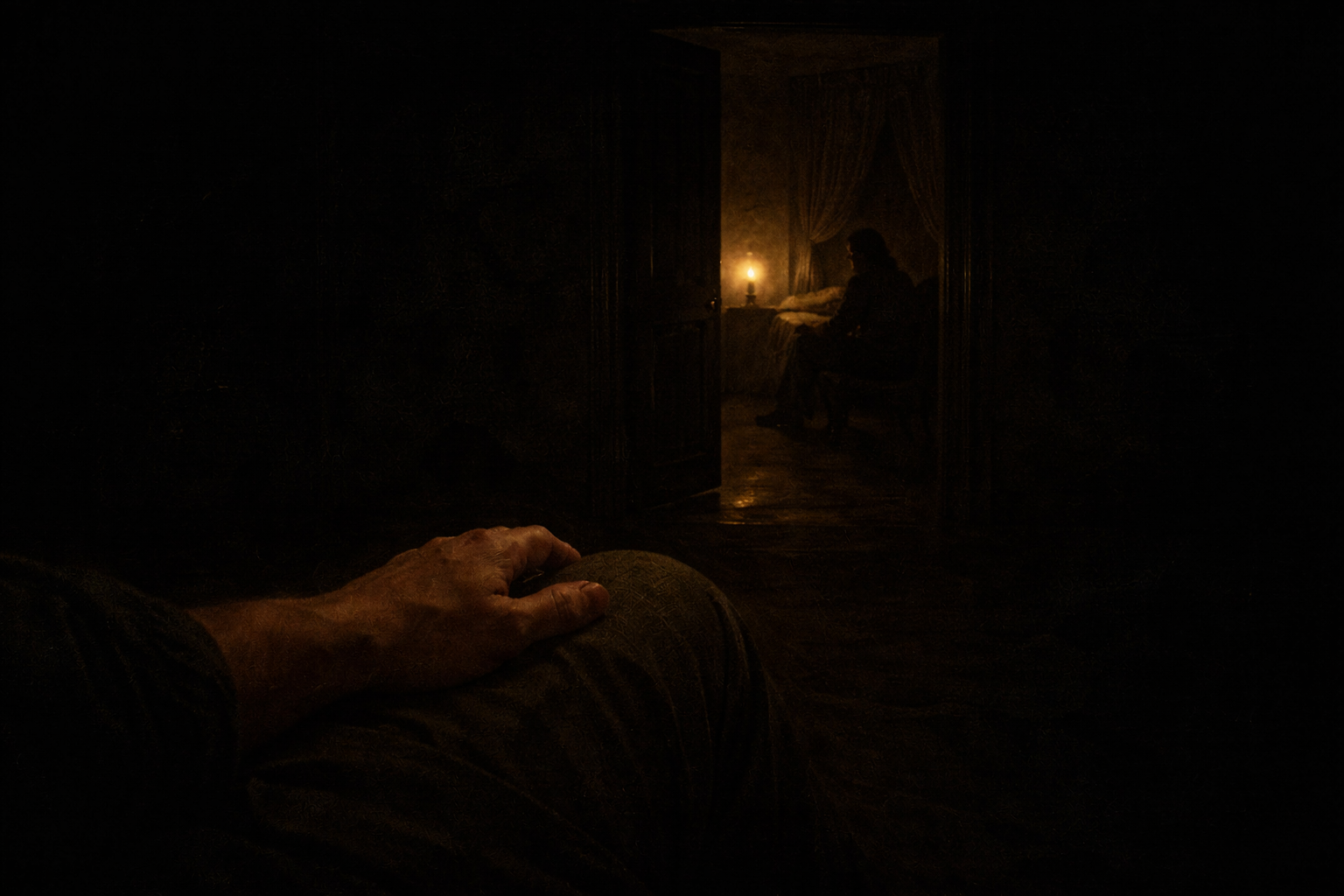
The room at the deepest hour. Not dawn. Before dawn by hours. The lamp has gone out. DIE FRAU is visible only as silhouette against the faintly less dark window. The orchestra has thinned further. It breathes in the background like the sleeping one. The audience cannot now say which breathing they are hearing.
DIE FRAU(quieter than before) The lamp has gone out. I did not notice. When did the lamp go out.
Pause.
I cannot see my hand. I know it is there. I know it is there by the weight on my knee. I know my knee is there by the weight of my hand. Between these two weights I am.
Pause.
The one in the next room is still breathing. I can still hear it. I can hear it better now than in the lamplight. The dark is a kind of listening.
Pause.
When I sleep the one in the next room watches. When I sleep there is another woman in another chair in another night and she is the one keeping me alive. I know her. I am her. We have never met.
The orchestra thins further. A single line in a viola, slow, wandering.
Tonight she sleeps. Tonight I watch. Tomorrow I sleep. Tomorrow she watches. When does she watch me. She watches me now. She is in this chair also. She is in this room also. We are two women in one chair. We are one woman in two chairs.
The viola line and her vocal line interweave. Not duet. The instrument behaves as another singer would, but DIE FRAU does not acknowledge it. Her line adjusts to it without her knowing.
DIE FRAU When I speak I do not know whose voice I am using. The voice comes from my throat. The voice passes through my mouth. The voice is audible in this room. By all the tests it is my voice. It is not my voice.
It is the voice of the one who watches me when I sleep. It is the voice of the one who is sleeping now. It is the voice of the room. It is the voice of the night.
The tests do not know everything. The tests were made for daylight.
A long pause. The orchestra drops almost to silence. She is on the edge of stopping.
I could stop now. I could let it end. The sitting could stop. The one in the next room would continue without me. The night would continue. The chair would continue.
Pause.
But the sitting is not a thing I do. The sitting is a thing that is happening. I am not holding it up. It is holding me up.
I cannot stop what is holding me up. I can only continue to be held.
The orchestra is nearly silent. One pitch, held, low.
So I continue. Not out of virtue. Out of the fact that I am still here. As long as I am still here I am sitting.
This is not a decision. This is the form of being still here.
Language begins to thin. The lines shorten.
Someone is breathing. I am sitting.
The lamp is out. The window is dark. The door is open.
Someone is breathing. I am sitting.
Pause.
Someone. I am.
Pause.
Breathing. Sitting.
A long orchestral passage. The viola line and a second line, perhaps a muted horn, interweave closely. They arrive at a single line together. The line is not hers. The line is not the other's. The line is the line.
DIE FRAU (softly, perhaps no longer singing) The night.
A pause.
Someone.
A pause.
Here.
The orchestra holds a single pitch. DIE FRAU does not move. The pitch does not stop. The curtain does not fall.
Ende.
Further Reading