The Dream the Project Sent: On Heimsuchung, Athens, and the Instrument That Plays Itself
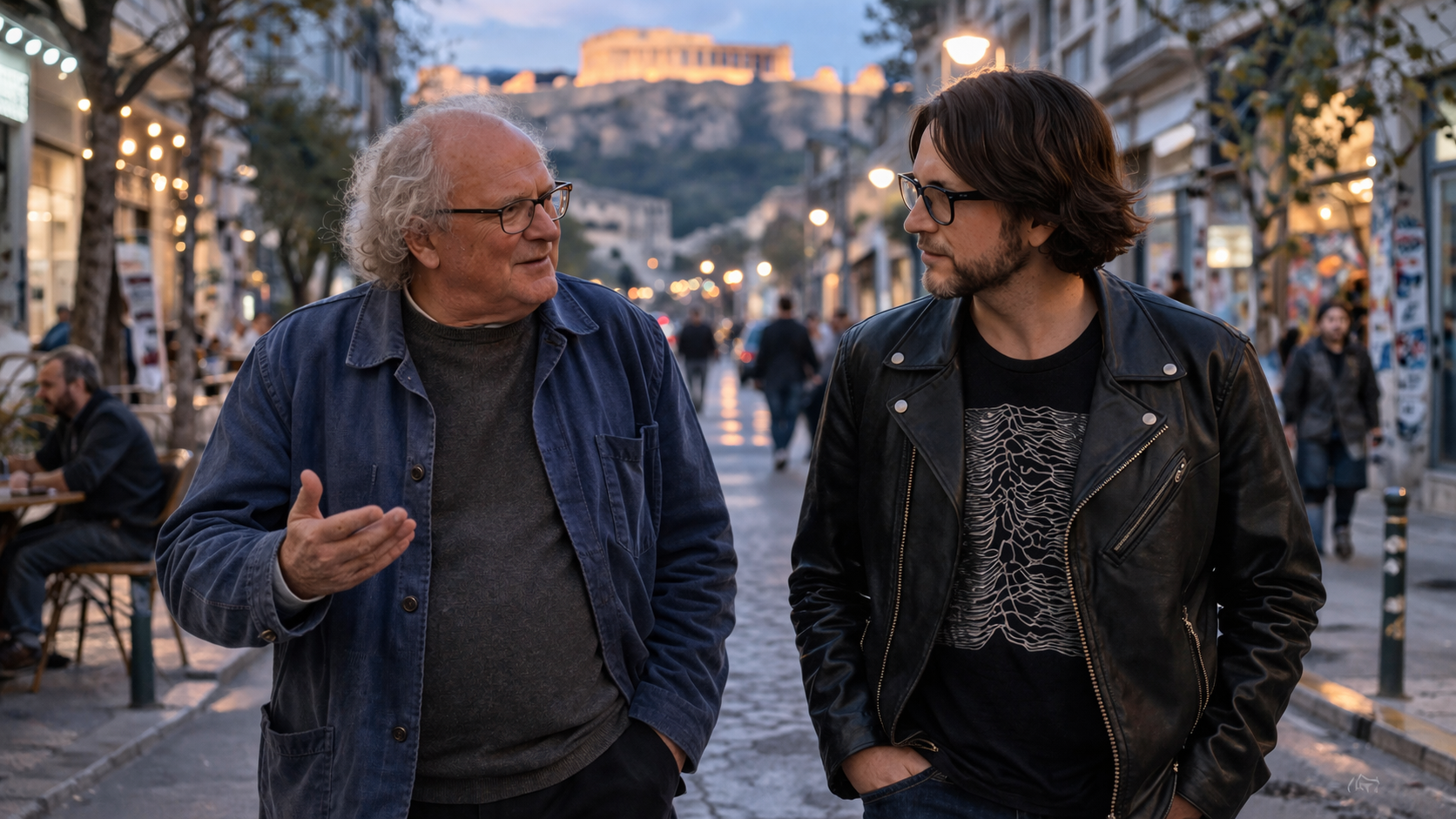
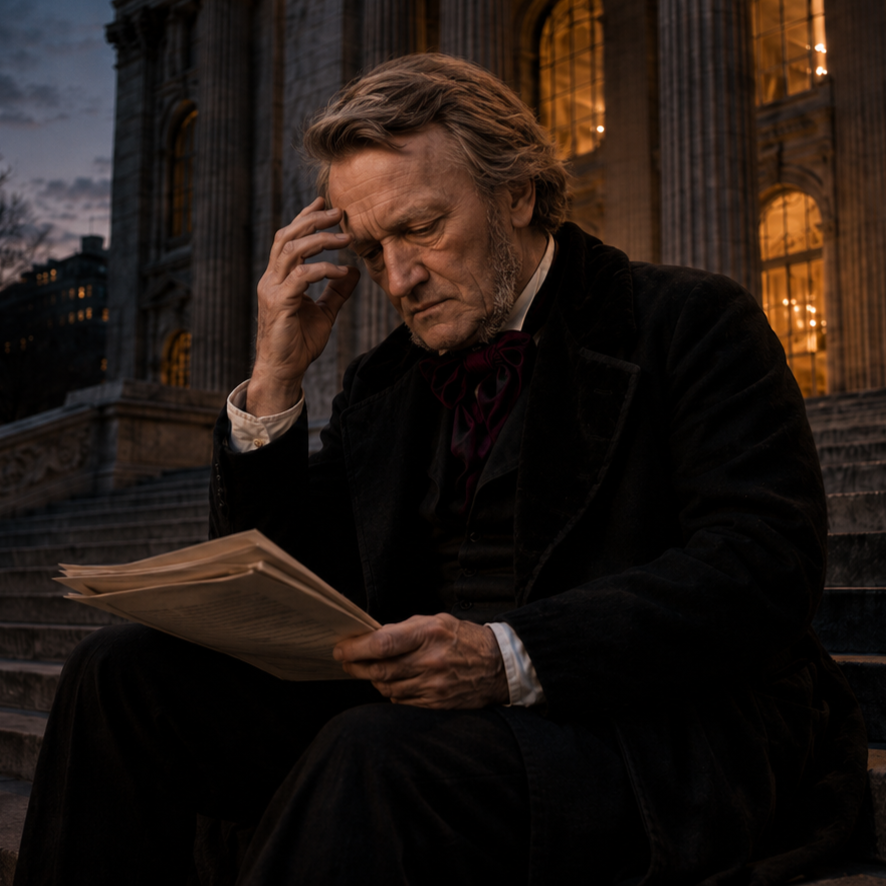
In Athens last week I was visited by Jon Thompson in a dream. He stood close. He put his hand on my shoulder. He told me to simplify the project. Focus on the three most important things. The three most unique. The three most compelling. Then he was gone. I woke without the three things. I woke with the hand still on my shoulder.
Heimsuchung is the German word for visitation. It carries more than the English equivalent suggests. Heim means home. Suchung means seeking. A visitation is, etymologically, a home-seeking. Something that comes looking for the place it belongs. The word also carries a secondary meaning, older and darker: an affliction. A plague. A trial sent from outside. Both meanings apply here. Jon came looking for something. And the encounter was, in the most precise sense, an affliction. Not painful. But impossible to put down.
Jon has been gone for years. I wrote about him earlier this year, about his office at the Jan van Eyck Akademie, about Wagner leaking through the door, about the thirty-year fuse he lit inside me without knowing it. Writing that piece felt like arriving somewhere. Like completing a transit that had begun in the Netherlands and ended, decades later, in a New York I had not yet reached when I first heard that music. I thought I had processed him. I thought the article was the completion. The dream corrected that assumption.

I need to say something about Athens. Athens is not a neutral place to receive a visitation. The ancient Greeks understood the geography of communication between the living and the dead with a precision we have mostly lost. The dead speak at thresholds. At crossroads. At places where the vertical axis of time collapses into the horizontal axis of now. Athens is built on that understanding. It is a city where the past does not stay in the past. It accumulates. It presses against the present like weight against a door.
I had already mapped the Acropolis as Valhalla for a walk I was designing. The gods' fortress. The elevated place. The structure built to last that cannot, in the end, last. I was already inside that logic when I fell asleep. The city was already doing what the project does. Turning geography into mythology. Turning a walk into a score. Jon appeared, then, not in spite of that context but because of it. Athens made the dream possible. Not as supernatural explanation but as atmospheric permission. The city was already operating at the frequency the project requires.
Jon never gave me a syllabus. That is the central fact of his influence. He did not assign Wagner. He did not suggest I pay attention to it. He simply lived in a particular frequency, and proximity to that frequency changed something in me that I would not understand for thirty years. His teaching, in this respect, was entirely environmental. An atmosphere. A weather condition. A door left half-open. The dream was consistent with that.
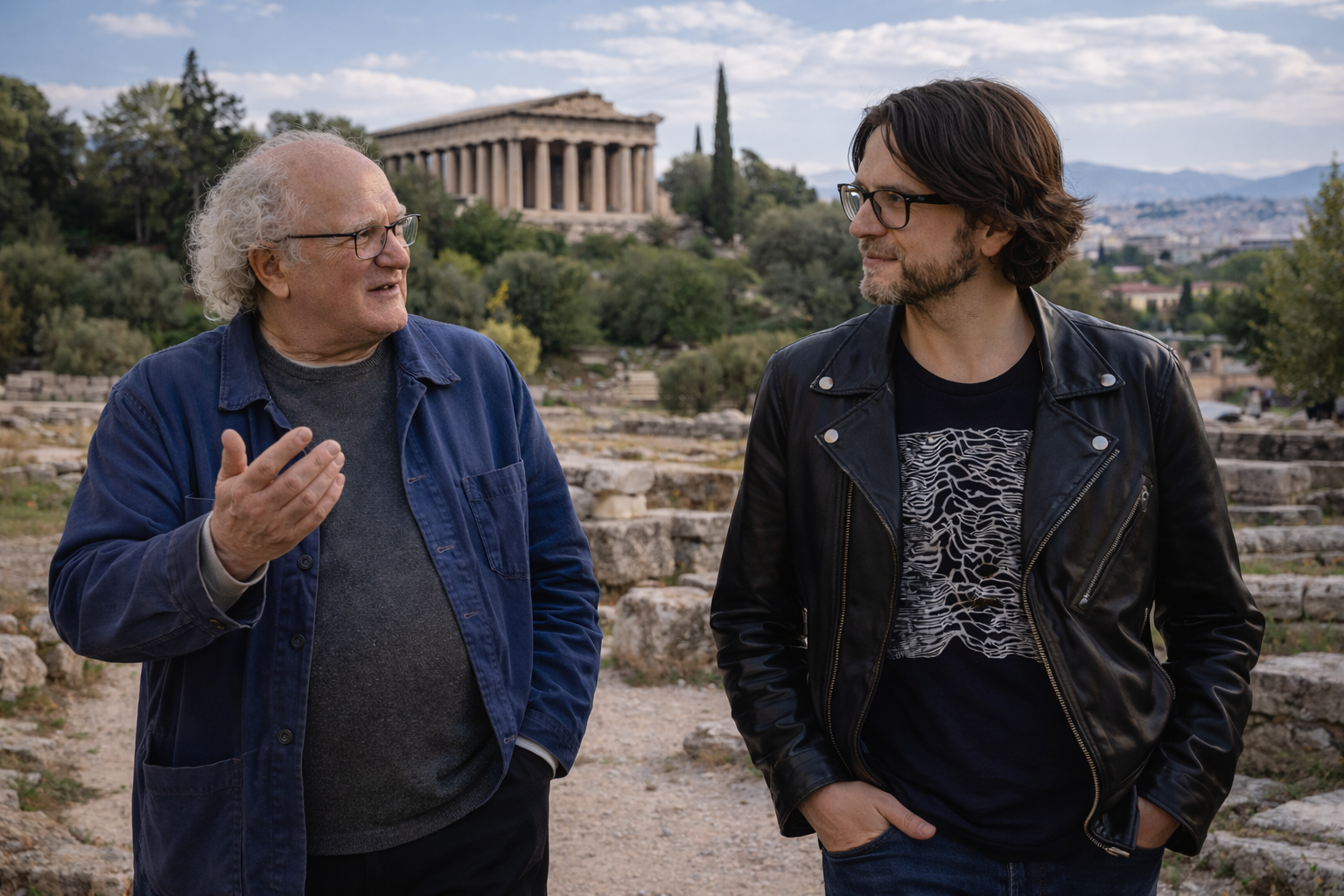
He came with a directive. Simplify. Find the three things. And then he left before I could receive them. This is not a failure of the dream. This is the dream working correctly. Jon is not going to hand me the answer. He never did. The lesson, in life and apparently in death, is that the answer is already inside you. The role of the guide is not to supply it but to make you understand that the search is necessary. In this sense the dream is the most Jon-like thing that has happened since the article. He arrived exactly as himself.
There is something else. I am in the Tristan month. April. The opera that belongs entirely to the night. Tristan und Isolde is built on a single structural argument: the daylight world operates by one set of laws, and the night by another. In daylight, there are obligations, identities, consequences. In the night, those collapse. What is true in the dark cannot survive the morning. Tristan can only reach Isolde after dark. The longing that drives the whole work exists in a register the waking world cannot hold.
Jon came to me in a dream. In the night register. In the place where different laws apply. And when daylight came, the specific content of what he said did not transfer. The three things dissolved at the threshold, the way Tristan's world always dissolves at dawn. This is not a failure of the dream. This is the dream operating correctly. The night gave me what the night could give. The warmth of the hand. The direction of the push. The certainty that the search matters. The details, the three specific things, belong to the work that can only happen in daylight. In the walking and the writing and the choosing.
Tristan never resolves in the light. It resolves in the Liebestod, the love-death, the completion that is also a dissolution. Jon's influence on me has always had that quality. It cannot be held directly. It can only be felt as a condition, a weather, a frequency that makes certain things possible. The withholding is the gift. The incompleteness is the instruction. Go find them yourself. You are the only one who can.
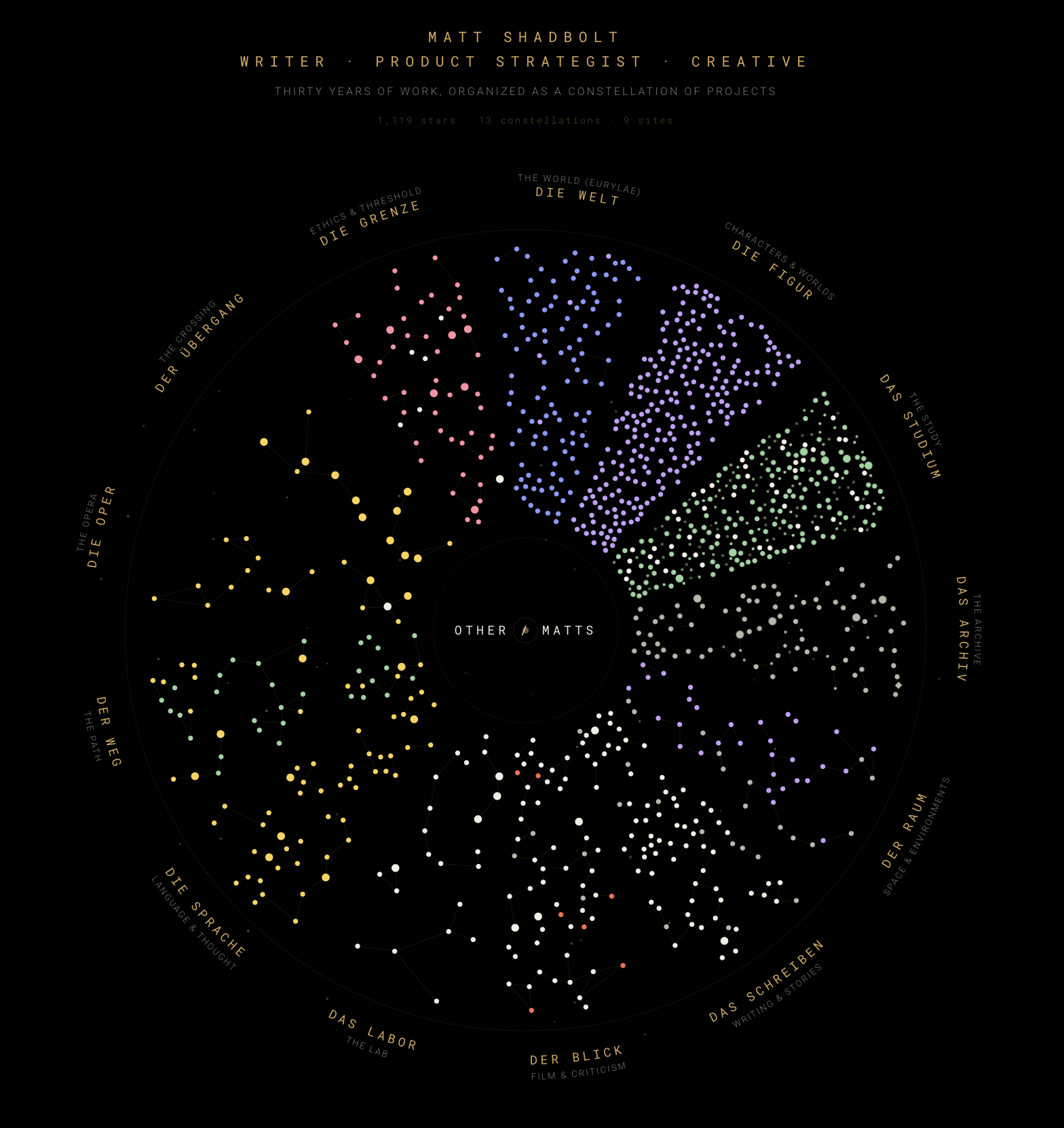
I have been building this project for months now. Twelve operas. Twelve months. A walk for each one. German essays. Podcasts. Photography. Maps. The project has accumulated mass. It has layers. Sometimes the layers feel essential. Sometimes they feel like insulation against the cold simplicity at the centre. Jon's hand on my shoulder was pushing me toward the centre.
The dream was not sent from outside the project. This is the part I keep returning to. I had already written, in the Jon article, that some influences are not directives but motifs. That they return when the narrative requires them. The dream is that sentence made literal. The project, saturated in the logic of return and unintended transmission, generated the experience it had been theorizing. I built the instrument. The instrument played me.
That is not a mystical claim. It is a claim about what sustained creative attention does to consciousness. When you live inside a set of ideas long enough, when you walk with them through cities and seasons, when you write about them and speak them aloud and learn the language they were first thought in, those ideas become structural. They change the architecture of your attention. They determine what you notice. What you dream.
The project did not predict the dream. The project created the conditions under which the dream became possible. There is a difference. The first is magic. The second is work. The hand on the shoulder. I have been trying to understand the specific quality of the feeling it left. Eerie is one word for it. Watched over is another. Neither is quite right. What it feels like is: accompanied. Not supervised. Not evaluated. Not even, exactly, loved. Accompanied. The sense that something is moving through this work alongside you. Something that has a stake in it reaching its proper form.
Jon cared about the conditions of serious work. That is what I wrote about him. The unapologetic act of choosing an environment that made his mind possible. He was not performing intensity. He was building the room in which intensity could occur and then inhabiting it completely. He would care about this project reaching its proper form. Not for sentimental reasons. Because the project is, in its way, an argument about the same thing his office was an argument about. That an inner life deserves infrastructure. That a practice of attention deserves a system. That the sacred can survive inside institutional reality if you are willing to be a little strange about it.
He came to tell me the argument is getting lost in the infrastructure. Simplify. Three things. Go. I am still finding them. The hand is still on my shoulder. Athens is behind me now, but its logic is not. The dead spoke. The project listened. The work continues.
Further Reading