The World That Cannot Be Reached: On Ferne
Das Wort / the word: die Ferne (f.), pl. die Fernen (rare, mostly literary)
Aussprache / pronunciation: FER-neh
Wortart / part of speech: Noun, feminine, also functions adverbially in set phrases
Register: Primarily literary and reflective. Ferne is not an everyday conversational word in the way Vertrauen or Glaube are, it tends to appear in writing, song, poetry, and elevated speech. But it is entirely familiar to German speakers and carries immediate emotional resonance.
Was das Wort wirklich bedeutet / What the word actually means
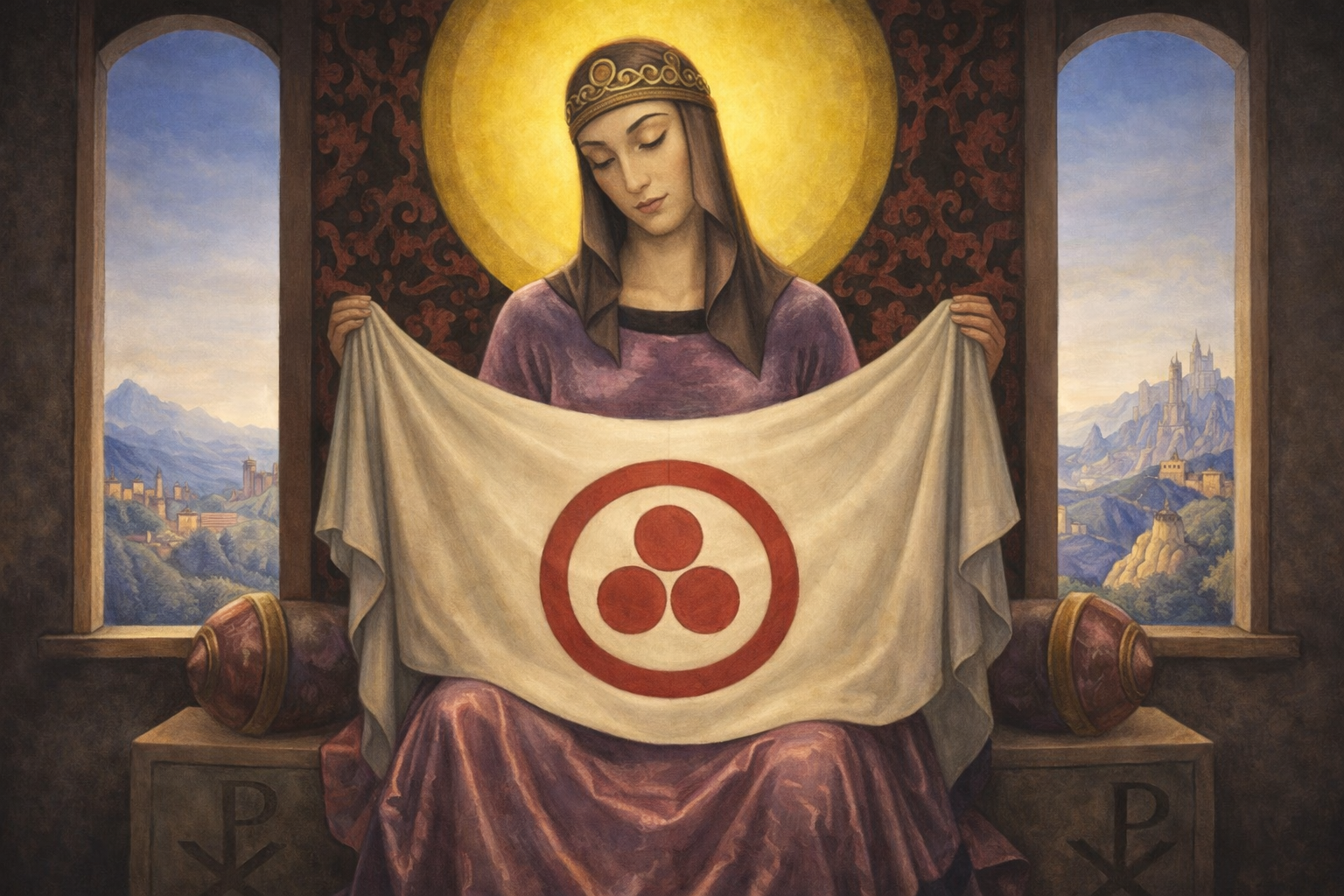
Ferne means distance, remoteness, the far-away. More precisely, it names the quality of being far rather than the measurable quantity of distance. Entfernung handles the measured gap between two points. Ferne is the experiential character of farness, the way something exists at a remove that is felt as much as calculated. To look into die Ferne is not to estimate the mileage to the horizon. It is to experience the horizon as fundamentally, beautifully, perhaps agonizingly beyond immediate reach.
Lohengrin sings his great aria from in fernem Land, unnahbar euren Schritten, in a far land, unapproachable to your steps. The phrase encodes everything Ferne means in the March context. The Grail realm is not merely geographically distant. It is ontologically distant. It belongs to a different order of reality from the one Elsa and the court inhabit. The Ferne of Monsalvat is not a problem of transportation. No map-reading and no journey can solve it. It is the fundamental inaccessibility of the sacred, the impossibility, encoded into the structure of the holy, of approaching it on your own terms and in your own time.
This quality of irreducible, structural inaccessibility is what distinguishes Ferne from ordinary distance, and what makes it so useful as a concept for the March walk. The reservoir, 106 acres of water, the opposite shore receding into the Manhattan skyline, stages Ferne visually. The Roerich Museum's mountain canvases, all peaks and high passes and temples on impossible ridges, stage it pictorially. The Prelude, beginning in registers almost above hearing, stages it acoustically. Ferne is the March month's primary spatial experience. The feeling that something important exists at a remove that cannot simply be crossed.
Die Etymologie und das Netz der Distanz / Etymology and the Network of Distance

Ferne derives from Old High German ferro, ferrana, meaning from far away. The root is shared with fern (far, distant, the adjective: ein fernes Land, a far land) and with the adverb fern used in compounds and prepositional phrases. The Proto-Germanic root *ferrana is related to comparative vorder (forward, ahead) and may share a distant root with Latin porro (forward, further on). The directional sense, something that is ahead, further along, beyond the current position, is embedded in the word's origin.
The German vocabulary of distance is rich and worth mapping:
Fern (adj./adv.), far, distant (the adjective: ferne Länder, distant countries)
Die Ferne (noun), the far-away, remoteness, distance as a felt quality
Die Entfernung, the distance (measured, spatial, die Entfernung zwischen zwei Punkten)
Weit (adj./adv.), wide, far, extensive (weit entfernt, far away, weit und breit, far and wide)
Die Weite, vastness, the wide open expanse (related to weit as Ferne is related to fern)
Das Fernweh, the ache for the far-away, wanderlust (we encountered this January word in the Sehnsucht article: the pain of wanting to be elsewhere)
Die Nähe, nearness, closeness (the opposite of Ferne, Nähe und Ferne, nearness and distance, is a recurring thematic pair in German literature)
The contrast Nähe / Ferne, near / far, is one of the structuring binaries of German lyric poetry and Romantic thought. Johann Wolfgang von Goethe, Novalis, and Hölderlin all worked with this opposition. The beloved is in Ferne, the ideal is in Ferne, home is in Ferne, the desirable is always at a remove that desire intensifies rather than closes. Sehnsucht (January) is the experience of feeling that remove as an ache. Ferne is the quality of the thing that generates the ache.
Ferne und Fernweh / Remoteness and Wanderlust
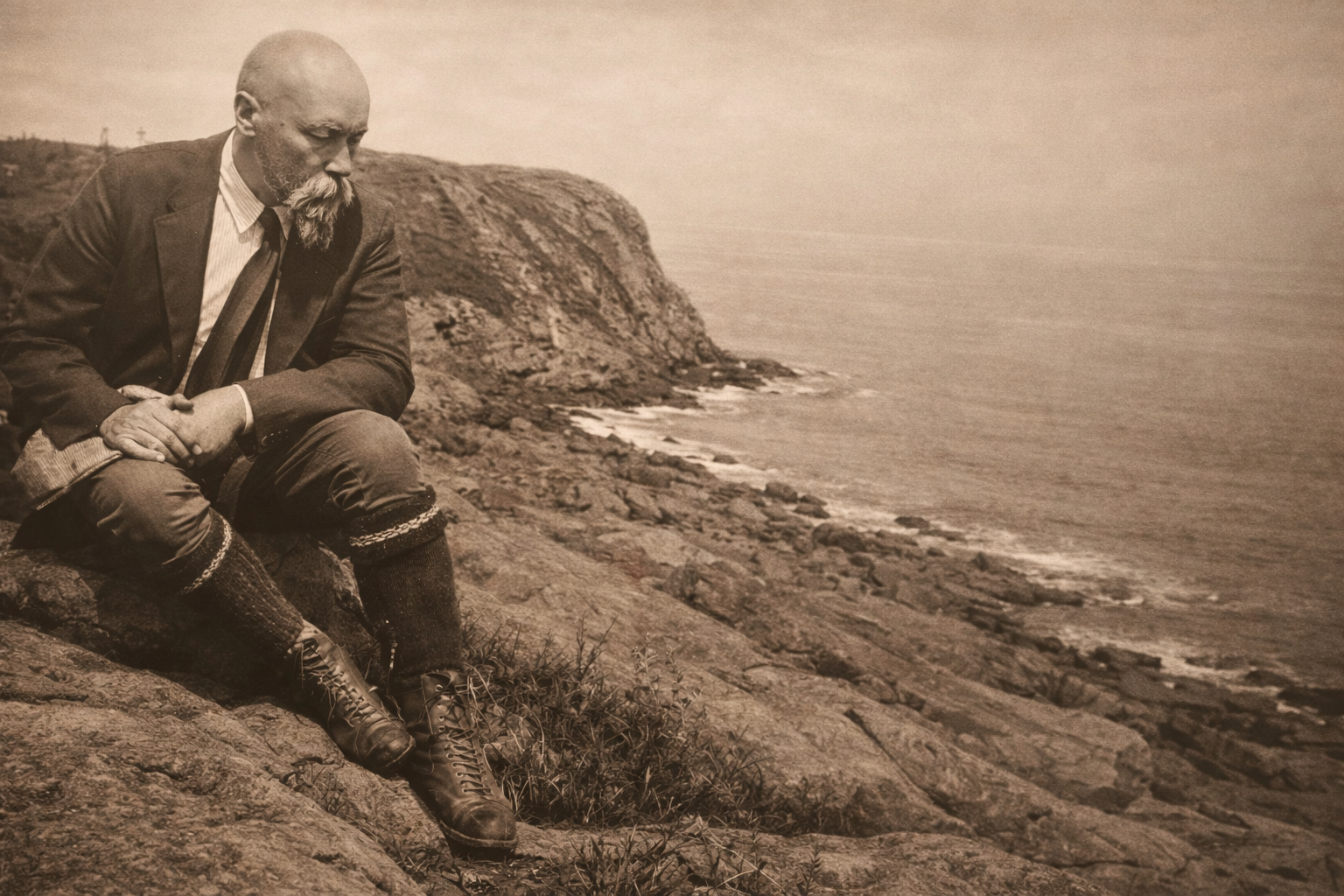
We met Fernweh briefly in the January article on Sehnsucht, as part of the German vocabulary of aches and orientations. March's Ferne gives the occasion to examine it more closely, because the relationship between Ferne and Fernweh illuminates both.
Fernweh, literally far-ache, the pain of the distant, is the counterpart to Heimweh (homesickness, the pain of the near that is absent). Where Heimweh hurts because your home is far away, Fernweh hurts because the far-away is far away. The ache of Fernweh is the ache of the person who is at home but does not want to be, who feels drawn toward something distant and inaccessible, who cannot rest in the near because the far pulls too strongly.
The Grail, in Lohengrin, generates Fernweh in those who glimpse its power without belonging to it. Elsa sees the knight, knows from the moment of his arrival that something extraordinary has touched her world, and cannot simply observe it coolly. She is drawn toward the source of his mystery. Her fatal question is, in one reading, an act of Fernweh, the need to approach, to close the distance, to be where the miracle comes from, even knowing that closing that distance destroys the conditions of the miracle's presence.
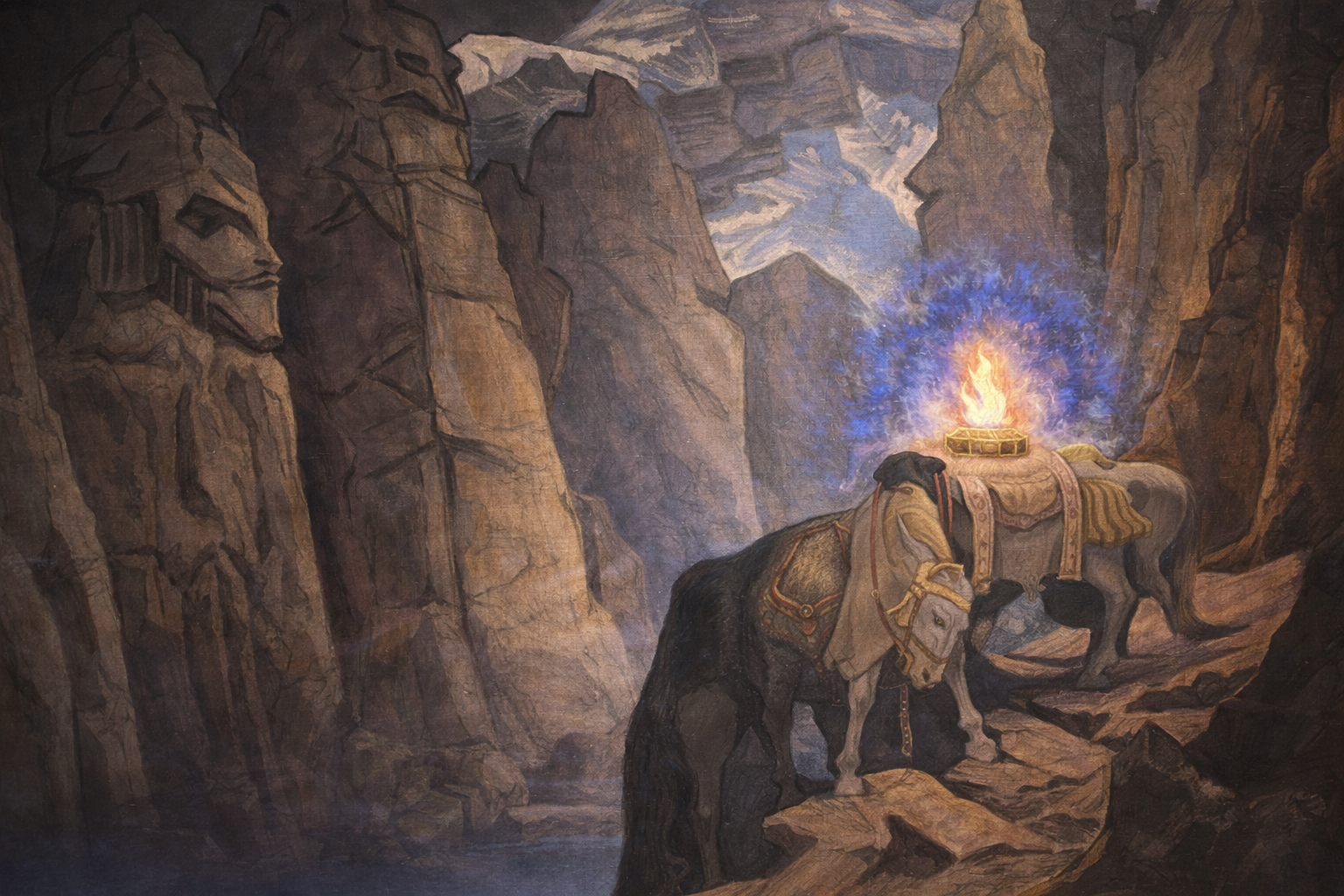
The Roerich paintings in the Museum generate Fernweh of a painterly kind. Mountains so high and remote that the viewer cannot imagine being there, but feels pulled toward the painted altitude anyway. Roerich spent significant parts of his life in the Himalayas, painting what he found. His canvases are records of Ferne made into pigment. The distant brought into the frame, the inaccessible made available to the eye, but never to the foot.
Ferne als ästhetische Kategorie / Ferne as Aesthetic Category

In German aesthetics, particularly in the Romantic tradition, Ferne is not just a spatial concept but an aesthetic one. The beautiful, for the Romantics, had a quality of Ferne built into it. The thing that is too close, too immediate, too fully present lacks the dimension of mystery and longing that genuine aesthetic experience requires. Beauty, in this account, requires distance.
Friedrich Schiller, in his theoretical writings on the nature of aesthetic experience, argued that art operates in a special kind of space, a space of schöner Schein (beautiful appearance / semblance). The aesthetic object presents itself as real while being manifestly not-real, creates feelings and responses that are related to but distinct from ordinary emotional reactions to actual events. This aesthetic distance is a kind of managed Ferne. The work of art is near enough to affect you, far enough to not overwhelm you with the force of actual experience.
Wagner's Prelude to Lohengrin is one of the most sophisticated musical enactments of aesthetic Ferne in the repertoire. The opening registers, very high strings, barely audible, hovering, place the music at the limit of perception. Near enough to be heard, far enough to seem barely present, from a Ferne that is as much experiential as acoustic. You must actively listen toward it, lean into the Ferne to bring it closer, and this act of leaning, of attending across distance, is itself part of what the Prelude creates. The music requires Fernweh of the listener. You must want to hear it before you fully can.
Caspar David Friedrich's paintings achieve the same effect pictorially. His figures face away from the viewer, looking toward distant landscapes. The Wanderer above the sea of fog, the monk by the sea, the woman at the window. The viewer is always behind the figure, sharing the gaze into Ferne, never seeing the face that would turn the Ferne into a social encounter. The distance is structural and irreducible. You look with the figure, not at them.
Ferne in der deutschen Lyrik / Ferne in German Poetry
Ferne is one of the most frequently recurring words in German lyric poetry of the 18th and 19th centuries. A few key appearances:
In Goethe's poem Meeresstille (Calm Sea), the sailor is becalmed, surrounded by Stille (stillness) with Ferne visible but unreachable: Tiefe Stille herrscht im Wasser, / Ohne Regung ruht das Meer, Deep stillness reigns in the water, the sea rests without motion. The Ferne here is a spatial correlate of suspension. You can see where you need to be, you cannot move toward it.
In Schubert's song cycle Die schöne Müllerin and Winterreise (both settings of Wilhelm Müller's poems), the wanderer moves through a landscape in which the destination is always in Ferne, the mill, the beloved, home, rest. The motion never closes the distance. This is Ferne as dramatic structure: the act of seeking does not bring the sought-for thing nearer but reveals that it recedes as you approach.
In Rainer Maria Rilke's Duineser Elegien, Ferne appears as a constitutive feature of the human condition: we are beings for whom the most significant things exist at a remove that desire intensifies but cannot close. The angel, the beloved, the experience that would complete us, all of these are in Ferne, and our orientation toward them is the fundamental shape of human longing.
Grammatik und Gebrauch / Grammar and Usage

Die Ferne is feminine. It is used primarily in the singular, with the plural (die Fernen) appearing occasionally in literary and poetic contexts.
The adjective fern: Far, distant. Comparison: fern, ferner, am fernsten. Ferne Länder (distant countries). In ferner Zukunft (in the distant future). Dem Lärm der Stadt fern bleiben (to stay away from the noise of the city). The adjective declines regularly.
Key prepositional constructions:
In die Ferne schauen / blicken, to gaze into the distance
Aus der Ferne, from afar, from a distance
In der Ferne, in the distance, far away
In weiter Ferne, in the far distance (the combination of weit and Ferne intensifies the remoteness)
Fern von, far from (fern von zu Hause, far from home)
Sich fernhalten von, to keep away from, to stay distant from (reflexive: to hold oneself in Ferne from something)
The compound Fernsehen: German's word for television is das Fernsehen, literally far-seeing, the seeing of what is distant. The etymology is perfectly descriptive. Television brings Ferne into the living room, makes the distant visible from the near. Fernseher is the television set (the far-seer). Fernsprechapparat, the old formal word for telephone, is far-speaking-apparatus. The fern- prefix runs through the vocabulary of telecommunication, encoding the technology's essential gesture: the collapsing of Ferne into functional proximity.
Verwandte Wörter / Related Words

Fern (adj.), far, distant
Die Entfernung, distance (measurable, spatial)
Das Fernweh, wanderlust, the ache for the far-away
Die Weite, vastness, expanse (the sense of wide-open space)
Die Nähe, nearness, closeness (the opposite)
Weit (adj.), wide, far, extensive
Unnahbar, unapproachable, inaccessible (from In Fernem Land, unnahbar euren Schritten, the word that defines the Grail's relationship to those below)
Unerreichbar, unreachable, unattainable
Das Fernseher, television set (the far-seer)
Fernsehen (v.), to watch television
Fernwirkung, remote effect, action at a distance
Die Sehnsucht, longing, yearning (January's word, Ferne generates Sehnsucht, they are cause and effect in the German Romantic vocabulary of desire)
Die Verbindung zum Weg / Connection to the Walk

The March walk is structured as a series of encounters with Ferne in different registers. The reservoir presents Ferne as open water. The opposite shore across 106 acres, the skyline receding, the swan boat visible only in imagination. Ferne as expanse, as the felt quality of a large body of urban water when mist is on it and the light is right.
St. John the Divine presents Ferne as vertical architecture. The nave's extreme height, the vaulted ceiling, the rose window caught in the gaze from the crossing. Gothic architecture is specifically engineered to produce Ferne on a vertical axis. To make the ceiling feel as remote from the floor as the sky. You look up and feel what Elsa feels looking at the knight: something present that is nonetheless irreducibly far.
The Roerich Museum presents Ferne as painted altitude. The Himalayan peaks and mountain temples that were Roerich's lifelong subject. The paintings are records of distances achieved by the artist but not available to the viewer. They present Ferne as something both real (he was there, the mountains exist) and inaccessible (you are not there, the mountains are on the other side of the world, on the other side of the canvas, in the other order of things).
And In Fernem Land, heard inside the Roerich Museum while standing before one of these mountain canvases, closes the loop precisely. Lohengrin is explaining his Ferne, naming the world from which he comes and to which he must return, in a room full of paintings of the most fern landscapes on earth, in a small building on 107th Street that is itself a Ferne in the city, easily missed, not on the tourist routes, holding something the city's ordinary surfaces do not advertise.
The walk asks you to experience Ferne as a category of attention rather than a geographical fact. You do not need to be in the Himalayas or at the Grail castle to know Ferne. You need to attend, to a high register of strings at the reservoir's edge, to a painted peak in a quiet Upper West Side townhouse, to the Hudson receding westward at the end of the afternoon, in a way that makes the remoteness felt rather than merely calculated.
Das Ferne zieht an, weil es verspricht, was die Nähe nicht einlösen kann. The distant draws us because it promises what the near cannot deliver. The Grail, the knight, the painted mountain, the other shore of the reservoir. All of these are Ferne in the March walk's sense, present enough to be perceived, far enough to be longed for, inaccessible enough to sustain the longing without resolving it.
This is the walk's final lesson, and the word's. Ferne is not a problem to be solved by closing distance. It is a condition to be inhabited by attention. The swan boat does not wait for you to work out how to follow it. It goes. What remains is the water, the light, the high strings fading, and the knowledge that something from a far land was briefly, conditionally, here.
Further Reading