The Madness That Runs Everything: On Wahn
das Wort / the word:der Wahn (m.), pl. die Wahne (rare, literary)
Aussprache / pronunciation: VAHN
Wortart / part of speech: Noun, masculine
Register: Literary and philosophical in its elevated form; but the root appears throughout everyday German in compound words that are entirely ordinary. Wahn as a standalone noun is elevated; Wahn as a prefix generates some of the most commonly used words in the language.
Was das Wort wirklich bedeutet / What the word actually means
Wahn means delusion, madness, folly. But none of these English translations quite captures the word's specific charge. Delusion implies a false belief held by an individual, usually in a clinical sense. Madness implies a loss of reason, a departure from sanity. Folly implies foolishness, poor judgment, avoidable error. Wahn is simultaneously all of these and none of them exactly, because in its most significant usage, and certainly in Hans Sachs's great Act III monologue, it names something more structural than clinical, more universal than individual, more diagnostic than condemnatory.
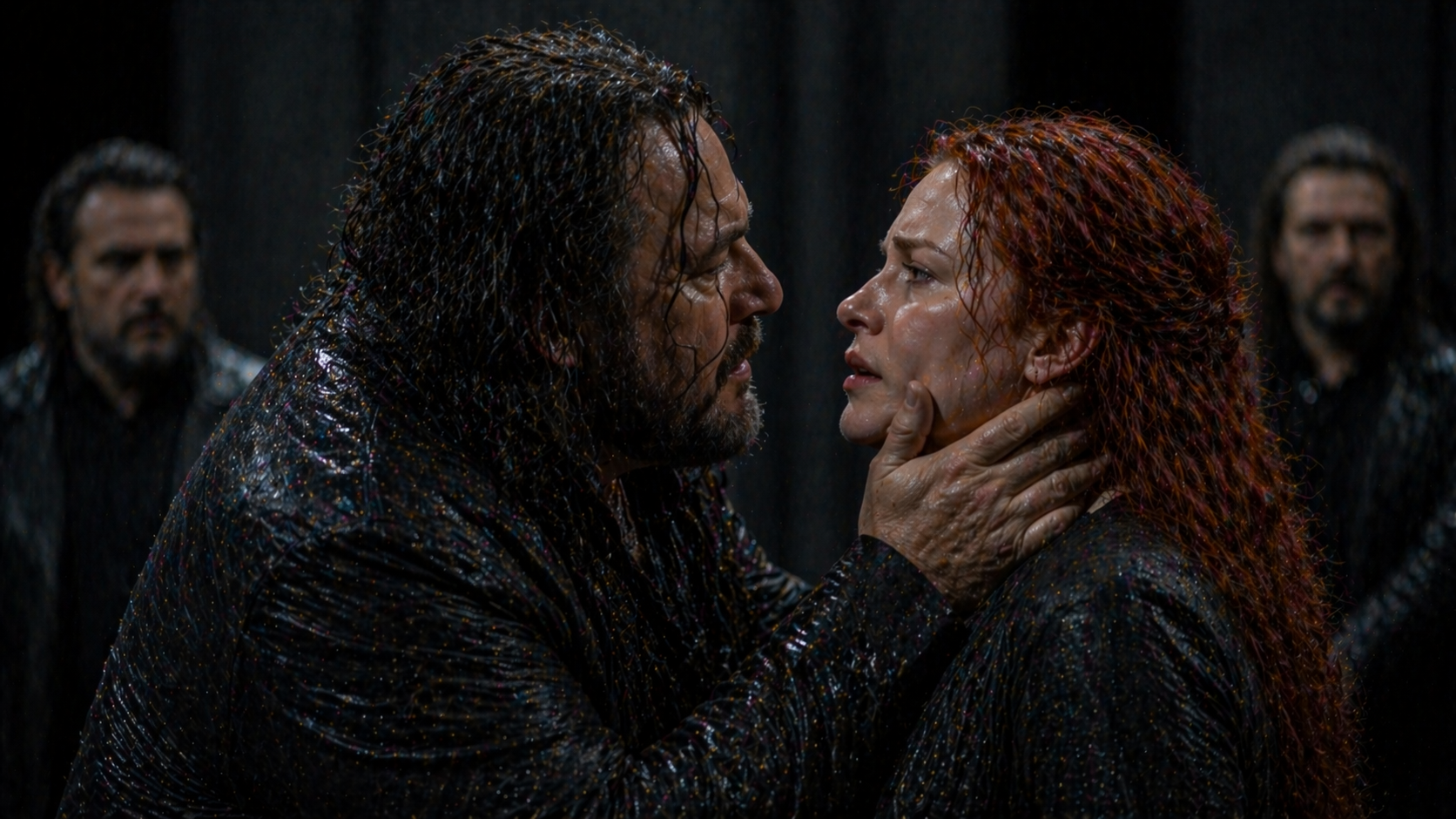
Wahn! Wahn! Überall Wahn! Delusion! Delusion! Delusion everywhere! This is how Hans Sachs opens his monologue at the beginning of Act III, reflecting on the riot that ended Act II and on the general condition of human collective behavior. He is not saying that other people are mad while he remains sane. He is saying that Wahn is the operating condition of human society. That people act from illusion, misrecognition, misplaced passion, and the deep compulsion to act on impulse rather than reason, and that this is not a correctable defect but something structural, something that has always been true and will always be true.
The monologue is one of the most philosophically serious pieces of text in Wagner's output, and Wahn is its operative concept. To understand what Sachs means, and what the opera is doing with the concept, you need to understand the word's full range.
Die Etymologie: Wahnsinn und Wahnvorstellung / Etymology: Madness and Delusion
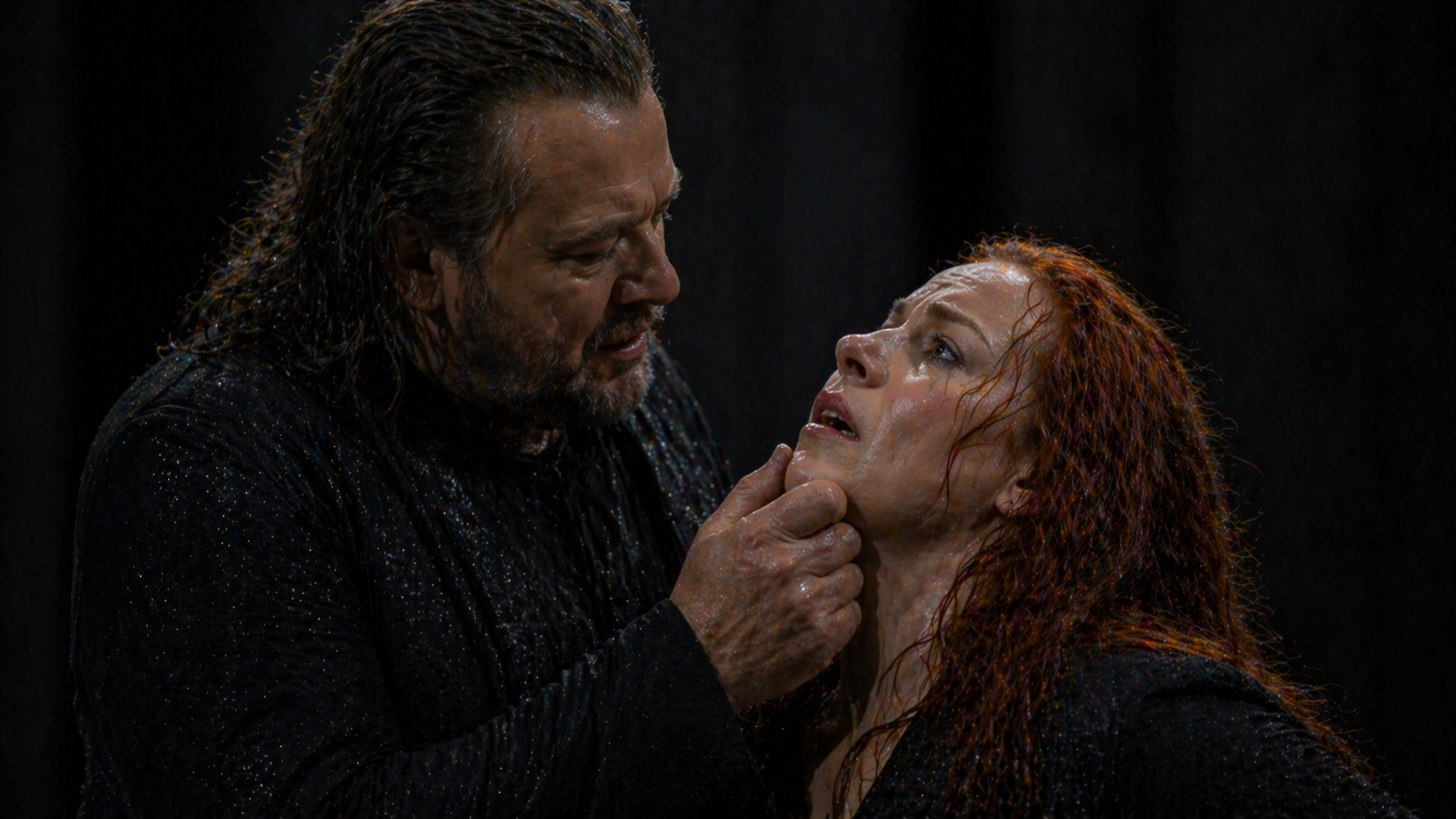
Wahn comes from Old High German wān and Middle High German wān, meaning expectation, belief, supposition, presumption. The original sense was not primarily negative. To have a Wahn was to believe something, to expect something, to hold a view. The gradual darkening of the word, from simple belief to false belief to delusion, tracks the cultural understanding that many of our most confident beliefs are in fact Wahne: things held with conviction that reality does not support.
The compound Wahnsinn, madness, insanity (literally Wahn-sense, delusion-sense or mad-sense), is one of the most common German words for mental illness or extreme irrational behavior. Wahnvorstellung (delusion, literally Wahn-idea) is the clinical term for a fixed false belief. Wahnhaft (delusional) is the adjective. The medical vocabulary of psychosis in German runs through Wahn as its central stem.
But the word's range extends well beyond the clinical. Wahn appears in:
der Größenwahn, megalomania, delusions of grandeur (literally greatness-Wahn)
der Verfolgungswahn, persecution complex, paranoia (literally persecution-Wahn)
der Wahnsinn, madness, but also, colloquially, something amazing or extreme: Das ist Wahnsinn! That's insane! / That's incredible! (The colloquial positive usage is distinct from the clinical, but the shared root is always there)
wahnsinnig (adj.), mad, crazy, also colloquially, extremely, incredibly (wahnsinnig gut, incredibly good)
The Romantic tradition gave Wahn its most philosophically ambitious treatment. For the Romantics, Wahn was not merely individual delusion but a collective, structuring force. The set of shared illusions that allows society to function, the beliefs that bind people together even though, or precisely because, they cannot be rationally grounded.
Sachs und der Wahn: Die Philosophie des Monologs / Sachs and the Wahn: The Philosophy of the Monologue
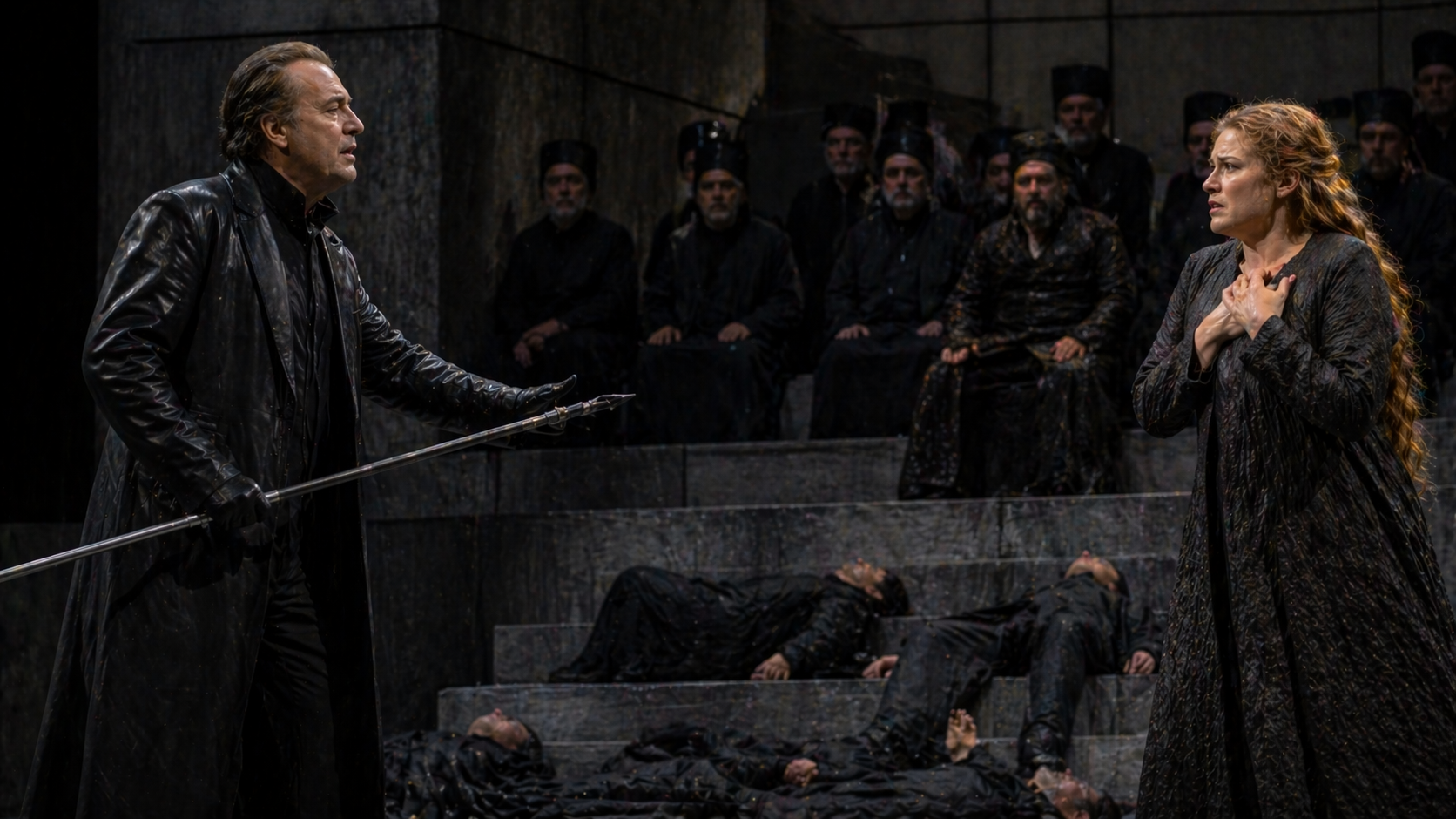
Hans Sachs's Wahn! Wahn! monologue is worth understanding in some detail, because it is doing something philosophically sophisticated that the single word Wahn only partially conveys.
Sachs observes that the previous night's riot, in which the night watchman's horn set off a chain reaction of fighting and chaos, was caused by nothing in particular. No real grievance, no actual injustice, no rational cause. People simply began fighting, and the fighting spread, and the town dissolved into violence for a night, and then stopped. Wahn is what Sachs diagnoses as the cause. The human propensity to act on passion, illusion, and the momentum of collective behavior rather than on reason or genuine self-interest.
But, and this is the monologue's crucial turn, Sachs does not conclude that Wahn should or can be eliminated. He concludes instead that Wahn must be guided. The Wahn that sent the town into senseless violence can be redirected. It can be given form. It can be channeled into art, into the Prize Song contest that will happen on the Festival Meadow later that day. The riot's energy is not different in kind from the energy of collective singing; both are expressions of Wahn, of the human compulsion to act beyond reason. The difference is whether the Wahn has been given a form that makes it constructive rather than destructive.
This is the monologue's deepest argument. That Kunst (art) is organized Wahn. The guild, the contest, the song, these are not the opposite of the riot. They are its sublimation. The same energy, given the right containers.
This argument connects Meistersinger directly to Tristan und Isolde. April's opera was all Wahn in one sense, the lovers were in the grip of an unstoppable compulsion that defied all social rationality. But Tristan's Wahn was without form, without container, with no social structure capable of holding it. It could only end in destruction. Meistersinger's project is to find the form, the contest, the guild, the public performance — that gives Wahn somewhere to go.
Wahn und Nietzsche / Wahn and Nietzsche
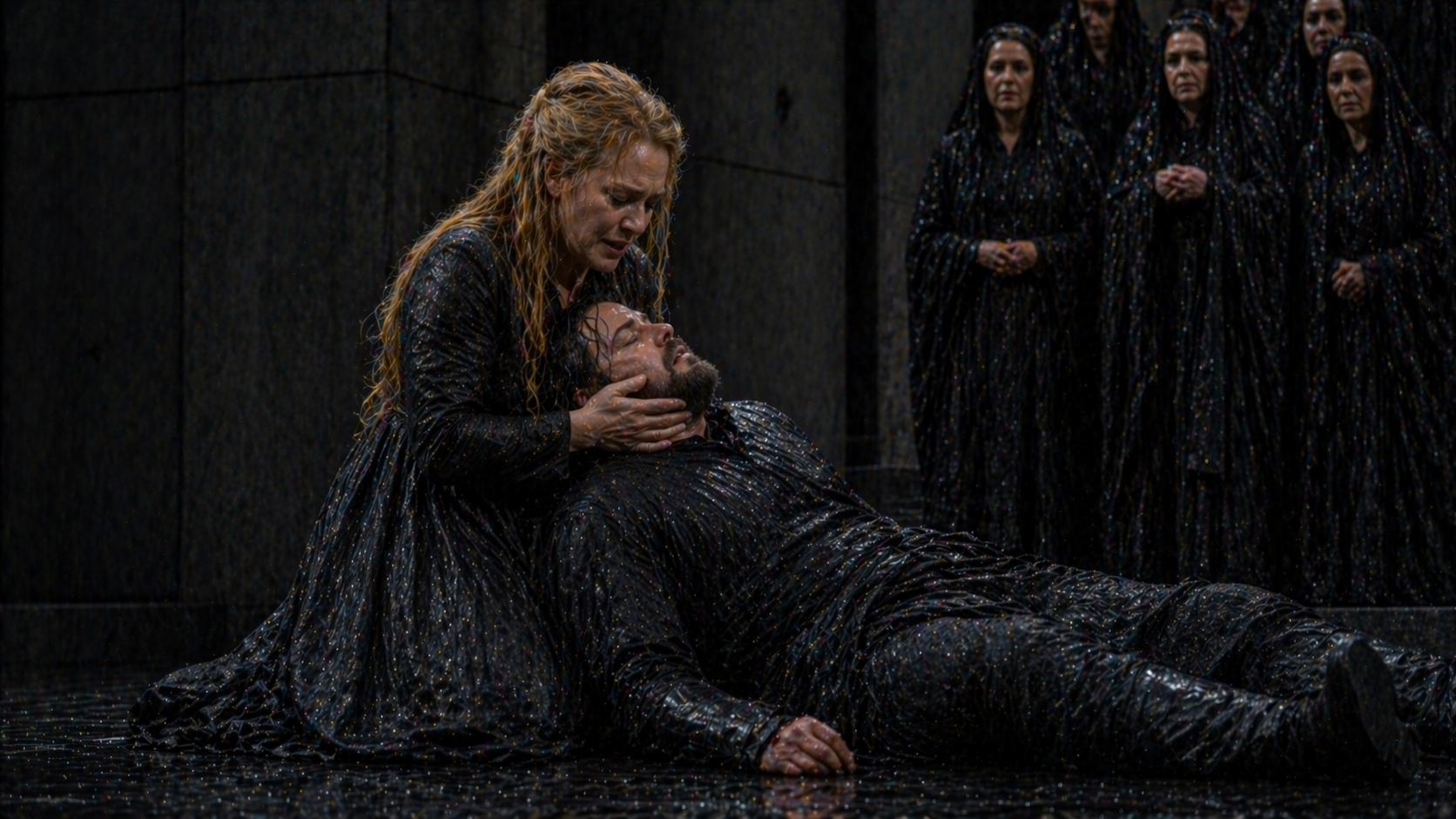
The young Friedrich Nietzsche's relationship with Wagner was one of the most consequential intellectual friendships in 19th-century European culture, and Wahn sits at the center of what Nietzsche initially admired and later criticized.
In Die Geburt der Tragödie (The Birth of Tragedy, 1872), Nietzsche argued that all great culture was built on a tension between the Apollonian (the principle of form, individuation, rational clarity) and the Dionysian (the principle of dissolution, collective intoxication, the breaking of individual boundaries). The Dionysian was essentially a form of Wahn. The state of collective ecstatic madness in which the individual self dissolves into the group. Greek tragedy, Nietzsche argued, had achieved greatness by holding both principles in productive tension. Wagner's music drama was, in his early view, the Dionysian returned. Wahn given its proper artistic form.
By the time Nietzsche published Der Fall Wagner (The Case of Wagner, 1888), his devastating late critique, he had revised this view entirely. What he now diagnosed in Wagner, and specifically in Meistersinger, was a different kind of Wahn. The nationalist Wahn of Sachs's final speech, the appeal to deutsches Volk (German people) and heilige deutsche Kunst (holy German art) that closes the opera. This, Nietzsche argued, was not the Dionysian but the demagogic. Wahn in the service of a cultural politics he had come to despise.
The history of Meistersinger's reception, particularly the Nazi appropriation of its final scene, and the opera's fraught performance history at the Old Met during the World War II years that the walk's final stop recalls, runs through this Nietzschean critique. Wahn, the opera insists, can be guided by art. History demonstrated that it can also be guided by something very different. The same crowd, the same collective compulsion, the same susceptibility to form and spectacle, directed toward the Festival Meadow or directed toward something catastrophic. The word holds both possibilities.
Grammatik und Gebrauch / Grammar and Usage
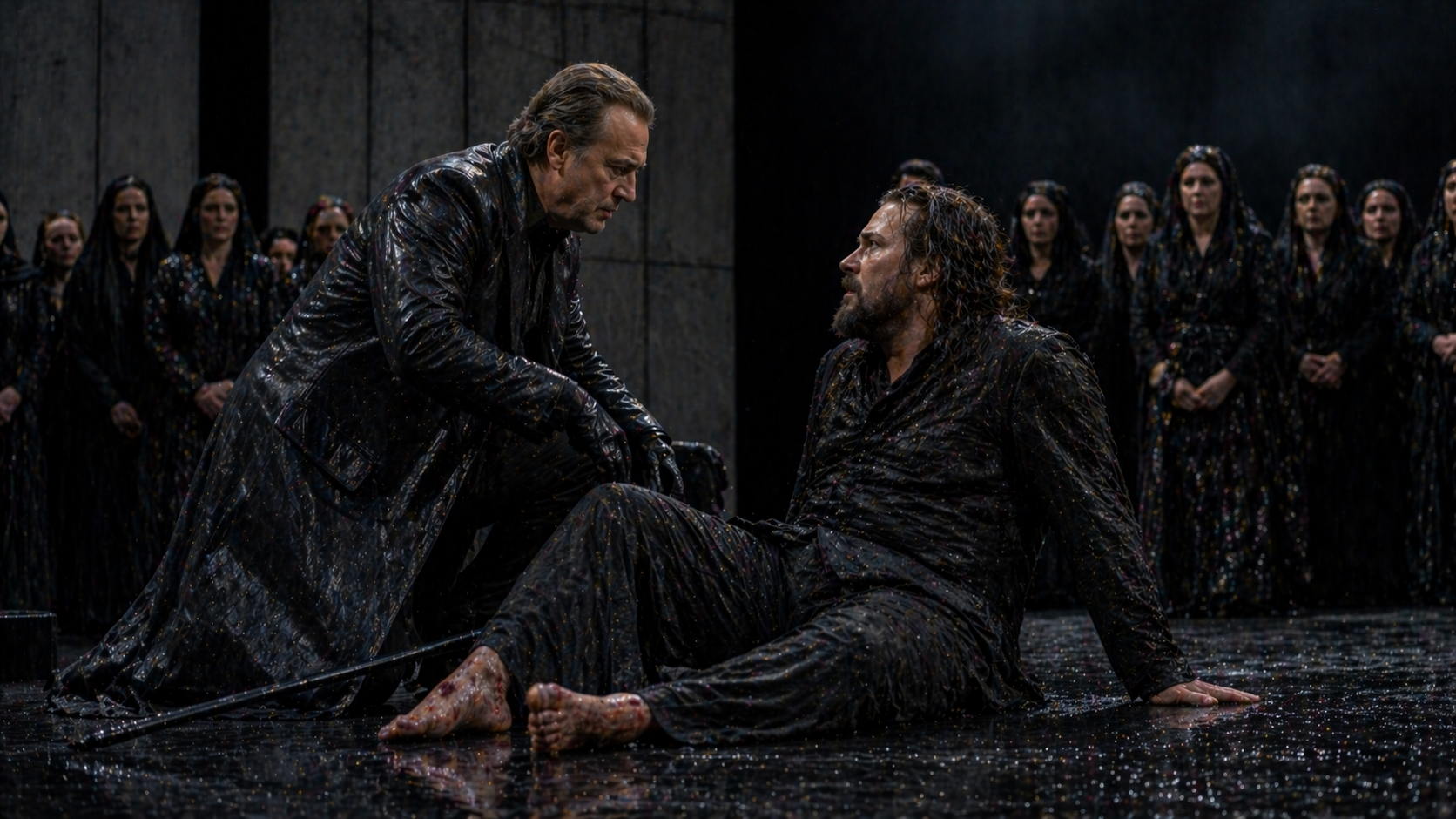
Der Wahn is masculine and used primarily in the singular as a mass noun or general concept. The plural die Wahne exists but is rare and literary.
The adjective:wahnhaft — delusional (clinical register); wahnsinnig, mad, crazy, also colloquially extreme or incredible.
Key compound nouns:
der Wahnsinn, madness, insanity; also colloquially, something amazing
wahnsinnig (adj.), insane; also, extremely (wahnsinnig schön, incredibly beautiful)
die Wahnvorstellung, delusion, false belief
der Größenwahn, megalomania
der Verfolgungswahn, paranoia, persecution complex
wahnwitzig (adj.), crazy, insane (literally Wahn-wit, mad-witted)
Key phrase: im Wahn, in a state of delusion, under a delusion. Er handelte im Wahn, He acted under a delusion. This construction places the Wahn as a surrounding condition, something the person is in, rather than something they have. This is consistent with Sachs's vision: Wahn is not an individual possession but a condition of existence.
Verwandte Wörter / Related Words
wahnsinnig (adj.), insane, also, extremely
der Wahnsinn, madness, also: something incredible
die Wahnvorstellung, delusion
wahnhaft (adj.), delusional (clinical)
die Illusion, illusion (borrowed, slightly softer than Wahn)
der Irrtum, error, mistake (a Wahn that can be corrected, less structural)
der Rausch, intoxication, frenzy (the ecstatic form of Wahn, the state of being swept away)
die Leidenschaft, passion (the motive force that Wahn harnesses or is expressed through)
die Besinnung, composure, self-possession (the opposite of Wahn, coming back to oneself)
besonnen (adj.), composed, measured, level-headed (what Sachs is, within his diagnosis of Wahn)
Die Verbindung zum Weg / Connection to the Walk
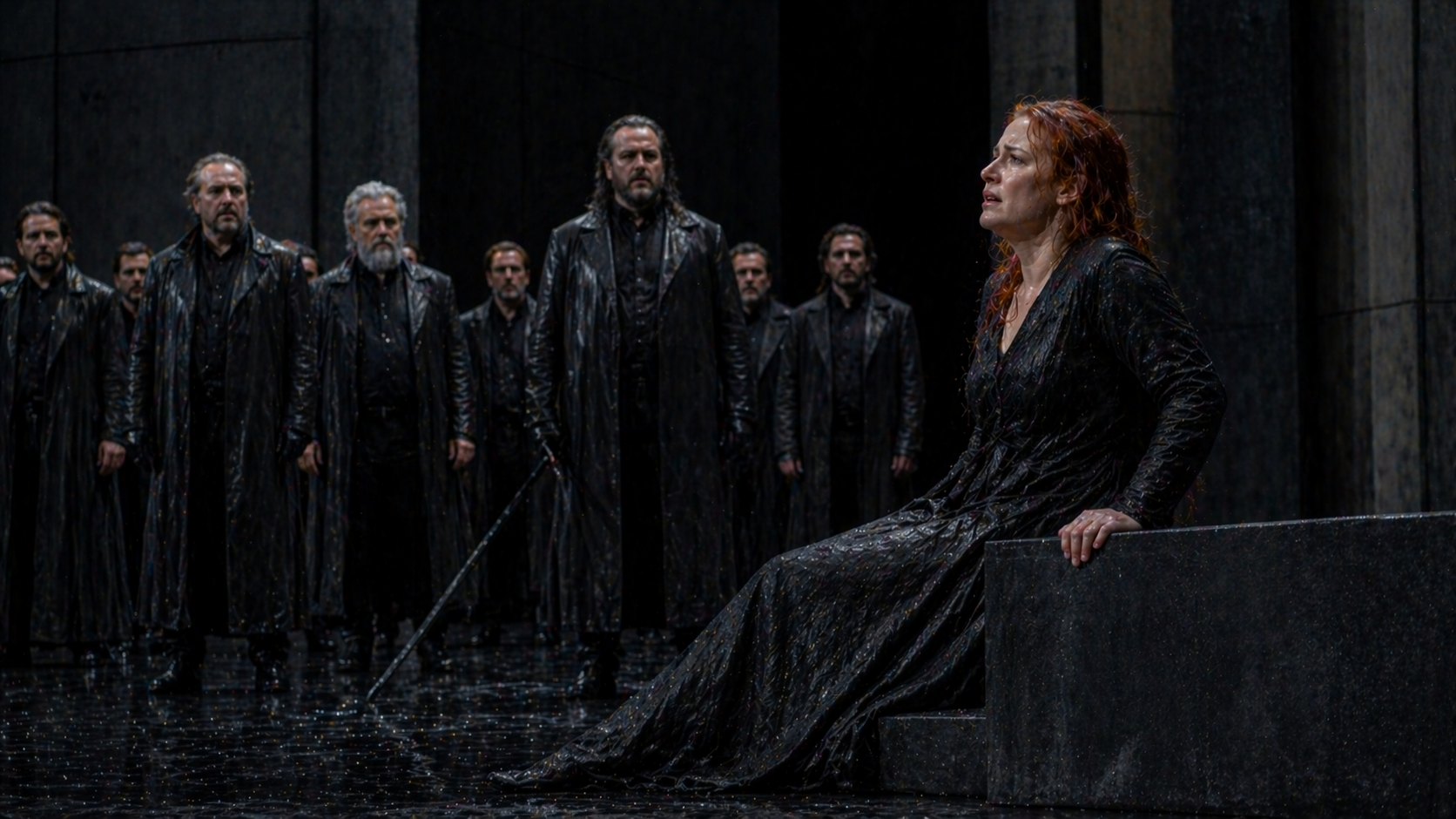
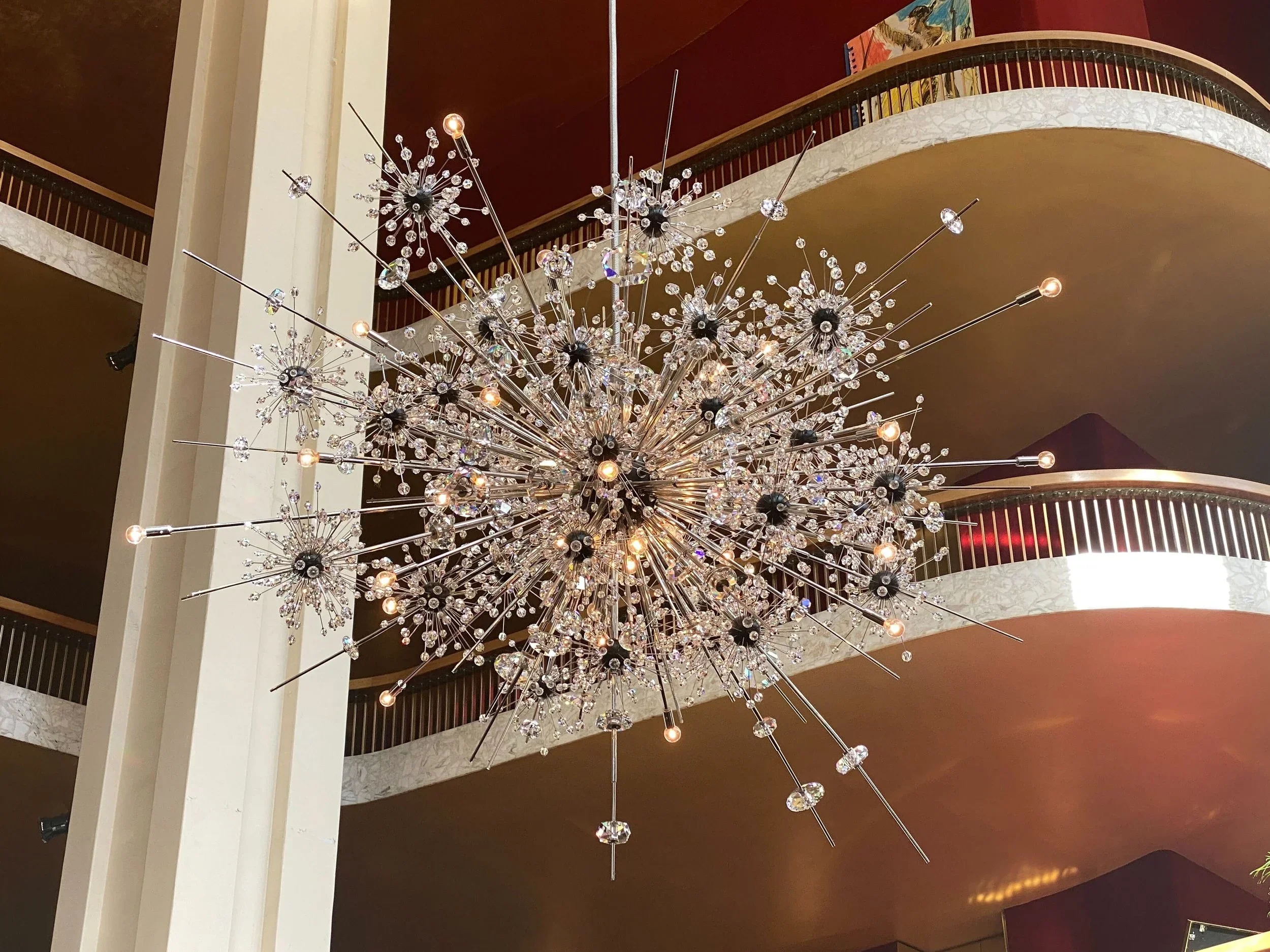
The walk's final stop, the Old Met site at 39th and Broadway, is where Wahn! Wahn! is heard, and it is the right place for it. The Old Met's demolition in 1967, despite preservation efforts, is itself an instance of Wahn. The collective decision-making process that allowed a building of architectural and cultural significance to be torn down for an office tower represents exactly the kind of destructive collective momentum Sachs diagnoses. Not malice, not reason, simply the irresistible force of a city acting on its compulsions.
Standing mid-block on Broadway, watching the flow of commuters as Sachs catalogs the madness of human behavior, you are inside the monologue rather than observing it. These are not a medieval German city's townsfolk. They are 21st-century New Yorkers operating under the same Wahn Sachs describes. The same susceptibility to collective momentum, the same gap between intention and outcome, the same capacity for both senseless chaos and, on better days, collective beauty.
The Old Met's performance history adds a specific historical layer. The opera's complicated relationship with German nationalism, its resonance with Nazi cultural politics, the pressures on the Met to suspend it during the war years, its eventual careful reinstatement, is the history of Wahn at the institutional scale. What happens when art that celebrates collective identity is appropriated by collective Wahn of a catastrophic kind.
The monologue does not end in despair. It ends in Sachs's decision to redirect the Wahn. To use the Prize Song contest as the container for the town's energy. This is the walk's final message after the long circuit from Union Square. That Wahn cannot be eliminated, but that the craft of making, Handwerk, form, tradition, the guild's discipline, can give it somewhere to go that doesn't end in a riot. Or worse. Wahn ist überall. Die Frage ist nur, wer ihn führt. Delusion is everywhere. The only question is who guides it.
Further Reading