The Disease One Cannot Live Without: Interviewing Thomas Mann
An interview conducted in the sanatorium of the mind that all serious Germans eventually check into. He has been here before. He knows where everything is and regards this as suspicious.
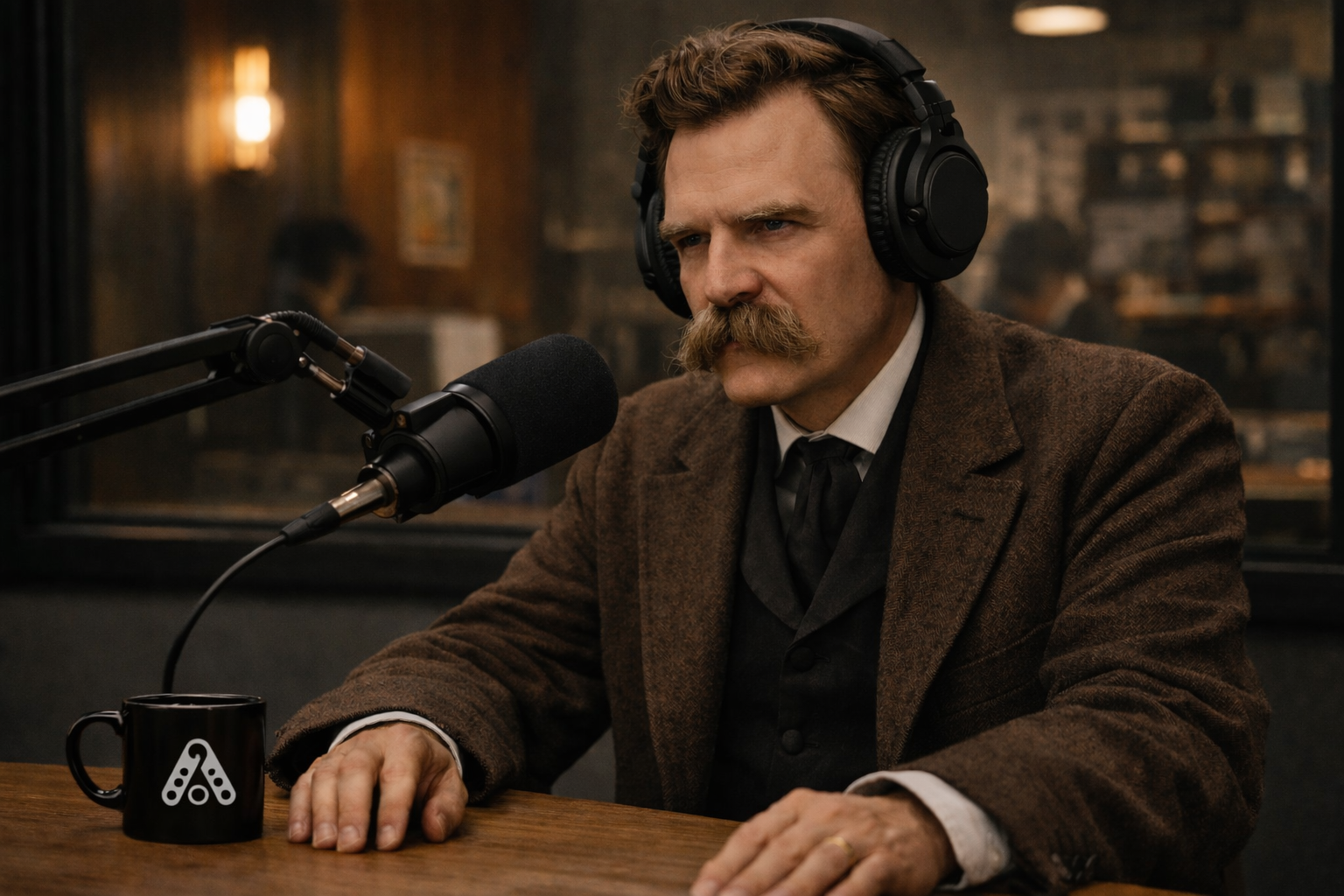
Aufbruch/Matt: Herr Mann. You spent fifty years writing about Wagner and never reached a conclusion.
Thomas Mann: One does not reach conclusions about Wagner. One reaches new levels of the problem. Each time you believe you have understood what he is and what he does, the music performs something that your understanding cannot accommodate and you must begin again from a position of somewhat greater humility. It is, I have concluded, a permanent condition. The critics who have resolved their Wagner problem have merely stopped listening carefully.
Aufbruch/Matt: In 1933 you gave a lecture celebrating Wagner's fiftieth anniversary and had to flee Germany because of it.
Thomas Mann: The lecture was called The Sufferings and Greatness of Richard Wagner. I used the word sufferings deliberately and with full knowledge of what it would cost. I was not prepared to pretend that the greatness was uncontaminated by the man. The nationalists wanted a Wagner who was simply great — a German cultural monument, clean and usable. I gave them a Wagner who was great in the way that a dangerous illness is sometimes great — overwhelming, transformative, and not to be recommended to the faint-hearted.
Aufbruch/Matt: That image, Wagner as illness, you returned to it repeatedly.
Thomas Mann: In Buddenbrooks the young Hanno plays Wagner at the piano and you understand in that scene that he will not survive to adulthood. The music is too much for him. In The Magic Mountain the gramophone plays the Lindenbaum and the patients in the sanatorium hear in it an invitation to death, a sweetness that is inseparable from dissolution. In Doctor Faustus I built an entire novel around the question of what it means to make art of that intensity and what the artist has to sell to achieve it. Wagner is the template for all of these. He is the figure of the artist who goes too far and whose going-too-far is exactly the condition of his greatness.
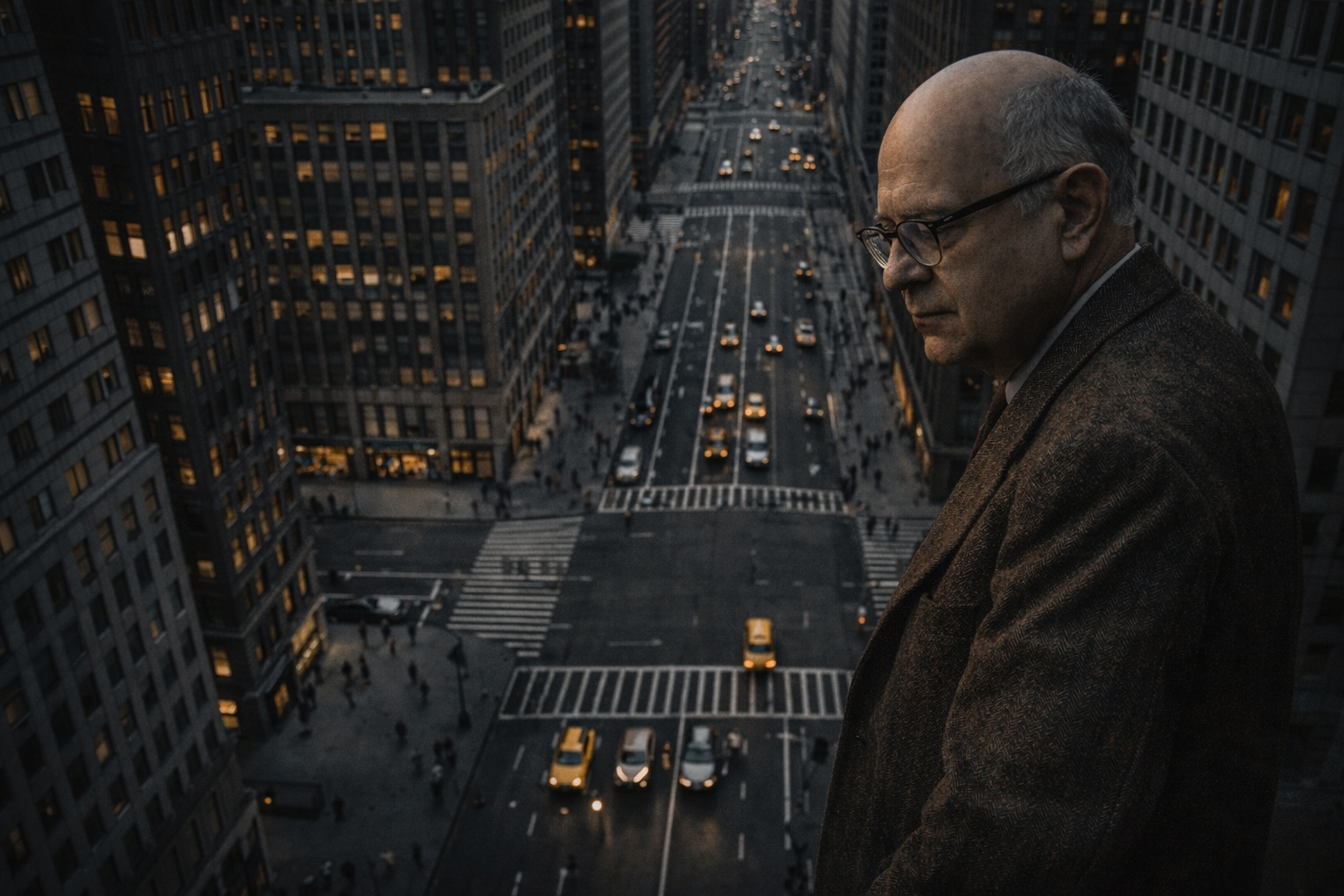
Aufbruch/Matt: The project I've been building uses Wagner as a method for walking through New York. A year of scored walks.
Thomas Mann: An American project with a German score. This is interesting to me for biographical reasons. I spent fifteen years in California as an exile, writing the most German novel I ever wrote. The distance from Germany was the condition of being able to see Germany clearly enough to write about it. What does New York do to Wagner, would you say? Does the city clarify the music or does the music clarify the city?
Aufbruch/Matt: Both, in different moments. New York has its own Wagnerian quality. The scale, the drama, the sense of forces larger than any individual.
Thomas Mann: New York is operatic in the Meyerbeerian sense. Spectacle, effect, overwhelming surface. Wagner's achievement was to take that operatic excess and drive it inward, to make the overwhelming experience happen inside the listener rather than on the stage. The Ring is not a spectacle. It is a psychic event. What happens in the theater when it is done well is what happens inside a single consciousness at its limits. Your walk puts that psychic event back into the spectacle city. The interior and the exterior are in negotiation. That is a genuinely interesting collision.
Aufbruch/Matt: The project also wrestles with Wagner's politics. His anti-Semitism. What he was used for.
Thomas Mann: One cannot not wrestle with it. Anyone who has thought seriously about Wagner and does not find this material deeply troubling has not thought seriously enough. The difficulty is that the trouble is structural, not incidental. The nationalism, the myth of racial purity, the vision of a German art that would redeem the German people, these are not unfortunate opinions separate from the music. They are woven into the project of the music. The Ring is a German mythological cycle because Wagner believed in the particular destiny of the German people. That belief is now historically compromised beyond redemption. And the music remains.
Aufbruch/Matt: How did you hold that?
Thomas Mann: With great difficulty and persistent irony. Irony was my method. Not detachment — irony is not detachment. Irony is the simultaneous holding of two incompatible positions with full knowledge that they are incompatible. I loved Wagner and found him dangerous and I said both things in the same breath and refused to resolve them because the resolution would have been a lie. This is not a comfortable position. It is not meant to be comfortable.
Aufbruch/Matt: Doctor Faustus, the composer who makes a deal with the devil for twenty-four years of creative genius, is that Wagner?
Thomas Mann: It is Wagner and it is Nietzsche and it is Germany and it is the twentieth century and it is the artist in general and it is myself. The novel was finished in 1947. I had just spent twelve years watching what Germany had done with the myth of its own greatness. Leverkühn's music, cold, brilliant, technically revolutionary, humanly evacuated, is the music that comes after Wagner has been used for what he was used for. It is the music of a culture that sold its soul for twelve years of overwhelming power. Whether Adrian Leverkühn is damned in a theological sense the novel refuses to say. What it does say is that the music is real and the cost was real and the accounting is not finished.
Aufbruch/Matt: The project ends in December. Is there an ending for the Wagner relationship?
Thomas Mann: I am not the right person to ask about endings. I rewrote the ending of Doctor Faustus seventeen times. I published my Wagner essay and then spent the next thirty years adding qualifications to it. The relationship with Wagner does not end. It deepens and darkens and occasionally, in certain performances in certain acoustics under certain conductors, it becomes briefly and unbearably worth everything it has cost. Then the music stops and the reckoning resumes. This is, I think, the condition. There is no cure for it. One learns to live inside it with as much honesty and as much irony as one can sustain.
Aufbruch/Matt: Is the irony enough?
Thomas Mann: Nothing is enough. But irony at least prevents the worst outcomes. The people who love Wagner without irony are the people who were in the audience in 1936. The irony is not distance. It is a way of staying close to something dangerous with your eyes open. The walk you are doing, the year you are building, if it maintains that quality of eyes-open love, it will be something worth completing.
He does not smile. He rarely smiles. But there is something in his expression that is not quite irony and not quite warmth and might, in the right light, be the thing that survives when both of those have been tested past their limits.
Further Reading