What the Hand Knows: On Handwerk
das Wort / the word: das Handwerk (n.), pl. die Handwerke (rare); more commonly die Handwerker (craftspeople)
Aussprache / pronunciation: HAND-verk
Wortart / part of speech: Noun, neuter
Register: Broad, entirely ordinary in daily speech (every plumber, carpenter, and baker practices Handwerk), philosophically significant in discussions of creativity and tradition, and culturally central in German discussions of education, apprenticeship, and the relationship between knowing and making.
Was das Wort wirklich bedeutet / What the word actually means
Handwerk means craft. Skilled manual work, the knowledge embedded in a practised hand. It is the word for what a cobbler does, what a cabinetmaker does, what a baker does when they have been baking long enough that the dough tells them what it needs. The Hand is in the word literally. Handwerk is work done by hand, work in which the hand is an instrument of knowledge rather than merely execution.
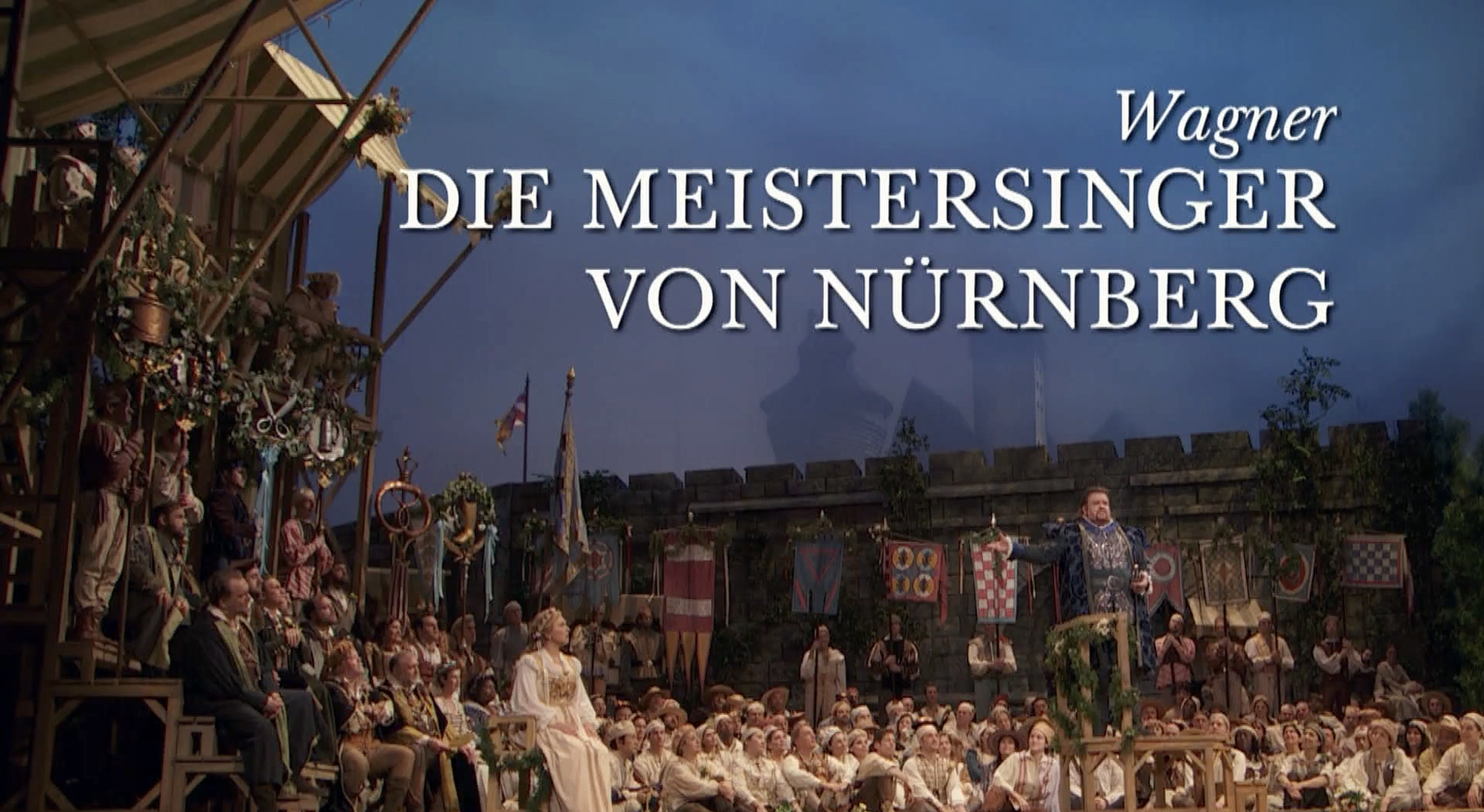
After April's annihilation, the night, the dissolution, the love that consumed itself, May brings back the world of made things. Of craft rather than ecstasy. Of accumulated skill rather than spontaneous feeling. Of the guild, with its rules and examinations and hierarchies, as the container within which art must operate if it is to survive contact with other people.
This is a significant reversal, and Handwerk is the word that names what has returned. Where Tristan dismissed Handwerk, the lovers had no interest in anything made, only in states experienced, Meistersinger places it at the absolute centre. The opera's conflict is between Walther von Stolzing's raw, unteachable gift and the guild's insistence that gift must be disciplined, formed, and assessed by the standards of the craft. Hans Sachs's great achievement is to show that these are not opposites. That Handwerk is not the enemy of inspiration but its necessary medium.
You cannot sing the Prize Song without Handwerk. The gift needs form. The form needs to be learned. The learning takes time, submission, and the willingness to submit your instincts to the judgement of those who have developed their instincts longer than you have. This is the opera's central argument, and Handwerk is its central word.
Die Etymologie: Die Hand als Werkzeug des Wissens / Etymology: The Hand as Instrument of Knowledge
Handwerk fuses die Hand (hand) with das Werk (work, the made thing). Both components are among the oldest and most productive roots in German:
die Hand, hand. From Old High German hant, from Proto-Germanic *handuz. Related to Gothic handus and Old English hond. The hand is the primary instrument of human making: tool-use, writing, music, cooking, construction, all mediated through the hand. German compounds built on Hand number in the hundreds: Handschuh (glove, literally hand-shoe), Handschrift (handwriting, literally hand-script), Händedruck (handshake, literally hand-pressure), Handtuch (towel, literally hand-cloth).
das Werk, work, the made thing, the opus. From Old High German werc, from Proto-Germanic *werkam. Werk in German has two related but distinct senses that English splits: it can mean the work (the labour, the effort) and das Werk (the work, the finished piece, a symphony, a building, a novel). Ein Werk vollenden means to complete a work of art. Ein Werk beginnen means to begin a task. The same word covers the process and the product.
Handwerk is therefore simultaneously the act of making and the knowledge embedded in that act. It is not merely skill in the sense of technical proficiency; it is the integrated understanding, partly intellectual, partly physical, partly intuitive, that develops through long practice of making things with your hands. The cabinetmaker's Handwerk is not just the ability to use tools; it is a kind of knowing that lives in the hands, that the hands can execute before the mind has consciously formulated what they are doing. This understanding of craft as embodied knowledge is central to the German educational and professional tradition, and to the opera's dramatic argument.
Die Zunft: Handwerk als soziale Institution / The Guild: Handwerk as Social Institution

In the guild system (das Zunftwesen) that Meistersinger is set within and nostalgically reconstructing, Handwerk was not merely a personal skill but a social institution. The guild, die Zunft or die Gilde, organized the practice of a craft, regulated its standards, controlled who could call themselves a master, and managed the transmission of knowledge across generations. The three-stage progression of guild membership is essential for understanding the opera's social world:
der Lehrling, the apprentice. The beginner, learning by observation and imitation under a master. No independent production; the Lehrling assists, watches, and absorbs. This is the first contact with Handwerk: knowing through proximity to someone who already knows.
der Geselle, the journeyman. We met this figure in January's Wanderschaft article. After completing the apprenticeship, the journeyman travels (the Gesellenwanderung) to work in different workshops, acquiring breadth of Handwerk that no single master can provide. The Geselle is a qualified practitioner but not yet a master; he can work but cannot teach or examine.
der Meister, the master. The highest stage, requiring the completion of a Meisterstück (masterpiece, literally master-piece), a work of sufficient quality to demonstrate complete command of the craft. The Meister has the right to take on apprentices, to teach, and to participate in the governance of the guild.
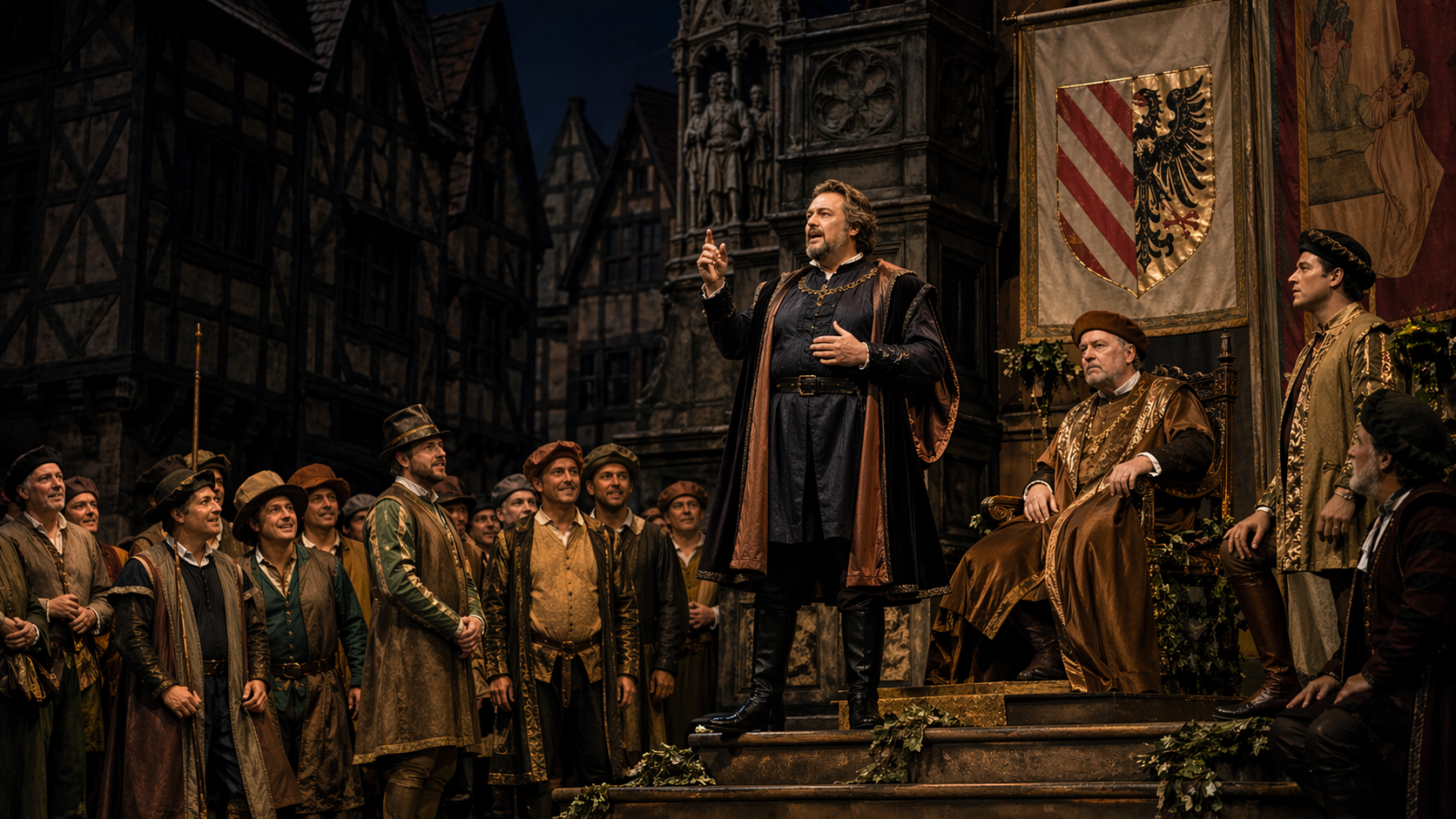
Walther von Stolzing's problem is that he has the gift of a Meister without having passed through the structure. His instinct is there, his Handwerk is not. The trial song (Probgesang) he sings before the guild in Act I is spontaneously beautiful and technically irregular, it breaks the rules of Tabulatur (the guild's formal regulations) that he has never learned. The masters are not wrong to reject it on those grounds; neither is Sachs wrong to see in it something that the rules were not designed to accommodate.
Handwerk und Kunst: Eine deutsche Debatte / Handwerk and Art: A German Debate
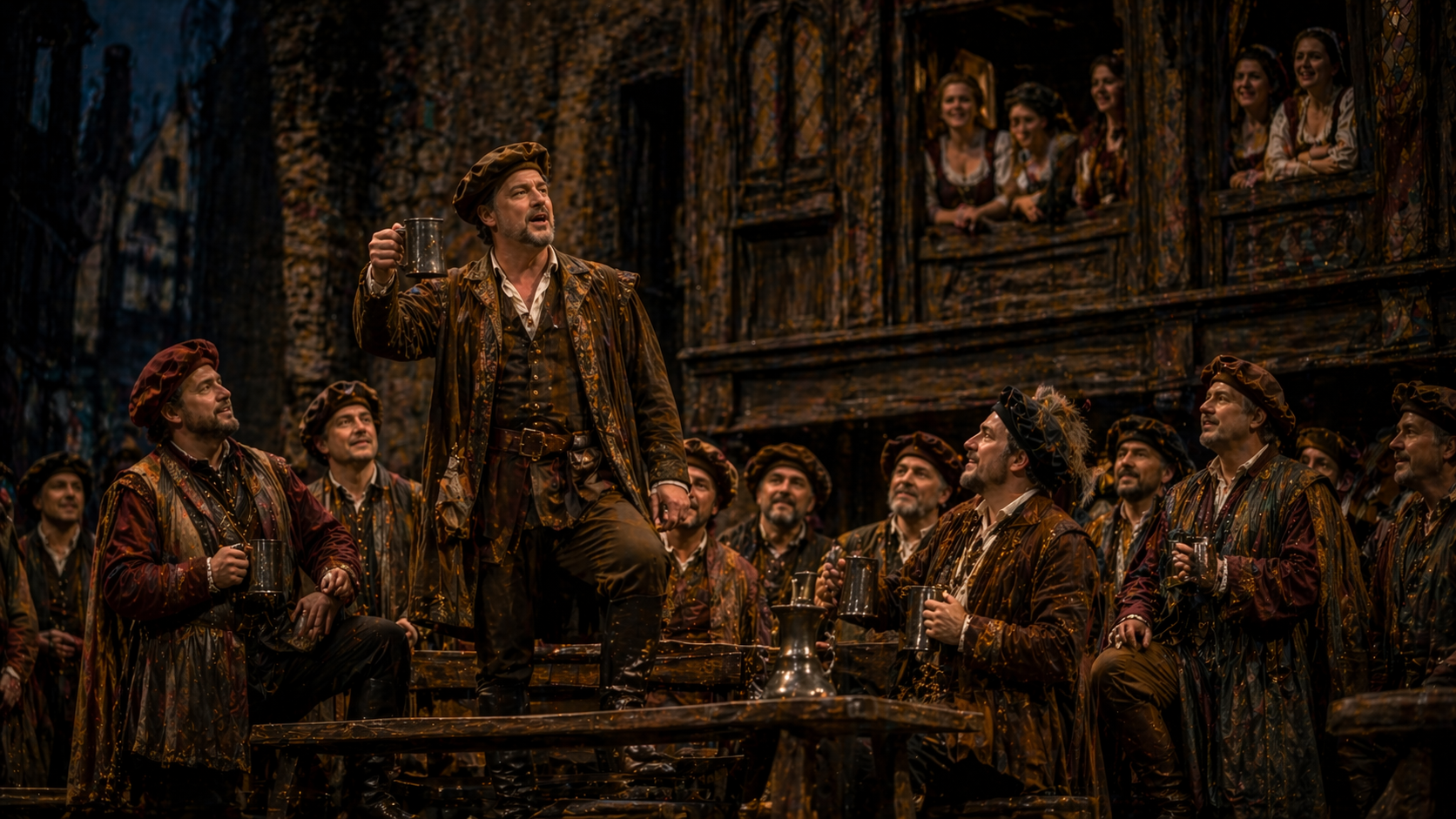
One of the characteristic features of German aesthetic thought is its resistance to the sharp separation between Handwerk (craft) and Kunst (art) that other European traditions have typically maintained. In the French academic tradition, for example, the fine arts were rigorously distinguished from the mechanical arts precisely on the grounds that fine art was inspired, original, and expressive of genius, while craft was learned, reproducible, and aimed at utility. This separation, Kant's distinction between freie Kunst (free art, requiring genius) and Lohnkunst (paid craft, requiring merely skill), was enormously influential.
But German culture, particularly in its guild tradition and its Romantic recovery of the medieval, has always been somewhat resistant to this hierarchy. The Romantic fascination with the medieval cathedral as the supreme achievement of human creativity rested precisely on the fact that the cathedral was the work of many craftsmen, not a single genius. The anonymous mason, the glass-maker, the woodcarver, all contributing their Handwerk to a collective achievement that exceeded any individual's art.
Richard Wagner's entire theory of the Gesamtkunstwerk (total work of art) is relevant here. Wagner argued that the opera should integrate music, poetry, drama, staging, and performance into a unified artwork, which meant that every component had to achieve Handwerk standards. The orchestration had to be as skilled as the poetry, the staging as thoughtfully crafted as the composition. The Gesamtkunstwerk depended on Handwerk at every level, not just on the inspired vision of the composer-poet.
Meistersinger dramatizes this argument from inside. The guild is the institutional expression of the belief that art requires Handwerk, that inspiration without craft is incomplete, that the community of skilled practitioners is the proper context for judging what is good. Hans Sachs is both a craftsman (cobbler) and a poet-musician (meistersinger); the combination is not incidental. His insight about Walther's song comes precisely from the integration of these identities: he knows Handwerk too well to dismiss the song that breaks the rules, and knows craft too well to be satisfied by inspiration alone.
Handwerk in der Sprache / Handwerk in the Language

German has built an extensive vocabulary around the concept of Handwerk that reveals how thoroughly the culture values skilled making:
der Handwerker / die Handwerkerin, the craftsperson, the skilled tradesperson
handwerklich (adj.), relating to craft; also handwerklich solide, solidly crafted, technically reliable (often said of writing, music, or any made thing that demonstrates skill without necessarily being inspired)
das Handwerkszeug, the tools of the trade (literally craft-tools, used figuratively for the basic skills of any discipline: das Handwerkszeug des Schriftstellers, the writer's craft tools)
die Handwerkskammer, the chamber of crafts (the official professional organization for skilled trades in Germany, a contemporary guild-successor)
der Handwerksmeister, master craftsperson (the Meister of a specific Handwerk, with formal credentials)
meisterhaft (adj.), masterly, with the skill of a master
das Meisterstück, masterpiece (the work produced to demonstrate Meister-level competence; the standard by which mastery is assessed)
The phrase Handwerk hat goldenen Boden, craft has a golden foundation, is a classic German proverb asserting that skilled manual work is a reliable basis for a good life. It encodes the cultural conviction that Handwerk is not merely economic but dignifying. It grounds the practitioner in something real, reliable, and worthy of respect.
Grammatik und Gebrauch / Grammar and Usage

Das Handwerk is neuter. It functions primarily as a singular mass noun. You speak of das Handwerk as a category or practice, not of multiple Handwerke (though the plural exists for naming distinct trades).
Key constructions:
ein Handwerk erlernen, to learn a craft, to acquire a trade
sein Handwerk verstehen, to know one's craft, to be skilled at what one does (high praise)
jemandem das Handwerk legen, to put a stop to someone's activities (literally to lay down their craft, used idiomatically to mean stopping someone from doing something harmful)
das Handwerk des Schreibens / Komponierens, the craft of writing / composing
mit Handwerk und Können, with craft and skill
The distinction between Können (ability, skill, what you can do) and Handwerk (craft, the discipline within which you do it) is subtle but real. Können is the individual capacity, Handwerk is the social and technical framework that gives that capacity its form and standards.
Verwandte Wörter / Related Words

das Werk, work, the made thing, the opus
der Meister / die Meisterin, master craftsperson (May's second word)
das Meisterstück, masterpiece
meisterhaft (adj.), masterly
die Zunft, guild (the institutional expression of Handwerk)
der Lehrling, apprentice
der Geselle, journeyman (January's Wanderschaft figure)
die Kunst, art (the broader category; Handwerk is its disciplined foundation)
das Können, skill, ability
das Talent, talent, gift (the raw capacity that Handwerk must discipline)
die Übung, practice, exercise (the repeated activity through which Handwerk is developed)
handwerklich (adj.), craftmanlike, relating to skilled making
Die Verbindung zum Weg / Connection to the Walk

The May walk is itself an act of Handwerk in miniature. Moving from Union Square to the Liederkranz site to the Naumburg Bandshell to the Old Met block requires the same kind of learned, accumulated, practiced attention that the guild asks of its members. The route is not arbitrary. It has been composed, the stops chosen for their resonances, the musical pairings calibrated to the spaces. To walk it attentively is to practise a form of Handwerk. The craft of noticing, of timing, of letting a piece of music coincide with the right physical moment.
The Naumburg Bandshell is where Handwerk is most fully visible. A stone structure purpose-built for acoustic projection, in a park that has hosted free classical concerts for over a century, designed so that the people walking past. The 21st-century Nurembergers, as the walk frames them, can encounter music without ceremony or ticket. The Bandshell's existence is itself a civic act of Handwerk. Someone designed it, built it, maintained it, and the city's musical culture has used it season after season. This is Handwerk at the institutional scale. The infrastructure that makes public singing possible.
Walther's Prize Song, heard as you walk the Mall under the elm canopy and arrive at the Bandshell, is the sound of Handwerk and gift successfully fused. He has learned enough of the rules, through Sachs's overnight tutoring, to give his inspiration formal shape without losing its original energy. The song that emerges is recognizably his and recognizably shaped by the tradition. This is Meistersinger's central resolution, and Handwerk is its key: not the defeat of inspiration by rule, but its completion.
Was die Hand weiß, weiß der Kopf nicht immer. Was der Kopf weiß, kann die Hand noch nicht. What the hand knows, the head doesn't always know. What the head knows, the hand can't yet do. Handwerk is the long work of closing that gap.
Further Reading