The King Who Needed the Dream More Than the Dreamer Did: Interviewing Ludwig II of Bavaria
An interview conducted in the blue salon of Neuschwanstein, which is still under construction, which will always be under construction. He has been waiting since 1864. He does not consider this a long time.
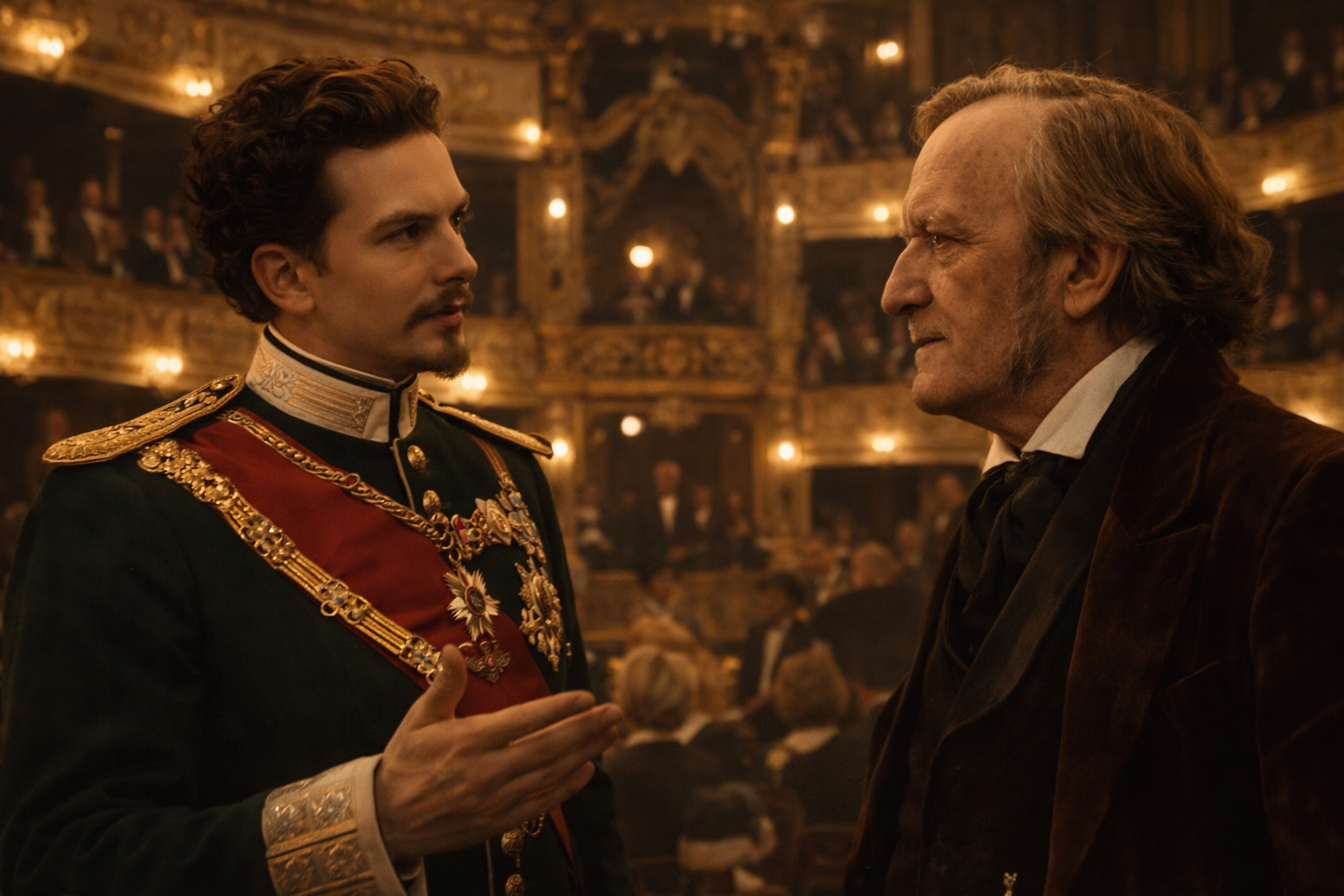
Aufbruch/Matt: Your Majesty. You were nineteen when you came to the throne. Within weeks you had summoned Wagner to Munich.
Ludwig II: I had been waiting for him since I was fifteen. Since I first heard Lohengrin. Do you understand what it is to hear something at fifteen that shows you what the world could be? Not what it is. What it could be. I became king and I used the only power the position offered to bring that world closer.
Aufbruch/Matt: You gave him everything. A house. An income. The means to finish the Ring.
Ludwig II: I gave him the conditions. The music already existed inside him. I simply removed the obstacles. Debt, distraction, the humiliating necessity of performing for audiences who did not deserve him. A king has very few genuine uses. That was one of mine.
Aufbruch/Matt: He took the money and left Munich when the scandal became too great. He did not consult you.
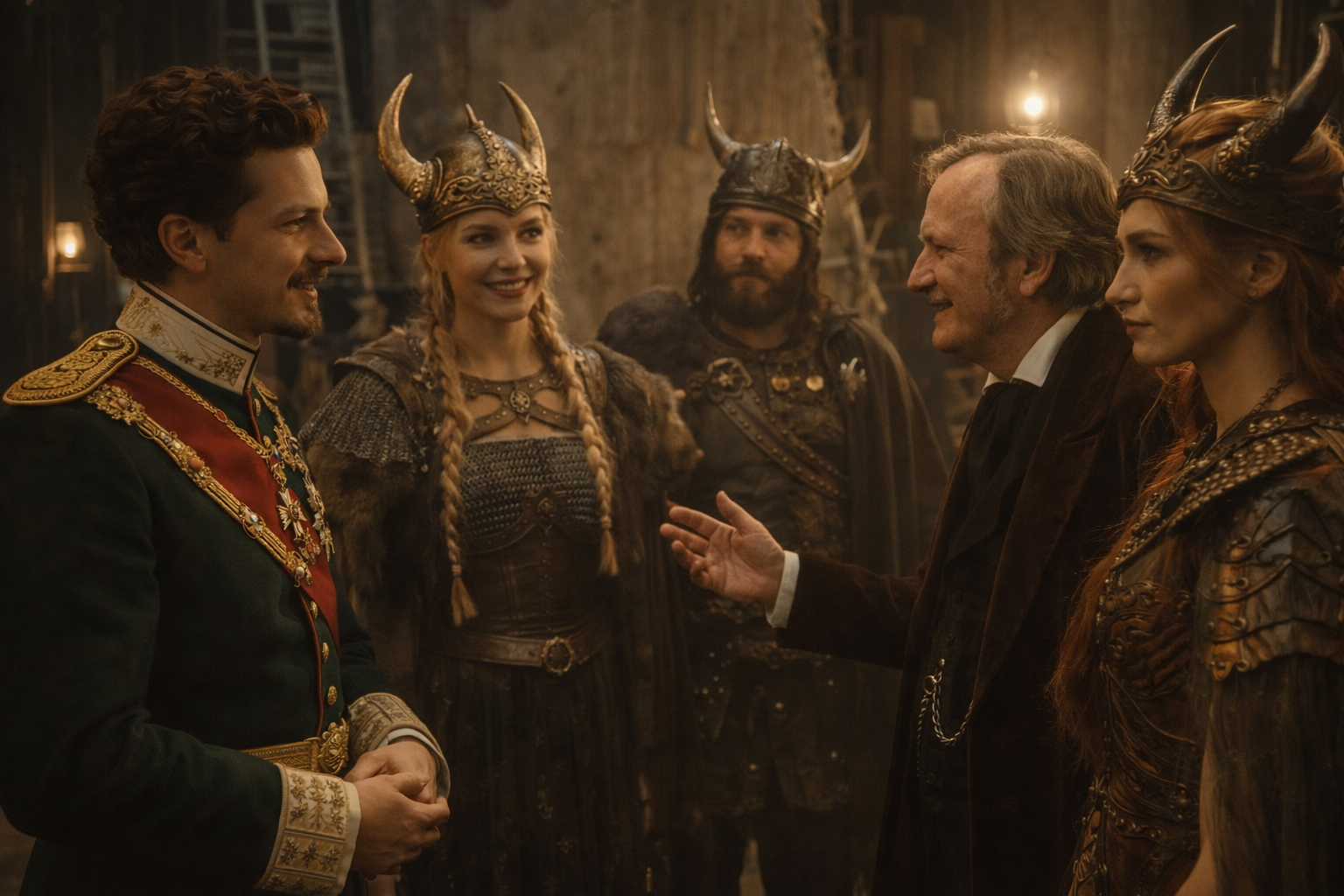
Ludwig II: He rarely consulted me about practical matters. That was not our arrangement. Our arrangement was, I am not sure I can describe it in ordinary terms. We wrote to each other. Hundreds of letters. He called me his king. I called him my friend. We shared a vision of what art could do for a civilization. Whether we were friends in the way that word is usually meant, I am uncertain.
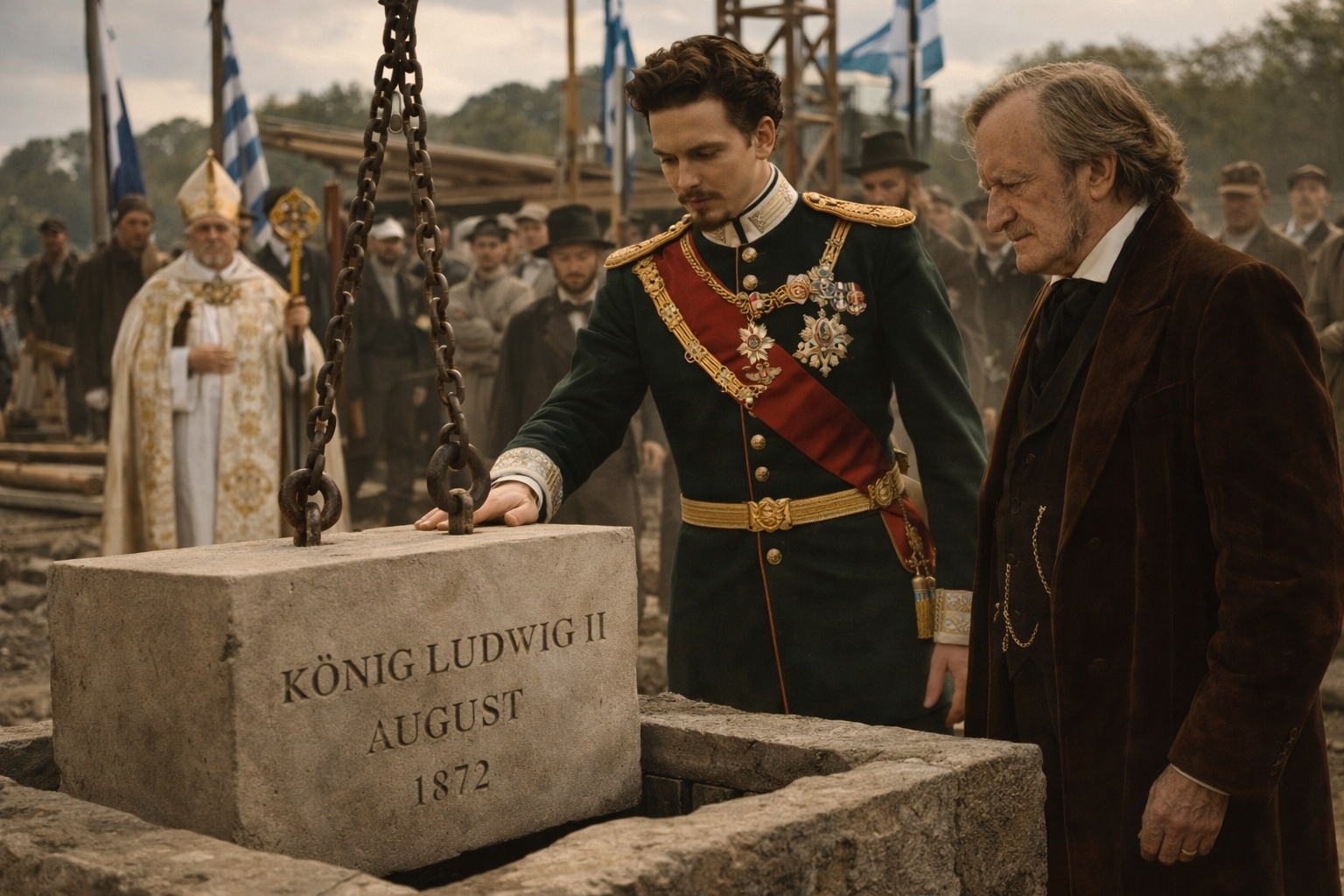
Aufbruch/Matt: He was thirty years older than you.
Ludwig II: Age did not seem relevant. What seemed relevant was that we were both, in our different ways, people for whom the actual world was insufficient. He built an alternative world in the music. I built alternatives in stone. Neuschwanstein. Herrenchiemsee. Linderhof. People call them follies. They are not follies. They are answers to an unbearable question.
Aufbruch/Matt: What question?
Ludwig II: Why must the world be only what it already is?
Aufbruch/Matt: That is a question a king has more power to answer than most.
Ludwig II: And less than you would think. I was surrounded by ministers, by politics, by the machinery of government, none of which interested me in the slightest. Bavaria lost the war against Prussia in 1866 and became a subsidiary of Bismarck's Germany and I was required to attend to all of this. I attended to as little of it as I could and spent the remainder of my time building and reading and watching performances alone in empty theaters.
Aufbruch/Matt: Alone.
Ludwig II: I had the performers give full productions for an audience of one. Lohengrin. Tannhäuser. The Ring, when it was complete. Just me, in the dark. Is that so strange? The presence of other audience members seemed to dilute something. The work was for me. I wanted to receive it directly.
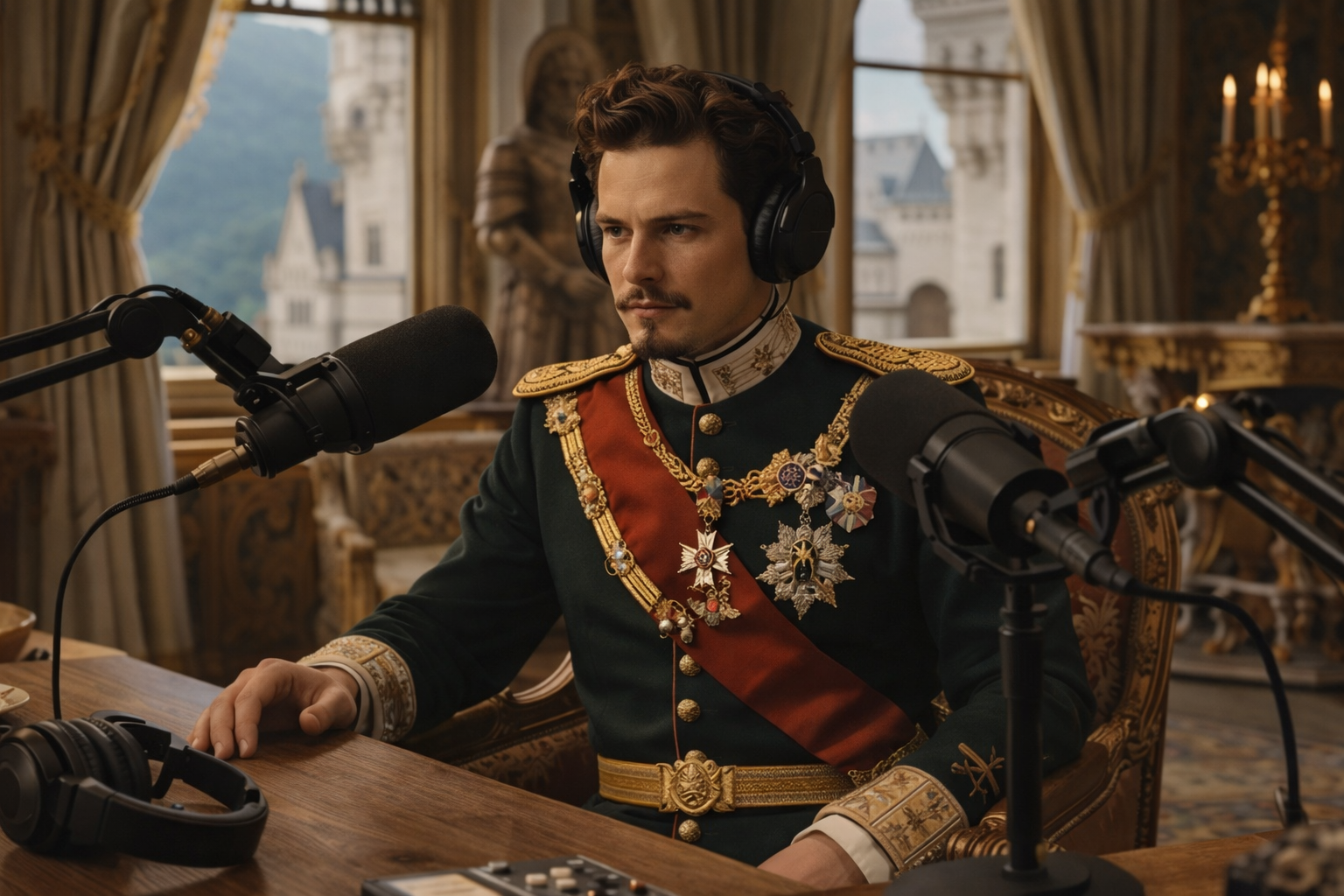
Aufbruch/Matt: Bayreuth was built for audiences of thousands.
Ludwig II: Bayreuth was built with my money for Wagner's purposes, which were not always identical to mine. He needed the world to recognize what he had made. I already recognized it. Those are different needs. Mine was quieter and I think deeper.
Aufbruch/Matt: You never attended the first Bayreuth festival. You came days early, alone, for a private dress rehearsal.
Ludwig II: The Ring is not a public event. It is a private one that happens to accommodate many people simultaneously. I wanted the real experience.
Aufbruch/Matt: Wagner died in 1883. You died three years later, under circumstances that have never been fully explained.
Ludwig II: [he looks out toward the Alps for a long moment] I had been declared insane by ministers who required my removal. Whether I was insane by the definitions they were using is a question I find less interesting than it seems to fascinate others. I had built what I needed to build. The music existed. The castles existed. The letters existed. I had spent twenty years funding the greatest artistic project of the century. Whatever else I failed to do, and the list is substantial, I did that.
Aufbruch/Matt: Do you regret anything?
Ludwig II: I regret that I was required to be a king when I was constitutionally suited to be something else. An audience. A patron. Someone whose purpose is to make room for the thing rather than to be the thing. That is not nothing. History does not agree, but history has a bias toward the producers.
Aufbruch/Matt: What would you want history to understand?
Ludwig II: That the person who clears the ground for something extraordinary is not a footnote. Without the ground, there is no building. Without the silence, there is no music. I was the silence that made certain music possible. I was content to be that. I am still content.
Aufbruch/Matt: And the castles?
Ludwig II: The castles are still there. People travel great distances to see them and find them beautiful and slightly mad and do not know quite what to make of them. That seems exactly right.
He turns back to the window. The Alps are indifferent. The construction continues. Somewhere in the unfinished rooms behind him the wallpaper shows scenes from Lohengrin, from Tannhäuser, from the world he needed more than the world needed him. He does not appear to find this sad. He appears to find it sufficient.
Further Reading