The Madeleine Was Always a Leitmotif: Interviewing Marcel Proust
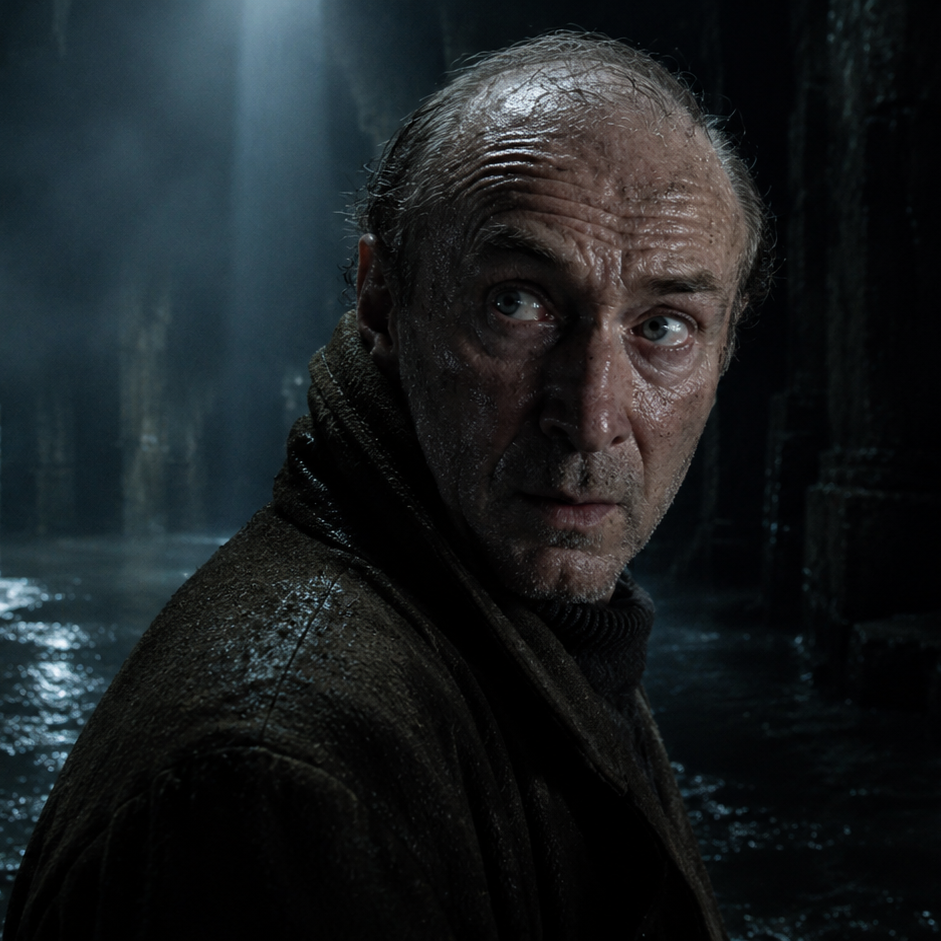
An interview conducted in the cork-lined room, which is also every room in which something was once felt and later remembered. He apologizes for the smell of fumigation. He has been ill. He is always about to begin writing.
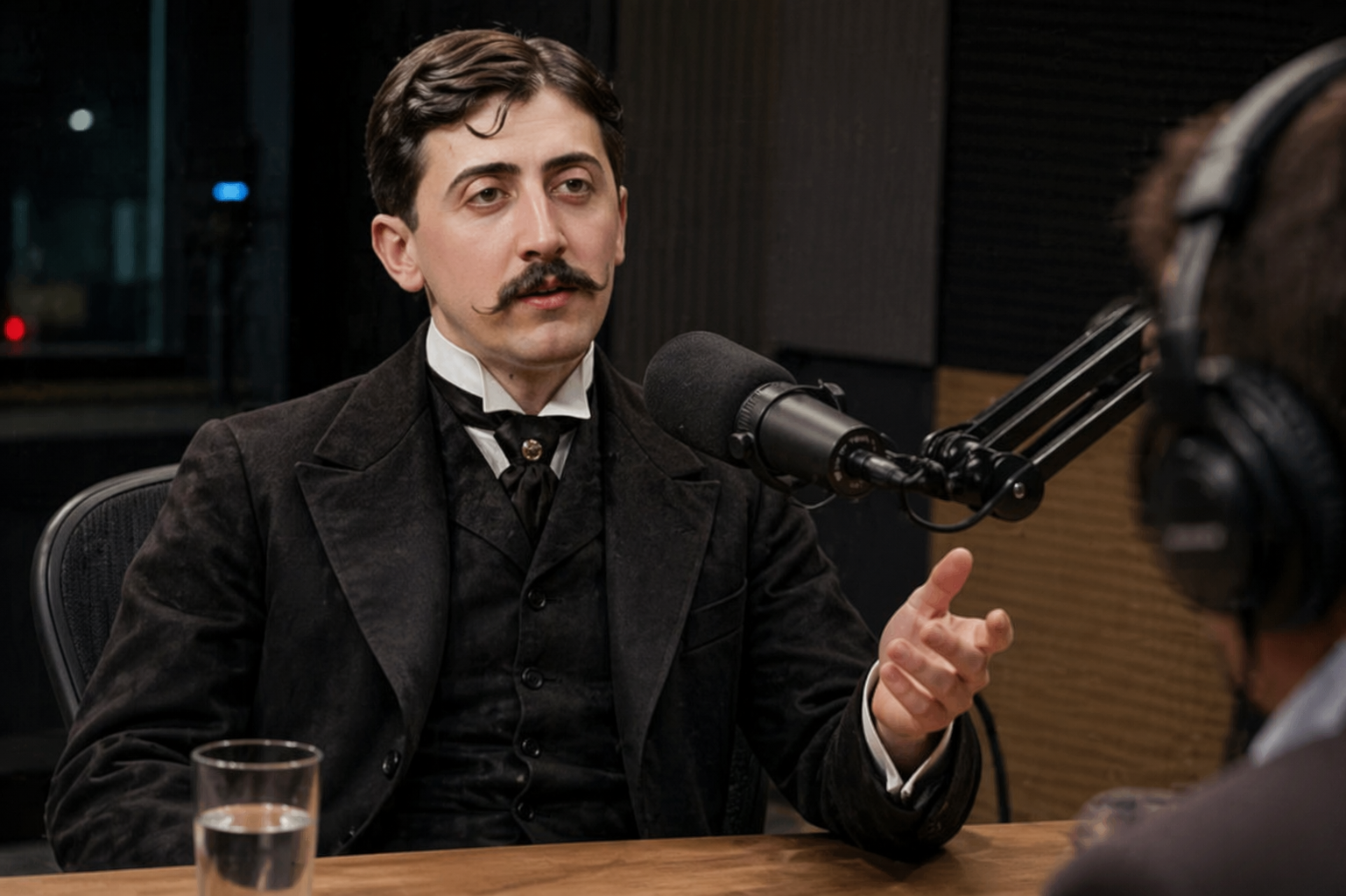
Aufbruch/Matt: Monsieur Proust. You built the structure of the Recherche on Wagner's leitmotif system. I want to ask you about what that structure does to time.
Marcel Proust: The leitmotif is a technology for defeating time. Not by stopping it, time cannot be stopped, as I learned at considerable personal expense, but by making it permeable. A theme introduced in an early act returns transformed in a later one, and in the returning it carries both its original meaning and its accumulated history simultaneously. The listener hears not one thing but two: the theme as it is now and the trace of what it was. This is exactly what involuntary memory does. When the madeleine returns me to Combray I am not remembering the past. I am experiencing a moment in which the past and the present exist simultaneously, in which time has been defeated by the coincidence of sensation.
Aufbruch/Matt: The scored walk does something similar. Returning to the same streets with different operas, the city accumulating layers of musical association.
Marcel Proust: You are building a personal leitmotif system. The Hudson river in January with the Holländer becomes a different Hudson in April with Tristan, but the January experience is not erased. It is present beneath the April experience as a kind of harmonic undertone. By December your city will be a palimpsest of twelve different sonic experiences of the same physical space. This is an extraordinary thing to have built. You will not know what you have built until something triggers the involuntary recall, until a particular quality of light on the river or a particular temperature of air in the park returns you not just to one walk but to all of them simultaneously.
Aufbruch/Matt: Has that happened yet?
Marcel Proust: It will. You cannot force it. The involuntary is precisely what resists the will. What you can do is accumulate the raw material, the walks, the precise observations, the German words that encode specific qualities of experience, and trust that the combinations will occur when they are ready. The project is building a vast reservoir of potential memory. The overflows will happen on their own schedule.
Aufbruch/Matt: The project involves learning German. Specific vocabulary connected to each month.
Marcel Proust: Language is the most durable form of involuntary memory. A word learned under particular conditions of feeling carries those conditions inside it permanently. When you learned the word Sehnsucht, not as a dictionary entry but as an embodied encounter with its meaning on a specific walk with specific music in specific weather, you encoded not just a meaning but an experience. The word and the experience are now inseparable for you in a way they cannot be for someone who learned it in a classroom. This is why your method of language learning is more than language learning. You are building a lexicon of felt experience. Every word in it is a madeleine.
Aufbruch/Matt: That's exactly right. The words do carry the walks.
Marcel Proust: I spent three thousand pages trying to explain this. You have found a practice that enacts it. I am not sure whether to be impressed or envious. Perhaps both. The novelist's problem is that by the time the memory is available for writing, so much has been lost in the interval. You are building the archive and the method simultaneously, which means less is lost.
Aufbruch/Matt: You were a serious Wagnerian. You attended performances at the Opéra repeatedly.
Marcel Proust: Wagner gave me the structure and the permission. The permission to take as much time as the material required. To refuse to economize. The Recherche is long because the material is long, because a life fully examined requires the space to be examined fully. Wagner never cut anything that the work needed because the work needed to be exactly as long as it was. I learned that from him before I learned it from anywhere else.
Aufbruch/Matt: The length as the point rather than the consequence.
Marcel Proust: The length is the meaning. A short version of Tristan und Isolde would not be a more efficient Tristan. It would be a different claim about what love is. Wagner's claim is that love of this kind takes three hours to establish as fully real. My claim in the Recherche is that a life takes three thousand pages to establish as fully real. The length is not self-indulgence. It is the argument.
Aufbruch/Matt: The project is one year. Twelve months. Is that long enough?
Marcel Proust: It is precisely long enough for what it is. Not long enough to complete the examination. Nothing is ever long enough for that. Long enough to change the examiner. You will arrive in December as someone constitutionally different from the person who began in January, and the difference will not be fully apparent to you for years. The year is the accumulation. The understanding of the accumulation is the work of the rest of your life.
Aufbruch/Matt: That is both reassuring and alarming.
Marcel Proust: Good art is. I spent seven years in this room finishing a novel about my life that required me to have already lived the life in order to write it. The novel cannot be separated from the life and the life cannot be separated from the novel. Your project has that quality already. The walks are not material for essays. The essays are not documentation of walks. They are the same thing in different forms, and neither is complete without the other.
Aufbruch/Matt: And when it's finished?
Marcel Proust: There is a moment near the end of the Recherche when the narrator realizes that the book he is about to write is the book we have just read. The ending loops back to create the beginning. The circle closes not by ending but by beginning again, differently. Your project ends in December and you will immediately be in a different kind of January. The year will begin to mean what it meant. That is not a conclusion. It is a conversion. The project will have made you into the person capable of understanding the project.
He coughs. He reaches for something. The cork walls absorb every sound except the voice, which remains precise, careful, present. He has spent his life knowing that everything that matters happens in the interval between the sensation and its recovery, in the gap between living and understanding what was lived. He is still in that interval. He will always be in it.
Further Reading