The Unpromised Renewal: Walking with Nietzsche
Friedrich Nietzsche attended the first Bayreuth Festival in the summer of 1876 and left before the final cycle was complete. He had a headache, he said. He fled to the woods and read Stendhal. What he did not say at the time, though he said it later with considerable force, was that he had seen something at Bayreuth which disturbed him more than the music had moved him. He saw what Wagner had built the place to do to people.
"In Bayreuth one leaves oneself at home when one goes there," he wrote in Nietzsche contra Wagner, twelve years after the fact. "One gives up all right to one's own tongue and choice, to one's own taste and even to one's own courage, one knows these things no longer as one is wont to have them and practice them before God and the world and between one's own four walls. In the theatre one becomes mob, herd, woman, Pharisee, electing cattle, patron, idiot, Wagnerite."
This is the sharpest thing Nietzsche ever wrote about Wagner, and it has nothing to do with the music. It is a diagnosis of what happens to a person when they submit to conditions engineered by someone else. The darkened hall, the hidden orchestra, the removal of the interval, the pilgrimage structure of Bayreuth itself. All of it designed, as Wagner had said himself, to produce in the audience a particular psychological state. Total absorption. The dissolution of the individual into the work. What Wagner called redemption through art. What Nietzsche, by 1876, had begun to call something else entirely. He called it decadence. The manufacture of ecstasy in people who had surrendered their capacity for independent response.
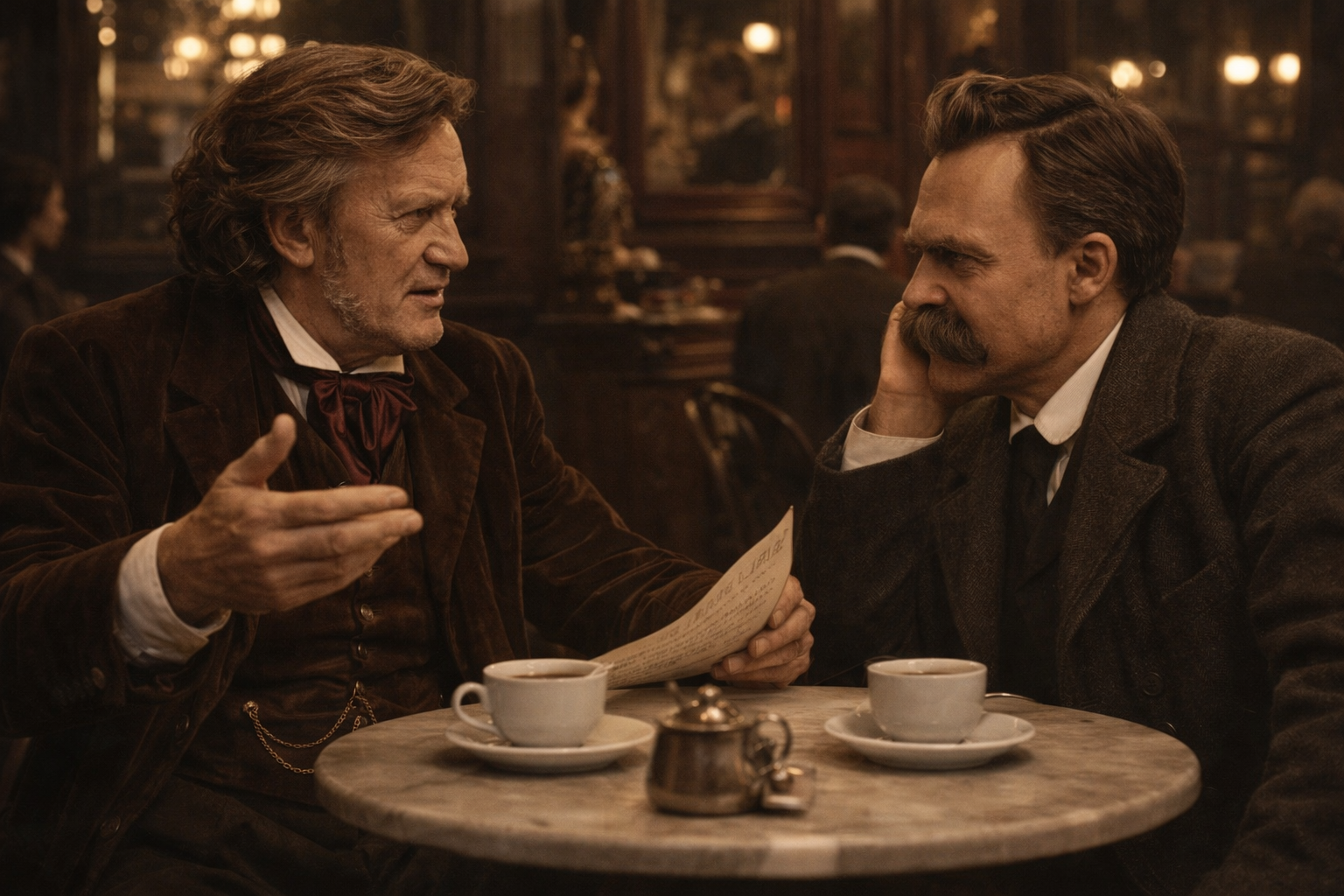
Nietzsche had not always thought this. His first serious work, The Birth of Tragedy, published in 1872, was written under Wagner's direct influence and dedicated to the idea that Wagner's art represented the rebirth of the Dionysian impulse that had produced Greek tragedy. Nietzsche visited the Wagners at Tribschen repeatedly during the early 1870s. He brought them Christmas gifts. He read them his manuscripts. Wagner said that after losing Nietzsche he had felt truly alone.
Something changed. The question of what changed, exactly, is one of the most analyzed ruptures in the history of European thought. The short version, which is also the most accurate version, is this. Nietzsche saw the Bayreuth Festival and understood that the thing Wagner had built was not what either of them had imagined it would be. He had imagined a space for the renewal of tragic consciousness, a place where individuals would encounter the depths of existence and return from it strengthened. What he saw instead was an audience that had surrendered itself. The prepared pilgrim. The initiated spectator. The person who had come to Bayreuth in order to have a specific experience manufactured for them and delivered.
"Already in the summer of 1876, when the first festival at Bayreuth was at its height," Nietzsche wrote, "I took leave of Wagner in my soul." The break was not about aesthetics. It was about what art does to the people who receive it, and whether that doing is a liberation or a submission. The scored walk is, on its surface, Nietzsche's answer to Bayreuth.
You are alone. That is the first and most important fact. There is no audience. There is no herd. There is no levelling of the individual conscience by the pressure of a thousand other bodies experiencing the same thing at the same moment. Whatever happens between the music and the city happens in one body, on one pair of legs, in weather that has its own opinion about the day.
You are moving. This matters in ways that Nietzsche would have appreciated. The seated body in the darkened hall is a body that has agreed to surrender its own agency for the duration. The walking body retains its physics. It gets cold. It gets tired. It has to decide whether to cross the street now or wait for the light. The music is inside it but the city is outside it and the city does not care about the music. Every block brings new friction. A woman is having an argument in the doorway of a building. A truck is reversing with its alarm going. A group of teenagers are taking up the whole width of the pavement. The walk does not suspend these things. It requires the walker to hold both the music and the world simultaneously, to refuse the total absorption that Bayreuth was designed to produce.
You are in daylight. Or in the grey November afternoon light, or in the dark at the end of a January harbor walk. But you are not in an engineered darkness. Your eyes are not being directed. The walk assigns music to places, but it cannot assign your eyes to objects. What you see while you listen is still yours.
All of this is structurally anti-Bayreuth in exactly the terms Nietzsche demanded. The walk does not ask you to leave yourself at home. It requires you to bring yourself. It requires your cold face and your tired legs and your thoughts about the meeting you have at 3pm and your memory of the last time you stood at this corner. The walk takes those things as necessary materials. Without them, without the specific weight and friction of a specific body on a specific day, the music is just music and the city is just streets and nothing happens at the intersection of the two. Nietzsche, I think, would have approved of the premise.
But Nietzsche was not a gentle critic, and he would not have stopped at the premise. He would have looked at the walk instructions and asked a different question. The walk tells you where to stand. It tells you when to start a track and when to let it end. It assigns specific music to specific locations, not because you decided that assignment but because someone else did, in advance, on the basis of what they thought the combination would produce in you. Start the Dutchman's monologue as you reach Castle Clinton. Let the Lohengrin Prelude begin as you approach the reservoir. Stop here. Face this direction. The instruction is precise. The experience has been pre-engineered.
Nietzsche's accusation against Bayreuth was not primarily that it gathered people together in a crowd, though he objected to that too. It was that the entire apparatus, architectural, procedural, musical, had been designed to produce a predetermined state in the listener. Wagner knew what he wanted you to feel. He built a machine to make you feel it. Your individual response was not the point. The point was the dissolution of your individual response into the response Wagner had composed.
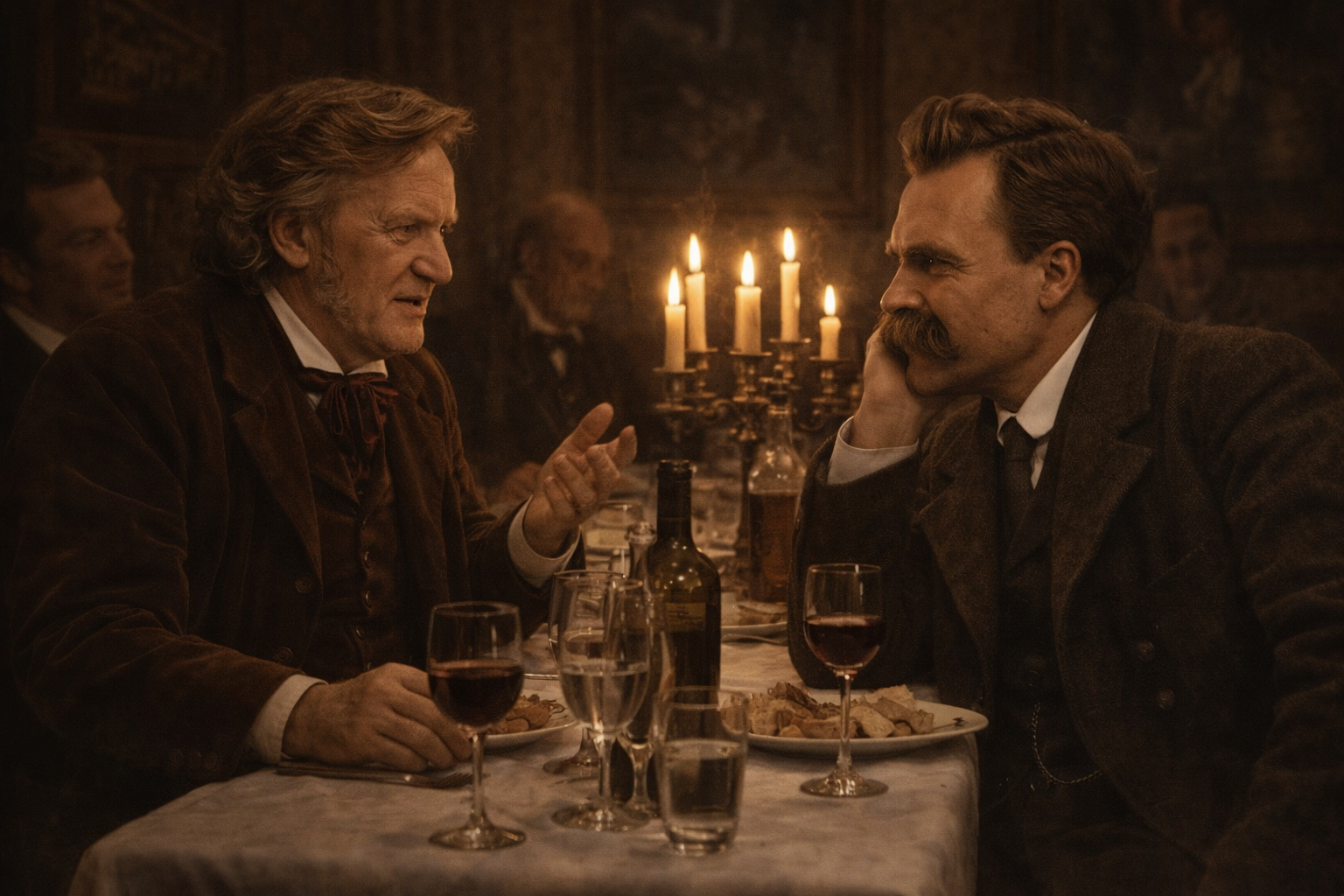
The scored walk is a smaller machine. One person instead of a thousand. The streets instead of the Festspielhaus. But it is still a machine. Someone decided that the harbor at Battery Park carries the Dutchman's overture. Someone decided that the moment of arrival at the reservoir should coincide with the entry of the Lohengrin strings. Those decisions were made in advance. They were made on the basis of what the designer thought the combination would produce. The walker follows instructions toward a pre-imagined experience. Is that, in Nietzsche's terms, a different thing from what Bayreuth did? Or is it Bayreuth in walking shoes?
I have been sitting with this question for the better part of three months and I do not have a clean answer. Here is the strongest case for the walk against Nietzsche's objection. The instructions are not totalizing. They leave enormous space. The walk assigns music to places, but it cannot assign what you notice, what you remember, what the music does when it meets the specific content of your particular life on that particular day. I walked the January harbor route with the Dutchman's overture and the music hit a specific memory I had not expected, something about water and distance and a specific evening years ago that had nothing to do with Wagner and nothing to do with New York, and the walk could not have predicted that and did not try to. The instructions were the frame. What happened inside the frame was mine. Bayreuth tried to seal the frame. The walk cannot seal it. The city will not allow it.
Here is the strongest case for Nietzsche's objection against the walk. The instructions are still instructions. To follow them is to defer to someone else's judgment about what you should be feeling and where. The very precision of the assignment, this track here, this moment at this location, is an argument that the designer's aesthetic perception of the pairing is more reliable than whatever you might have arrived at on your own. Which is exactly the argument Bayreuth made. We have prepared this. Come and receive it. Your individual response, whatever it is, is happening inside a structure we have designed for the purpose of producing it. Nietzsche would say the mechanism is different. The problem is the same. What he would not say, I hope, is that this means the walk should not exist.
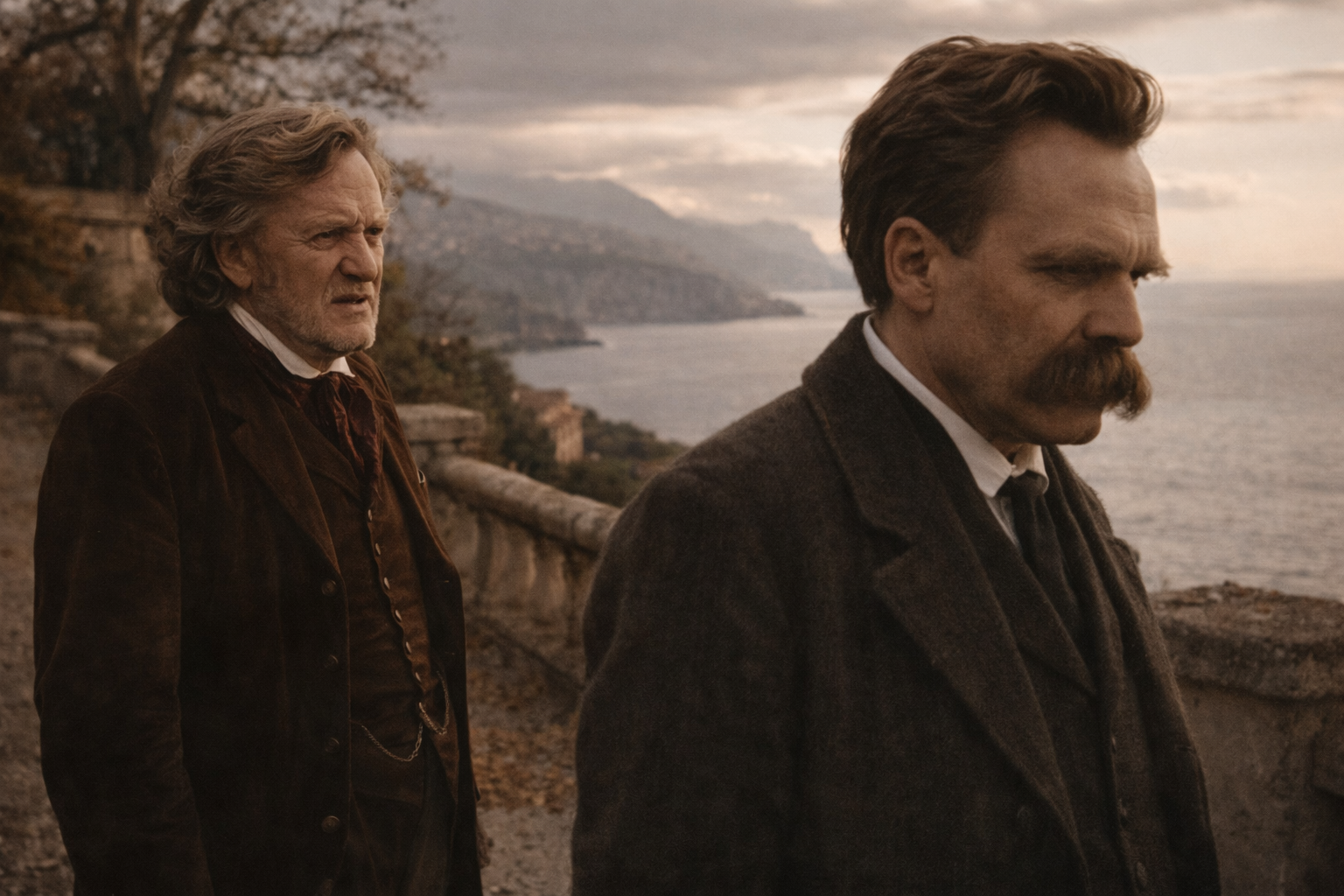
Nietzsche was not opposed to conditions. He was opposed to conditions which produce submission. He was opposed to art that requires the suspension of individual judgment as the price of admission. He was not opposed to art that provides a frame within which individual judgment becomes more acute, more available, more alive to the specific weight of the moment.
The question is whether the walk is the first kind or the second kind. And the honest answer, nine weeks into a twelve-month practice, is that it is sometimes one and sometimes the other. There are walks where the instructions produce exactly the experience they were designed to produce, and the experience is real and earned and mine. But I am also aware that I arrived at it on rails. And there are walks, fewer, but they exist, where the assignment breaks open into something the instructions could not have predicted, where the music and the city produce something that was not designed and cannot be reproduced.
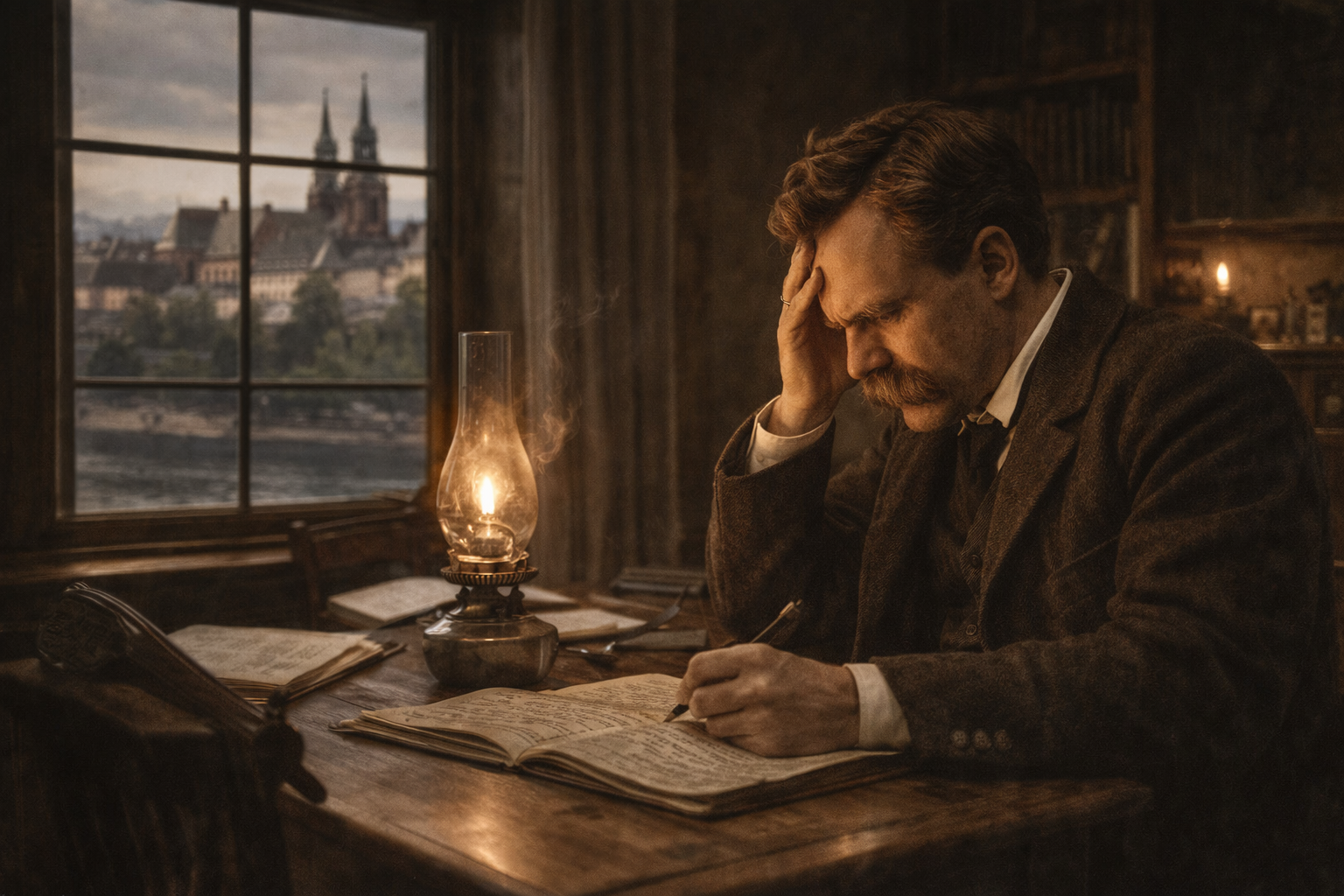
Nietzsche would have been interested only in the second kind. He would have said the first kind is tourism of your own inner life, everything managed in advance, nothing at risk. He would have been right about that. He left Bayreuth before the final cycle was complete, fled to the woods with Stendhal and a headache, and spent the next twelve years writing his way toward an understanding of what he had seen there. The Break with Wagner, he said later, was the most severe test of his character. The greatest event of his life took the form of a recovery. Wagner was one of his diseases.
This is the rhetoric of a man who had loved something completely and needed to unmake that love in order to survive it. The venom of The Case of Wagner is the venom of betrayal, not mere disagreement. Nietzsche had believed, with his whole intellectual being, that Wagner was building toward something that would renew the capacity of human beings to live fully, to endure tragedy, to affirm existence without consolation or illusion. What he found at Bayreuth in 1876 was an audience in a darkened hall, surrendered.
The scored walk begins from a different premise. It does not promise renewal. It does not promise redemption. It promises only that the music and the city will meet in you, on a specific day, in specific weather, in your specific body with its specific history, and that something will happen at that intersection which could not have happened in a concert hall or at a desk. Whether that something is the kind of encounter Nietzsche was looking for, genuinely individual, genuinely at risk, genuinely yours, is a question each walk either earns or fails to earn. There is no guarantee. Which is both the problem and the point.
Further Reading