Play The Evening Game: Wagner, Whist, and the Curse That Plays Itself
There is a document type that tells you more about a person than their letters, more than their published prose, more even than their music. It is the diary kept by someone who loves them.
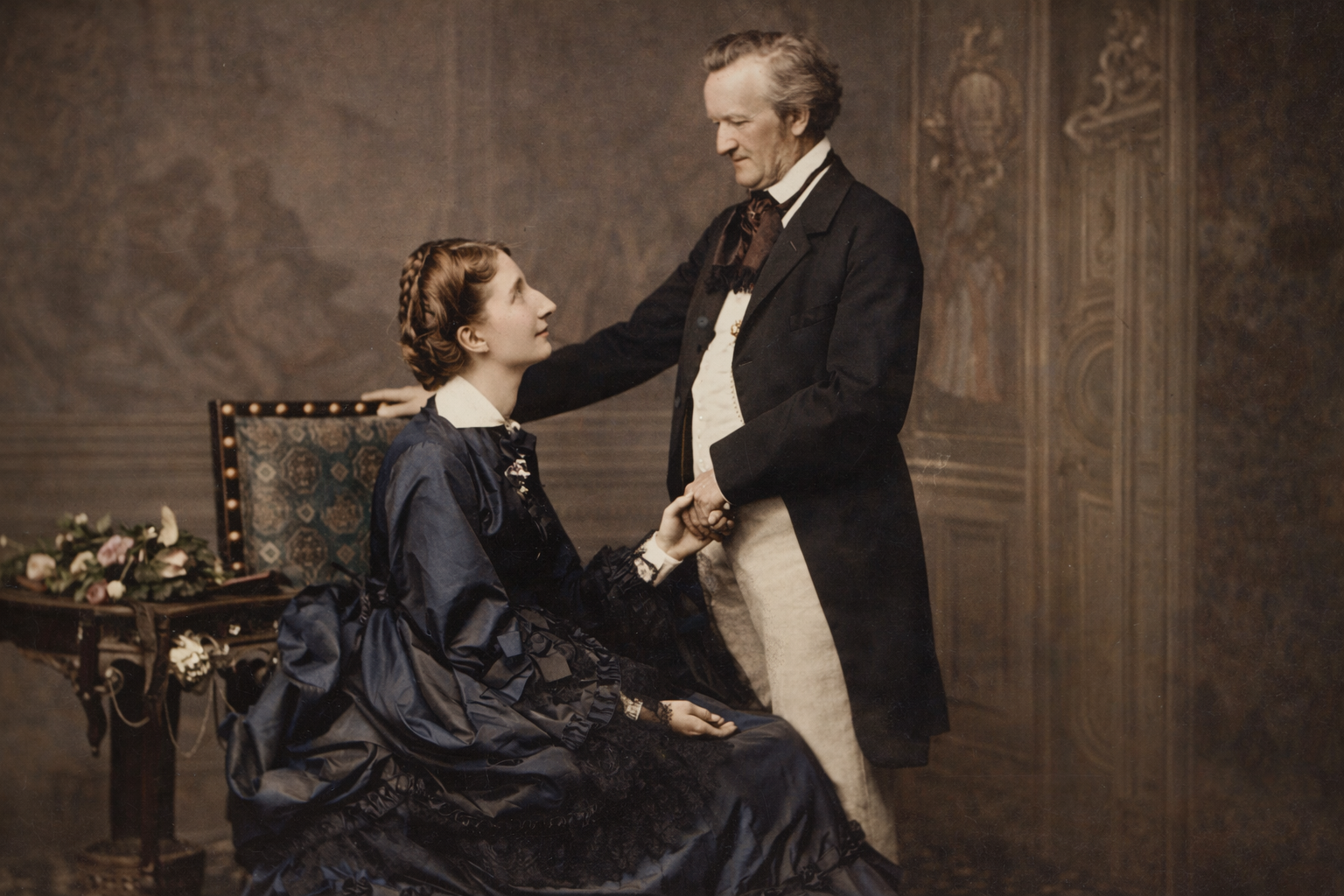
Cosima Wagner began her diary on January 1, 1869, and did not stop until February 12, 1883, the day Richard Wagner died in Venice. Across those fourteen years she filled thousands of pages with the texture of their shared life: his dreams, recounted each morning over breakfast; his moods, which moved through the house like weather; his opinions on everything from Schopenhauer to the price of silk dressing gowns. The diaries were not written for publication. They were written as an act of devotion, and as a result they are among the most intimate documents in the history of Western music. They are also, incidentally, where we find Wagner playing cards.
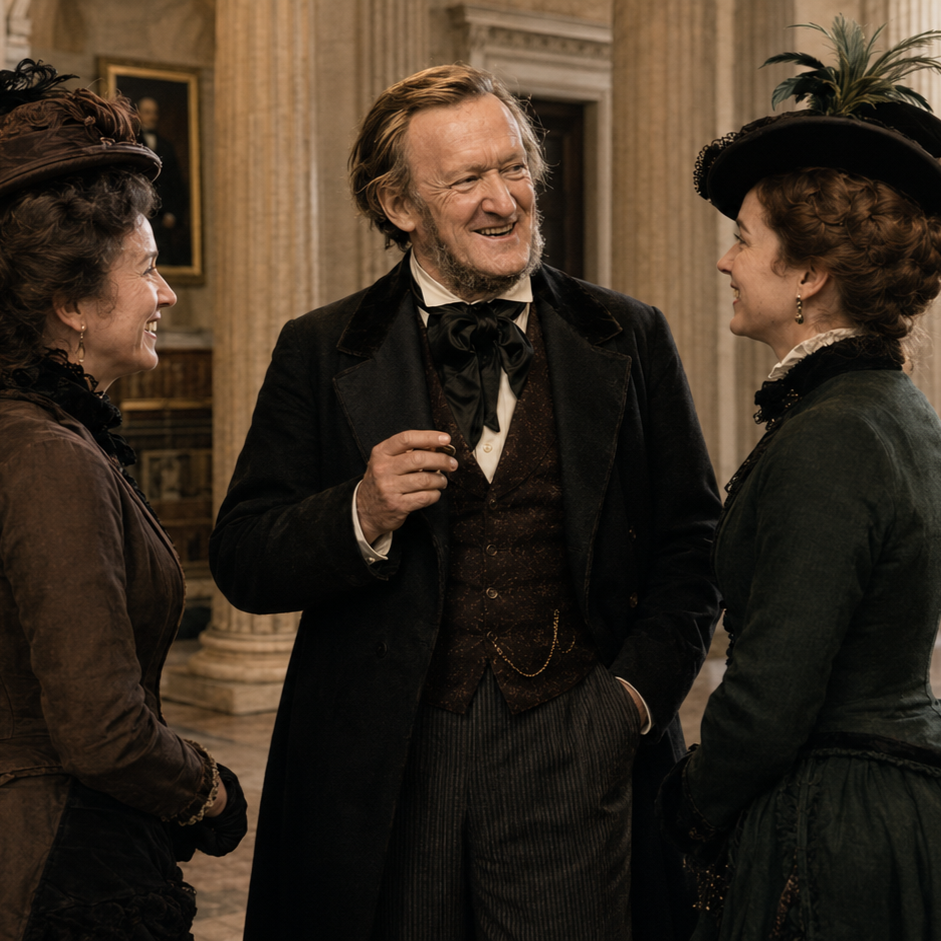
The evenings at Wahnfried, the villa Wagner built in Bayreuth in 1874, naming it after the peace he had finally found from the world's illusions, followed a recognizable pattern. Dinner with the inner circle. Readings aloud, often from the Norse sagas or Schopenhauer, sometimes from Wagner's own prose. Music, sometimes improvised at the piano. And then, with the lamps low and the company settled, cards. Whist in particular: the English trick-taking game that had crossed the Channel into German aristocratic and bourgeois parlors sometime in the previous century, and by Wagner's time had become the default social lubricant of educated European evenings.
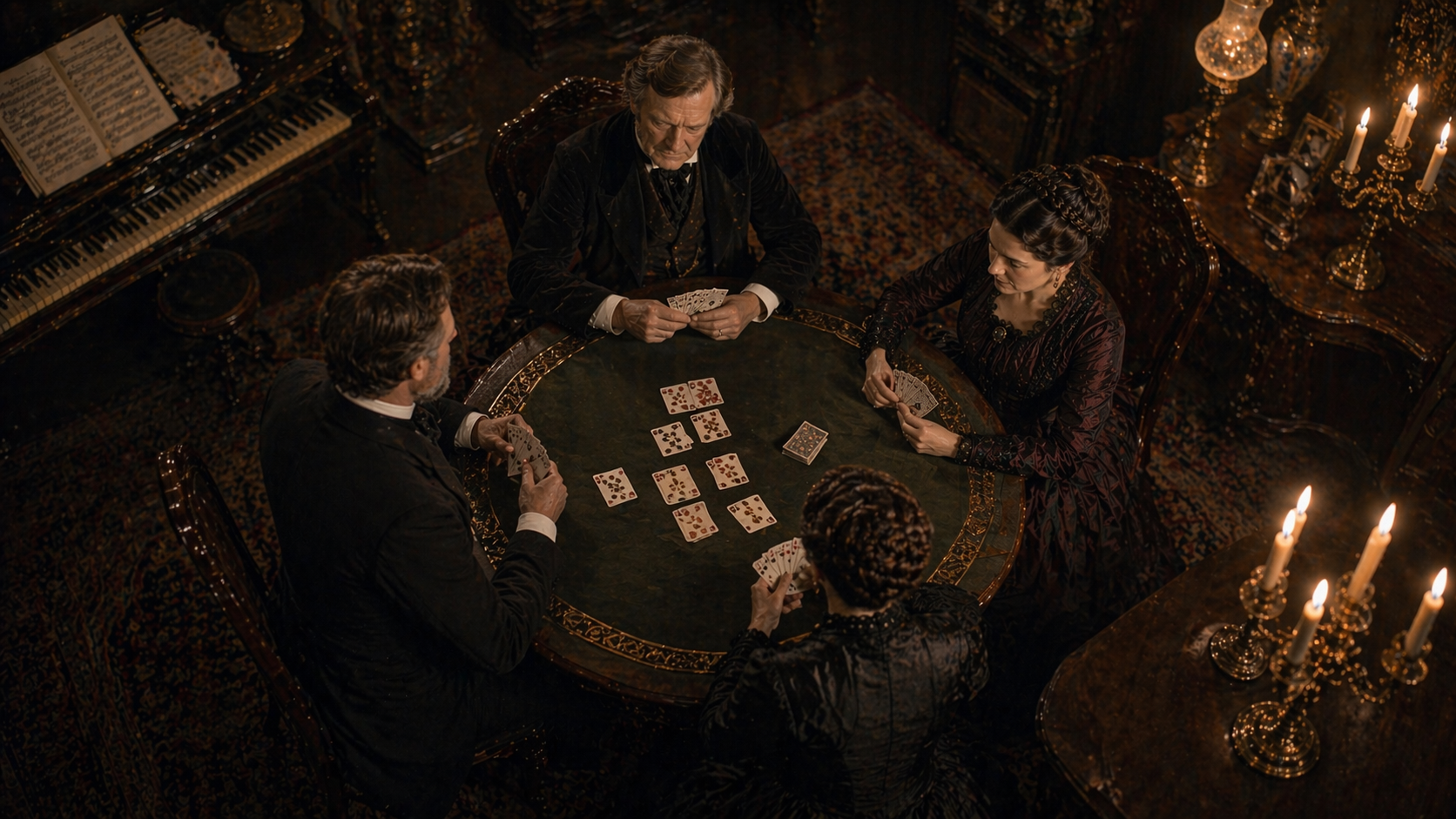
Cosima records these sessions without ceremony, in the same matter-of-fact register she uses for everything else. They played. They talked while they played. Wagner won, or Wagner lost, or Wagner grew irritable and abandoned the table. What the diary captures, underneath its surface reportage, is that the card table at Wahnfried was one of the few places where Richard Wagner was required to be something other than the center of his own mythology. Cards imposed equality. You played the hand you were dealt.
His life until Wahnfried had been defined by extremity. Poverty in Paris in the late 1830s, where he and Minna ate whatever they could afford and he worked frantically for money that never arrived. Extreme debt throughout the 1840s and 50s, which eventually forced him to flee Dresden under cover of night after the failed revolution of 1849. Extreme dependency, first on the Wesendoncks in Zurich, then on Ludwig II in Munich, then on Cosima herself. Extreme productivity, composing at a scale and intensity that exhausted everyone around him. He was a man who operated perpetually at the edge of catastrophe. The card table at Wahnfried was, in a small but real way, a place to be ordinary. But there is something stranger happening too, when we look at which game he played.
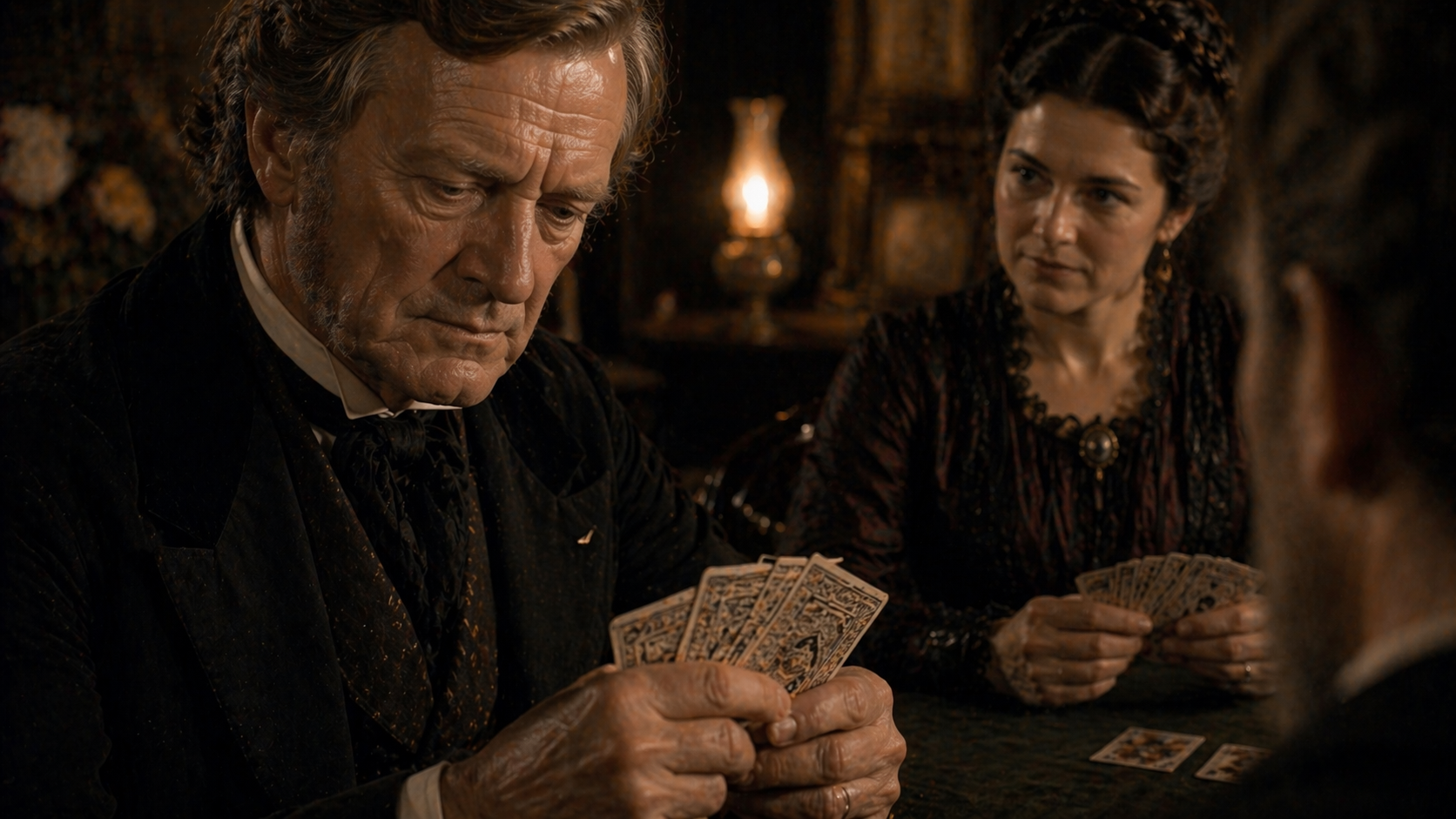
Whist is a partnership game. You and your partner, sitting across the table from each other, play against the opposing pair. The central rule, so obvious it seems trivial, until you sit with it, is that you cannot speak to your partner about your hand. You communicate only through the cards you choose to play, and in what order, and with what apparent intent. A skilled Whist player learns to read their partner the way a musician reads a score: not just the notes but the phrasing, the emphasis, the timing. What you lead tells your partner what you hold. What you follow with confirms or complicates that signal. The game is built entirely on structured, constrained communication. Meaning transmitted through gesture rather than word. Wagner spent twenty years building a system which also did this.
The leitmotif, the short musical phrase tied to a character, object, or idea, which recurs and transforms throughout the Ring cycle, is at bottom a communication system operating beneath the level of speech. When the Valhalla theme appears in the orchestra as Wotan stands surveying his new fortress, the audience who knows the system understands something that the characters on stage cannot say aloud. When the Ring motif sounds as Siegfried forges the sword, something is being communicated about inheritance and doom that the drama's surface cannot carry. The orchestra talks to the audience the way a Whist player signals their partner: obliquely, through established convention, saying the unsayable through structured implication.
Whether Wagner ever consciously mapped this parallel onto his evenings at the card table is not something the diaries tell us. He was not given to that kind of self-analytical tidiness. But the structural rhyme is there regardless: a man who built the most elaborate indirect communication system in the history of opera spent his evenings playing the one popular card game entirely organized around indirect communication.
The curse on the Ring, the Nibelung gold, the source of all the cycle's catastrophe, works through desire. Alberich places the curse not because the gold itself is malevolent but because power obtained through the renunciation of love cannot be held without destroying the holder. Every character who possesses the Ring believes they can manage it. Wotan believes his intelligence will protect him. Fafner believes his isolation will protect him. Siegfried believes his innocence will protect him. None of them are wrong about themselves. They are wrong about the gold.
The game embedded in this project translates that mechanic literally. The Ring-bearer's won tricks score for the opposing team. Victory becomes defeat. The better you play, the more you damage yourself. The only way to escape the curse is to pass it on, which means playing the Ring card into a trick you expect to lose, engineering your own momentary defeat to transfer the poison to someone else. The Ring moves through the game the way it moves through the cycle. Not because anyone is foolish, but because the system is designed so that holding it is always, eventually, ruinous.
Wagner understood this dynamic from the inside. His life was structured by obligations he could not meet, debts, promises, relationships, that he had accumulated in the pursuit of the one thing he could not renounce: the work. The Ring took twenty-six years to complete, from first sketch to Bayreuth premiere. During that time he borrowed money he could not repay, accepted patronage he could not refuse, entered relationships that destroyed the people who loved him. He was, in the specific sense the cycle describes, a Ring-bearer: someone whose gifts and ambitions constituted a kind of curse that passed through every hand it touched.
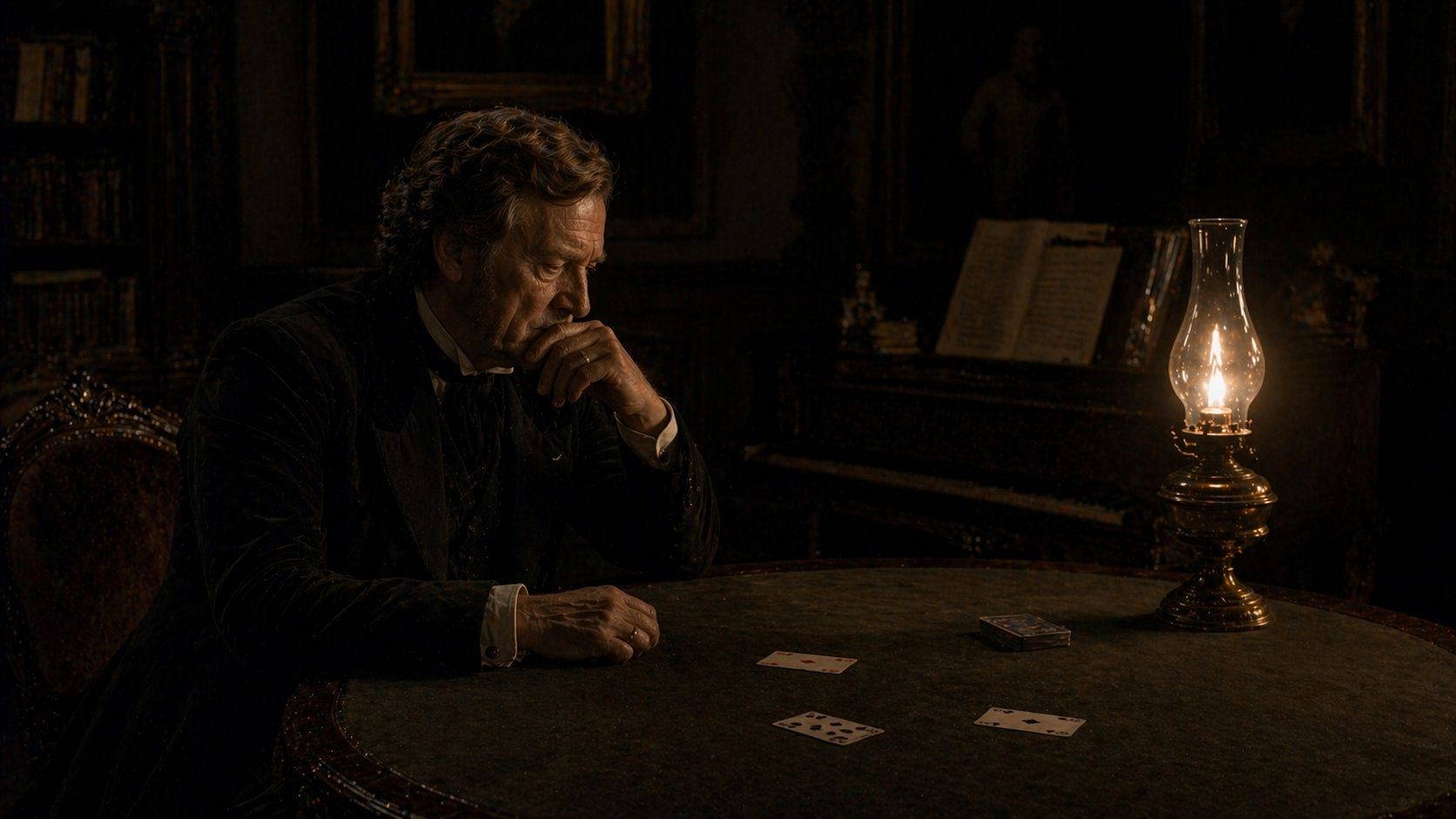
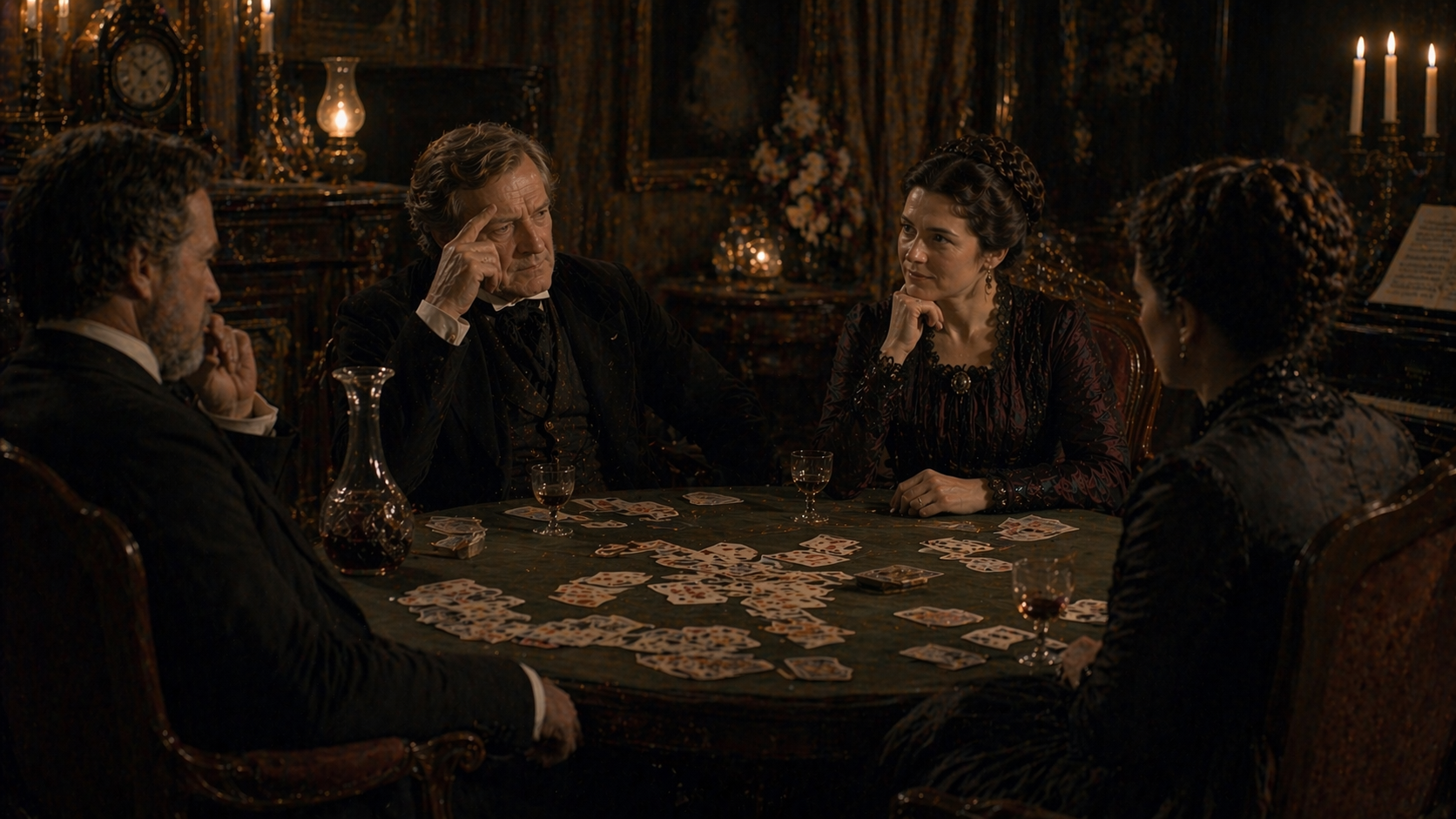
The whist evenings at Wahnfried come after all of this. The debts are cleared by Ludwig's patronage. The festival theater is built. The first complete Ring has been performed. Wagner is sixty, then sixty-two, then sixty-five. He plays cards with Cosima and their guests, and the diary records it in the same neutral register as everything else. He is, at last, on the far side of the catastrophe his life had been building toward.
The game in this project is called Das Spiel des Ringes, The Game of the Ring, and it is trying to do what the rest of the project does. Make Wagner's world something we can inhabit rather than merely observe. The walks put Wagner's music into the streets. The vocabulary essays put his conceptual world into language you can carry. The game puts his central dramatic mechanism, the curse that transfers, the victory that destroys, into your hands, literally, as a decision you have to make.
When you hold the Ring card in a hand of Whist, you face a version of the same problem every Ring-bearer in the cycle faces. You can win this trick, but winning will cost you. You can play the card now and escape the curse, but only by handing the problem to whoever takes it. There is no clean exit. The game does not offer one because the cycle does not offer one either.
The whist evenings at Wahnfried were, in some sense, the one time in Wagner's day when this was not true. When he sat at a table and played a game that had rules, and ended, and did not mean anything beyond itself. But he had spent twenty-six years building a world in which the gold always costs more than it's worth, and you do not build a thing like that without it becoming, in some way, the truth you live inside.
Further Reading