Tradition's Other Name: On Erneuerung
das Wort / the word: die Erneuerung (f.), pl. die Erneuerungen
Aussprache / pronunciation: er-NOY-er-oong
Wortart / part of speech: Noun, feminine, abstract noun from the verb erneuern
Register: Broadly active across religious, political, cultural, and technical domains. Erneuerung appears in the language of the Reformation (the renewal of faith), of political reform movements, of technological modernization, and of artistic revitalization. It is a word with consistently positive connotations, renewal is almost always presented as good, which makes its complexity in the context of Meistersinger particularly interesting.
Was das Wort wirklich bedeutet / What the word actually means

Erneuerung means renewal, regeneration, revitalization, the act of making something new again that had grown old, stale, or insufficient. It is not the same as Novität (novelty, newness for its own sake) or Innovation (innovation, the introduction of something entirely without precedent). Erneuerung implies continuity: you renew what already exists, you restore vitality to what has persisted but lost its energy, you bring new life to something whose form remains while its force has dimmed.
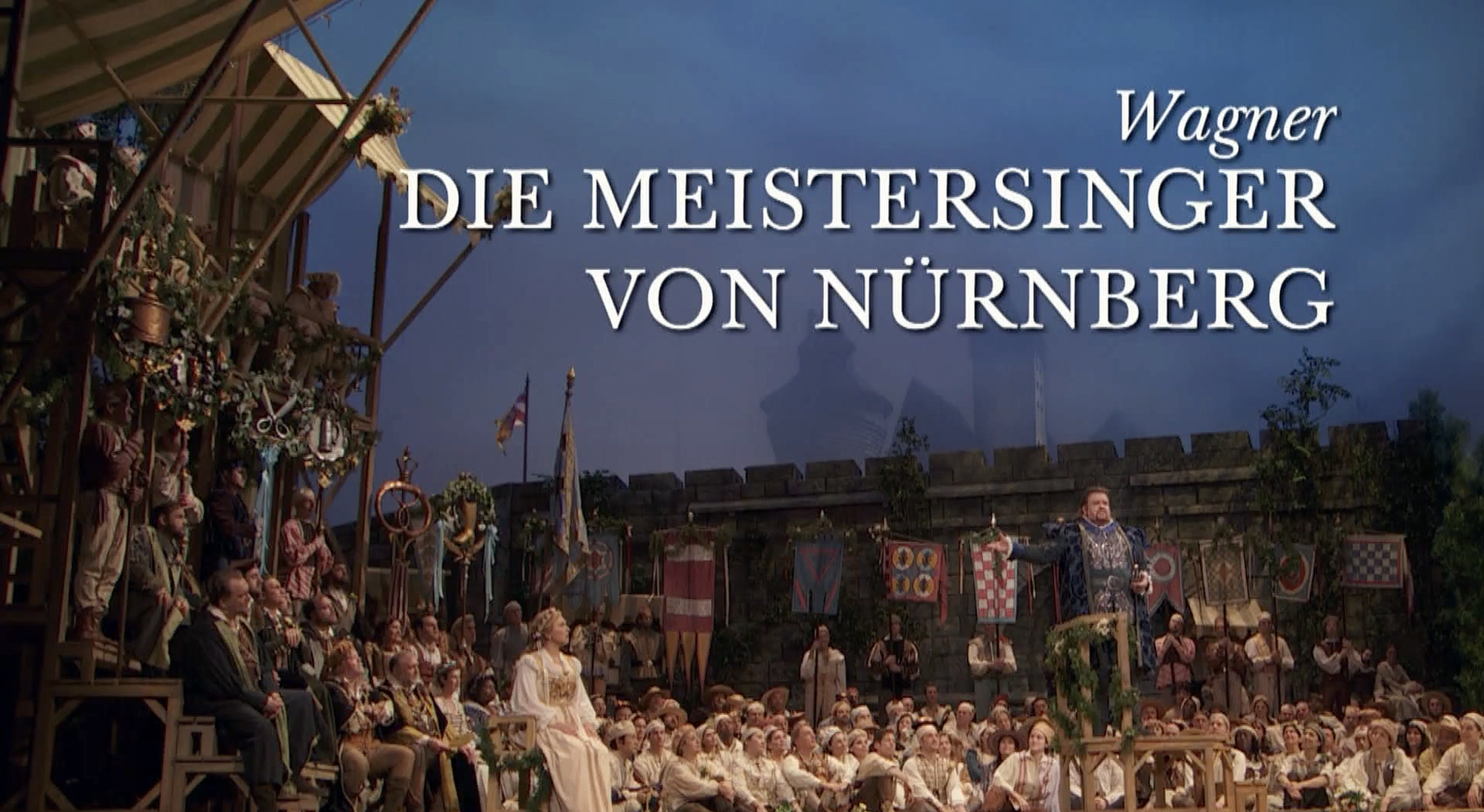
This distinction, between Erneuerung (renewal from within) and mere novelty (replacement from outside), is the May opera's central resolution. The dramatic problem of Die Meistersinger is not whether Walther's gift is real (it is) or whether the guild's tradition has value (it does), but whether genuine originality and inherited form can coexist without destroying each other. Beckmesser says no: the rules are the rules, and a song that breaks them is simply wrong. The guild majority, initially, agrees. Hans Sachs says something more complicated: that the rules exist to protect and transmit a tradition that has genuine value, but that the tradition can only remain alive if it retains the capacity to be renewed by genuine originality. Erneuerung is what he is betting on.
Walther's Prize Song, heard at the Bandshell as the walk's emotional center, is not a rejection of the guild's tradition. It is an Erneuerung of it: a song that could only have been made by someone who learned enough of the rules to give his natural gift a formal structure, and that demonstrates what the tradition is capable of producing when it remains open to what it cannot yet fully accommodate.
Die Etymologie / Etymology

Erneuerung is built from the prefix er- (marking achievement or completion of an action) and neu (new), generating the verb erneuern (to renew, to restore) and its abstract nominalization die Erneuerung.
Neu, new, comes from Old High German niuwi, from Proto-Germanic niwjaz, from Proto-Indo-European néwo-. It is cognate with Latin novus, Greek néos, English new. The root is among the most stable in Indo-European: newness was a concept that required a word from early in the language family's formation.
The prefix er- is one of German's most productive verbal prefixes, marking the moment when an action achieves its result. Compare:
arbeiten (to work) → erarbeiten (to work toward and achieve)
reichen (to reach) → erreichen (to reach and arrive at, to achieve)
wachen (to be awake) → erwachen (to wake up, to achieve wakefulness)
neu (new) → erneuern (to make new again, to achieve a renewed state)
Erneuern therefore means not simply to add newness but to complete the act of making new. The er- marks the arrival at the renewed state, not merely the attempt. Erneuerung is renewal accomplished, not renewal attempted.
The related verb sich erneuern, to renew itself (reflexive), is particularly important. It describes a system, tradition, or institution that has the capacity for self-renewal from within. Die Tradition erneuert sich, the tradition renews itself. This is the reflexive Erneuerung that Meistersinger is about. The guild tradition's capacity to renew itself, to remain alive by absorbing what initially seems to challenge it.
Erneuerung in der Reformationsgeschichte / Erneuerung in Reformation History

The word's most historically significant deployment in German culture is religious. The Reformation, die Reformation in German, but also described as die kirchliche Erneuerung (the ecclesiastical renewal) by its sympathizers, was precisely an Erneuerung in its self-understanding. Not the creation of something entirely new, but the renewal of what had been authentic in Christianity before it was corrupted by institutional accretion.
Luther's appeal was always to origins. To the pure word of Scripture against the accumulated tradition of the Church, to Glaube allein (faith alone, March's key phrase) against the elaborate penitential machinery that had grown up around it. He presented himself not as an innovator but as a restorer, clearing away the accumulated Wahn of centuries to reveal what had always been there. Erneuerung rather than Revolution.
This rhetorical structure, the claim that genuine originality is actually recovery of something more authentic, runs through German cultural history and is directly relevant to Meistersinger. Hans Sachs's position on Walther's song is structurally Lutheran. The song's originality is not a departure from the guild's tradition but a return to what the tradition was always capable of, obscured by the overaccumulation of formal rules. Sachs is the Lutheran reformer within the guild: he argues not against Handwerk but against the Wahn of rules mistaken for ends rather than means.
The Reformation's Erneuerung also established a specifically German linguistic and cultural tradition. Luther's translation of the Bible (die Lutherbibel) did not merely render the Scriptures into German; it helped constitute modern German as a literary language. The Erneuerung of faith was simultaneously an Erneuerung of the German language's expressive resources. Meistersinger, as an opera celebrating the German vernacular tradition of artisan song-making, is part of this long Erneuerung narrative.
Erneuerung und Tradition: Ein produktives Spannungsverhältnis / Erneuerung and Tradition: A Productive Tension

The concept of Erneuerung only makes sense in relation to Tradition. The inherited body of practice, knowledge, and form that requires renewal. And the relationship between the two is not one of simple opposition but of productive tension. Genuine Erneuerung requires a living tradition to renew; genuine tradition requires openness to Erneuerung to stay alive.
The philosopher Hans-Georg Gadamer, whose work on Hermeneutik (hermeneutics, the theory of interpretation) is one of the major German intellectual achievements of the 20th century, argued that the relationship between past and present, between inherited tradition and present understanding, was not a problem to be solved but a productive condition to be inhabited. His concept of Horizontverschmelzung (fusion of horizons) described the interpretive encounter between the horizon of the text (or work of art) and the horizon of the interpreter as a merging that enriches both. You do not overcome tradition to achieve genuine interpretation. You enter into productive dialogue with it, allowing it to question your assumptions while you question its limitations.
Walther and Sachs enact something very close to Horizontverschmelzung in the opera's central teaching scene. Walther's horizon is that of spontaneous inspiration, the aristocratic troubadour tradition, the Romantic conviction that genuine feeling is self-authorizing. Sachs's horizon is that of the guild, the accumulated Handwerk of the Meistersinger, the communal tradition of artisan song-making. Their overnight conversation fuses these horizons: Walther learns enough of the tradition to give his gift form, and the tradition, through Walther, discovers what it is capable of producing.
The Prize Song is the result. A work that belongs to both horizons simultaneously, that is recognizably Walther's (his voice, his experience, his imagery) and recognizably shaped by the tradition (the formal structure that makes it legible to the guild and the crowd). This is Erneuerung at its most complete. Not replacement, not capitulation, but genuine mutual transformation.
Politische Erneuerung und ihre Gefahren / Political Renewal and Its Dangers

The concept of Erneuerung has a consistently positive valence in German public discourse. Political movements of every stripe appeal to it, because everyone claims to be renewing something real rather than replacing it with something alien. Erneuerung der Demokratie (renewal of democracy), Erneuerung der Partei (renewal of the party), Erneuerung des Bildungssystems (renewal of the education system). These are standard political rhetorical moves in contemporary German politics, appealing to continuity and authenticity simultaneously.
But the appeal to Erneuerung has been as available to dangerous movements as to constructive ones. The 20th century's most catastrophic political Erneuerung rhetoric. The Nazi claim to be renewing an authentic German Volkstum (folk-nationhood) against the cosmopolitan corruption of the Weimar Republic, deployed precisely the Erneuerung logic. Not revolution but restoration, not novelty but the recovery of what was always genuinely German. Meistersinger was central to this appropriation, its final scene, Sachs's speech about heilige deutsche Kunst, deployed as an anthem of nationalist Erneuerung.
This is why the walk's final stop at the Old Met site, with Sachs's Wahn! Wahn! monologue, is the right frame for thinking about Erneuerung's limits. The monologue precedes and contextualizes the final act. It is Sachs acknowledging that Wahn, including the nationalist Wahn that the opera's ending risks generating, must be guided rather than simply released. The monologue is not optimistic. It is clear-eyed. It knows that the energy being redirected toward the Festival Meadow is the same energy that drove the previous night's riot, that the crowd's susceptibility to collective feeling is not itself good or bad, that art's claim to guide Wahn toward beauty rather than destruction is a claim that requires constant renewal, and constant vigilance.
Erneuerung without Wahn's diagnosis becomes mere nostalgia, the sentimental recovery of a past that never existed. Wahn's diagnosis without Erneuerung's possibility becomes paralysis, the inability to act because every action risks becoming complicit in the collective delusion. The two words need each other. They are May's most important pair.
Grammatik und Gebrauch / Grammar and Usage

Die Erneuerung declines regularly as a feminine noun.
The verb erneuern: regular weak verb.
eine Tradition erneuern, to renew a tradition
sich erneuern, to renew itself (reflexive: self-renewal)
das Abonnement erneuern, to renew a subscription (a mundane but fully correct usage)
eine Freundschaft erneuern, to renew a friendship
erneuerte Energie, renewed energy
erneuerbare Energien, renewable energies (the environmental phrase, showing erneuerbar as adjective: capable of being renewed)
Key near-synonyms and distinctions:
die Erneuerung, renewal (process and result; ongoing or complete)
die Renovation, renovation (primarily physical: buildings, spaces)
die Reform, reform (structural change, often institutional; more systematic than Erneuerung)
die Renaissance, renaissance, rebirth (borrowed; implies more complete transformation than Erneuerung)
die Restauration, restoration (recovering what was before; more conservative than Erneuerung)
Verwandte Wörter / Related Words

erneuern (v.), to renew, to restore
sich erneuern (v.), to renew itself, to regenerate
erneuerbar (adj.), renewable
erneut (adv.), again, anew (erneut versuchen, to try again)
neu (adj.), new
die Neuheit, novelty, newness (without the continuity dimension of Erneuerung)
die Tradition, tradition (what Erneuerung renews)
die Reform, reform (more structural than Erneuerung)
der Wandel, change, transformation (January's word from the Wandern root, change through movement)
die Restauration, restoration (more conservative than Erneuerung)
die Überlieferung, transmission of tradition, handing down (über + liefern, delivering over time; the process by which tradition is transmitted for potential Erneuerung)
Die Verbindung zum Weg / Connection to the Walk

The walk traces Erneuerung across four sites, each representing a different instance of it.
Union Square's Erneuerung: the Wagner ghost-building, the former Germania/Guardian Life Insurance headquarters, renamed and repurposed, the institution surviving its ideological associations through transformation rather than preservation. The German-American cultural network that funded Wagner in Europe and built institutions in New York has been renewed into something else, its buildings serving different functions, its legacy legible only to those who look.
The Liederkranz site's Erneuerung: the hall is gone, but the club continues. Moved to East 87th Street, still active, one of the oldest German-American cultural institutions in the city. The Gemeinschaft of the singing society has renewed itself across changing generations, demographics, and cultural contexts. The ghost building on 58th Street is evidence of Erneuerung's cost. Something of the original is always lost in the renewal. But the institution lives.
The Naumburg Bandshell's Erneuerung: the longest continuous free outdoor classical concert series in America, running since 1905. Season after season, generation after generation, the same space inviting different audiences to the same collective experience. This is Erneuerung at its most patient. Not dramatic transformation but the quiet persistence of a practice, renewed each summer without fanfare.
The Prize Song at the Bandshell is Erneuerung made audible. Walther's melody is not traditional and not merely novel. It has the specific quality of something genuinely new that nonetheless sounds like it has always been there, like it was always possible within the tradition, like it is the tradition discovering what it was always capable of. This is the highest form of Erneuerung. Not the break with the past, and not its mere continuation, but its fulfillment. The moment when the tradition achieves something that all its previous elaboration had been moving toward without quite knowing it.
Erneuerung ist nicht, was nach der Tradition kommt. Es ist, was die Tradition in sich trägt und noch nicht gesungen hat. Renewal is not what comes after tradition. It is what tradition carries within itself and has not yet sung. Walther sang it. The Prize Song was already in the guild's tradition, waiting for someone who had learned enough of its rules to set it free.
Further Reading