What the Music Cannot Repay: Interviewing James Baldwin
An interview conducted somewhere between Harlem and Paris and the particular silence that exists between a tradition and the people it was not built for. He has a cigarette. He is watching you carefully.
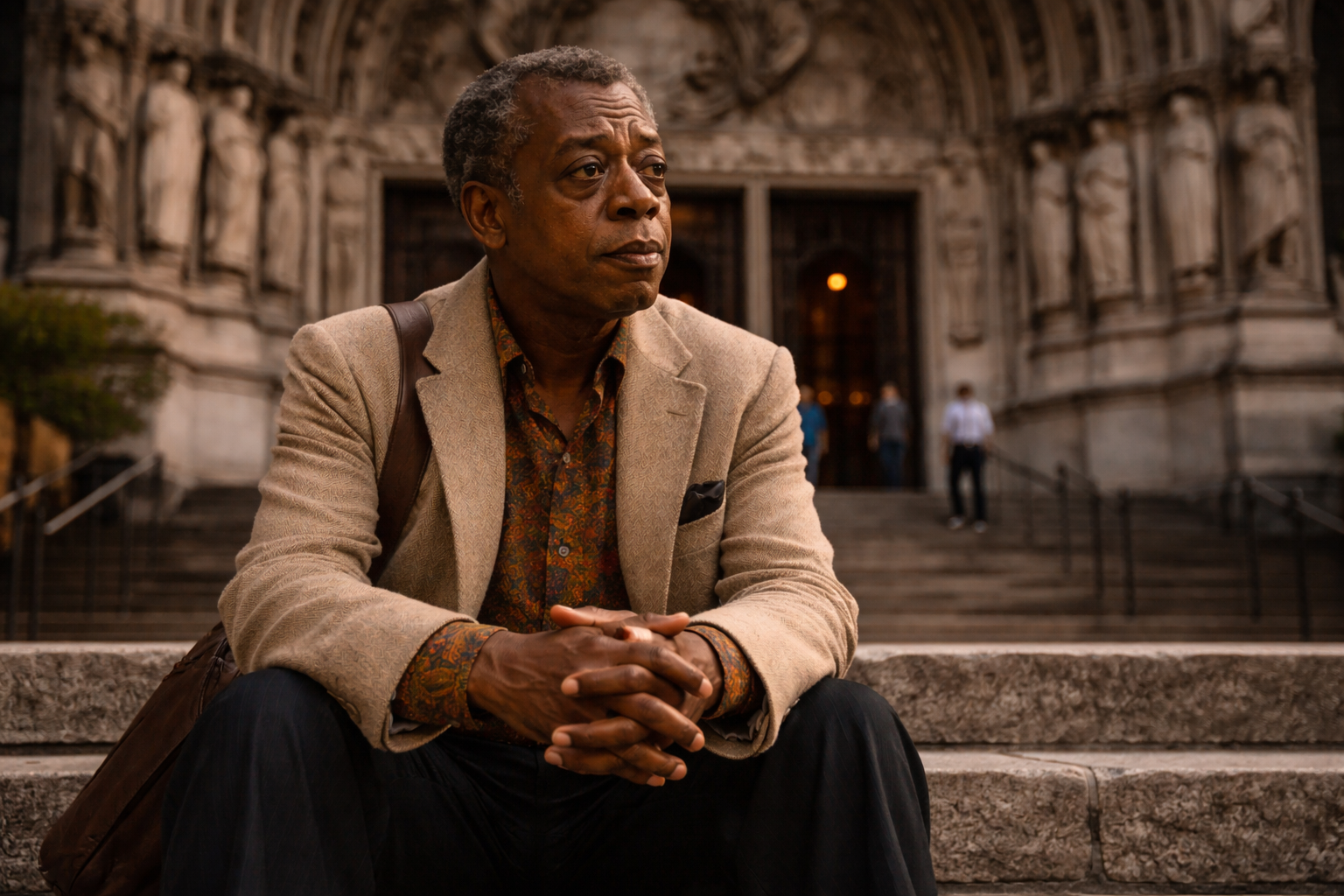
Aufbruch/Matt: Mr. Baldwin. I want to ask you about what it means to love something that was not made for you.
James Baldwin: That is the central experience of my life. And of most lives, if people are honest about it. Very little that is beautiful was made with you specifically in mind. You love it anyway or you don't, and if you love it you have to work out what that love costs and whether you can afford it and what it does to you that you keep paying.
Aufbruch/Matt: The project I've been building uses Wagner's music as a method for walking through New York City. A year of operas mapped onto the streets. And I find myself having to account for what I'm doing and why.
James Baldwin: You should have to account for it. Wagner was an anti-Semite of the systematic and philosophical variety. Not the casual cruelty of ignorance but the considered position of a man who had decided who mattered and built a cosmology around the decision. And the music that came out of that man is undeniably, irreducibly magnificent. Now what do you do with that?
Aufbruch/Matt: I've tried to sit with the contradiction rather than resolve it.
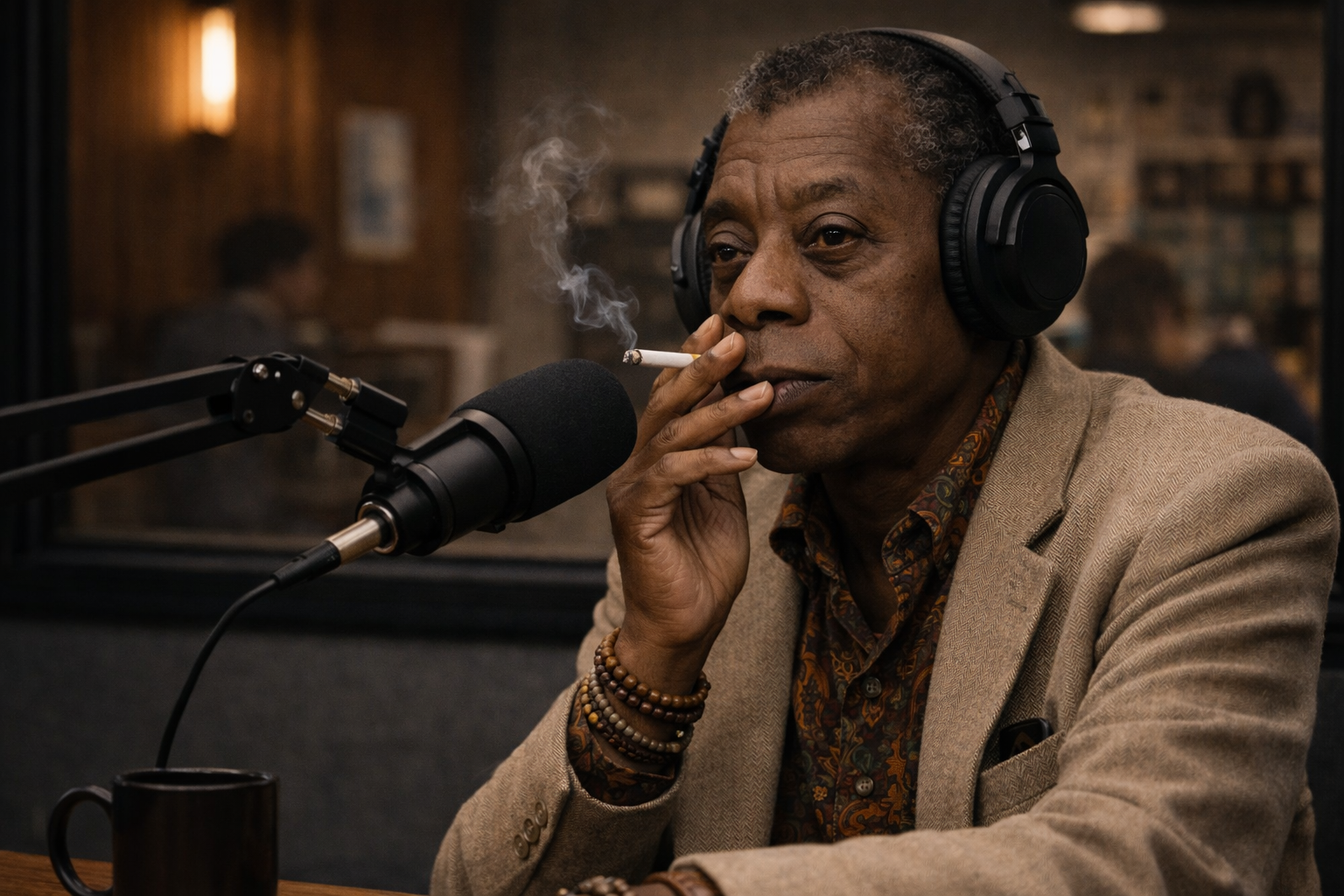
James Baldwin: Sitting with a contradiction is not the same as understanding it. I sat with the contradiction of loving Henry James for a long time before I understood what that love was asking of me. What it required me to overlook. What it was doing to my sense of what a human being was, what a human life was worth, whose interiority was considered worth examining in careful prose. You can love something and still need to know exactly what you are loving and what it is costing you.
Aufbruch/Matt: What does it cost, do you think? Walking with this music through a city that is one of the most diverse on earth.
James Baldwin: New York is many cities. That has always been true. The city you walk through with Wagner in your ears is not the same city the man running the bodega on that corner inhabits. You are moving through the same streets with entirely different architectures of meaning overhead. That is not a criticism. That is just a fact about cities. But I think you know it, which is why you are asking.
Aufbruch/Matt: The project came partly out of my own experience as an immigrant. Twenty years in New York, originally from England. The city as a place you have to learn to read.
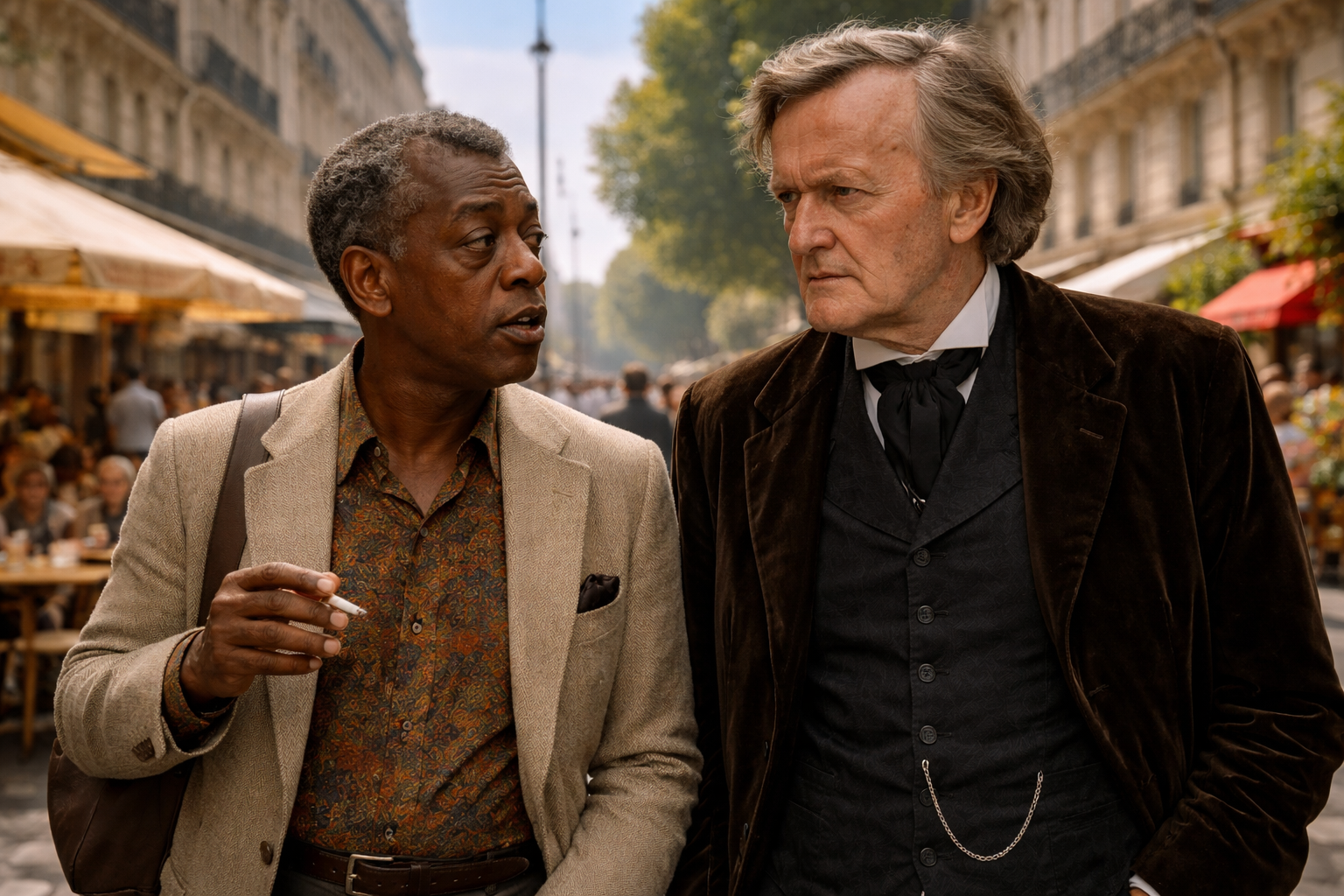
James Baldwin: An English immigrant in New York is not the same thing as an immigrant in New York. I want to be clear about that without being cruel about it. You carry a particular kind of cultural passport. The city receives you in a particular way. That is not your fault and it is not nothing. What I am saying is that the project's sense of itself as an outsider practice, a wanderer's practice, should be held alongside the question of which wanderers the city makes welcome and which it makes pay for every step.
Aufbruch/Matt: That is a fair challenge.
James Baldwin: It is not a challenge. It is an observation. I am not trying to invalidate what you have made. I am trying to make sure you know what you have made. There is a version of this project that is a love letter to a particular New York. The New York of certain cultural inheritances, certain kinds of aesthetic attention, certain assumptions about who has the leisure to walk four hours through the city listening to German opera. That version is real and it has value. It is also partial. Knowing it is partial does not diminish it. Pretending it is universal would.
Aufbruch/Matt: You left America for Paris. You needed distance from the country to be able to write about it.
James Baldwin: I needed distance to survive it and to see it. Those are related but not identical things. From Paris I could see what America was in a way that was not available to me when I was inside it fighting for my life. Distance is a privilege and a necessity and it changes what you can know. Your project is also about a kind of distance. You impose a musical structure on a city that already has its own overwhelming structure. The opera becomes a way of holding the city at a usable remove. I understand that. I also think you should understand that the remove is not available to everyone equally.
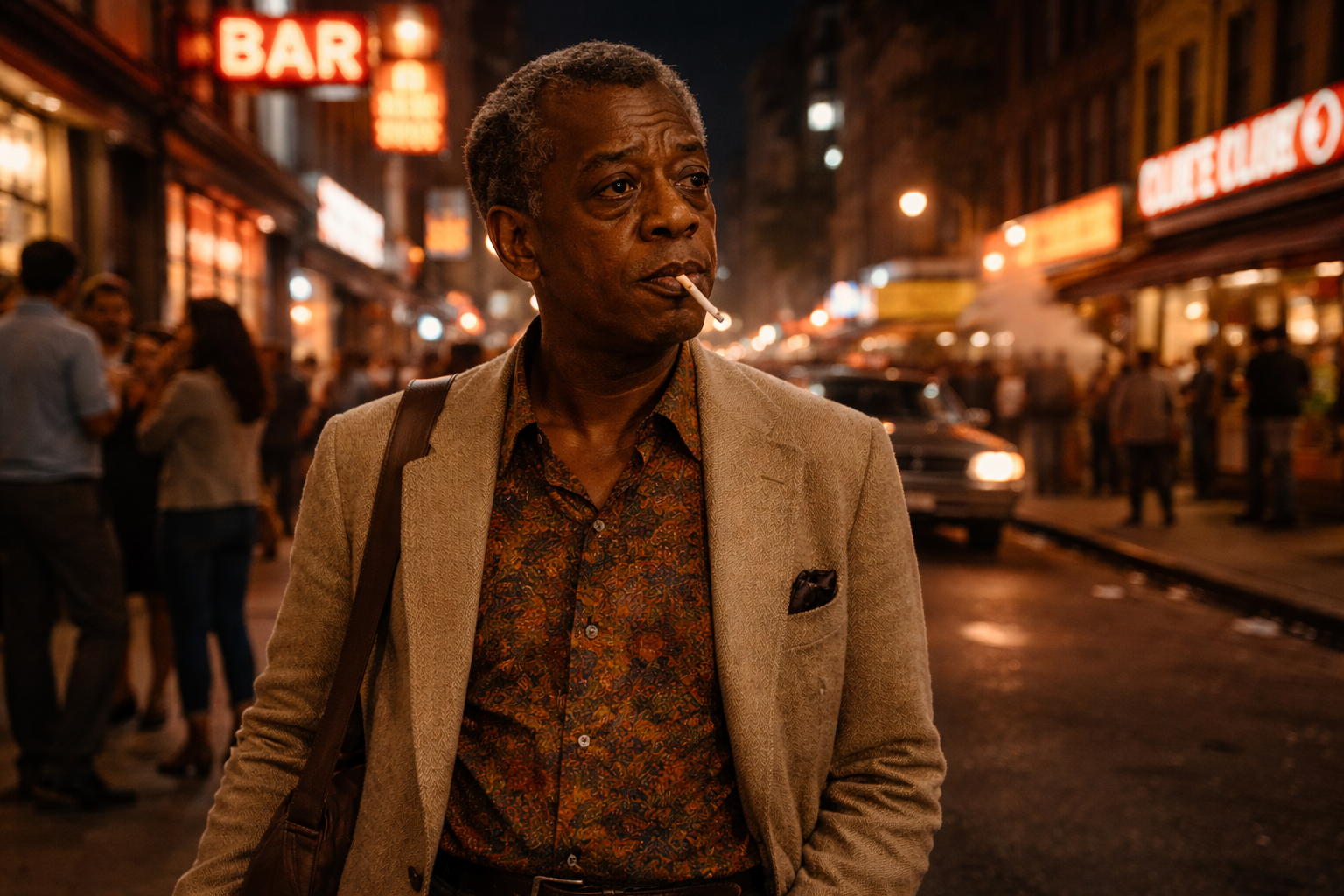
Aufbruch/Matt: The music itself, have you spent time with Wagner?
James Baldwin: I have spent time with Wagner the way you spend time with something that disturbs and compels you simultaneously. The Prelude to Tristan is one of the most extraordinary things I have ever heard. It describes a condition I know very well. The ache that has nowhere to go. The longing that the world's structure will not accommodate. Wagner found the sound of that. I do not forgive him for what he believed about human beings. I also cannot unhear what he found.
Aufbruch/Matt: That is exactly the position I keep finding myself in.
James Baldwin: Most serious relationships with art are like that. The question is whether you are honest about the position or whether you aestheticize it into something more comfortable. The aestheticization of difficulty is a real danger. You build a beautiful practice, you develop a sophisticated vocabulary, you accumulate a year's worth of walks and essays and maps, and somewhere in the accumulation the original difficulty gets smoothed over. The project becomes its own justification. That is the thing to watch for.
Aufbruch/Matt: How do you guard against it?
James Baldwin: You keep asking the question you would rather not ask. What is this costing and who is paying and is it worth it. Not once, at the beginning. Every time. All year. The walk does not answer that question. The music does not answer that question. You have to bring it yourself and keep bringing it.

Aufbruch/Matt: And if the answer is uncomfortable?
James Baldwin: Then you are probably getting somewhere. Art that only confirms what you already believe is decoration. Art that makes you pay something you didn't know you owed. That is the real thing. You are working with real material. Keep working with it honestly and see what it asks of you by December.
He looks out the window. The city is doing what the city does, producing itself endlessly, indifferent to any single person's framework for understanding it. He is not angry. He is never simply angry. He is watching, with that particular quality of attention that knows both the beauty and the cost of the beautiful, and has decided to love it anyway, at full price, without discounts.
Further Reading