What It Takes to Be Called Master: On Meister
das Wort / the word:der Meister (m.), pl. die Meister; fem. die Meisterin — pl. die Meisterinnen
Aussprache / pronunciation: MY-ster
Wortart / part of speech: Noun, masculine
Register: Fully active across professional, sporting, cultural, and everyday registers. One of the most widely used words in German, generating compounds in almost every domain of human activity. The word's range from the humblest trade to the highest artistic achievement is part of what makes it so culturally significant.
Was das Wort wirklich bedeutet / What the word actually means


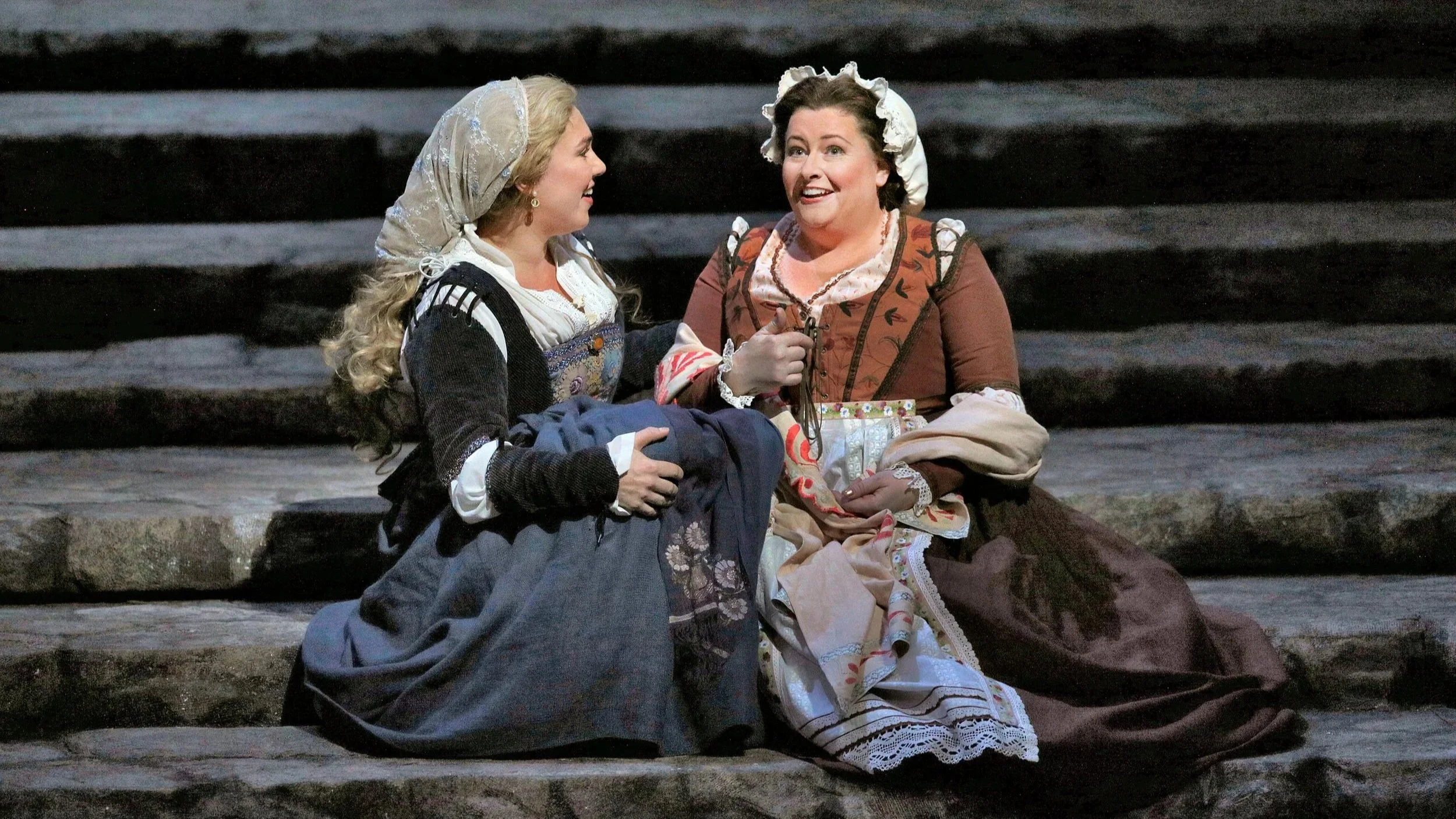
Meister means master. The translation is accurate. But in German, Meister does not only inhabit the elevated register that master has acquired in English, where it tends to suggest either formal honorifics (Master of Arts), martial arts hierarchies, or the historical vocabulary of slavery. In German, Meister is everywhere. It is the qualified electrician who has passed the formal certification examination, the chess champion who has achieved the ranking title, the football club that has won the league (der Meister, the champion), and Hans Sachs, the cobbler-poet who is the moral center of the opera. The same word covers all of them without irony.
This breadth is not dilution. It reflects a consistent underlying logic. The Meister is the person who has achieved recognized, certified, socially acknowledged mastery of a specific domain. Whether the domain is cobbling, chess, or counterpoint, the structure is the same, demonstrated competence, formally assessed, publicly recognized. And that recognition carries weight: the Meister has not merely become good at something privately, they have been judged good by those already qualified to judge.
This social, institutional dimension of Meister is precisely what distinguishes it from mere Können (ability) or Talent (talent). You can have Können that no one has assessed. You can have Talent that has never been tested. But Meister is not self-declared. It is conferred. This is why it matters so much in Die Meistersinger, and why Walther's desire to be admitted to the guild, without having passed through its formation, is so dramatically charged.
Die Etymologie: Von Lateinisch zum Deutschen / Etymology: From Latin to German


Meister comes from Old High German meistar, from Latin magister, itself from magis (more, greater), the comparative of magnus (great). The Latin magister meant master, teacher, director, supervisor: the person who has achieved more than others in a given domain, whose authority rests on demonstrated superiority.
The same Latin root generated English master, French maître, Italian maestro, and Spanish maestro, the family of words that organizes hierarchies of skill and authority across the Romance and Germanic languages. The Italian maestro has been borrowed into English (and German) specifically for conductors and composers, preserving the sense of absolute command over a musical domain. German Meister is the native equivalent: broader, more everyday, but carrying the same Latin root's claim to recognized superiority.
Meisterin, the feminine form, follows the standard German pattern for professional titles. Historically, women were excluded from the guild system and therefore from the formal Meister title, the feminine form is modern and reflects the opening of skilled trades to women.
The compound Meisterstück, masterpiece, literally master-piece, is the historical term for the work produced by a journeyman (Geselle) to demonstrate sufficient mastery to be admitted as a Meister. The word has migrated in both German and English into the sense of any outstanding individual work, losing its guild-examination context. But the original meaning is preserved in the opera. Walther's Prize Song is, structurally, his Meisterstück, the work that, under Sachs's guidance, finally achieves the formal quality that the guild can recognize as mastery.
Meister in deutschen Kulturbereichen / Meister across German Cultural Domains


The word generates compounds in almost every field, and mapping them reveals the culture's consistent use of Meister as the marker of highest achievement:
Handwerk: der Handwerksmeister (master craftsperson), der Maurermeister (master mason), der Tischlermeister (master cabinetmaker). These are formal professional qualifications in Germany, requiring examination by the Handwerkskammer (chamber of crafts). The Meisterprüfung (master craftsperson's examination) is a substantial professional credential.
Sport: der Meister (the champion, the title-holder, in football, the Bundesliga-Meister is the league champion), die Meisterschaft (the championship, the league title, die Deutsche Meisterschaft), der Meistertitel (the championship title). The same word structure organizes sporting achievement as guild achievement: recognized, contested, formally awarded.
Musik: der Kapellmeister (the conductor, literally chapel-master, the person who leads the Kapelle, the ensemble), der Chormeister (choirmaster), der Konzertmeister (concertmaster, the leader of the orchestra's violin section). The Liederkranz singing society, the May walk's second site, would have had a Chormeister who occupied the same role as the fictional guild masters in the opera.
Kunst: der Altmeister (old master, the great painters of the Renaissance and Baroque), der Großmeister (grandmaster, in chess, the highest formal title), das Meisterwerk (masterwork, the outstanding individual work).
Philosophie und Mystik: Meister Eckhart, the 13th-century Dominican mystic whose theology of divine union we encountered in April, bears the title as an honorific applied to scholars and teachers of exceptional standing. Meister in this context means something like the revered teacher, acknowledging not just skill but wisdom and spiritual authority.
Die Meistersinger: Eine besondere Gattung / The Meistersinger: A Specific Institution


The Meistersinger were a real historical phenomenon, not Wagner's invention. In the 14th to 16th centuries, guilds of artisans in German cities organized singing societies along guild lines, with formal rules (Tabulatur) governing the technical requirements of poems and melodies. The historical Hans Sachs (1494–1576) was a real Nuremberg cobbler and prolific poet-playwright who was a central figure in the Nuremberg Meistersinger tradition.
The Meistersinger occupied a specific cultural niche. They were not professional musicians or aristocratic troubadours. They were artisans, cobblers, bakers, blacksmiths, who organized their cultural practice along the same guild lines as their trades. To become a Meistersinger was to pass through the same three stages as any other craft, apprentice, journeyman, master. The examination was formal. You had to compose a song in a recognized style (Ton), perform it before the guild, and have it assessed by a Merker (literally a marker, a scorer who tracked technical infractions).
The Merker in the opera, Sixtus Beckmesser, is the most misunderstood character in Meistersinger. He is not simply a pedantic villain. He is doing exactly what the guild requires. Marking the technical infractions in Walther's trial song, according to the established rules of the Tabulatur. The problem is not that Beckmesser is wrong about the rules. It is that the rules he is correctly applying are not adequate to the song he is assessing. This is the opera's central tension, and it turns on the Meister concept. What does mastery mean when the standards of mastery cannot accommodate the work of genuine originality?
Meister und Lehrling: Die Weitergabe des Wissens / Master and Apprentice: The Transmission of Knowledge

The most important function of the Meister in the guild system was not production but transmission. The Meister was responsible for teaching the Lehrling, for passing on not just the technical skills but the embodied knowledge, the Handwerk, that constituted the craft's accumulated wisdom.
This transmission is the heart of Hans Sachs's role in the opera. He does not simply judge Walther's talent and decide whether to support or oppose it. He teaches. The overnight scene in which Sachs explains the rules of the guild's song-form to Walther, and helps him give his inspiration a formal shape, is the opera's central pedagogical moment. Sachs is functioning as Meister in the most important sense. Not as gatekeeper, but as transmitter.
The paradox of genuine transmission is that the Meister who succeeds has produced someone who may surpass them. Walther's Prize Song is, at the opera's close, recognized as better than anything the existing masters have produced, including Sachs. Sachs knows this. His extraordinary act of renunciation, stepping aside from Eva, recognizing that Walther is the right man for both the song contest and the woman, is the Meister's ultimate gesture. The willingness to be exceeded by the student, to have transmitted something that has grown beyond the transmission.
This is the difference between a guild master and a Meister in the deeper sense. The guild master protects the standards. The Meister produces someone who can revise them.
Grammatik und Gebrauch / Grammar and Usage


Der Meister is masculine. The plural is identical to the singular (die Meister — this zero-plural is common for masculine nouns in German). The feminine die Meisterin adds the standard -in suffix, with plural die Meisterinnen.
Key constructions:
seinen Meister finden, to meet one's match (literally: to find one's master)
kein Meister fällt vom Himmel, no master falls from the sky (proverb, mastery must be earned through practice, not given as a gift)
über den Meister hinauswachsen, to surpass the master
Meister in seinem Fach, master in one's field
jdn. zum Meister ausbilden, to train someone to the level of master
The proverb Es ist noch kein Meister vom Himmel gefallen, No master has yet fallen from the sky, is one of the most frequently cited German proverbs. It is a practical rebuke to impatience, to the expectation that excellence is immediate or natural. Mastery must be achieved, not discovered. Handwerk must be learned. This proverb is, in miniature, the entire argument of Die Meistersinger.
Verwandte Wörter / Related Words


die Meisterin, female master, female champion
das Meisterstück, masterpiece, the work produced to demonstrate mastery
das Meisterwerk, masterwork, outstanding individual achievement
die Meisterschaft, mastery, mastery of a skill, also: championship (sports)
meisterhaft (adj.), masterly, with the skill of a master
meistern (v.), to master, to overcome (eine Herausforderung meistern, to master a challenge)
der Altmeister, old master (great historical practitioner)
der Großmeister, grandmaster (chess)
der Lehrmeister, teacher-master, the master who teaches
der Handwerksmeister, master craftsperson (formally credentialed)
der Lehrling, apprentice (the Meister's student)
kein Meister fällt vom Himmel, mastery must be earned (proverb)
Die Verbindung zum Weg / Connection to the Walk

The Liederkranz Hall site on East 58th Street is the walk's encounter with the Meister concept at its most institutional. The Liederkranz was a singing society organized along guild principles. Qualified members, structured practice, formal standards, a leadership accountable to the membership. When William Steinway, himself a Meister in the piano-making trade, head of one of the great instrument-manufacturing dynasties, presided over the Liederkranz, he was embodying the integration of Handwerk and musical Meisterschaft that the opera celebrates.
The ghost building on 58th Street holds this history. No façade, no plaque, no physical trace of the hall that stood there. But the Wach auf chorus playing as you walk slowly along the block is the sound of what a Meister tradition produced. Hundreds of voices, amateur and trained, singing together in a building specifically designed for collective musical achievement. This is the Meister concept at its broadest. Not the individual genius but the community of practitioners, all working at their level, all shaped by the tradition, all capable of producing something together that no individual could produce alone.
Walther's Prize Song at the Bandshell is the individual Meister moment. The work that demonstrates mastery achieved. But the Wach auf chorus is the community's Meister moment. The collective achievement of people who have all learned the Handwerk of singing and can now produce, together, something that moves an entire city. Kein Meister fällt vom Himmel. No master falls from the sky. Walther came close to trying. Sachs knew better.
Further Reading