The Self That Will Not Hold: On Auflösung
das Wort / the word: die Auflösung (f.), pl. die Auflösungen
Aussprache / pronunciation: OWF-lœ-zoong
Wortart / part of speech: Noun, feminine, abstract noun from the verb auflösen
Register: Unusually broad: technical in chemistry and music theory, psychological in clinical and literary discourse, philosophical in Romantic and idealist thought. Auflösung is one of those German words whose precision depends entirely on context, and whose full meaning in Tristan requires understanding all three registers simultaneously.
Was das Wort wirklich bedeutet / What the word actually means
Auflösung translates into English as dissolution, resolution, disintegration, or solution, and all four translations are correct in different contexts. The word names what happens when something that was held together comes apart, or when something that was in tension finds release, or when a solid state gives way to a fluid one. Chemistry uses it for the dissolving of a substance in a solvent. Music theory uses it for the resolution of a dissonant chord into a consonant one. Psychology uses it for the dissolution of ego boundaries in states of trance, extreme emotion, or psychosis. And German Romantic philosophy uses it for the merging of the individual self with a larger whole, the dissolution of the separate Ich into something vaster.
Tristan und Isolde uses all four simultaneously, and the word's ability to hold them together is part of what makes it so useful for understanding the opera. The Tristan chord, that unresolved dissonance that drives the entire work, is in a state of perpetual Auflösung deferred: it wants resolution (Auflösung in the musical sense) and is denied it for nearly five hours. The Love Duet stages the dissolution of the lovers' individual boundaries into each other (Auflösung in the psychological and philosophical senses). And the Liebestod, literally love-death, offers Auflösung in its most extreme form. The self giving way entirely, dissolving into the absolute the way a solid dissolves in a solvent, leaving nothing behind but the solution.
The April walk's thematic frame names Auflösung der Grenzen, dissolution of boundaries, as one of the month's operative concepts. Understanding Auflösung in its full range is understanding what the walk is designed to produce.
Die Etymologie: Lösen und seine Bedeutungen / Etymology: Lösen and Its Meanings
Auflösung is built from the prefix auf- (up, open, apart) and the verb lösen (to loosen, to undo, to solve). The compound verb auflösen then generates the abstract noun Auflösung through the standard German nominalization suffix. Lösen is a verb of extraordinary productive range. Its basic sense is to loosen, to free, to release from a binding. From this root:
loslösen, to detach, to free from (more forceful than lösen alone)
erlösen, to redeem, to release from suffering (Erlösung, redemption, is the word for what the Dutchman seeks, what Tannhäuser is denied in Rome, what the Grail offers in Parsifal)
lösen, to solve (a problem), to dissolve (a substance), to release (a grip), to buy (a ticket, eine Fahrkarte lösen)
sich lösen, to come loose, to free oneself
die Lösung, the solution (both the answer to a problem and the chemical solution)
The prefix auf- adds a dimension of opening or completing. Auflösen is not just to loosen but to loosen until the thing comes fully apart, to open something up to the point where its previous form is no longer maintainable.
The word Erlösung, redemption, shares the lösen root with Auflösung, and this is not a coincidence the opera's vocabulary leaves unexamined. The Liebestod offers what Erlösung promises. A release so complete that what was bound no longer exists in its former form. Whether this is redemption or dissolution, whether the self is saved into something larger or simply dissolved into nothing, is the theological question the opera poses without answering. The same root covers both possibilities.
Auflösung in der Musiktheorie / Auflösung in Music Theory
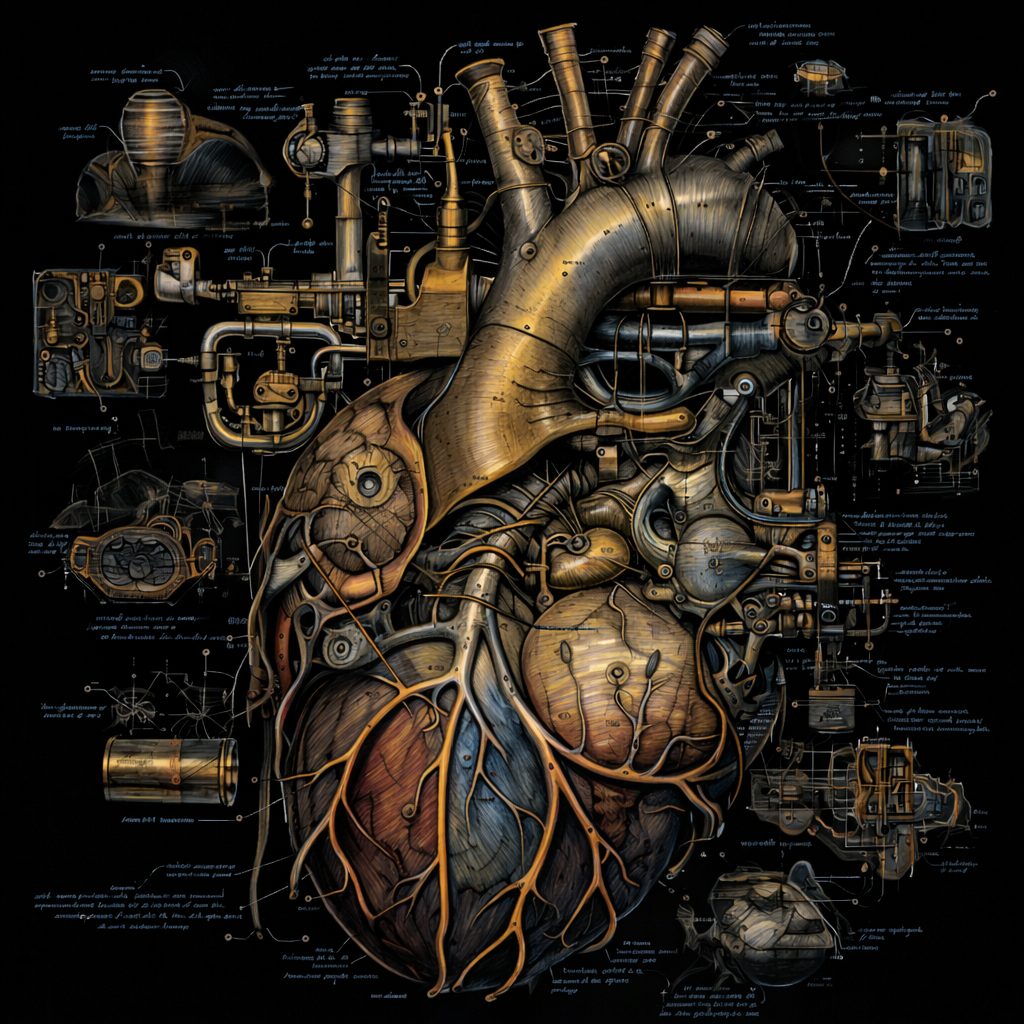
In music theory, Auflösung has a precise technical meaning. The resolution of a dissonant interval or chord into a consonant one. A leading tone resolves upward by a semitone to the tonic. A dominant seventh chord resolves to the tonic triad. The Auflösung is the harmonic event in which tension finds its release, in which the pulling-toward arrives at its destination.
Every piece of tonal music, the entire Western classical tradition from roughly 1600 to 1900, is organized around cycles of dissonance and Auflösung. Tension is created. Tension is released. The Auflösung is what makes the tension meaningful. Without the promised resolution, the dissonance is just noise. With it, the dissonance is purposeful, directional, expressive.
Wagner understood this system with perfect clarity and decided, in Tristan, to suspend it. The Tristan chord creates an expectation of Auflösung, a specific harmonic resolution the ear has been trained to expect, and then refuses to deliver it. Not once, not a few times, but systematically and structurally across the entire opera. Every apparent resolution is redirected. Every moment of arrival proves to be another departure. The Auflösung is always coming, always deferred.
This is not compositional failure or perversity. It is the harmonic enactment of the opera's entire dramatic argument: that Auflösung in the deeper sense, the dissolution of the self into the beloved, the release of the individual will into something larger, cannot be achieved within the conditions of ordinary life. The music refuses to resolve because the opera refuses to resolve. They are the same refusal.
When Auflösung finally arrives, in the last bars of the Liebestod, in B major, after four-plus hours of deferral, it is not a conventional tonic resolution. It is the sound of something giving way entirely. Not a question answered but a questioner dissolved.
Auflösung des Selbst / Dissolution of the Self
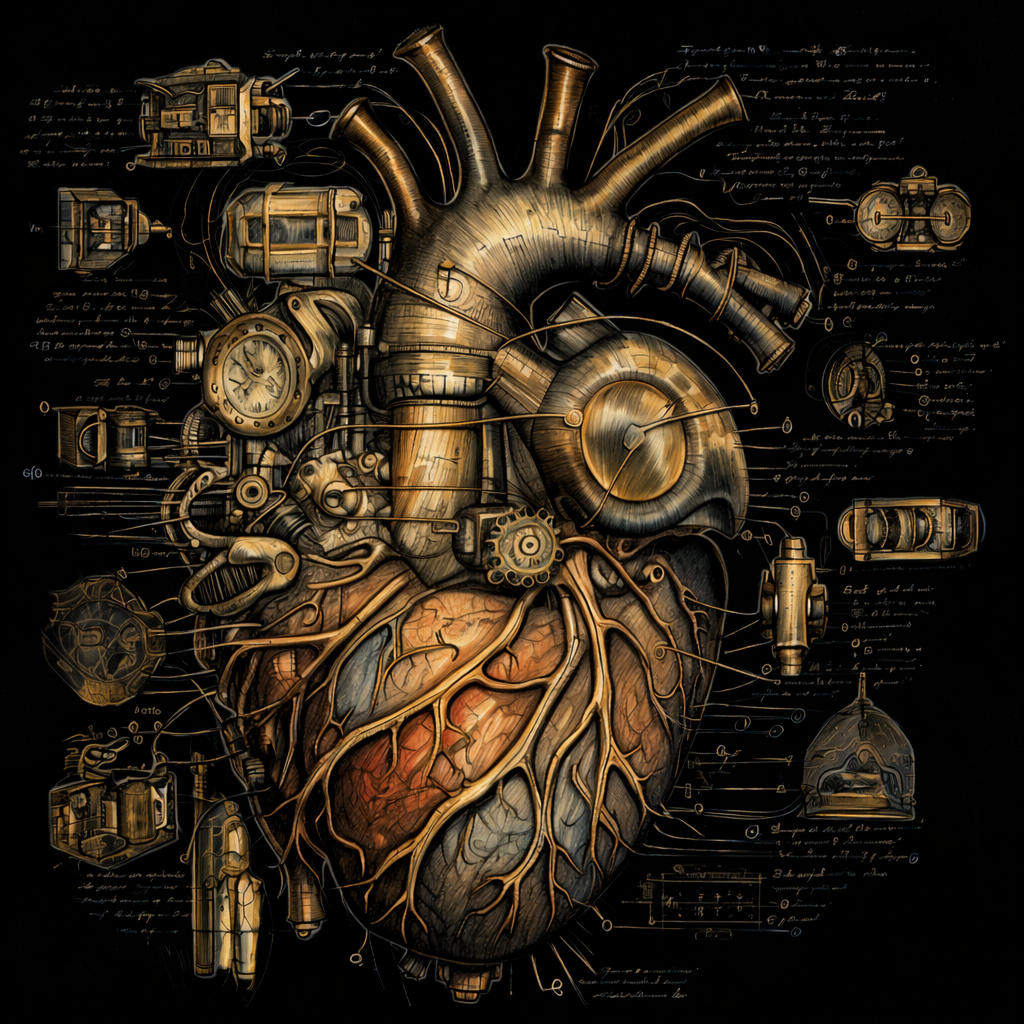
In psychology and philosophy, Auflösung of the self, the dissolution of ego-boundaries, is a concept that appears in multiple traditions under multiple names. In Freud's framework, the experience of Auflösung of the ego-boundary is associated with what he called the ozeanisches Gefühl, the oceanic feeling, a sense of boundlessness, of merging with the world, of the self's edges becoming permeable or disappearing entirely. Freud, who was skeptical of this experience as a form of regression to early infant consciousness (before the ego has differentiated from its environment), encountered it in the writings of the French writer Romain Rolland and found it puzzling and somewhat alarming. He associated it with the mystical and religious impulse.
For the German Romantics, and for Wagner drawing on them, Auflösung des Selbst was not regression but apotheosis. The highest possible state, the condition in which the individual will, which Schopenhauer understood as the source of all suffering, is temporarily or permanently silenced. The self dissolves not downward into undifferentiated unconsciousness but upward into unity with something larger. The beloved, the Absolute, the will-less state that Schopenhauer associated with sainthood and artistic contemplation.
The Love Duet stages this dissolution in slow motion. O sink hernieder, Nacht der Liebe begins with two distinct voices, Tristan and Isolde, and over the course of forty minutes gradually merges them, syntactically and melodically, into a single utterance. By the duet's end, the pronouns have dissolved. There is no longer a clearly identifiable I speaking to a clearly identifiable you. There is only the we that has replaced both, and the night that has allowed the replacement.
Chemische Auflösung als Metapher / Chemical Dissolution as Metaphor
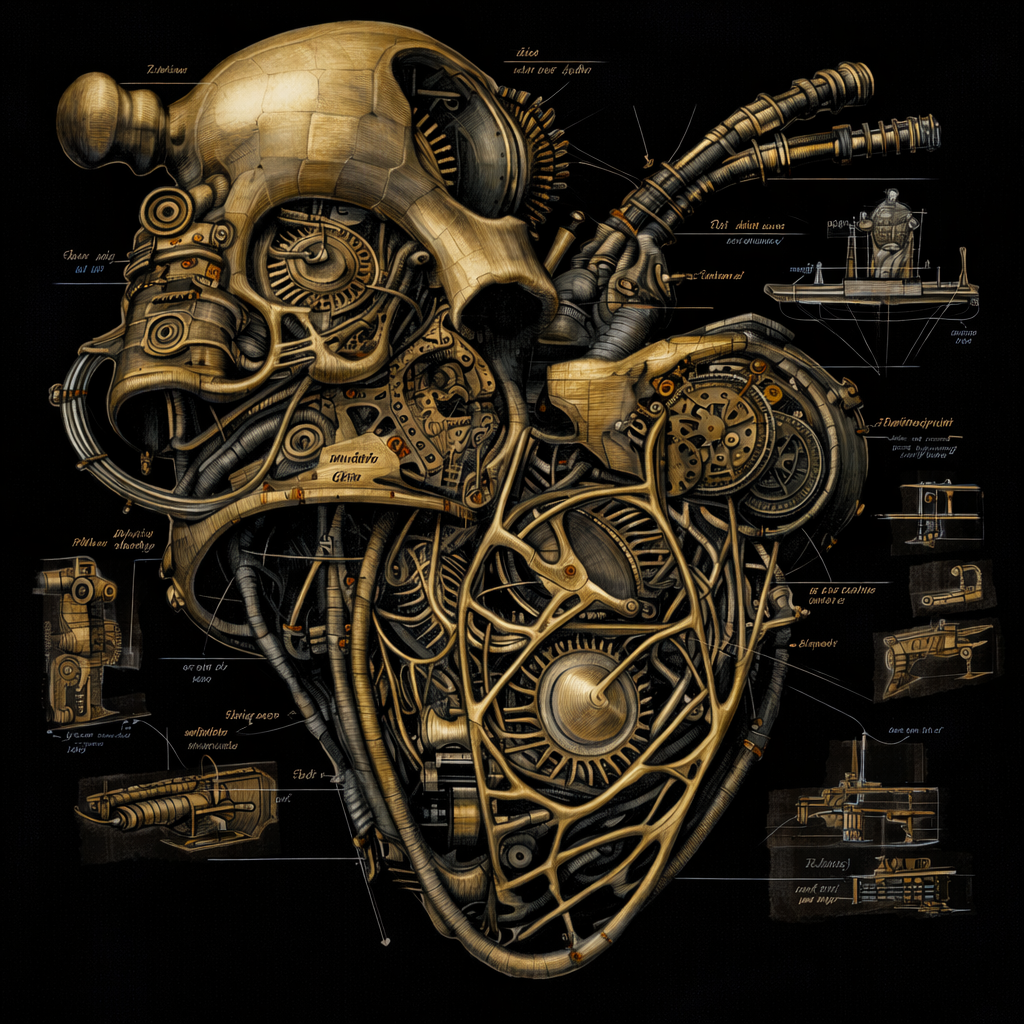
The chemistry usage of Auflösung, the dissolving of a substance in a solvent, offers a productive metaphor that the Romantic tradition used extensively and that the April walk's vocabulary benefits from considering.
When a solid dissolves in a liquid, it does not disappear. It disperses. The molecules of the solid distribute themselves throughout the molecules of the solvent, losing their collective structure while remaining present at the molecular level. The Auflösung is a transformation of state, not an annihilation. What was bounded and solid becomes distributed and fluid. The solvent takes on the properties of the dissolved substance, its color, its taste, its chemical activity, without any single location in the solution being identifiably the former solid.
This is a remarkably precise description of what Tristan proposes love does to the self. The individual self does not cease to exist in the beloved. It disperses into them. The beloved becomes saturated with the dissolved self. The boundaries between them become fluid rather than solid. No single location in the resulting union is identifiably Tristan or identifiably Isolde. Both are everywhere in the solution.
The potion scene in Act I is, in this reading, not magic but chemistry. An accelerant that speeds a Auflösung that was already underway. Tristan and Isolde were already beginning to dissolve into each other before they drank. The potion simply makes the process irreversible.
Grammatik und Gebrauch / Grammar and Usage
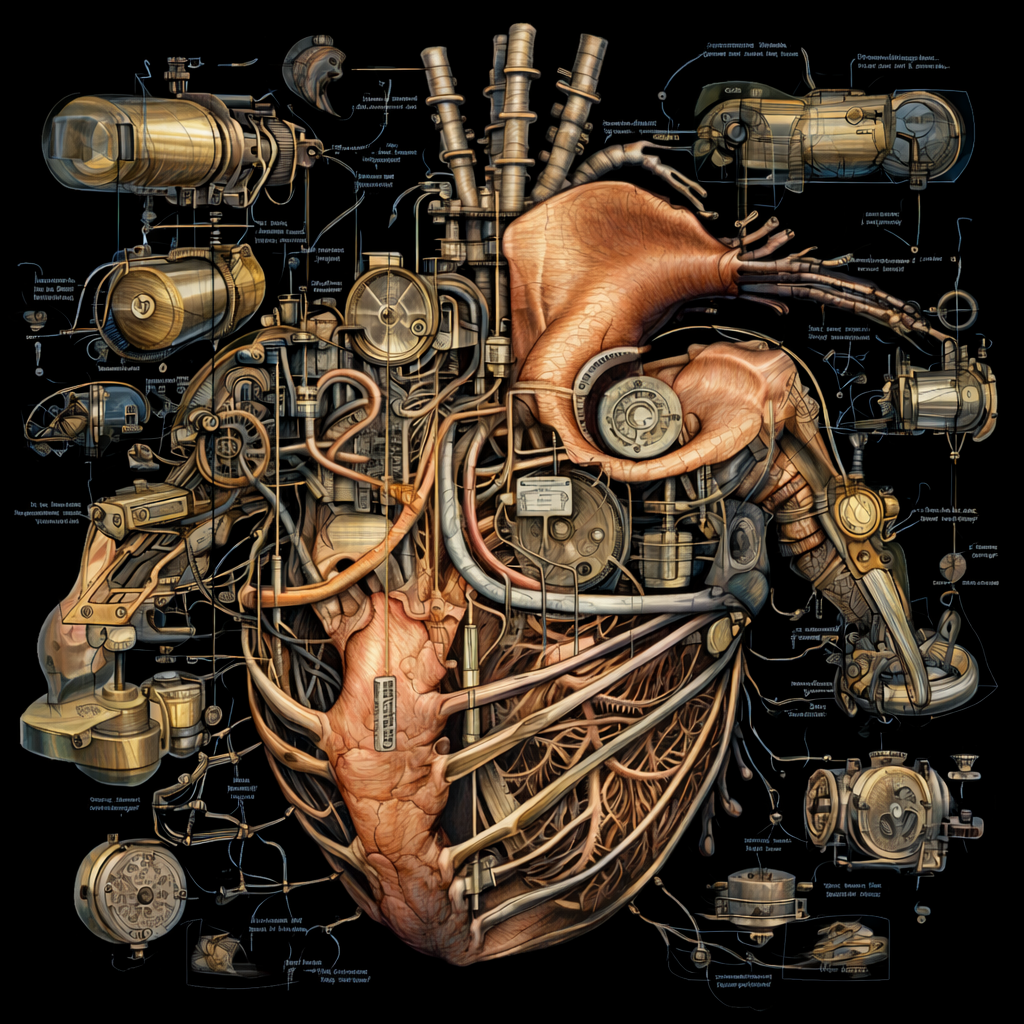
Die Auflösung declines regularly as a feminine noun. The verb auflösen: separable; the auf- detaches in main clause constructions.
Sie löste die Verbindung auf. She dissolved the compound. (chemistry)
Der Akkord löst sich auf. The chord resolves. (music)
Die Grenze löste sich auf. The border dissolved / disappeared.
Das Unternehmen wurde aufgelöst. The company was dissolved / wound up. (legal/commercial)
Ihr Widerstand löste sich auf. Her resistance dissolved / melted away.
The reflexive: sich auflösen, to dissolve (of itself), to come apart, to disintegrate. This reflexive construction is important. Auflösung in the self is not done to the self by an external force but happens to the self from within, as a structural collapse rather than an external dismantling. Ihre Identität löste sich in seiner Gegenwart auf, Her identity dissolved in his presence.
A crucial near-synonym: die Erlösung, redemption, release from suffering. Shares the lösen root, used specifically for liberation from a condition of pain, constraint, or curse. Erlösung is what the opera's characters seek, Auflösung is what the music enacts. The relationship between them, is redemption the same as dissolution? is one of the opera's deepest questions.
Verwandte Wörter / Related Words
auflösen (v.), to dissolve, to resolve, to disintegrate
lösen (v.), to loosen, to release, to solve
die Erlösung, redemption, release (shares the root, the theological parallel)
die Lösung, the solution (chemical and problem-solving)
die Auflösungserscheinung, sign of dissolution, symptom of disintegration
grenzenlos (adj.), boundless, unlimited (without Grenzen, what Auflösung der Grenzen produces)
die Grenze, border, boundary (what Auflösung dissolves)
verschmelzen (v.), to fuse, to merge (a related but more active process than passive Auflösung)
die Verschmelzung, fusion, merging (the result of verschmelzen)
zerfließen (v.), to flow apart, to melt away (of wax, of tears, of solid forms giving way)
das Auflösen, the act of dissolving (gerund form, equivalent to English the dissolving)
unauflöslich (adj.), indissoluble, unable to be dissolved (what Tristan and Isolde wish their bond to be)
Die Verbindung zum Weg / Connection to the Walk
The April walk is structured as a sequence of graduated Auflösungen. Each site takes the self a little further from its ordinary boundaries, loosening the grip of daylight identity by degrees rather than all at once.
The Rose Main Reading Room begins the process mildly. You sit in a space designed for individual concentrated effort, all those readers bent over their own projects, each self firmly bounded by its own task, and you resist the invitation to join them in purposeful activity. Instead you sit with the unresolved opening harmonics of the Prelude and let your attention not resolve. This is Auflösung at its gentlest. Simply refusing to close the open questions, to finish the half-thoughts, to act on the impulse to do something.
The Cloisters accelerate the process. Stone enclosure, medieval remove, the Love Duet unbuilding the world around you. The walk's instruction, Are you waiting for it to end, or resisting its ending? is a question about your relationship to Auflösung. The Cloisters are designed to remove you from historical time. The duet is designed to dissolve your sense of separated selfhood. Together, they create the conditions for genuine Auflösung of the ordinary self's rigid outline.
The mandatory silence node is where Auflösung without the music's support must be sustained. No sound. No resolution. Just the unresolved harmonics persisting internally. Five minutes of being in that state, of allowing the self's boundaries to remain fluid without the music holding them there, is the walk's most demanding ask. And its most honest. Because Auflösung in the Tristan sense is not something music does to you. It is something you allow, or decline to allow. The silence tests whether you have actually undergone anything, or whether you were simply listening to beautiful sounds.
The Liebestod, heard at the end as exhaustion rather than transcendence, is Auflösung completing itself. Not the self rising into the beloved but the self giving way, spending the last of its reserves, releasing what it has been holding. Was sich auflöst, hört nicht auf zu sein. Es hört auf, getrennt zu sein. What dissolves does not cease to exist. It ceases to be separate.
Further Reading