The Body Wants What It Wants: On Verlangen
Das Wort / the word: das Verlangen (n.) pl. die Verlangen (rare) / more commonly used as an uncountable noun
Aussprache / pronunciation: fer-LANG-en
Wortart / part of speech: Noun, neuter; also functions as the infinitive nominalization of the verb verlangen
Register: Broad, spans everyday speech, literary language, legal usage, and philosophical discourse. One of the most semantically loaded words in the German vocabulary of desire.
Was das Wort wirklich bedeutet / What the word actually means
January gave us Sehnsucht. The ache for something unreachable, the desire oriented toward a horizon that never arrives. February gives us Verlangen, and the difference between the two is the difference between the opera's two central emotional registers. And the difference between longing and need.
Verlangen is desire with a body in it. It is not the philosophical ache of Sehnsucht, hovering at some remove from the material world, refined by Romantic thought into a spiritual condition. Verlangen is hunger. It is thirst. It is the pull toward a specific thing, a person, an experience, a state of being, that the body registers as urgent and the will experiences as something close to compulsion. If Sehnsucht reaches toward the horizon, Verlangen reaches toward what is just in front of you, what you can almost touch, what is almost within grasp.
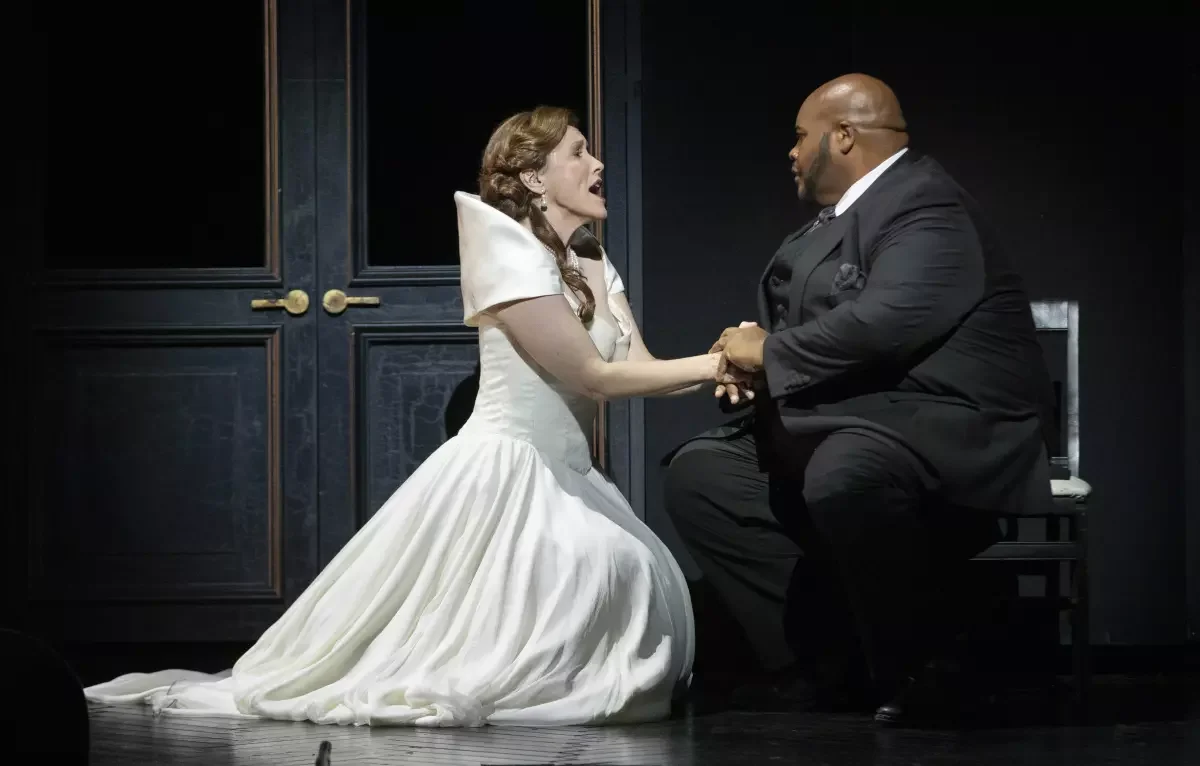
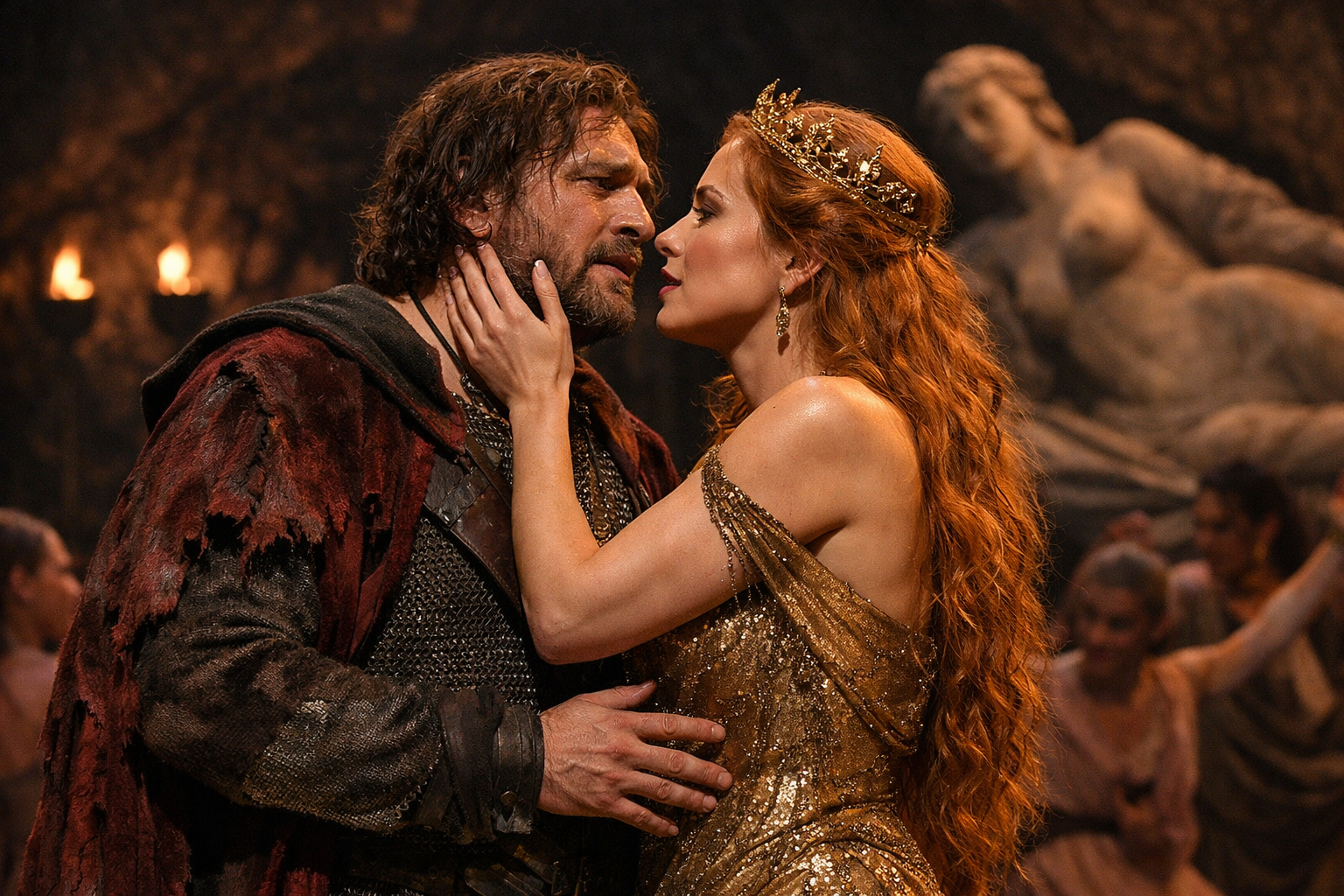
The distinction is not absolute. The two words can overlap, but in the context of Tannhäuser, it is precise and important. Tannhäuser's Venusberg is not about longing in the Sehnsucht sense. It is not about reaching for something structurally unavailable. Venus is there. Her grotto is there. The pleasure is there and fully realized, which is precisely what makes his eventual departure so structurally strange. He leaves not because the desire is unsatisfied but because he is sated. Not because he cannot have what he wants, but because having it completely has become its own form of torment.
This is a psychologically acute observation that the word Verlangen helps clarify. Sehnsucht can never be fully extinguished because its object is by definition unreachable. Verlangen has the theoretical possibility of satisfaction, and that possibility is what gives it its particular danger.
Die Etymologie / Etymology
Verlangen is formed from the prefix ver- and the verb langen, an older German verb meaning to reach, to extend, to hand something over. You can still find langen in contemporary German in the sense of to reach for something (nach etwas langen — to reach for, to grab at) and in some regional dialects for to be sufficient (das langt, that's enough, that will do).
The prefix ver- is one of the most productive and semantically complex prefixes in German. It has several different functions depending on the verb it attaches to. In some constructions, ver- indicates completion or thoroughness: verbrauchen (to use up entirely). In others, it indicates a going-wrong or going-too-far: verfahren (to go the wrong way), versalzen (to over-salt). In a third group, and this is the relevant cluster for verlangen, ver- intensifies the base meaning and adds a sense of extension outward or beyond: verlängern (to lengthen), verbreiten (to spread), verlangen (to reach beyond, to desire strongly).
So verlangen, etymologically, is to reach beyond the ordinary reach. To extend the hand further than usual, to desire with an intensity that strains beyond normal wanting. The body is in the etymology. The gesture of reaching, the arm extended, the fingers grasping for something.
This physical subtext distinguishes Verlangen from several of its apparent synonyms. Wunsch (wish) is cognitive and relatively mild. Begehren (to covet, to desire sexually) is more explicitly erotic and often carries a negative moral valence. You begehren what is forbidden or inappropriate. Hunger and Durst are bodily drives in their literal form. Verlangen sits between these. More bodily than Wunsch, more general than Hunger and Durst, less morally charged than Begehren, but sharing something with all of them.
Das Verb: Verlangen in seinen Konstruktionen / The Verb and Its Constructions
Verlangen is both a noun (das Verlangen) and a verb (verlangen), and the verb has a fascinating dual grammatical life that illuminates the word's semantic range.
Verlangen nach (+ dative) — to long for, to crave, to desire. This is the desire construction:
Er verlangt nach ihr. He longs for her. / He craves her presence.
Das Kind verlangt nach der Mutter. The child calls for its mother.
Tannhäuser verlangte nach der Welt jenseits des Venusbergs. Tannhäuser longed for the world beyond the Venusberg.
Note that verlangen nach does not imply the object is obtainable. It simply names the direction of the wanting. The child calling for its mother may or may not bring her to appear.
Verlangen (+ accusative, without preposition), to demand, to require, to insist upon. This is an entirely different construction:
Der Zoll verlangt einen Reisepass. Customs requires a passport.
Er verlangte eine Erklärung. He demanded an explanation.
Das Gesetz verlangt, dass... The law requires that...
This second grammatical life of verlangen is striking because it shares no obvious semantic territory with desire. To demand a document and to crave a person seem like entirely different acts. But German holds them together in the same verb, and this is not accidental. Both the desire and the demand involve a reaching-toward, an assertion that something is needed, an expression of insufficient present supply. The lover who verlangt nach the beloved and the customs officer who verlangt a passport are both insisting on something not yet in hand.
In legal German, Verlangen frequently means formal request or demand: auf Verlangen, upon request, on demand. Auf Verlangen der Behörden, at the request of the authorities. This usage co-exists entirely comfortably with the desire usage in the same language, because the underlying structure, I am reaching for something I need, is shared.
Verlangen und der Körper / Verlangen and the Body
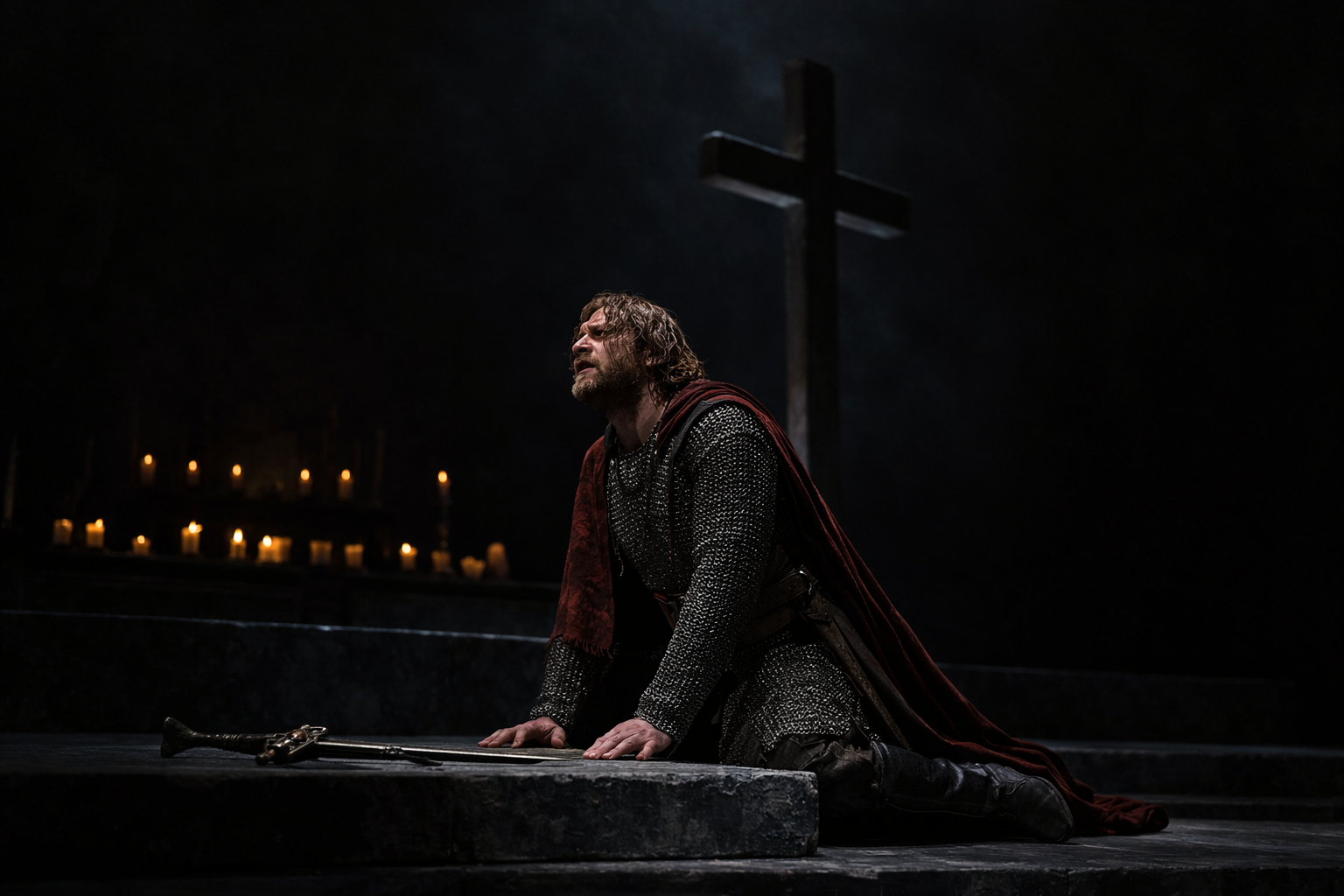
The body's relationship to Verlangen is what most sharply distinguishes it from Sehnsucht. Consider this progression:
Ich sehne mich nach Ruhe. I yearn for peace and quiet. (Sehnsucht register: philosophical, spiritual, possibly chronic.)
Ich verlange nach Ruhe. I am desperately in need of quiet. (Verlangen register: immediate, physical, urgent, I am overstimulated right now and need it to stop.)
The first sentence could be said by someone sitting at a desk, reflecting on the general shape of their life. The second would more naturally be said by someone in the middle of a cacophonous situation, urgently needing the noise to cease. The body is present in verlangen in a way it isn't always in sehnen.
This bodily dimension is central to the Venusberg. Wagner's music for the Bacchanale, the expanded Paris version with its castanets and churning chromaticism, is designed to register as Verlangen in the listener's body before it can be analyzed in the mind. The music acts directly on the nervous system. It produces desire as a physical event. This is technically virtuosic but also philosophically serious. Wagner is demonstrating that Verlangen is not chosen but undergone. Tannhäuser does not decide to desire Venus. The desire is already there, structural, somatic, prior to any act of will.
This is the theological problem the opera is built around. How do you seek absolution for something your body did without your conscious consent? How do you confess to a desire you did not author? The Church's answer, in the opera, is that you penance nonetheless. Tannhäuser's answer, at the Song Contest, is that the Church is wrong. Both positions are intelligible. Neither fully satisfies.
Verlangen in der deutschen Literatur / In German Literature

Goethe's Faust is built on Verlangen in its most extreme form. Faust is a man whose intellectual and sensual desire outstrips every possible satisfaction. He has mastered every field of learning and finds none of them adequate. His pact with Mephistopheles is a wager on Verlangen itself. Mephisto bets he can produce a moment of such complete satisfaction that Faust will say Verweile doch, du bist so schön, tarry a while, you are so beautiful. Faust's Verlangen is so total that the moment such complete satisfaction arrives, it will constitute his damnation.
The parallel with Tannhäuser is direct and acknowledged in the opera's cultural genealogy. Both are men of extreme desire. Intellectual in Faust's case, sensual and artistic in Tannhäuser's, who cross into a realm that promises complete satisfaction, discover that complete satisfaction is its own problem, and seek rescue in a higher principle. Both end with redemption provided by a woman's love, and both endings are structurally ambiguous: does the rescue arrive, or is it simply asserted?
Rilke's Das Stunden-Buch (1905) treats Verlangen in a different register. Not as danger but as the fundamental orientation of the spiritual life. For Rilke, the soul's Verlangen for God is not a problem to be resolved but the essential condition of being human. To desire is to be alive in the fullest sense. The theological implication differs from Wagner's, but the seriousness with which the concept is treated is consistent: Verlangen is not a weakness to be overcome. It is a structure of existence.
Grammatik auf einen Blick / Grammar at a Glance

Das Verlangen as a noun is neuter and used primarily in the singular as a mass noun. Key constructions:
Ein starkes Verlangen nach etwas haben, to have a strong desire for something
Einem Verlangen nachgeben, to give in to a desire / to yield to a craving
Einem Verlangen widerstehen, to resist a desire
Auf Verlangen, on request / on demand
Aus eigenem Verlangen, of one's own desire / of one's own volition
Verwandte Wörter / Related Words

Verlangen (v.), to desire, to long for; also to demand, to require
Das Begehren, desire, specifically sexual or covetous desire
Die Gier, greed, avidity (desire in its most excessive form)
Der Hunger, hunger (literal and metaphorical)
Wünschen (v.), to wish (gentler, more cognitive than verlangen)
Begehren (v.), to covet, to desire sexually
Die Sehnsucht, longing, yearning (the January word — philosophical rather than somatic)
Der Trieb, drive, instinct (Freud's term)
Die Lust, pleasure, desire, inclination (Lust auf etwas haben — to feel like doing something)
Die Verbindung zum Weg / Connection to the Walk

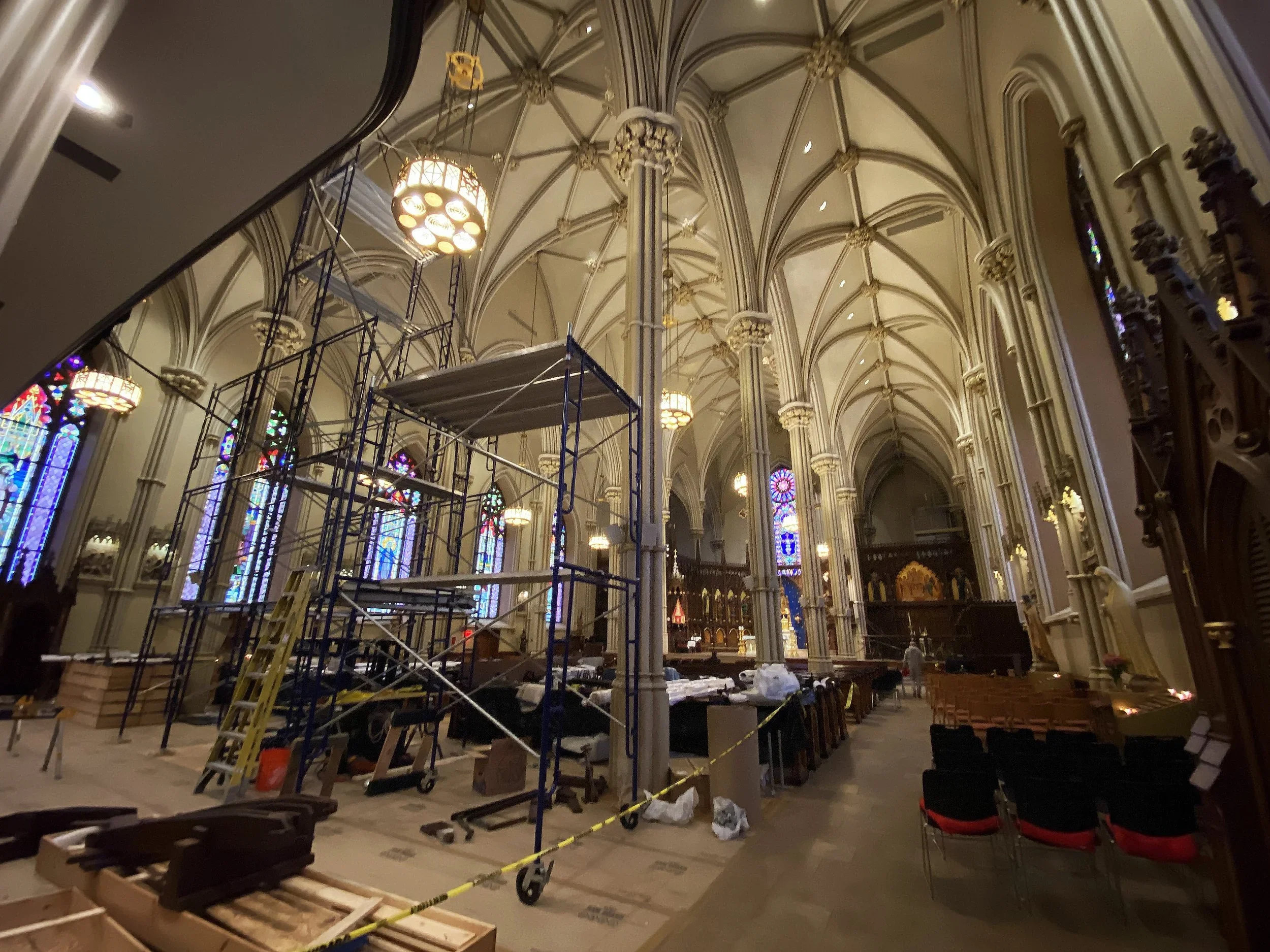
The February walk is built on the tension between two soundscapes. The Bacchanale (Verlangen in its full somatic intensity) and the Pilgrims' Chorus (moral order, collective aspiration, desire reoriented). Standing near the old Atlantic Garden beer hall site on the Bowery with the Bacchanale in your ears, you are experiencing Verlangen in the specific form the opera explores. Not a philosophical ache for the unreachable, but an immediate, insistent pull toward something available, something the senses have already tasted and want again. The music is designed to produce this. You are not meant to analyze it from a distance.
Then the walk moves to Sara D. Roosevelt Park, and the Pilgrims' Chorus replaces the Bacchanale. The Verlangen does not disappear. The pilgrims are themselves driven by Verlangen. For absolution, for home, for the lifting of guilt. But it is Verlangen reoriented, pointed in a different direction, given a different object. The same fundamental structure of desire reaching for something different.
Verlangen names what both impulses share beneath their apparent opposition. Tannhäuser in the Venusberg and Tannhäuser on the Rome pilgrimage are both men in the grip of Verlangen. The difference is not the desire itself but its object. This is the opera's most uncomfortable implication: that the pilgrim and the voluptuary are more alike than either would admit. Das Verlangen bleibt. Nur das Ziel wechselt. The desire remains. Only the object changes.
Further Reading