The Storm That Happens Inside You: Wagner, Agitation, and the Sturm und Drang Inheritance
Das Wort / The word: der Sturm (m.) pl. die Stürme
Aussprache / Pronunciation: SHTOORM
Wortart / Part of speech: Noun, masculine
Register: Broad: meteorological, historical, philosophical, literary, musical. One of the most culturally saturated nouns in German.
Was das Wort wirklich bedeutet / What the word actually means
Sturm translates as storm, and that translation holds. Unlike Sehnsucht or Wanderschaft, Sturm has a direct English equivalent that does not immediately betray the original. A storm is a storm. The meteorological fact is shared.
But Sturm in German carries cultural sediment the English word does not. It has been used as the name for a literary movement, a philosophical temperament, a military formation, a political slogan, and a formal device in music and opera. The meteorological event has been so thoroughly colonized by cultural meaning in German that to use the word is, whether you intend it or not, to invoke a long tradition of aesthetic and ideological storm-making.
Understanding Sturm properly means moving through three registers.
The physical event (the storm on the sea that drives Wagner's early career)
The literary-philosophical movement (Sturm und Drang)
The musical technique (the Sturm und Drang Allegro, the agitated string writing of the symphonic tradition)
All three converge on the January walk and on Wagner's opera in ways that are not coincidental.
Die Etymologie / Etymology
Sturm comes from Old High German sturm, from Proto-Germanic sturmaz. The root is shared with Old English storm, Dutch storm, and Old Norse stormr. The Proto-Germanic root is thought to derive from a verb meaning to whirl or to be in violent motion.
The related verb is stürmen, to storm, to rush, to rage. In military German, stürmen means to storm in the tactical sense. To mount an assault on a position. Die Burg stürmen, to storm the castle. The verb carries both the meteorological sense (the storm rages) and the kinetic, directed-force sense (the troops storm forward). Sturm captures both the undirected violence of weather and the directed violence of assault.
Compound constructions multiply the word's range considerably:
Der Gewittersturm: Thunderstorm (storm with lightning)
Der Schneesturm: Blizzard (snow-storm)
Der Sandsturm: Sandstorm
Der Hirnstürmer: Someone who storms brains, i.e., an agitator, a rabble-rouser
Sturmlauf: A military charge, but also colloquially a full-speed run
Sturmreif: Ready to be stormed, ready to fall (of a fortress, but also of a mind or a position)
The word also generates the key compound that concerns us most: Sturm und Drang.
Sturm und Drang: Das Kulturelle Erbe / The Cultural Inheritance

Sturm und Drang names the German literary movement of roughly 1765–1785, which immediately preceded and helped generate German Romanticism. The phrase itself comes from the title of a 1776 play by Friedrich Maximilian Klinger, Sturm und Drang, which translates most accurately as Storm and Urge, or Storm and Longing (since Drang carries a strong sense of pressing impulse and inner compulsion, not mere drive in the neutral sense). Klinger's play is rarely performed. But the movement it named is foundational to the entire tradition within which Wagner worked.
The central claims of Sturm und Drang were roughly that:
Genius is individual and irregular, not classical and rule-governed
That authentic emotional expression should override formal decorum
That nature, specifically its most dramatic, overwhelming, ungovernable aspects, is the proper subject and setting for art
That the passions of individuals are more significant than social institutions
And that art should disturb, agitate, and overwhelm the audience rather than instruct or please them in orderly ways.
The movement's primary figures, Herder, the young Goethe, Schiller in his earliest work, Klinger himself, wrote plays and novels of extraordinary emotional violence. Goethe's Die Leiden des jungen Werthers (1774), the movement's most famous product, features a young man of excessive sensitivity who cannot reconcile his inner world with the social world and ends by shooting himself. The novel caused a Europe-wide scandal and was reportedly blamed for a wave of copycat suicides. Whether or not those claims were accurate, the novel's cultural impact was undeniable. Sturm und Drang had demonstrated that literature could be a force of genuine psychological destabilization.
The physical Sturm was the natural correlative of all this. The storm was not merely a setting for Sturm und Drang drama. It was its emblem and its argument. To stage a storm was to argue that the ungovernable is real, that rational order cannot contain the forces that shape human experience, that the Enlightenment tidiness of rules and categories is inadequate to the actual texture of life.
Der Sturm und die Oper / Storm and Opera

In operatic convention, the storm scene had been established long before Wagner. Baroque opera and oratorio used tempest music as a vehicle for instrumental virtuosity and dramatic intensification. Vivaldi, Handel, Rameau all wrote storm sequences of considerable power. In the classical period, the storm scene became almost obligatory at certain dramatic moments. Gluck's Iphigénie en Tauride opens with one, Mozart uses storm imagery in Don Giovanni and Idomeneo.
But the storm in Der Fliegende Holländer is of a different order. Wagner, who claimed the opera's genesis lay in his own terrifying sea voyage from Riga to London in 1839, a journey through storms so violent that the ship was forced into a Norwegian harbour, during which Wagner heard the sailors shouting in a way that seemed to echo off the cliffs, was not borrowing a convention. He was reporting a trauma.
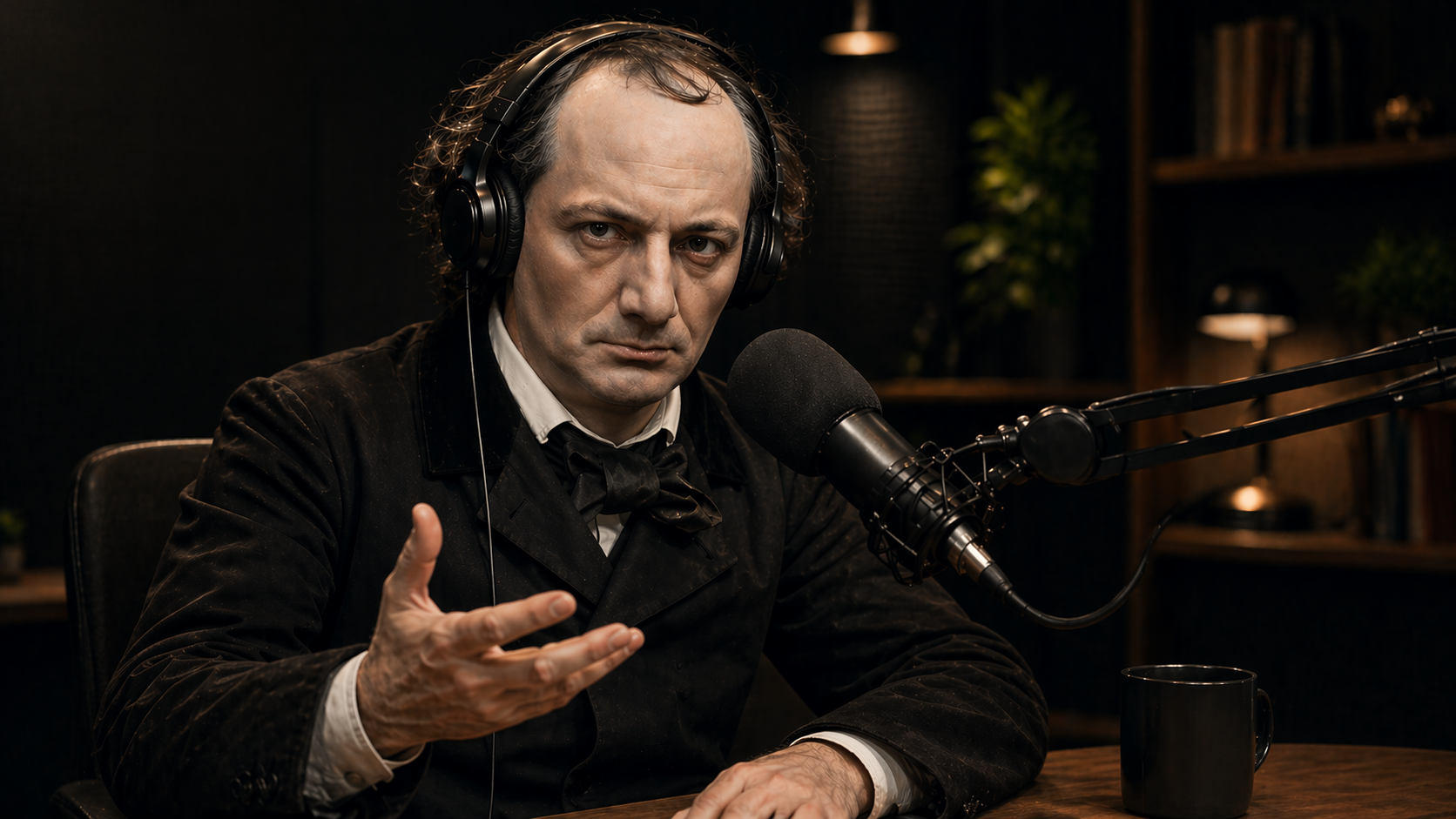
The Overture's opening string tremolo is not decorative. It is physiological. Low strings vibrating at speed in this register produce an effect in the body that bypasses aesthetic appreciation. A physical tension, a low-grade alarm response. Wagner understood, intuitively and practically, that music could act directly on the nervous system. The storm in the Holländer Overture is not a depiction of a storm. It is a storm, experienced as an event in the listener's body rather than observed from a safe aesthetic distance.
This is the revolutionary claim of the Sturm und Drang inheritance applied to music. That art should not represent experience but produce it. The storm is not a topic. It is a force that acts on you.
Grammatik und Gebrauch / Grammar and Usage
Sturm is a masculine noun: der Sturm, genitive des Sturms or des Sturmes, plural die Stürme.
Key verb: stürmen, to storm (weather), to storm (military assault), to rush. Es stürmt draußen, it's storming outside. Die Soldaten stürmten die Festung, the soldiers stormed the fortress. Er stürmte aus dem Zimmer, he stormed out of the room.
Adjective: stürmisch, stormy, tempestuous. Stürmisches Wetter (stormy weather), eine stürmische Beziehung (a stormy relationship), ein stürmischer Empfang (a tumultuous welcome). Note that stürmisch can be positive in register. Stürmischer Applaus is thunderous applause, something welcomed rather than feared.
The idiom: Im Sturm nehmen, to take by storm (military, but also used metaphorically for instant success). Er hat das Publikum im Sturm genommen, he took the audience by storm.
Sturm in der Musiksprache / Sturm in Musical Language

The Sturm und Drang style in 18th-century music is technically identifiable. Rapid string writing in minor keys, sudden dynamic contrasts, driving rhythms, angular melodic leaps, an overall agitation which resists the formal elegance of the High Classical style. Haydn wrote a substantial body of Sturm und Drang symphonies in the late 1760s and early 1770s. Dark, restless pieces that stand apart from the cheerful wit of his earlier and later work. Symphony No. 44 (Trauer), Symphony No. 45 (Farewell), Symphony No. 49 (La Passione), these are pieces that sound disturbed, that resist resolution, that embody rather than depict emotional turbulence.
Mozart's Symphony No. 25 in G minor and his String Quintet in G minor are standard examples of the style's persistence into the Classical period. C.P.E. Bach was perhaps its most consistent practitioner in keyboard music. And Beethoven, though later, draws on the full tradition in his Op. 18 string quartets and in the Tempest piano sonata (Op. 31, No. 2), named by a student who asked Beethoven what the piece was about, to which he replied read Shakespeare's Tempest.
Wagner's inheritance of this tradition is direct and acknowledged. The Holländer Overture stands in a line which runs from Haydn's Sturm und Drang symphonies through the storm scene in Beethoven's Sixth Symphony (the Pastoral) through the operatic tempests of Weber, particularly in Der Freischütz. What Wagner does is to fuse the technical devices of the Sturm und Drang instrumental style with dramatic action and a specific mythological meaning: the storm is not a meteorological event that the drama must survive, but the psychological condition of the opera's protagonist made audible.
Im heutigen Deutsch / In Contemporary German
Sturm retains its full range in contemporary German. Weather forecasts use it precisely and technically (Sturm designating wind speeds above a certain threshold, with Orkan reserved for hurricane-force conditions). Sports commentary uses Sturm for the forward line in football. Der Sturm of a Bundesliga side is its attack, importing the military sense of directed assault. Politics uses im Sturm der Zeit (in the storm of the times) as a rhetorical figure for periods of upheaval.
The phrase Sturm im Wasserglas, a storm in a teacup, is direct and idiomatic, used to deflate overblown controversies exactly as its English equivalent does. Sturm und Drang is still used in contemporary German to describe excessive emotional intensity, adolescent turbulence, or creative agitation. Das ist nur sein Sturm und Drang, it's just his storm and stress phase. The cultural movement has become a colloquial shorthand for a recognizable psychological phase.
Verwandte Wörter / Related Words
Stürmen (v.): To storm, to rush, to assault
Stürmisch (adj.): Stormy, tempestuous, tumultuous
Der Gewittersturm: Thunderstorm
Der Schneesturm: Blizzard
Das Unwetter: Severe weather, bad storm (a more general term for violent weather)
Der Orkan: Hurricane, gale-force storm (stronger than Sturm)
Brausen (v.): To roar, to rush (of wind or water), slightly literary
Toben (v.): To rage, to rave (of storms, but also of people and emotions)
Der Drang: Urge, impulse, compulsion (the second element of Sturm und Drang)
Die Unruhe: Unrest, agitation, restlessness (the social and psychological correlate of Sturm)
Die Verbindung zum Weg / Connection to the Walk
The January walk asks you to begin with the Overture at the water's edge in Battery Park. The walk's own instructions suggest timing your steps so that the opening string tremolo happens as you first see the Statue of Liberty and the ferry wakes in the water, and that when the big brass theme hits, you look back at the skyline.
This is instruction in Sturm as a perceptual practice. You are not meant to appreciate the music aesthetically from a position of safety. You are meant to let the storm do what storms do. Work on your body, alter your state, make the ordinary landscape suddenly legible as something wilder and more dangerous than it appeared a moment before.
The harbor wind in January does much of the work independently. Cold air off the water, ferry wakes, the particular way New York Harbor amplifies sound and carries it in unpredictable directions, all of this is already a mild Sturm in the meteorological sense. The music completes it. The Overture does not describe what you're experiencing. It intensifies and names it.
Sturm teaches something specific about the German aesthetic tradition. That the ungovernable is not something to be survived but something to be inhabited. The Sturm und Drang artists did not write about extreme experience from a safe distance. They attempted to produce extreme experience in their audiences. Wagner's storm is not a portrait of weather. It is a method of producing in the listener the specific agitation, the nervous-system activation, the displacement from ordinary comfortable perception that characterized the Dutchman's actual condition at sea. To stand in the harbor wind with the Overture in your ears is to let Sturm work on you in the way Wagner intended: not as spectacle but as event.
Further Reading