The Question You Must Not Ask: On Schweigen
Das Wort / the word: das Schweigen (n.), no plural, also used as the infinitive nominalization of the verb schweigen
Aussprache / pronunciation, SHVY-gen
Wortart / part of speech, Noun, neuter; verb schweigen (strong verb, irregular)
Register, Literary and everyday, Schweigen appears in daily conversation (halt die Klappe is ruder; schweig is more elevated) and in literary and philosophical discourse as a concept of real weight. One of those German words where the full range is only grasped by understanding both registers simultaneously.
Was das Wort wirklich bedeutet / What the word actually means
Schweigen means silence, but it is active silence, chosen silence, silence as a sustained act of will rather than the mere absence of sound. It is the silence of the person who has something to say and does not say it. The silence of the witness. The silence of the one who knows the answer and withholds it. The silence of the one who has been told not to speak and must hold the instruction against every pressure to break it.
This distinction matters enormously. German has other words for quiet and stillness. Die Stille is quietness, peaceful absence of noise, the quality of a quiet room or a forest at dawn. Die Ruhe is calm, restfulness, the absence of disturbance. Both can describe states in which no sound is present. Schweigen describes none of these. Schweigen is what a person does, not what a space is. It is a verb of human agency before it becomes a noun of human condition.
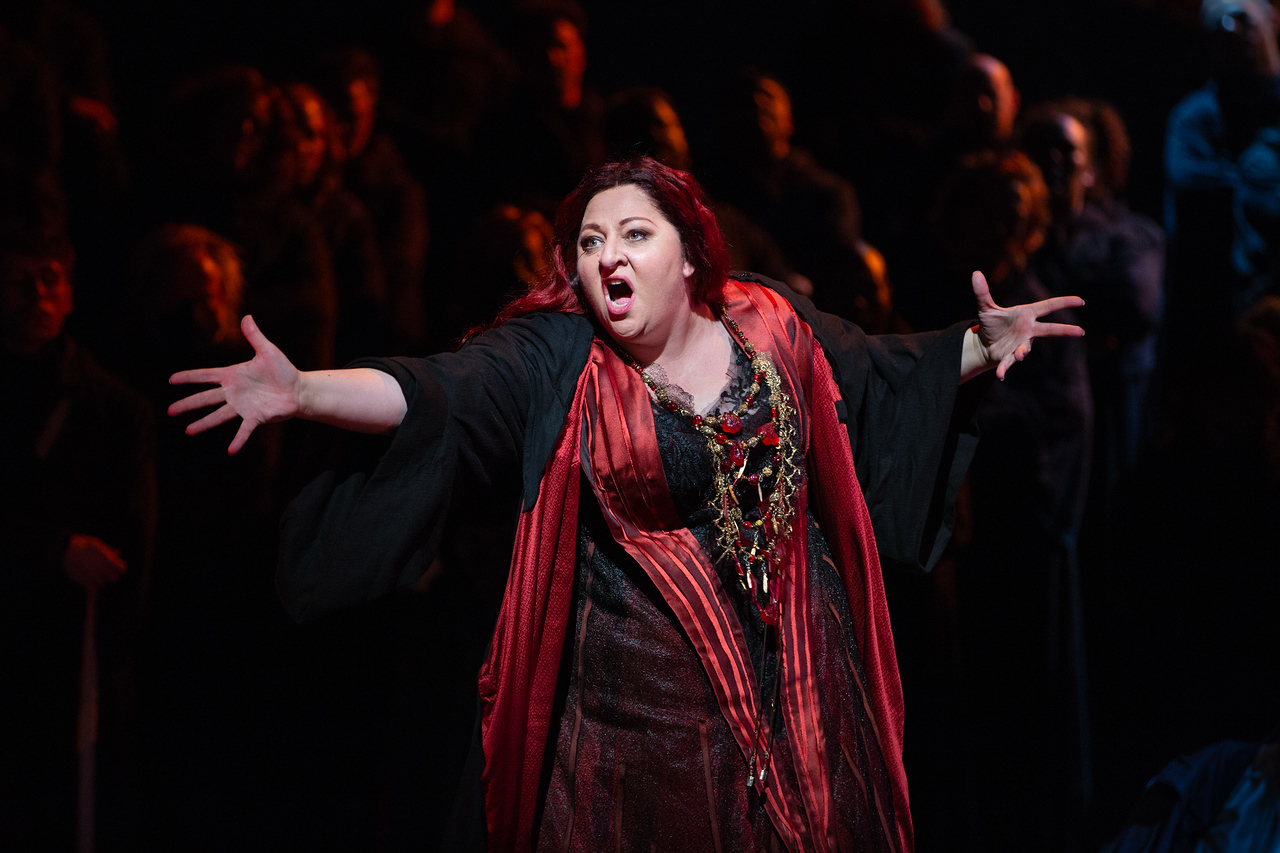
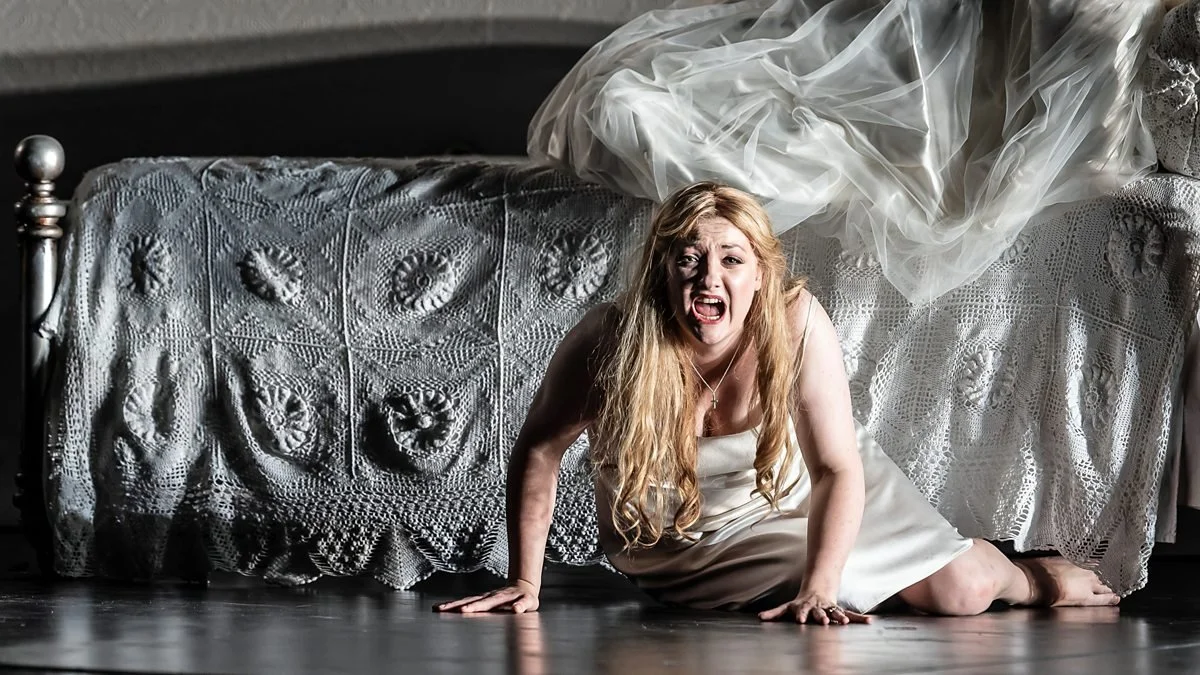
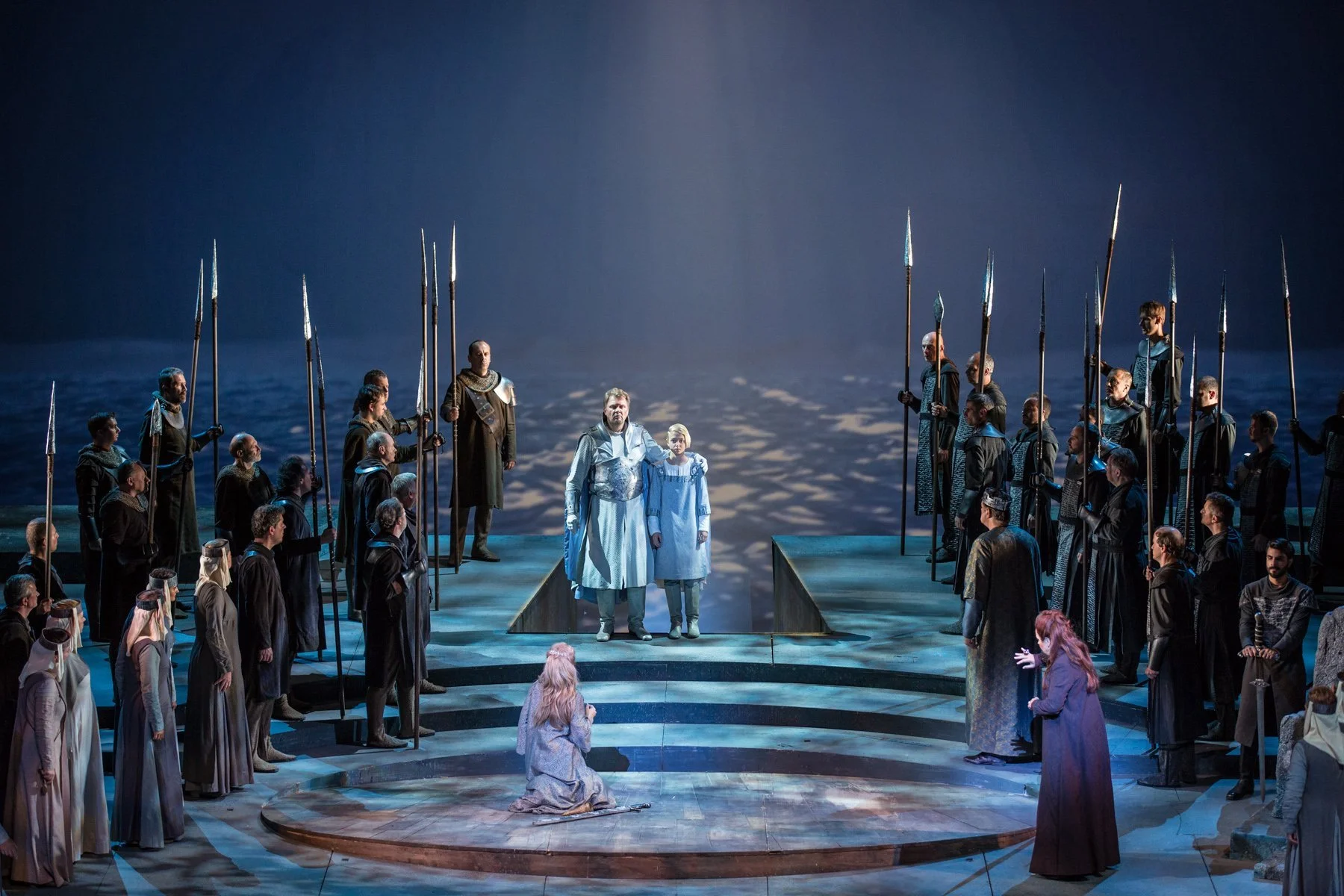
Lohengrin turns on a single act of Schweigen that Elsa must maintain and cannot. The condition the knight places on his presence is framed precisely in terms of Schweigen. She must not ask his name, must not seek to know his origin. This is not a request for ignorance. It is a request for active sustained silence in the face of all that drives her to speak. Every time Ortrud insinuates, every time doubt surfaces, every time Elsa wants to ask, she must schweigen. Not because she is empty or incurious. Because she has pledged to hold the silence, and holding it is what keeps the knight present.
When she breaks, when she finally asks, the opera frames it as a failure of Schweigen, not a failure of love or of logic. The question itself is almost beside the point. The point is that the silence was broken.
Die Etymologie: Aktives Nichtsprechen / Etymology: Active Not-Speaking
Schweigen comes from Old High German swīgan, from a Proto-Germanic root meaning to be silent, to fall silent. The related Old English swīgan fell out of use, leaving English with to be silent (a state) and to keep quiet (a somewhat gentler injunction) but no exact equivalent for the active, intentional, sustained character of schweigen. The strong verb conjugation reflects the word's antiquity and cultural weight: schweigen — schwieg — hat geschwiegen
The simple past schwieg appears directly in biblical and literary contexts: Er schwieg, He was silent / He held his silence. The construction is often deliberately weighted, und er schwieg after a challenge or a provocation is a significant act, communicated by the very simplicity and finality of the verb.
The compound noun das Schweigen is formed by nominalizing the infinitive, a standard German mechanism. But the nominalization gives Schweigen a weight the verb alone cannot quite carry. It makes the act of being silent into a thing, a sustained condition with its own existence, almost its own presence. Das Schweigen im Raum, the silence in the room, is not the absence of sound but an active, felt presence, something everyone in the room is aware of and responding to.
This is the paradox of Schweigen. It becomes most present when it is most felt by others. Elsa's Schweigen about the knight is not invisible. It is palpable to everyone around her, to Ortrud, who attacks it. To the wedding guests, who are perhaps relieved not to have to ask, to the audience, who know what it costs. Schweigen in this drama has the weight of something being held up against gravity.
Schweigen als Macht / Silence as Power
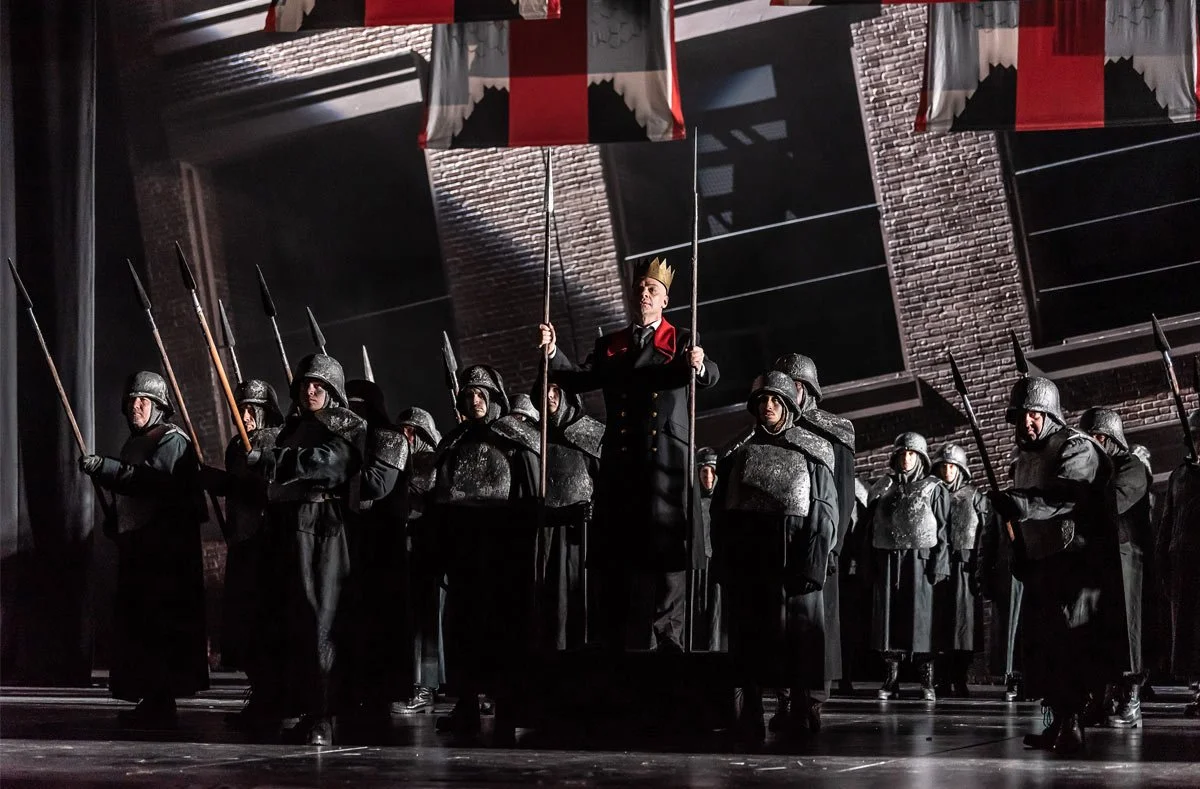
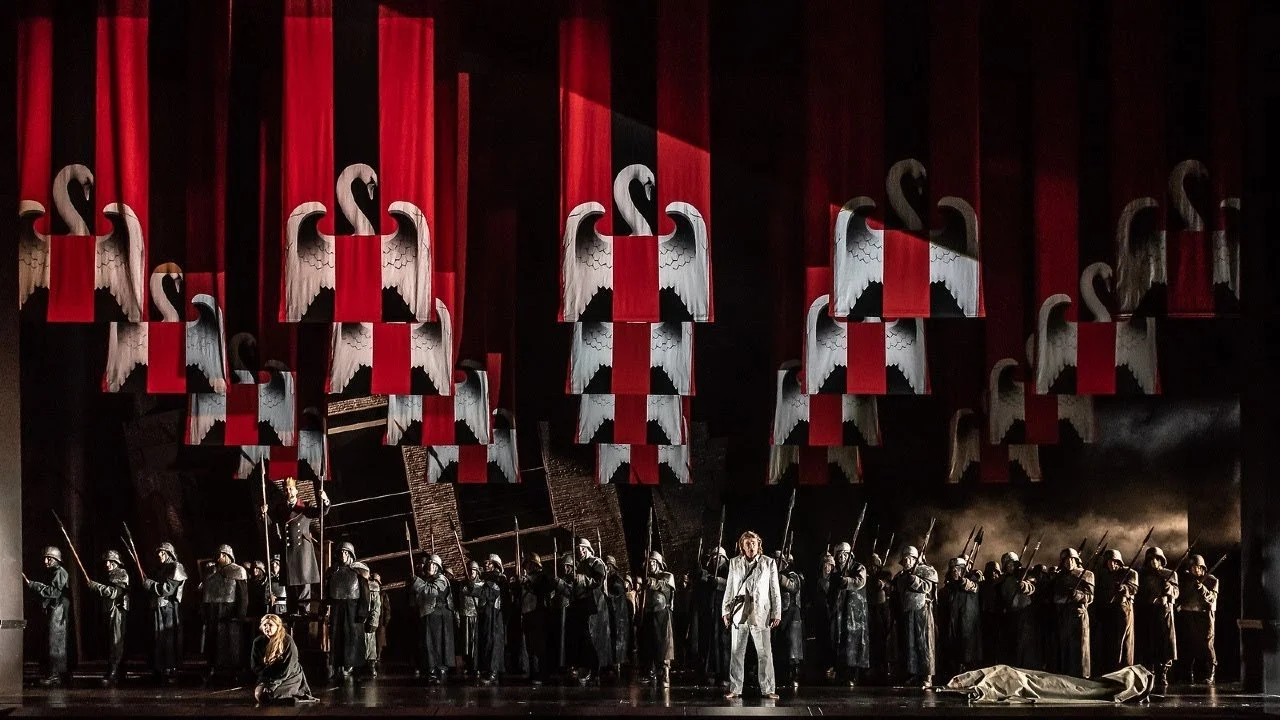
Schweigen operates in a double register of power that is central to Lohengrin's political and dramatic structure. In one register, Schweigen is the power held by the one who speaks last, or who does not speak at all. The person who withholds information, who refuses to confirm or deny, who can answer but chooses not to, holds structural power over those who need the information.
Lohengrin's Schweigen about his identity, his refusal to name himself except under the condition he has set, is a form of authority. He arrives with power precisely because he is mysterious, precisely because the question of who he is cannot be resolved. His Schweigen about his origins is what makes him a knight worth having. Someone who operates from outside the ordinary system of human accountability.
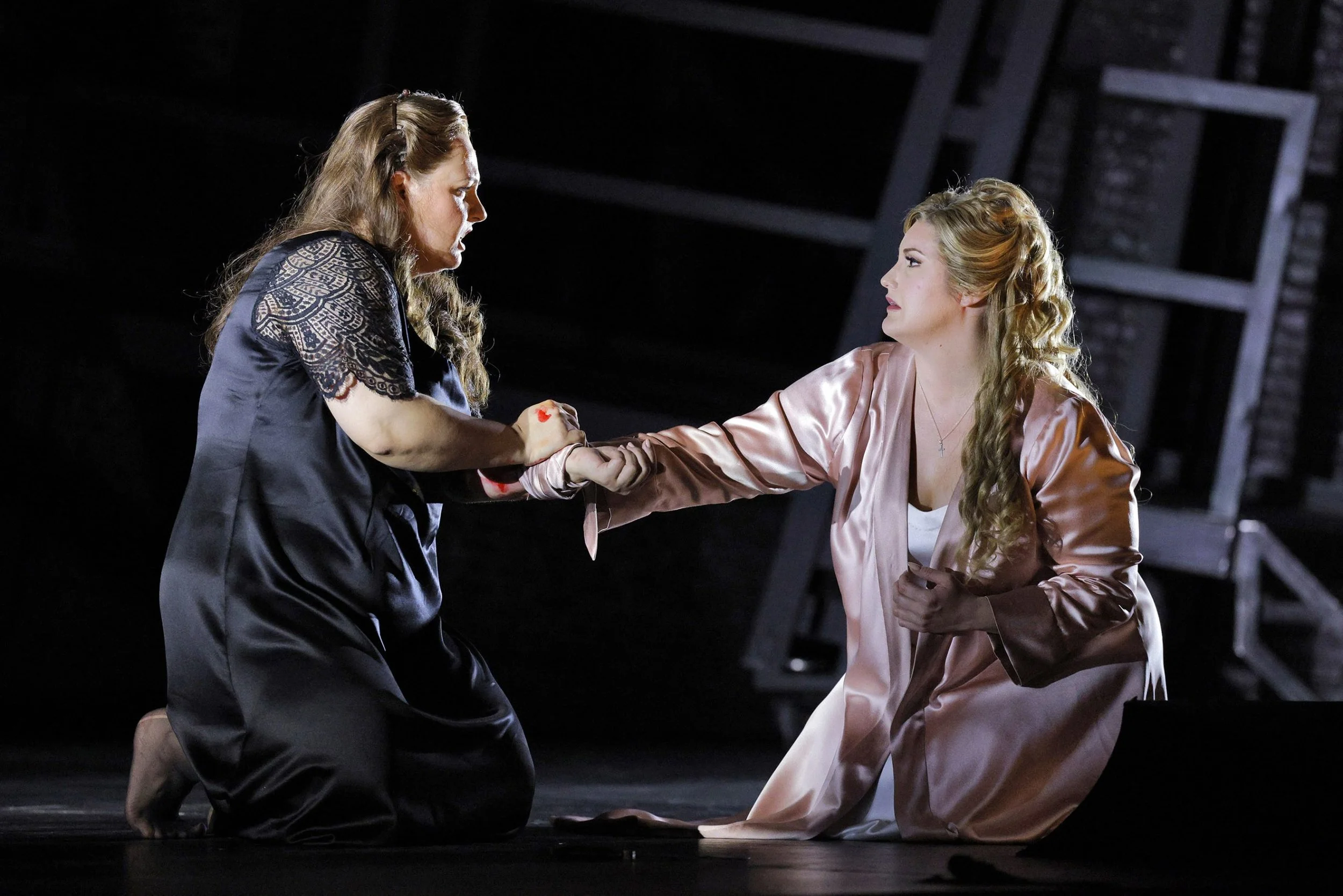
In another register, Schweigen is imposed on the powerless. The silence of those who are told not to speak, who are pressured into not telling, who cannot speak without consequences. Elsa's Schweigen is of this second type. She is the one constrained, the one who must hold herself back, who must absorb Ortrud's provocations and the court's curiosity and her own doubt and keep silent anyway. Her Schweigen is not power but compliance, not authority but cost.
This asymmetry, the knight's Schweigen as authority, Elsa's Schweigen as submission, is part of what makes the opera's gender dynamics so uncomfortable in retrospect. She must not ask what he is. He does not have to justify why. The entire arrangement requires her silence as its operating condition, and her failure to maintain it destroys her, while his departure is narrated as unfortunate but inevitable. The opera does not interrogate this asymmetry. It encodes it. But the word Schweigen holds it visible, for the student of German willing to press on the distinction between the silence that grants power and the silence that demands submission.
Schweigen in der deutschen Kultur / Silence in German Culture
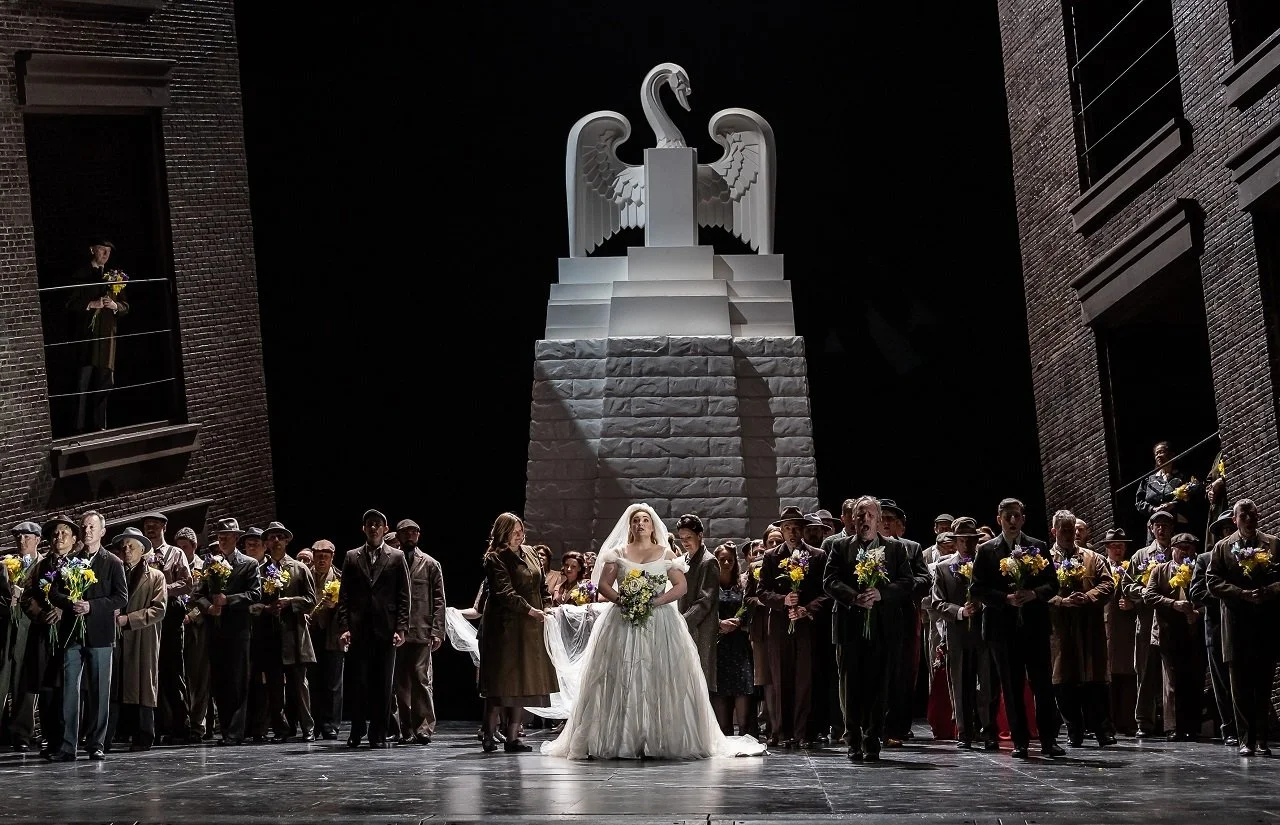
The cultural weight of Schweigen in German discourse goes well beyond Lohengrin. The 20th century gave Schweigen its most catastrophic historical dimension. The Schweigen of bystanders, of those who witnessed and did not speak, of those who knew and said nothing. The phrase das kollektive Schweigen, the collective silence, describes the post-war years in Germany when the crimes of the Nazi period were not spoken of, not named, not processed in public. The Schweigen der Täter, the silence of perpetrators. The Schweigen der Zeitzeugen, the silence of eyewitnesses.
This historical Schweigen is of a fundamentally different moral character from the Schweigen of mythology and opera, but the word is the same. German speakers carry both registers simultaneously. The fairy-tale Schweigen of the knight's impossible condition and the historical Schweigen of complicity and denial. The word has been morally complicated by history in a way that cannot be entirely set aside when studying it.
This does not mean the March walk is about the Holocaust. But it means that Schweigen in German is never entirely innocent. It always carries the possibility of its own corruption, the reminder that silence can be a moral failure as much as a moral condition. Elsa's broken silence ultimately reveals the truth. The knight is from the Grail. Her question, though it destroys the arrangement, is not entirely wrong. Sometimes the Schweigen that is demanded is a Schweigen that should not be sustained. Contemporary German writers and filmmakers have engaged with Schweigen in both its mythological and historical dimensions. The phrase reden oder schweigen, to speak or to be silent, frames moral choices that extend well beyond opera into the texture of daily ethical life.
Das Gegenteil: Sprechen, Reden, Fragen / The Opposites
Schweigen defines itself in relation to the acts it is not:
Sprechen, to speak (the primary opposite, schweigen oder sprechen, silence or speech)
Reden, to talk, to speak at length (more conversational register than sprechen)
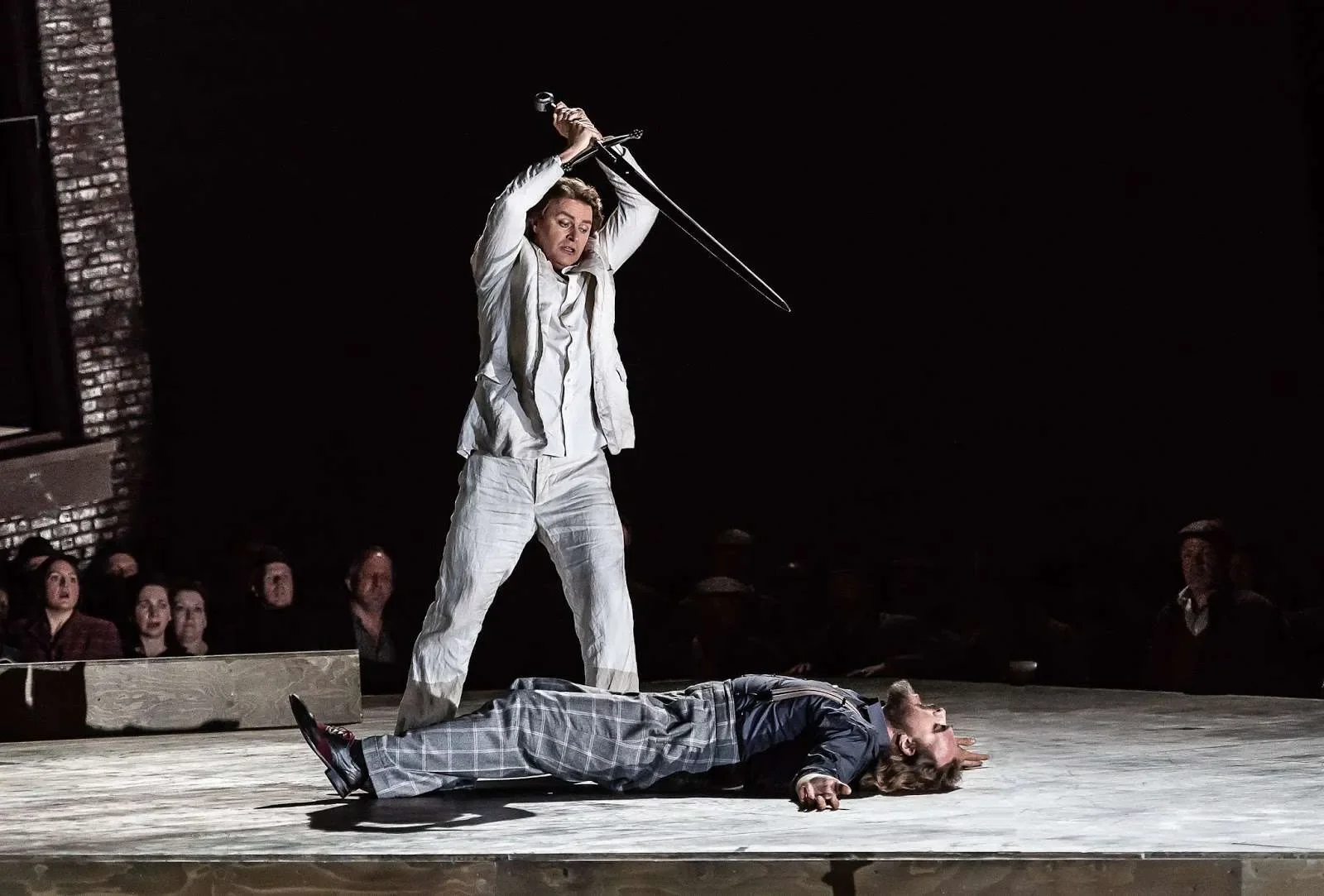
Fragen, to ask, and this is the operative opposite in Lohengrin, not speaking in general, but asking the specific forbidden question. The command is not simply schweig (be silent) but frag nicht (do not ask). The specific speech act prohibited is das Fragen, the questioning.
The prohibition on Fragen, on asking, has its own cultural and philosophical resonance. The Enlightenment placed Fragen at the heart of rational autonomy. Kant's sapere aude, dare to know, dare to ask, dare to use your own reason without guidance from another authority. Elsa's condition is precisely the reversal of Enlightenment epistemology. She must not dare to know, must not exercise her rational autonomy, must accept a situation she cannot ground in her own understanding. The opera, in this reading, is about the conflict between Enlightenment epistemology (Fragen as right, as self-determination) and Romantic faith (Schweigen as the condition of the miraculous). Whether Wagner sides with Elsa's eventual Fragen or with the knight's Schweigen requirement is genuinely ambiguous, which is part of why the opera sustains multiple interpretations across political and cultural history.
Grammatik und Gebrauch / Grammar and Usage
Schweigen is a strong (irregular) verb: schweigen — schwieg — hat geschwiegen
Present: Ich schweige, du schweigst, er/sie/es schweigt, wir schweigen, ihr schweigt, sie schweigen
Key constructions:
Zum Schweigen bringen, to silence, to make someone stop talking (literally: to bring to silence)
In Schweigen hüllen, to veil in silence, to cover with silence (literary)
Schweigen bewahren, to maintain silence, to keep quiet about something
Hartnäckiges Schweigen, stubborn silence
Beredtes Schweigen, eloquent silence (silence that speaks, a paradox German handles with the adjective beredt, eloquent)
Das Schweigen bricht, The silence breaks (often said of a period of collective silence ending)
The imperative: Schweig! (singular, informal) / Schweigt! (plural) / Schweigen Sie! (formal) Be silent! These are among the most commanding one-word sentences in German, carrying the full weight of the word's active, intentional character.
Common phrase: Reden ist Silber, Schweigen ist Gold, Speech is silver, silence is golden. The German version of the English proverb, but in German the proverb carries the additional cultural weight of the Schweigen tradition.
Verwandte Wörter / Related Words
Schweigen (v.), to be silent, to keep silent
Die Stille, quietness, stillness, peaceful silence (the quality of absence of sound, contrast with Schweigen's active character)
Die Ruhe, calm, quiet, rest
Stumm (adj.), mute, silent, speechless (often involuntary, a mute person is stumm)
Der Schweigsame, the taciturn one (person who habitually speaks little)
Schweigsam (adj.), taciturn, reticent
Das Stillschweigen, tacit agreement, silent consent; also confidentiality agreement
Stillschweigend (adj./adv.), tacitly, without saying a word, implied by silence
Verschweigen (v.), to withhold, to conceal, to keep secret (to schweigen about something specifically)
Das Tabu, taboo (the social prohibition that enforces Schweigen)
Fragen (v.), to ask (the forbidden act in Lohengrin)
Das Verbot, prohibition, ban (what structures the Schweigen)
Die Verbindung zum Weg / Connection to the Walk
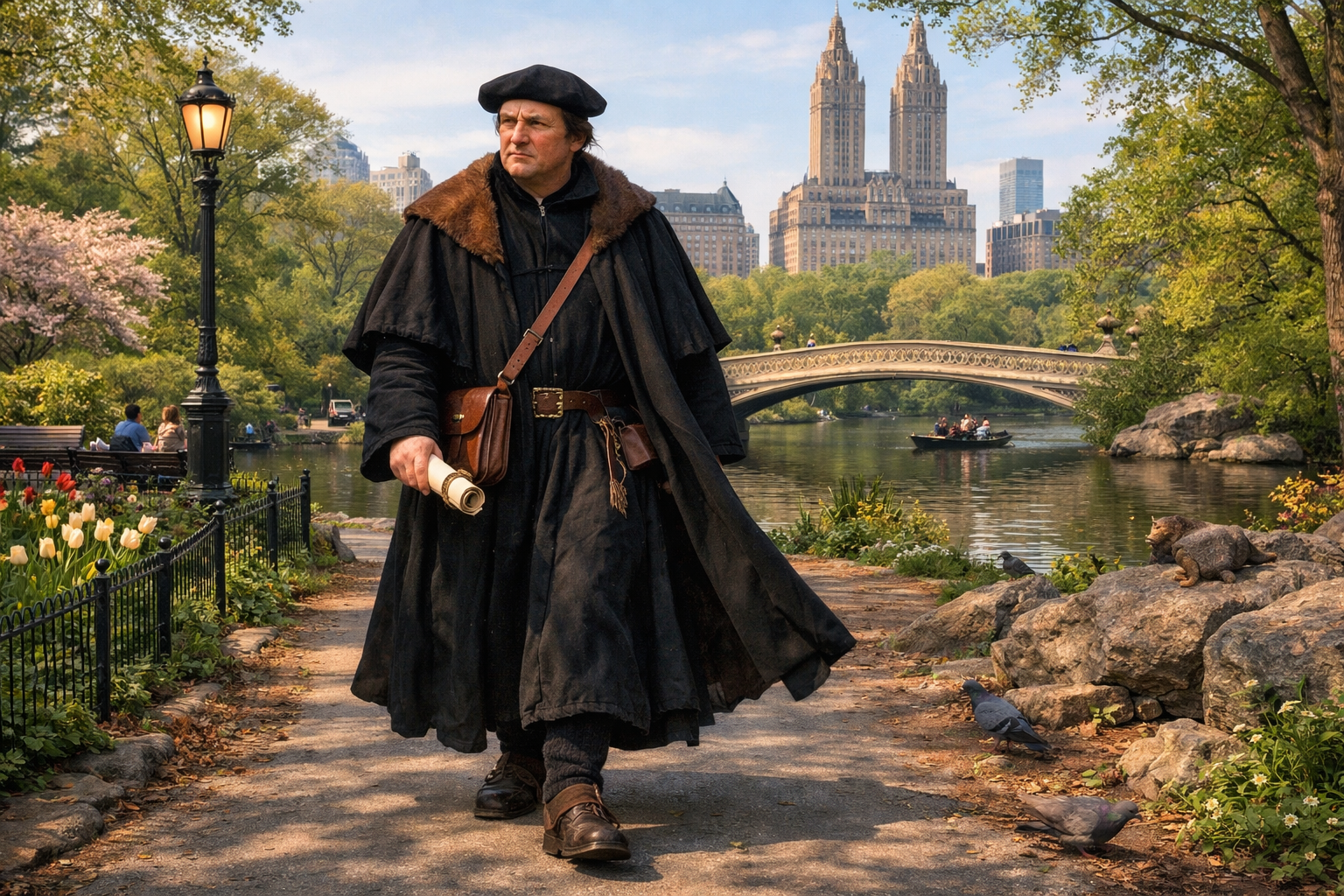
The March walk instructs you to approach the Central Park Reservoir before starting the Prelude. To arrive at the water's edge in anticipation, letting the landscape settle before sound enters. This is Schweigen as preparation. The active holding of silence before the music begins, the attending without yet attending to anything specific. It is the condition of readiness that Schweigen makes possible.
At St. John the Divine, the instruction is explicit. Enter in silence first. Approach in silence. Let the shift in architecture do some of the work. This is the most direct enactment of Schweigen in the walk, the conscious choice not to begin the music, to let the space speak in its own register, to be present to the stone and the light and the vertical pull of the nave without imposing a soundtrack. The Gothic interior asks for Schweigen the way Lohengrin asks for it. Not because silence is emptiness, but because the space has something to offer that cannot be received while speaking.
The Roerich Museum, the walk's terminal destination, continues this: a nearly silent townhouse on a residential street, asking nothing of you beyond presence and attention. You move quietly through small rooms. The paintings are not labelled with audio guides. You are in a space that cultivates Schweigen as its operating condition.
And the optional final coda, sitting at Riverside Park, watching the Hudson, is Schweigen in its most open form. The silence after the swan boat has departed, after the question has been asked and answered, after everything that depended on the maintained Schweigen has receded. This is not peaceful Stille. It is the Schweigen of aftermath, of someone sitting with what the broken silence has cost. Das Schweigen ist kein Leeres. Es ist ein Raum, der gefüllt werden kann, oder muss. Silence is not an emptiness. It is a space that can be, or must be, filled. The question is always, with what? And by whom? And at what cost?
Further Reading