Why Aufbruch Is Not Johatsu: On Illegibility Without Erasure

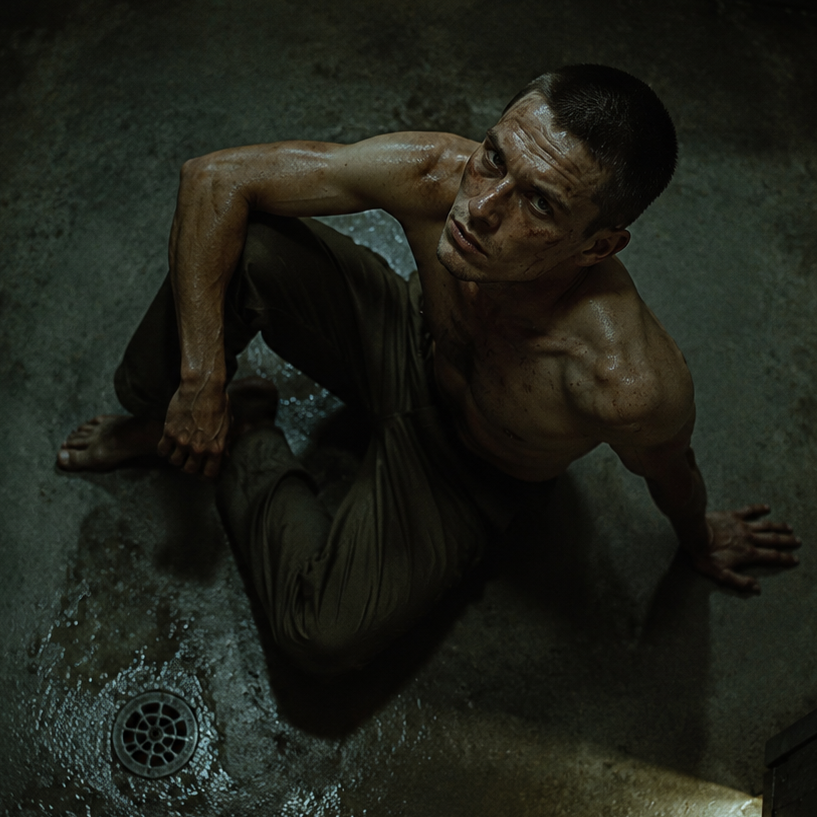
Johatsu, or ‘evaporated people’, refers to a phenomenon in Japan where thousands of individuals voluntarily disappear annually to escape immense social, familial, or financial pressures. Driven by shame, debt, or failed relationships, these individuals use ‘night-moving’ services to vanish without a trace, starting new lives in anonymity.
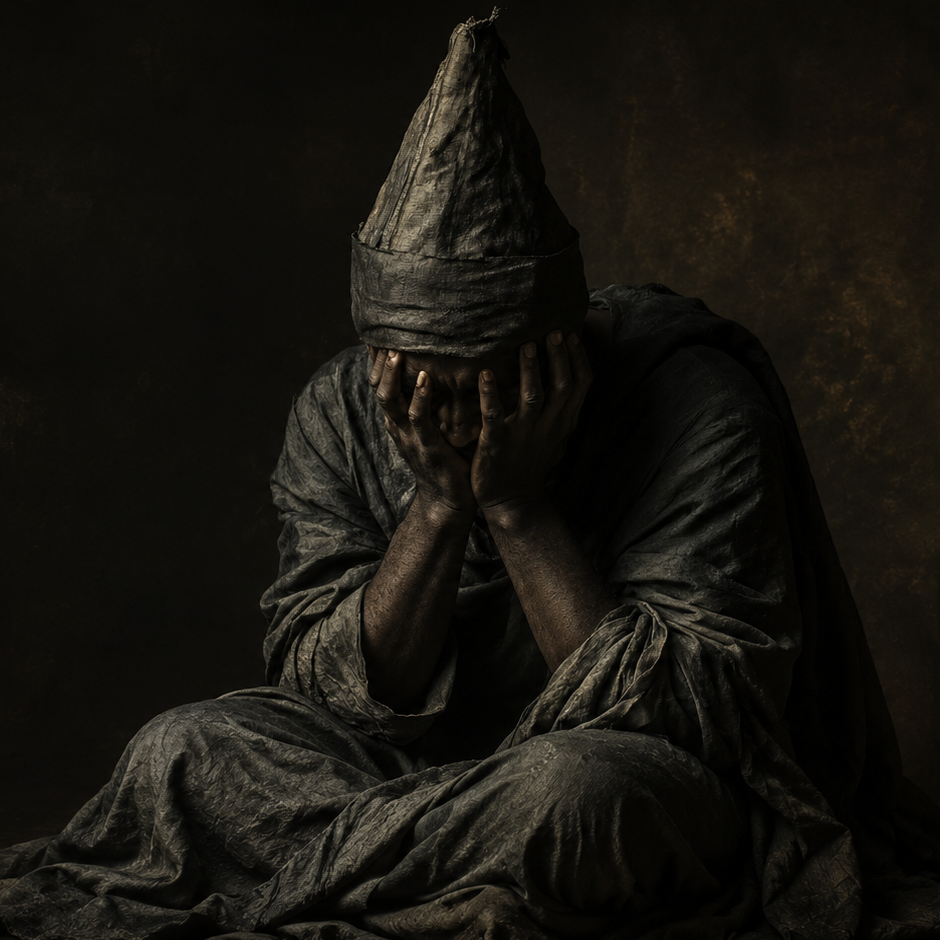
Johatsu and Aufbruch/Matt arise from the same condition. But they answer it in opposite ethical directions. Both begin with the same recognition. That modern life, especially modern professional life, has become psychologically overexposed. That to live under continuous evaluation, reputational permanence, and enforced coherence is to live in a state of near-constant interpretation. That the self, once rendered legible everywhere, begins to erode from the inside. And that when no refuge exists from being read, the fantasy of disappearance begins to feel not reckless, but merciful.
Johatsu names that fantasy with brutal clarity. Evaporation. A person does not fail publicly. They simply exit the frame. No explanation. No reckoning. No return. The moral force of johatsu lies in its refusal of humiliation. It rejects the premise that one must remain present in order to retain dignity. In a society where shame is sticky and failure has no soft landing, disappearance becomes a form of last-resort agency.

But johatsu achieves relief by severance. It resolves the problem of legibility by eliminating the self’s participation in the social field altogether. The system remains intact. The individual removes themselves from it. The cost is total. Relationships are abandoned. History is cut. Identity collapses into anonymity. The self survives, but only by shrinking into the present tense. Aufbruch/Matt begins from the same exhaustion but refuses that solution.
Where johatsu seeks relief through erasure, Aufbruch/Matt seeks relief through containment. It does not dissolve the self. It builds a structure around it. It does not exit the world. It reorders one’s relationship to it. Ethically, this distinction is decisive. Johatsu answers evaluative pressure with disappearance. Aufbruch/Matt answers it with opacity without abandonment. This matters because disappearance, however understandable, is still a concession to the system’s terms. It accepts the premise that visibility and dignity cannot coexist, and so chooses invisibility. Aufbruch/Matt challenges the premise itself. It asserts that the problem is not presence, but unbounded exposure. Not participation, but compulsory legibility.
Psychologically, this difference is subtle but profound. Johatsu resolves evaluative pressure by removing the self from meaning-making entirely. Aufbruch/Matt resolves it by restricting where and how meaning is allowed to be extracted. It introduces limits. Temporal limits. Interpretive limits. Audience limits. It insists that some experiences are not available for judgment at all.
This is why Aufbruch/Matt is slow. Why it unfolds over a year rather than a rupture. Why it privileges walking, listening, repetition, and ritual. These are not aesthetic choices. They are ethical ones. They resist the logics of acceleration, optimization, and narrative payoff. They create depth time. Time that cannot be skimmed, summarized, or repurposed without losing its substance. Johatsu seeks freedom by becoming untraceable. Aufbruch/Matt seeks freedom by becoming unsummarizable.
This distinction also marks a difference in responsibility. Johatsu is ethically neutral toward the world it leaves behind. It offers no critique, only absence. Aufbruch/Matt, by contrast, remains engaged. It does not abandon work, care, or contribution. It simply refuses to allow those commitments to colonize the entire self. It insists on a boundary between what must be legible and what must remain private in order for the self to endure. In this sense, Aufbruch/Matt is not a flight from responsibility but a precondition for sustaining it. It acknowledges something johatsu implicitly confirms. That a system demanding total transparency will eventually drive people out of it. The ethical move, then, is not to disappear, but to redesign one’s participation so disappearance is no longer necessary.
Wagner’s presence in Aufbruch/Matt sharpens this distinction further. His operas are obsessed with worlds that destroy themselves through over-legislation. Through contracts that overdetermine life, through systems that mistake total order for justice. Johatsu is what happens when one is crushed by such a system. Aufbruch/Matt is what happens when one steps back far enough to see the system’s limits without surrendering one’s place in the world. Johatsu says, I cannot survive being seen. Aufbruch/Matt says, I cannot survive being seen everywhere. This is not a minor difference. It is the difference between erasure and ethics.

Aufbruch/Matt insists that a livable life requires zones where the self is not productive, not interpretable, not accountable in real time. Where experience is allowed to precede explanation. Where contradiction is tolerated. Where one is not auditioning for legitimacy. Johatsu reveals what happens when no such zones exist. Aufbruch/Matt exists to make sure they do.
The deepest ethical claim of Aufbruch/Matt is not aesthetic or intellectual. It is humane. It asserts a person should not have to disappear in order to rest from meaning. That opacity is not deception. That privacy is not failure. That a partially unreadable self is not irresponsible, but intact. Johatsu is a warning flare. Aufbruch is an alternative architecture. Both acknowledge the same truth. That continuous legibility is psychologically corrosive. Only one refuses to let disappearance be the price of survival.
Further Reading