Only Those Who Can Wait Can Hear: On the Grammar of Waiting
Das Wort / The word: warten (v.)
Aussprache / Pronunciation: VAR-ten
Wortart / Part of speech: Verb, intransitive (with preposition) and transitive (in certain constructions)
Register: Everyday and literary simultaneously, one of those German words whose frequency in ordinary speech does not diminish its philosophical depth when examined closely.
Was das Wort wirklich bedeutet / What the word actually means

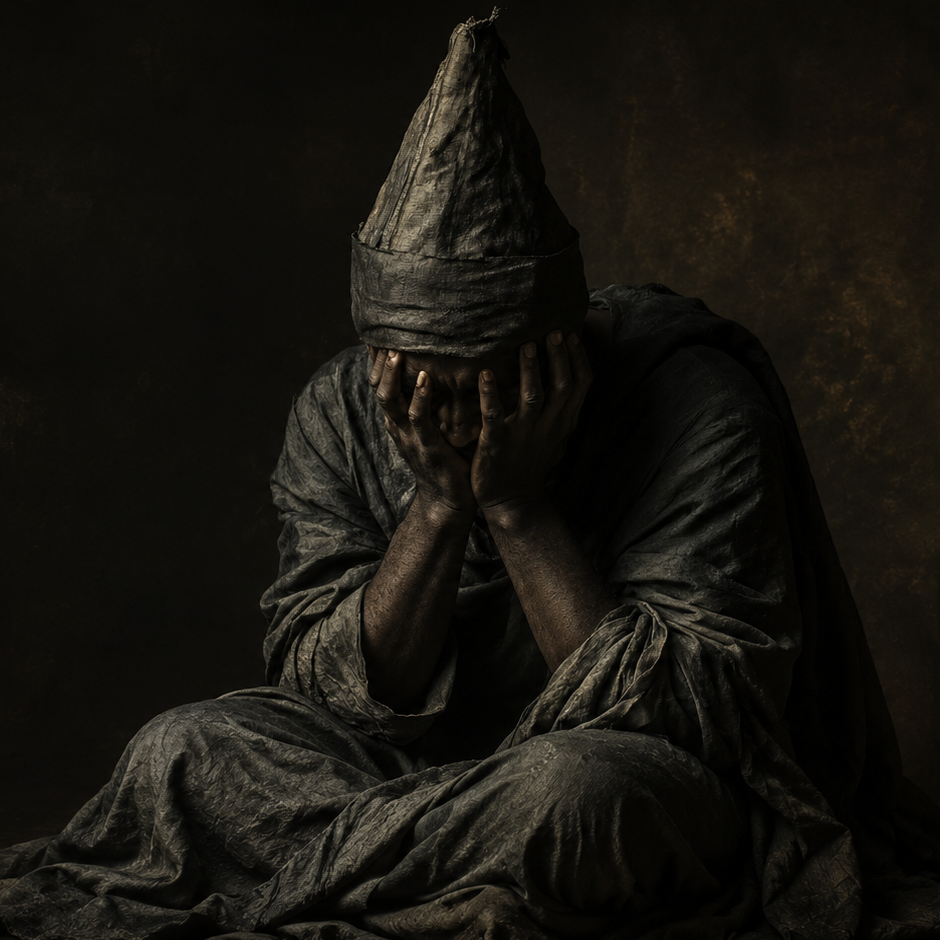
Warten means to wait. That much is simple. But in the context of the January walk and of Der Fliegende Holländer, the act of waiting is not simple at all. It is one of the opera's, and the city's, central preoccupations. The Dutchman waits to be redeemed. Senta waits for the Dutchman (in the form she has assembled from the portrait on the wall). The sailors wait out the winter. The slips wait to be re-cut into the shore. The ferry waits at the dock, loads, then waits again. New York in January contracts into a city of waiting. For spring, for the light to return, for the harbor to warm enough that the ferry crossing doesn't feel like a crossing into a specifically northern kind of purgatory.
Waiting is not a passive state, though English often treats it as one. To say someone is just waiting is to say they are not yet doing the thing that matters. German, and specifically the vocabulary around warten, resists this dismissal. To wait in the German sense is to be in a particular relationship with time. Not absent from it, not merely enduring it, but actively oriented toward a future event while remaining grounded in the present moment. Waiting has posture. Waiting has direction.
Die Etymologie / Etymology

Warten comes from Old High German wartēn, meaning to watch, to look toward, to guard, to attend to. This root is shared with a surprising range of German words that have now diverged considerably in meaning:
Warten: To wait
Warten (second meaning): To maintain, to service (machines, equipment). Das Auto muss gewartet werden, the car needs to be serviced. This secondary meaning, which coexists in modern German with the primary to wait, preserves the older sense of attending to something, careful, regular, skilled attention.
Der Wärter / Die Wärterin: A keeper, a warden, a caretaker. Der Tierwärter is a zookeeper. Der Leuchtturmwärter is a lighthouse keeper. The person who waits is also the person who watches and tends.
Der Wartesaal: The waiting room (literally waiting-hall). But also implicitly a space of collective watching and attending.
Die Warte: A watchtower, an observation point. Von einer hohen Warte aus betrachtet, viewed from a high vantage point. The watcher on the tower waits and watches simultaneously.
Erwarten: To expect, to anticipate. The prefix er- gives the verb a completion or intensification. Ich erwarte dich um acht, I expect you at eight. Ich erwarte ein Kind, I am expecting a child. Erwarten has already moved further toward the expected event. It is waiting with a specific object already partially in view.
Abwarten: To wait and see, to wait something out. Warte mal ab!, just wait a bit! Or let's see how this develops. The prefix ab- suggests waiting through a duration, waiting until something completes or resolves.
The Proto-Germanic root underlying all of these is warda-, to guard, to watch, to keep. The watcher and the waiter were, in earlier European culture, the same figure. To wait was to maintain vigilance.
Die Grammatik des Wartens / The Grammar of Waiting

Warten is a regular weak verb. Its conjugation presents no surprises. What is interesting, rather, is the system of prepositions that govern its use and the way these prepositions create different types of waiting.
Warten auf (+ accusative): To wait for someone or something. The most common construction.
Ich warte auf den Zug: I am waiting for the train.
Er wartete auf Erlösung: He waited for redemption.
Sie haben sieben Jahre auf seine Rückkehr gewartet: They waited seven years for his return.
The auf construction implies a specific, identified object of waiting. The train, the redemption, the return, these are named. The waiting is directed.
Warten mit (+ dative): To wait with, to defer. Ich warte mit dem Essen, bis du kommst, I'll hold off on the meal until you arrive. Here the waiting is a kind of suspension, a deliberately postponed action.
Nicht warten können: To be unable to wait, to be impatient. The negated modal construction creates urgency: Ich kann es kaum erwarten (I can hardly wait. Note erwarten here rather than warten, for something eagerly anticipated).
Warten lassen: To make someone wait, to keep someone waiting. Er ließ uns lange warten, he kept us waiting a long time. This construction inverts the power dynamic. The waiter is passive, the person waited for is exercising a form of power over those in the waiting room.
Auf was wartest du noch? What are you still waiting for? / What's holding you back? This colloquial usage turns the waiting into an obstacle, a failure of action.
Das Warten der Senta und die sieben Jahre / Senta's Waiting and the Seven Years
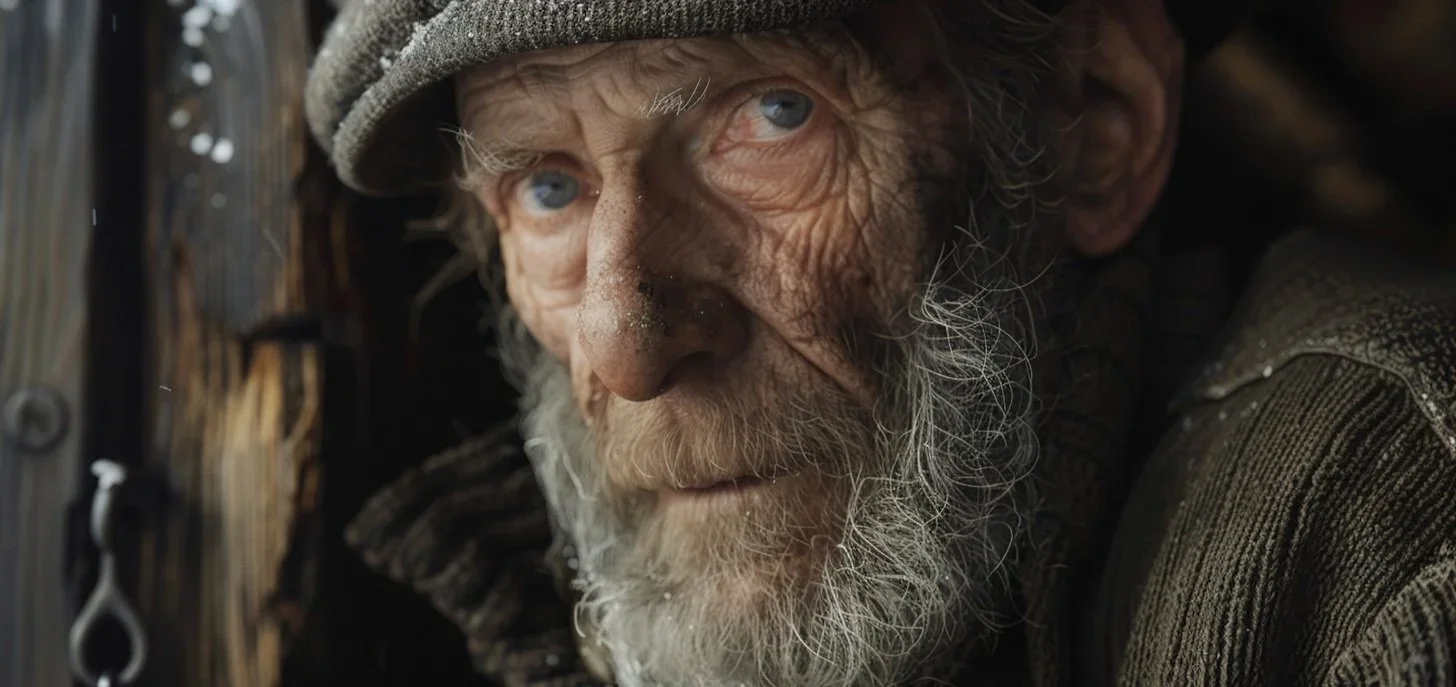
The Dutchman's curse is structured around waiting in a very precise sense. He is permitted ashore every seven years. Between those landings, he is at sea. The seven-year cycle is not his waiting, he is in motion during it. The waiting belongs to everyone else. To the women who pledge themselves and then must wait for his return. To the towns that see his ship in the harbor and know what it means. To Senta, who has never met him but has been waiting for him her entire life.
Senta's waiting is of the most interesting type. Warten auf someone she has never seen in person, someone she knows only through legend and a portrait. Her waiting is not structured by a real relationship but by an idea of one. She waits for the figure from the painting, for the Dutchman as she has constructed him in imagination. This is waiting as projection, as the active co-construction of the thing waited for. By the time the Dutchman arrives, Senta has been shaping the person she is waiting for for years. The man who walks through the door is always going to be competing with the one she has been assembling in the meanwhile. This is not unique to Senta. It is, Wagner understood, the structural condition of Sehnsucht. The thing waited for is never the thing that arrives. The gap between the imagined and the actual is the space in which tragedy lives.
Warten und Zeit / Waiting and Time

Waiting forces a particular relationship with time that ordinary activity avoids. When you are busy, time passes in the background. You are not attending to it, you are consuming it. When you wait, time becomes the explicit subject. You are watching the clock, feeling each minute, aware of duration in a way that activity suppresses.
The German philosophical tradition, particularly Heidegger, gave significant attention to the structure of human temporality. The way human existence is always already oriented toward a future (what Heidegger called Sein-zum-Tode, being-toward-death) while rooted in a past (thrownness, Geworfenheit) and inhabiting a present. Waiting is a peculiarly concentrated form of this temporal structure. In waiting, you are explicitly in the present while oriented toward a future you cannot control.
The ferry is a machine for producing waiting. You arrive at the terminal, you wait for the boat, you wait while it loads, you wait during the crossing. The crossing itself is pure waiting. You are in transit, between two places, not yet arrived at either. The trip across the harbor is suspended time, time that cannot be filled with productive activity because you are not yet where you are going and no longer where you were.
Wagner understood that the most emotionally significant moments in drama are often the moments of suspension, of not-yet-arrival. The famous slow introduction to the third act of Tristan und Isolde, the long expanse of waiting before Isolde's ship appears, is technically a period of inaction which lasts, in some productions, close to forty minutes. It is among the most dramatically powerful sections of the opera. The waiting is the content. Tristan waits to die or to live, and the audience waits with him, and the waiting itself becomes the experience the opera is communicating.
Warten im Alltag / Waiting in Everyday German

Despite its philosophical depths, warten is a thoroughly ordinary word in daily German. A few common phrases worth internalizing:
Warte mal! Wait a moment! / Hang on! (Extremely common, entirely casual)
Moment mal! Just a moment! (Very similar in register to Warte mal)
Warte, bis ich komme. Wait until I come.
Es lässt sich noch warten. It can wait / There's no rush.
Das hat Zeit. That can wait (lit. That has time, one of German's quietly elegant constructions)
Auf dich habe ich gewartet! I've been waiting for you! (Can be affectionate, ironic, or accusatory depending on context)
The phrase Warten ist das halbe Leben, Waiting is half of life, exists as a proverbial expression, used with rueful acknowledgment that a significant portion of human experience is spent in this suspended state between action and arrival.
Verwandte Wörter / Related Words
Erwarten (v.): To expect, to anticipate; also to await (more formal)
Abwarten (v.): To wait and see, to wait something out
Die Erwartung (f.): Expectation, anticipation
Die Geduld (f.): Patience (the virtue that waiting demands)
Geduldig (adj.): Patient
Ungeduldig (adj.): Impatient
Der Wartesaal (m.): Waiting room
Die Wartezeit (f.): Waiting time, the period of waiting
Der Wartende / Die Wartende: The one who waits
Ausharren (v.): To hold out, to endure (waiting under difficult conditions; stronger and more active than warten)
Verweilen (v.): To linger, to tarry (waiting as a kind of deliberate dwelling, not passive)
Verharren (v.): To remain, to persist (waiting in a fixed state, often immovably)
Die Verbindung zum Weg / Connection to the Walk

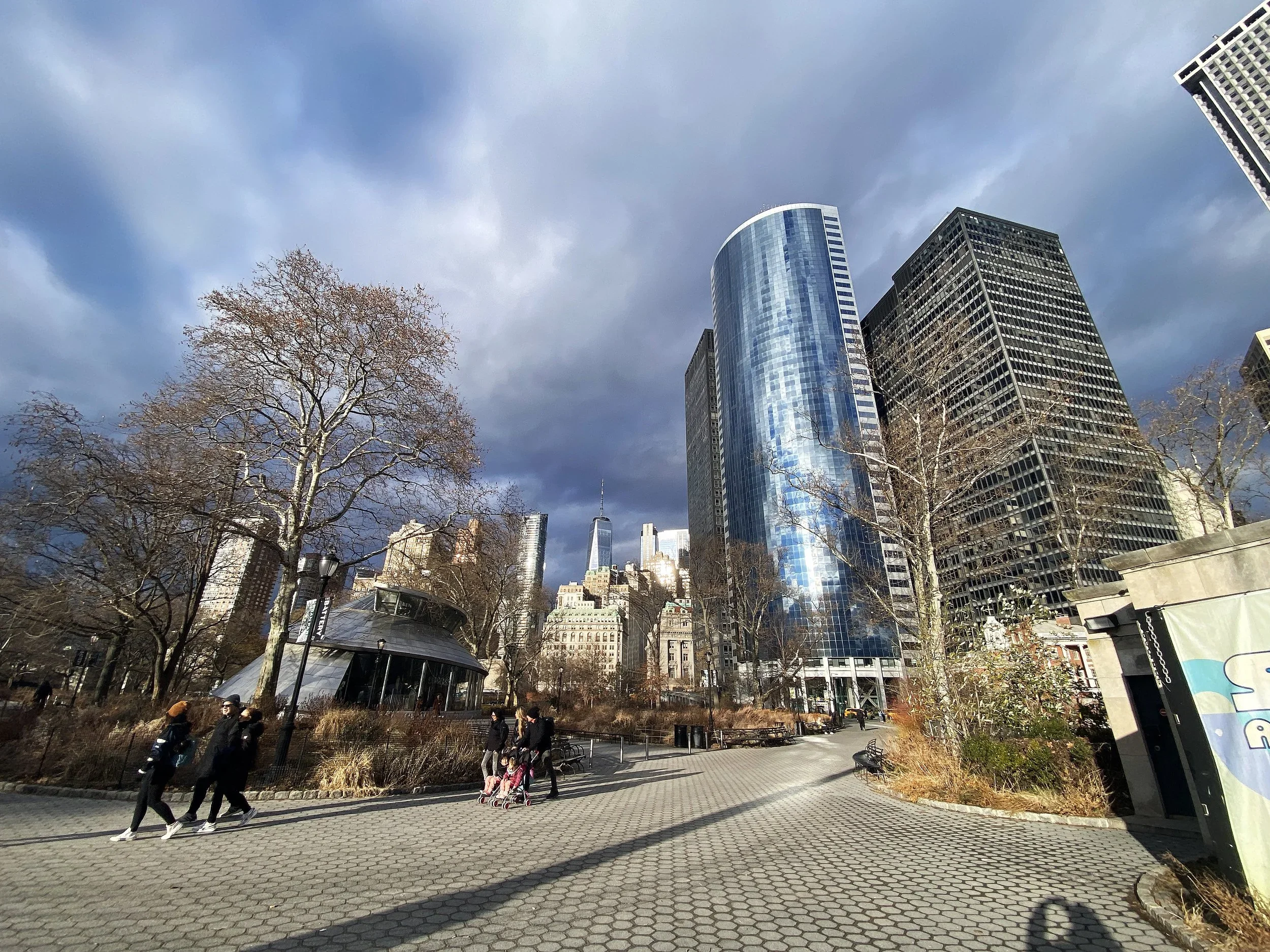
The January walk is, among other things, a lesson in inhabited waiting. You stand at the harbor edge and wait for the overture to develop. You wait for the ferry to depart. You stand on the rear deck and wait for Manhattan to recede to the point where it becomes legible as a single silhouette. You wait outside Castle Clinton for the music to tell you something about the stone.
None of this waiting is passive. All of it is directed: auf etwas warten, waiting for something specific to happen. A musical event, a visual shift, a change in the harbor light. The difference between waiting that is merely enduring and waiting that is genuinely attending is, in German terms, the difference between aushalten (to endure) and abwarten (to wait and see what develops). The walk asks for abwarten: a patient, open, receptive readiness for the encounter to produce something.
The Dutchman cannot do this. His waiting is not patient. It is compulsive, structured by a curse that he did not choose and cannot alter. He waits for redemption not because he has cultivated the capacity to wait but because he has no alternative. Warten for him is not a practice but a sentence.
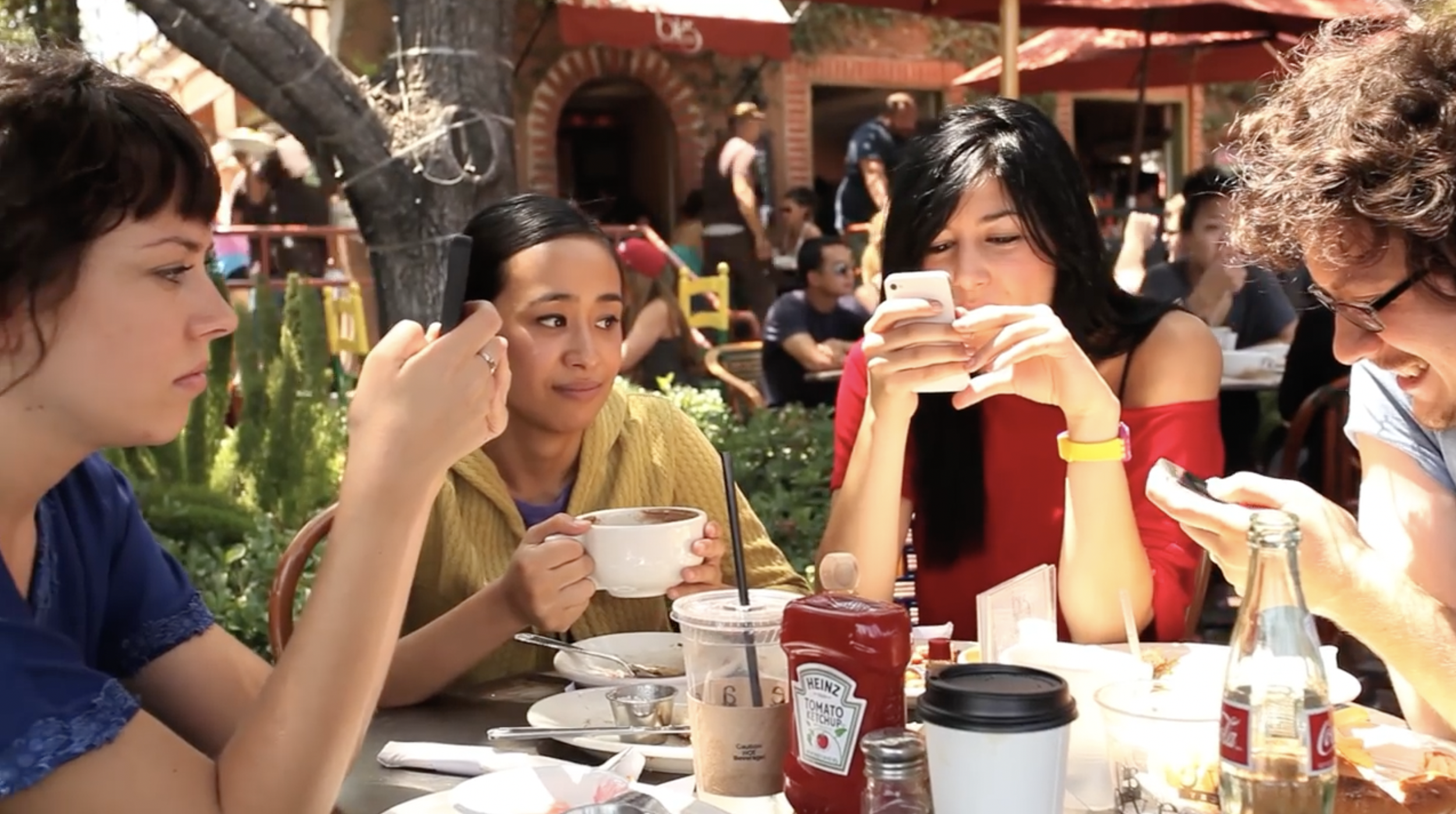
The walker, by contrast, chooses the waiting. Standing on the ferry deck without checking a phone, letting the music carry its full twenty minutes without interruption, slowing the pace through the Financial District canyons until the geography of capital registers as the correlate of mythological doom. All of this is warten as discipline and as attention. It is the refusal of distraction and the acceptance of duration. Nur wer warten kann, kann hören. Only those who can wait can hear. The sentence is not Wagner's. But it could be.
Further Reading