Eintägiges Experiment: Disney World, Das Gesamtkunstwerk
Themen: Illusion, Vertrag, Utopie, Schein, Die Kosten der Vollkommenheit
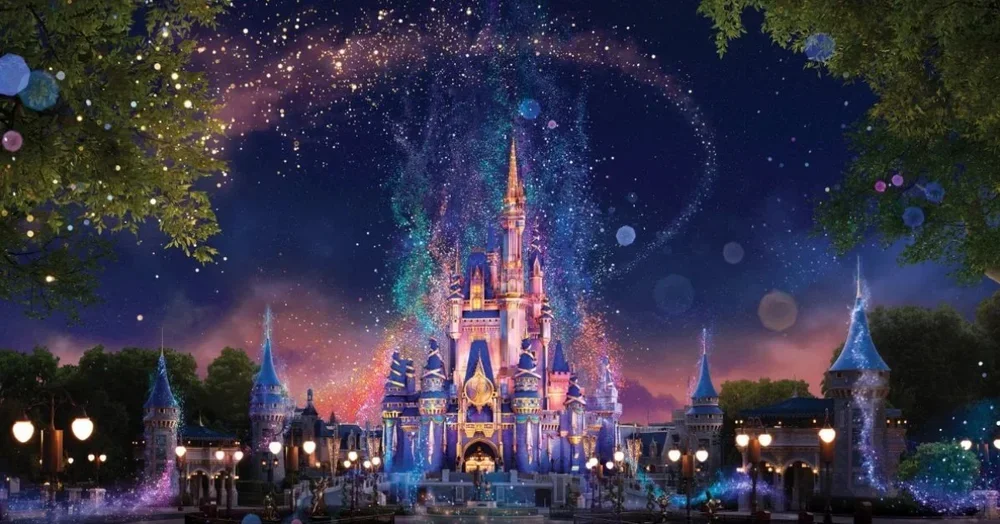
Element: Kontrolliertes Licht und synthetische Verzauberung
This walk treats Wagner not as repertoire, but as a composed method for moving through the park.
Das Ergebnis auf einen Blick
Dauer: A full day, dawn to fireworks: The walk is organized around the natural arc of a Disney day, early morning arrival, midday heat, late afternoon shift, evening spectacle, and uses that arc as the opera's dramatic structure.
Distanz: 6–8 miles across two parks (Magic Kingdom and EPCOT, with Animal Kingdom as an optional third movement), plus transit between them.
Beste Zeit: Arrive at Magic Kingdom at rope drop, the moment the park opens, when the crowds have not yet filled Main Street and the light is still low and golden. The specific quality of that first half-hour, before the machinery is fully loaded, is essential to the walk's first movement.
Wetter:
Florida in any weather works: The parks are engineered against weather. Rain darkens the castle and empties the plazas and makes everything more gothic. Heat makes the lines real and the exhaustion genuine and the air-conditioned interiors feel like sanctuary. Both are useful.
Evening is non-negotiable: The day must end at EPCOT's World Showcase Lagoon at dusk. What happens to the light over that water, and what happens to Spaceship Earth's sphere as it illuminates after dark, belongs to the final movement of this walk in a way that cannot be substituted.
Zugänglichkeit:
Both parks require purchased tickets. Disney's Disability Access Service is available for those who need it.
The walk involves significant walking on paved surfaces. Comfortable shoes are essential.
Many key moments are stationary. Standing in plazas, sitting on benches, pausing at thresholds. The walk is not about covering distance quickly.
Essentieller Moment:
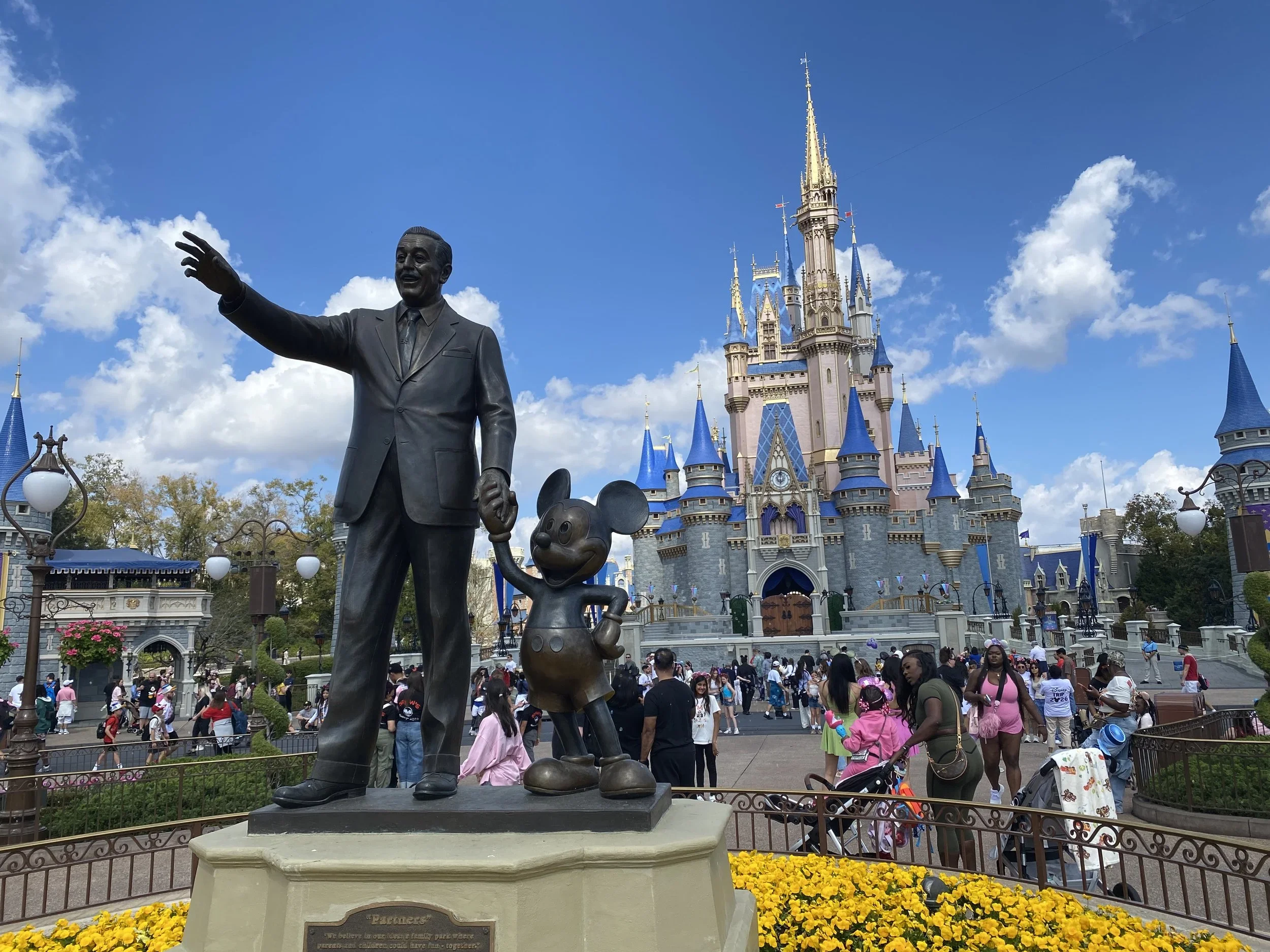
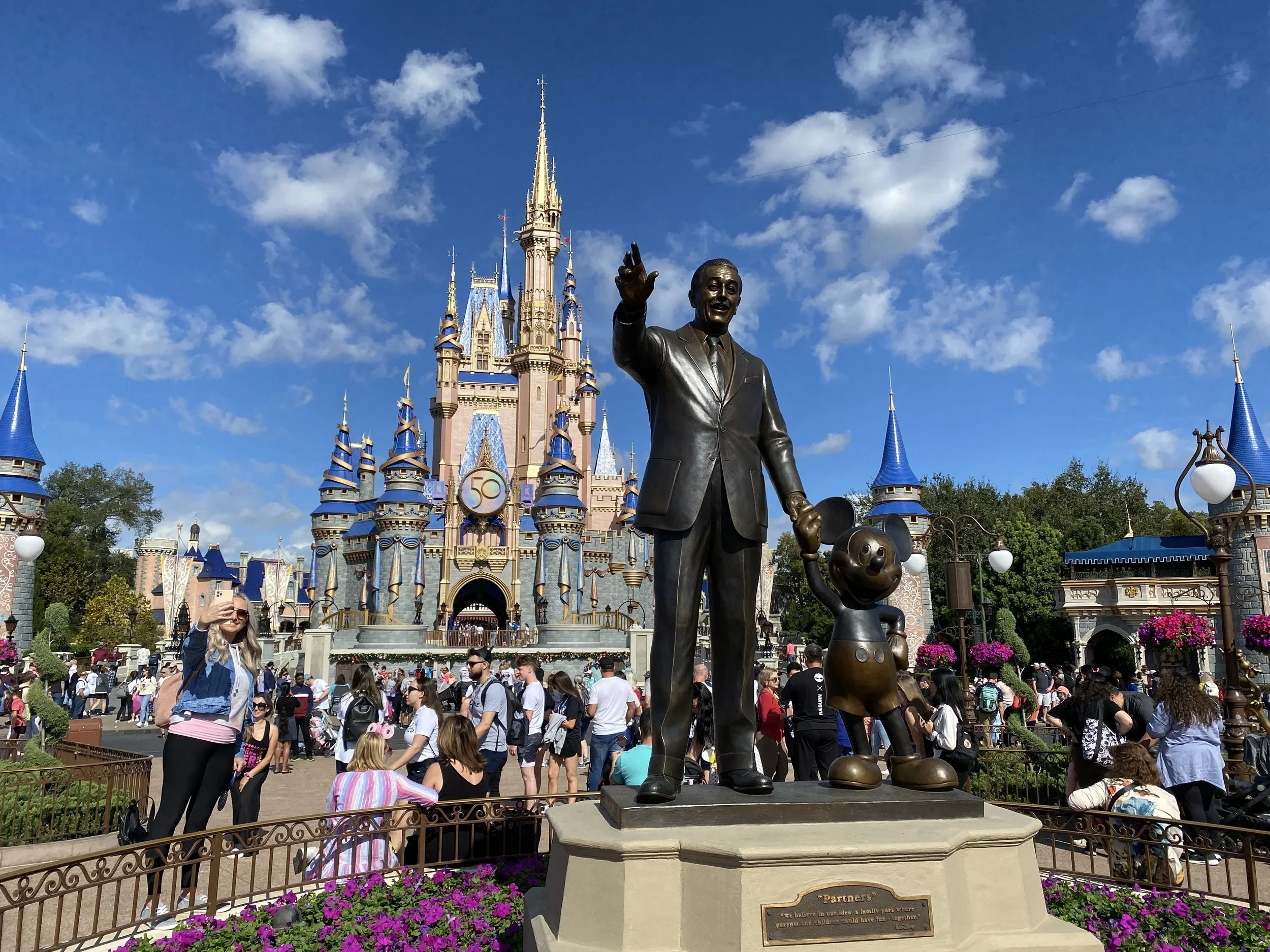
Standing at the end of Main Street U.S.A. with the Entry into Valhalla. The moment when the castle fills your entire field of vision and the rainbow bridge theme arrives in the brass and you feel, genuinely feel, against your will, in your chest, the thing the imagineers designed you to feel. This is the walk's central argument made physical. The emotion is real. The structure that produced it is worth examining. Both facts are true simultaneously.
Language Anchor (German Phrase of the Walk):
Gesamtkunstwerk / The total work of art. The word Wagner coined in his 1849 essay for the synthesis of all arts, music, drama, poetry, architecture, movement, light, into a single overwhelming experience with no outside. Walt Disney did not use this word. He did not need to. He built the thing.
Wort des Weges
Schein (pronounced: SHINE): Appearance. Semblance. The gleam on the surface of a thing, which may or may not correspond to what the thing actually is. In German it carries both meanings without disambiguation: der Schein is both the light that illuminates and the illusion that deceives, the shine of the gold in the Rhine and the false impression it creates in those who see it from a distance.
Disney World is a masterwork of Schein in both senses simultaneously. The light is real, engineered with extraordinary care, and what it illuminates is an appearance constructed at enormous cost to produce a specific emotional response. The walk does not ask you to choose between these. It asks you to hold both, for a full day, and see what that does to you.
Thematischer Rahmen: Wagner in Orlando
Wagner invented the concept but Disney built it. The Gesamtkunstwerk, the total artwork, was Wagner's response to what he saw as the fragmentation of modern art into separate disciplines, each developed in isolation, none capable alone of producing the transformative experience he believed art should provide. Opera as it existed before him was, in his diagnosis, a collaboration of unequals. The music did what the music did, the sets did what the sets did, the libretto was often a pretext, and the audience talked through the recitatives and applauded at the wrong moments and was never, in any meaningful sense, inside the work. What he wanted was an art form that synthesized everything. That used music and drama and poetry and visual spectacle and architecture and the physical experience of being in a particular space at a particular angle to the stage. Into something that operated at the level of myth rather than entertainment. Something you could not stand outside of, because it had no outside.
He built Bayreuth to house this idea. A festival theater in a small Bavarian town, designed so that the orchestra pit was invisible (sunk beneath the stage), so that the audience sat in a darkened fan-shaped hall with no boxes or tiers to remind them of social hierarchy, so that the experience of the work was as total as architecture and stagecraft could make it. The first Bayreuth Festival was in 1876. Wagner called it a Bühnenweihfestspiel, a stage-consecration festival play. A pilgrimage, in other words, to a work that required a special building and a special journey to properly receive.
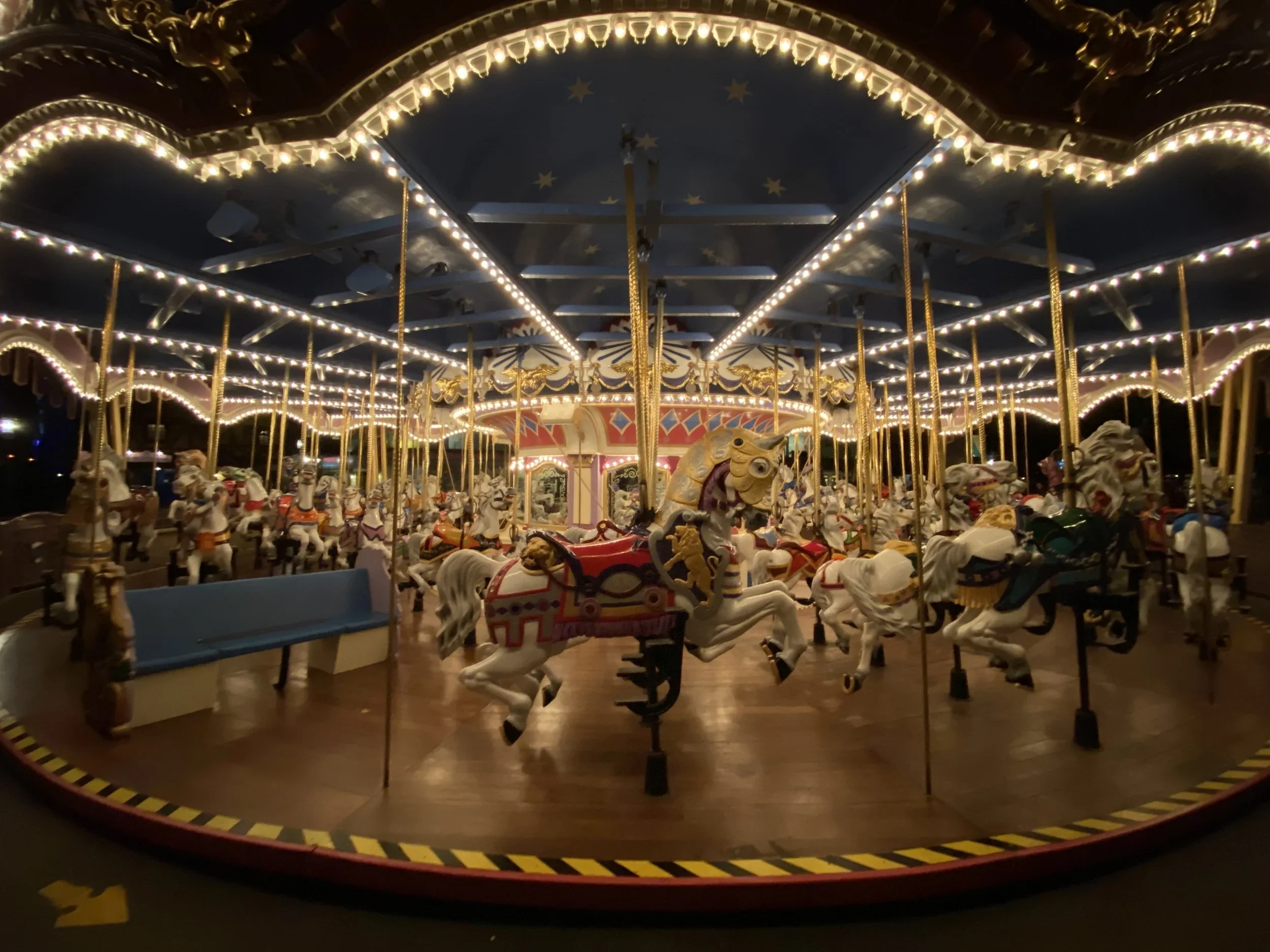
Disney World opened in 1971. Its design principles were formalized by Walt before his death in 1966, in a series of documents and recordings that remain foundational to how the parks are managed. The principles include:
Every surface within guest sightlines must be designed
Transitions between thematic areas must be invisible (you cannot see the next land from inside the current one)
Sound, smell, and temperature must reinforce the theme of each zone
Cast members maintain their character register continuously within their assigned area
Nothing that contradicts the frame of the experience is permitted to enter that frame.
The invisible orchestra pit. The darkened fan-shaped hall. The pilgrimage. The total environment. The experience that has no outside.
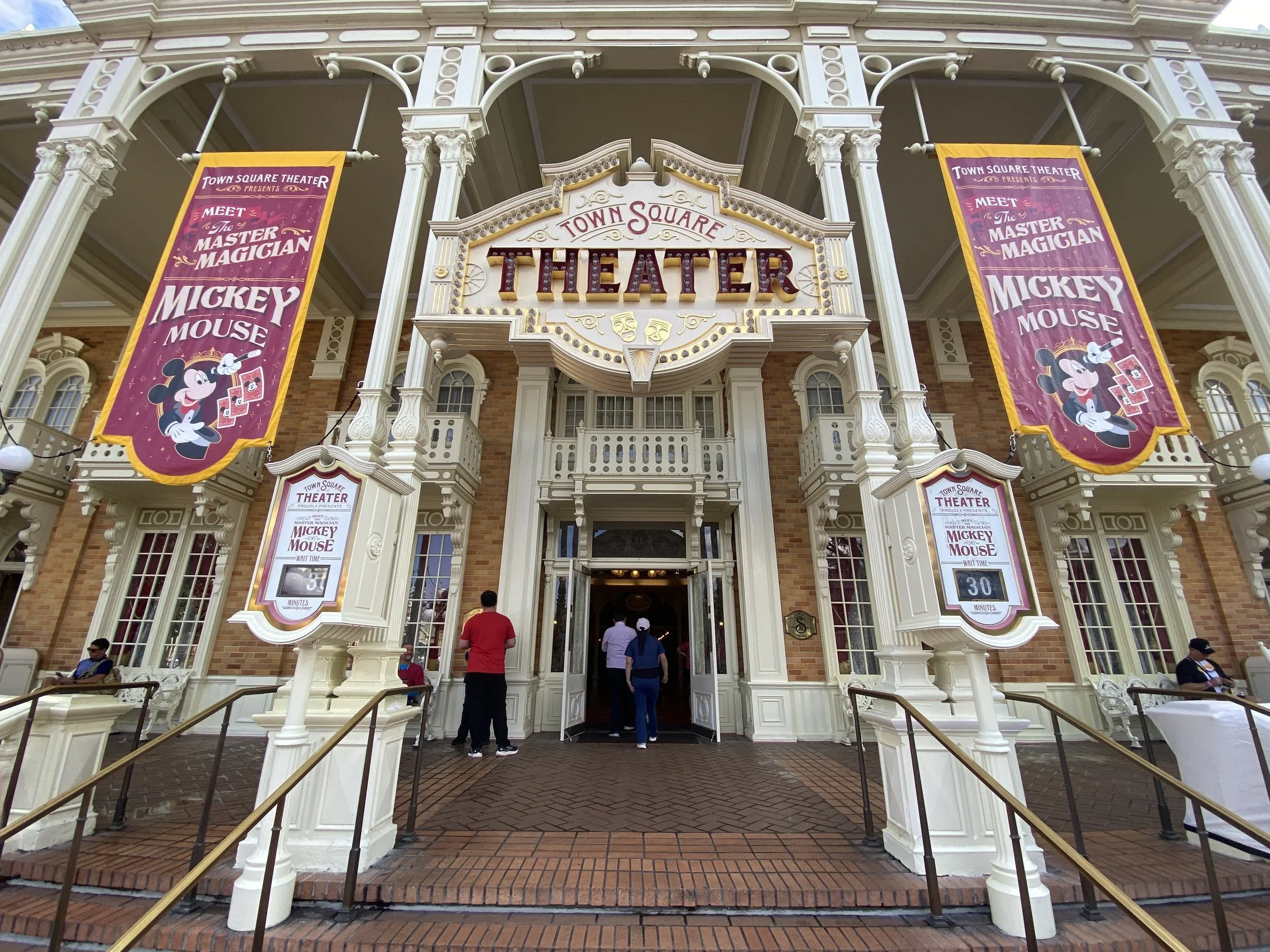
Wagner and Disney are not analogies. They are the same project at different scales, in different centuries, with different moral frameworks attached. Wagner's Gesamtkunstwerk was in the service of myth. Of the Germanic folk-spirit, of redemption, of the confrontation with fate. Disney's Gesamtkunstwerk is in the service of story. Of the American folk-spirit, of optimism, of the confrontation with nothing, carefully, because confrontation is off-brand. The differences matter enormously. So does the structural identity.
To walk Disney World with Wagner in your ears is not to be ironic about either. It is to take both seriously enough to let them illuminate each other: to feel what the parks are actually doing, at the level of craft and intention and manipulation and genuine achievement, through the operas of the man who first described what they are.
Erster Aufzug: Magic Kingdom
Der Regenbogenbrücke: Main Street U.S.A. und die Ankunft
Getting There
Arrive at the Transportation and Ticket Center early. Take the ferry rather than the monorail if the option is available. The seven-minute crossing of the Seven Seas Lagoon, with the Magic Kingdom visible ahead and growing slowly larger, is the walk's overture: the approach to Valhalla across water, before the rainbow bridge.
Pass through the main gate. Stop before entering Main Street itself.
Track: Das Rheingold, Scene IV:
Donner's Summoning of the Clouds, through to the Entry into Valhalla and the end of the opera
Begin the track at the precise moment you step onto Main Street U.S.A. and the castle becomes visible at the far end.
What Main Street Is
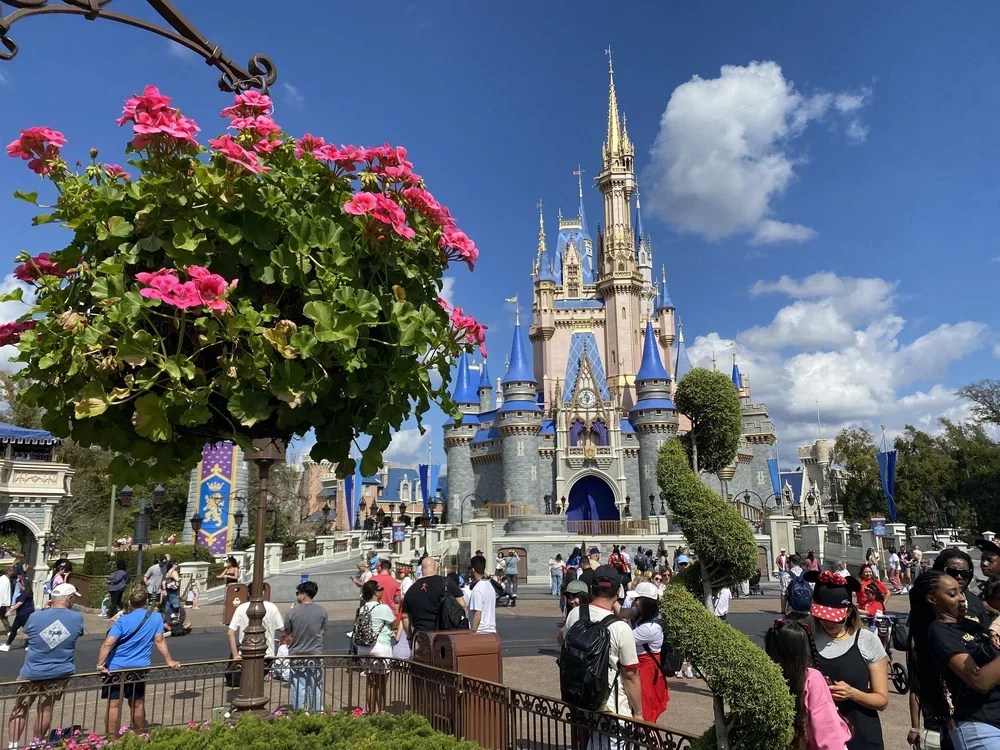
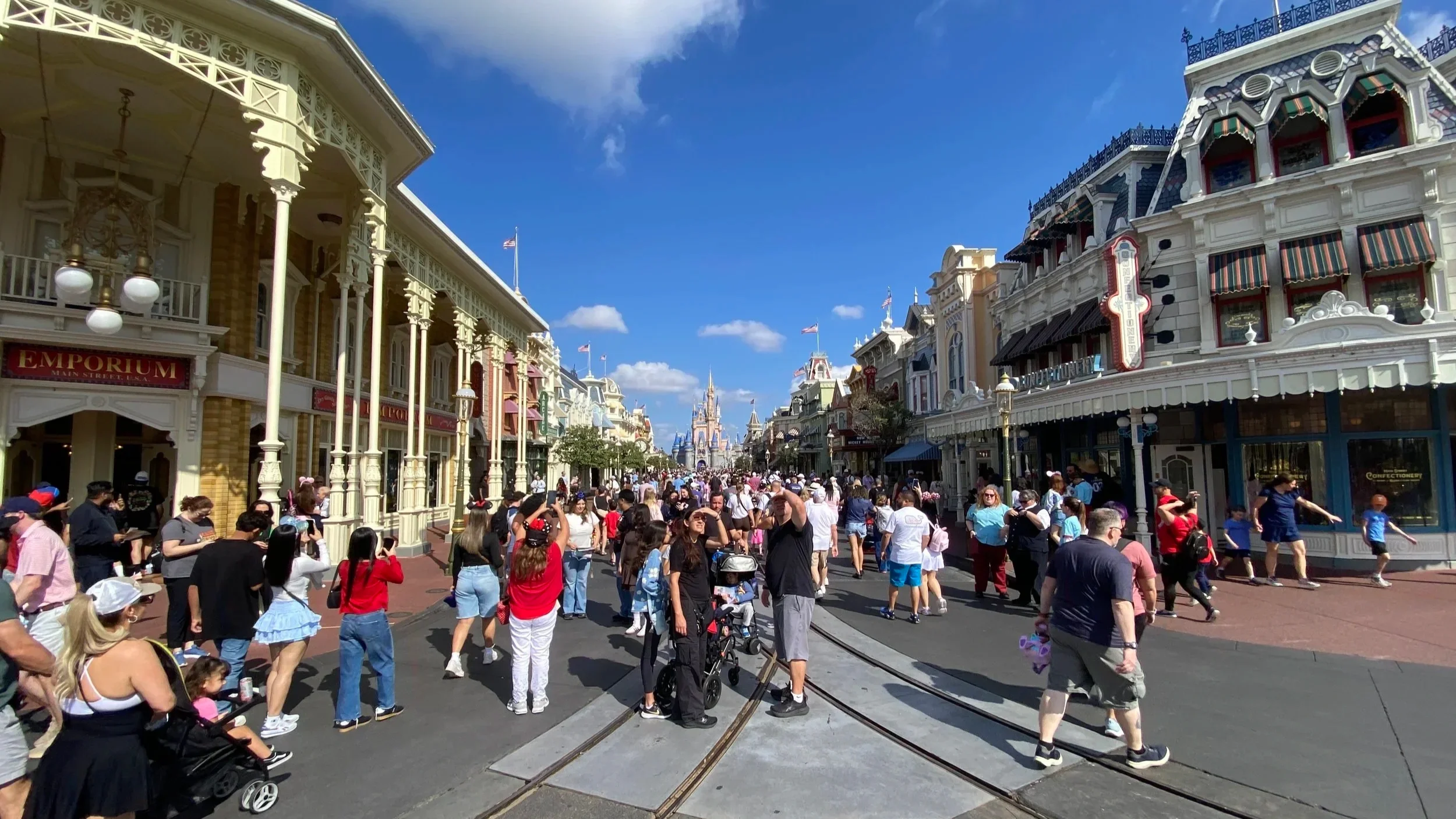
Main Street U.S.A. is an idealized small-town American commercial street, set at five-eighths scale, designed to make adults feel large and children feel exactly right, lined with shops whose upper stories are smaller than their ground floors to exaggerate the sense of height, terminating in Cinderella Castle at a forced-perspective distance that makes the castle appear both reachable and monumental simultaneously.
It is also an elegy. The town it depicts, Marceline, Missouri, where Walt Disney grew up, or rather a Marceline that never quite existed, cleaned of poverty and conflict and the actual texture of small-town life, is a memory of an America that was always partly imaginary. The buildings are real. The street is real. The America it depicts is the one that Americans have always wanted to have had, which is different from the one they had.
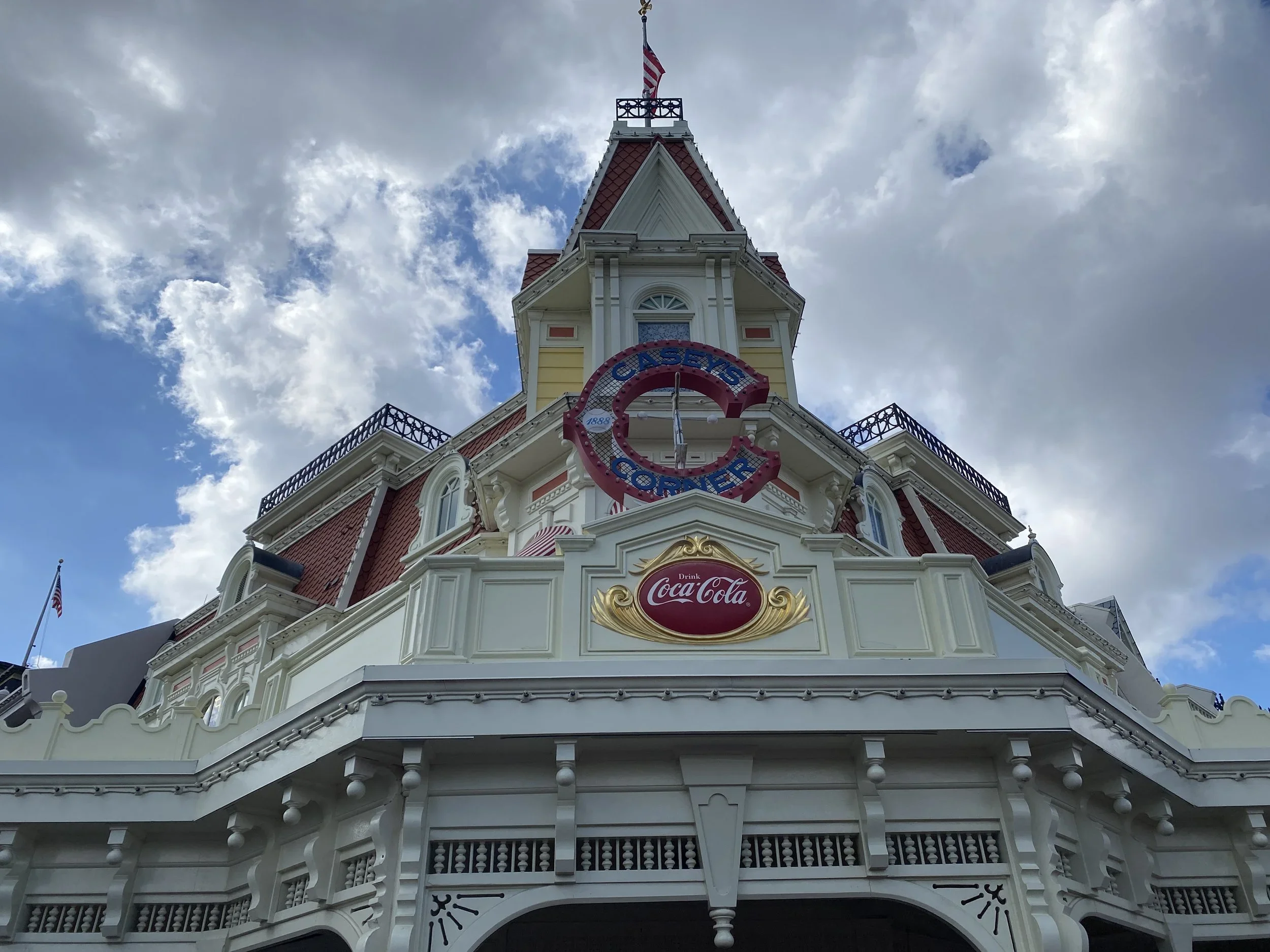
The rainbow bridge in Das Rheingold appears after Donner, the thunder god, swings his hammer and clears the storm. The air is suddenly clean. The light is golden. The bridge appears between the world where the deal was made. The messy, compromised, mortal world, and Valhalla, the hall of the gods, which Wotan has built as the architectural embodiment of his own authority. The bridge is not real in any material sense. It is light, rendered traversable by will and music.
Main Street is the rainbow bridge. It is the traversable distance between the ordinary world (the parking lot, the ticket gates, the concrete plazas) and the hall on the hill. Walking it while the Entry into Valhalla builds in your ears, the string theme rising, the brass gathering, the moment of maximum orchestral splendor, produces an emotion that is not ironic and not naive. It is the correct response to an environment engineered, with extraordinary precision, to produce it. Feel it fully. Then notice that you are feeling it.
At the Hub: Facing the Castle
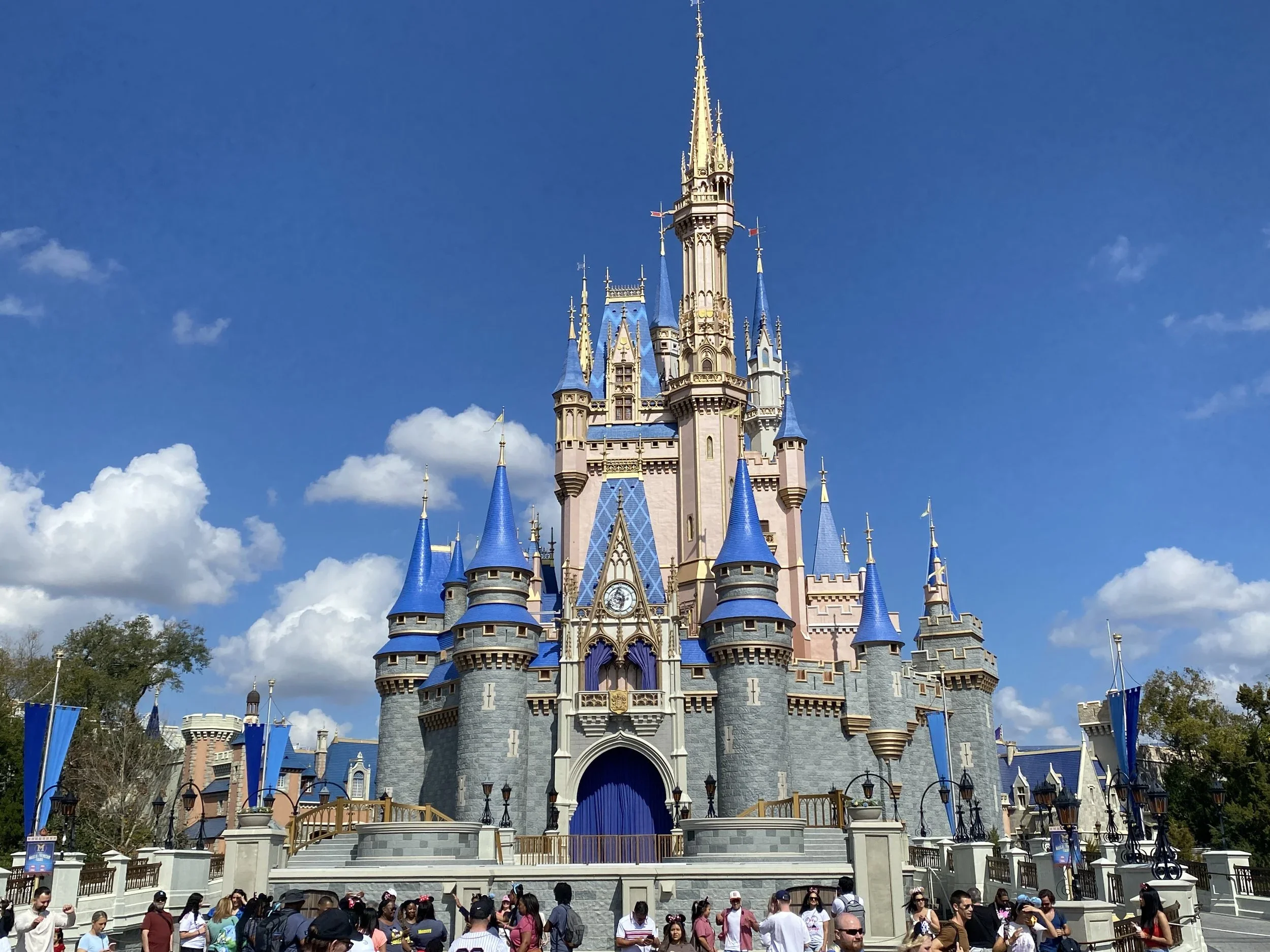
When you reach the central Hub, the plaza in front of the castle, where all of Magic Kingdom's lands radiate outward, stop.
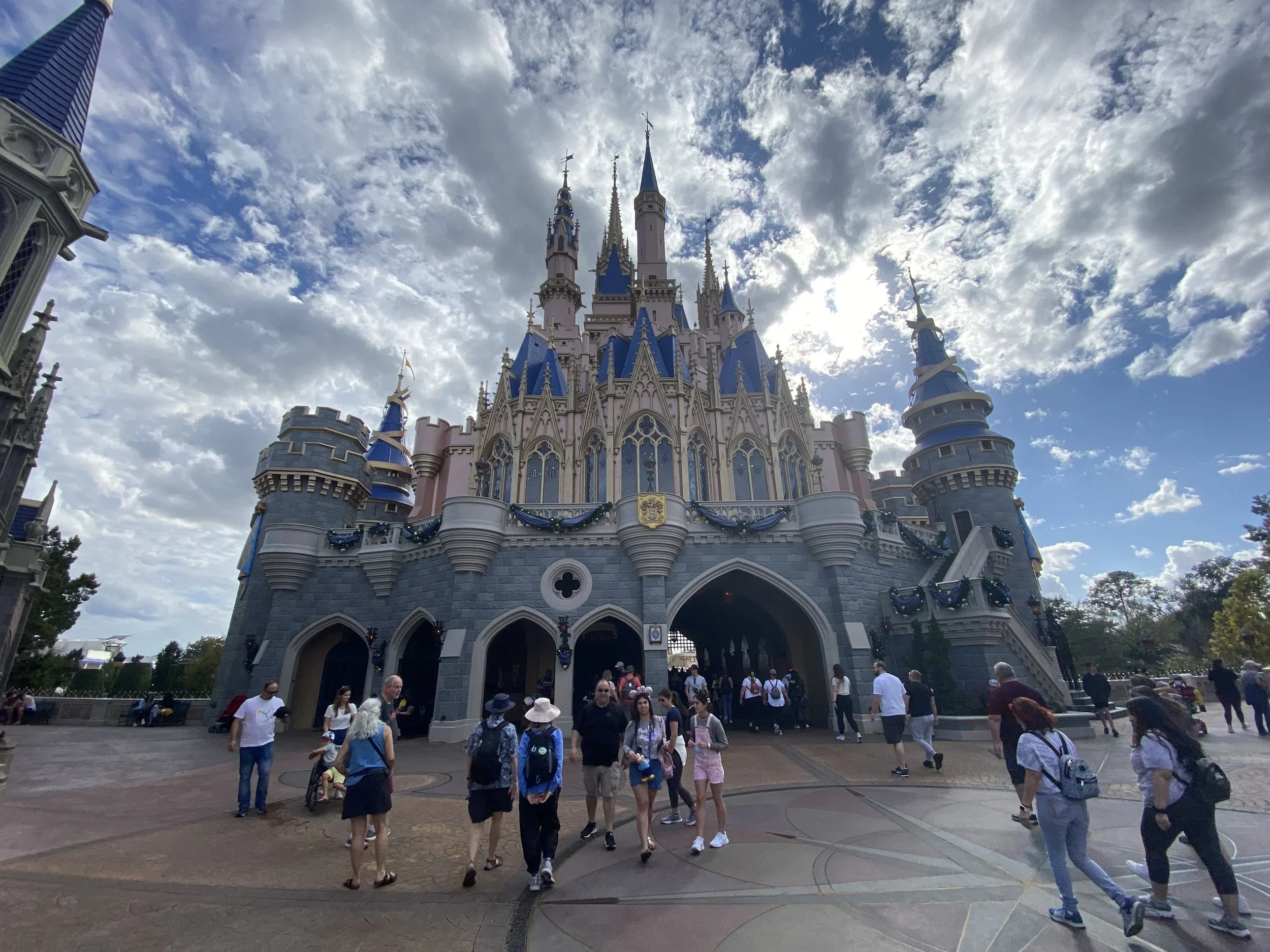
The castle at this distance is exactly what it was designed to be. A structure which fills the upper field of vision, that reads as both real and impossible, that has no equivalent in actual medieval architecture because it was designed not from historical research but from the accumulated memory of every castle in every fairy tale in Western European folk tradition, processed through the Disney animation department's visual language and then built at scale in fiberglass and steel and painted a specific shade of blue-grey that was calculated to photograph well in Florida light.
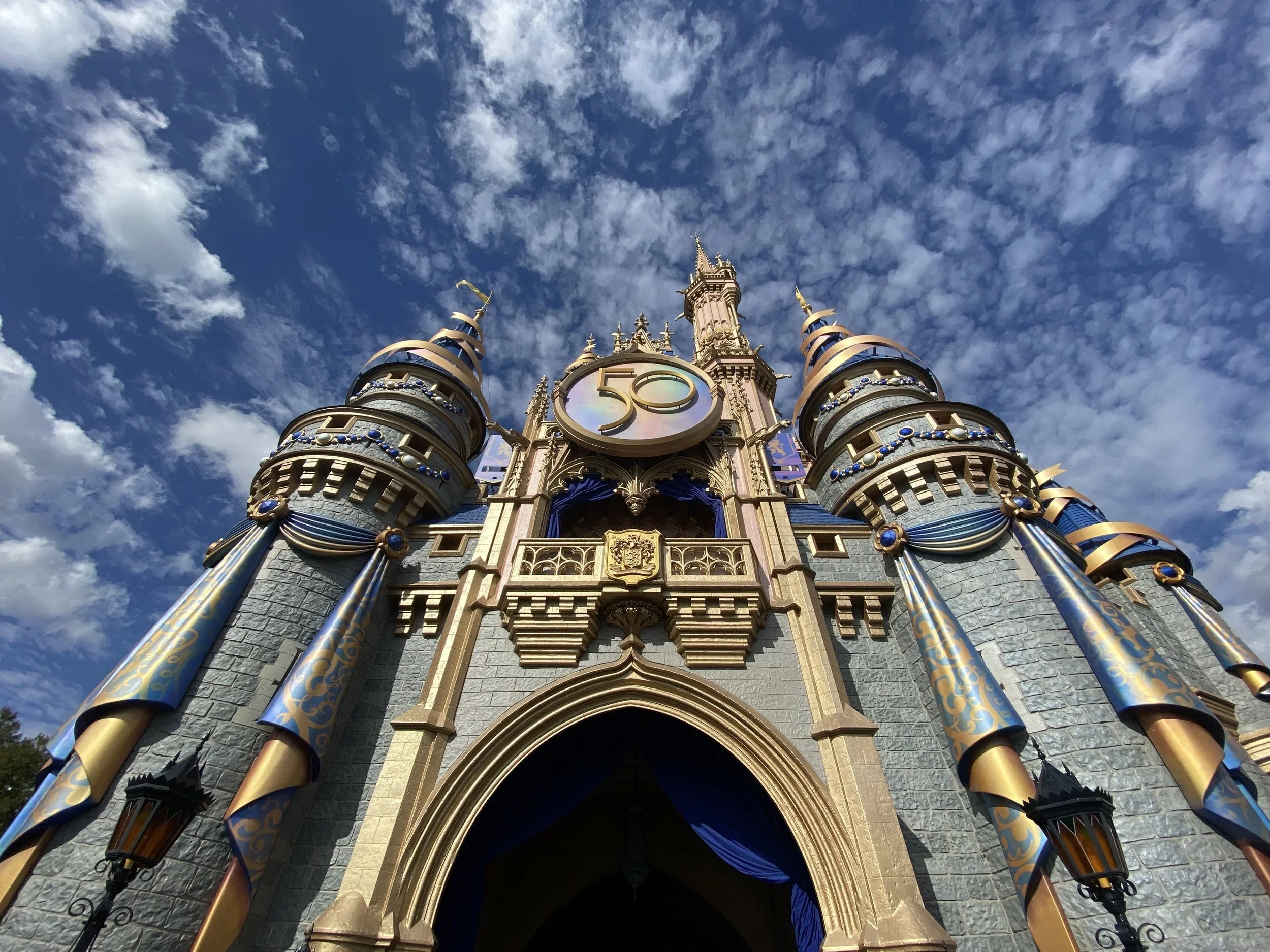
It is fake. It is also, within its own terms, perfect. Wotan's Valhalla was built by giants from a design Wotan commissioned. He did not understand the structural logic, only the result. The result was magnificent. The bill came due later.
Let the Entry into Valhalla play out in full while you look at the castle. Loge's aside, Ihrem Ende eilen sie zu, they are hastening toward their end, arrives near the close. It is quiet, almost inaudible under the orchestral splendor. Disney World has its own version of Loge. The financial analysts, the Imagineers who know how much the maintenance costs, the executives who understand that the entire enterprise requires continuous, massive, invisible expenditure simply to remain what it appears to be. The gods do not know the hall is already burning. The guests do not think about the maintenance budget. The music is this beautiful. Both facts are true.
Der Schwebende Holländer: Haunted Mansion
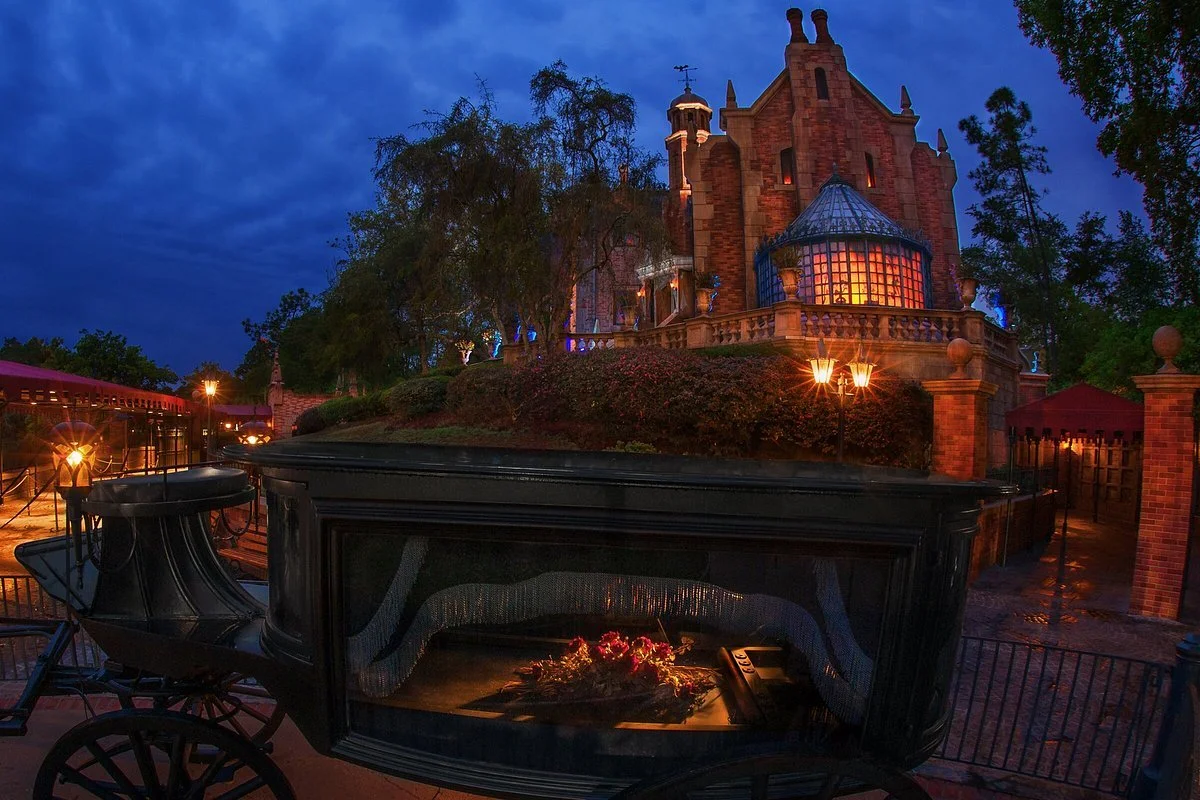
Walk: From the Castle to Liberty Square
Pass under the castle's central arch into the hub, then bear right into Liberty Square. The park's colonial-American zone, brick-paved, subdued in palette compared to the surrounding lands, housing the Hall of Presidents and the Haunted Mansion.
The Haunted Mansion sits at the far end of Liberty Square, across a small stone bridge, set back behind a graveyard. Approach it at whatever pace the queue allows.
Track: Der Fliegende Holländer, Overture
Begin the Overture as you cross the bridge into the Haunted Mansion's approach. Continue it through the queue and the pre-show if you can manage the earbuds discreetly. The Imagineers have designed the approach deliberately to function as a slow build, and Wagner's Overture performs exactly the same function.
What Haunted Mansion Is
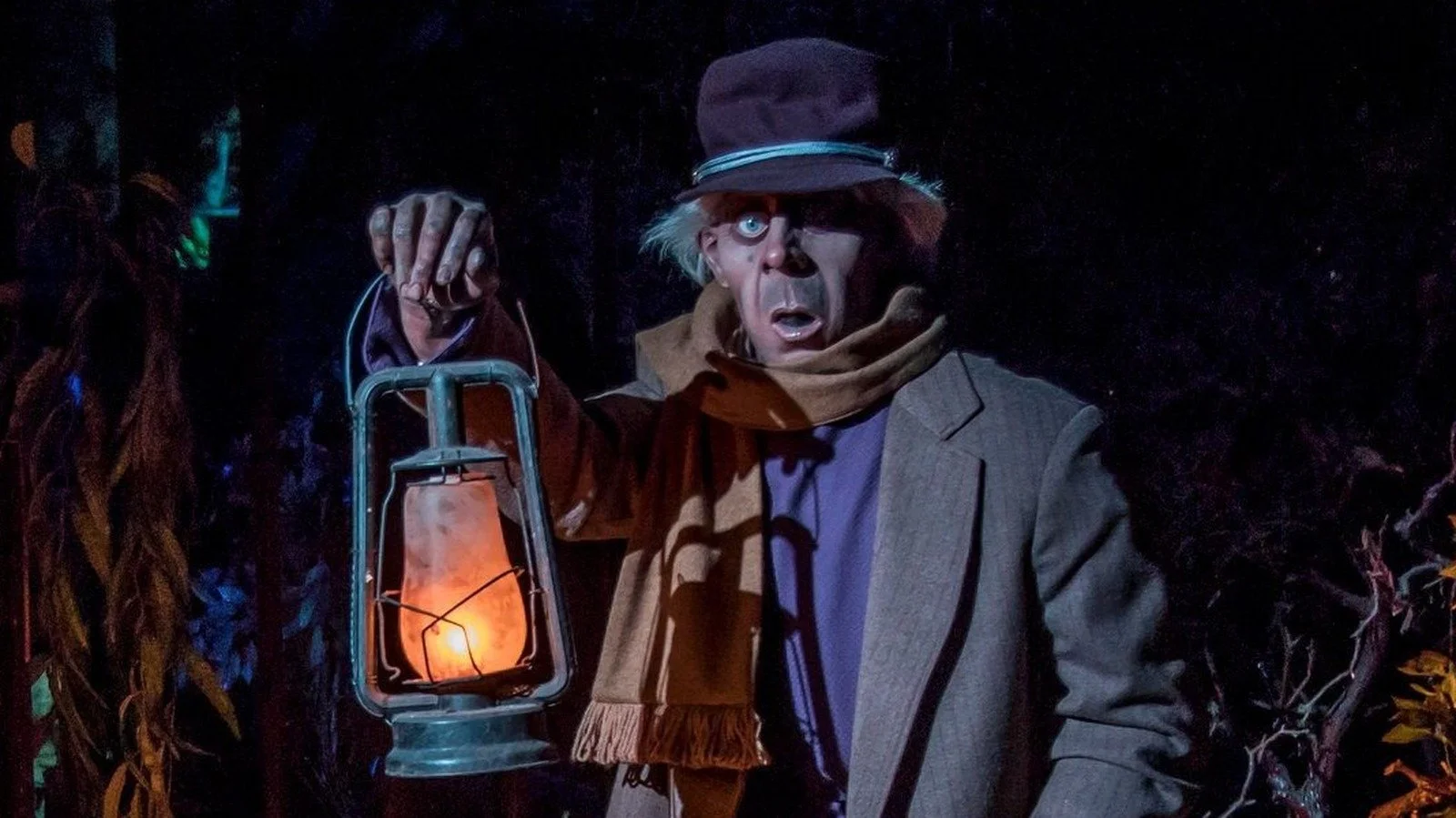
The Haunted Mansion opened in 1969, four years before Walt's death would have prevented him from seeing it, designed by a team that included Marc Davis and Claude Coats, with a concept that was from the beginning organized around a specific question. What does a ghost actually want?
The answer the Imagineers arrived at, and which distinguishes Haunted Mansion from every haunted house that preceded it, is that ghosts want company. The 999 happy haunts of the Mansion are not threatening. They are lonely. They have been in this house for a very long time, they cannot leave, and they are delighted to have visitors. The famous exit line, there's always room for one more, is not a threat. It is an invitation. A genuine one. The ghosts are not trying to frighten you. They are trying to recruit you, because eternity is long and the company is limited.
The Flying Dutchman is condemned to sail forever, never finding rest, circling until he finds a woman faithful enough to redeem him. He has been doing this for centuries. He has tried before. It has not worked. He is not trying to terrorize anyone. He is exhausted, and he needs something he has not been able to find, and the opera is about whether this time the conditions for finding it are present.
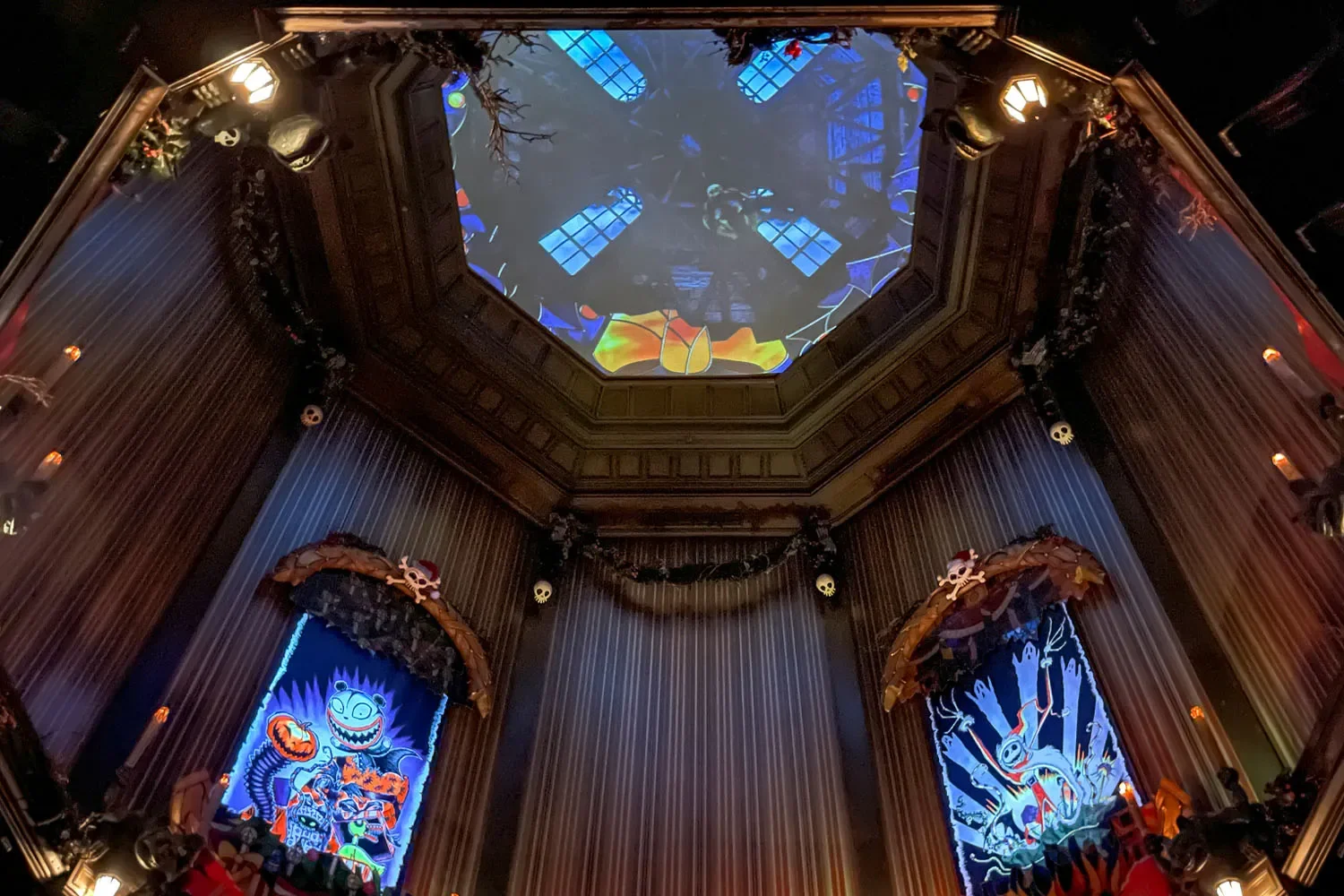
The Haunted Mansion is the Dutchman's ship in the form of a New Orleans Gothic house. The guests are Senta. The people the ghost has been waiting for, the ones whose arrival might complete something. The stretching room, the black-and-white portraits that become macabre as the ceiling rises, the Doom Buggies moving through ballrooms full of waltzing specters, this is the Dutchman's world rendered inhabitable, the condition of eternal haunting made navigable and, just barely, bearable.
What to Notice on the Ride
The hitchhiking ghosts at the exit, who appear in the mirror beside your Doom Buggy. The moment when the boundary between the haunted world and your world dissolves, when you discover you have already been enrolled. This is the moment Senta's portrait catches the Dutchman's eye.
The ballroom waltz, visible from above through a one-way glass. Hundreds of figures dancing in a room you cannot enter, a party that has been going on for a very long time and has its own coherent social life, entirely indifferent to your observation. The Dutchman's world, seen from outside it, before you are taken in.
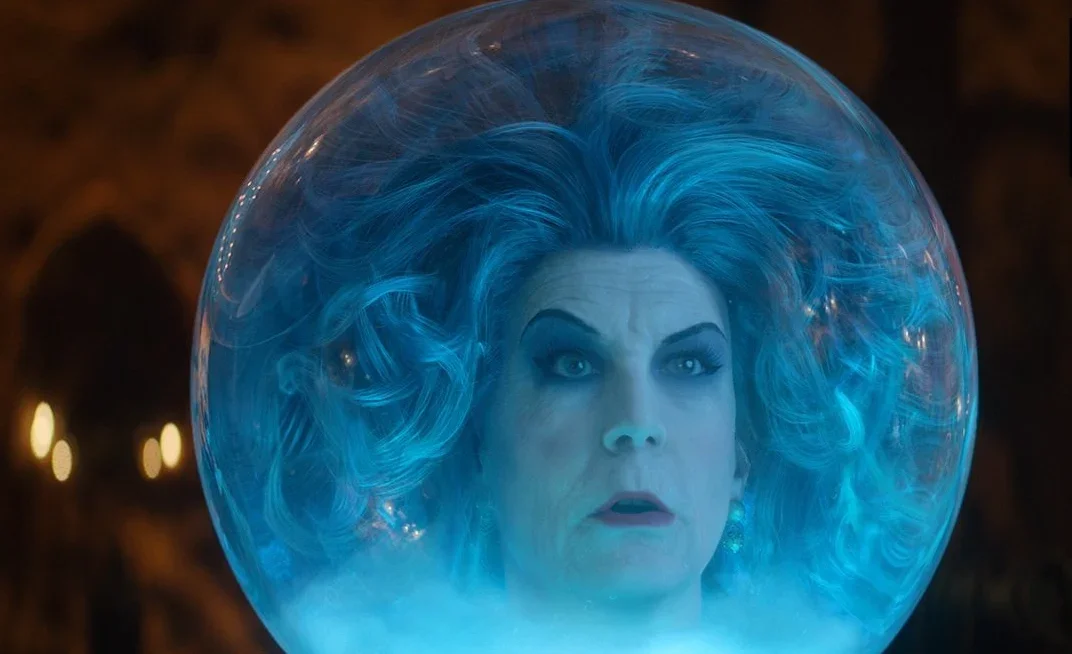
The Madame Leota seance sequence. A disembodied head in a crystal ball conducting a ceremony to summon presences that are already present. This is the Dutchman's own arrival. The summoning that has worked, for once, in the wrong direction.
After the ride, stand outside in the graveyard for a moment. The comic tombstones, the weeping willows, the organized whimsy of the whole enterprise. The Dutchman's curse is managed here, made domestic, given punchlines. This is what happens when an existential condition of eternal wandering is processed through the Disney tonal register. The suffering is real, the comedy is also real, and the two coexist without resolving.
Das Preislied: Cinderella Castle und Fantasyland
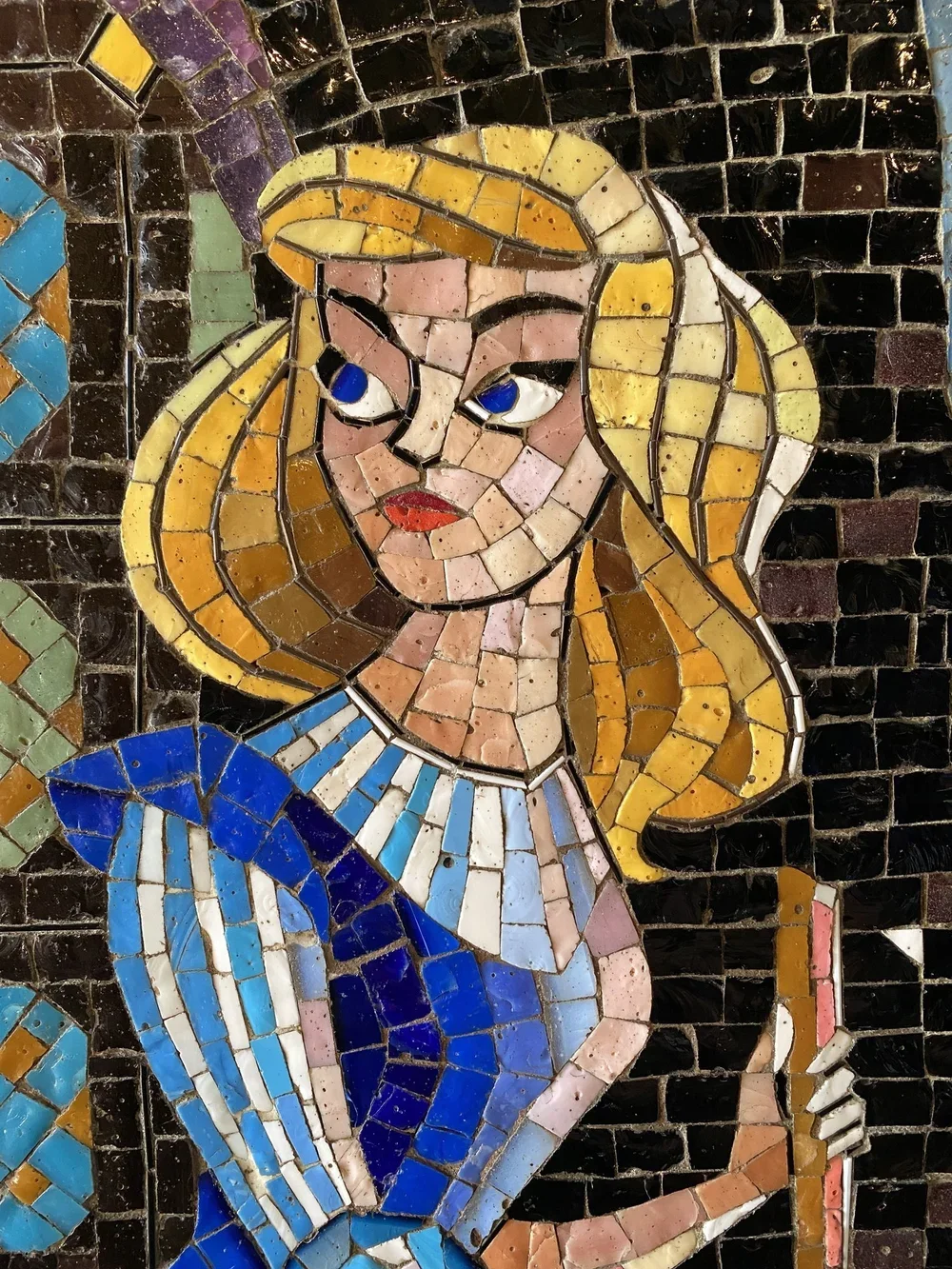
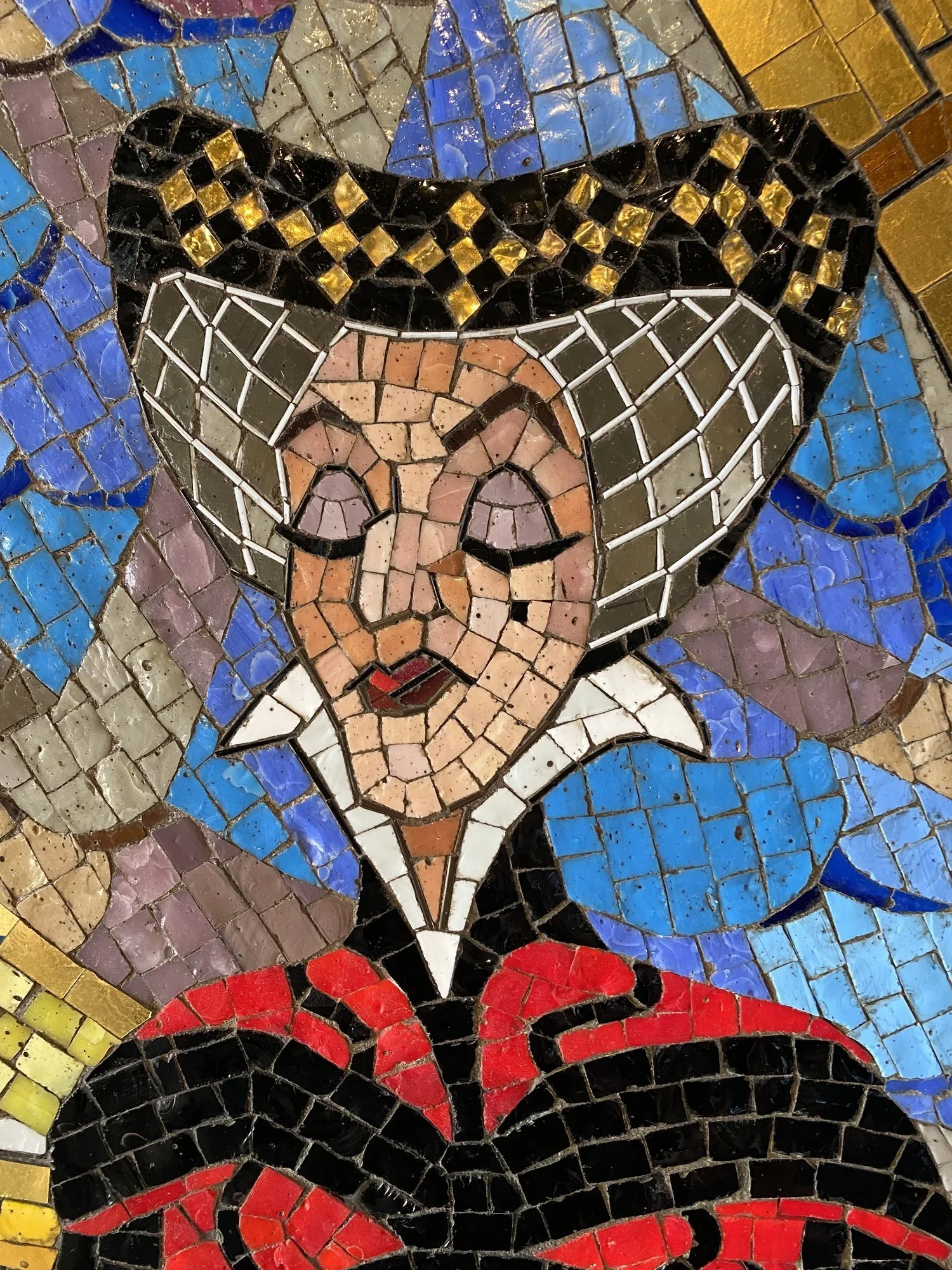
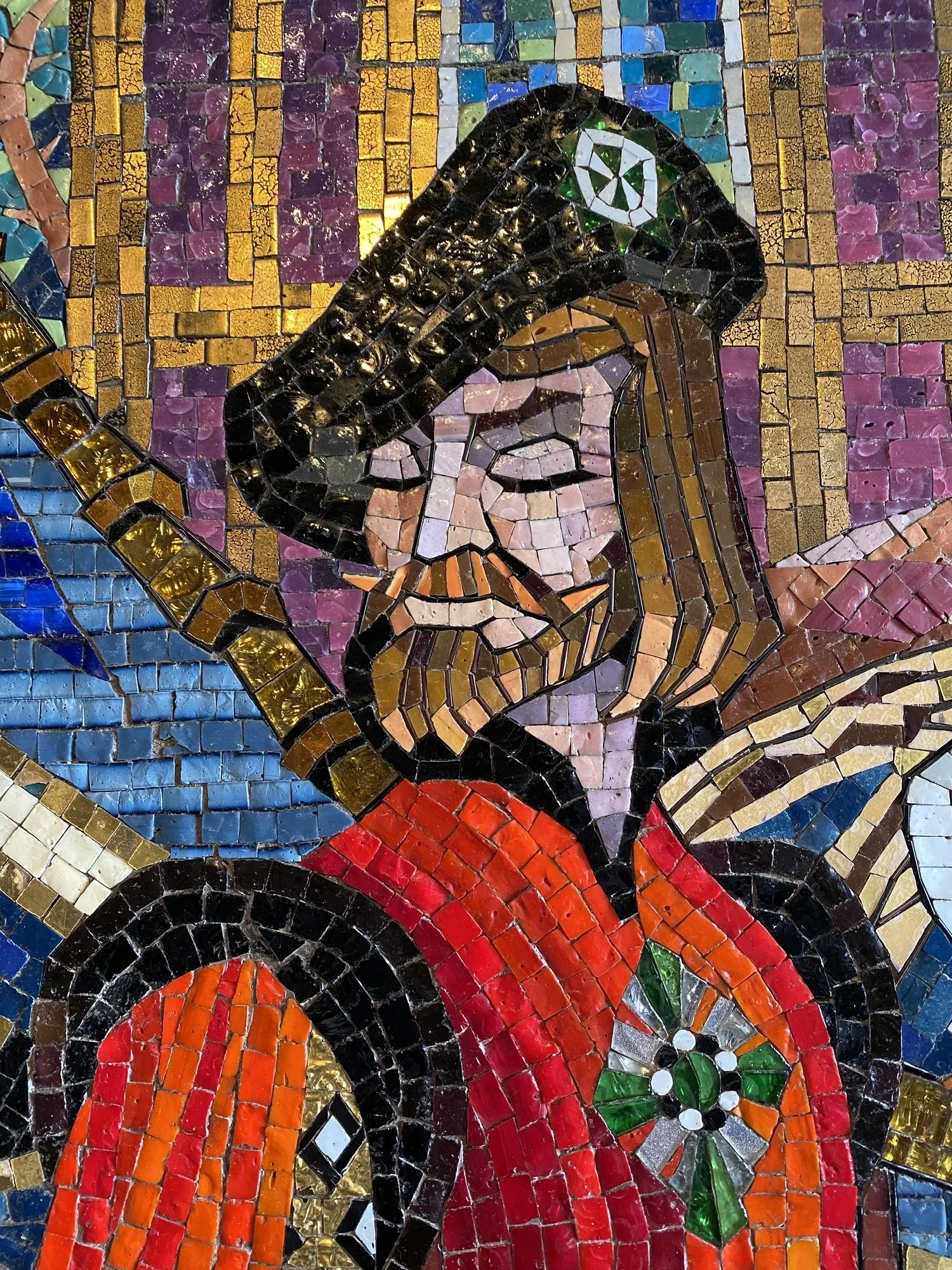
Walk: Through the Castle
Return to the Hub and pass through Cinderella Castle into Fantasyland behind it.
Stop in the breezeway under the castle. The arched passage tiled with mosaic scenes from the Cinderella story, and look at the mosaics carefully.
Track: Die Meistersinger von Nürnberg
Prize Song: Morgenlich leuchtend im rosigen Schein
The Prize Song is Walther von Stolzing's winning entry in the Meistersinger song contest. The spontaneous, rule-breaking, genuinely inspired melody that Hans Sachs has spent the opera shepherding from raw impulse into transmissible form. It is music about music. A song that describes how a song comes into being, a dream-image of a woman and a garden and a tree, which Walther has been trying to shape into something that can be heard by others since Act I.
The Cinderella mosaics are the Prize Song in visual form. A folk story about a girl whose genuine quality is recognized against all social probability, whose arrival at the ball is facilitated by magic that is also simply a different way of seeing what was always true, whose glass slipper is the formal test that confirms what the prince already knows. The story is not sentimental. It is precise. The right form, the right moment, recognition. Hans Sachs and the Fairy Godmother are structurally identical.
Walk through the breezeway slowly. Let the Prize Song play against the mosaics. The gold tesserae, the deep blues, the transformation sequences. This is the moment in the Meistersinger when the audience, which has been held in suspension through five hours of comedy and argument and near-disaster, finally hears the thing the opera was built to deliver.
Fantasyland as the Guild Stage
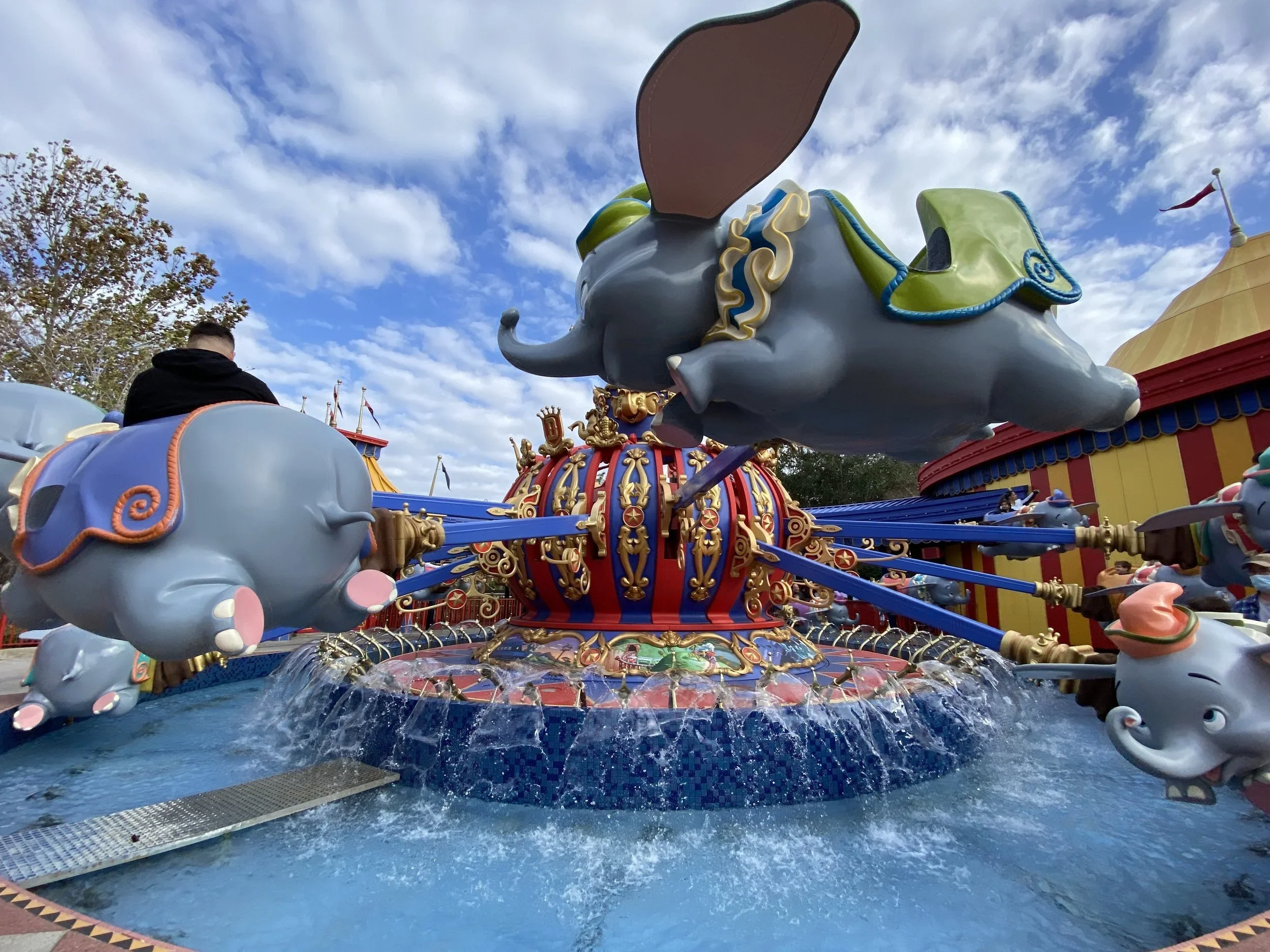
Fantasyland, the land behind the castle, housing the dark rides based on Disney's animated features, is the Festival Meadow. The public space where the cultural product of the institution is put before the crowd for judgment. The dark rides (Peter Pan, Dumbo, the Many Adventures of Winnie the Pooh, Snow White's Enchanted Wish) are not rollercoasters. They are the folk narratives of a culture, rendered at three-quarters scale, traversed in slow vehicles that pace the experience for you. They are the songs at the Meistersinger contest, displayed for the community's approval.
The fact that they are perpetually popular, that Peter Pan's Flight has a two-hour wait on any given Tuesday, is the community's judgment rendered in queue length. The Prize Song wins. The Guild approves. The meadow celebrates. Every day.
Zweiter Aufzug: EPCOT
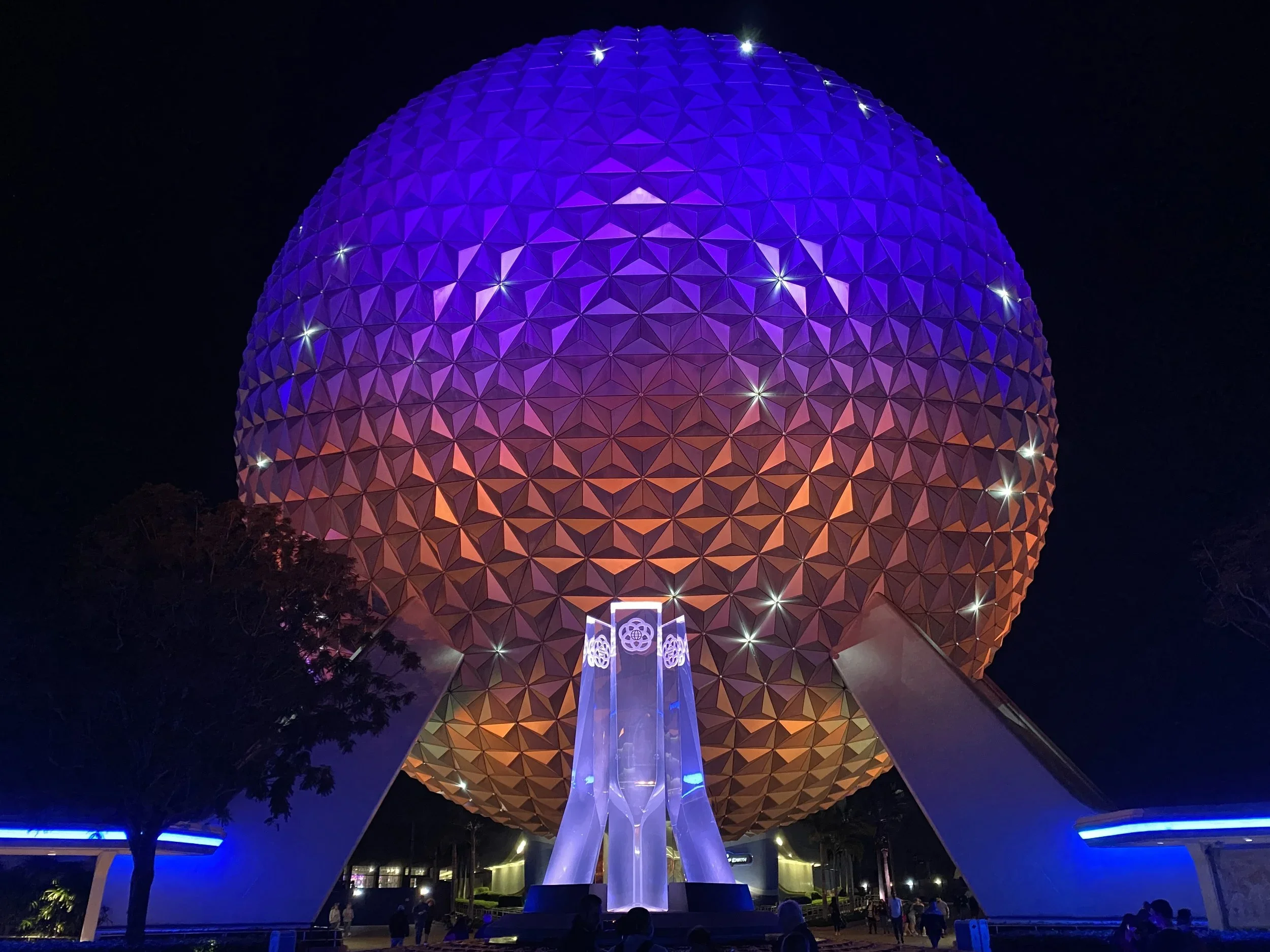
Transit between parks: monorail or bus, approximately 20 minutes. Use the transit time to read the EPCOT origin story if you don't already know it.
Die zerbrochene Utopie: Spaceship Earth und das Erbe von EPCOT
Arriving at EPCOT
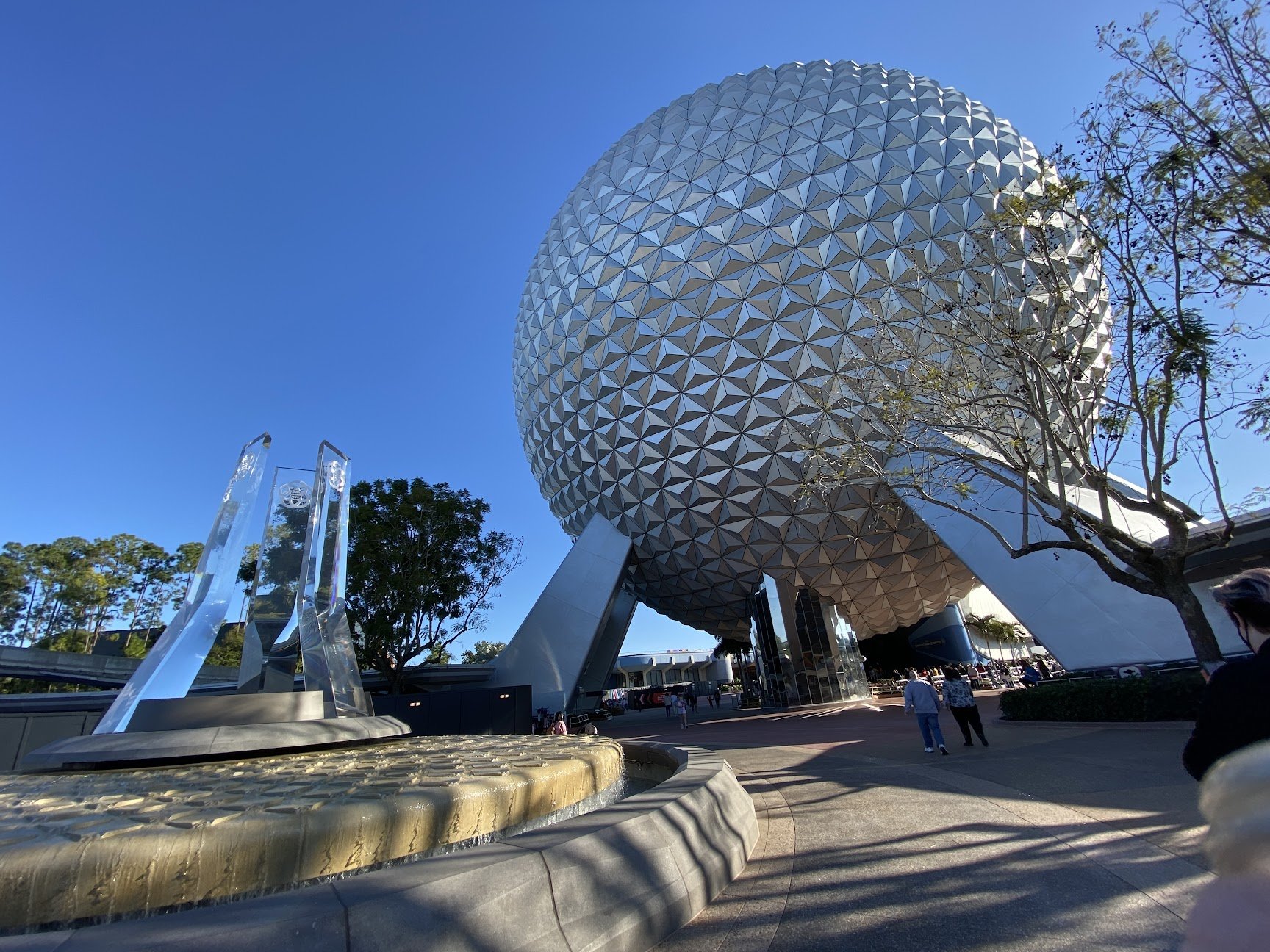
Enter through the main gate. Spaceship Earth, the 180-foot geodesic sphere that has been EPCOT's icon since 1982, is directly in front of you, unavoidable, at the end of a long entrance plaza.
Do not go inside yet. Stand at the entrance plaza and look at it.
Track: Das Rheingold, Prelude
The single sustained E-flat, the rising arpeggios, the Rhine assembling itself from nothing
Track: Das Rheingold, Prelude
The Rheingold Prelude, held on a single note for four and a half minutes before any melody emerges, is the sound of a world being created from a single principle. The Rhine assembles itself out of one sustained harmonic. Everything follows from the E-flat. The design is total from the first sound.
Walt Disney's original EPCOT, Experimental Prototype Community of Tomorrow, was also designed from a single principle. That urban life could be rational and human and beautiful if the right person controlled all the variables. The plan, as Walt described it in the famous October 1966 film he recorded two months before his death, was for a city of 20,000 permanent residents, organized in concentric circles, with a climate-controlled central core, underground utilities and service vehicles, radial transit lines, and a permanent population that would agree to live under conditions determined by the corporation. There would be no elections. Walt would run it. The city would be a continuous experiment in better living, updated constantly as technology improved, never frozen into obsolescence the way he felt American cities had been.
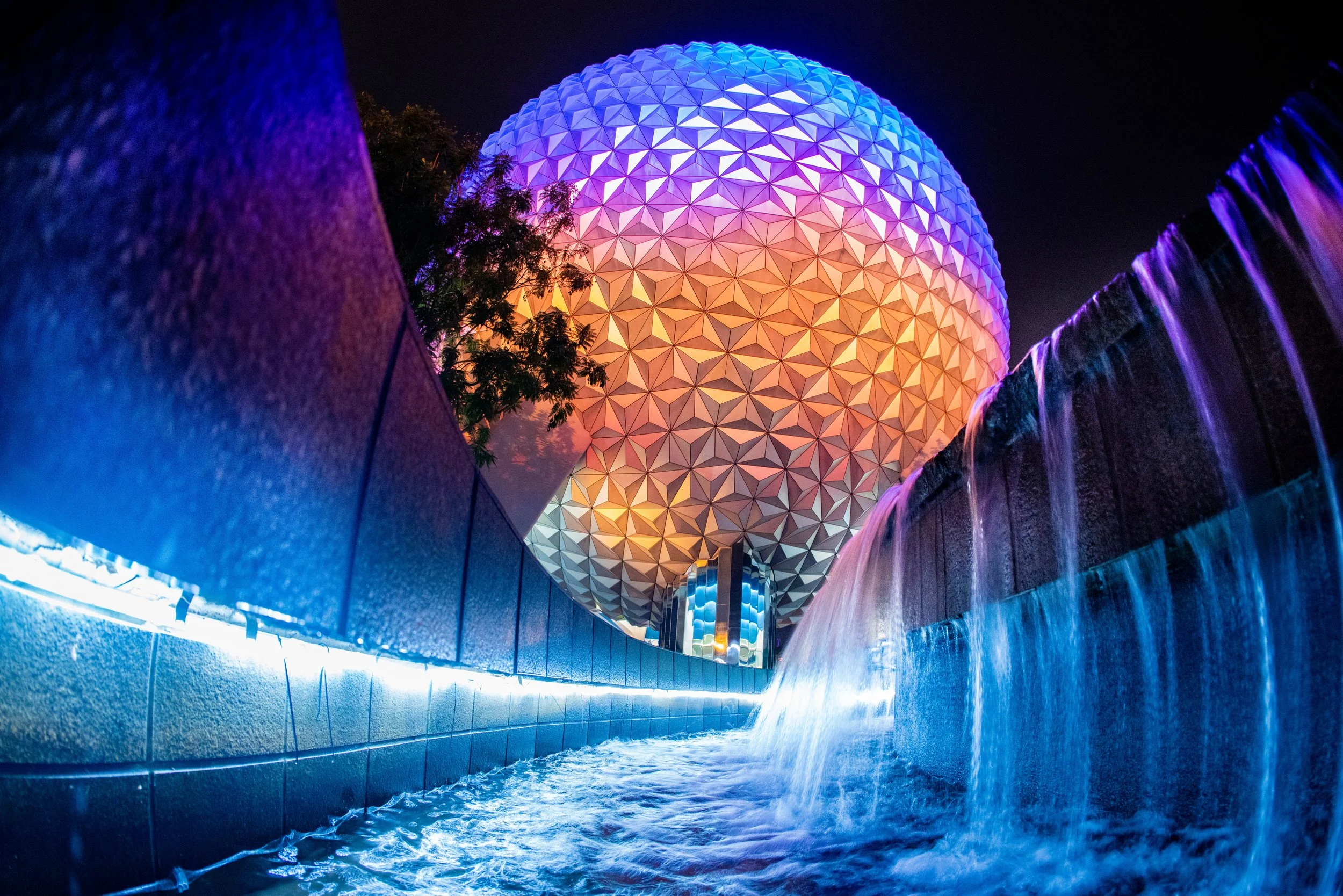
Walt died in December 1966, two months after recording that film. Without him, there was no one who could hold the vision together or convince the residents of Florida to cede the governance of a city to a private corporation. The utopian city was quietly abandoned. What opened in 1982 as EPCOT Center was a theme park organized around two concepts. Future World (technology optimism, corporate sponsorship, the World of Tomorrow) and World Showcase (an idealized ring of national pavilions around a central lagoon, each representing a country through its architecture, food, and cultural performance). It is magnificent. It is also an echo of a broken plan.
Spaceship Earth, the sphere, was designed to house an attraction narrating the history of human communication from cave paintings to the computer age. It is the central rune on Wotan's spear. The record of all contracts made, all agreements encoded, all the accumulated human effort at meaning-making. It stands where Walt's climate-controlled city center would have stood. The future arrived. It became a theme park instead of a city. The sphere remained.
Inside Spaceship Earth
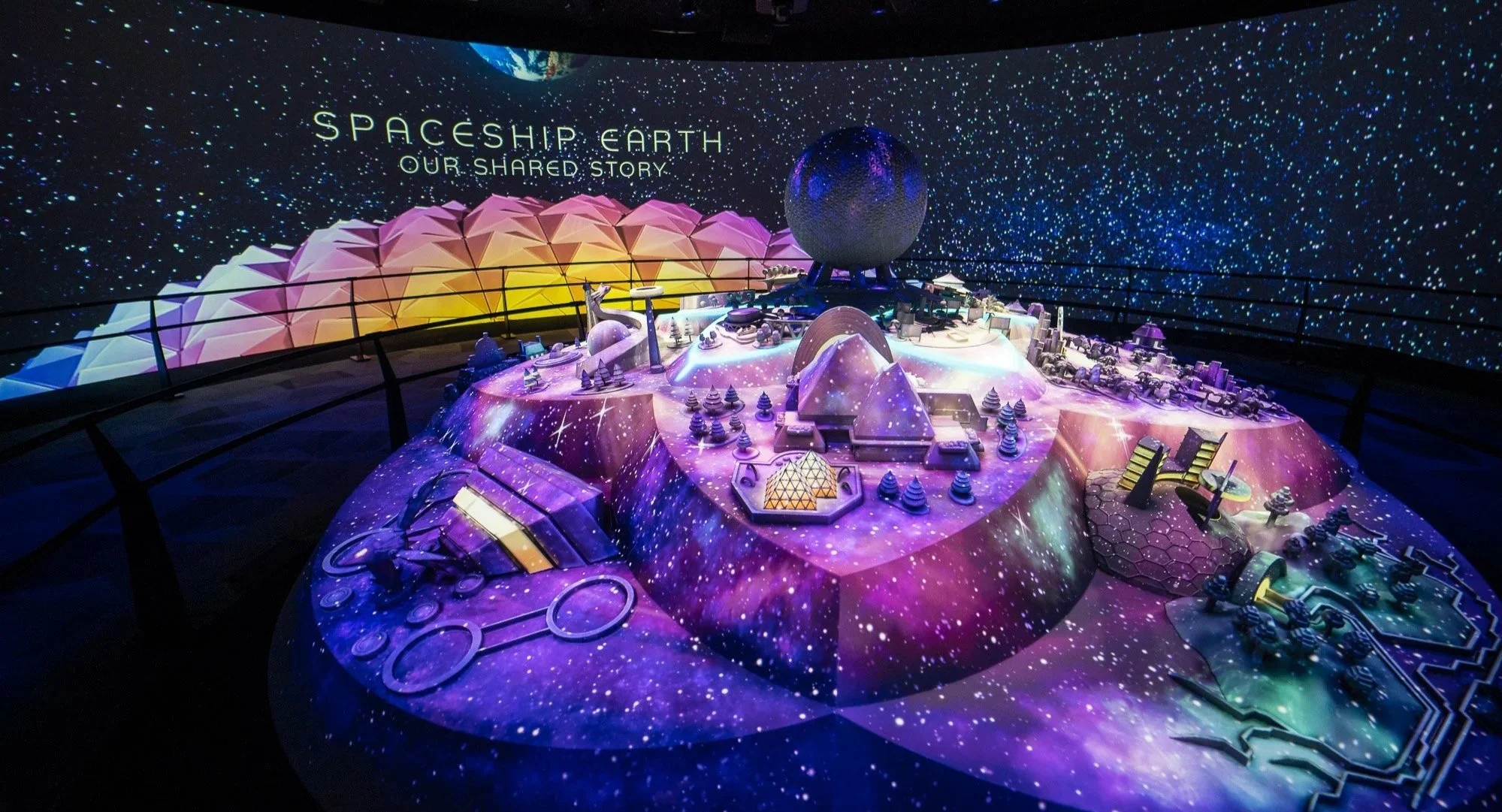
Track: Das Rheingold, Scene II
The contracts; the giants present their bill; Loge arrives and the negotiation begins
Ride Spaceship Earth, the slow, upward-spiraling journey through tableaux of human communication history, with Scene II of Das Rheingold playing in your ears instead of the attraction's narration (use one earbud, keep the other free to hear the ambient sound design, which is itself extraordinarily well-crafted and part of the argument).
The attraction moves you slowly past reconstructions of:
Egyptians writing hieroglyphs
Phoenician traders encoding language into portable alphabets
Greek theaters
Roman communication networks
Monks copying manuscripts
Gutenberg's press
Renaissance art
Newspapers, telephones and computers
It is a Gurnemanz narration. The keeper of institutional memory, recounting how we came to be here, what was built and on what foundations, what was gained and what was lost in the gaining.
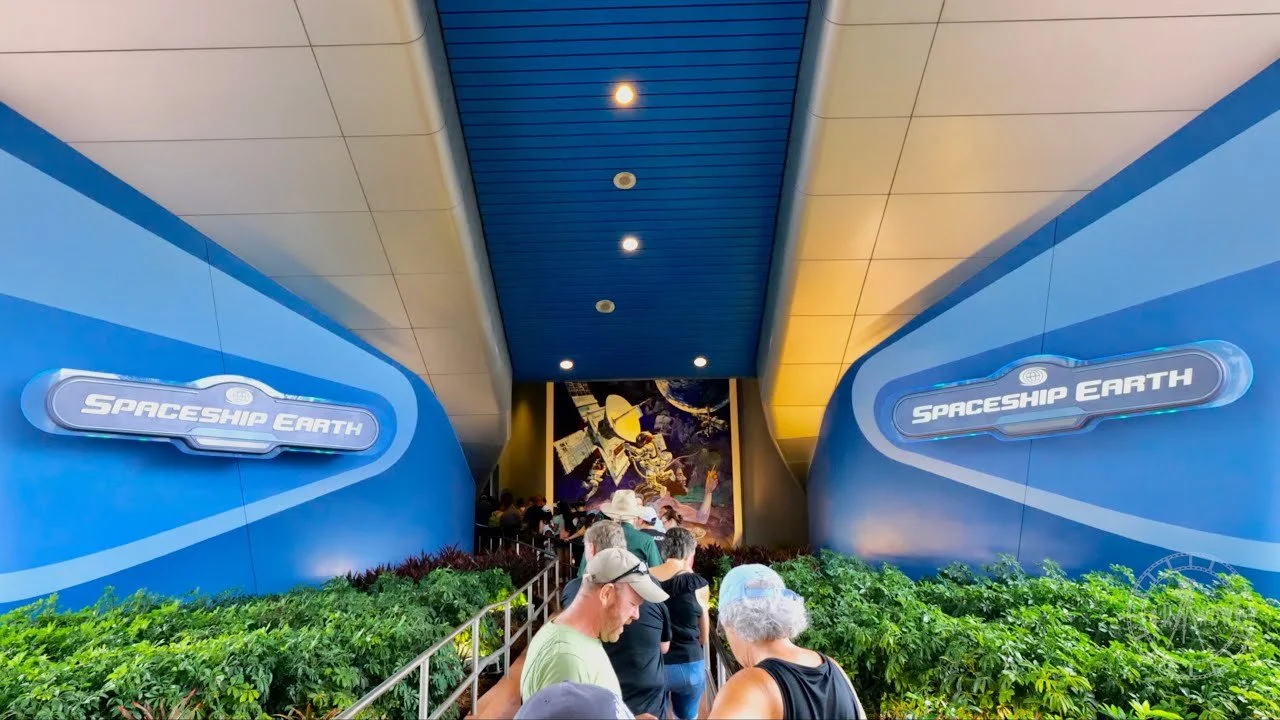
The ending of the original Spaceship Earth, for decades, was an image of the future. The guest's face photographed at the top of the sphere and composited into a personalized vision of tomorrow, sending you back down into a world that was going to be better because of the communication technologies the attraction had just narrated. The ending has been revised multiple times. The vision of the future keeps getting updated, and each update makes clear how confident the previous version was about things that did not pan out. The contract with the future, like Wotan's contract with the giants, keeps coming due.
Klingsors Garten: World Showcase
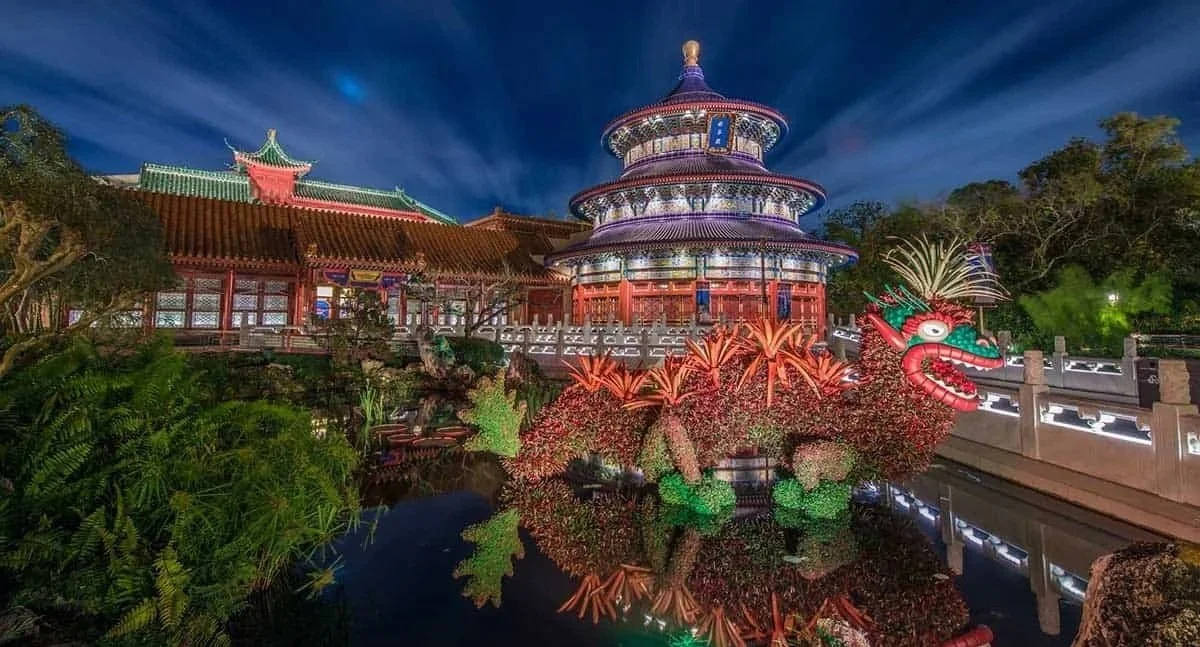
Walk: Around the World Showcase Lagoon
World Showcase is a ring of eleven national pavilions. Mexico, Norway, China, Germany, Italy, America, Japan, Morocco, France, United Kingdom, Canada. Arranged around a 1.3-mile-diameter lagoon, each designed to present an idealized version of the country's architecture, food, and culture. The Germany pavilion has Bavarian half-timbering, a clocktower, and a model train display. The Morocco pavilion was designed with the involvement of the Moroccan government and is the most architecturally detailed pavilion in the park. The Italy pavilion has a replica Doge's Palace. The United Kingdom pavilion has a pub.
None of these things are what they claim to be. They are surfaces, Schein in both senses. Constructed with varying degrees of research and authenticity to produce a recognizable impression of a national culture, curated for legibility to an American tourist audience in Orlando, Florida. They are also, within their own terms, lovingly made, regularly maintained, staffed by cultural representatives who take their work seriously, and capable of producing genuine aesthetic pleasure.
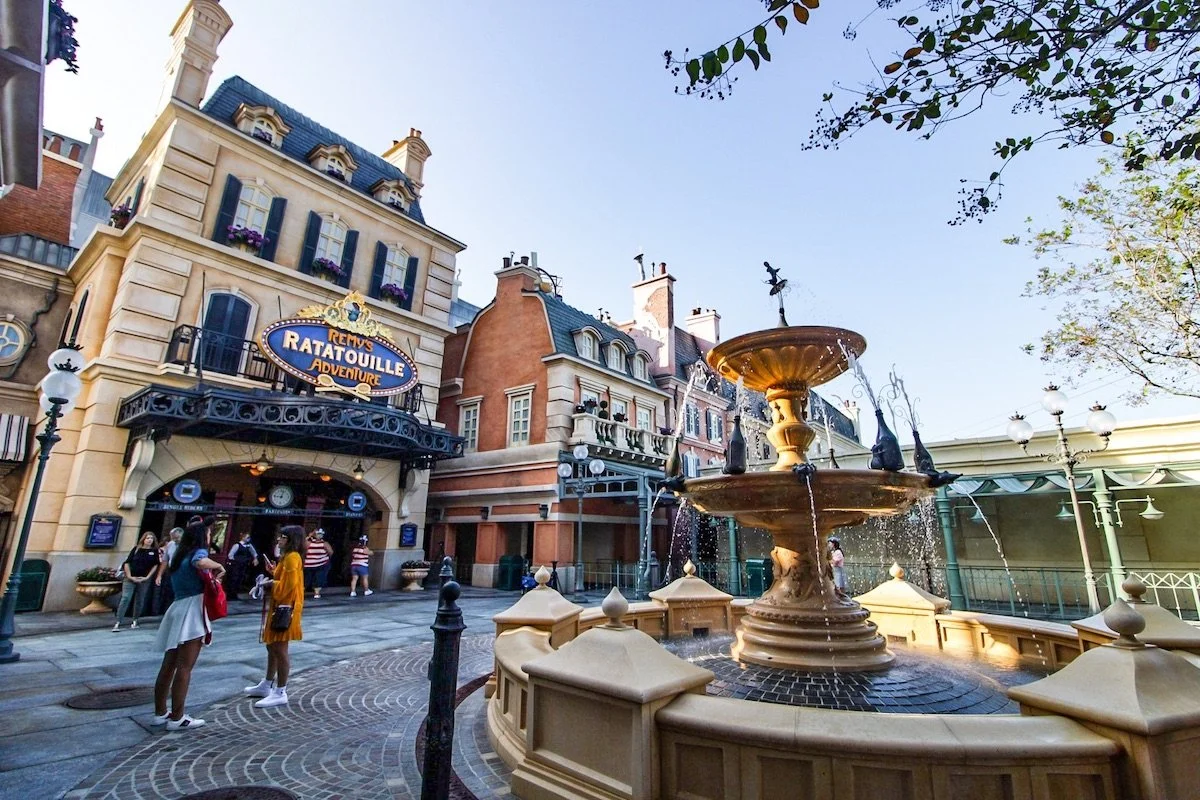
This is Klingsor's garden. The Flower Maidens are real flowers. The beauty is genuine. The construction is total. The garden was built by someone whose intentions were not innocent, to produce an experience that substitutes for something else, and the substitution is so skillfully done that it is easy to forget you are inside it.
Track: Parsifal, Act II
The Flower Maidens' scene, then Kundry's seduction
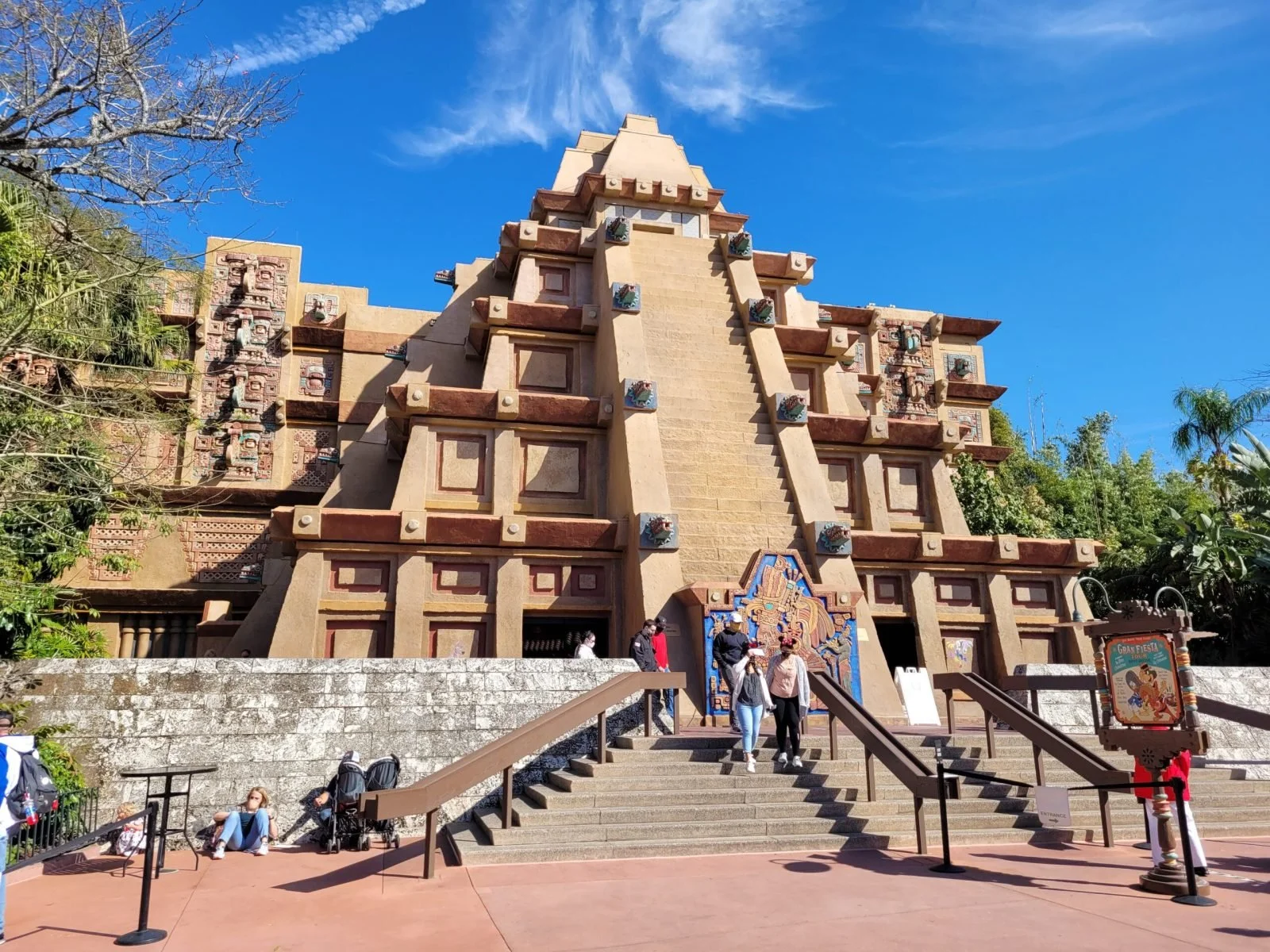
Walk counterclockwise around the World Showcase, beginning at Mexico (the pyramid, the interior darkness, the market) and moving through the pavilions while the Flower Maidens' music plays.
The Flower Maidens do not lie to Parsifal. They offer him exactly what they are. The seduction is genuine as far as it goes. What makes Klingsor's garden dangerous is not deception but displacement. The beauty is real and it is here and the thing it is substituting for is there, and the one who has not yet learned to feel the difference between the two will simply stay in the garden because why wouldn't you.
Walk through Germany (Bavarian architecture, summer sausage, model trains, the Rhine in Florida) with Wagner playing. This is the specific national pavilion where the seam is most visible. The Germany of World Showcase is the Germany of tourist imagination, assembled from folk costume and beer steins and architectural tropes, the Germany that a certain American cultural memory constructed out of nostalgia and idealization, with everything complicated or recent removed. It is a Germany that never existed as such, beautiful and precise and completely outside time.
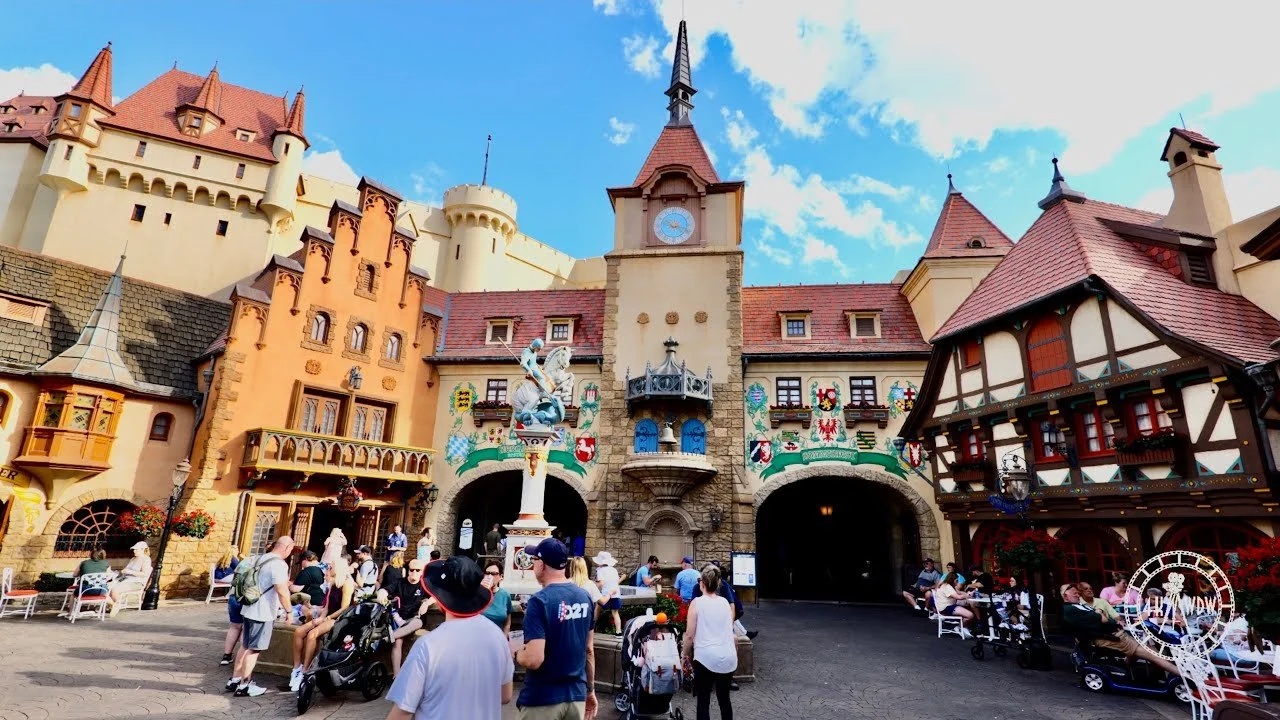
Wagner wrote his operas in this Germany, or rather for this Germany. For the idea of a German folk culture that was coherent, ancient, and spiritually unified, which was largely a 19th-century construction. The Germany of the Ring cycle is not historical. It is mythological in the sense of being an idealization, a Schein, the gleam on the surface of a national self-image. The pavilion and the operas are working from the same source material. Walk through. Taste something. Let the Flower Maidens sing.
Der Wahn: The American Adventure
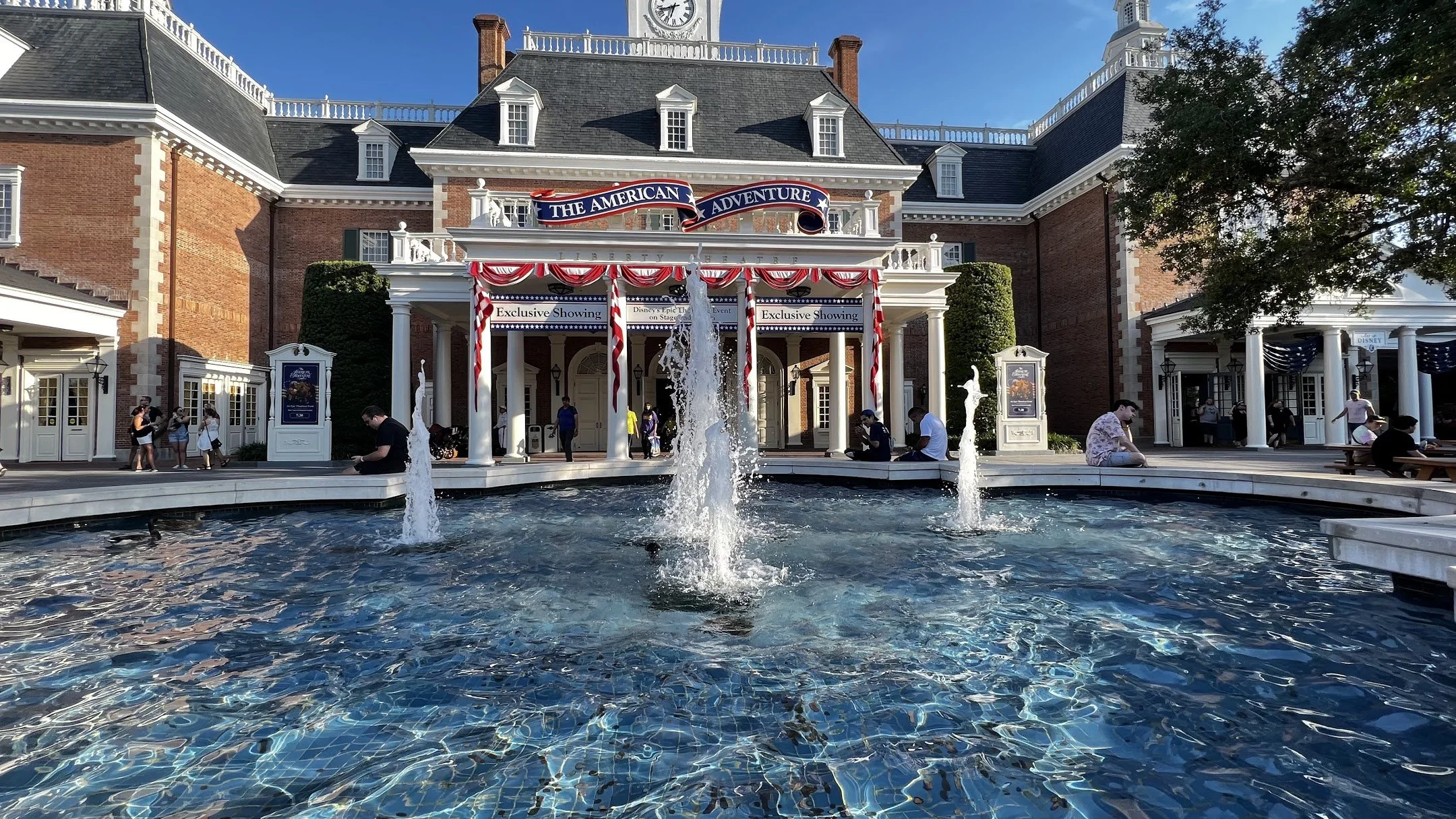
The American Adventure Pavilion
At the far end of the World Showcase, directly across the lagoon from the main entrance, is the American Adventure. A large Georgian Colonial building housing an Audio-Animatronic show in which Benjamin Franklin and Mark Twain narrate the history of the United States, from colonial settlement through the civil rights movement, using the most sophisticated animatronic figures Disney had built at the time of the attraction's 1982 opening.
It is the most ambitious attraction in EPCOT and the least visited, largely because it sits at the furthest point from the entrance and requires 29 minutes of seated attention in an era of five-minute ride cycles. It is also, with the benefit of forty years of hindsight, the most complicated object in the park.
Track: Die Meistersinger, Act III
Hans Sachs's Wahn! Wahn! Überall Wahn! monologue
Sit in the theater before the show begins. Play Sachs's great monologue.
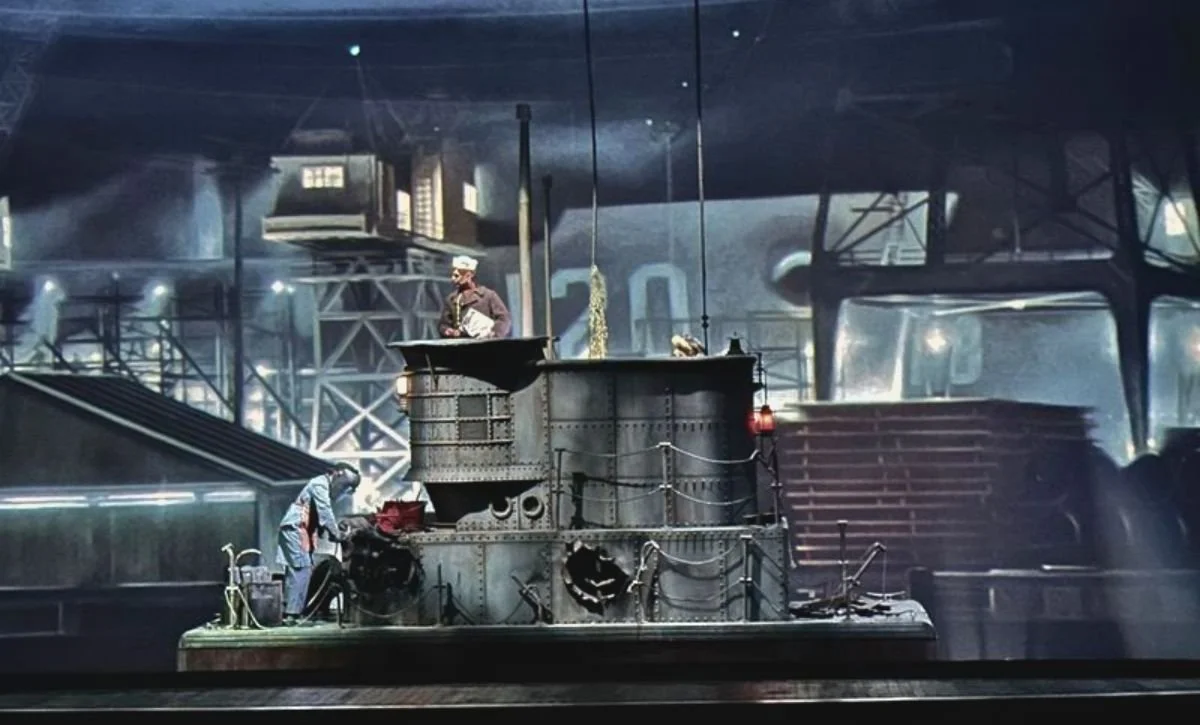
Wahn! Wahn! Überall Wahn! Madness! Madness! Everywhere madness! is the pivot of Die Meistersinger, the point at which the opera turns from comedy to something more complicated. Hans Sachs, who has spent two acts managing other people's conflicts with benevolent intelligence, sits alone in his cobbler's workshop the morning after the riot in the streets. A riot that his own maneuvering partly caused, and confronts the question of whether there is any possibility of human order that is not underwritten by a certain amount of organized delusion.
His answer is… probably not. But the delusion can be shaped. Art is the highest form of shaped delusion. The Wahn directed toward something that contains it and gives it meaning and makes the community, briefly, legible to itself. The Meistersinger song contest is an institution for managing the productive and destructive potential of human irrationality simultaneously. Sachs does not believe the institution is just. He believes it is necessary.
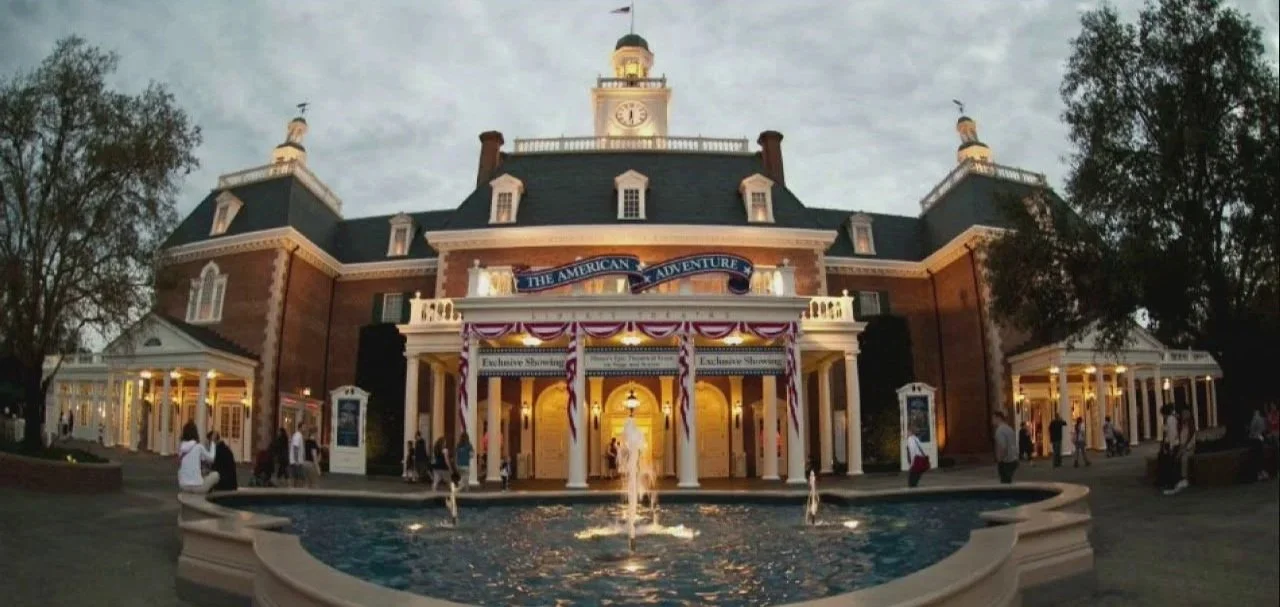
The American Adventure narrates 400 years of American history in 29 minutes through the eyes of two figures, Franklin and Twain, who represent, respectively, American institutional faith and American ironic skepticism. The show presents the Civil War, the Great Depression, the civil rights movement, Vietnam, alongside the moon landing and the Declaration of Independence, in a tonal register that attempts to hold both pride and self-criticism without quite committing to the full weight of either.
This is the Wahn! monologue as public entertainment. The recognition that the official story is partly a controlled fiction, and the recognition that the controlled fiction serves a function the community cannot easily do without, and the attempt to acknowledge both without fully surrendering to either.
Sachs does not conclude that the song contest should be abolished. He concludes that it should be entered honestly, by someone with enough genuine feeling to push it toward something real. Walther's Prize Song is the argument Sachs makes with music instead of words. Watch the American Adventure with this in mind. Franklin and Twain are Sachs's two halves. The institutional architect and the ironic commentator, both necessary, neither sufficient.
Liebesnacht: EPCOT nach Sonnenuntergang
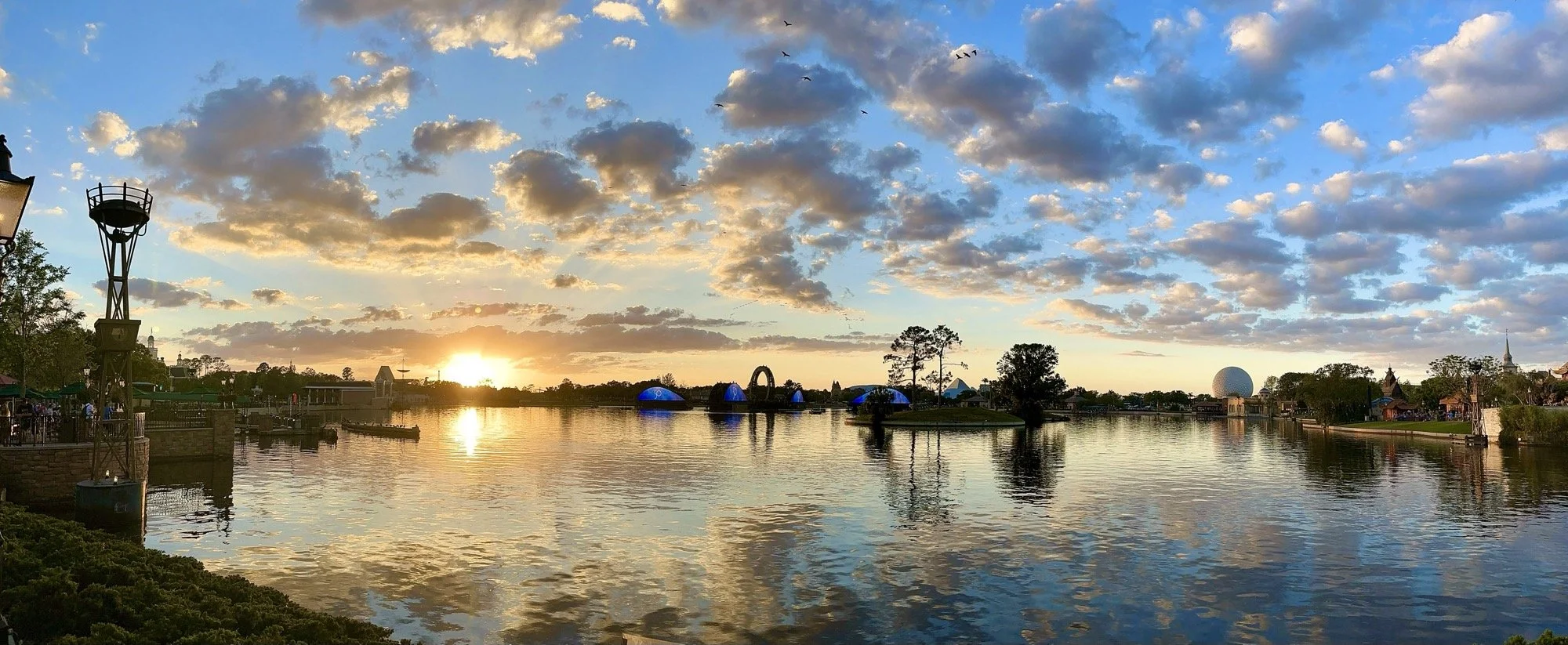
The Lagoon at Dusk
As the sun begins to lower over World Showcase Lagoon, find a position along the water's edge. The walkway near the Italy pavilion has a clear view across the lagoon to Spaceship Earth. Do not move for twenty minutes.
The love duet from Tristan und Isolde, Wagner's most radical act of temporal dissolution, the passage where night is not the absence of day but a positive condition, where the lovers' voices braid together in harmonies that refuse resolution, where time unmoors, plays against the specific light of EPCOT at dusk, which is one of the most carefully engineered lighting environments in the world.
Disney's lighting designers spend years calibrating the transition from afternoon to evening light at the parks. As the sun goes down, the artificial lighting comes up in a sequence timed to be imperceptible. The torches along the lagoon's edge, the architectural lighting on the pavilions, the reflection in the still water. The transition from natural to artificial light happens without a visible seam. You cannot say when it occurred. The day dissolves into the evening the way Tristan and Isolde dissolve into each other. By increments too small to track, until the transformation is complete and irreversible.
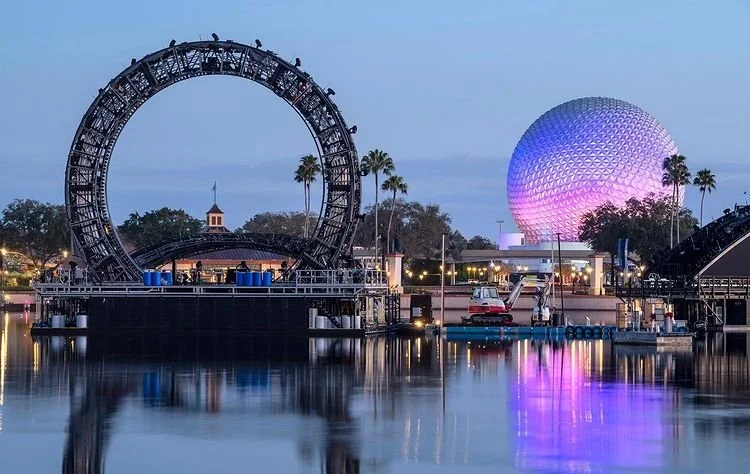
The lagoon at this hour, with the pavilions reflected in it and Spaceship Earth beginning to glow and the sky going pink and orange behind the Morocco pavilion's minarets, is one of the most beautiful engineered views in America. Not in spite of being engineered but including that fact. The beauty is not natural. It is the product of decades of design iteration by people who cared extremely much about exactly this view at exactly this hour.
Wagner's love duet does not distinguish between the beauty and the machinery of the beauty. It dissolves both into the night. The fact that the night is artificial does not diminish it. There is no outside to Tristan and Isolde's night, just as there is no outside to the World Showcase Lagoon's dusk. You are inside the thing. The thing is complete. Let the duet play in full, from O sink hernieder through to the interruption. Let the lagoon get dark. Let Spaceship Earth become fully luminous.
Götterdämmerung: The Nighttime Show
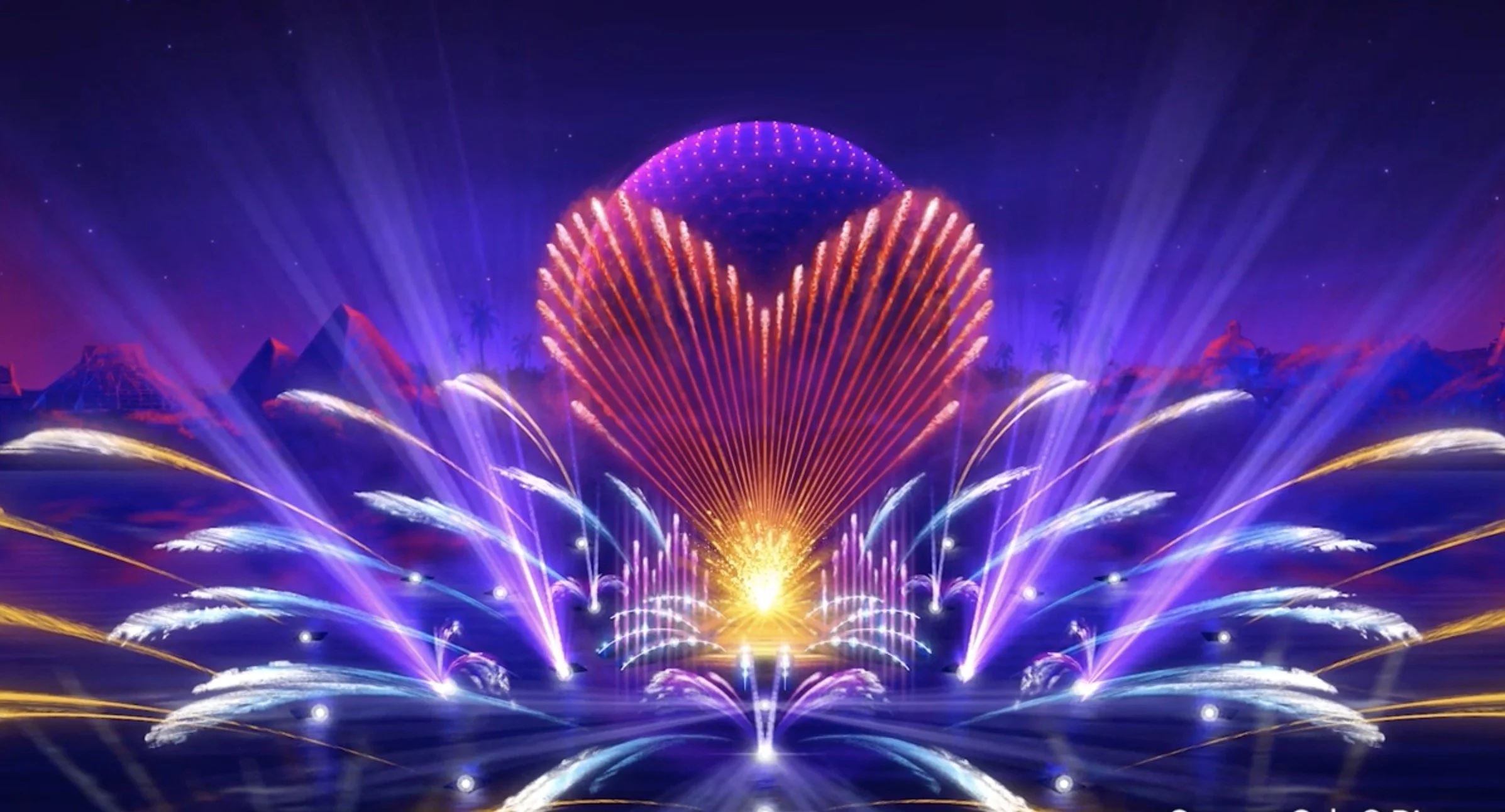
EPCOT's nighttime spectacular, currently titled Harmonious at the time of this writing, though Disney renames and redesigns these shows periodically, is a 20-minute display of synchronized fireworks, water fountains, projection mapping, and music performed over the World Showcase Lagoon.
It is, technically, the largest nighttime spectacular ever staged. Massive floating screens on the lagoon, fireworks shot from barges, water effects, music drawn from Disney films arranged for each national pavilion in the show's global theme.
Track: Götterdämmerung, Final Scene
Brünnhilde's Immolation, the burning of Valhalla, the close of the Ring
Time the beginning of Brünnhilde's Immolation to coincide with the opening of the nighttime show.
The final scene of the Ring cycle is Wagner's answer to everything that came before it. Valhalla, which Wotan built on a broken contract, which the ring's curse has been systematically destroying through four operas and fifteen hours of music, finally burns. Brünnhilde throws the ring into the Rhine. The Rhinemaidens reclaim it. The water rises. The fire takes the hall. The gods, assembled in Valhalla, are consumed. The cycle that began with a theft in a river ends with a return to the river, and the world, whatever it will become next, begins again.
Disney's nighttime spectacular is not Götterdämmerung. It is explicitly the opposite of Götterdämmerung. A celebration of unity, of the diversity of world cultures coming together in harmony, of music as a universal language, of optimism and continuity and tomorrow. The fireworks go up. The music swells. The crowd applauds.
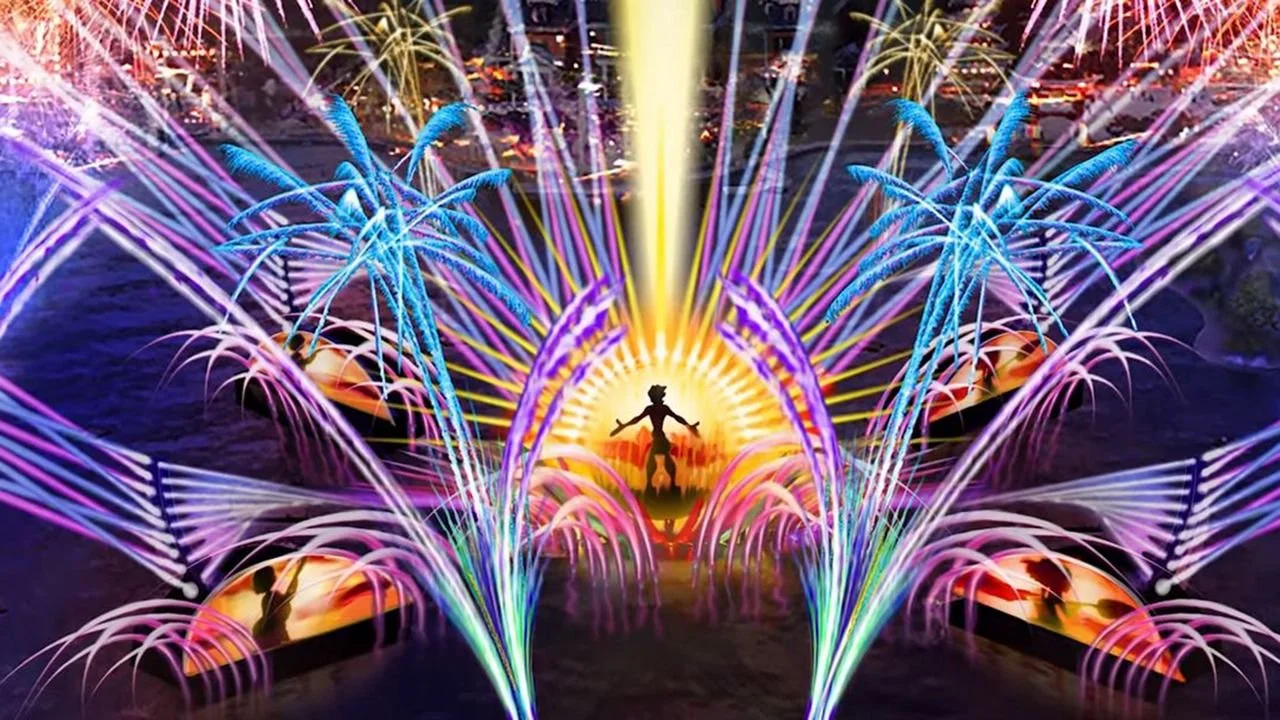
But the structure is identical. The accumulated material of the day, everything you have walked through, all the beauty and the broken contracts and the utopian visions and the Wahn and the Loge-irony, detonates over the water in light and sound. The hall burns, in the most festive sense possible. The ring returns to the river, in the form of fireworks reflected in the lagoon. The gods, Walt's vision, the original EPCOT, the Mid-Century American faith in technology and planning and the perfectibility of daily life, are gone, and what remains is the crowd on the shore, watching the light, applauding something that is both a spectacle and a genuine collective moment, both a product and an experience, both Schein and Wirklichkeit, appearance and reality, simultaneously.
Stand at the lagoon's edge. Let Brünnhilde sing over the fireworks. Let the Immolation's final pages, the Rhine motif, the Redemption through Love theme, the long orchestral peroration as the hall burns and the waters rise, play under and through the show. They will not be synchronized. That is fine. The lack of synchronization is honest. Two total artworks, occupying the same moment, each complete in itself, making the same argument by different means. The Ring ends with the world beginning again. The nighttime spectacular ends with tomorrow. The crowd disperses.
Optionaler Dritter Aufzug: Animal Kingdom
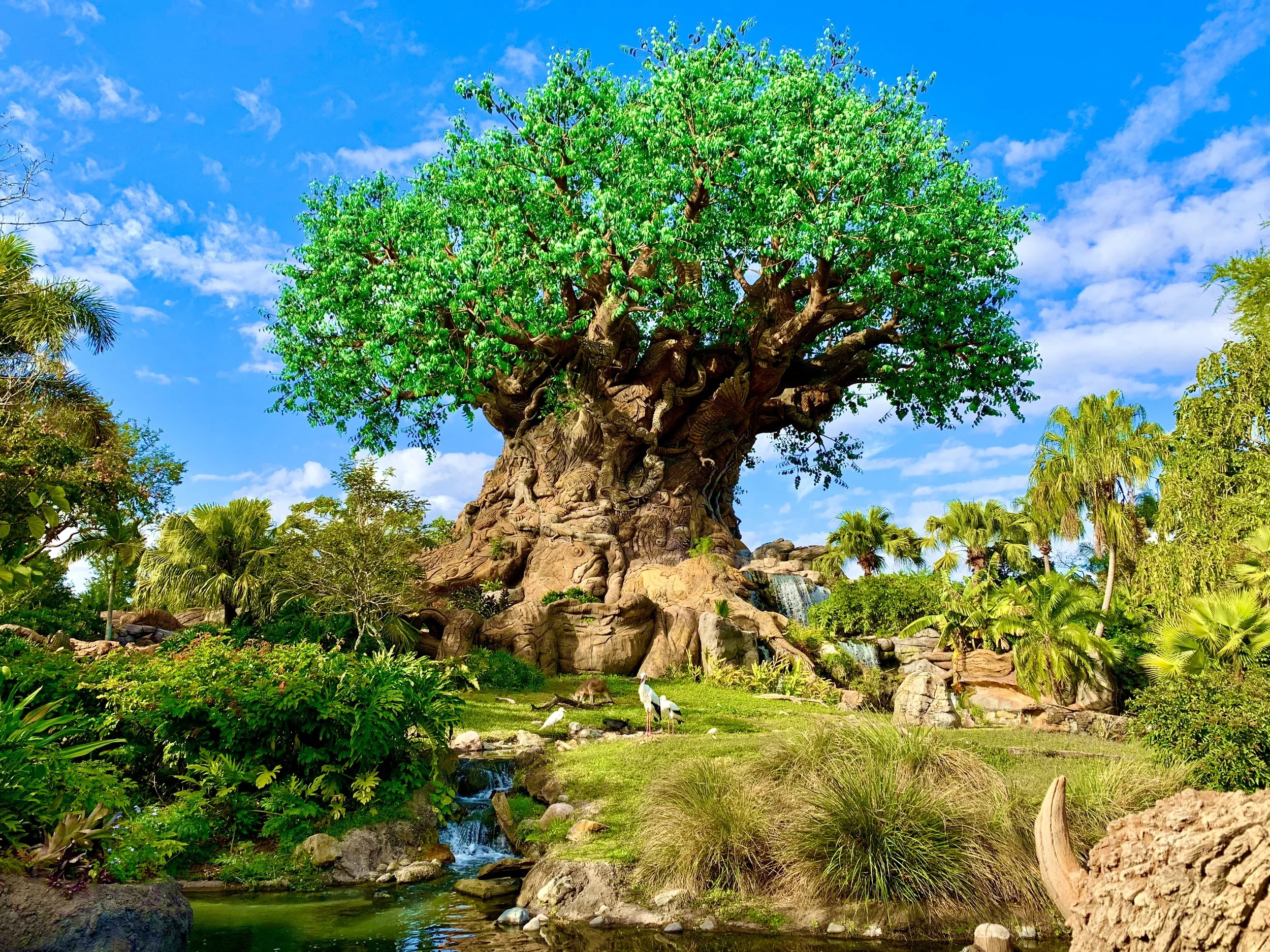
If you have a third day, or wish to begin here: Der Weltenbaum: The Tree of Life
Animal Kingdom's central icon is the Tree of Life. A 145-foot artificial tree, its trunk and branches carved with 325 animal figures, housing a theater inside its roots that shows a film about insects. It stands at the center of Discovery Island, visible from every point in the park, surrounded by actual animals in naturalistic habitats.
Track: Parsifal, Prelude to Act I
The Tree of Life is the World Ash, Yggdrasil, the tree whose health is coextensive with the health of the cosmos, which Wagner references in Siegfried and Götterdämmerung as the tree from which Wotan's spear was cut, the wounding of which initiates the cosmic decline. Animal Kingdom's tree is artificial (steel frame, concrete shell, hand-carved surface) and houses a theater about bugs, which is the most honest thing about it. The sacred tree has an attraction inside it. The cosmic symbol is also infrastructure.
Walk around its circumference slowly. Run your eyes over the carved animals. The Parsifal Prelude, which hovers at the edge of resolution for nearly ten minutes before allowing any melodic grounding, performs the function of pure attention: the music teaches you to look before it tells you what you are looking at.
Pandora, World of Avatar: Klingsors Garten, Wieder
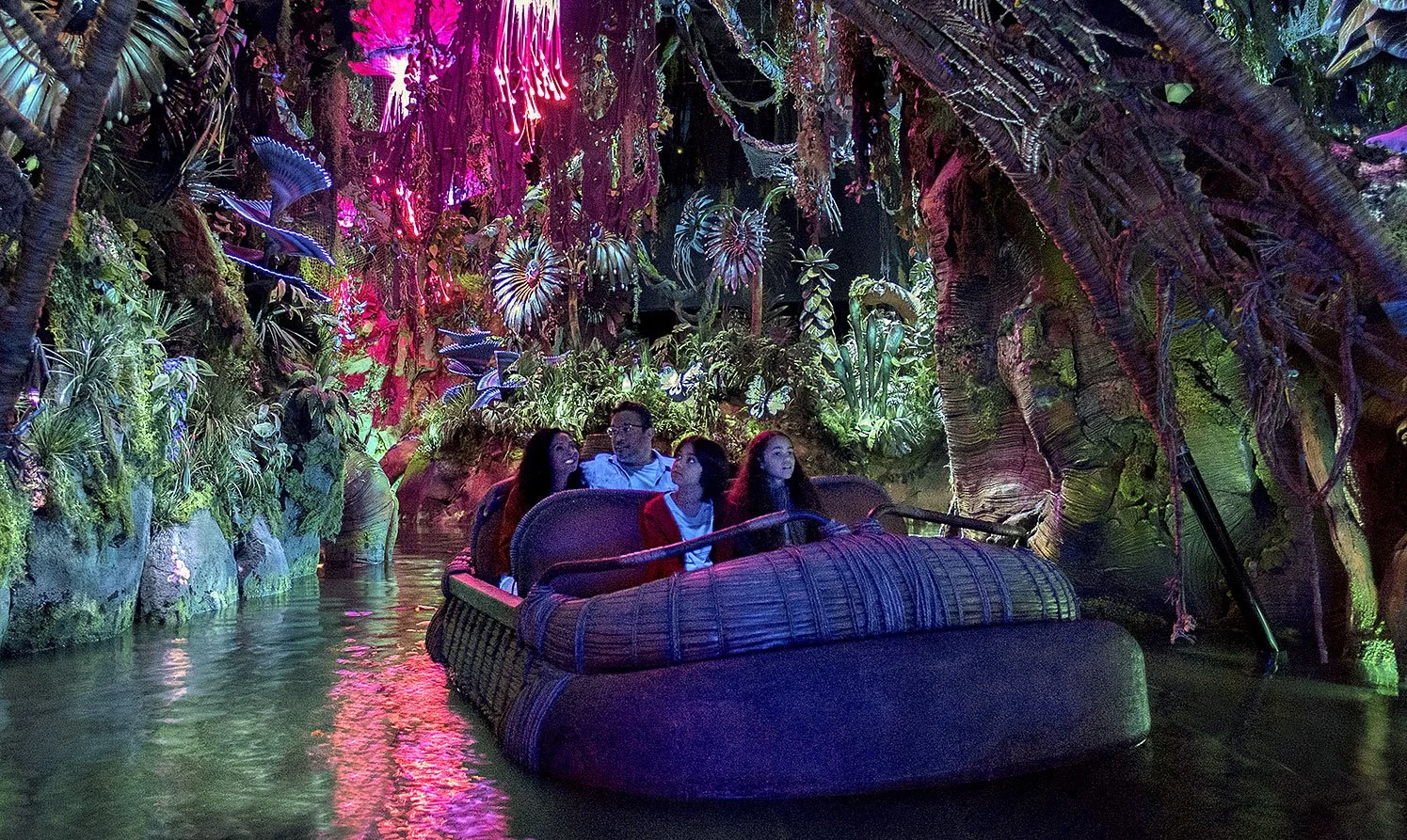
Pandora is the park's most recent major addition. A land based on James Cameron's Avatar, featuring floating mountains, bioluminescent plants, and an immersive environment designed with the most advanced technical means available to make a fictional alien ecology feel real.
It is Klingsor's garden made literal. A paradise of engineered natural beauty, complete in itself, seductive, offering an experience of the natural world more overwhelming than the actual natural world available anywhere in the park. The banshee ride (Avatar Flight of Passage) is the most technically accomplished ride Disney has ever built, and it produces in the rider a sensation of physical freedom and soaring that is more intense than anything achieved in the actual outdoors.
The contrast between Animal Kingdom's naturalistic animal habitats, the actual giraffes on the Kilimanjaro Safaris, the actual gorillas in the Gorilla Falls Exploration Trail, and Pandora's synthetic alien ecology performs the Parsifal Act II argument in architectural form. One is the actual world, presented as carefully as possible while remaining actual. The other is a designed world, more beautiful and more overwhelming than the actual, built to produce a specific experience that the actual cannot reliably provide.
Parsifal is immune to Klingsor's garden not because he is virtuous but because he is not yet quite present to it. His Mitleid, his capacity for suffering-with, has not yet been activated. When Kundry speaks his mother's name, he arrives. Before that, the flowers are just flowers. Walk through Pandora. Feel it. Then walk to where the actual animals are, and feel that too. Notice the difference in the quality of attention each demands.
Nachklang
The walk ends at the lagoon, or on a bus back to the parking structure, or at the hotel watching the lights go off one by one across the resort. Wherever it ends, it ends with the question the walk has been building toward since Main Street. What is the relationship between the emotion and the machinery that produced it?
Wagner's answer, in 1849 when he wrote the Gesamtkunstwerk essays, was that the total artwork would eliminate the question by making the machinery invisible, by fusing all the arts into a seamless experience that operated at the level of myth. The audience would not feel manipulated because there would be no position from which manipulation could be distinguished from genuine feeling. The art would be total.
Disney's answer, in 1966 when he recorded his EPCOT film, was the same. A total environment, controlled at every level, producing a continuous experience of the good life, with no outside and no position from which the machinery could be seen.
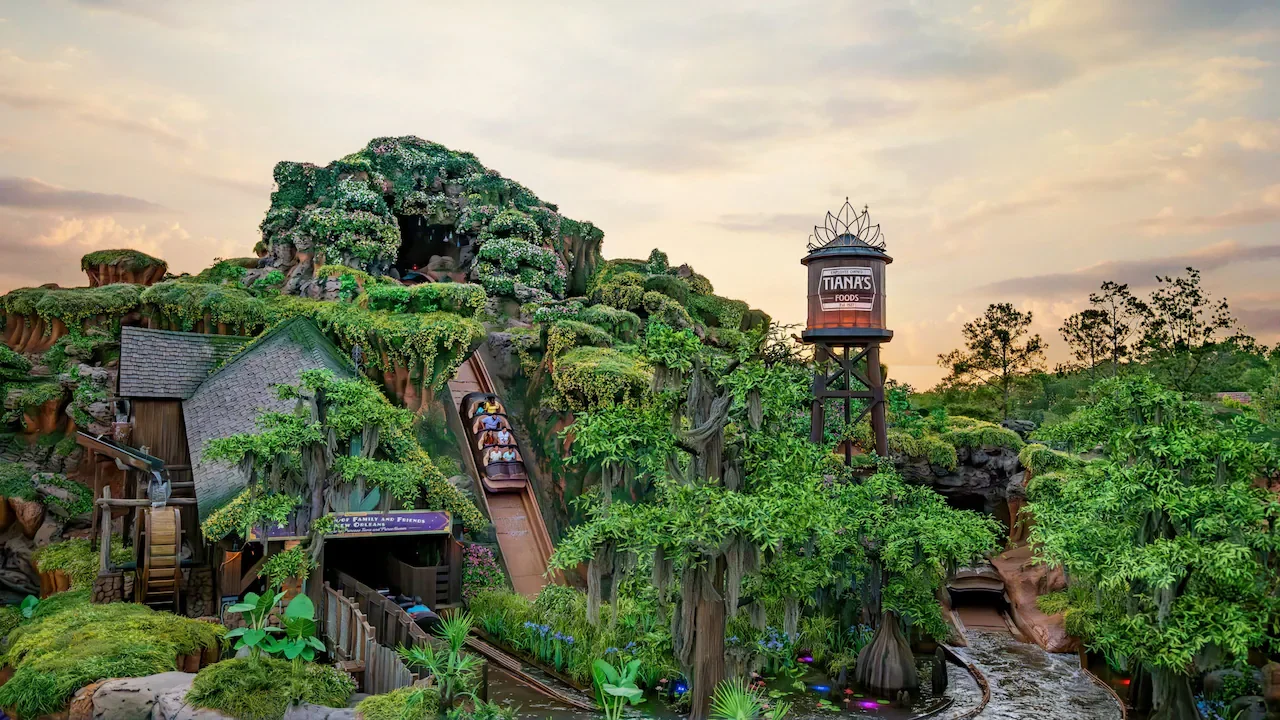
Neither fully succeeded. Bayreuth's orchestra pit is invisible, but the audience knows it is there. Disney World's scent pumps are invisible, but if you think about them you can smell them thinking. The seams are always findable if you look. The total artwork has an outside after all. It is just that the outside is where you already were, before you entered, and where you will be again when you leave, and the distance between that outside and the inside of the work is exactly the distance between ordinary consciousness and the state the work was trying to produce.
Loge stood on the rainbow bridge and did not cross. He knew the hall was burning. He watched. He noted it. He stayed warm. This is the position the walk has been offering all day. Not cynicism, not surrender, but Loge's position. Full presence to the beauty, full awareness of the fire in the foundations, and the ironic composure to hold both without flinching from either. The fireworks go up. The Rhinemaidens have the gold back. Ihrem Ende eilen sie zu. The parking tram runs every ten minutes.