Eintägiges Experiment: Philadelphia mit Parsifal
Themen: Wunde, Heiligung, Torheit, Gnade, Verschlossene Orte
Element: Steinerne Stille und Bürgerliche Sakralität
This walk treats Wagner not as repertoire, but as a composed method for moving through the city.

Das Ergebnis auf einen Blick
Dauer: 4-5 hours: A full-day wander if you pause for listening, reflection, and silent coda, yet flexible enough to break into two sessions across a weekend.
Distanz: 3–4 miles: Eastern State Penitentiary → Fairmount → Philadelphia Museum of Art → Benjamin Franklin Parkway → Independence Hall.
Beste Zeit: Morning into afternoon, arriving at the Museum of Art steps as the light turns golden. The Parkway in late afternoon performs exactly the function Wagner's final act requires.
Wetter:
Overcast or grey preferred: Parsifal's first two acts move through dimness, compression, and enclosed suffering. Hard sun works against this.
Rain does not harm the walk: The Grail ceremonies happen indoors. If anything, rain clarifies the outside/inside logic the opera depends on.
Zugänglichkeit:
Mix of open streets, park paths, and optional interior stops.
Eastern State Penitentiary requires an entrance fee and is worth every cent for this purpose.
The Museum of Art steps are always accessible.
Essentieller Moment:
Eastern State Penitentiary with the Prelude to Act I. The ruined cell blocks, the vaulted central rotunda, the solitary skylit corridors. Wagner spent four years on this Prelude alone. The building spent decades perfecting the same acoustics of isolation. They belong together, and once you have heard one inside the other, it is impossible to unhear.
Language Anchor (German Phrase of the Walk):
Durch Mitleid wissend, der reine Tor / Through compassion knowing, the pure fool. The opera's central riddle, and a capsule of Philadelphia's own civic self-understanding. A city that has always believed moral authority flows from a kind of original innocence rather than accumulated sophistication.
Wort des Weges
Mitleid (pronounced: MIT-leet): Not pity, and not sympathy. Something closer to suffering-with. In Wagner's final opera, Mitleid is not a sentiment but a capacity. A form of perception available only to those who have not yet learned to protect themselves from the world's pain. It is the faculty Parsifal must develop before he can ask the question that heals the king. Philadelphia is a city that has long worn its wounds visibly. The cracked bell, the stalled construction, the persistent grievance alongside the persistent aspiration. To walk it with Mitleid is to feel its injury as your own, without looking away.
Thematischer Rahmen: Parsifal
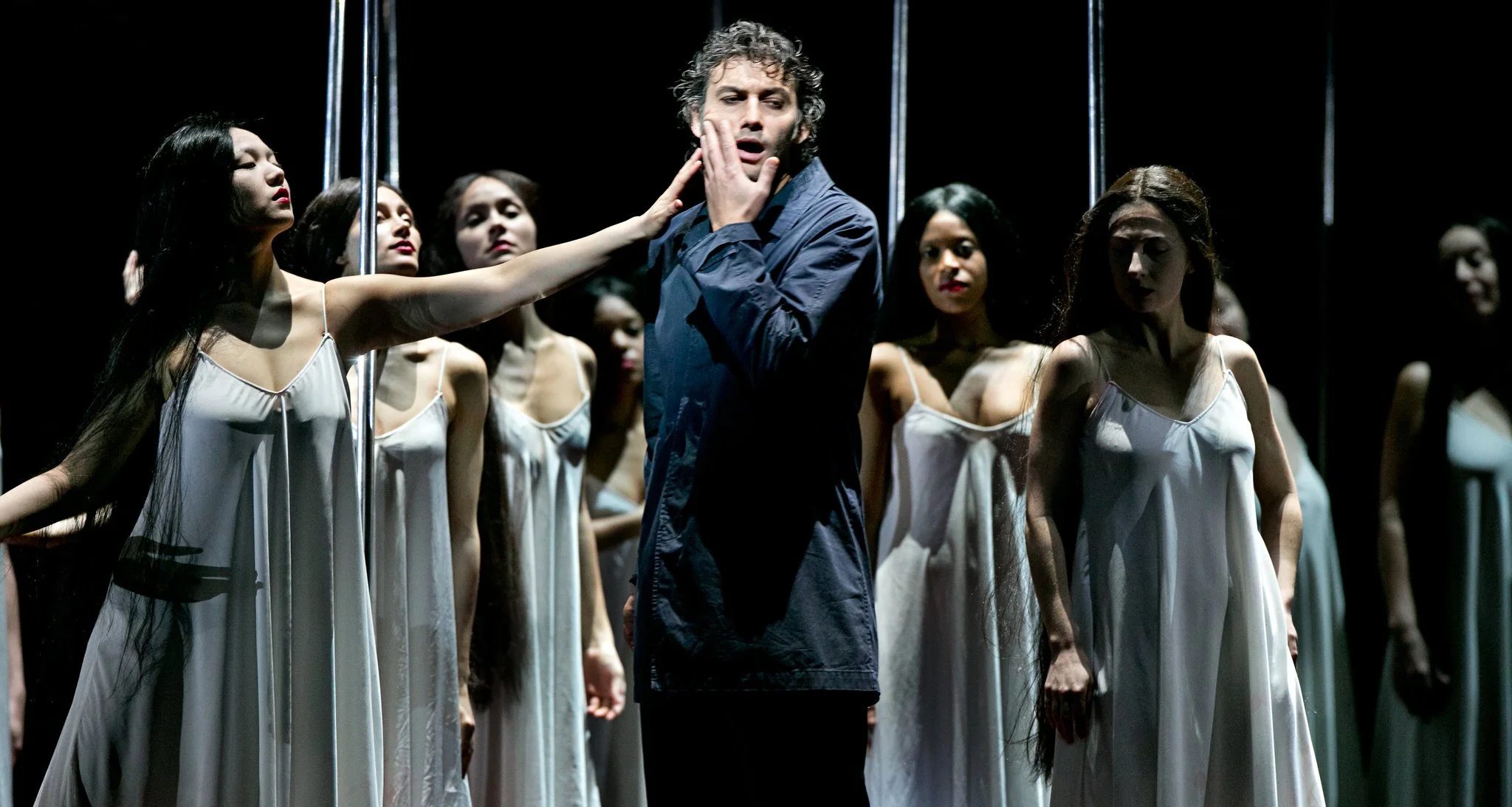
Wagner's last work is about the difference between a sacred wound and a merely damaged one. Amfortas, King of the Grail, was wounded by a spear he should never have touched, in a place he should never have gone. The wound does not heal because the one who inflicted it was the one who was supposed to be most on guard. Every ceremony performed around the Grail only deepens his suffering, because the ritual continues while the wound beneath it does not close.
Into this situation arrives Parsifal. A young man who knows nothing, has no training, and kills a swan out of thoughtless instinct. He is not wise. He is not even particularly good. He is simply open. His ignorance is the precondition for the compassion that eventually becomes wisdom. The opera's great and counterintuitive claim is that knowing too much, too soon, is what created the crisis in the first place.
Philadelphia is uniquely suited to inhabit this argument. It is a city designed as a moral experiment before it was a city. William Penn's holy city of refuge, planned in a grid, founded on principles, imagined as proof that a society could be governed by conscience rather than hierarchy. And then, the Constitution, which is not a spontaneous expression of civic virtue but a wound management document. A structure designed to hold together people who fundamentally disagree, to make governance possible without requiring agreement on first principles.
The Liberty Bell, cracked and immovable, held in a glass pavilion so that everyone can see what cannot be fixed, is the most Parsifal-adjacent object in any American city. It is not displayed as a triumph. It is displayed as an unresolved condition. A state of permanent incompleteness which somehow still resonates, still calls, still functions as the centering object of civic life.
And then Eastern State Penitentiary. A building conceived with genuine moral ambition, by Quakers who believed that solitude, silence, and labor could transform a criminal soul, which became instead a monument to how sacred enclosure becomes its own form of cruelty when the theology behind it goes wrong. It is Monsalvat gone dark. The Grail Castle built by people who meant well, which became instead a machine for producing suffering.
Philadelphia, walked with Parsifal, reveals itself as a city still waiting for someone to ask the right question.
Die Wunde der Stille: Eastern State Penitentiary
Getting There
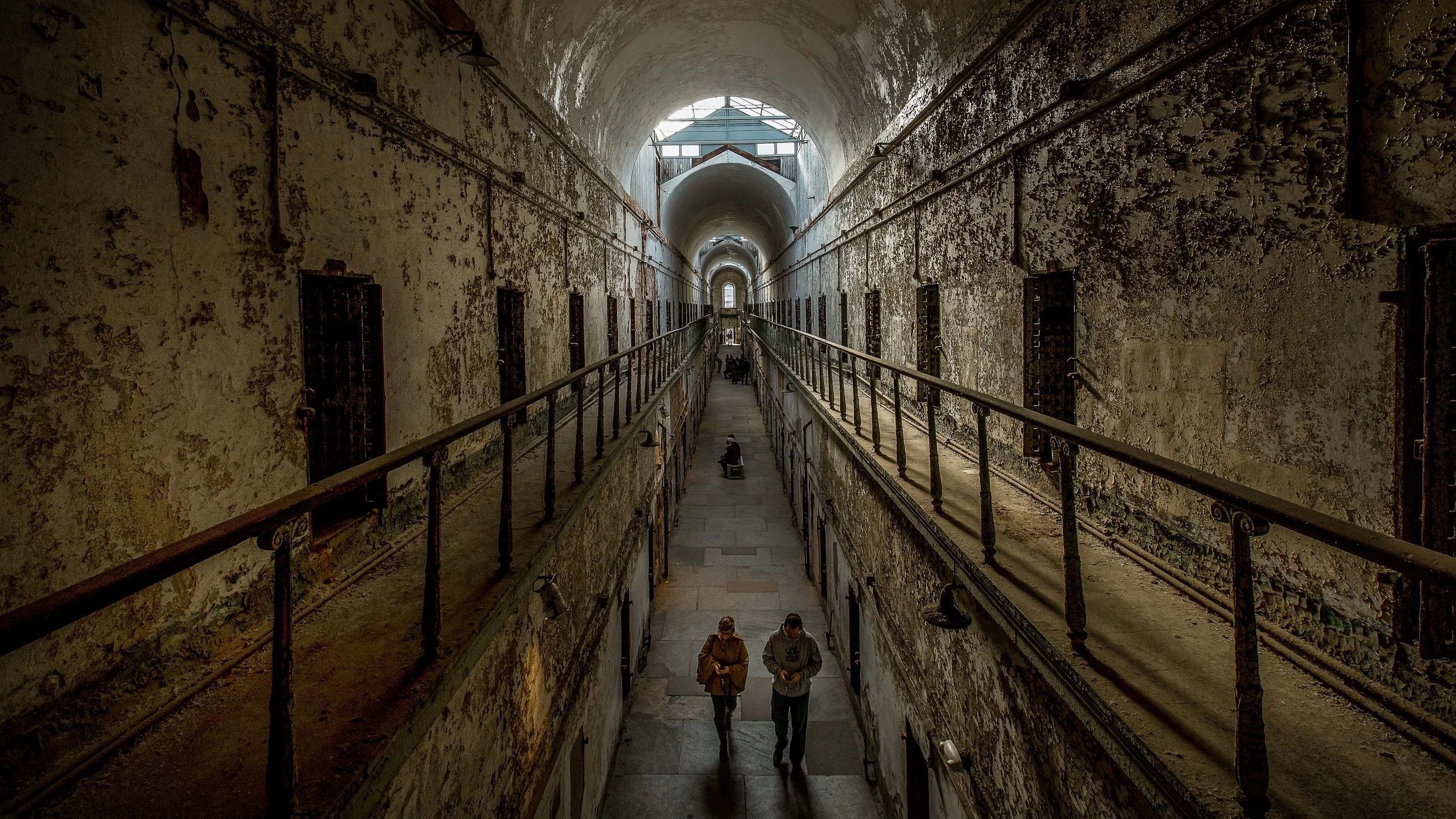
Take the Market-Frankford Line to Spring Garden Station, then walk west along Fairmount Avenue for about 8 minutes until the castle-like battlements of Eastern State appear on your left.
Or take the 15 trolley along Girard and walk south from there.
The building announces itself slowly. The towers rise before the full wall is visible. This is deliberate. The architects wanted the approach to feel like a sentence being handed down.
Walk: The Prelude
Track: Parsifal, Prelude to Act I
Route
Begin the Prelude while you are still a full block away from the entrance, facing the building. Do not go inside yet. Just look at the walls.
Let the opening Dresden Amen theme, the Grail motif, establish itself while you stand on the sidewalk outside. Notice the weight of the stone, the height of the watchtowers, the sealed quality of the place even from the street.
Enter the main gate during the slower, suspended middle section, when the music loosens into something nearly formless. This is the moment Parsifal enters the forest. The rules of the ordinary world have not yet begun to apply.
Once inside the first cellblock, pause. Let the Prelude's final gathering, the Spear motif, angular and searching, sound against whatever your ears can find in the vaulted corridors.
What Eastern State Is Doing Here
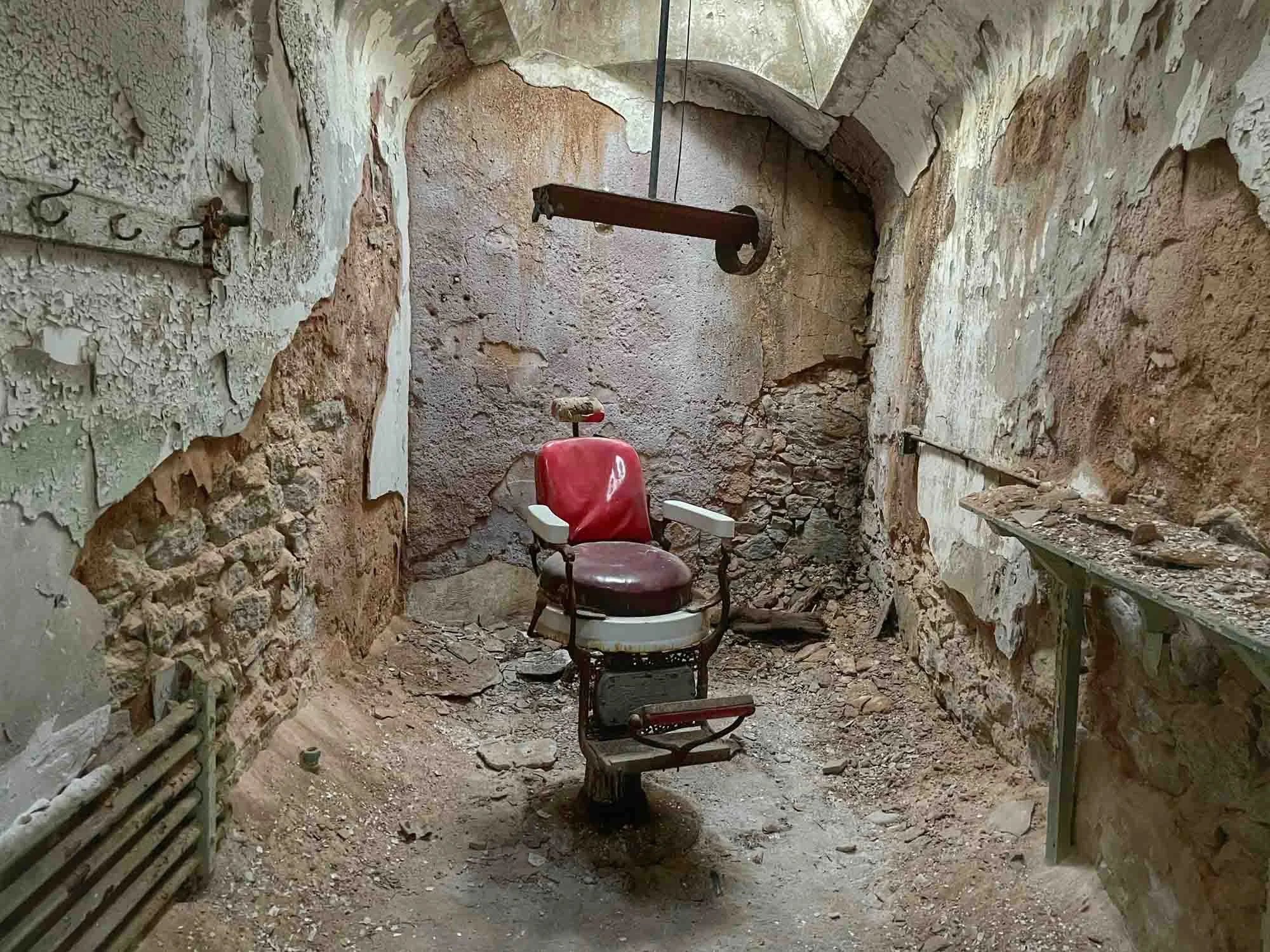
Eastern State Penitentiary was built between 1822 and 1836 to a radial plan. Seven original cellblocks extending like spokes from a central observation rotunda, so that a single guard could theoretically see down every corridor at once. The design was John Haviland's, but the concept was the Quakers'. Each prisoner would live in total silence, in a private cell with a private outdoor exercise yard, with a Bible and a trade to learn, never seeing another inmate, never hearing another voice except the warden's and God's.
This was not cruelty. It was theology. The Quakers believed that if you removed every worldly distraction, noise, community, the reinforcement of criminal companions, the soul would eventually be forced to confront itself. The silence was meant to be generative. The solitude, healing.
It did not work that way. Solitary confinement at Eastern State produced madness, hallucination, and suffering of a kind that the Quaker reformers had genuinely not imagined. The institution expanded, modified, abandoned its original principles, and was eventually closed in 1971, a ruin.
What you are standing in is Monsalvat after the faith that built it has failed. The architecture of sacred enclosure, the radial plan of a space designed so that one center can see everything and everything radiates from it. This is exactly the plan of the Grail Temple as Wagner imagined it. And the suffering that accumulated here, the gap between the ceremony's intentions and the reality of the wounded people inside it. This is Amfortas's condition rendered in brick and iron.
What to Look at / Think About
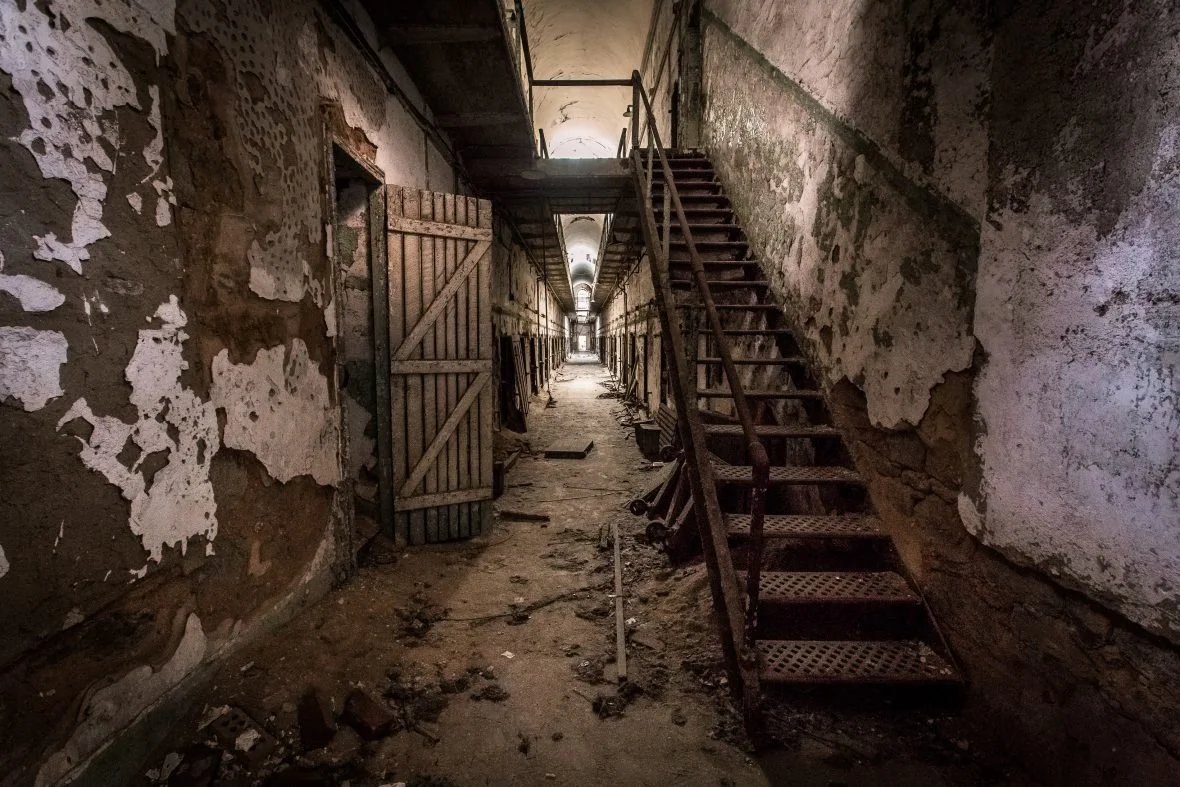
The individual cells, each with their vaulted ceiling and single skylight. Light falling from directly above, onto a single person, alone.
The ruined cellblocks where vegetation has grown through the floors. Nature returning to the space where the ceremony failed.
The central rotunda. Stand beneath it and look up. This is the only point from which the whole design makes sense. This is where Amfortas sits.
Notice how the building forces you to move slowly. The corridors are long, narrow, and uneven. You cannot rush through Eastern State. The building will not allow it.
Walk: Amfortas' Klage (Amfortas's Lament, Act I)
Find one of the long corridor runs, ideally in Cellblock 7 or 12, where the decay is most advanced, and walk it very slowly, end to end, while Amfortas sings.
Amfortas is not simply in pain. He is in pain at the moment of the ceremony that was supposed to relieve it. The Grail rite, which should heal him, tears the wound open again because the ceremony continues while the conditions that made it meaningful have collapsed.
Think of the silence rule at Eastern State. The very mechanism of intended healing, applied past the point of therapeutic sense, becoming instead an instrument of damage. The ceremony continuing past the conditions of its own meaning.
Der Reine Tor: Fairmount & the Kelly Drive
Walk: From Eastern State to the Schuylkill
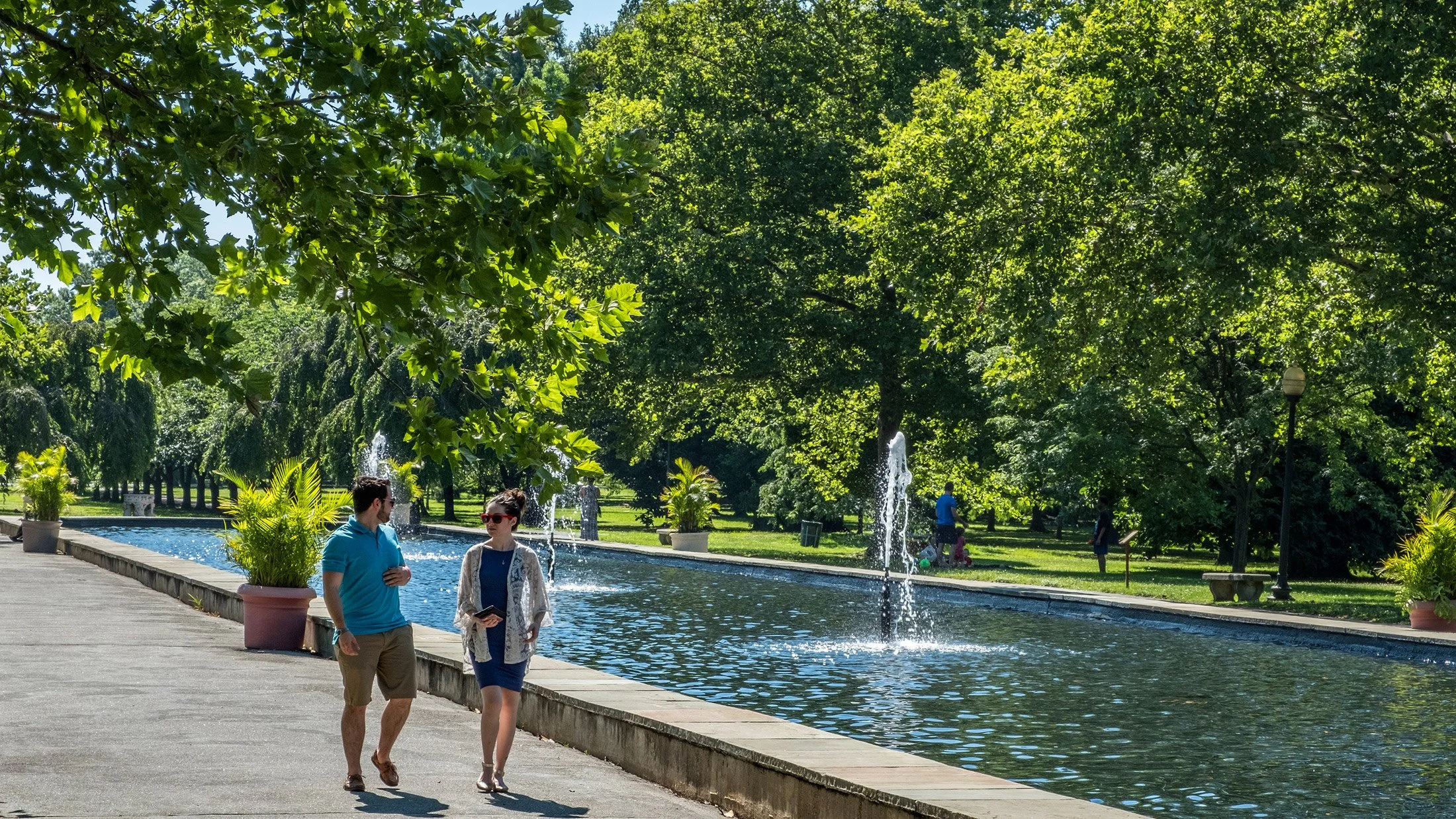
Exit the penitentiary back onto Fairmount Avenue and turn east, toward the park.
Walk down the hill past the Philadelphia Museum of Art, letting the building appear above you as you descend.
Do not go in yet. Instead, cut through the park to Kelly Drive, the road running along the east bank of the Schuylkill River.
Track: No Music For This Stretch
This is deliberate. Between Eastern State and the Museum, between the sealed Grail Castle and the temple on the hill, there is a gap. A forest. Parsifal wanders through it. You walk through the park. The point is bodily transition. Your nervous system needs to decompress from the compression of the prison before it can receive what comes next.
Walk Kelly Drive for 15–20 minutes without music. Look at the river. The sculling crews in the early morning, the rowers moving in formation. The Schuylkill has been the site of organized rowing since the 1830s. The Fairmount Rowing Association is one of the oldest in the country. There is something quietly Germanic about it. Organized, meticulous, communal effort in long narrow vessels moving through grey water.
If Parsifal is a pure fool who has wandered into a sacred precinct having killed a swan, and if the swan is precisely the kind of thoughtless act that reveals both his violence and his capacity for feeling, then the Schuylkill, where organized athletic crews trace the same lines across the same water in the same early-morning light, is exactly right. Life continuing its disciplines while transformation happens nearby.
What to Notice
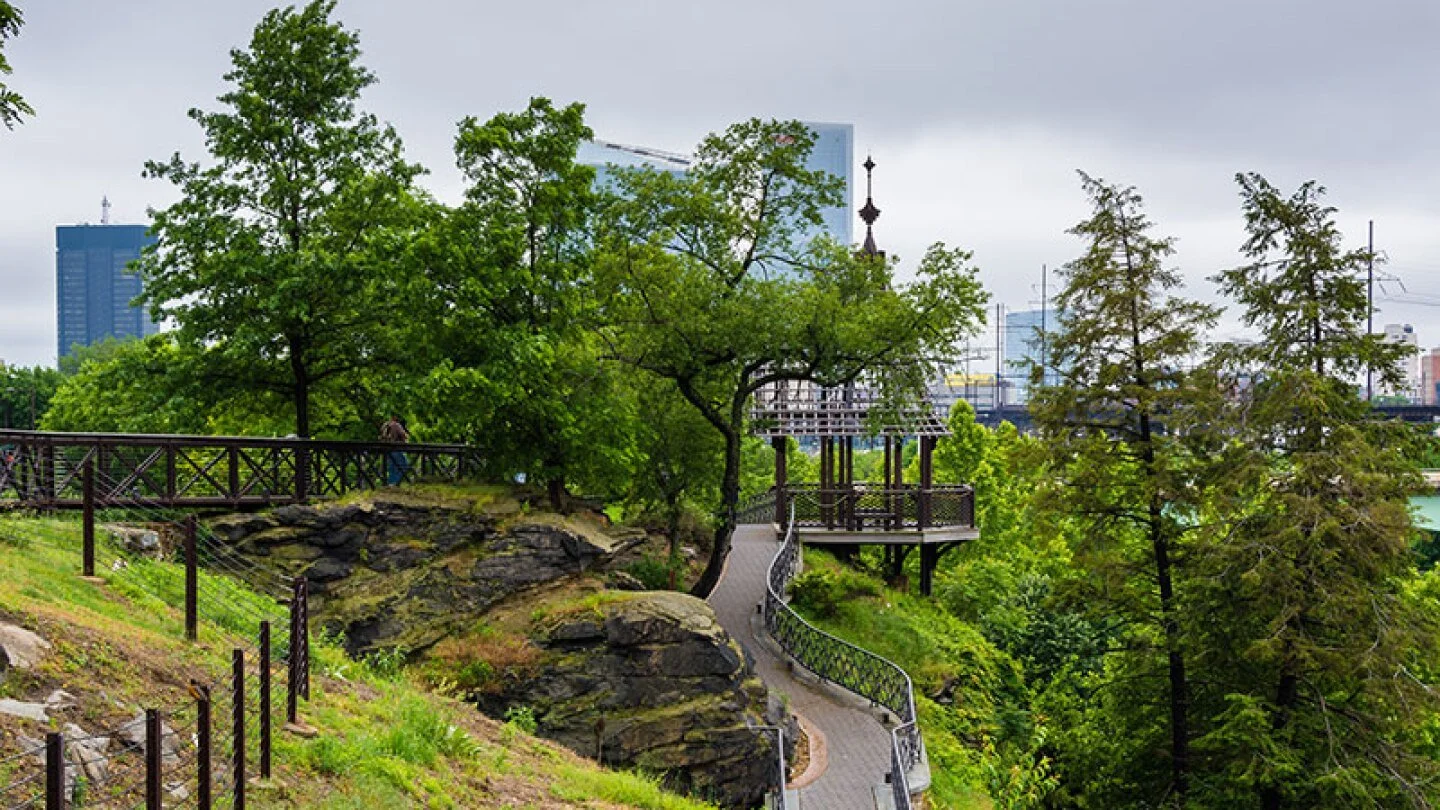
The boathouses along Boathouse Row, each built by a different rowing club in the 19th century, each with its own small institutional pride. A guild of guilds.
The way the Museum of Art appears and disappears through the trees as you walk north. It is always there, never quite reachable, presiding over the park from its acropolis.
The river itself. Wide, slow, brownish, indifferent. Parsifal's forest is not picturesque. It is simply large.
Der Gralstempel: Philadelphia Museum of Art
Getting There
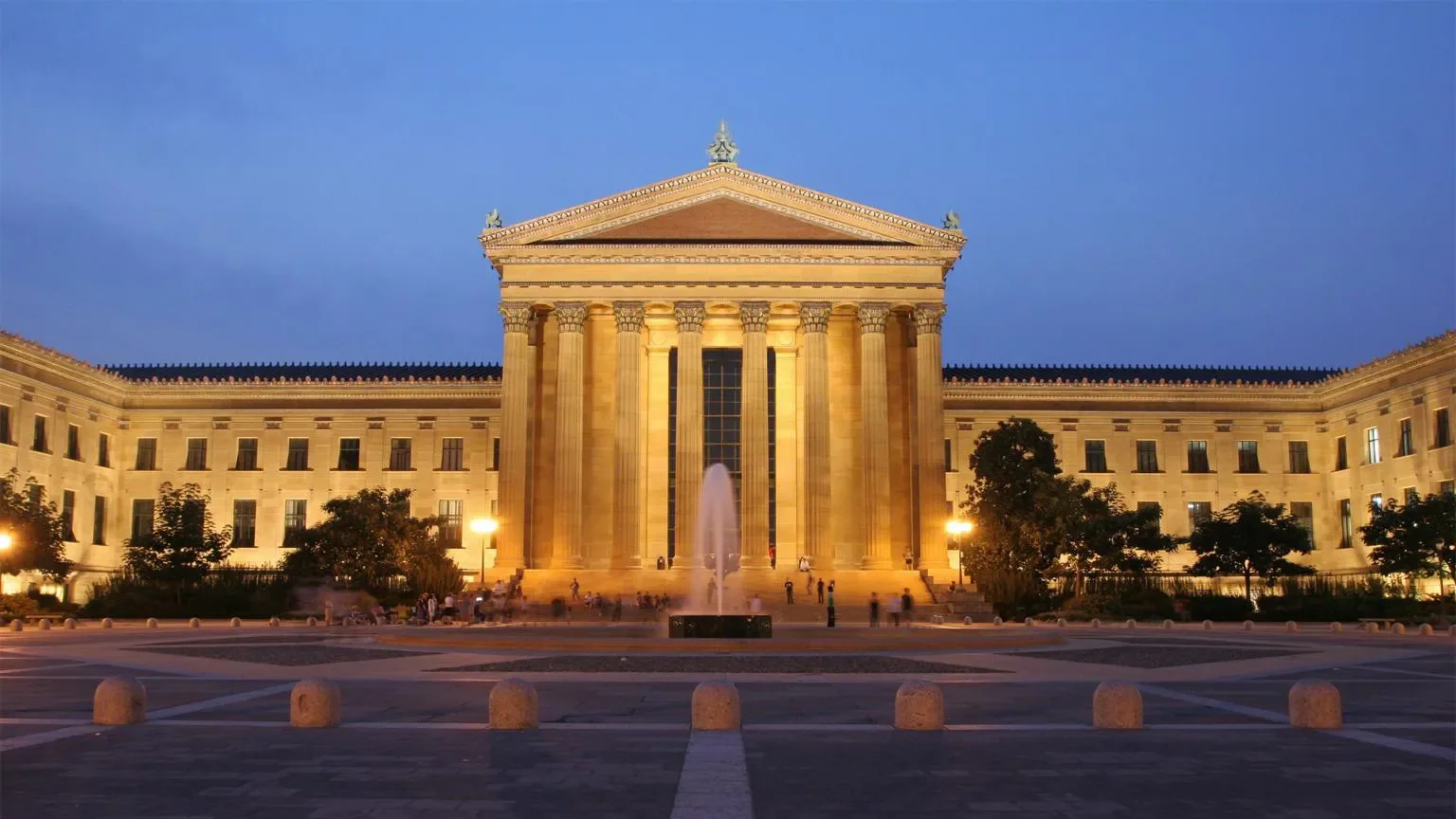
From Kelly Drive, cut back west to the Benjamin Franklin Parkway and approach the Museum from the base of the great staircase.
Do not take the steps yet.
Walk: The Approach
Wagner wrote the Transformation Music specifically to accompany the scene in which Parsifal is led from the forest into the Grail Temple. A slow, processional passage during which the set physically changes around the characters, the forest dissolving into stone columns and vaulted ceilings, ordinary space becoming sacred space, all of it happening in real time as the orchestra does the work.
Begin the Transformation Music at the base of the steps and climb slowly. Match your pace to the music, not to whatever your normal stride is. The steps are 99 in total. This is not an accident of design. The architect Horace Trumbauer and the city's planners knew exactly what a Greek temple on a hill does to the body moving toward it. It makes you aware of your own ascent. It requires effort while maintaining grandeur.
By the time you reach the top, you should be standing on the columned portico with the city spread below you and the Parkway running straight toward City Hall in the distance. If the Transformation Music is timed correctly, the moment you reach the top should correspond approximately to the moment the music resolves into the first distant statement of the Grail bells.
What the Museum of Art Is Doing Here
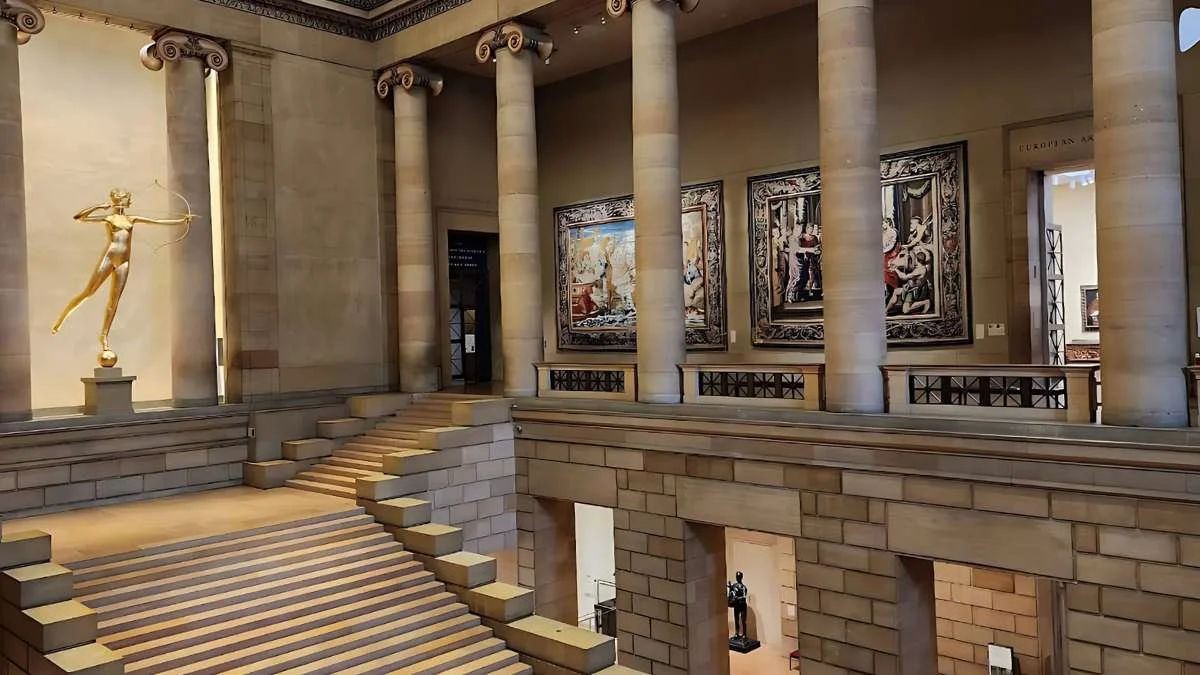
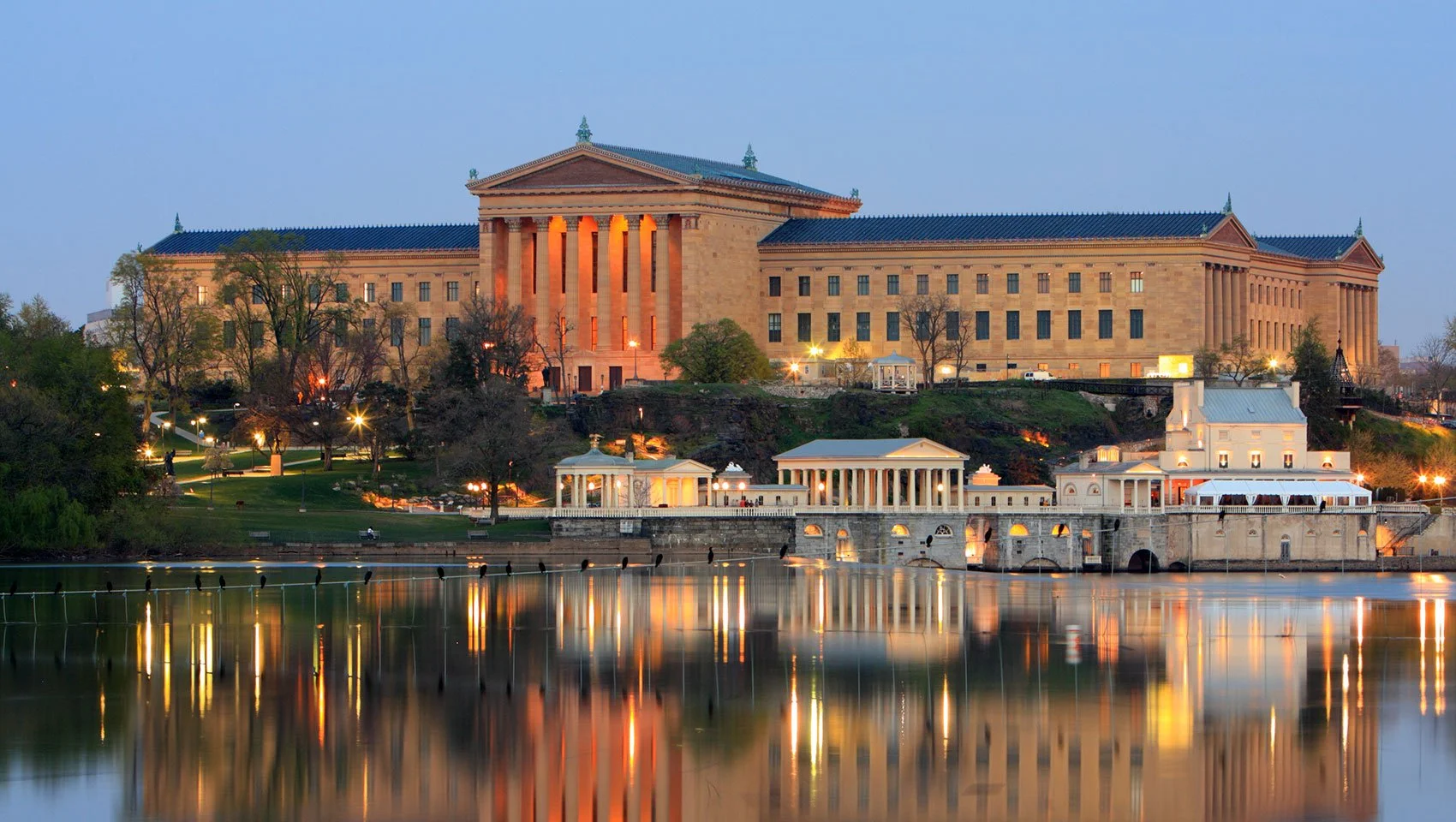
The Philadelphia Museum of Art was built between 1919 and 1928, Greek Revival in style, housing one of the largest and most encyclopedic art collections in the Western hemisphere. Its founding director, Fiske Kimball, imagined it not as a warehouse of objects but as a total environment. A place where the experience of art was inseparable from the experience of the building that contained it.
The building works like the Grail Temple in one specific way. It contains everything, permanently. The objects inside it were, in many cases, removed from the contexts that gave them meaning. Altarpieces from Catalan chapels, Japanese teahouses, Chinese imperial reception halls, reassembled stone by stone, and brought here to be preserved outside time, held in a space that mimics the sacred without quite being it.
This is exactly the condition of the Grail in Parsifal. The Grail is not dangerous. It is not malevolent. It is sacred, and it is suffering, because it is being held by someone who is no longer capable of holding it properly. The wound is not in the relic but in its keeper. The temple is intact. The ceremony is intact. The crisis is internal.
Standing in the Great Stair Hall
Track: Parsifal, Grail Scene, Act I: The Grail ceremony in full
Enter the Museum and stand in the Great Stair Hall, the central vaulted space with its enormous Greek Revival ceiling and the light falling from above.
Begin the Grail ceremony here.
Do not walk through the galleries yet. Stand still. Let the ceremony, Gurnemanz's narration, the knights assembling, Amfortas's terrible anguish as the Grail is uncovered, play against the people moving around you. Tourists photographing the ceiling, school children, guards in their posts.
This is exactly what happens in the Grail ceremony. Ordinary life continues, ceremonies are performed, objects of enormous power are displayed, and the wound underneath everything is not addressed, because no one yet knows how to ask the right question.
Find the Van Pelt Auditorium staircase, or any quiet corner of the upper gallery where you can sit with the music for twenty minutes.
The Grail ceremony is long. It is supposed to be long. Something important is being held open by that length. Let it be.
Der Klingsor-Garten: Rittenhouse Square
Walk: From the Museum to Rittenhouse
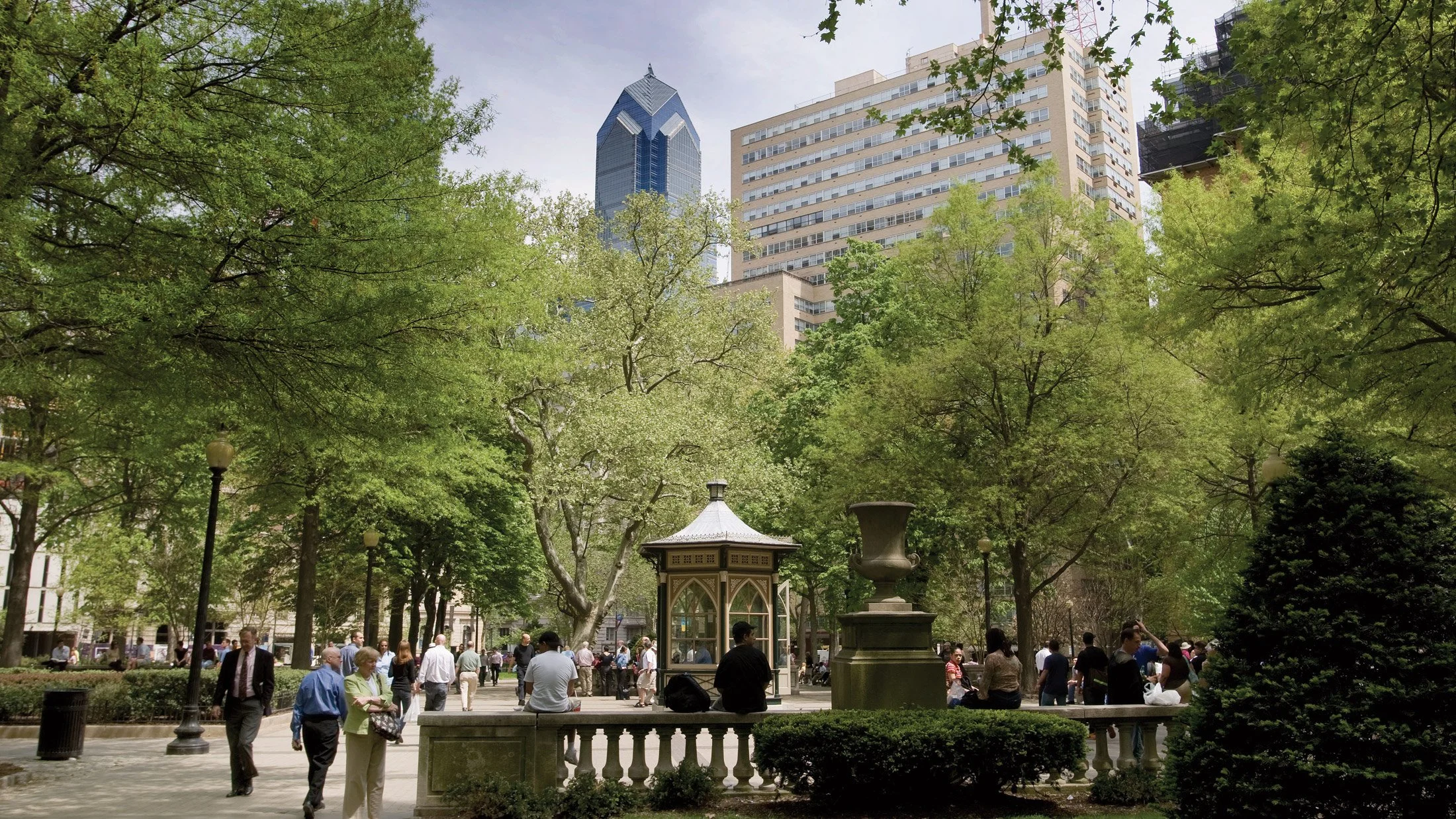
From the Museum, walk south on 20th Street toward Rittenhouse Square. About a mile, mostly downhill, through the elegant townhouse blocks of the Fairmount and Logan Circle neighborhoods.
This walk enacts Parsifal's expulsion from the Grail Castle at the end of Act I and his long wandering before he arrives at Klingsor's domain.
Track: No Music. Or Quietly, the Act II Prelude
Track (optional): Parsifal, Prelude to Act II
Klingsor's castle is the dark mirror of Monsalvat. Where the Grail Temple is austere, stone, and patriarchal, Klingsor's domain is lush, seductive, and designed to destroy by pleasure. The Flower Maidens, the opera's most overtly theatrical moment, a garden full of beautiful women who surround Parsifal and try to enchant him, are not evil. They are simply Klingsor's instruments. Desire made architectural.
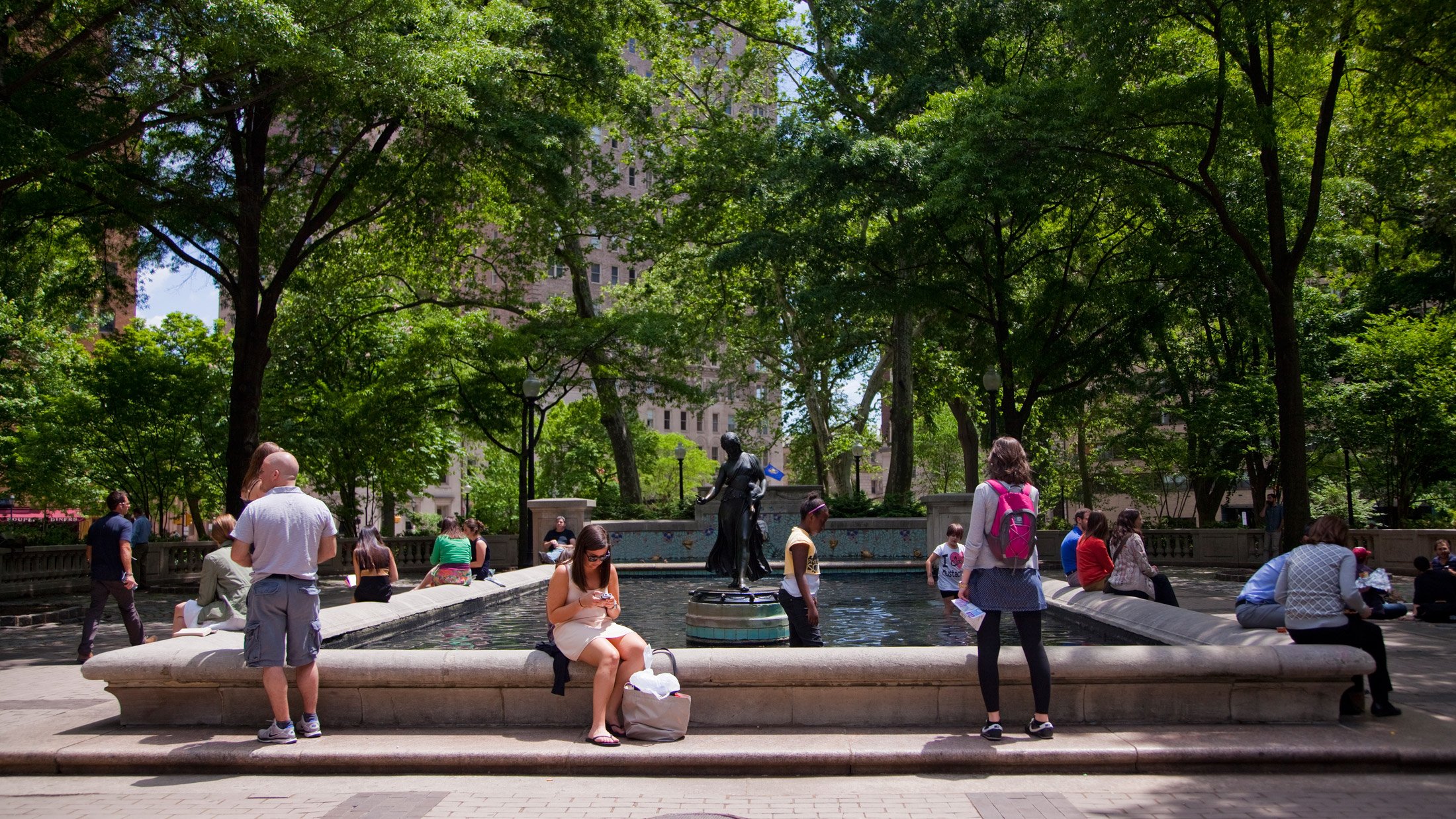
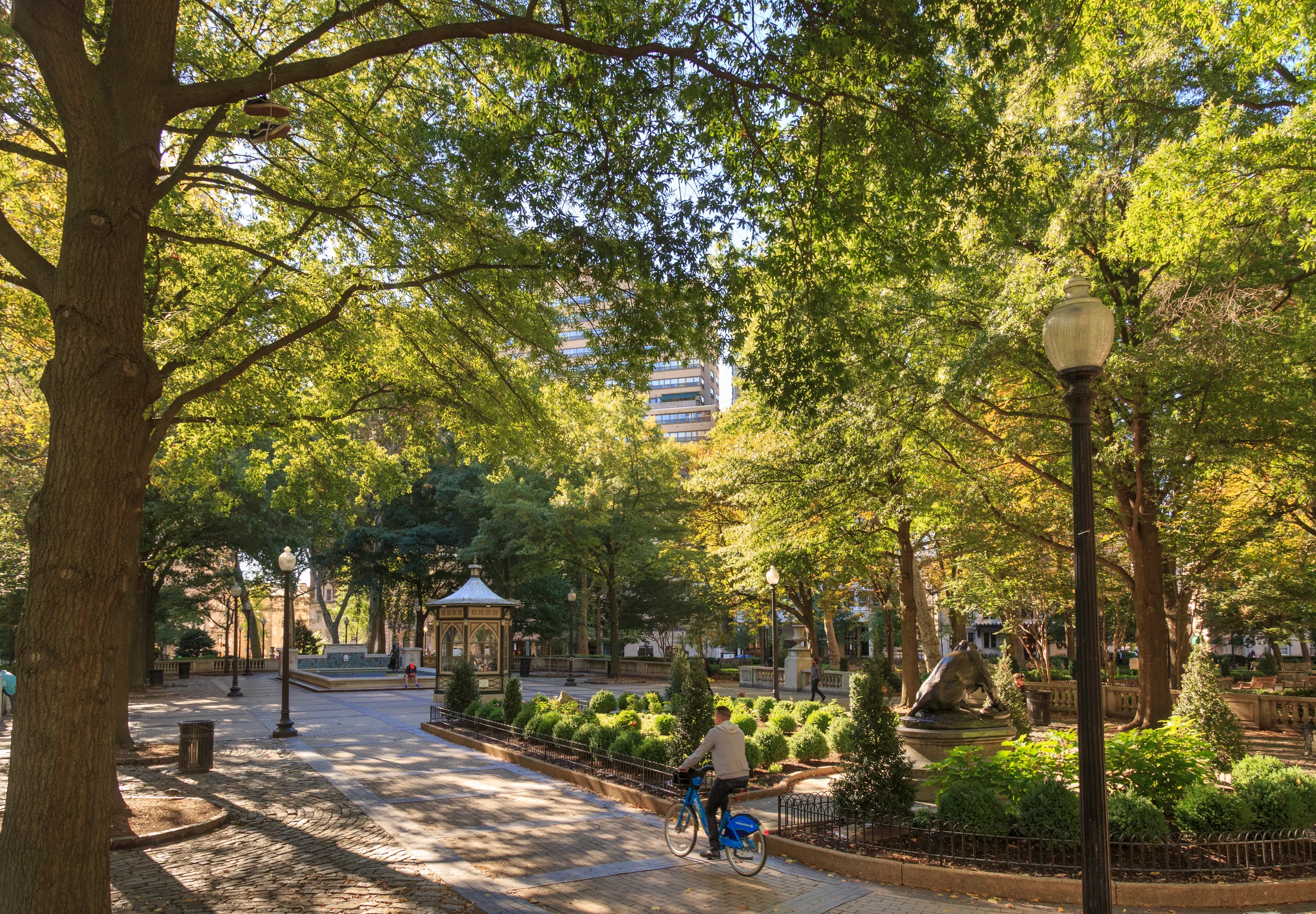
Rittenhouse Square is the most beautiful public space in Philadelphia and has been for 150 years. The townhouses ringing it, the manicured interior with its fountain, the cafe tables spilling out in good weather, the Saturday farmers market. This is Philadelphia at its most seductive and at its most comfortable with itself. It is also a space that asks nothing of you. Nothing is wounded here. Nothing is waiting for redemption. The difficulty of existing in this kind of beauty, when you are supposed to be on a different kind of errand, is part of what Parsifal's second act is about.
What to Do in Rittenhouse
Enter from the northwest corner, at 19th and Walnut.
Walk the inner loop slowly, counterclockwise.
Sit for a few minutes on one of the central benches, near the fountain.
Let the Flower Maidens' music play against the actual life of the square: the joggers, the children, the lunch crowds, the pigeons.
What to Think About
The Flower Maidens are not a temptation that Parsifal heroically resists. He is simply confused by them. He doesn't know what they're for. His immunity to their enchantment is not virtue but incomprehension. Mitleid in reverse, a failure to project himself into their reality.
The square is beautiful and it does not require your suffering to remain so. That is what makes it Klingsor's garden. A space of genuine pleasure that is structurally indifferent to the question of the wound. You can sit here for hours and be very content, and nothing will heal.
The moment Kundry appears, Klingsor's most powerful instrument, a woman condemned across lifetimes for laughing at Christ's suffering, and calls Parsifal by his name, the enchantment breaks. She is the one who knows him. She is the one who can address him specifically. Look around the square and find the person who seems to be watching rather than participating. They are always there.
Die Frage: Independence Hall & the Liberty Bell
Walk: From Rittenhouse to Old City
Head east on Walnut or Chestnut Street all the way to Independence Mall. Roughly a mile and a quarter through Center City, through the commercial grid, past City Hall and the Reading Terminal Market.
This is the longest walk of the day and it should feel like it. You are moving through the ordinary city. Through what Parsifal must traverse between the seduction of Klingsor's domain and the final moment of recognition.
Track: Parsifal, Act III Prelude
Track: Parsifal, Prelude to Act III
Begin this when you are about halfway down Chestnut Street, passing through the commercial center of the city.
The Act III Prelude is the most desolate music in all of Wagner. Where the Act I Prelude was solemn and ceremonial, and the Act II Prelude was threatening and dark, the Act III Prelude sounds like a world that has been waiting a very long time and is not sure it can wait any longer.
Parsifal has been wandering for years between Acts II and III. He has been in the forest, fighting, losing his way, carrying a spear he cannot use, suffering without purpose. The Prelude captures this as sound: a slow, fragmented melody over a bare harmonic landscape, the Grail motif appearing in broken form, the Spear motif unable to resolve.
The Liberty Bell
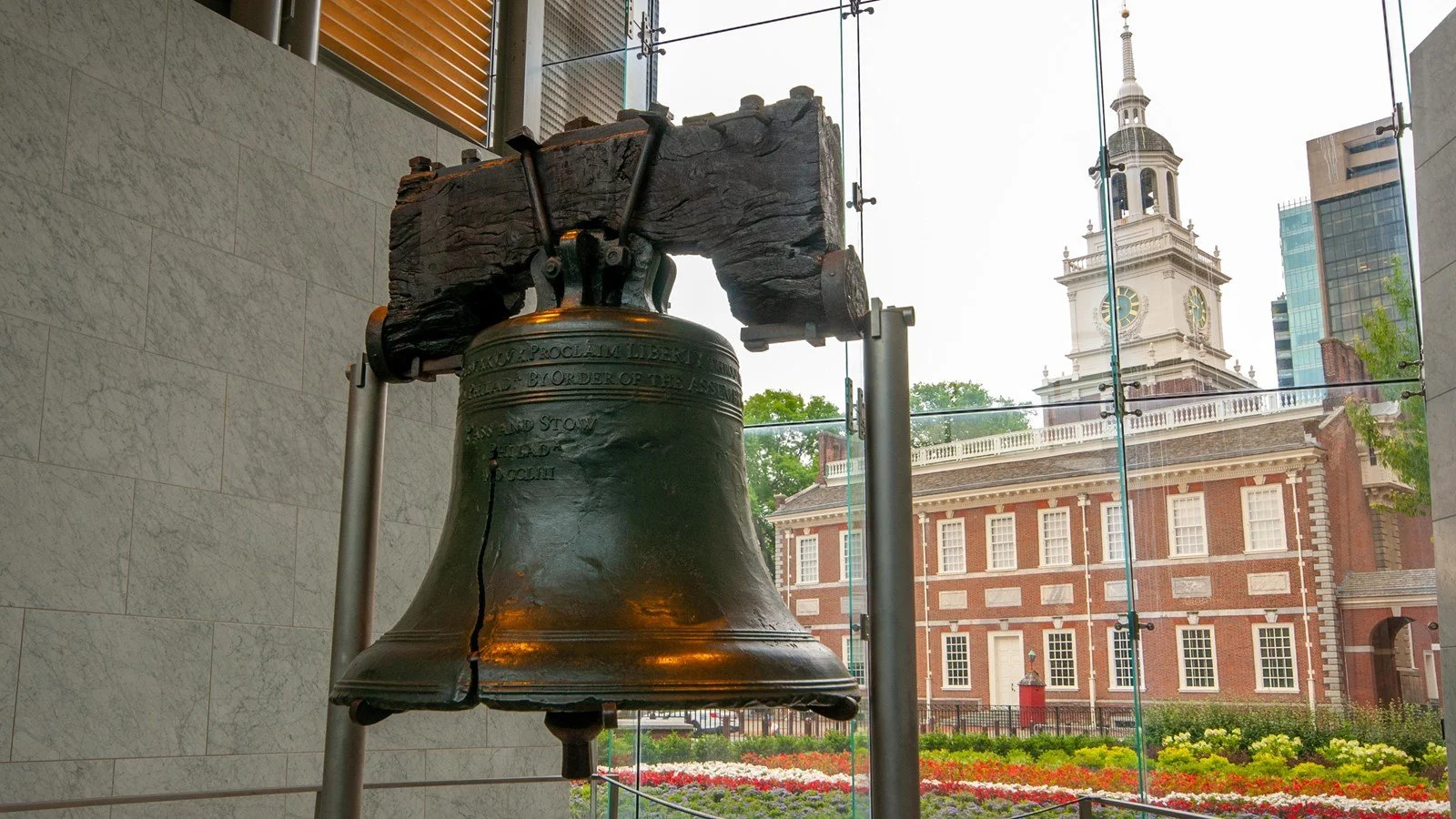
Stand in front of the Liberty Bell pavilion before entering.
The Liberty Bell was cast in London in 1752, cracked on its first ring, was recast, cracked again sometime before 1846. The date of the most famous crack is disputed, which is itself part of the story, and has been silent ever since. It is displayed now in a glass pavilion specifically designed to allow it to be visible from every angle, including from the street, at all hours.
The crack is the object. Not the bell around the crack, but the crack itself. The crack is what makes the Liberty Bell the Liberty Bell rather than just a very old bell. Amfortas's wound is not incidental to his kingship. It is the center of it. The wound is what makes him the Fisher King rather than simply a king. The ceremony cannot proceed properly precisely because the wound is there, and the ceremony cannot stop because it must continue, and the wound cannot heal until someone asks the right question, and no one asks the right question because they believe they are protecting Amfortas from pain rather than perpetuating it.
The bell is held in the pavilion so that everyone can see what cannot be fixed. It is not behind glass to protect it from us. It is behind glass so that we can stand here and look at a broken thing that is also, still, the resonant center of the civic faith it was meant to embody.
The Good Friday Music is not mournful. This surprises almost everyone who encounters it for the first time. It is tender, almost unbearably so. A music of renewal, of the world coming back to feeling, of wounds beginning to close not because they have been resolved but because the season has turned and the world is regenerating.
Stand in front of the Liberty Bell with the Good Friday Music playing. The bell cannot ring. But it can be looked at. The question it embodies, are we who we said we would be? cannot be answered. But it can be asked. And the act of asking it, Parsifal teaches, is already the beginning of healing.
Independence Hall
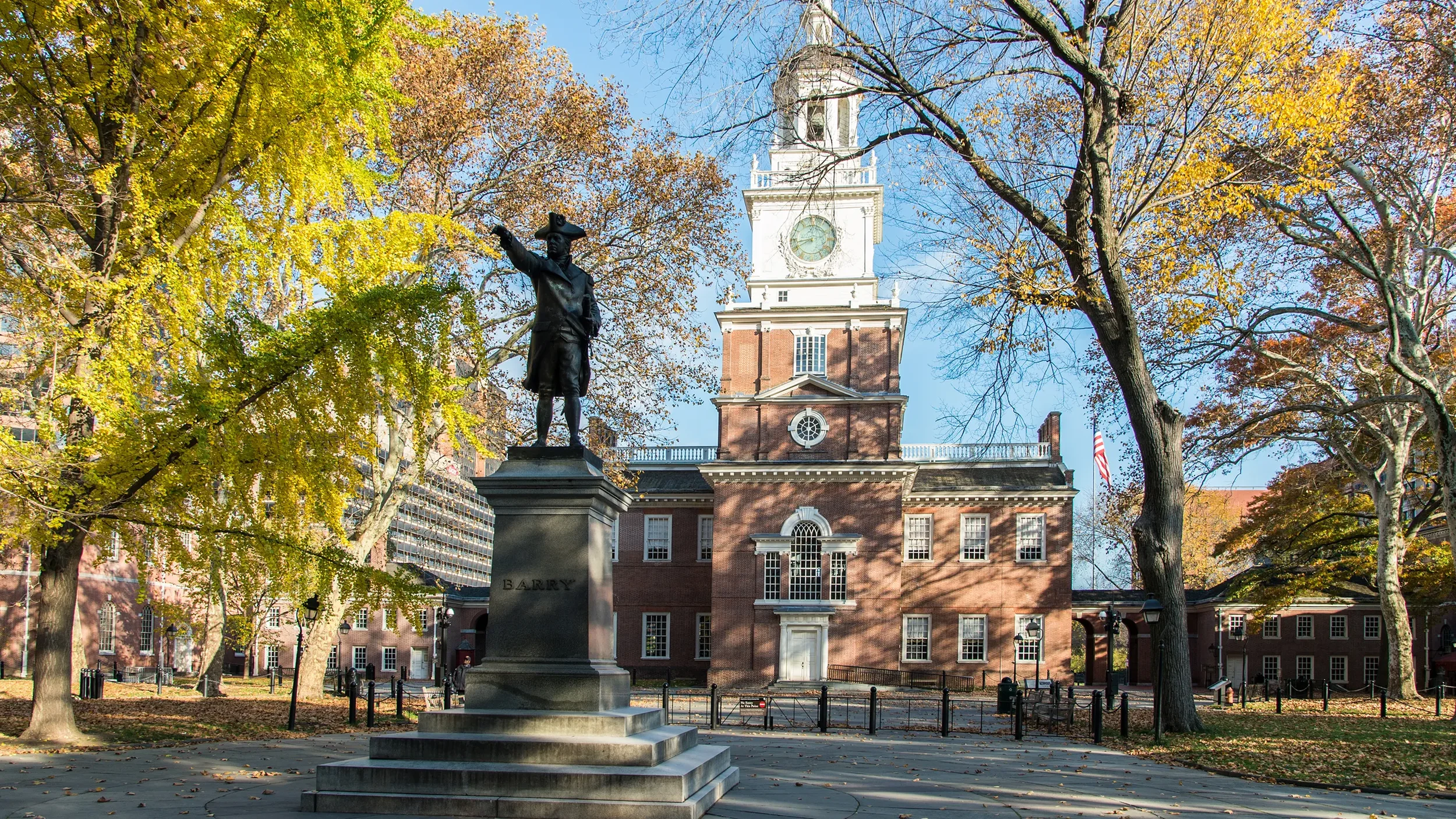
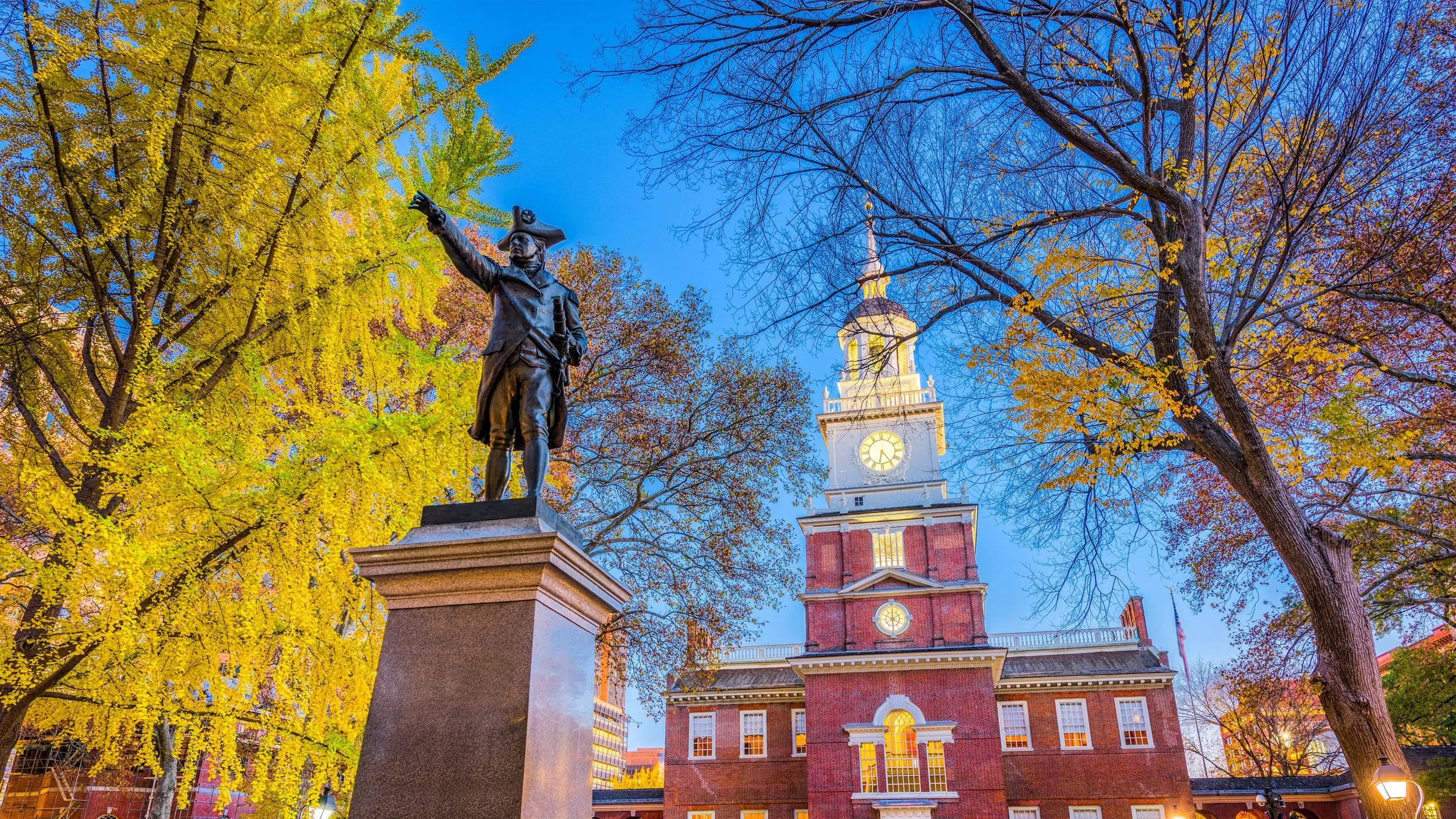
Walk south to the Chestnut Street entrance of Independence Hall and stand in the courtyard. This is the building where the Declaration of Independence was argued over and signed, and where the Constitution was drafted, in the same room, eleven years apart, by overlapping sets of men who disagreed profoundly about almost everything except the proposition that the disagreement itself needed a structure.
The Constitution is a Grail ceremony document. It does not resolve the central wound of American political life. It creates a procedure for living with it, conducting ceremonies around it, keeping the community assembled even when the wound reopens. The Bill of Rights is, in this reading, the Grail, a sacred object whose custody is in constant dispute, whose meaning shifts depending on who is suffering and who is presiding over the ritual.
Gurnemanz's function in Parsifal is to narrate. He is the keeper of institutional memory, the one who tells the story of how things came to be this way, who Amfortas is, what Klingsor did, why the spear matters. He tells this story multiple times in the opera. It is not information people lack. It is the story the community must keep telling itself in order to remain a community at all. Stand here for as long as you need.
Stille Ausklänge auf der Parkway-Achse
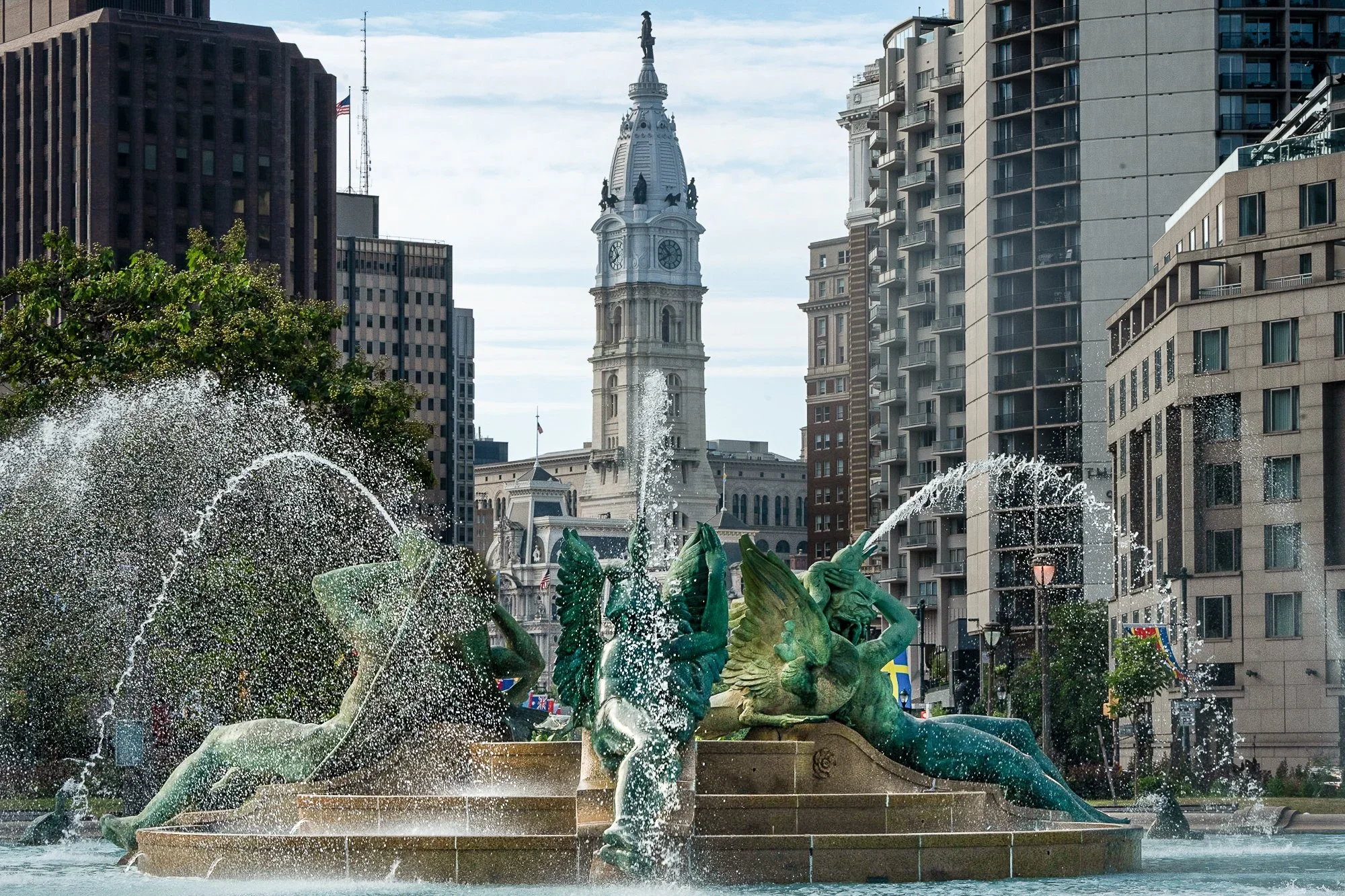
If you have one last move in you. Walk back up the Benjamin Franklin Parkway toward the Museum of Art in the early evening, without headphones. The Parkway was designed in explicit imitation of the Champs-Élysées. A diagonal cut through the grid, lined with the flags of nations, connecting the civic core at City Hall with the cultural acropolis of the Museum. It was meant to be Philadelphia's grand gesture, its declaration that this was a city serious about beauty and proportion.
It has never quite worked as its designers hoped. The Parkway is often windswept and underused, the flags snapping, the fountains running for nobody, the Museum looming at the end in theatrical perfection while the street-level life is thin. It is ceremonial space that the ceremony abandoned.
Stand at the Swann Memorial Fountain at Logan Circle as the evening light begins to turn. No music. Just the sound of the water and the traffic. The Parsifal walk does not conclude. It only proves that wounds can be inhabited, that sacred enclosures can be built with genuine intention and still fail, that the question matters more than the answer, and that a city designed around a founding moral aspiration is a city still waiting for its Parsifal. Someone innocent enough to ask what everyone else has learned not to ask.
Philadelphia, in its patient, slightly aggrieved way, is still waiting. The Museum of Art goes dark on the hill. The fountain continues.
Nachklang
By the end of the walk, nothing is healed. The bell remains cracked. The penitentiary remains ruined. The Parkway remains emptier than its designers imagined. And this is correct. Parsifal does not offer recovery. It offers the possibility that someone might finally ask the question that has been avoided, and that asking it, rather than the answer, is the redemptive act.
Philadelphia is uniquely suited to this lesson because it has been performing its founding ceremony for 250 years with the wound still visible and the ceremony still running. The crack is part of the symbol. The incompleteness is part of the aspiration. The city has not resolved into what it was meant to be, and it has not stopped trying, and it has not pretended that these two facts don't coexist.
Wagner ended his life's work here, in an opera about a fool who becomes wise by learning to feel someone else's pain as his own. He set it in no specific historical time, in a landscape that is both forest and temple, both quest and enclosure. Philadelphia, walked slowly with his music in your ears, reveals itself as exactly such a place. Built on a grid meant to represent moral order, containing within it both the sacred object and its fracture, both the ceremony and the wound beneath the ceremony, both the aspiration and the evidence that aspiration alone is not enough. The Grail is here. The question is still being asked.