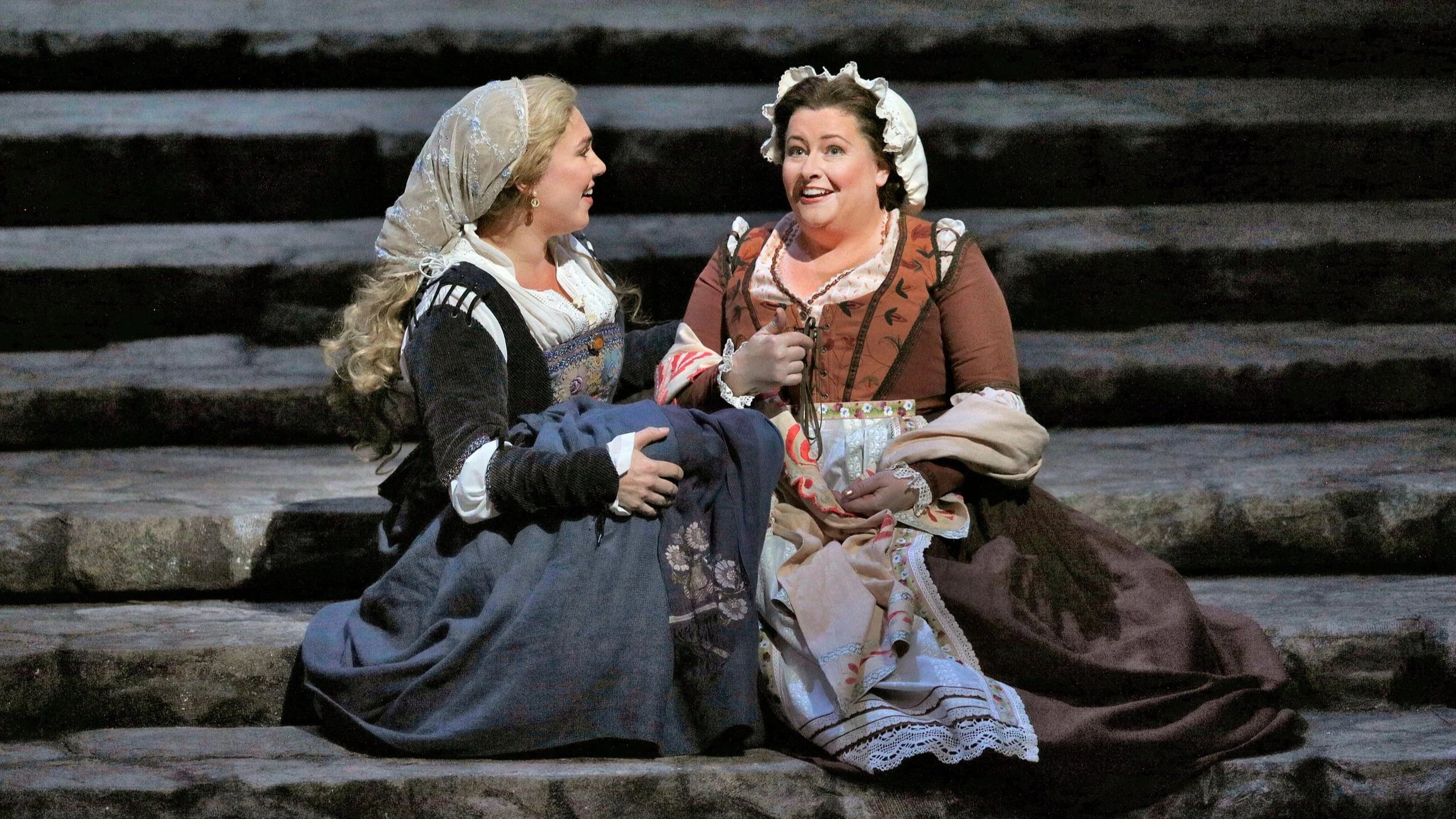
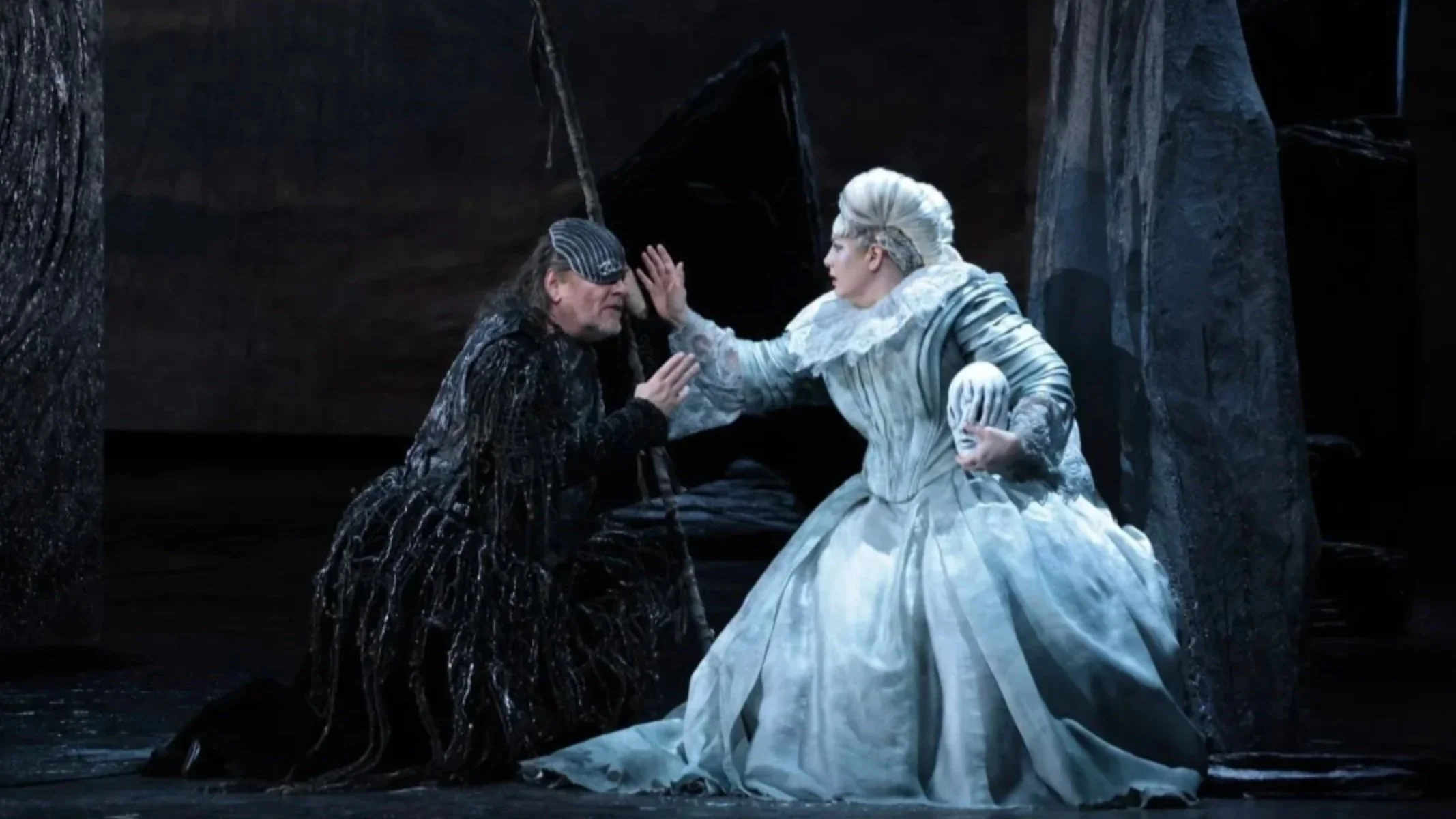
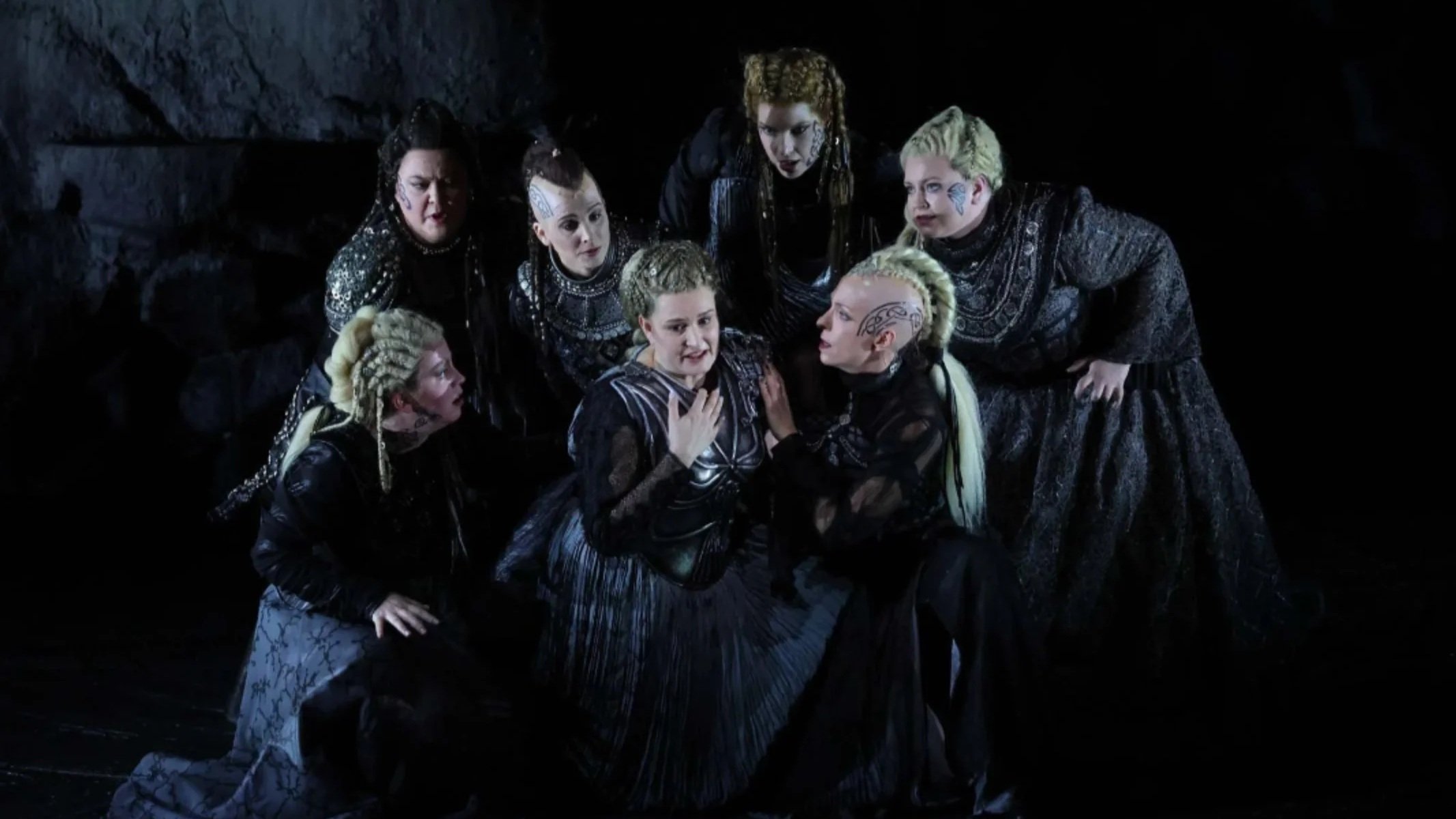
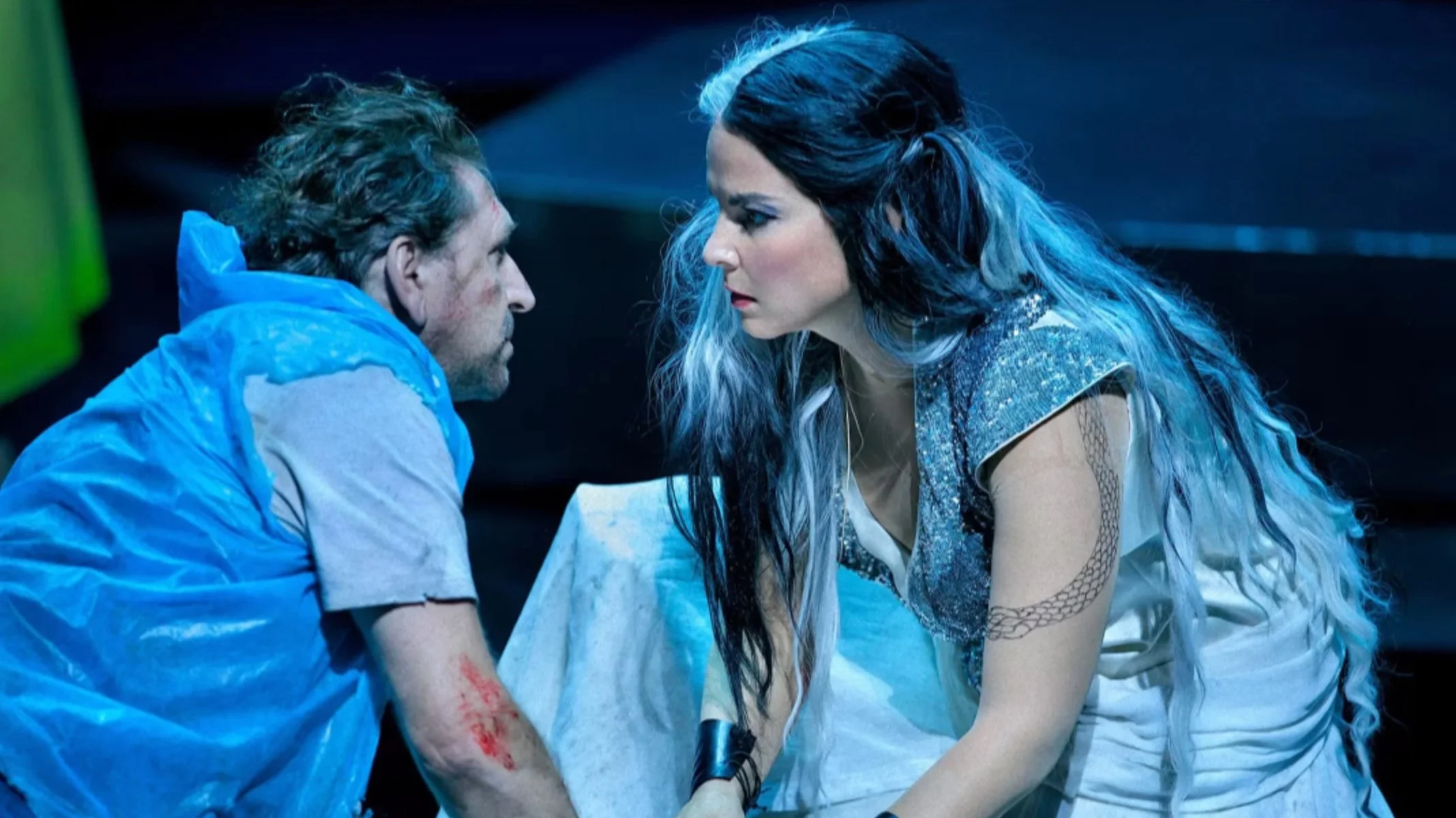
Eintägiges Experiment: Athen mit Das Rheingold
Themen: Vertrag, Diebstahl, Macht, Schuld, Der Preis der Schönheit
Element: Weißes Licht und uralter Stein
This walk treats Wagner not as repertoire, but as a composed method for moving through the city.
Das Ergebnis auf einen Blick
Dauer: 4-5 hours: A full-day circuit, best begun before the heat of midday and completed as the Acropolis light turns amber in late afternoon.
Distanz: 3–4 miles: Monastiraki → Ancient Agora → Acropolis Hill → Odeon of Herodes Atticus → Lycabettus at dusk.
Beste Zeit: Early morning start (8–9am) at the Agora, arriving at the Acropolis as the tourists thin slightly around midday, finishing on Lycabettus as the sun drops behind Hymettus.
Wetter:
Bright sun deepens the walk: Das Rheingold is the only Wagner opera performed without an intermission, in a single arc of intensifying light that ends at sunset. The Athens sun performs this function literally. Walk into it.
Avoid midday at the Acropolis in high summer: The rock becomes brutal. The music needs stillness, not heat exhaustion.
Zugänglichkeit:
The Acropolis involves a significant uphill walk on uneven stone. Good shoes are essential.
The Agora, the Odeon exterior, and Lycabettus all have alternatives for those who cannot manage the main climb.
The National Archaeological Museum is a separate half-day option and can be inserted or substituted.
Essentieller Moment:
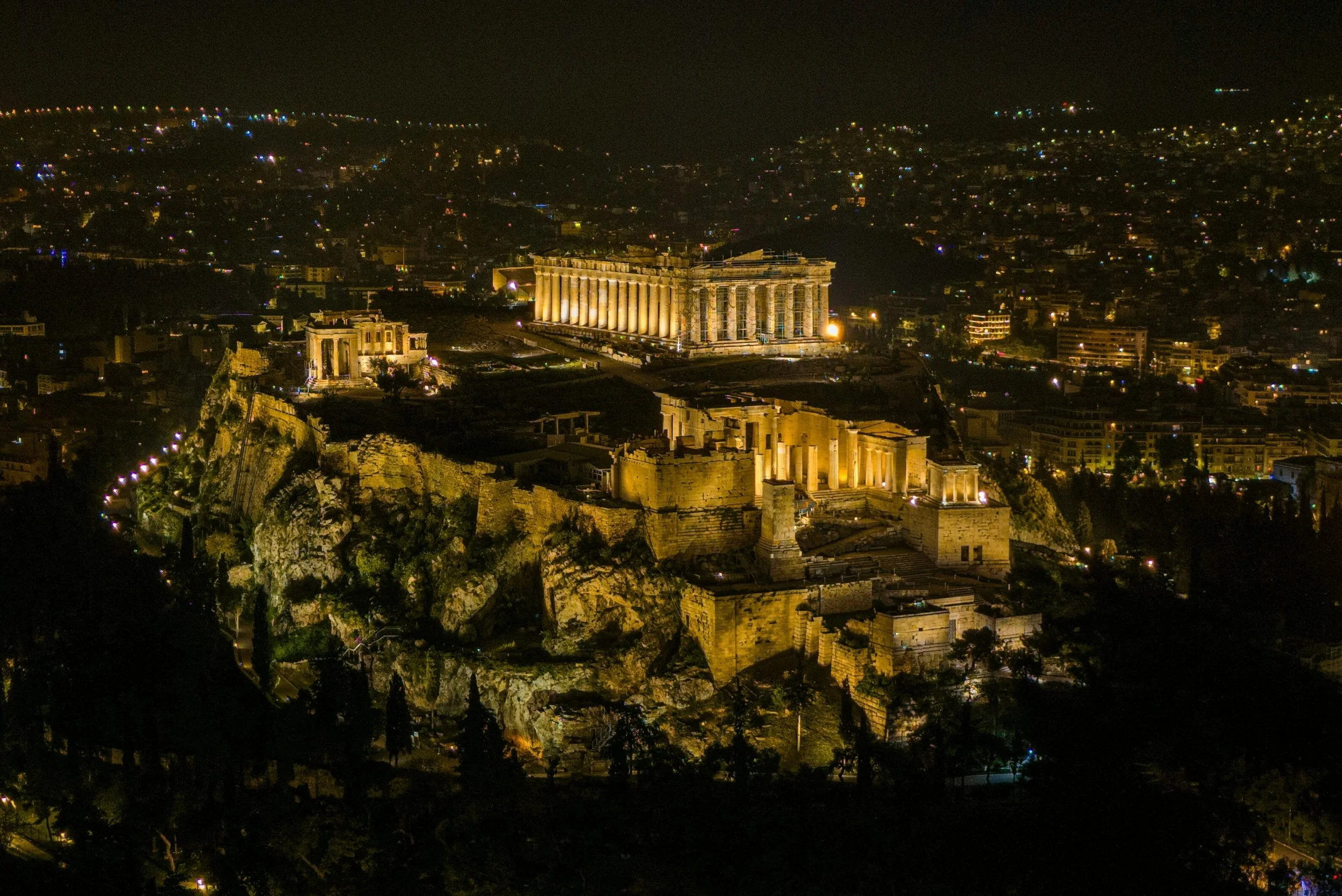
Standing on the Acropolis with the Entry into Valhalla (Scene IV). The moment when Wotan's impossible scheme pays off, the hall is built, the debt is cancelled by theft rather than payment, the gods cross the rainbow bridge into their new home, and the music achieves its most overwhelming beauty precisely at the moment of its deepest moral corruption. The Parthenon, which you are standing beside, was funded by exactly this mechanism. The beauty is real. The contract beneath it was broken before the first stone was laid.
Language Anchor (German Phrase of the Walk):
Was du bist, bist du nur durch Verträge / What you are, you are only through contracts. Loge's devastating summary of Wotan's condition. A phrase which applies with equal precision to the Athenian empire, the Delian League, the Parthenon itself, and to any civilization that confuses the beauty of what it has built with the legitimacy of how it was paid for.
Wort des Weges
Vertrag (pronounced: fair-TRAHK): Contract. Agreement. The binding structure which makes society possible and that is, in Das Rheingold, the first thing to be violated. Wotan's spear is carved with the runes of every contract he has ever made. His power is those contracts. He cannot break them himself without destroying the basis of his own authority. So he arranges for others to break them on his behalf, or finds technicalities, or steals. Athens understood this logic intuitively. The Parthenon was funded with money that the Delian League's member states had contributed for collective naval defense against Persia. Pericles redirected it to build a temple. The contract was not exactly broken. It was reinterpreted, at scale, by the most powerful party, for the benefit of the most powerful city. The result was one of the most beautiful buildings in human history. This is the Rheingold problem: the beauty is not a lie. It is genuine. And it does not cancel the theft.
Thematischer Rahmen: Das Rheingold
Das Rheingold is the prologue to everything. Before the love affairs and the heroism and the betrayals and the apocalypse, there is this: a world whose fundamental structure is being arranged, a set of contracts being drawn up, and a single act of theft that corrupts the entire mechanism before it has properly begun.
The gold itself is innocent at the start. The Rhinemaidens tend it in the depths, singing to it, playing in the light it generates. It has no value except as light, as beauty. Alberich, the Nibelung dwarf, is rejected by the Rhinemaidens and in his fury renounces love and steals the gold, forging it into a ring of absolute power. Once the gold becomes a ring, it becomes a curse. Everything that happens in the three subsequent opera, every death, every betrayal, every burning, flows from this original conversion, of beauty into power, of something freely enjoyed into something owned and weaponized.
Wotan then steals the ring from Alberich and uses it to pay the giants Fasolt and Fafner, who have built Valhalla according to contract and are owed the goddess Freia as payment. Alberich curses the ring as it is taken from him. Fasolt is killed by Fafner for his share. And the gods process into their magnificent new home over a rainbow bridge while Loge, the god of fire and irony, watches and notes that the whole edifice is already burning, that the beauty is real but the foundation is poisoned, that the gods do not know it yet but their twilight has already begun.
Athens is the city where this argument has been running for 2,500 years.
The Parthenon was not built by Athenians out of their own surplus. It was built with tribute money, phoros, paid by the member states of the Delian League, a defensive alliance founded after the Persian Wars. The allies contributed either ships or money to a common treasury, originally kept on Delos. In 454 BCE, Pericles moved the treasury to Athens. In 447, construction of the Parthenon began. The member states had not been consulted. When they objected, Athens reminded them that it was Athens, not their contributions, that had actually won the battle of Salamis, that it was Athens that provided security, and that the tribute was therefore appropriate compensation. The contract was not broken. It was reinterpreted.
The Parthenon that resulted is genuinely one of the most extraordinary things human beings have made. This is not in question. The optical refinements alone, the almost imperceptible curves built into what appear to be straight lines, the columns that lean inward by fractions of degrees, the entasis that makes each shaft appear perfectly straight by being very slightly convex, are evidence of an ambition not merely to build a temple but to build a correction to the imperfections of human perception. The building lies to the eye in order to tell the truth.
Wotan's Valhalla is built by giants. He has no hand in its construction and does not know quite how it was done. The Parthenon was built by Pheidias, Iktinos, and Kallikrates, with a precision that has not been equalled since. The gods who commissioned it knew exactly what they were doing.
What neither Wotan nor Pericles seems to have fully absorbed is Loge's lesson. That the beauty of what is built does not retroactively legitimize the terms of its funding. The ring is cursed. The treasury is misappropriated. The hall stands. The temple stands. The accounting does not close. To walk Athens with Das Rheingold is to walk inside this unresolved argument. To feel both the reality of the beauty and the reality of the contract beneath it, and to resist the temptation to let one cancel the other.
Das Rheingold im Boden: Die Antike Agora
Getting There
Take the Metro Line 1 to Monastiraki station.
Exit and walk west along Adrianou Street until the site entrance appears on your right, just past the reconstructed Stoa of Attalos.
Buy your ticket. Enter unhurriedly.
Walk: The World Before the Theft
The Prelude to Das Rheingold is Wagner's most extraordinary piece of scene-setting. A single sustained E-flat, held by the low strings, for 136 bars, four and a half minutes, before any melody appears. It begins so quietly and so low that in a good performance you feel it before you hear it, a physical resonance in the chest. Then the harmony gently expands, arpeggios rising through the strings, and gradually the sound of the Rhine assembles itself from nothing. First a river, then a light on the river, then the gold at the bottom of the river catching the light, then the Rhinemaidens swimming in it.
The Ancient Agora of Athens is not the Acropolis. This is crucial. It sits at the foot of the Acropolis hill, in what was for centuries the functional center of Athenian civic and commercial life. The marketplace, the law courts, the administrative buildings, the Stoa, the covered colonnades where Athenians conducted business, argued philosophy, and waited out the heat. The Agora is where the contracts were made. It is where the gold, in its commercial rather than mythological form, changed hands.
Enter the site and walk toward the Temple of Hephaestus, the blacksmith god, which stands on the low hill to the west. The best-preserved ancient Greek temple in existence, intact for over two thousand years, looking out over what was once the heart of Athenian commercial life.
Hephaestus is Alberich's divine counterpart. The craftsman, the metalworker, the one who makes the magical objects that give power to others, Achilles's armor, the chain that bound Ares, the golden automata that served in his workshop, and who is himself lame, rejected, the least beautiful of the gods. His temple overlooks the place where the products of craft became instruments of power. This is Scene I of Das Rheingold, rendered in stone and archaeology.
What to Look At / Think About
The Temple of Hephaestus from below. Notice how it is positioned not at the highest point of the hill, not at the sacred summit, but on a working ridge, facing down toward the marketplace rather than up toward the sky. A craftsman's temple, oriented toward labor rather than aspiration.
The site of the Tholos. The circular building where the Prytaneis, the executive committee of Athenian democracy, lived and worked in rotation, keeping the sacred fire burning continuously. A civic hearth. A permanent ceremony.
The remains of the law courts where Socrates was tried. The dikasteria, where 500 jurors used bronze voting tokens to decide guilt. Bronze tokens for justice, metal made into the mechanism of civic determination.
Let the Rhinemaidens' music play here: Weia! Waga! Woge, du Welle! Their singing is the sound of a world that has not yet been divided into property. The gold is just light. The Agora, before contracts were made here, was just ground.
Walk: The Stoa of Attalos
From the Temple of Hephaestus, cross the site to the reconstructed Stoa of Attalos on the eastern edge, a long covered colonnade, rebuilt in the 1950s by the American School of Classical Studies, now serving as the site museum.
The Stoa was built in the 2nd century BCE by Attalos II of Pergamon as a gift to Athens, where he had studied as a young man. It is an act of patronage so large it constitutes a form of possession, the donor's name on a building at the center of the city, forever. This is the Rheingold economy in classical form. Beauty as transaction, gift as obligation, the contract embedded in the stone.
Stand in the colonnade and let the final bars of Scene I, the moment Alberich seizes the gold, play against the museum's collection of Agora finds displayed in the cases. Lead curse tablets, bronze voting tokens, shards of ostraka with names scratched on them, the implements of Athenian contracts and their enforcements.
The curse tablets are particularly apt. Athenians who felt wronged, in legal disputes, commercial dealings, personal betrayals, would scratch the name of their enemy onto a lead tablet, fold it, and dedicate it to the chthonic gods. Curse as legal document. Alberich's curse on the ring is this tradition at operatic scale.
Vertrag und Schuld: Der Aufstieg zur Akropolis
Walk: The Climb
Exit the Agora through the south gate onto Apostolou Pavlou Street.
Turn left and walk south along the pedestrianized path toward the main Acropolis entrance at the Beule Gate on the western side.
The climb takes 15–20 minutes at a deliberate pace.
Track: Das Rheingold, Scene II — the contracts, Loge's arrival, the giants demanding payment
Begin Scene II as you begin the ascent. The scene opens in Valhalla: the hall is complete, the giants present their bill, and Wotan discovers he has no intention of actually paying it. Loge arrives, brilliant and untrustworthy, and begins the long negotiation that will consume the rest of the opera.
The path up to the Acropolis is physically demanding in a way that clarifies the mind. It is rough stone underfoot, steep in places, exposed to the sun. The Parthenon appears and disappears as you climb — glimpsed between the Propylaea's columns, then hidden, then suddenly overwhelming as you emerge onto the plateau.
Time the walk so that Loge's great narrative aria — his report to the gods on whether any being in the world has ever willingly renounced love for gold — reaches its conclusion as you pass through the Propylaea, the monumental gateway, and step onto the Acropolis rock itself.
The Propylaea
The Propylaea is the entrance. Built between 437 and 432 BCE, left unfinished because of the Peloponnesian War, it was never completed to its original design. It is a threshold that announces the sacred precinct while being itself incomplete — a monument to a project interrupted by the political consequences of exactly the kind of overreach that funded the Parthenon.
Wotan's contracts are carved on his spear. The Propylaea's unfinished state is Athens's spear: the evidence, written into the building itself, that the political circumstances that made the project possible had begun to unravel before the project was done.
Pause here. Look back at the city below before crossing through. This is the view Loge commands — the whole world of men spread out below, and the gods above it, in their new hall, beginning to understand the cost.
Der Einzug der Götter: Die Akropolis und der Parthenon
On the Acropolis Plateau
This is the essential moment of the walk. Everything else has been preparation for standing here with this music.
Scene IV of Das Rheingold is the opera's final movement: Wotan has stolen the ring from Alberich, used it to pay the giants, watched Fafner kill Fasolt, received Alberich's curse on the ring with apparent equanimity, and now leads the gods across the rainbow bridge into Valhalla while Donner's thunder clears the air and Froh's rainbow appears and the music swells into one of the most overwhelming passages in all of Wagner. Below in the Rhine, the Rhinemaidens can be heard mourning their lost gold. Above, the gods sing of the hall's splendor.
Loge does not cross the bridge. He stands apart, watches, and speaks the last words of the opera almost to himself: the gods are hastening toward their end. They take the gleam of the gold for their glory. He is half-tempted to turn himself back into a wandering flame and burn the lot of them.
Begin this music as you emerge fully onto the Acropolis plateau with the Parthenon before you.
What the Parthenon Is Doing Here
The Parthenon is not a ruin in the way that Eastern State Penitentiary is a ruin — a building whose function has collapsed and left its structure behind. The Parthenon was converted into a Byzantine church, then a mosque, then partially blown up by a Venetian cannonball in 1687 (the Ottomans had been storing gunpowder inside it). What stands today is a 19th and 20th-century restoration project that is still ongoing. The scattered drums of columns that lie on the plateau, the reassembled pediment, the marble that has migrated to London and Athens and Paris and Copenhagen — this is not simply ancient ruin. It is a ruin that has been actively contested, removed, fought over, partially returned, interpreted, misinterpreted, and instrumentalized by every European power that has touched it.
The Elgin Marbles in the British Museum are the clearest instance: removed by Thomas Bruce, 7th Earl of Elgin, between 1801 and 1812, under a firman — a permit — from the Ottoman government that the Greek state (which did not yet exist) had no hand in granting. Britain has held them since. The argument about their return has been running for 200 years, with Britain claiming it is a better custodian and Greece claiming that custodianship cannot be separated from context. This is the Rheingold argument exactly: who has the right to the gold? The Rhinemaidens who tended it, or Alberich who stole it and made it powerful? The Athenians who built the Parthenon, or the Delian League members whose tribute paid for it? The Greeks whose ancestors made the sculptures, or the British museum that has maintained them for two centuries?
The ring does not belong to whoever holds it. It belongs to the river. The gold was always more itself as light than as power. The Rhinemaidens' lament at the end of Das Rheingold — audible beneath the gods' triumphant entry into Valhalla — is the sound of that original condition mourning what it has become.
How to Stand Here
Walk the full length of the north colonnade of the Parthenon slowly, from east to west.
Do not try to take photographs while the music is playing. This is difficult to resist. Resist it.
Let the Entry into Valhalla play against the white marble, the extraordinary light, the city spreading out in every direction below — Piraeus and the Saronic Gulf to the south, the mass of Athens to the north and east, Lycabettus Hill rising in the middle distance, the mountains of Hymettus and Penteli closing the horizon.
The entry music is genuinely, formally beautiful. Wagner knew it. He orchestrated it to be overwhelming. The rainbow bridge theme in the strings is one of his most ravishing inventions, and it arrives at the moment of maximum moral complexity: the gold is stolen, the ring is cursed, Fasolt is already dead, Alberich is already swearing vengeance, the machinery of the entire Ring cycle is already in motion — and the music is this beautiful. That is the point. The beauty is the argument, not its refutation.
Loge's aside — Ihrem Ende eilen sie zu — is almost inaudible under the orchestral splendor. Stand here and try to hear it.
Das Schweigen des Hephaistos: Das Odeon des Herodes Atticus
Walk: Down the South Slope
From the Acropolis, descend via the south slope path toward the Odeon of Herodes Atticus.
The Odeon appears below you as you descend: a Roman-era theater, 2nd century CE, built into the rock face of the Acropolis hill, still used today for summer performances.
Track: No Music — the silence after the Entry
There is a tradition in some Das Rheingold performances of a moment of genuine silence after the gods cross the bridge — the orchestra holding, the stage holding, the audience holding — before the Rhinemaidens' final lament rises from below. Use this descent as that silence. No music. Just the sound of the city coming back as you leave the sacred precinct.
The Odeon and Herodes Atticus
Herodes Atticus was a Greek sophist and rhetorician who became enormously wealthy and served as a Roman senator and consul under Marcus Aurelius. He built civic monuments across the Greek-speaking world — in Athens, Corinth, Olympia, Delphi — as acts of public benefaction. The Odeon on the Acropolis slope was built after the death of his wife Regilla in 161 CE, ostensibly in her memory, though Regilla's family accused him of causing her death. The monument is both memorial and, potentially, cover. A building so beautiful, so permanent, so publicly generous that it functions as its own exoneration.
This is the Herodes Atticus problem, and it is the Rheingold problem: at what point does the magnificence of what is given to the public become sufficient to close the account? Herodes's contemporaries debated it. His wife's brother brought a formal murder charge, which was eventually dropped. The Odeon stands, and is still used, and is magnificent, and the question does not close.
Stand outside the Odeon's entrance arch — the theater itself requires a performance ticket to enter — and look up at the Roman arches rising against the Acropolis rock.
Alberich's curse is one of the most precise musical characterizations of its kind in opera: not a raving, not a scream, but a formal, deliberate pronouncement, each clause delivered with terrible clarity. The ring will bring ruin to whoever holds it. Those who do not have it will be consumed by longing. Those who have it will be consumed by fear. There is no position of safety. The gold has been converted into pure relational destruction.
Stand here with the curse. Look at the Odeon. Think of Herodes Atticus, building across the Greek world, unable to stop, each monument larger than the last, the account never closing.
The giants Fasolt and Fafner have barely left the stage before the curse takes Fasolt. Fafner will spend the rest of the Ring cycle sitting on the gold in dragon form, not using it, not enjoying it, simply guarding it against the longing the curse has generated. The ring's power, under the curse, is purely negative: it generates desire in others and paranoia in its holder. This is the endpoint of the conversion from beauty to power: a thing so powerful it can no longer be used for anything except its own protection.
Die Rheintöchter: Lycabettus
Walk: From the Odeon to Lycabettus
From the Odeon, walk north through the Plaka — the old neighborhood at the foot of the Acropolis, layers of Ottoman, Byzantine, and classical occupation compressed into a tight street grid of tavernas, churches, and tourist shops.
Continue north through Kolonaki, the elegant neighborhood on Lycabettus's lower slopes, and ascend either by the funicular from Aristippou Street or on foot through the pine forest.
Aim to arrive at the summit as the sun begins to lower.
The Summit
Lycabettus is the highest point in central Athens: 277 meters, a limestone outcrop that rises sharply above the surrounding grid, visible from everywhere in the city, and offering in return a view of the entire Attic plain — the Acropolis directly to the southwest, Piraeus and the sea beyond it, the mountains of Penteli and Parnitha closing the northern horizon, Hymettus to the east going pink in the late afternoon.
The Rhinemaidens live in the depths of the Rhine. Their gold generates light upward through the water. What they mourn, at the end of Das Rheingold, is not the ring itself but the light — the free, purposeless, unownable beauty that the gold was before Alberich took it and made it into a contract.
Lycabettus is Athens's highest point, and from it you can see everything that the Rheingold argument has produced: the Acropolis, which is the beauty; the harbor, which is the tribute fleet; the city spread between them, which is the civilization that resulted; and to the south, just barely visible on clear days, the island of Aegina, one of the Delian League members, one of the allies who paid their phoros and watched it build the Parthenon.
Track: The Rhinemaidens' Lament
Find a spot on the summit's western edge, facing the Acropolis.
Begin the final sequence of Das Rheingold: the gods crossing the bridge, the Rhinemaidens' voices rising from below, Wotan's moment of triumph, Loge's ironic commentary, the close.
The Rhinemaidens' text is simple: Rheingold! Rheingold! Reines Gold! O leuchtete noch in der Tiefe dein lautrer Tand! — pure gold, only in the depths was your gleam genuine. Up here in the light, falseness and cowardice are what thrive. Only the deep is true.
From Lycabettus, the Acropolis looks exactly as it should: beautiful, white, elevated above everything, commanding the plain. You can see why it was chosen. You can see why the money was spent. The building makes the argument for itself simply by existing and being visible from everywhere.
The Rhinemaidens do not get the gold back at the end of Das Rheingold. They will not get it back until the very last pages of Götterdämmerung, when Brünnhilde throws the ring into the river, the hall burns, and the gods are finally done. The accounting closes only when everything is destroyed.
Watch the Acropolis go golden in the afternoon light. Let the music hold the two things together: the genuine beauty and the broken contract beneath it. Do not resolve the tension. The tension is the point. Loge already told you: they are hastening toward their end, and they cannot hear him, and the music is magnificent, and the hall is on fire.
Optionaler Abend: Das Archäologische Nationalmuseum
If you have a second day, or wish to begin here instead:
The National Archaeological Museum on Patission Street is the largest archaeological museum in Greece and one of the great collections of the ancient world. It is also, in the context of this walk, the most literal staging of the Nibelung scenes — the underground forge where stolen power takes form.
The museum's collection of Mycenaean gold — the death masks, the grave goods, the cups and rings and weapons buried with the Bronze Age lords of Mycenae — is the Rhine gold made archaeological: treasure extracted from the earth, converted into symbols of power, buried again, and then re-extracted by Heinrich Schliemann in the 1870s in one of archaeology's most spectacular and most ethically compromised excavations. Schliemann, who had made his fortune in the California gold rush and the Crimean War, used his money to find Homer's Troy and Agamemnon's Mycenae. He was right about the locations and wrong about almost everything else, and the objects he removed circulated through European collections, diplomatic crises, and restitution debates that are still running.
Track: Das Rheingold, Scene III — the Nibelungs at the forge, Alberich driving his enslaved kin to work
Walk through the Mycenaean hall with this music. The enslaved Nibelungs, forced to mine and craft and hand over their product to the ringbearer — Schliemann's workers, the Greek day-laborers who actually turned the spades at Mycenae, unnamed in the excavation reports while Schliemann wired the Kaiser with news of Agamemnon's gold.
The Mask of Agamemnon is not actually Agamemnon's. Schliemann named it that because he needed it to be, because the story required it. He had found gold. He had found a mask. The story did the rest. Alberich forges the ring and immediately puts it on and disappears. The object confirms its own power before anyone has tested it.
Stand in front of the gold cases for as long as you can.
Nachklang
The walk does not conclude at the summit of Lycabettus. It concludes in you, sometime later — on the Metro back to the center, or at a table in the Plaka with a glass of wine and the Acropolis still lit against the sky, or the following morning when you remember the Rhinemaidens' lament and find it has not resolved overnight.
Das Rheingold is called a Vorabend — a "pre-evening," a prologue. It is not the main event. It is the explanation of how the main event became necessary. By the time you have walked Athens with it, the argument should be clear: the beauty and the broken contract are not separate phenomena to be weighed against each other. They are the same phenomenon seen from different positions. The gold is the light. The ring is what the light becomes when someone decides to own it.
Athens makes this argument in stone and marble, on a hill, in the brightest light in Europe.
Wagner makes it in music, over four and a half hours, without intermission.
Together they are saying the same thing: that the twilight of the gods is not a punishment visited on them from outside. It is the logical consequence of the contracts they made in the morning of the world, already set in motion before the rainbow bridge was crossed, already running beneath the music that sounds so much like triumph.
Ihrem Ende eilen sie zu. They are hastening toward their end.
They do not know it yet.
But Loge does, and so do you, and so does the city, if you have walked it slowly enough to hear.