Eintägiges Experiment: Princeton mit Lohengrin
Themen: Ankunft, Bedingung, Frage, Abfahrt, Was bleibt
Element: Gotischer Stein und das Licht des späten Nachmittags
This walk treats Wagner not as repertoire, but as a composed method for moving through the city.
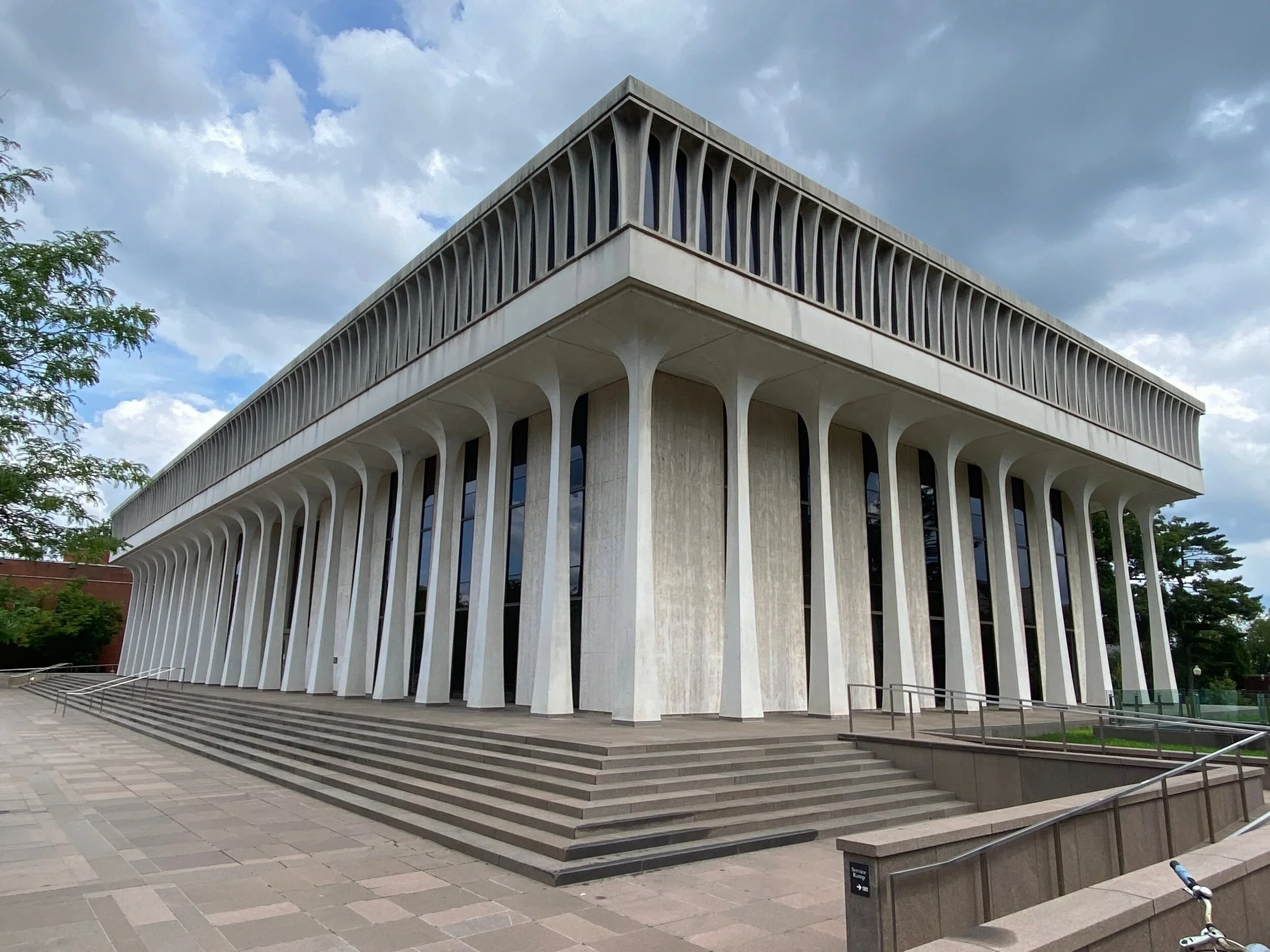
Das Ergebnis auf einen Blick
Dauer: 4–5 hours: A full circuit of the campus and its immediate surroundings, best begun in late morning and finished at dusk when the neo-Gothic stonework goes amber and the Institute for Advanced Study grounds empty out.
Distanz: 3–4 miles: Nassau Hall → University Chapel → Prospect Avenue → FitzRandolph Gate → Institute for Advanced Study → Mercer Street.
Beste Zeit: Late morning into late afternoon. The campus in early evening, when the undergraduates are at dinner and the quads go quiet, performs exactly the condition Lohengrin requires: the beautiful enclosure after the knight has left.
Wetter:
Overcast is ideal: The neo-Gothic stonework is at its most itself under grey skies, the gargoyles more legible, the sense of sealed permanence more complete. Princeton in flat light looks like what it is trying to be.
Autumn is the essential season: When the oaks along Elm Drive go copper and the chapel tower disappears into low cloud, the Brabant forest has arrived in New Jersey.
Zugänglichkeit:
Entirely flat walking on paved paths and sidewalks.
All key locations are outdoors or have freely accessible exteriors.
The University Chapel interior is open during the day; check hours.
The Institute for Advanced Study grounds are publicly accessible.
Essentieller Moment:
The University Chapel with the Prelude to Act III. Not the famous Wedding March, though that arrives here too, but the full orchestral Prelude that precedes it. The moment of maximum brightness in the opera, the celebration of an arrival that is already, secretly, conditional. The chapel is the third-largest university chapel in the world, built at a secular research university as though the question of why it is here need never be raised. Standing inside it with this music, you feel both the genuine beauty and the structure of the prohibition simultaneously.
Language Anchor (German Phrase of the Walk):
Nie sollst du mich befragen / Never shall you question me
Lohengrin's condition, delivered on arrival, accepted without full understanding of what it costs. Every institution of inherited authority has a version of this compact. Princeton's version is more refined than most, which makes it harder to see and more important to name.
Wort des Weges
Frage (pronounced: FRAH-geh): Question. The word that drives Lohengrin to its destruction and Parsifal to its redemption. In Lohengrin, the question must not be asked. In Parsifal, Wagner's later, deeper reckoning with the same material, the question must be asked, and the failure to ask it is the original sin. The two operas are mirror images of each other across Wagner's career. One in which a question destroys a world, one in which the refusal to ask a question is what needs healing. Princeton, which trains its students to ask questions about everything, is built on a compact in which certain questions about the institution itself are understood. Not prohibited, but understood, to be beside the point. The Frage this walk is after is not hostile. It is the kind of question Elsa finally cannot stop herself from asking, not because she doubts Lohengrin but because not knowing has become its own form of suffering.
Thematischer Rahmen: Lohengrin
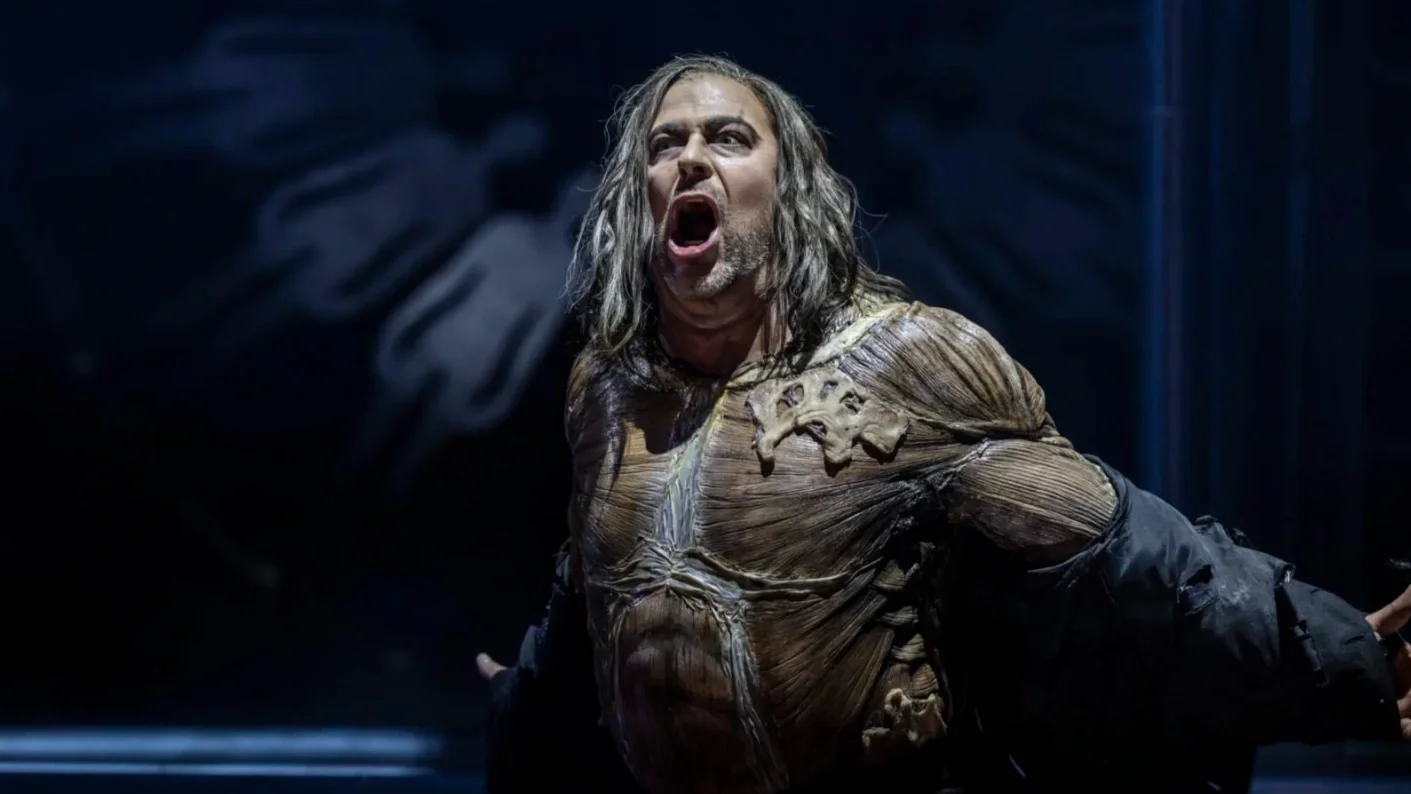
Wagner's third mature opera arrives without preamble. A single, sustained A, the highest, most ethereal string harmonics, holds for the entire first section of the Prelude, and out of it, slowly, the Grail descends. First as light, then as form, then as presence, then as music. There is no buildup in the conventional sense. The thing is simply there, hovering, and then it withdraws, and you are left in the ordinary world wondering whether you saw it correctly.
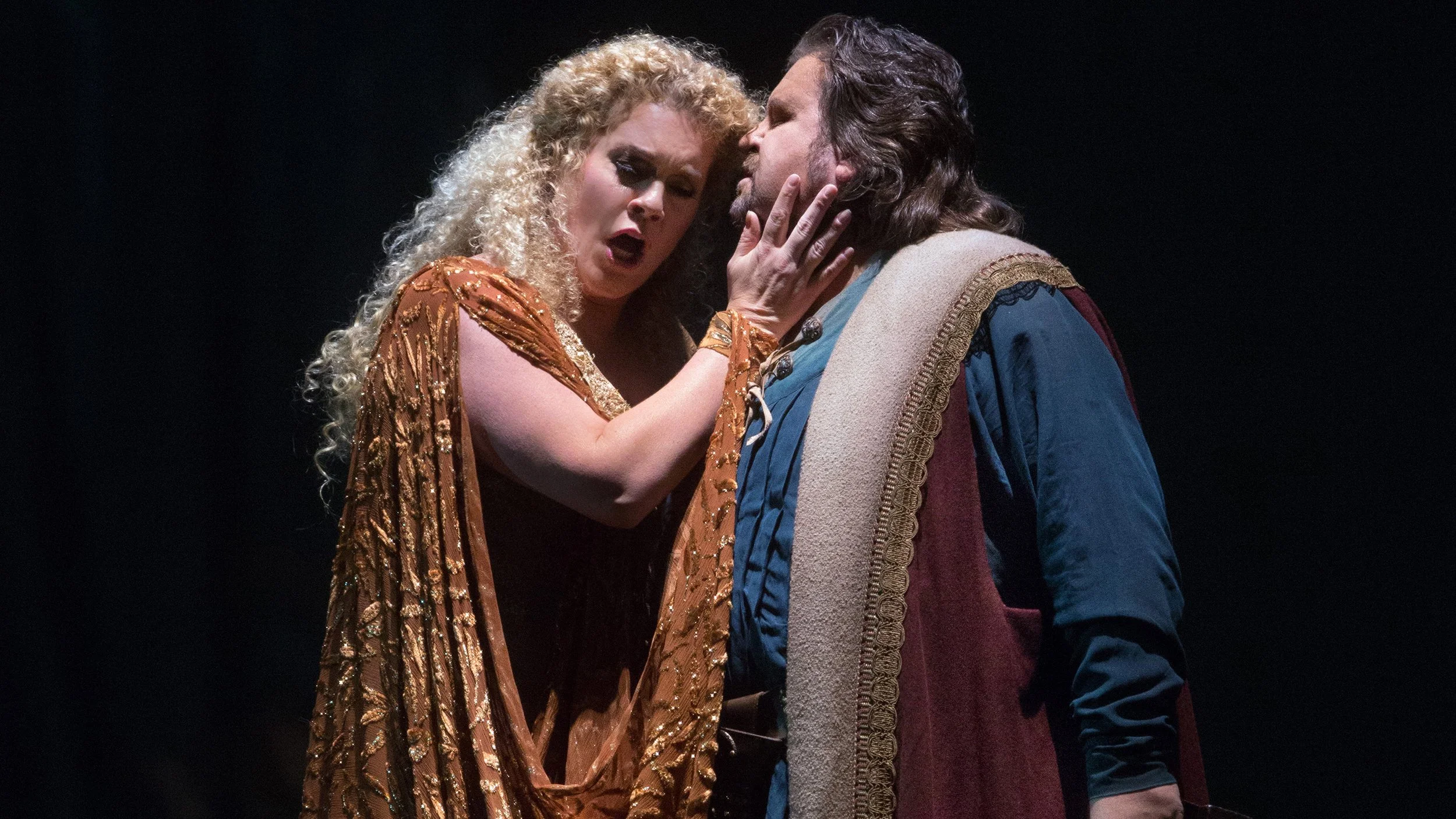
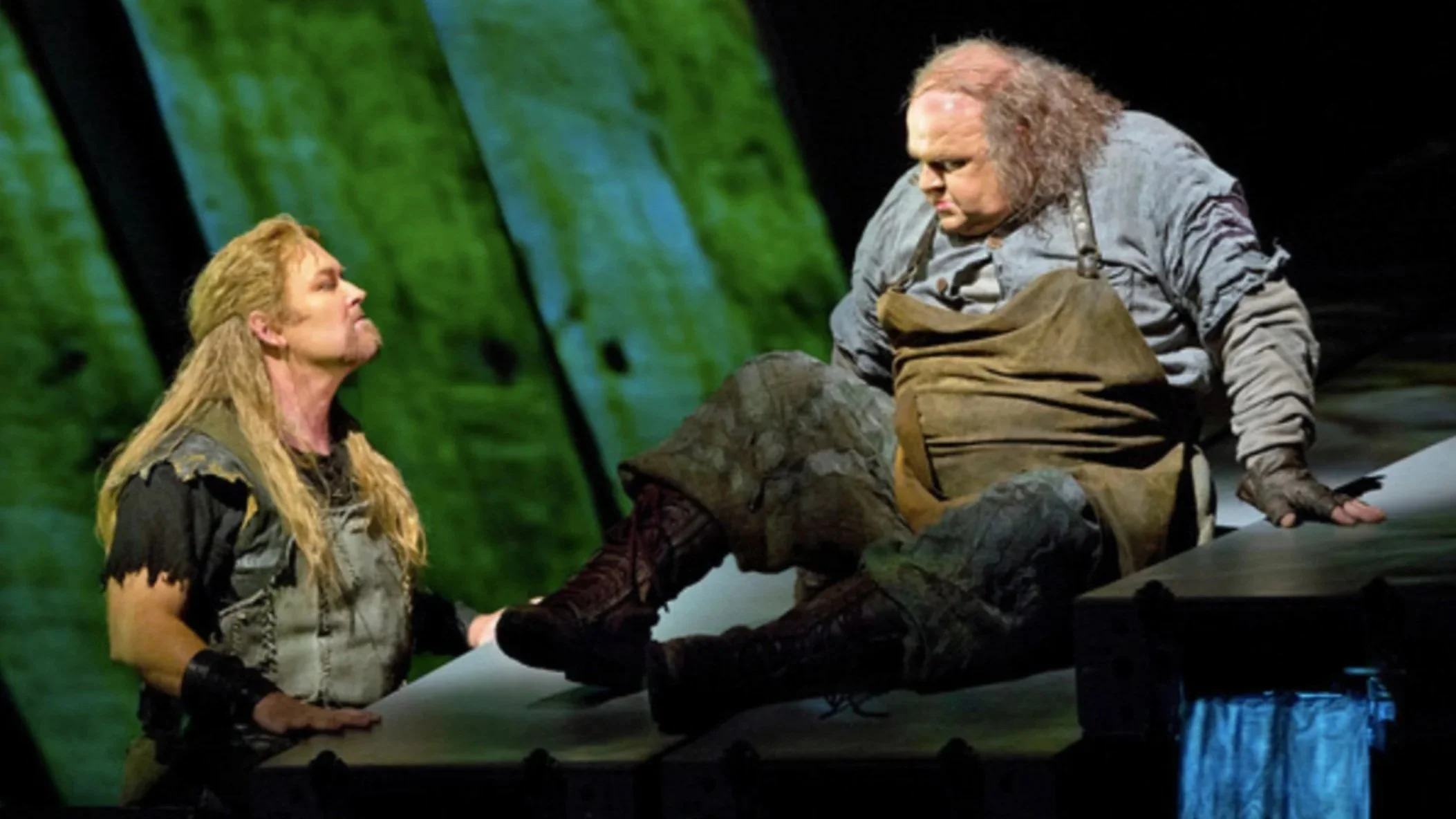
This is the logic of Lohengrin's arrival in Brabant. He comes in a boat drawn by a swan, from a direction no one recognizes, in response to a prayer that was not specifically addressed to him. He is not sent. He simply appears, as things appear when conditions are right for them. He is a knight of the Grail, though he does not say so immediately, and his authority is absolute, his intentions entirely good, and his condition entirely non-negotiable: Elsa may not ask his name, or where he comes from, or who his father is. She must take him entirely on faith, or not at all. She agrees. Of course she agrees. He is luminous, he has saved her, and the question seems abstract beside the reality of his presence.
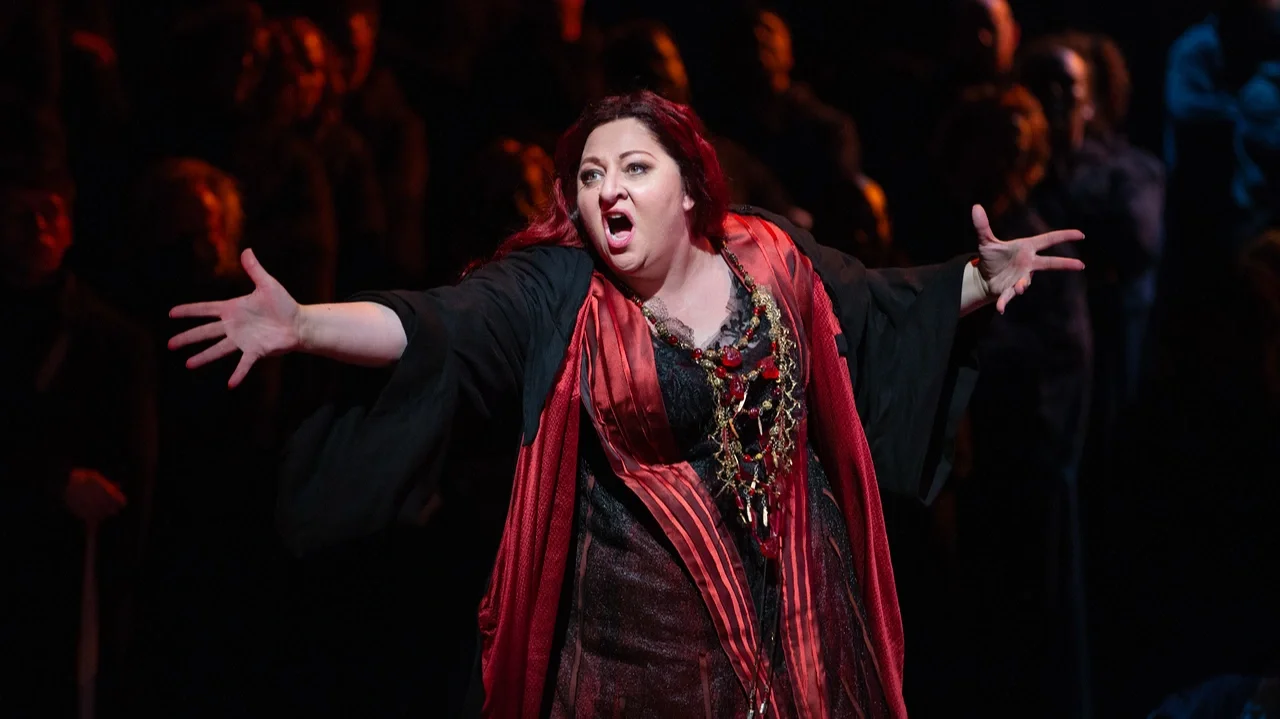
Ortrud sees the mechanism clearly. Ortrud is the opera's most intelligent figure, which is part of why she is also its villain. She understands that Lohengrin's authority is structural, not supernatural, that it depends entirely on the maintenance of a condition that is, by the standards of any honest epistemology, unreasonable. She does not attack Lohengrin directly. She plants the question in Elsa's mind. She does not even need to argue for it. She simply names the condition for what it is, you do not know who he is, and lets the logic do the rest.
By Act III, Elsa asks. Lohengrin answers, fully and without reproach. He is who he says he is. The answer, when it comes, is not a disappointment. It is simply too late. The condition has been violated. He must return to the Grail. The swan arrives. He goes. The campus of Princeton University was designed to make the Lohengrin compact architecturally compelling.
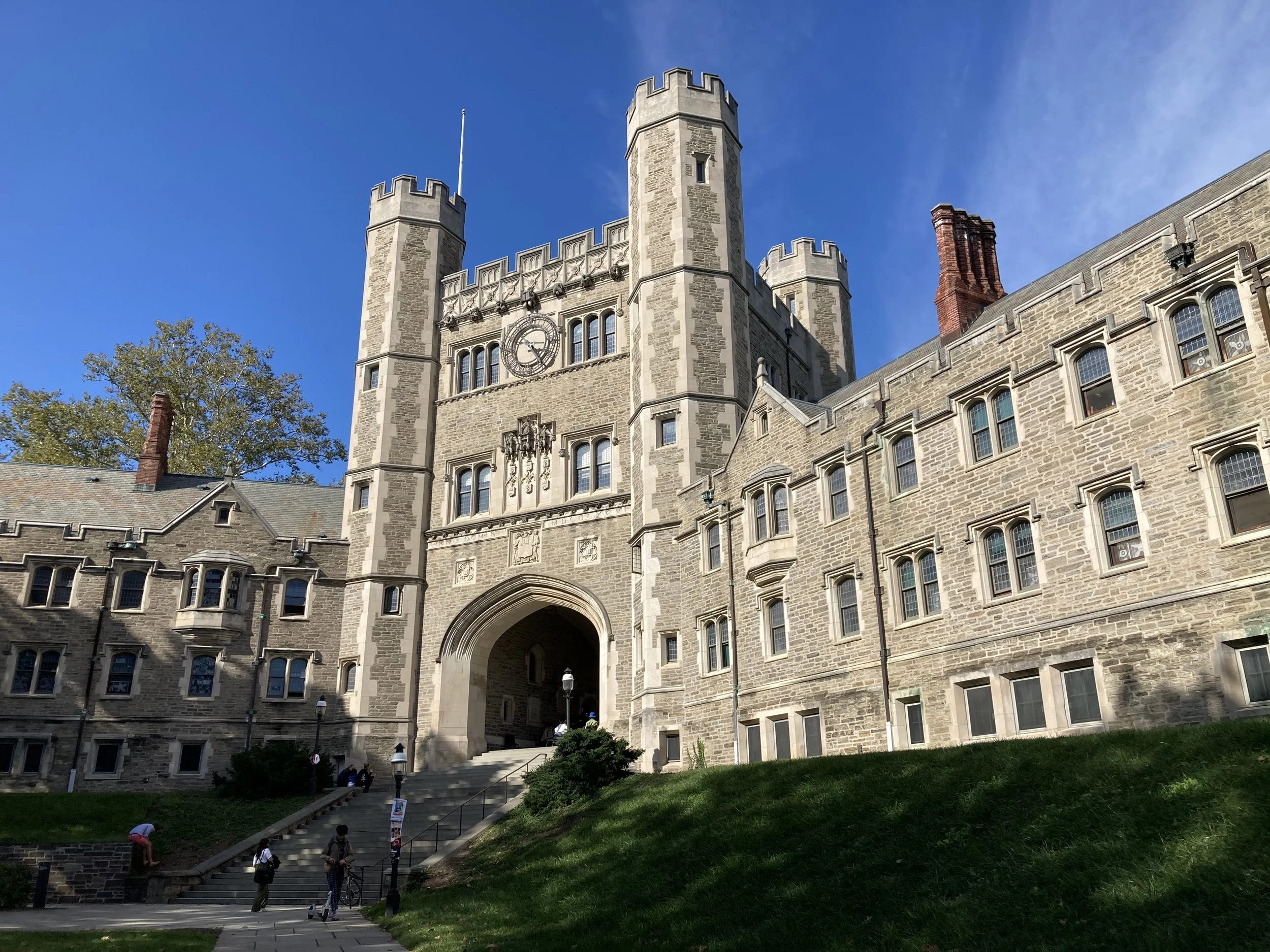
This is not a conspiracy. It is the nature of Gothic Revival as an institutional style. When Ralph Adams Cram, Princeton's supervising architect from 1907 onward, began the neo-Gothic expansion which would define the campus's character, he was making a deliberate argument. That the pursuit of knowledge required a particular kind of enclosure, that the forms of medieval scholarship. The cloister, the chapel, the great hall, the gatehouse, were not merely decorative but epistemological. The architecture says, here, inside these walls, a different set of rules applies. Here, the ordinary pressures of the commercial world are suspended. Here, something is being protected.
This is the Grail Castle logic. The castle does not make itself available to everyone. Admission is selective, conditional, and comes with obligations that are not fully articulated at the point of entry. Inside, something extraordinary is preserved. Outside, the world is otherwise.
Woodrow Wilson understood this better than anyone. As Princeton's president from 1902 to 1910, he reorganized the curriculum with genuine brilliance. The precept system he introduced is still running, and then overreached catastrophically, attempting to abolish the eating clubs (he lost) and to relocate the graduate school to the center of campus against the wishes of the dean (he lost again, and resigned to run for governor of New Jersey). Wilson's Princeton career ended in defeat. His great insight, that the selective social machinery of the eating clubs was corrupting the democratic intellectual mission the university claimed, was correct, and he lost anyway, and then went to Washington and built a foreign policy architecture with the same authoritarian idealism and the same blindness to the social machinery that would undermine it. The League of Nations is Wilson's graduate school: the right idea, the wrong coalition, the same defeat.
This is Lohengrin's structure: a figure of genuine authority, genuine good intentions, and a condition of immunity from questioning that makes the whole enterprise, eventually, untenable. Princeton is where this argument has been running, in Gothic stone, since 1756.
Die Ankunft: Nassau Hall
Getting There
From Princeton Junction, take the Dinky, the shortest scheduled rail line in the United States, a single-car shuttle connecting the main line to the campus, to Princeton station.
The Dinky is the walk's first gift. Two minutes, one car, a dedicated track that goes nowhere else. A transport system whose entire purpose is to deliver you to this particular place. Lohengrin's swan, scaled for New Jersey Transit.
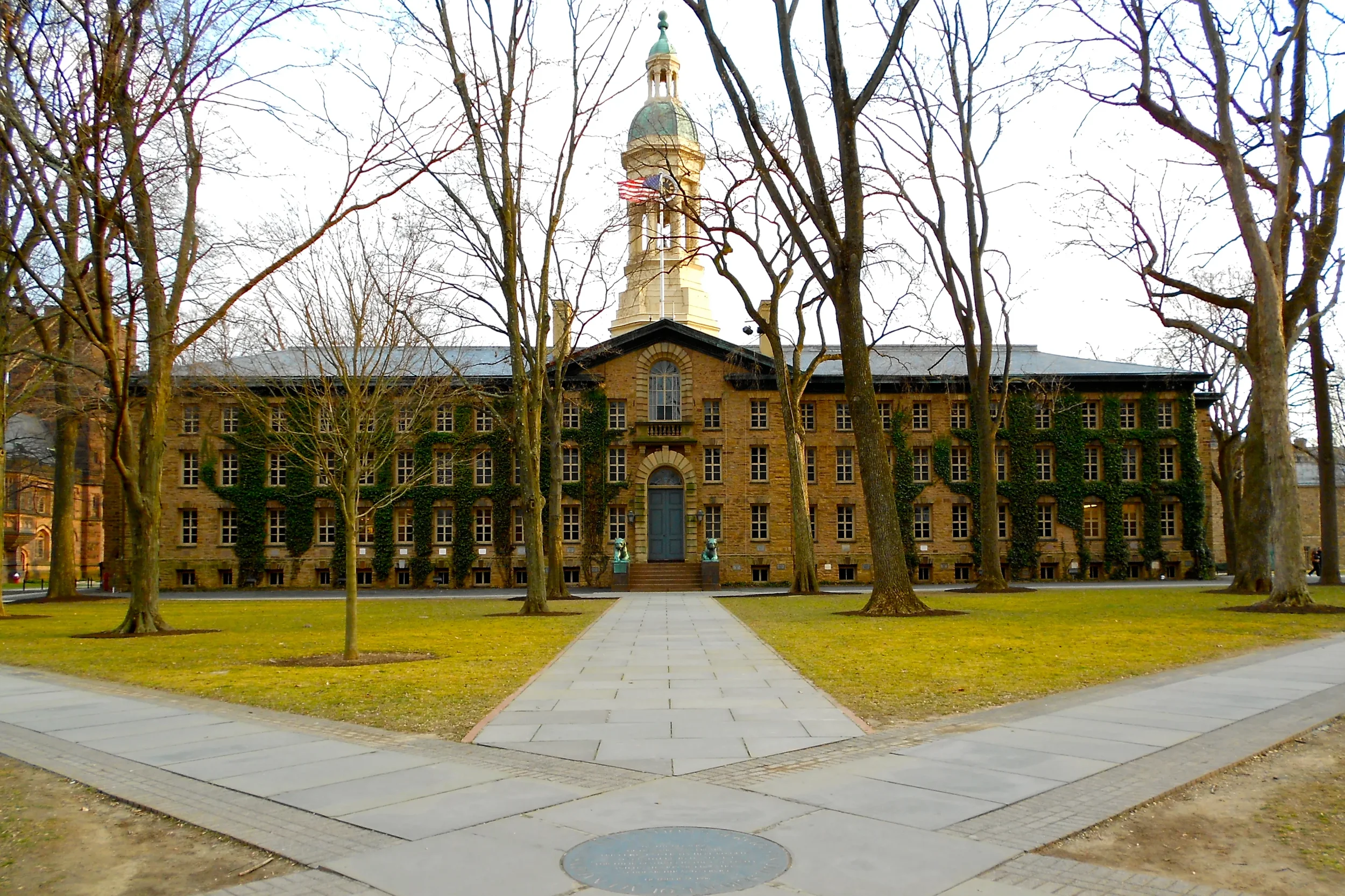
Walk north from the station along University Place. Nassau Hall appears ahead of you at the end of the path: the oldest building on campus, 1756, built of local brownstone in a plain Georgian style that predates the Gothic Revival by 150 years and sits in deliberate contrast to everything built around it since.
Track: Lohengrin, Prelude to Act I
Track: Lohengrin, Prelude to Act I
Begin the Prelude as Nassau Hall comes fully into view. Time it so the opening, weightless string harmonics arrive while the building is still at a distance, and the slow descent of the Grail theme accompanies your approach down the path.
What Nassau Hall Is
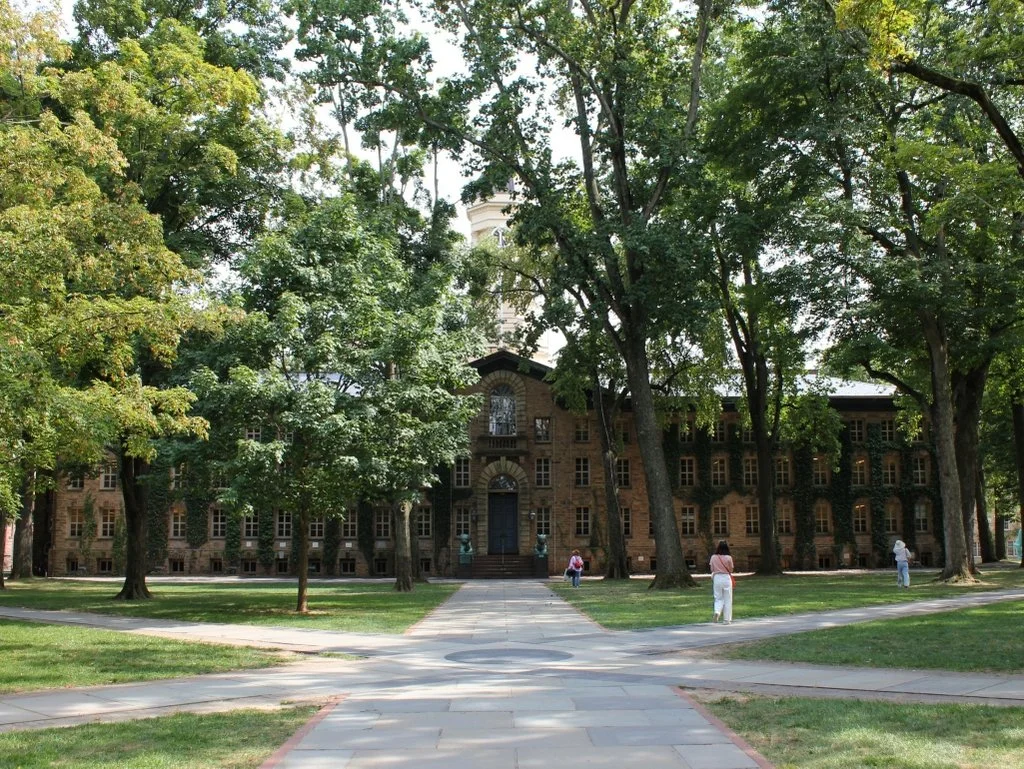
Nassau Hall was, at the time of its construction, the largest stone building in the colonies. It housed the entire College of New Jersey, classrooms, library, dining hall, and dormitories, under a single roof. During the Battle of Princeton in January 1777, it was occupied sequentially by British and American forces and cannonballed by both. The damage was repaired. In 1783, the Continental Congress met here for four months when Philadelphia became uninhabitable due to a mutiny of unpaid soldiers. It was briefly, technically, the capital of the United States.
The building has been remade twice after fires and has served continuously since 1756 as the seat of Princeton's administrative authority. The Faculty Room inside contains portraits of every Princeton president, George Washington among them (a replacement portrait, the original was destroyed in one of the fires). The bell in the cupola still rings the academic hours.
Nassau Hall does not look like the rest of Princeton. It predates the Gothic argument. It is plain, serious, and load-bearing in both the structural and metaphorical sense. Everything else on the campus, the chapels, the cloisters, the dining halls with their hammer-beam ceilings, exists in relation to this building's precedence.
Lohengrin's arrival in Brabant does not require Gothic architecture. He arrives in a plain boat, drawn by a swan. The miracle is prior to the style. Nassau Hall is the prior miracle. Everything that followed is the style that was built around it.
The Memorial Porch
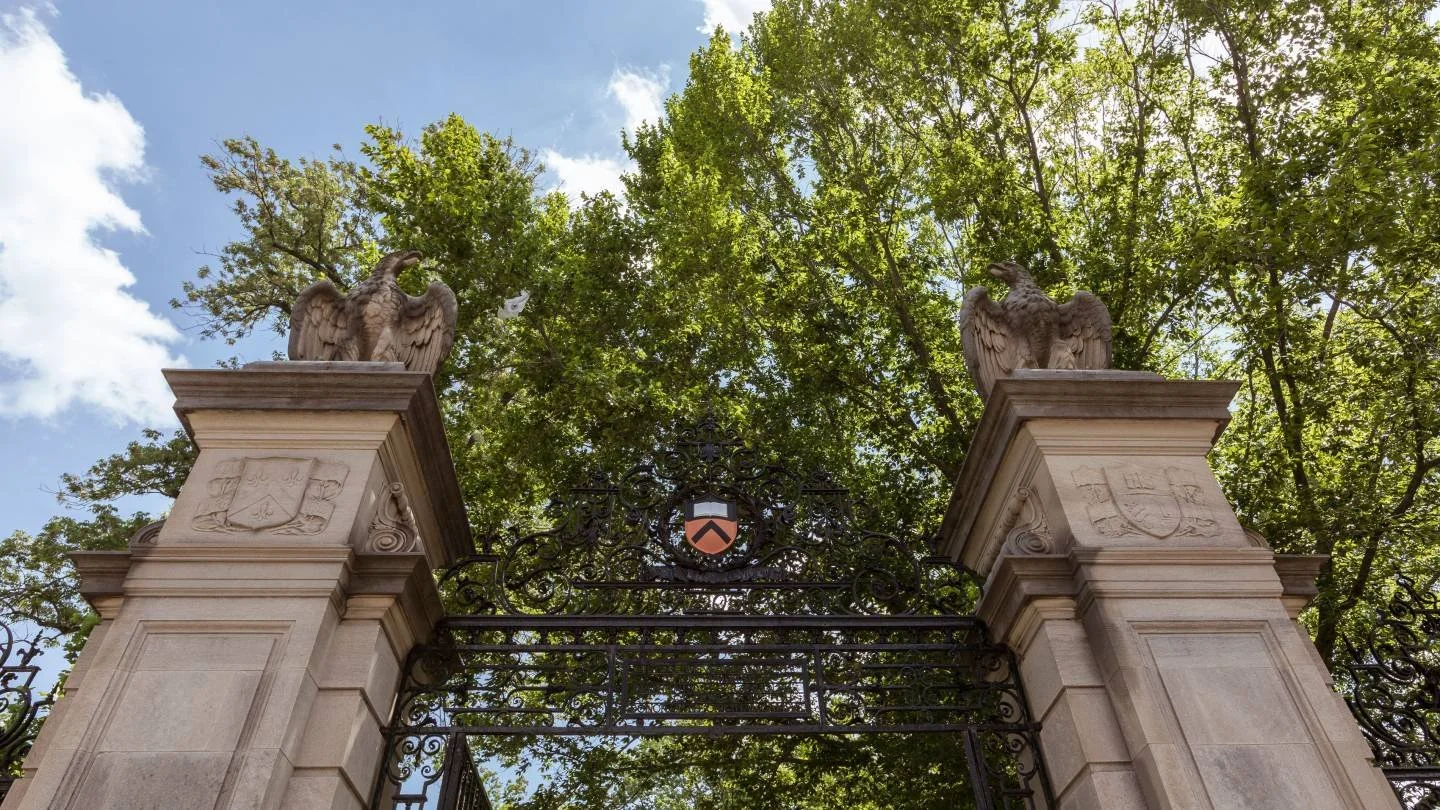
Stand under the Memorial Porch, the columned entrance on the south facade facing the main lawn. The lawn between Nassau Hall and the FitzRandolph Gate, the main ceremonial entrance to the campus, is called the Front Campus. At graduation, students process through FitzRandolph Gate in one direction. The tradition holds that undergraduates do not pass through the gate in the other direction before Commencement, because to do so would be to symbolically leave before you have finished. The gate is a threshold whose logic runs only one way until the correct moment.
This is Lohengrin's condition given architectural form. You may enter. You may not ask certain questions while you are here. When you leave, when the condition of your stay has been fulfilled or violated, the gate opens in the other direction. Let the Prelude conclude here, standing at the building's entrance. The Grail descends and withdraws. Nassau Hall remains.
Das Heiligtum: Die Universitätskapelle
Walk: From Nassau Hall to the Chapel
From the Memorial Porch, walk northwest across the main quad, past Whig and Clio Halls, the two debate societies, founded 1765 and 1770, housed in identical Greek Revival temples facing each other across a small lawn like formal arguments, and continue toward the University Chapel on the northwest edge of the main campus.
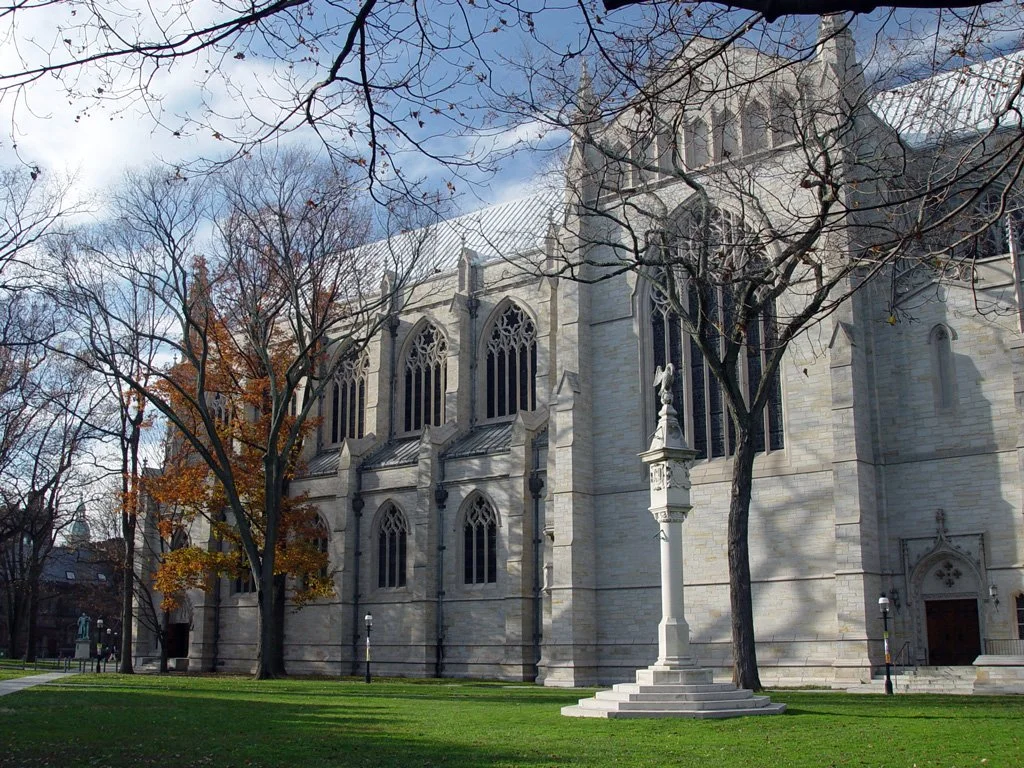
The Chapel becomes visible from some distance. Its tower rises 84 feet, the limestone façade occupies the full western edge of the campus core. It is not possible to approach it casually. The building insists on itself.
The Chapel: What It Is Doing Here
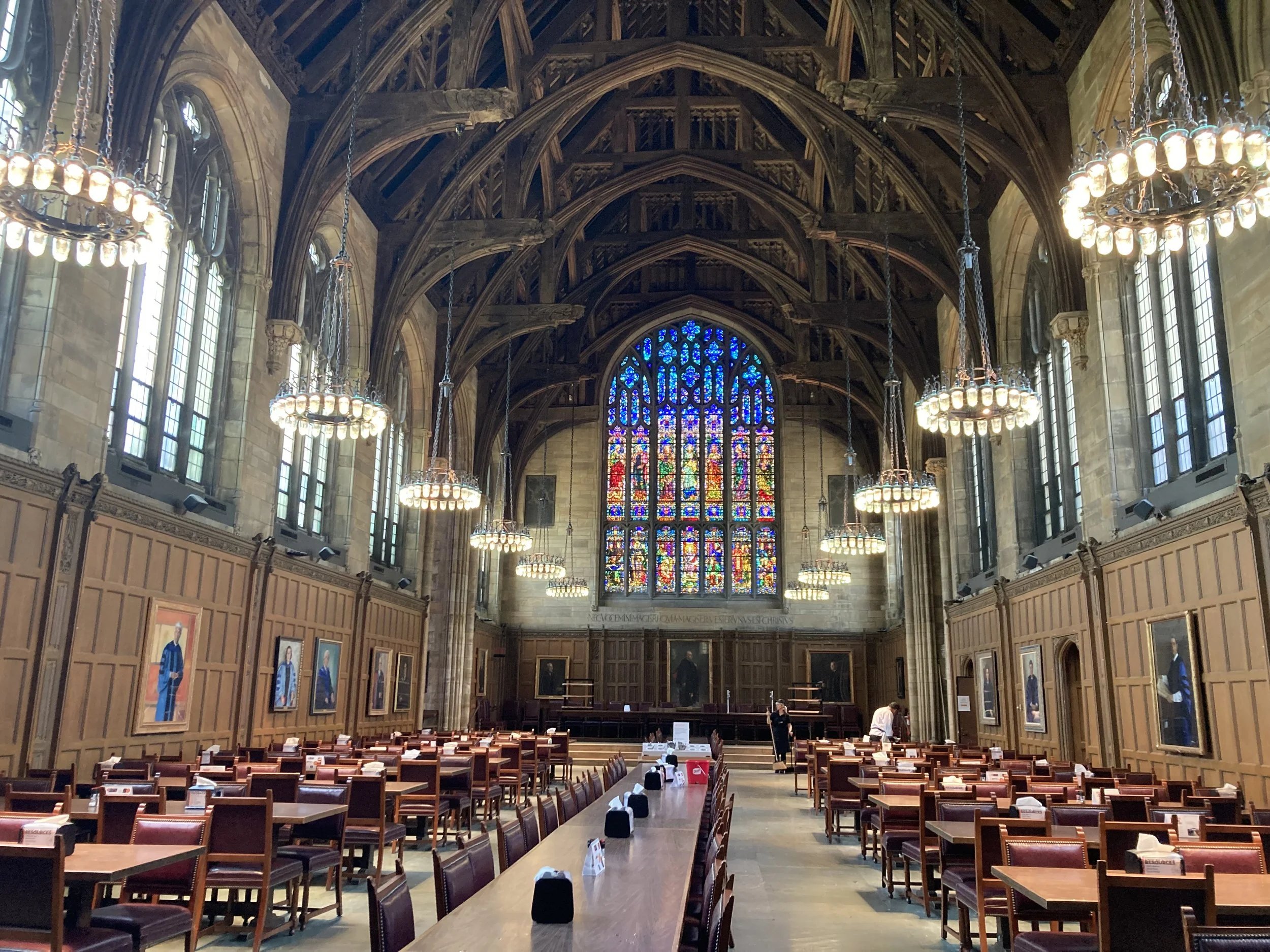
The University Chapel was built between 1924 and 1928 to a design by Cram and Ferguson. It seats 2,000. It is the third-largest university chapel in the world. Princeton University had formally severed its ties with the Presbyterian Church in 1868. The Chapel was built sixty years later.
This is not a contradiction that Princeton has ever felt the need to explain. The building is there because certain forms of authority require certain kinds of architecture, and a Gothic chapel is one of the most legible forms ever devised for encoding the proposition that what happens inside this enclosure is different in kind from what happens outside. You do not need to share the theology to feel the argument. The building makes it in stone, regardless of what you believe.
Cram was explicit about this. He believed that the Gothic was not a historical style but a living form, the most perfect architectural expression of the aspiration toward something beyond the material, and that a university, which also aspires toward something beyond the immediately material, was therefore a natural Gothic institution. The argument is circular and it works. You walk into the Princeton Chapel and you feel it working on you, whether or not you want it to.
Walk: Inside the Chapel with Act I
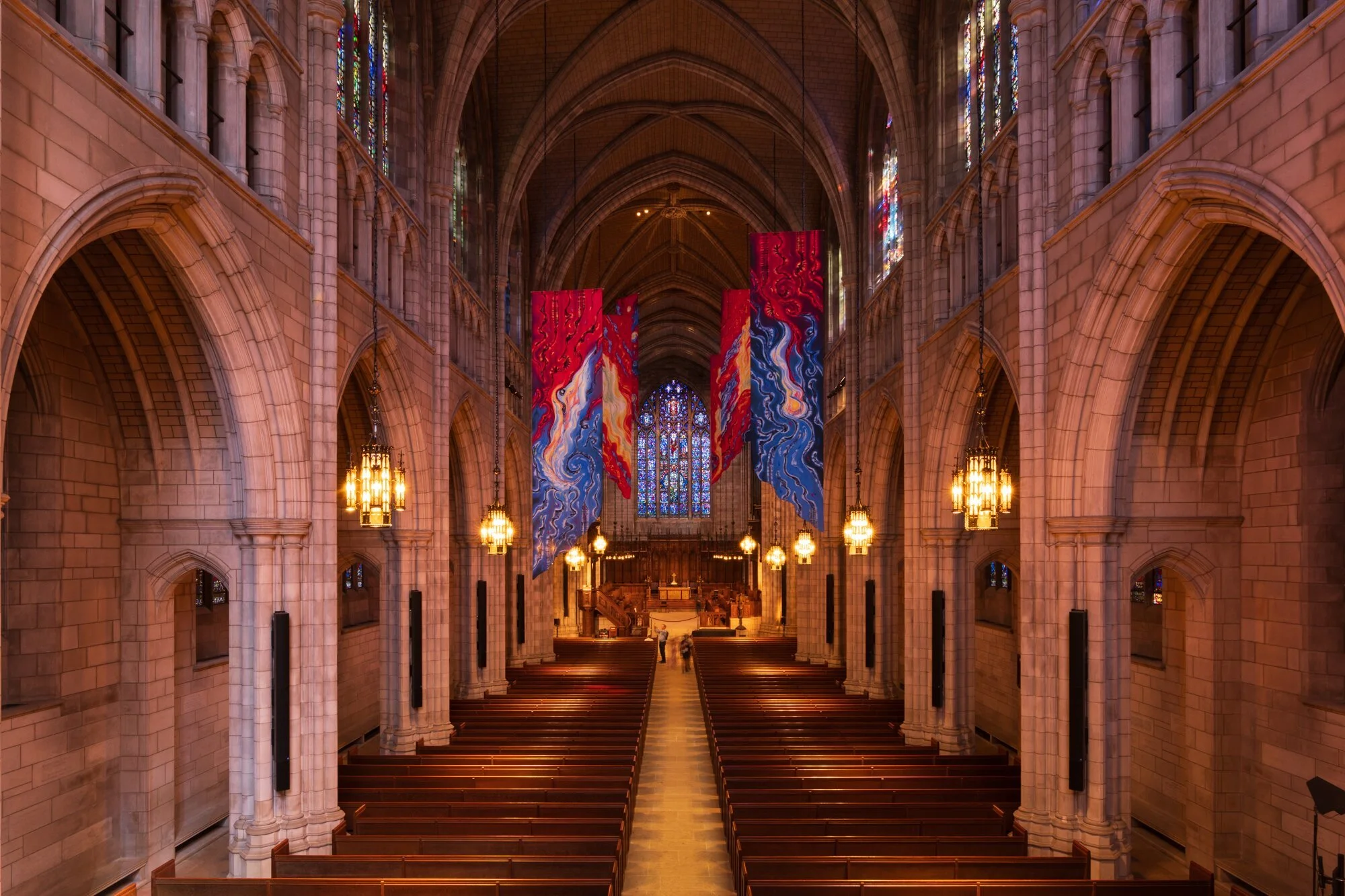
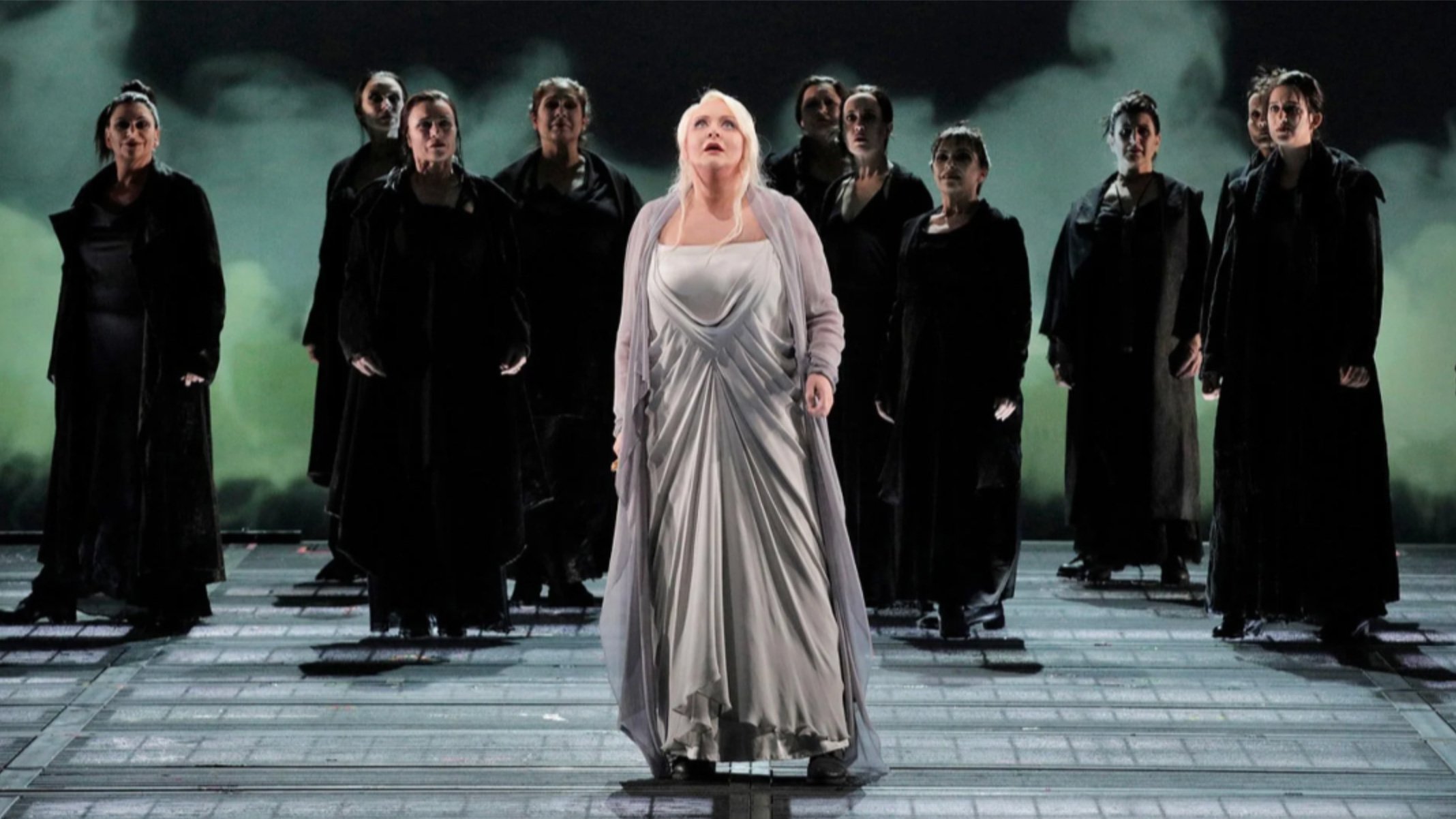
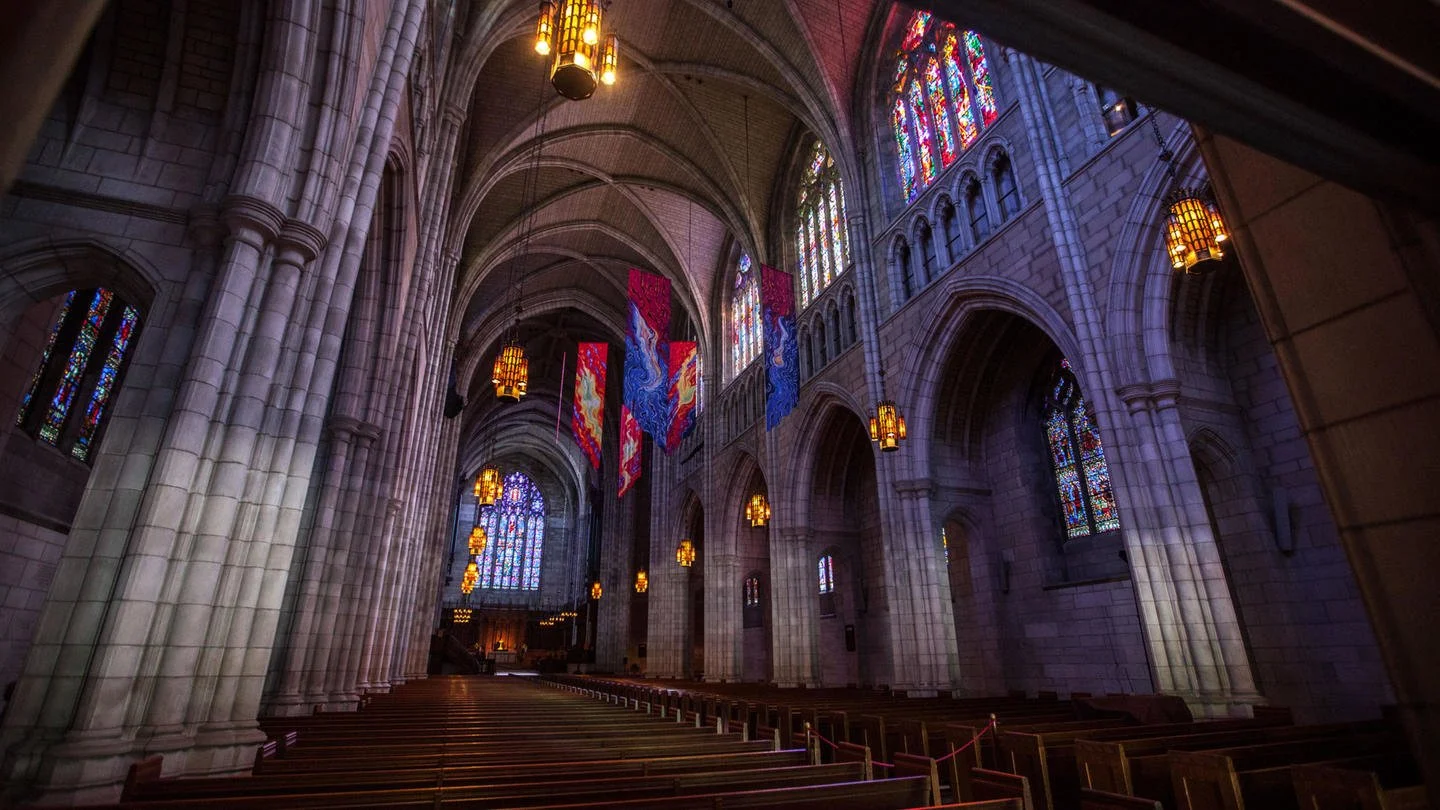
Enter the Chapel and find a seat near the center of the nave, below the great east window. Elsa's vision is the aria in which she describes what she saw in a dream. A knight in shining armor coming to her, brilliant and pure, sent to protect her. She is describing Lohengrin before he arrives. She has, in some sense, called him into existence through the intensity of her need. The aria is not a request. It is a testimony. She has seen something and she knows it to be true and she does not need anyone to confirm it.
The Chapel's nave is designed to produce exactly this quality of experience. The stone, the light through the medieval glass, the height of the vaulted ceiling, the scale that makes the individual body feel both contained and elevated. This is the architecture of vision: a space built to make certain kinds of perception feel more real, more authorized, than they would in the open air.
Let the aria play in full. Watch the light through the windows. Notice how the building frames the sky into colored patterns, how it converts ordinary daylight into something categorically different simply by filtering it through leaded glass and stone. Elsa does not need evidence for what she has seen. She has seen it. The chapel was built for this relationship to knowledge: not the epistemology of the seminar room, but the epistemology of vision. Of things known by a different faculty than argument.
Princeton trains both. The seminar room and the chapel stand two hundred yards apart on the same campus. The question of how they relate to each other is one that the institution has chosen, wisely, not to answer definitively.
Track: Lohengrin, Act III Prelude and the Bridal Chorus
Before leaving the Chapel, sit for the Act III Prelude. The most extrovert, brassy, fully orchestrated music in the opera, a fanfare for arrival and celebration, and the prelude to the act in which everything falls apart. The Bridal Chorus follows it almost immediately: Treulich geführt, the piece that became the Western wedding march, played at hundreds of thousands of weddings by people who do not know that in the opera it is heard in the moments just before Elsa asks the question that destroys the marriage.
The Prelude does not know this yet. It is pure celebration, pure bright brass, pure uncomplicated joy. The beauty is not ironic. The irony arrives in the next scene. For now, let the Prelude be what it is, in this building that was designed to make certain things feel true beyond the reach of argument. Walk out into the sunlight.
Ortruds Reich: Prospect Avenue
Walk: From the Chapel to the Street
From the Chapel, walk south through the campus, past the Holder Hall courtyard. The most purely Gothic space on the main campus, a cloister in the full sense, with covered walkways, a central lawn, and an archway that frames the sky in a pointed arch, and continue south to Prospect Avenue.
Prospect Avenue
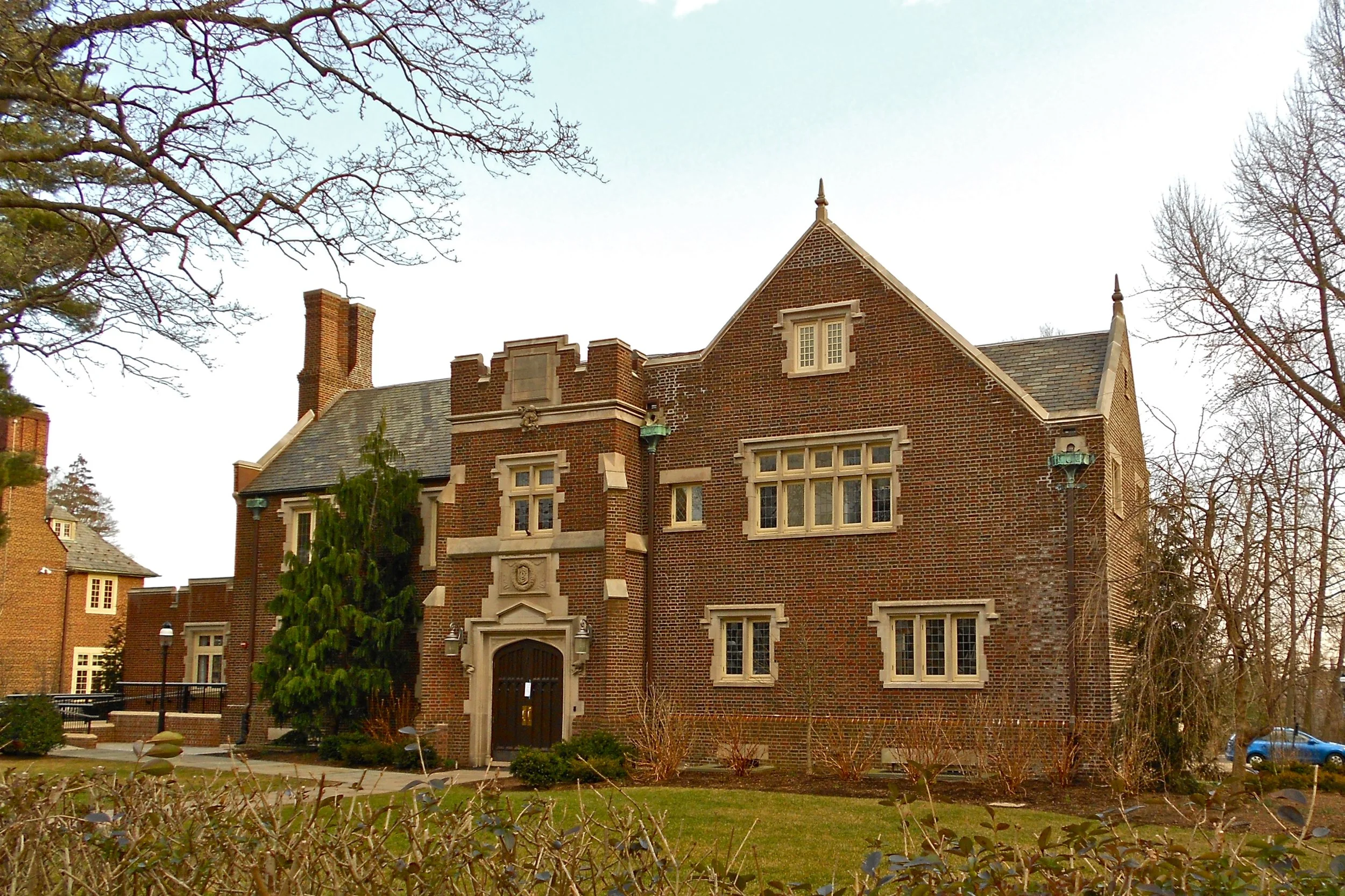
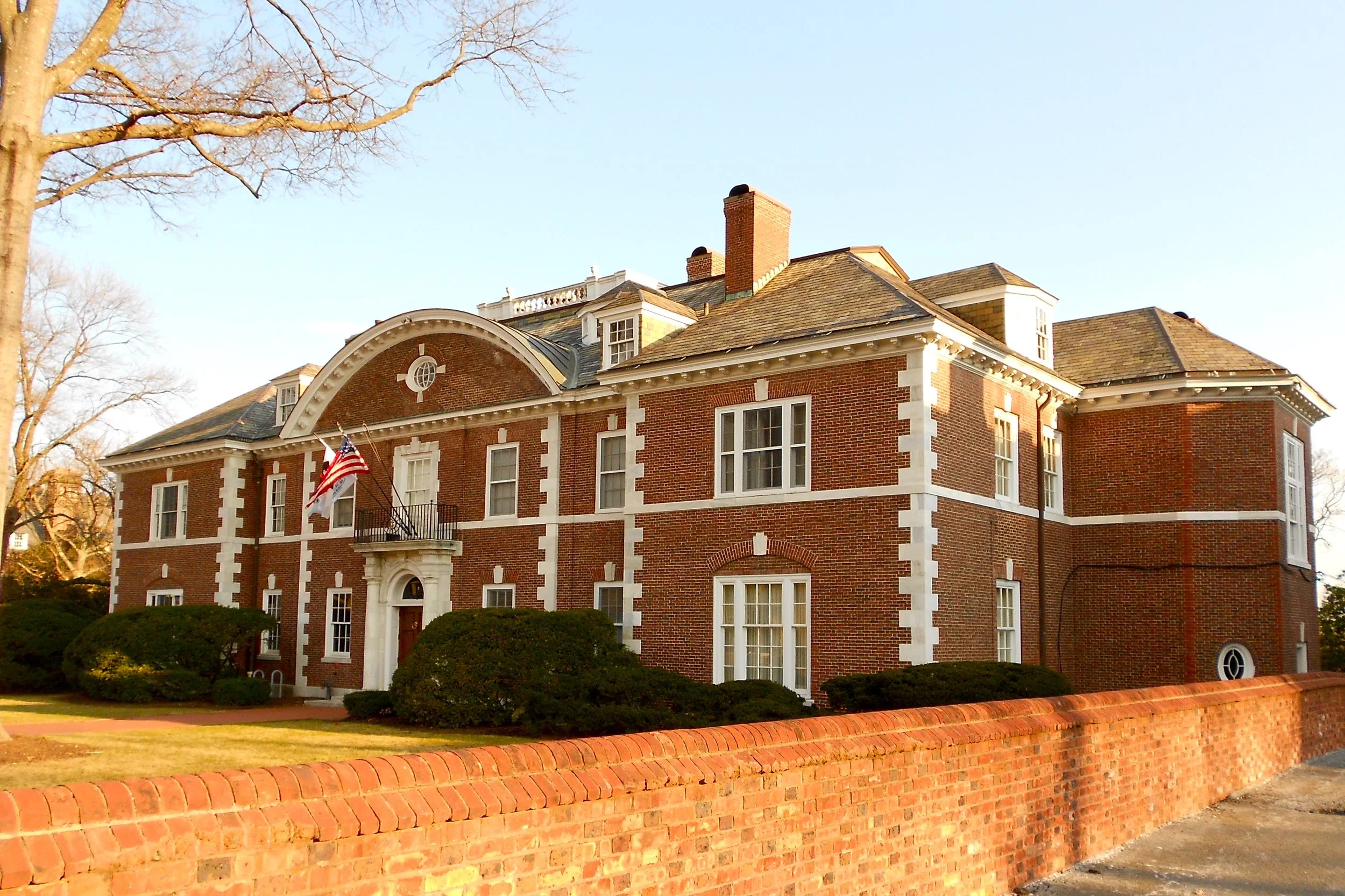
Prospect Avenue runs east–west along the southern edge of the main campus. On its north side, backing onto the campus, is Prospect House, the official residence of the university president. A large Victorian mansion surrounded by formal gardens, the one building on the avenue that belongs to the institution. On its south side, facing it across the street, are the eleven eating clubs.
The eating clubs are Princeton's most distinctive and most discussed social institution. They are private organizations, housed in large buildings ranging from the grandly Gothic to the quietly Georgian, which serve as the primary social venues for upperclassmen. Membership is through either a selection process called bicker, in which clubs evaluate and choose prospective members over several days of social interaction, or a sign-in process open to all. Roughly three-quarters of Princeton upperclassmen belong to a club. The clubs are not officially part of the university, a distinction that has been legally and socially useful to both parties.
Woodrow Wilson spent his presidency trying to abolish them. He understood that a system of selective social membership, operating at the center of campus life during the years when social networks form, would inevitably reproduce the class and ethnic hierarchies that existed outside the university, regardless of how meritocratic the admissions process had become. He was right. He lost. The clubs are still there.
F. Scott Fitzgerald was rejected by the club he wanted during his time at Princeton, 1913–1917. He did not finish his degree. He turned the experience into This Side of Paradise, his first novel, which made him famous. Princeton gave him the wound and the material simultaneously, and he spent the rest of his life not quite able to leave either behind.
What This Street Is
Ortrud in Lohengrin is not a villain in the simple sense. She is a person who sees the mechanism of power clearly and uses that clarity for destructive purposes because the mechanism has already excluded her from its benefits. Her husband Telramund has been ruined by association with Elsa's false accusation. Ortrud has lost her position, she is watching from outside while Lohengrin, who arrived from nowhere with a condition no reasonable person should have accepted, receives everything she has been denied. Her intelligence is real. Her analysis is correct. The thing she cannot do is direct it toward anything except destruction, because construction is not available to her in the world the opera inhabits.
The eating clubs are, in this reading, the mechanism Ortrud understands. They do not determine who gets the credential. But they shape who carries it with ease, who arrives at the interview with the right accent and the right reference, who navigates the first decade of professional life with the particular frictionlessness that comes from having been selected, repeatedly, by the people who do the selecting. The bicker process is training for everything that follows it. So is not making it through bicker.
Walk the length of Prospect Avenue slowly, from Ivy Club at the east end to Charter Club at the west, reading the buildings as you go: the varying degrees of grandeur, the flags and the locked doors, the sounds from inside that reach the street on weekday evenings. You are on the outside of something with a clear inside. That is Ortrud's position and it is the position this walk assigns you here.
Ortrud's invocation of the old gods in Act II is Wagner at his most chromatic and unresolved. The music is restless, dissonant, refusing the melodic clarity that surrounds Lohengrin and Elsa, and it is the most honest music in the opera. It does not aspire. It analyzes. It is the sound of someone who has understood the structure and cannot look away from what the understanding reveals. Walk the full length of the street. Let the analysis run.
Die Frage: FitzRandolph Gate
Walk: Back Through Campus to the Main Gate
From the western end of Prospect Avenue, re-enter the campus through a side gate and walk north back toward Nassau Hall, then continue to the FitzRandolph Gate on Nassau Street.
FitzRandolph Gate
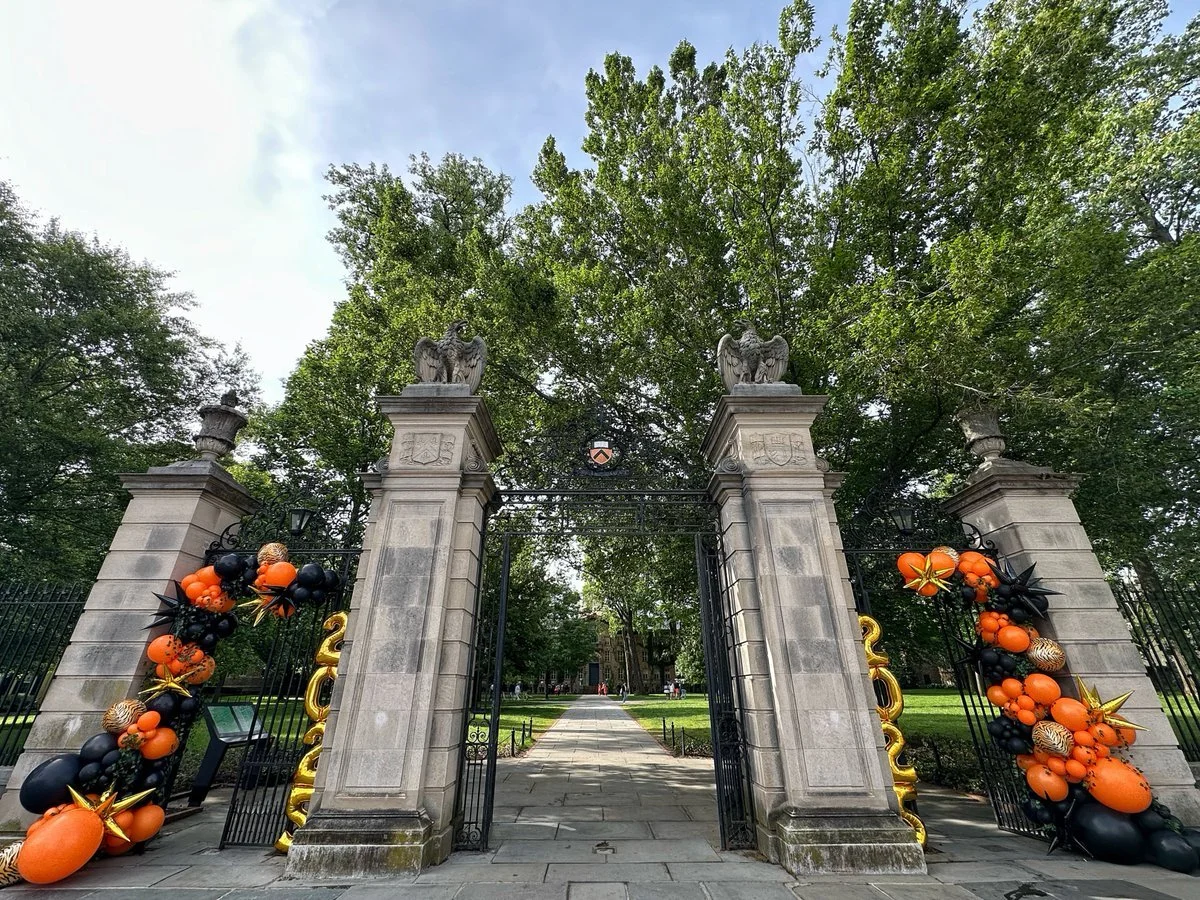
The FitzRandolph Gate is the main ceremonial entrance to Princeton's campus, a wrought-iron gate set between two stone pillars on Nassau Street, facing the town. It was donated in 1905 by Nathaniel FitzRandolph, whose family had donated the original land for the College of New Jersey.
The tradition: Undergraduates do not pass outward through the FitzRandolph Gate before their graduation. The gate opens outward at Commencement, when the graduating class processes through it in reverse, symbolically leaving the protected world of the campus for the first time. After that, they may pass through freely in either direction. Before it, the gate runs only one way.
This is the most literal enactment of the Lohengrin compact anywhere in Princeton. You entered under conditions. The conditions include a directionality. You may not leave before the term is complete, or rather, you may physically leave, but to pass through this gate before graduation is to acknowledge, symbolically, that you have surrendered the specific protection that Princeton offers, the protection that operates only while you are inside and asking only the questions the institution has authorized.
Elsa can stay with Lohengrin indefinitely, in principle, as long as she does not ask. The question, when it comes, comes not because she has been deceived about what she is giving up. She has been told exactly what the condition is. The question comes because not knowing has become its own form of suffering, because the prohibition against asking is itself a form of knowledge, and the knowledge of what you are not allowed to know is indistinguishable, eventually, from the knowledge itself.
Track: The Question Scene
Stand at the FitzRandolph Gate facing outward, toward Nassau Street and the town.
The question scene is not a dramatic explosion. It is quiet, almost tender. Elsa has been building toward this for two acts and when it comes it is almost a relief, an exhalation. Lohengrin's answer is immediate and full. He was not hiding in shame. He was protecting something. The answer is, I am Lohengrin, knight of the Holy Grail, son of Parsifal. I was sent to help you. The name is not a revelation that diminishes him. It is simply a name. But the condition has been violated, and the condition was the structure, and without the structure he cannot remain. Let the scene play in full, standing at the gate. Then walk through it, outward, into Nassau Street.
Der Schwan kehrt zurück: Das Institut für Höhere Studien
Walk: From Nassau Street to the Institute
From the FitzRandolph Gate, turn left on Nassau Street and walk west for about half a mile, then turn south on Olden Lane toward the Institute for Advanced Study.
The Institute sits about a mile from the main campus. Close enough to be part of Princeton's intellectual atmosphere, far enough to be institutionally separate. It was founded in 1930, opened in 1933, and was from the beginning a different kind of institution. Not a university, not a degree-granting body, but a place where scholars of the highest level could work without teaching obligations, without administrative demands, without any requirement except the pursuit of their own research.
Einstein arrived in 1933, fleeing the collapse of Germany. He had been planning a part-time appointment. By the time he arrived, there was nothing to return to. He stayed until his death in 1955. He lived, for twenty-two years, at 112 Mercer Street.
The Institute Grounds
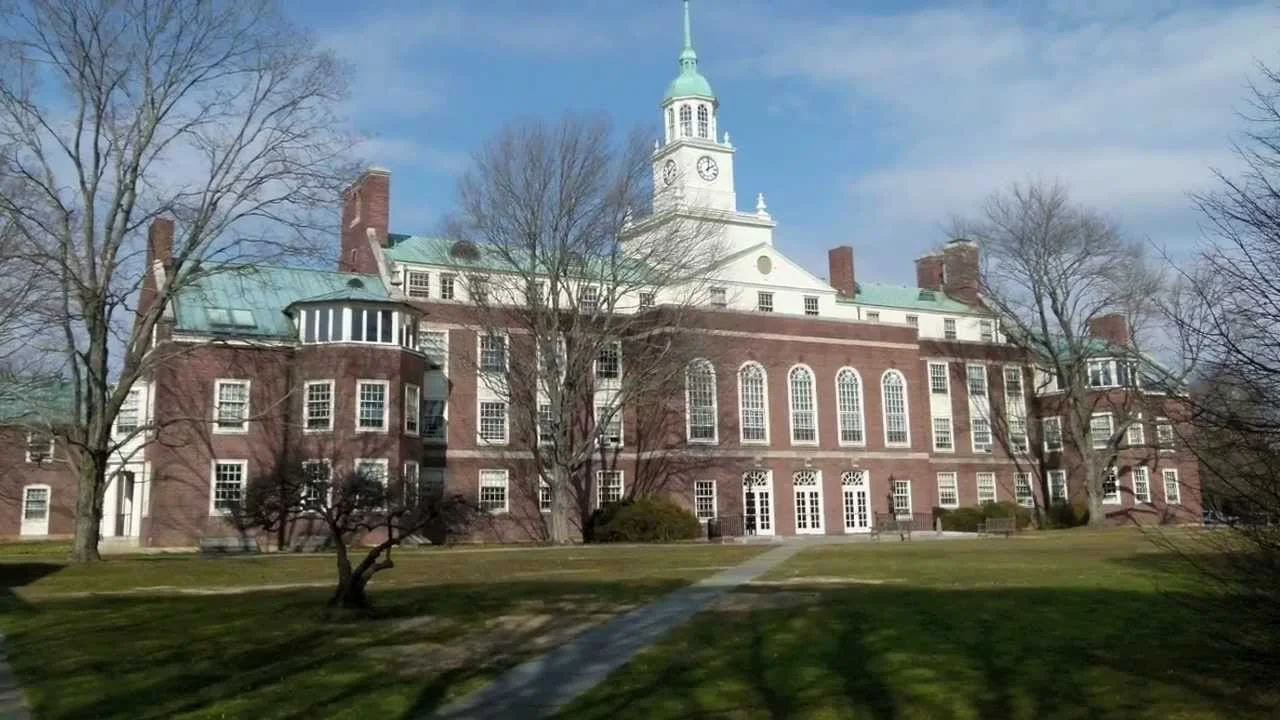
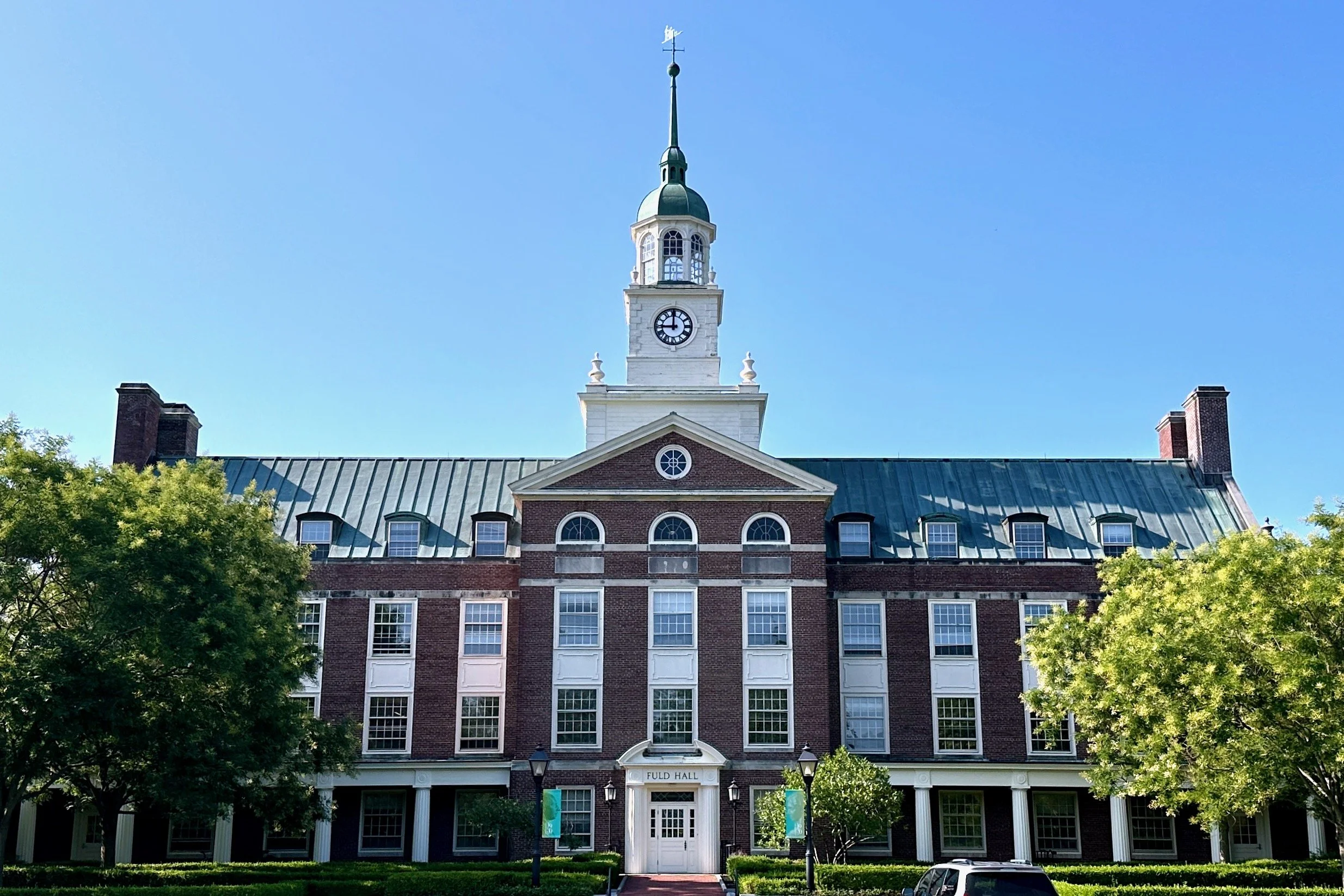
The Institute's main building, Fuld Hall, sits at the end of a long approach through open grounds. Meadows, a pond, a wood. The architecture is collegiate without being Gothic. Georgian Revival brick, formally arranged, quiet. After the intensity of the main campus, the Institute feels like an afterward. A place where the ceremony has concluded and the real work happens in the silence that follows. This is where the walk arrives.
Lohengrin, before he departs, transforms the swan back into Gottfried, Elsa's brother, whom Ortrud had enchanted into bird form, the real victim of the opera's opening injustice. The swan was always something else. The form that carried Lohengrin to Brabant, and that now carries him away, was never simply a swan. It was a person, temporarily transformed, being used as a vehicle for someone else's journey.
What returns, when Lohengrin goes, is not what was there before. Gottfried returns as himself. Elsa, who has lost the knight, has also recovered her brother. The exchange is not equal. The opera does not pretend it is equal. But there is a return of something, and what returns is more itself than what it replaced.
Track: Lohengrin, Act III, the farewell and departure
Walk slowly across the Institute grounds toward Fuld Hall while Lohengrin's farewell plays. Mein lieber Schwan, my dear swan, is among the most quietly devastating things in opera. A formal leave-taking addressed not to Elsa, not to the court, not to Brabant, but to the swan itself, to the vehicle of arrival that is also the vehicle of departure, to the form that will dissolve once the journey is complete.
Einstein spent the last years of his life at the Institute working on unified field theory. He did not succeed. The work he had done that mattered, special relativity, general relativity, the photoelectric effect, the foundational contributions, was complete. What remained was a problem he could see but could not solve. The unification of electromagnetism and gravity into a single theoretical framework. He worked on it every day. He did not solve it. He died in April 1955, asking for his notes.
The Institute preserved him, genuinely and without irony. It gave him two decades of safety and quiet and the freedom to work on the unsolvable problem. What he could not be given was the solution. That was not in the Institute's gift.
112 Mercer Street
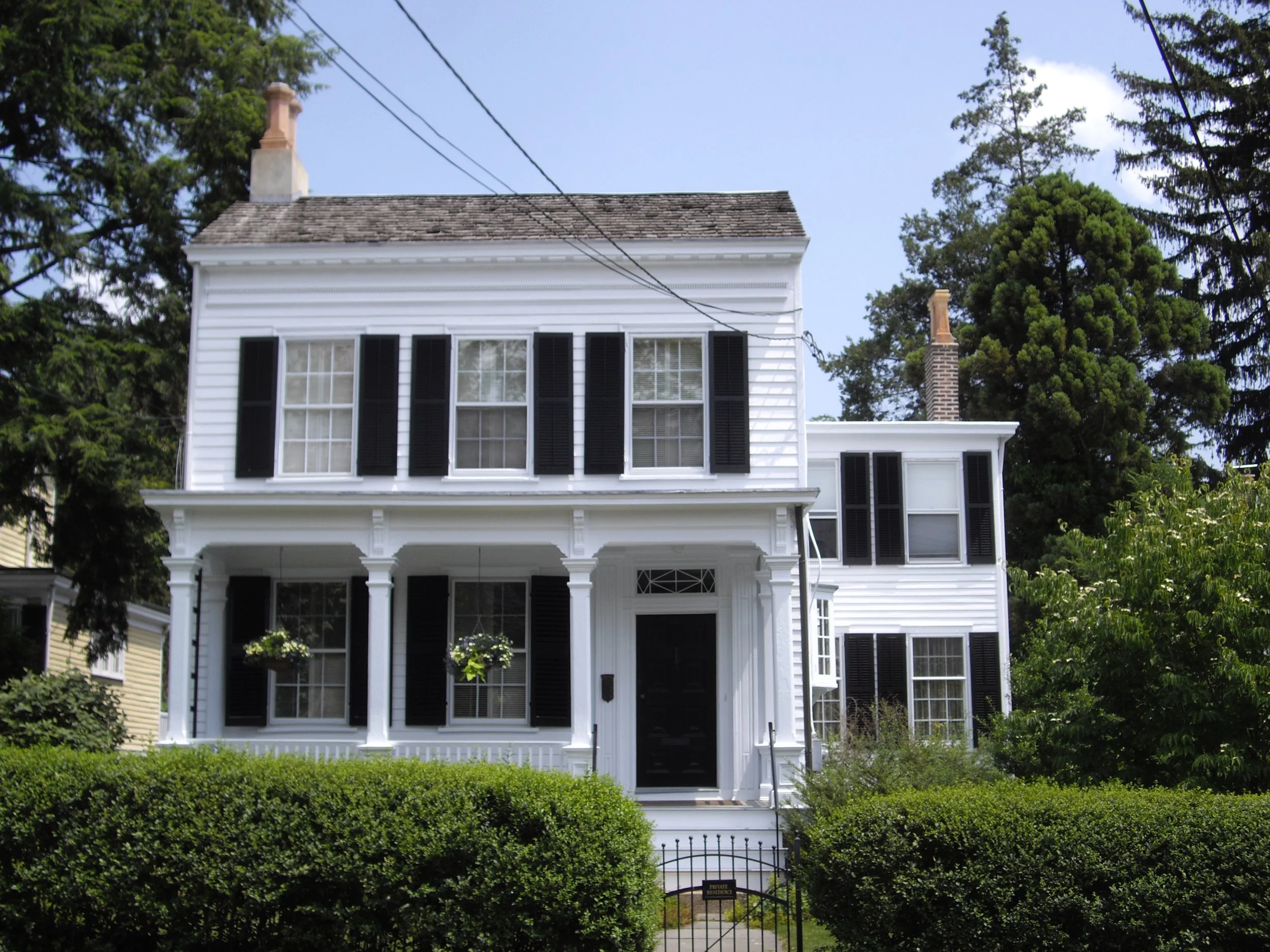
From the Institute, walk north on Olden Lane back to Mercer Street, then east a short distance to number 112. A white clapboard house set back from the road, modest, two stories, with a porch. Einstein's house. It is now private, the home of another faculty member. There is no plaque, no marker, no tourist infrastructure.
Stand on the sidewalk in front of it.
The opera ends quickly after the departure. The swan dissolves into Gottfried. Ortrud, triumphant for a moment in the revelation that her enchantment has been named, falls as Lohengrin's power finally reaches across the water. Elsa, who has lost everything, sees her brother returned, and dies. The knight's boat disappears on the horizon.
What is left is a duchy with a duke. The crisis of succession is resolved. The political problem that opened the opera is closed. Brabant has its legitimate ruler. Lohengrin's mission, in the strictest sense, is complete. What is also left is the absence of the figure whose presence organized everything around it. The people standing in the landscape after the departure. The question that was asked and answered and cannot be unasked.
112 Mercer Street has no plaque. The absence of a plaque is the most honest thing about it. Einstein is not the building. He was a person who lived here, who worked nearby, who could not solve the last problem, who died and whose absence is more present, in some ways, than any plaque could make him. The house is white. The street is quiet. The afternoon light is going.
Optionaler Abend: Stille Ausklänge auf dem Campus
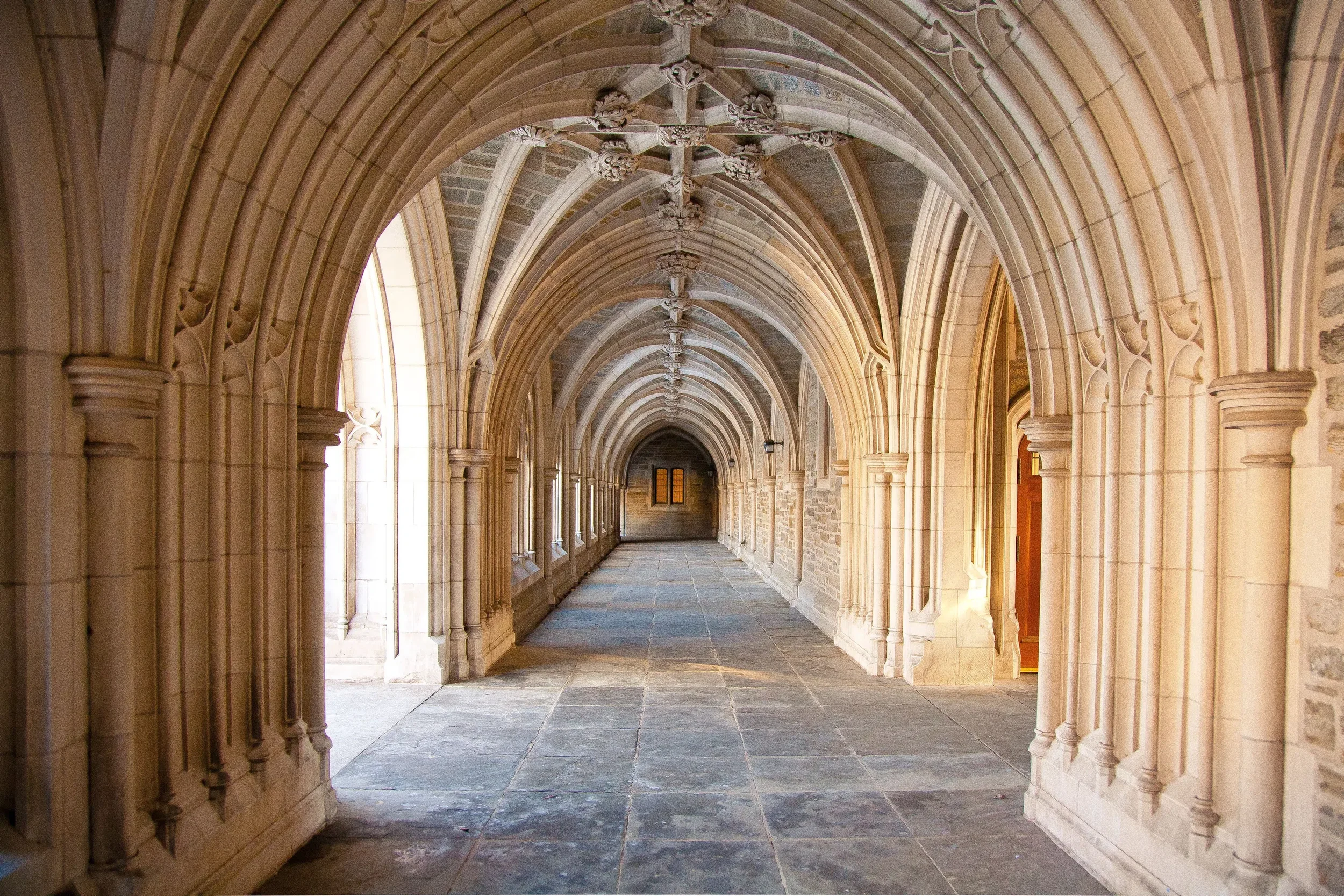
Walk back to the main campus as the evening begins and find the Holder Hall courtyard, the cloister, as the last light leaves the sky. No music.
The cloister was built in 1910, during the Wilson years, at the height of Princeton's Gothic expansion, at the exact moment when Wilson was losing his battle with the eating clubs. He wanted the residential colleges organized around the academic life rather than the social clubs. He wanted, in effect, the cloister to be the center of student life rather than the street. He lost. The cloister was built anyway, a monument to a vision that was never fully enacted, Gothic architecture in the service of a social argument that the institution declined to fully make.
Sit in the courtyard in the quiet. The covered walkways, the pointed arches, the grass in the center. A version of the world that almost was. Lohengrin does not offer consolation. It offers clarity. The knight came, helped, left, and what remains is the landscape after his departure. The question that was asked, the answer that was given, the world that continues without the figure around whom it briefly organized itself. The great institutions were built to outlast any single presence. They succeed at this. The question is what they preserve and what, in the act of preservation, they convert into something different from what it was. The cloister is still here. The question is still here. The gate opens both ways now.
Nachklang
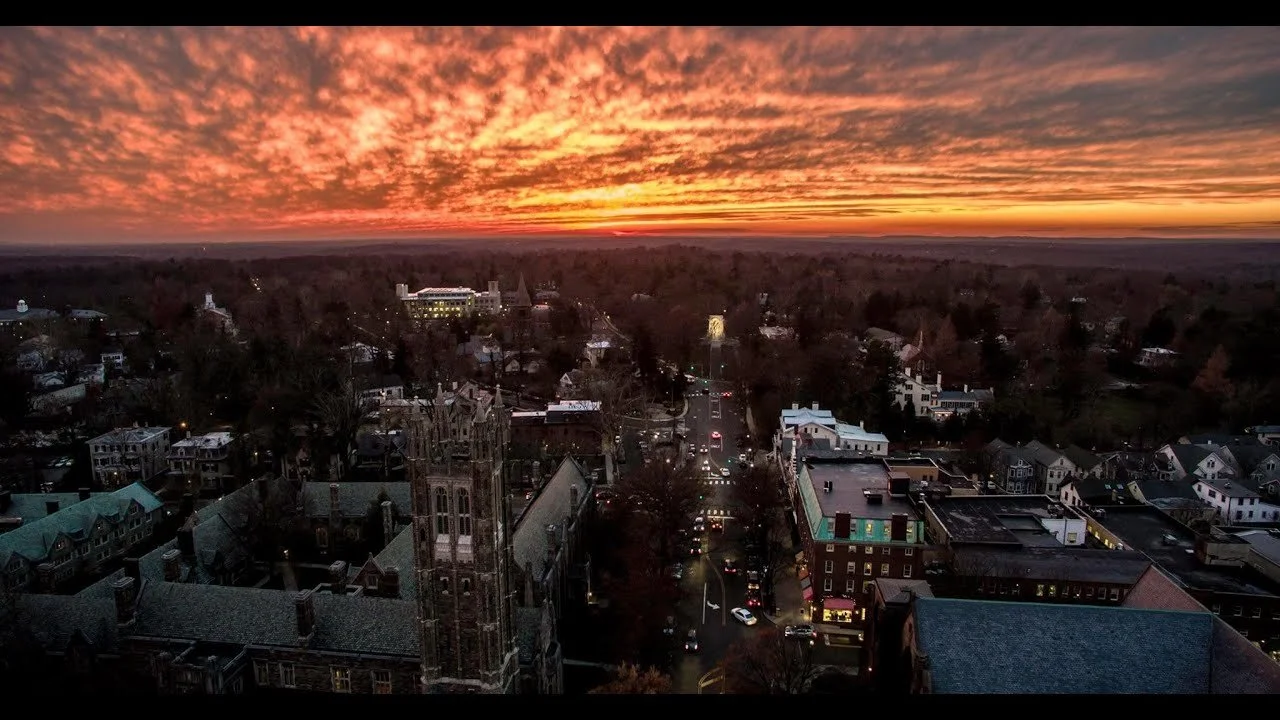
By the time the light is fully gone, nothing has been resolved. This is correct. Lohengrin is not a tragedy in the sense that the characters have made avoidable errors. Elsa had to ask. The asking was not a failure of faith but a consequence of it: she believed enough in what she had to want to know its name. The condition was unreasonable, and Lohengrin knew it was unreasonable, and accepted it anyway as the price of operating in a world that could not quite accommodate what he was.
Princeton has been negotiating this condition since 1756. The architecture of enclosure says, what happens here is different in kind from what happens outside. The educational mission says, we train people to ask questions about everything. The social machinery says, but not all questions, and not about everything, and not before the moment has come. The FitzRandolph Gate mediates between these claims without resolving them, which is the institution's most honest structural decision.
The walk does not produce a verdict. What it produces is the sensation of having stood inside a beautiful, serious, genuinely consequential institution at the moment when its organizing compact becomes fully visible. When you can see both what it offers and what the offer costs, when the swan on the water and the absence of the swan are simultaneously present, when the question that should not be asked and the question that must be asked turn out to be the same question. The Dinky runs back to Princeton Junction every half hour. The last train is later than you think.