Eintägiges Experiment: Paris, Der Ring in Einer Stadt
Eine Biographische Wanderung in den Spuren Richard Wagners
Themen: Demütigung, Verwandlung, Skandal, Schuld, Die Stadt als Fegefeuer
Element: Graues Flusslicht, Briefe die man lieber nicht geschrieben hätte, und goldenes Abenddunkel
This walk treats Wagner not as repertoire, but as a composed method for moving through the city, and this time, it follows the man himself.
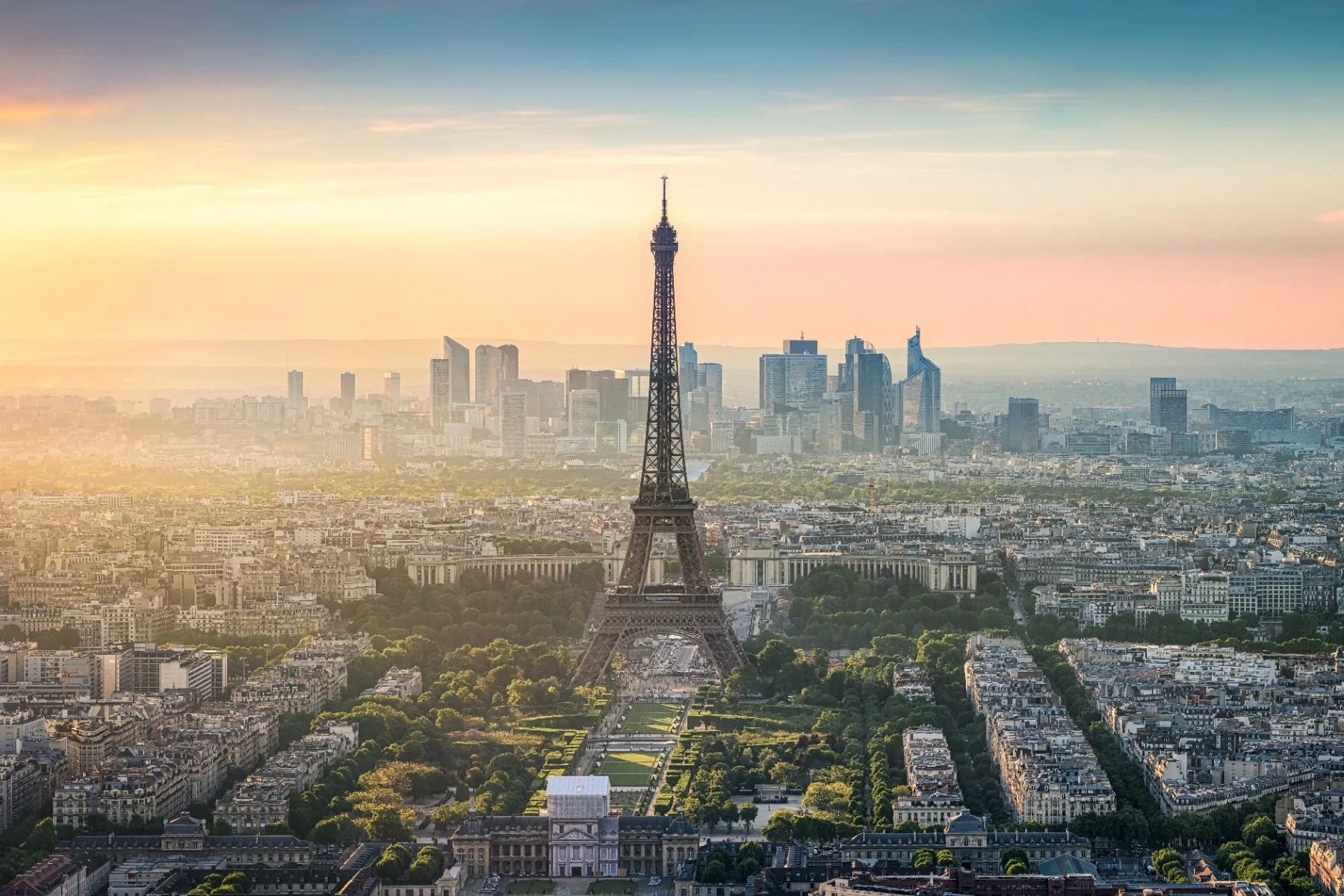
Das Ergebnis auf einen Blick
Dauer: Dawn to midnight: The walk covers both of Wagner's Paris periods — 1839–42 and 1859–61 — in a single day's arc. It begins where he arrived and ends where he nearly didn't continue.
Distanz: 9–11 miles across multiple arrondissements, with Metro transitions between movements. The walk is long because Paris was long for him — three years of failure the first time, two years of fashionable triumph collapsing into catastrophe the second.
Beste Zeit: Begin at the Gare du Nord or Gare Saint-Lazare at whatever hour feels like arrival. The walk does not require dawn, but the Canal Saint-Martin in early morning and the Seine at night are both essential. Plan accordingly.
Wetter:
Wagner's Paris was mostly winter and early spring — grey, cold, the kind of northern European city light that makes ambition feel both necessary and absurd.
Walk it in that light if you can. The Opéra Garnier in November sun is a different building from the Opéra Garnier in February overcast, and the February version is the one that matters here.
Zugänglichkeit:
The Catacombs require advance timed-entry booking — essential for this walk, not optional.
The Salle du Conservatoire is now the home of the Orchestre de Paris's administrative offices; the exterior and immediate surroundings are the point.
All other locations are street-level and freely accessible.
Essentieller Moment:
The Rue du Conservatoire with the Beethoven Ninth. Wagner heard Habeneck conduct the Ninth in the Salle du Conservatoire in 1839 and wept. He understood, for the first time, what music could do that it wasn't yet doing. He spent the rest of his life trying to do it. The building that gave him his life's purpose was the building that refused to perform his music. Stand outside it and feel the irony accumulate.
Language Anchor (German Phrase of the Walk):
Ich bin ein Bettler in Paris / I am a beggar in Paris: Not a direct Wagner quote, but a compression of what he wrote repeatedly in letters from the first Paris period — to his sister Cäcilie, to Meyerbeer, to anyone who might help. The phrase carries the specific humiliation of a person who knows exactly how good he is and cannot make the city acknowledge it. By the second visit, he was no longer a beggar. He was famous, celebrated, invited to salons. And the city destroyed him anyway, by different means.
Wort des Weges
Demut (pronounced: DAY-moot): Humility. But in Wagner's case, a forced humility — the humility of the letter written to a man you privately despise because his signature on a page might open a door you cannot open yourself. Wagner wrote to Meyerbeer from Paris with elaborate deference — my master, my benefactor — and Meyerbeer was kind, and the kindness worked, and the doors opened partway, and it was not enough, and Wagner spent the next decade writing the cruelest things about Meyerbeer that one composer has ever published about another. Demut in this sense is not a virtue. It is what happens to ambition when it encounters power on unfavorable terms, and what that encounter does to the person who performs it. Paris was where Wagner learned what his ambitions would cost — and what he would do, afterward, to recover from the knowledge.
Thematischer Rahmen: Wagner und Paris — Die zwei Niederlagen
There were two Paris defeats, and they were different in almost every respect except the conclusion.
The first was the defeat of obscurity. Wagner arrived in September 1839, twenty-six years old, with his wife Minna, their dog Robber, and a letter of introduction to Giacomo Meyerbeer that he had obtained through a contact in Riga. He had survived a genuinely catastrophic sea voyage — three and a half weeks on a small merchant vessel, the Thetis, from Riga to London, through storms that nearly wrecked the ship twice, forcing an unplanned stop in a Norwegian fjord where Wagner heard the sailors' cries echoing off granite cliffs and understood, in his body before he understood in his mind, what Der Fliegende Holländer needed to sound like. He arrived in Paris still ringing with that sound, still writing the libretto in his head, and found a city that had no interest whatsoever in what he was hearing.
He stayed for thirty-one months. He wrote hackwork — piano transcriptions, cornet arrangements of popular operas, vaudeville songs — to avoid starvation, and sometimes failed to avoid it anyway. He and Minna went hungry. He pawned his watch, his coat, his wife's jewelry. He was briefly held by creditors. He wrote to Meyerbeer with letters of exquisite, calibrated flattery — mon maître, mon bienfaiteur — and Meyerbeer was genuinely kind, and wrote letters of recommendation that opened doors partway, and the partway was never enough. He attended the Opéra and watched the machinery of Meyerbeerian grand opera success — the claque, the patron network, the spectacular effects, the ballet girls and their aristocratic admirers — with the focused attention of someone studying an enemy. He completed Rienzi and Der Fliegende Holländer in Paris without securing a production of either. He left in April 1842 with Dresden's acceptance of Rienzi and nothing else.
But he also heard the Beethoven Ninth at the Conservatoire.
This is the fact that does not fit the narrative of pure humiliation. In the winter of 1839, François-Antoine Habeneck conducted the Société des Concerts du Conservatoire orchestra in the Ninth Symphony, and Wagner attended, and by his own account — in Mein Leben, written twenty years later but vivid with the specificity of genuine memory — he wept. He had known the symphony intellectually; he had never heard it performed at this level. Habeneck's orchestra was the finest in Europe for this repertoire, having developed its Beethoven interpretations over fifteen years of sustained rehearsal. The experience was, Wagner wrote, a revelation: he understood what music could do to a human being, what it was actually for, what the gap was between what currently existed and what was possible. He walked out of the Conservatoire changed.
The building that changed him never performed his music.
He returned to Paris in September 1859, eighteen years later. He was now the composer of Der Fliegende Holländer, Tannhäuser, Lohengrin, Das Rheingold, Die Walküre, and Tristan und Isolde — four of them unperformed, Tristan still drying on the manuscript pages, Lohengrin known across Germany as a masterpiece. Napoleon III had ordered a production of Tannhäuser at the Opéra on the recommendation of Princess Pauline von Metternich. He conducted three concerts at the Théâtre-Italien in January and February of 1860, presenting Paris for the first time with excerpts from Lohengrin, Tannhäuser, and Tristan, and the city divided itself immediately and ferociously into the Wagneriens and their opponents. Charles Baudelaire attended one of the concerts, went home, and wrote Wagner a letter saying that the music had made him feel things he had never felt from music before — that it had produced in him a sensation of light and elevation and a kind of voluptuous pain. Wagner kept the letter. He met Baudelaire. He was invited to the most fashionable salons in Paris. He was, for a season, exactly what the city of Flaubert and Delacroix and the last great gesture of the Second Empire wanted: a difficult genius from elsewhere, sufficiently famous to be interesting, sufficiently foreign to be unthreatening to local pride.
Then the Jockey Club.
The second defeat was the defeat of recognition. He was no longer unknown. He was famous, celebrated, in possession of everything the first visit had denied him. The city knew who he was. And it destroyed the production anyway — not through indifference but through a specific, organized act of cultural politics — and he withdrew Tannhäuser after three performances and left Paris and never had a production there in his lifetime.
Between these two defeats: everything. Der Fliegende Holländer. The Ring. Tristan. Bayreuth. The entire architecture of his mature achievement was built in the space opened by the first Parisian failure and completed in the space opened by the second.
Paris was his negative mold. The city that would not have him shaped, by its refusals, exactly what he became.
ERSTER AUFZUG: ANKUNFT
Der Stürmische Einzug: Gare du Nord / Gare Saint-Lazare
Arriving
Wagner arrived in Paris in September 1839 via London, taking the diligence — the coach — from Boulogne. In 1859 he arrived by train from Zurich via Basel. Both times, the approach was through the northern or northwestern railway infrastructure of the city: the Gare du Nord (opened 1846; the station that would have received the 1859 Wagner, though the building he knew was the first terminus, replaced by the current Hittorf building in 1864) or the earlier coach terminus routes.
Begin at whichever of these two stations feels right — the Gare du Nord for its scale and its persistent quality of transit and arrival, the Gare Saint-Lazare if you want to stand in front of the building that Monet painted obsessively in the 1870s, the steam and iron that was the actual texture of 19th-century Paris arrival.
Stand outside the station before entering the city properly.
Track: Der Fliegende Holländer, Overture
The Overture was completed in Paris, in a series of rented rooms, by a man who had just survived the worst sea voyage of his life and was still, in some physiological sense, on the ship. Wagner described the Norwegian fjord stop in Mein Leben with extraordinary precision: the Thetis running before a gale, forced into the Sandwike fjord near Arendal, the granite cliffs rising on both sides, the sailors calling to each other in cries that echoed off the rock. He heard those cries and heard in them the Steersman's Song and the Norwegian chorus and the sonic world of the opera. He wrote the libretto in seven days on arrival in Paris.
The Overture is the sea he carried to Paris in his body. The low-string tremolo is the gale. The sharp brass is the hull. The deceptive calm in the middle is the Norwegian harbor. The return of the storm is the continuation of the curse.
Play it as you move away from the station into the city for the first time.
Das Elendsviertel: Canal Saint-Martin und die Rue du Marché d'Alibert
Walk: To the Canal
From the Gare du Nord, walk south and east toward the Canal Saint-Martin, specifically to the area of the Rue du Marché d'Alibert in the 10th arrondissement, about fifteen minutes on foot.
Wagner lived at various addresses in Paris across his first visit; the most productive — and most miserable — period was in lodgings in this northeastern quarter, near the canal, far from the fashionable precincts of the Opéra and the grands boulevards.
The Canal Saint-Martin
The Canal Saint-Martin runs for 4.5 kilometers through the 10th and 11th arrondissements, connecting the Canal de l'Ourcq to the Seine. It was built between 1805 and 1825 — the engineering project of the Napoleonic period, designed to bring clean water to Paris and to provide a commercial waterway for goods arriving from the north and east. Its nine locks step down the terrain in slow descents; its iron footbridges cross at intervals; its iron lock gates, dark green against the grey stone of the canal walls, open and close for the occasional barge.
It is not a romantic canal in the Venetian sense. It is an industrial canal in the northern European sense — functional, grey, iron-detailed, flanked by former warehouses now converted to apartments and ateliers, the plane trees along its edges pruned into the formal winter silhouettes of 19th-century urban planning. In Wagner's time it was an active industrial waterway, the neighborhood around it working-class and dense.
Wagner would have walked this canal. It was outside his door. It was the opposite of the Opéra — no gilt, no claque, no Meyerbeer. Just water moving through locks, the smell of the city's commerce, the sound of a place that had no interest in grand opera of any nationality.
Track: Der Fliegende Holländer, Act I — the Steersman's Song; the Dutchman's monologue Die Frist ist um
Walk along the canal's eastern bank, northward, while the Steersman's Song plays — the young sailor falling asleep at the wheel, his watch-song becoming a lullaby, the Dutchman's ship approaching in the darkness.
The Dutchman's monologue, Die Frist ist um, is the opera's emotional center: the cursed mariner, allowed ashore every seven years, cataloguing his condition with the exhausted precision of someone who has had nothing but time to understand exactly how trapped he is. He is not despairing. He is past despair into something colder — a very clear-eyed accounting of what has been tried and what has failed and what, if anything, remains possible.
Wagner was twenty-six when he wrote this, in a rented room near this canal, in debt and failing, translating French vaudevilles for income. He was also, simultaneously, writing the most personally revealing music of his early career. The Dutchman is what it felt like from inside: the clarity that poverty and failure and repeated rejection produce in a person who refuses to stop believing that what he is doing matters.
Stop at one of the iron footbridges and let the monologue run to its end.
What Wagner Actually Did Here
In Mein Leben, Wagner describes the first Paris period with a self-awareness that is unusual for him — he was not, generally, a man who acknowledged his own failures with precision. But the Paris account is different. He describes the hackwork: the arrangements, the transcriptions, the embarrassing meetings. He describes Minna's patience and his own instability. He describes the pawned watch, the cold rooms, the meals that didn't happen. He describes sitting with the manuscript of Rienzi and wondering whether anyone would ever hear it.
He also describes the relief of walking. Paris was walkable in a way that required nothing of you — the boulevards, the quais, the market streets, the canal paths — and walking was free when most other things weren't. He walked the city systematically, as a person walks when they cannot afford to sit anywhere and cannot bear to go home.
The walk you are doing now is the walk he was doing: the northeastern arrondissements, the working-class canal, the city that was indifferent to his ambitions in a way that was oddly easier to bear than the fashionable districts' specific, pointed indifference.
ZWEITER AUFZUG: DIE VERWANDLUNG
Das Wunder der Neunten: Die Salle du Conservatoire
Walk: From the Canal to the Conservatoire
From the Canal Saint-Martin, walk west and south toward the Rue du Conservatoire in the 9th arrondissement — approximately twenty-five minutes on foot, or take the Metro Line 7 to Cadet and walk south.
The Salle du Conservatoire is at 2 bis, Rue du Conservatoire, a narrow street running south from the Boulevard Montmartre. The building still stands; it is now used by the Conservatoire national supérieur de musique et de danse, and the concert hall — the original 1811 room — is still occasionally in use, though rarely open to the public.
The Habeneck Moment
In the winter of 1839, Wagner attended a concert by the Société des Concerts du Conservatoire — the orchestra that François-Antoine Habeneck had founded in 1828 specifically to perform Beethoven's symphonies, which were not otherwise being performed adequately anywhere in Europe at the time. The program included the Ninth Symphony.
Wagner's account of what happened is in Mein Leben, and it is worth knowing in detail:
He had known the Ninth. He had played through it at the piano, studied the score. He understood it intellectually. What he had not done was hear it performed by an orchestra that had spent fifteen years learning how. Habeneck's musicians knew the Ninth the way a priest knows a liturgy — not as text to be read but as something that had been absorbed into the body through repetition and had become, in performance, something it wasn't possible to achieve from analysis alone.
Wagner listened. He wept. He wrote later that he felt, for the first time, what music was actually for — not entertainment, not display, not the demonstration of technique, but the thing that Beethoven had found in the last movement and that no one before or since had done with quite that combination of desperation and conviction: the use of music to produce, in a room full of strangers, an experience of collective meaning that each person felt as entirely private. The voices entering in the finale, singing Schiller's text, felt to Wagner not like choral music but like the moment when something that had been circling finally landed.
He walked out of the Conservatoire and kept walking. He wrote to his sister Cäcilie that evening about what had happened. She kept the letter.
Track: Ludwig van Beethoven, Symphony No. 9, fourth movement — the choral finale
This is the only location in the walk where the track is not a Wagner opera. It is the track that produced the Wagner operas — or rather, produced the Wagner who could write them.
Stand outside the Salle du Conservatoire on the Rue du Conservatoire — a narrow, quiet street, easily missed, the building's entrance unremarkable — and play the final movement from the bass's O Freunde, nicht diese Töne! onward.
The building refused to perform his music. The Société des Concerts du Conservatoire, which became the most prestigious new-music institution in Paris, never scheduled a Wagner premiere. The institution that gave him his transformative experience was also, his entire life, the institution that looked away.
This is what Paris did to Wagner repeatedly: gave him something essential with one hand and withheld something essential with the other. The Ninth in this room. The rejection letter from across the street.
Let the finale run. Let the choral entry land the way it landed on him in 1839. Then stand in the quiet afterward and notice: this narrow, unimpressive street is where he understood what he was trying to do. Everything he built afterward was an attempt to do it again, by his own means, on his own terms, in a building he controlled.
The building he controlled was Bayreuth. It took him thirty years to build it. It started here.
DRITTER AUFZUG: DIE DEMÜTIGUNG
Meyerbeers Schatten: Die Grands Boulevards
Walk: From the Conservatoire to the Boulevard des Italiens
Walk west from the Rue du Conservatoire to the Boulevard des Italiens — five minutes — the central artery of fashionable Second Empire Paris, lined with cafés, newspapers, theaters, and the social infrastructure of the Parisian cultural world.
The Café de Bade stood at roughly 32, Boulevard des Italiens — this precise address is where the Wagneriens gathered during the 1860 controversy, where the feuilletonistes wrote their reviews, where cultural Paris conducted its business over coffee and newspapers.
The building is gone but the boulevard is exactly as it was in its general character: wide, commercial, self-confident, slightly overlit, the kind of street that is always performing its own importance.
The Meyerbeer Problem
Wagner's relationship with Giacomo Meyerbeer is the most morally uncomfortable element of his Paris biography, which is saying something given the available competition.
Meyerbeer — born Jakob Liebmann Beer in Berlin, 1791, the most successful opera composer in Europe during the 1830s and 1840s, author of Robert le diable and Les Huguenots and Le Prophète, the dominant figure in French grand opéra — was kind to Wagner. He cannot be described otherwise. When Wagner arrived in Paris in 1839 with his letter of introduction, Meyerbeer received him, wrote him recommendations to the Opéra management and to theater directors, tried to smooth his path. The recommendations were genuine and they opened doors that Wagner's own name could not yet open.
Wagner used those recommendations. He accepted the help. He wrote Meyerbeer letters — surviving in archives, published after Wagner's death against his expressed wishes — of elaborate, calibrated flattery. Mon maître, mon bienfaiteur. My master, my benefactor. Letters he was later unable to look at without nausea, which produced a nausea that he converted, with characteristic self-protective violence, into contempt for Meyerbeer rather than contempt for himself.
In 1850, Wagner published Das Judenthum in der Musik — Jewishness in Music — under a pseudonym, later reprinted under his own name. The essay argued that Jewish composers were incapable of genuine musical creativity, that they could only imitate and commercialize the forms of others, that their success in European musical culture was a symptom of cultural corruption. Meyerbeer is not named. He is, transparently, the primary target.
The essay is one of the worst things Wagner wrote, in every sense. It is vicious, it is dishonest, it is intellectually incoherent, and it served a function that had nothing to do with its stated argument: it allowed Wagner to transform his humiliation at having needed Meyerbeer's help into a principled critique of Meyerbeer's existence. The debt was converted into an attack. The benefactor was destroyed in print by the beneficiary.
Meyerbeer died in 1864 without ever publicly responding. Wagner continued to attack him posthumously.
Track: Das Rheingold, Scene II — Wotan's description of how Valhalla was built; the giants present their bill; Loge arrives with his report
Track: Das Rheingold, Scene II — from Vollendet das ewige Werk through Loge's Immer ist Undank Loges Lohn
Walk the Boulevard des Italiens from east to west, from roughly the site of the Café de Bade toward the Opéra, while Scene II plays.
Wotan built Valhalla using labor he could not honestly pay for. He made a contract he did not intend to honor. He used Loge — the god of fire and irony, the outsider intelligence, the one who sees the mechanism clearly — to find a technicality, a way to default on the debt without technically breaking the contract. The gold stolen from Alberich, used to pay the giants, is itself obtained through a secondary theft that removes Wotan's hands from the primary crime by one degree of separation.
Wagner used Meyerbeer's letters to open doors. He did not intend to honor the implied reciprocity — the acknowledgment of debt, the loyalty, the continued deference that the relationship implied. He found a technicality: Meyerbeer was Jewish, and therefore his success was illegitimate, and therefore the help he had given Wagner was not the help of a master to a student but the manipulation of the culture by a foreign element, and therefore Wagner owed him nothing, and in fact Wagner was owed an apology by history for having been put in the position of needing to ask.
This is Wotan's logic applied to a human biography. The hall stands. The accounting does not close. Loge watches.
Walk the boulevard. Notice the fashionable machinery still running — the cafés, the newspaper kiosks, the restaurants, the theaters — and feel, in the gap between the music and the street, the specific texture of the world that Wagner needed and despised and needed because he despised it.
Die Briefe: Opéra Comique / Théâtre-Italien
Walk: To the Opéra-Comique
From the Boulevard des Italiens, walk a short distance east to the Place Boieldieu and the Opéra-Comique (also known as the Salle Favart) — the theater where Wagner conducted his three 1860 concerts presenting Paris with Lohengrin, Tannhäuser, and Tristan.
The 1860 Concerts
Wagner conducted three concerts at the Théâtre-Italien (then operating in the Salle Favart / Opéra-Comique building) on January 25, February 1, and February 8, 1860. He had organized them himself, at significant personal financial risk — he was already in debt and these concerts cost more than they earned — specifically to introduce Paris to his mature work. The programs included the Lohengrin Prelude, the Tannhäuser Overture and Venusberg Music, and the Tristan Prelude.
The concerts were extraordinary events. The audience included Berlioz, Gounod, Auber, the young Saint-Saëns, the young Chabrier, the journalist and poet Jules Champfleury, and — at one of them, almost certainly — Baudelaire. The critical response divided immediately and permanently along lines that would define French musical politics for the next decade: the Wagneriens, who felt they had heard something that changed what music was, and the anti-Wagneriens, who felt the same way but drew the opposite conclusion.
Baudelaire did not write his letter to Wagner the night of the concert. He waited two weeks, then wrote to say that he had resisted writing because he did not want to appear to be seeking the composer's favor. The letter he eventually sent described the experience of the Tannhäuser Overture as synesthetic — a landscape of light and darkness, a succession of colors that were also sensations, a music that produced the same feeling as opiates but more reliably and without the aftermath. He compared it to his own poetry. He was, Wagner wrote in response, the only person in Paris who had understood what he was trying to do.
Stand outside the Opéra-Comique on the Place Boieldieu.
Track: Tannhäuser, Overture — the Paris version, opening through Venusberg music
This is the music Baudelaire heard. Play it outside the theater where it was first performed in Paris and think about what it meant to have been heard — finally, specifically, precisely heard — by someone with the intelligence and the language to say what had happened.
Wagner had been trying to be heard in Paris for twenty years. The Conservatoire had heard him and said nothing. Meyerbeer had read his scores and been kind in the vague, noncommittal way of someone who does not quite understand what they are reading. The Opéra management had found his music impractical. The feuilletonistes had found it German, which in Paris was not a compliment.
And then a poet who wrote about hashish and sin and the beauty of corrupt things stood in a theater and heard the Venusberg music and went home and wrote him a letter that got everything right.
Wagner wept when he read it.
VIERTER AUFZUG: DAS FEST UND DER FALL
Venusberg: Das Palais Garnier
Walk: To the Palais Garnier
From the Opéra-Comique, walk north and west along the grands boulevards to the Place de l'Opéra and the Palais Garnier.
The Garnier was designed in 1861 — the year of the Tannhäuser scandal — in a competition that Napoleon III called partly in response to the inadequacy of existing Opéra facilities. Charles Garnier was selected from 171 entries. Construction began in 1862. The building opened in 1875, after the Franco-Prussian War and the Commune and the fall of the Second Empire it was designed to glorify.
Wagner never set foot in the Palais Garnier. It was built after he left Paris for the last time. It is the monument to the culture that destroyed his production, completed after that culture's political vehicle had been dissolved. The Jockey Club's Paris, solidified into stone.
Track: Tannhäuser, Act I — Tannhäuser in the Venusberg; then O du mein holder Abendstern — Wolfram's Evening Star aria, Act III
Stand in the Place de l'Opéra facing the building and play the Venusberg scene — the music the Jockey Club would not hear, the music Wagner had expanded specifically for Paris, the chromatic shimmer that anticipates Tristan, the most advanced writing he had done.
The Garnier is the Venusberg made architectural in the specific sense that Tannhäuser experienced it: a place of overwhelming aesthetic pleasure that is also a trap, not because the pleasure is false but because the pleasure is the point and nothing else is. The building's Grand Staircase is larger than the stage and auditorium combined because the performance the building cares most about is the performance of the audience watching itself. The Jockey Club's members were not wrong to feel at home here. This building was designed for exactly them.
Wagner's Tannhäuser asks whether the person who has been in the Venusberg can ever be fully accepted back into the ordinary world. His own experience in Paris suggests the answer: not quite. You can be tolerated, celebrated even, but the moment you reveal what you actually think — the moment the Venusberg music in your head plays out loud and it turns out to be nothing like what the audience wanted — the whistles start.
Enter the Garnier and go to the Grand Staircase.
Wolfram's aria is the most quietly beautiful thing in Tannhäuser — a meditation on loss, on watching someone you love disappear, on the evening star as a symbol of the last light before darkness. It was performed at the Palais Garnier (in later productions, long after Wagner's death), and it is the piece from the opera most associated with reconciliation rather than conflict.
Play it on the Grand Staircase. Let the gilded excess be the setting for the simplest, most undefended music in the score. This is what the building could have been, if the audience had been willing.
The Auditorium: Where It Happened
If you are attending a performance, or if the opera house is offering a day visit, enter the auditorium.
Sit in a seat.
The performances that matter here were not in this building — they were at the old Salle Le Peletier, the predecessor opera house on the Rue Le Peletier, which burned down in 1873 and was replaced by the Garnier. But the culture is the same, the audience is the same, the institution is continuous.
March 13, 1861. One hundred and sixty-four rehearsals. The Emperor had ordered it. Everything in place.
Wagner described the first performance in a letter to Mathilde Wesendonck: the organized disruption beginning in the first act, the whistles and the shouting, his conductor Dietsch losing control of the orchestra in the chaos, the singers struggling to be heard. The second night was worse. The third was so disrupted that Wagner, sitting in the stage manager's box, turned to the Princess von Metternich and told her he was withdrawing the opera. She reportedly said nothing.
He left Paris within weeks. He never returned for a production.
The moment in Act II when Tannhäuser breaks — when he abandons the polite contest of the Wartburg and sings openly of the Venusberg, when he says the true and unsayable thing to a room that is not prepared to hear it — is the most directly autobiographical moment in Wagner's early work. He wrote it before the 1861 scandal. It is as if he wrote it knowing.
Sit in the auditorium and let it play. The room that will not hear the truth it asked to hear. The singer who cannot stop telling it.
Der Wahn: Der Palais Royal
Walk: To the Palais Royal
From the Garnier, walk south along the Avenue de l'Opéra — the long, straight boulevard cut through the medieval city by Haussmann in the 1850s and '60s, completed in 1879, lined with Haussmann apartment buildings of extraordinary uniformity — to the Palais Royal.
Wagner on French Culture
Wagner's letters from Paris are full of observations about French cultural life that are brilliant, contemptuous, and often accurate in ways he was too angry to fully develop. He found French musical taste fundamentally theatrical — interested in effect, in display, in the social function of attending culture rather than the experience of receiving it. He found the feuilletoniste system — in which powerful newspaper critics could make or break a premiere with a single review, and in which those critics were deeply embedded in the social world of the Opéra and the salons — a corruption of critical honesty. He found Meyerbeer's success the proof of his diagnosis: a music of calculated effects, of theatrical manipulation, of sophisticated surface over hollow center, rewarded by exactly the audience it was designed to please.
He was not entirely wrong. He was also not being honest about his own use of the system he was attacking — his letters to Meyerbeer, his cultivation of the Princess von Metternich for the Tannhäuser production, his careful management of his own image in the 1860 salon season. He played the game and lost and concluded that the game was corrupt, which it was, but his conclusion would have been more credible if he had not played it.
Track: Die Meistersinger von Nürnberg, Act III — Wahn! Wahn! Überall Wahn!
Enter the Palais Royal and find a bench in the gardens.
The Palais Royal is where Camille Desmoulins launched the French Revolution in 1789 and where, simultaneously, Paris has always conducted its most refined commercial and intellectual leisure. It belongs to no regime because it has outlasted them all. It is the most honest space in the city about the relationship between civilized pleasure and political rupture — the Wahn in its most Parisian form.
Sachs's monologue is Wagner's most autobiographical text after the Paris letters. A man of genuine intelligence sitting alone with the consequences of his own maneuvering, confronting the gap between what he wanted and what actually happened, deciding not to conclude that the entire human enterprise of organized culture is worthless — deciding, instead, that the Wahn can be shaped, that art is the institution through which the community's constructive and destructive irrationality is simultaneously expressed and contained.
Wagner wrote Die Meistersinger beginning in 1861, in the immediate aftermath of the Tannhäuser scandal. He had just been whistled off the stage by the Jockey Club. He responded by writing a comedy — his only mature comedy — about a song contest. In it, an outsider's genuine talent is initially rejected by the institutional arbiters of taste, then vindicated by the community's authentic judgment. Walther wins. The masters concede. The Guild endures.
This is Paris rewritten as a story with a different ending.
Sit in the garden. Let Sachs's monologue run. Watch the tourists and the chess players and the Daniel Buren columns. The garden does not require anything of you except your presence, which is both what Paris offered Wagner and what it never quite gave him.
FÜNFTER AUFZUG: GÖTTERDÄMMERUNG
Die Dämmerung: Père-Lachaise
Walk: Metro to Père-Lachaise
From the Palais Royal, take the Metro Line 1 east to Père-Lachaise station.
Who Is Actually Here
Père-Lachaise connects to Wagner's Paris not through his presence but through its absences — the people who were part of his world and are now in this ground.
Frédéric Chopin is here, in Division 11. Wagner heard Chopin play in Paris — he was one of the few contemporaries Wagner genuinely admired without reservation, writing in Mein Leben about the "unapproachable originality" of his piano music, the way it belonged entirely to itself and could not be compared to anything else. Chopin died in Paris in 1849, seven years after Wagner left the first time. Wagner was in exile in Zurich.
Luigi Cherubini is here, in Division 11 near Chopin. Cherubini ran the Paris Conservatoire from 1822 to 1842 — the entire span of Wagner's first Paris visit. Wagner requested access to the Conservatoire's library and Cherubini refused him. The man who ran the building that housed the Habeneck orchestra would not let Wagner use the scores. Cherubini was 82 in 1842. Wagner was 29. The encounter is not recorded in detail; the refusal is documented.
The Mur des Fédérés — the wall in the cemetery's southeast corner where the last 147 Communards were shot in May 1871 — has no direct connection to Wagner, who was in Lucerne and Bayreuth during the Commune. But it connects to Götterdämmerung, which Wagner completed in 1874, and to the specific historical moment in which the Ring cycle was written: the years immediately following the failure of the 1848 revolutions, during which Wagner was in exile for his role in the Dresden uprising, during which he wrote Oper und Drama and Das Judenthum in der Musik and the Ring libretto, during which the political and aesthetic projects that defined his mature work were formed in the heat of revolutionary failure.
The Commune of 1871 is the last echo of that revolutionary moment — the last time the Paris working class attempted to govern itself — and its ending at this wall is the Götterdämmerung of a particular political possibility.
Track: Götterdämmerung, Act III — Siegfried's death; the Funeral March; Brünnhilde's Immolation
Enter the cemetery through the main gate and walk toward Chopin's grave (Division 11, clearly marked) during the Funeral March.
The March assembles the Ring's themes in the order of their first appearance — a recollection, a summoning of the whole world before it ends. Walk through the densely packed tombs of Division 11, past Chopin's ornate grave with its flowers and its Bellini medallion, while the themes arrive: the Sword, the Siegfried theme, the Volsung, Fate, Love. Each motif is a person, a place, a moment in the story.
At the Mur des Fédérés: stop. Stand at the wall. Let the Immolation begin.
Brünnhilde's great final monologue is addressed not only to Siegfried and the assembled court but to Wotan himself — to the god who set everything in motion, who sacrificed his daughter to protect his plan, whose plan failed, who is now watching from Valhalla as the consequences arrive. She is not angry. She is, in the way of people who have understood everything, past anger into clarity.
War's so schmählich, was ich verbrach? — Was what I did so shameful? She is asking a question to which she already knows the answer. She is not asking for absolution. She is asking the question so that it can be heard, so that Wotan can hear it, so that the record is complete.
Wagner asked this question about Paris. Not aloud, not in those terms. But in Mein Leben, written in the 1860s, he circled the Paris years with a precision that suggests a man still trying to understand what happened to him there, what he did, what was done to him, whether it was shameful and who bears the shame.
The Immolation does not answer. It concludes. The ring goes back to the river. The hall burns. The new world begins, if anything does.
Stand at the wall until the music ends.
SECHSTER AUFZUG: PARSIFAL
Der Gralsberg: Sacré-Cœur und Montmartre
Walk: Metro to Montmartre
From Père-Lachaise, take the Metro Line 2 west to Anvers.
Walk up the Rue de Steinkerque to the foot of the great staircase rising to the Sacré-Cœur.
The Expiation Building
Wagner understood expiation better than almost anyone. His biography is organized around acts that required it: the Meyerbeer letters and the essay that responded to them, the Dresden uprising and the long exile, the relationships with women who were not his wife, the antisemitic publications, the use of King Ludwig's money for personal extravagance. He did not always seek expiation honestly. He often found a way to convert the guilt into a critique of someone else. But in Parsifal, written in the last decade of his life and completed in 1882, a year before his death, he produced the most direct reckoning with the concept of wounded authority that he ever managed.
The Sacré-Cœur was voted into existence in 1873 as an act of national expiation — for the Prussian defeat, for the Commune, for the killing, for the loss of Alsace-Lorraine. It was built on the hill where the Commune began, as a monument to the faith whose representative had been murdered in the Commune's final days, as a structure that was simultaneously a wound and the ceremony over the wound, with all the problems that entails.
Wagner finished Parsifal while the Sacré-Cœur was under construction. He never saw it completed. He died in Venice in February 1883. The Sacré-Cœur was consecrated in 1919.
They were built, in some sense, for the same purpose.
Track: Parsifal, Act I — Transformation Music; the Grail ceremony; Parsifal's failure to ask
Begin the Transformation Music at the foot of the staircase and ascend during it. Arrive at the summit when the Grail ceremony begins.
Turn and look south at the city before entering the basilica.
The Paris that failed Wagner and the Paris that produced him is all visible from here: the Opéra Garnier in the 9th arrondissement, identifiable by its green copper roof; the area of the grands boulevards where the Café de Bade stood; the Tuileries and the Louvre along the river; the Eiffel Tower to the southwest; Père-Lachaise somewhere in the middle distance to the east.
The whole biography, made geographic.
Let the Good Friday Music play — the tender, renewable music of a world reconstituting itself — while the city is visible in the late afternoon light.
The Parsifal question — Was wunden-wundersam — is the question Wagner had been building toward since the Holländer: what is the question that heals? Not the question that solves, not the question that resolves, but the question that heals — that names the wound accurately enough that the wound can begin to close.
He did not, in his life, ask it about Paris. He was too angry and too damaged and too defended. But in Parsifal he wrote the question anyway, and the question is here, on this hill, with this city below it, in the late light.
SIEBTER AUFZUG: TRISTAN / DIE SEINE BEI NACHT
Liebestod: Die Seine nach Mitternacht
Walk: Return to the River
From Montmartre, take the Metro to Bir-Hakeim or walk down through the 7th arrondissement to the Quai Branly, the stretch of the left bank just east of the Pont d'Iéna, below the Eiffel Tower.
Wait until after midnight. This movement requires the city to have quieted.
The Night Walks
In Mein Leben, describing the worst period of the first Paris visit — the winter of 1840–41, when money was at its most scarce and the prospects most bleak — Wagner writes about walking along the Seine at night. The passage is brief and not self-pitying in the usual way; he describes the walks with the clarity of someone who has had time to understand what they were. He walked because he could not afford to sit anywhere and could not bear the cold room. He walked because walking was the only activity that cost nothing and required nothing and allowed thought to continue without demanding an outcome.
He does not, in Mein Leben, describe contemplating suicide. But he describes a desperation that his biographers have connected to exactly that edge, and the walks along the Seine in winter 1840–41 are the biographical location of that edge. He chose to continue. He went home and wrote.
Tristan und Isolde was conceived in Paris — not the music, which came later, but the conception. Wagner drafted a prose sketch for Tristan in 1854, in Zurich, but the roots of the opera are in the Paris years: in the recognition, from walking alone at night by a river in a city that did not want him, of what absolute love and absolute isolation feel like when they occupy the same body. The Dutchman was the opera of the voyage that brought him to Paris. Tristan was the opera of what Paris did to him.
Track: Tristan und Isolde, Act II — O sink hernieder, Nacht der Liebe; then the Prelude to Act I
Stand on the lower quai, as close to the water as possible, facing the Eiffel Tower.
The love duet's proposition — that night is not the absence of day but a truer condition, that daylight is the intrusion rather than the norm, that the lovers exist most fully in the dissolution of the distinctions that daylight maintains — is not a comfortable idea when you are walking alone by a river at midnight in a city that has refused you. It is the idea of a man who has made loneliness into a metaphysics, who has found in extreme isolation not desolation but a different kind of clarity, who has understood that the world that will not have you is not the only world.
This is what Wagner understood walking the Seine in 1841. Not happiness — he was not happy. Not consolation — the situation was not consoled. But the thing that Tristan reaches for: the recognition that the ordinary world of daylight and social obligation and institutional approval is not the real world, that the real world is the one you find when those structures fall away, that the music he was hearing in his head at three in the morning by a river in a city that didn't want him was truer than anything the Opéra was producing, and that this was enough to continue on.
He continued on.
The Liebestod
Let the Eiffel Tower's nightly light show run if you catch it — the thousands of sparkling lights on the hour — and then let it stop, and wait for the river to reassert itself, and play the Liebestod.
The Liebestod is Wagner's resolution of everything the Paris years opened. Not a resolution of the suffering — the suffering was real and its marks are visible in every opera he wrote — but a resolution of the question the suffering posed: is there something on the other side of the city's refusal? Is there a music that exists beyond the approval of the institution?
Mild und leise wie er lächelt. Soft and gentle how he smiles. Isolde dying over Tristan's body, perceiving that the distinction between his death and her love has dissolved, that the harmonic tension that has been held unresolved for five hours is finally, quietly, landing.
The resolution is not triumphant. It is a final exhale. A chord that has been suspended for an entire opera finally allowed to arrive.
Wagner walked this river at three in the morning and chose to continue. He wrote the Liebestod twenty years later, in Lucerne and Paris and Venice, by which point the first Paris humiliation had become the foundational fact of his artistic identity and the Tannhäuser scandal had added a second layer to the wound.
The chord arrives.
The river moves.
The city goes quiet.
Nachklang
Paris did not make Wagner despite itself. It made him through itself. Through the specific texture of its refusals, the specific quality of its indifference, the specific mechanism by which it rewarded exactly the things he was most contemptuous of and withheld exactly the acknowledgment he needed most. The Beethoven Ninth in the Conservatoire. The Meyerbeer letters. The Tannhäuser whistles. The Baudelaire letter that arrived too late to matter institutionally and too early to be mere posterity.
He left twice. He built Bayreuth, the anti-Paris, the theater that controlled everything the Garnier let slip, that sank the orchestra pit so the audience couldn't see the mechanism, that sold tickets only for the season so the Jockey Club couldn't arrive after dinner, that sat in an inconvenient Bavarian town so that only people who actually wanted to be there would make the journey.
Bayreuth is what Paris looked like after it was turned inside out. Every design decision at Bayreuth is a correction of something that went wrong in Paris. The invisible orchestra is the answer to the Garnier's Grand Staircase. The darkened auditorium is the answer to the social performance of the Opéra audience. The pilgrimage model is the answer to the Jockey Club's whistles. If you make people come to you, on your terms, after a journey, they will not be blowing whistles for a second-act ballet. He built his answer to this city with extraordinary precision, because he understood exactly what he was answering.
The river knew nothing of this. The river moved before the Conservatoire was built and before Meyerbeer arrived and before the Jockey Club was founded and before the Garnier was designed. It moved while Wagner walked it at three in the morning in 1841 thinking about whether to continue. It moves now, indifferently, under the Eiffel Tower's light. The last Metro runs at 1:15am on weekdays, 2:15am on weekends. After that, the night buses, the taxis, the long walk home. Wagner walked home.