The Curse That Learned to Run: On Flucht
das Wort / the word: die Flucht (f.), pl. die Fluchten
Aussprache / pronunciation: FLOOKHT
Wortart / part of speech: Noun, feminine
Register: Everyday and literary both. Used for a refugee's crossing, an animal's bolt, a chess piece's escape square, and Siegmund's storm-battered arrival alike.
Nicht Reise, Sondern Zwang / Not a Journey, But a Compulsion

Flucht is not travel. A Reise is chosen, planned, often pleasant. A Flucht happens because staying has become impossible. The word carries no leisure in it anywhere. You do not go on a Flucht. You are driven into one, by fire, by an enemy, by a debt, by a law you have broken and cannot outrun by standing still. The verb underneath it, fliehen, to flee, never implies a destination chosen in advance. It implies only the thing you are moving away from.
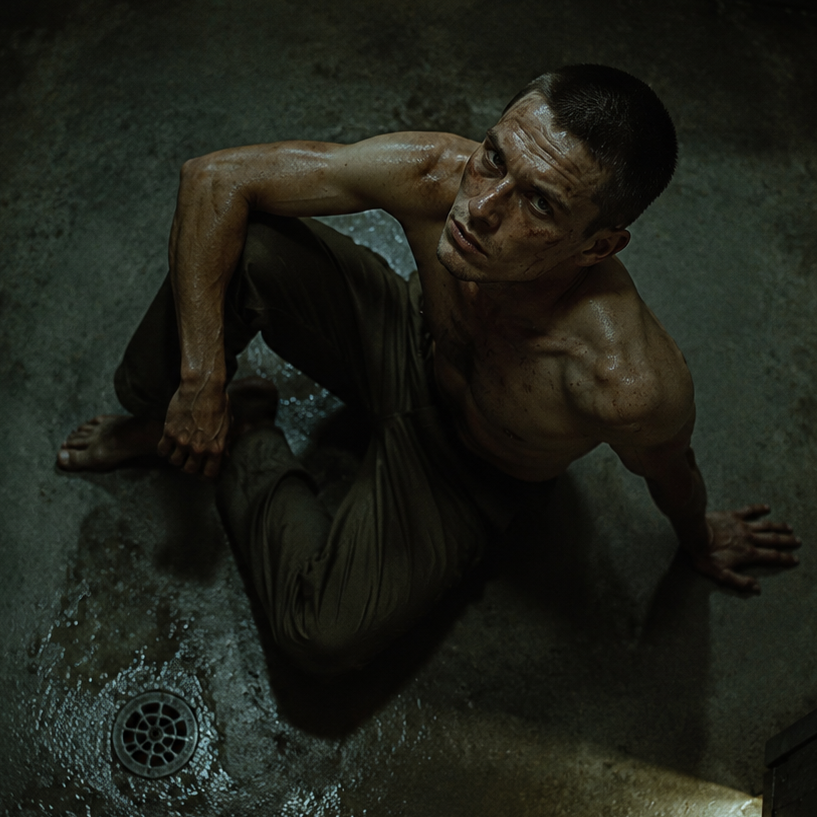
This is what separates Flucht from the more general Weglaufen, running away, which can describe a child avoiding chores. Flucht is reserved for situations with real stakes, real pursuers, real consequence if the flight fails. It is the vocabulary of war, of persecution, of storms that will kill you if you stop moving. Siegmund's entrance into Die Walküre is written entirely in this register. He arrives exhausted, weaponless, having fled something violent enough that he cannot yet speak of it clearly.
Der Wortstamm, Der Sich Nicht Verbergen Lässt / A Root That Cannot Hide Itself

Fluch and Flucht share almost every letter. This is not coincidence dressed up as poetry. Both words trace back to the same old root of driving something out, expelling it with force. A curse, der Fluch, is language expelled toward its object. A flight, die Flucht, is a body expelled from a place it can no longer occupy. One word describes what leaves the mouth. The other describes what leaves the ground. They are the same violence, aimed at different things.
Alberich's curse, the word examined last month in Rheingold, set the entire tragedy of the Ring in motion from a fixed point, forged in one scene, then left to work invisibly through everything that follows. Flucht is what that curse looks like once it starts moving through actual bodies. Siegmund fleeing his enemies. Sieglinde fleeing Hunding's house. Brünnhilde, by the opera's final act, fleeing Wotan's own sentence with Sieglinde in tow. The curse does not stay still in Das Rheingold. By July it has legs, and it is running.
Flucht Als Einziger Ausweg / Flight as the Only Way Out

German has a compound worth sitting with here: die Fluchtlinie, a line of flight, used both architecturally, the sightline along a building's edge, and dramatically, the direction a character's desperation takes them. Siegmund's whole first act is a Fluchtlinie: driven from one violent encounter, arriving unarmed at a stranger's hut, only to discover that the stranger is his sister and that the peace he has stumbled into will not hold either. There is no safe endpoint to this particular flight. There is only the next place it leads.
By Act III, Brünnhilde inherits the same vocabulary. She does not simply disobey Wotan. She flees with Sieglinde, carrying the fragments of a future neither of them has earned yet, running from a father who will pursue them both. The whole act is built on the mechanics of flight: pursuit, urgency, the terror of being caught before the getaway is complete. Wagner scores this with some of the most propulsive music he ever wrote, because Flucht, unlike Fluch, is not a single utterance. It has a tempo. It has to keep moving or it fails.
Grammatik / Grammar
Die Flucht is feminine, plural die Fluchten (used mainly in architectural or geometric contexts; in the everyday, dramatic sense the word is usually left singular).
Key constructions:
die Flucht ergreifen, to take flight, to flee
auf der Flucht sein, to be on the run
jemanden in die Flucht schlagen, to put someone to flight (defeat and scatter them)
die Fluchtlinie, a line of flight (architectural sightline, or dramatic trajectory)
der Flüchtling, a refugee, a person defined by the state of fleeing
Note the shared root with fliehen (to flee) and the near-identical spelling to der Fluch (curse). Learners should not confuse the two in writing. Native speakers never do, but the visual proximity on the page is part of what makes the pair worth studying together.
Verwandte Wörter / Related Words

der Fluch (m.), curse (the word this essay's title borrows from)
fliehen (v.), to flee
der Flüchtling (m.), a refugee
die Verfolgung (f.), pursuit, persecution
entkommen (v.), to escape, to get away
der Zufluchtsort (m.), a place of refuge, a haven
die Zuflucht (f.), refuge, sanctuary (the positive mirror of Flucht: not fleeing from, but fleeing toward)
die Gefahr (f.), danger
Die Verbindung zum Weg / Connection to the Walk

Entering the Ramble at 77th Street, before any music plays, the July walk asks you to arrive the way Siegmund arrives: mid-flight, not mid-journey. The paths are winding on purpose. You are not meant to see where they lead. Start the Act I Prelude as you cross into the trees and the orchestral thunder builds around you the way it builds around a man who has been running for longer than he can say.
Somewhere in the Ramble's tangle, at a clearing or the small wooden bridge, the flight ends, briefly, in a stranger's shelter. It does not end for good. Nothing in Die Walküre ends for good until the fire at the very last stop of this walk. For now, standing among the dappled light and the first rising hint of Sieglinde's rescue, you are only ever between one flight and the next.