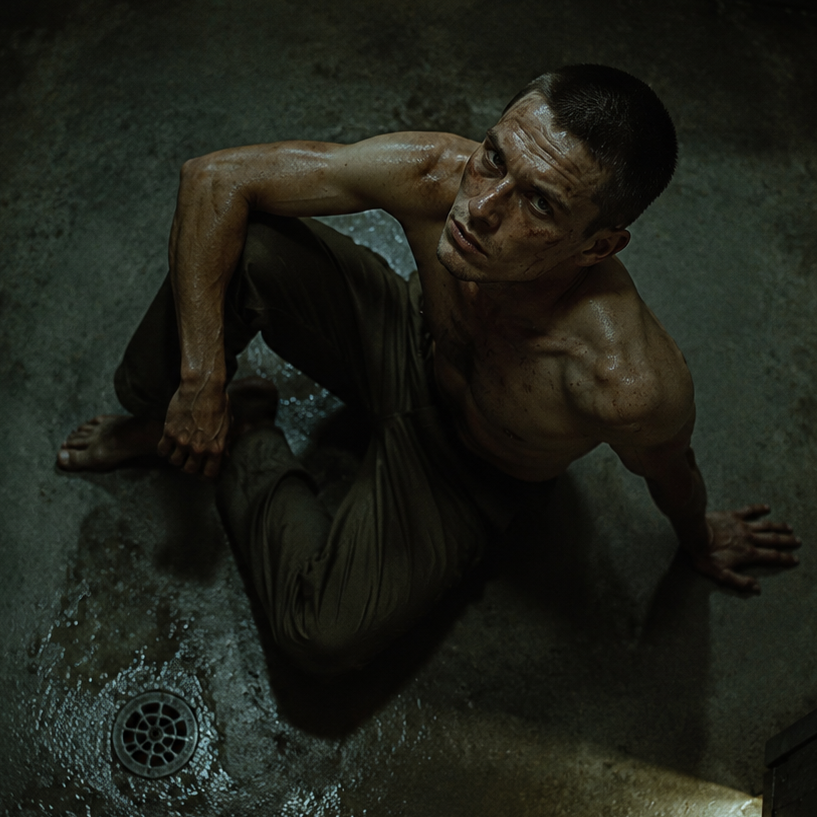
The Understanding That Arrives Before Words: On Staunen
das Wort / the word: das Staunen (n.), no common plural
Aussprache / pronunciation: SHTOW-nen
Wortart / part of speech: Noun, neuter (nominalized infinitive)
Register: Everyday and literary. Warmer and less startled than its close cousin, Erstaunen.
Nicht Erstaunen, Sondern Staunen / Not Astonishment, But Wonder

German distinguishes between das Erstaunen, astonishment, a reaction to something unexpected that briefly interrupts your understanding, and das Staunen, a quieter, more sustained wonder, the state of standing before something and simply taking it in without needing to resolve it into a category first. Erstaunen has a jolt in it. Staunen does not. You can staunen at something for a long time, calmly, without the surprise ever curdling into confusion or demanding an explanation.
The difference is grammatical as much as emotional. Erstaunen is built with the prefix er-, which in German often marks the achievement of a state, arriving at astonishment as a completed event. Staunen carries no such prefix. It simply names the ongoing act of wondering, ceatless and unresolved, which is exactly the register Wagner reaches for when Siegfried, having tasted the dragon's blood, suddenly finds that he can understand the Woodbird's song.
Die Sprache, Die Man Nicht Lernt / The Language You Do Not Learn

Siegfried's understanding of the bird arrives without study, without translation, without the slow accumulation of vocabulary this whole project has spent nine months tracing word by word. One moment the bird's call is only birdsong. The next, it is comprehensible, offering direction, warning, guidance toward Brünnhilde. Wagner does not stage this as a lesson learned. He stages it as a capacity unlocked, a threshold crossed by accident, through blood and fire rather than through effort.
This is Staunen in its purest operatic form: understanding that arrives whole, unearned in the ordinary sense, met not with the demand to explain it but simply with wonder that it has happened at all. Siegfried does not ask how he can suddenly understand birds. He simply listens, and follows, carrying his Unbefangenheit from the forest floor directly into this new, stranger form of comprehension. The wonder and the understanding arrive together, inseparable, neither one preceding the other.
Staunen Als Erkenntnisform / Wonder as a Way of Knowing

German philosophical writing, going back to Aristotle's thaumazein in translation, treats wonder as the origin point of all inquiry, the feeling that precedes and motivates the desire to understand. But Siegfried's Staunen runs in the opposite direction from this tradition. He does not wonder his way toward understanding through patient questioning. He understands first, completely, and the wonder simply accompanies the fact rather than producing it. This is a considerably rarer kind of Staunen, closer to grace than to curiosity.
It is worth setting this against April's Sehnsucht, examined elsewhere in this project as an ache with no fixed address, always reaching for something not yet possessed. Staunen, in Siegfried's case, is the opposite structure entirely: not a longing for something absent, but astonishment at something already, suddenly, fully present. Where Sehnsucht stretches forward in time, Staunen stands still inside a single unfolding moment, in no hurry to become anything else.
Heiligkeit Und Staunen / Sacredness and Wonder

August's die Heiligkeit named a condition in which ordinary time collapses into presence, hier wird die Zeit zum Raum, a suspension available only inside consecrated spaces built and maintained for exactly that purpose. Staunen achieves something similar without any of the architecture. Siegfried needs no cathedral, no ritual, no priest to produce this collapse of ordinary sequence into pure attention. A bird's call in an ordinary forest does the work instead.
This is one of the quiet arguments this project's own accumulating vocabulary keeps making across its months: the sacred and the wondrous are close relatives, but they arrive through entirely different mechanisms. Heiligkeit requires consecration, a Weihe, a deliberate setting-apart. Staunen requires nothing but an unbefangen creature encountering something it has no reason yet to distrust. One is built. The other simply happens, to those still capable of being surprised by the ordinary world without first needing to be taught how.
Grammatik / Grammar

Das Staunen is a nominalized infinitive, neuter, with no natural plural, since it names an ongoing state rather than a countable event.
Key constructions:
staunen über, to marvel at, to wonder at (governs the accusative)
aus dem Staunen nicht herauskommen, to be unable to stop marveling (literally, not to come out of the wondering)
staunend (adj./participle), wide-eyed, marveling
zum Staunen bringen, to fill someone with wonder
das Erstaunen, astonishment (the sharper, more startled cousin)
Note that staunen takes über plus the accusative, not von, a common learner error, likely from confusing it with verbs that describe reacting to information rather than beholding something directly.
Verwandte Wörter / Related Words

das Erstaunen (n.), astonishment (the sharper, more startled cousin)
staunen (v.), to marvel, to wonder
die Verwunderung (f.), bewilderment, puzzlement (closer to confusion than to wonder)
bewundern (v.), to admire
die Neugier (f.), curiosity
die Sehnsucht (f.), longing (a different structure of desire: reaching forward rather than standing still in presence)
die Heiligkeit (f.), sacredness (last month's word: a related collapse of ordinary time, achieved through consecration rather than surprise)
Die Verbindung zum Weg / Connection to the Walk

Walk onto High Bridge, the oldest bridge still standing in New York City, and let the Woodbird Song play as you cross. The melody is almost too innocent for what it is doing, guiding a man who has just killed a dragon toward the one thing he does not yet know he is looking for. Walk slowly. This bridge is not a destination on this route. It is a transition, a threshold rather than a place to arrive at.
Somewhere in the middle of the crossing, worth noticing what has changed since the forest at the start of this month's walk. The Unbefangenheit that let Siegfried move through the world without self-consciousness has not disappeared. But it has been joined, for the first time, by something new: the capacity to understand a language he was never taught, met with wonder rather than confusion. You are no longer, by the time you reach the far end of this bridge, the same walker who entered Inwood Hill Park at the start of the month.