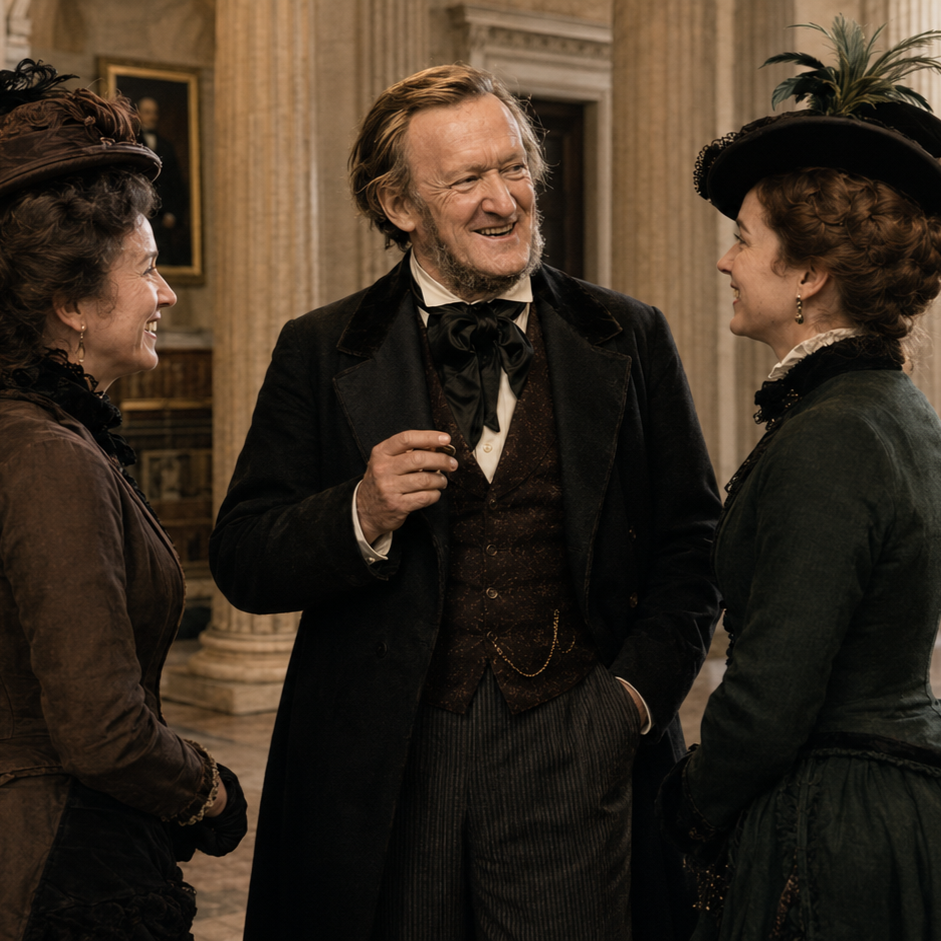
The Word That Costs Nothing Until It's Broken: On Versprechen
das Wort / the word: das Versprechen (n.), pl. die Versprechen
Aussprache / pronunciation: fair-SHPRECH-en
Wortart / part of speech: Noun, neuter (nominalized infinitive)
Register: Everyday. Used for anything from a child's small pledge to a politician's platform.
Nicht Vertrag, Sondern Versprechen / Not Contract, But Promise
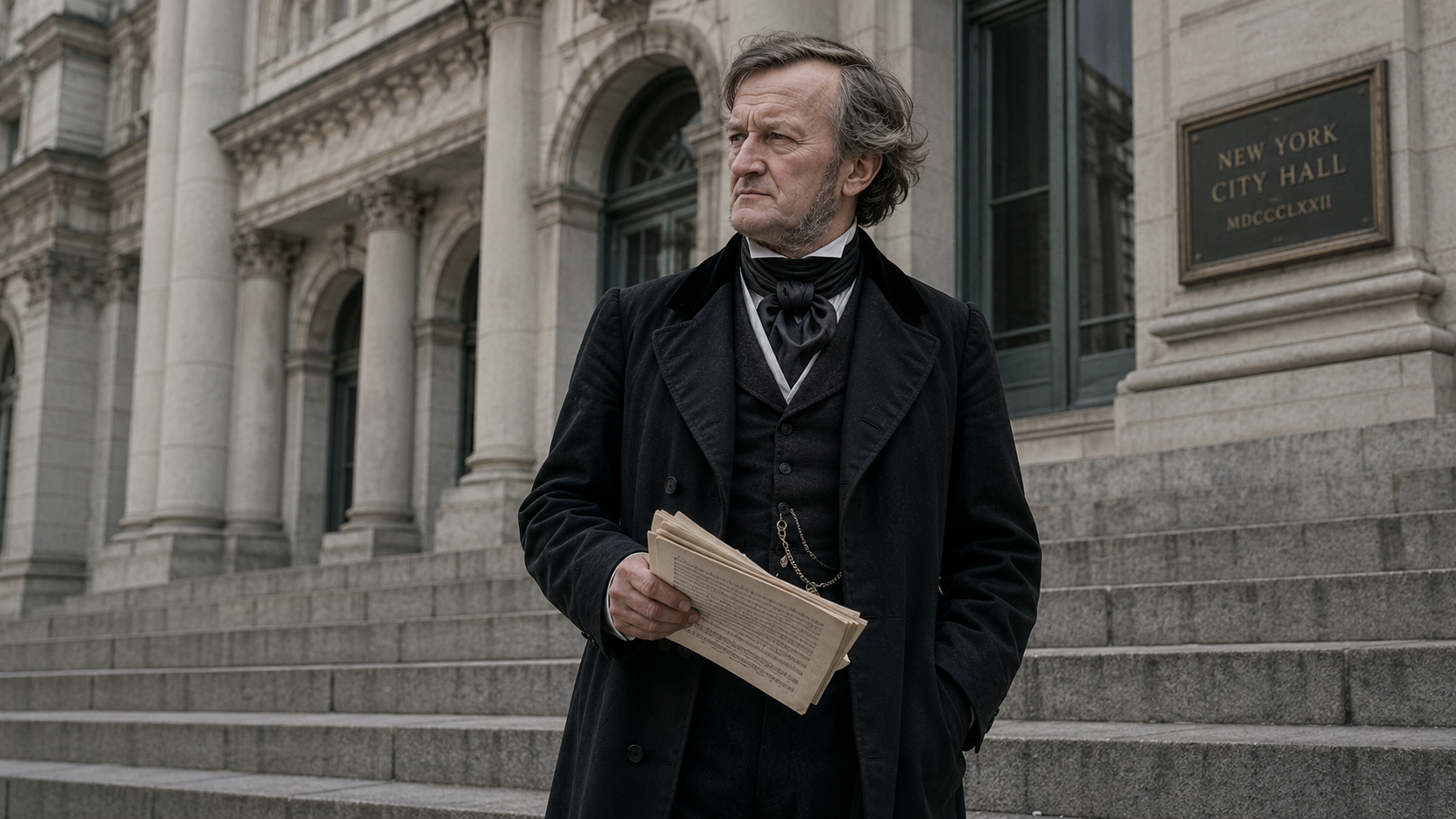
Der Vertrag, examined in June, is negotiated. Two parties, however unequal, agree to terms, and the agreement becomes binding because both sides consented to it. Das Versprechen requires no second party's agreement at all. One person simply declares a future action or outcome, and the declaration itself is the entire transaction. Nobody has to sign anything. Nobody has to negotiate terms. A promise costs the speaker nothing at the moment it is made, which is exactly what makes it so easy to give and so devastating to break.
This asymmetry is the entire mechanism of Rienzi's rise. He does not sign a contract with the Roman crowd. He makes them a promise, justice, order, national renewal, and the promise itself, spoken with sufficient conviction, is enough to lift him into power before a single term of it has been tested against reality. A Vertrag would have required Rienzi to specify obligations, exchanges, consequences for failure. A Versprechen requires only sincerity, or the appearance of it, which is a considerably lower bar to clear.
Die Ouvertüre Verspricht Alles / The Overture Promises Everything
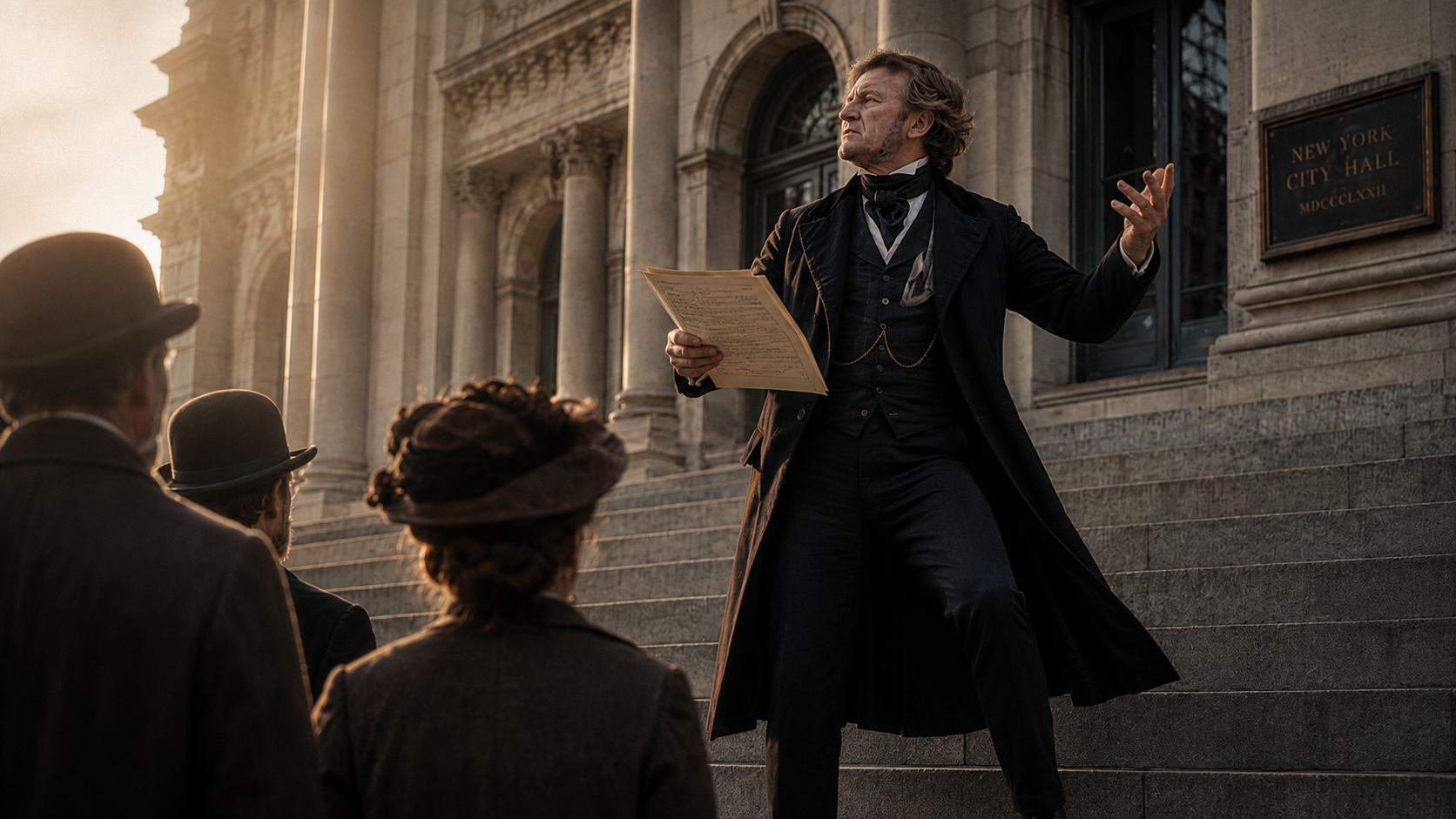
The opera's own overture stages this dynamic musically before a single word of the libretto has been sung. Grand, sweeping, full of unearned triumph, it promises justice, unity, and destiny all at once, exactly the way this project's own frame for the month describes it. This is worth sitting with as a structural choice rather than a coincidence. Wagner opens the entire work in the register of Versprechen, not Erfüllung, fulfillment. The music commits to nothing specific. It simply radiates the feeling of a promise being made, magnificently, before the story has given anyone reason to trust it.
This is precisely how promises function in public life more broadly. The feeling of promise, expansive, thrilling, forward-looking, arrives entirely detached from any mechanism that would actually deliver on it. A crowd standing in a plaza, hearing an overture like this one, is not evaluating policy. It is responding to the shape of a Versprechen, which asks for belief now and defers every difficult specific until later, if it ever arrives at all.
Das Gebrochene Versprechen / The Broken Promise

German idiom treats a broken promise with a specific harshness: ein Versprechen brechen, to break a promise, uses the same verb, brechen, that describes snapping something physically rigid. This is not accidental. A promise, unlike a contract, has no enforcement mechanism built into it beyond the promiser's own character. When it breaks, nothing legal necessarily follows. What follows instead is a change in how the promiser is perceived, a shift from trusted to suspect, often permanent, regardless of whether the original promise was made in good faith.
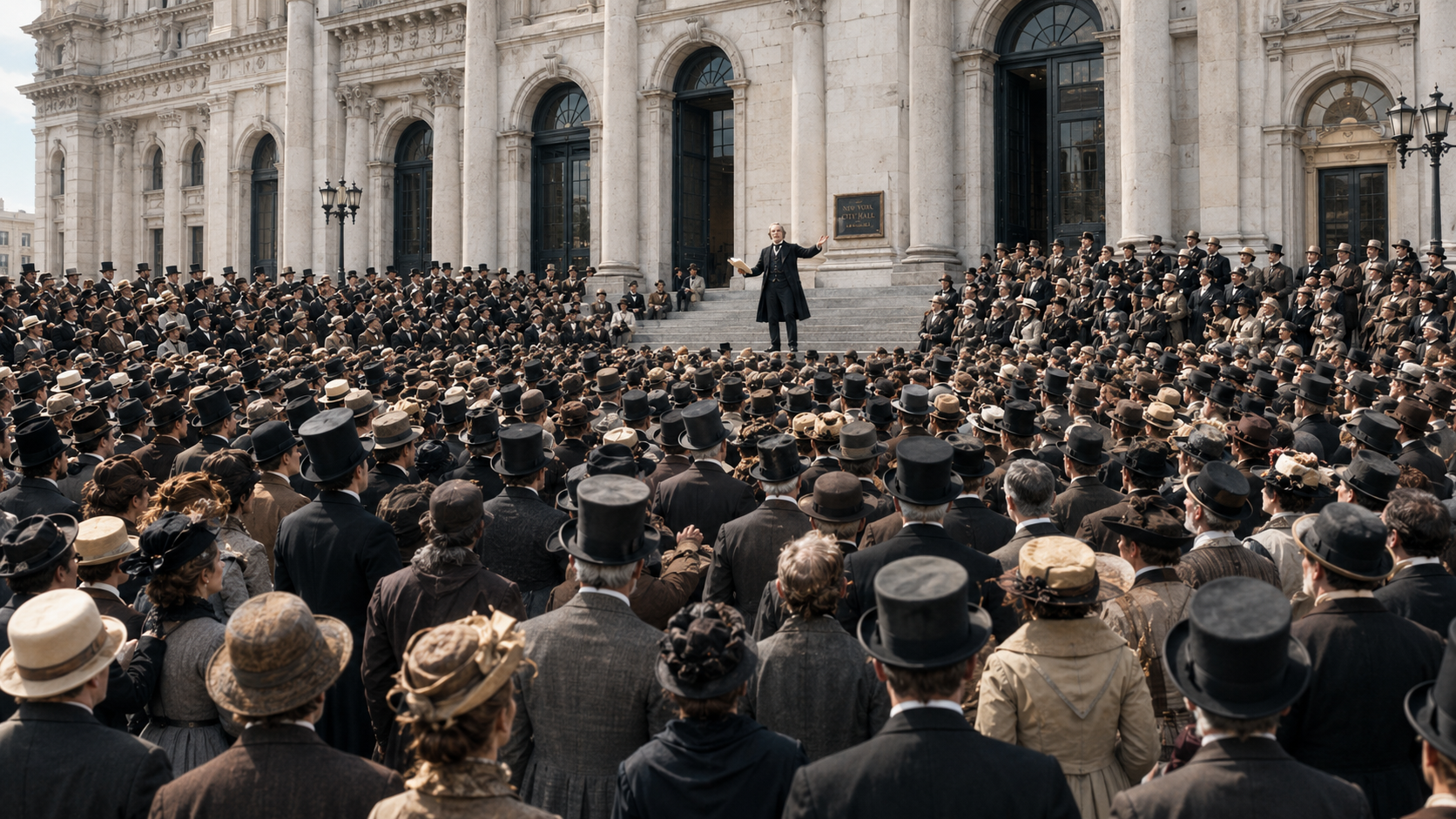
This is Rienzi's entire arc compressed into a single grammatical fact. He does not lose power because he violates a contract's written terms. He loses power because the crowd's faith in his Versprechen simply exhausts itself, gradually, the way this project's own frame describes crowds thinning rather than collapsing all at once. There is no court to adjudicate whether Rienzi kept his word. There is only a plaza, gradually emptying, as the promise's original shine wears down to something considerably less convincing.
Versprechen Und Gebot / Promise and Commandment
July's word, das Gebot, described an order imposed from above, binding through authority and threatened consequence rather than through the speaker's own belief in it. Wotan issued a Gebot he no longer fully believed in, and the commandment held its force regardless. Versprechen runs on the opposite logic entirely. Its force depends almost completely on whether the audience believes the speaker means it, and that belief, once granted, can be withdrawn by the audience at any moment, for reasons that have nothing to do with formal violation.
This is what makes a Versprechen both more fragile and more dangerous than a Gebot. A commandment can survive its author's private doubt. A promise cannot survive its audience's doubt for very long at all. Rienzi's power was never backed by force the way Wotan's was. It was backed entirely by the durability of a single word, spoken magnificently in an overture, and words like that, however grand, do not hold their shape forever.
Grammatik / Grammar
Das Versprechen is a nominalized infinitive, neuter, plural die Versprechen (identical in singular and plural form).
Key constructions:
ein Versprechen geben, to make a promise
ein Versprechen halten, to keep a promise
ein Versprechen brechen, to break a promise
versprechen (v.), to promise (irregular: verspricht, versprach, hat versprochen)
sich etwas versprechen von, to expect something from, to hope for something (a related, slightly different reflexive sense)
Note the reflexive construction sich versprechen, which shifts meaning entirely to mean "to misspeak," an unrelated but easily confused verb form worth flagging for learners moving quickly between the two.
Verwandte Wörter / Related Words
der Vertrag (m.), contract (June's word: the negotiated, binding cousin this month's one-sided declaration lacks)
versprechen (v.), to promise
das Gebot (n.), commandment (last summer's word: authority that does not depend on audience belief)
die Hoffnung (f.), hope
die Enttäuschung (f.), disappointment
das Vertrauen (n.), trust
die Zukunft (f.), the future (what every promise is necessarily made about)
einlösen (v.), to redeem, to make good on (a promise or a pledge)
Die Verbindung zum Weg / Connection to the Walk

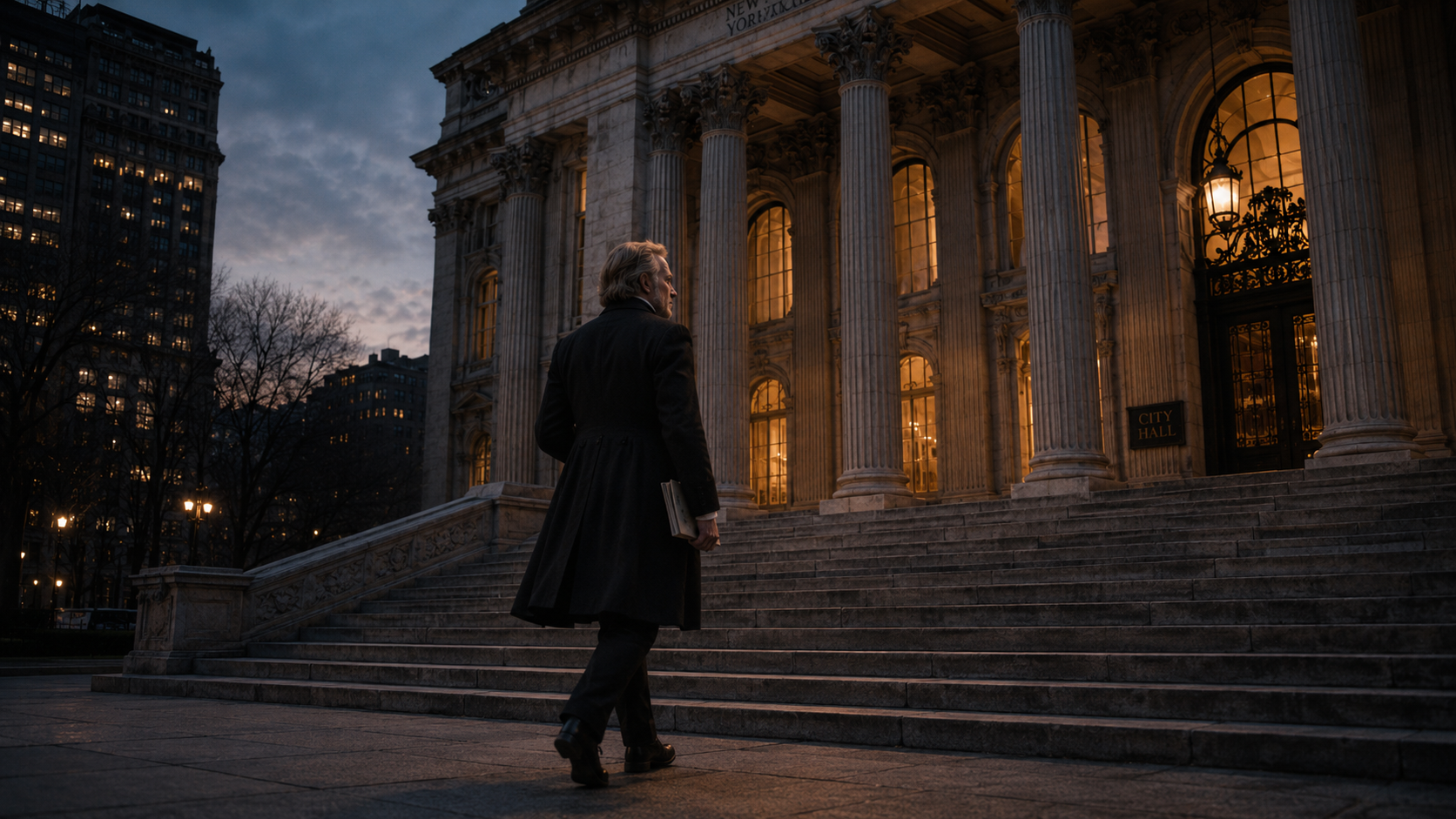
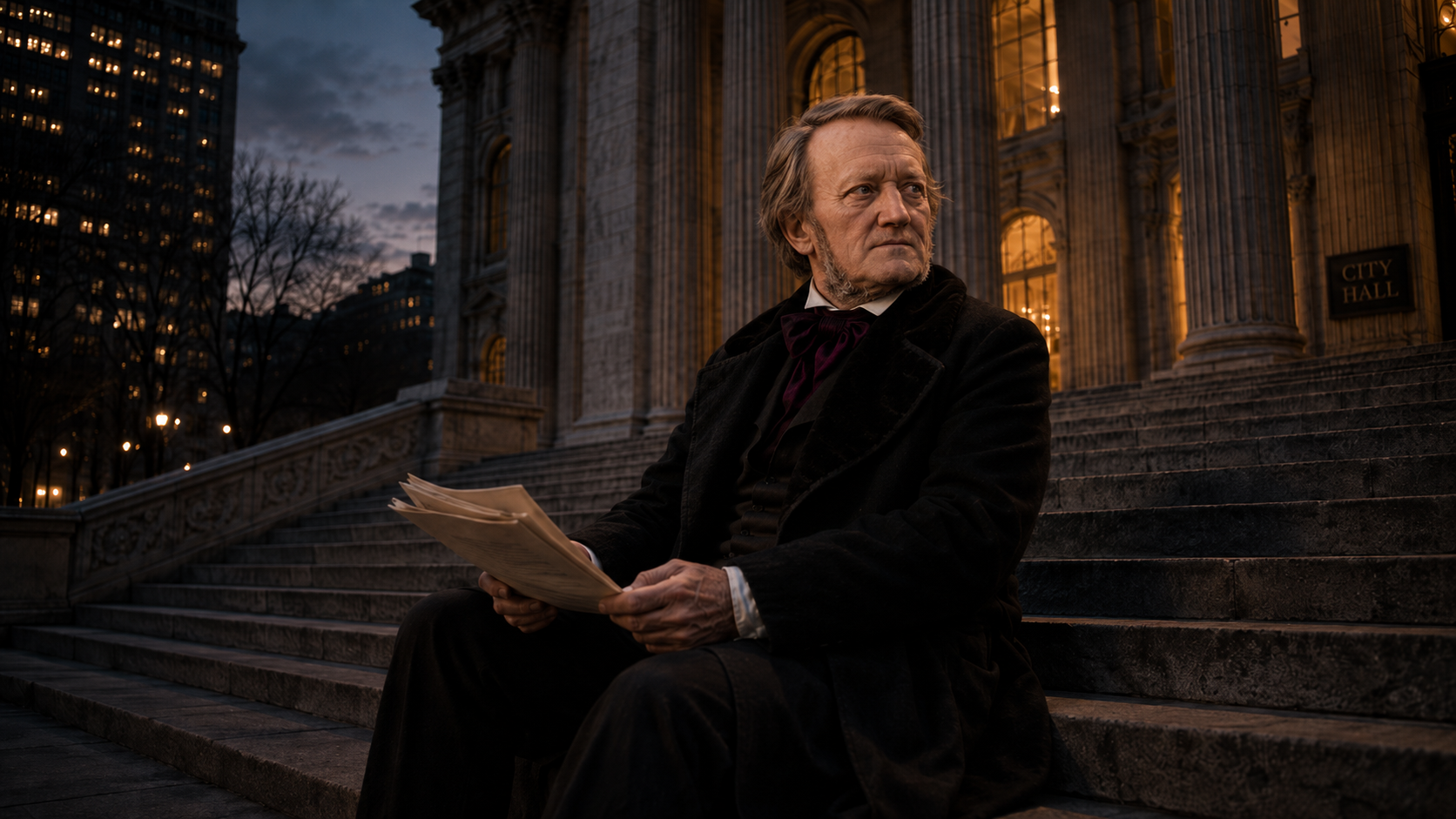
Enter City Hall Park from the Broadway edge and begin the Rienzi Overture as you step onto the green. Keep City Hall centered in view as the brass and percussion build toward their unearned triumph. Notice the steps and balconies designed, deliberately, for speech, the plaques layered with a century of reform history, workers passing through half-listening, exactly as they might have passed a hundred other overtures before this one.
This is New York's original civic stage, where reform has always announced itself before it becomes policy or archive. Nothing has been delivered yet. Nothing has even been specified. What you are standing inside, as the music swells, is the Versprechen itself, in its purest and most unaccountable form, before a single one of its claims has had the chance to be tested against what actually happens next.