The Sleep That Fire Was Only Ever Guarding: On Erweckung
das Wort / the word: die Erweckung (f.), pl. die Erweckungen
Aussprache / pronunciation: air-VECK-oong
Wortart / part of speech: Noun, feminine
Register: Formal and slightly elevated. Carries religious weight (revivalism, spiritual awakening) that the plainer das Erwachen does not.
Nicht Erwachen, Sondern Erweckung / Not Waking, But Awakening
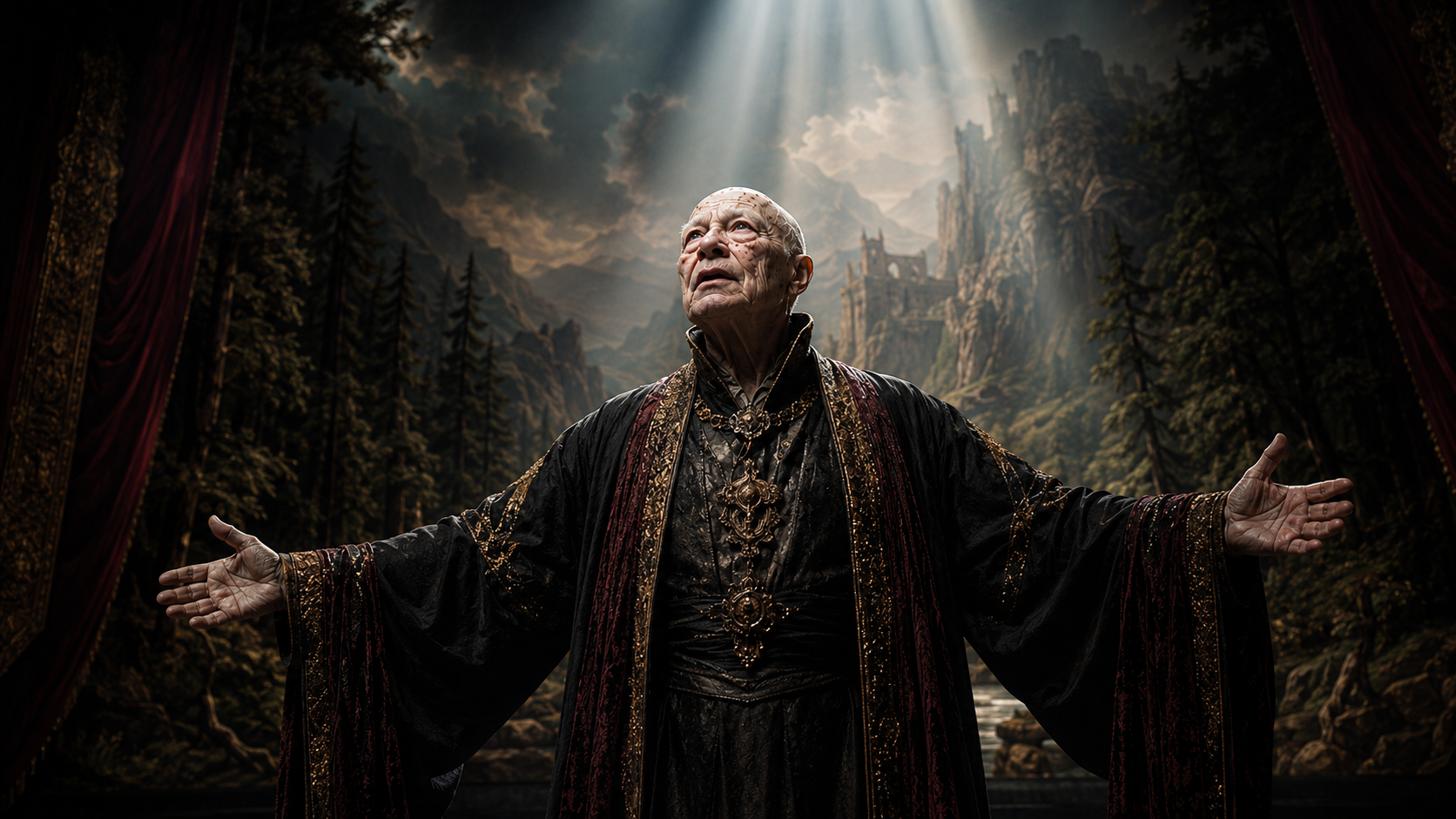
German has a plain, everyday word for waking up, das Erwachen, used for anything from a morning alarm to a character coming to their senses. Die Erweckung is built from the same root but carries a deliberate, almost causative weight the plainer word lacks. You erwachen on your own. You are erweckt by something, or someone, acting on you from outside. The word implies an agent, a force, a specific act that produces the waking rather than the waking simply happening of its own accord.
This is precisely why Erweckung is the correct word for what happens to Brünnhilde at Wave Hill's musical counterpart in the opera, and not the plainer Erwachen. She does not simply open her eyes after a long sleep the way a person wakes from an ordinary night's rest. She is woken specifically, deliberately, by a kiss from a hero who had to cross a wall of fire, defeat every ordinary form of fear, and understand a bird's language before he could reach her. The word insists on the agent behind the act, which matters enormously for what the awakening actually means once it happens.
Furcht Wird Zu Liebe / Fear Becomes Love

Last month's essay on die Furcht traced Siegfried's total lack of fear through the dragon fight and the forge, arguing that what he actually learns, standing before the sleeping Brünnhilde, is closer to Ehrfurcht, reverence, than to simple fright. This essay picks up exactly where that one left off. The moment Siegfried removes Brünnhilde's armor and understands, for the first time, that the sleeping figure is not a man but a woman, his composure genuinely breaks. He trembles. He calls out for his mother, whom he has never known, in a moment of vulnerability that nothing in the rest of the opera has prepared him for.
This is the only fear Siegfried ever actually feels, and it resolves not into caution but into the kiss that produces die Erweckung itself. Fear, in this single instance, does not stop him. It is the exact threshold he has to cross through, fully, before the awakening can occur. Wagner is precise about the sequence: first the trembling, then the kiss, then the waking, and the order matters. An awakening produced by someone incapable of first feeling something like fear would not have carried the same weight.
Die Erweckungsbewegung Und Das Weltliche Erwachen / Religious Revival and Secular Awakening
Modern German preserves Erweckung most visibly in die Erweckungsbewegung, the historical religious revival movements of the nineteenth century, moments of sudden, collective spiritual awakening understood to be produced by grace acting on a congregation from outside itself, not achieved through personal effort alone. The word's operatic use in this scene borrows directly from that religious register, whether or not Wagner intended the specific historical reference. Brünnhilde's waking is staged with unmistakably devotional music, hymn-like in its slow unfolding, treating the moment as something closer to a conversion than an ordinary reunion.
What makes this Ring's version of the concept unusual is that the awakened party is not a passive congregation receiving grace but a former goddess, stripped of her divinity, waking into mortality and love simultaneously. She does not simply resume where she left off. She wakes into a fundamentally changed condition, no longer able to command Valkyrie flight, newly capable of fear, newly capable of love, both at once, in the same instant the Erweckung completes itself.
Schutz Erfüllt Sein Versprechen / Protection Fulfills Its Promise

Two months ago, this project examined der Schutz, the fire Wotan raised around his sleeping daughter, a boundary meant to hold until someone worthy proved capable of crossing it. That essay ended by noting that protection is not the same as healing, that a boundary can keep a wound from worsening without closing it. Die Erweckung is the moment the boundary's entire purpose is finally realized. The fire was never meant to keep Brünnhilde sleeping forever. It was built, specifically, to wait for exactly this outcome.
This is worth marking directly, five months into this project's own accumulating calendar. June gave a curse that set events in motion. July gave a father's contradictory command, a daughter's loyal defiance, and a fire built to protect what the defiance had cost her. August gave the slower, harder work of healing a wound that protection alone could never close. September, finally, gives the moment all of it was quietly pointing toward: not rescue, not conquest, but recognition, arriving through a hero who had no fear to overcome and, because of that same absence, nothing standing between himself and the one thing on this whole walk still waiting to be answered.
Grammatik / Grammar

Die Erweckung is feminine, plural die Erweckungen.
Key constructions:
erwecken (v.), to awaken someone, to rouse (causative, requires an agent)
erwachen (v.), to wake up, intransitive, no agent implied
die Erweckungsbewegung, the religious revival movement (historical, nineteenth-century)
zu neuem Leben erwecken, to awaken to new life, to revive
erweckt werden, to be awakened (passive construction, emphasizing the outside force)
Note the distinction between erwecken (to wake someone else, transitive) and erwachen (to wake oneself, intransitive). German speakers keep these apart carefully; conflating them is a common and noticeable learner error.
Verwandte Wörter / Related Words
das Erwachen (n.), waking (the plainer, agentless cousin)
erwecken (v.), to awaken, to rouse
die Erweckungsbewegung (f.), religious revival movement
die Furcht (f.), fear (last month's word: the threshold Siegfried has to cross before this one can occur)
der Schutz (m.), protection (two months prior: the boundary this word finally fulfills)
die Liebe (f.), love
die Sterblichkeit (f.), mortality (what Brünnhilde wakes into, alongside love)
die Gnade (f.), grace (the theological undertone the word still carries)
Die Verbindung zum Weg / Connection to the Walk
Cross into the Bronx to Wave Hill, terraced and elevated, its gardens looking out over the Hudson toward the Palisades. Stand in the upper gardens facing the river and start the awakening music. Let the long phrases breathe with the horizon rather than rushing toward their resolution. Late-summer flowers have not yet begun to fade. The sky opens outward here, not upward, wide rather than vertical, which is exactly the register this final scene asks for.
Nothing about this stop is conquest. Siegfried does not defeat Brünnhilde the way he defeated Fafner. He simply arrives, trembling for the only time in the whole month, and something that fire alone could never finish gets finished instead through recognition, mutual and sudden, between two people meeting each other as equals for the first time. This is where September in this project's own calendar stops being about a boy discovering the world and becomes, in its final minutes, about two people discovering each other.