What if Wagner was the First Product Manager?
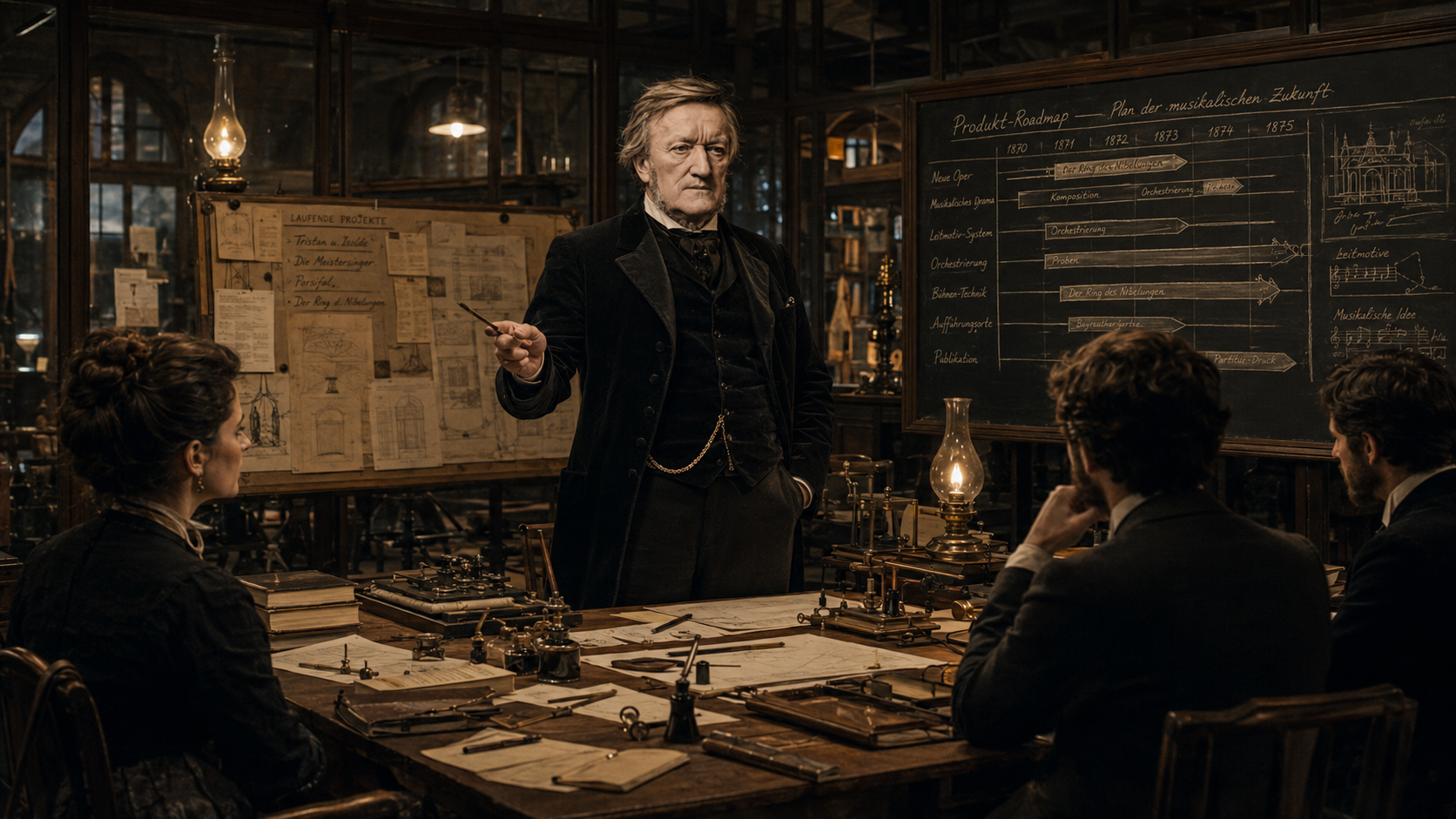
The question sounds absurd until you sit with it for a moment.
Richard Wagner spent the better part of four decades trying to build a product nobody asked for, that required entirely new infrastructure to deliver, that alienated almost every existing stakeholder, and that was finally shipped in conditions of his own design, in a venue built to his specifications, on a hill in a small Bavarian town that had no particular reason to host it. He controlled the sound, the sightlines, the seating, the acoustics, the libretto, the score, the staging, the lighting, the experience of arrival, and the experience of departure. He called it the Gesamtkunstwerk, the total work of art. What he actually built was a vertically integrated user experience.
The Problem With Existing Platforms
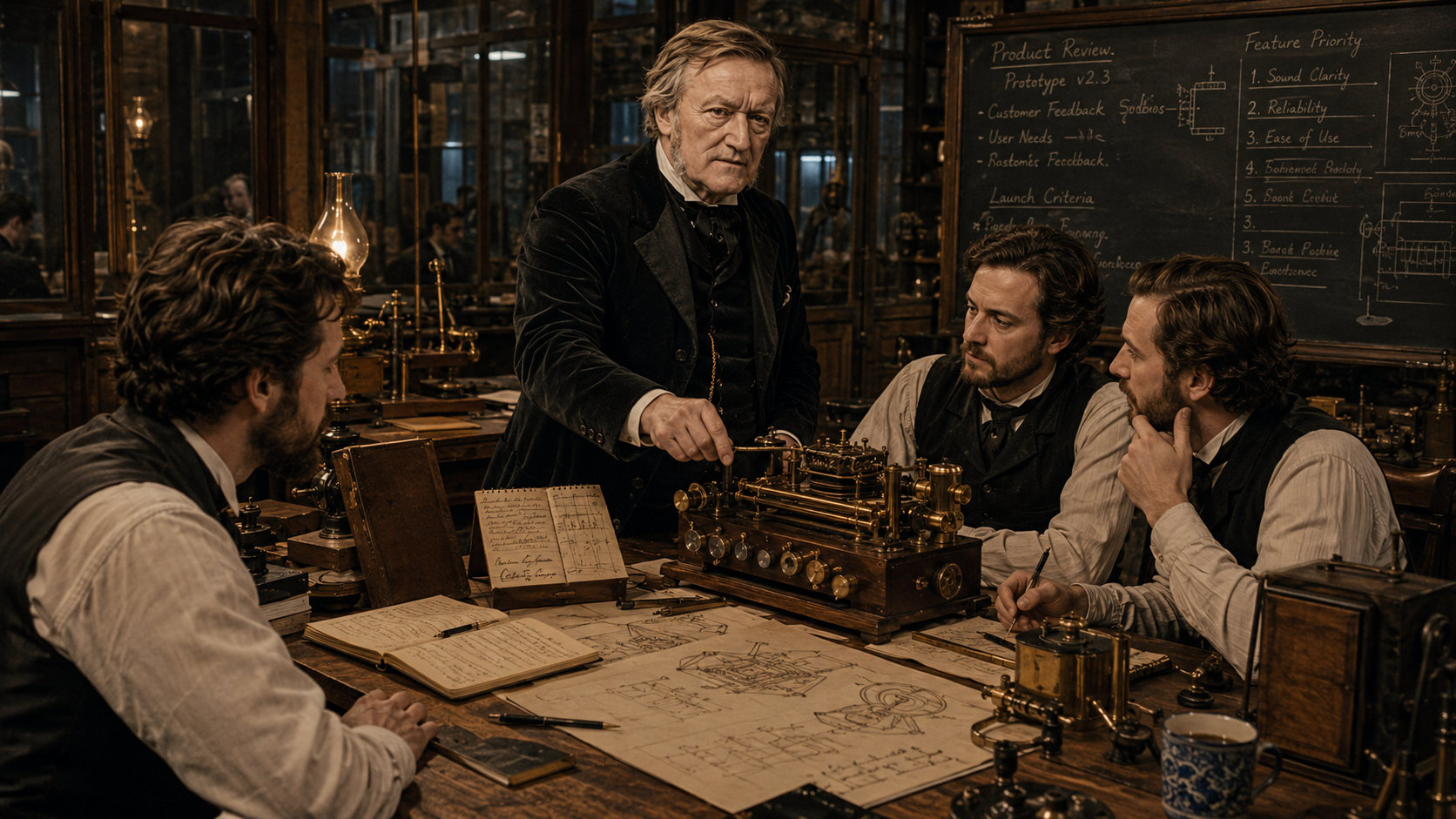
Wagner's fundamental complaint about the opera houses of his time was not aesthetic. It was architectural. The existing venues were designed for the wrong kind of attention. Boxes arranged for social visibility. Orchestras placed where they could be seen rather than heard. The audience attending to each other as much as to the stage. The experience optimized for status display rather than immersion.
This is a product problem. The platform was serving the wrong use case.
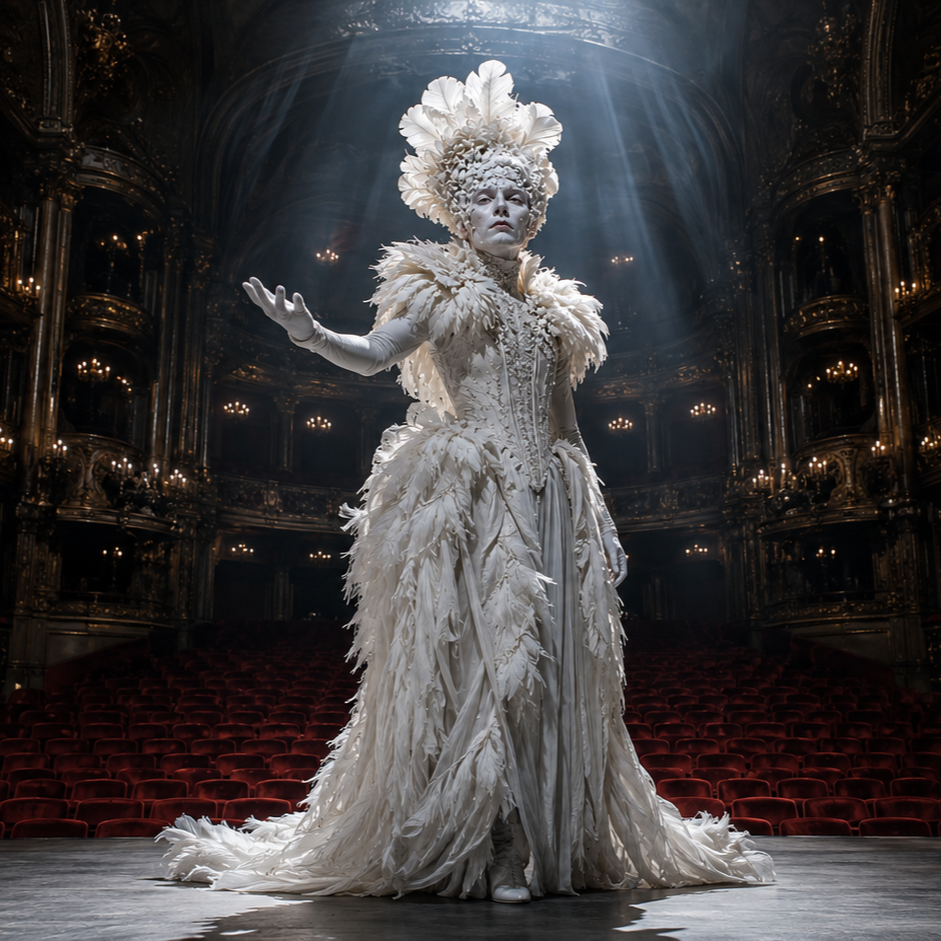
His solution was not to work within existing constraints but to redesign the delivery mechanism from the ground up. Bayreuth was not an opera house. It was a product specification made physical. The sunken orchestra pit that hid the mechanics of production. The fan-shaped seating with no bad sight lines. The darkened auditorium, radical at the time, that removed the audience's ability to attend to each other and directed all available attention toward the stage. Every design decision in service of a single outcome: total immersive absorption.
He shipped it in 1876. It has been continuously operational ever since.
The Leitmotif as Information Architecture
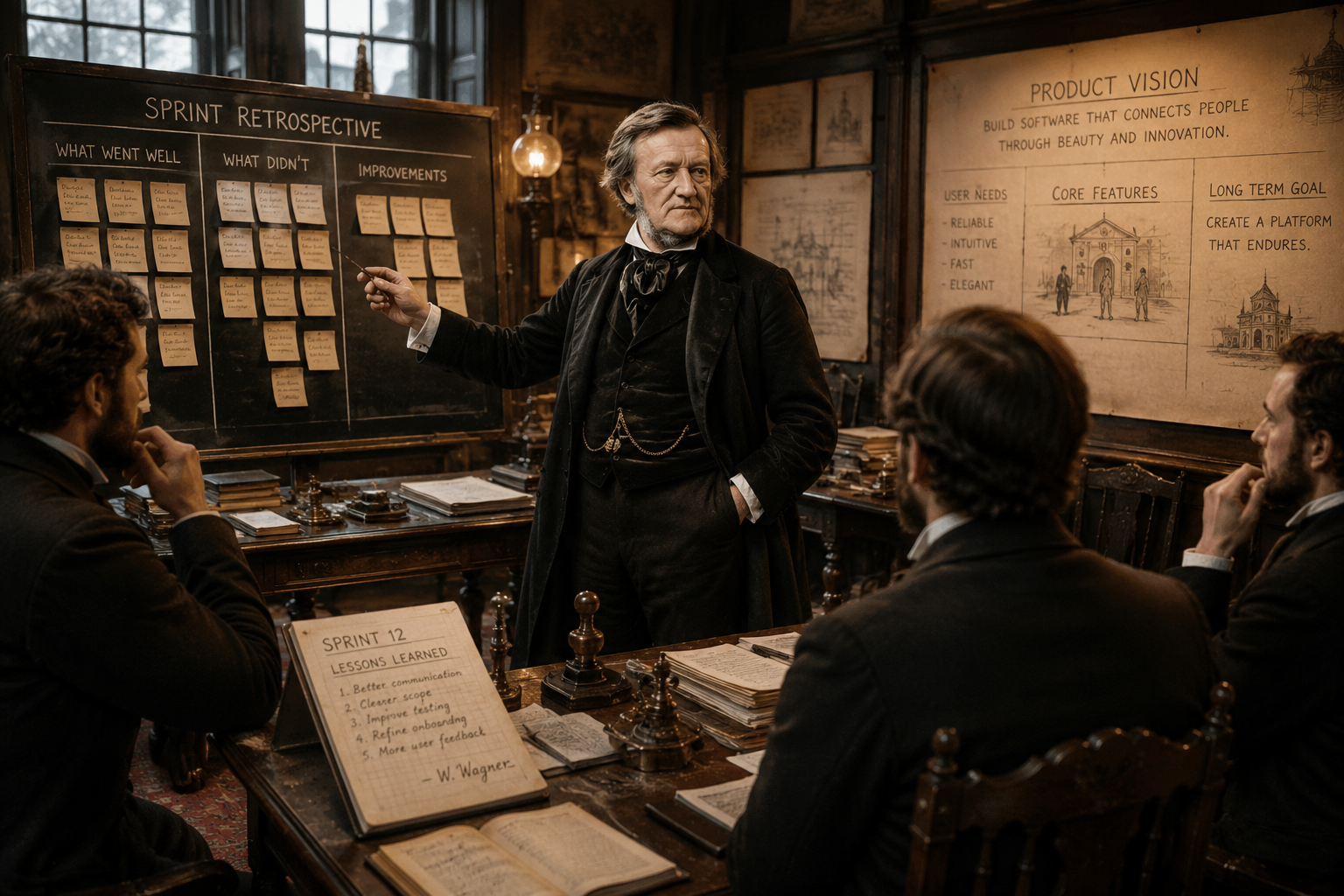
Wagner's other great product innovation is hiding in plain sight inside every film score you've ever heard.
The leitmotif, a musical phrase associated with a character, object, or idea that recurs and transforms throughout the work, is fundamentally a navigation system. It gives the audience a way to track relationships and meanings across a work of enormous complexity and duration. When the Curse motif from Das Rheingold reappears transformed in Götterdämmerung four operas later, the listener who recognizes it experiences a connection across time that deepens the meaning of both moments. The system creates coherence in a corpus too large to hold in conscious memory.
This is exactly what a well-designed tagging system, or a recommendation engine, or a cross-site thematic architecture is trying to do. Connect things that belong together across distances too large to navigate manually. Create resonance between nodes that would otherwise remain isolated.
Wagner didn't describe it this way. But the functional logic is identical.
The Exile Problem
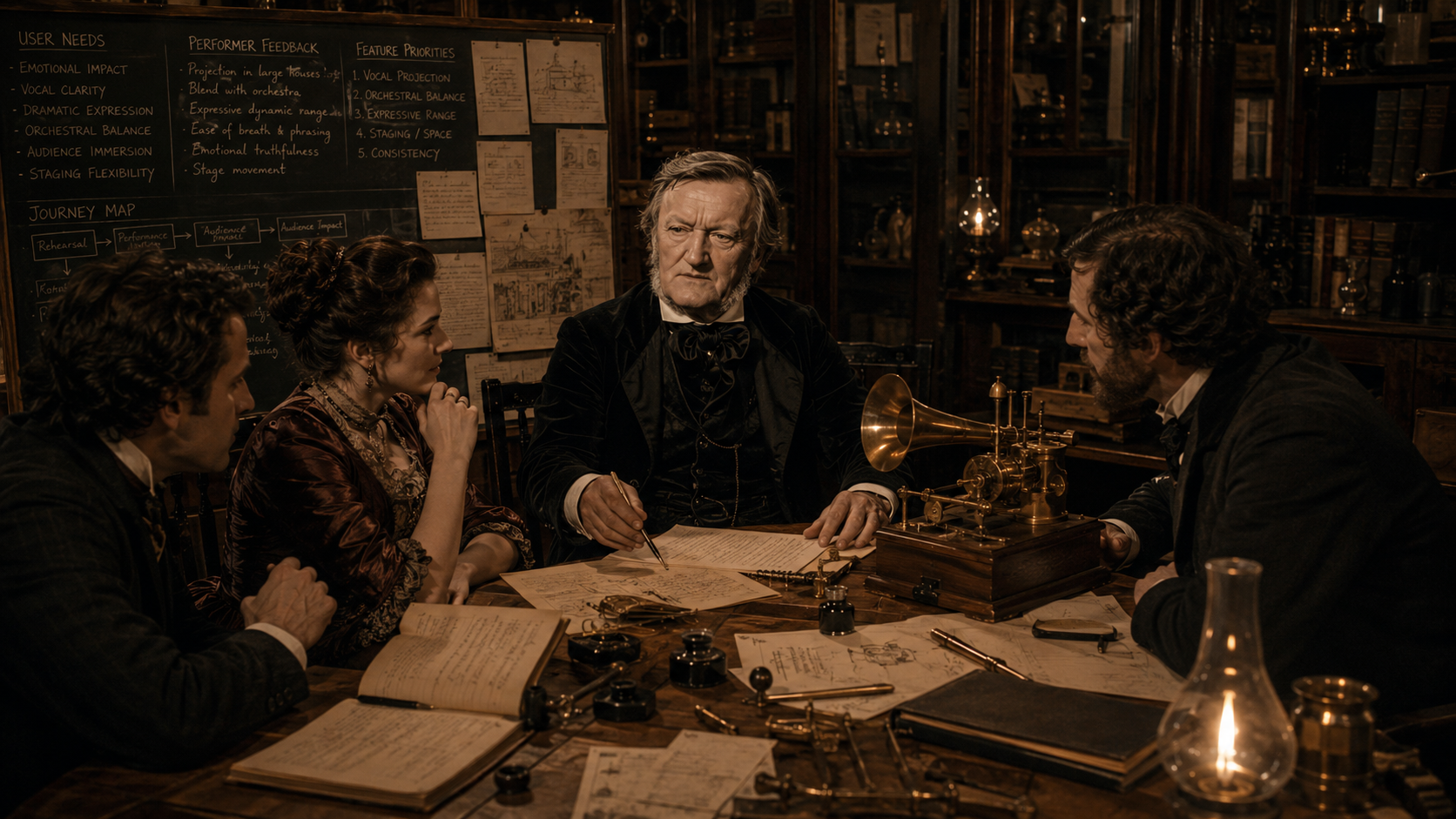
There is also the question of what Wagner did when the platform didn't exist yet and the funding had run out and the audience wasn't ready and the critics were hostile.
He wrote anyway. For twenty-six years he worked on the Ring cycle, mostly in exile, with no certainty that it would ever be performed. He wrote theoretical essays explaining what he was trying to do. He built a community of supporters before the product existed. He corresponded relentlessly with potential patrons and collaborators. He kept iterating on the specifications.
This is not the romantic myth of the solitary artist. This is a product development cycle running over a quarter century with an audience of essentially one.
The modern product manager who has ever maintained conviction in a roadmap through three rounds of stakeholder skepticism and a complete rearchitecture of the backend will recognize something in this. The belief that the thing you're building is necessary, even when you cannot yet demonstrate it. The maintenance of vision across time.
Wagner was not, in any sense, a good person. The politics are irredeemable and the personal conduct was frequently appalling. But as a study in how to build something that didn't previously exist, for an audience that didn't yet know it wanted it, using infrastructure that had to be invented along the way — he remains instructive.
The Gesamtkunstwerk was a product vision. Bayreuth was the launch. The leitmotif was the information architecture. And the Ring cycle was a four-part platform built to run on all of it simultaneously.
He shipped late and over budget. But he shipped.