A Wagnerian Libretto: The Wanderer, the Question & the Threshold
Vorbemerkung
This work proceeds from a single speculative claim: that Wagner's twelve operas are not a developmental sequence but twelve attempts to tell the same story — a being caught between two orders of existence, destroyed or redeemed by the impossibility of fully belonging to either — and that their characters are not separate creations but aspects of one continuous consciousness. Der Wanderer takes the claim literally. It assembles the twelve into one universe and the one universe into one evening.
The work is governed by a rule of material: nothing in it is invented. Every figure, every situation, every prop, every dramatic mechanism exists somewhere in the twelve operas. The forbidden question is from Die Feen and Lohengrin. The seven-year landfall is from Holländer. The ban on love is from Das Liebesverbot. The song contest is from Tannhäuser and Meistersinger. The fire-sleep is from Walküre. The wound, the kiss, the fool, the spear are from Parsifal. The staff that must flower is from Tannhäuser. Only the assembly is new. Even Rienzi is present, by the only means the universe permits him: he is the one figure who could not be assembled, and the work marks his absence.
The score obeys the same law. After the first act, it admits no new theme. Every melody in the second and third acts is a transformation of material the audience has already heard. One world, no exits — for the ear as well. The procedure is named in the apparatus below as die Wiederkehr.
The engine of the drama is the question. In the first act it is the question that must not be asked: identity demanded, and the transcendent withdraws. In the third act it is the question that must be asked: identity offered to, and the wound heals. Between them the law matures. And the pattern that governs all twelve operas — the beloved's death as the price of the protagonist's release — is, in the final scene, deliberately broken. For that reason this work permits itself the one gesture the rest of this speculative catalogue withholds: at the end, the curtain falls.
It is written to be performable in 1890 — Bayreuth's stage machinery, steam apparatus, gauze transformations, and gaslight are sufficient for every effect it asks — and equally performable today, where the same effects are achieved with haze and electric light. Nothing in it requires a technology Wagner's own theater did not possess. Running time, with two intervals: approximately five hours.
Personen
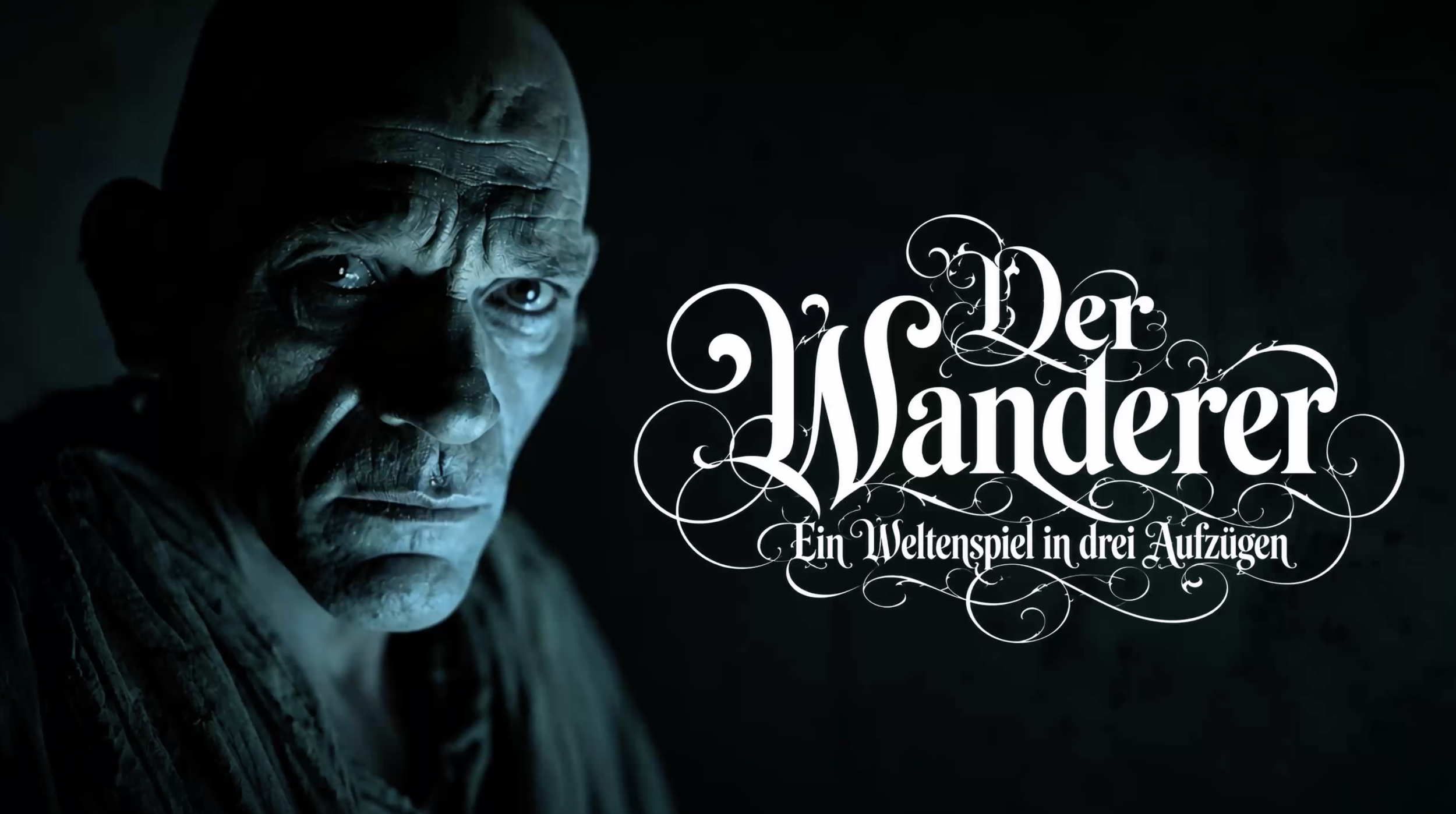
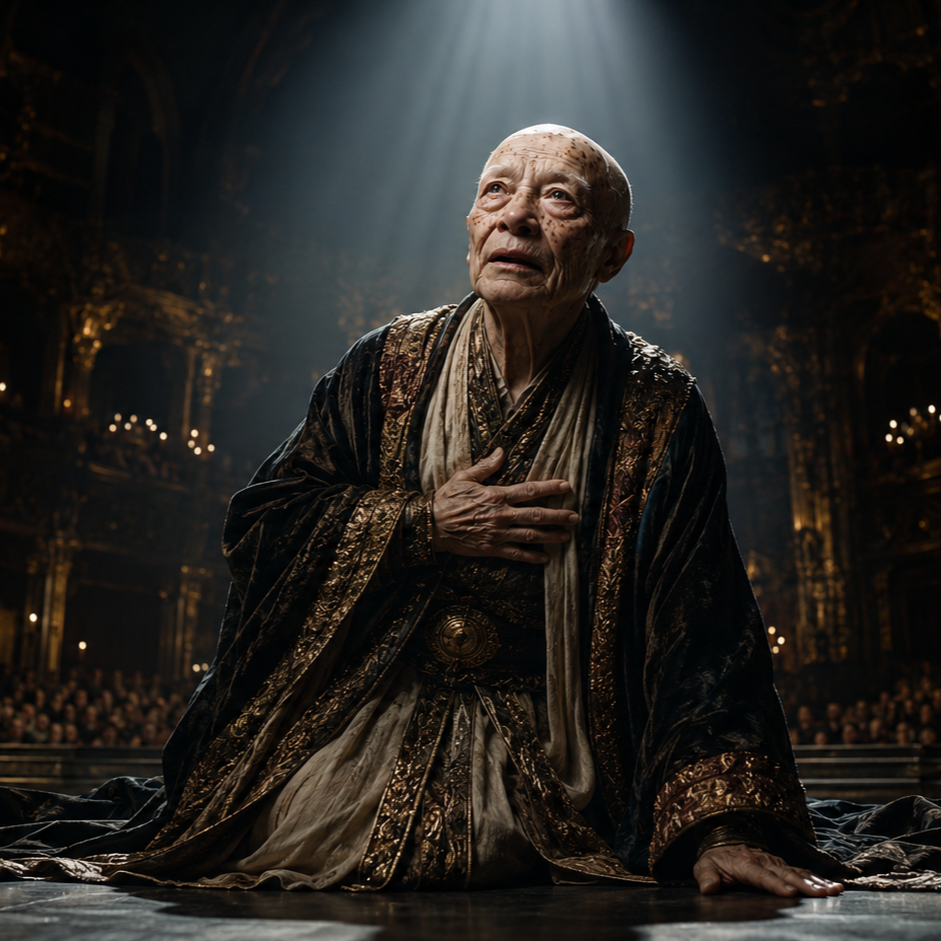
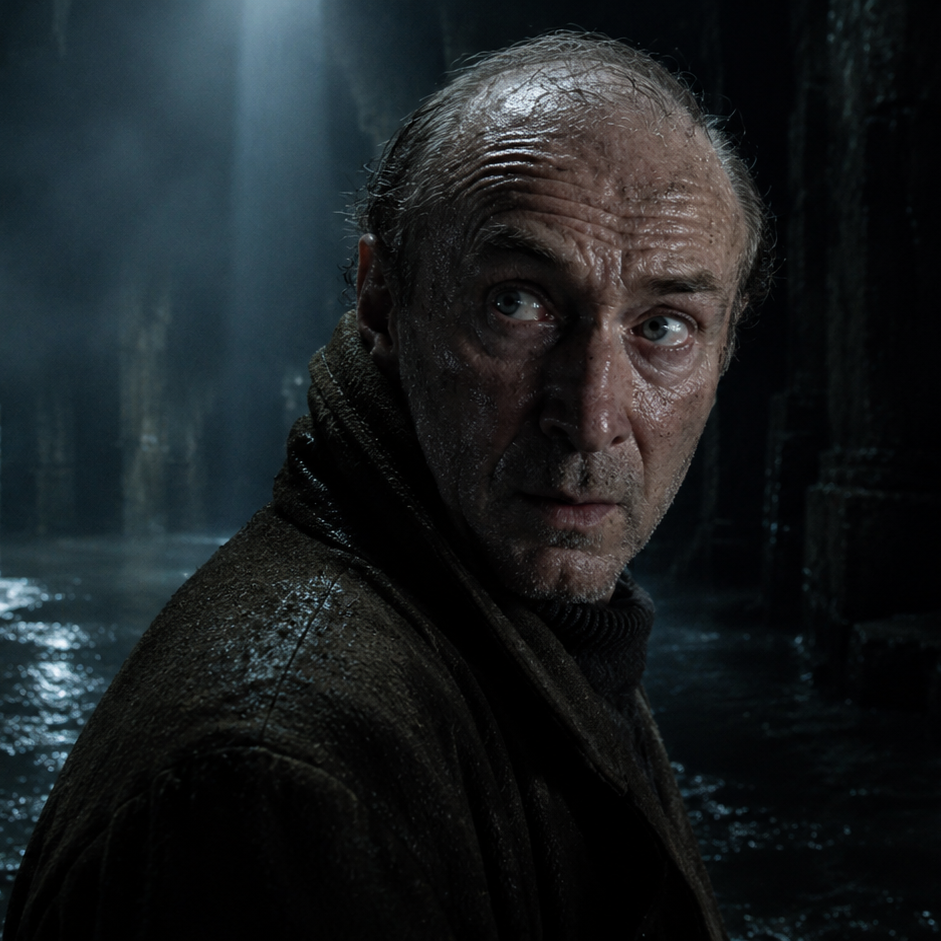
DER WANDERER (Heldenbariton) — the central consciousness. Sea-captain in the first act, lawgiver and judge in the second, wounded keeper in the third.
Aspekte: Holländer · Wotan · Tristan · Marke · Amfortas
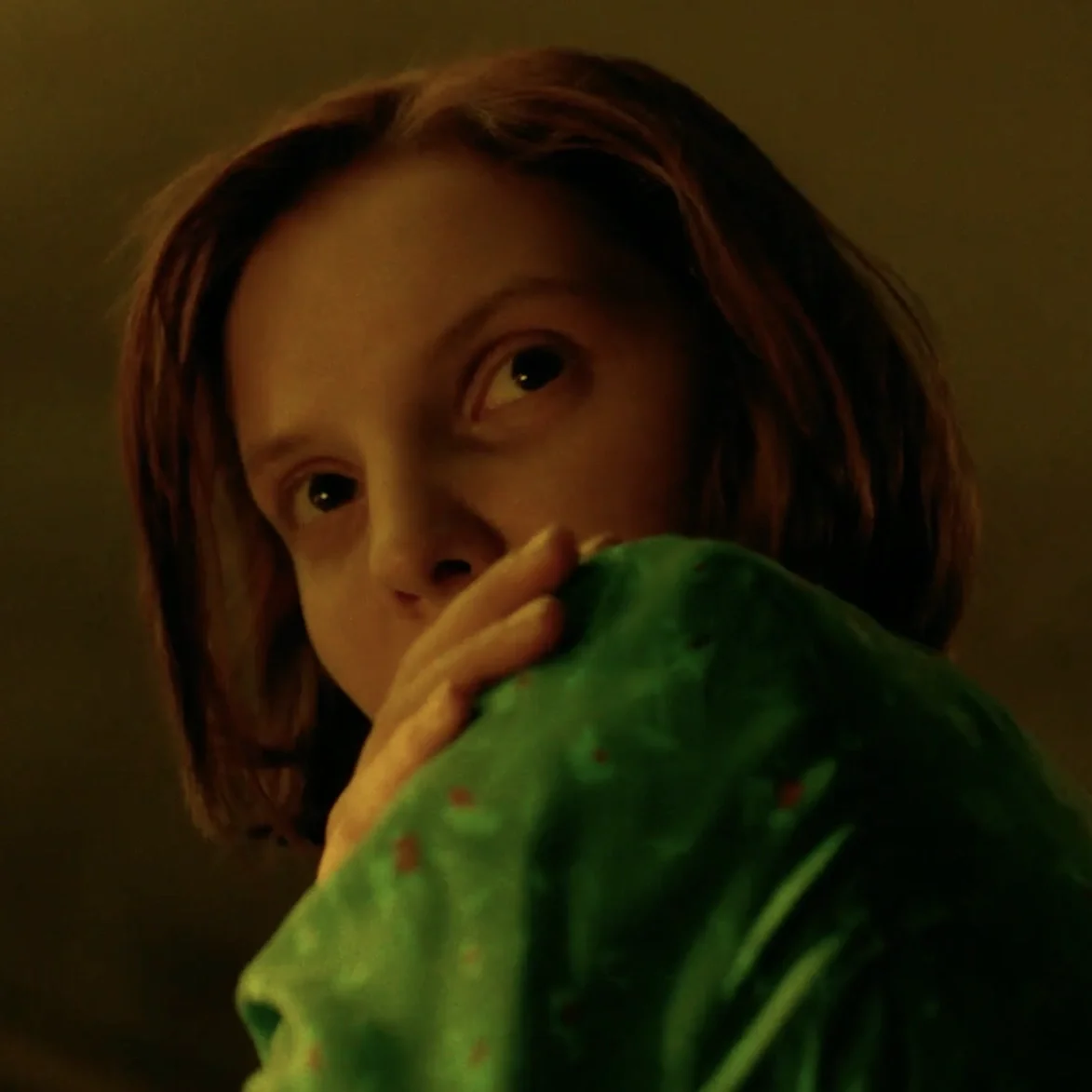
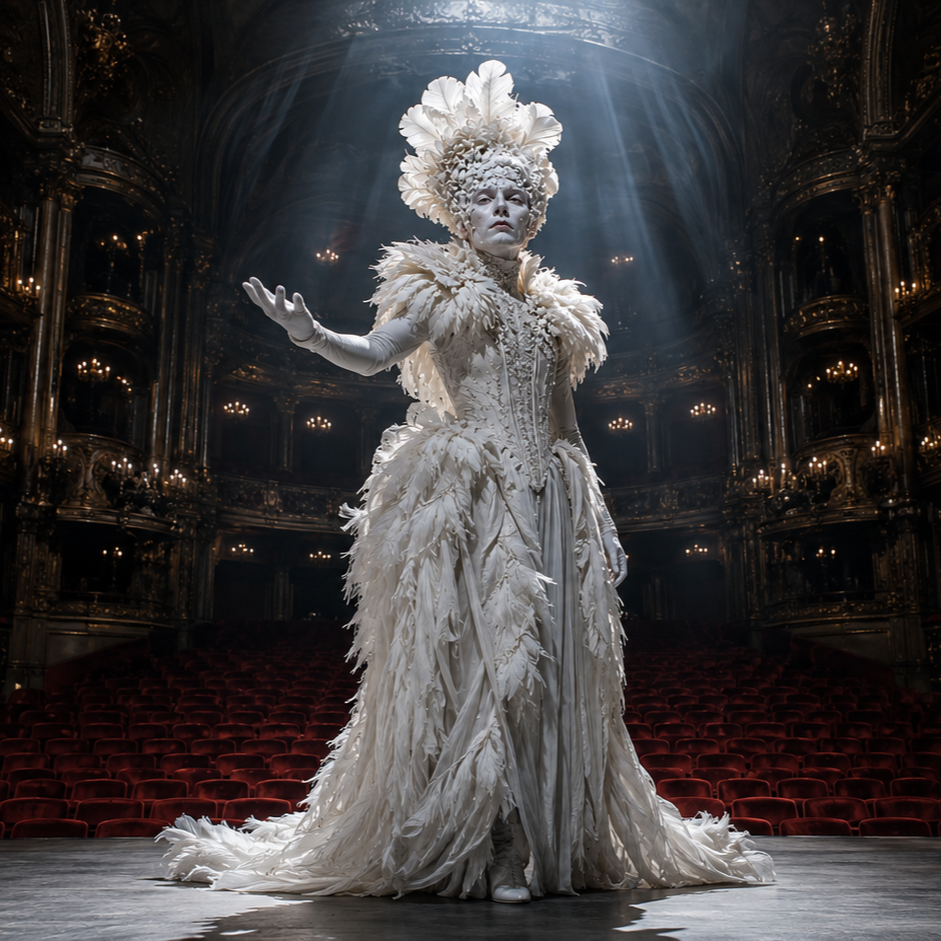
DIE WARTENDE (hochdramatischer Sopran) — she who waits, believes, asks, defies, sleeps, and wakes. The one consciousness on the other shore.
Aspekte: Senta · Elisabeth · Elsa · Isolde · Brünnhilde · Eva · Kundry
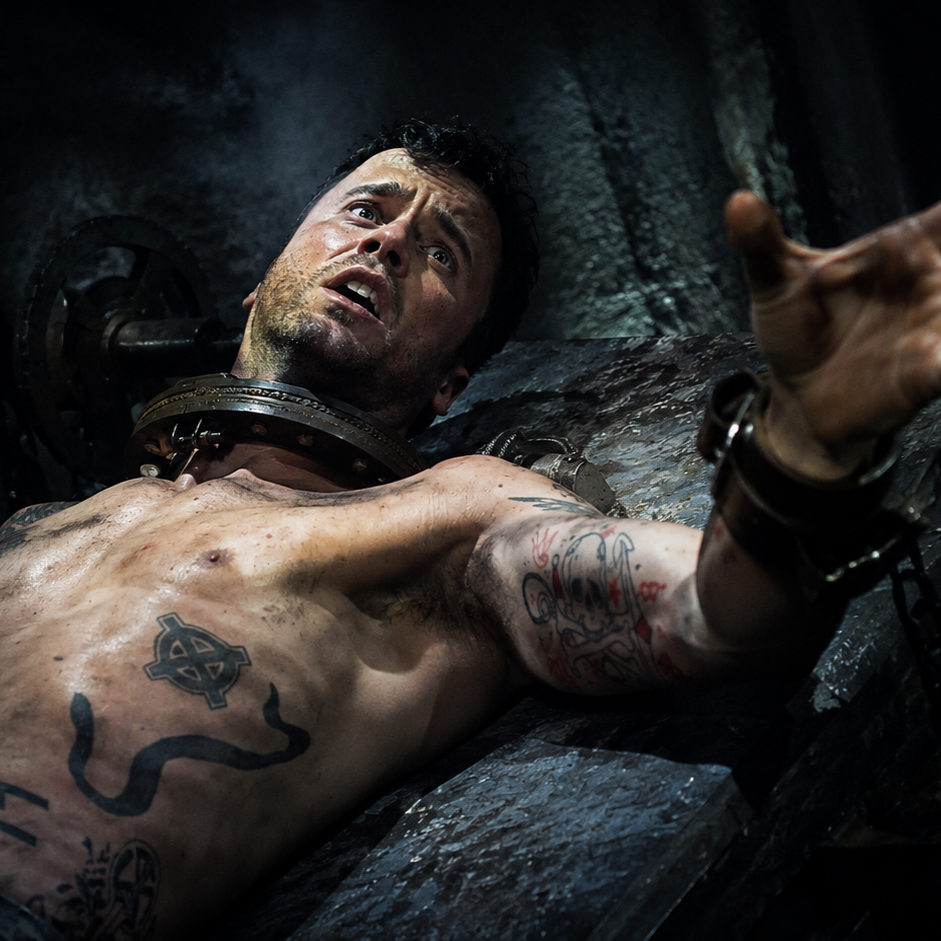
DER KNABE (Heldentenor) — the Wanderer's own youth, sent back to him by the universe as a boy who remembers nothing.
Aspekte: Tannhäuser · Walther · Siegfried · Parsifal
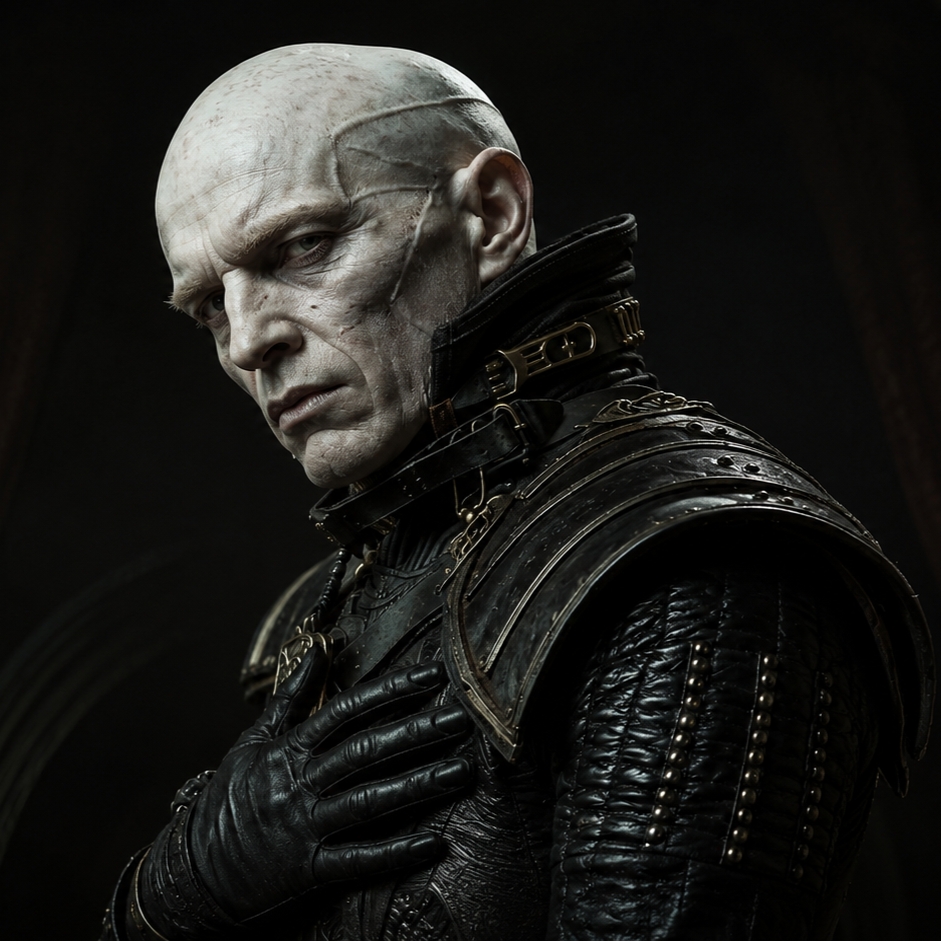
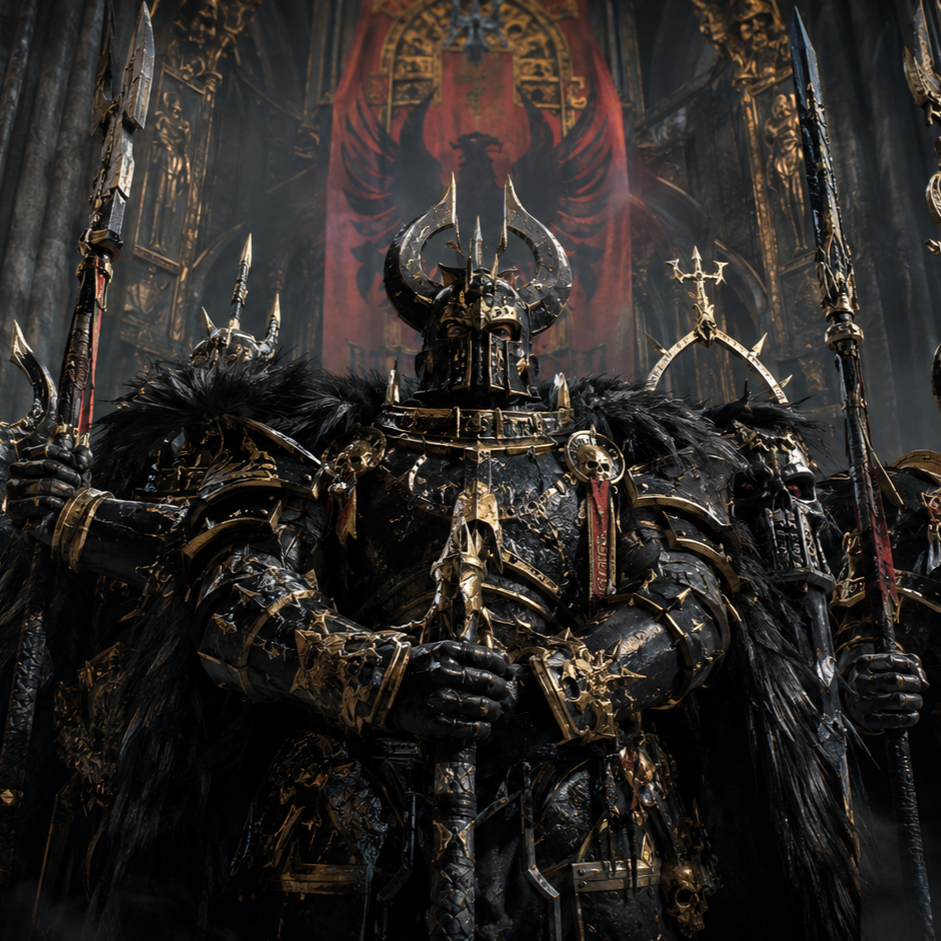
DER DUNKLE (Bass) — the one who forbade what he desired. Keeper of the register, minister of the ban, thief of the staff.
Aspekte: Friedrich · Alberich · Klingsor · Hagen
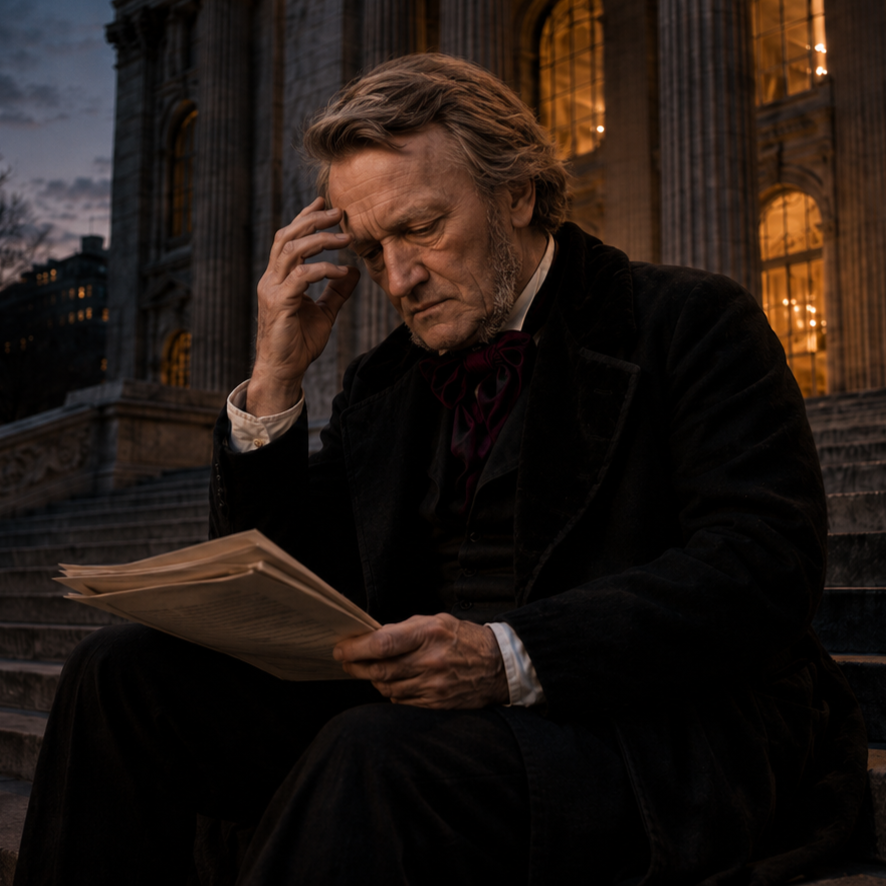
DER MEISTER (Bassbariton) — the one who holds and endures; craftsman, witness, teacher. The universe's only portrait of maturity.
Aspekte: Sachs · Gurnemanz · Wolfram · König Marke
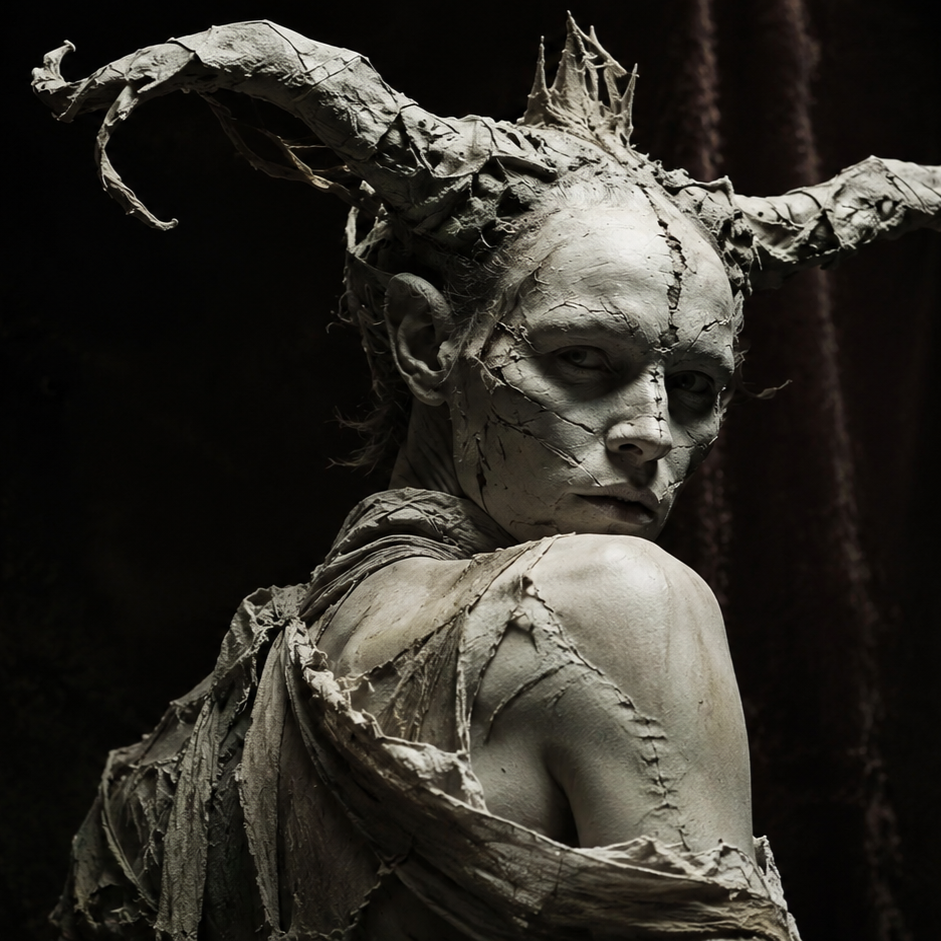
DIE ALTE (Alt) — the depth that desires and remembers. She is both the origin and the garden.
Aspekte: Erda · Venus
DIE DREI (Sopran, Mezzosopran, Alt) — the universe's memory in three voices, one element per act: water, rope, flowers.
Aspekte: Rheintöchter · Nornen · Blumenmädchen
DER JUNGE (lyrischer Tenor) — steersman, apprentice, shepherd. He opens each act with an unaccompanied song: the only free voice in the work.
Aspekte: Steuermann · David · ein Hirt
DAS VOLK (Chor) — one chorus, re-garmented: crew, spinners, guilds, court, pilgrims, knights.
Anmerkung: Rienzi fehlt. Der Mann ohne Mythos kann nicht versammelt werden. Sein Platz im Volk bleibt leer und ist im Spiel sichtbar zu lassen.
Schauplatz — Die Schwelle
One permanent structure stands at center stage for the entire evening and is never removed: a great threshold — two weathered posts and a lintel, large enough to walk through, too large to be a door of any house. In the first act it is dressed as the gate between sea and land. In the second it is the portal of the Hall of the Law, and later the rock within the fire. In the third it is the ruined gate of the same hall, and at the end, undressed, simply itself. Everything in the universe happens at, through, or in sight of die Schwelle. Characters who belong to one order only do not pass through it. The Wanderer passes through it in every act. The audience should come to dread and then to love the sight of it.
The three acts are the universe's one day: night and sea; the long noon of the law; the burned land before morning. The scene changes; the world does not.
Vom Orchester
Die Flut — the water: the texture out of which the work rises, a deep pedal that becomes storm. It opens the evening and does not return complete until the final scene, when it returns as rain.
Der Schritt — the tread: a walking bass, passacaglia-wise, present in every scene in which the Wanderer is — even offstage. The audience always knows where he is by whether the ground of the music is walking.
Die Frage — the question: a rising interval that does not resolve. It is the work's central cell. In the first act it is forbidden; in the second act it is judged; in the third act it inverts into the major and heals. It resolves once, in the orchestra's final measure.
Das Verbot — the ban: a brass chorale that hardens by repetition. It is the law's sound, and the terrible thing about it is that it is beautiful.
Das Feuer — the fire: a flickering figuration that closes the second act and burns under the whole third until the rain.
Der Stab — the staff: a single sustained trumpet tone. When the staff flowers, the tone blossoms — winds opening around it chord by chord, an effect fully achievable in 1890 and unimprovable since.
Die Wiederkehr — the return: the governing procedure. After the close of the first act, the score introduces no new material. Every theme of the second and third acts is a transformation of what has been heard. The universe is closed. The ear must learn this slowly, and then all at once.
Von den Gewändern
Der Wanderer wears one coat for five hours: a sea-coat, salt-bleached. In the second act the wide-brimmed hat and the spear-staff are added and the coat is belted as a judge's robe — but it is visibly the same coat. In the third act a pale keeper's mantle is laid over it, and the coat shows through at the breast, at the wound. The garment ages with the evening. At the end, coat, hat, and mantle are laid on the threshold stone.
Die Wartende wears white that takes the evening's colors: sea-grey at the hem in the first act; gold thread for the betrothal and a fire-red mantle for the sentence in the second; ash-grey over the white in the garden; and in the final scene the white alone, unbleached, unornamented.
Der Dunkle wears black with one grey glove, never removed. It is the hand that let go of love, and it holds the register, the ban, and finally the staff — everything except a living thing.
Der Knabe wears undyed wool; in the third act he is barefoot and road-grey. Der Meister wears the leather apron of his craft under the robes of every office he is given; the apron is always visible. Die Alte wears the colors of earth under the colors of the garden. Die Drei wear the same three veils all evening, re-pinned: water-green, then rope-grey, then flowered.
Das Volk wears one base garment per chorister with reversible surcoats: crew to spinners to guilds to pilgrims to knights. The audience should half-recognize every transformation. One gap is left in every choral formation: Rienzi's place.
Zur Aufführung
Orchestra as for Parsifal: triple winds, four horns plus four Wagner tubas, three trumpets and bass trumpet, three trombones and contrabass tuba, two harps, timpani and percussion, full strings, with offstage brass for the Hall and offstage bells. Steam (or haze) for the sea, the fire, and the garden's collapse. Gauze for the double-scene in the third act. A Wagner curtain.
| Erster Aufzug — Das Meer | Die Frage, verboten | ca. 95 Min. |
| Pause | 45 Min. | |
| Zweiter Aufzug — Der Tag | Das Gesetz | ca. 110 Min. |
| Pause | 45 Min. | |
| Dritter Aufzug — Der Morgen | Die Frage, geboten | ca. 95 Min. |
Erster Aufzug
Vorspiel. Die Flut: a deep pedal in the lowest strings and contrabassoon, held until the house forgets it is a note and hears it as the floor. Out of it, the storm — and inside the storm, already, der Schritt: the walking bass, faint, as if someone were crossing the sea-bed on foot. The curtain rises mid-storm.
A northern coast at night. Die Schwelle stands at center, dressed as the gate between sea and land: its posts hung with nets and weed, the lintel white with salt. Upstage, behind it, the sea — steam and moving light; a dark ship rides there with blood-red sails furled. Downstage, the land: a path, a bench, the glow of a house off right. The crew of a coastal ship secures lines through the storm's last fury. DER JUNGE, the steersman, takes the watch as the others go below.
Erste Szene
das Wasser kennt den Weg.
Schlaf nicht, mein Lieb, am dunklen Meer:
heut kehrt vielleicht wer heim.
the water knows the way.
Do not sleep, my love, by the dark sea:
tonight, perhaps, someone comes home.
und sieben sind ein Spiel.
Doch wer schon siebzig sieben hat,
dem sind sie nicht mehr viel.
and seven are a game.
But he who has had seventy sevens —
to him they are no longer much.
He nods at his post. The storm dies altogether — too suddenly; the orchestra marks the wrongness with a silence where a cadence should be. Through die Schwelle, from the sea side, DER WANDERER comes ashore. Der Schritt arrives with him and settles into the ground of the music, where it will remain. He is in the salt-bleached coat. He stops just landward of the threshold and does not go further.
Ich zähle nicht mehr.
Das Meer zählt für mich,
und das Meer verzählt sich nie.
I no longer count.
The sea counts for me,
and the sea never miscounts.
Wieder ein Name,
den ich mir borgen muss.
Ich hatte einen eigenen —
er liegt am Grund,
bei dem, was ich beschwor
und nicht gehalten habe.
Again a name
I will have to borrow.
I had one of my own —
it lies on the sea-floor,
with the thing I swore
and did not keep.
Nur dies: es war ein Wort,
und Worte sinken nicht.
Sie warten unten
und ziehen am Kiel.
Only this: it was a word,
and words do not sink.
They wait below
and pull at the keel.
lässt mich das Wasser an Land,
zu suchen, was mich löst:
ein Herz, das hält,
was ich nicht hielt.
Ich habe viele Ufer abgesucht.
Die Herzen halten sieben Tage.
Das Wort am Grund hält ewig.
the water lets me ashore
to seek what releases me:
a heart that keeps
what I did not keep.
I have searched many shores.
Hearts keep for seven days.
The word on the sea-floor keeps forever.
Light grows in the house off right: a doorway of warm gas-glow (today: warm electric). Women's voices within — the spinning chorus, wheels heard in the orchestra as whirring violas. The WANDERER withdraws into the shadow of the threshold's seaward post.
Zweite Szene
The house interior opens to view (a wagon stage or a lit scrim; in 1890, the side-flat turns). Women spin. Among them, not spinning, DIE WARTENDE — at a window facing the sea, her back to the room. The women tease her in chorus: she stares at the water as if it owed her something. She turns. She has been waiting all her life and tonight she will say so.
das fährt und findet kein Land.
Am Steuer steht ein Bleicher
mit der Heimat in der Hand.
Und eine wartet am Ufer.
Ich glaube, sie hat mein Gesicht.
that sails and finds no land.
At the helm stands a pale man
with his homeland in his hand.
And a woman waits on the shore.
I think she has my face.
der zieht einen Glänzenden her.
Er hilft, doch darf man nicht fragen,
woher er kommt und wer.
Und eine fragt doch am Ufer.
Ich glaube, sie hat mein Gesicht.
that draws a shining one here.
He helps, but one must not ask
from where he comes, or who.
And a woman asks, even so, on the shore.
I think she has my face.
da schläft im Feuer wer.
Wer durch die Flamme schreitet,
dem schlägt kein Herz zu schwer.
Und eine schläft hinterm Feuer.
Ich glaube, sie hat mein Gesicht.
where someone sleeps in fire.
Whoever strides through the flame,
no heart beats too heavy for him.
And a woman sleeps behind the fire.
I think she has my face.
liegt einer mit offener Brust
und wartet auf eine Frage,
die keiner zu fragen gewusst.
Und keine steht an dem Ufer.
Dort, glaub ich, endet mein Gesicht.
lies one with an open breast,
waiting for a question
no one has known to ask.
And no woman stands on that shore.
There, I think, my face ends.
Silence in the house. The spinning has stopped. Then, in the doorway between sea and room — through die Schwelle, the first crossing — DER WANDERER. The women scatter like spray. DIE WARTENDE does not move. The orchestra holds die Frage, unresolved, very soft: the question is in the room before anyone speaks.
Dritte Szene
Ich stand im Dunkel und erschrak:
du kennst das Schiff, du kennst den Berg —
woher kennst du die Brust?
I stood in the dark and was afraid:
you know the ship, you know the mountain —
how do you know the breast?
Ich warte nur,
und Warten macht die Augen weit.
Ich habe dich gesehen,
eh es dich gab für mich.
Tritt ein. Du bist erwartet.
I only wait,
and waiting makes the eyes wide.
I saw you
before you existed for me.
Come in. You are expected.
In siebzig Häfen sagte das keine.
Höre, eh du es noch einmal sagst,
was der bei sich führt, den du erwartest:
kein Gold, kein Land, kein Gestern.
Nur eine Bedingung,
hart wie ein Kiel.
In seventy harbors, no one said that.
Hear, before you say it again,
what the man you expect carries with him:
no gold, no land, no yesterday.
Only one condition,
hard as a keel.
so lang die Liebe währt:
woher ich kam, wie ich geheißen,
eh dich mein Auge fand.
Die Frage ist ein Messer.
Trag sie bei dir, und zieh sie nie.
as long as the love lasts:
from where I came, what I was called
before my eye found you.
The question is a knife.
Carry it on you, and never draw it.
Du kamst. Das ist Geschichte genug.
Ein Messer, das ich niemals ziehe,
wiegt leichter als ein leeres Ufer.
Ich nehme die Bedingung
wie man ein Kind aufnimmt:
ganz, und ohne es zu wiegen.
You came. That is history enough.
A knife I never draw
weighs less than an empty shore.
I take the condition
the way one takes up a child:
whole, and without weighing it.
The betrothal duet. The orchestra binds die Frage and die Flut into one music for the first and only time: while neither asks, the sea and the question are at peace. The score directs that this duet must be the most purely beautiful music of the evening, because the whole evening will spend itself trying to get back to it. At its height, the house darkens around them and the threshold alone stays lit: they stand framed in it, one on each side, hands joined across it. Neither crosses.
Vierte Szene
DER DUNKLE enters along the landward path — black, one grey glove, a heavy register-book chained at his belt. He is the district's keeper of names: tax-roll, church-book, ship's manifests. He has been expected too, in the way that winter is expected. With him, das Verbot is heard for the first time: a soft brass chorale, courteous and cold.
Jeder Name steht bei mir:
die Lebenden rechts, die Toten links,
und keiner steht dazwischen.
Every name stands in my book:
the living on the right, the dead on the left,
and no one stands between.
Er steht in keinem Buch der Küste,
in keinem Buch des Reichs.
Ein Mensch, der nirgends steht,
steht über dem Gesetz oder darunter.
Und über dem Gesetz steht keiner.
He stands in no book of this coast,
in no book of the realm.
A man who stands nowhere
stands above the law or beneath it.
And above the law stands no one.
Du willst ihn nehmen, ungefragt?
Frag ihn. Eine Frau darf wissen,
wessen Namen sie tragen soll.
Wer das Fragen verbietet,
hat eine Antwort, die er fürchtet.
Das steht nicht im Buch.
Das weiß ich von mir selbst.
You will take him, unasked?
Ask him. A woman may know
whose name she is to carry.
He who forbids the asking
has an answer that he fears.
That is not in the book.
I know it from myself.
The last line is sung away from everyone, downstage, alone: the first crack in him shown to the audience and to no one onstage. He bows and withdraws into the dark of the path, where he remains visible, waiting, for the rest of the act — a black shape with one grey hand.
Night deepens. The WANDERER alone by the threshold. Out of the ground — through the threshold itself, lit from below, steam rising about her — DIE ALTE. Earth-colored, half-emerged. Der Schritt stops walking while she speaks: the only halts it makes all evening.
das hält, was du nicht hieltst.
Ich sage dir, was du nicht hieltst.
Höre, und erschrick.
to keep what you did not keep.
I will tell you what you did not keep.
Listen, and be afraid.
Die eine ließ die Liebe los
und nahm dafür das Gold.
Die andre ließ das Wort los
und behielt dafür die Welt.
Seitdem ist alles Wandern.
One let go of love
and took the gold for it.
The other let go of the word
and kept the world for it.
Since then, everything is wandering.
Sieh deine Hand an.
Und wenn du den Dunklen siehst
mit seinem grauen Handschuh:
sieh seine an.
Ihr seid die beiden Hände
desselben Griffs.
Look at your own hand.
And when you see the dark one
with his grey glove:
look at his.
You two are the two hands
of the same grasping.
mein eigenes.
So jage ich seit Menschengedenken
den Schuldner meiner Schuld —
und bin es selbst.
is my own.
So I have hunted, time out of mind,
the debtor of my debt —
and I am he.
Auch das Wandern. Auch das Warten.
Doch nicht durch dich.
Es kommt ein Leerer nach dir,
der trägt dein junges Gesicht
und weiß von nichts.
Halte die Schwelle frei für ihn.
The wandering too. The waiting too.
But not through you.
After you comes an empty one
who wears your own young face
and knows of nothing.
Keep the threshold clear for him.
Fünfte Szene
The wedding eve. The house again; candles; the women have dressed DIE WARTENDE's hair. She and the WANDERER alone. The orchestra is almost still — and in the stillness, audible to her for the first time, der Schritt: even standing, even here, the ground of his music walks. She listens to it. The score marks: she is not doubting him; she is hearing, at last, what he is. The knife the Dark One handed her begins to turn in its sheath.
Und die Frage liegt zwischen uns
wie ein kaltes Schwert im Bett.
Ich höre deinen Boden gehen.
Du stehst, und etwas in dir geht.
Es geht und geht und kommt nie an.
And the question lies between us
like a cold sword in the bed.
I hear your ground walking.
You stand, and something in you walks.
It walks and walks and never arrives.
Wie halte ich, was ich nicht weiß?
Verzeih mir — oder verzeih mir nicht,
nur höre, dass es Liebe ist:
Wer bist du. Woher kommst du.
— Da. Es ist gefragt.
How do I keep what I do not know?
Forgive me — or do not forgive me,
only hear that it is love:
Who are you. From where do you come.
— There. It is asked.
Die Frage, full orchestra, fortissimo, minor, unresolved — and held. Thunder without storm. Every candle out at once (1890: gas valves; today: a single cue). Through the open door the sea is seen withdrawing — steam rolling out and away, the dark ship's red sails unfurling of themselves. From the bared sea-floor, in the half-light, DIE DREI rise, water-green, keening: the gold, the gold, taken at the beginning, the bed of the world robbed and never restored. Their trio is built entirely from the Ballad's first strophe, slowed: die Wiederkehr begins early, as a warning.
Nun muss ich gehn.
Nicht weil ich dich nicht liebe —
weil das Gesetz der Schwelle
älter ist als wir,
und ich es selber schrieb
mit der Hand, die losließ.
Now I must go.
Not because I do not love you —
because the law of the threshold
is older than we are,
and I wrote it myself
with the hand that let go.
diesmal geh ich nicht aufs Meer.
Ich gehe ins Land.
Ich suche das Gesetz,
das aus der Frage ein Messer macht,
und schmiede es um,
und müsste ich Gott darüber werden.
this time I do not go to sea.
I go inland.
I will find the law
that makes a knife out of the question,
and forge it new,
though I should have to become God to do it.
Nicht sieben Jahre: länger.
Ich warte, bis das Wasser wiederkehrt.
Geht alles Wasser fort mit dir,
dann warte ich auf Regen.
Not seven years: longer.
I will wait until the water returns.
If all the water goes away with you,
then I will wait for rain.
He takes from the threshold's seaward post — where they have hung all evening, unremarked, among the nets — a wide-brimmed hat and a long staff of black wood. He puts on the hat. He passes through die Schwelle landward, the third and last crossing of the act. Der Schritt, which has underlain everything, rises now into the full orchestra and becomes the act's final music: the tread, enormous, setting out. DER DUNKLE detaches from the dark and follows at a distance, the register under his gloved arm. DIE WARTENDE stands alone in the empty doorway of the house, facing inland for the first time in her life.
Der Vorhang. — Erste Pause.
Zweiter Aufzug
Vorspiel: das Verbot, the brass chorale of the first act's fourth scene, now built into a full ceremonial prelude — die Wiederkehr in force; nothing here is new, and the audience that listens will recognize that even the festive counter-melodies are the spinning-music of the first act, regimented. The curtain rises on full day.
Years have passed; in this universe years braid rather than follow. Die Schwelle is now the portal of the Hall of the Law: the same two posts and lintel, dressed in carved oak and gilded, banners hung from it, a judgment seat visible through it. The land has prospered and hardened. The WANDERER rules here — hat and staff have become crown-substitute and sceptre; the salt-bleached coat shows beneath the judge's belt. The ban is universal: love outside the rule is forbidden, and the rule is administered by DER DUNKLE, now minister, his register grown to a lectern-sized book. Today is the great song-contest, and its prize, by the law's own logic, is a betrothal: the ward of the court — DIE WARTENDE, who has come inland, who has waited her way into this hall as Elsa waited, as Eva waited, the same consciousness at the same window — will be given to the singer who sings within the rule.
Erste Szene
der Meister weiß das Maß,
die Zunft weiß alle Regeln,
und ich weiß den Choral.
Nur eins weiß hier noch keiner:
wie heut das Lied ausgeht.
the master knows the measure,
the guild knows all the rules,
and I know the chorale.
Only one thing no one here knows yet:
how today's song will end.
The guilds assemble through die Schwelle in procession — the first-act crew and spinners, surcoats reversed, the audience half-recognizing every face. One place in the formation is left empty and is walked around with practiced care: Rienzi's place. No one refers to it. DER MEISTER, leather apron under his robe of office, supervises the benches. DER DUNKLE mounts the lectern and opens the book.
Es liebe, wer gewonnen hat.
Was vor dem Liede liebt, ist Unrecht.
Was außerhalb des Liedes liebt, ist Nacht.
Die Nacht ist nicht Gegenstand des Tages.
Wer sie besingt, hat schon verloren —
das Lied, die Braut, den Platz im Buch.
Let him love who has won.
What loves before the song is wrong.
What loves outside the song is night.
The night is not the day's concern.
Whoever sings of it has already lost —
the song, the bride, his place in the book.
Zweite Szene
A disturbance at the threshold. DER KNABE stands in it — undyed wool, a hunting bow, forest-bred, breathing hard, and in his free hand, carried by the neck, a white swan, shot dead. The hall recoils as one body. The swan is the realm's emblem; it hangs on every banner above his head, and he does not know it. The orchestra plays the Ballad's second strophe, broken.
Ich wusste nicht, dass Fliegendes
jemandem gehört.
I did not know that flying things
belong to anyone.
Wie heißt du?
What is your name?
Ich weiß es nicht.
Ich hatte viele Namen im Wald,
von Vögeln, die mich riefen.
Behalten hab ich keinen.
I do not know.
I had many names in the forest,
from birds that called me.
I kept none of them.
On the judgment seat, the WANDERER has gone very still. The orchestra gives the audience what the hall cannot hear: under the boy's answers, der Schritt — the Wanderer's own tread, but light, young, unburdened. The score directs: the Wanderer recognizes nothing and feels everything. The Meister takes the swan from the boy's hand gently, lays it on the threshold stone, and — Sachs and Gurnemanz in one breath — decides to teach rather than judge.
So geht das Atmen: ein, ein, aus.
So geht das Leben: lernen, lieben, lassen.
Wer anders atmet, stirbt nicht gleich —
er singt nur außerhalb der Zunft.
Heut singt man um die Braut.
Willst du es wagen, Namenloser?
Dann atme, wie ich dir gezeigt.
That is how breathing goes: in, in, out.
That is how living goes: learn, love, let go.
Who breathes otherwise does not die at once —
he only sings outside the guild.
Today the singing is for the bride.
Will you dare it, nameless one?
Then breathe as I have shown you.
The boy looks past him — and sees DIE WARTENDE, brought in among the court women, white with gold thread. The orchestra states, very simply, the betrothal duet of the first act: the same music, a tone higher, a generation younger. She looks at the boy and her hand goes to her breast where, all these years, she has carried the undrawn knife. Neither understands what they recognize. Both understand that they recognize.
Dritte Szene
The contest. A guild champion sings first: flawless, dead — every rule kept, nothing risked. The hall approves drowsily. The Dark One enters marks in the book with deep satisfaction; the score gives his marking-strokes to the woodblock, dry as bone. Then the KNABE rises. He begins within the rule — and the rule cannot hold what rises in him.
an einem hellen Tor.
Davor ein Garten, taubeschwert,
darin ein Brunnen, der mich kennt,
und über allem, früh und klar,
ein Licht, das niemand zürnt.
at a bright gate.
Before it a garden heavy with dew,
in it a well that knows me,
and over everything, early and clear,
a light that is angry at no one.
Doch unterm Morgen liegt die Nacht,
sie trägt ihn wie ein Meer das Schiff.
Und in der Nacht liegt ein Garten,
da brennt das Dunkel süßer,
als jeder Tag erlaubt.
But under the morning lies the night,
it carries it as a sea carries the ship.
And in the night lies a garden
where the dark burns sweeter
than any day permits.
Frau Nacht, Frau Flamme, Herrin —
dein ist die Hälfte meines Lieds,
und sie ist die lebendige.
Ein Lied, das nur den Tag besingt,
ist eine halbe Wahrheit,
und halbe Wahrheit ist die Art
der Lüge, die am längsten lebt.
Lady Night, Lady Flame, Mistress —
yours is half of my song,
and it is the living half.
A song that sings only the day
is a half truth,
and half truth is the kind
of lie that lives the longest.
Uproar. During the after-song the light in the hall has changed without any visible source — warmer, redder, wrong for noon: DIE ALTE's colors, the Venus of her, bleeding through the day. (1890: red gauze mediums slid before the gas battens; today: a slow color shift.) For three measures, behind a scrim above the hall, she is half-seen, reclining, immense, smiling; then gone. Only the KNABE and DIE WARTENDE were looking at the place where she was.
Er hat die Nacht genannt!
Im Haus des Tages, vor der Braut,
vor dem Gesetz, vor dem Buch:
die Nacht, mit Namen, dreifach!
Das Lied steht unter dem Gesetz,
und das Gesetz kennt keine Hälften.
Ich fordre das Gericht.
He has named the night!
In the house of day, before the bride,
before the law, before the book:
the night, by name, three times!
The song stands under the law,
and the law knows no halves.
I demand judgment.
Vierte Szene
The court. The hall re-forms as a tribunal in a single choreographed movement, benches swung, the judgment seat advanced to face die Schwelle: the accused is stood in the threshold itself. The WANDERER must judge. Das Verbot in the full brass, magnificent and intolerable. The score directs: the chorale must be at its most beautiful here. The terrible thing about the law is that it is beautiful.
Sie wartet, wie sie immer gewartet hat.
Und ich — ich halte das Messer,
das ich umschmieden wollte,
und es liegt gut in meiner Hand.
Das ist das Furchtbare am Gesetz:
es liegt gut in der Hand.
She waits, as she has always waited.
And I — I hold the knife
I meant to forge anew,
and it lies well in my hand.
That is the terrible thing about the law:
it lies well in the hand.
Das Land hat mich geschmiedet.
Ich wurde Tag, ich wurde Maß,
ich wurde, was ich heilen wollte.
Wer heilt nun mich?
The land has forged me.
I became day, I became measure,
I became the thing I meant to heal.
Who now heals me?
DIE WARTENDE breaks from the court women and crosses the open floor — a long crossing, alone, watched — and stands beside the boy in the threshold.
Ich stand schon einmal an einer Schwelle
— ich erinnere ein Ufer —
und wartete auf Regen.
Sein Lied ist wahr. Ich kenne beide Hälften.
Wo euer Spruch ihn trifft,
da stelle ich mich hin.
I stood once before at a threshold
— I remember a shore —
and waited for rain.
His song is true. I know both halves.
Where your sentence strikes him,
there I will stand.
Ich habe das Messer nie gezogen.
Ich trage es noch.
Sieh her: ich lege es vor dich hin.
Richte mit deinem,
wenn du es wagst.
I never drew the knife.
I carry it still.
See: I lay it down before you.
Judge with yours,
if you dare.
She lays an actual knife — small, sheathed, ribboned like a keepsake — on the step of the judgment seat. The Wanderer looks at it for a long time. When he speaks, it is the voice of the first act, not the voice of the hall; the orchestra abandons das Verbot mid-phrase and gives him die Flut, dried to a thread.
Du. Namenloser. Höre dein Urteil.
Geh. Geh, bis dein Stab grünt.
Nimm meinen — er ist trocken
seit Menschengedenken; trag ihn ab.
Frag jeden Weg. Doch lerne dies:
nicht jede Frage ist ein Messer.
Es gibt eine, die heilt.
Du wirst sie nicht suchen können.
Sie findet dich, wenn du leer genug bist.
You. Nameless one. Hear your sentence.
Go. Go until your staff turns green.
Take mine — it has been dry
time out of mind; wear it down.
Ask every road. But learn this:
not every question is a knife.
There is one that heals.
You will not be able to seek it.
It finds you, when you are empty enough.
Und du — schlaf.
Schlaf hinter dem Feuer, das ich dir schulde.
Nicht Strafe: Verwahrung.
Die Welt ist nicht bereit für dein Gesicht.
Schlaf, bis einer kommt,
der weiß, wann gefragt werden muss.
Der Tag, der dich weckt,
richtet auch mich.
And you — sleep.
Sleep behind the fire that I owe you.
Not punishment: safekeeping.
The world is not ready for your face.
Sleep until one comes
who knows when the question must be asked.
The day that wakes you
judges me as well.
He gives the boy the black staff. The boy passes out through die Schwelle into the world; his light tread is heard leaving the orchestra. Then the great transformation: the hall darkens and lifts away (flown borders, turned flats), and die Schwelle, undressed of its gilding by hooded stagehands in view — the universe dismantling its own day — becomes the rock. DIE WARTENDE ascends it. The farewell.
du Frage meines Lebens, lebe wohl.
Ich küsse dir das Fragen von den Lippen
und nehme es auf meine.
Schlaf ohne Frage. Träume ohne Messer.
Was du nicht halten konntest,
weil ich es dir verbot:
im Schlaf gehört es dir.
you question of my life, farewell.
I kiss the asking from your lips
and take it onto mine.
Sleep without question. Dream without knives.
What you could not keep,
because I forbade it to you:
in sleep it is yours.
Brenn um sie wie mein Gewissen.
Wer dieses Feuer fürchtet,
verdient den Schlaf dahinter nicht.
Burn around her like my conscience.
Whoever fears this fire
does not deserve the sleep behind it.
He strikes the rock with his open hand. Das Feuer: steam lit red from below, rising in a ring about the rock and the sleeping figure (today: haze and light, nothing more is needed, nothing more should be used). The fire-music burns through the orchestra. Downstage, out of the glare, DER MEISTER alone — the apron, a lantern. The Wahn of him.
wie ein Zeitalter sich schließt.
Es schließt sich nicht mit Donner.
Es schließt sich wie ein Buch
bei schlechtem Licht:
man liest noch, und es ist schon zu.
how an age closes.
It does not close with thunder.
It closes like a book
in bad light:
one is still reading, and it is already shut.
Ich höre, was er nimmt.
Und keiner hält ihn auf, denn alle schlafen:
die eine hinterm Feuer,
das Volk in seinem Recht,
der Richter im Gesetz.
Ich wache. Wachen ist mein Handwerk.
Doch Wachen hält nicht auf.
Es sieht nur zu und merkt sich alles
für den Morgen.
I hear what he is taking.
And no one stops him, for all are sleeping:
the one behind the fire,
the people in their rights,
the judge in the law.
I keep watch. Watching is my craft.
But watching does not stop anything.
It only looks on, and remembers everything
for the morning.
Behind him, in the fire-light, the audience sees what he only hears: DER DUNKLE crosses the dark hall, takes from beside the abandoned judgment seat the Wanderer's second staff — the spear-staff of his rule, left leaning when he struck the fire — and in passing drives its point once, almost casually, into the WANDERER's side where he kneels by the rock. The Wanderer does not cry out. The orchestra does: die Frage, inverted, falling, the wound's form of it. The Dark One passes out through the fire untouched — he who renounced love cannot be burned by what guards it — and is gone into the night with the staff. The fire closes. The Meister lifts his lantern. The light finds the Wanderer's hand pressed to his side, and the salt-bleached coat darkening.
Der Vorhang. — Zweite Pause.
Dritter Aufzug
Vorspiel: die Flut — but there is no water in it. The same deep pedal, the same figures, played dry: muted, senza vibrato, the sea remembered by a land it has left. Under it, das Feuer, never extinguished since the second act, burning low. Die Wiederkehr is now total; the listener who has been counting knows that nothing new has entered the score for two hours, and begins to feel the walls of the world.
The curtain rises on the burned land. Die Schwelle stands ruined: one post cracked, the lintel fallen at an angle and caught, the gilding of the second act blistered black, the nets of the first act somehow showing again beneath. Far upstage on its height, behind a gauze, the fire-rock still burns its small ring, a red star in a grey world. The hall is roofless. The people are few, in pilgrim grey, and the gap in their formation — Rienzi's place — has grown: they stand further from each other now. The WANDERER, in the pale keeper's mantle over the old coat, half-lies on the threshold stone where the swan once lay. The wound has not closed. It is decades old. DER MEISTER, ancient, keeps him. DER JUNGE, now a shepherd, sits on the broken post.
Erste Szene
das Wasser ging davon.
Schlaf nur, mein Lieb, es kommt nichts mehr
von keinem Meer zu mir.
the water went away.
Sleep on, my love, nothing more comes
from any sea to me.
Lasst ihn nicht vom Wasser singen.
Die Wunde hört es
und geht weiter auf.
Do not let him sing of water.
The wound hears it
and opens further.
Ich kann nicht sterben:
das Wort am Grund hält mich.
Ich kann nicht heilen:
der Stab ist fort, der mich schlug,
und nur was schlug, kann schließen.
Ich bin die offene Mitte der Welt,
und die Welt trocknet durch mich aus.
I cannot die:
the word on the sea-floor holds me.
I cannot heal:
the staff that struck me is gone,
and only what struck can close.
I am the open center of the world,
and the world is drying out through me.
Through the ruined threshold — landward side, the long way round, the way of roads — comes DER KNABE. Barefoot, road-grey, decades older, the black staff worn short in his hand, unleafed. Der Schritt comes with him, no longer light: it has become his father's tread exactly, and the orchestra makes no distinction now between the two men's ground.
Ich habe nur nicht aufgehört.
Vielleicht ist das die Lehre:
das Nicht-Aufhören.
Mein Stab ist grau wie ich.
Er grünte nirgends.
Ich habe jeden Weg gefragt.
Die Wege wissen nichts.
I have only not stopped.
Perhaps that is the teaching:
the not-stopping.
My staff is grey like me.
It greened nowhere.
I have asked every road.
The roads know nothing.
Du fragtest auswärts, all die Jahre.
Es gibt ein Fragen, das nach innen geht,
ins fremde Innen, nicht ins eigne.
Das hast du noch vor dir.
Geh nicht hinein zu ihm — noch nicht.
Dein Weg führt erst durch jenen Garten,
der dort entstand, wo früher Wasser war.
You asked outward, all these years.
There is an asking that goes inward —
into another's inwardness, not your own.
That is still before you.
Do not go in to him — not yet.
Your way leads first through that garden
which grew where water used to be.
Zweite Szene
Transformation by gauze and light: the burned land sinks into shadow, and where the sea was in the first act — the same upstage depth — the garden rises: lush, breathing, impossibly colored against the grey world, built on the bared sea-bed. (1890: painted drops and steam, the flower-pieces raised through the bed-traps; today the same, with light.) This is the Dark One's domain now: the Venusberg and the magic garden are one place, and DIE ALTE is its captive queen, enthroned, magnificent, used — her earth-colors buried under the garden's silks. DIE DREI, flowered now, drift as its servants. High above and behind, through the gauze, the fire-rock remains visible: the garden has been built directly below the sleeping woman, the temptation and the safekeeping in one sightline. DER DUNKLE stands at the garden's gate with the stolen staff.
Der Richter schickte ihn, mich zu vollenden:
so schickt das Gesetz dem Gesetzlosen
stets seinen besten Boten.
Mit diesem Stab erreiche ich den Schlaf
hinter dem Feuer, das mich nicht verbrennt.
Was ich nicht haben konnte,
schicke ich ihm entgegen —
und was ihn küsst, gehört dann mir,
und was mir dann gehört, ist alles.
The judge sent him to complete me:
so the law always sends the lawless
its best messenger.
With this staff I reach into the sleep
behind the fire that does not burn me.
What I could not have,
I send out to meet him —
and what kisses him belongs to me then,
and what belongs to me then is everything.
He raises the staff toward the fire-rock. Behind the gauze, the sleeping figure of DIE WARTENDE rises — asleep, walking. The double-scene: she remains visible on the rock AND descends into the garden, the second figure stepping out of the first (1890: a double behind the gauze holds the rock while the singer descends; the audience must believe in both). She comes through the flowers in the ash-grey over white, her eyes open and elsewhere. She is dreaming this. The Drei dress her hair with flowers as she walks. The KNABE enters the garden and stops.
Ich kannte dich, eh es dich gab.
Ich habe ein Ufer in mir,
da stand schon einmal einer so.
Komm. Im Garten ist kein Gesetz.
Ich habe einen Mund voll Schlaf:
teil ihn mit mir.
I knew you before you existed.
I have a shore inside me
where someone stood like this once before.
Come. In the garden there is no law.
I have a mouth full of sleep:
share it with me.
She kisses him. The orchestra: the betrothal duet of the first act — and it breaks off mid-phrase, and out of the break, fortissimo, die Frage in the wound's falling form. The KNABE staggers back, his hand at his own unwounded side.
Ich fühle eine Wunde,
die nicht meine ist.
Sie brennt in seiner Seite
und schreit in meiner.
Jetzt weiß ich, was ich nie gewusst,
und weiß zum ersten Mal,
dass Wissen wehtut.
I feel a wound
that is not mine.
It burns in his side
and cries out in mine.
Now I know what I never knew,
and know for the first time
that knowing hurts.
du Wartende in fremdem Dienst,
du Ufer, das man mir entgegenschickt:
jetzt ist die Stunde. Jetzt muss sie sein.
Die Frage, die heilt — ich frage sie dich:
WER BIST DU?
you waiting one pressed into a stranger's service,
you shore that has been sent against me:
now is the hour. Now it must be.
The question that heals — I ask it of you:
WHO ARE YOU?
Die Frage — fortissimo, and for the first time in five hours, in the major. The garden holds its breath. On the rock above, behind the gauze, the fire falters. The question asked in demand banishes; the question asked in compassion wakes. She wakes — in the garden and on the rock at once, the double resolving: the figure behind the gauze sinks away, the fire-ring dies to embers, and the woman in the garden is suddenly, wholly, here, her eyes her own.
endlich in Liebe gefragt.
Die Frage, die mich band,
bindet mich los.
Wer ich bin? Höre:
ich heiße, wie das Warten heißt,
wenn es zu Ende ist.
Ich habe keinen andern Namen mehr.
Ich brauche keinen andern Namen mehr.
asked at last in love.
The question that bound me
binds me free.
Who am I? Listen:
my name is what waiting is called
when it is over.
I have no other name anymore.
I need no other name anymore.
So fahre das Gesetz in dich,
wie es in ihn gefahren ist:
trag du die Wunde weiter!
Then let the law drive into you
as it drove into him:
you carry the wound onward!
He hurls the staff. It stops in the air above the KNABE's head (1890: the wire; today: the wire). A silence. The KNABE reaches up and takes it — and as his hand closes on the black wood, der Stab sounds in the trumpet, the single sustained tone, and then the tone blossoms: winds opening around it chord by chord — and the staff puts forth leaves in his hand. Green, in the grey world, the first green of the act. The dry wood the Dark One kept thirty years in his fist has flowered at the instant it was caught instead of held.
das Holz war tot, ich hielt es trocken,
ich hielt es, hielt es, hielt es —
Was für ein Saft steigt gegen mich?
Ich ließ die Liebe los
und hielt dafür die Welt.
Nun lässt die Welt mich los.
Die Hand — seht doch — die Hand ist leer.
the wood was dead, I kept it dry,
I held it, held it, held it —
What sap is rising against me?
I let go of love
and held the world instead.
Now the world lets go of me.
The hand — look — the hand is empty.
The garden falls: steam from below, the flower-pieces sinking through the traps, the painted drops flown in seconds, the silks stripping from DIE ALTE as the garden that held her dissolves — and beneath the silks her own earth-colors, freed. She rises to her full height for the first time, looks once at the two of them, once at the empty grey glove lying where the Dark One stood, and descends into the opened ground without a word: the depth going home. The Drei, their flowers fallen, stand revealed in water-green again, and turn toward where the sea was. Die Schwelle alone remains in a grey light. The KNABE and DIE WARTENDE stand before it with the flowering staff.
Dritte Szene
The ruined hall, as at the act's opening. The WANDERER on the threshold stone, the MEISTER and the people about him. The KNABE and DIE WARTENDE come through die Schwelle together — the act's first crossing inward. The boy kneels and lays the flowering staff against the wound. The orchestra: der Stab's blossoming chords, very soft, over die Frage in the major, over der Schritt — which, for the first time since the first act, begins very slowly to walk in rest, each step longer than the last, a tread preparing to arrive.
ich bringe deinen Stab, und er ist grün.
Und ich bringe die Frage,
und sie ist gut geworden.
Du trugst sie als ein Messer fort,
ich bringe sie als Schlüssel heim.
Woher kommst du?
Wer bist du gewesen?
I bring your staff, and it is green.
And I bring the question,
and it has become good.
You carried it away as a knife,
I bring it home as a key.
From where do you come?
Who have you been?
And the WANDERER, for the first time in the history of the universe, answers the question. The answer is the Ballad of the first act, returned in the first person: die Wiederkehr completing itself. Her dream becomes his testimony, strophe by strophe, and the orchestra hands each image back transformed. As he sings, the wound closes — not shown by any device: shown by his breathing, which the score notates measure by measure, easing.
Ich war ein Schwan und ein Verbot.
Ich war ein Sänger zwischen zwei Frauen,
ich war ein Gott und brach mein Wort.
Ich war ein König, dem die Nacht
den Liebsten und die Liebste nahm.
Ich war zuletzt die Wunde selbst.
I was a swan and a prohibition.
I was a singer between two women,
I was a god and broke my word.
I was a king from whom the night
took the dearest man and the dearest woman.
I was, at the last, the wound itself.
wartete eine —
(zur Wartenden)
und sie hatte dein Gesicht.
a woman waited —
(to the Waiting One)
and she had your face.
Nun werde ich gefragt,
und das Gefragtsein ist die Ruhe.
Knabe — du warst ich, eh ich fiel.
Trag du den Namen, den ich borgte,
er ist nun deiner: Wanderer.
Doch wandre heimwärts. Es gibt jetzt ein Heim.
Now I am asked,
and being asked is the rest.
Boy — you were I, before I fell.
You carry now the name I borrowed,
it is yours: Wanderer.
But wander homeward. There is a home now.
Es kommt nicht als das Meer.
(zur Wartenden)
Du hast es dir erwartet:
es kommt als Regen.
It does not come as the sea.
(to the Waiting One)
You waited it into being:
it comes as rain.
Rain. Die Flut returns at last — complete, but transfigured: the deep pedal now in the height, falling, fine, the whole orchestra raining. (1890: the rain is the orchestra's alone; no water on a gas-lit stage; the people lift their faces and the audience believes. Today: the same, for the same reason.) The WANDERER lays the wide-brimmed hat and the salt-bleached coat on the threshold stone, folds the pale mantle over them, and — standing, unwounded, emptied — walks through die Schwelle seaward, into the rain and the grey-gold light, and is not seen again. Der Schritt walks seven more steps in the orchestra and arrives: a final step that lands and does not lift. It is the only arrival in the work.
Heute bleibt, die sonst gegangen wäre.
Heute grünt, was sonst verdorrte.
Das Gesetz ist nicht gefallen:
es ist grün geworden.
Pflanzt den Stab. Lasst das Tor offen.
Und lasst den leeren Platz im Chor —
auch der gehört zur Welt.
Today she stays, who otherwise had gone.
Today it greens, that otherwise had withered.
The law has not fallen:
it has turned green.
Plant the staff. Leave the gate open.
And leave the empty place in the choir —
that too belongs to the world.
The KNABE plants the flowering staff in the earth at the center of die Schwelle — in the threshold itself, so that the gate can never again be closed. DIE DREI cross the stage carrying between them a gleam of gold, wading out into the rain toward the returning water, restoring at the end what was taken at the beginning. The people, faces lifted, begin very quietly the final hymn — the Junge's free song of the first act, now harmonized by everyone, the unaccompanied made common.
Das Wasser ist wiedergekehrt.
Was wandert, findet die Schwelle.
Was wartet, wird gewährt.
The water has returned.
What wanders finds the threshold.
What waits is granted.
DIE WARTENDE and DER KNABE stand together at the open threshold, in the rain, in the growing light, alive. The orchestra's final measure: die Frage — and it resolves. The first and only resolution of the evening, five hours prepared. And then, because this universe has for once permitted an arrival, the work permits itself what every other work in this catalogue withholds:
Der Vorhang fällt.