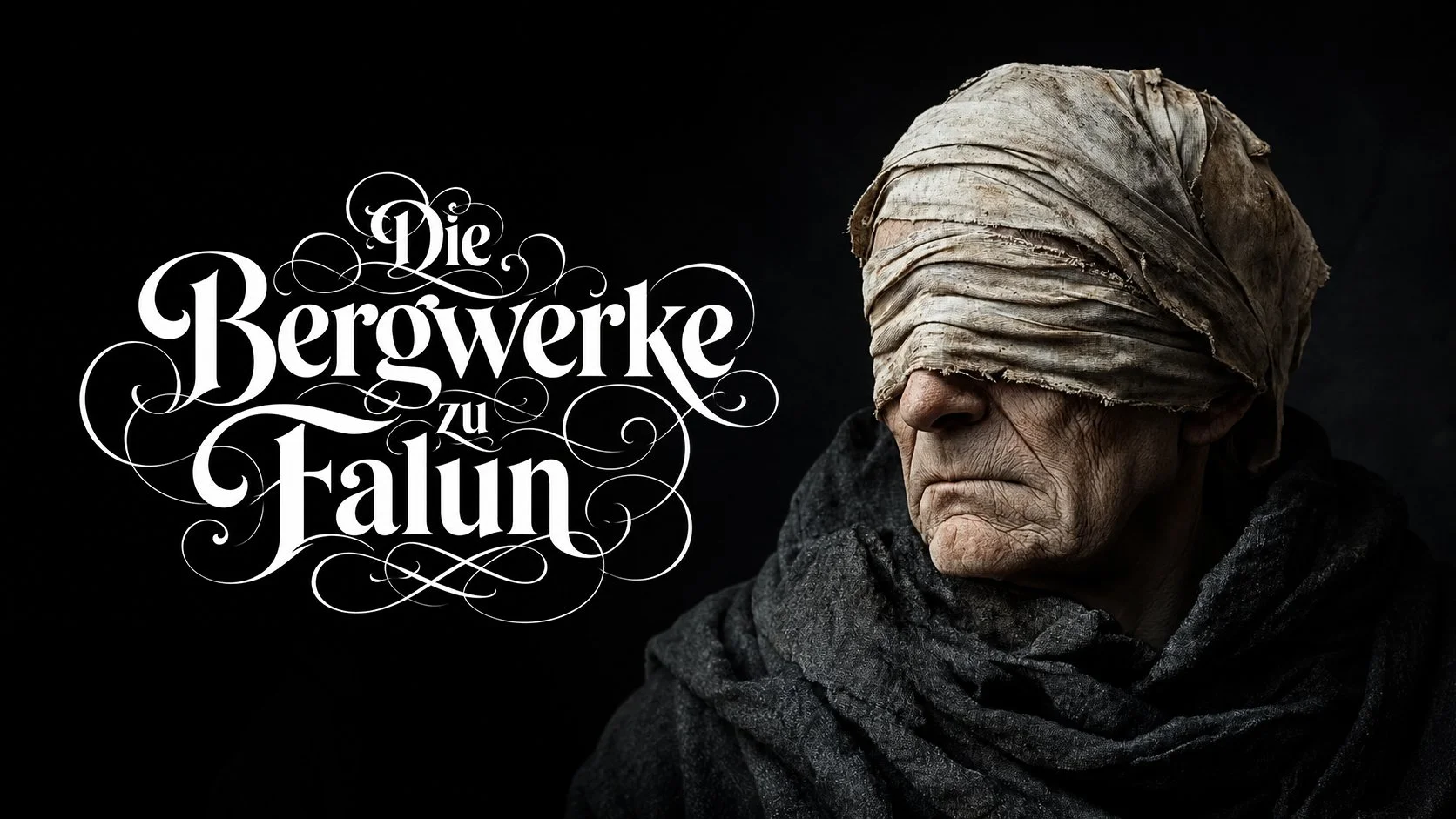
Libretto: Die Bergwerke zu Falun, Wagner's Opera After Parsifal
Vorbemerkung
This one Wagner actually wrote down. In 1842, in Paris, he drafted a prose scenario of Die Bergwerke zu Falun after E. T. A. Hoffmann's tale — written for the composer Josef Dessauer, intended for the Opéra, and rejected. He let it go. The material itself was older and stranger than the grand opera he sketched: in 1719, in the copper mine at Falun in Sweden, the body of a young miner was found in the vitriol water, decades after a collapse, preserved so perfectly that no one in the town could name him — until one very old woman could. Hoffmann made the tale from it in 1819. Sixteen years after Wagner's death, Hofmannsthal would take the same material up again. Subjects like this wait. The claim of this completion is that Wagner's 1842 sketch was not abandoned but early — by about forty years — and that Falun is the opera he was moving toward when he died: the work after Parsifal.
The continuity is exact. Parsifal ends with the wound healed and the community restored. Falun begins with a wound that cannot be personified because it is in the earth itself: the Great Pit, the real Stora Stöten, opened by the collapse of 1687 — a wound in the world's body, around which a town lives, from whose ore the town paints its houses red. And the essay Wagner was writing on the day he died — on the feminine in the human — has its opera here, in the final scene: an old woman's fidelity standing over a body that time could not touch, the one human force in the work that neither the pulse of the living nor the stillness of the deep can transform.
The subject of the work is time, and the score therefore runs two of them. Der Puls is the time of the living: heartbeat, hammer, clock — and the heartbeat's meaning is hope, because a pulse always says not yet. Der Kristall is the time of the deep, which is no time: harmonics without pulse, eternity without hope. The governing law, named below as die zwei Zeiten, is that no scene contains both — the audience is always inside one time or the other — until the final scena, where a recognition fifty years in the keeping makes the two times sound together at last.
Finally, this is the first work in this speculative catalogue conceived for Bayreuth specifically — not performable there, but unperformable anywhere else in its full intention. The hidden orchestra, the mystischer Abgrund, is cast in a role: it is the mine. The pulse of the score rises out of an invisible depth in front of the audience's feet. The dead man is carried up over its cover. The Queen of the Deep appears once, at its lip. And the descent into the mountain is played on the actual Wandeldekoration — the moving-panorama machinery built in 1882 for the transformation in Parsifal — repainted, and run toward the dark. The diagrams in the apparatus show how. Nothing in the staging requires anything the Festspielhaus did not contain in 1883.
Personen
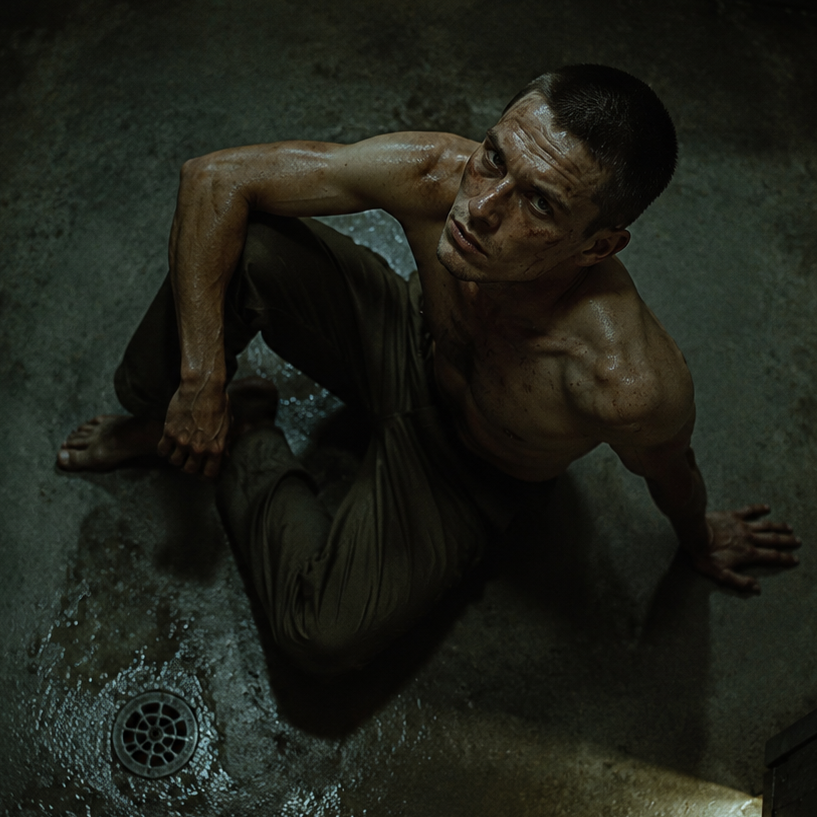
ELIS FRÖBOM, ein Seemann, dann Bergmann (Tenor) — a sailor whom the sea has emptied and the mountain calls.
Tracht: sea-jacket of faded blue in the first act; from the second, the miner's grey with the leather Arschleder at the belt; for the wedding morning, a white shirt under the grey — the shirt he is found in, fifty years later, unchanged.
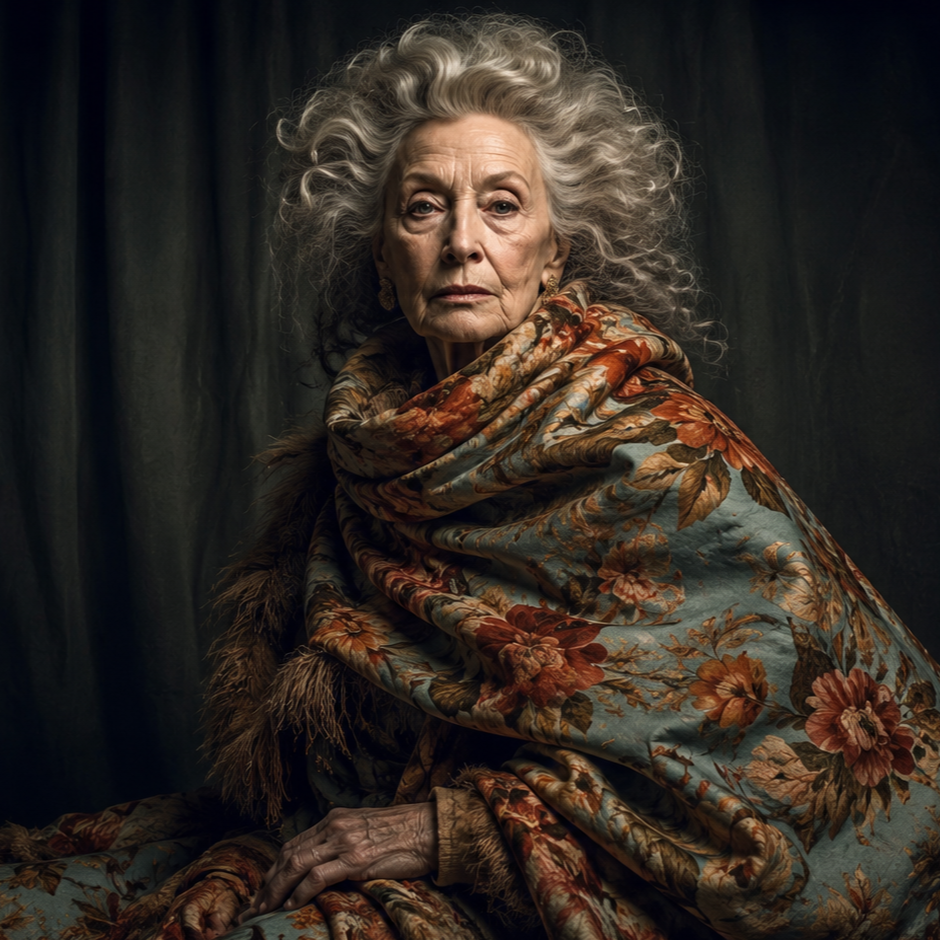
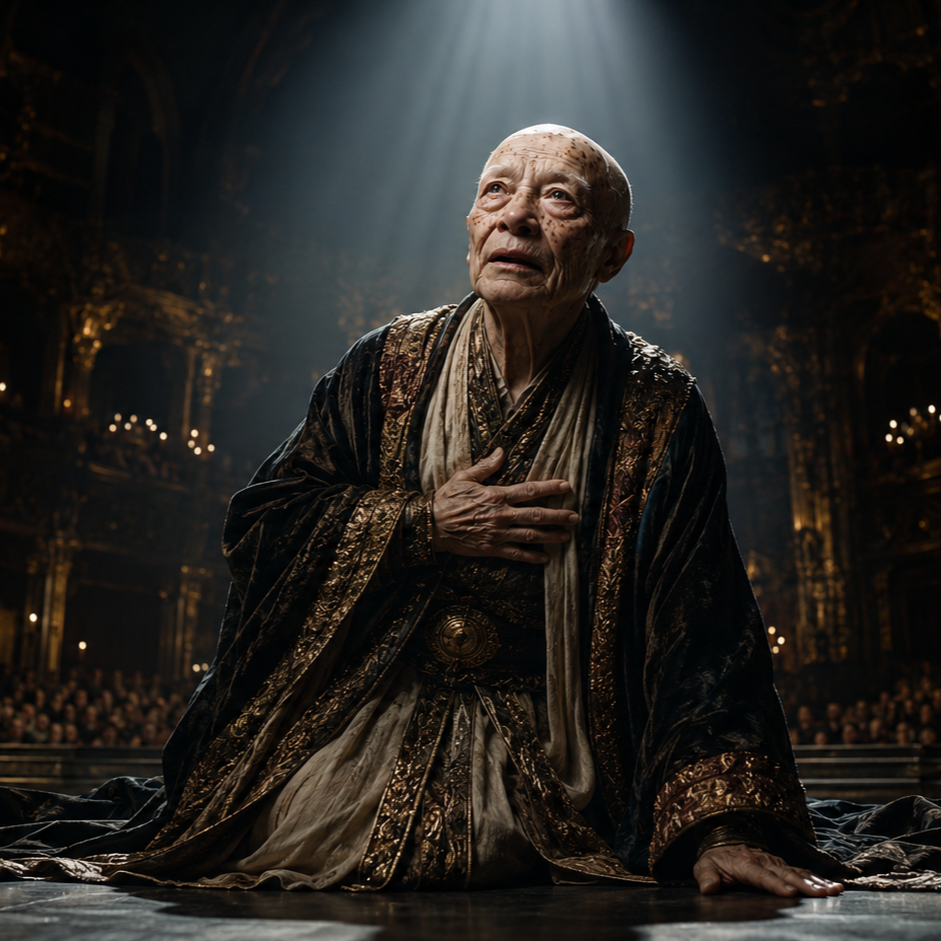
ULLA DAHLSJÖ, des Bergmeisters Tochter (Sopran; in the third act the same singer, aged by costume and carriage — the voice must not be aged: fidelity does not age)
Tracht: Dalarna festival dress, the bodice Falun red; in the third act the same dress, sun-faded rose-grey, decades mended, visibly the same garment — her costume is the opera's clock.
PEHRSON DAHLSJÖ, Bergmeister zu Falun, ihr Vater (Bass)
Tracht: black coat of office, silver chain bearing the mine's mark; dead before the third act — his chain hangs on the church door.
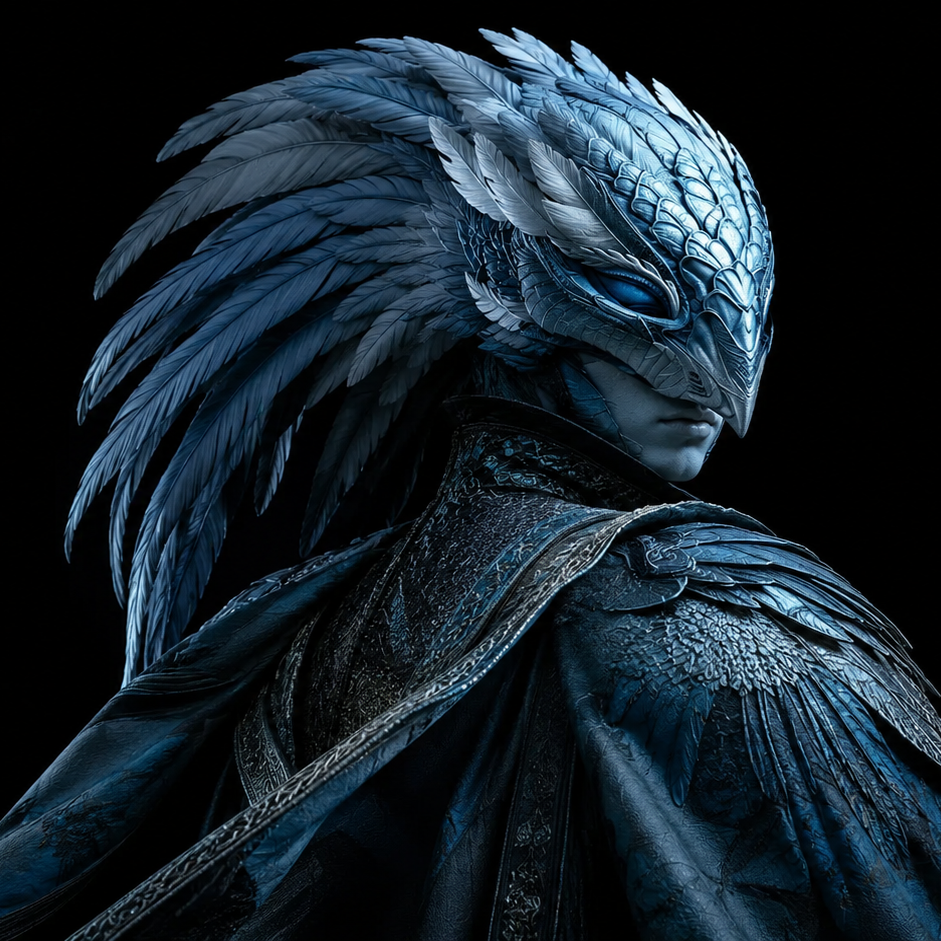
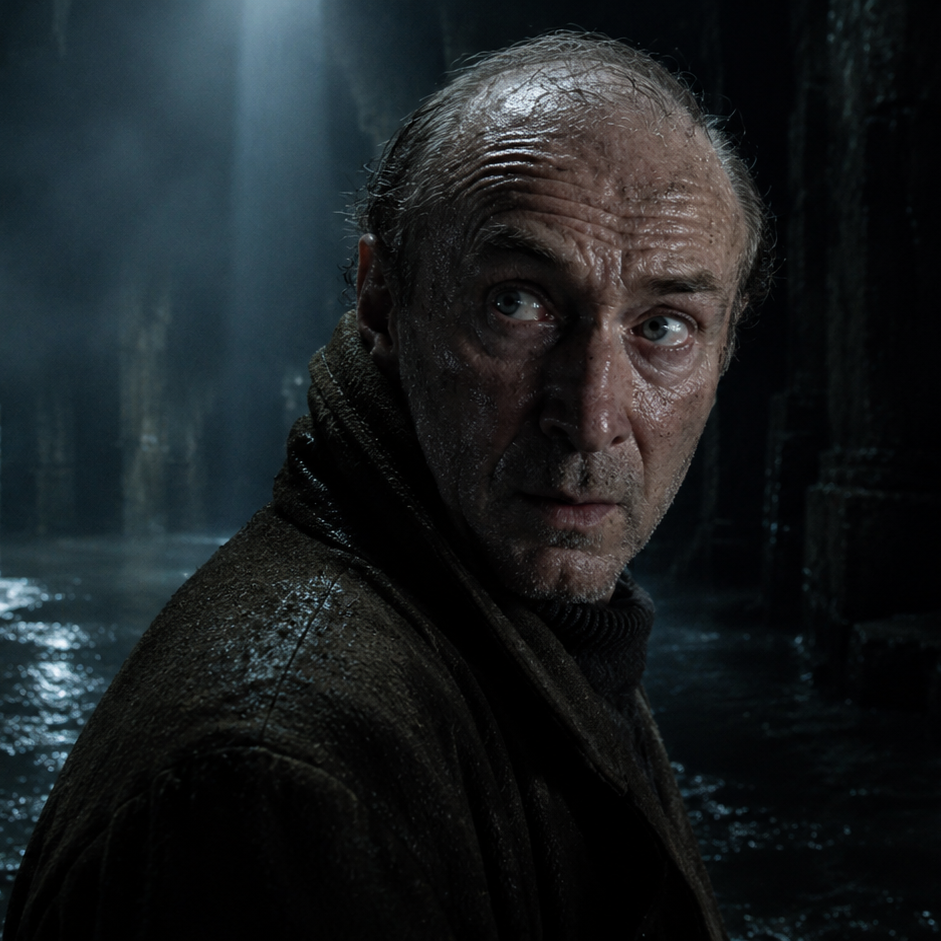
TORBERN, ein alter Bergmann, seit hundert Jahren tot (Bassbariton) — the caller; only Elis sees him whole.
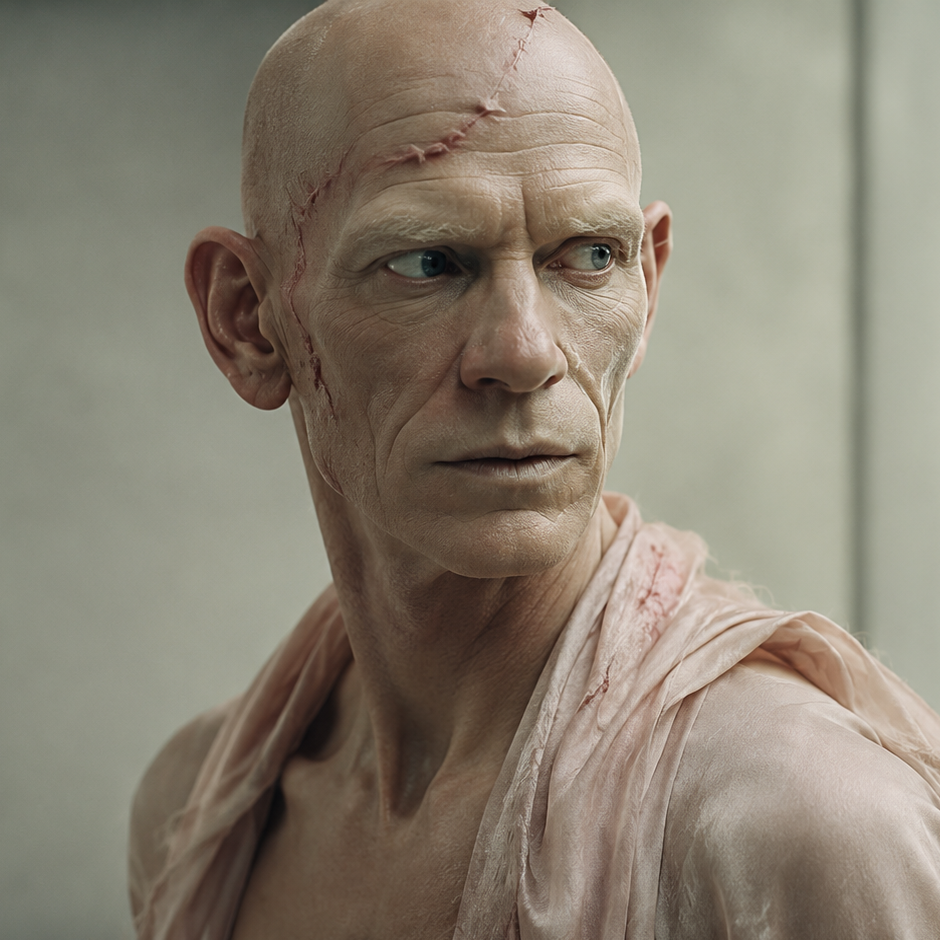
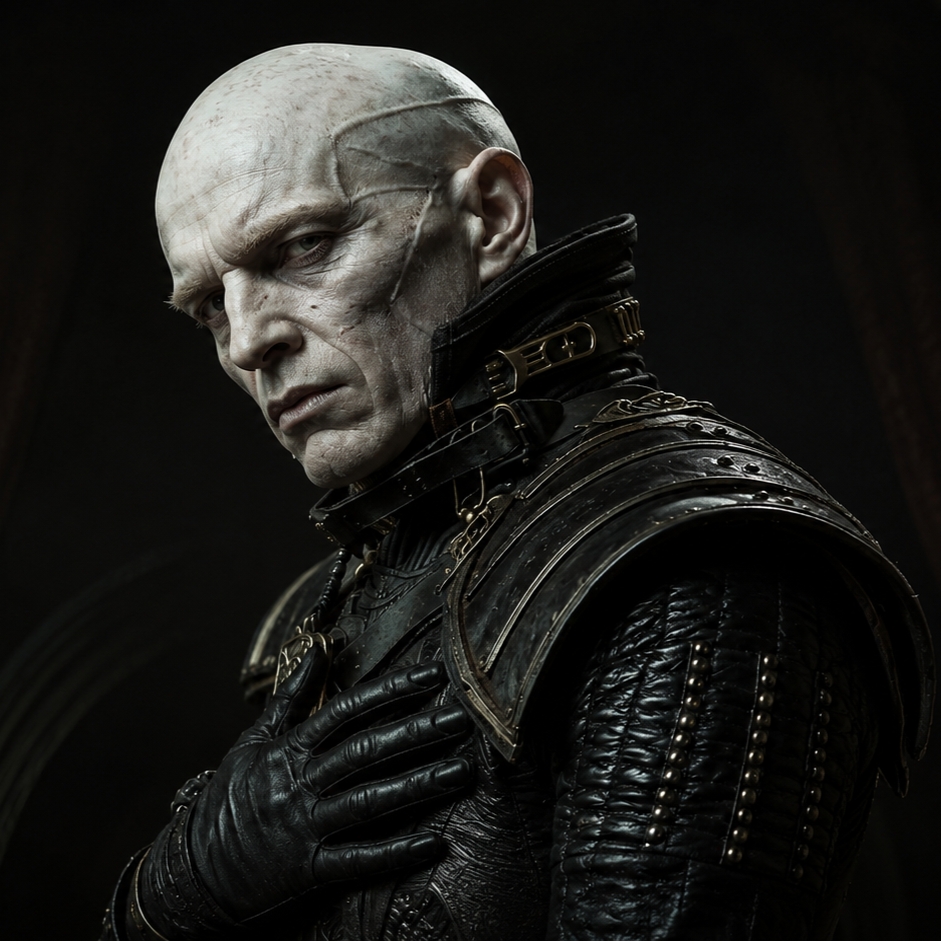
Tracht: miner's dress of a century past, correct in every detail and entirely grey — cloth, skin, beard, eyes: one grey, as if cut from a single stone. He casts no following light; the limelight (today: the followspot) is directed never to touch him.
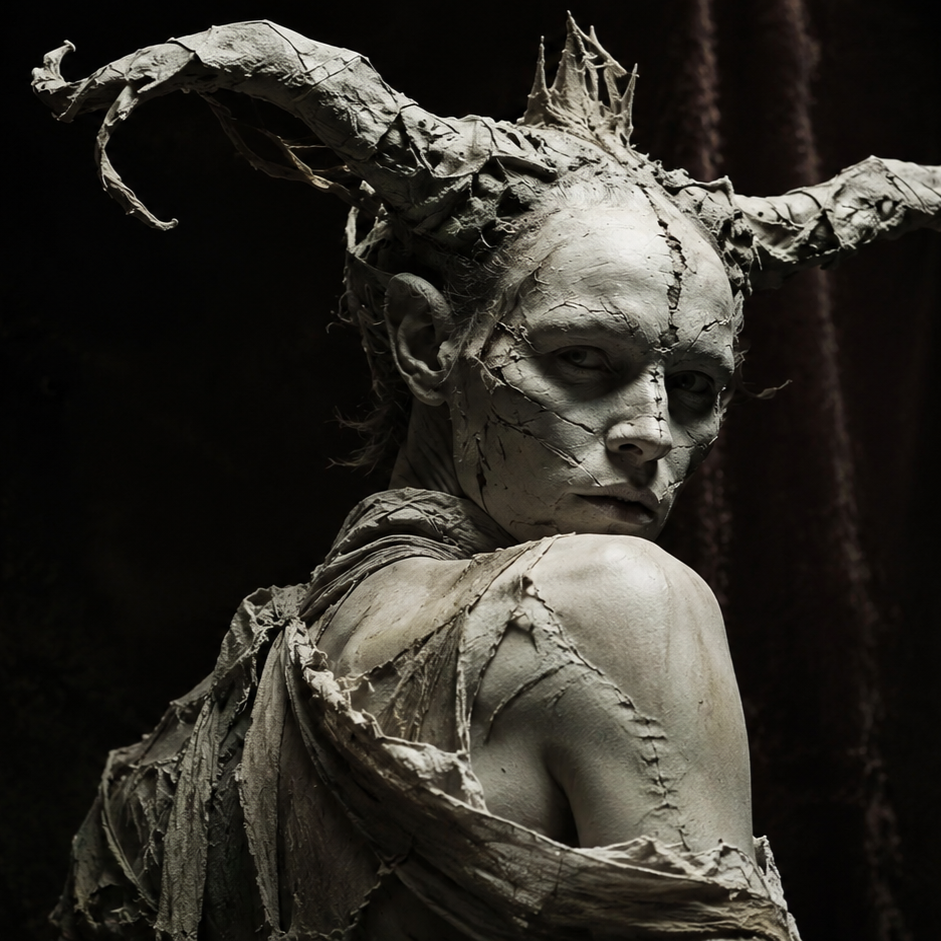
DIE BERGKÖNIGIN, die Königin der Tiefe (Alt) — never walks the stage. She is seen once, as a face within the rock of the crystal chamber, and once at the lip of the gulf.
Tracht: none. She is a lighting state and a voice. Where she is, the crystal harmonics are.
DIE STIMMEN IM GESTEIN (Sopran, Mezzosopran, Alt) — three voices in the rock; in the third act they sing above ground for the first time.
DER GRUBENJUNGE (lyrischer Tenor) — pit-boy, then bell-boy, then an old sexton: he opens each act with an unaccompanied song, the work's only free voice.
DIE KNAPPEN — the miners (Männerchor); DAS KIRCHVOLK, DIE MÄDCHEN (gemischter Chor) — the town, which in the third act has entirely changed its faces and not at all changed its festival.
Vom Orchester
Der Puls — the pulse: a soft heartbeat in timpani and low pizzicato, the time of the living. It is also the hammer-rhythm of the working mine and the tick of the church clock: one figure, three disguises. Its meaning is hope. A pulse is the body saying noch nicht — not yet.
Der Kristall — the crystal: natural harmonics in twelve real string parts, without pulse, without progression, a harmony that does not move because it does not want. The time of the deep, which is no time. It must be tuned so purely that the audience cannot tell when it began.
Der Ruf — Torbern's call: a horn figure that always enters one beat outside the prevailing meter, notated against the bar. The call is never on time, because it comes from where there is none.
Die Treue — Ulla's figure: a small rising-and-settling phrase, and the work's single invariant. It is the only theme that sounds identical inside the pulse and inside the crystal, unchanged by either time. The score states the law plainly: fidelity is the one material the work contains that neither the living nor the deep can transform.
Die Glocken — the bells of Sankt Johannis: real bells, offstage above the house. In the third-act prelude they count fifty midsummers in compressed time, as if numbered by someone asleep.
Die zwei Zeiten — the governing procedure: every scene of the work stands inside one time only, der Puls or der Kristall, never both. Scene by scene the audience is moved between the two without ever hearing them touch. They touch once — in the final scena, at the recognition — and the touching is the opera.
Von der Bühne — Das Festspielhaus als Grube
The Festspielhaus hides its orchestra in a covered pit between the audience and the stage — the mystischer Abgrund, the mystic gulf. Every other work treats the gulf as a means: sound without source. Falun treats it as a place. The gulf is the Great Pit. The pulse of the score rises from an invisible depth lying open between the audience and the drama; the singers play to its lip as to the edge of the Stora Stöten; the dead man is carried up across its cover; and at the end the Queen of the Deep is seen at its rim and nowhere else. The audience sits, for three acts, on the far side of the mine.
Erster Aufzug
Vorspiel: der Puls alone, very soft, before anything melodic — the audience must settle into a heartbeat without knowing they have. Sea-figures grow over it. The curtain rises on the harbor at evening: the Hönsning feast, the sailors' homecoming celebration, spilling from the tavern. Drink, dance, the pulse quickened to a reel. Apart, downstage right on the bench, ELIS FRÖBOM, in faded sea-blue, a full cup untouched beside him. The lip of the mystic gulf is, in this act, the quay edge: the harbor water lies where the orchestra is, unseen and sounding.
Erste Szene
der Wind bleibt immer draus.
Wer heimkommt, bringt die Hände mit
und lässt das Herz zur See.
the wind always stays out.
Whoever comes home brings his hands along
and leaves his heart at sea.
Das Haus stand noch.
Die Mutter nicht.
Das Meer hat mir die Jahre gestohlen,
die sie noch hatte.
The house was still standing.
My mother was not.
The sea stole from me the years
she still had.
das Meer, oder das Weinen.
Es ist dasselbe Wasser.
Sie feiern dort. Sie haben recht.
Wer wiederkommt, soll feiern.
Ich kam nicht wieder. Ich kam nur an.
the sea, or the weeping.
It is the same water.
They are celebrating there. They are right to.
Whoever returns should celebrate.
I did not return. I only arrived.
Zweite Szene
The feast recedes into the tavern. Against the evening light of the backcloth, where no one entered, TORBERN stands — a miner of a hundred years ago, entirely grey, one grey, as if cut from a single stone. The followspot is directed never to find him. With his first word, der Ruf in the horns, one beat outside the bar — and beneath it, for the first time, der Kristall begins, so quietly that the audience cannot say when the pulse stopped. It has stopped. From here to his vanishing, the scene stands in the deep's time.
Das Meer vergisst. Jede Welle ist Verrat.
Der Berg vergisst nicht.
Im Berg steht jedes Jahr
als Ader angeschrieben.
The sea forgets. Every wave is a betrayal.
The mountain does not forget.
In the mountain every year stands
written down as a vein.
Drunten fällt nichts.
Drunten ist das Halten selbst zu Haus.
Es gibt ein Licht, das nie geboren wurde
und darum nie stirbt:
es schläft im Stein und wartet auf Augen.
Deine, Elis Fröbom, wenn du willst.
Below, nothing falls.
Below, keeping itself is at home.
There is a light that was never born
and therefore never dies:
it sleeps in the stone and waits for eyes.
Yours, Elis Fröbom, if you are willing.
Dort steht die Erde offen
wie ein Wort, das einer angefangen
und nie zu Ende gesprochen hat.
Steig hinein und sprich es fertig.
There the earth stands open
like a word that someone began
and never finished speaking.
Climb in and finish saying it.
Ihr redet wie das Heimweh selbst,
nur umgekehrt: ein Heimweh in die Erde.
Mir graut — und etwas in mir
graut sich nach diesem Grauen.
You talk like homesickness itself,
only inverted: a homesickness into the earth.
I shudder — and something in me
longs toward this shuddering.
He turns to the feast for one moment — when he turns back, TORBERN is gone. No exit was seen; the grey is simply no longer there. ELIS at the gulf's lip, looking down into the unseen water, then inland, over his shoulder, where the night hills are.
und gibt mich leer zurück.
Versuchen wir den Stein.
Vielleicht ist Tiefe Tiefe,
und ich bin nur für Tiefe gebaut —
gleichviel, ob sie nass ist oder dunkel.
and gives me back empty.
Let us try the stone.
Perhaps depth is depth,
and I am only built for depth —
no matter whether it is wet or dark.
Wo die Erde offen steht,
da kann ein Offener wohl wohnen.
Where the earth stands open,
an open man may well make his home.
He shoulders his sea-sack and goes inland, the long diagonal, against the feast's returning reel. As he passes from view the backcloth begins, by gas-dimming and a second cloth behind gauze, to change: the masts fade, hills harden, and at the last — held only ten seconds before the curtain — the audience glimpses what he will see in three days' walking: the Great Pit of Falun on the painted horizon, a darkness in the earth with red houses strewn small about its rim, like drops around a wound. Der Puls carries the act out; but in its final two measures, once, far under everything, one chord of Kristall — the mountain has heard him coming.
Der Vorhang. — Erste Pause.
Zweiter Aufzug
Falun, full morning. Everything man-made is Falun red — the houses painted, as the town truly paints them, with the residue of the mine's own ore: the world above wears the blood of the world below and calls it homeliness. The headframe over the central shaft; roasting-smoke on the backcloth; the rim of the Great Pit along the gulf's lip, downstage, where no one steps carelessly. The shift assembles: die Knappen, hammers shouldered, and the hammer-rhythm in the orchestra is der Puls undisguised. ELIS among them now, a year in the grey, the best climber on the books and the only man who never jokes at the rim.
Erste Szene
wer unten war, dem schmeckt das Licht.
Wir borgen uns das Dunkel aus
und zahlen es mit Erz zurück.
to him who was below, the light has taste.
We borrow the darkness out
and pay it back in ore.
PEHRSON DAHLSJÖ with the day's assignments; ULLA brings the men's bread, as she does; and the scene the whole town has watched ripen for a year happens at last in front of everyone: she and ELIS, the basket between them, unable to manage the smallest transaction without it becoming the largest. The chorus withdraws grinning. Die Treue is heard complete for the first time as she speaks — and the score remarks: it has been present, in fragments, since the first act's bench; the audience has known her before meeting her, as he has.
Hier ist der Berg und seine Stadt,
die Häuser rot vom Blut des Bergs gestrichen.
Wir wohnen in der Farbe der Tiefe
und leben doch im Licht.
Kann ein Seemann das? Im Licht leben?
Here is the mountain and its town,
the houses painted red with the mountain's blood.
We live inside the color of the deep
and live in the light even so.
Can a seaman do that? Live in the light?
Das Meer gab mir die Tiefe ohne Grund,
der Berg gibt mir den Grund mit Tiefe.
Doch du — du gibst dem Tag den Grund.
Seit ich dein Brot aus deiner Hand nehme,
schmeckt mir das Licht, wie's den Knappen schmeckt:
wie etwas, das man wiederhat.
The sea gave me depth without ground,
the mountain gives me ground with depth.
But you — you give the day its ground.
Since I take your bread out of your hand,
the light has taste for me, as it does for miners:
like something one has back again.
Their duet, inside the pulse entirely: the only love music in this catalogue with a heartbeat for a floor. PEHRSON, watching from his doorway, says nothing and approves loudly enough to be heard in the last row. But at the duet's height, from the shaft-mouth, very faint: der Ruf — one beat outside their bar. Only ELIS hears it. Only the audience sees him hear it.
Zweite Szene — Die Verwandlung
The descent. ELIS takes his shift below. He steps with three Knappen onto the bridge over the shaft-trap; the others ride down first; as ELIS waits his turn, TORBERN is beside him — unarrived, simply adjacent — and the Knappen do not see him. The bridge sinks (Versenkung 2), and behind the great gauze the Wandeldekoration begins: the painted canvas, Parsifal's rollers re-skinned, climbing slowly upward — daylight masonry, then timbering, then bare rock, then ore-glitter, then darkness with veins of green fire — so that the house itself rides down with him. During the whole transformation der Puls thins, beat by beat, the heartbeat giving way as the Kristall rises to meet it; the moment the canvas shows the first crystal, the last pulse-stroke falls and does not return. The deep's time. The Knappen's lamps veer off into a side-gallery and are gone. ELIS and the grey man remain.
Dort hauen sie das Erz: das ist der Handel.
Hier unten liegt das andere: der Bestand.
Komm. Die Frau des Hauses will dich sehen.
There they hew the ore: that is the trade.
Down here lies the other thing: the permanence.
Come. The lady of the house wishes to see you.
The crystal chamber. The canvas halts. The chamber is built of gauze layers lit from within (1890: gas behind colored glass and mica; today: the same geometry in light): a vault that seems cut from one stone, green-white, without shadows, because everything in it is its own source of light. DIE STIMMEN IM GESTEIN, from everywhere, locatable nowhere.
Hier ist kein Gestern.
Hier ist der Stein,
und der Stein ist das Jetzt,
das nicht vergeht.
Here is no yesterday.
Here is the stone,
and the stone is the now
that does not pass.
ist ein Zittern an der Haut der Welt.
Tritt unter die Haut.
Hier zittert nichts.
Hier ist alles schon geschehen
und geschieht doch immerzu.
is a trembling on the skin of the world.
Step beneath the skin.
Nothing trembles here.
Here everything has already happened
and yet is happening always.
And the rock has a face. Not an entrance: a recognition — the audience perceives that a contour of the chamber wall has been, all along, DIE BERGKÖNIGIN, the way one suddenly sees the figure in a cliff. (The singer stands within the wall-piece, revealed by a slow shift of the internal light; she does not move at any point; her immobility is the role.)
Jeder Kuss dort ist ein Abschied,
der sich verkleidet hat.
Sie halten Hochzeit, und die Glocke zählt;
sie halten still, und das Herz zählt weiter.
Zählen, zählen — das ist eure Liebe:
ein Vorrat, der beim Lieben schwindet.
Every kiss up there is a farewell
in disguise.
They hold a wedding, and the bell counts;
they hold still, and the heart counts on.
Counting, counting — that is your love:
a store that dwindles in the spending.
Bei mir ist niemand je verlassen worden.
Ich biete dir das Bleiben selbst:
nicht tausend Jahre — das ist Zahl —
das Jetzt, das nicht vergeht.
Sieh mich an, Elis Fröbom,
und höre auf zu zählen.
With me, no one has ever been abandoned.
I offer you remaining itself:
not a thousand years — that is number —
the now that does not pass.
Look at me, Elis Fröbom,
and stop counting.
wie ein Satz, der fertig ist.
Doch horch: ein Herz. Ich habe ein Herz.
Es schlägt — hörst du es, Stein? Es schlägt.
Und Schlagen heißt: noch nicht. Noch nicht.
Ich will mein Noch-nicht!
Droben wartet eine, die zählt —
und ihr Zählen ist das Liebste,
was ich auf zwei Welten weiß.
Hinauf!
like a sentence that is finished.
But listen: a heart. I have a heart.
It beats — do you hear it, stone? It beats.
And beating means: not yet. Not yet.
I want my not-yet!
Above, a woman waits who counts —
and her counting is the dearest thing
I know in two worlds.
Upward!
He climbs. The Wandeldekoration runs back — darkness, ore, timbering, masonry, day — faster than it descended, a man fleeing through geology; the pulse strengthens stratum by stratum; the chamber's face closes back into rock as the light leaves it, and the last thing heard from below is the Stimmen, without anger: "Hier ist alles schon geschehen." The bridge rises through the shaft-mouth into full morning.
Dritte Szene
The betrothal, that same evening, before the red house: lanterns, fiddles, PEHRSON's blessing, the whole apparatus of the day's joy — and ELIS in the middle of it like a man holding a door shut. Night. The feast disperses. ELIS alone; at the dark window of the house opposite, the audience sees what he does not: TORBERN, within, looking out, motionless, all night.
und ein Versprechen, das wie eine spricht.
Ulla ist der Tag mit Grund.
Das Drunten ist der Grund ohne Tag.
Ich habe hinabgesehen.
Wer hinabgesehen hat,
trägt ein Stück Stille im Gehör
und hört sein eignes Herz
fortan als Lärm.
and a promise that talks like one.
Ulla is the day with ground.
The below is the ground without day.
I have looked down.
Whoever has looked down
carries a piece of stillness in his hearing
and hears his own heart
from then on as noise.
Johannistag: das höchste Licht.
Ein Tag noch, Herz, dann lärme,
so laut du willst — sie tanzt darauf.
Nur eines hol ich erst herauf.
Eines. Dann ist der Berg bezahlt.
Midsummer: the highest light.
One more day, heart, then make your noise
as loud as you like — she will dance to it.
Only one thing I will fetch up first.
One. Then the mountain is paid.
Vierte Szene
The wedding morning. Johannistag: the bells (real, above the house) and the whole town in festival white and red, garlands on the headframe itself — the mine dressed as a guest. ULLA in the Dalarna dress, the red bodice. ELIS in the white shirt under the grey. The procession is forming at the church. He draws her aside, at the rim.
darin — die Alten sagen es —
steht eingeschrieben, was zwei einander sind.
Ich hole dir das Eingeschriebene.
Eine Stunde, Ulla. Eine Stunde nur.
Dann hat der Berg mich ausbezahlt,
und ich bin ganz, ganz nur der Deine.
in which — the old ones say it —
stands written what two people are to each other.
I will fetch you up the written thing.
One hour, Ulla. One hour only.
Then the mountain has paid me out,
and I am wholly, wholly yours alone.
Die Tiefe wechselt nicht: sie nimmt nur an.
Was brauchen wir Geschriebenes im Stein?
Ich kann es auswendig.
Bleib. Heut sind alle Steine grau
gegen den Tag, der uns gehört.
The deep gives no change: it only accepts.
What do we need with writing in a stone?
I know it by heart.
Stay. Today every stone is grey
against the day that belongs to us.
Wenn ich heraufkomm, will ich alles läuten hören,
was Falun an Geläut besitzt!
Eine Stunde, Ulla — zähl sie,
du zählst so schön!
When I come up I want to hear everything ring
that Falun owns in bells!
One hour, Ulla — count it,
you count so beautifully!
He rides the bridge down. The procession music gathers; ULLA at the rim, between the festival and the shaft, counting — the score gives her counting to the orchestra: der Puls, exposed, alone, a long pedal of heartbeat while the wedding assembles behind her. Then, beneath the pulse: a vast, soft, descending groan in the lowest instruments — and the pulse stops mid-beat. The hammers stop. The bells stop, mid-swing. Steam bursts from the shaft-mouth and from the rim along the whole gulf's lip; the headframe's garlands shake down; the stage darkens from below upward. Der Bergsturz. In the silence after it, nothing but Kristall — vast, calm, complete, the deep's time flooding the surface of the world. ULLA at the rim, in the wedding dress, looking down into the gulf.
— — —
Der Berg hat zugebissen.
So behält er, was er liebt:
ganz, und für sich.
Läutet nicht. Er sagte: nicht zu früh.
Ich zähle weiter.
Ich kann sehr lange zählen.
— — —
The mountain has bitten shut.
That is how it keeps what it loves:
whole, and to itself.
Do not ring. He said: not too early.
I will keep counting.
I can count for a very long time.
Der Vorhang. — Zweite Pause.
Dritter Aufzug
Vorspiel: die fünfzig Jahre. One harmony in the divided strings, changing color so slowly that the change is only ever noticed after it has happened — and through it, the bells of fifty midsummers passing in compressed time, near and far, bright and cracked and recast, as if counted by someone asleep. The score directs that this prelude must be the longest patience the house has been asked for all evening, and rewarded: when the curtain rises, fifty years have credibly passed, and no other device has been used.
The square at the pit, Johannistag again. The same set, altered by half a century of small honest changes: the headframe renewed in a newer pattern; the Dahlsjö house repainted so many times its red is deeper than any other; PEHRSON's silver chain hanging on the church door, as the town hangs the chains of dead mine-masters; the garlands going up as they always have, on a town in which every face has changed and no custom has. On the bench beneath the linden, in the Dalarna dress faded to rose-grey, decades mended: DIE ALTE ULLA. The town keeps her place. The town has always kept her place.
Erste Szene
so sangen wir am Meer.
Hier singt man: der kam nie herauf,
und eine wartet sehr.
so we sang by the sea.
Here one sings: he never came up,
and a woman waits and waits.
Jeden Johannistag dieselbe Bank,
dieselbe Tracht, dieselbe Frage:
Ist er heraufgekommen?
Und wir sagen: noch nicht.
Und sie sagt: noch nicht —
und lächelt, als hätten wir Ja gesagt.
Every midsummer the same bench,
the same dress, the same question:
Has he come up?
And we say: not yet.
And she says: not yet —
and smiles, as if we had said yes.
Festival noise off; then not festival noise: shouting from the works, of a different shape. Miners come up over the gulf's lip — the first time in the act anyone has approached the rim — bareheaded. Word moves through the square the way weather moves through a field. In an abandoned gallery, behind the old fall, in the vitriol water: a body. They are bringing him up.
The bier rises over the gulf's lip — out of the mystic gulf itself, borne up the hidden steps at its stage edge, so that the dead man enters the drama from the orchestra's depth, from inside the music. On the bier, in a white shirt under miner's grey, untouched by fifty years: ELIS, asleep-shaped, young. The crowd parts and goes silent rank by rank as he is carried to the center. No one in the square is old enough to know him. The score holds the whole passage inside the Kristall — he brings the deep's time up with him; where the bier is, nothing pulses.
hinterm alten Bruch.
Das Wasser hält, was es bekommt:
es nimmt dem Leib die Zeit ab
wie einen nassen Mantel.
Kennt ihn wer? Er ist jung.
Bei uns ist keiner jung genug,
ihn je gekannt zu haben.
behind the old fall.
The water keeps what it is given:
it takes time off the body
like a wet coat.
Does anyone know him? He is young.
Among us, no one is young enough
ever to have known him.
Zweite Szene — Das Erkennen
She has risen from the bench. The crowd, which has kept her place for fifty years, keeps now her path: it opens without being asked. She crosses alone, ungently watched, the long diagonal — the score gives the crossing as many measures as it needs and forbids the conductor to help her. At the bier she stands a moment. Then she touches the white shirt at the shoulder, the way one wakes a sleeper one has woken ten thousand mornings.
was der Berg herausgibt.
— Elis.
Du hast dich gar nicht umgezogen.
Das ist noch das Hochzeitshemd.
what the mountain is handing back.
— Elis.
You never even changed.
That is still the wedding shirt.
Es ist mir nur zu groß geworden:
ich bin darin geschrumpft,
fünfzig Sommer lang.
Du hattest es bequemer, Lieber.
Du musstest nicht einmal altern.
Du musstest nur nicht aufhören,
gemeint zu sein.
It has only grown too big for me:
I have shrunk inside it,
fifty summers long.
You had it easier, my dear.
You did not even have to age.
You only had to not stop
being meant.
Ich wusste es besser: du wurdest gehalten.
Der Berg ist eine eifersüchtige Frau,
doch halten kann sie nur den Leib.
Das andere — sieh her: das andere hielt ich.
Wir haben dich zu zweit gehalten,
sie unten, ich oben,
fünfzig Jahre, ohne uns zu kennen.
Nun lässt sie los. Nun lass auch ich.
I knew better: you were being held.
The mountain is a jealous woman,
but all she can hold is the body.
The other thing — look: the other thing I held.
We held you between the two of us,
she below, I above,
fifty years, without knowing one another.
Now she lets go. Now I let go too.
Du sagtest: eine Stunde nur.
Sie war etwas lang, mein Lieber.
Doch wer wartet, zählt nicht nach.
Jetzt läutet! Hört ihr? Jetzt ist nicht zu früh!
Läutet alles, was Falun an Geläut besitzt:
der Bräutigam ist heraufgekommen!
You said: one hour only.
It ran a little long, my dear.
But those who wait do not count it against you.
Now ring! Do you hear? Now it is not too early!
Ring everything Falun owns in bells:
the bridegroom has come up!
And the bells ring — all of them, the fifty years of them, over both times sounding together. She gathers the young head against the old breast. And under her hands, as the air of the upper world finally reaches what the water kept, the body begins to go — not horror: release — falling into a glitter of dust that the noon light takes (1890: a prepared shell costume collapsing within the bier's shadow as fine mica is let fall through the light; today: the same trick, for there is no better one). She does not recoil. She holds the going as she held the staying.
Jetzt gehen beide Uhren gleich:
es schlägt — und es steht still —
und beides ist dasselbe Glück.
Fünfzig Jahre war ich deine Witwe.
Eine Stunde lang bin ich deine Braut.
Die Stunde nehme ich.
Die Stunde nehme ich mit.
Now both clocks run together:
it beats — and it stands still —
and both are the same happiness.
Fifty years I was your widow.
For one hour I am your bride.
That hour I take.
That hour I take with me.
She sinks over the bier, into the glitter and the light, and is still. At the lip of the gulf, in a rising green-white glow from the depth itself — the orchestra pit faintly illuminated for the only time in the evening, the house's one forbidden light, sanctioned here — DIE BERGKÖNIGIN is present: a face in the brightness, inclining once, slowly, toward the bier. The deep concedes. DIE STIMMEN IM GESTEIN, above ground for the first time in the work, from the air rather than the earth:
den keine Tiefe hält.
Wir hielten ihn. Er hielt nicht still.
Er schlug in einer alten Brust
und hieß: noch nicht — noch nicht —
und nun heißt er: jetzt.
that no deep can hold.
We held it. It would not lie still.
It beat inside an old breast
and its name was: not yet — not yet —
and now its name is: now.
The town kneels around the two of them, festival garlands in hand, the Johannistag becoming the wedding it was meant to be fifty years late and exactly on time. The bells, the two times in one chord, the noon light full on the rose-grey dress and the glittering dust. The chord is reached — der Puls and der Kristall, agreed — and held.
Der Vorhang fällt — doch der Akkord endet nicht: er wird nur verdeckt. Das Orchester hält ihn unter dem geschlossenen Vorhang weiter, lange, im Verlöschen; das Haus soll ihn noch hören, während es schon dunkel ist. The curtain falls — but the chord does not end: it is only hidden. The orchestra holds it on beneath the closed curtain, long, dying away; the house should still be hearing it after the dark has come.