A Wagnerian Libretto: Sâvitrî’s Death, Silence & Return
Vorbemerkung
No sketch for Sâvitrî survives, because none was made. What survives is proximity. Wagner’s Dresden library held Adolf Holtzmann’s Indische Sagen, and the legend of Sâvitrî stands in those volumes a few pages from the material that became the 1856 prose sketch of Die Sieger. Cosima’s diaries record the evenings at Wahnfried when the Indian sagas were read aloud. The subject was in the room. It was never taken up.
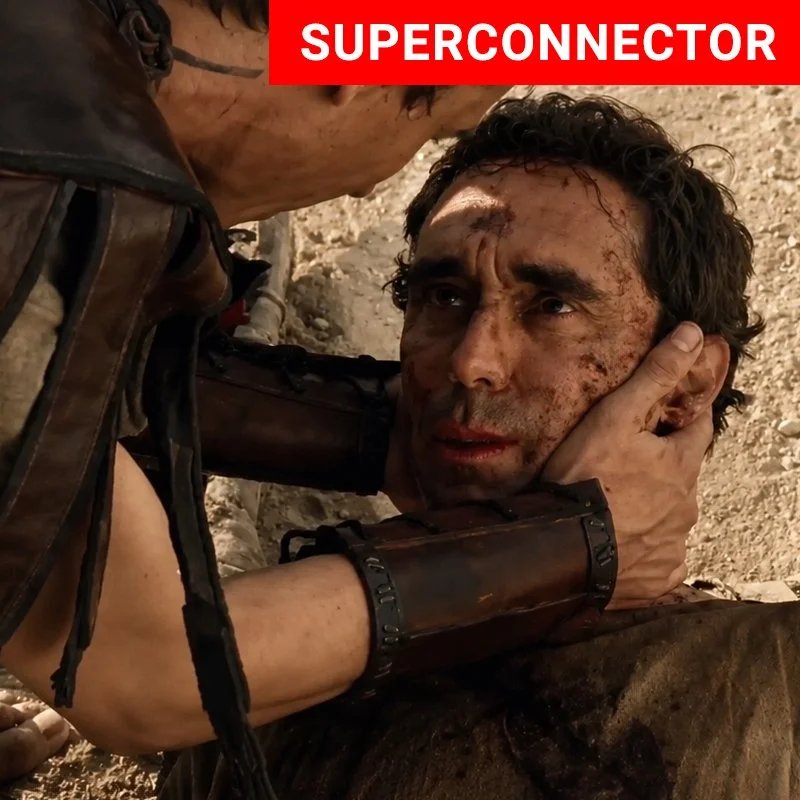
The legend is simple and Wagner would have recognized its shape at once. A princess chooses a husband knowing he is fated to die within a year. She does not tell him. On the appointed day she follows him into the forest, holds his head in her lap as the hour arrives, and when Death comes to carry the breath away, she follows Death too. In the Mahabharata she wins her husband back through cleverness, boon by boon. That is the part Wagner would have discarded. The late style does not bargain. What remains when the bargaining is cut is the part he would have kept: a woman who walks behind Death and will not stop walking.
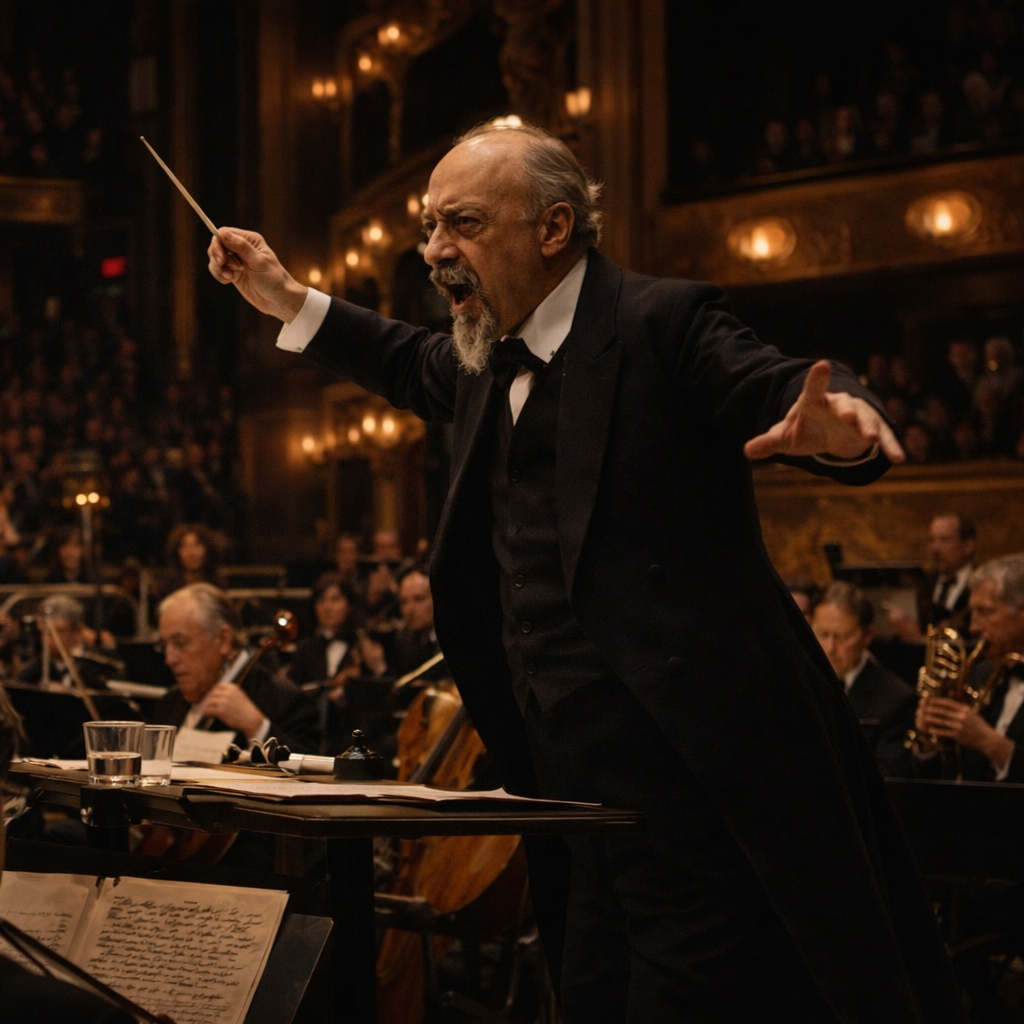
The musical conceit follows from the subject. The orchestra is the breath of the living. Death sings unaccompanied. Every entrance of Der Tod is an entrance of silence, and the dramatic question of the work — whether Satyavan breathes again — is therefore audible as a purely musical question: whether the orchestra resumes.
What follows is not a discovery. It is one possible completion, companion to Die Sieger: the second panel of the Indian diptych Wagner read toward and never wrote. The ending is his own tendency, carried one step further: the cadence withheld.
Personen
SÂVITRÎ, a princess, living in the forest (soprano)
SATYAVAN, her husband, son of a blind and exiled king (tenor)
DER TOD (bass, unaccompanied throughout)
Stimmen des Waldes (offstage chorus, wordless)
Vom Orchester
The orchestra plays one figure above all others: a two-note cell, rising and falling, marked in the score Atemfigur — the breath-figure. It does not develop. It persists, the way breathing persists, beneath everything that is sung by the living. When Der Tod sings, the orchestra does not play. The silence under his voice is not an effect. It is his accompaniment.
Erste Szene
A single low pitch in the strings, the bow never lifting. It is the sound of something that has already been decided. Above it, very quietly, the Atemfigur begins: two notes, rising, falling. The curtain rises on the clearing. Late afternoon light, slanted, already going. SÂVITRÎ stands at the edge of the trees, looking the way SATYAVAN went in the morning. She has been standing there for some time before the curtain rose.
Heute endet das Jahr.
Today the year ends.
wachend wartete ich:
das Jahr war mein,
der Tag ist sein.
waking, I waited:
the year was mine,
the day is his.
She does not move from the tree line.
Der Seher sah es,
der Vater bat,
die Mutter weinte:
ein Jahr nur lebt er,
den du liebst.
The seer saw it,
my father begged,
my mother wept:
one year only he lives,
whom you love.
Was es wählte, hält es.
Ein Jahr mit ihm
ist länger als ein Leben
mit einem andern.
What it chose, it holds.
One year with him
is longer than a life
with another.
Das war das Schwerste:
nicht das Wissen,
das Schweigen.
That was the hardest:
not the knowing,
the keeping silent.
sah ich ihn schlafen
und zählte nicht die Tage,
ich zählte die Atemzüge,
als könnt ich sie sammeln,
als könnt ich sie sparen
für heute.
I watched him sleep
and I did not count the days,
I counted the breaths,
as if I could gather them,
as if I could save them
for today.
Offstage, wordless, the Stimmen des Waldes: a slow chord that opens and does not close. Light shifts lower.
Die Bäume wissen, was fällt.
Heute ging er mit der Axt,
Holz zu schlagen,
und der Wald ließ ihn ein
wie man einen einlässt,
der nicht wiederkommt.
The trees know what falls.
Today he went with the axe
to cut wood,
and the forest let him in
the way one lets in
a man who does not come back.
Zum ersten Mal in einem Jahr
ging ich ihm nach.
Er lachte: heute folgst du mir?
Ich sagte: heute folge ich dir.
For the first time in a year
I went after him.
He laughed: today you follow me?
I said: today I follow you.
She turns from the trees, toward the clearing.
Das Wort, das ich nicht sagte,
geht neben mir
wie ein zweiter Schatten.
The word I did not say
walks beside me
like a second shadow.
Zweite Szene
The sound of an axe, offstage, irregular, then stopping. SATYAVAN enters from the trees, carrying the axe loosely, his other hand pressed to his brow. The Atemfigur falters for the first time — a hesitation in the cell, quickly recovered. SÂVITRÎ is already moving toward him.
der Wald ist schwer heute.
the forest is heavy today.
am Abend wiegt sie wie Stein.
Mir ist, als zöge die Erde
an allem, was ich trage,
und am meisten an mir.
by evening it weighs like stone.
It is as if the earth were pulling
at everything I carry,
and most of all at me.
Der Tag war lang.
The day was long.
es ist kein Schmerz.
Es ist ein Dunkel hinter den Augen,
als käme die Nacht von innen.
it is not a pain.
It is a dark behind the eyes,
as if night were coming from inside.
He lets the axe fall. She guides him down; he half-lies, his head finding her lap. The orchestra thins: the low pitch, the Atemfigur, little else.
Das ganze Jahr warst du die Stille,
in der ich laut sein durfte.
Hab ich dir je gedankt?
The whole year you were the stillness
in which I was allowed to be loud.
Did I ever thank you?
Danken ist ein Wort für später.
Thanking is a word for later.
ja.
Sag mir, dass es ein Später gibt,
und ich schlafe.
yes.
Tell me that there is a later,
and I will sleep.
A long pause. The Atemfigur, exposed now, carries the scene alone.
He sleeps. His breathing and the Atemfigur are one and the same; the score marks them so. The light goes further down. The Stimmen des Waldes again, more distant, the open chord. SÂVITRÎ does not look at him. She looks at the place where the trees part.
die ich ein Jahr lang kommen sah.
Ich bin nicht bereit.
Man wird es nie.
Bereit ist nur, wer nicht geliebt hat.
I watched coming for a year.
I am not ready.
One never is.
Ready is only he who has not loved.
Ich kenne dich nicht
und kenne dich doch:
du bist in jedem Atemzug
der Raum danach.
I do not know you
and yet I know you:
you are, in every breath,
the space after it.
And the orchestra stops. Not a diminuendo. A cessation, mid-figure, the rising note of the Atemfigur left without its fall. Total silence. The light does not change so much as lose its source. DER TOD is standing at the edge of the clearing. He has not entered. He is simply no longer absent.
Dritte Szene
Throughout this scene DER TOD sings without the orchestra. His voice is alone in the theater. When SÂVITRÎ answers him, the orchestra returns under her — at first only the single low pitch, later more — and ceases again whenever he speaks. The scene is a war over whether there is music.
und der zu jedem kommt.
Ich komme ungerufen,
ich gehe nie allein.
and who comes to everyone.
I come unbidden,
I never leave alone.
Dieser ist der Mann.
Was atmet, war geliehen.
Ich hole das Geliehene heim.
This is the man.
What breathes was lent.
I carry the lent thing home.
He crosses the clearing. He does not bend to the body. The score directs: what he takes is not seen; it is heard — nothing is heard. SATYAVAN’s breathing, silent since the orchestra stopped, is now visibly stilled. DER TOD turns and goes back the way he came, toward the trees. SÂVITRÎ lays the head gently on the earth, rises, and follows him.
So weit folgt mir kein Lebender.
No living thing follows me this far.
Ich gehe, wo es geht.
I go where it goes.
Deines ließ ich dir.
Yours I left to you.
Du kannst nicht irren, sagt man,
doch hier irrst du:
was du ihm nahmst,
nahmst du auch mir.
Wir atmeten ein Atmen.
Du trägst es fort
und wunderst dich,
dass beide folgen.
You cannot err, they say,
yet here you err:
what you took from him
you took from me also.
We breathed one breathing.
You carry it away
and wonder
that both of us follow.
Under her last lines, the Atemfigur tries to begin again — the rising note — and is cut off as DER TOD speaks.
Die Lebenden haben Worte,
ich habe die Stille.
Die Stille ist älter.
Kehr um.
The living have words,
I have the silence.
The silence is older.
Turn back.
ist das, was sie hört.
Eh ein Laut war, war ein Lauschen.
Du bist nicht das Ende, Tod:
du bist die Pause,
und die Pause gehört dem Lied.
is that which hears it.
Before there was a sound, there was a listening.
You are not the end, Death:
you are the rest,
and the rest belongs to the song.
The orchestra under her grows: low strings, then winds, the Atemfigur attempting itself again and again, each time a little further. DER TOD turns, for the first time, and faces her. When he sings, everything stops at once.
dass du mit mir streitest?
Könige bat ich nicht um Worte,
Sieger schwiegen, eh ich kam.
Du gehst hinter mir
wie ein Gedanke,
den ich nicht zu Ende denken kann.
that you contend with me?
Kings I did not ask for words,
victors fell silent before I came.
You walk behind me
like a thought
I cannot think to its end.
Ich bin kein Bitten:
Bitten kehren um.
Ich bin kein Klagen:
Klagen bleibt am Grab.
Ich bin das Gehen selbst.
Solang du trägst, geh ich.
Trägst du ihn bis ans Ende der Welt,
ist das Ende der Welt
mein Weg.
I am not a pleading:
pleadings turn back.
I am not a mourning:
mourning stays at the grave.
I am the walking itself.
As long as you carry, I walk.
If you carry him to the end of the world,
then the end of the world
is my road.
Silence. DER TOD regards her. The stage direction reads: he is not moved; he is measured. Something is being weighed that has never been on his scale.
Die Toten muss ich nehmen,
die Lebenden lasse ich stehn —
so ist die Ordnung,
und ich bin die Ordnung.
Doch du —
du stehst nicht,
du gehst,
und für das Gehende
hab ich kein Gesetz.
The dead I must take,
the living I leave standing —
such is the order,
and I am the order.
But you —
you do not stand,
you walk,
and for that which walks
I have no law.
A long pause. His next lines are marked: not defeat. Recognition.
gehört mir nicht.
Und was ich trage,
gehört dem, der so weit geht.
does not belong to me.
And what I carry
belongs to the one who goes this far.
Nicht weil du batest —
du batest nie.
Nimm, weil die Stille selbst
dich nicht zum Schweigen bringt.
Not because you begged —
you never begged.
Take, because silence itself
cannot bring you to silence.
He does not hand her anything. He simply turns and walks into the trees, and where he was, there is nothing — and the nothing is different now: it is an absence, where before it was a presence. SÂVITRÎ stands alone at the edge of the clearing.
Vierte Szene
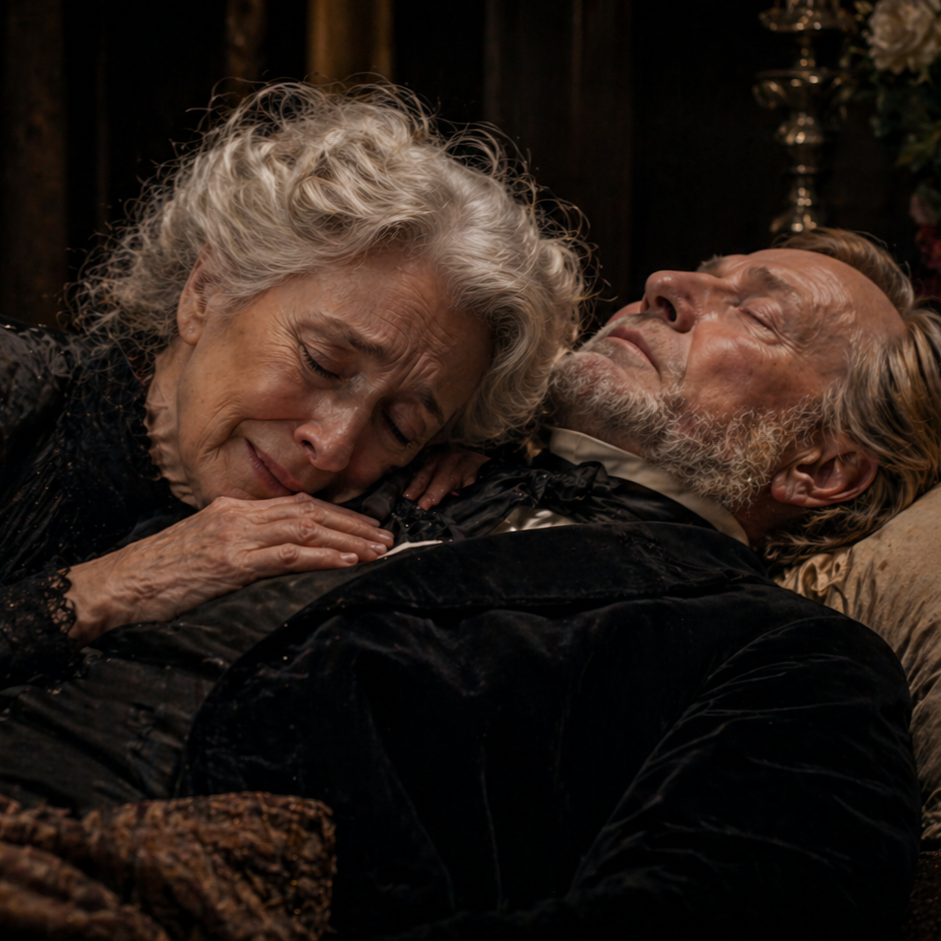
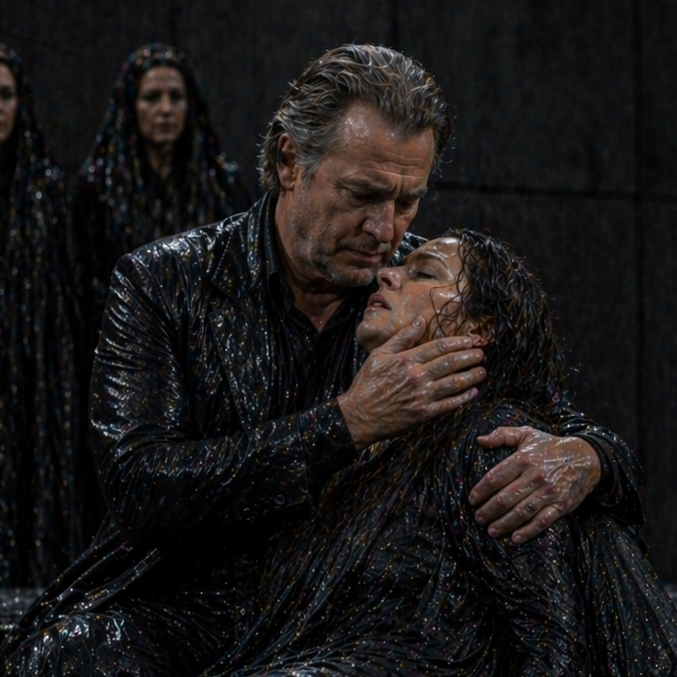
She walks back across the clearing. It takes as long as it takes; the score forbids hurrying it. The orchestra is silent. She kneels. She lifts his head again into her lap, as it was. Nothing happens.
Then, in the orchestra, alone, unharmonized: the rising note of the Atemfigur.
The fall does not come. The note is held. The score marks: it is not said whose breath this is.
The held note begins, very slowly, to fall. Whether it is the second note of the breath-figure or only the dying of the first, the orchestra does not yet reveal. Light at the tree line, low and grey, that may be dawn. SATYAVAN’s hand moves — or the wind moves it. The Stimmen des Waldes, very far away, on the open chord that does not close.
The curtain does not fall. The light simply fades, before the note resolves, before the chord closes, before it is said.