The Ear Knows Things the Database Doesn't
Note: Some articles belong to one site. These belong to all of them. Superconnectors are pieces written at the intersections. Where opera meets product thinking, where walking meets AI, where the archive meets the self.
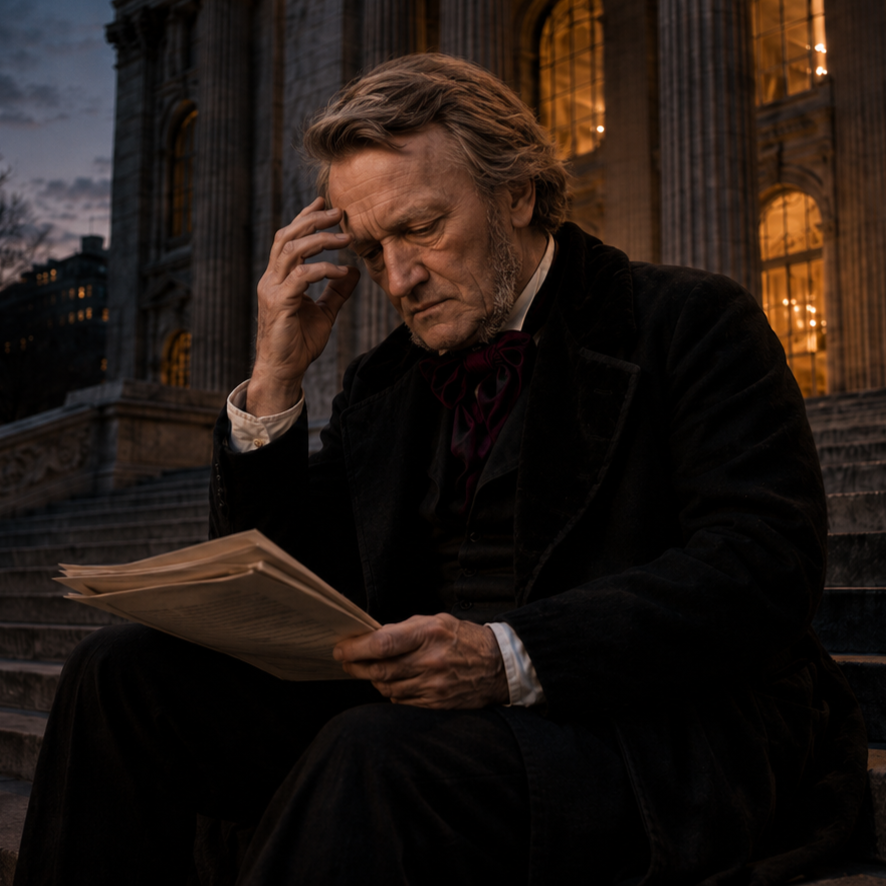
The Voyage AI voyage-multimodal-3 model embeds images and text into the same vector space. You give it an image, say a Midjourney-generated still of a figure walking through a grey city at dusk, coat collar up, the architecture behind them vaguely Mitteleuropäisch, and it produces a high-dimensional vector. A point in a space of such dimensionality that human intuition cannot picture it, but in which nearness has meaning. Things that are semantically close end up geometrically close. The model has learned, from an enormous corpus of image-text pairs, what nearness means across modalities.
This is genuinely extraordinary. It means that the visual inspiration product on autonomousmatt.com can take a text query, the feeling of arriving at a place you have been longing for, and retrieve images that are close to that feeling in the vector space. Not images tagged with those words. Images that, in some deep structural sense, are about that. When seventy-five Aufbruchmatt articles were paired with specific Wagner recordings, the question of what the vector model would have done with the problem was instructive.
It would have computed semantic proximity. It would have found the articles that mentioned longing, or arrival, or water, or ships, and matched them to recordings tagged with similar concepts. The Holländer articles would have retrieved Holländer recordings. The articles about exile would have drifted toward the exile operas. The system would have been consistent, defensible, and would have missed almost everything that mattered.
The Furtwängler/Philharmonia 1952 Tristan is not the correct pairing for an article about threshold moments because of its semantic content. It is the correct pairing because of the particular quality of slowness in that specific performance. A slowness which is not tempo alone but something more like weight, a gravitational quality that Furtwängler produces in the orchestra by treating each chord not as a waypoint toward the next chord but as a complete world in itself. The Prelude in that recording does not move toward the Liebestod. It dwells. And dwelling is what the threshold article is about. The suspension before the crossing, the moment in which both options remain available.
No embedding model encodes this. No semantic vector captures the difference between the Furtwängler Prelude and the Carlos Kleiber Prelude. Both excellent, both semantically identical in every formal description, phenomenologically worlds apart. Kleiber's Tristan wants to arrive. Furtwängler's Tristan wants to remain in the wanting.
This distinction is not ineffable. It can be described, as I am describing it now. But the description comes after the knowledge. The ear knew it before the words did. Michael Polanyi called this tacit knowledge. His central example was the scientist who can recognise a good experiment without being able to fully articulate the criteria for goodness. The knowledge is real, it guides action, it can be transmitted through apprenticeship and demonstrated through practice. But it cannot be fully explicated. "We know more than we can tell." The sentence is disarmingly simple and philosophically consequential. It means that formalization, the project of making knowledge explicit, transmissible, storable, is always working with a residue. The full knowledge is always partly in the body, in the trained ear, in the accumulated experience of listening that precedes and exceeds any description of what was heard.
The curation work, seventy-five articles, seventy-five recordings, each pairing requiring the essay to be re-read, the musical options to be held in mind, the specific recording to be selected from among several versions, was slow. It took days. It was, at the time, experienced as a craft problem. Matching things, getting them right, feeling the slight wrongness of a bad pairing and the specific satisfaction of a right one. What it was, in retrospect, was a research project into the structure of my own tacit knowledge.
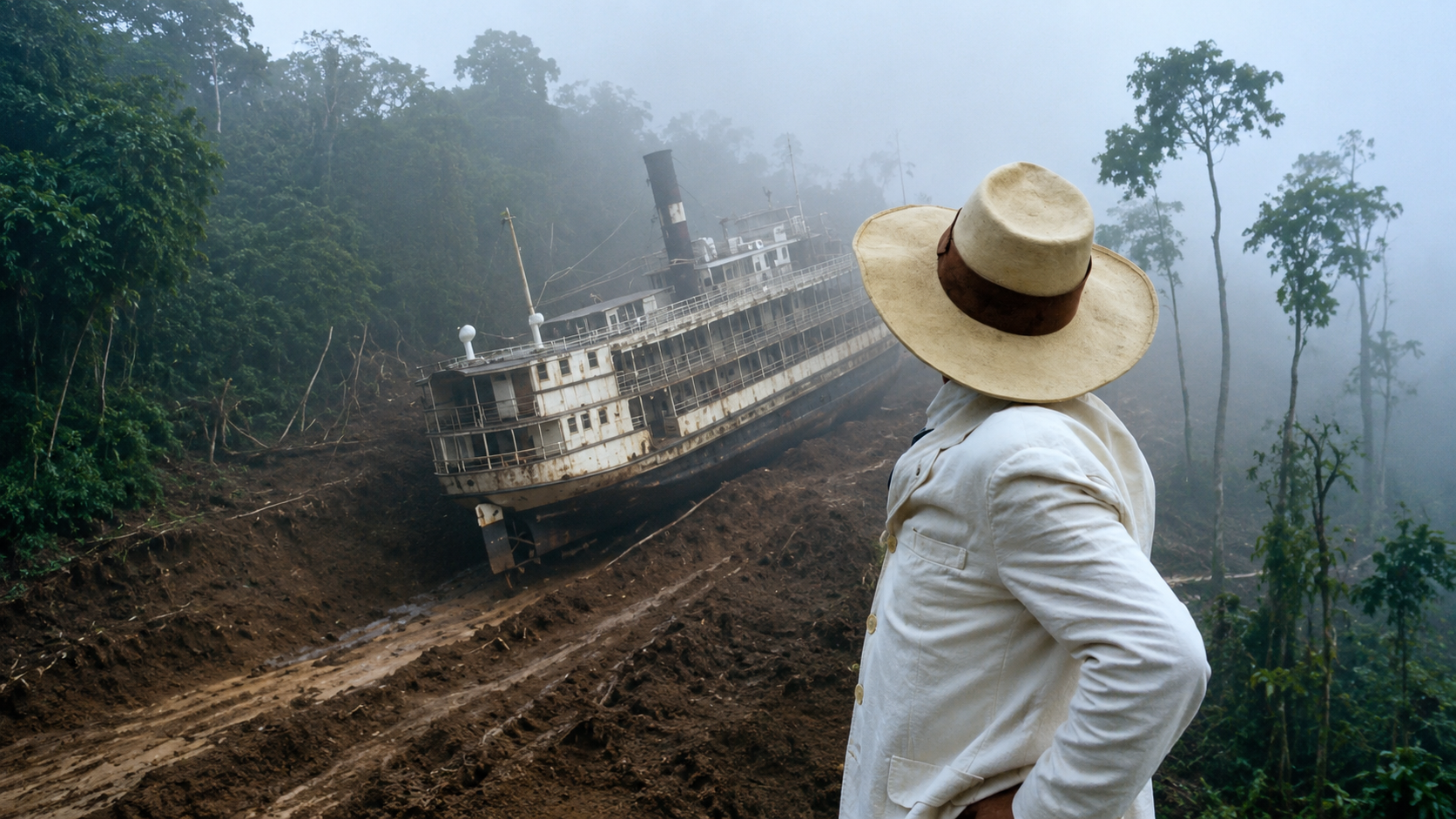
Each pairing decision was a case study in what the ear knows that the database doesn't. The Knappertsbusch 1962 Parsifal, chosen over the Karajan, the Boulez, the later Knappertsbusch recordings, for articles that required a quality of sacred patience, an almost geological sense of time, the feeling that the work is not being performed but conducted. The Solti/Vienna Ring for articles about power and mechanism, the bright hard sound of the Vienna brass encoding something about productive force that the Böhm or the Karajan recordings do not. These are not arbitrary choices. They are responsive to real differences in the recordings. But the responsiveness comes before the explanation.
This is the condition that the autonomousmatt products are designed to serve, and cannot. The RAG pipeline is superb at surfacing what the corpus knows propositionally. The arguments made, the connections drawn, the concepts named. It is blind to what the corpus knows tacitly: the accumulated sensibility that chose these recordings, walked these routes, wrote in this particular key of attention.
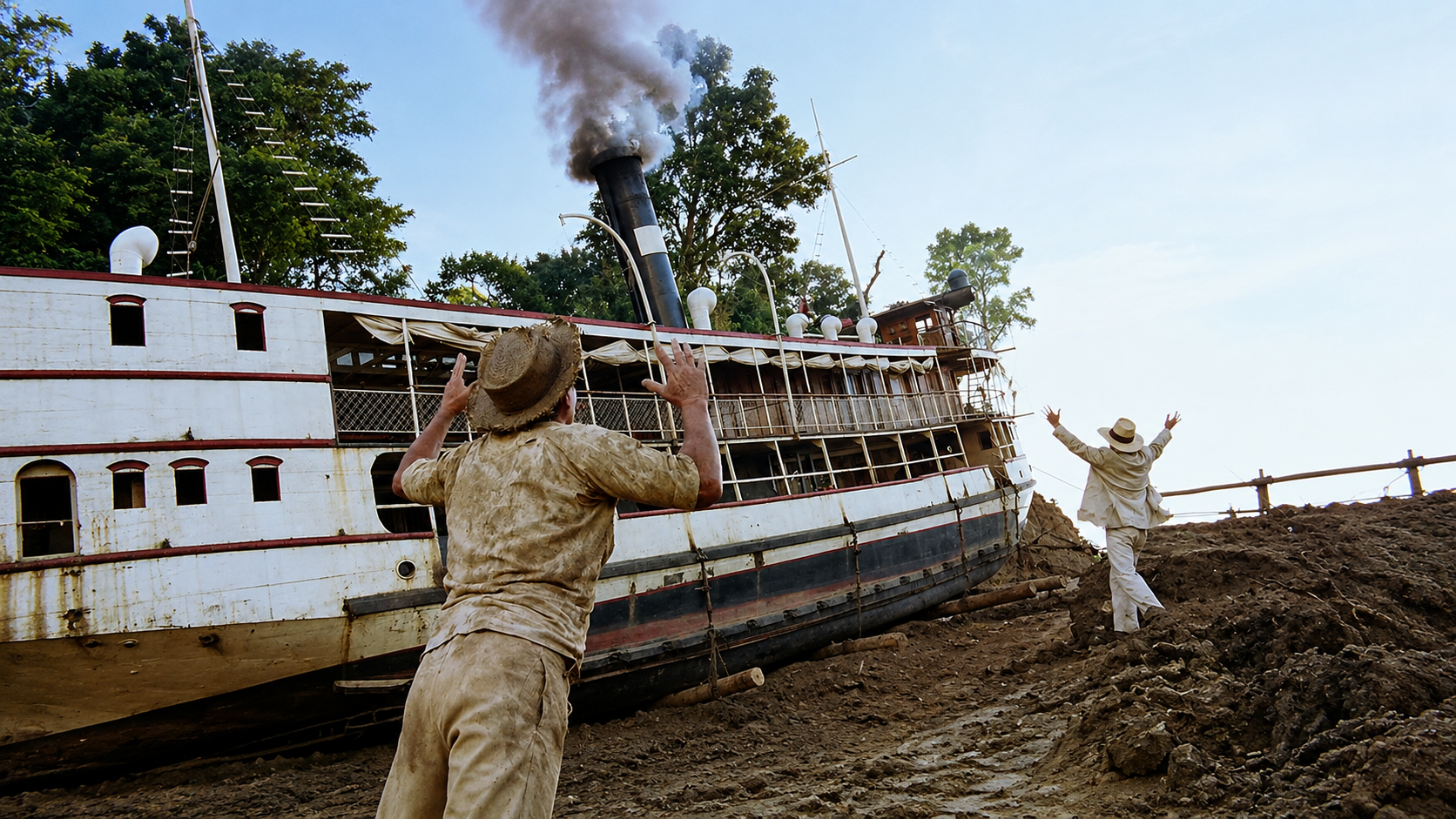
There is a version of this problem in artificial intelligence research that goes under the name of the knowledge representation problem. You want to encode a domain expert's knowledge in a system. You interview the expert. You formalise their rules. You build the system. It works in the cases the expert anticipated and fails in the cases they did not. Because the expert's knowledge was never fully contained in the rules they articulated. The rules were a surface. The knowledge was deeper.
The scored walk is the place where tacit knowledge is made. Not stated. Not encoded. Walked into the body at three miles an hour, one month at a time, with Wagner in the ears. The articles that come out of it carry traces of that knowledge in their texture. In the specific quality of the sentence, the precision of the sensory detail, the confidence of the structural claim. The database can store the articles. It cannot store what produced them. The ear knows this. It knew it before the first walk began.