Twenty Years a Stranger
Note: Some articles belong to one site. These belong to all of them. Superconnectors are pieces written at the intersections. Where opera meets product thinking, where walking meets AI, where the archive meets the self.

Die Meistersinger von Nürnberg is the opera Wagner wrote to prove he could write a comedy. He was in exile in Paris. He was fifty years old. He had not had a work performed in Germany for over a decade. He sat down to write a light, popular piece that would make him money and please audiences and demonstrate that the composer of Tannhäuser and Lohengrin could also do warmth and resolution and the folk-comedy endings that the bourgeoisie wanted. He wrote instead a five-hour philosophical argument about the relationship between tradition and genius, between the individual and the community, between the outsider who arrives with new forms and the community that must decide whether to admit him.
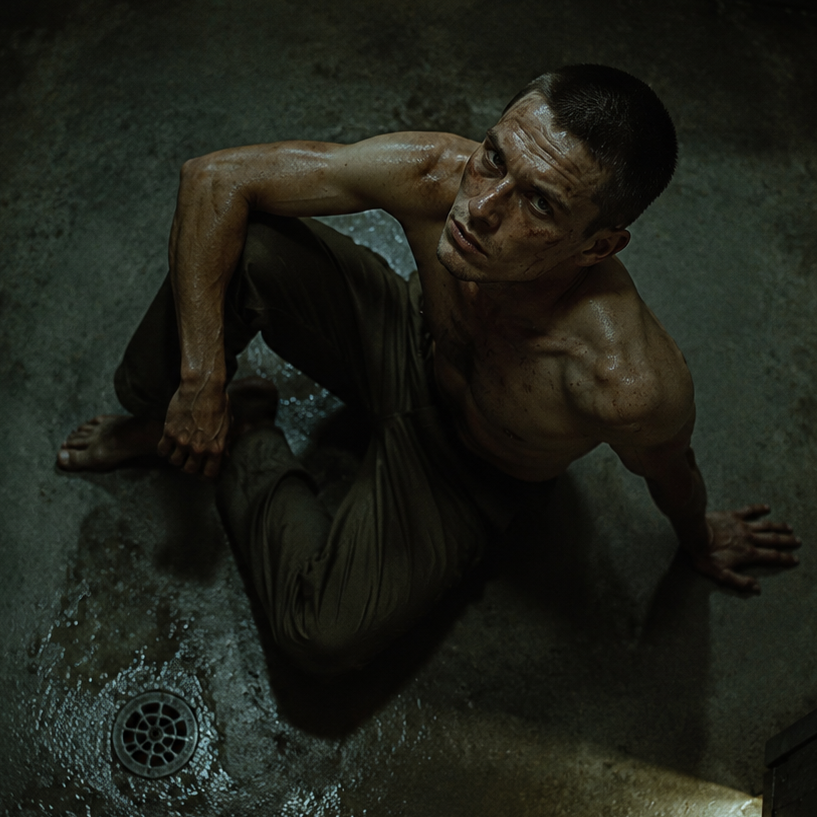
In exile, you write about belonging. May in New York is the month that most insistently asks the question of where you are from. The trees are in full bloom. The parks fill. The city presents itself in its most seductive register. Warm evenings, light until nine, the particular quality of spring in a city that has genuinely cold winters and genuinely hot summers, so that the temperate weeks carry a weight of gratitude they do not have in places that are always moderate. People are happy in New York in May in a way that feels almost patriotic. And if you are not from here, if you carry, still, after twenty years, the slight displacement of someone who did not grow up in this city, you watch the happiness with a complicated feeling. Not envy. Something more like admiration at a slight remove. The feeling of someone who loves a thing that was not made for them.

This is Sachs' position in Meistersinger. Hans Sachs is the opera's most fully realized consciousness. The shoemaker-poet who sees the whole of the drama's argument more clearly than any other character. He understands what Walther's new form means. He understands that Eva loves Walther. He understands that he himself loves Eva. He understands that the community needs to admit Walther's genius while also insisting that genius submit to form, because form is what makes individual expression communicable, transmissible, something other than private noise. He holds all of this understanding simultaneously. And he stands outside every happiness it would allow him to claim.
Wagner understood Sachs from the inside. The Forty-Eighters understood Sachs from the inside too, though they never heard the opera he had been prophesying. The German political exiles of 1848, the revolutionaries who fled to America after the failed revolutions, did something remarkable in New York. They did not assimilate in the standard immigrant sense, softening their edges, learning to pass. They built a German-speaking civic infrastructure of such density and ambition that Kleindeutschland on the Lower East Side was, for several decades, more thoroughly German than most German cities. They brought their newspapers, their singing societies, their Turnvereine, their commitment to radical secular democracy. They made New York more like the Germany they had lost. They transformed their adopted city in the image of the home they had been forced to leave.

This is not assimilation. It is something more creative and more melancholy. It is the work of people who discovered that you do not, in fact, leave a place by leaving it. You carry it. And if you carry it long enough, you begin to set it down in the new city, in the new street, in the new habit, and the new city becomes a palimpsest, two cities occupying the same geography. Twenty years of walking New York with this condition produces something you do not anticipate when you arrive.
You do not become a New Yorker. But you become someone who has walked the city in a way that few New Yorkers have. The scored walk is, among other things, a practice of radical attention to the specific texture of streets that most people who grew up on them have long since stopped seeing. The person who grew up in Washington Heights does not hear Lohengrin on the Heather Garden path and think, what is this place, heard fresh, as if for the first time. They have their own relationship to the Heather Garden, which is denser and more legitimate and rooted in actual childhood, and it does not require Wagner to arrive.
The stranger's relationship to a place is structurally different. It is always partly aesthetic, partly intellectual, partly the slight distance of someone who chose to be here rather than simply being born here. It is the relationship Sachs has to the Meistersinger community. Loving it precisely enough to understand what it needs, standing outside it precisely enough to be able to say so.

Wagner did not resolve this in the opera. The famous final monologue Habt Acht! Uns drohen üble Streich', where Sachs warns the assembled Nurembergers to honor German art against foreign welsch influence, has been a problem for the opera's interpreters since the work's first performance. It is the moment where Wagner's argument about belonging tips into something uglier. The claim that art is the property of a people, that the tradition is a wall as well as a door. The man who spent fourteen years in exile, the composer who wrote about outsiders finding belonging, ends his comedy with a warning about foreigners.
You do not have to choose between finding this beautiful and finding it troubling. You can hold both, the way Sachs holds the knowledge of what is right and the knowledge of what he has lost. The opera earns its difficulty. The difficulty earns the opera.

In May, on the walks, the Meistersinger Overture arrives early. Before the city has properly woken up, before the office buildings fill, before the parks claim their weekend density. The overture is not subtle. It is a statement of belonging so confident it almost topples into self-parody. It is the sound of a community that knows who it is.
Walking through a city you have lived in for twenty years, still with the slight accent, still occasionally consulting the map, that sound lands differently than it would for a native. Not with irony. With something more honest than irony. With the recognition that belonging is not a state you reach. It is a practice you undertake, daily, incompletely, with a score in your ears that was written by a man who knew exactly what it felt like to be outside the thing he loved most.