Water, Waiting, and Return: Why Battery Park City Belongs to The Flying Dutchman
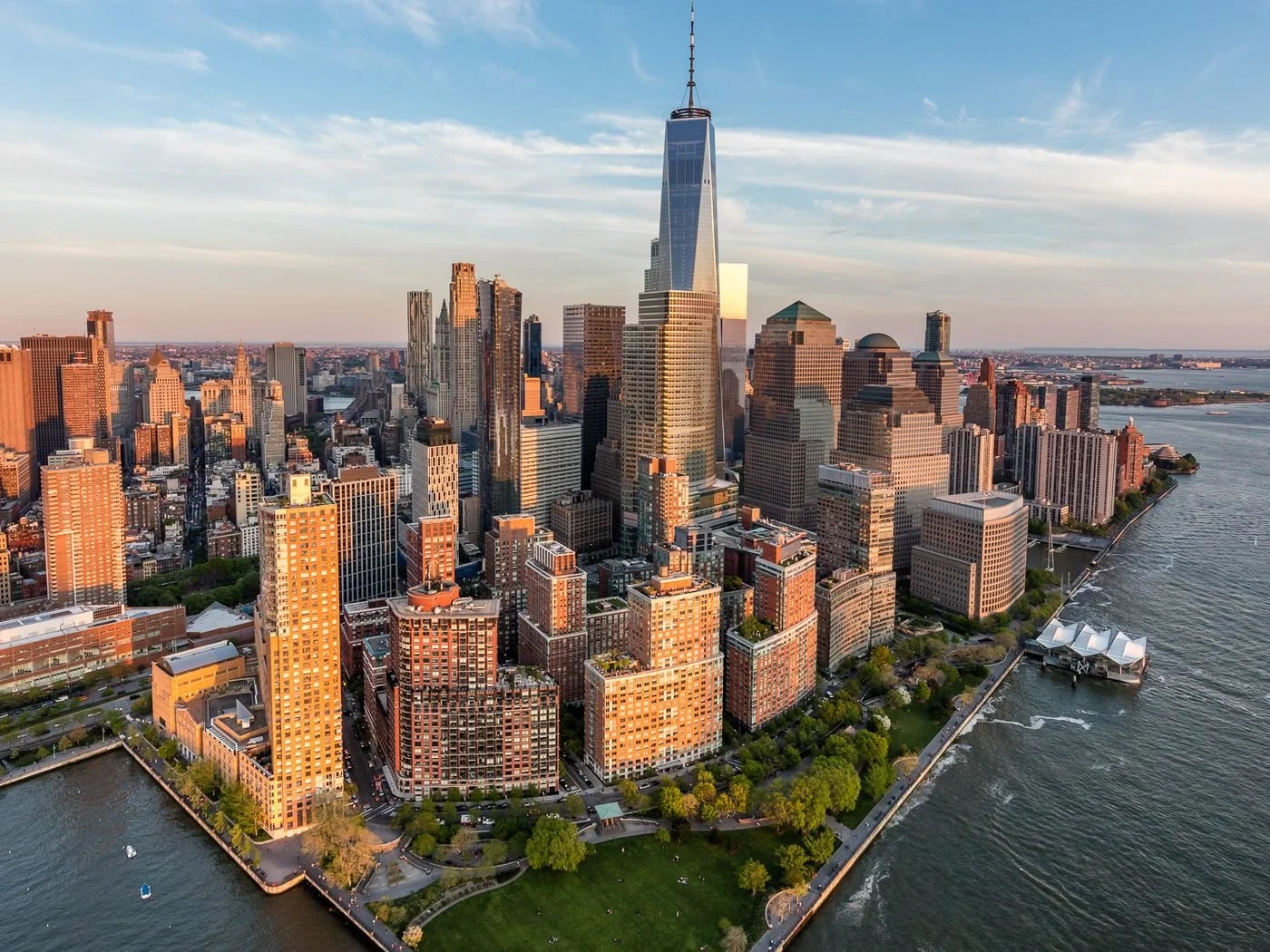
There are places that explain works of art better than criticism ever could. Battery Park City is one of those places for Der Fliegende Holländer.
Wagner’s opera is obsessed with a particular emotional weather. Wandering without rest, longing without resolution, the ache of motion that never quite becomes arrival. The Dutchman is cursed not with suffering alone, but with continuance. Endless passage across water, endless proximity to shore without belonging to it. His tragedy is not storms or ghosts. It’s repetition. Time without grounding.
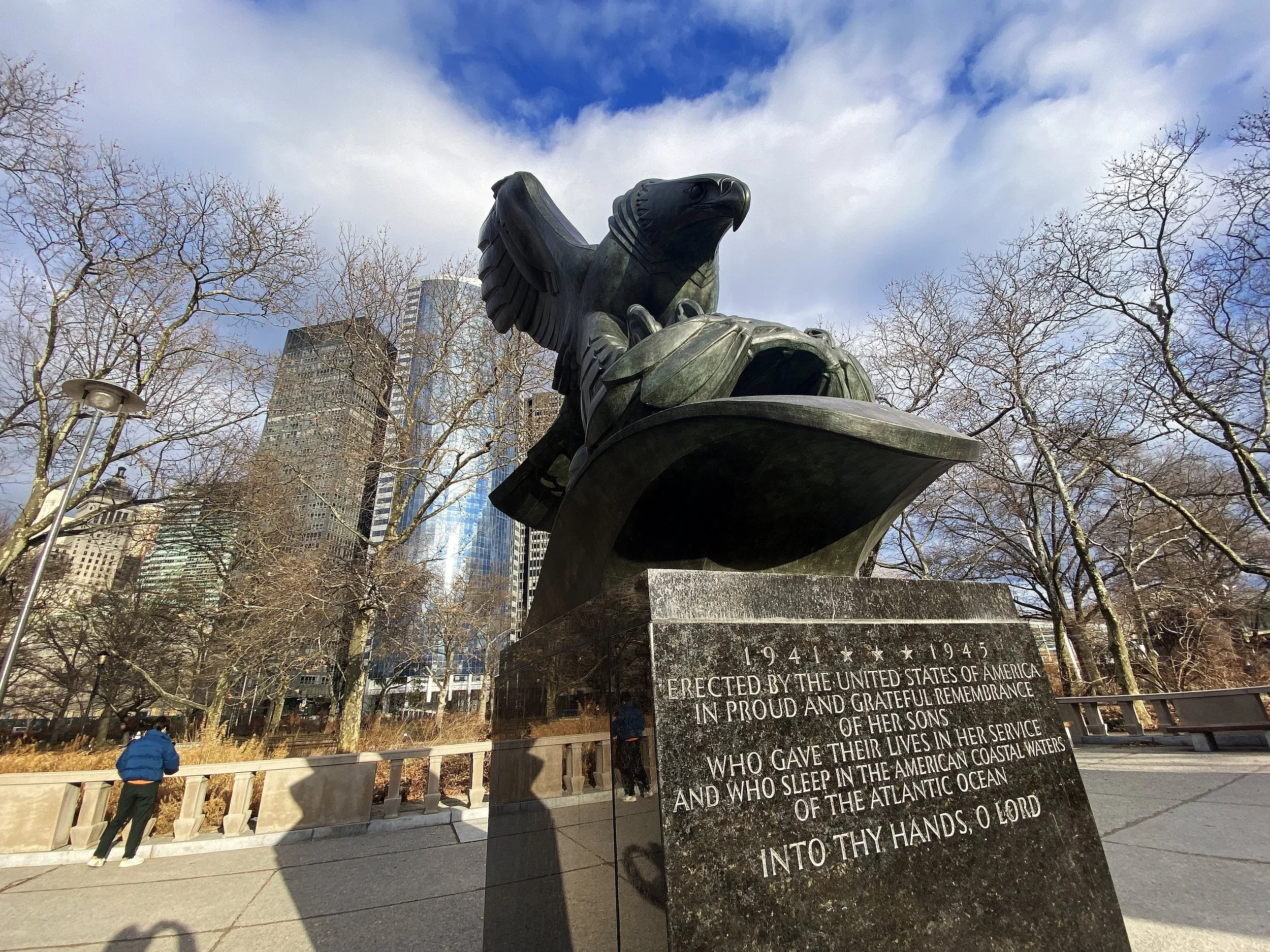
When I began pairing operas with places as part of aufbruchmatt, Battery Park City surfaced almost immediately as the right geography for January and for The Flying Dutchman. Not because it is dramatic, but because it is patient. Because it sits at the edge of things. Battery Park City is Manhattan’s threshold neighborhood. It faces outward. Water on three sides. Ferries departing. Ships passing. The city behind you, the horizon ahead. It is neither fully urban nor fully maritime. It is, like the Dutchman himself, always between states.
Walking the Esplanade at dusk, the opera doesn’t feel illustrative. It feels inevitable. The slow movement of the Hudson mirrors Wagner’s long musical lines. The repetition of waves echoes leitmotifs returning again and again, slightly transformed, never resolved. The air carries distance. Even on calm evenings, the water reminds you that motion continues whether you participate or not. This matters in January, when the year itself is unformed. When resolution is still theoretical. When ambition exists mostly as outline. Battery Park City offers a way to inhabit that in-betweenness without panic.
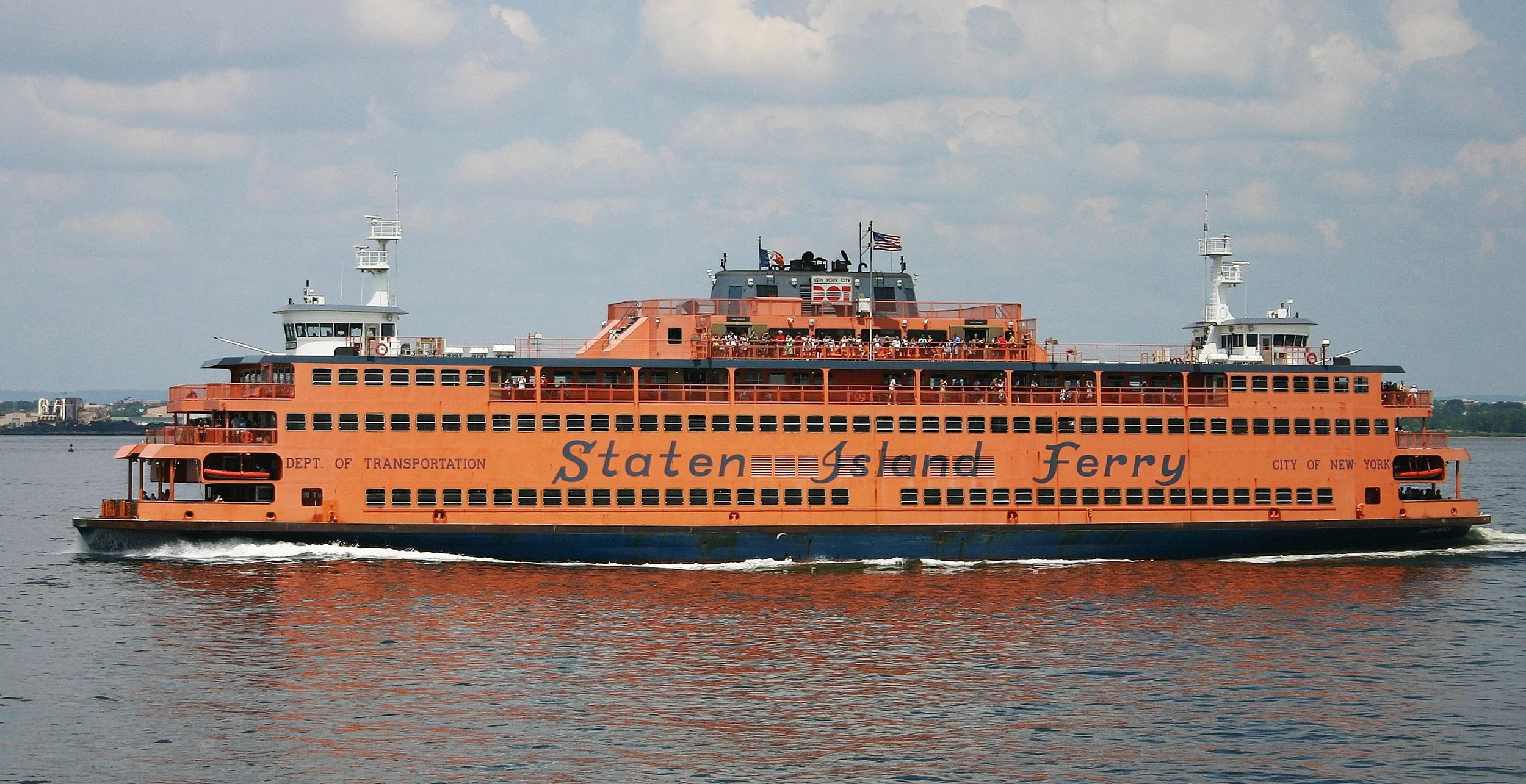
And then there is the Staten Island Ferry. Few experiences in New York are as quietly Wagnerian as standing on the ferry’s open deck in winter. The cold. The wind. The slow, deliberate departure from shore. The city receding, not vanishing but loosening its grip. You are not traveling to Staten Island so much as traveling away from certainty for twenty-five minutes.
The ferry is not scenic transportation. It is ritualized passage. You board. You wait. You cross. You turn around. You return. That cycle is central to The Flying Dutchman. The Dutchman’s curse is not endless motion alone. It’s cyclical motion. He returns again and again, hoping for release, replaying the same crossing with the same longing. The ferry’s loop, back and forth across the harbor, day after day, unchanged, carries that same emotional logic. Movement without escape. Distance without departure.
Listening to the overture while the ferry pulls away from Whitehall Terminal reframes the opera completely. The music no longer feels romantic or gothic. It feels existential. The horns feel like fog. The strings feel like waterline tension. The chorus becomes less theatrical and more collective. Voices bound together by the shared condition of waiting.
Importantly, Battery Park City and the ferry are not theatrical spaces. They do not dramatize the opera. They quiet it. They strip it of spectacle and return it to its core emotional truth: the human desire to belong somewhere, somewhere solid, somewhere final. For me, that pairing has also been personal. This project began during a season when I felt unmoored. Not broken, not burned out, but suspended. Successful, stable, loved, and yet quietly restless. The Dutchman’s condition resonated not as melodrama but as metaphor: the danger of living too long in motion, too long between roles, without a place to stand that feels fully inhabited.
Battery Park City does not solve that tension. Neither does the ferry. They simply give it shape. They offer a place to walk beside it. To listen. To wait. And sometimes, that’s enough. Not redemption yet. But orientation. A way to begin the year facing water instead of walls.
Moving, but aware of where the shore is.
Further Reading