An Evening with Wagner’s Dream
The best documentaries about art are rarely about the art. They’re about the conditions required for art to happen at all. The scaffolding, the diplomacy, the bruised egos, the fragile bodies, the deadlines that don’t care about transcendence. Wagner’s Dream is ostensibly a behind-the-scenes chronicle of the Metropolitan Opera’s attempt to stage Robert Lepage’s new Ring beginning in 2010, but what it actually records is something Wagner would have recognized instantly. A modern institution trying to manufacture myth at industrial scale, and discovering that myth does not like being scheduled.
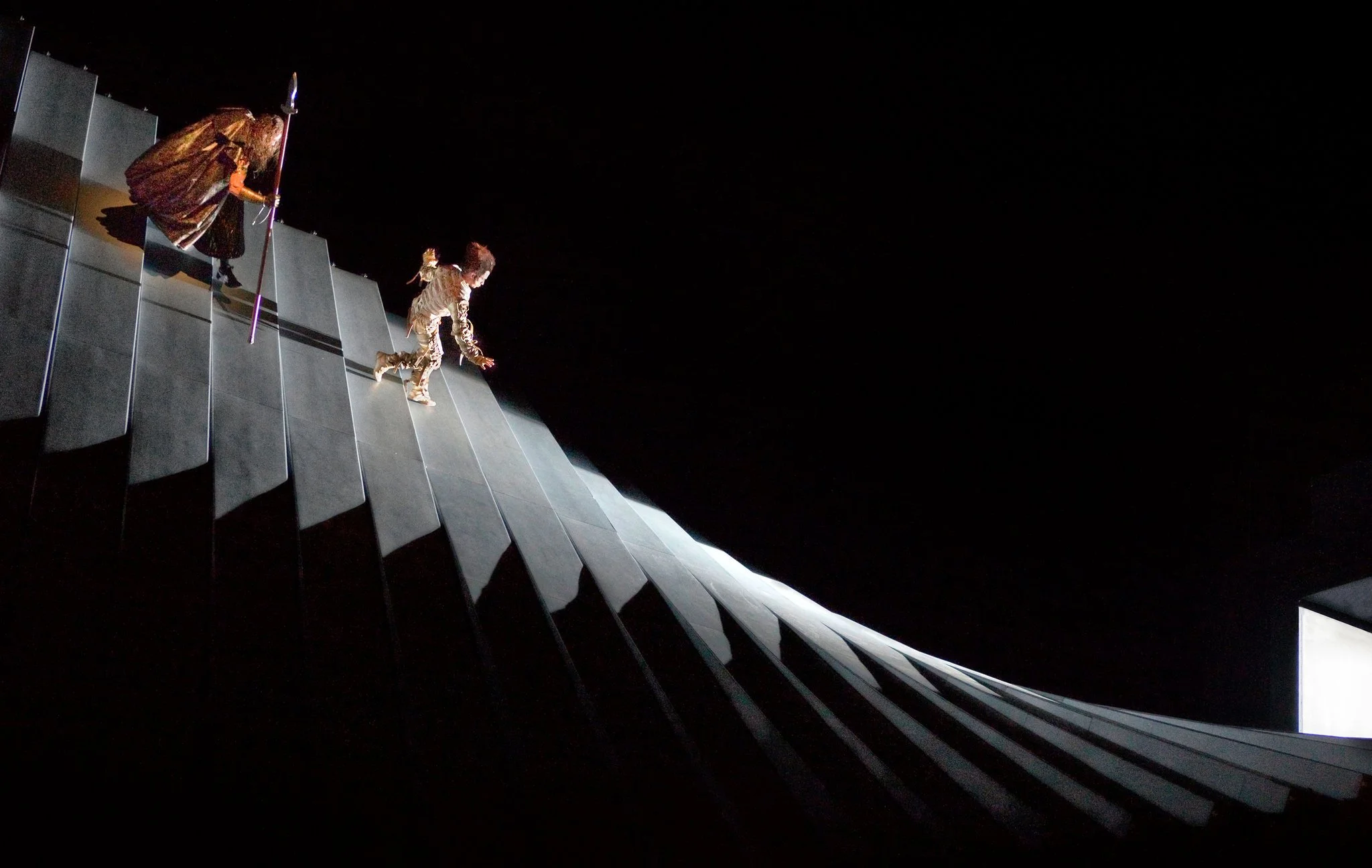
There’s a particular kind of suspense in the film. Not the operatic suspense of who betrays whom, but the bureaucratic suspense of whether a floor can bear the weight of a dream. The most telling detail isn’t musical at all. The Machine, that colossal set, arriving heavier than expected, forcing reinforcement, turning poetry into math, and ecstasy into load-bearing engineering. This is the 21st-century translation of Gesamtkunstwerk. Not total artwork, but total system. It’s procurement and risk registers wearing a breastplate.
What’s fascinating is how the documentary keeps returning to bodies. Not in the mythic sense of gods and heroes, but in the plain, human sense. Singers climbing, bracing, catching their breath. Accidents and near-accidents. A Brünnhilde sliding on an entrance that should feel like fate, but instead looks like physics. Wagner’s dramas are full of wounded figures who must keep moving anyway. Wagner’s Dream quietly argues that opera is an endurance sport disguised as cultural prestige.
Most process documentaries flatter their subjects by making struggle look noble. This one does something more transparent. It suggests that the struggle is the point. The Met commissions a visionary staging, the staging demands a machine, the machine introduces failure, and failure becomes the only honest proof that something risky was attempted. When the set misfires, the gods are literally stranded, and suddenly the production feels more Wagnerian than any seamless triumph could. In a world where so much culture arrives pre-tested and frictionless, malfunction becomes a kind of authenticity.
The documentary itself becomes a fifth evening of the Ring. Not an appendix, but a new layer of the myth. Wagner wanted an artwork which would swallow the world around it. In 2012, the world answers back by swallowing Wagner instead, turning the staging into content, the rehearsal into narrative, the enterprise into a story consumable in two hours. The dream isn’t Wagner’s alone. It’s the institution’s dream of legibility. That if you show enough sweat and steel and courage, the audience will forgive the compromises required by scale.
And that’s where this film quietly intersects with the Aufbruch/Matt impulse. It’s a document of making the sublime walkable. The Met tries to lift Valhalla with hydraulics. Aufbruch/Matt tries to lift it with subway stops, shorelines, weather, and repetition. Listening until the city’s surfaces begin to behave like leitmotifs. The documentary shows how myth collapses under machinery when it’s treated as an object. It hints that myth survives when it’s treated as a practice. Something you do, again and again, imperfectly, until the world around you starts to sing back.