Temporal Collapse and the Loss of Myth: Interviewing Wagner in the Age of Perpetual News
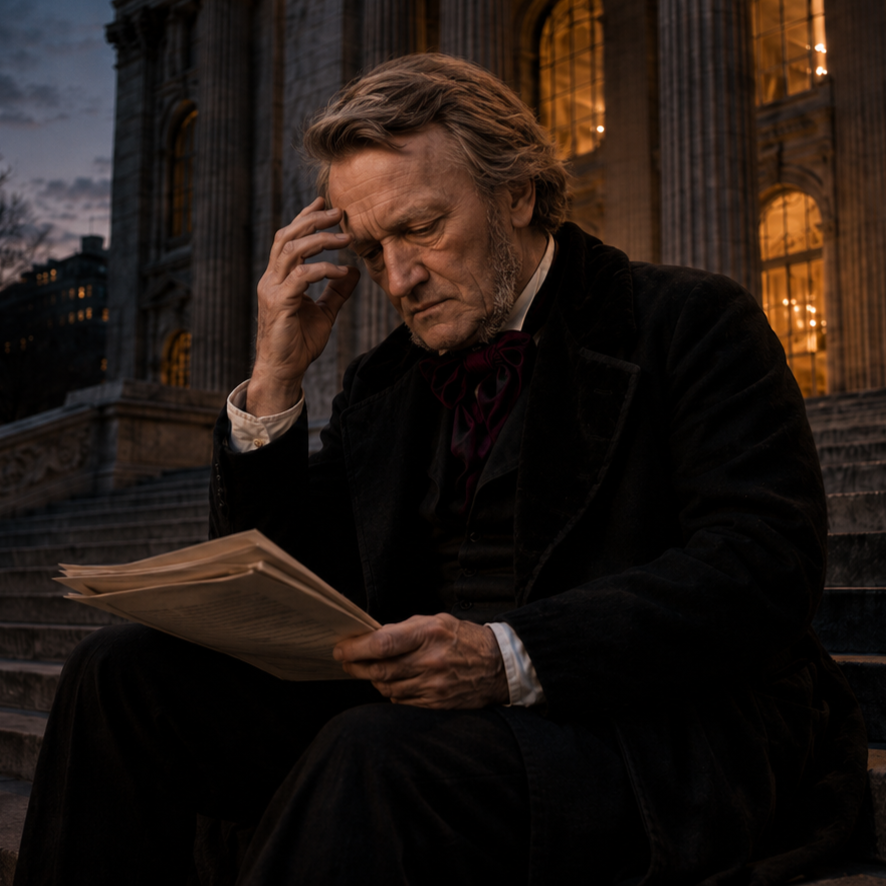
An interview conducted somewhere between Bayreuth and Battery Park City, between a ferry wake and a news alert.
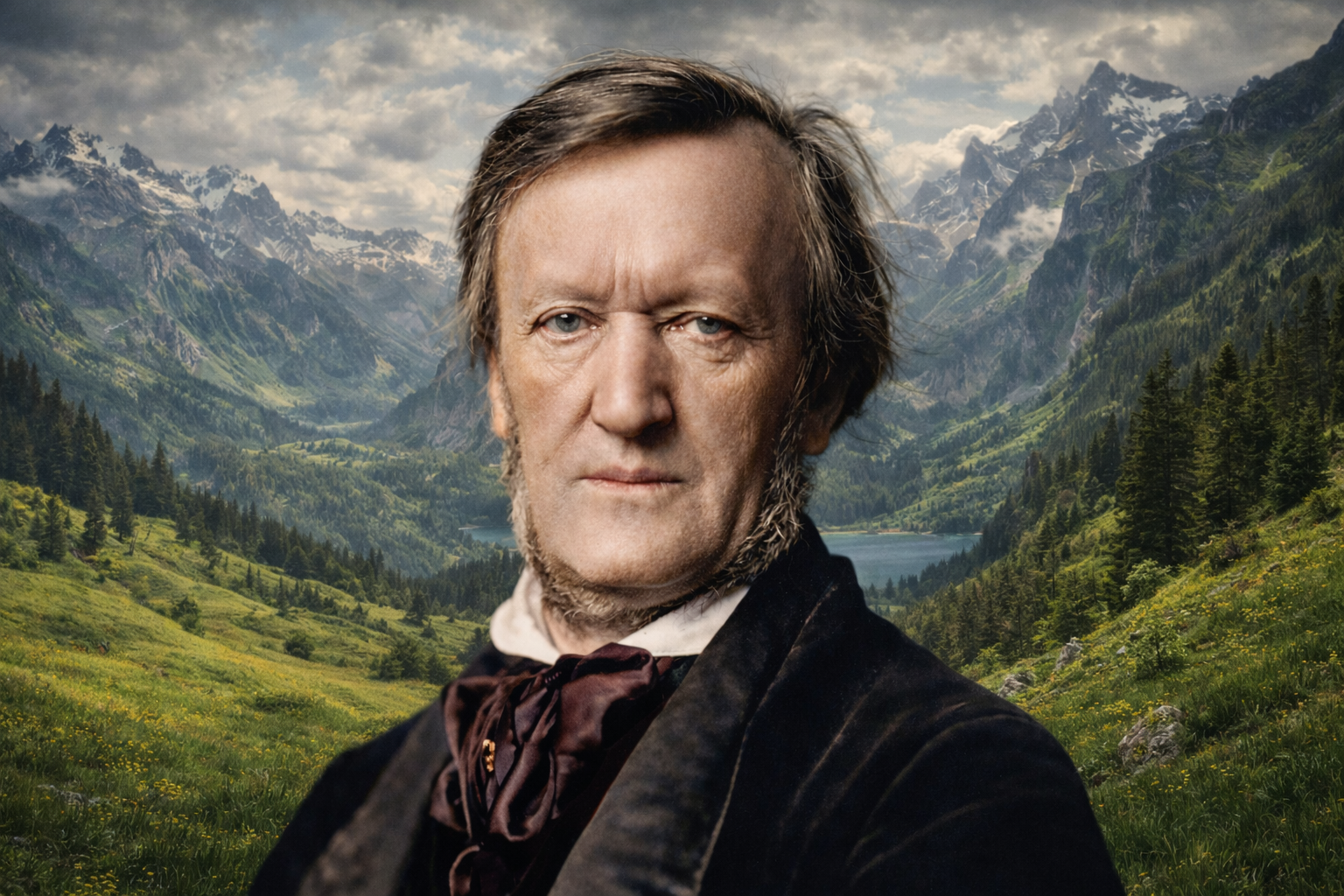
Aufbruch/Matt: Herr Wagner, welcome to 2026. I should warn you, the world is loud now. Not just with sound, but with opinion.
Richard Wagner: I hear it already. The noise precedes me. In my time, pamphlets. In yours, something faster. Less patient. Still the same impulse, though: everyone singing, few listening.
Aufbruch/Matt: You’ve been dropped into a world of permanent crisis. Wars streamed live, democracies fraying in public, machines that speak, write, even compose. What strikes you first?
Richard Wagner: The absence of silence. You mistake motion for meaning. In my century, catastrophe unfolded slowly enough to be metabolized. Now, catastrophe refreshes every few seconds. No myth can survive that pace.
Aufbruch/Matt: And yet myth is everywhere. Conspiracy, nationalism, culture war, messianic tech narratives.
Richard Wagner: Precisely. When societies lose shared ritual, myth doesn’t disappear. It goes feral. You are living in uncomposed opera. Leitmotifs without orchestration, climaxes without resolution.
Aufbruch/Matt: That feels uncomfortably accurate.
Richard Wagner: It should. You built systems to distribute information, not wisdom. You optimized for reach, not resonance. Myth requires duration. It requires waiting. Even suffering has a tempo.
Aufbruch/Matt: Let me press you on this. The news cycle today is relentless. As someone who worked obsessively on Gesamtkunstwerk, total, immersive meaning, what do you make of modern media?
Richard Wagner: You achieved the total artwork accidentally and then refused responsibility for it. Screens everywhere, sound everywhere, story everywhere. But no priesthood. No initiation. No threshold crossing. Everything is immediately accessible, therefore nothing is sacred.
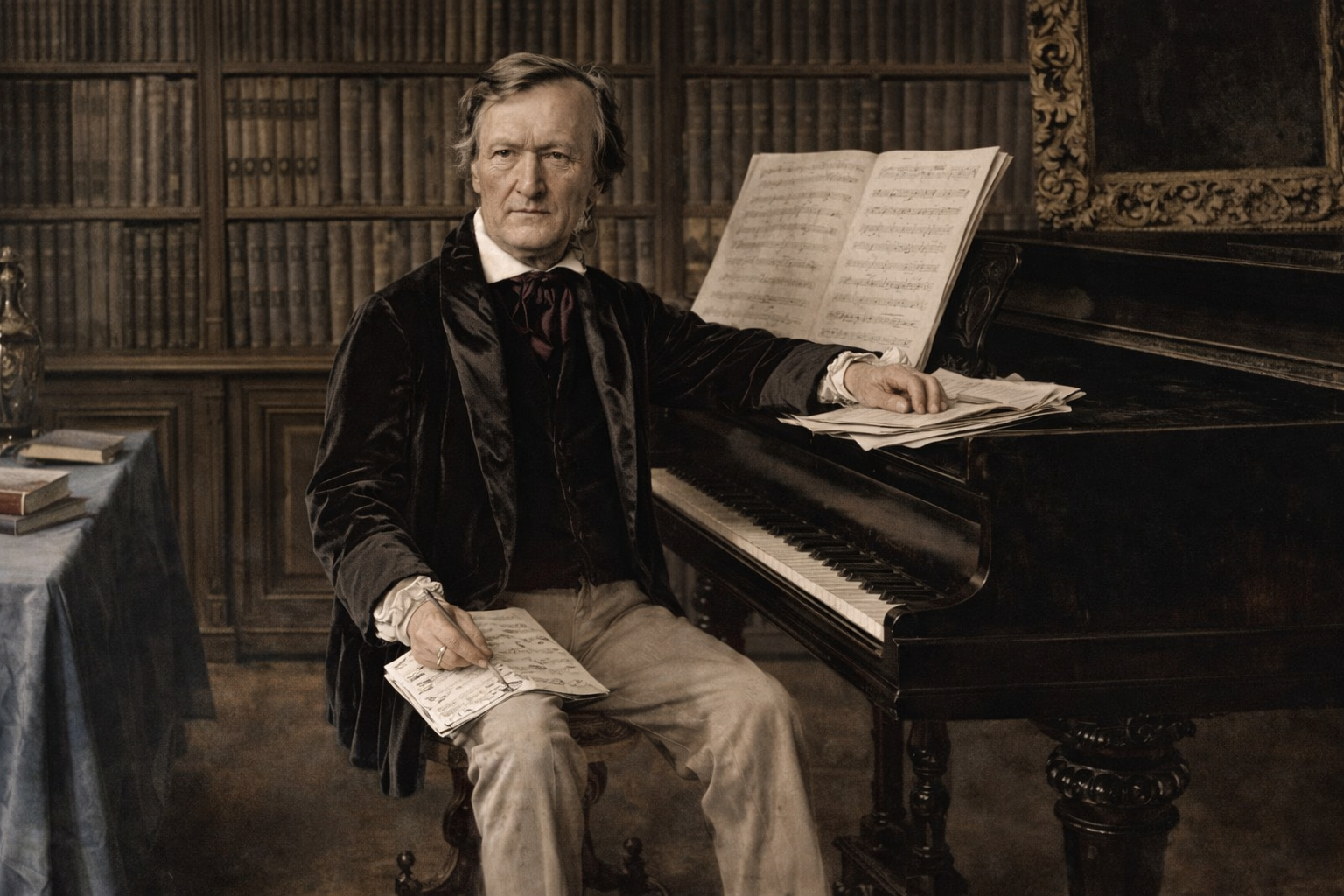
Aufbruch/Matt: So the failure isn’t technology, it’s framing?
Richard Wagner: Always framing. In the Ring, power corrupts not because it is evil, but because it is abstracted from love, from embodied relationship. Your technologies are pure Alberich. Immense power severed from care. You ask machines to speak before teaching humans to listen.
Aufbruch/Matt: That lands close to home.
Richard Wagner: Of course it does. You are attempting, through your wanderings, your rituals, your listening, to slow time back down. Aufbruch, you called it? Departure, but also awakening.
Aufbruch/Matt: Yes. A deliberate re-entry into myth through walking, listening, place.
Richard Wagner: Then you already understand my point, though perhaps not yet its consequence.
Aufbruch/Matt: Which is?
Richard Wagner: The crisis of your age is not moral failure or political decay. It is temporal collapse. You have lost the ability to hold long arcs of meaning in mind.
Aufbruch/Matt: Say more.
Richard Wagner: News arrives stripped of destiny. Events without cosmology. In my works, even the flawed ones, nothing happens without consequence echoing forward and backward through time. Gods inherit the sins of giants. Children pay for fathers. Redemption takes generations. Your world treats each headline as isolated, disposable.
Aufbruch/Matt: So we scroll past fate.
Richard Wagner: Exactly. You experience tragedy without catharsis. That is psychologically intolerable. So you retreat into irony, outrage, or numbness.
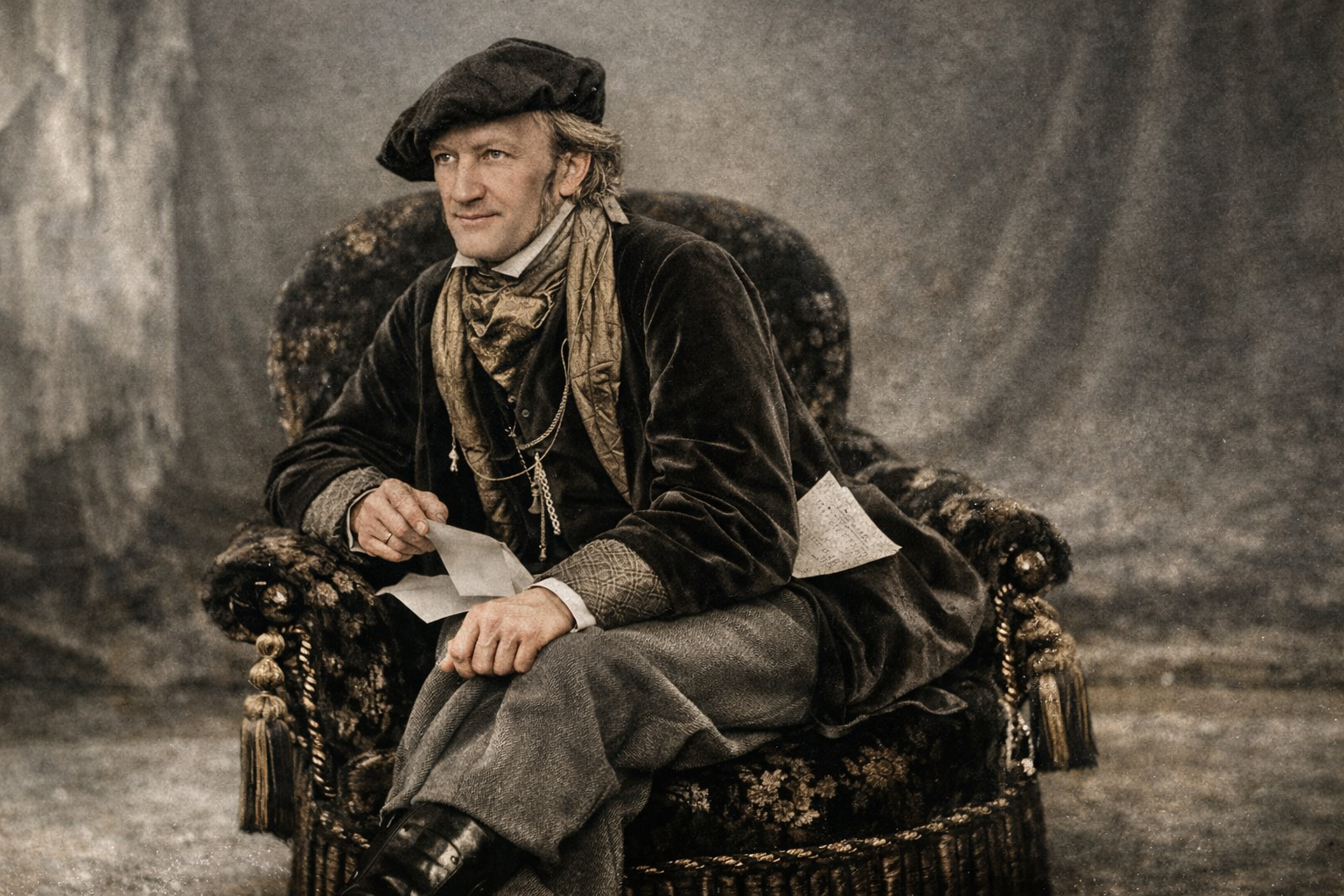
Aufbruch/Matt: Or productivity.
Richard Wagner: Ah yes. The modern narcotic.
Aufbruch/Matt: Let’s talk politics. Nationalism is resurging, but in distorted forms. Your own legacy there is… complicated.
Richard Wagner: I am painfully aware. But understand this. Nationalism without mythic depth becomes mere branding. A logo without a soul. Dangerous because it feels ancient while being entirely modern and hollow.
Aufbruch/Matt: And liberal democracy?
Richard Wagner: It speaks prose in a world which still dreams in poetry. That is its dilemma. Reason alone cannot command loyalty when people are starved for belonging.
Aufbruch/Matt: So what replaces it? That’s the terrifying question.
Richard Wagner: Nothing replaces it unless you re-enchant it. You must restore ritual to civic life. Shared stories that are neither lies nor algorithms.
Aufbruch/Matt: You’re suggesting art as infrastructure.
Richard Wagner: I always was. You treated culture as decoration. I treated it as operating system.
Aufbruch/Matt: Let me challenge you. Today we have AI. Systems which can generate music, images, even operas. Does that cheapen myth, or democratize it?
Richard Wagner: Tools do not cheapen meaning. Speed does. When creation becomes instantaneous, it bypasses struggle. Myth without sacrifice is entertainment. Art without cost cannot bind a community.
Aufbruch/Matt: But people feel moved by machine-generated work.
Richard Wagner: They feel recognition, not transformation. A mirror, not a pilgrimage.
Aufbruch/Matt: That distinction feels important.
Richard Wagner: It is the heart of it. Your age confuses stimulation with initiation. You consume experiences that once demanded commitment.
Aufbruch/Matt: Which brings me back to walking. To the ferry. To listening to an opera across weeks instead of hours.
Richard Wagner: Yes. You are rebuilding tempo. Re-teaching your nervous system how to dwell inside meaning.
Aufbruch/Matt: So here’s my final question. If you were alive now, writing not for Bayreuth but for 2026, what would you compose?
Richard Wagner: I would not write another Ring. You already live inside one. I would write an opera about waiting. About restraint. About choosing not to speak.
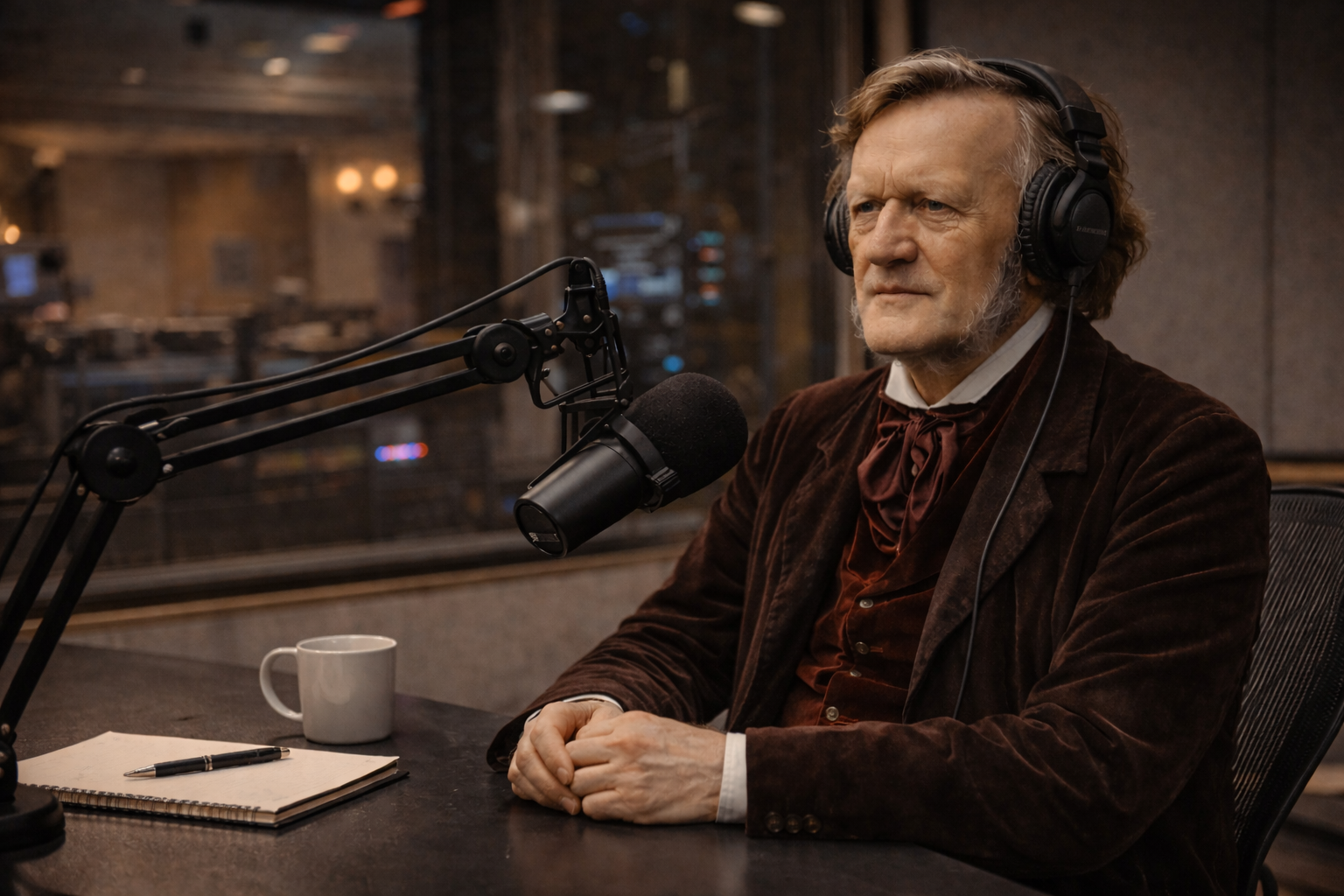
Aufbruch/Matt: That would never get funded.
Richard Wagner: Of course not. Which is why it would matter.
Aufbruch/Matt: Then let me try to summarize what you’re really saying. The crisis of our time isn’t misinformation, polarization, or even authoritarianism. It’s that we’ve lost the ability to inhabit long-form meaning. To stay with an idea, a place, a piece of music long enough for it to change us.
Richard Wagner: Now you are interviewing yourself.
Aufbruch/Matt: Guilty.
Richard Wagner: But you see it now. Myth is not escapism. It is a temporal technology. It stretches the present so the soul can breathe.
Aufbruch/Matt: And without that?
Richard Wagner: Societies thrash. Individuals burn out. Power rushes in to fill the vacuum.
Aufbruch/Matt: So Aufbruch isn’t nostalgia.
Richard Wagner: No. It is resistance. A quiet one. Against acceleration. Against fragmentation. Against the lie that speed equals progress.
Aufbruch/Matt: Then perhaps the most radical act in 2026 is not speaking louder, but listening longer.
Richard Wagner: At last. You’ve learned the lesson I failed to live.
He stands, listening. Not to alerts, not to arguments. To something slower. A motif returning, transformed. The city hums, but for a moment, it has a key, a tempo, a fate.
Further Reading